
As GLP-1 users become “more label-literate and science-minded”, Danone’s plant-based nutrition brand Kate Farms is busting its gut to meet the moment with “truly better-for-you” products.
Ozempic has led the Make America Healthy Again (MAHA) clan to turn on its leader.
US health secretary Robert F Kennedy Jr has cheered on the Trump administration’s recent deal to lower the cost of obesity medications, putting him at odds with supporters who have been critical of the pharma sector and its weight-loss drugs.
However, there are some commonalities between MAHA and GLP-1 medications: they’ve both increased public focus on metabolic health in the US. That, in turn, has accelerated consumer awareness of the adage that “nutrition is foundational to wellbeing”.
Or at least that’s how Kate Farms, a plant-based nutrition brand recently acquired by dairy giant Danone, looks at it. “Kate Farms has always operated at the intersection of healthcare and wellness, bridging clinical integrity and consumer access,” its CMO, Catherine Hayden, tells Green Queen.
“These movements amplify what we’ve long championed: science-based, truly better-for-you nutrition that supports long-term health.”
The firm makes a range of nutrition products for kids and adults, including a dairy-free baby formula without the top nine most common allergens, pea protein shakes, pediatric blended meals, and shakes for glucose and renal support.
But with nine in 10 healthcare patients preferring to rely more on healthy eating than on medications to manage their conditions, Kate Farms doubled down on its food-as-medicine approach with the launch of a High Protein Nutrition Shake this year, specifically designed to address “critical nutrition gaps” from GLP-1 use.
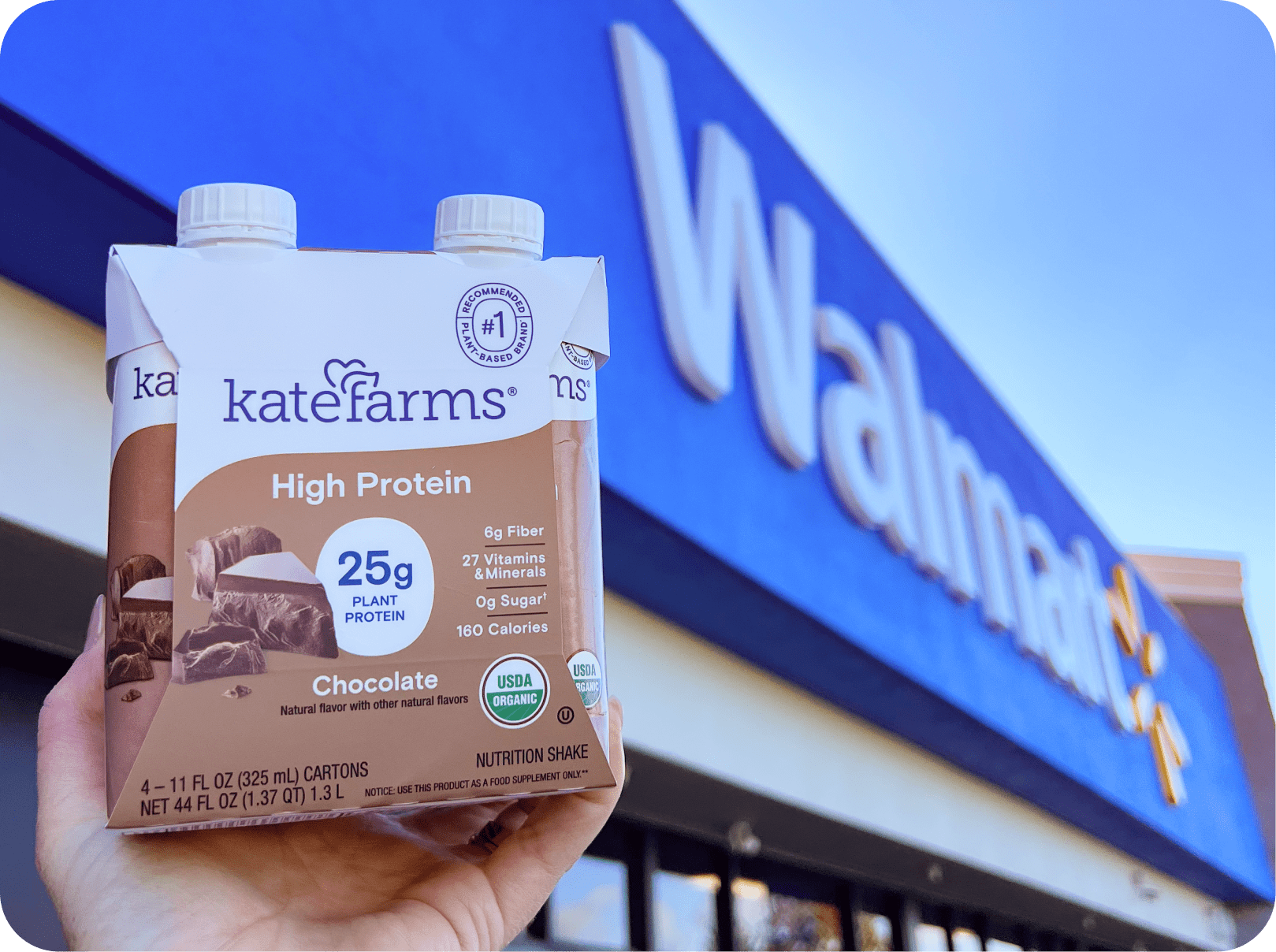
Now, that product has entered the country’s largest retailer, Walmart, whose stores are within 10 miles of 90% of Americans, expanding access to clinically-designed nutrition products and boosting food security amid the government’s funding cuts to food assistance programmes.
“Many Kate Farms formulas and shakes are SNAP-eligible and covered by Medicare, Medicaid, private insurance, and WIC in 33 states. Expanding access to clinically designed, plant-based nutrition is central to our mission,” says Hayden.
“We continue to advocate for funding stability and policy support to ensure families maintain access to high-integrity, truly better-for-you products during periods of federal uncertainty.”
GLP-1 users are more focused on science and labels
One in eight Americans has used a GLP-1 drug like Ozempic, Wegovy or Mounjaro, and this could rise to up to 70 million people by 2028, when they’ll likely have boosted the national GDP by 1%.
These medications have left the food industry scrambling, as demand for foods high in sugar, fat and calories dissipates, while protein and fibre become more popular than ever.
In response, Nestlé has a new brand dedicated to GLP-1 users, Coca-Cola and Pepsi have both launched prebiotic sodas (the latter acquired Poppi for nearly $2B earlier this year), Conagra Brands has introduced ‘GLP-1 friendly’ labels on packaging for some ready meals, and Daily Harvest (now owned by Chobani) has rolled out a line of high-protein, high-fibre smoothies.
The GLP-1 boom is tangible in the food industry. “It’s raising the bar. GLP-1 users are more label-literate and science-minded, and that’s driving demand for clean, clinically backed, and effective nutrition,” says Hayden.
“This shift validates what we’ve done from the start: developing purpose-built, medically informed, plant-based products that deliver real nutritional outcomes, not marketing promises,” she adds. “The GLP-1 moment is helping separate proof from hype, reinforcing our belief that ‘truly better-for-you’ must mean clinically proven and responsibly made.”

Analysis shows that GLP-1 users spend 11% less on most categories of food, and over half (56%) look to make healthier food choices. Why would they choose protein shakes over whole foods?
“For many, appetite suppression makes it challenging to consume enough nutrient-dense food. Our shake offers a simple way to get complete, balanced nutrition in one serving, supporting muscle health and filling key nutrient gaps,” suggests Hayden.
“It’s not a replacement for whole foods; it’s a bridge that helps people stay nourished when appetite or schedule makes balanced meals harder to manage,” she adds. “Fibre is also central to that balance: to aid in digestion and fullness in a format that’s easy to tolerate when appetite is reduced.”
Kate Farms spotlights proof over buzzwords
Hayden believes the key to capitalising on the GLP-1 moment is to “never retrofit”. “Most products entering this space are retrofitted or relabeled from other categories – such as diabetes or sports nutrition – and often rely on artificial sweeteners, preservatives, or common allergens,” she explains.
“Kate Farms’s High Protein Nutrition Shake was designed from the ground up with direct input from GLP-1 users and healthcare professionals, then refined through multiple rounds of sensory testing to ensure it’s satisfying even with a reduced appetite.”
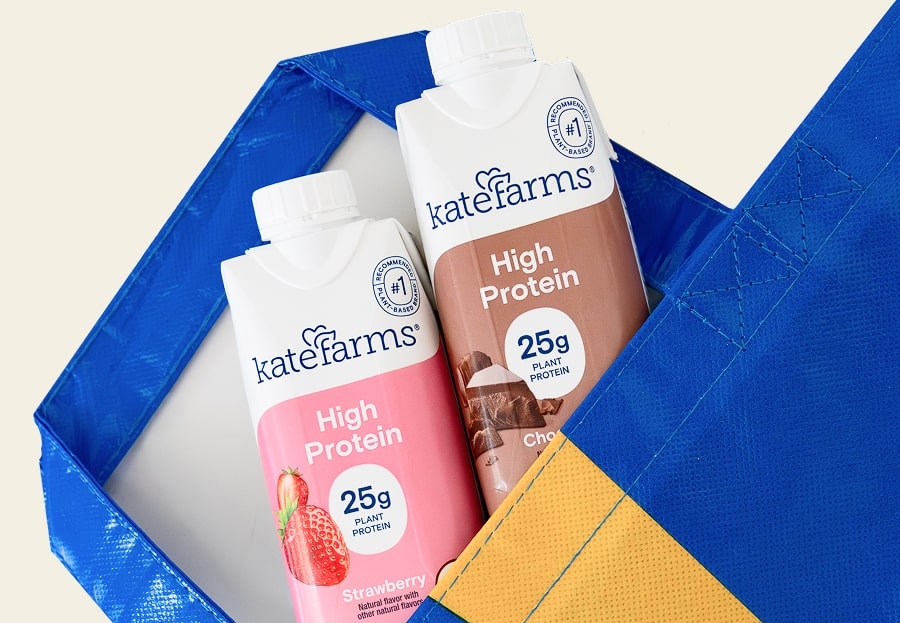
Research shows that GLP-1 use can lead to a 25-40% decrease in muscle mass over eight to 16 months, several times greater than non-medicated weight loss approaches and age-related muscle loss. It’s why each shake packs 25g of protein, alongside 6g of fibre, and 27 vitamins and minerals.
“The 6g of organic fibre play a key role in supporting gut health and satiety – two areas GLP-1 users consistently identify as challenges – making it both functional and filling,” says Hayden. “This is what truly better-for-you looks like: nutrition built with clinical precision and clean, transparent ingredients, not marketing claims.”
Then there’s the labelling element. Does slapping a ‘GLP-1 friendly’ label risk putting off loyal consumers who don’t use Ozempic? “Yes, if it’s treated as a trend,” answers Hayden.
“We don’t chase labels; we design around needs backed by clinical precision,” she says, noting how the High Protein Nutrition Shake was crafted to serve the unique needs of GLP-1 users, yet is still optimised for anyone seeking balanced, clinically designed nutrition. “Our approach is inclusive and transparent: proof-based rather than buzzword-based.”
Kate Farms boasts ‘strong year of growth’ amid Danone takeover
As Kate Farms is leaning into the GLP-1 space, its products are also part of an ailing plant-based sector, which has seen sales slow over the last couple of years in the US. Consumers’ willingness to consume plant protein hasn’t been helped by studies like the Consumer Reports analysis that found high levels of lead content in vegan protein powders, however misguided the findings may be.
“Ingredient integrity has been part of Kate Farms’s DNA from day one. All our shakes are USDA Organic, plant-based, and routinely tested to meet Federal and State standards, including Proposition 65, which is among the most stringent in the US,” says Hayden.
“We never use artificial sweeteners, colours, or flavours” – wink wink, MAHA – “and our products are free from the top nine allergens. That’s why Kate Farms is the number-one doctor-recommended plant-based brand, trusted in more than 1,400 US hospitals.”
In a market crowded with vague claims, she adds, Kate Farms “continues to set the benchmark” for nutrition grounded in clinical proof.

When it comes to sales, Hayden suggests that Kate Farms has been bucking the plant-based trend: “2025 has been a strong year of growth, driven by new retail partnerships and expansion across both medical and consumer channels.”
It’s likely what caught Danone’s eye when it decided to buy the company earlier this year. The French owner of Silk and Alpro has a big horse in the GLP-1 race, with its yoghurt portfolio hitting the protein-fibre sweet spot.
Following the acquisition, Kate Farms now joins Nutricia, Real Food Blends and Functional Formularies in Danone’s medical nutrition business in North America. The transition from startup to Big Food subsidiary has “been seamless and mission-aligned”, according to Hayden.
“This partnership expands our reach while maintaining the leadership, standards, and values that define Kate Farms,” she says. “It’s a merger of missions: scaling our shared belief that good nutrition and truly better-for-you food are essential to better health.
The post ‘GLP-1 is Raising the Bar’: How Danone’s Kate Farms is Embracing the Ozempic Boom appeared first on Green Queen.
This post was originally published on Green Queen.