
Regulatory expert Stephen O’Rourke explains why the global future food industry could learn a thing from Dubai’s RegLab model.
If foodtech is going to scale globally, the next breakthroughs will not come from bioreactors or cell lines. They will come from regulation, and more specifically, from a shift in regulatory mindset. That was hard to ignore last week at the Dubai International Food Safety Conference (DIFSC 2025).
Dubai brought together an unusually diverse mix of voices: regulators, FAO leaders, innovators, scientists, municipal officials, and founders. In most countries, these groups orbit each other politely. In Dubai, they shared the same room and asked direct questions about what is required to deliver safe, scalable, and trusted food innovation.
One theme resurfaced repeatedly, not only in my talk but also during my panel with Dr Markus Lipp (FAO) and Andrew Wilson, and in countless conversations across the event:
Regulatory sandboxes are not shortcuts.
They are structured environments for shared learning, and one of the most important tools the future of food will rely on. Dubai has made the urgency of the topic unavoidable.
Food safety as soft power

While Europe debates impact assessments and North America deals with fragmentation between federal and state responsibilities, Dubai is building something different: regulatory capability as national infrastructure.
Food safety here is not treated as a bureaucratic burden. It is positioned as a strategic asset and a form of soft power that signals the UAE’s intention to be a safe, trusted, globally connected food hub.
This matters because most regulatory delays in foodtech do not stem from the science. They stem from uncertainty over who decides what, how risk is interpreted, which evidence is considered relevant, and how predictable the pathway is.
Dubai is addressing these gaps directly, using tools that reduce uncertainty at the source.
In my talk, I used a line that drew an immediate reaction: “Innovators often feel like they are sprinting while regulators are walking.”
This was not criticism. It was a description of reality. Startups must move quickly. Regulators must move carefully. Without mechanisms to bring these two tempos together, the result is predictable: stalled dossiers, shifting expectations, avoidable rework, longer timelines, and frustration for everyone involved.
This is where regulatory sandboxes show their value.
What the UAE is doing: the RegLab model
A point that many outside the region overlook is that the UAE already operates a legally backed regulatory sandbox through the federal RegLab initiative.
RegLab flips the traditional model on its head. It allows regulators and innovators to test new technologies before the rules are written. Most jurisdictions legislate first and test later. The UAE is testing first and regulating with evidence.
Based on DIFSC discussions and insights from Dubai Municipality, RegLab provides three important advantages:
- Early visibility for regulators: Instead of assessing novel technologies from a static dossier, authorities can observe them in controlled pilots. This reduces blind spots and accelerates understanding.
- Less uncertainty for innovators: Founders can deal with strict requirements. What they cannot manage is unpredictability. RegLab allows companies to generate real-world data with government oversight, avoiding the mid-process shifts that often complicate the EU Novel Foods pathway.
- Regulation informed by real conditions: RegLab is not about speed. It is about insight. Regulators learn what actually works and design rules around that evidence.
RegLab is similar to the way innovation is governed in sectors such as fintech and medical devices, where supervised pilots and early testing are considered routine.
It is particularly well-suited to foodtech. This sector combines biological uncertainty, population-wide exposure, and the need for public trust. In that context, supervised real-world testing is not optional. It is essential.
RegLab reflects an agile regulatory mindset. It does not lower standards. It reduces unknowns.
Sandboxes aren’t new – and that matters

It is positive to see more organisations, including at the EU level, acknowledging the value of regulatory sandboxes. Conversations about this have grown across the European Parliament and several future-focused think tanks.
But sandboxes themselves are not new.
- The UAE introduced its federal RegLab initiative several years ago, applying sandbox-style regulation across multiple sectors.
- The UK launched a cultivated meat sandbox earlier in 2025.
- Singapore has relied on sandbox-style early engagement from the beginning of its novel foods framework, even if it does not formally label it a sandbox.
Food tech innovation runs ahead of static regulatory structures. The system has been signalling the need for this shift for a long time. Only now is momentum catching up.
The EU novel food system is changing, slowly but meaningfully
While the UAE continues to test and adapt through RegLab, Europe is making adjustments of its own.
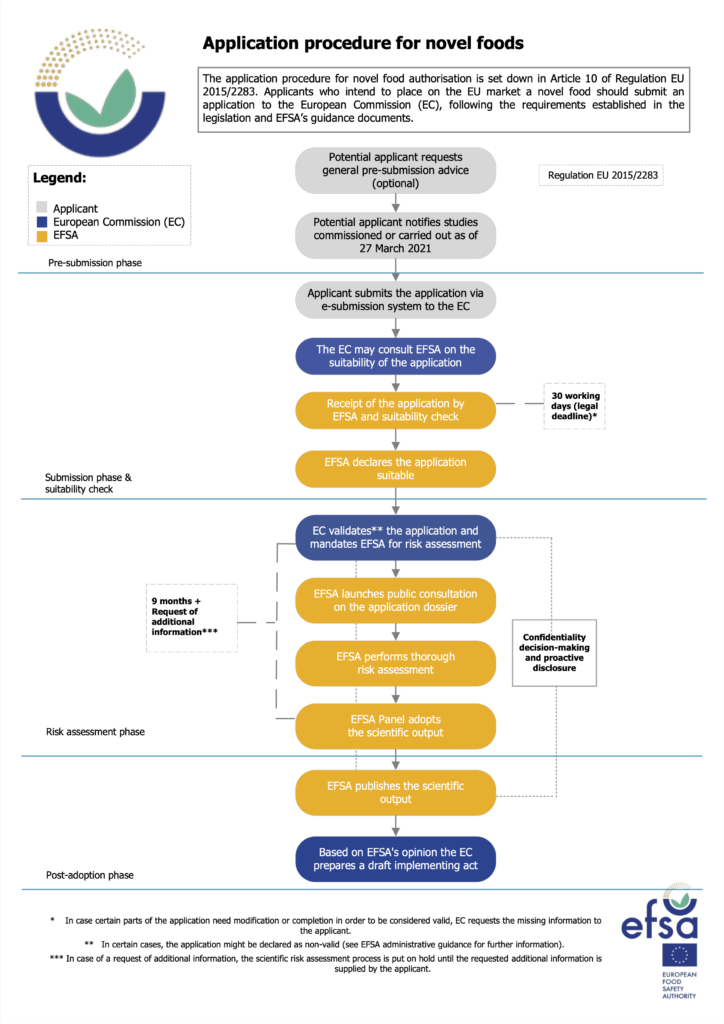
In late 2025 and early 2026, EFSA and the European Commission will introduce new measures for the Novel Food pathway, including a pre-publication notification process, stricter timelines (including “three strikes” for unanswered RFIs), limits on extensions, faster completeness checks, and reduced acceptance of late evidence.
These changes will not resolve Europe’s core issue of unpredictability. However, they do show that early alignment and consistent expectations are now recognised as essential.
It is also worth noting that updates like these are never purely technical. They reflect the political pressure on EFSA and the European Commission to demonstrate predictability, transparency, and tighter process control at a time when novel foods have become a policy battleground.
As one regulator in Dubai remarked: “Innovation slows not because the bar is high, but because the bar is not visible.”
Europe’s reforms are, in their own way, an attempt to make that bar more visible.
The role of early scientific advice
In both Europe and the UAE, one principle remains true: 20 minutes of early scientific advice can save a year of misaligned studies.
Early alignment is the difference between a dossier that moves and one that stalls. In systems like the UAE’s RegLab or Singapore’s early-engagement model, companies know what evidence regulators consider meaningful before they invest heavily in studies.
Europe often provides this clarity only after the data has already been generated. That timing gap explains much of the frustration that founders experience and much of the delay that regulators cannot easily prevent.
Europe’s structure adds to this challenge. EFSA evaluates safety, the Commission manages the process, and Member States approve the final step. With responsibilities split across institutions, early scientific advice is available in theory but difficult in practice. The result is a system where predictability depends as much on navigation skills as on science.
This is not a criticism of Europe’s expertise. It is a reflection of how its machinery works.
Europe’s challenges and opportunities
Europe has strengths that the UAE does not: long-standing institutions, deep scientific heritage, transparent review mechanisms, and strong legal safeguards. These are foundations that many countries would envy.
But Europe also has a persistent weakness: it still lacks simple, predictable early-entry pathways for innovators.
Dubai, Singapore, the UK, and the Netherlands have moved quickly to design systems that welcome innovators early. Europe still treats early engagement as the exception. That difference in approach slows innovation, not because Europe is less capable, but because its system expects alignment to happen late rather than early.
The lesson is not that one region is ahead of another. It is that mindset and tools matter.
Systems built around visibility, predictability, and early alignment consistently outperform systems built around late judgment. When innovators understand what regulators expect, regulators receive better evidence, and society receives safer, more thoroughly validated products.
Europe can do this too. The scientific excellence is there. What is missing is a structure that allows innovators and regulators to meet earlier, share understanding earlier, and close uncertainty earlier. The opportunity is enormous.
A global call to action
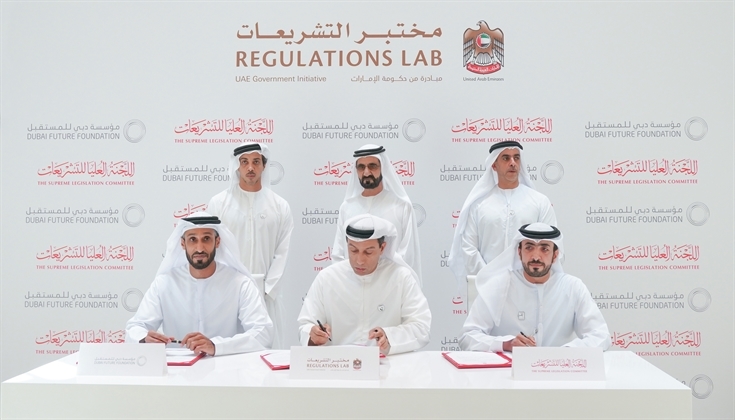
None of this is accidental. The UAE’s progress on regulatory agility, including the federal RegLab initiative and other sandbox approaches across the region, reflects sustained national investment in innovation governance.
At the DIFSC level, the work done by the Dubai Municipality Food Safety team deserves recognition. Their openness and willingness to connect innovators, regulators, and global experts is a major reason Dubai is becoming a regional reference point for more collaborative regulatory approaches.
It complements the UAE’s broader commitment to building a regulatory system capable of learning at the same speed as the technologies it governs.
Dubai demonstrated something important. The future of food will be shaped not only by science or investment, but by regulatory mindset.
Regulatory sandboxes are not experimental add-ons. They are practical tools that reduce uncertainty for regulators and innovators without weakening safety. They create shared understanding, build trust, and make regulatory decisions more predictable.
If foodtech is going to scale, we need regulatory systems that learn as quickly as the technologies they oversee. RegLab is one model. The UK is building another. More will follow. The direction of travel is clear. The question is who will act with intent, and who will wait.
Governments should not wait for perfect rules. They should create structured environments where rules can be informed by real evidence.
Innovation does not need lower standards. It needs fewer unknowns. If governments build systems that learn, adapt, and engage early, then innovation will not have to fight the system.
It will finally have a system designed to help it succeed.
The post Op-Ed: Dubai Summit Shows the Future of Food Hinges on Regulatory Sandboxes appeared first on Green Queen.
This post was originally published on Green Queen.