
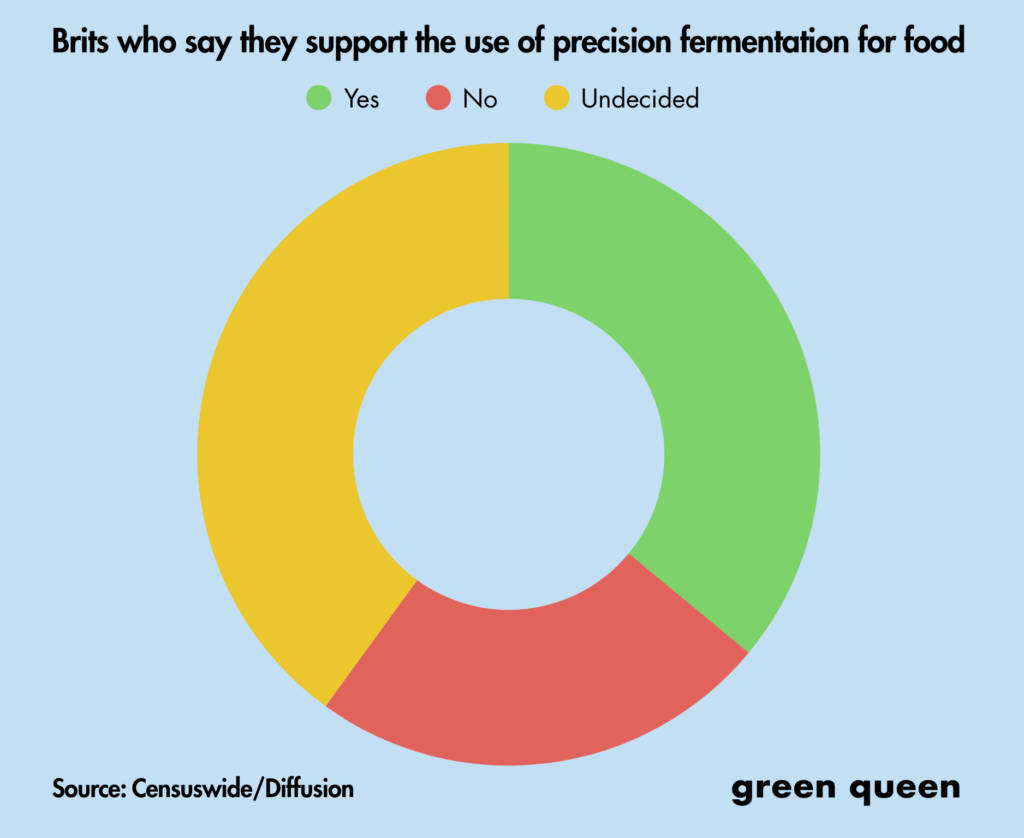
A new survey reveals that 36% of Brits support the development of precision-fermented foods, while 40% are unsure, and marketing experts say the industry must get ahead of misinformation.
Public interest in precision fermentation has been brewing gradually in the UK, but it may be at an inflexion point—and the sector must meet the moment with how it communicates the technology.
According to a new poll, 36% of British consumers back the development and widespread use of precision fermentation for food, 12 points higher than those who oppose it. The remaining 40%, the largest segment of respondents, are unsure or undecided.
And with misinformation about alternative proteins rampant on social media, the fermentation industry needs to outpace the conspiracy theorists with science-backed messaging about the safety and benefits of precision-fermented proteins to convince those on the fence.
“With population growth and rising climate pressures on traditional agriculture, precision fermentation could be an essential solution to maintaining an abundant and affordable food supply,” said Ivana Farthing, science communication lead and UK managing director at Diffusion, which commissioned the survey.
“If we want to keep that option open for humanity, we need to start engaging the public now to build trust and understanding. If we wait to react to misinformation from science sceptics and online conspiracy theorists, the battle may already be lost,” she added.
Precision fermentation companies need to fill ‘big awareness gap’
The nationally representative survey was conducted by Censuswide and involved 2,005 participants, describing precision fermentation as a process “where genetically engineered microbes (like yeast or bacteria) are used to produce food ingredients like milk proteins, eggs, or palm oil in a lab or factory”.
It revealed that the support swings sharply across demographics. For example, British men are much more likely to consume (and increase their intake of) conventional meat; they’re also twice as receptive to precision-fermented proteins (46%) as women (27%).
Likewise, the technology is more popular with younger demographics, supported by 54% of 25- to 34-year-olds, and 48% of those aged 35-44. In contrast, only 25% of people over 55 view precision fermentation positively.
It means that net support for these novel foods falls into negative territory among women and older groups, highlighting the need for “much greater public engagement”.
As for the undecided group, their hesitation indicates a lack of clear understanding about what the technology is and how it can be used. This “unaware but open” cohort can be swayed either way, depending on how precision fermentation is introduced to them.
“There is a big education and awareness gap that needs to start being filled on the science and methodology of how precision fermentation actually works to create food ingredients and to address likely concerns around safety standards, nutritional value and sustainability,” said Farthing.
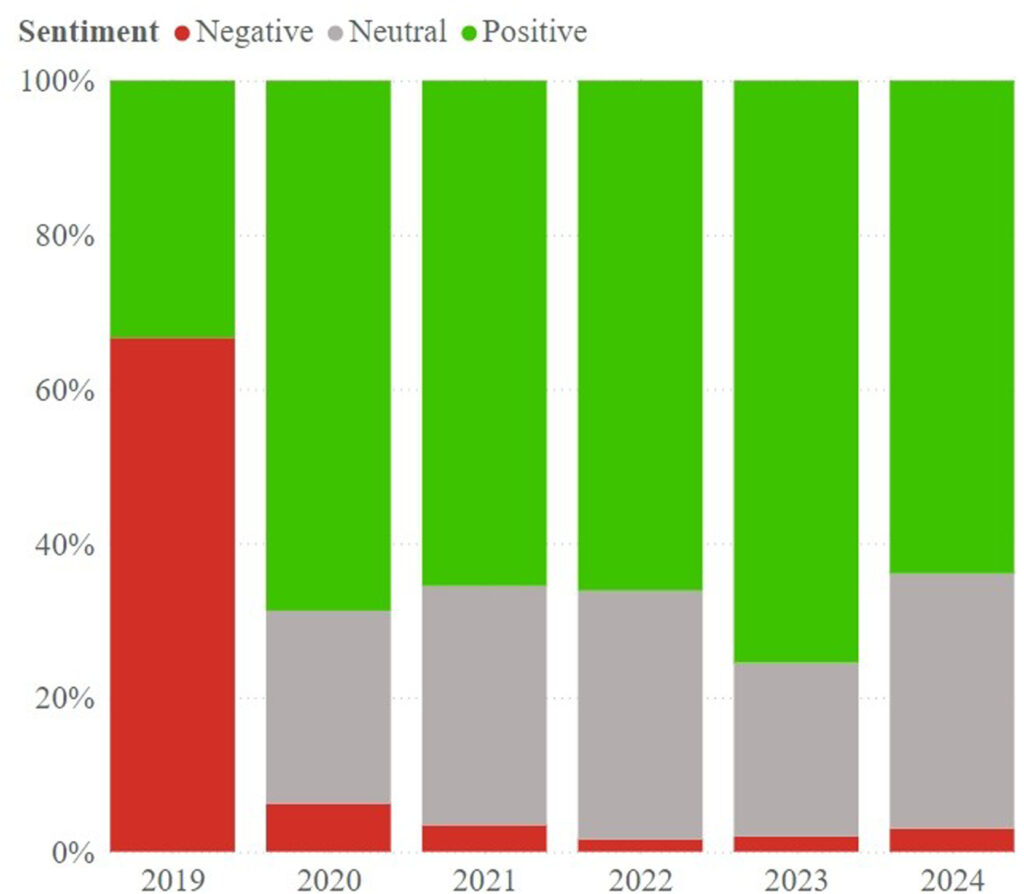
One way to do this is to leverage YouTube. A recent study revealed that two-thirds of videos about precision fermentation on the platform are positive about the technology, while 47% of public comments were neutral, outlining the opportunity for companies to harness this space with evidence-based videos.
Consumer indecision ‘both a risk and an opportunity’
The survey predates the launch of any precision-fermented protein in the UK market; however, it echoes existing research highlighting the potential for consumer acceptance and their current hesitations.
According to the UK’s Food Standards Agency—which regulates such novel foods—52-68% of Brits are open to trying foods made from precision fermentation, though only three in 10 believe they should be made available for sale, based on a review of 19 studies and data from its own poll of over 2,000 respondents.
“We are still in the early days of precision fermentation emerging from the lab and into the public consciousness, so it’s no surprise that many have yet to make up their minds about this breakthrough,” said Farthing. “But for researchers and food tech startups, this consumer ambivalence represents both a risk and an opportunity.”
She took the example of cultivated meat, which is supported and opposed by 33% of Brits each, according to Diffusion’s survey. “In the US, we have already seen seven states ban the sale of cultivated meat, with some even outlawing further research and development. It’s a lesson we need to learn: new industries that don’t shape the debate risk being shaped by the debate.”

Fermentation companies can attract consumers by relying on their taste buds. In a five-country study involving Europe and the US, over half of consumers said they’d try a precision-fermented product if someone else gave it to them, and their interest in buying it increased after being told about the technology’s benefits.
Fermentation-derived proteins have massive benefits for food security, animal welfare, and the planet, but getting more consumers on board can also help economically. Recent analysis has found that these technologies can generate £9.8B in annual economic value and £2.4B in exports for the UK.
And the government has ramped up its support too: the FSA has launched a £1.4M Innovation Research Programme to enhance its capabilities and expertise on these technologies and provide greater clarity to fermentation companies on how to file for approval.
The post With Brits On the Fence About Precision Fermentation, the Industry Must Outpace Misinformation appeared first on Green Queen.
This post was originally published on Green Queen.