New York, December 2, 2025 — Since what human rights groups and UN experts agree is a genocide in Gaza began in October 2023, the Committee to Protect Journalists has worked relentlessly to sustain the journalists documenting the deadliest war for the press ever recorded. CPJ has spent more than $500,000 to provide both humanitarian and professional assistance to Gaza’s press corps — reaching 2,195 Palestinian journalists despite the extreme constraints of siege, famine, and mass displacement.
Balancing humanitarian survival and journalistic duty

Gaza’s media landscape has been devastated over the course of two years of war. Journalists have lost colleagues, homes, and equipment, yet continue to report under bombardment and blackout. CPJ’s support—split between large-scale projects (costing more than $400,000) and individual grants (over $100,000)—has aimed to meet both urgent survival needs and the core requirements of journalism itself.
“Given the fluidity of the situation on the ground,” said CPJ Chief Emergencies Officer Lucy Westcott, “we’ve had to strike a balance between humanitarian needs—food, cash, clothing, hygiene kits—and journalistic ones such as equipment, safe workspaces, and psychosocial support.” While CPJ typically focuses on safety, advocacy, and emergency assistance, the organization’s response to crises is “adaptable to evolving circumstances and guided by the specific needs of journalists in crisis situations,” Westcott explained.
2024: Emergency response amid escalation
In 2024, CPJ disbursed nearly $400,000 through grants to local partners to reach journalists throughout Gaza. The Palestinian Journalists Syndicate (PJS) received $120,000 to deliver humanitarian relief—food, blankets, hygiene kits, winter clothing, and power banks—to reporters and their families. The Arab Reporters for Investigative Journalism (ARIJ) was granted $105,000 to replace essential journalistic equipment destroyed in airstrikes, while Filastiniyat, a women-led media group, received $102,350 to distribute direct cash support to journalists.
Through these projects, at least 1,844 Palestinian journalists and their families received assistance.
In addition, CPJ issued more than $40,000 in individual emergency grants to 12 journalists in Gaza and the West Bank, primarily for medical care and legal assistance.
Despite the destruction of infrastructure in Gaza and the persistent airstrikes that made direct assistance increasingly difficult, CPJ reached journalists who suffered serious injuries in Israeli attacks, had to defend themselves in court after being arrested for their reporting, or needed help rebuilding their lives after prolonged detention.
“Medical support was the most covered need,” said CPJ Chief Emergencies Officer Lucy Westcott, “followed by legal aid for those detained or targeted for their reporting both in Gaza and the West Bank.”
2025: Supporting recovery and resilience
As the ceasefire took hold in 2025, CPJ shifted its focus toward recovery, rebuilding, and mental health. The organization distributed more than $100,000, before the October ceasefire, in grants to partners that prioritized safe workspaces and psychosocial support.
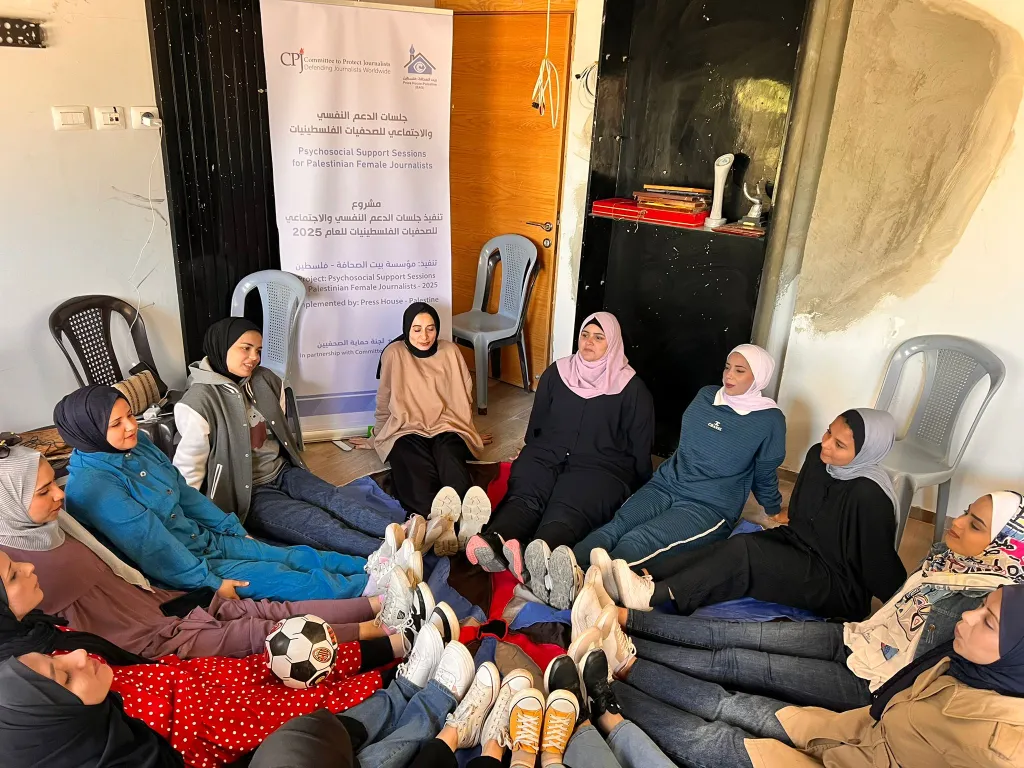
CPJ provided targeted support to local and regional organizations, including $25,000 to Press House Palestine for mental health sessions for women journalists; $45,000 to ARIJ to maintain shared workspaces in northern Gaza; and $30,700 to Filastiniyat to operate two combined work-and-rest hubs in central and southern Gaza. Together, these initiatives reached at least 307 journalists.
Gazan journalists who took part in the psychosocial support sessions organized by Press House Palestine described the program having a significant positive impact on their wellbeing. “The war in Gaza deeply affected me as a woman journalist in Gaza. I was overwhelmed and needed someone who understood what I was going through. The psychosocial support sessions at Press House helped me express myself and regain a sense of who I am,” said a Gazan journalist from Rafah.
The brother of Mohammad al-Khaldi, who was murdered in a targeted Israeli strike on a tent housing journalists outside the main gate of Gaza City’s Al-Shifa Hospital on August 10, 2025, said the ARIJ workspace in northern Gaza was a rare safe space for the press.
“I used to speak to my brother and could tell how much that place meant to him,” he said, noting journalists could rely on the workspace for access to internet, electricity, and water. “He was at his best — mentally at ease, surrounded by his colleagues who shared his struggles. ”
CPJ also issued more than $60,000 in direct grants to 32 journalists in 2025, covering medical and post-detention recovery needs.
Partnering with trusted local organizations
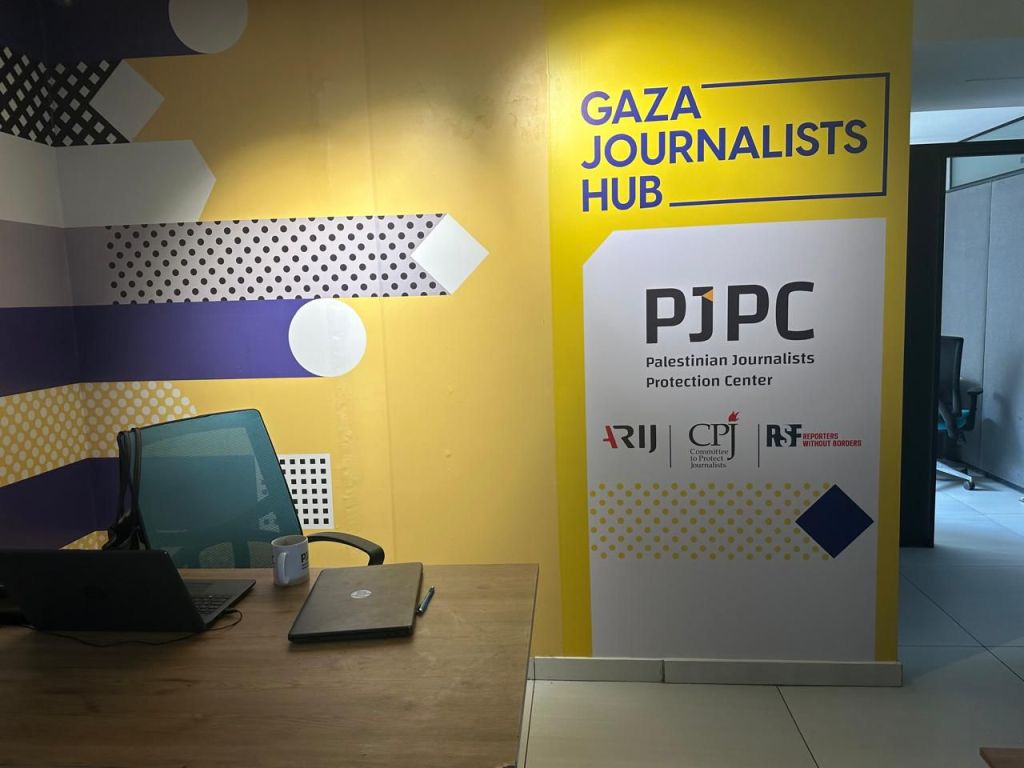
Since 2023, CPJ has relied on local and regional partners—ARIJ, PJS, Filastiniyat, and Press House Palestine—to deliver aid where international access remains restricted. These organizations are deeply embedded in Gaza’s journalist community, allowing for efficient aid distribution, accurate vetting, and trusted communication.
CPJ employs rigorous monitoring to ensure grants are used for their intended purposes. Partners provide regular updates and written reports on implementation and impact. Final approval for any partnership is contingent on extensive due diligence, including background checks against relevant U.S. government’s sanctions list and verification of legal registration.
“Amid the blockade and communication blackouts, we’ve maintained strict reporting requirements and continuous dialogue with our partners,” said CPJ Regional Director Sara Qudah. “Transparency is vital to ensure that journalists in Gaza receive the support they need.”
Standing with Gaza’s journalists
While the ceasefire in October has slowed large-scale fighting, Gaza’s journalists remain on the frontlines of a humanitarian catastrophe. Many continue to live in displacement, struggling to rebuild their lives while documenting the aftermath of destruction.
While relocation from Gaza remains extremely difficult due to ongoing restrictions, border closures, and limited international visa options, CPJ provides letters of support for journalists’ visa and asylum applications, as well as limited assistance once they reach another country. CPJ continues to urge governments to expand safe refuge and visa pathways for Gaza’s press workers.
“Even as relative calm sets in after over two years of genocide, journalists in Gaza still need support,” Qudah added. “They remain the world’s eyes and ears on a story they are living and documenting themselves.”
This content originally appeared on Committee to Protect Journalists and was authored by CPJ Staff.
This post was originally published on Radio Free.