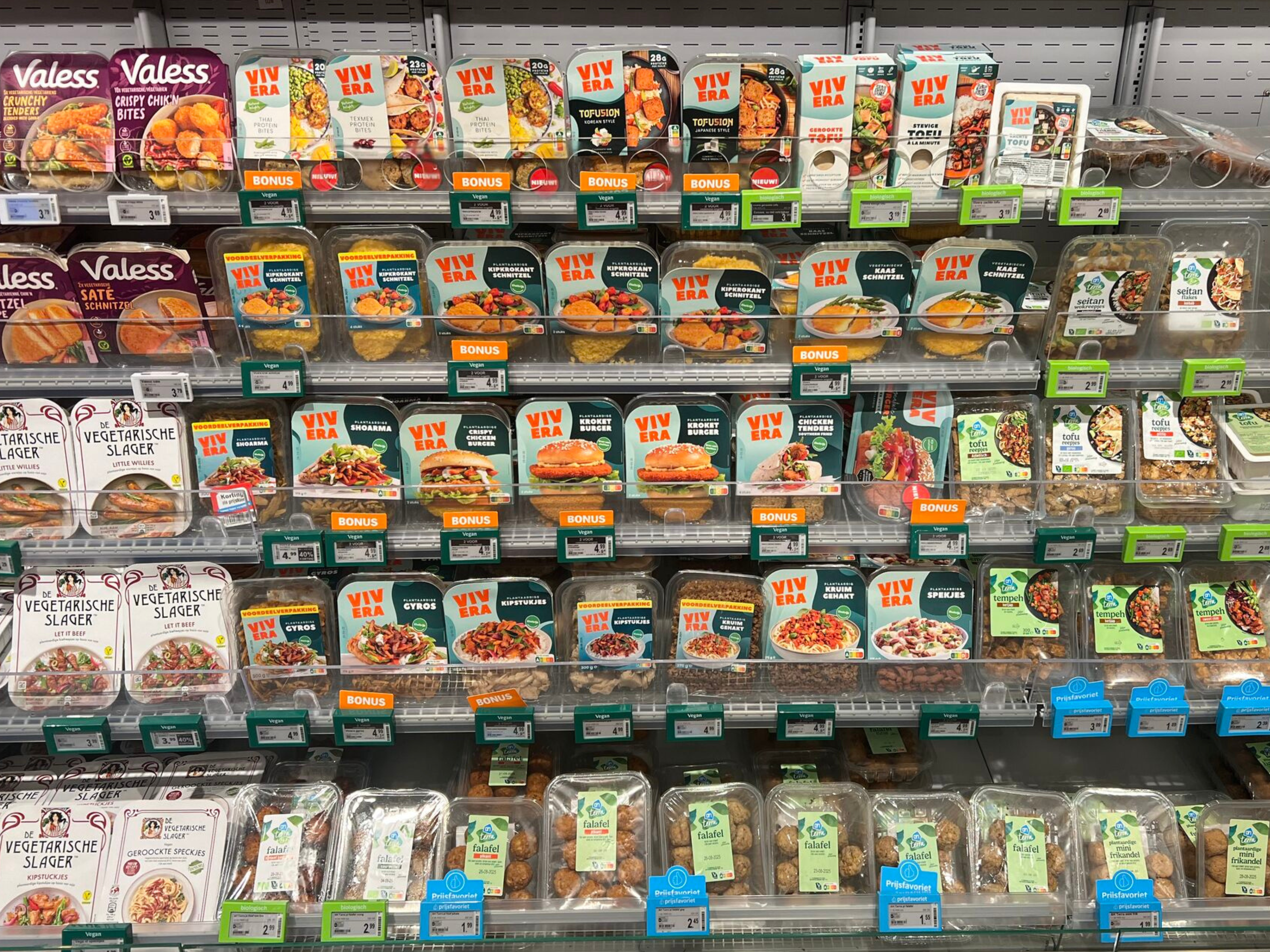
The Dutch food regulator has temporarily suspended its ban on the labelling of plant-based protein products as ‘mince’, instead opting to wait for EU-level clarity on the subject.
A month after introducing a law that would fine vegan food producers for using the word ‘mince’ on their ground meat alternatives, the Netherlands is hitting pause on its enforcement.
The Dutch Food and Consumer Product Safety Authority (NVWA) had stated that businesses would risk being fined up to €1,050 if they used the term ‘plant-based mince’ on their product packaging and marketing materials, citing a 1998 law.
Last week, it said it would suspend the law for now, seeking clarity on vegan labelling rules at the EU level. The bloc’s lawmakers and member states are currently considering a wider ban on the use of meat-like terms on plant-based products, with a decision expected next week.
If the EU does decide to ban these labels, the rules likely wouldn’t be in place until 2027, which is what prompted the NVWA to postpone the enforcement of its ‘mince’ law.
Now, companies and advocacy groups are calling on the Dutch government to scrap the law altogether, with new research unequivocally proving that consumers are not confused by plant-based meat labels.
Why the NVWA postponed its ‘plant-based mince’ ban
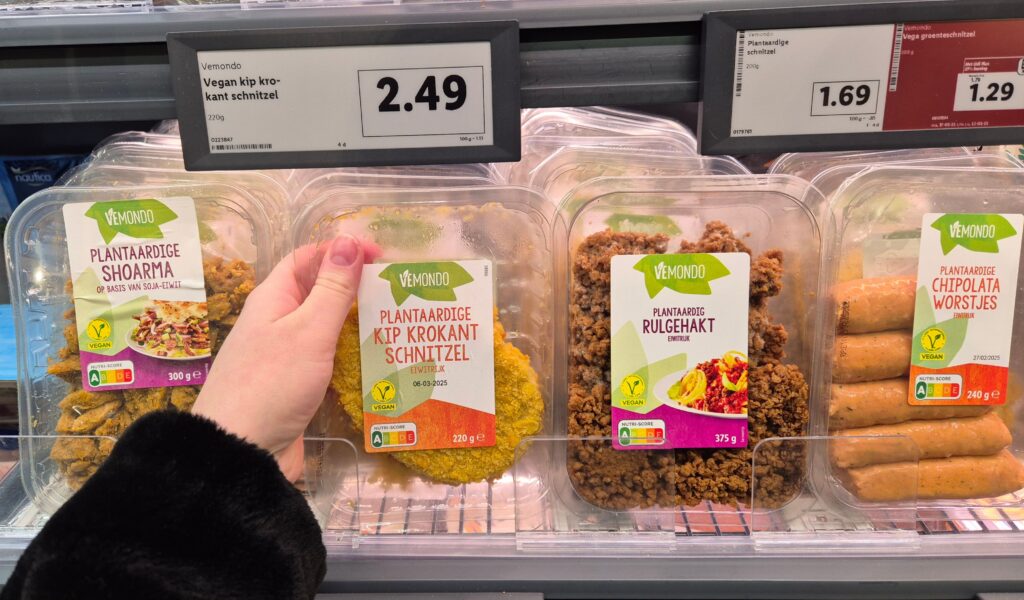
The NVWA’s original decision was based on a Commodities Act Decree on meat products from 1998, in which ‘minced meat’ was deemed a protected designation only to be used on animal proteins. The regulator said it came across the term ‘plant-based mince’ during an investigation into the use and labelling of additives in meat alternatives.
It issued a warning to six manufacturers and retailers that sell vegan mince from major brands or their private labels. That includes sister brands The Vegetarian Butcher and Vivera, which have been using the term for 15 years. Industry representatives accused the NVWA of nitpicking by using the decree to ban plant-based meat labels.
The Vegetarian Butcher, pointed out that the law was published at a time when plant-based alternatives were virtually non-existent, and so wasn’t intended to ban the use of the term on these products.
Nevertheless, the regulator notified Vivera – which, like The Vegetarian Butcher, is owned by meat behemoth JBS – that it violates the new law and is facing a fine. Days later, however, the NVWA walked back on this warning.
This is because, in parallel to its law, policymakers in the EU have been pushing for a ban on a range of animal-free meat labels, including ‘veggie burger’, ‘vegan bacon’, and ‘cell-cultured steak’. The motion was passed by the European Parliament in October, and is now being discussed in interinstitutional negotiations between the EU Commission, Council and Parliament.
The latter’s vote in favour of a ban has been criticised by many politicians across Europe, including Dutch MEPs. Anna Strolenberg, a member of Volt, had slammed the proposal as a “waste of everybody’s time”.
“We could have spent this time debating the fact that our planet is on fire, the fact that we have a brutal war on our borders, and that our societies are getting angrier and more divided. And instead, when Europeans look at their leaders, what do they see? They see us discussing burgers,” she said.
Even if Brussels decides to press ahead with a ban, there will be a transition period for companies to change their packaging and align with the rules, and it won’t be clear exactly which designations are banned until 2027, the NVWA said. Until then, companies like Vivera and The Vegetarian Butcher are free to use a ‘plant-based mince’ label on their plant-based mince products.
Polling proves people aren’t confused by plant-based meat labels

One of the main factors cited by proponents of a ban on plant-based meat labelling is that it confuses customers, who could unwittingly pick up a vegan schnitzel instead of a chicken-based version.
Study after study has disproven this theory over the years, and one new survey from the Netherlands adds to the evidence. Broadcaster Avotros polled over 20,000 members of its Radar Panel and found that 96% recognised a vegetarian sausage as one without meat.
That hasn’t changed from five years ago, when the same share of consumers said they understood the difference between meat and an animal-free alternative. “I find it very condescending of the meat industry to use the argument that people can’t tell the difference between products,” one participant said.
In fact, the share of Dutch consumers who are confused by these labels has shrunk from 35% in 2020 to 25% today, although (as evidenced above) almost all of them can still differentiate between vegan and non-vegan sausages.
If an EU-wide ban on such labels goes through, some advocates of the legislation have suggested ‘discs’ and ‘tubes’ as alternative names for vegan burgers and sausages, respectively. However, the Avotros survey found that these terms actually cause more confusion, with 30% of respondents unclear about what they mean.
Moreover, nearly 70% of Dutch consumers oppose a labelling ban on plant-based meat products, and 63% don’t think it’s important to create regulations on this matter. “It’s a waste of the European Commission’s time (and therefore money); they should focus on more important matters,” said one respondent, echoing Strolenberg’s words.
In response to the NVWA’s ban, food advocacy organisation ProVeg International kickstarted a petition urging the Dutch House of Representatives to scrap the law and reject the EU Parliament’s plans. It has already received more than 24,400 of the 25,000 signatures it is targeting.
The Netherlands is aiming to make half of the national protein intake come from plants by 2030, and meat consumption has already fallen to its lowest levels on record. It’s why ProVeg is asking lawmakers to focus on protecting consumers’ freedom of choice and the growth of sustainable proteins.
The post Dutch Govt Pauses Ban on ‘Plant-Based Mince’ Until 2027, Awaiting EU-Wide Labelling Clarity appeared first on Green Queen.
This post was originally published on Green Queen.