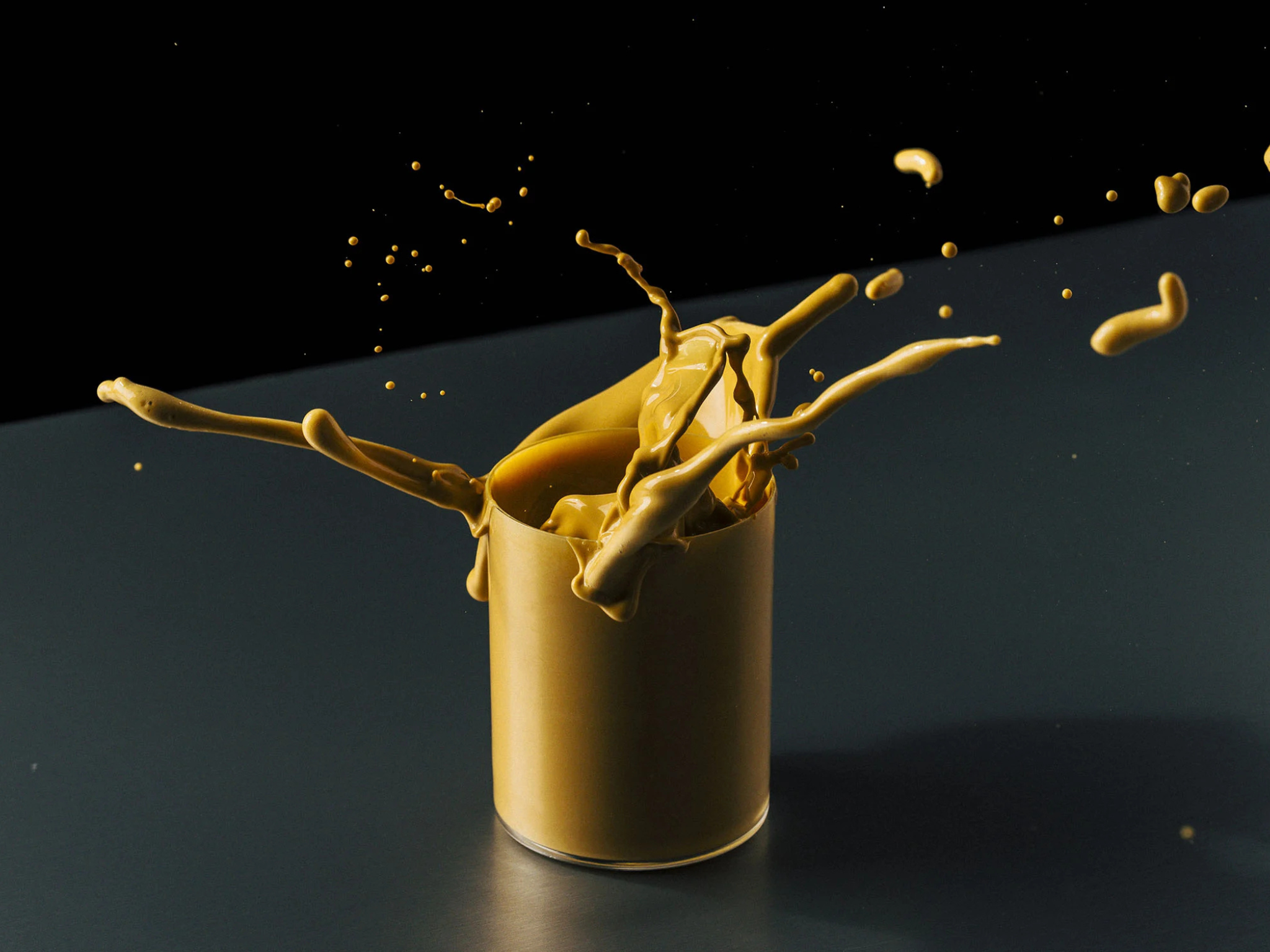
Solar Foods has teased Solein Cream as one of many applications for its gas-derived protein, with a three-ingredient solution that could solve the bottlenecks for non-dairy products.
An emulsion of water, oil, and carbon could usher in a new dawn for dairy-free ice creams, coffee creamers, and even yoghurts.
Finnish food tech firm Solar Foods produces a powdered protein by feeding microbes on gases like carbon dioxide, hydrogen and oxygen instead of sugar. The ingredient, called Solein, has a deep-yellow hue with high amounts of complete protein and a fraction of the environmental footprint of animal or plant proteins.
The ingredient has already appeared in a range of products and prototypes, from mayonnaise and mooncakes to snack bars and protein shakes. One of its newest iterations came in the form of a cream alternative, which was debuted as part of lattes by Ajinomoto Group in Singapore, also featuring Prefer’s beanless coffee.
Now, Solar Foods is lifting the lid on Solein Cream and making its case for why the innovation can address some of alternative dairy’s most pressing pain points.
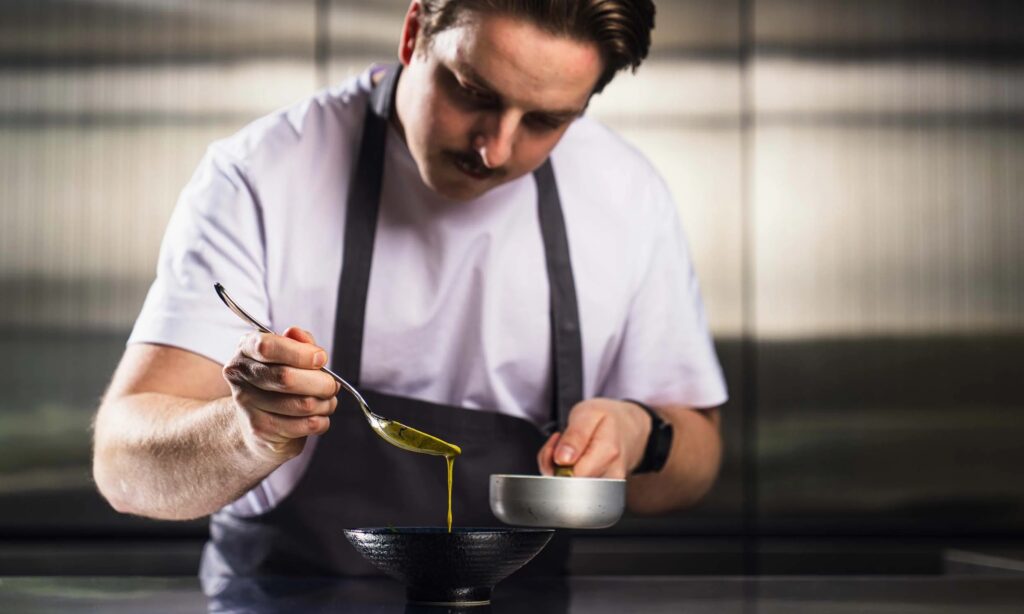
“It’s not from cows, and it’s not made of oats, soy or almonds either,” Solar Foods’s head chef, Miikka Manninen, pointed out. “But it behaves like cream. Even better.”
Solein Cream shines in coffee and culinary applications
Solein is a neutral-flavoured powder with 78% protein, 6% fat, 10% dietary fibre, and a macronutrient profile akin to dried soy or algae. It has all nine essential amino acids, zero cholesterol or saturated fat, and is packed with iron and vitamin B12.
These properties are transferred into Solein cream, which has roughly three times as much protein as its dairy equivalent, while being significantly better for the planet.
The main raw materials needed to produce the protein are carbon dioxide and renewable energy, resulting in emissions equal to just 1% of those generated by conventional meat, and 20% of plant proteins. According to Solar Foods’s projections, replacing a kilo of whole milk with Solein could help save 20kg of CO2e.
Functionally, Solein Cream emulsifies, reduces and sets without gums or modified starches. It doesn’t curdle, sets cleanly when cooled, and cooks the same way as cream in culinary applications.
Remarkably, it does so with just three ingredients: Solein, water, and vegetable oil. The company suggests that plant-based creams often rely on long lists of stabilisers, emulsifiers, gums and modified starches to hold together and survive heat.
“If you read the label on many plant-based creams, there’s a lot going on to imitate what milk fat and proteins do. We don’t need that with Solein,” said Manninen.
This will appeal to consumers looking for cleaner labels. In the US, where Solar Foods is cleared to sell Solein, more than a quarter of consumers who buy plant-based milk want simpler ingredients, or at least ones they can understand.
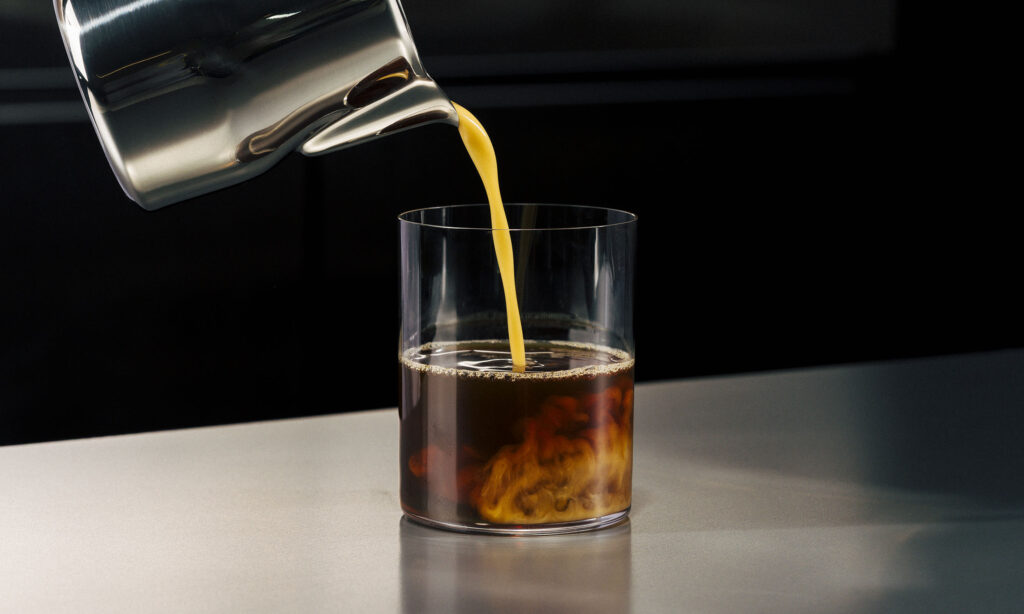
The protein could be used to boost a variety of non-dairy products. A half-and-half blend of Solein Cream and espresso yields a rich iced coffee, and at a lower fat level (say, 2%), it becomes a smooth protein drink.
It works as a base for clean-label ice creams, béchamel for lasagna and pasta, and soups too. Manninen said Solein Cream can be cultured and turned into yoghurts and spreadable cheese for cheesecakes and savoury pies, and add moisture and structure to cakes and quick breads.
Majority of taste-testers pleasantly surprised by Solein Cream
Speaking to Green Queen, Maria Rämö clarified that Solein Cream isn’t a ready-to-use product; rather, it’s more of an application for its protein, which is still in development.
“Solein is meant to be used as an ingredient by the food industry, who will then develop the final products that will be available for consumers. We work closely with our customers to support the development of final consumer products,” she said.
“Solein Cream is an application where we see a lot of potential, and we are still testing and exploring it to know more,” she added. “Our chef Miikka Manninen has observed that it’s able to endure things like acidity and heat, and it stays stable in such processing methods.”
Manninen highlighted that cream’s job in food is to make other flavours bloom. “Solein Cream behaves the same way, with a rounded, slightly umami undertone that flatters, for example, coffee, chocolate and roasted notes,” he said. “Nine out of 10 people are surprised by how familiar it tastes. They expect compromise and get cream.”
Could the vivid yellow colour hinder the cream’s appeal or adoption? “Solein’s yellow colour comes from carotenoids,” said Rämö. “It is completely non-GMO, and we have not wanted to modify our microbe in any way, instead keeping it as natural as it is.”
For his part, Manninen suggested that the yellow colour could be a key feature, or otherwise vanish into foods and products. Further, the microbial cream doesn’t have the off-notes that plant-based dairy is often associated with. Asked how it contrasts with products made from precision fermentation, Rämö said the company had not yet made any comparisons with that category.
“As Solein is a completely new ingredient, we continuously discover its many uses and develop applications and product prototypes showcasing how it can be used in end products,” Rämö outlined.
The ingredient is set to debut in the US early next year, as part of a line of ready-to-mix protein powders under Pothos’s PRVL brand, and a range of gluten-free protein bars by Fermenta.
The post Carbon Cream: Can Solein Protein Change the Game for Dairy-Free Alternatives? appeared first on Green Queen.
This post was originally published on Green Queen.