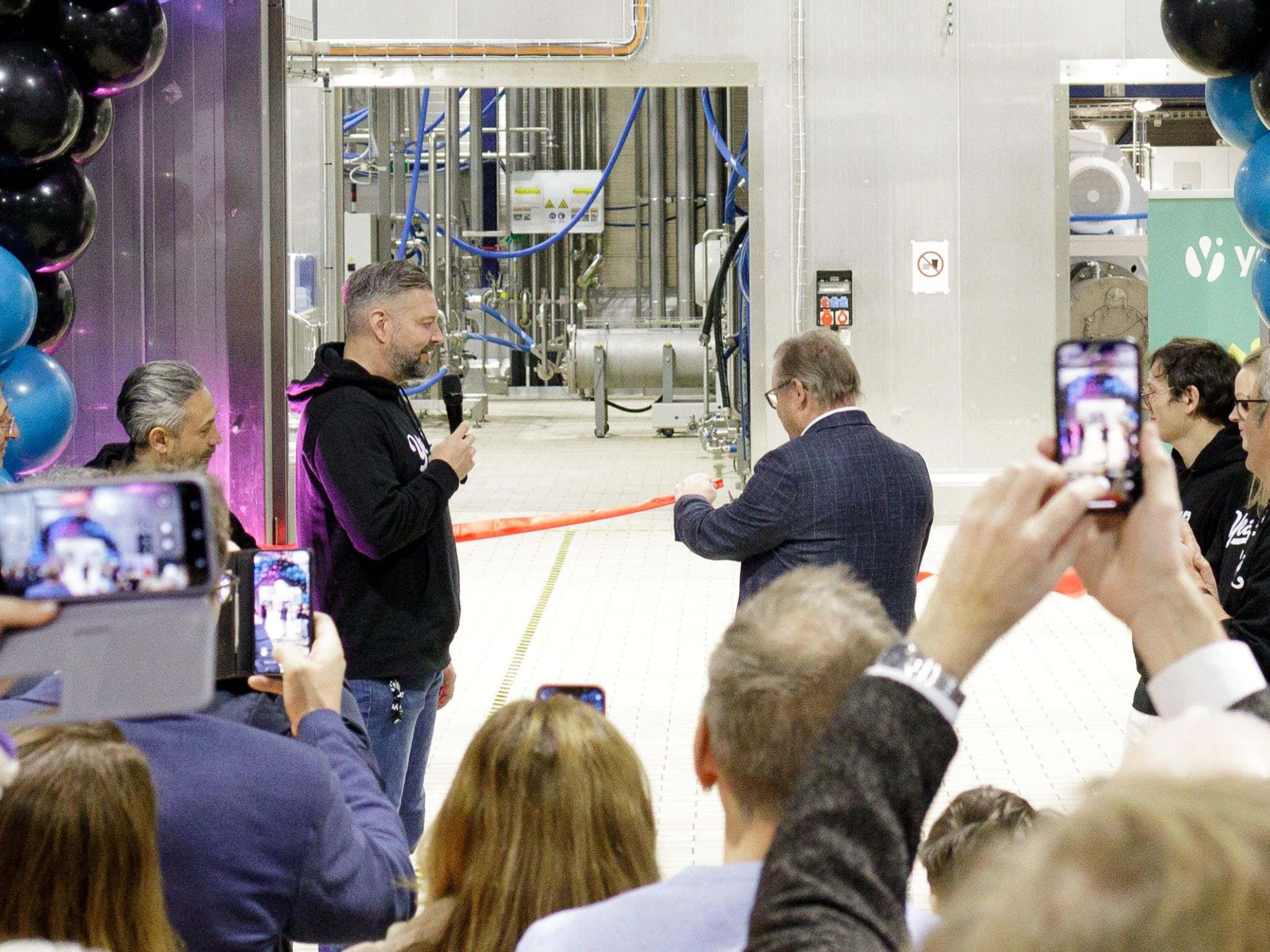
Swiss food tech startup Yeastup has opened an industrial-scale facility to repurpose spent brewer’s yeast into proteins and functional ingredients. It’s now raising another Series A round.
Switzerland’s Yeastup has opened an industrial-scale facility to produce proteins from beer waste, a year after raising nearly $10M to convert what was formerly a dairy plant.
Located in Lyss, the factory can process 4,000 litres of spent brewer’s yeast every hour, enabling the startup to manufacture proteins and functional ingredients for a range of applications.
Its protein solutions, sold under the Yeastin label, can replace eggs in a suite of products, enhance the texture of plant-based meats, and boost protein bars and sports nutrition products with a collagen peptide alternative called Nutra. It also makes a dietary fibre ingredient called UpFiber.
“Our Yeastin Nutra enables the development of bars with a soft, candy bar-like consistency, without any animal ingredients,” said Yeastup co-founder Daniel Gnos. “This application showcases the technological potential and versatility of our protein fractions.”
How Yeastup turns beer waste into functional ingredients
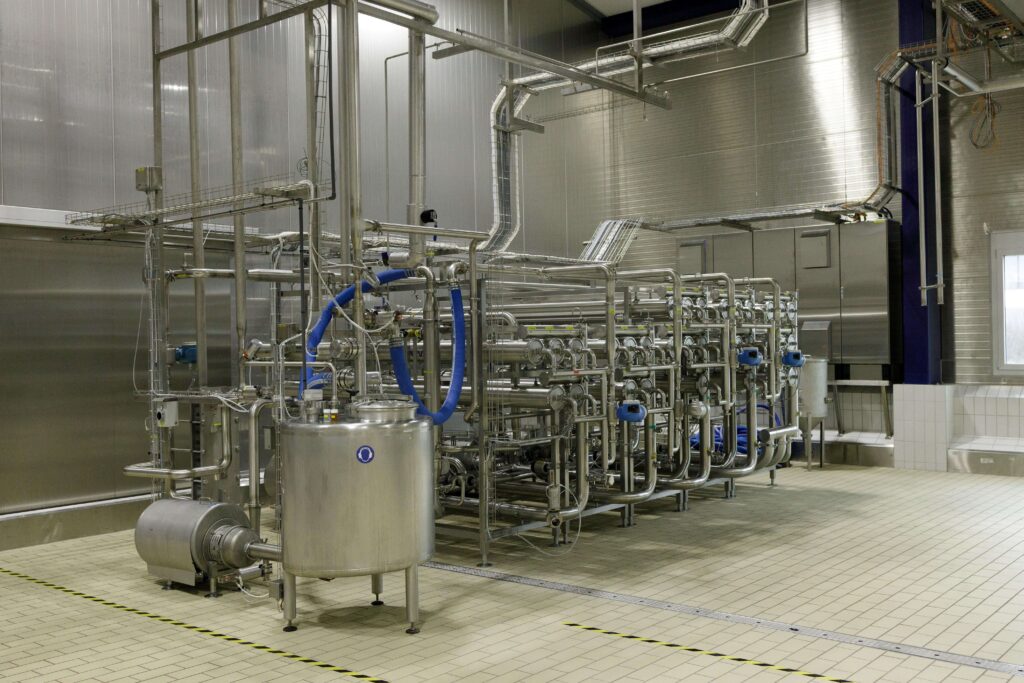
Gnos founded the startup with Urs Briner in 2020, having devised a patent-pending process that combines mechanical and gentle cell disruption with phase separation methods and advanced membrane technology to isolate protein, beta-glucan and mannoprotein in a single industrial process.
This removes unwanted fermentation byproducts, like bitter compounds, and produces soluble yeast proteins and high-quality fibres. Water is recovered and reintroduced into the process, which helps the company close the loop and contribute to the circular economy.
Its protein has a digestibility score of 1.0 (akin to that of eggs, whey or beef), is soluble, and has a neutral taste. Its production generates 81% fewer emissions than beef, and requires no farmland.
Yeastin Prime’s Yeastin Prime’s gelling, binding and emulsifying properties make it a suitable replacement for eggs in things like vegan mayo, creamy spreads, and baked goods. This will appeal to manufacturers scrambling for solutions to the egg crisis. Avian flu outbreaks have sent egg prices soaring to record highs, with hundreds of millions of chickens culled and supermarket shelves regularly devoid of eggs for large parts of this year.
Yeastin Nutra, meanwhile, has high solubility with 84% protein content, making it ideal for nutrition bars and ready-to-mix drinks. And Yeastin Umami is a functional protein that boosts umami notes, juiciness and bite in meat alternatives without any other additives.
As for its fibre solutions, these have advanced functionalities like optimal gelling and water-binding properties, along with low-temperature applications and gut benefits. These include UpFiber Beta-Glucan, ideal for dietary supplements, functional foods and skincare; a collagen blend with Gelita’s Verisol HST for functional gummies and beauty products; and Beta-Glucan BGV, an immune- and gut-boosting powder for pet food and supplements.
Yeastup confident of Series A raise

Yeastup began production of initial samples and pilot batches at the Lyss site earlier this year, and has since ramped up the capacity from 1,600 to 4,000 litres an hour.
The 1,700 sq m facility is now fully equipped and is operated by 16 employees, with regular production expected to begin in early 2026. The startup is looking to make it a round-the-clock operation.
At the facility’s opening, Yeastup showcased samples of its first vegan protein bars, with the spent brewer’s yeast protein replicating the functionality tasks of hydrolysate, a common ingredient used to improve the texture, moisture retention and mouthfeel of conventional products.
It has invested around $12.5M in venture funding to develop its patented process, alongside several years of research in collaboration with the University of Applied Sciences and Arts Northwestern Switzerland.
Still in its growth phase, Yeastup is now preparing to raise an additional Series A round to accelerate production after the successful site conversion and capacity expansion, as well as accelerate international market development.
“Following the completion of Innosuisse funding and technology financing in 2025, we are now focusing on scaling, product development and building long-term strategic partnerships,” said Gnos. “With industrial readiness achieved and initial customer projects underway, now is a very good time for investors to get involved with Yeastup and help shape the next stage of growth.”
Yeastup is one of several startups innovating with yeast proteins and functional ingredients, such as Angel Yeast, ProteinDistillery, Revyve, Intake, and SuperYou, among others.
The post Yeastup Opens Large-Scale Factory to Produce Proteins from Beer Waste appeared first on Green Queen.
This post was originally published on Green Queen.