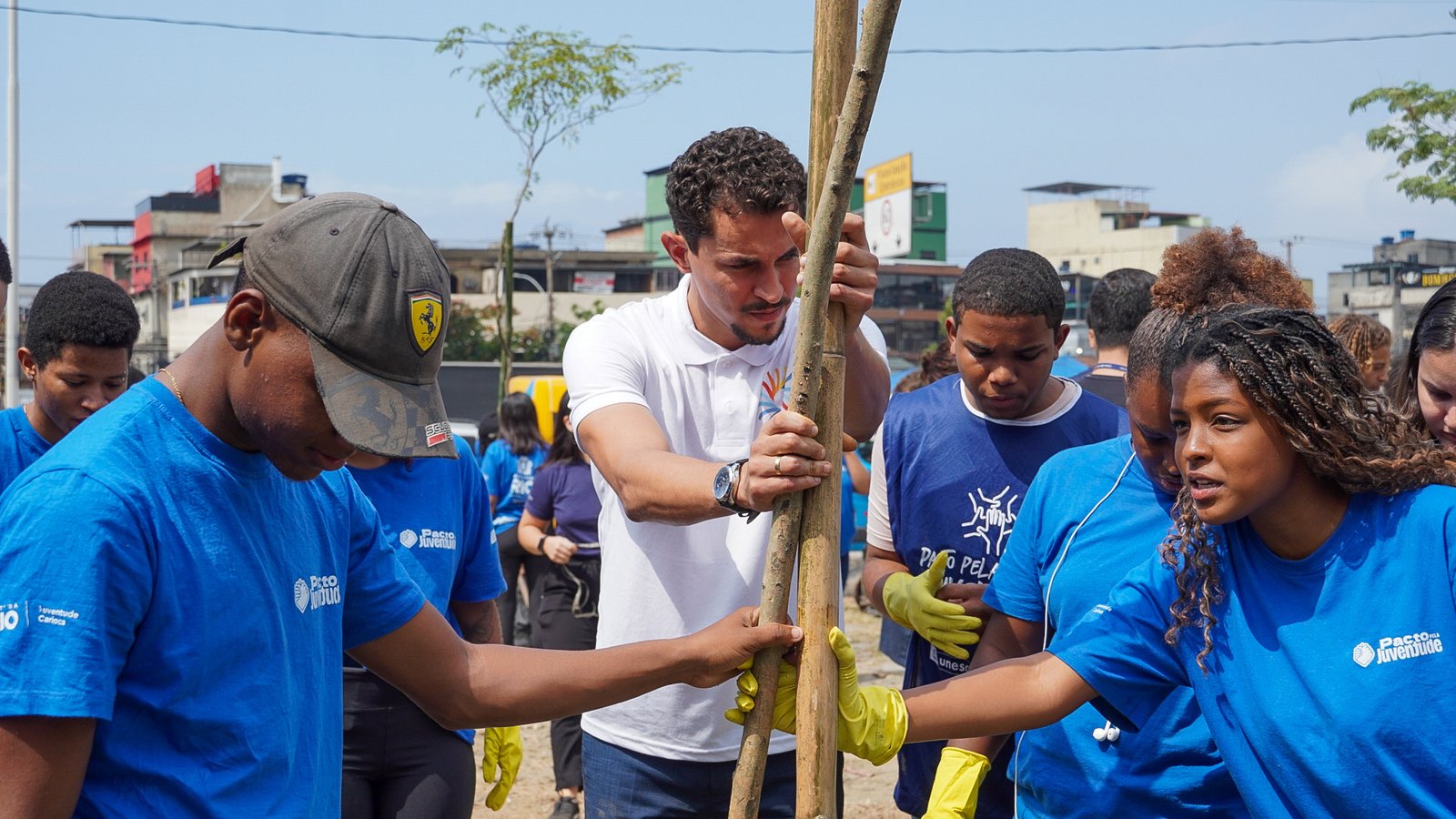
Salvino Oliveira was honored as a 2025 Young Activist Summit Laureate. | Courtesy of Jefferson Teófilo
On 22 December 2025, Global Citizen published the story of how at 27, Salvino Oliveira went from being a street vendor in Rio’s Cidade de Deus to a city councilor leading education reform. This was followed by him starting his first social project: making tuition free for poor children at 15 years old. In recognition of his efforts towards making education more accessible, Oliveira has been honored as a 2025 Young Activist Summit Laureate. Here, Oliveira shares how education transformed his life, and why he’s committed to making that transformation accessible to every young person in Brazil’s favelas.
My name is Salvino Oliveira, and I am everything I’ve been.
I say this because my story begins in a tiny house in Cidade de Deus, meaning City of God, a favela in Rio de Janeiro. At 13, I started working to help my family survive: selling water bottles at traffic lights, candy on buses, working as a street vendor, upholsterer, construction helper — anything honest that could put food on the table.
But Cidade de Deus is more than poverty. It’s the Rio neighborhood with the most public squares, making it a natural place for culture, leisure, and community gathering. It’s the birthplace of funk carioca — the soundtrack of favela resistance and joy. It’s also home to Olympic athletes and artists. These public spaces and that cultural richness shaped who I became, the friends I made, my first loves, the things I believe in.
Then I got lucky. I was selected by lottery to study at Colégio Pedro II, one of Brazil’s most prestigious tuition-free public schools. In Brazil, elite families typically send their children to private schools, while public schools serve the poor; a few exceptional public institutions, like Pedro II, offer quality education through competitive lottery systems. That education changed everything. It opened a door that seemed permanently locked for someone from my background. At 15, even while working and living with gun violence all around me, I understood that if this access had reached me, I had a responsibility to give it back.
At 15, I created my first social project: free tutoring for children in Cidade de Deus.
When I entered Brazil’s federal university system to study Public Administration at Universidade Federal do Rio de Janeiro (UFRJ), a tuition-free institution, like all public universities in Brazil, that social project grew into AfroEducando (later renamed Mais Nós), a community prep course for university entrance exams. Within one year, we had 22 units across Rio’s metropolitan region, all volunteer-run, helping first-generation Black students from favelas access higher education.
When the “social bug” bites you, there’s no going back — and so the projects continued. I co-founded Projeto Manivela to train community leaders to engage with the government and turn demands into policies. Then came PerifaConnection, a media platform where young people from favelas across Brazil write columns in major national newspapers about politics, economics, culture, climate, and human rights. The idea was simple and radical: we refuse to let other people tell our story for us. Mainstream Brazilian media have historically portrayed favelas primarily through the lens of crime and poverty. Today, favela youth occupy editorial space in national media, changing how Brazil sees its peripheries.
I became an activist in 2018 during the federal military intervention in Rio’s security forces. Working at the Public Security Observatory, I saw firsthand how policies treated favelas like war zones, with heavily armed police operations causing civilian casualties. As I became more visible in my community, friends warned me: “Be careful, you’re an activist now. This can put you at risk.” That’s when I understood that fighting for education and rights in Rio means challenging power structures involving politics, money, and organized crime that often operate in contested urban territories.
https://www.globalcitizen.org/en/content/rio-favela-to-city-hall-education-oliveira-yas/
This post was originally published on Hans Thoolen on Human Rights Defenders and their awards.