
New Zealand startup Leaft Foods has signed a distribution deal to use its Rubisco protein as an egg replacer in baked goods, ahead of a major year of expansion.
How would you like a brioche made with alfalfa leaves instead of eggs?
If you’re in New Zealand, that could soon be a reality, thanks to a partnership between food tech startup Leaft Foods and Foodstuffs South Island, a cooperative with over 200 stores nationwide.
The agreement revolves around Rubisco, the world’s most abundant protein. It’s found in the leaves, not seeds, of green plants – and Leaft Foods’s version is sourced from alfalfa grown in the Canterbury region.
Foodstuffs will utilise its Leaf Rubisco protein to replace egg protein in a range of baked goods, amid the ongoing supply shocks and skyrocketing prices of chicken eggs.
It is one of a number of manufacturers working with Leaft Foods, which has now begun commercial-scale production of its Rubisco protein, as part of its expansion plans for 2026. This involves growth in both the B2B and consumer-facing channels (through its Leaft Blade brand of sports nutrition drinks).
“We currently operate a 30,000 sq ft commercial demonstration facility in Canterbury, New Zealand, producing about a tonne of Leaf Rubisco products per week,” Leaft Foods CEO Ross Milne tells Green Queen.
“This scale allows us to support our growing direct-to-consumer Leaft Blade business, while also providing sufficient volume for B2B customers to get our Rubisco protein isolate into market and validate future demand. From here, we will be able to scale production accordingly.”
Tapping into Rubisco’s nutritional, functional and climate benefits
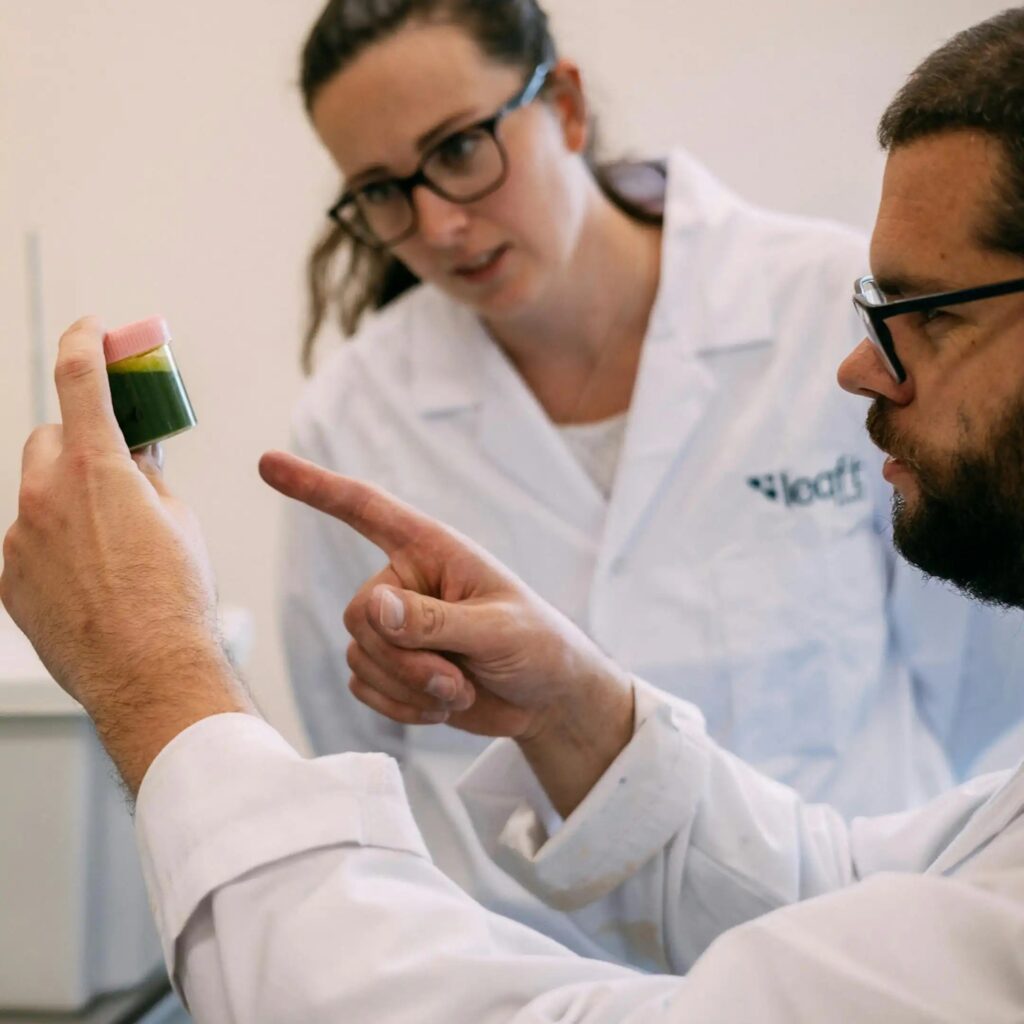
Rubisco is found in every plant on the planet – you’ve consumed a lot of this enzyme without even knowing it. Nutritionally, it is a complete protein, with high amounts of essential amino acids and a PDCAAS score similar to beef, egg whites, and dairy proteins, as well as being rich in vitamins, minerals, antioxidants and micronutrients.
From a functional perspective, Rubisco offers foaming, gelling and emulsification properties, setting just like egg whites in baked goods and posing as an alternative to methylcellulose in plant-based meat.
In addition, it is responsible for carbon fixation and has been targeted in studies looking to increase crop yields, which represents its positive potential to produce climate-friendly foods that preserve food security.
Scientists have been attempting to extract Rubisco from green leaves for over a century, but most efforts destroyed its delicate structure and rendered it worthless. Leaft Foods, founded in 2019 by husband-and-wife duo John Penno and Maury Leyland Penno, has developed a gentle, food-safe process that preserves protein integrity and unlocks its full potential.
Its alfalfa-derived Rubisco protein isolate outperforms plant proteins like pea and soy, and offers a superior amino acid profile and generating 97% fewer greenhouse gases than whey.
Leaft Foods introduced its first consumer product earlier this year. Called Leaft Blade, it’s a pre-workout drink with 17g of protein that the body can digest up to six times faster than conventional proteins. It contains 50,000 green leaves in each 100ml serving, alongside L-tyrosine to sharpen focus and support brain function, leucine to trigger growth, and tryptophan to restore balance.
It is among a number of startups looking to leverage Rubisco protein, including Plantible Foods, which recently opened its own factory to produce hundreds of tonnes of the protein from duckweed in Texas, Israel’s Day 8, and Dutch player Rubisco Foods.
How Rubisco protein can help ease the global egg crisis

The latest partnership with Foodstuffs centres on Rubisco’s egg replacement capabilities. “Leaf Rubisco protein delivers a robust range of functional properties of the type that make eggs indispensable in food manufacturing: emulsifying, foaming, and gelling,” explains Milne.
“This is what makes Rubisco fundamentally different from storage proteins like soy and pea. As an enzyme protein, Rubisco is built for action. It has dynamic functional structures that translate beautifully into many food applications. Our B2B customers have grasped this immediately, and when they see these properties in action, the performance speaks for itself,” he adds.
“This really grabbed our attention. It’s great local innovation with the potential to change how some baked goods are made here,” notes Daniel Te Raki, FSSI’s bakery operations manager.
“We wanted to get involved because it could help diversify where our ingredients come from and ultimately give more choice to our customers across the South Island. This partnership ticks those boxes and also presents the potential to strengthen the overall sustainability of baking and bakery products.”
The deal comes amid soaring egg prices globally, thanks to the latest bout of avian flu and Newcastle disease, which have led to the culling of millions of chickens and highly volatile supplies. Combined with a sharp increase in demand, egg prices reached a decade-long high in Europe this year, and broke all-time records in the US.
According to Leaft Foods, its Rubisco protein can take the pressure off the supply and cost of eggs without compromising on taste, texture, and quality, or requiring complex formulations.
“We’re very comfortable with where our highly functional Leaf Rubisco protein is positioned in the market,” Milne says when asked about Leaf Rubisco’s pricing. “Fundamental economics have always guided our approach. If a product doesn’t line up cost-wise with its competitors, it won’t succeed on a commercial scale.
“We have an extremely efficient underlying process, which is extracting value from 100% of the raw material and creates multiple revenue streams from every leaf, which supports our competitive positioning in the protein space.”
Leaft Foods eyes scale-up, market validation and profitability for 2026
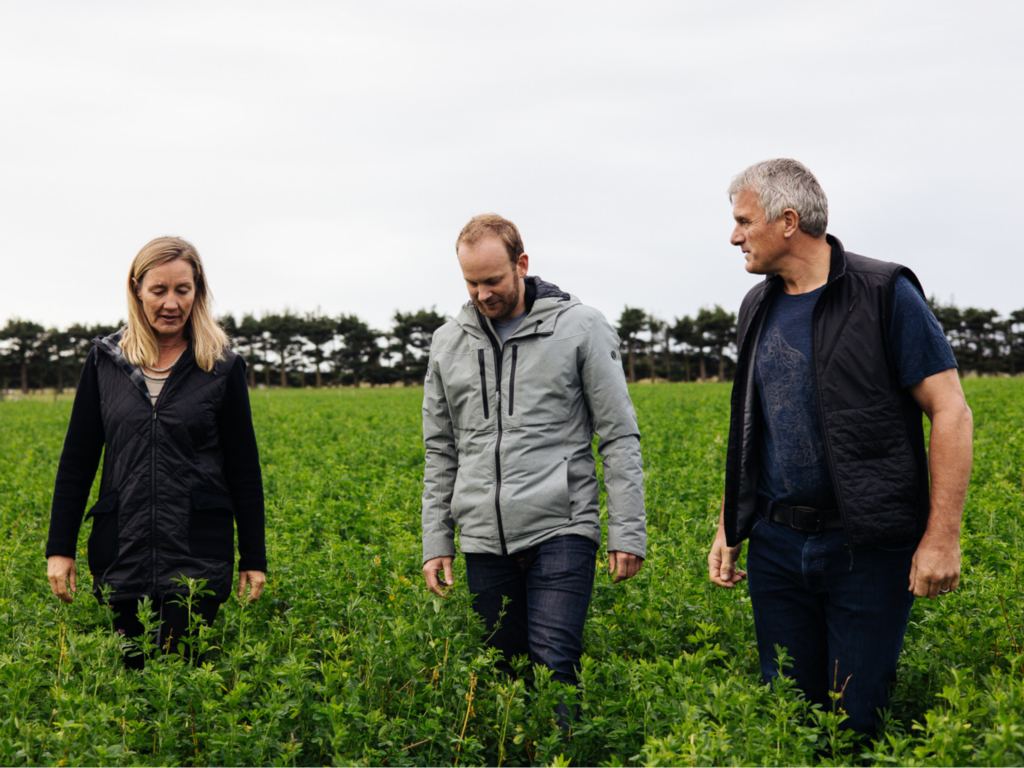
Milne said the collaboration bolstered Rubisco’s commercial viability and validated its potential, outlining that it represented “the kind of innovation-driven and community-focused solutions that New Zealanders deserve”.
The company has been ramping up its global partnerships this year. It teamed up with dairy giant Lacto Japan to supply its alfalfa leaf protein to some of Japan’s largest food manufacturers and create revenues worth tens of millions of dollars over the next five years.
It has been delivering commercial-grade Rubisco protein to B2B customers in other markets too, including the US, where it has partnered with Meateor Pet Foods to offer its Alfalfa Protein Concentrate to dog and cat food producers. This is part of its goal to advance its Advanced Animal Nutrition business in 2026 and create “compelling value for manufacturers seeking sustainable solutions”.
In fact, next year is all about proving scale and market validation across Leaft Foods’s business verticals. “On the B2B side, we’re expanding our Rubisco protein isolate sales with food manufacturers across multiple applications, building on strong early traction with customers in APAC and beyond,” says Milne.
“For Leaft Blade, we’re growing our athlete and performance nutrition community while demonstrating that leaf-based protein can define an entirely new category, not just compete in the existing plant-based space.
“Throughout next year, we’ll be demonstrating that what we’ve built isn’t just a better ingredient – it’s the foundation for a completely different protein economy, one that’s not constrained by the limitations of legacy protein production.
“We’re also focused on the path to profitability as we scale beyond our current capacity, proving that truly transformative food innovation can succeed with sound fundamental economics.”
The post From Egg Replacers to Sports Nutrition, Leaft Foods Gears Up for 2026 Expansion of Alfalfa Protein appeared first on Green Queen.
This post was originally published on Green Queen.