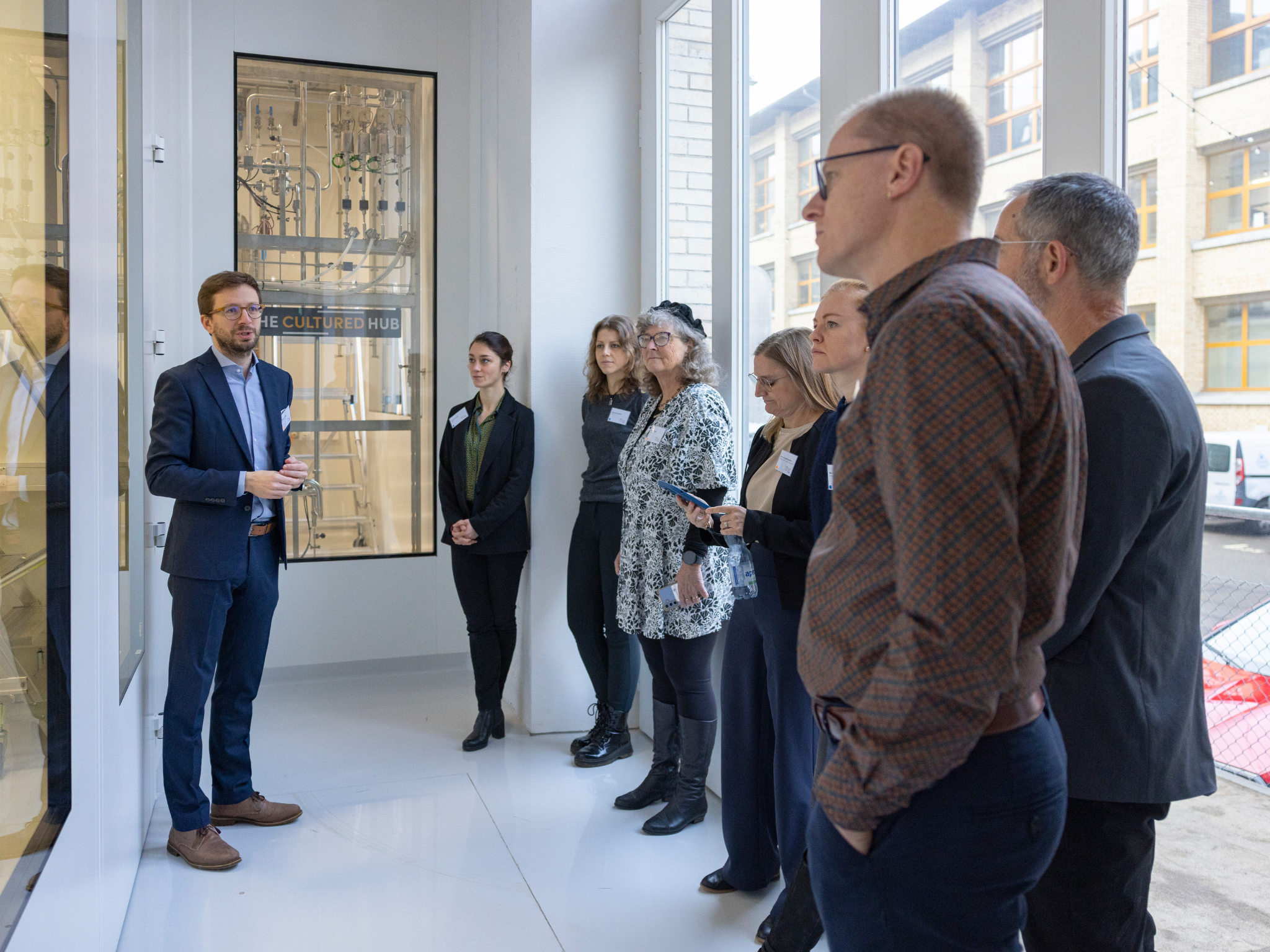
The Cultured Hub, a biotech facility run by Swiss food industry giants, has expanded its service to include plant cell culture technology for coffee, cocoa and citrus.
Swiss biotech plant The Cultured Hub is broadening its horizons with a move into future-friendly coffee and chocolate ingredients.
Located in The Valley in Kemptthal, the platform has initially been focused on scaling up cellular agriculture products like cultivated meat and microbial proteins; it has now expanded its infrastructure and expertise to ingredients derived from plant cell culture technology.
This involves growing plant cells in bioreactors by feeding them on sugar, vitamins, minerals and other nutrients, eschewing the need for agricultural inputs like water or soil and ensuring a consistent, climate-resilient supply.
The Cultured Hub will leverage the technology to help manufacturers produce cell-based cocoa, coffee and citrus ingredients, which face a host of supply chain and price pressures globally in the face of climate change.
“Demand for alternative, climate-resilient ingredients is growing rapidly, and plant cell culture is emerging as a credible sourcing platform,” said Yannick Jones, CEO of The Cultured Hub.
Plant cell culture can address climate challenges, but costs remain a barrier
The hub’s expansion comes amid rising commodity prices, climate volatility and pressure on farm systems, issues exacerbated by growing demand for high-value ingredients.
Cocoa stocks are the weakest in a decade, driving prices to all-time highs, and the cost of coffee has reached levels never seen before, with the area suitable for growing the crop shrinking. In both industries, a large share of trees are threatened due to the climate crisis.
It’s why coffee and chocolate companies have been looking for ways to mitigate the impacts of extreme weather, including giants like Starbucks and Nestlé, which have developed new crop varieties that can withstand climate change and increase yields.
Some companies are looking to replicate these commodities by creating plant-based alternatives through fermentation and food tech, whereas plant cell culture can produce cocoa and coffee compounds, all minus the environmental challenges. According to The Cultured Hub, it’s a promising approach that enables controlled, year-round production independent of farmland, weather or disease.
“Plant cell cultivation represents an important new frontier in sustainable food and ingredient production,” said Ian Roberts, CTO of Bühler Group, which established the hub with retail giant Migros and flavour specialist Givaudan last year.
“Many of the same challenges we see in cultivated meat – the need to scale, reduce cost, and ensure quality at industrial levels – also apply here,” he added. “By expanding The Cultured Hub’s offering into plant cell culture, we are supporting innovators in this transition and giving the food industry a unique platform to explore new, climate-resilient ingredient pipelines.”
That said, plant cell culture remains an emerging field hindered by high costs, thanks to sterile bioreactors, energy-intensive controlled environments, and the complexity of plant cell biology. Scaling up from flasks to pilot systems is technically demanding and often beyond the reach of early-stage startups.
“By providing shared bioprocess infrastructure and a collaborative environment, The Cultured Hub enables both start-ups and corporates to scale more efficiently, shorten development timelines, and explore where strategic partnerships and investments can unlock the next wave of innovation,” said Jones.
An event to foster cell-based cocoa and coffee collaborations

The aim of The Cultured Hub is to speed up the development and commercialisation of future-friendly foods. The facility is equipped with advanced production development labs, as well as cell culture and fermentation capabilities and equipment.
The hub can host multiple companies at a time, which can work simultaneously in fully separated suites. They can scale up from small lab experiments to 1,000-litre pilot operations without investing in expensive assets or diluting equity. This helps accelerate market entry by saving time and resources, and allowing the entities to focus on creating the optimal food products at competitive costs.
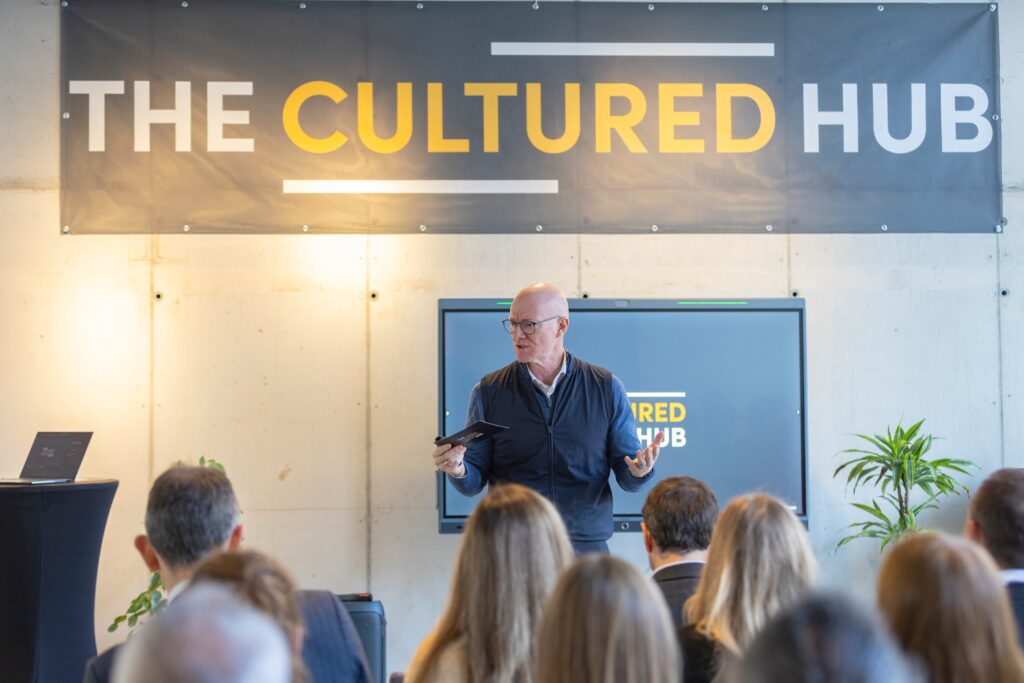
To mark its expansion, it hosted a Cultured Plant Cell Event, convening startups, corporate leaders and researchers to explore how plant cell culture can complement conventional agricultural commodities. Here, scientific and technical sessions covered the state of the technology, recent breakthroughs, scale-up challenges, and the path from lab to market.
Startups pitched their solutions to industry leaders specialising in cocoa, chocolate, and coffee processing, fostering collaboration and potential partnerships. Multiple innovators – including Kokomodo, Food Brewer, Celleste Bio, Galy, and Coffeesai – presented their work across such ingredients, from cocoa biomass grown in bioreactors to established coffee cell lines produced with controlled fermentation.
A keynote from Prof Ing Regine Eibl-Schindler, from the ZHAW School of Life Sciences and Facility Management, introduced the emerging discipline of microbotanics. This is the cultivation of plant cells to produce targeted metabolites, flavours, and functional compounds with precision and consistency.
“Plant cell factories allow us to produce molecules or biomass that are difficult, slow, or expensive to obtain from fields, while reducing exposure to climate and disease risks,” said Philippe Jutras, founder of the Plant Cell Institute.
“But as with any new technology, scaling is the bottleneck. Events like this create essential alignment between researchers, start-ups, and industry, so we can move from promising lab results to meaningful commercial impact.”
The post Swiss Biotech Hub Expands Beyond Cultivated Meat Into Cell-Based Cocoa & Coffee appeared first on Green Queen.
This post was originally published on Green Queen.