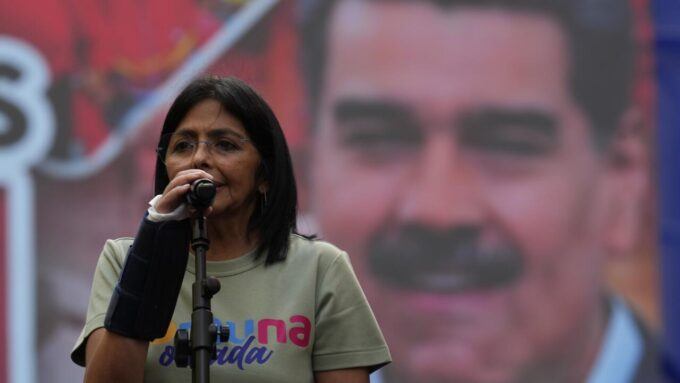
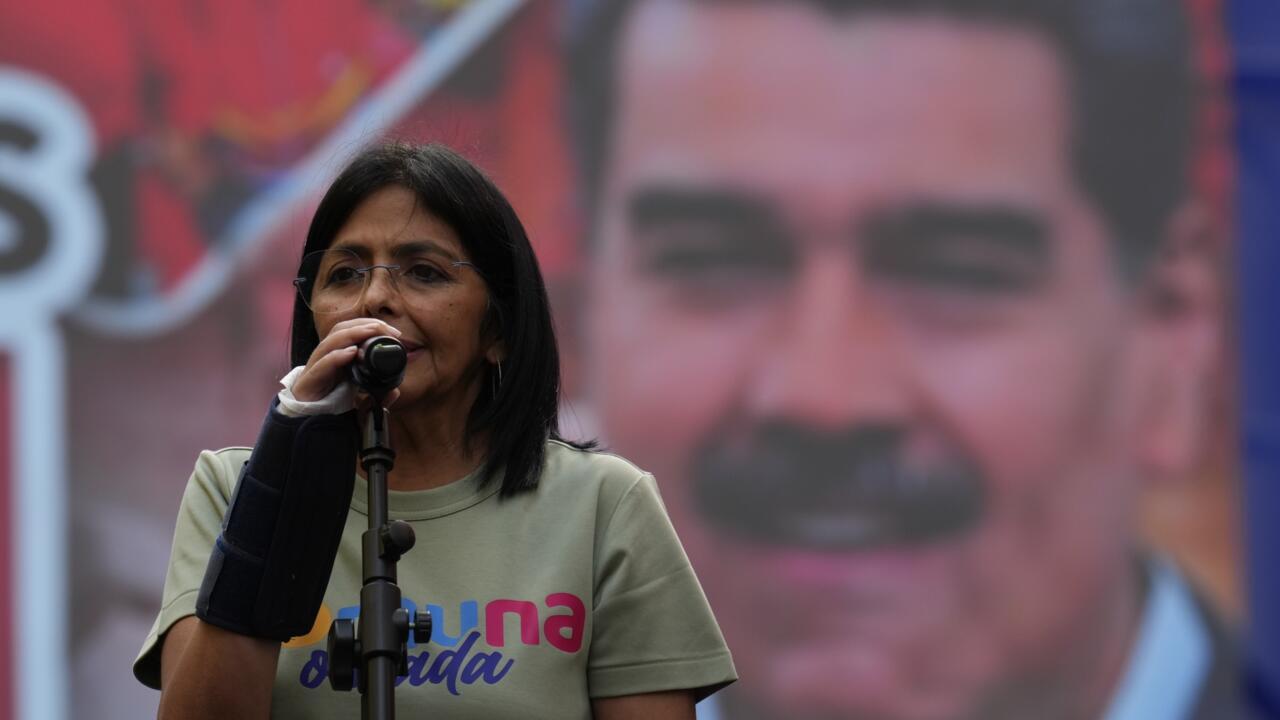
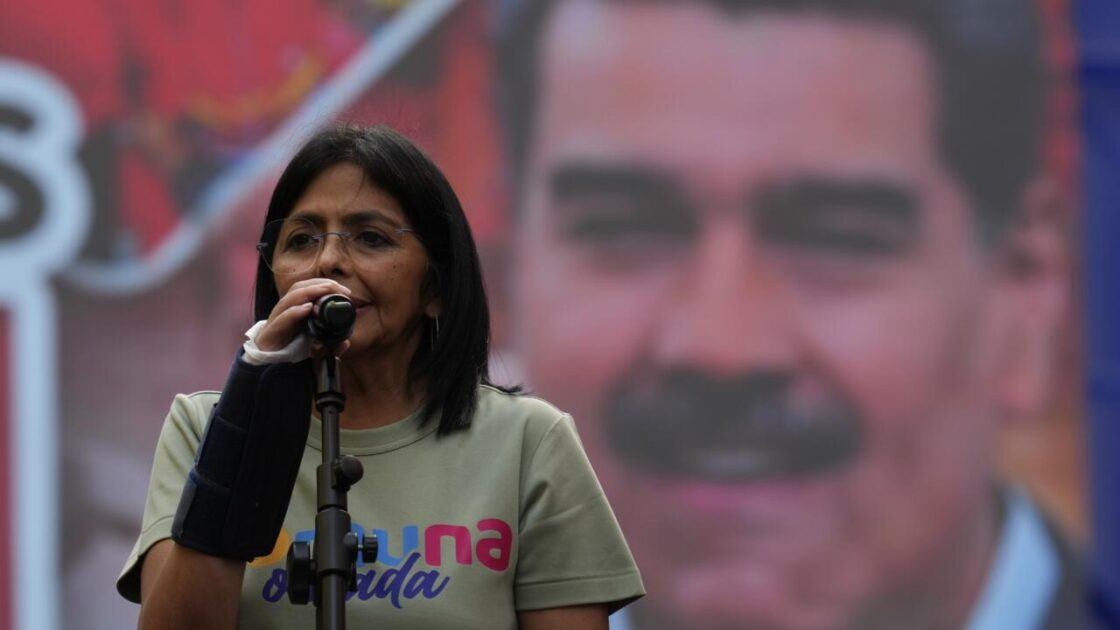

Delcy Rodríguez, Vice President and acting president of Venezuela.
Caracas, January 4, 2026.
The U.S. armed forces bombed Venezuela from approximately 2:00 to 2:45 a.m. on January 3. At least seven sites in the greater Caracas area were affected, as well as locations in Aragua State and the coastal city of Higuerote in Miranda State. Both military personnel and civilians were killed, including children. Infrastructure damage is significant. Some parts of the city lost power, but as of Sunday morning electricity has been fully restored.
What has occurred is a grave violation of international law and of Venezuela’s sovereignty. In the course of the attack, President Nicolás Maduro was kidnapped and taken to the United States. This happened despite fierce resistance from his security team. The entire inner circle stood their ground and died fighting. U.S. forces also abducted President Maduro’s wife, Cilia Flores.
Among the first to address the public after the bombings was Defense Minister Vladimir Padrino López. Speaking on national television early in the morning, he assured the country that the military remains loyal to President Maduro and is in control of the situation. He called on the population to remain calm.
Indeed, there has been an impressive sense of calm in the city. This was evident from the first hours of the morning and throughout the day. There have been no demonstrations on the part of the opposition. Instead, people have mobilized in defense of the government, the President, and the revolution. A major rally took place near Miraflores Palace, where speakers—including Miranda State Governor Elio Serrano and parliamentarians Blanca Eekhout, Oliver Rivas, and Tania Díaz—defended President Maduro, denounced his kidnapping, and called for international solidarity with Venezuela and its revolution.
A key event of the day was the 3:00 p.m. press conference by Vice President Delcy Rodríguez, who, according to Venezuelan constitutional law, currently heads the government. The vice president appeared on national television alongside all key members of the cabinet, including Padrino López, Interior Minister Diosdado Cabello, and Foreign Affairs Minister Yvan Gil.
Speaking with serenity, Rodríguez insisted that President Maduro must be returned, and she stated that she has no intention of negotiating with Donald Trump. Instead, she affirmed that the Venezuelan government, military, and people would ensure the country’s sovereignty and defeat the imperialist attack against Venezuela. The formula for defense, she said, is the civilian–military–police alliance, which has already been activated.
The civilian–military–police alliance is a concept developed by the revolution’s supreme leader, Hugo Chávez, and further elaborated by President Nicolás Maduro. It calls on the entire population to resist foreign aggression. The concept draws on and resonates with the Vietnamese strategy of the People’s War. The alliance includes the active participation of Venezuela’s Bolivarian militias, which number over four million members.
The Bolivarian militias have expanded significantly in response to the US’s massive military buildup in the Caribbean that has been occurring since August of last year. Yesterday, it was confirmed that the militias are active throughout the country, and that the government is continuing—and expanding—the distribution of arms to the people.
Rodríguez’s statements, issued alongside all important members of the cabinet, amount to a clear and concrete refutation of US president Donald Trump’s claims, which were made minutes earlier, that he and his team were “running Venezuela” and that Rodríguez was willing to negotiate with them. Much to the contrary, Rodríguez indicated that she and the Venezuelan government are all loyal to Nicolás Maduro and are running the country. Instead of negotiating, she indicated that “Venezuela is a colony of no country” and that it will remain completely sovereign. Hence, despite Maduro’s kidnapping, Venezuela’s revolutionary government remains in charge.
Regional governments, including Mexico, Colombia, Cuba, Brazil, and Uruguay, have condemned the U.S. attack and expressed their support for Venezuela. Additional countries expressing support include Russia, China, and South Africa, among others. There have been important protests in solidarity with Venezuela and against the U.S. aggression in cities throughout the United States, Europe, and Australia.
In the late afternoon on January 3, Delcy Rodríguez was sworn in as acting president of Venezuela. However, Nicolás Maduro remains the president of the country.
The post Report from Caracas: The US Kidnaps President Nicolás Maduro, but Venezuela Fights Back and Maintains Its Revolution appeared first on CounterPunch.org.
This post was originally published on CounterPunch.org.