Wise to the climate-damaged realities of the cocoa industry, Mars is taking major steps to decarbonise its offerings, from climate-smart farming to bean-free chocolates.
The world’s largest chocolate company is feeling the bite of climate change.
Mars is home to many of the best-known chocolate brands, including M&M’s, Snickers, Galaxy, Milky Way, and Bounty, to name just a few.
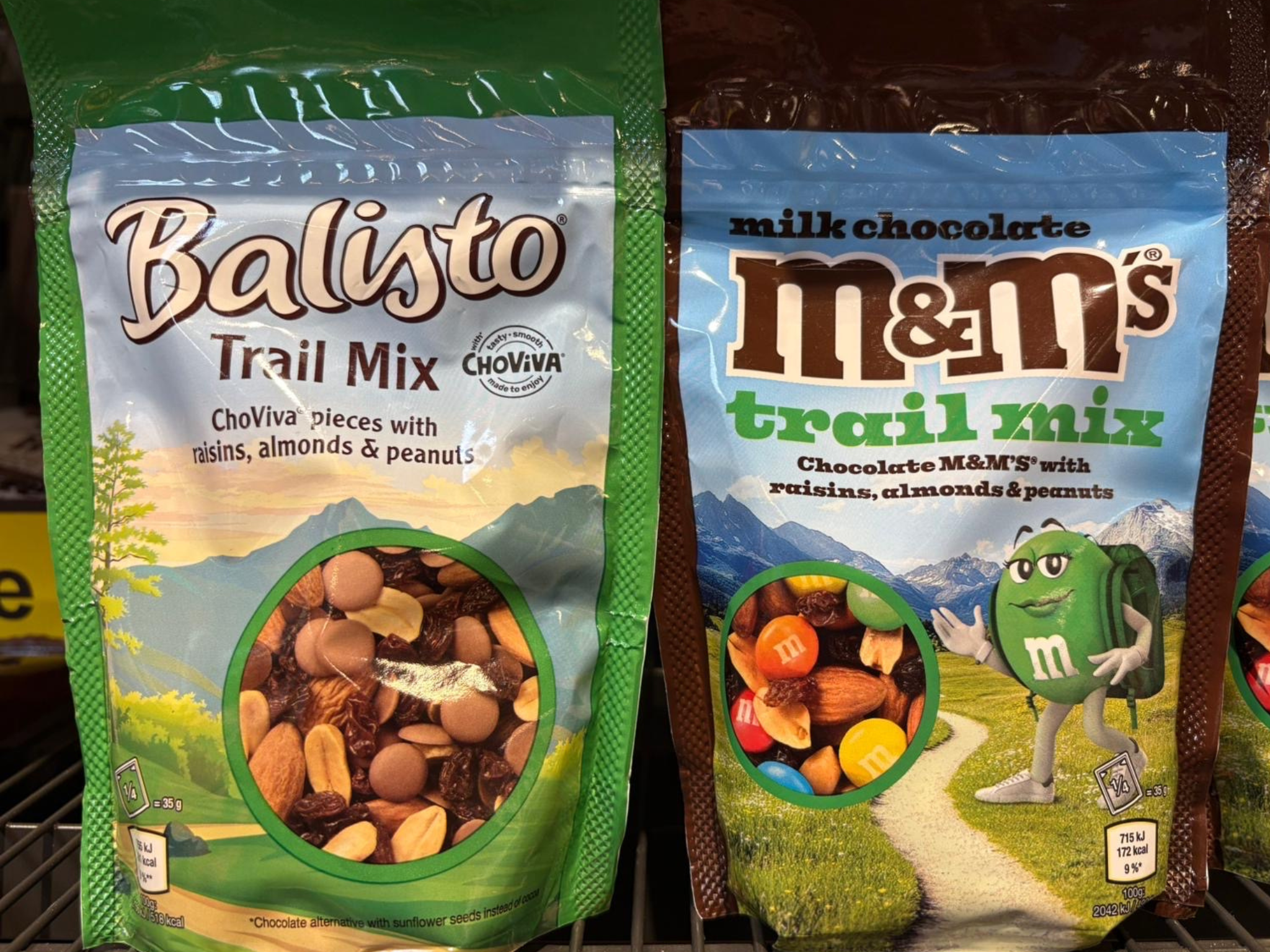
But the company’s latest chocolate product contains no cocoa at all. Under its Balisto brand in Germany, it has launched a trail mix featuring ChoViva, a cocoa-free chocolate alternative developed by food tech startup Planet A Foods.
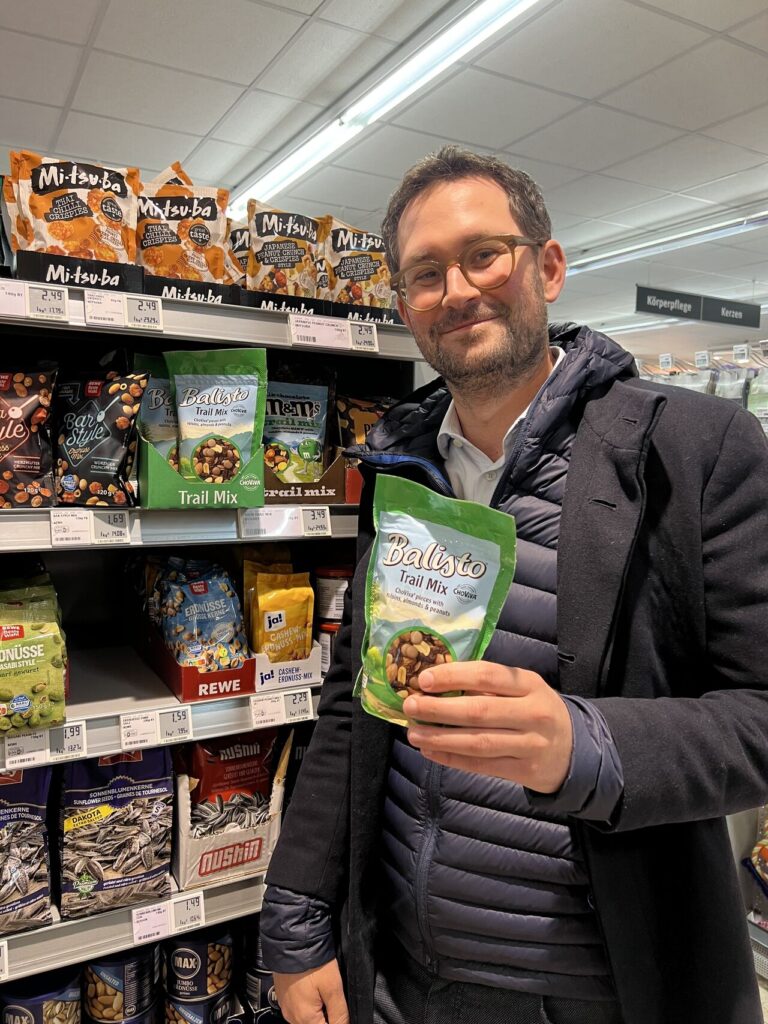
The offering is available in Rewe stores until October as a test launch, and is the latest product from a Big Chocolate company that leverages ChoViva as a low-carbon confectionery option.
‘Food industry ready to champion innovations’
The Balisto trail mix combines raisins, almonds and peanuts with ChoViva, and contains 14g of protein per 100g. It’s meant for on-the-go and office snacking, as well as between meals.
To make ChoViva, Planet A Foods puts a base of sunflower and grape seeds through proprietary fermentation and roasting processes to elicit aromas, flavours and textures similar to cocoa. These are then combined with plant-based fats and sugar to create a mass that can be used as a 1:1 replacement of chocolate.
The ChoViva ingredient is available in vegan, dark, milk and white chocolate formats, and has featured in over 120 products across 10 countries in Europe and Asia, with partners such as Nestlé, Lindt, Aeon, Lufthansa, Deutsche Bahn, Kaufland, Rewe, Aldi, and Lidl.
Having raised $30M in late 2024, Planet A Foods has successfully expanded the capacity of its production facility in Pilsen, Czech Republic, from 2,000 tonnes to over 15,000 tonnes annually.
To ensure the continued availability of ChoViva, which can be found in more than 100,000 stores globally, Planet A Foods relies on a commercial partnership with Barry Callebaut, the world’s largest B2B chocolate producer, which supplies to Mars as well.
“Even large, global icons like Mars are embracing a new technology like ChoViva. It’s a signal that the food industry is ready to champion the value of innovations – as long as the taste is right,” said Maximilian Marquart, co-founder and CEO of Planet A Foods.
Mars goes big on climate-resilient cocoa farming
Mars isn’t just stopping at cocoa-free chocolate – it’s overhauling the cocoa supply chain to decarbonise it from the ground up. And with good reason, too.
Climate change pushed cocoa stocks to their lowest levels in a decade and prices to all-time highs in 2024. Extreme weather and crop diseases have hit plantations hardest in the Ivory Coast and Ghana, the two largest cocoa producers, which have already lost over 85% of their forest cover since 1960.
Scientists warn that a third of the world’s cocoa trees could die out by 2050. Plus, producing chocolate emits more greenhouse gases than any other food except beef, and the industry is linked to widespread tropical deforestation.
To address these headwinds, Mars has been working with Pairwise’s CRISPR gene-editing tech to develop disease- and climate-resilient cacao crops. And last month, it signed a five-year deal with Olam Food Ingredients to advance climate-smart and regenerative agriculture practices in cocoa production in Ecuador.
In the first phase of this partnership, more than 960 farmers across major growing regions in the country will implement regenerative agriculture practices. By mimicking natural forest ecosystems, these systems will boost cocoa production, support biodiversity, and create natural barriers against pests and diseases.
Farmers will also be equipped with tools to use low-carbon fertilisers, enhanced crop residue management, and biochar applications. These initiatives are designed to help cocoa producers strengthen long-term resilience by enhancing soil health, lowering emissions, ramping up carbon removals, and amplifying yields.
“True progress on climate requires shared ambition and mutually beneficial value,” said Pedro Amaral, head of cocoa climate sustainability at Maers. “Having net-zero ambitions validated by SBTi enables a bold framework for Mars and ofi to invest together in the long term in solutions that are good for cocoa farmers, good for the environment, and good for the future of our supply chain.”
A number of chocolate industry giants have embraced climate-friendly alternatives. Lindt, Cargill, Dulciar, Walcom, Piasten and have already co-launched bean-free formats, in a space that includes innovators like Voyage Foods, Prefer, Win-Win, Foreverland, Nukoko, and Endless Food Co.
The post Climate-Smart & Cocoa-Free: Mars Makes Moves to Decarbonise Chocolate Portfolio appeared first on Green Queen.
This post was originally published on Green Queen.