
Food Standards Australia and New Zealand has formally accepted a dossier by French firm Parima to sell cultivated duck products, which is expected to be approved next year.
Parima, a cultivated meat company formed last week, could be selling cultured foie gras and pâté to consumers in Australia and New Zealand by August 2026.
The startup’s regulatory dossier for cultivated duck, made under its Gourmey brand, has been officially accepted by Food Standards Australia and New Zealand (FSANZ). Now, the application will enter the scientific risk assessment process.
Parima emerged as a new entity after Gourmey acquired French cultivated chicken firm Vital Meat, marrying their tech, regulatory and manufacturing prowess, with a combined 15 patent families and more than 70 applications. The company is seeking regulatory clearance for its cultivated meat products in seven markets.
Its FSANZ filing comes months after the regulator gave the green light to Sydney-based cultivated quail maker Vow, which has been selling its protein in the form of parfait and foie gras in restaurants across Australia since July.
How Gourmey makes its cultivated duck
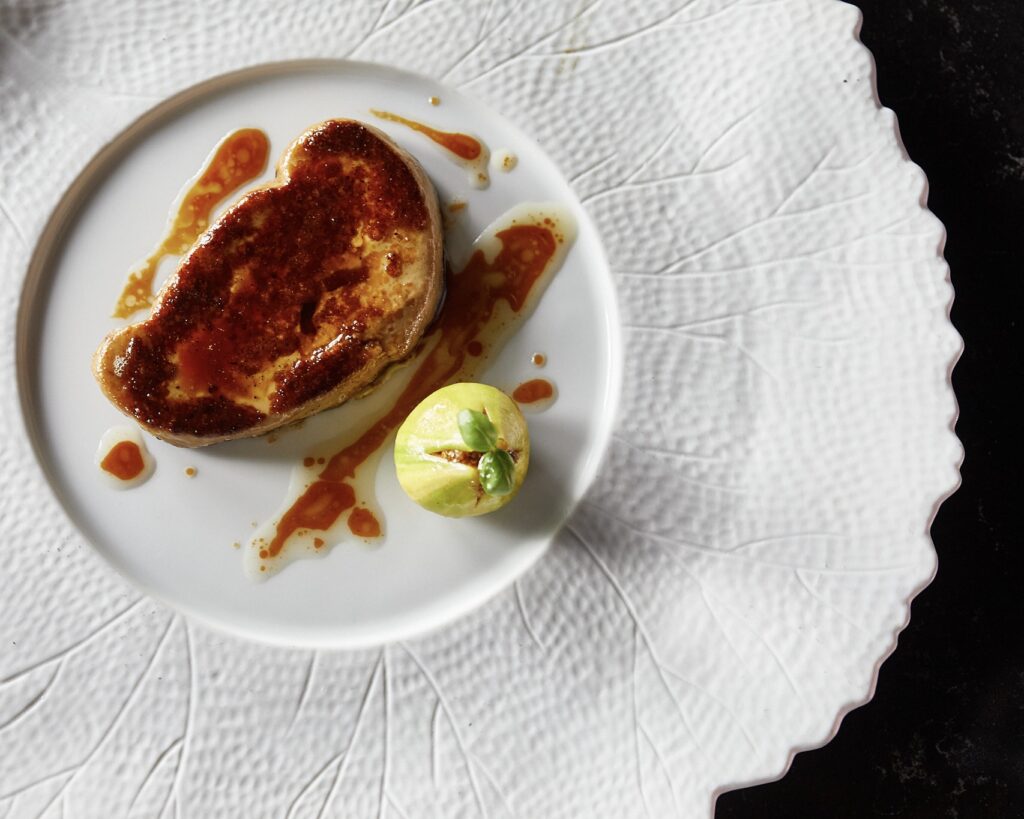
The standout feature of Parima’s application is that it will be assessed under FSANZ’s General (Level 5) Procedure, as opposed to its Major Procedure. It means the process is expected to take less than a year, since it only requires one round of public consultation. It’s also around A$40,000 cheaper.
It’s important to note that the late August 2026 timeline underlined by FSANZ is not set in stone. Vow’s application was meant to take around 15 months and be approved by June 2024, but was delayed by a year as the regulator amended its Food Standards Code.
Parima submitted its application in August. In its dossier, the startup explains that it employs non-GM cell lines and a semi-continuous process using shake flasks. Duck cells are grown in controlled conditions until the viable density is reached – after this, the majority of the culture volume is inoculated in a suspension bioreactor, and a small amount is retained to maintain a continuous process.
Once the culture in the bioreactor reaches the desired density, the biomass is harvested and separated from the culture media by centrifugation, before being washed with a saline solution. It is then packed and frozen until it’s ready to be used to make a final product, in combination with other food-safe ingredients.
“Cell-cultured duck is proposed for use by the general population, without sensitivities to duck or other avian species, as a food ingredient for further processing to be used [in] duck meat analogues at an inclusion rate of 5-80% by weight of the finished food,” the company says.
The cultivated duck can be turned into meat analogues, spreadable specialties, and fats and oils. Gourmey has already unveiled its foie gras application, which has been endorsed by a group of Michelin-starred chefs.
Parima’s regulatory progress latest in milestone year for cultivated meat

According to a document released by the FSANZ, the scientific risk assessment report will take about six months, followed by a six-week public consultation period starting in March. The FSANZ board will then make its approval decision, before being discussed by ministers in both countries in June.
“We look forward to working transparently and constructively with FSANZ as the review progresses, bringing cultivated foods one step closer to consumers’ plates,” Parima said in a statement.
It currently operates an innovation centre and a pilot facility in central Paris, where it runs multiple 400-litre bioreactors, and a pilot plant near Nantes, equipped with 2,000-litre bioreactors run daily. It also has a dedicated setup with a 5,000-litre fermenter, which analysis shows can bring costs down to $3.43 per lb. And in June, it partnered with AI specialist DeepLife to develop an avian digital twin to optimise production of its cultivated meat.
Aside from Australia and New Zealand, Parima has filed for approval in the EU (where it is the most advanced), the UK (also the most advanced here), Switzerland, Singapore, the US, and another undisclosed country.
In an interview with Green Queen this summer, Gourmey co-founder and Parima CEO Nicolas Morin-Forest had said it was expecting approval in Singapore first.
“We anticipate the first market authorisations within the next few months,” he said last week. “We’re aiming to become the first European cultivated meat company to get approved, and the first ever company with approval for two species: duck and chicken.”
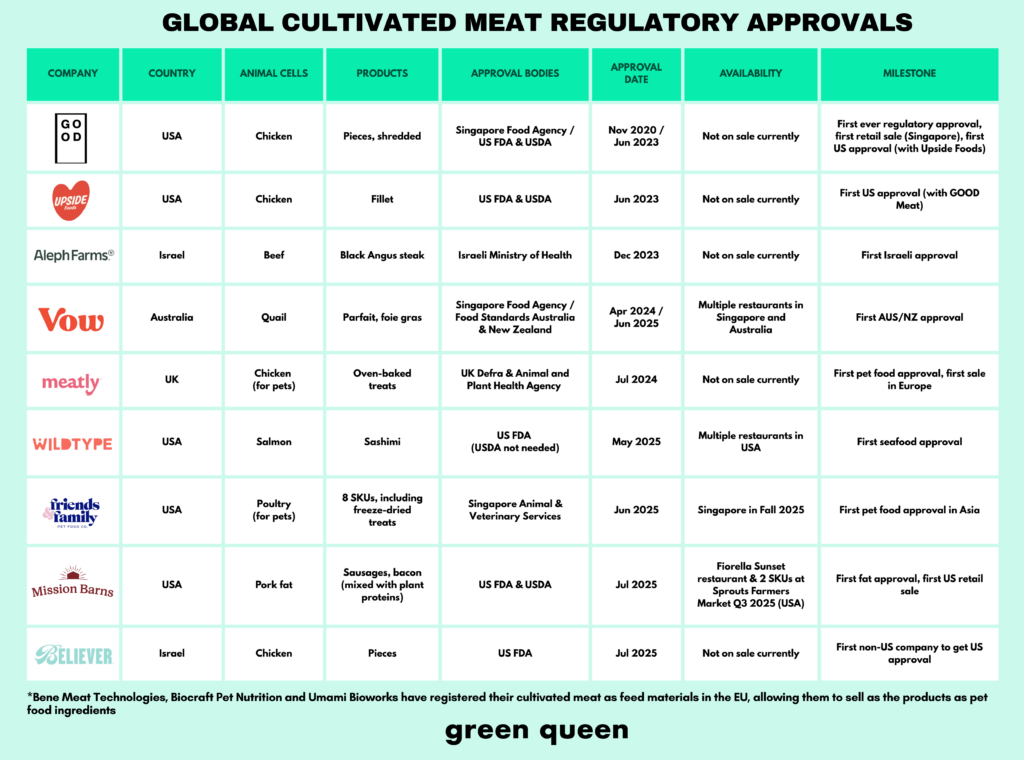
Its regulatory efforts come on the back of a milestone year for cultivated meat. US companies Wildtype and Mission Barns have begun selling their salmon and pork products in the country, respectively, while Believer Meats has earned FDA approval and is awaiting the nod from the USDA.
Friends & Family Pet Food Company, meanwhile, was cleared to sell cultivated pet food in Singapore, and Biocraft Pet Nutrition and Umami Bioworks registered their cultivated meat innovations as feed materials in the EU, allowing them to sell the products as pet food ingredients.
The post Parima Set to Receive FSANZ Approval for Cultivated Duck Under Gourmey Brand by August 2026 appeared first on Green Queen.
This post was originally published on Green Queen.