
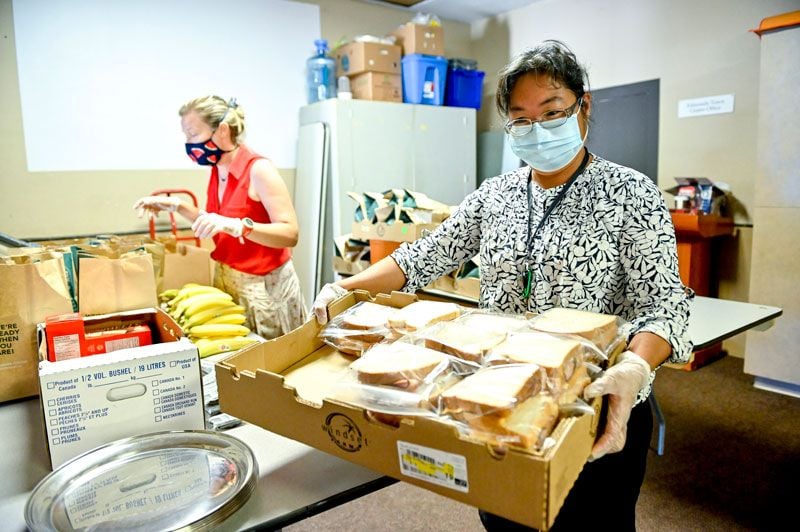
(Photo by Province of British Columbia / CC BY 2.0)
Welcome back to The Weekly Wrap, our Friday roundup of stories that explain the problems oppressing people in cities and elevate the solutions that bring us closer to economic, environmental and social justice.
If you enjoy this newsletter, share it with a friend or colleague and tell them to subscribe.
States Band Together to Sue Trump Over SNAP Benefit Cuts
Governors and attorneys general of 25 states and the District of Columbia have jointly sued the Trump administration this week as the government refuses to continue funding SNAP benefits during the ongoing government shutdown, the New York Times reports.
One in eight Americans rely on USDA’s Supplemental Nutrition Assistance Program benefits, also known as food stamps. Once these benefits run out on Nov. 1, more than 40 million aid recipients will face hunger and financial struggles during a year with rising grocery prices.
The USDA maintains a reserve to cover emergencies that lawmakers argue can be used; California’s Attorney General, one of the plaintiffs, says he believes the USDA may have up to $6 billion available. The USDA issued a memo outlining that the contingency fund is for emergencies and not for continuing regular SNAP benefits. If the lawsuit filed this week prevails, it would force the department to use the emergency funding and provide benefits to residents of the states involved in the lawsuit.
Gun Violence Prevention Groups Lose Funding Under Trump
The Department of Justice has disqualified gun violence prevention nonprofits and community-based organizations from applying for a key federal grant on gun violence prevention, The Guardian reports.
The Community Based Violence Intervention and Prevention Initiative was created in 2022 to help community groups nationwide address violence. Before Trump came back into office, nonprofits, state and local governments, and community-based organizations could apply for grants under the initiative. Now, only city, county and tribal governments are allowed to apply.
This isn’t the first blow to gun prevention under this administration: In January, Trump dismantled the White House office of gun violence prevention. His administration also removed the former surgeon general’s advisory declaring gun violence as a public health issue from the Department of Health and Human Services’ website. The U.S. has experienced around 340 mass shootings this year.
Fewer Children Are Living With Lead Poisoning in Cleveland
Signal Cleveland reports that lead poisoning rates among young children in Cleveland have fallen in the last two years, following a range of efforts to make the city’s housing supply lead-safe.
The rate of children under six who tested positive for high blood lead levels is now at a low of 15.8%, though advocates say that’s still quite high compared to other cities in the so-called “lead belt.”
But local officials and advocates say it’s a signal that collaboration between local governments, health systems and grassroots groups – including a 2019 law requiring landlords who own homes built pre-1978 to get their properties certified as lead-safe, the city increasing its lead-safe certification requirements, local advocates raising funds to help property owners meet these requirements, and a health nonprofit funding more lead poisoning testing for youth – are working.
Cities and States Are Stepping Up To Feed SNAP Recipients
City and state governments are mobilizing political action and funding to feed residents who will lose SNAP benefits in November, Smart Cities Dive reports.
The U.S. Conference of Mayors sent a letter urging the USDA Secretary to “utilize all available resources, including the SNAP contingency fund,” to ensure people receive benefits.
Some areas have revived Covid-era programs. For example, Missouri will restart CoMoHelps, a collaboration between the city of Columbia, Boone County, the Heart of Missouri United Way, the Community Foundation of Central Missouri and the Veterans United Foundation.
States have mobilized, too. Virginia created the Virginia Emergency Nutrition Assistance program, which will use surplus money to fund benefits through at least November. California recently announced that the state is providing up to $80 million for local food banks.
Local organizations are also pivoting to meet the need, as we report from Philadelphia’s Germantown neighborhood this week. Keep an eye out for upcoming reporting from rural Kentucky on how local mutual aid efforts are working to fill in the gaps.
ICE Is Holding People in Secret Rooms, Violating Agency Policy
ICE is increasingly holding detained immigrants in secretive holding facilities for days or even weeks at a time, the Guardian reports. People are held there before they are released or transferred to other facilities.
These small rooms do not have beds or windows and are not intended to be used for several days. According to The Guardian’s investigation, some facilities have seen a 600% detention length increase.
ICE policies previously banned detaining people for more than 12 hours in these small holding rooms. According to a memo from June, the rule was waived, saying that anyone recently arrested by the agency could be held in those rooms for up to three days. Because there is so little insight in the agency, there’s no guarantee people aren’t being held for longer after being detained.
As Next City reported last month, Portland has used revelations of a local ICE facility’s alleged illegal detentions to issue a land use violation notice to the agency. The building’s private owner has since filed a request for administrative review, calling the notice “unlawful selective enforcement with a clear discriminatory motive and unlawful political retaliation.” The land use violation process has now been paused.
MORE NEWS
-
Redlining throughout the U.S. is a worse problem than banks like to admit. American Banker
-
Corporate investors have purchased 25% of houses in Philadelphia in the last 6 years. The Philadelphia Tribune
-
Can NYC’s buses actually be faster and free? The New York Times
-
A third of community-serving nonprofits lost government funding in early 2025. The Chronicle of Philanthropy
-
An obscure military program helps local cops buy armored cars and spyware. It might balloon under Trump. The Intercept
-
California’s high speed rail project CEO is trying to get back on track. Smart Cities Dive
-
How do you move a village? Residents of France’s last outpost in North America try to outrun the sea. The Guardian
-
Heavy rainfall and widespread flooding shuts down part of NYC’s public transit. Gothamist
-
Small stores and other small businesses will feel the squeeze once SNAP benefits are cut. NPR
-
The majority of Americans blame Trump for the ongoing shutdown. The Washington Post
OPPORTUNITIES & RESOURCES
-
DEADLINE TODAY: Voqal Partners is accepting applications from community social justice leaders working toward solutions for inequality throughout America. Apply by Oct. 31.
-
The Black Solidarity Economy Fund is open to applications for Black-led and Black-serving organizations building regional solidarity economy ecosystems controlled by the people they serve. Apply by Nov. 3.
-
Lime Rock New Energy is offering a fellowship for graduate students interested in learning about how to lead impact-focused investment funds. Apply by Nov. 16.
-
The Urban Justice Center is offering an accelerator for start-up or early stage organizations that focus on social justice. Apply by Dec. 1.
-
The Climate Smart Communities Initiative has launched a grants competition for funding and assistance to support community-based climate resilience in vulnerable communities. Apply by March 12, 2026.
-
Check out Next City’s jobs board for new opportunities.
EVENTS
-
Nov. 3 at 12 p.m. Eastern: Strong Towns and Proximity Project are hosting a conversation about how houses of worship can be used to help strengthen their communities and support housing programs.
-
Nov. 3 at 2 p.m. Eastern: The Interfaith Center on Corporate Responsibility and the Shareholder Engagement Project are hosting a webinar to discuss philanthropy and the role that both corporations and foundations hold.
-
Nov. 5 at 12 p.m. Eastern: The Environmental Law & Policy Center is hosting a webinar about what the new Supreme Court term could mean for environmental protections in the U.S.
-
Nov. 6 at 2:30 p.m. Eastern: The High Line Network and Urban Institute are hosting a webinar and panel about success workforce development strategies.
-
Nov. 12 at 1 p.m. Eastern: Climate advocate Carter Lavin will be leading a conversation on his new book educating readers on how to fight for better transportation.
-
Nov. 13 at 12 p.m. Eastern: Funding Freedom announce the launch of their new Toolkit for Divestment, created to equip organizers inside philanthropy to push institutions to divest from the economy of Palestinian genocide, occupation and oppression.
-
Check out events from Next City and our partners here.
This article is part of The Weekly Wrap, a newsletter rounding up stories that explain the problems oppressing people in cities and elevate the solutions bringing us closer to economic, environmental and social justice. Click here to subscribe to The Weekly Wrap newsletter.
This post was originally published on Next City.