Note: In the Local Newspaper, Newport News Times, now called, The Leader.
These are unprecedented times for human intelligence and collective memory. We are seeing turbo charged the scarfing up of the American and Western collective consciousness through the illicit actions of billionaires and their hoarding henchmen millionaires.
So much common sense and clear thinking have been virtually memory holed by the advancing armies of information and data controllers. Larry Ellison isn’t just hoarding all the data of the world through his many operations tied to Oracle. He’s Big Brother of another Mother.
This isn’t your grandparents’ world: Ellison believes governments need to consolidate data about citizens for the sake of AI. He said AI models can help improve government services while also saving money and cutting down on fraud.
Imagine the power of this one fellow and his henchmen demanding the U.S. and other countries converting to a world of AI, after governments (corporations) unify the data they collect into one easily digestible database.
His son David has become the current “hostile takeover honcho” with acquiring Paramount studios, CBS, CNN and with an eye for more media outfits.
Imagine if “we the people” demanded a takeover of all Fortune 500 corporations’ data, while also wresting control of the private and corporate secrets of Exxon, Raytheon, Monsanto or the other tens of thousands of corporations which have turned the world into an Inverted Totalitarian Game of Thrones.
Note: Daddy Larry is the second richest person on the planet.
Those who control the water, oil, food, money, and now data, control the people and the world. Look up variations on a theme and discover which oligarchs have worked hand in hand with despotic and ill-intended creeps to grift, gouge and rip-off the public.
“Marks” is one way to describe how the rich see us. “Useless eaters” is another of their terms for us.
The “wretched of the earth” is yet another way the titans of tech, war and surveillance see us. Don’t just take my word as someone with 52 years in journalism.
Take a deep breath, learn and then research after reading:
“An artful combination of propaganda flattered the mass, exploited its antipolitical sentiments, warned it of dangerous enemies foreign and domestic, and applied forms of intimidation to create a climate of fear and an insecure populace, one receptive to being led. The same citizenry, which democracy had created, proceeded to vote into power and then support movements openly pledged to destroy democracy and constitutionalism. Thus, a democracy may fail and give way to antidemocracy that, in turn, supplies a populace—and a “democratic” postulate—congenial to a totalitarian regime.”
― Sheldon S. Wolin, Democracy Incorporated: Managed Democracy and the Specter of Inverted Totalitarianism
That “artful propaganda” has managed the masses of America to turn against itself, and alas, we are the subjects of the billionaires and their shock troops of finance, banking, insurance, real estate, media and other tools propping up an undemocratic society.
I am talking at the Newport Performing Arts Center as part of the Oregon Coast Council for the Arts. At noon, Dec. 4, I drummed up a talk I titled, “Love and Death in a Time of Media Illiteracy.”
Part of the conversation covers digital media literacy, as a way to precipitate a robust critique of what one reads, listens to and watches in this vast media landscape. Unfortunately, the inability of citizens to grasp subject matter as far-ranging as climate heating or immigration, or even as mundane as to why the potholes aren’t getting fixed, is tied to a lack of depth.
These topics have been studied/researched and written about, in long form, i.e. books and academic journals. When the average person reads something on, say, bee colony collapse in the local newspaper or on Twitter/X, the reader is already far behind on the proverbial learning curve.
It is time-consuming to tap into sources that study these colony collapses and which go to the actual fields and into the labs; sources that are not afraid to challenge power, i.e. the corporations spreading pesticides and those ag businesses planting more mono-crops on land that used to sustain a variety of flowering plants for pollinators to sustain their energy to migrate.
What happening is not just a shortening of the material people read on bees, but there is a concerted effort to dumb-down, and to confuse the reader into NOT taking a position on what solutions might be deployed.
A system of artful rhetorical devices is used in this process – false balance and false equivalency. Both-sideism is more descriptive. No gray areas allowed.
I’ve mentioned Project Censored before. If you go there and tap into their Top 25 Censored Stories of 2025, you will be on your way to a knowledge reckoning.
“Faculty and students vet each candidate story in terms of its importance, timeliness, quality of sources, and corporate news coverage. If it fails on any one of these criteria, the story is deemed inappropriate and is excluded from further consideration.”
Dang – The following are just some of the stories corporate and other media have under-reported or just not reported on at all. The Top 25, but many more are printed in the book, State of the Free Press 2025:
Generative AI security risks, Climate change impact on water scarcity, Indigenous activism in Panama, Government surveillance tactics, Corporate “net-zero” promises, Bottled water and inequality, Protests against fossil fuel investments, Healthcare access in Gaza, Texas border policies, PFAS contamination on Native American land, Kids Online Safety Act and free speech, Education for incarcerated youth, Media misrepresentation of crime data, Hospital school programs, Forced labor in Paraguay, Censorship of pro-Palestinian artists, Corporate profit in climate solutions, Amazon and labor rights, US support for authoritarian regimes, The influence of AI in journalism, Environmental impact of space exploration, Mental health crisis and student debt, The opioid crisis and pharmaceutical accountability, Data privacy and health apps, Whistleblower protection inadequacies!
*****
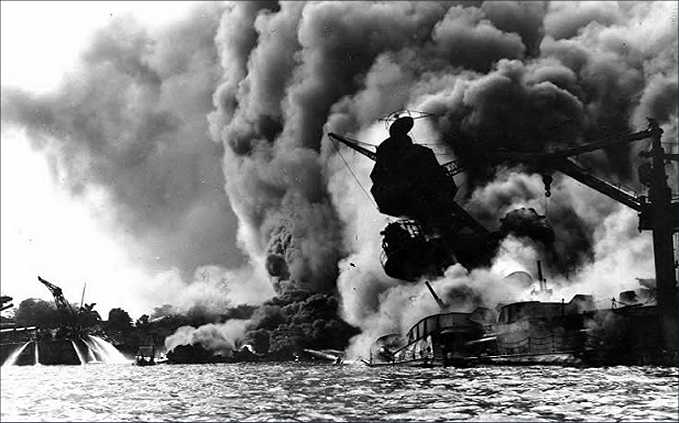
That talk, well, Dec. 4, it will be controversial because I am introducing concepts way outside the sacred cow and holier than thou American belief system. AFTER national day of sorrow/mourning. Do I dare bring up that, and then Dec. 7, that unholy day of Pearl Harbor!
The war that we have carefully for years
provoked
Catches us unprepared, amazed and indignant.
Our warships are shot
Like sitting ducks and our planes like nest-birds,
both our coasts ridiculously panicked,
And our leaders make orations. This is the
people
That hopes to impose on the whole planetary
world
An American peace.– Robinson Jeffers, “Pearl Harbor.”
*****
“This Pearl Harbor business has a terrible smell.”
– Admiral Chester Nimitz, Commander-in Chief of the U.S. Pacific Fleet in World War II.

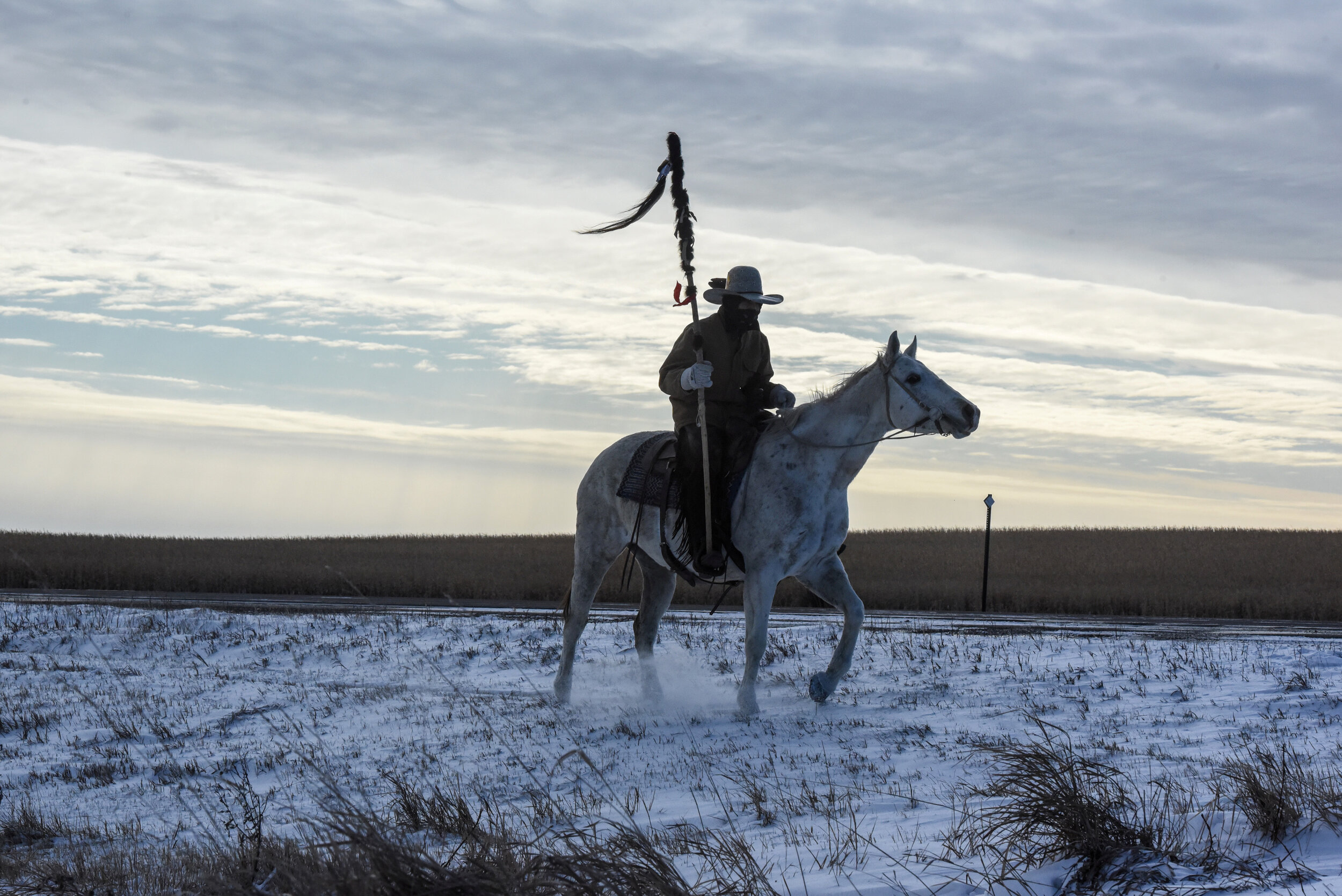
Here are a few pieces by Native and Indigenous writers that shed a more honest light on American history and offer a new set of traditions to ground us in this time of uncertainty.
-
“Our History Is the Future: Lakota Historian Nick Estes on Thanksgiving & Indigenous Resistance” with Amy Goodman / Estes, co-founder of the group The Red Nation, connects the historical violence of the Thanksgiving myth to the present-day violence Indigenous resisters experience today.
-
“Four ways to decolonize your thankstaking” by the Indigenous Environmental Network / A Twitter thread reminding readers that the hard work only begins with land acknowledgements, a reflection on the Indigenous land that you live or work on as a way to honor the history of the people who had the land stolen from them.
-
“Thanksgiving Is Another Reminder of What America Forgot” by Nick Martin / Reflecting on how our educational system still fails Indigenous children.
-
“Vital, Funny and Beautiful Films to Watch for Native American Heritage Month” by Migizi Pensoneau / Screenwriter Migizi Pensoneau on five Indigenous films that stick with him because of their representation and their storytelling.
-
“The Thanksgiving Tale We Tell Is a Harmful Lie. As a Native American, I’ve Found a Better Way to Celebrate the Holiday” by Sean Sherman / A chef asks Thanksgiving celebrants to forge a deeper understanding of the Native American histories of their food.
This post was originally published on Dissident Voice.