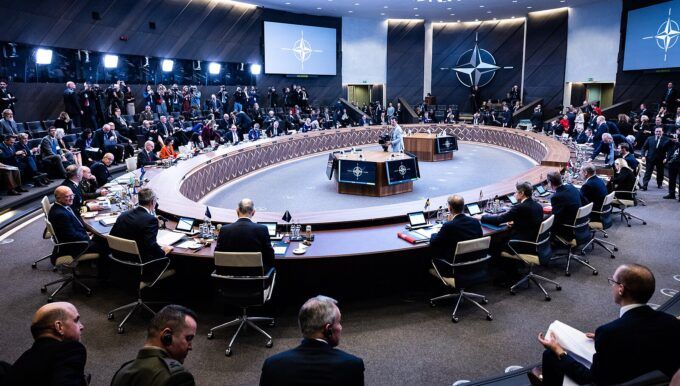
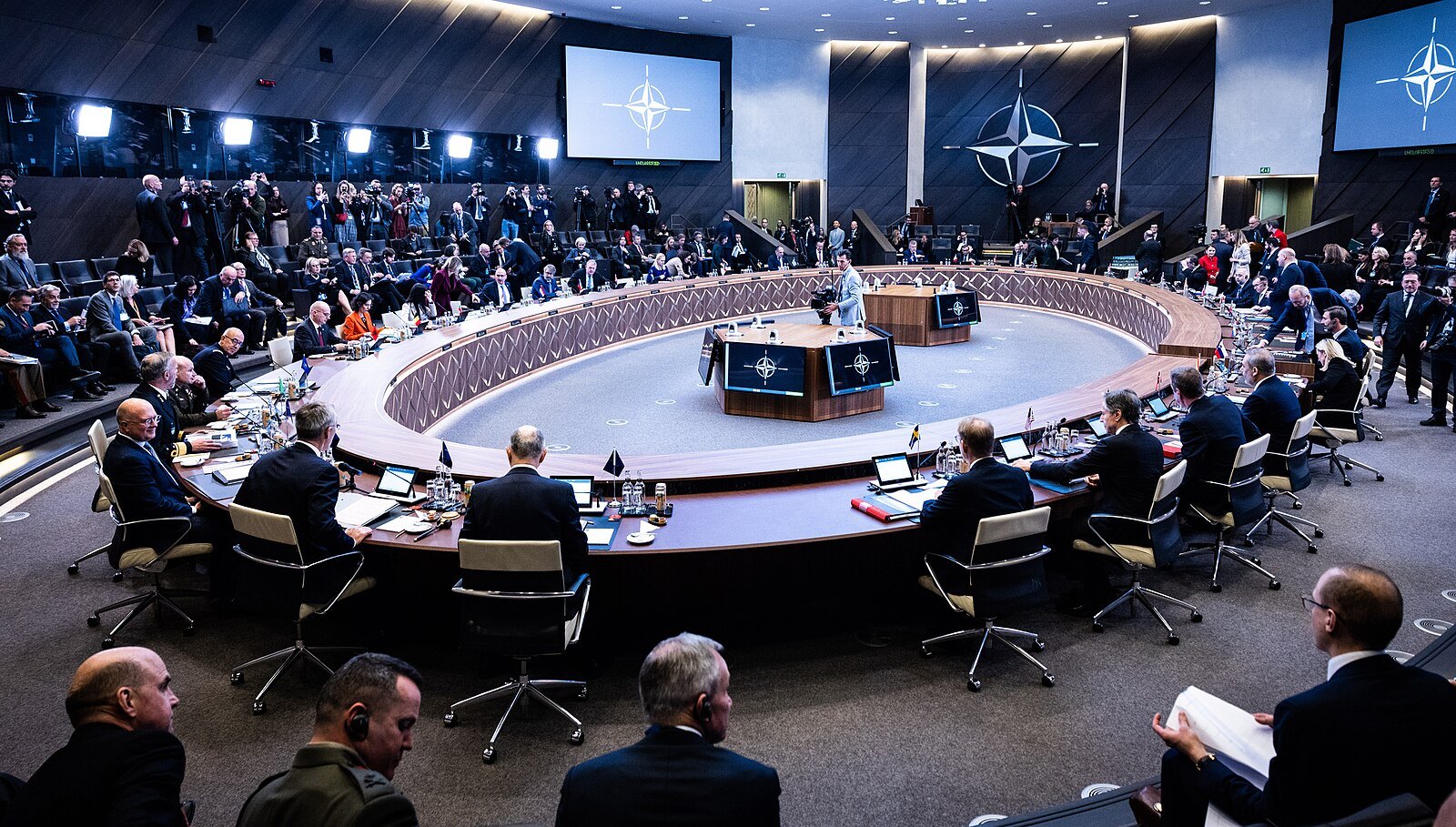
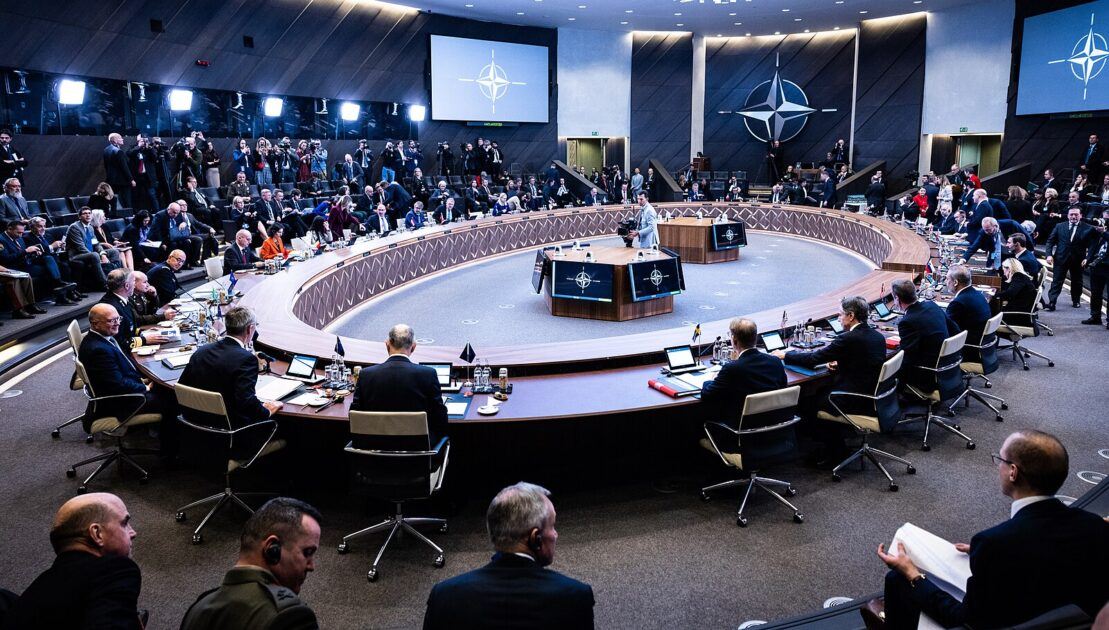

Photograph Source: Estonian Foreign Ministry – CC BY 2.0
The agreement by NATO members to raise defense spending to 5 percent of GDP by 2035 has been welcomed across Western capitals as a moment of strategic clarity. After years of uneven commitments and familiar handwringing, the alliance finally appears ready to shoulder more responsibility in a world that feels less secure by the day. The decision may strengthen deterrence in the short term, yet it also contains the seeds of a structural imbalance that could reshape transatlantic relations in ways Europeans have not fully reckoned with.
At first glance, a pledge to spend more on defense looks like an overdue response to Russian aggression, an acknowledgment that Europe must rebuild its own capabilities and reduce its dependence on Washington. The political symbolism is powerful. Leaders who once hesitated to discuss even 2 percent of GDP now support dramatic increases. The narrative of European awakening is enticing. Yet it draws attention away from a deeper question: who actually gains from this sudden surge of spending.
Europe has the political will to spend more, but it does not have the industrial capacity to match its ambitions. Years of neglect hollowed out domestic weapons manufacturing and investment stalled in key areas of research, development, and production. The result is a continent that may be prepared to buy more weapons, but not one that can easily build them at scale. That reality points to an uncomfortable conclusion. A significant share of Europe’s new defense budgets will flow not to European producers but to American defense manufacturers that remain dominant in advanced systems, logistics, and technology.
This is not a conspiracy or a hidden scheme. It is a structural outcome. The United States built a vast military industrial base over decades, while Europe often preferred to rely on the umbrella of American security guarantees. Now that threat perceptions have changed, Europe is trying to strengthen its defense posture, but it has little choice but to turn to American suppliers for the most critical equipment. The more Europe spends, the more embedded it becomes in U.S. defense ecosystems. Instead of achieving greater independence, it risks deeper dependence.
This shift offers Washington several strategic advantages. First, it strengthens the American defense industry at a moment when global competition is intensifying. Second, it reinforces U.S. leverage within NATO. A Europe that relies heavily on American technology, training, and logistics remains firmly anchored in a U.S.-led security structure. Third, it enhances Washington’s bargaining power in its dealings with Russia. A stronger NATO is often interpreted as a warning to Moscow, but it also equips the United States with more diplomatic tools. Washington can present itself as the indispensable leader of a revitalized alliance, something it may choose to wield in negotiations or crises.
For Europe, the implications are mixed. On one hand, increased defense spending does improve readiness and resilience. On the other, it raises the risk of long-term misalignment between political aspirations and practical outcomes. European leaders speak frequently about strategic autonomy, but autonomy requires more than large budgets. It requires coherent planning, shared priorities, and industrial cooperation. Without these, the 5 percent commitment becomes a fiscal gesture rather than a strategic transformation.
There are also domestic consequences that European leaders will soon confront. Voters across the continent already face rising living costs, strained public services, and growing political polarization. Redirecting vast sums toward defense will inevitably shape future elections. In societies where political trust is fragile, the public may question why so much money is being spent on weapons rather than schools, hospitals, or climate resilience. If public support falters, governments may struggle to sustain the very spending they have promised.
The greatest risk is that the 5 percent target becomes a symbol that masks underlying weaknesses. Europe might appear stronger on paper, but without robust industrial foundations and a clear strategic vision, higher spending will not necessarily translate into meaningful capability. The alliance could slip into a cycle where announcements of funding increases substitute for long-term planning. That would leave NATO with impressive numbers but uneven readiness.
It is worth noting that NATO plans a review in 2029 to assess the trajectory and ensure the spending path remains realistic and credible. Not all members are on equal footing: countries like Spain have opted out of the 5 percent pledge, reflecting different political priorities and fiscal capacities across Europe. Analysts from the International Institute for Strategic Studies caution that many European nations still lack the industrial base to scale up advanced capabilities rapidly, reinforcing the argument that higher spending may disproportionately benefit U.S. defense contractors.
Moreover, the 5 percent includes security-related spending such as assistance to Ukraine as well as cyber, infrastructure, and resilience programs, not solely hardware procurement, which nuances the idea that Europe will automatically spend more on weapons.
None of this means Europe should ignore emerging threats or shy away from investing in its own defense. The challenge is to ensure that higher spending aligns with genuine capacity-building rather than reinforcing structural dependency. That requires cooperation among European states, investment in shared production, and the discipline to prioritize strategic needs over political symbolism. It also requires a candid conversation about what kind of partnership Europe wants with the United States. A healthier transatlantic relationship will come not from Europe spending more for the sake of appearances, but from Europe building credible capabilities of its own.
The 5 percent pledge has been hailed as a historic breakthrough, yet its deeper meaning is far more complex. It may bolster deterrence in the near term, but it also reflects a Europe that is still searching for its strategic identity. Unless European leaders address the underlying imbalances within NATO, the new spending commitments could lock the continent into a future where its security is expensive, yet not truly its own.
This first ran on FPIF.
The post NATO’s Five Percent Gamble appeared first on CounterPunch.org.
This post was originally published on CounterPunch.org.