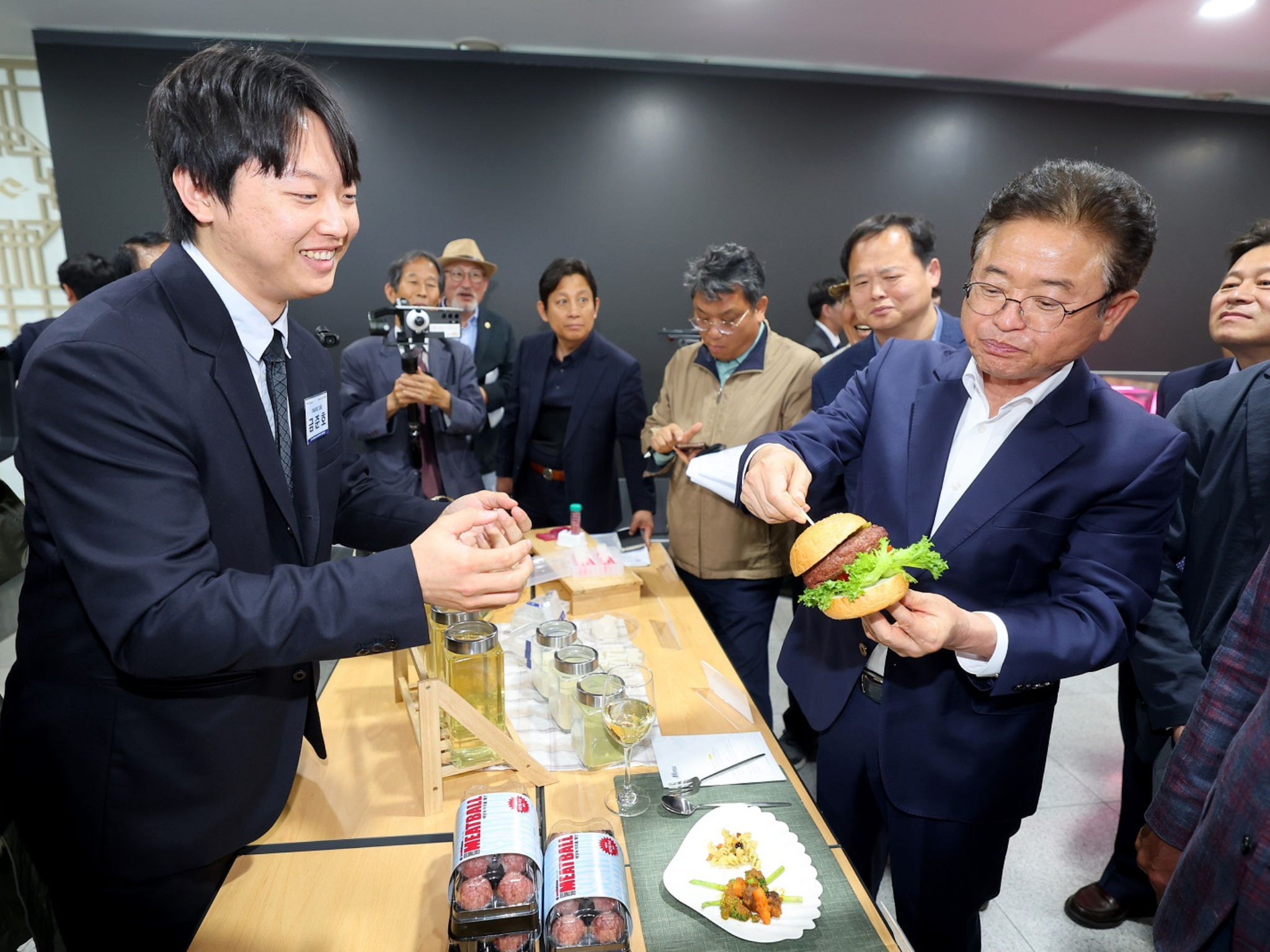
South Korean food tech startup SeaWith has signed a supply deal with the UK’s 3D Bio-Tissues, whose cell culture media can reduce the cost of the former’s cultivated meat by 30%.
Most Koreans are open to trying cultivated meat, but its high price markup remains the chief barrier to adoption.
According to a 2023 survey by the APAC Society for Cellular Agriculture (APAC-SCA), 65% of South Korea’s citizens cite price as the top factor influencing their attitude towards these proteins, with less than a fifth willing to pay a premium on cultivated meat.
That said, if cultivated beef were cheaper than its conventional counterpart, a quarter of Koreans would buy it. “We need combined synergies and efforts through investors, contract manufacturers, established stakeholders, startups, and government bodies to facilitate a thriving ecosystem for cultivated meat and seafood in South Korea,” Calisa Lim, senior project manager at APAC-SCA, told Green Queen at the time.
It’s along these lines that a new partnership between Seoul-based startup SeaWith and UK firm 3D Bio-Tissues has formed. The two have signed a deal that will see the latter supply its cell culture media to the Korean startup, which will allow it to lower the cost of its cultivated beef by 30%.
How 3D Bio-Tissues helps slash cultivated meat costs
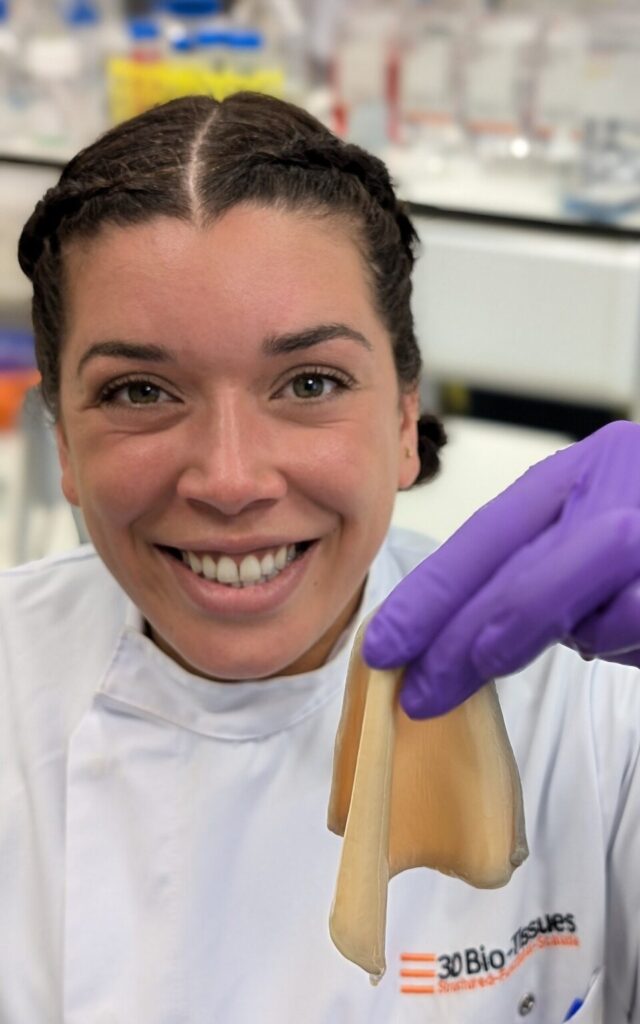
A subsidiary of tissue engineering company BSF Enterprise, 3D Bio-Tissues creates scaffold-free structured tissues and media supplements across a range of animal species. The company raised $19.8M in funding earlier this month, part of which is dedicated to expanding this subsidiary’s operations.
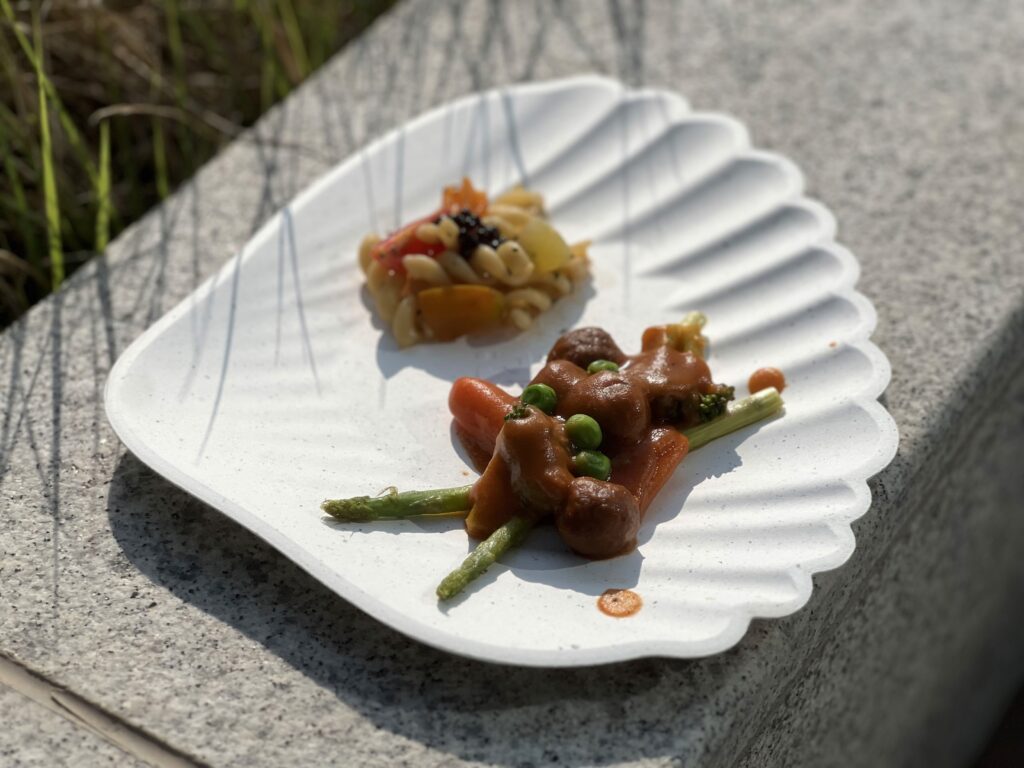
SeaWith, meanwhile, is one of South Korea’s leading cultivated meat startups, having created a seaweed-based technology to produce these proteins. It will sell these products under its Welldone brand, starting with beef meatballs.
Their partnership will see 3D Bio-Tissues deliver commercial supplies of City-Mix, its premium macromolecular crowder for cell culture, to SeaWith. Macromolecular crowders occupy space within aqueous solutions, creating volume-exclusion effects that enhance the thermodynamic activity and stability of biomolecules like proteins.
City-Mix acts as a “cell booster” by promoting the bioactivity and bioavailability of growth factors, protein carriers, and enzymes contained within the culture medium.
It mimics naturally crowded environments and highly efficient bioprocesses within living organisms, increasing cell proliferation rates and yield, reducing the need for expensive growth factors, facilitating tissue production, and doing away with animal inputs like fetal bovine serum.
The supplement will help scale up the production of SeaWith cultivated beef and reduce the associated costs. The agreement is worth £300,000 ($400,000) for 3D Bio-Tissues, making it a key source of revenue for the firm.
“This agreement marks a significant milestone for 3D Bio-Tissues as we expand City-Mix into one of Asia’s most dynamic cultivated meat markets,” said Che Connon, CEO of 3D Bio-Tissues. “We see this collaboration as a strong validation of City-Mix and an important step toward accelerating global adoption of cultivated meat.”
SeaWith eyes regulatory approval in South Korea
Connon suggested that partnering with SeaWith can demonstrate how its technology “can deliver real commercial impact, boosting cell yield, improving tissue quality, and crucially lowering production costs to help make cultivated meat economically viable at scale”.
SeaWith, meanwhile, is now eyeing regulatory approval for its cultivated beef in South Korea. It has been part of a regulation-free special zone in Gyeongbuk, which was created by the national government last year to ramp up R&D for cultivated meat.
This zone exempts companies from certain red-tape regulatory hurdles to fast-track the commercialisation of these proteins by scaling up production and achieving price parity with conventional meat.
The startup, which has raised $8M to date, has reportedly also expressed interest in moving into the Food Tech Research Support Center in Uiseong-gun, a dedicated cultivated meat facility funded by the federal and local governments and set to open in 2027.
“As Korea’s designated regulatory-free zone operator for cultivated meat, we are pleased to partner with an industry leader like 3D Bio-Tissues as we move towards regulatory approval,” said SeaWith co-founder and CTO Heejae Lee.
“City-Mix technology aligns exceptionally well with our high-performing Hanwoo-derived muscle stem cells, supporting both robustness and scalability in our production process. This collaboration represents a meaningful step forward as we advance toward commercialisation.”
Several other startups are vying for the regulatory green light in South Korea, including CellMeat and Simple Planet, with alternative protein think tank the Good Food Institute APAC pinpointing the country as one to watch for upcoming regulatory approvals.
“No individual country can reimagine the global protein supply – but a network of Asian R&D hubs working collaboratively to accelerate future-food development and manufacturing very well could,” said Mirte Gosker, the non-profit’s managing director. “Korea is a central player in turning that dream into reality, alongside other established foodtech leaders like Japan, China, and Singapore, and rising economies like Thailand, Malaysia, and Indonesia.”
The post South Korea’s SeaWith to Cut Cultivated Beef Costs by 30% with New Supply Deal appeared first on Green Queen.
This post was originally published on Green Queen.