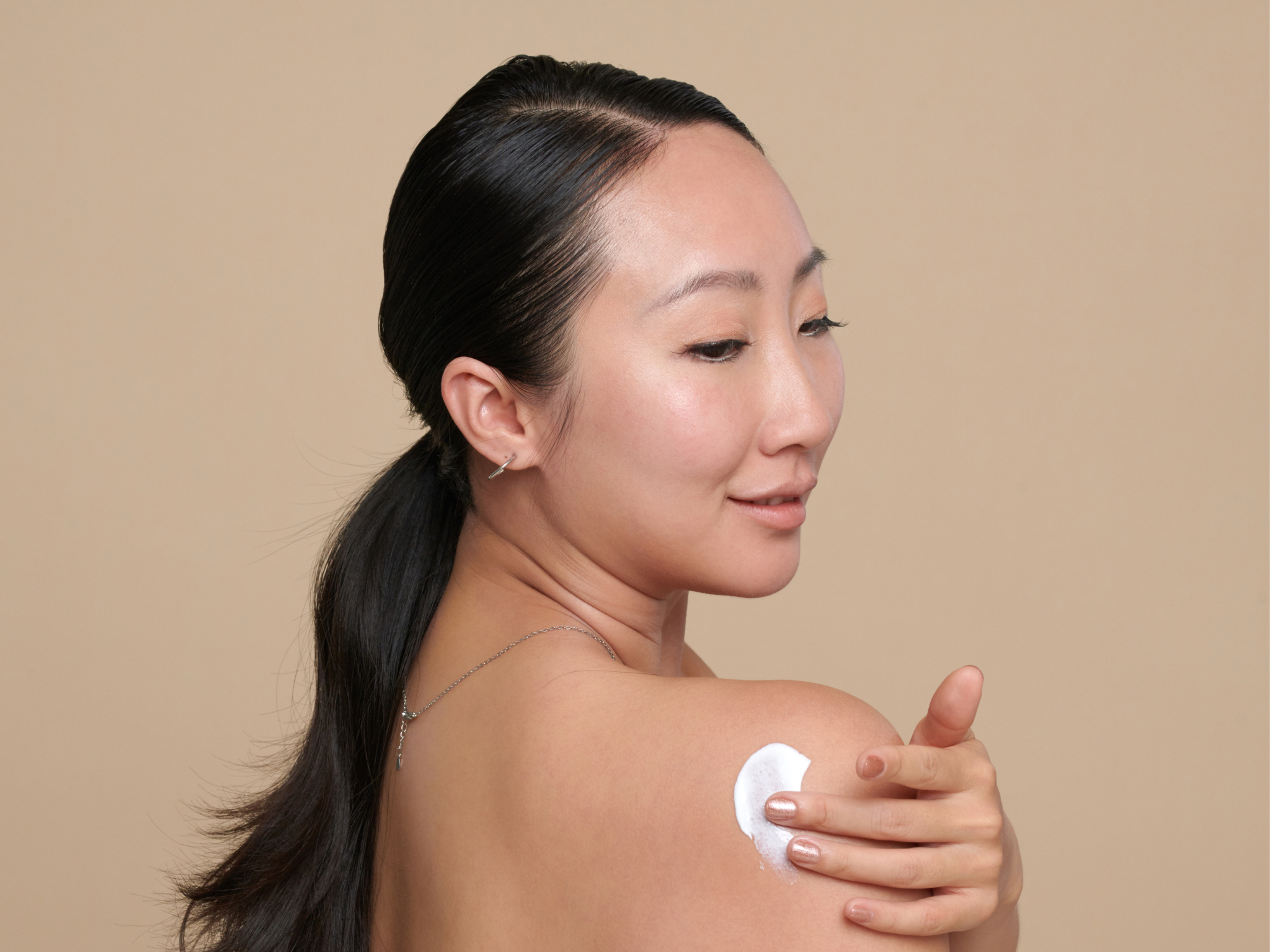
Singaporean cellular agriculture company Umami Bioworks has teamed up with salmon specialist Nippon Barrier Free to bring cultivated marine supplements and cosmetics to Japan.
A pioneer in the cultivated seafood and marine ingredients space, Umami Bioworks has inked a partnership that deepens its footprint in Japan.
The Singapore-based startup has signed a Memorandum of Understanding with Nippon Barrier Free, which specialises in selling functional materials from salmon, to bring cultivated marine cosmetics and supplements to the East Asian country.
It comes months after Umami Bioworks teamed up with Tokyo-based cellular agriculture pioneer IntegriCulture to develop novel cosmetics from fish cells, and announced its intention to establish a cultivated seafood factory in the capital by 2027.
Umami Bioworks to distribute cultivated marine ingredients in 19 countries
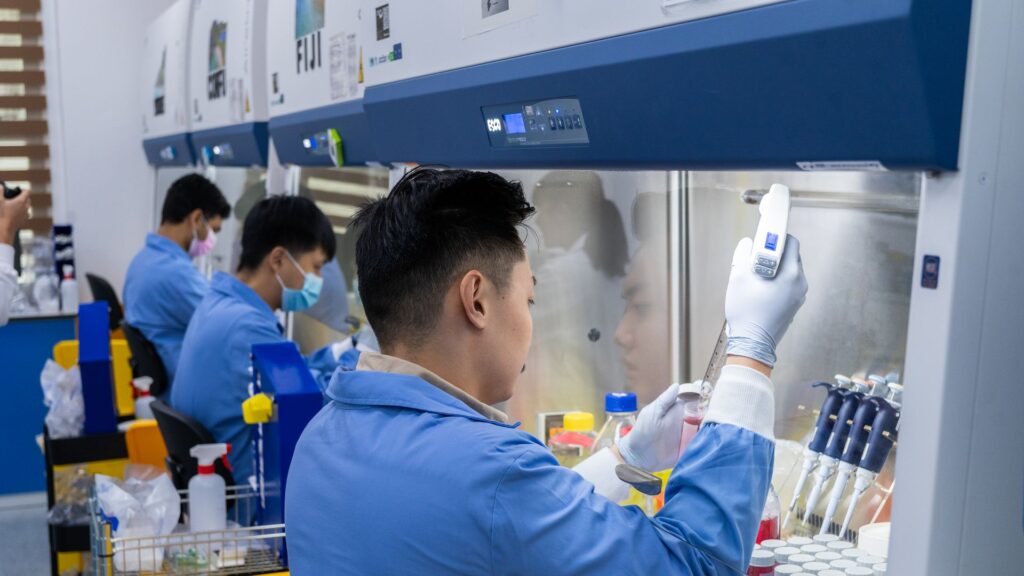
Nippon Barrier Free manufactures and sells functional materials derived from salmon, with the aim of using the fish’s full potential. Through the partnership, it will serve as Umami Bioworks’s sales and distribution partner for cosmetics and supplement ingredients across not just Japan, but 18 other countries too.
“Together, we aim to pioneer a new category of sustainable marine ingredients, expanding the boundaries of ocean-inspired innovation for both people and the planet,” Umami Bioworks said in a statement.
The Singaporean firm will provide its cell-based marine ingredients for health, beauty, and wellness applications. While its roots lie in the cultivated seafood realm, it diversified with a move into cosmetics this year, unveiling a line of cell-cultured bioactives called Marine Radiance.
This range is designed for personal care and nutraceutical products and seeks to address the supply chain instability, ethical concerns, and quality variability that limit access to high-efficacy marine ingredients by offering market-ready solutions that offer consistent, scalable, and traceable supply.
The first product from the line is animal-free polydeoxyribonucleotide (PDRN), a compound traditionally extracted from salmon sperm and known for its anti-inflammatory and wound-healing properties. It can synthesise collagen and reduce hyperpigmentation, and is becoming increasingly popular in skincare, wound healing, and regenerative medicine.
“Umami decided to enter the cosmetics sector after discovering that our cells generated co-products that had strong cosmetics activity (anti-ageing, antioxidant, etc),” Umami Bioworks founder and CEO Mihir Pershad told Green Queen in August.
“We conducted intensive discovery conversations with a range of cosmetics brands and ingredients companies, and were surprised by how many immediately asked when they could get samples and how much volume we could produce,” he added.
“This strong market pull convinced us that cultivated cosmetics ingredients could serve a real market need, which we could supply from co-products of our cultivation process.”
Umami Bioworks bets big on Japan ahead of seafood and supplements launch
The Marine Radiance line leverages Umami Bioworks’s core AI platform, Alkemyst, which uses machine learning, computational biology, and digital twin technology to deliver a faster, more precise R&D approach to growing and optimising the production of any marine species via cellular agriculture.
The platform analyses data, identifies patterns and optimises R&D and scale-up parameters across areas like cell line selection, media development, and process controls. The digital twin tech allows it to simulate and predict outcomes, reducing the amount of screening and scale-up experiments needed and thus saving both time and resources.
Umami Bioworks partnered with IntegriCulture to combine Alkemyst’s capabilities with the latter’s Cellament ingredient. This cell-cultured serum can revitalise the skin at the cellular level. It’s made by the selective cultivation of egg cells, such as the amnion, yolk sac, and plasma membrane, which amplify the potency of the nutritional elements in chicken eggs.
The two companies are combining their core competencies to co-develop novel cosmetics that are “fundamentally different” from conventional products, with plans to launch a line of fish-cell-derived innovations in the future.
It comes amid a rapid expansion of Japan’s clean beauty market, which is set to grow by 16% annually to cross $1B in 2030. Asia-Pacific itself is the fastest-growing cruelty-free beauty market, with half of consumers saying their purchasing decisions for cosmetics are influenced by their sustainability and social responsibility impact.
In November, Umami Bioworks further expanded its portfolio with the launch of a cell-cultured marine supplement line to address nutritional deficiencies in consumers who don’t eat seafood. It’s in “advanced stages of commercialisation” with partners globally, aiming to launch its first products this year.
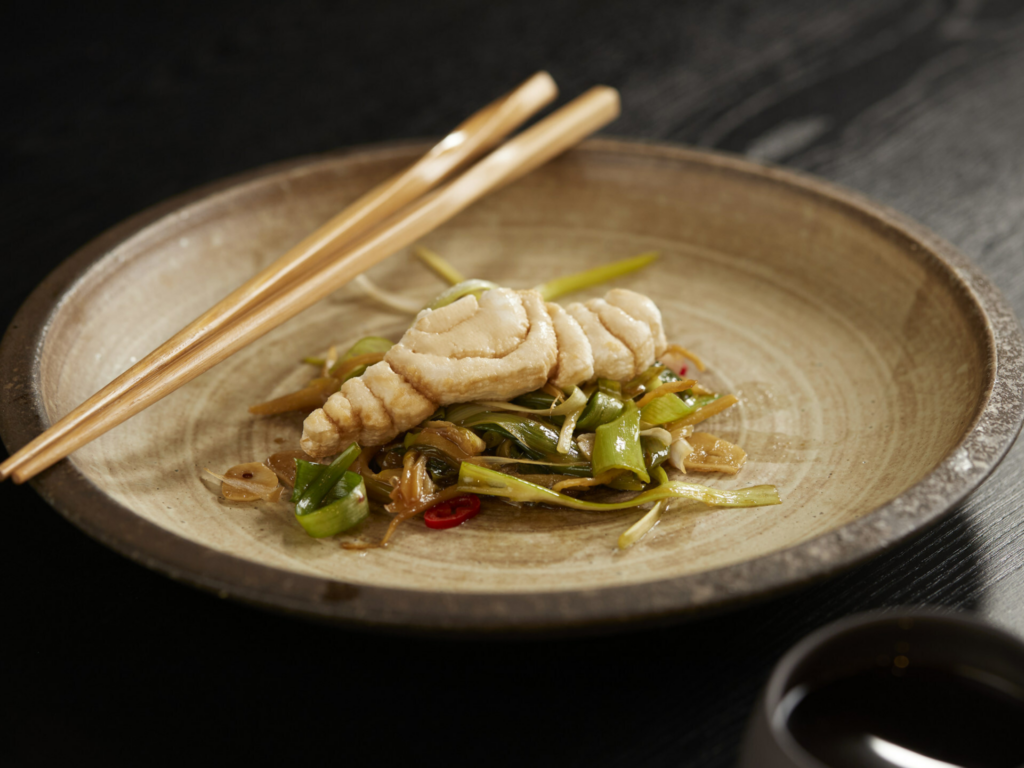
At the same time, it has been making progress on its cultivated seafood platform. It recently announced plans to build a $10M production facility in Japan by 2027, which would produce 10-50kg of seafood per month. If the demand is there, it will build a larger facility with a monthly output of 1,000-2,000kg.
Umami Bioworks will also open a plant that uses AI to optimise the cell culture used to grow its seafood in Japan, which is set to begin operations this year. It is working with the seafood giant Maruha Nichiro to co-develop products in the country.
Japan doesn’t have a regulatory framework for novel foods yet, but its government has been working to create one since late 2024. Umami Bioworks, which is already cleared to sell its whitefish for pet food use in the European Union, is awaiting approval for human food in several countries, including the UK, the US, and Singapore, where it is targeting a Q2 launch.
The post Umami Bioworks Deepens Japan Focus with New Distribution Partnership appeared first on Green Queen.
This post was originally published on Green Queen.