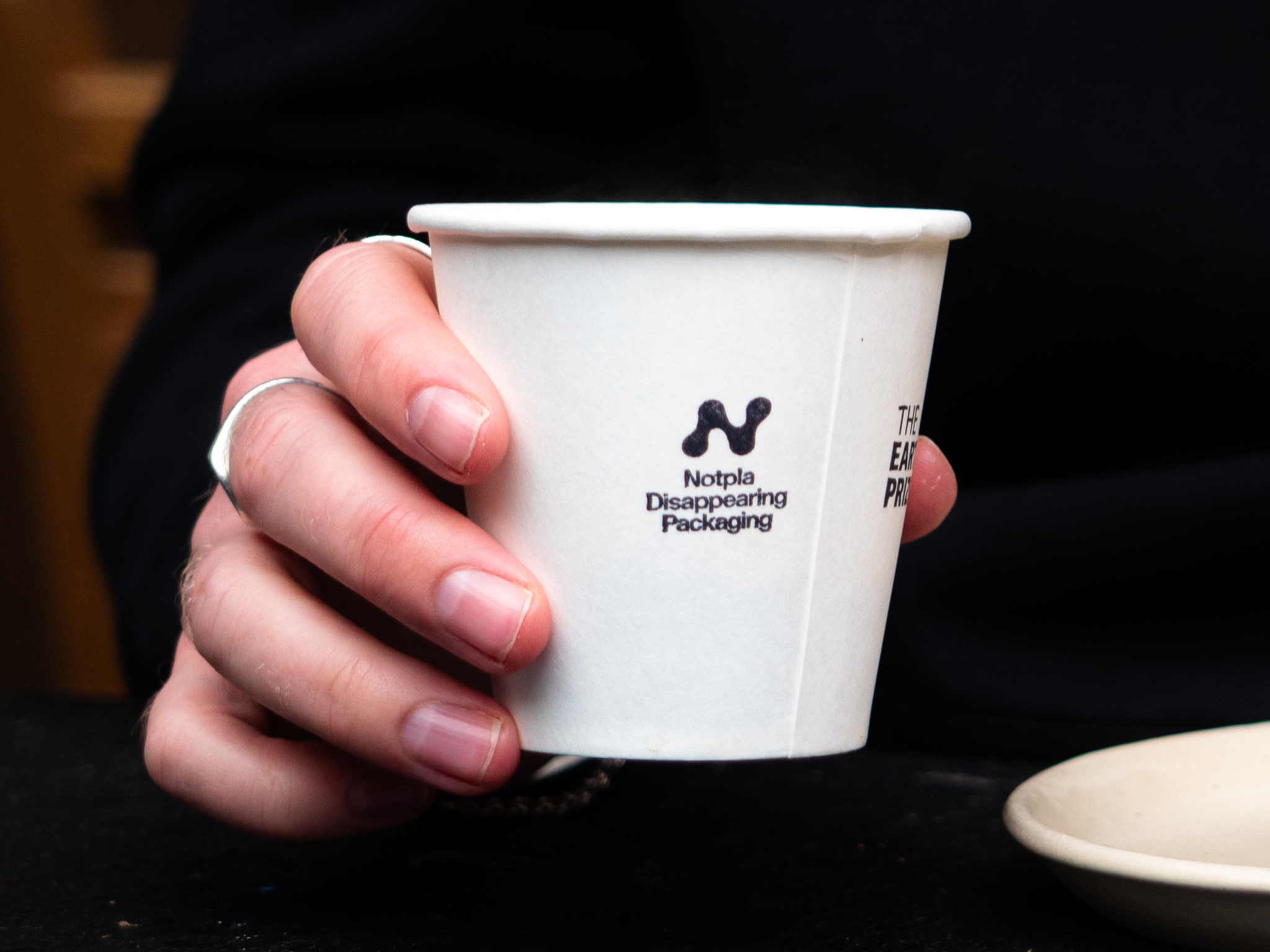
UK sustainable packaging firm Notpla and 14 supporting partners have received a €4M ($4.7M) grant from the Horizon Europe programme to create a plastic-free, home-compostable coffee cup.
Can seaweed help the coffee industry win its battle with paper cups?
A consortium of companies in Europe is banking on it, led by British startup Notpla, which makes biodegradable packaging from seaweed-derived plastic alternatives.
The firm and 14 other partners have been awarded a €4M ($4.7M) grant from the EU’s flagship research and innovation funding scheme, Horizon Europe, to develop a range of plastic-free coffee cups.
Typically, paper cups are lined with a thin film of plastic to avoid disintegration when hot liquids are poured in. This makes them non-biodegradable and unsustainable – each year, up to 500 billion single-use cups are discarded, and most end up in landfills.
Notpla’s solution replaces plastic with its seaweed-based material, allowing it to create a home-compostable disposable cup range with zero plastic content.
Why Notpla is working to reinvent coffee cups
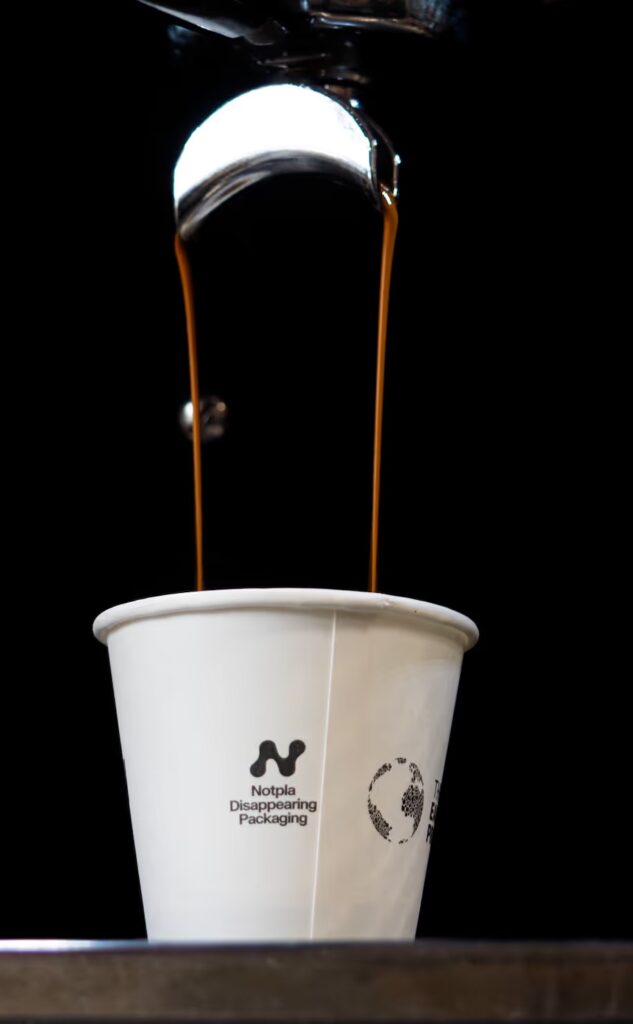
Disposable coffee cups are made up of a mix of synthetic chemicals and materials, including often toxic processing aids and heat stabilisers. Even manufacturers using plant-derived substances like PLA, corn or cassava to coat paper cups sometimes add chemicals for stability.
Though the plastic lining prevents the paper from absorbing hot liquids, the trade-off is that it begins releasing thousands of harmful microplastics into the drink, which are then carried into the body. According to one recent study, drinking from disposable coffee cups just once or twice a week could expose a person to up to 74,000 microplastic particles a year.
Meanwhile, only 4% of coffee cups are actually recycled in the UK. One estimate goes even further, saying only 0.25% were recycled in the UK, as of 2019.
Notpla, which won the Prince William-helmed Earthshot Prize in 2022, has been working on a viable alternative to meet the coffee industry’s demands. At the 2025 ceremony in Brazil, it piloted its Gen 1 espresso cup in partnership with recycling company Klabin and local roaster Macaw Coffee.
This first-generation cup is designed to tackle the microplastic issue head-on, with its interior surfce coated with Notpla’s seaweed material. To achieve a functional seal, the startup used a small amount of industry-standard adhesive at the base and seam, which was necessary for functionality as it continues to work towards a fully natural solution.
A Gen 2 cup, featuring a natural adhesive, is already in development. Notpla is evaluating the material’s performance, scalability, and consumer feedback, with the goal of producing a fully natural, heat-sealed cup.
Notpla working with industry partners amid wider alt-material struggles

The Horizon Europe funding will go towards the development of a market-ready, seaweed-coated range of coffee cups. Notpla is working with a range of partners from across the value chain, from biomass and agricultural waste to scalable production, to end-of-life testing and full lifecycle assessment.
These include catering giant Compass Group, institutes such as University College London, the University of Ferrara, and Linköping University, eco paint startup TomaPaint, as well as non-profits like Plastic Punch and Funditec.
“The first phase of this project focuses on developing a full coffee cup range, testing natural materials, and scaling solutions designed for circularity, not compromise,” Notpla said in a social media post. “We are collectively pioneering a truly holistic approach to innovation, performance and environmental safety.”
Founded in 2014, Notpla has raised £35M in venture funding to date, and makes its plastic alternatives by extracting natural compounds from seaweed and plants without chemical modifications. These have a 70% lower climate footprint than conventional packaging, and have replaced over 21.5 million pieces of plastic. Over half of this impact came through in 2024, when the firm’s sustainable solutions helped avoid 600 tonnes of CO2e.
Notpla has rolled out its seaweed-lined packaging across sports venues like Villa Park, the Kia Oval, Tottenham Hotspur Stadium, the Principality Stadium, Allianz Stadium, and more. In addition, its eco solutions have appeared at UEFA Champions League matches, as well as events at The O2.
Fellow UK startup Xampla and Australia’s Uluu also raised venture funding for plastic-free packaging solutions last year, but the alternative material sector has lately faced its fair share of challenges too. Melbourne-based Great Wrap, which produced compostable stretch wraps, recently filed for administration with reported debts of A$39M ($25.5M).
Investors at VC firm Supply Change Capital point to a structural misalignment between startup’s innovations and corporate priorities for the future of packaging. Only 42% of sustainable packaging companies that raised money between 2016 and 2022 have gone on to secure further investment, and total funding in this category was higher in 2022 than between 2023 and May 2025.
“Packaging must balance sustainability with functionality – an aspect the industry is not willing to compromise on, especially if it interferes with consumer experience,” Supply Change Capital wrote last year.
The post EU Awards €4M Grant to Prince William’s Earthshot Prize-Winning Seaweed Plastic appeared first on Green Queen.
This post was originally published on Green Queen.