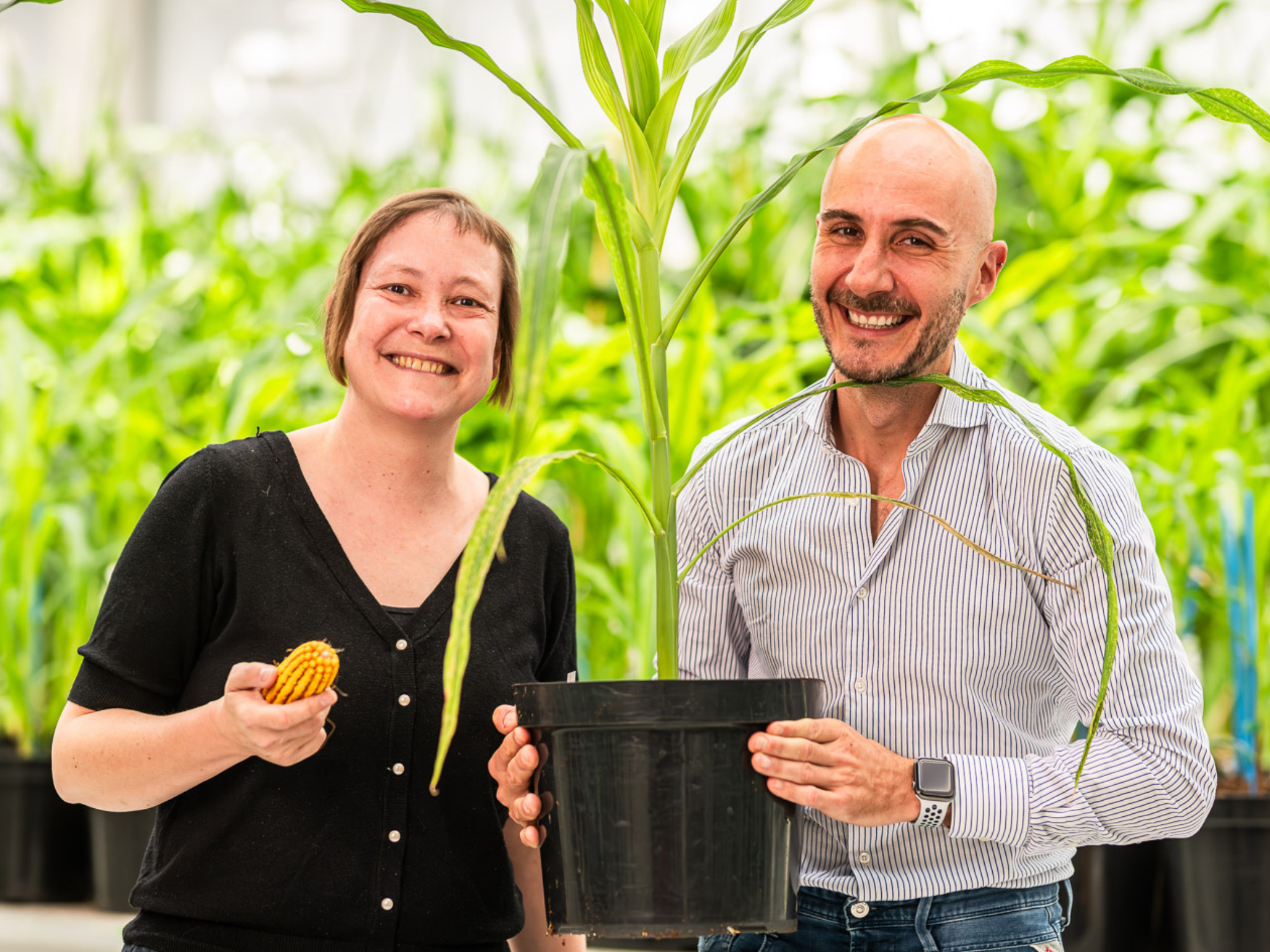
Belgian agtech firm Rainbow Crops has been awarded a $7M grant from the Gates Foundation to advance its AI-driven tech to create crops that are climate-resistant and high-yielding.
Bill Gates may have ruffled some feathers with his comments against climate alarmism, but his non-profit is still pumping millions into technologies that can fight the crisis.
The Gates Foundation, established by the billionaire and his former wife, Melinda French Gates, has awarded a $7M grant to Rainbow Crops, a Belgian startup developing climate-resilient crop varieties with artificial intelligence (AI).
The funds will support the application of its Trait Foundry platform to advance new genetic approaches that can enhance crop performance under heat and drought stress to meet the needs of smallholder farmers.
“The funding will be used to expand our platform capabilities (in scope and scale) and accelerate delivery of climate-resilient traits in these three crops,” Giacomo Bastianelli, co-founder and CEO of Rainbow Crops, told Green Queen. “Practically, that means generating and testing larger libraries of multiplex edits, scaling phenotyping and data pipelines, and improving our AI models.
Rainbow Crops is spotlighting crops crucial to food security
Founded in 2025 as a spin-off from Ghent’s VIB–UGent Center for Plant Systems Biology, Rainbow Crops combines AI with multiplex genome editing, precision breeding and automated phenotyping to create high-yielding crops that can withstand climate change.
Its Trait Foundry platform allows the startup to systematically identify and combine genetic modifications that maximise complex agronomic traits. Unlike traditional breeding or single-gene approaches, it’s designed to address traits controlled by multiple interacting genes, such as drought tolerance and plant vigour.
“We start by mapping the system biology behind a target trait using AI: genes, pathways, and how they interact. We then use multiplex genome editing to create many targeted combinations in parallel, and measure outcomes with high-throughput phenotyping in the greenhouse,” explains Bastianelli.
“AI sits in the loop: it helps prioritise targets, design edit combinations, and learn from each experimental round to predict which gene combinations are most likely to deliver the desired trait without unwanted trade-offs. This ‘design-build-test-learn’ cycle accelerates discovery and de-risks trait development.”
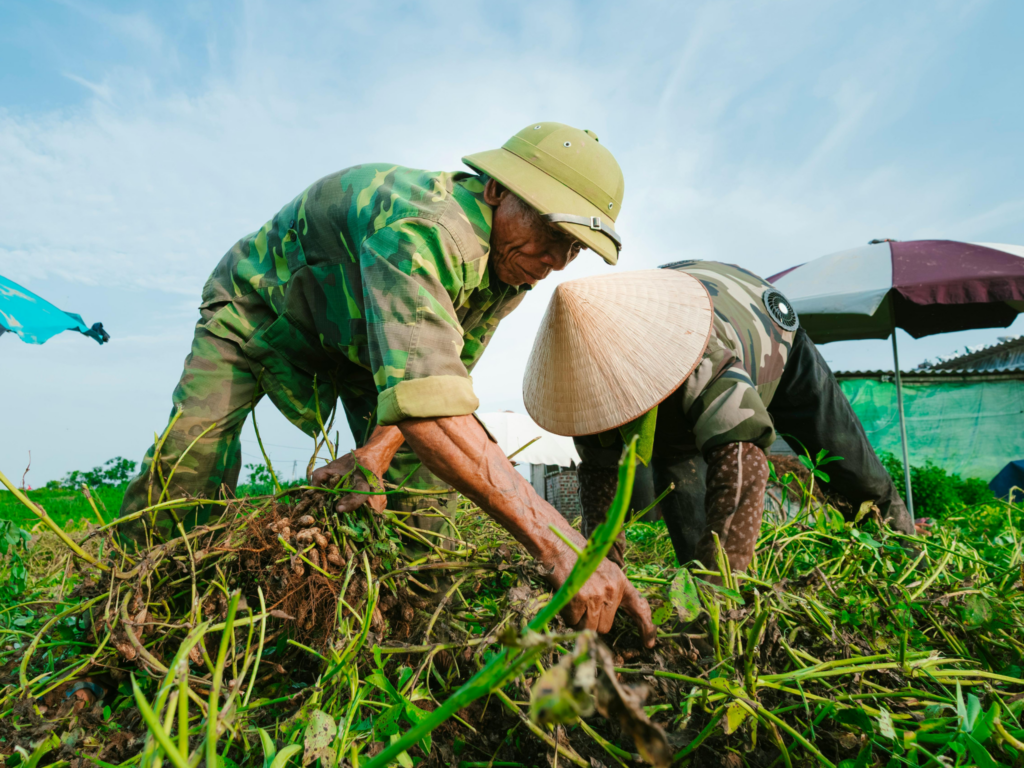
The research is initially focusing on corn, sorghum and rice. “They are among the most important staple crops globally, and especially critical for food security and farm livelihoods across the developing world, from sub-Saharan Africa to South and Southeast Asia,” says Bastianelli.
“These crops are highly exposed to heat, drought, and increasing weather variability, so improving yield stability under stress can have immediate impact for smallholder and emerging-market farming systems. At the same time, the know-how and AI-driven methods we develop for stress resilience in these crops can be adapted to accelerate similar improvements in other crops,” he adds.
For instance, in the Horn of Africa, a region that includes countries like Ethiopia, Somalia, Kenya, Uganda, and more, the worst droughts in 40 years dried up the stocks of white maize in 2023. In fact, NASA predicts that, with current climate change trends, average global crop yields for maize may see a decrease of 24% by late century.
Likewise, rising temperatures could shrink rice yields by 40% by the end of the century, and are already raising arsenic levels in the crop. In China, extreme rainfall has reduced rice yields over the last 20 years. And in Vietnam, nearly 250,000 acres of land in the Mekong Delta – its rice bowl – is being taken out of production, partly due to climate change.
Despite controversial memo, Bill Gates delivers on agriculture support

Rainbow Crops’s project places a strong emphasis on seedling performance under heat and drought stress, generating both scientific knowledge and trait-building locks that can support future breeding efforts.
Its platform will develop innovative approaches to identify and combine alleles (variants of genes that determine traits) to support germination under challenging climatic conditions, with the aim of improving germplasm delivery and progressing climate-resilient crops.
“Traditional breeding can be slow for complex traits because gains are incremental and require many cycles of crossing and field testing. Single-gene engineering is faster when one gene drives the trait, but many agronomic traits are multi-gene,” outlines Bastianelli.
“Our approach edits multiple targets at once and uses AI to focus experiments on the most informative combinations, reducing the number of cycles needed. Costs depend on crop and regulatory path, but in general, we aim to cut development time and experimental burden by concentrating effort on the highest-probability genetic solutions earlier.”
Rainbow Crops builds on years of publicly supported research at VIB, and operates within its advanced research infrastructure. It is working with the laboratory of Prof Hilde Nelissen, from which it had spun off, as well as the VIB Transformation Facility and the VIB Agro-Incubator.
The Trait Foundry platform has already been validated end-to-end in corn, demonstrating its multiplex genome editing and discovery approach across multiple traits. The startup will also collaborate with other industry partners, including coordination on scientific approaches and data sharing.
The Gates Foundation grant comes months after Gates penned a controversial memo suggesting that global climate strategy should pivot from tackling temperature rises to preventing disease and poverty.
“Although climate change will have serious consequences – particularly for people in the poorest countries – it will not lead to humanity’s demise. People will be able to live and thrive in most places on Earth for the foreseeable future,” he wrote, the same week a seminal study found that rising heat is causing the death of one person every minute globally.
That said, Gates said “improvements in agriculture” should be at the top of our priorities, pointing to strategies to increase yields, develop climate-resilient crop varieties, and use AI to forecast weather and change cultivation plans.
Rainbow Crops isn’t the only agtech startup to have received funding for its climate-resilient crop breeding tech this week. In France, Amatera raised €6M ($7M) to expand its AI-powered plant cell biology platform for crops that can weather climate change, starting with coffee and wine grapes.
The post Bill Gates Awards $7M Grant to Belgian Startup Using AI to Develop Climate-Resilient Crops appeared first on Green Queen.
This post was originally published on Green Queen.