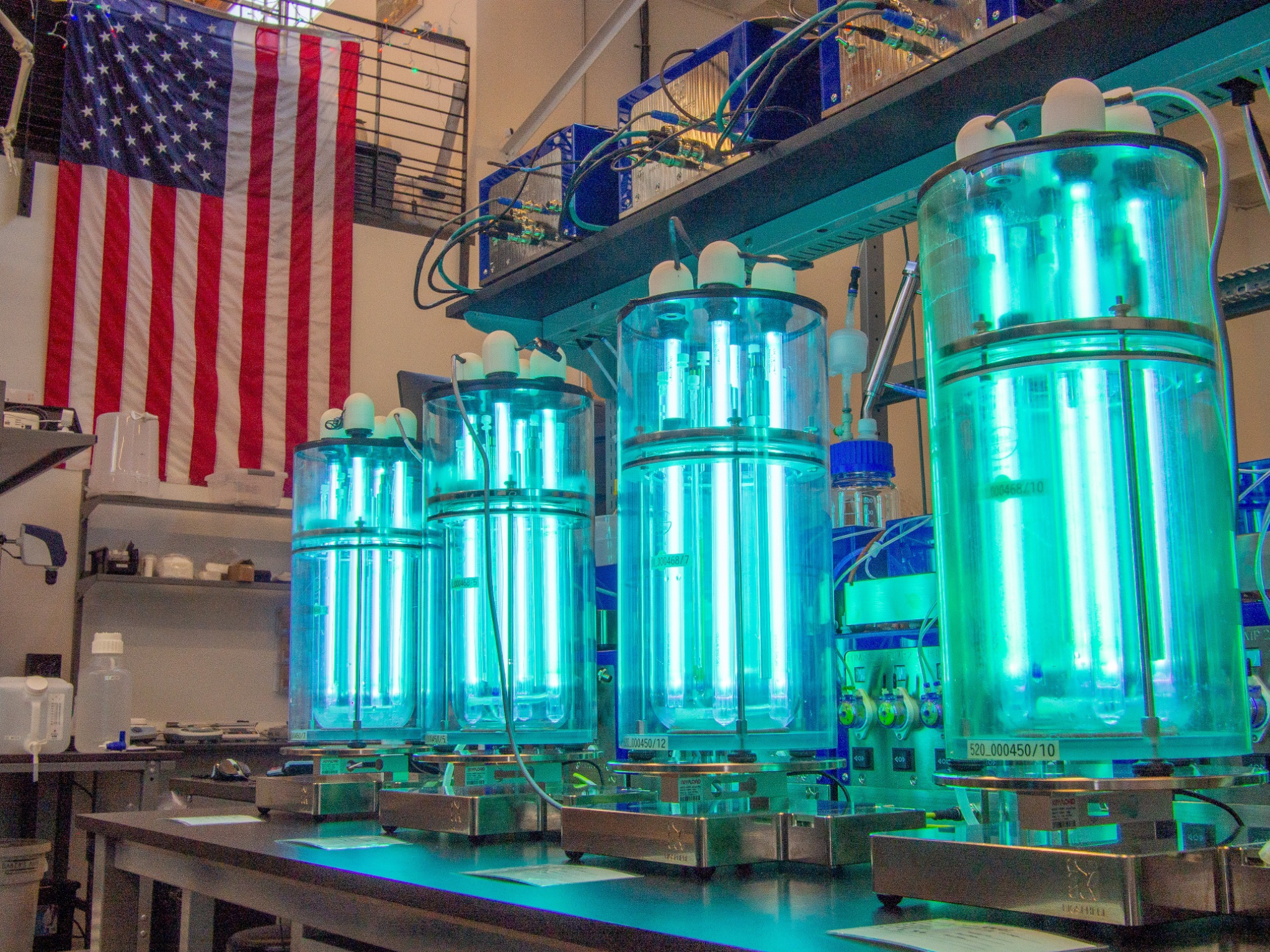
Californian startup Biosphere has received a Department of Defense grant worth $9M to build portable bioreactors and produce gas-fermented proteins for the US Army.
Despite the Trump administration’s love affair with meat, it’s betting big on alternative proteins.
The US Department of Defense has awarded a grant to Californian firm Biosphere, which uses UV-sterilised fermentation tanks to produce proteins from “air, water and energy”.
The funding, which totals $9M over three-and-a-half years, is dedicated to the development of portable, “field-deployable” bioreactors to produce on-demand proteins for the US Army in remote and logistically constrained environments.
The grant was awarded via the US Army Combat Capabilities Development Command (DEVCOM) Soldier Center, as part of the DoD’s Manufacturing Science and Technology Program. Biomanufacturing is one of the Pentagon’s six critical technology focus areas, as it aims to “enhance operational resilience and reduce logistical vulnerabilities in unfavourable environments”.
“This effort reflects the military’s focus on advancing resilient, forward-deployed capabilities that reduce logistical burden and enhance operational flexibility,” said Nicole Favreau Farhadi, technical lead of the DEVCOM Soldier Center.
“Technologies that enable on-site production of critical resources, beginning with nutrition, represent an important step toward more adaptive and distributed sustainment in future operating environments,” she added.
Biosphere’s UV bioreactors usher in new era for industrial biotech

Biosphere emerged from stealth in early 2025 with the launch of a UV-sterilised bioreactor that marked a “step-change reduction” to the capital intensity that has plagued the industrial biomanufacturing sector for decades.
The industry still largely relies on complex and expensive steam-sterilised bioreactors, which were developed in the 1940s for penicillin production. These feature a complex architecture with dozens of valves and hundreds of pipes, and their steep upfront costs have remained a market hurdle.
To solve that issue, Biosphere leverages UV radiation and advanced materials to simplify the hardware involved. Its bioreactors create aseptic environments with a UV sterilise-in-place protocol, which radically expands the bioreactor design space.
This enables a 10-fold reduction in material costs and a sixfold increase in sterilisation speeds, while requiring only a third of the valves and pipes as conventional systems.
“By leveraging our proprietary UV-sterilised bioreactor technology, we’re developing a system that can produce nutritious, shelf-stable food anywhere, eliminating traditional supply chain constraints and enhancing operational readiness for our military,” said Biosphere co-founder and CEO Brian Heligman.
He added that the DoD contract “represents a significant milestone in our mission to advance rapidly deployable biomanufacturing systems”.
The project to develop portable bioractors will begin with a process selection and design phase, before entering pilot-scale demonstrations and culminating in a full-scale prototype capable of continuous operation. Work will be carried out at Biosphere’s facilities in California, with final product samples delivered to the Combat Feeding Division for evaluation.
Among the key innovations will be UV sterilisation protocols for contamination-free production, water and media recycling systems, and downstream processing to create lightweight, nutrient-dense, ready-to-eat foods.
Pentagon’s biomanufacturing focus dovetails with US Army’s vegan meal development
“This programme will validate our platform’s ability to deliver autonomous, point-of-need biomanufacturing,” said Biosphere co-founder and COO Arye Lipman. “While nutrition is the initial application, the platform can produce fuels, chemicals, and advanced materials, with potential to expand distributed manufacturing in remote and resource-constrained environments.”
Gas fermentation involves feeding microbes on gases like carbon dioxide, water and electricity – instead of sugar – to produce high-value compounds. Initial applications of the technology were focused on biofuels and chemicals, but a wave of startups has since extended the use case to food.
Finland’s Solar Foods has already commercialised its Solein protein in Singapore, and will enter the US market this year, while Denmark’s Unibio is working with the Saudi Industrial Investment Group to build the world’s largest gas protein factory. Air Protein, LanzaTech, Jooules, and Aerbio are all innovating with this technology too.
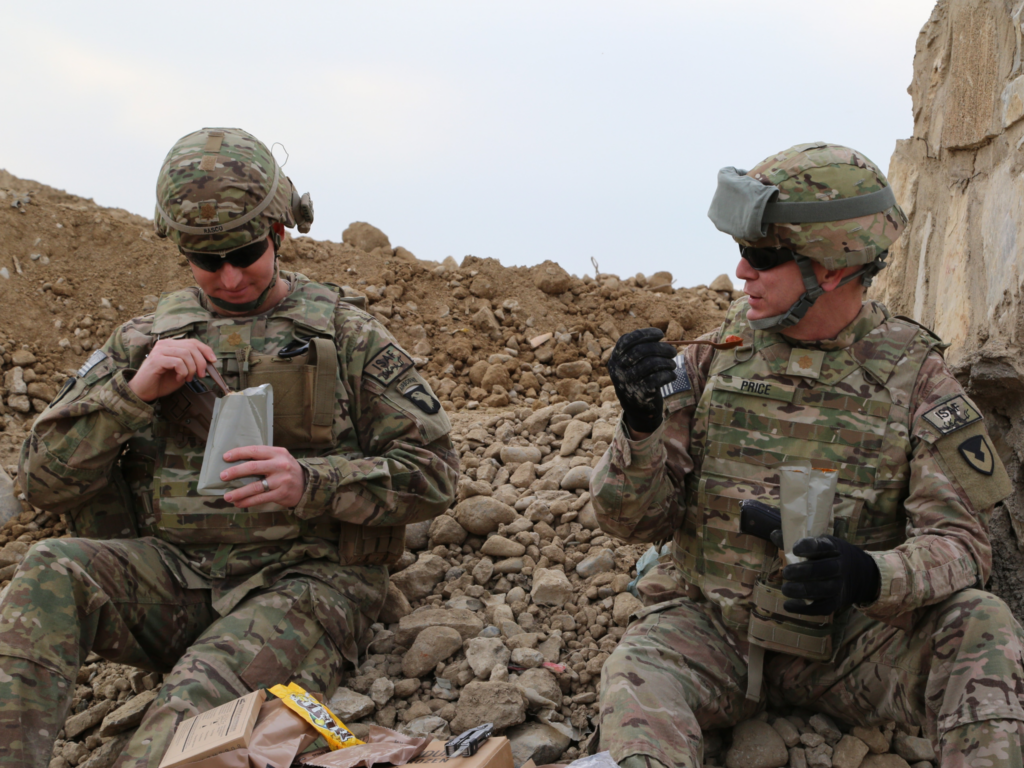
Biosphere’s 42-month contract with the US Army will fund the design, development and demonstration of field-deployable bioreactors that can synthesise ready meals for troops on the front lines.
The startup, which has raised $8.8M in seed funding, intends to reduce reliance on complex supply chains by enabling on-site production of 2,800 daily calories per person for up to 18 soldiers, with plans in place to scale up to support 250 personnel.
The project aligns with the DoD’s strategic focus on biomanufacturing and contested logistics, priorities that are supported by a planned investment of more than $300M in biomanufacturing for the 2026 fiscal year.
The Pentagon has also signed an MoU with the US Department of Agriculture (USDA) to make agriculture a national security priority, which could accelerate the development of “novel technologies”. It’s an extension of the farm security plan announced last year, which emphasises USDA funding for American-made technology and R&D, including biotechnology and biomanufacturing.
The Biosphere grant, which follows a $1.5M DoD grant for the startup in 2024, comes shortly after the DEVCOM Soldier Center put out a call for companies and researchers to develop technologies for producing alternative proteins for soldiers on the front lines.
This includes plant-based and fermentation-derived proteins that can be manufactured in combat zones and incorporated into Meals, Ready-to-Eat (MREs), the dehydrated field rations for soldiers in combat or in situations where cooking isn’t possible. Last year, the US Army confirmed it would begin offering vegan MRE options from 2027.
The post US Army Pumps $9M Into Biosphere to Produce Gas Protein for Military Rations appeared first on Green Queen.
This post was originally published on Green Queen.