This content originally appeared on Democracy Now! and was authored by Democracy Now!.
This post was originally published on Radio Free.
This content originally appeared on Democracy Now! and was authored by Democracy Now!.
This post was originally published on Radio Free.
This post was originally published on Democracy Now!.
This content originally appeared on Democracy Now! and was authored by Democracy Now!.
This post was originally published on Radio Free.
This post was originally published on Democracy Now!.
This post was originally published on Democracy Now!.
This post was originally published on Democracy Now!.
This post was originally published on Democracy Now!.
This post was originally published on Democracy Now!.
This post was originally published on Democracy Now!.
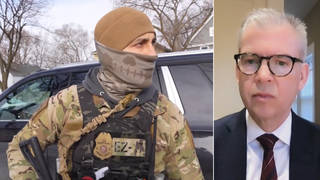
Two ICE officers have been placed on administrative leave and are accused of lying under oath about an incident in Minneapolis last month involving two Venezuelan immigrants, one of whom was shot in the leg by an agent. After the incident, the two Venezuelan men, Alfredo Alejandro Aljorna and Julio Cesar Sosa-Celis, were charged with felony assault, falsely accused of beating an ICE officer with a broom and snow shovel. Sosa-Celis was shot in the right thigh. While the Department of Homeland Security originally claimed the two men had attacked the agent, video evidence and witness testimonies contradicted the accusations. Federal prosecutors in Minneapolis last week dropped the felony assault charges against Aljorna and Sosa-Celis.
Criminal defense attorney Frederick Goetz, who represents Aljorna, says the admission of wrongdoing is “unusual” given that the Justice Department has been zealous in carrying out President Trump’s anti-immigration agenda. It was “not only a dismissal, but a dismissal with prejudice, meaning that my client can never be charged again for anything to do with this incident,” says Goetz.
This post was originally published on Democracy Now!.
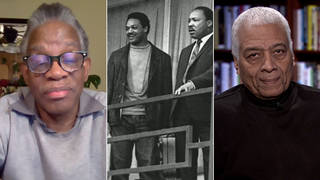
We look back on the life and legacy of civil rights icon Reverend Jesse Jackson, who died Tuesday at the age of 84. From marching with Dr. Martin Luther King Jr. to building the Rainbow Coalition in his two presidential runs and beyond, “Jackson’s life contributed to making this country more democratic, more inclusive, more fair,” says Howard University political science professor Clarence Lusane.
We also speak with activist Larry Hamm, who co-chaired Jackson’s 1988 presidential campaign in New Jersey. Hamm first met Jackson in 1971 and says he was “audacious” above all else. “Jesse knew his place in history,” says Hamm.
This post was originally published on Democracy Now!.
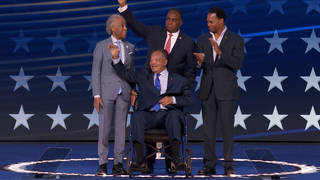
As we remember the life and legacy of civil rights icon Reverend Jesse Jackson, who died Tuesday at the age of 84, we air remarks by Senator Bernie Sanders from a 2024 tribute held during the Democratic National Convention. Sanders, whose own two runs for president galvanized progressives across the United States, hailed Jackson’s campaigns in 1984 and 1988 for building a broad coalition for social justice. “Jesse Jackson is one of the very most significant political leaders in this country in the last 100 years,” Sanders said. “Jesse’s contribution to modern history is not just bringing us together; it is bringing us together around a progressive agenda.”
This post was originally published on Democracy Now!.
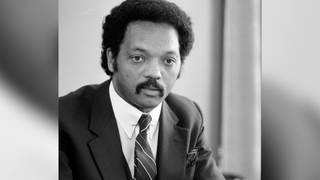
Civil rights icon Reverend Jesse Jackson died Tuesday at the age of 84. Jackson is known for working closely with Dr. Martin Luther King Jr. and the Southern Christian Leadership Conference during the civil rights movement, and he later ran two groundbreaking presidential campaigns in 1984 and 1988, when he pushed to cut the Pentagon budget while increasing domestic spending on education, housing and healthcare. Jackson was also involved in international campaigns from the anti-apartheid struggle in South Africa to supporting Palestinian self-determination. We remember his legacy and air interviews from his many appearances on Democracy Now! over the years.
This post was originally published on Democracy Now!.
This post was originally published on Democracy Now!.
Democracy Now! Tuesday, February 17, 2026
This post was originally published on Democracy Now! Video.
Democracy Now! Tuesday, February 17, 2026
This post was originally published on Democracy Now! Audio.
This content originally appeared on Democracy Now! and was authored by Democracy Now!.
This post was originally published on Radio Free.
This post was originally published on Democracy Now!.
This post was originally published on Democracy Now!.
This post was originally published on Democracy Now!.
This post was originally published on Democracy Now!.
This post was originally published on Democracy Now!.
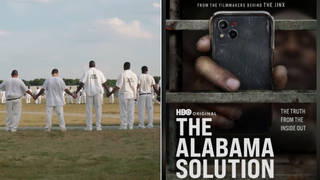
Three activists — Robert Earl Council, Melvin Ray and Raoul Poole — featured in the Oscar-nominated documentary The Alabama Solution were placed in solitary confinement last month in what advocates believe is retaliation for their role in exposing the abuses of the state’s prison system and for helping to organize a prison labor strike. We’re joined by three guests who worked on the documentary: director Andrew Jarecki, investigative journalist Charlotte Kaufman and Tiffany Johnson Cole, a childhood friend of and attorney for Robert Earl Council. Johnson Cole has filed a lawsuit against her client’s transfer. She says Council, Ray, Poole and other incarcerated activists have “put themselves in harm’s way in an effort to bring about change in a system that is truly cruel and inhumane.”
The Alabama Solution features footage clandestinely shot on contraband cellphones wielded by men incarcerated by the fifth-largest state prison system in the United States. The footage includes the apparent cover-up of the beating death of an incarcerated man by prison guards. “Any authoritarian administration does not want you to see what’s going on inside,” says director Andrew Jarecki. “They can’t really continue to do what they’re doing if there’s enough public pressure, which is one of the reasons why Alabama is so anxious about this film.” Kaufman adds that the problem extends throughout the country. “We spend $80 billion a year on prisons and jails and incarcerate 2 million people, and yet the public’s not allowed to see in and evaluate whether the system is fulfilling its mandate.”
This post was originally published on Democracy Now!.
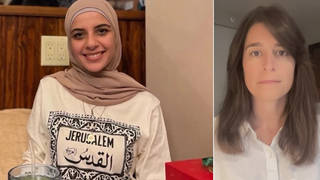
Thirty-three-year-old Palestinian activist Leqaa Kordia will soon mark one year trapped in ICE detention. Kordia, who was born in East Jerusalem, first came to police attention when she was arrested during the 2024 Gaza solidarity protests at Columbia University. Those charges were dropped, but Kordia was later detained at routine immigration check-in in New Jersey. Federal immigration officers said her student visa had expired, and sent her to an ICE detention center in North Texas, where she’s been incarcerated ever since. Under what she describes as torturous conditions, she suffered her first-ever seizure, which led to a multiday hospitalization. For three days, ICE refused to inform her family and legal team about her status and whereabouts. “She’s been a relatively healthy person physically until she was detained … [but] her health is at great risk if she remains in custody,” says Kordia’s attorney Sarah Sherman-Stokes.
Kordia has lost more than 200 family members to Israel’s genocide in Gaza, and a judge has ruled that she cannot be repatriated to Israel because of risk of persecution there, but the U.S. government has refused to release her on bond while her legal battle crawls along. “Leqaa should never have been detained,” in the first place, says Sherman-Stokes.
This post was originally published on Democracy Now!.
Democracy Now! Monday, February 16, 2026
This post was originally published on Democracy Now! Audio.
Democracy Now! Monday, February 16, 2026
This post was originally published on Democracy Now! Video.
This post was originally published on Democracy Now!.
This post was originally published on Democracy Now!.
This post was originally published on Democracy Now!.
This post was originally published on Democracy Now!.