Category: Alt Protein

  • milk tax
    7 Mins Read

    Analysis by alternative protein think tank the Good Food Institute (GFI) Europe reveals how value-added tax (VAT) on plant-based milk alternatives creates a disparity with their conventional counterparts. But there are calls to level the playing field.

    Ever since plant-based milks popped up on our grocery lists, latte orders and news feeds, there has always been one complaint – both from vegans and dairy drinkers. These things are expensive.

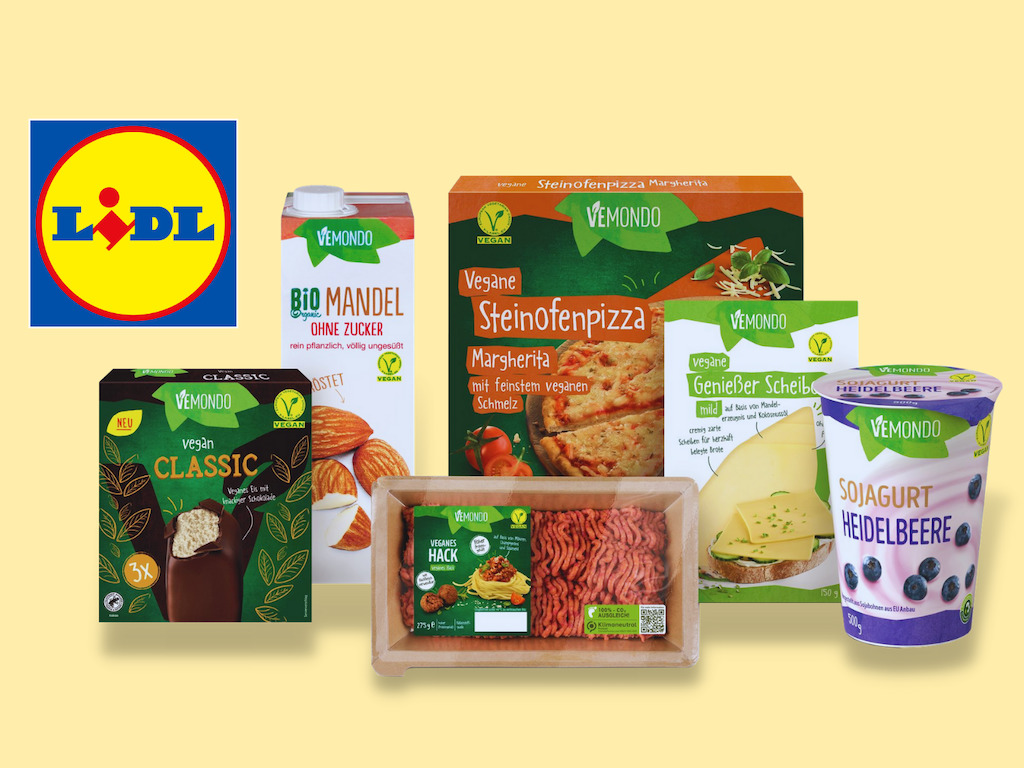
    At least most of them – especially the branded ones – are. Sure, exceptions like Lidl’s now cost-comparable alt-milks in Germany exist, but for the large part, milk alternatives continue to carry a price premium over conventional dairy.

    If anything, these markups have increased post-pandemic thanks to inflation. In the UK, for example, a carton of Oatly’s Barista edition used to be £1.80 for the longest time – now, it’s £2.10. Similarly, Alpro’s regular soy milk was £1.50 at one point, but now costs £2. This isn’t just anecdotal – analysis by the Grocer revealed that 32 Alpro products saw price increases of over 5% in a five-week period ending September 2022. Overall, the price of alt-milks in the UK is 13-14% higher this year.

    And yes, dairy is also more expensive, with a pint of milk costing 62% higher in September than in January 2022 at Morrisons, and two points setting you back as much as four pints did in most supermarkets in the same period. Despite all this, conventional milk and dairy products are largely cheaper than their plant-based counterparts.

    There are multiple reasons for this. The sheer scale of the dairy industry – in Europe, alt-milk commands only 11% of the market share – means it can mass-produce milk at a much cheaper cost. Government support in the form of subsidies is another massive factor: in the EU, meat and dairy farmers receive 1,200 more public funding than alt-protein companies, while half of cattle farmer incomes come directly from government subsidies. Then there are the tax disparities, which is what GFI Europe has focused on in its analysis of the VAT attached to vegan milk products.

    How VAT for food products works in Europe

    It would be remiss not to note that plant-based milk sales have risen by 7% from 2021-22 in Europe, according to NielsenIQ data crunched by GFI Europe. Between 2022 and 2022, meanwhile, the value of the vegan milk market has swelled by 19% – almost double the growth of cow’s milk. In terms of unit sales, the former saw a 20% increase, while the latter saw a 9% fall.

    And even in terms of price hikes, the data revealed that alt-milk markups were up by 1% year-over-year, but conventional milk witnessed a 17% spike. Still, cow’s milk reigns supreme on the cost front, with vegan alternatives continuing to be more expensive despite these trends.

    In 2019, ProVeg International published a Plant Milk Report that revealed six countries – Austria, Germany, Greece, Italy, Slovakia, and Spain – have “significantly higher” VAT on alt-milk in comparison to its conventional counterpart. The organisation called this disparity “discriminatory”, adding that “people want a fair playing field for plant-based products”. This is reflected in the findings of the 2023 EU Smart Protein survey, which revealed that price is the biggest barrier (cited by 38% of the 7,500 respondents) to the adoption of plant-based alternative foods.

    milk prices
    Courtesy: GFI Europe

    ProVeg argued that there should be a level playing field – if not one more favourable to vegan products – because of the environmental impact of dairy. Compared to soy milk, producing cow’s milk emits 69% more emissions, requires 92% less land, and uses 96% less land, according to a 2018 study.

    GFI Europe makes the same point. Explaining that governments may apply a lower VAT rate or even an exemption on products it wishes to incentivise consumers to buy. For instance, in Germany, most products carry a 19% levy, but certain ‘public good’ items (like books, water, medical care and food staples) have a lower 7% surcharge.

    Countries that charge a higher VAT for plant-based milk

    While VAT varies greatly by country, in the EU, standard rates must be at least 15%, and reduced rates (excepting some exemptions) need to be a minimum of 5%. In terms of plant-based milks, a VAT gap with conventional milk is “the exception, not the rule in Europe”, as GFI Europe states, with a majority of countries – including the UK and most of the EU27, taxing both at the same rate as they’re classed as staple foods.

    But other nations have a broad discrepancy here. For instance, despite leading Europe’s alt-milk market, Germany has the third-largest VAT gap, with plant-based milk carrying a 19% levy compared to 7% for cow’s milk. The only other countries with a bigger disparity are Hungary (5% for dairy milk vs 22% plant-based) and Italy (4% vs 22%, respectively).

    Slovakia and Austria have identical VAT rates, charging 10% for conventional milk and 20% for vegan. Greece, meanwhile, has the highest surcharge for both categories, with VAT on plant-based milk a whopping 24%, while cow’s milk carries a 13% levy.

    plant based milk tax
    Courtesy: GFI Europe

    Spain is a tricky one to predict. Until recently, alt-milk faced a 10% VAT while conventional milk was subject to 4%. But the country’s efforts to tackle rising food prices meant VAT was scrapped from essential foods at the start of 2023, which included both these sets of milks. Initially a temporary measure, it was extended in June, but there’s no clarity over the future of these charges.

    The Netherlands is going backwards. While both milks carry an identical VAT rate of 9%, the levy on plant-based milk is set to increase by 196% from January 1 due to an oversight in a new consumption tax targeting fizzy drinks, leading to a massive increase in VATs for all vegan dairy alternatives (except soy milk).

    Calls for parity and success stories

    The Dutch legislation aims to discourage unhealthy foods and will apply to most non-alcoholic drinks, but not cow’s milk, which has been exempted as it’s considered a healthy food. That hasn’t carried over to the plant-based milk category, which has seen criticism being levelled at policymakers, especially cow’s milk products like milkshakes will be exempt from the tax, while low-sugar plant milks will carry the additional VAT.

    Some groups have begun campaigning against the exclusion of plant-based milk. And this can be seen across Europe. In Slovakia, sustainable food advocacy organisation Jem pre Zem has launched a petition calling on the government to introduce VAT parity for plant-based milk, while in Austria, similar calls have come from groups including Vegane Gesellschaft Österreich and retail giant REWE.

    There’s also legislative pressure in certain quarters. German MPs Tim Klüssendorf (SPD) and Bruno Hönel (Green Party) proposed a change in the country’s tax laws to reduce the VAT on alt-milk and introduce a tariff in the annual tax law negotiations. “With the change in eating habits in recent years and decades, plant-based milk has become an everyday alternative to cow’s milk for many. In addition, it is more climate-friendly,” Hönel told German newspaper Welt am Sonntag.

    tim klussendorf
    SPD MP Tim Klüssendorf says a tax cut on Germany’s plant-based milk is “long overdue” | Courtesy: Wikimedia Commons/CC

    This is echoed by GFI Europe’s assessment. “Consumers buying plant-based milk usually use in the same way as cow’s milk. If one is a staple food, then so is the other,” the think tank says. “A preferential VAT rate on conventional milk but not plant-based milk penalises consumers making more sustainable choices and unfairly increases costs for those with intolerances and allergies.”

    And there is precedent for success here. The Czech Republic closed the gap between the tax laid on cow’s milk and plant-based alternatives, with both carrying a 10% VAT rate. “Closing the VAT gap is a simple step to reduce an unfair disadvantage being applied to a group of products with an important role to play in the future of our food system,” says GFI Europe.

    “Our system is outdated and needs to be changed,” Klüssendorf said in a LinkedIn post in August. “The equal tax treatment of milk and milk substitutes is long overdue, because it has long been in line with social realities and puts people on an equal footing in their consumer behaviour.”

    The post Taxing Milk: How VAT Disparity Hinders Plant-Based Dairy in Europe appeared first on Green Queen.

    This post was originally published on Green Queen.

  • 22 Mins Read

    The below conversation is the transcript of the fifth episode of the podcast miniseries Green Queen in Conversation: Cultivated Meat Pioneers featuring Dr Mark Post, Chief Scientific Officer and co-founder of Mosa Meat interviewed by show host Sonalie Figueiras. This conversation has been edited for clarity and length. 

    In the fifth episode of Green Queen in Conversation – Cultivated Meat Pioneers, Sonalie Figueiras talks to Dr. Mark Post, Chief Scientific Officer and co-founder of Mosa Meat. Post is arguably THE original cultivated meat pioneer. It was such a privilege to be able to speak to him, and even more so on the 10-year anniversary of when he and his team presented the first-ever cultivated meat beef burger to the world. That moment set the course for the entire industry, and truly changed the future of food and what was deemed possible. In terms of how we produce meat, Dr. Post remains one of the key voices for the industry, and our conversation is full of insights, learnings, and inspiration.

    Listen to this episode on AppleSpotify or wherever you get your podcasts.

    Sonalie Figueiras: Welcome and congratulations on this incredibly momentous day! It is August 5th 2023, exactly ten years after you unveiled the first cultivated meatball to the world! How does that feel?

    Mark Post: Yeah, it’s a nice anniversary. It’s also especially good because a lot has happened since then. The dream that we had at that time actually came true to a large extent.

    Sonalie Figueiras: That’s so special. Let’s start right there. Are you where you thought you would be in terms of Mosa Meat? Do you feel that the industry has progressed the way you anticipated when you first started on this journey?

    Mark Post: Yeah, pretty much. I mean, I hadn’t anticipated that by now we would have 150 or 160 companies, that was something that I never imagined. Or that our own company would grow from 12 to 260 people in ten years, because you know, as a scientist, you think about the scientific problems, and not necessarily about all the other activities around it, but that has been very rewarding to see that. Finally, the development has been diverging in different directions, which I hadn’t anticipated either. We are now seeing a range of technologies and a range of product applications that I didn’t envision in the beginning.

    Sonalie Figueiras: Do you mean for example that you were working on beef, but now we’re seeing things like pork, chicken, and seafood? Or do you just mean different kinds of supply chain technologies?

    Mark Post: Both, actually. In terms of the products- the species, whether it’s chicken, pork, or fish, I knew that. I kind of expected that would happen. But that early on, people would already start trying to make a full-thickness steak like what Aleph Farms is trying to do? Or that people would use cells as an ingredient in mostly plant-based products? I had expected the steak, but not so soon. However, the cells as an ingredient in plant-based food I had not expected.

    Sonalie Figueiras: Interesting, and what about things like cell-based milk, or you know, coffee, chocolate? That’s really taking the technology and adapting it to all kinds of parts of our foods.

    Mark Post: Right, right. For milk, it makes a lot of sense. There are two technologies, and one of the technologies based on precision fermentation to make milk proteins was actually already there at the time we presented the hamburger, it had already started to be developed. So, that also made a lot of sense to me, because yeah, dairy and beef are the most environmentally damaging animal proteins that we consume. Chocolate and even wood, fur and plant cells? I had not expected that.

    Sonalie Figueiras: Fur?

    Mark Post: Yeah, fur. I got a lot of questions about fur at the beginning. People were asking me: can you make fur? The demand is there, the wish is there. However, for chocolates and plant-based things, is this a supply chain issue? At some point, will we not have enough cocoa anymore? Or enough coffee to secure the supply? Is there an environmental aspect? For the latter, I think not so much- you cannot really be much more efficient than a plant. 

    Sonalie Figueiras: Interesting. It must certainly feel so rewarding to just see all the directions that your work has inspired. How did the cultivated meat journey become your path?

    Mark Post: More or less by coincidence! I was already doing tissue engineering for medical purposes. At some point, there was this guy in the Netherlands, William Van Eelen, who was 82 years old or so at that time. He coerced several scientists to use their technologies to work on cultivated meat. At that time, it was called in vitro meat. I wasn’t even part of the initial consortium, but I stepped in for a sick colleague. So, that’s how I got involved in it. I became very enthusiastic, and I was actually the only one who carried it through after the initial grant had finished.

    Sonalie Figueiras: Oh, wow. That’s so interesting. So, someone had a sick day and your life, and the world, changed forever [laughter]?

    Mark Post: Kind of, yeah [laughter].

    Sonalie Figueiras: What have been some of your proudest moments on this journey? As you reflect on 10 years, you must be in the middle of a lot of looking back and reassessing and reflecting.

    Mark Post: I’m usually not that reflective [laughter]. I think there are a couple of things I’m really happy about. One, as I already mentioned, our initial weird initiative to show this hamburger on international television has sparked this entire endeavor, with so many companies and so many activities around the world. So, that’s what we had not anticipated, and it was the right time right place type of thing. Actually, the presentation of the hamburger in London was more born out of frustration than anything else. That created this entire industry. So, that’s remarkable, and it’s also something I’m proud of, because, you know, we just did that, not anybody else.

    The other thing that I’m really proud of is the forming of a large group of scientists and other workers in a company that has created a very nice atmosphere to work in. Very innovative people, very driven, and very motivated people that make things happen at a much faster rate than I would have done if I had stayed at the university. Being able to do that – of course, it’s not my work alone- there are a lot of other people involved, but having been able to do that is something that I didn’t think that I had in me, and that worked out quite well, I think.

    Sonalie Figueiras: Let’s stay there for a minute, because one of the things that’s most interesting in the cultivated meat history if we can call it that now, is that you and your team were the first to create the burger, but you didn’t incorporate Mosa Meat right away.

    The first official company was Memphis Meats, now Upside Foods in the US. So, how did you go from being a scientist-led project in the university to deciding to incorporate a company? Did you know that Memphis Meat had been incorporated? Did that influence your decision?

    Mark Post: It was completely independent of Memphis Meats. Of course, we knew that they had incorporated and in fact there were two delays: after we presented the hamburger, which as you know was funded by (Google co-founder) Sergey Brin, he said at that time, “Okay, start a business. Bring this to the market in the next two years.” [laughter]

    I said at the time: “Okay, I don’t think two years, I think it takes a little bit more than two years to make that happen.” Anyway, that was the idea. So, this was back in 2013, and there were some delays. I was still working at the university and they considered this an IP (intellectual property) of the university. So, I had to deal with them and with the funding vehicle of Sergey Brin. So it took a couple of years to deal with these external circumstances. I guess my inexperience with starting a business caused that delay.

    Sonalie Figueiras: As a scientist, do you enjoy running a business? In the last 20-30 years we have more and more scientists/researchers leading companies. What do you think about that?

    Mark Post: I enjoy being in a business because I can do a lot more in a shorter time with a larger crew. So, I find myself like a kid in a candy store, where nowadays I can come up with a problem or a question, and a week later I get an answer, whereas, at the university, that same thing could take three months or six months because of the lack of personnel and the lack of funds. As a business, we can do a lot more in a much shorter time, so as a scientist, that’s wonderful. I actually feel that I’m doing more science now than I did at the university just because of the sheer volume and the speed of it.

    I got kind of drawn into parts of running the business because a lot of investors approached me and a lot of other entities approached me, rather than other people in the business who might be more appropriate for that. So, I was kind of drawn into it. There are parts of it that I really like, for example, talking to people about this [technology] and convincing people that this is something that we should do. There are other aspects, such as the whole organizational aspect and the structuring aspect, that I’d rather leave to other people.

    Sonalie Figueiras: Yes, you are not the CEO.

    Mark Post: Exactly.

    Sonalie Figueiras: It’s Maarten Bosch. How does that relationship work? Do you take care of everything to do with product and science, and he takes care of the organizational stuff and operations?

    Mark Post: Yeah, it has become much more fluid than that. So together, Martin, Peter [the COO] and myself are a team that almost organically distributes our tasks. If we feel that something needs to be done that was originally the task of the CEO, or Peter [the COO] but I feel that have the time or I can do this, then I do. So we are not very strict. It’s really a team where we can stand in for each other, and of course, I have an emphasis on the scientific part. Maarten and Peter are less involved in the intricacies of biological science than I am. Maerten is much more engaged with investors and with external relations. So, there is a division of tasks, but it’s really a joint effort.

    Sonalie Figueiras: It’s been an incredible summer for the industry. After a couple of years of slower progress, we suddenly have two US regulatory approvals that are historic. We have the Dutch government saying cultivated meat tastings are allowed now. Just recently, Aleph Farms, the Israeli company you mentioned filed for regulatory approval in Switzerland. Do you think we’re riding a wave right now, and do you think it’s going to continue? What feels different?

    Mark Post: You know, if you have followed these developments as I have, it’s not a surprise. This was coming. There are now a couple of things happening at the same time, which is kind of a coincidence. If you recall, in 2020, the first [cultivated] product was approved in Singapore, that was a milestone. It’s just a matter of time before a lot of these approvals start coming through.

    We spoke to quite a few governments, and in various geographies and governments, applications have been submitted. So, it’s a matter of time for these things to come through. My guess is that we’re now just seeing the very beginning of it, and in the next half year, certainly next year, we will see a whole flurry of these approvals in different geographies, even in the Middle East, Australia, China, Korea, Japan, Europe, maybe and probably in South America (I’m less familiar with that). So this is to be expected, and we are just seeing the beginning of it.

    Sonalie Figueiras: Let’s circle back on the EU, which takes a more cautious approach when it comes to regulatory approval of what they term “novel foods” than other countries. As a Dutch pioneer in the EU, how do you navigate that? Do you wish it were going faster? Do you understand where they’re coming from? Countries like China are looking to other governments, particularly the EU, to wait and see how they regulate this because there is a sense that the EU is cautious, and overall, that is a good thing for consumer safety.

    Mark Post: If you talk to larger food companies, they see the EU as a sort of sign of approval, i.e. a sign of quality if you get approval from there. Not many people know this about the EU, but 12-13 years ago, they already outlined very specifically and precisely how they would regulate cultivated meat, and these documents are public and are used by all the regulatory officials in other countries as an example and guideline for how they would look at this approval.

    There are always two parts of a regulatory approval process: One is the scientific part, where people like me, but in the service of the government [scientists], look at the data and the evidence to determine that this is safe. The other part is the political decision-making. Once there is a recommendation from the FDA or whatever, there is an executive decision by the government to allow the recommendation of the scientific committee or not.

    The scientific part is pretty much the same everywhere, and it should be, because you know, if something is safe for somebody in Singapore, then it should also be safe for somebody in Spain. So, that should be very similar. Unfortunately, as we know, the political decision-making part in the EU is a lot more complex than in most other countries, whilst in a small city-state like Singapore, it’s very easy. In a 27-member-state union such as the European Union, it’s just hard. It takes time, and that’s a pity, because there’s nothing related to food safety- it’s just a political decision.

    Sonalie Figueiras: But as you say, it is a mark of approval, Europe just has that, you know, reputation and validation. So, it’s going to be a really important moment.

    Mark Post: Yep.

    Sonalie Figueiras: I’m assuming Mosa will be one of the first to apply- do we have an idea of when the EU might grant a first approval?

    Mark Post: For that, they will take a year and a half at least. So, as far as I know, there have not been any formal and complete applications in the EU yet, much to their disappointment [laughter]. There has not been a submission yet, as it takes a year and a half at least. When exactly the first submissions are going to be done in Europe is hard to say, but I know our timeline, and this is one of our highest priorities. So, this will be relatively soon. I cannot give an exact date, but it will be quite soon.

    Where other companies stand in this regard is less certain. A number of companies [outside of the EU] that have gotten approval now are either using genetic modification, or they are keeping the option of genetic modification open, and that complicates things in Europe. So, those companies that are heavily relying on genetic modification for their bio-processes will be very reluctant to submit [an application] in Europe, I think.

    Sonalie Figueiras: It’s interesting that you mentioned seeing potential approvals in the Middle East. I wonder about Israel because it has an inordinate number of cultivated meat companies. Of course, there is an expectation that Singapore will potentially have more approvals later this year. In fact, you have applied in Singapore too.

    Mark Post: Yeah. I think most people do this for reasons of getting to the market sooner and getting an idea of consumer acceptance, and how to market [the product]. Singapore is not a very big market, but they are very enthusiastic and very proactive in stimulating this. So companies obviously respond to that.

    Sonalie Figueiras: You mentioned consumer acceptance. That’s a big topic that I want to dive into. Do you believe a focus on the science and scaling production is enough? Or do you think that we also need to focus on mass behavioral change theory, in the sense that, you know, a lot of entrepreneurs will say to you, “Well, we solve the problem, which is that we give people “no-kills/slaughter-free meat, and we don’t worry about anything else,” because if you’re giving them meat and it’s no-kill, and it’s better, then they will choose the no-kill meat? There have been some doubts around this way of thinking, and I was wondering how you look at that issue.

    Mark Post: Yeah, I’m very optimistic about that. I don’t have that much doubt about this. You need to have a good story and a clear story, and the regulatory approval actually helps in that, because I think the most important question that people have is: “Is this safe or not?”

    Throughout the years, we have seen a lot of change in human attitudes towards cultivated meat and similar technologies based on, you know, the realization that there is environmental impact and that it will be a scarce consumer product, and of course, animal welfare for a long time, has already been kind of on the radar.

    So, my feeling is that people are looking for a credible alternative to meat that still allows them to have the same behavior without the negative consequences. Even if it’s not always voiced like that, you kind of feel that undercurrent of people trying to, or people waiting for a concept that relieves their conscience when they are eating meat. So, you know, we don’t have a term called ‘meat-shame’ yet, but I guess that’s not far away [laughter].

    Sonalie Figueiras: Like the Swedish word for the flight shame!

    Mark Post: Exactly! [laughter]

    Sonalie Figueiras: You should coin that in Dutch! That would be great! [laughter]

    Sonalie Figueiras: It’s interesting that you’re very optimistic, that’s so encouraging to hear, but it’s impossible to ignore that the identity and cultural politics brigade has come out in force around cultivated meat and made this into a hot issue in the media using terms like “lab-grown” in a derogatory way. Italy, for instance, said that they’re going to ban cultivated meats [Editor’s note: this has since happened]. Or a couple of years ago, the former French Minister of Agriculture Jean Denormandie said: “In France, it’s no.” Every time there’s an announcement, there’s this undercurrent suggesting that you’re taking away people’s identity by not letting them eat an animal’s red-blooded meat.

    Mark Post: I see these people as, I don’t know how to pronounce this, as Don Quixotes? They’re fighting windmills- basically, [they are fighting] a battle that cannot be won. The whole transition towards a different diet and other kinds of environmental issues is, I think, unstoppable, and should be unstoppable because otherwise, we’re ruining this planet. So, you see the same thing with electric cars. Electric cars are unstoppable, despite a lot of people who are petrol-heads, and it’s for a good reason. I see this in that same vein. For sure, there are a lot of people who want to stick with their old habits and their old consumption patterns, and sometimes governments kind of steer towards sticking to the old stuff too. However, eventually, that’s untenable. It’s an inevitable reality that we cannot continue with meat production and meat consumption the way we have been doing, considering that it’s going to increase in the next 15 to 20 years.

    Sonalie Figueiras: Speaking of 15 to 20 years, what kind of timeline do you have in your head in terms of getting cultivated meat to being a mass product on shelves in supermarkets at an affordable price?

    Mark Post: Well, there are two main conditions for supermarkets: One is that the quality is good, and the other is that the price is maybe a little bit higher than regular meat, but not by much. So, we see that happening in the next four or five years, that prices will come down to the price of regular meat, assuming that the price of meat will stay stable, which is somewhat unlikely, I guess.

    Sonalie Figueiras: You mean you think meat is going to get more expensive?

    Mark Post: It has to. It’s a very simple economic law: Production is not going to increase, because we can hardly increase it, and consumption is going to increase, the demand is going to increase in China, India, Africa, and maybe some parts of South America. So, it’s just a very simple economic law that if the demand increases, but the supply does not, the price goes up, and that’s not even talking about how some very progressive governments may institute a meat tax.

    Sonalie Figueiras: That was gonna be my next question. That’s very unpopular politically from all the research we have.

    Mark Post: Yeah, it is, and I’m actually not really in favor of it myself.

    Sonalie Figueiras: Why not?

    Mark Post: Because it creates inequality between consumers. I will still be able to consume meat, but you know, other people in a different socioeconomic situation may no longer be able to.

    Sonalie Figueiras: I see where you’re going. So, it becomes an economic equity issue. 

    Mark Post: Right, which in my mind is problematic. Unless you use that tax for a lot of environmental measures, right?

    Sonalie Figueiras: So what’s the timeline of getting cultivated meat into supermarkets?

    Mark Post: In addition to quality and price, there is one other thing that will take time- the production capacity. If you think about this, this is a huge production capacity that you need to build.

    So, the estimate is that you have to increase the current fermentation capacity in the world by a factor of one and a half. That may not tell you much, but if you think about the fermentation capacity like beer, wine, industrial fermentation, and pharmaceutical fermentation, there’s a lot of fermentation capacity currently out there. To increase that by a factor of one and a half is going to be a huge endeavor. A lot of factories will have to be built, people will have to be trained and capital will need to be raised. This takes a lot of time.

    Predictions by AT Kearney that in 2040 we will have 35% of the market occupied by cultivated meat- this is pretty optimistic. I hope that we will eventually get there, at that 35% of market share, in the next decades, because we need it.

    Sonalie Figueiras: What else does the industry need? Do we need more talent? Is it that we simply just need more funding? I’d love to understand that better. Do you think there should be more public sector money in cultivated meat? Did you think more governments would give more money to the sector?

    Mark Post: I’m surprised and disappointed. I have been lobbying for public funding from the very beginning. Mind you, before I started doing this, I was a university professor and was completely dependent on public funding, and nothing else. I see the value of that, I see the continuity, I see the independence, the dissemination of knowledge, but also the training of people. So, there are a lot of aspects of the cultivated meat scientific field that require public funding, and you cannot only rely on private funding.

    I see this as a scientific field that will evolve, improve, and expand over the next 30 years. So that, for sure, will require a good base of scientific activity – training of people and dissemination of knowledge. So yes, I see a big role for public funding and publicly-funded research in this.

    Sonalie Figueiras: Do you do any work in encouraging younger scientists to get into the field of cultivated meat? Is talent a concern at all?

    Mark Post: Scientific talent, not so much. We [Mosa Meat] may be somewhat exceptional, because of the publicity. We never really advertised a job opening, we just put it on the web, and we get applicants from all over the world. Sometimes people apply five times because they really want to work in this field. So, we don’t have that issue.

    What will become an issue is once you have those factories, you need a lot of people who are trained to operate bioreactors, and would be working in that part of the food industry, and that will indeed require specific training systems to get there, or retraining of people from other industries.

    Sonalie Figueiras: One of the biggest criticisms that has been lobbied at all of the alternative protein and food technologies is: what about farmers? How do we better involve them? Farmers are the bedrock of our agricultural system all over the world. They have difficult lives. They often do not see the upside of the big food companies. What does the future look like for them?

    You mentioned that we’re going to need all this new training to help operate these bioreactors. Is that something that we could retrain farmers to do? Do you think about farmers in the future and how we, you know, redirect their skills?

    Mark Post: Well, believe it or not, we think about farmers a lot [laughter] and we have been doing this since, pretty much right after the presentation of the hamburger, because obviously you get these questions. I also live in a farming community more or less. My neighbour is a farmer. So, we think about this a lot.

    First of all, farmers are entrepreneurs. They go where they can make money off the land. Of course, the cells that we culture also need to be fed. So a lot of farmers, if they are now cattle, farmers or dairy farmers will eventually change their way of farming, while still extracting value from their land. They require time to make that transition, it’s not going to happen overnight. It’s going to take a couple of decades. So, they can transition to that. My neighbor is actually a good example, because he used to be a pig farmer, and then he switched to potatoes. Why? Because he could make more money with potatoes than with pig farming. That’s the essence of a farmer – It’s an entrepreneur who extracts value from the land, and they can still do that.

    Hopefully, over the decades, part of this is we will eventually require less farmland because we take a lot of the inefficiencies out of the food system. We require less farmland and less farming. This is a good thing. If you look at the number of farms in the Netherlands where I’m living, that number is steadily going down. Fewer and fewer people are interested in taking up the farming business. It’s just not appealing enough for young people.

    Sonalie Figueiras: That tends to be happening a lot in the developed economies, but less so in regions like Asia, South America, and Africa.

    Mark Post: Right, but that may be a matter of time, right? The other thing that you see is that farming is becoming more and more industrialized. The farmer in the Netherlands nowadays is more like an organizer than actually somebody who puts a spade in the ground.

    Sonalie Figueiras: As you look ahead, what are your major goals for Mosa for the next five years? What do you want the company to achieve in the short term?

    Mark Post: Like for any other company: scale up production, get regulatory approval, but most importantly, have a high-quality product on the market that is a lot better than any of the current alternatives for meat, so that it can fill that void of meat alternatives. We see that plant-based meat alternatives are kind of plateauing and this is somewhat of a concern. It’s good to analyze what is happening here. However, I cannot help thinking that part of it is that people just want to have meat, that the meat alternative has to be meat and nothing else. So, the foremost goal of the company is to create a high-quality alternative that is sufficiently credible for consumers to change their behavior away from traditional meat.

    Sonalie Figueiras: What’s the format for your first product? Are you doing ground beef?

    Mark Post: Yeah, it’s beef, and it’s ground. As a tissue engineer, I love to work on a full-thickness steak. As a practical person, I see that this has more challenges, and will take longer to realize.

    Sonalie Figueiras: Do you ever consider that some of your production will be elsewhere in the world, other than the Netherlands? Or are focusing most of your scaling up in the Netherlands?

    Mark Post: From the very beginning, we wanted to roll this out to the rest of the world as soon as possible. When we have the full production capacity available, we will license this out to as many third parties in the world as we can, based on our philosophy that we want to make an impact, and not just grow the largest meat factory in the world.

    Sonalie Figueiras: My last question is a bigger one. What does success look like to you?

    Mark Post: It’s exactly that – Having high-quality hamburgers rolling off the conveyor belt at a reasonable price that people want.

    Sonalie Figueiras: I can see it in my mind and I can’t wait.

    Mark Post: By the way, we haven’t talked about it, but we are doing the same for leather, which is equally interesting and important, and fewer people are working on it. It’s a different company, but I’m the founder and Chief Scientific Officer of that company as well.

    Sonalie Figueiras: Is it in stealth or have you announced it?

    Mark Post: It’s not necessarily in stealth, it just got a lot less publicity than Mosa. The company is called Qorium, with a ‘Q’, and it’s another thing I’m working on, a piece of leather coming off the conveyor belts.

    Sonalie Figueiras: One of the biggest problems we have today, is for vegan or ethical animal welfare-driven consumers, your choice is either leather, which is a difficult choice, and one you would avoid it, or your choice is plastic, which unfortunately, is absolutely not better.

    Mark Post: Right [laughter].

    Sonalie Figueiras: So, you essentially have no choice.

    Mark Post: Yeah, it’s tough, but you know, making leather is slightly easier than making meat. For sure, there will be a market for that and the fashion industry is looking forward to this. A lot of leather alternatives for shoes and for clothes are not good alternatives.

    Sonalie Figueiras: No. They’re all mixed with plastic, they don’t biodegrade, and then we’re back to the same problem in terms of waste.

    Mark Post: Right.

    Sonalie Figueiras: Thank you for sharing that. You’re solving so many problems. Thank you so much for your time, and a HUGE Congratulations on an incredible decade of progress for yourself, your company, but also for humanity. What a journey!

    Mark Post: Yeah, it has been. It’s quite fun and rewarding [laughter]. Thank you.

    Sonalie Figueiras: Thank you.

    Listen to this episode on AppleSpotify or wherever you get your podcasts.

    Green Queen In Conversation is a podcast about the food and climate story hosted by Sonalie Figueiras, the founder and editor-in-chief of Green Queen Media. The show’s first season, Pioneers of Cultivated Meat, explores cultivated meat, a future food technology on a mission to produce animal protein sustainability. In each of the six episodes, Sonalie interviews the pioneers of the industry, asking the hard questions about one of the most exciting food + climate innovations of our time and sharing the personal story behind each founder’s journey. 

    Green Queen In Conversation is a co-production from Green Queen Media and Cheeky Monkey Productions. This episode was produced by Joanna Bowers and hosted by Sonalie Figueiras.

    The post Green Queen in Conversation: Cultivated Meat Pioneers – Dr. Mark Post of Mosa Meat appeared first on Green Queen.

    This post was originally published on Green Queen.
  • future food quick bites
    7 Mins Read

    In our weekly column, we round up the latest news and developments in the alternative protein and sustainable food industry. This week, Future Food Quick Bites covers an Indian plant-based dairy acquisition, vegan surveys, and two regulatory filings for cultivated meat.

    New products and launches

    Legacy US vegan brand Tofurky, which has been embroiled in labelling battles, misinformation and propaganda this year, is choosing to hit back with a ‘Move over, boring’ campaign as it launches two new sausages, Chorizo and Mango Chipotle, to its lineup.

    tofurky sausages
    Courtesy: Tofurky

    In Colorado, vegan restaurant chain Meta Burger is adding three new plant proteins to its menus across Denver and Boulder: Fable Foods’ shiitake pulled pork, Umaro Foods’ bacon, and Unreal Deli’s sliced turkey.

    Another restaurant incorporating branded alt-meat onto its menu is Barcelona’s Amarre 69, which teamed up with Slovenian whole-cut specialist Juicy Marbles for a ‘Juicy 69 Experience’, with the latter’s steak being the centrepiece alongside a musical performance.

    Also in Europe, UK vegan dog food brand Omni has gained a listing with Germany’s Fressnapf, the largest pet food retailer in the continent with over 1,400 stores. The former’s products will initially be available on the latter’s e-commerce website.

    Plant-based seafood brand HAPPIEE!, based in Singapore, is expanding its UK presence with an Asda listing. Its shrimp SKUs (regular and breaded) can be found in the retailer’s freezers nationwide from January.

    In the UK, meanwhile, BSF Enterprise (parent company of cellular agriculture startup 3D Bio-Tissues) and bioprocessor CellRev are launching a joint venture, Cultivated Meat Technologies Limited, to mass-produce cell-cultured proteins.

    efishient protein
    Courtesy: Efishent Protein

    Israeli-cultivated meat producer Efishient Protein has unveiled the first prototype of its cultured layered Tilapia white fish fillet in a step that brings it closer to expediting large-scale production.

    In early 2024, the foodservice sector in fellow Gulf nation UAE will see chicken, kebabs and pulled products from Swiss alt-meat maker Planted enter the market.

    Further east, Singaporean specialty coffee chain Foreword has begun stocking the beanless coffee from local brand Prefer in three locations across the island state.

    Moving further south, New Zealand-based EatKinda, which makes vegan ice cream from cauliflower, has secured a listing at 90 Woolworths stores, marking its large supermarket debut. It also won two awards at the 2023 NZ Food Awards for its strawberry and mint-chocolate sandwich flavours.

    Speaking of big retailers, the UK’s largest, Tesco, is prepping a new private-label vegan brand, Root & Soul. It has filed a trademark application for the name, months after it unveiled its Finest Signature Vegetables ready meal range.

    asda vegan
    Courtesy: Asda

    And yet another UK supermarket, Asda, is releasing a vegan turkey with trimmings for £3.50 this Christmas, after a poll it conducted revealed that 29% of Brits don’t know what to serve vegans for Yule dinner, and 75% of vegans themselves feel the need to bring their own dish.

    Policy and research

    Indians are looking forward to Veganuary, if you’re to believe the 59% of citizens that told YouGov they’re strongly likely to consider a vegan diet in the near future (the survey covered 2,033 participants). 74% believe it’s good for their health, with gut health being cited by 60%. This comes ahead of what’s expected to be another record-breaking Veganuary.

    In New Zealand, though, a huge study (with over 23,000 respondents) has found that only 0.74% of the country is truly vegan, with vegetarianism not much more prevalent at just 2.04%. On the other end of the spectrum, 93% eat red meat.

    So it’s probably a good thing that New Zealand and Australia’s joint regulator has greenlit Sydney-based cultivated seafood producer Vow Foods‘ cultured quail as safe to eat, which means it will now undergo a six-week public consultation process.

    vow foods
    Courtesy: Vow Foods

    Similarly, Singapore’s regulator has received an application from French company Vital Meat. The country was famously the first ever to approve culture meat for sale (with Eat Just in 2020), and now will deliberate over Vital Meat’s chicken, which is expected to enter foodservice next year.

    Meanwhile, in Norway, fish oil manufacturer GC Rieber VivoMega has received a V-Label certification for its new range of vegan omega-3 concentrates made from microalgae.

    In Poland, things are going a little backwards, with the meat lobby submitting draft legislation looking to ban meat-related terms on the product labels of plant-based alternatives to help consumers “make an informed choice”. What’s worse, people who wanted to consult or comment on it were given 24 hours.

    These fears likely come from surveys like the one conducted by the University of Southern California, covering over 7,000 participants, which found that people are more likely to choose vegan food when it isn’t labelled that way – only 20% chose a food gift basket with vegan food labelled ‘vegan’, while 27% did so for ‘plant-based’. In contrast, 44% chose the same set labelled as ‘healthy and sustainable’.

    Another campus, the University of California, Berkeley has committed to make 50% of its entrées in campus dining vegan by 2027, inviting the university’s 20 other campuses to join this effort too.

    UC Berkeley also linked up with flavour and fragrance house Givaudan for the fifth edition of their annual alt-protein pathways report, highlighting 10 clear actions to address industry issues regarding supply chains, resource consumption, scale-up and costs.

    Finance and markets

    Things are shaking up in India. Plant-based dairy leader One Good – which makes alternatives to milks, butters, curd, ghee and more – has been acquired by vegan superfood company Nourish You.

    noruish you
    Courtesy: Nourish You

    Meanwhile, Lima-based Peruvian Veef has raised $400,000 in pre-seed funding to strengthen its goal to become the country’s leading alt-protein producer by 2024.

    In the US, Boston-based Tender Food received a Small Business Innovation Research Phase II grant from the National Science Foundation, with nearly $1M injected to produce whole-cut plant-based meat and explore how cultivated meat cells can be added to make an enhanced hybrid product.

    US brand PlantBaby – maker of nut- and seed-based Kiki Milk for children – which is celebrating its third anniversary, has announced that it has doubled its annual revenue, making $6M in the first two years.

    Similarly, UK meal kit company Gousto has revealed that the number of orders for meatless recipes has doubled over the last four years, accounting for 23% of total orders.

    Fellow recipe kit deliverer Hello Fresh has found that the number of vegan orders quadrupled this year in its leading market of Germany, while flexitarian diets have grown significantly on its platform. It predicts a growing demand for plant protein heading into 2024.

    Things will be helped by the predicted expansion of the pea fibre market, which is expected to grow by 7.8% annually to reach $50.8B in 2024. A separate report shows that the reduced volume of pea protein ingredients from China will see prices fall for European manufacturers.

    Manufacturing and workforce developments

    At COP28, US cultured seafood producer BlueNalu announced that it has welcomed Saudi Arabia’s Prince Khaled bin Alwaleed to its corporate advisory board, who has been “an avid supporter” since the beginning.

    Fermented fungi protein maker Nature’s Fynd also bolstered its leadership team, adding Wendy Behr as chief product officer, Christine Rogers-Raetsch as chief people office, and Jaime Frye as senior VP of sales.

    fy protein
    Courtesy: Nature’s Fynd

    Fellow US producer Shiru, a biotech plant-based ingredient developer, has cut its entire Automation team as part of a round of layoffs.

    Finally, French legume company Intact has broken ground on a new low-carbon fermentation facility in Baule in the Loiret region, which will transform peas and other legumes into plant proteins for various applications.

    Check out last week’s Future Food Quick Bites.

    The post Future Food Quick Bites: A Juicy 69, Plant Polls & Cultured Meat Regulatory Filings appeared first on Green Queen.

    This post was originally published on Green Queen.
  • non dairy creamer
    5 Mins Read

    Swiss food tech company Cultivated Biosciences has unveiled the first proof of concept for its yeast-based fermented fat, in the form of a dairy-free coffee creamer prototype.

    What would you say if I offered you fungus in your coffee? Like, a thick, creamy, fatty white fungus?

    “Yikes”?

    A Swiss startup is hoping to change your opinion with its new innovation, a coffee creamer made from fermented yeast that is set to become your new dairy-free mate (get it?).

    After two years of R&D, Cultivated Biosciences has unveiled the ingredient as a first proof of concept using its fermented fat, which was available for tasting at a MISTA event in San Francisco last month. MISTA is a food innovation ecosystem and accelerator in the Bay Area, convening food industry players and startups during Growth Hacks to kickstart partnerships. Cultivated Biosciences’ creamer was developed during one of these events, which focused on alternative fats, in collaboration with partners including AAK, Ingredion, Givaudan and Danone.

    The company says it plans to file for US and EU regulatory approval soon, with a market debut in the former earmarked for 2025.

    The importance of mouthfeel in vegan coffee creamers

    fermented fats
    Courtesy: Cultivated Biosciences

    For Cultivated Biosciences, texture is the name of the game. And as a company dealing in dairy alternatives, it needs to be too. A four-country, 1,500-person survey by Kerry last year revealed that sensorial attributes are the top area for improvement when it comes to alt-milks, cited by 34% of respondents.

    In fact, 76% of consumers prefer ‘a nice creamy mouthfeel without the dairy’, while 77% think non-dairy products are more appealing if they have ‘better body and texture’. The report outlined a few major challenges for manufacturers to overcome, one of which was mouthfeel. People are after a cleaner taste experience with a creamy, fatty mouthfeel that replicates conventional dairy.

    Most non-dairy creamers don’t cut it – and those that do lack in flavour. To solve this problem, Cultivated Biosciences uses biomass fermentation with an oleaginous yeast, a strain that accumulates fat during growth. Unlike many fermentation-derived dairy companies, which are developing proteins to mimic those found in dairy (like whey and casein), the Zurich-based startup is banking on fat to deliver a better taste and texture experience.

    The coffee creamer – which combines its fat ingredient with plant protein, sugar and natural flavourings – is described as “creamy, clean label, white and stable in coffee”, which the company adds is something not offered by “commercially available plant-based creamers”. It tastes like “a regular American commercial creamer”, with the fermented yeast fat providing the lipids and the texture to the formulation.

    cultivated biosciences
    A curdled creamer vs Cultivated Biosciences’ yeast-based alternative | Courtesy: Cultivated Biosciences

    It addresses another major hurdle for plant-based dairy products. Without acidity regulators, most milks curdle in coffee, thanks to the often lower pH of the latter. Cultivated Biosciences’ version, though, remains stable in such lighter-roasted coffees, without requiring any additives.

    “Cultivated Biosciences rose to the challenge and delivered a prototype with superior benefits to commercially available plant-based creamers in the US,” said Céline Schiff-Deb, biotechnology head at MISTA.

    Targeting a 2025 US launch

    The company, which raised $1.5M in pre-seed funding last year, is tapping into a popular market. In the US – where coffee creamers reign supreme – 55% of people used coffee creamers in 2020, according to census data crunched by Statista. This trend has continued, with 56% of Americans expected to use these coffee mates in 2024.

    The global market for coffee creamers, in fact, was worth $4.5B last year and is set to grow by 5.6% annually through 2030. In the US alone, sales reached $2.8B last year, up by 21.2% annually, as per Nielsen, which highlighted vegan creamers as one of five future coffee trends to watch. This is reflected by SPINS data analysed by alt-protein think tank the Good Food Institute, which shows the category’s dollar and unit sales growth have doubled from 2019-22. Vegan creamers – a segment populated by Nestlé, Danone, Chobani, Califia Farms and Elmhurst (among many others) – occupied 12% of the total market share in terms of dollar sales last year, and their growth has outpaced conventional creamers.

    vegan creamer
    Courtesy: GFI

    There are also some legislative and regulatory issues for Cultivated Biosciences to contend with. For one, there’s the labelling challenge. While plant-based milks have been facing proposed bans for using dairy-related terms on packaging, with proponents arguing that these confuse consumers, things seem to be even more confounding on the other end of the spectrum.

    There is no regulatory definition for “dairy-free” in the US, but the rules for “non-dairy” mean that products like coffee creamers can still contain dairy proteins like casein. Since many of these are made using caseinate, non-dairy creamers are – incredibly – not actually dairy-free.

    The other obstacle is regulatory approval – but Cultivated Biosciences is already making progress on that, with plans to submit dossiers to the FDA in the US and the EFSA in the EU soon. The brand will look to first debut in the US, during the first half of 2025, as the regulatory process is faster there, it confirmed to Green Queen.

    vegan coffee creamer
    Courtesy: Cultivated Biosciences

    “We are proud to show the industry the value of our ingredient in a convincing final product application, it marks the beginning of our path to commercialisation,” said Cultivated Biosciences founder and CEO Tomas Turner. The startup says it will keep developing prototypes for other alt-dairy categories with industry partners to “close the sensory gap”. While it’s currently validating these applications, it confirmed that it will stay in the dairy realm.

    Other companies innovating with fermented fats include Zero Acre Farms, Yali Bio (both US), Nourish Ingredients (Australia), NoPalm Ingredients, Willicoft (both Netherlands), Colipi (Germany), and Clean Food Group (UK).

    The post This Startup is Making Animal-Free Creamer from Yeast to Change the Way You Drink Your Coffee appeared first on Green Queen.

    This post was originally published on Green Queen.

  • cop28 news
    5 Mins Read

    Welcome to Day 12 of #COP28, the final day! In Green Queen’s COP28 Daily Digest, our editorial team curates the must-reads, the must-bookmarks and the must-knows from around the interwebs to help you ‘skim the overwhelm’.

    Catch up: DAY 1DAY 2DAYS 3 & 4DAY 5DAY 6DAY 7REST DAYDAY 8DAY 9DAY 10DAY 11

    Headlines You Need To Know

    The COP-related news you cannot miss.

    UPDATE ON GLOBAL STOCKTAKE AND GLOBAL GOAL ON ADAPTATION (GGA): We are still waiting for the final text on both GGA and GST, and last-minute negotiations are still in progress. As of publishing time, 158 nations have signed the GST draft including Russia and Turkey.

    CLIMATE DENIERS AT CLIMATE SUMMIT: Transparency watchdog Corporate Accountability has revealed that over 160 representatives who have records of climate denial and misinformation received access from UN organisers to COP28. These trade groups, think tanks and PR agencies have obstructed fossil fuel regulations as well as other climate action.

    UAE CLIMATE MINISTER CHAMPIONS ALT-PROTEIN: COP28 food systems lead Mariam Almheiri has acknowledged the importance of protein diversification to feed a hungrier and growing planet, championing food tech and alternative proteins in a panel discussion. “We need to look at a lot of the alternatives as well; alternatives that are more sustainable that don’t need so much water, that don’t need so much land and that don’t throw out any methane emissions, and that’s why things like alternative proteins are very important,” she said.

    EX-US VP SAYS COP28 ON THE VERGE OF ‘COMPLETE FAILURE’: Al Gore, the former vice-president of the US, tweeted late last night that the conference is on the verge of “complete failure” after the Global Stocktake draft saw any mention of a ‘phaseout’ removed yesterday, which has sparked tremendous backlash. “It is even worse than many had feared. It is “Of the Petrostates, By the Petrostates and For the Petrostates’,” wrote Gore.

    US, UK, AUSTRALIA AMONG COUNTRIES THAT WON’T SIGN ‘DEATH CERTIFICATE’ FOR ISLAND NATIONS: The US, UK, Canada, Australia and Japan have formed an umbrella group of countries that refuse to sign the version of the Global Stocktake, which is a “death certificate” for small island countries as described by Cedric Schuster of Samoa, chair of the Alliance of Small Island States. The EU has also said elements of the document are “fully unacceptable” and threatened a walkout if things don’t change.

    UK MINISTER LEAVES SUMMIT HALFWAY DURING CRISIS TALKS: The UK climate minister Graham Stuart returned home midway as talks reached a crisis point, leaving civil servants to finalise the negotiations. Speaking to the Guardian, Greenpeace’s Rebecca Newsom called it “an outrageous dereliction of leadership at the most critical point during this conference”.

    TAIWAN WILLING TO DONATE TO DISASTER FUND: Taiwan, which has been blocked from participation at COP28 but is amongst the highest per capita GHG emitters, has indicated that it’s willing to contribute to the loss and damage fund if it is included in the conversations.

    WTO CHIEF CALLS ON LEADERS TO PRIORITISE CLIMATE SUBSIDIES: Ngozi Okonjo-Iweala, director general of the World Trade Organization, told the Guardian that governments need to start differentiating between the good subsidies that help fight the climate crisis, and bad ones that emit more greenhouse gases.

    BRAZILIAN MEAT GIANT CALLED OUT FOR GREENWASHING: JBS, the world’s largest meat producer and one of the biggest food system GHG emitters, is being criticised by a coalition group called Ban the Batistas for its attempts to greenwash consumers and present itself as eco-conscious and ethical at COP28.

    PETA HANDS OUT SYMBOLIC VEGAN DOUGHNUT TO GERMAN MINISTER: A week after distributing free vegan doughnuts in New York City, PETA handed some out to Geman Economic Affairs and Climate Protection Minister Robert Habeck in a symbolic gesture to promote Plant Based Treaty’s vegan doughnut economics paper.

    Key #COP28 Reports

    The food and climate reports you need to know about today.

    Food security, climate change and sustainability in Africa: A new report by the WWF, Alliance of Bioversity International and CIAT, IFPRI/CGIAR and AfDB touches upon the environmental implications of food system development in Africa, helping nations achieve food security and implement climate and nature commitments.

    10,000 deaths due to climate change: The UK Health Security Agency has published its first Health Effects of Climate Change report, estimating that there will be up to 10,000 deaths across the country by the 2050s as a result of extreme heat, with a 12-fold increase in such deaths likely (from current rates) by the 2070s. Additionally, such temperatures will make for suitable conditions for new domestic mosquitoes, leading to transmittable diseases like chikungunya, dengue and Zika virus.

    Awesome Resources From Media Friends

    A curation of our favourite reads of the day – excellent guides, explainers and op-eds from around the web.

    Good COP, Bad COP: Climate site CTVC has released a fantastically detailed list of takeaways from the climate summit, rounded up with a packed roundup of news.

    Everything nuclear: CTVC also has an overview of all things nuclear and clean power from the conference, which is a very handy guide if all the news has drained you of energy (pun absolutely intended).

    12 High-Impact Partnerships: The World Economic Forum has helpfully shared an overview of 12 High-Impact Business, Government and Civil Society Partnerships for Climate and Nature that were announced/signed during the summit around decarbonization & the energy transition, nature & biodiversity, health, adaptation & food systems, and climate financing & trade.

    The future of livestock: Sharing takeaways from his COP28 experience, Michael Victor for New Food Magazine writes about the importance of nuance and geographically specific policy when it comes to animal agriculture.

    Lighter Green Fun

    Funny stuff, weird stuff, random stuff related to COP you may enjoy.

    Cooking up a habitable planet: If you’re looking for some food (for thought) inspo, the Straits Times has come up with a tongue-in-cheek recipe for a habitable planet. Set your oven to 1.5°C and add in that climate finance sauce. Serves 8.1 billion.

    Follow all our #COP28 coverage. Like what you’re reading? Share it!

    The post COP28 Daily Digest: Everything You Need To Know in Food and Climate News – Day 12 appeared first on Green Queen.

    This post was originally published on Green Queen.

  • heather mills
    8 Mins Read

    British vegan entrepreneur Heather Mills has announced that her legacy plant-based meat brand VBites is entering administration this week, after failing to secure funding amid rising costs. The 30-year-old company’s collapse comes amid a rough time for alt-meat, which Mills says is suffering from misinformation and corporate greed.

    Spanning 30 years, 140+ products and 28 countries, British plant-based meat brand VBites is entering administration, owner Heather Mills announced in a lengthy statement on her website.

    The entrepreneur said the news was “extremely distressing” for her employees and herself, having personally invested “tens of millions of pounds” and “offering every solution” she feasibly could to keep going. However, the efforts had been “thwarted by a demand that I stepped away from day-to-day management” to secure essential investment.

    She added that this was exacerbated by a combination of “corporate greed and poor management”, increasing ingredient and energy costs, the cost-of-living crisis, and the “current state of the manufacturing economy” in the UK. Mills, a former model and previous wife of Paul McCartney, also ascribed the collapse to misinformation and gaslighting initiatives by the meat and dairy industry, as well as celebrities who backed these campaigns.

    ‘Blood, sweat and tears’

    plant based meat uk
    Courtesy: VBites

    Launched in 1993, VBites originated as Redwood Wholefood until 2009, when it was bought by Mills. The name was changed to VBites to match the moniker of the entrepreneur’s restaurant in East Sussex. It has an extensive product range – including plant-based sausages, burgers, fish fingers and cheeses – and used to have a supplier deal with McDonald’s for its meat-free range.

    Mills was introduced to veganism as part of an alternate therapy to traditional medicine in the aftermath of a 1993 accident, which led to her losing part of her left leg. She has previously stated her aim to turn northeast England into the “Silicon Valley of plant-based foods”, and is the owner of an omega-3 algal oil brand and a vegan makeup company. Additionally, she is a patron of the British vegan charity Viva!.

    “Anyone that knows me well, knows the blood, sweat and tears that my team and I have put into the business, for the sole purpose of furthering the plant-based movement, of which we have been the pioneers for over 30 years and effecting a major shift in global human health, the preservation of the environment and the protection of animal welfare,” wrote Mills.

    She added that her mission has always involved being “a facilitator of the plant-based transition” and advancing the “growth of our market” to show consumers that eating more sustainably, healthily and ethically can be delicious and possible. “That mission doesn’t change. I will continue to strive for this.”

    She sold a 25% stake in VBites to Germany’s Pfeifer & Langen in 2021, months before her company announced a 25% profit for the 2021-22 financial year despite post-pandemic pressure. But things have come to a head since then. Mills stepped down from the company’s board earlier this year, which saw an overhaul with five new directors (one has since left).

    ‘Corporate greed’ forced Mills out

    vbites administration
    Courtesy: VBites

    This could be what Mills was alluding to as part of her reasoning for the brand’s fall into administration. “It is unsurprising and inevitable that where profits are to be made, amorphous corporate entities will follow and unfortunately their practices too often undermine the entrepreneurial spirit, flexibility and agility of movement that saw plant-based entrepreneurs have so much success,” she explained.

    “There is too often a tendency to treat their investments as short-term experiments and opportunistic flights of fancy, embalm them in restrictive governance and then either walk away or enforce a takeover when the market hits a bump.”

    She compared her situation to the one at US vegan cheesemaker Miyoko’s Creamery, whose namesake founder Miyoko Schinner was ousted from the company last year, in a long-drawn saga that ended in lawsuits and bitter statements. The two parties settled earlier this year, with the business naming a new CEO and Schinner focusing on a new cookbook and pondering a potential restaurant.

    “Sadly, I have many close friends and business owners in the sector that have had similar experiences and have either been forced out of their companies or gone under in the last few years,” said Mills. “There is a balance – we need capital to grow, but it needs to be well-intended capital and it needs to be married with strategic vision and belief in a brighter future.”

    Plant-based unity key against meat and dairy misinformation

    vbites
    Courtesy: Heather Mills

    The other factor that Mills said VBites fell victim to was the “galvanised” misinformation campaigns from the meat and dairy industry, which she described as “well-funded gaslighting initiatives that detract from the facts and sow the seeds of doubt in consumers who deserve to know the truth”.

    In the US, for example, alt-meat companies like Beyond Meat and Impossible Foods have been the target of coordinated attacks for years, challenging the overprocessed nature and long ingredient lists of their products, and bringing into question how that affects human health. In fact, plant-based brands have been looking to form a coalition in the style of marketing groups behind ads like Got Milk? – something Mills namechecked too – which Impossible CEO Peter McGuinness has called “a collective opportunity to extol the benefits of the category” (though this effort is facing headwinds).

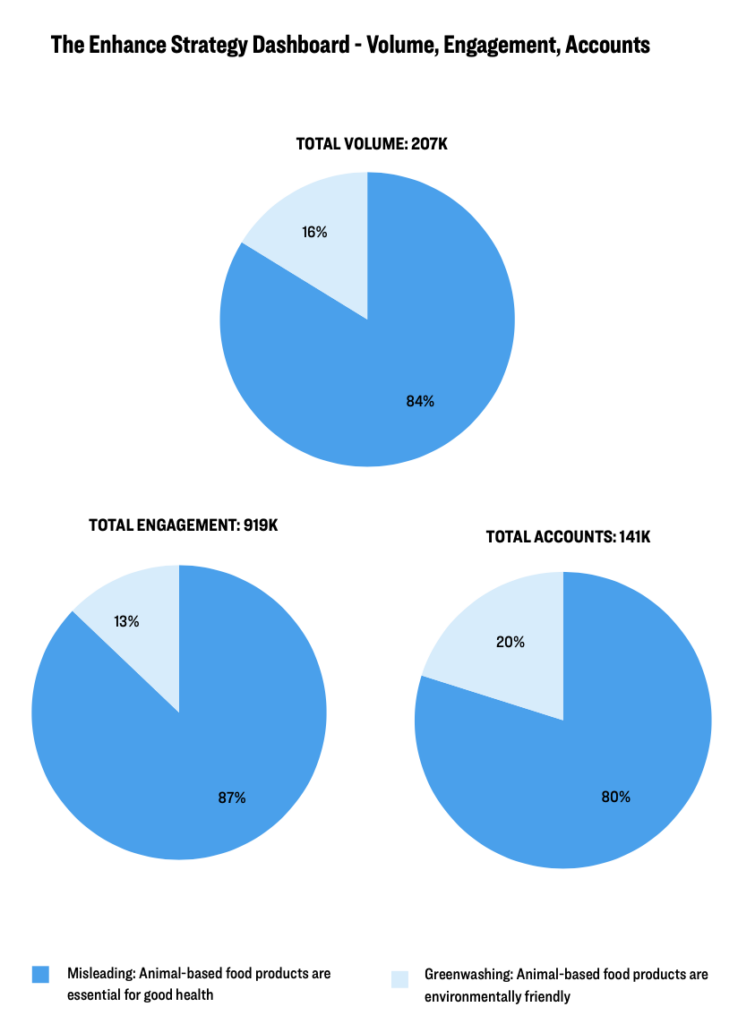
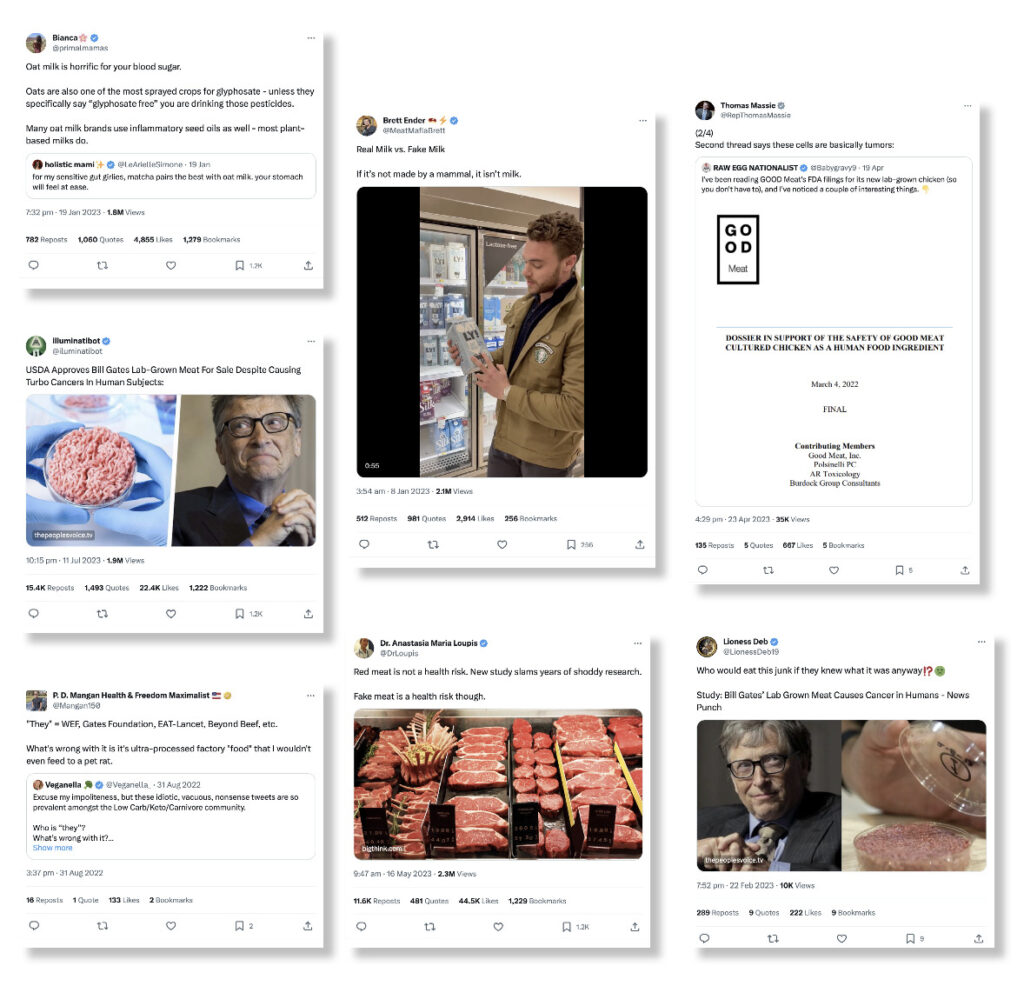
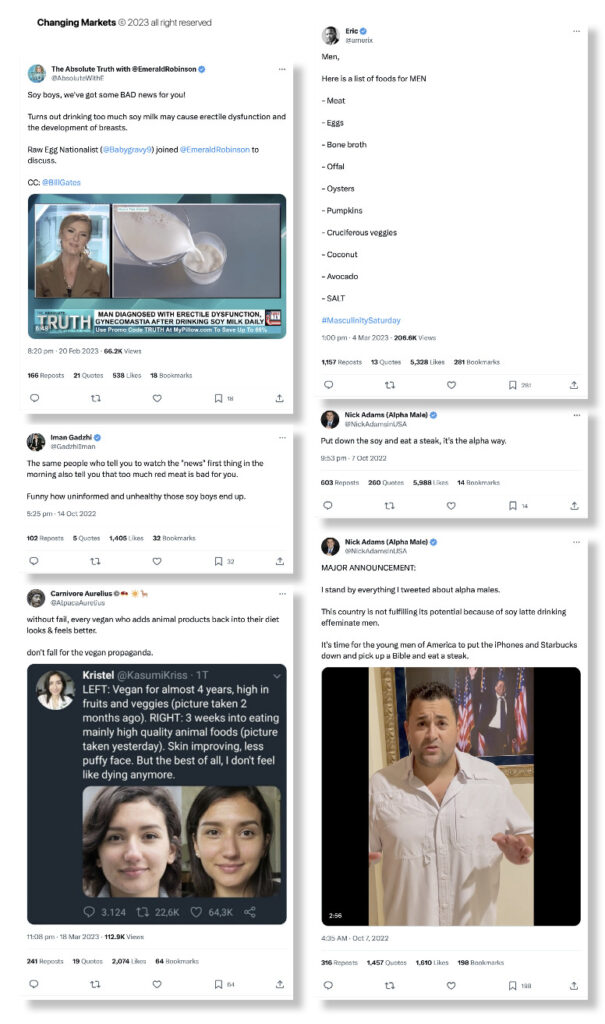
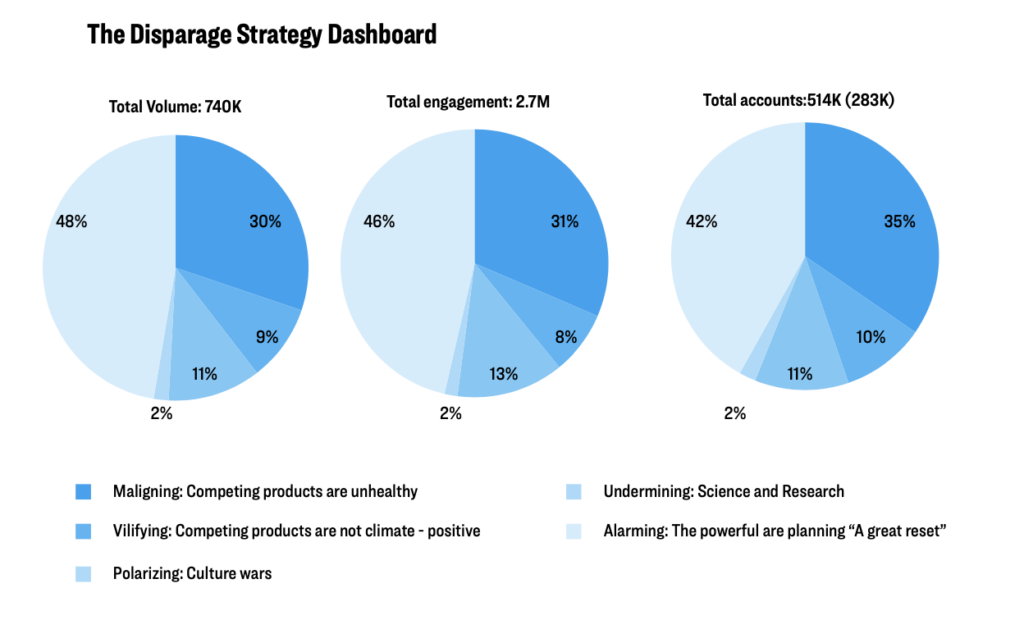
    These misinformation campaigns by the meat and dairy lobby have been successful in deterring consumers – at least if you’ll believe social media, where almost a quarter of analysed posts in a study labelled meat and dairy alternatives as ultra-processed “Frankenfood” that lack nutrition and cause serious diseases and “turbo cancers”. These posts attacked everything from long ingredient lists and overprocessing to nutritional aspects, diseases and health effects.

    “The plant-based industry needs to take a lead from the dairy industry in unifying its voice, but as a force for good and promotion of the facts – as opposed to a litany of lies and misinformation,” said Mills, criticising certain celebrities who have backed the meat dairy industries but “should take their responsibilities as influencers much more seriously”. Actresses Aubrey Plaza and Emma Roberts have both come under fire for featuring in dairy commercials

    The 55-year-old added: “We also need to work harder to demonstrate the long-term profitability of plant-based farming and manufacturing to the meat and dairy industries. If you want to enter the house, you need the keys – and working with the incumbent players in our food sector is the only way to effect meaningful and sustainable change.”

    Factories, employee layoffs and immediate future

    vbites factory
    Courtesy: VBites

    Mills owns multiple factories as part of her plant-based empire, including an ex-Coty plant near Newcastle, which offers storage and office spaces to vegan manufacturers, and the former plant-based meat production premises of Boston, Lincolnshire-based Plant & Bean, which itself fell into administration in June.

    VBites, meanwhile, operates two sites in northeast England: in Peterlee, County Durham, and Corby, Northamptonshire. Mills remarked on the challenges the British manufacturing industry has faced since its exit from the EU in 2020: “Brexit has been an utter disaster for the supply and maintenance of the sector, and the government doubtless has a lot to answer for. So do the opportunistic utility companies and their broker networks, [which] through an array of nefarious practices now under investigation, have hiked up prices so that companies simply cannot afford to operate.”

    She called on legislators to “clamp down on this form of malpractice”, “allocate funding, resources and support in the right places to promote manufacturing”, and “funnel subsidies towards industries such as ours” instead of planet- and health-harming conglomerates.

    VBites has appointed Interpath Advisory as administrators, which will continue to trade from the Peterlee site while a buyer is found. The firm said 54 members of staff across the two sites had been retained, but 24 from across the business have been let go.

    “Our immediate priority is to provide support and assistance to those employees impacted by redundancy, as well as seeking a buyer for the business and its assets. We would encourage any interested parties to make contact with us at the earliest opportunity,” said James Clark, the joint administrator and managing director at Interpath.

    The UK’s struggling plant-based sector

    heather mills vbites
    Courtesy: VBites

    VBites’s collapse comes amid a volatile period for the plant-based market in the UK (reflected by a wider trend globally). As investors have tightened their pockets around food tech and consumers have become more cautious in a cost-of-living crisis, vegan brands have been hit hard.

    Apart from Plant & Bean, fellow British company Meatless Farm came close to administration before being rescued by vegan chicken maker VFC. Many have pulled their products from UK retail shelves, Coca-Cola-owned Innocent Drinks discontinued some of its smoothies, Heck cut its meatless range from 10 products to just two, Nestlé dropped its Garden Gourmet and Wunda brands, and Oatly withdrew its entire ice cream range. Meanwhile, industry giant Quorn announced a loss of £15.3M in its yearly accounts.

    This has extended to foodservice, too. In 2022, sandwich chain Pret A Manger announced it was closing down most of its Veggie Pret stores, just as several independent eateries in north England did, including V Rev, JJ’s Vish and Chips, Zad’s (all Manchester), Frost Burgers (Liverpool) and Donner Summer (Sheffield).

    This year too, fast-casual chain Clean Kitchen Club permanently shut its Notting Hill location in London in February, for example, while Flower Burger exited the UK market in September and Edinburgh’s Harmonium closed in April. And last month, popular vegan restaurant V Or V in Sheffield announced it was closing its doors, and Lewis Hamilton-backed fast-food chain Neat Burger said it will close four of its UK stores by the end of the year.

    The UK is Europe’s second-largest vegan market – with retail sales for meat and dairy alternatives reaching £964M in 2022. But the market has stagnated and total investment in plant protein R&D has been overtaken by cultivated meat in the last decade. According to industry think tank the Good Food Institute Europe, UK plant-based sales fell by 3% between 2021-22, with alt-meat purchases sliding by 8%.

    “VBites is one of the UK’s leading manufacturers of vegan food products, but unfortunately, and in common with many other companies across the food manufacturing sector, had seen trading impacted by rising commodity and energy prices,” said Clark.

    Thanking her staff, Mills concluded her statement on a slightly more optimistic note: “I am hopeful that as a unified force we can turn things around – and hopefully before it is too late.”

    The post Misinformation, Corporate Greed & Rising Costs: How Heather Mills’ Alt-Meat Brand VBites Fell Into Administration After 30 Years appeared first on Green Queen.

    This post was originally published on Green Queen.
  • nature's fynd yogurt
    5 Mins Read

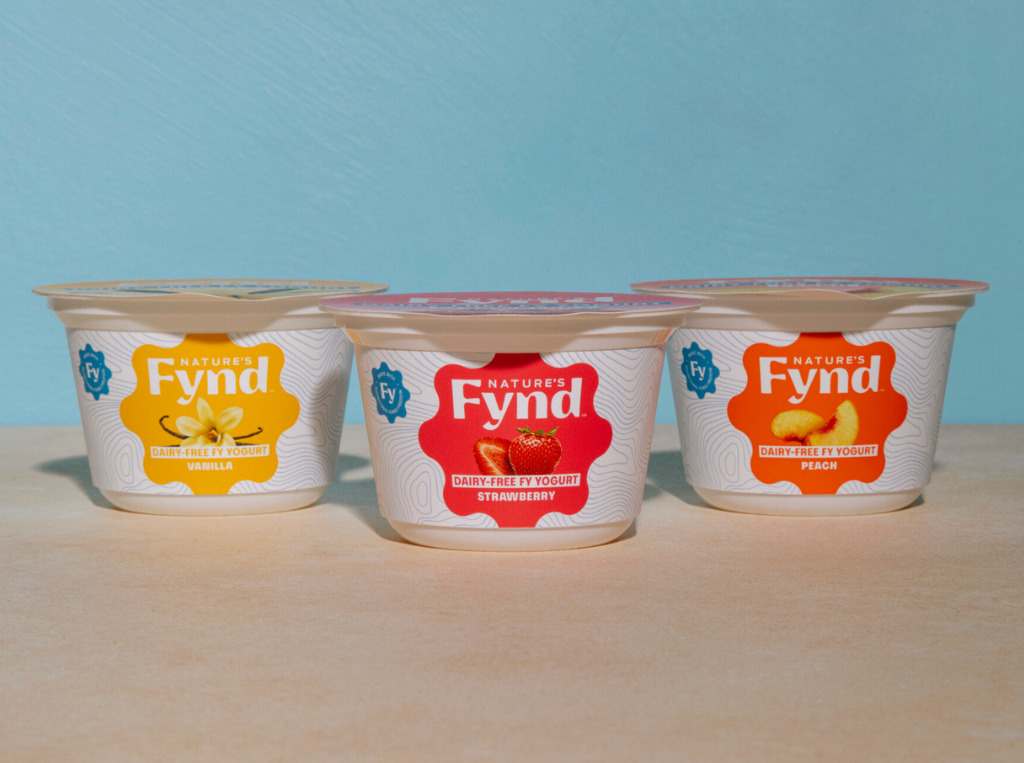
    Chicago-based food tech startup Nature’s Fynd will introduce what it claims are the “world’s first” fungi-based yogurts in January. Launching at Whole Foods stores across the US, this is the company’s third product line, and comes just as it was named in Inc. magazine’s 2023 Best in Business list.

    Nature’s Fynd, the fermentation startup backed by the likes of Bill Gates, Jeff Bezos and Al Gore, has expanded its range of sustainable foods with three new yogurts made from its fungal protein Fy. The products add to its existing lineup of cream cheeses and meatless breakfast sausage patties, already available at Sprouts and Whole Foods.

    “In a crowded market of dairy-free yogurts that often sacrifice nutrition for taste or vice-versa, we have created the world’s first fungi-based yogurt – it is delicious, nutrition-forward and earth-friendly,” said Nature’s Fynd co-founder and CEO Thomas Jonas. “We’re proud to deliver this first-to-market product with no tradeoffs—a delicious yogurt that is better for you and better for the planet.” 

    How Nature’s Fynd produces its Fy protein

    dairy free yogurt
    Courtesy: Nature’s Fynd

    The “thick and creamy” yogurts will be challenging established players like Kite Hill, Silk, So Delicious and Forager Project in a fluctuating market that has seen dollar sales grow of vegan yogurt grow by 5% from 2021-22, but unit sales decline by 5% too. Nature’s Fynd’s fungi-based varieties will be introduced at Whole Foods stores nationwide starting in January, and come in three flavours: vanilla, strawberry and peach.

    Available in 5.3oz single-serve containers, they pack 8g of protein, 8-9g of total sugar and 4g of fibre, versus 6.6g of protein, 19g of sugar and zero fibre for a dairy-based non-fat fruit yoghurt. They make use of live cultures, boast essential amino acids and favourable digestion profiles, and are free from common allergens like soy, nuts or gluten.

    The base ingredient, a milk alternative, is made from Fy protein. The ingredient is born out of research conducted for NASA on a fungal strain found in geysers at the Yellowstone National Park, called Fusarium strain flavolapis. The naturally occurring organism then undergoes biomass fermentation in a proprietary liquid-air interface,

    Our proprietary liquid air interface fermentation technology is a unique type of biomass fermentation where we grow biomass on top of a liquid surface rather than submerged in the liquid or on top of a solid,” Nature’s Fynd CMO Karuna Rawal told Green Queen last year.

    Using trays in standing towers in a growth chamber, Nature’s Fund feeds the microbes a select blend of nutrients to kickstart high protein formation. Within a few days, filaments grow and begin interlacing, forming a mycelial ‘biomat’ with a texture similar to muscle fibres. This then undergoes simple food production steps – steaming, pressing, rinsing and slicing – to be harvested into its Fy ingredient, which can be turned into a liquid, solid or powdered state for use in animal-free foods.

    The startup, which has raised over $500M in funding, says this process is highly efficient, and can even be performed in space – in fact, as long as there’s an aptly controlled environment, it can be carried out anywhere. To that end, it launched a bioreactor in the International Space Station Plus to test its protein’s zero-gravity capabilities. Plus, just one specimen isolated from a small sample of the filamentous fungi strain can create a virtually limitless supply of Fy.

    There are massive environmental benefits attached too. Growing the mycelium-based ingredient requires roughly 99% less land than beef, with one acre producing 120 times more fungal protein than the latter. It also emits 94% fewer greenhouse gases and uses up 99% less water than beef, according to environmental performance modelled at scale by the company.

    Chefs, awards and a trip to Europe?

    fy protein
    Courtesy: Nature’s Fynd

    The startup received FDA GRAS (Generally Recognized as Safe) approval for its Fy ingredient in June 2021, paving the way for fungal products to be introduced to the market. Prior to the yogurts, it released a line of dairy-free cream cheeses (in original and chive-and-onion flavours) and breakfast sausage patties, all of which were mixed with plant-based ingredients.

    The announcement of the yogurts’ launch comes just as Nature’s Fynd was named in Inc. magazine’s 2023 Best in Business list in the Food & Beverage category. Inc. These awards recognise dynamic companies of all sizes that have outstanding influence and impact on their fields and society.

    “Nature’s Fynd is answering the call to feed our growing population in the face of climate change, and we appreciate the recognition from Inc. for the positive contributions we’re striving to make in the world,” said Jonas. “Our vegan foods enable consumers to simply go to their local grocery store and choose delicious products that nourish them and nurture the planet.”

    The company has partnered with chefs as well to demonstrate the credentials of its fungal protein products. In July, it teamed up with Le Bernardin co-owner Eric Ripert (also a culinary advisor to the brand) to create a trio of small-batch, limited-edition Fy salad dressings in Zesty Goddess, Miso Caesar and Herbed Ranch flavours. And last month, it collaborated with celebrity chef Andrew Zimmern, who has created some recipes with the Nature’s Fynd cream cheese for his online newsletter.

    It’s a company thriving in a burgeoning $4B fungi protein market, which is expected to grow by 6% year-on-year through 2033. Additionally, there are at least 70 companies working with biomass fermentation, according to industry think tank the Good Food Institute. Within the mycelium world, a host of companies have ramped up their innovations lately, including Meati, Libre Foods and Prime Roots.

    Nature’s Fynd has submitted a novel foods application for regulatory approval in the EU too – how do Europeans like their fungus?

    The post Bill Gates-Backed Nature’s Fynd Says It’s Launching The World’s First Fungi Protein Yogurts at Whole Foods appeared first on Green Queen.

    This post was originally published on Green Queen.
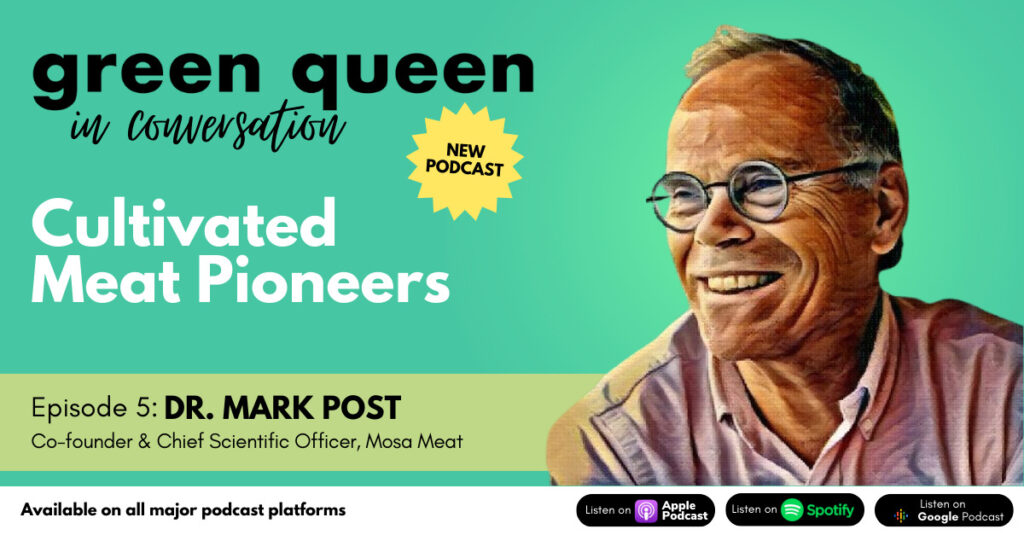
  • denmark plant based
    4 Mins Read

    The Danish Foundation for Plant-Based Foods has announced the first 36 projects receiving investment as part of its $180M Plant Fund. It comes two months after it became the first country to introduce a national action plan to transition towards a plant-based food system.

    First announced in 2021, Denmark’s Plantefonden (Plant Fund) is part of a 2021-announced climate agreement plan, which earmarked $180M to advance the plant-based sector as a “central element in the green transition”. About $97M of this was set aside for the fund, with the rest going as bonuses to farmers growing plant protein crops for human consumption.

    Now, it has announced the 36 recipients that will be part of the first round of the financing, amounting to $8.4M. These projects span multiple realms, from developing new plant proteins and training kitchen staff to national information campaigns – and they were selected from 101 applications from startups, universities and others, requesting more than thrice the allocated budget. 

    “This is world history,” remarked the foundation’s president Marie-Louise Boisen Lendal. “Denmark is a pioneering country and has created the Plant Fund in a broad agreement at Christiansborg, which has now made the first commitments. We have previously called Plantefonden’s milestones important – but this one is probably the most important. It is in the commitments that we really move forward with the plant-based agenda.”

    How the first round of Plantefonden stacks up

    plantefonden
    Marie-Louise Boisen Lendal, president of the Danish Foundation for Plant-Based Foods | Courtesy: Frej

    Of the 36 projects, 33 will start work in January next year. The Plant Fund operates on three governing strategic development areas: stimulating demand, stimulating supply, and building sector bridges. In the call for this year’s applications, it was stressed that the focus would be on the former, which is why 31 of the projects address this as the primary development area, with 78% of the round’s funding going to these projects. The remaining 22% of the pool focuses on stimulating supplies.

    Nearly half (46%) of the funding supports a rise in “the proportion of plant-based food in public and private commercial kitchens and foodservice”, while 30% is earmarked for increasing citizens’ private consumption of vegan food. A further 17% is dedicated to enhancing the quality and quantity of products entering the market, as well as growing the demand for locally produced food on the export market. The final 5% is to ramp up both land- and marine-based plant protein production.

    “In this round, we have prioritised commitments to the smaller projects with the goal in mind that the Plantefonden’s funds have as broad an impact in society as possible,” said Boisen Lendal. “I hope that when we look back on this moment in 10 years, we look back on something that was not just the starting point for a broad national success, but also the moment that set off a global trend.”

    The largest part of the funding ($629,000) went to research and awareness project FIGO, a partnership between the Danish Vegetarian Foundation, the Vegetarian Society of Denmark, Tempty Foods Food Solutions A/S, and Professionshøjskolen Absalon. Normplant (a plant-based catering solutions provider) and Make It Easy (a legume promotion campaign) followed with $548,000 and $519,000, respectively.

    Calls for increased plant-based funding in Denmark

    vegetarian society of denmark
    Rune-Christoffer Dragsdahl, secretary general of the Vegetarian Society of Denmark | Courtesy: Vegetarian Society of Denmark

    The announcement comes two months after Denmark became the world’s first country to announce a national plan to shift to a plant-based food system, which was part of a 2021 climate agricultural plan that aimed to cut food emissions.

    The plan laid out by Denmark’s Ministry of Food, Agriculture and Fisheries involved training chefs in both public and private kitchens on the preparation of vegan meals, a higher focus on plant-based diets in schools and the education system, expanding the exports of locally produced vegan food through embassies, and increased investment more in R&D for this sector.

    This is key, given that the sector remains “severely underfunded”, according to the Vegetarian Society of Denmark. Experts from several of the country’s universities have pointed out that funding must increase by at least sixfold, reaching $55M annually. And while retail sales of plant-based food in Denmark increased by 10% from 2021 to 2022, reaching €105.1M, it’s still amongst the smallest markets in Europe, accounting for less than 2% of the continent’s total.

    “Both we and many other dedicated forces in the plant-based sector are determined to make the mission succeed, but it also requires further investments throughout the value chain,” said Rune-Christoffer Dragsdahl, secretary general of the Vegetarian Society of Denmark. “And here, the money does not match the ambitions.”

    He added that the national action plan lacked concrete objectives: “There are a lot of great visions in the action plan, but it is unclear which goals will be achieved and how they will be achieved. If Denmark’s constructive path is to be a credible alternative to, for example, the Dutch approach – which led to large demonstrations in the country – the visions need concrete figures.”

    But he acknowledged that being the first country to introduce such a plan was “internationally groundbreaking”. Shortly after, South Korea was second on that list, unveiling its own dedicated plan to bolster plant-based food production and promoting alt-protein consumption.

    The post Denmark Announces First 36 Projects Receiving $8.4M As Part of Plant-Based Fund appeared first on Green Queen.

    This post was originally published on Green Queen.
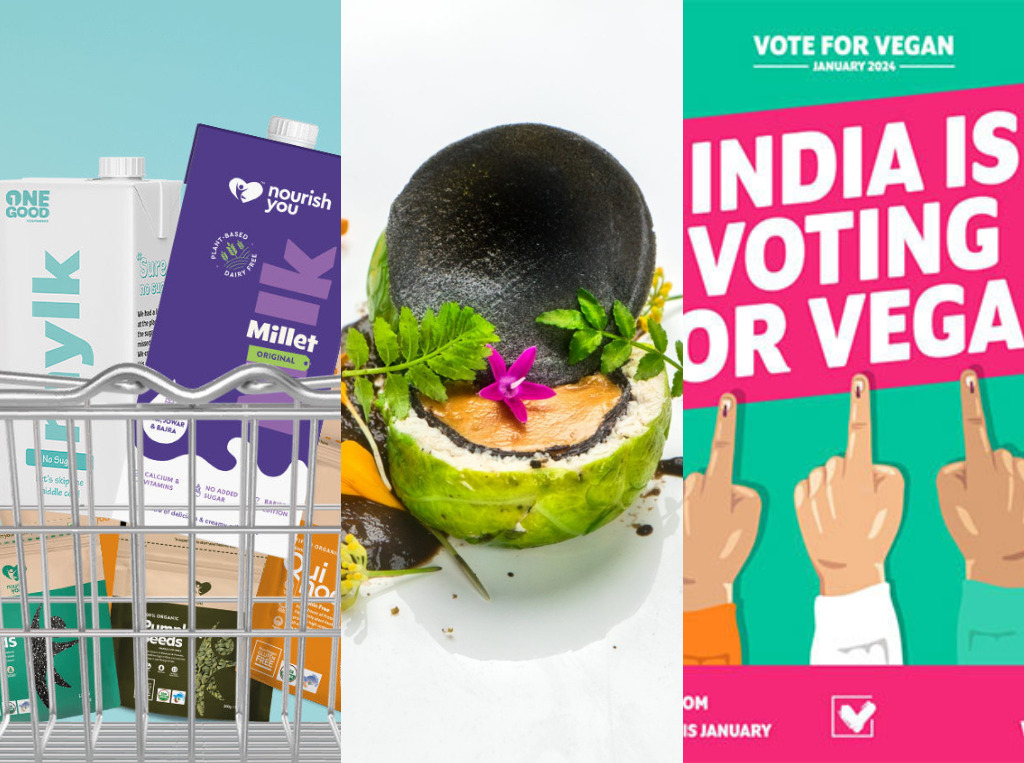
  • daiya
    5 Mins Read

    Canadian brand Daiya has launched its updated vegan cheese lineup, made from a base of its oat cream and using age-old traditional fermentation techniques to mimic dairy cheese better.

    Nine months after announcing a multi-million-dollar investment in fermentation technology, Canadian alt-dairy leader Daiya has launched its resultant product, a reformulated version of its vegan cheeses. The new offerings are made from the company’s oat cream blend, which replaces the chickpea protein base it used in the previous iterations of its cheeses. As part of the reformulation, Daiya has refreshed its logo and packaging.

    The company has switched to a natural fermentation recipe to combine traditional cheesemaking techniques with modern tech, with its fermentation site housed in its British Columbia facility, which it claims is “the largest standalone plant-based facility of its kind in North America”.

    The new cheeses – part of its expansive portfolio that features pizzas, mac and cheese, cream cheeses, cheesecakes, flatbreads and dressings – will replace the existing crop on the shelves of all the over 25,000 North American stores Daiya is stocked in, and at the same price.

    Daiya turns back the clock for a creamier future

    daiya vegan cheese
    Courtesy: Daiya

    Daiya’s new cheeses are headlined by a base of fermented gluten-free oat cream, which comprises oat flour, water, pea protein, proprietary vegan cultures and enzymes. This is now a building block across its range of plant-best shreds, slices, blocks and sticks.

    The company says the use of fermentation enables its cheeses to reach “dairy parity”, promising that they melt just like their conventional counterparts. Daiya adds that the new products are “creamier” than their predecessors, and “tastier, meltier, and stretchier than any other on the market”.

    “We believe that the future of plant-based cheese achieving parity to dairy lies in traditional fermentation techniques,” former Daiya CEO Michael Watt had said when announcing the fermentation investment in March. “I don’t believe any brand has fully cracked the code on a formula that cheese lovers feel entirely confident in – Daiya is going to change that.” (Watt was replaced as CEO by Hajime Fujita, who was a VP at its parent company, Japan’s Otsuka Pharmaceuticals, last month.)

    R&D director Jamie Siu added: “We’ve worked with experts to develop a facility and formulation that is world-class. For our team to be able to deliver this fermented product has been no small task. It has involved extensive research and development in the traditional art of cheesemaking, applied in a plant-based setting.” 

    At that time, the company had noted how it was trying to stand out from brands incorporating “GMO techniques such as precision fermentation” by investing in traditional fermentation for its dairy-free cheeses. While introducing its new cheeses, it has doubled down on this rhetoric: it references not just precision fermentation, but even producers that “continue to incorporate oil-based ingredients”, and how the brand itself is perfecting vegan cheesemaking “the natural way”.

    It’s a curious statement to make, given that the 15-year-old cheesemaker’s reformulated recipe still has coconut oil listed as the second ingredient on all its cheeses, after the oat cream base. Other established brands making fermented vegan cheese in North America include fellow Canadian player Spread’em Kitchen Co., as well as US-based Miyoko’s Creamery and Vertage – proving that there is room for success with this approach.

    Giving consumers what they want

    daiya cheese
    Courtesy: Daiya

    “Our fermentation process can take anywhere from 10-20 hours before we age the product further to really capture that cheesy aroma,” Siu told VegNews in October. “While it now takes longer to produce our cheeses, this is all in pursuit of a much superior product.”

    And there is scientific proof that fermentation can make for a superior dairy-free cheese. Danish scientists have found that fermenting yellow pea protein through bacteria can produce compounds normally found in dairy-based cheeses. Daiya’s use of pea protein alongside oats is a case in point, and separates it from the aforementioned challengers, which use a base of nuts.

    “While there are a lot of people who would like to eat plant-based cheese, they aren’t satisfied with how it tastes and feels in the mouth,” said Carmen Masiá, the lead researcher behind this Danish project. “In the end, this means that no matter how sustainable, nutritious, etc. a food product is, people aren’t interested in buying it if it doesn’t provide a good experience when consumed.”

    That point hits the nail on the head: Americans want better plant-based cheese. Despite recording $233M in dollar sales last year, vegan cheese saw a 2% drop in that figure year-over-year, with retail sales down by 5% too, according to SPINS data crunched by the Good Food Institute. With just a 1.1% share in the overall cheese category, dairy-free alternatives have only entered 5% of all US households, and only half of consumers who try them repeat their purchase.

    And a study leveraging Kroger data from 60 million American households revealed that nearly three-quarters (73%) of Americans are unhappy with the flavour (which they describe as “plastic” or “unnatural”) and texture (“grainy”) of vegan cheese. They want cheeses that taste better, melt well and have a creamy texture – all attributes that Daiya has ascribed to its new oat-based lineup.

    But it’s not just the recipe that’s been updated – the cheesemaker has also revamped its visual identity with a new logo and tagline and overhauled packaging. The refresh aims to appeal to a wider market beyond just vegan consumers, with the packs reading: “100% plant-based. Even if you’re not.” It’s a nod to the flexitarian market that is key to plant-based brands’ growth, and a shift away from what Daiya terms an “all or nothing” approach to veganism.

    “We expect this advancement to not only rejuvenate consumer confidence in the category,” said chief commercial officer Melanie Domer, “but revitalise the category’s market potential, finally offering retailers a product that truly bridges the gap between consumer expectations and dairy-free offerings.”

    The post What Do Consumers Want From Vegan Cheese? Daiya Bets on Fermented Oat Cream appeared first on Green Queen.

    This post was originally published on Green Queen.
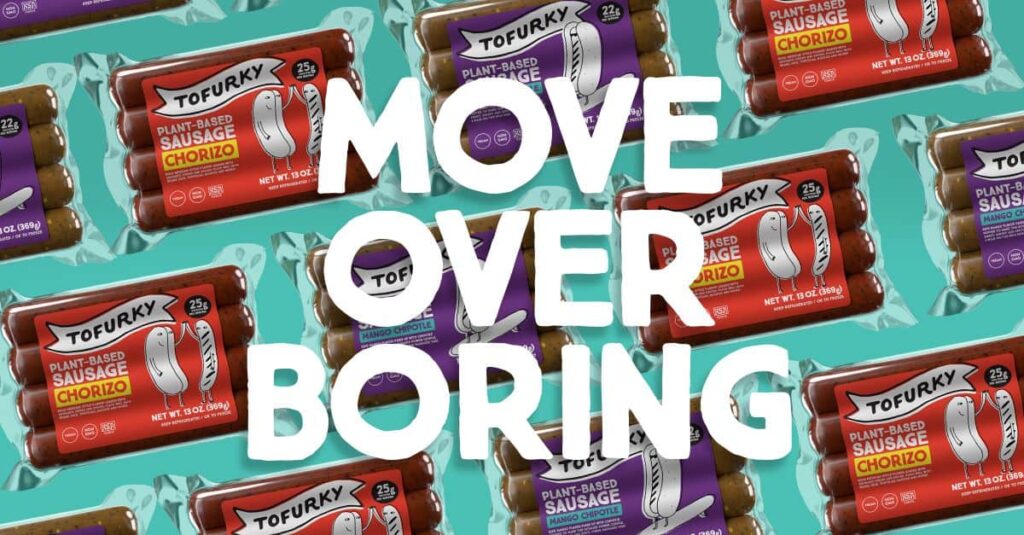
  • cop28 news
    5 Mins Read

    Welcome to Day 10 of #COP28 – the first ever official day dedicated to food systems in the history of the summit. In Green Queen’s COP28 Daily Digest, our editorial team curates the must-reads, the must-bookmarks and the must-knows from around the interwebs to help you ‘skim the overwhelm’.

    Catch up: DAY 1DAY 2DAYS 3 & 4DAY 5DAY 6DAY 7REST DAYDAY 8DAY 9

    Headlines You Need To Know

    The COP-related news you cannot miss.

    AZERBAIJAN CONFIRMED AS COP29 HOST: After a period of uncertainty, Azerbaijan has emerged as the winner of the host bid for COP29 next year, with Armenia retracting its bid and agreeing to back its rival nation. But climate activists are likely to criticise the fact that another ‘petro-state’ country will once again host the UN climate summit.

    152 COUNTRIES BACK THE COP28 AGRIFOOD DECLARATION: A week after 134 countries signed the UAE Declaration on Agriculture, Food Systems and Climate Action, that number has risen to 152, announced UAE climate minister and COP28 food systems lead Mariam bint Mohammed Almheiri.

    CHINA BACKS RENEWABLE ENERGY, BUT REMAINS COY ON FOSSIL FUEL PHASEOUT: China’s climate envoy Xie Zhenhua has said the country would like to see nations agree to replace fossil fuels with renewable energy but hasn’t confirmed whether the nation would support or oppose a fossil fuel phaseout entirely.

    SAUDI ARABIA TAKES AIM AT WIND & SOLAR ENERGY: Fossil fuel giant Saudi Arabia is calling on countries to take action against wind and solar power, which it claims are increasingly threatening the climate due to their ‘life-cycle’ GHG emissions. It’s also one of the countries blocking the recommendation for a full fossil fuel phaseout.

    ‘HIGH-AMBITION’ FOOD COALITION FOUNDED: The Alliance of Champions for Food Systems Transformation has been launched, with Brazil, Sierra Leone and Norway as co-chairs and prominent members including Rwanda and Cambodia. The goal for the “high ambition coalition for food” is to boost national visions and food systems transformation pathways consistent with science-based targets in 10 priority areas.

    COP28 RELEASES STATEMENT ON CLIMATE, NATURE & PEOPLE: The COP28 and UNCBD COP15 presidencies have released a Joint Statement on Climate, Nature & People to align climate action to deliver the highest impact in as short a time as possible. Objectives include scaling up climate finance, equitable representation, and coherence in data collection and voluntary reporting frameworks.

    NATURE FINANCE HUB LAUNCHED TO MOBILISE $100B IN CLIMATE FINANCING: The Asian Development Bank, the OPEC Fund, Agence Française de Développement, and the Saudi Fund for Development have launched the Nature Finance Hub to mobilise $1B from development partners, and an additional $2 B in private capital by 2030 for nature-centric climate projects.

    $100M INITIATIVE AIMS TO PROTECT LAND & MARINE AREAS IN PAPUA NEW GUINEA: Papua New Guinea has announced a $100M initiative with public and private sector partners to protect 30% of its land and marine areas, halt forest loss and promote sustainable development and inclusive rural transformation by 2030.

    Key #COP28 Reports

    The food and climate reports you need to know about today.

    FAO publishes agrifood roadmap to 1.5°C: The FAO has published the much-awaited first instalment of its hugely anticipated roadmap to cut food and agriculture emissions, with 120 actions recommended to meet 20 key targets – albeit with little detail on how they will be achieved. Measures include cutting livestock methane emissions by 25% by 2030 and halving food waste by 2030. It acknowledged the need to change diets to reduce meat and dairy emissions but said that plant-based foods can’t be an adequate source of certain nutrients. Plus, only the FAO’s website (and not the report) calls on higher-income countries to cut their consumption. In fact, the report says meat production needs to be ramped up to address health challenges in poorer nations.

    Brazilian meat giants linked to widespread Amazon deforestation: Three Brazilian meat producers – JBS, Marfrig and Minerva – have been connected to over half a million hectares of deforestation in the Amazon in a new report by Mighty Earth. The farms where land was felled supply to 36 slaughterhouses belonging to these companies, and the total area is 156 times the size of COP28 host Dubai.

    Africa needs a new livestock narrative: The result of a collaborative effort between multiple organizations, a new report outlines a new livestock narrative for Africa, arguing that existing perspectives fail to recognise the role of livestock in the continent’s livelihood, nutrition and capacity for climate change adaptation.

    Migration as climate change adaptation: The FAO published a study exploring migration as an adaptation measure for climate change in the Near East and North Africa, highlighting how farmers are forced to relocate due to climate events and crop productivity issues. Growth-centric economic and farming policies further undermine sustainable resource management and facilitate maladaptive practices.

    Food access for migrant workers in the Gulf: Middle Eastern investigative journalists and Fairsquare have penned a report outlining the disparities in access to quality, nutritious food for migrant workers in the UAE. It also assesses the wider impact of the country’s food supply chain practices on the climate, as well as vulnerable populations globally.

    Recommendations for COP28 investment and innovation: The Innovation Commission for Climate Change, Food Security and Agriculture has made a seven-point case for innovation and investment at COP28, covering improved weather forecasts, rainwater harvesting training, microbial fertilisers, cutting livestock methane emissions, digital agriculture, climate-resilient social protection, and alt-protein.

    Awesome Resources From Media Friends

    A curation of our favourite reads of the day – excellent guides, explainers and op-eds from around the web.

    Much-needed climate finance rolling in: Writing for Bloomberg, Agnieszka de Sousa outlines that the badly needed money for food-related climate solutions is starting to trickle in, with billions secured in pledges at COP28.

    All talk, no action: Arguing for the contrary, RTE’s George Lee writes that there’s plenty of talk at COP28, but nobody seems to want to actually pay – summing up the rollercoaster of a summit this has been.

    Around the world to save the country: In a story that’s equal parts hopeful and terrifying, BBC climate reporter Georgina Rannard profiles Mervina Paueli, a negotiator from Tuvalu who has travelled 8,000 miles to save her home country at COP28.

    Lighter Green Fun

    Funny stuff, weird stuff, random stuff related to COP you may enjoy.

    SMOG28: Pretty ironic that people at a climate summit can’t breathe because of the air pollution. Axios reporters have been feeling like their lungs are on fire due to the smog in Dubai, which is not great, to say the least. Looks like it’s not just the alternative protein industry’s opinion that’s suffocating.

    Green Mr COP: A 10-year-old boy from Abu Dhabi has transformed his old toy car into a robot traversing Dubai’s Expo City as a green crusader named ‘Mr Cop’. This is exactly the generation we need to save the planet for.

    Follow all our #COP28 coverage. Like what you’re reading? Share it!

    The post COP28 Daily Digest: Everything You Need To Know in Food and Climate News – Day 10 appeared first on Green Queen.

    This post was originally published on Green Queen.
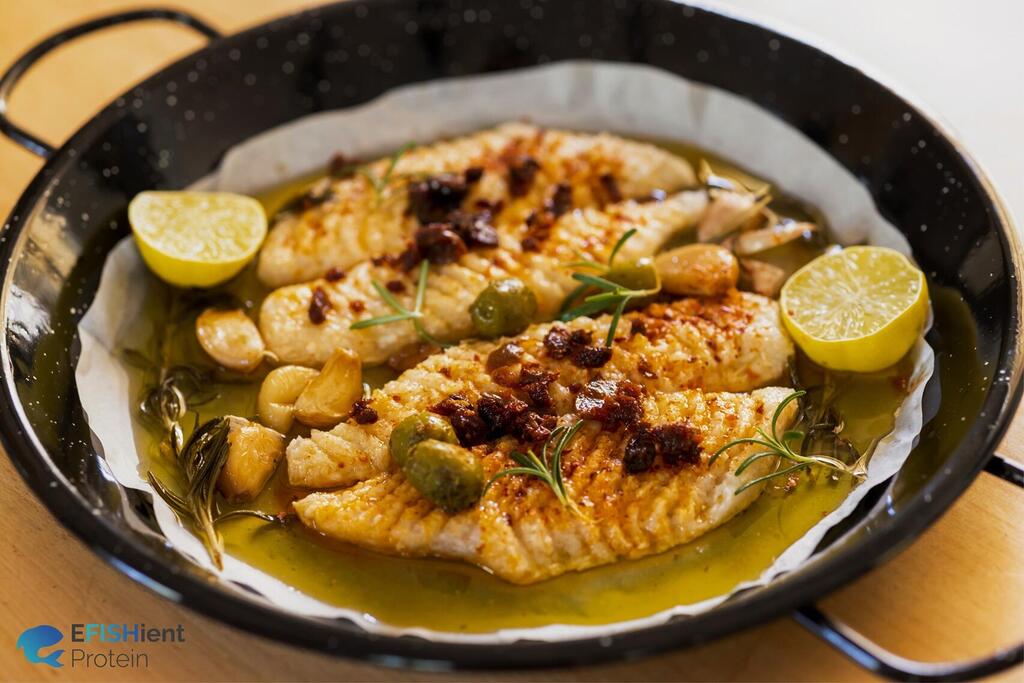
  • cop28 news
    5 Mins Read

    Welcome to Days 9 of #COP28. In Green Queen’s COP28 Daily Digest, our editorial team curates the must-reads, the must-bookmarks and the must-knows from around the interwebs to help you ‘skim the overwhelm’.

    Catch up: DAY 1DAY 2DAYS 3 & 4DAY 5DAY 6DAY 7REST DAY

    Headlines You Need To Know

    The COP-related news you cannot miss.

    BIG MEAT AND DAIRY SHOW UP IN RECORD NUMBERS: At a food-focused COP, you just knew there’ll be Big Ag hoping to influence proceedings. The food and agriculture industry has sent thrice as many delegates as last year’s summit, with meat and dairy represented by 120 and the number of agribusiness lobbyists doubling from COP27 to 340.

    DUBAI ANNOUNCES PLAN TO CUT EMISSIONS IN HALF BY 2030: COP28 host Dubai has revealed that it plans to slash its carbon emissions by 50% by the end of the decade, which will help accelerate its clean energy transition plans and 2050 net-zero goal.

    THOUSANDS TO JOIN CLIMATE JUSTICE PROTESTS IN 53 COUNTRIES: Today is the Global Day of Action for Climate Justice, which will be marked by demonstrations across the world – in 300 cities and 53 counties – to demand climate justice from all governments, but especially the wealthiest nations in the Global North.

    INITIATIVE TO INCREASE YOUTH PARTICIPATION IN CLIMATE LAUNCHED: An International Youth Climate Program has been announced to increase youth participation in COP. Plus, the Youth Climate Champion, which amplifies the voices of under-35s with an emphasis on those from vulnerable communities, Indigenous populations or those with disabilities, was also introduced.

    INDIGENOUS SCHEME TO INCREASE DIRECT ACCESS TO FINANCE: COP28 saw the launch of the Podong Indigenous Peoples Initiative, co-designed and -led by the IUCN, its Indigenous Peoples Organisations, and the International Indigenous Forum on Biodiversity. This aims to mobilise $200M in funding and improve direct access to climate finance for Indigenous communities around the world, who make up 6% of the global population.

    60 COUNTRIES ENDORSE GENDER-RESPONSIVE CLIMATE PARTNERSHIP: Since 80% of the people displaced by the climate crisis are women, 60 countries have endorsed a Gender-Responsive Just Transitions & Climate Action Partnership, which seeks to enhance gender and climate data and ensure that it’s used in decision-making by leaders.

    Key #COP28 Reports

    The food and climate reports you need to know about today.

    • NYT, Reuters, Bloomberg top fossil fuel enablers in media: An investigation by DeSmog and Drilled has revealed that the in-house ad agencies of leading trusted media houses – the New York Times, Politico, Bloomberg, Reuters, Bloomberg, The Economist, the Financial Times and the Washington Post – have been producing and promoting content for fossil fuel companies. (News website Semafor has also been criticised previously for taking money from Chevron.)
    • Meat climate neutrality claims too good to be true: The push for GWP* is under the spotlight and has received criticism for being a tool the meat industry can use to greenwash consumers, and a new report delves deeper to tackle the question: are climate neutrality claims in the livestock sector too good to be true? The answer is yes.
    • Developing a farmer-centric, outcomes-based framework: Regen10 has published the first draft of its outcomes-based framework for a regenerative food system, representing a holistic and inclusive approach to measuring progress towards regenerative food systems, while improving farmers’ livelihoods, benefitting the climate, and reducing emissions.
    • Analysing the untapped potential of public climate flows: New analysis into public climate finance flows – titled ‘Untapped Potential’ and representing over 35 million family farmers across Africa, Latin America, Asia and the Pacific – reveals that only a tiny amount of money spent on these farmers and sustainable agriculture.
    • Studies that show eating meat is bad for the climate: This is a subject covered by studies time and again – so it’s awesome to have a resource where you can view some of the biggest studies showing the impact of meat and dairy on the planet. Sentient Media has curated a great list for this very purpose.
    • Common principles to promote eco-positive finance: The European Investment Bank and other multilateral development banks (MDBs) have published common principles to identify, track and increase climate-friendly finance by by mainstreaming nature in MDB operations and finances systematically.

    Awesome Resources From Media Friends

    A curation of our favourite reads of the day – excellent guides, explainers and op-eds from around the web.

    Has the media just given up?: Writing for The Lever, Adam H Johnson questions whether news outlets have just stopped pretending to even care about the climate crisis, with a focus on how Donald Trump’s climate denial is being downplayed or straight-up ignored.

    Who needs COP?: Do we need COP to solve climate change, or does tech have us covered? Head to the Financial Times for a neo-liberal capitalist view on tackling the crisis.

    True presidential colours: Climate accountability news outlet Drilled has published a story exploring the true colours of COP28 president Sultan Al Jaber, the oil boss who’s faced heavy criticism ever since he was announced as summit head, and things have only gotten worse since.

    Why do COPs suck?: Environmental journalist George Monbiot appeared on the BBC’s Question Time programme and laid into the UN’s annual climate summits, explaining how 25 of them have been “total failures” and two “partial successes”. Strap in for a riveting two minutes and 11 seconds.

    A farce rigged to fail: In fact, Monbiot’s BBC cameo came a day before he laid into COP28 with some choice words, while offering other ways we can try and save the planet.

    Lighter Green Fun

    Funny stuff, weird stuff, random stuff related to COP you may enjoy.

    Using AI to track the summit: The use of AI is expanding at COP28. Due to the sheer volume of content and information, experts have curated an AI-led COP Tracker to search through published documents, access original publications and generate bespoke summaries.

    Free doughnuts!: In support of the Plant Based Treaty’s vegan doughnut economics, PETA gave away free plant-based doughnuts to the Manhattan public on Friday to spread the message.

    Follow all our #COP28 coverage. Like what you’re reading? Share it!

    The post COP28 Daily Digest: Everything You Need To Know in Food and Climate News – Day 9 appeared first on Green Queen.

    This post was originally published on Green Queen.

  • cop28 news
    6 Mins Read

    Welcome to Day 8 of #COP28. In Green Queen’s COP28 Daily Digest, our editorial team curates the must-reads, the must-bookmarks and the must-knows from around the interwebs to help you ‘skim the overwhelm’.

    Catch up: DAY 1DAY 2DAYS 3 & 4DAY 5DAY 6DAY 7DAY 8

    Headlines You Need To Know

    The COP-related news you cannot miss.

    FOSSIL FUEL TALKS SET TO INTENSIFY: Following a day of much-needed rest, negotiations on greenhouse-gas-cutting measures are set to reach a new level of intensity as counties debate whether or not to phase out fossil fuels, with ministers holding a series of talks to break an impasse and come up with a roadmap to 1.5°C.

    EX-UN CLIMATE CHIEF CALLS FOR FOSSIL FUEL PHASEOUT: Christiana Figueres, the UN’s climate chief during the 2015 Paris Agreement, has backed a complete fossil fuel phaseout. “If we want a step forward in this Cop, then we cannot compromise on phase out. It sends a political signal that has ramifications for companies that need to decide where they’re going to put their [investment],” she said.

    CANADA MANDATES FOSSIL FUEL FIRMS TO CUT EMISSIONS BY 35% BY 2030: Justin Trudeau’s government has announced that fossil fuel companies will be required to cut their emisions by 35-38% by 2030 (from a 2019 baseline). The policy is part of Canada’s 2050 net-zero plan and sets a limit on emissions – companies that don’t meet this target trade emissions allowances with other firms.

    PUTIN NEGOTIATES OIL DEALS IN ABU DHABI AS COP28 CONTINUES IN DUBAI: Russian president Vladimir Putin is adding fossil fuel to the fire at the UN climate summit, landing discreetly in the capital city of Abu Dhabi – about 150km away from Dubai – to negotiate oil export deals with the UAE, in a two-part trip that will take him to Saudi Arabia next. The timing is… curious.

    US URGED TO ABANDON SUPPORT FOR LIQUEFIED NATURAL GAS: Over 250 global organisations have published a letter calling on the US to stop permitting new facilities dedicated to liquefied natural gas, which is set to grow exponentially in the coming years, as well as withdraw financial and diplomatic support for the same. The US is the world’s largest exporter of the gas, and its numbers are set to double by 2027.

    ALT-MEAT COMPANY TAKES TO LONDON STREETS FOR ‘NO MORE HOT AIR’ CAMPAIGN: British plant-based meat producer Meatless Farm has initiated a new ‘No More Hot Air’ campaign to urge leaders to “make COP matter”, highlighting how addressing the food system is just as important as stopping fossil fuels. It recommends governments to support farmer transition away from meat and shift subsides to plant-based food.

    AUSTRALIA COMMITS AU$150M IN CLIMATE FINANCE: Australia has committed AU$150M ($100M) in climate finance – mainly for Pacific countries. But none of this will go to the new loss and damage fund. Instead, AU$100M will go to the Pacific Resilience Facility, a trust fund investing in small-scale climate and disaster resilience projects, and AU$50M is set aside for the Green Climate Fund.

    AZERBAIJAN POISED TO BE COP29 HOST: There has been uncertainty over the host of next year’s climate conference, which rules state needs to be held in eastern Europe. Now, Azerbaijan appears to be the frontrunner, after striking a deal with Armenia to ensure the latter won’t veto the bid.

    CALLS FOR PRIVATE SECTOR TRANSPARENCY AT FUTURE COPS: This year’s climate summit has welcomed an unprecedented number of private sector players, but have all of them disclosed their scope 1, 2 and 3 emissions? Industry leaders are being called upon to sign a pledge of transparency for emissions measurement and reporting at COP29, and target disclosures at COP30.

    100 GLOBAL NATIVE GROUPS CALL FOR CLEAN ENERGY RIGHTS PROTECTION: In an open letter, 100 Native groups and allies have urged COP28 negotiators to protect Indigenous rights during the clean energy transition, including their right to engage in decision-making processes, access to full information, say “yes” or “no” to projects, and have the ability to withdraw consent at any stage if circumstances change.

    Key #COP28 Reports

    The food and climate reports you need to know about today.

    • The huge impact of animal agriculture: Ahead of its much-anticipated 1.5°C roadmap, the FAO has released a report highlighting the huge impact of livestock emissions on climate change. It found that animal agriculture produces 6.2 gigatonnes of CO2e per year, cattle contribute to 60% of total livestock emissions, two-thirds of this figure is linked to meat, and the demand for animal products is set to grow by a fifth by mid-century from 2050 levels.
    • 2023 officially the hottest year on record: There were projections of this happening already, but the EU has confirmed that 2023 will be the hottest year ever. The numbers make for dark reading: last month was the warmest November ever, the year has been 0.13°C hotter than the warmest yet (2016), and between November and January, the average temperature was 1.46°C above pre-industrial levels. Even more alarming: November’s temperatures were 1.75°C warmer.
    • A playbook for climate resilience: Climate resilience platform ClimateAi has launched a playbook that acts as a blueprint for turning environmental challenges into business opportunities. This includes determining risk exposure, developing better on-the-ground visibility into regional climates, and creating action plans for singular assets.
    • An analysis of four worldviews on the future of farming: Green Alliance has launched a report titled ‘Crossing the divide’, which assesses the perspectives of four different groups of people on what the future of agriculture should look like: traditionalists, ‘technovegans’, agroecologists and sustainable intensifiers.
    • Rethinking school meals and their climate connection: A new white paper outlines how school meal policies and menus can provide a unique chance to catalyse a transformation of the global food system and its impact on climate change, biodiversity and food sovereignty.

    Awesome Resources From Media Friends

    A curation of our favourite reads of the day – excellent guides, explainers and op-eds from around the web.

    The best and the worst of COP: Need a refresher of the high and low points of the conference so far? The Guardian has you covered.

    Climate optimism: Don’t be so down – for some bloom among the gloom and doom, the BBC has a list of five things you can be optimistic about for the climate summit.

    What happens if we miss 1.5°C: Okay, back to doom. Jonathan Watts, the Guardian’s global environment editor, sat down with five climate scientists to explain what breaching 1.5°C temperature rises would mean, and how it’s different from 2°C.

    Big Ag follows Big Oil’s lead: As we get closer to the first COP Food Day on Sunday, Greenpeace has an explainer out on how the agriculture lobby is borrowing tactics from the fossil fuel industry to influence proceedings.

    Can food waste solve the climate crisis?: Food and climate experts Lisa Moon and Gonzalo Muñoz have penned an in-depth opinion piece for FairPlanet describing how food waste and loss can help tackle climate change.

    Brazil’s intensive farming exit: Brazil was a signatory of the Declaration on Sustainable Agriculture, Resilient Food Systems and Climate Action on the second day of COP28. Jennifer Ann Thomas analyses how the beef-producing giant is charting its course away from factory farming in a story for Reuters’ Ethical Corporation Magazine.

    Lighter Green Fun

    Funny stuff, weird stuff, random stuff related to COP you may enjoy.

    A literal emissions cap: The Canadian delegation’s emissions cap (get it?) is now a coveted fashion accessory in Dubai.

    What to eat at COP: How do you decide what to eat at the largest ever UN climate conference, covering a mammoth area and with two-thirds of meatless food? TimeOut has an extensive guide to help you make your mind!

    Follow all our #COP28 coverage. Like what you’re reading? Share it!

    *Today is the ninth day since COP28 began, but officially the eighth day as yesterday as a rest day.

    The post COP28 Daily Digest: Everything You Need To Know in Food and Climate News – Day 8 appeared first on Green Queen.

    This post was originally published on Green Queen.
  • vegan burgers
    5 Mins Read

    What if your vegan burgers could be juicier, meatier and less processed? Some scientists have found a way to do just that, using an enzyme that breaks down amino acids to allow burgers to retain more moisture and get rid of a lot of the beany flavour associated with soy protein.

    Last month, research by scientists at the Texas A&M College of Agriculture and Life Sciences explored people’s preferences when it comes to food textures, based on how their mouths processed what they ate. When it came to burgers, juiciness was a desirable characteristic, as was a lack of greasiness. A rubbery or chewy mouthfeel was a no-no.

    Now, food scientists at Japan’s Amano Enzyme Inc. Innovation Center have come up with a way to make vegan burgers that everyone, with a trick to make it juicier, meatier and more easily digestible, along with a clean-label formulation and fewer ingredients.

    Published in the Plos One journal, the study involved heat-treating soy protein with an enzyme called protein-glutaminase, which breaks down amino acids by turning glutamine into glutamic acid, resulting in a burger with multi-pronged benefits.

    How the scientists assessed the burgers’ properties

    soy protein
    Courtesy: Plos One

    The researchers experimented with soy-based textured vegetable protein (TVP) and soy isolate, treating them with the protein-glutaminase at 50°C for three hours, then boiling the solution for vie minutes to stop the reaction. This was to find out how much deamidation – the chemical process where an amino acid in a protein (glutamine in this case) is converted into an ammonia molecule (glutamic acid, or glutamate).

    Then, the scientists sought to explore how the proteins would perform in oil or water, mixing the dried proteins in the liquids and letting them sit at room temperature for 30 minutes. These were spun to separate the solids from the liquids, which allowed the researchers to calculate how much water or oil these proteins could hold on to per gram of protein. They also assessed the emulsifying properties of the proteins by mixing them with canola oil.

    After all the testing, they began preparing the optimal plant-based burger. To make the patties, they took dried TVP and soaked it in water for 30 minutes. This rehydrated mixture was then treated with the protein-glutaminase for three hours at 50°C, and complemented with methylcellulose – a binding and gelling agent commonly used in meat alternatives. Then, they added some water, canola oil and potato starch.

    The ingredients were blended and shaped into a dough-like patty, which was rested for two hours at room temperature. Then, the burgers were grilled and cooled to be assessed. The researchers found that the enzymatic activity stopped after grilling, which means in terms of regulatory rules, the enzyme isn’t an additive.

    What enzymes do to soy protein

    plant based meat texture
    Courtesy: Beyond Meat

    The results were encouraging. The enzyme-treated burgers saw a reduction in water and oil loss during cooking compared to the control patties (those that skipped the enzyme process). Similarly, emulsion loss decreased in the former. This meant that liquid retention was higher in the protein-glutaminase-treated burgers, and that led to a juicier texture. And while both patties had similar chewiness, the cohesion and springiness of the deamidated TVP burgers was higher (and the control patties were harder).

    Unexpectedly, the scientists also found that there’s a way to reduce the beany off-flavour often associated with soy protein, which they said “limits the consumer acceptability” of plant-based meat. This characteristic is caused by a mix of multiple volatile compounds derived from fatty acids and their derivates during the growth and processing of soybeans.

    While methods like breeding, fermentation, and physical, chemical and genetic engineering can be a solution, they’re not sufficient enough. The study discovered that by washing the TVPs before forming them into a patty, one can reduce that beany taste by 58-85% with the enzyme-treated burger.

    Finally, there were benefits for digestion as well. The deamidated TVP patties had a higher amount of free amino nitrogen (FAN), which made it easier to break down with digestive enzymes and absorb nutrients.

    The race for better vegan burgers

    plant based burgers
    Courtesy: Future Farm

    By using this technique, the researchers said plant-based meat manufacturers can use less saturated fats (like coconut oil) and eliminate the need for flavour enhancers, resulting in cleaner-label formulations. This is key as the focus on clean eating increases – a global survey in 2020 revealed that more than half of respondents find it important for products to have a short ingredient list, with follow-up research finding that 78% would spend more money on products with ‘natural’ or ‘all-natural’ packaging claims.

    Plus, texture and taste are increasingly crucial to plant-based meat consumers. A 2022 international poll revealed that alt-meat’s taste and texture are as important as their conventional counterparts for over 75% of consumers, but only about 60% were actually satisfied with the mouthfeel of vegan analogues.

    It’s why researchers have been attempting to find ways to break through these barriers and deliver more satisfactory products. A study published in the Journal of Agricultural and Food Chemistry earlier this year, for example, suggested that fermenting alliums like onions, leeks and chives with fungi can produce natural chemicals resembling the savoury scent of meat.

    Glutamates (which is what the glutamine is converted into by the protein-glutaminase) are responsible for the characteristic umami flavour in cooked meats, and it’s a substance naturally found in foods like soy sauce, mushrooms and tomatoes. It’s this feature that manufacturers attempt to amplify with monosodium glutamate (or MSG).

    “Enhancing the juiciness of plant-based meat alternative patties using protein-glutaminase might be a new strategy for meeting new clean-label requirements,” concluded the enzyme study. “This strategy could help food manufacturers develop clean-label PBMAs that are more attractive to consumers.”

    The post New Research Promises Meatier, Juicier, Tastier Vegan Burgers with Clean-Label Process appeared first on Green Queen.

    This post was originally published on Green Queen.
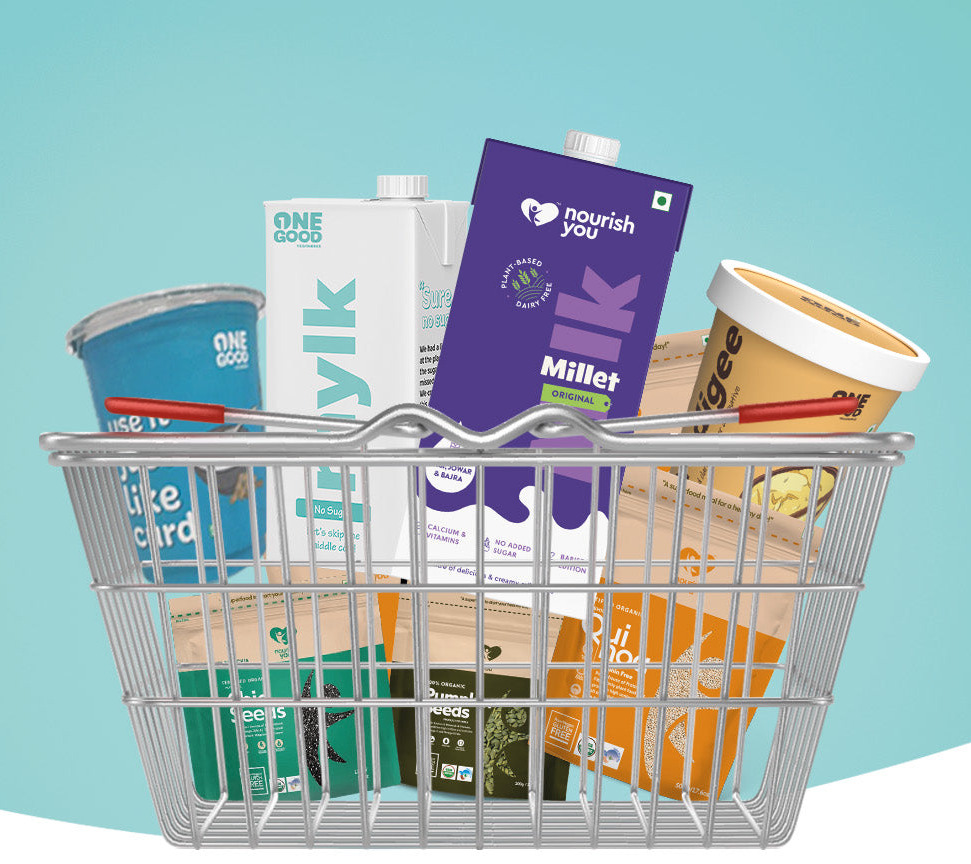
  • peter mcguinness
    6 Mins Read

    Does plant-based meat have an image problem? Peter McGuinness, CEO of Impossible Foods – one of the largest companies in the space – believes as much. To counter the off-putting “wokeness” associated with these products and take on Big Meat more effectively, he’s now planning a rebrand to make the alt-meat giant bigger and more inclusive.

    “There was a wokeness to it, there was a bicoastalness to it, there was an academia to it… and there was an elitism to it – and that pissed most of America off.”

    This was Peter McGuinness’s assessment of the product his company has built its name and fortune on. Speaking at the Adweek X conference earlier this week, the Impossible Foods CEO reflected on the challenges faced by the plant-based meat industry, and how it can overcome them.

    We’ve heard about the flavour, texture and price battles being fought by these products. Texture is the component Americans dislike the most about vegan food, followed by price. Meanwhile, across the larger food and beverage industry, taste is the top driver for purchasing decisions in the country. These factors come together to form what McGuinness notes is an image problem – and one that needs fixing stat.

    This is because even if meat alternatives reach parity with their conventional counterparts on taste, price and convenience, current consumers would continue eating the latter primarily, according to a study by Rethink Priorities in August. But – at least on the cost issue – plant-based meat has some way to go still.

    It’s been a tough couple of years for the industry, with retail sales suffering and brands going out of business as investors turn their backs on food tech. In the year ending July 2, meat analogues suffered from a 21% drop in sales volume, according to Circana data, while dollar sales have fallen by over 20% too over the last year. Citing this data, research firm CoBank ascribes this to high prices among a cost-of-living crisis, which means consumers are driven towards cheaper products (conventional meat, in this case). Now, alt-meat faces a “tipping point”.

    Invite, don’t insult

    plant based meat marketing
    Courtesy: Impossible Foods

    Without change, these headwinds will likely persist. Impossible’s chief marketing officer Leslie Sims admitted that brands have an uphill task to convince meat-eaters – who really should be the target audience – to try meat analogues.

    In his TED-style chat with Adweek CEO Will Lee, McGuinness said that this might be because many founders in this space are historically “climate warriors” using sustainability as a USP. There was also the early messaging positioning alt-meat companies as food tech, which he believes alienated consumers: “We don’t eat technology,” he explained. All this “narrowed the aperture and made the category smaller than it needs to be”, going on to describe the aforementioned wokeness that has peeved Americans.

    “The way to get meat-eaters to actually buy your product is not to piss them off, vilify them, insult them and judge them,” he said. “We need to go from insulting to inviting, which is a hell of a journey.”

    But it’s a journey Impossible is already on. Vegans aren’t its target market – they never have been. The focus has always been on flexitarians and meat-eaters, aiming to entice them to consume more of its products. One survey puts the number of flexitarians in the US to about a fifth of the total population – but the more important figure is the 347g of meat Americans eat per day.

    Speaking to Green Queen during the announcement of its new beef hot dogs, an Impossible spokesperson confirmed this direction. “We’re trying to reach meat eaters – not vegans, vegetarians or those already eating sustainable diets. That’s why we focus on making products that appeal to actual meat eaters,” they explained, adding: “Our goal is not to compete with fruits, vegetables, and other whole foods, but to offer meat eaters products that are better for them and the planet.:

    (Not) fighting off the meat lobby

    The plant-based meat category also hasn’t been helped by the constant attacks it has faced from the meat lobby. The meat industry interest group Center for Consumer Freedom (CCF) has been on the offensive at companies like Beyond Meat and Impossible, taking a shot at their overprocessed composition and long ingredient lists.

    Its largest effort came during the 2020 Super Bowl, with an ad featuring Spelling Bee participants struggling with words like methylcellulose (which it claimed were “chemicals” used for “synthetic meats”). “If you can’t spell it or pronounce it, maybe you shouldn’t be eating it,” concluded the spot. Within a few days, Impossible bit back with a parody ad. The moderator – played by Impossible founder and then-CEO Pat Brown – asked a child to spell “poop”, noting how there’s “lots of poop in the places where pigs and chickens are chopped to pieces to make meat”. The ad ends with the line: “Just because a kid can spell ‘poop’, doesn’t mean you or your kids should be eating it.”

    But if Impossible truly is to conquer the meat-eating consumer base and “go from insulting to inviting”, a change of tact might be in order. This is because plant-based meats are surrounded by a “massive amount of myths about plant-based products and the process” used to make them.

    So the focus needs to be on emphasising its own value, rather than what it’s fighting: the $1.5T “highly coordinated, highly funded, highly lobbied” and highly subsidised animal agriculture industry. Alt-meat is worth $8B in sales, a “0.0001% share”, as McGuinness called it. “We don’t want to get into a kind of pissing match with meat – we will lose that,” he explained.

    McGuinness and Sims want to relaunch their brand “in a very inclusive way”, spotlighting aspects like high protein content, zero cholesterol and half the saturated fat found in conventional meat. We’re already seeing this: Impossible has hopped aboard the health bandwagon with its recent launches. Most notably, its lean Beef Lite (one of six new launches this year) is now certified by the American Heart Association’s Heart-Check Food Certification Program, following Beyond as the only other meat alternative maker on the list.

    A marketing coalition hits a snag

    impossible foods marketing
    Courtesy: Impossible Foods

    In August, Adweek reported that leading US vegan food manufacturers were looking to create a coalition similar to the marketing groups behind ad campaigns like Got Milk? and the Incredible Edible Egg, which was earmarked for a 2024 launch. Impossible is a part of this proposed alliance, but there have been setbacks.

    “We have like 200 plant-based businesses, half are going out of business, we’re highly uncoordinated, no one has any money, everybody’s out for themselves. It’s a total mess,” said McGuinness. The Impossible chief still feels there’s “a collective opportunity to extol the benefits of the category,” but acknowledges that a lack of coordination and cohesion is stalling things.

    Impossible will now amp up its educational efforts, with a focus on its soybean supply chain in Decatur, Illinois, and manufacturing in Chicago, Los Angeles and Oakland, California. The plant-based meat giant will also target a rise in household awareness about its brand and products, which is only at 15% across the US. Additionally, it will focus on expanding its retail and foodservice footprint nationwide.

    McGuinness, who has previously outlined how vegan food marketers (including Impossible) haven’t sold themselves well enough to consumers, further explained his thinking: “My job is not to steal share from Beyond Meat – then I’ve just moved the deck chairs around, and the category stays at the same size. We have to make the category bigger.”

    The post ‘Stop Pissing Americans Off’: Impossible Foods CEO Plans ‘Inclusive’ Rebrand to Shed ‘Woke’ Reputation appeared first on Green Queen.

    This post was originally published on Green Queen.
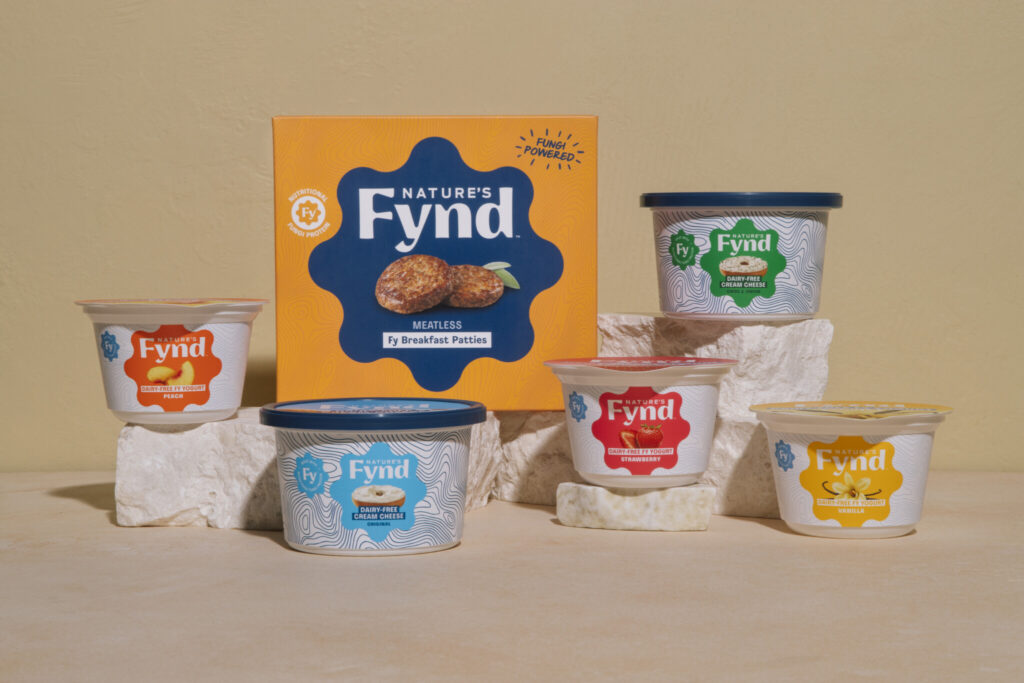
  • food tech trends 2024
    11 Mins Read

    What does the future look like for food tech? French consultancy DigitalFoodLab has released its annual State of FoodTech Trends report for 2024, distilling 28 directions in six ‘mega-trends’, including sustainable proteins, food is medicine and automation.

    Food tech is the future of food. That’s what DigitalFoodLab, a French strategy consultancy counting over 50 clients including the likes of Nestlé and Danone, wants you to know.

    In the fourth edition of its annual State of FoodTech Trends report, the insights firm has identified 28 key things to look out for in food tech next year and beyond – divided into six broad categories – and outlines how long each will take to reach a point of maturity.

    food trends 2024
    Courtesy: DigitalFoodLab

    The report points out that 2024 will be an exciting yet complicated time for food tech, with an uncommonly large number of trends in the ‘disillusion’ phase, and many in the ‘excitement’ stage paving the way for disillusion. This has resulted in food trends being scattered all around a curve measuring expectations against time – tracking how a new tech becomes a trend, reaches a peak of excitement, which fades into disillusionment before its challenges are addressed, after which it becomes a disruptor seen by every observer.

    Speaking to Green Queen, Digitalfoodlab co-founder Matthieu Vincent said he was most surprised at the extremes in many ecosystems, “we both super hyped up startups while at the same time, quite a lot of the companies in the space are in the disillusionment stage, which creates a strange situation where one part of the foodtech ecosystem is thriving while many startups are struggling to avoid bankruptcy.”

    He added that he is most sceptical about the alternative protein trend because he has doubts about “the ability of many companies to sustain the hype.” While he is bullish on the space overall, “the problem is in the definition of ‘long-term’. We think most companies have overpromised on their ability to reach mass production fast so a period of reckoning may be coming where we’ll see which startups have the technology and the financial means to deliver in time to satisfy investors.”

    Vincent noted that the trends have geographical specificities too. “In the report, trends are mapped from a global perspective, but obviously their impact and the way they will reach different markets will be hugely different. Let’s take the healthy ageing trend – if we broaden the topic to ‘healthy ingredients, this trend is far more advanced in Asia where there are already many products on the market (and regulation that is pushing the space forward, for example in China.”

    So what does DigitalFoodLab predict the future of food tech to be? Here are the six mega-trends shaping the industry in 2024.

    Food tech trend #1: The resilient farm

    agricultural trends
    Courtesy: DigitalFoodLab

    Agtech is a critical component of the food tech ecosystem. “Multiple trends drive us toward a more sustainable and resilient farm: the growing appetite for locally grown foods, fewer farmers and workers, energy costs, climate change concerns, notably regarding arable land, and the convergence of technology and farming,” the report states.

    This trend is going in two directions: existing farms are being augmented as more intelligent and automated, and between urban, indoor and next-gen farms, the former is overtaking the latter in terms of hype, investments and acquisitions.

    Precision farming is one of the six food trends representing the future of agriculture. A farm management concept based on data measurement and analysis, it’s a well-established ecosystem that seeks to “increase food production by improving in-farm decision-making, product traceability and quality”. While one of the oldest agtech ecosystems, it’s yet to mature, with universal access to software and tools a key challenge.

    Farm robotics, meanwhile, are the first step towards autonomous agriculture, featuring AI and machine learning tech. Out of the disillusionment stage, its growth is linked to a reduced pool of skilled workers and sustainability (cutting the amount of required inputs). There’s also indoor and urban farming, which is facing a reckoning thanks in part to the energy crisis, but this ecosystem is expected to grow around business models spotlighting tech over farm operators.

    In terms of insects for animal feed, there’s a growing disillusionment as industrial facilities are more complicated to run than previously thought, while a consolidation based on the type of insects startups choose is likely. One of the new trends this year (which hasn’t appeared in DigitalFoodLab’s previous reports) is bio inputs, a field where companies are developing a new generation of organic and more efficient fertilisers. It’s still in its infancy, but is being boosted by the energy crisis and rising costs of fertilisers.

    The final trend (and another new one) for the resilient farm is future crops, which involve improving seed quality for disease resistance, increased yields, flowering control, nutritional enhancement and longer life post-harvest. Genetic hybridisation (crossing) and gene editing are two of the most common technologies used by startups here.

    Food tech trend #2: Sustainable proteins

    vegan trends
    Courtesy: DigitalFoodLab

    Alternative proteins have been on the rise for a while now, and for good reason. They’re much more environmentally friendly and present health benefits over animal-derived foods – and there’s the animal welfare aspect too. Even with the recent sales decline of plant-based meat, the category as a whole has been gaining traction.

    There are five key directions part of the sustainable protein segment, with scale, costs, consumer acceptance and regulatory approval as the main hurdles to overcome, along with financing the industrialisation of these products. DigitalFoodLab proposes distributed production (bioreactors in the cloud, alluding to the cloud computing sector) as a potential solution.

    The first trend here, of course, is plant-based protein. This trend has gone backwards from the ‘rising stars’ (overcoming disillusionment) stage to between the excitement and disillusionment phases. “We wrongly and collectively believed that plant-based products and alternative proteins, as a whole, were ready for mass adoption,” the report notes. Consumer concerns around health, taste and price are the key deterrents, but new facilities, cleaner labels and industry collaboration are markers of better things to come.

    Next up is cellular agriculture – in this case, cultivated proteins – which is still in its infancy and at least three to five years away from being market-ready (apart from the very limited availability of cell-cultured meat in the US and Singapore). Mass adoption is much further away, and the key challenges (excluding regulatory approval) are lower costs, serum-free formulations, stable cell lines, better taste and texture, and scaling production. Large facilities are already underway, with several set to be operational by 2025.

    Then there’s what’s known as the third pillar of alt-protein: fermentation. Precision fermentation – like cell cultivation – is hitting its peak in the excitement stage, with most companies focused on recreating dairy proteins by inserting the genetic code of the desired protein in a microorganism before fermentation. Regulatory and scale-up barriers (especially for casein) are key here, with price parity (and how to transition farmers effectively once that happens) also important.

    Biomass fermentation, meanwhile, is also at this peak, with startups either using microbes that can produce proteins in an uncontrolled environment or using carbon dioxide as feed to create protein products. This faces similar challenges, notably regulatory clearance and flavourful products. Molecular farming – which involves genetically modifying plants to become bioreactors producing proteins – is highly promising and more scalable than precision fermentation or cell cultivation, but it’s still in an experimental stage, with the first large-scale demonstrations expected in the next two to three years.

    Food tech trend #3: Instant retail

    foodtech
    Courtesy: DigitalFoodLab

    This trend encapsulates all innovations enabling consumers to access food quickly and efficiently from their screens, in one click, a concept that can be extended to anti-food-waste platforms, ethnic marketplaces, autonomous stores and restaurant delivery.

    There are four trends here, all out of the hype phase. Smart stores, still approaching this stage, entail upstream concepts (warehouse automation), on-shelf tech (checkout-free stores) and complete automation. The adoption is very slow here, with large companies like Amazon leading the way, and the increasing need for more workers may speed this up.

    Quick commerce – involving deliveries in usually less than 30 minutes from small warehouses – is facing loads of challenges, including zoning limitations and high labour costs. “If things move fast in FoodTech, nothing came close to the speed at which quick commerce startups went to the moon and are now crashing,” DigitalFoodLab noted, adding that disruption can still happen thanks to market consolidation and via delivery robots rather than the Q commerce we know today.

    New retailers are reinventing grocery shopping from the ground up, considering online channels as their only focus. Some of the giants here offer identical products to incumbent retailers, but promise to do better, while smaller innovators are disrupting the market with subscriptions, reusable packaging, ‘ugly’ produce or damaged products.

    The most mature trend in this category is restaurant delivery. Here, consultation is still underway, while regulations of driver status are no longer a priority outside Europe. These companies have also entered grocery delivery, demonstrating a viable profitability path, and they’re increasingly essential to foodservice.

    Food tech trend #4: Food as medicine

    food as medicine
    Courtesy: DigitalFoodLab

    Food as medicine has been evolving for some time now – we’ve written extensively about it too. This trend is the new avatar of DigitalFoodLab’s previous ‘food personalisation’ direction, with the convergence of health and food at the heart of things. Two of the key pillars – especially in the US – are produce prescription programmes and medically tailored meals.

    These initiatives can have a “potentially massive impact”, but there are very few players. One of the sub-trends here is food coaching, “a move from services to devices”, encompassing health testing apps and diet and nutrition platforms. This is in the disillusionment stage at present, with more scientific rigour needed to reach a wider audience.

    Healthy ageing includes ingredients that help us live longer. One aspect is adding new ingredients like genetically modified produce or breast-milk-derived innovations to existing foods, while the other category seeks to reduce long-term damage caused by processed foods. This segment – a new trend – is approaching the excitement phase.

    One that’s far away is personalised food – supplements or meals customised for people based on test results, and evolutive micronutrition to print supplements for home or office use. Low adaptability is a key concern for the former, while high costs and unconvincing tech are currently discouraging consumers from the latter.

    Food tech trend #5: Automation

    food trends
    Courtesy: DigitalFoodLab

    The food automation sector is in limbo. “For many years, startups have used robotic arms and other complicated and costly technologies to replicate humans’ actions, but it is not working,” the report said. Now, the new goal is to scale down factories to the size of a restaurant instead of emulating chefs with robotic arms.

    There are four trends at play here, with none at the hype stage. Cloud kitchens and virtual restaurants (“primarily a marketing expert that creates restaurant brands and menus”) are approaching the end of the disillusionment phase. Virtual restaurants are becoming more digital and offering their brands as a sales tool for restaurants, but the sector is compounded by influencer-owned brands. While the boom isn’t over, the report predicted that there will be a phase of rationalisation with concentration in the hands of a handful of players.

    Moving from hype to disillusionment, cooking robots can include collaborative robots that replace employees for complex tasks, automated eateries, and automated kiosks and vending machines. DigitalFoodLab noted: “They don’t solve a real-world problem and are far from becoming profitable: what is the point of using a $25,000 robotic arm to serve coffee?” New solutions focus on less expensive robots (mechanical tools, really) and adapting them to humans.

    Delivery robots became prominent after the pandemic, but were less successful than anticipated, with several down rounds, layoffs and shutdowns. It will take a bit of time to see robots and drones used in our daily lives at scale. 3D printing, on the other hand, is one futuristic tech finally finding its use. A new trend on the list, it’s allowing companies to display greater creativity and better define the texture or ingredients used in complex products like meat and seafood alternatives.

    Food tech trend #6: The smart supply chain

    digital food lab
    Courtesy: DigitalFoodLab

    The final category of food tech trends for 2024 relates to smart supply chains, driven by the fight against food waste as well as digitalisation to reduce labour costs and promote standardisation.

    Digital restaurant services – facilitating booking, online order management, payment and HR management – represent the most mature trend here, with acquisitions in this space expected to continue as services become more integrated. Smart packaging is in its disillusionment stage, underlined by underinvestment despite technologies working to cut food waste, improve shelf life, and enhance safety. The real disruption may come from protective layers (which keep moisture and oxygen out) instead of the packaging itself.

    Reusable packaging (a new trend separated from the smart packaging direction) involves startups managing reusable packs or developing a network of collectors combined with digital tags. Regulation is crucial here, with single-use plastic bans driving interest in these solutions.

    Another new trend, food waste management techniques are being created across the supply chain – spanning foodservice, unsold food, on-shelf solutions and home appliances – with the focus being shifted from discounting to software solutions, and now expected to evolve towards retail procurement management, with food waste and merging with B2B marketplaces in mind.

    These B2B marketplaces are the third new trend, with startups digitalising the supplier-store relationship through mobile apps and integrated messaging systems. There are multiple types of players here, and competition from prominent companies adds a degree of challenge. Finally, the digital supply chain is focusing on carbon counting and decarbonisation, with the main challenge involving data about livestock and agricultural production. Startups are also developing carbon credit trading platforms, while others help inform consumers about their carbon footprint through food.

    It’s an extensive list with loads of innovations, potential and challenges – how will these food tech trends pan out over 2024? We’ll have to wait and watch (this space).

    The post From Sustainable Proteins to Food is Medicine, 6 Trends Shaping the Future of Food in 2024 appeared first on Green Queen.

    This post was originally published on Green Queen.

  • meatiply
    7 Mins Read

    Singaporean cultivated meat company Meatiply has closed the first round of its seed funding, securing $3.75M in financing to scale up production of its hybrid products and facilitate its new plant, set to open next year.

    A second close is scheduled for Q1 2024, with the producer developing natural compounds to target the functional foods market.

    Singapore-based cultured meat producer Meatiply has closed an initial seed funding round with $3.75M in investment, which will help it scale up production and facilitate the opening of its new plant next year. It brings its total raised to $4.75M, after a $1M pre-seed round in early 2022.

    The round was co-led by co-led by existing investor Wavemaker Partners and AgFunder, with participation from Seeds Capital, the VC arm of Enterprise Singapore.

    “While the challenge of meeting product launch deadlines persists for many companies, the Meatiply team has demonstrated the ability to achieve meaningful results within shorter timeframes and with considerably less funding,” said Paul Santos, managing partner at Wavemaker Partners. “Their achievements in developing hybrid structured poultry prototypes have particularly impressed us.”

    He added: “We have confidence in the diverse backgrounds and technical skills of Meatiply’s founders, coupled with their unique technology, which positions them on a viable path to commercial success.”

    A new facility in the works

    meatiply funding
    Courtesy: Meatiply

    The new funds will allow Meatiply to ramp up its R&D capabilities and production for more extensive co-development with commercial partners. A new facility will become operational next year, two years ahead of its targeted 2026 launch. Speaking to Green Queen, Meatiply CEO Elwin Tan explained: “We are building a dedicated R&D facility with small-scale production capabilities to generate more cell mass to support safety testing and product development.”

    He did not disclose exact capacity numbers, but offered: “The new facility will allow us to expand the effort on bioprocess development, from the current scale in small, lab-scale suspension cultures, to eventually arrive [at] large bench-top bioreactors.”

    The company was founded in 2021 by Tan, Jason Chua, Benjamin Chua (the three studied stem cell biology at the National University of Singapore), and Teh Bin Tean. In October 2022, Meatiply unveiled three structured meat prototypes – kampong chicken yakitori, chicken katsu bites, and Asia’s first smoked duck breast – in a combination of cell- and plant-based ingredients.

    Tan confirmed that the first products won’t be any of these prototypes. “We aimed to showcase the level of complexity and comprehensiveness that our team can deliver, and aims to deliver these products in the long term,” he said. “Until then, we have strategically devised a product development roadmap that will allow us to rapidly commercialise new product formats, without running into the same challenges that companies before us have faced. The team is hard at work refining these new prototypes and we plan to unveil them next year.”

    Cultivated meat as functional food

    lab grown duck
    Courtesy: Meatiply

    These prototypes – made from multiple cell types including muscle, fat and skin – were structured, rather than minced, which enables them to be used in a broader range of products. Meatiply’s “scientifically grounded” approach allows it to generate natural compounds responsible for the sensory and nutritional quality of meat, and targeting these health benefits means the company can focus its energy on the $280B functional foods market.

    Jason Chua, the chief scientific officer, said: “Besides meat, we are also positioned for opportunities to commercialise in the nutraceutical and wellness market.” Tan added: “Meatiply’s strong upstream capabilities to create complex and functional products… not only justifies the use of animal cells, but also results in significant cost reductions.”

    Speaking to Green Queen, the CEO explained: “Our radical development strategy and selected product formats will allow us to significantly reduce capex and input costs. With this same strategy, we can reasonably target commercialisation faster than any other company has been able to achieve.”

    “We’re highly impressed by what the Meatiply team has achieved in a short amount of time and with relatively limited external funding,” noted John Friedman, AgFunder’s Asia director. “We firmly believe there is a place for cultivated meat technology in our future food system, and are encouraged by Meatiply’s practical approach towards product development and go-to-market strategy.”

    Regulatory filing in 2025, with launch planned the year after

    cultured chicken
    Courtesy: Meatiply

    The Meatiply team attributes its success to its team of experts as well as the thriving food tech ecosystem in Singapore. “We are incredibly fortunate to be based in Singapore, where the numerous research and development grants, coupled with the presence of brilliant and purpose-driven individuals within the scientific and start-up ecosystems, have enabled us to establish a strong second-mover trajectory,” said Bin Tean.

    The company has previously said establishing its base in Singapore was “an easy decision” for multiple reasons. Apart from the innovation support, this included the country’s 30 by 30 food security initiative, which aims to reduce the island state’s reliance on imports by producing 30% of all food consumed by its residents by 2030, as well as its progressive government and regulatory framework. It became the first country in the world to approve the sale of cell-cultured meat in 2020, granting clearance to California-based Eat Just‘s Good Meat.

    Meatiply, which is aiming to submit an application to Singapore’s regulatory body by the end of 2025, says it is a “frontrunner” in product development in this space, with innovations across the cultivated meat value chain, helping it develop functional hybrid meat products. Tan confirmed that the company is aiming to launch in Singapore first, but is “keeping an eye on the regulatory developments in South Korea, Japan, and China for the potential to subsequently enter those markets”.

    “Meatiply believes in maximising the potential of each cell type,” said Jason Chua. “Our focus on the production of complex value-added compounds using cells will allow us to create cultivated meat products with added health benefits. This strategic entry point will give consumers more reasons to embrace cultivated technologies.”

    Tan added: “We are focusing on nutritive compounds that are abundant in animals but are either absent or in lower concentrations in plant products. This will not only mean that the products we co-develop will have a clear nutritional edge over plant-based, but at the same time, we’ll also be the best choice for a source of cultivated cells if a plant-based partner is looking to develop a hybrid product,” he said.

    Can hybrid meat go the distance?

    lab grown meat singapore
    Courtesy: Meatiply

    Hybrid meat is still a nascent category, and investors are divided over its potential. Some, though, argue that it’s the best way for cultivated meat to overcome its current cost and scale challenges. Companies like SciFi Foods – which has raised $40M so far – are examples of initial success. China’s CellX recently announced a move into hybrid proteins with mycelium fermentation and Dutch company Meatable’s first product – anticipated to launch in Singapore next year – is a plant-cultivated pork hybrid.

    “During the development of the prototypes we unveiled last year, we explored a number of plant-based raw materials and built the prototypes from scratch, instead of assimilating our cells with an existing plant-based product,” explained Tan. “In doing so, we developed over 10 prototypes with different combinations of plant protein sources. In other words, our development team has the necessary knowledge and expertise to work with a variety of plant proteins. The eventual types of plant proteins we incorporate into our products will depend on the needs and demands of our co-development partners.”

    A second close of Meatiply’s seed funding round is set to take place in Q1 2024. “Despite a more cautious investment approach this year, investors were excited by our development strategy,” said Tan. “Likewise, we are thrilled that our investors share our vision.”

    It has indeed been a slow year for alt-protein and food tech funding – especially compared to the last few years. Cultivated meat has seen investment fall off a cliff – according to alt-protein think tank the Good Food Institute, the sector reeled in nearly $900M in funding in 2022 (versus $1.2B for plant-based and $842M for fermented proteins). But this year, the first half of 2023 saw only $99M of financing go to cultivated meat (compared to $124M for plant-based and $273M for fermentation).

    But there have been a few success stories. Meatable raised $35M, while US producer BlueNalu brought in $33.5M. Israel’s Wanda Fish closed $7M in seed funding, while CellX and Jimi Biotech (both Chinese) reeled in $6.5M and $3M, respectively. And just this week, Chicago-based Clever Carnivore completed a $7M oversubscribed seed round. You can add Meatiply to this list.

    The post Meatiply Rakes in $3.75M in Initial Seed Funding for Expansion and New Facility in 2024 appeared first on Green Queen.

    This post was originally published on Green Queen.
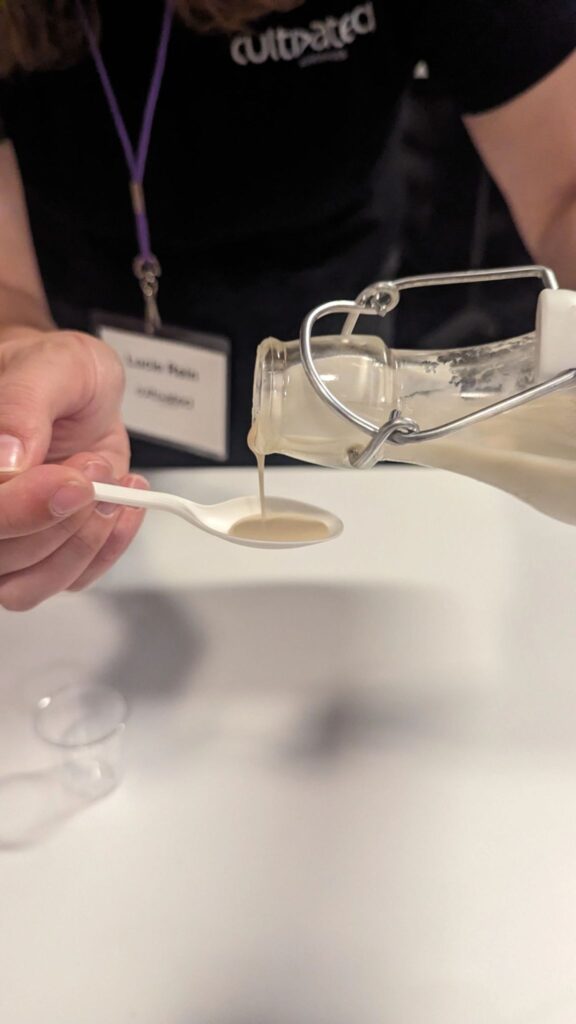
  • mcdonald's new burger
    6 Mins Read

    McDonald’s new burgers are on their way, after seven years of testing and over 50 tweaks, in response to drying consumer sentiment about its dry burgers. But while these burgers might be more impactful on your palate, they certainly leave a sour taste on the planet, as the world’s biggest food chain keeps increasing its GHG footprint while planning for net zero.

    Hurray, the new Big Mac is here!
    There are 50 new things for you to cheer
    But our climate footprint is worse, oh dear
    Meeting our net-zero goals? Nowhere near.

    I wrote this jingle in celebration of McDonald’s new non-dry, less-industrial-looking burgers. The lettuce and pickles are fresher! The room temp cheese is meltier! The onions are cooked Oklahoma-style! The bun is now a brioche, and there’s more special sauce! And oh, the sesame seeds are more random so it doesn’t look like a robot placed them! Yay!

    I only jest, of course. I have zero interest in commemorating a product I will never eat, but it’s hard to look past such a massive change in a core product offering by the biggest food company on the planet, which it is also consequently ruining.

    The Wall Street Journal reported it took McDonald’s seven years to test different ways to make its burger better after a survey of nearly 50,000 by research firm Technomic revealed that only 29% of Americans crave it. 13th on the list and almost two times less desirable than Burger King? Not good enough, decided McDonald’s.

    And so began the quest for its “best burgers ever”, which initially rolled out in Australia and New Zealand and are now coming to the US. “We can do it quick, fast and safe, but it doesn’t necessarily taste great. So, we want to incorporate quality into where we’re at,” said Chris Young, McDonald’s senior director of global menu strategy.

    mcdonald's big mac
    Courtesy: McDonald’s

    While a little self-reflection and honesty from the company is great, it’s lacking in this aspect when it comes to climate change. “Sometimes you have to look to the past to understand where you are going in the future,” Young added. So let’s just do that, shall we?

    Ambitious McEmissions

    Since 2017, when it began testing its new burgers, McDonald’s emissions have risen across Scopes 1, 2 and 3 (the latter includes emissions from across the value/supply chain). According to data the company provided to the Carbon Disclosure Project (CDP), its emissions amounted to 44.3 million tonnes of CO2e in 2017, which is the equivalent of powering 8.6 million homes or driving 9.86 million gas-powered cars for a year.

    In 2021 (the latest available data), its emissions across the three Scopes were 57.4 million tonnes of CO2e. This is the same as 11.2 million homes’ annual energy use and 12.8 million cars being driven for a year, and higher than the emissions of Greece, Peru or Israel. Comapred to the 2017 baseline – the year R&D for the new Big Mac and other burgers got underway – it’s nearly a 30% increase.

    That figure rise is striking, given that it’s almost the same (31%) as McDonald’s targeted emissions intensity reduction (per tonne food and packaging) across its supply chain by 2030, from a 2015 baseline. The company has additionally committed to a 36% decrease in emissions from its restaurants and offices by that year.

    mcdonald's beef
    Courtesy: McDonald’s

    Also in 2021, the fast-food chain committed to net zero by 2050. But the big beef with its emissions is, well, beef. Already known as the worst-emitting food in the world – accounting for twice as many emissions as the next best on the list, and a quarter of all food emissions – industrially-reared beef makes up about 80% of McDonald’s emissions.

    McDonald’s – which is responsible for the production of around 1.5% of all beef globally – has consistently maintained that it promotes ‘sustainable beef’, having helped found the Global Roundtable for Sustainable Beef in 2010. In its CDP disclosures, it outlines its commitment to this agenda: “We support beef production that’s environmentally sound [it doesn’t], protects animal health and welfare [it doesn’t], and improves farmer and community livelihoods [it doesn’t], and we have done for over a decade [it hasn’t].” In fact, McDonald’s only scores 16.1 out of 100 on the Corporate Human Rights Benchmark.

    “This global movement is gaining extensive momentum through conversations, collaborations, pilot programs, and global and local roundtables, and is helping influence not just beef in McDonald’s supply chain, but beef production around the world,” the company adds in its CDP filings.

    Looking to the future: McBlend?

    As Young said, looking to the past to figure out the future is important – how can McDonald’s learn from its past? An analysis by The Mirror (using a carbon footprint calculator) shows that the Big Mac in the UK is responsible for 2.35kg of CO2 being released into the atmosphere, “with a gherkin from Turkey, lettuce from Holland or France, beef from Ireland or the UK, and mayonnaise made in Lancashire, among other ingredients”.

    Of this number, the beef patties are the single-biggest culprit, emitting 2.11kg of CO2 (nearly 90% of the total footprint). This is in stark contrast to the climate impact of the vegan McPlant burger, which uses a Beyond Meat patty and only emits 0.12kg of carbon (95% less than the Big Mac).

    It’s probably fair to assume that a company that made its $200B fortune on beef isn’t suddenly going to turn its back on the meat – but could there be a middle ground? Research by Profundo (commissioned by Madre Brava) has floated this idea. It calculated the impact of swapping 50% of McDonald’s beef with a mix of plant-based proteins, such as fermentation-based alternatives (like Impossible Beef made of soy protein and fermented heme), mycoprotein-derived meat (like Quorn) and soy burgers (like The Vegetarian Butcher).

    mcdonald's sustainability
    Courtesy: Profundo/Madre Brava

    It revealed that subbing half of all its beef sales (which have increased by 10% between 2017 and 2022) with vegan proteins can save 15 million tons of CO2e (the equivalent of the annual emissions of Slovenia), free up 84,000 sq km of land (equalling the surface area of Austria), and conserve 0.2 cubic km of water (over 80,000 swimming pools’ worth).

    Similar research by Oxford University’s Joseph Poore (on McDonald’s and Burger King) found that doing so would reduce land use by 8.5 million hectares (an area the size of Ireland), remove 17 million tonnes of carbon from the atmosphere annually for 100 years, and reduce GHG emissions by 34 million tonnes of CO2e per year – the latter two figures would make up over 80% of both food giants’ net-zero targets.

    There’s merit to this method. Meat causes twice as many emissions as vegan food, and one study has revealed that switching 50% of our meat and dairy intake with plant-based alternatives can slash agricultural and land use emissions by 31%, halt deforestation and double overall climate benefits. This is also the principle validating the approach of companies making blended meatcombining animal-derived meat with plant-based proteins and ingredients.

    And it’s not like McDonald’s is opposed to this approach. Take a look at its famous chicken nuggets. While a nugget would never be 100% chicken (it needs breading and binders), in the UK, chicken only makes up 45% of the McNugget, with crumbing, flavourings and wheat gluten (aka seitan) making up the rest. The amount of wheat protein may not be a lot, but it’s still a marker of success for blended meat among the masses.

    There may be 50 new things with McDonald’s new burgers – less beef needs to be the 51st.

    The post McDonald’s Spent 7 Years Making A Burger Better for the Palate, But Not the Planet appeared first on Green Queen.

    This post was originally published on Green Queen.
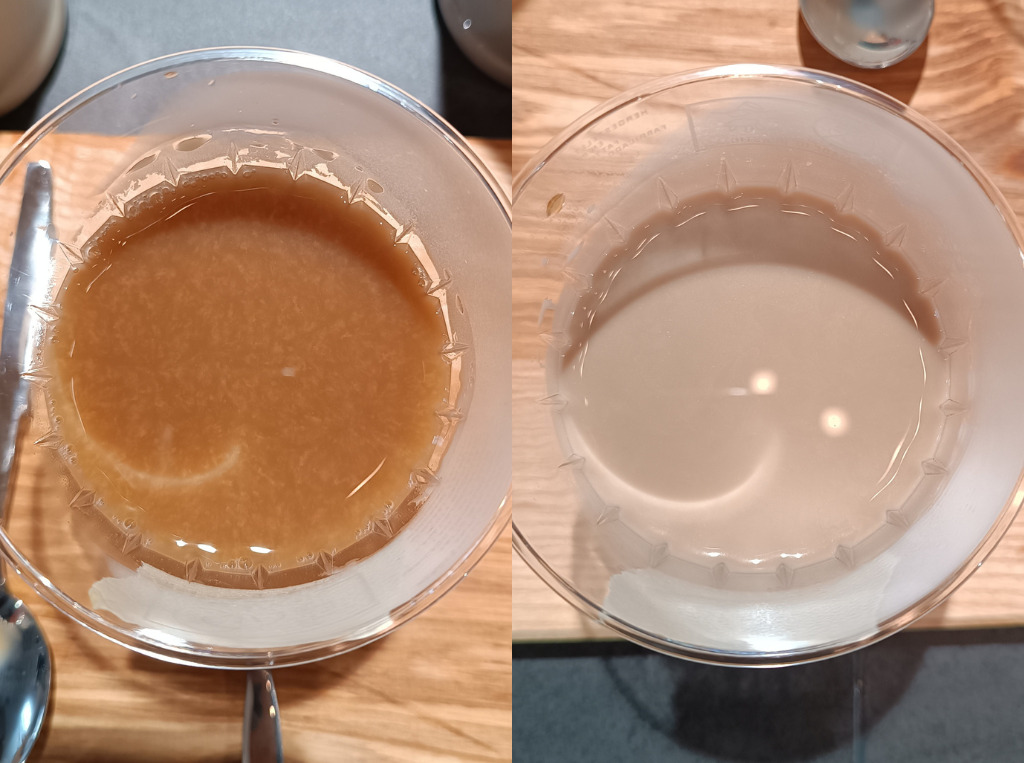
  • vegan panettone
    7 Mins Read

    In our weekly column, we round up the latest news and developments in the alternative protein and sustainable food industry. This week, Future Food Quick Bites covers the launch of Italian Christmas desserts made from cocoa-free chocolate, a new kind of seafood analogue, and an alt-dairy campaign for Swedish schools.

    New products and launches

    If you’re looking to cook 3D-printed meat, Isreal’s Redefine Meat has finally entered European retail with its ‘new meat’ products, six of which (two pulled and four minced) are debuting at Ocado in the UK and Albert Heijn and Crisp in the Netherlands.

    redefine meat
    Courtesy: Redefine Meat

    Another beef launch has come from German manufacturer BENEO, which has unveiled two semi-finished products for plant-based alternatives – beef bites and mince. The pea- and mycoprotein-based innovations will be launched next year but were sampled at Fi Europe in Frankfurt last month.

    More beef: whole-cut meat maker Chunk Foods‘ vegan steak is headlining a culinary experience at this year’s Art Basel Miami Beach by chef Paul Qui, as part of a Philly cheesesteak with cashew queso.

    No more beef? Then McDonald’s New Zealand has got you covered with its Salad Burger, which feels like a slant for non-meat-eaters. That’s right, it’s just… salad ingredients in a bun, in an apparent response to Burger King’s version of the same thing in the country (which still has onion rings!).

    Over in the dairy alternatives world, UK chocolate maker LoveRaw is expanding into the Netherlands, with its milk chocolate wafer bar available in about 200 Albert Heijn stores, and milk and white chocolate bars in 150 Shell stores.

    oat milk powder
    Courtesy: Oatbedient

    Hong Kong, meanwhile, has a new plant-based milk. Singapore-based Oatbedient has launched its oat and milk powders in original, chocolate and chia seed flavours. They’re available at select Market Place, 3hreeSixty and Wellcome stores across the island.

    In Italy, cocoa-free chocolate maker Foreverland has launched its first products using its Freecao alternative: pralines and the Christmas classic, panettone. The products – made from carob-based chocolate – are available on its website, with the latter costing €32.90 for a kg.

    UK vegan pizza chain Purezza has partnered with Chefs for Foodies to offer its vegan mozzarella as part of a create-your-own-pizza kit for home cooks, which comes with Quorn pepperoni, chopped tomatoes, red onions, fresh basil, dough balls, and – in a wonderful touch – flour for dusting.

    Elsewhere, Canadian food tech company Cult Food Science has launched a third proprietary plant-based pet food ingredient, Bmeaty, which joins existing products Bmmune and Bflora. It’s made from yeast extract, hydrolysed yeast and carrier yeast, and boasts 40% protein, and the ingredients will appear in several pet food formulations next year.

    vegan piranha
    Courtesy: WOOP4

    Also in Canada, WOOP4 is a new alt-seafood brand with one product we’ve never seen before – a vegan piranha. Its lineup includes rice-protein- and konjac-based salmon and tuna alternatives as well, alongside a range of seafood-complementing flavoured mayos. You can buy these at certain indie food stores or online.

    Another company that recently launched plant-based seafood products was CPG giant Nestlé – but it says that won’t be the focus of its upcoming plant protein portfolio in India. The company hints at innovations “more relevant to the Indian market”, but is keeping its cards close to its chest. Watch this space!

    And California’s Heyday Canning Co. opened what became a TikTok-famous bean pop-up in New York City, with huge lines outside the viral store surpassing the expected footfall. The idea was to exchange a can of beans for Heyday beans, which would be donated to the food bank City Harvest. As co-founder and CEO Kathryn Kavner said: “People frigging love beans.”

    heyday canning co
    Courtesy: Kathryn Kavner/LinkedIn

    Finance and M&As

    WNWN Food Labs, the UK brand making cocoa-free chocolate, has successfully completed the CoLab Tech accelerator with Mondelēz International. It will showcase its alt-chocolate bars, truffles and coated biscuits at the food giant’s North American HQ.

    In Germany, food conglomerate Pfeifer & Langen has acquired a majority stake in sausage-maker-turned-vegan-meat brand Rügenwalder Mühle for an undisclosed amount, with product development and international expansion high on the agenda.

    Fellow German brand MyriaMeat – founded by researchers at the University of Göttingen – has emerged from stealth mode claiming to be able to make cell-cultured whole-cut meat, and has already seen €40M in investment.

    Australian food producer Wide Open Agriculture has received investment and a distribution deal for its lupin proteins from Sweden’s Ingå Group, which has injected $825,000 into the former and acquired roughly a 15% stake at a pre-money valuation of $4.8M.

    plant based news
    Courtesy: Wide Open Agriculture

    In the US, precision fermentation company Liberation Labs has secured a $25M loan from the USDA to support the construction of its 6,000-litre-capacity biomanufacturing hub, amid a Series A round it hopes to complete by the end of Q1 2024.

    Similarly, New York-based biomanufacturing company Synonym has raised funding from Open Philanthropy to expand its research into gas fermentation tech to produce planet-friendly proteins and other foods.

    In sadder news, Floridian duckweed startup Lemnature AquaFarms, which develops proteins and fibres from lemna, has filed for bankruptcy, with an online auction for its assets being held on December 12.

    And things are shaking up at the top for Simulate and its sub-brand Nuggs, with co-founder and CEO Ben Pasternak leaving his role amid investor pressure. Co-founder Sam Terris (previously COO) is taking over.

    Policy developments

    Cellular Agriculture Australia, a Melbourne-based non-profit, has launched a tool to standardise terminology across the cell ag industry. The Language Guide used input from leaders across APAC, and one of its recommendations chimes with previous research revealing that ‘cultivated meat’ is the preferred term for cell-based proteins.

    Italy, meanwhile, has resubmitted its cultivated meat ban proposal to the EU, which might mean a breach of the single-market rules and hefty fines. Now, Italian policymaker Alessandro Caramiello is hosting an “informal dialogue” on the subject today.

    The UK government’s new National Vision for Engineering Biology is investing £2B in R&D and infrastructure over the next 10 years, including in the country’s cultivated meat sector, as it says there’s a critical shortage of infrastructure for alt-protein scale-up, and making cultivated meat doesn’t require “over-engineered” equipment like the life sciences sector.

    British microbial oil company Clean Food Group has received government funding too, with the £1M, 18-month project helping the producer scale up the manufacturing of its functional oils, including its palm oil alternative.

    In the EU, the European Parliament Committee on Fisheries (PECH) discussed the use of fish-related terms for plant-based foods, where the European Vegetarian Union argued that people aren’t confused with these labels. Newly launched alt-seafood association Future Ocean Foods was also present.

    Meanwhile, two research centres on climate and sustainable food are in the works in Ireland, backed by €70M in funding. The former will focus on the climate, biodiversity and water, and the latter on researching sustainable and resilient food systems, convening academics, industry and policymakers from Ireland, Northern Ireland and the UK.

    The Czech Chamber of Deputies recently held a seminar promoting plant-based diets in the country for a healthier and more sustainable food system, with the parliament acknowledging the links and encouraging a shift towards vegan eating.

    oatly stock
    Courtesy: Oatly

    In the Nordics, alt-dairy brands under the Plant-Based Sweden banner – including local Swedish favourites Oatly, DUG, Sproud, Planti and Oddlygood as well as international giant Alpro – have sent a letter to the government to include plant-based milk in the upcoming EU School Scheme review.

    Further news from the region comes from Finland, which has a new Plant Based Food Finland consortium, headed by Oatly’s public affairs manager Niklas Kaskeala. There are 18 founding members which include Oatly, Lidl, WWF Finland, Nordic Umami Company, and Mö Foods among others.

    Manufacturing and awards

    And in news involving both these countries, Finnish company Fazer is moving the manufacturing of oat milk and oat-based cooking products to its Tingsryd factory in Sweden, with the facility in Koria, Finland focusing on oat yoghurts. The move – first mooted two months ago – will see 64 employees lose their jobs.

    Meanwhile, the partnership between Israel’s Profuse Technology and Estonia’s Gelatex is bearing fruitful results, shortening the growth cycle of cell-cultured chicken muscle tissue to just 48 hours, with a fivefold increase in protein content.

    In another partnership, French cultivated meat company Vital Meat has established a strategic link-up with cell-culture media producer Biowest to achieve successful repeat pilot productions of cultivated chicken in 250-litre bioreactors.

    future food quick bites
    Courtesy: ChickP

    Finally, at the Fi Innovation Awards, Hi-Food and Alianza Team Europe won the plant-based innovation award for their oil-based emulsions replicating animal fat attributes, alongside ChickP Protein for its 90% chickpea protein isolate. MycoTech won the health innovation award for its shiitake-fermented pea and rice protein powder. Meanwhile, Arkeon Biotechnologies received the Startup Challenge award for the most innovative plant-based or alternative ingredient – it makes proteins from air.

    Check out last week’s Future Food Quick Bites.

    The post Future Food Quick Bites: Panettone, Piranhas, Powders & Plant-Based School Milk appeared first on Green Queen.

    This post was originally published on Green Queen.

  • cultivated pork
    6 Mins Read

    Chicago-based food tech startup Clever Carnivore has raised $7M in an oversubscribed seed funding round to expand operations and commercialise its cultivated meat products, starting with a pork bratwurst.

    Clever Carnivore has secured $7M in seed financing for its cultivated pork, adding to a $2.1M pre-seed round last year to take total investment to $9.1M. The latest round was led by Lever VC, with other participants including McWin Capital Partners (Spain), Thia Ventures (Belgium and Switzerland), Valo Ventures (Palo Alto, California), Newfund Capital (France), and Stray Dog Capital (Kansas).

    In addition to the round announcement, the company says it will relocate to a larger facility to scale up the manufacturing of meat it claims is much cheaper than any other cultured meat producer globally.

    “We are delighted with the enthusiastic support from our investors in this seed round,” said Virginia Rangos, co-founder and CEO of Clever Carnivore. “This funding is a testament to the hard work and dedication of our entire team and reaffirms the confidence that investors have in our cutting-edge science, technology and business model. With this investment, we are well positioned to revolutionise the protein market and enhance the overall consumer experience.”

    Founded in 2022, Clever Carnivore uses what it calls a “high-efficiency” biotech model to create “cost-competitive” cultivated pork sausages, burgers and chicken nuggets. Currently, it’s focusing on the former, with a Clever Bratwurst prototype set to be unveiled early next year.

    A cost-competitive cultivated sausage

    clever carnivore
    Courtesy: Clever Carnivore

    “Clever Carnivore’s approach blends breakthrough science and a demonstrated cost advantage in the cultivated meat sector,” said Pierre-Jean Cobut, entrepreneur in residence at Newfund Capital.

    Lever VC managing partner Nick Cooney added. “We’ve been tracking and investing across the global cultivated meat sector since the first such company launched eight years ago, and we haven’t seen anyone come remotely close to Clever Carnivore’s astoundingly low current cost of production, a testament to the company’s phenomenal science.”

    Clever Carnivore’s R&D is headed by co-founder Paul Burridge, who has over 20 years of research experience in cell line development and growth media optimisation. The company has been able to optimise its growth media to support its unique cell lines, achieving a significant reduction in cell culture media costs – “one to two orders of magnitude lower than any other cultivated meat company globally”.

    “Paul’s experience with cell line development and low-cost media, coupled with Clever Carnivore’s cells’ superior growth performance in animal component-free media, places Clever Carnivore in a unique position to rapidly iterate and evolve their production processes and product formulation in a cost- and time-efficient manner,” said Subodh Gupta, partner at Valo Ventures.

    Speaking to the Chicago Business Journal last year, Rangos explained: “We have what amounts to – at this point – a $10 burger, and as we continue to scale, we’ll bring that cost down considerably. We’re hoping to eventually get — and we think this is quite practical — to a $1 burger, essentially.”

    This is crucial, given that cultivated meat needs to reach production costs of $2.92 per pound to be price-competitive with traditional meat, according to Reuters. And while players in this space have been able to cut production costs by 99% in less than a decade, analysis by McKinsey has found that it will still take until 2030 for it to reach price parity with animal-derived meat.

    This is a challenge Clever Carnivore’s investors believe it is primed to overcome. “What was missing up to now was the technology to make products that will provide the same taste and nutrition as meat from farmed animals, and at a truly competitive price,” said Thia Ventures managing partner Bart Van Hooland. “Clever Carnivore has what it takes to bridge that gap, and they move very fast.”

    Chicago’s growing importance as alt-protein hub

    lab grown meat
    Courtesy: Clever Carnivore

    The producer, which unveiled a 4,200 sq ft square-foot facility at Chicago’s Lincoln Park, will use the new funds to relocate to a larger plant by the end of the year. This will allow it to scale up production of its “low-cost, top-quality” meat with 500-litre bioreactors and add in test kitchens, with the company saying its growth has “already surpassed the capacity” of its inaugural lab.

    Chicago – historically a meatpacking capital in the US – has recently seen a flurry of alt-protein activity to make the city a pioneer for protein diversification. This is a trend being seen across the state of Illinois, where the iFAB Tech Hub, which works on precision fermentation crops like soy and corn, was named one of 31 new Regional Innovation and Technology Hubs by the Biden-Harris administration. Most notably, the Greater Chicago area is home to the new 187,000 sq ft large-scale manufacturing facility being built by cultivated meat pioneer Upside Foods.

    Upside had chosen to locate its factory here due to the region’s legacy in meat production, a shared commitment to innovation and sustainability, strategic geographical advantages (it’s situated at a major transportation crossroads), and its talented workforce. “This new facility is a significant investment in our communities – creating new good-paying jobs while advancing our ambitious clean energy goals to create a more sustainable future,” Illinois governor JB Pritzker said about Upside’s under-construction plant.

    Upside is also one of only two companies (alongside Eat Just) to have received regulatory approval from the USDA for the sale of cultivated meat. This is a path all cultured meat producers will need to take, including Clever Carnivore. Rangos, who herself is a vegetarian, hopes the company can be part of the solution to the food system’s biggest challenges.

    “It sounds funny on the face of it, but it makes all the sense in the world because there are a lot of problems with the current factory farming industry, one being [the] use of resources, and two the ethical treatment of animals,” she told the Chicago Business Journal. “I think there are a lot of vegetarians who would be interested in solving some of these problems.”

    cultivated sausage
    Courtesy: Meatable

    The cultivated meat sector is a burgeoning market with over 156 companies globally and investment of $2.9B since 2014, according to alt-protein think tank the Good Food Institute. The category raised nearly $900M in 2022 but has faced a slowdown thanks to the global decline in food tech funding. But it has been boosted by the recent regulatory approvals in the US, which followed Eat Just’s maiden clearance in Singapore back in 2020.

    A number of companies are working on cultivated pork – most pertinently, Singapore-based Meatable, which has filed for approval in Singapore to do the same in the US, in preparation for the launch of its hybrid (part-cultivated, part-plant-based) pork sausage in 2024. Other players include Czech startup Mewery, UK-based Uncommon and Ivy Farm Technologies, China’s Joes Future Food Tech and CellX, and Australian producer Magic Valley, among others.

    The post Cell-Cultured Bratwurst: Clever Carnivore Raises $7M to Scale Up Production of ‘Low-Cost’ Cultivated Pork appeared first on Green Queen.

    This post was originally published on Green Queen.

  • impossible hot dogs
    7 Mins Read

    Impossible Foods is launching a plant-based beef hot dog that will be available in both grocery stores and restaurants next year. The announcement follows a UK foodservice deal with world-renowned chef Gordon Ramsay.

    During a busy year filled with sales growth, new ad campaigns and a host of product launches, as well as a patent battle and employee layoffs, Impossible Foods is capping off 2023 by debuting its first hot dog product. Next year, the Californian company will launch a vegan hot dog dubbed the Impossible™ Beef Hot Dog. Hot dogs are a classic American food, and the news signals the company’s intention to appeal to meat-eaters as new customers over vegans or vegetarians who already buy its products. The product will be sampled in New York City during a one-day pop-up event on December 16.

    This year saw Impossible launch six new products. In February, it added tenders, spicy nuggets and spicy patties to its chicken analogue line, followed by Beef Lite, an alternative to 90/10 lean beef, a few weeks later in March. And in June, it debuted the opposite of the latter – a juicier, premiumised Indulgent Burger. The company also introduced an unbreaded chicken fillet exclusively for foodservice in LA this summer (with eateries like Monty’s Good Burger and Crossroads Kitchen), which is rolling out more widely now.

    The product innovation isn’t stopping, with the Impossible Hot Dogs slated to be the company’s first launch in 2024, which will be available across retail and foodservice. Impossible already has a bratwurst SKU with a “vegetal casing” – launched last year as part of a sausage link range – but it has been described as having more of a breakfast-y flavour. The forthcoming hot dog will be the first product made to replicate the quintessential American food. Asked whether the hot dog will aim to target sports and event stadiums, the company did not comment.

    Is a healthy hot dog impossible?

    impossible hot dog
    Courtesy: Impossible Foods

    Impossible has stepped up its health focus in recent months, as part of a concerted effort by the plant-based industry to amplify the nutritional credentials of its products. This has seen fellow vegan giant Beyond Meat doubling down on the health aspect with new dedicated commercial campaigns and certifications from the American Heart Association (AHA).

    Impossible too gained the AHA’s Heart Check certification for its Beef Lite product last month, becoming only the second plant-based meat company to do so. This health spotlight continues with its new hot dogs, which the company says contain 50% less total and saturated fat than “a leading animal-based hot dog served in restaurants”, 12g of protein (vs 6g), and, of course, zero cholesterol.

    Beloved by Americans nationwide, hot dogs are the epitome of processed food. In fact, processed meats like these are categorised as a Class 1 carcinogen by the World Health Organization. With the health credentials dialled up, would consumers be deterred from an ultra-processed food (UPF) – like the Impossible Hot Dogs – that is aiming to replace another UPF?

    After all, plant-based meats have been criticised for their often ‘overprocessed’ nature by proponents of the meat industry. It has been a point of contention and led to the meat lobby curating targeted ads about the long ingredient lists on plant-based analogues, which Impossible famously responded to with its own spoof commercial.

    Speaking to AFN last month, Impossible CEO Peter McGuinness was asked about Beyond CEO Ethan Brown’s assertion that “the [negative] health perception of the category is the most immediate and important variable to address in order to restore growth”. He responded: “We’ve got to counter this chemical, fake, overprocessed [narrative]. There have been a lot of things said about plant-based and some of it sticks. The processed [narrative] has stuck with consumers and we’ve got to fix it and attack it head-on.”

    A Food Marketing Institute study last year found that 50% of Americans believed plant-based meats were healthy in 2020, but that number dropped to 38% in 2022. And a 1,022-person survey earlier this year found that health is the major reason Americans eat vegan or vegetarian diets, with six in 10 choosing it. And in terms of plant-based meat products like Impossible’s, ‘healthy’ is the most appealing labelling description.

    American attitudes towards UPFs

    impossible sausage
    Courtesy: Impossible Foods

    So consumers are searching for healthier foods in terms of meat alternatives and other plant proteins – can the Impossible Hot Dogs fit the bill? If recent research published in The Lancet (and sponsored by WHO) is anything to go by, plant-based meat may not be all bad. It revealed that while UPFs are associated with an increased risk of multimorbidity (the medical term for when someone has two life-threatening diseases concurrently) of cancer and metabolic diseases, this is associated mostly with animal-derived foods and artificially sweetened or sugary beverages.

    The study noted that plant-based meat, however, was not associated with the risk – thanks to the high fibre content and lower amount of saturated fat, sugar and calories than conventional meat. And a survey of 2,000 Americans in October found that 82% of consumers eat UPFs, and 43% don’t believe they’re bad for health.

    Plus, nearly two-thirds (65%) would be open to incorporating UPFs in their diets if additional health or nutritional benefits were listed on-pack – this rises to 85% for parents with children under 18. And 67% of respondents would be willing to pay more for UPFs with more nutritious ingredients that delivered better health benefits, irrespective of their household income. Younger adults aged 18-34 are nearly twice as likely to pay more for healthier UPFs (84%) than those aged 65 and over (43%) – this is reflected in research suggesting that more American Gen Zers want to go vegan for their health than the environment.

    “Hot dogs are an undeniably classic part of American culture and not to mention, they’re a burger’s best friend. It’s long been a priority to add them to our product portfolio” said McGuinness. “Our adaptation replicates that quintessential hot dog taste while offering consumers a nutrient-dense product that’s better for the planet.”

    Hot dogs are far from a “healthy” food. An Impossible spokesperson told Green Queen that the new product is a testament to “our focus on making products that appeal to actual meat eaters”. They said the company is looking to reach and appeal to meat-eaters, not vegans or vegetarians already eating more planet-friendly diets. “Our goal is not to compete with fruits, vegetables, and other whole foods, but to offer meat eaters products that are better for them and the planet.

    Details under wraps, but new foodservice link-up coming soon

    vegan hot dogs
    Courtesy: Impossible Foods

    Details about the product’s ingredients and availability are sparse for now, and Impossible remained tight-lipped on them when pressed by Green Queen.

    Asked how the company is faring financially – it laid off 20% of its workforce (132 employees) in February after a 6% cut last October – the company declined to share this information at this time.

    McGuinness did tell AFN earlier this year that the company’s retail performance is strong: “In the 52-week Nielsen [data], we’re still growing high single-digit, low double-digit in retail, which is great. We have a 50% repeat [purchase rate]… so every two people we get to try our product, one repeats, which is quite strong.”

    Speaking to Green Queen last month, a company spokesperson said: “Impossible is doing its part to introduce meat from plants that rivals the animal and as a result, we’re responsible for driving a majority of the category’s growth. However, we need to increase the availability of products that taste as good or better than their animal counterparts across the category. Doing so will increase the probability that a consumer will have a positive experience and turn a sceptic into a believer.”

    Impossible says its new hot dogs are meant to be cooked the same way as conventional ones, and work well with condiments like mustard and ketchup or as a topping on chilli. “We want people to see that there’s really no compromise when you choose Impossible products. It’s as easy as throwing an Impossible Hot Dog on the grill – right next to an Impossible Burger,” outlined McGuinness.

    The growing importance of health doesn’t mean its eco credentials are on the back burner. The company highlights that its vegan hot dogs – or as it likes to say, “made from plants” – cause 84% fewer greenhouse gas emissions, require 77% less water and use 83% less land than a beef-based counterpart.

    gordon ramsay impossible
    Courtesy: Impossible Foods

    The announcement comes just a few days after the company extended its commendable foodservice record with a partnership with Gordon Ramsay Restaurants in London, becoming the first alt-meat to be offered at the Michelin-starred chef’s Street Burger and Street Pizza chains. It’s not the first time they’ve collaborated though, with Bread Street Kitchen locations in Singapore adding the Impossible Burger to their menu in 2019.

    This link-up adds to long-running foodservice collaborations with American chef David Chang (seven years), hamburger chain White Castle (five years), Burger King, Starbucks (four years each) and Disney (three years). Impossible also recently teamed up with Ruby Tuesday with its Indulgent Burger.

    As it prepares to launch its hot dogs, the company’s main competitors include Field Roast, Tofurky, Lightlife, Upton’s Naturals and MorningStar Farms. Can Impossible’s health link make it stand out from the crowd?

    The post ‘For Meat-Eaters’: Food Tech Innovator Unveils Impossible Beef Hot Dogs appeared first on Green Queen.

    This post was originally published on Green Queen.

  • farmless
    5 Mins Read

    Dutch fermentation startup Farmless has secured €4.8M to fund a pilot plant and accelerate R&D for its landless microbial protein. Founder and CEO Adnan Oner speaks to Green Queen about the investment round and plans for regulatory approval.

    In total, Farmless has raised €6M, after a €1.2M pre-seed round earlier this year. The oversubscribed seed round was co-led by World Fund and Vorwerk Ventures, with participation from Revent.

    The company creates climate-friendly functional proteins with a complete amino acid profile, employing a biomass fermentation technique that relies on liquid gases as feedstock. Its tech platform is designed “from the ground up” to be cost-effective, simple and efficient.

    “Moving away from sugar as a feedstock for fermentation represents a significant opportunity to reduce CO2 emissions of fermentation-based food production,” said Dr Nadine Geiser, principal at World Fund.

    Peter Schmetz, principal at Vorwerk Ventures, added: “We’re glad to back Farmless’s approach, which leverages molecular biology, food science and physics to develop superior food products that outperform its animal counterparts on all dimensions with significantly reduced climate impact.”

    How Farmless grows its protein without farmland

    farmless
    Courtesy: Farmless

    Founded in May this year, Farmless aims to build a fermentation platform that can create “an entirely new food repertoire” by harvesting naturally occurring microorganisms through controlled fermentation with a replenishable liquid feedstock. The latter is key, as instead of using sugar – as Geiser referred to above – the company’s feedstock is made from carbon, hydrogen, nitrogen and renewable energy.

    This allows Farmless to produce proteins locally, independent of agricultural land, which is important considering that half of all habitable land on the planet is used for farming, and 77% of that is for livestock production.

    These proteins are made using liquid fermentation, a subsect of biomass fermentation. Unlike solid-state applications, where microorganisms are grown over an inoculated solid surface, microbial cells are submerged in a liquid for growth. It’s something that’s being used by large-scale manufacturers, most famously Quorn, the mycoprotein meat company. Farmless uses methylotrophs, which are microorganisms that consume methanol, for its product.

    “We source the feedstock from other companies that make it with CO2 captured from the air with green hydrogen [and] renewable energy,” Farmless founder and CEO Adnan Oner tells Green Queen. “The ammonia can also be made with green hydrogen. Additionally, we use a minimal quantity of micronutrients, very similar to those needed by plants.”

    This feedstock is then turned into protein through microbial fermentation. “After fermentation, we separate the water and microorganisms efficiently through centrifugation and then dry it further,” explains Oner. “The end result is a whole food where we really use the whole organisms as the end product. The organism has a high protein content, ranging from 60-80%.”

    The Amsterdam-based startup has already developed an initial protein product that can be used in meat, dairy and egg alternatives, through a protein platform designed to eventually “outperform animal-based proteins” on cost.

    Climate impact, competition and regulatory approval

    fermentation protein
    Courtesy: Farmless

    To measure the impact of its protein – which it claims is “carbon-negative” – Farmless conducted an internal life-cycle assessment (unverified by an independent third party). This revealed that the protein uses 15 litres of water per kg of protein (4,000 times less than beef, which uses 60,000 litres), needs no arable land (so about 5,000 times lower than beef, which uses 1,600 sq m per kg), and emits 2.2kg of CO2e per kg (227 times less than beef, which emits 500 kg of CO2e).

    But it’s not just beef that Farmless’s protein trumps in terms of climate impact. Widely used in the plant-based industry, soy protein isolate – which is a pure protein extracted from soybeans – has a higher footprint too, using almost 350 times more water (5,200 litres) and 10 sq m of land, and producing nearly 3.5 times more GHG emissions.

    Liquid fermentation certainly has its benefits, but it’s not an industry without challenges, which include – as Oner outlines – “scaling up the process specifically for your organism and finding the right equipment that makes the complete process efficient” and “finding non-dilutive capital to scale the infrastructure”.

    Looking ahead

    air protein
    Courtesy: Farmless

    Farmless is “working on a B2B2C application where our protein is branded but we don’t sell to the end customer”, and the startup is currently exploring partnerships. Another thing it will need is regulatory approval, as its protein would be considered a novel food under EU regulations, which means it requires premarket authorisation by the bloc. This can be a slow process, which Oner feels is a “problem for the fermentation industry as a whole”.

    But his company is in the early stages of prepping a regulatory filing, with plans to seek approval in multiple regions. “We have not yet submitted any regulatory dossiers and expect it to take one to two years before submission,” he confirms.

    For now, the company will focus on recruitment and building a “pilot protein brewery” in Amsterdam to scale up its process. “We’re also setting up a substantial kitchen within the same facility. This space will be our creative playground, where we will play with, ferment and try out new food products – all under one roof,” he explains. “The pilot protein brewery will also enable us to produce a steady stream of samples for product co-development with partners.”

    Multiple companies are working with novel proteins using gases in some form. For example, Finland’s Solar Foods – which closed an €8M funding round last month – makes Solein protein using CO2, hydrogen and oxygen; Air Protein – a subsidiary of Californian biotech firm Kiverdi – makes use of recycled carbon; and Austria’s Arkeon Biotechnologies taps into carbon and hydrogen for its microbial protein. Meanwhile, companies like NovoNutrientsCalysta (both Californian) and Deep Branch Biotech (UK) are producing air proteins for livestock and fish feed.

    But Oner doesn’t see any of these as competition – Farmless’s big beef is with Big Beef. “Our direct competitors are legacy animal protein producers,” he notes. “We initially target the production of proteins with best-in-class functional properties that can be used in a variety of food products. We’ve chosen proteins because they can directly compete with animal products.”

    The post Fermentation-Brewed Proteins: Farmless Raises €4.8M in Seed Funding for Pilot Plant & NPD appeared first on Green Queen.

    This post was originally published on Green Queen.

  • meat prices
    5 Mins Read

    A 50% switch to plant-based proteins by six leading retailers and caterers could cut annual greenhouse gas emissions by 31.6 million tonnes, which is the equivalent of removing 25 million cars in the EU, according to a report by research consultancy Profundo.

    Six leading supermarket and foodserice operators around the world could transform the food system’s emissions – which make up a third of all GHG emissions – by switching 50% of their sales from meat to vegan proteins, says a new report by Profundo, commissioned by Madre Brava.

    If these companies – Ahold Delhaize (the Netherlands), Carrefour (France), CP All (operator of all 7-Eleven stores in Thailand), Lidl (Germany), Tesco (UK) and Sodexo (France) – switched to 50% plant-based proteins through a combination of whole foods (like tofu and pulses) and alt-meats (including mycoprotein and fermentation-derived proteins) by 2030, they would reduce GHG emissions by 31.6 million tonnes per year, which is equivalent to removing over 25 million cars from EU roads.

    In addition, it would free up 102,000 sq km of land (about the size of Hungary) and save 670 million cubic metres of water (around 268,000 Olympic-size swimming pools) a year.

    “Just six food retailers can have an outsized impact on the climate, nature, water and their own bottom line by shifting to 50% plant proteins by 2030,” said Nico Muzi, managing director of Madre Brava, who called on these companies to commit to a 50% plant protein portfolio for 2030 at COP28 (November 30 to December 12).

    How supermarkets and caterers are boosting plant protein pledges

    vegan supermarket
    Courtesy: Profundo/Madre Brava

    The report touched upon efforts made by many supermarkets and foodservice operators towards protein diversification, with the aim of balancing food consumption with the Eat-Lancet Commission’s planetary health diet recommendations. It suggests we should limit our annual meat intake to 15.7kg to keep in line with our climate goals, but countries like the US, Australia, Spain and Canada eat six to eight times more than this amount.

    Half of Europe has been reducing its meat consumption, according to the EU’s 2023 Smart Protein report, but 7% have indicated that they have upped their intake. Retailers and foodservice companies have, however, been incentivising these consumers to cut back.

    For example, Dutch supermarket Albert Heijn (owned by Ahold Delhaize) committed to achieving a 60% vegan protein share of all protein sales by 2030 in March 2022. German grocer Lidl’s Dutch branch followed suit with a 50% plant protein commitment. In fact, Lidl recently lowered the price of plant-based meat and dairy products under its own-label brand Vemondo to match the markups of their conventional counterparts in Germany, while also committing to double the share of plant protein sales in the meat, egg, dairy and fish categories to 20% by 2030.

    The Compass Group, Europe’s largest foodservice contractor, pledged to replace 40% of all animal-based foods in its supply chain with alternative proteins as part of its net-zero goal. Sodexo, meanwhile, is the second-largest caterer in the continent and has pledged to increase the number of plant-based options to 33% by 2025.

    What companies can do to reduce food emissions

    plant based price parity
    Courtesy: Sentient Media

    Out of 40 of the world’s biggest supermarkets, the emissions of 93% are ‘scope 3’ – indirect emissions stemming from across their value chains, like agriculture, food processing, waste, and transport upstream – according to analysis by McKinsey. “One of the biggest challenges in decarbonising grocery is the key role dairy and meat play in the Western diet, as these products account for almost half of all product-related scope 3 emissions,” the report read.

    This is why Muzi is calling for more work to be done on the part of food companies. “While some of these supermarkets have already set modest targets to increase the share of plant proteins in their overall protein sales, we need more ambition and more leaders to tackle the climate emergency,” he explained.

    The 50% equation has merit. A study published in the peer-reviewed Nature Communications journal earlier this year found that replacing half of our meat and dairy consumption with plant-based analogues can bring tremendous benefits to the climate fight. Subbing beef, pork, chicken and milk with vegan counterparts would cut agricultural and land use emissions by 31%, for example, and effectively stop forest and natural land degradation. Plus, this would preserve biodiversity and conserve water.

    One way for supermarket operators to effect this vegan switch is to follow Lidl’s lead with price reductions. Reporting by Sentient Media has found how countries with cheaper meat alternatives have shown a trend of decreasing meat consumption in Europe. Expanding plant offerings will help close the gap too – Germany’s Rewe Group operates two fully vegan Billa Pflanzilla stores in Austria and is now introducing dedicated plant-based aisles in 21 of its stores across the latter country. It has also dropped the cost for its own-label Vegavita range across all Billa and Billa Plus stores nationwide.

    “Currently, companies and governments incentivise widespread purchasing of cheap, high-emission, unhealthy meat products through pricing, advertising, and product placement among others,” Muzi told Green Queen last month. “Instead, we can view the issue as a systemic problem in which subsidies, taxes, public procurement and corporate strategies can shift to newly incentivised plant-based and alternative proteins.”

    He added: “For food security reasons, world leaders should be looking at boosting the production of protein crops and reducing the production of beef.”

    And with COP28 just around the corner, there’s no better time – or place – to do so.

    The post If These Six EU Grocery Chains Switch to 50% Plant Proteins, They Could Offset the Emissions of 25 Million Cars appeared first on Green Queen.

    This post was originally published on Green Queen.

  • 10 Mins Read

    At a major APAC food tech conference in Singapore last month, I spoke to four alt-meat founders from India, China, the Philippines and Australia to find out what Asian consumers want from plant-based meat products.

    Last month, as part of the Singapore International Agri-Food Week (SIAW), the Asia-Pacific Agri-Food Innovation Summit organized by Rethink Events welcomed over 1,000 global leaders to meet and learn about Asia’s agri-food system to “accelerate the transition to a climate-smart food system” as organizer Rethink Events states on the event website.

    As part of the week’s programming, I chaired a discussion about the ‘Healthier Proteins Shaping the Future for Plant-Based Innovation’ on stage. Joining me were four founders and leaders from plant-based meat startups in the APAC region, each representing some of the biggest markets in India, China, the Philippines and Australia, as well as the APAC Science and Technology Director from one of the world’s leading flavour companies.

    Our discussion spanned a range of topics, from how important are clean labels to whether Asian consumers are still actively purchasing these products. We talked about what factors influence decision-making, what new ingredients are being developed in the sector, and what brands can do to build confidence in the nutritional value and overall quality of plant-based products

    Most of all, the question we were trying to answer was: what does the Asian plant-based consumer want? The key takeaway from the discussion is that each Asian market is unique and its consumers have very specific and very different needs.

    The below transcriptions have been edited for clarity and concision.

    Anand Nagarajan, Co-Founder at Shaka Harry on Indian Consumers

    Shaka Harry
    Courtesy: Shaka Harry

    On the Indian plant-based meat consumer: India is not one market. We’ve got 1.4 billion people, so it’s important not to view the Indian market as one ubiquitous market. The relationship to meat is complicated. In terms of who our consumer is, we have a very simple definition: anyone who has an affinity for the taste of meat is the consumer we’re looking for. We are going after the two-thirds of Indians who eat meat. Culturally, a large percentage of the Indian population that still consumes meat would abstain from it for close to 150 days of the year for various reasons. Some people abstain from meat on certain days. Some people will not eat meat at home. Some people only eat meat when they travel. Some people won’t eat meat on festival days. But all these people may want something that’s a familiar taste. This is where we position Shaka Harry.

    On creating products for specific occasions: How do we create salience in a customer’s life, rather than trying to over-intellectualize the conversation? If something needs a lot of education…it won’t scale. We can’t educate a billion people individually. Even if I were to take the 100-200 million high-end consumer market, I can’t sit down and educate every single one of them. Instead, we focus on occasions. How do I win breakfast? How do I win school lunch prep? How do I win at a Saturday family gathering? We’re saying: here’s a very good product, it’s priced well and it is tasty. We’ll give you an occasion for when you need to have this at home. And we find that a far easier method to scale, rather than pursuing micro-markets.

    On whether Indians want healthier products: Do Indian consumers want healthier products? There’s a disconnect between what the consumer tells you they want versus what they’re ready to pay for. When they go into the store, and you give them two products, one being healthier but with a 20-30% price premium, they will choose the value product. That’s what we are seeing. 

    On We have an entire line of clean-label products coming out soon with easy-to-read, natural ingredients. Thanks to consumer insights, we’ve developed a millet range. Millets is something that traditionally Indians have consumed a lot and consumers have very positive connotations about it. But here the point is not to mimic a meat experience. Rather we’re saying: here’s a very good product. We’re going to ‘de-junk’ your regular roti and paratha. We’re taking the gluten out.  We’re adding natural fiber. The initial market response has been fantastic. So de-junking regular meals and giving consumers a superior version of everyday foods is working really well.

    Shaka Harry is a plant protein company based out of India with a range of ready-to-eat products designed for the Indian palate and for Indian cuisines. 

    Astrid Prajogo, Founder and CEO at Haofood on Chinese Consumers

    peanut meat
    Haofood co-founder Astrid Prajogo exhibited the new peanut-based pork dumplings in Berlin | Courtesy: Haofood/LinkedIn

    On the Chinese consumer base: Our consumer base is very interesting. They’re not flexitarian, but they’re gym-goers. So they choose our product because they are looking for specific protein with specific features- that’s one type of consumer that is pretty loyal to us. We also have the forein vegan community. Although not a large group, they have strong purchasing power. They also have a voice, which can be powerful. Finally, we have the local Chinese vegan community as well, they continue to support our products.

    On what Chinese consumers are looking for from meat: We have spent the last couple of years studying how Chinese consumers approach buying meat. Not just plant-based meat, just meat. That’s what we want to understand. And taste is absolutely key, especially umami. China is the land of tasty food, every single part of the country has great-tasting food. So first: taste – they demand great taste. Second is safety. McKinsey published research earlier this year that revealed that for Chinese consumers, health and safety are the most important. Part of safety is for a product not to contain ingredients that consumers deem less safe, like methylcellulose or added gums so our definition of clean-label is free from added artificial ingredients, be it binders or perseveratives. We combine different types of plant proteins and we work with fruit fibres, so we can make a clean-label product where the cost is actually reasonable- we’re down to under $3.5 per kilogram.

    Haofood is a Shanghai-based specialist in Asian plant-based meat designed for Asian applications.

    Stephen Michael, Co-Founder and CEO at WTH Foods on Filipino consumers 

    Courtesy WTH Foods

    The Philippines is a pretty sizable country- we have over 110 million Filipinos, and it’s a very meat heavy culture. As a predominantly Catholic country, we don’t have any dietary restrictions, so I’m jealous of my Thai and Malaysian friends whose vegetarian market exists already. In the Philippines, it’s almost non-existent and that’s what we are up against. Culturally and traditionally, a lot of dishes are meat-based, so putting out a plant-based meat product might not be the best idea. We’re continuously trying to figure out what the Filipino consumer wants. It seems they see something as healthy when it is local with added functional benefits in terms of beauty or physical aspects. So for example, if plant-based meat products are helpful for slimming, or if eating these products can help radiate beauty- that’s a driver. The entry point for the Filipino market is health, more than whether something is plant-based. Sustainability and animal welfare are very, very far down the list in terms of our consumers adopting plant-based meat.

    When Filipinos think about health, they go for descriptive words like ‘organic’ or ‘cholesterol-free’, ‘low sodium’, ‘low fat’, ‘low sugar. Adding to that, Filipino consumers want their food to be more fortified or to have a unique ingredient like a local oil. For example, we’re trying mungbeans as an additive to respond to that demand- it’s a local and natural ingredient. to add a more local and natural ingredient to that. Consumers want to avoid preservatives and flavor enhancers so they do look at the ingredient list and want a cleaner label as well. For more of our plant-based meats, we fortify with local proteins or local ingredients to give them a more local and healthier profile. 

    There’s actually been a bit of pushback with plant-based meats when we offer Filipino favourites like sisig and sausages and holiday hams, where Filipinos will go for the real thing instead of the plant-based version, which has been a difficult scenario. So we’re done pretending to be meat. Achieving something as close to meat as possible will require that long list of ingredients and our customers are looking at labels, and if they don’t understand certain ingredients, they deem it to be less healthy. So we are actually in the midst of a pivot in terms of products. We are decreasing the number of our ingredients for our second generation of products and we don’t try so hard to be the meat product. I believe in the alternative protein industry and I believe there will be increased demand and need for protein, so we’re looking into high-protein snacks in more shelf-stable formats. The Philippines is an archipelago shipping frozen meat across all the islands is a logistical nightmare. So it’s a triple challenge: how do you ship your products across an archipelago, while making them shelf-stable and reducing the number of ingredients so they can be clean-label?

    WTH Foods is a plant-based alternative protein startup based in Manila.

    Chris Coburn, General Manager APAC at v2food on Australian plant-based meat consumers

    Courtesy: v2food

    On why Australia is different from the rest of Asia: I would say Australia is a little bit different from the rest of Asia, where I think we’re still seeing animal protein as being aspirational. Consumers in the rest of the region are looking to purchase animal products now that there’s more wealth available and a growing middle class. In Australia, as in a number of the developed markets, we’re seeing this trend to be a reducetarian, where people who have reached peak meat consumption are probably looking to come back the other way. If you look at animal consumption per capita in Australia, obviously it’s at levels that are close to the UK and US, unlike the rest of Asia.

    On v2foods’ Australian consumer base: I would say v2food’s consumer base is the conscious consumers, those who are looking to reduce their meat intake, so we have a different challenge to the rest of Asia. Probably half of our retail sales are from this younger demographic -the millennials / the single-income-no-kids / the double-income-no-kids / those coming into families over the next 10 years- those conscious consumers looking to reduce meat consumption and consume alternatives.

    On clean labels: I think from a portfolio point of view, we’re looking at the clean-label issue in two different ways and trying to distinguish from those more indulgent occasions where consumers are looking for that great taste and probably a treat and those everyday occasions where people are looking for more healthy options. In the first group of our products, we have burgers and sausages, and we’re competing against animal protein products which are highly processed, and for those, we are really trying to drive taste as the priority for our target consumers. Our biggest fear is that sometimes our competitors’ products are not good, and consumers are having a bad experience. So we really feel like taste is important for the category of products like sausages, burgers, and nuggets. 

    v2food is Australia’s number-one plant-based meat company.

    Ai Mey Chuah, APAC Science & Technology Director at Givaudan Singapore on Asian Consumer Tastes 

    Courtesy: Givaudan

    Ultimately for our customers, the most important thing is taste. If their products don’t taste good, and don’t look appealing, they won’t get a repurchase by the consumers. So in our business, what we do is customize the solutions to meet the needs of their consumers from the regions that they are marketing their products to. 

    I would say that in APAC cost is still a very important factor. So while for our Europe and US business, clean-label and natural solutions are very important, for the APAC region cost is still the determining factor- we help our clients change their label to be more cost-effective, rather than clean-label, as our [clean-label] solutions tend to be more expensive. 

    Some markets like China have well-educated consumers who don’t like artificial ingredients or additives in their products, so when it comes to replacing ingredients like methylcellulose, Asia is slowly gaining traction and we have products in our portfolio like citrus fibre that can act synergistically with certain proteins to actually provide that texture that is meat-like, juicy and succulent. 

    Givaudan is a global leader in fragrance and flavour; the company develops tastes and scents for food companies all over the world.

    The post What Do Asian Consumers Want From Plant-Based Meat? 4 Startup Founders Spill All. appeared first on Green Queen.

    This post was originally published on Green Queen.

  • what is hybrid meat
    9 Mins Read

    While still a niche category, an increasing number of brands are working with blended and hybrid meats – some nascent startups, others established meat producers. Funding is critical if this sector is to grow and reach its potential, but how do investors and VCs feel about these protein solutions?

    This article is part of our content series exploring the world of hybrid and blended meat products – those blending cultivated or conventional proteins with plant-based ingredients, respectively, and why some think this is the future of reducing meat consumption.

    In October, Andrew Arentowicz, founder and CEO of blended meat company 50/50 Foods, told me: “Our investors are very bullish on our potential.”

    It’s a statement that has stuck with me, especially since later interviews we’ve done for this series about blended and hybrid meats have featured a similar rhetoric. “We’ve found investors – including those who are strongly anti-meat – are committed to the welfare of the planet and animals and see the blended solution as an immediate and achievable means of reducing meat consumption,” offered blended meat ingredients provider Mush Foods’ founder Shalom Daniel.

    Meanwhile, hybrid meat producer SciFi Foods has raised over $40M in funding, after emerging from stealth with a $22M Series A last year. Newer brands are adding to the category – cellular agriculture expert Parendi Birdie just this week announced her blended meat startup to the world, while Paul’s Table has raised $500,000 in pre-seed funding.

    This has come on the backdrop of a global drop in food tech VC funding over the last year. “In the current economic environment, fundraising is not only challenging for companies in the hybrid space, but across all of the food tech industry,” ProVeg International’s cellular agriculture lead Julia Martin recently told me.

    So we at Green Queen were curious: in a more volatile environment than usual, and a category that is confident about its funding potential, how do investors see it? We spoke to Steve Molino, principal at Florida-based Clear Current Capital, and Heather Courtney, general partner at New York-headquartered Alwyn Capital.

    Their views highlighted the often contrasting opinions among investors, and a need for consolidation and enhanced value propositions on the part of blended and hybrid meat startups. Here’s what they had to say.

    This interview has been edited for clarity and concision.

    hybrid meat investors
    Courtesy: Anisha Sisodia/Phil’s Finest

    Green Queen: Do you believe blended meat has potential as a food systems solution?

    Steve Molino – YES: I’m very bullish on blended meat as one of the many food system solutions if it’s done right. ‘Done right’, to me, means blending conventional meat with plants in a way that won’t make consumers think twice. This means using natural plant ingredients and spices and avoiding unrecognisable ingredients that give people pause. If consumers think it’s simply meat and plants combined, and realise it doesn’t feel like a sacrifice on taste or experience, then the potential is legitimate.

    Heather Courtney – NO: Blended has been tried before and the market wasn’t ready for it. We have asked a lot of omnivores in our circle, and none of them are overly excited about a blended product – they would prefer to make a periodic plant-based option to reap the health benefits of integrating more plants into their diet. We are not overly bullish on blended, but we hope to be proved wrong and see it reduce meat consumption.

    GQ: Is hybrid meat a viable option?

    HC – YES: Hybrid meat is how cultivated will enter the market on a broad scale, so we see this as a meaningful food systems solution. Technology that revolutionises a long-standing industry will always face pressure, and the cultivated industry is no different. Despite negative press, we are still bullish on the cultivated meat industry, and we see hybrid technology as a means of entry into the broader market.

    SM – UNCLEAR: Hybrid meat’s viability is still tied to the overall viability of the cultivated space, which has many question marks. I view hybrid meat as both a long-term solution and a short- to medium-term necessity. In the long term, I think it could be viewed in the same vein as blended meat products, but in the short term, it’s likely the only way to make cultivated commercially feasible… as the chances of being able to economically produce 100% cultivated products that can compete on price with commoditised meat are slim to none in the next 10+ years.

    Hybrid products will allow the cultivated market the chance to build and become normalised with consumers, while also – importantly – generating the revenues and business necessary to keep dollars flowing into the space, so scale can be further achieved.

    blended meat
    Courtesy: SciFi Foods

    GQ: What is more attractive to you as an investor, blended or hybrid meat?

    SM – UNCLEAR: It depends on what’s driving an investor’s strategy. Blended meat companies should only be interesting to true CPG investors attracted by CPG business profiles and fundamentals. Alternatively, I think hybrid products are attractive to investors who have a deep interest in synthetic biology and trying to radically change the way meat is produced in the future. The latter has blatantly more risks and hurdles to overcome, but the perceived potential upside is greater.

    Regardless, one key commonality between both approaches is that they have the ability to radically improve the impact of the food system on the planet, people and animals.

    HC – NO: As investors who see the long-term health of our planet tied to transitioning away from relying on animals, blended products offer a novel short-term solution, but not a long-term goal.

    GQ: Is the animal welfare aspect a dealbreaker for you when it comes to blended meat?

    SM – NO: Blended meat is a bit controversial with some in the animal welfare space; however, it is an unequivocal win for animals. This undeniable win stems from the fact that impact is only created by getting people who eat meat to shift away from meat products. Since a vegan or vegetarian would never touch a blended product, that means every time a blended product is consumed, there is guaranteed displacement of animal demand that’s directly tied to the percentage of a blended product that is not meat.

    The risk with fully vegan products is that when a vegan or vegetarian eats it, there is zero displacement of animal agriculture. For impact, it’s all about what meat-eaters want, and if this satiates them, while reducing meat consumption, then I’ll take that win all day.

    HC – YES: Our mission is to see animals fully replaced in the consumer supply chain. As such, we won’t invest in a company that utilises slaughtered animal protein in their products so blended companies are not part of our portfolio construction.

    GQ: How would you evaluate a blended or hybrid meat company from an investor’s perspective?

    SM: I’d view a blended meat company solely through a CPG investing lens, so I’d be looking to understand how the product offering of conventional meat and plants is hitting on a consumer need that exists in the present day, and how the team is the right one to create a brand that drives strong traction and consumer loyalty. Tech or IP isn’t what will lead to a brand being successful; instead, it’s all about creating a great product that’s positioned to create a cult-like following with consumers.

    I don’t think of evaluating ‘hybrid meat companies’. I see this as evaluating cultivated companies that will likely need to have hybrid products for the short to medium term to be commercially feasible. For these types of companies, technical and scientific capabilities (i.e., IP) are paramount, as well as the team that drives innovation on the tech and science, as the only way cultivated has a shot at becoming one of the solutions in the food system is if it can scale and prices drop dramatically. That will almost entirely be driven by tech and IP that are different from what exists and built with the purpose of scaling.

    HC: Many of the cultivated companies we have invested in/have diligenced are pursuing a hybrid offering as their first product. We see these products as the way cultivated meat can enter the broader market at a competitive price and prove market fit.

    cultivated meat tasting
    Cultivated meat company Meatable is planning to launch its pork via a hybrid model | Courtesy: Meatable

    GQ: Do you think there’s consumer demand for these products?

    SM – THERE WILL BE: At the moment, no… because consumers don’t know it’s an idea. In the few instances where I’ve shared blended products with friends and family to gauge their interest (I don’t eat meat myself), the responses were overwhelmingly enthusiastic; however, that was for one specific company’s product that had its own approach to blended products.

    Ultimately, I think demand can be quickly created as the space becomes a topic of interest for consumers, especially since many of these products will be able to hit on product attributes that consumers actually care about, such as fewer calories, eating more vegetables, and lessened health concerns around meat-heavy diets.

    HC – NO: Previous failure of blended products to capture the market share shows there is work to be done and the consumer is likely not yet ready. There needs to be a strong focus on educating consumers about their benefits and unique qualities.

    There also needs to be a strong focus on educating consumers about cultivated meat and how hybrid products can provide both health and environmental benefits.

    GQ: Is lack of education/demand creation why previous efforts have failed?

    HC – YES: Many consumers may not have been adequately informed or educated about the benefits and qualities of blended products. Successful marketing requires educating the consumer about their health and environmental benefits, which can be a significant hurdle.

    SM – NOT NECESSARILY: While some have failed (i.e., Tyson’s blended products), Perdue’s Chicken Plus products continue to be a strong seller in the market. I think this simply comes down to building a CPG product in the right way. Blended products are for the here and now, and you can’t make this about technology or saving the planet.

    When you look at Perdue’s offering, it talks about getting kids to eat veggies without having to sneak it in. They are clear on their target market – parents who are dying to figure out how to get their kids to eat vegetables – state a clear value proposition, and stay true to the format and offering their target market wants and needs (quick, convenient, frozen chicken nuggets for a reasonable price). Assuming that blended companies can create products that taste good, it will simply come down to traditional food business fundamentals.

    good meat china chilcano
    Courtesy: Ana Isabel Martinez Chamorro/GOOD Meat

    GQ: Is foodservice a better way to enter the market for these products?

    HC – YES: Ensuring a positive first customer experience is key to creating customer acceptance and trust.

    SM – IT DEPENDS: That’s more dependent on the specifics of the product itself and the founders pushing the companies forward. If a founder has a background in building brands and deep relationships with distributors and retailers and has a product that doesn’t need much hand-holding during preparation, then retail is the obvious choice.

    On the flip side, if there is more nuance to the product in how it’s prepared or used, and the founder doesn’t have strengths in brand building, then retail would likely be a disaster.

    Interested in exploring blended and hybrid meats further? Read our coverage on the subject and interviews with founders here.

    The post Blended & Hybrid Meat: Why Investors are Divided About Using Animal Proteins as an Ingredient appeared first on Green Queen.

    This post was originally published on Green Queen.
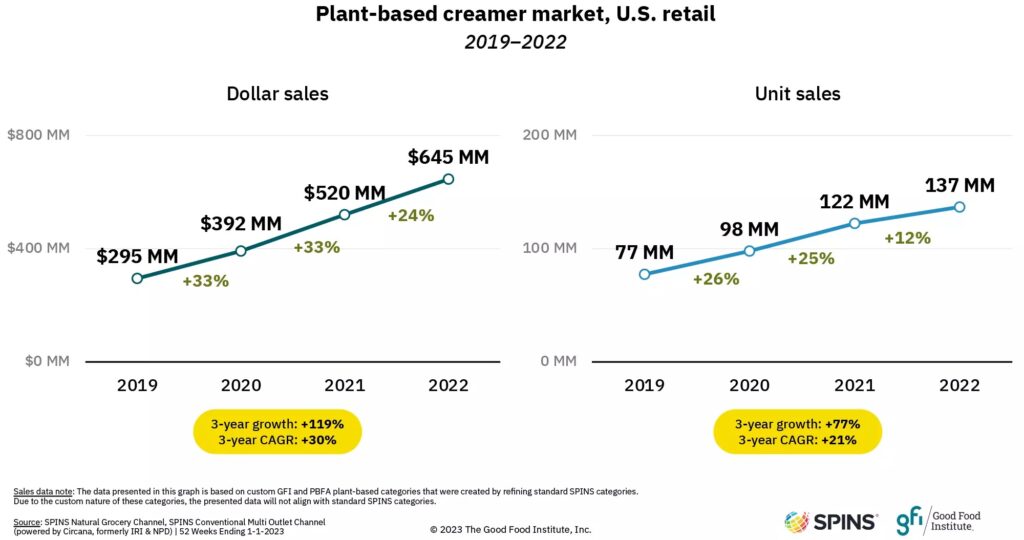
  • ripple foods funding
    4 Mins Read

    US pea milk maker Ripple Foods has secured $49.2M in its latest funding round, taking total investment in the company to over $274M. The financing comes amid a rise in interest in the pea milk category, which outpaced the overall alt-dairy segment year-on-year (but has been down in recent weeks leading up to July).

    Ripple Foods’ $49.2M investment takes the Californian pea milk brand’s total capital raised to more than $274M. According to an SEC filing – first reported by Forbes – the funding came from a total offering of $55.4M via equity, debt, and securities that can be acquired upon the exercise of an option or warrant in the future.

    The latest funding round follows a $60M Series E raise in 2021, which was led by S2G Ventures, Bloom8 and Ajax Strategies. Other previous investors include TAO Capital, Siddhi Capital, Prelude Ventures, Khosla Ventures and GroundForce Capital.

    pea protein
    Courtesy: Ripple Foods

    Creating a ripple in the alt-milk sector

    The investment is among a very small number of large VC investments to women-led businesses – Pitchbook data shows that women-founded startups receive less than 2% of all VC. While Ripple, which makes plant-based milk and protein shakes from yellow peas, was founded in 2014 by two men, Adam Lowry and Neil Renninger, it is currently helmed by a female CEO, Laura Flanagan.

    While there hasn’t been a statement about the latest funding, Flanagan had noted after the Series E raise that the company was outpacing the expansion of the overall plant-based milk industry by threefold, and was well-positioned to further accelerate this growth: “This capital raise will enable us to accelerate innovation and growth across product categories, and expand into new channels and global markets. It allows us to further achieve our mission of making plant-based foods that are better for people, and better for the planet, on an even larger scale.”

    Since then, Ripple has added a blended Oatmilk + Protein oat and pea milk (though it seems to have been out of stock for a while) to its lineup of vanilla (sweetened and unsweetened), chocolate, original and sweetened milks. It expanded its kid-friendly line too, with an unsweetened version joining the original DHA- and calcium-rich milk. Moreover, its smoothies come in chocolate, coffee and vanilla flavours.

    The company’s USP is its pea protein, called Ripptein, which is made from patent-pending tech that eliminates “the impurities like flavonoids and tannins that can give other plant-based milks their plant-ey flavour”, resulting in what it claims is the “purest, cleanest-tasting non-dairy milk”.

    ripple pea milk
    Courtesy: Ripple Foods

    The US pea milk market

    Ripple’s raise comes at a curious period for plant-based milk in the US. In 2022, it saw a 9% annual growth in dollar sales, which reached $2.8B, commanding 15.4% of the total milk market. This sector also penetrated 41% of households, with 76% of consumers repeating their purchases. Despite this rise, unit retail sales were down by 2% from 2021, suggesting the growth comes on the back of price hikes.

    In fact, Ripple was among the top 10 leading brands in terms of alt-milk sales in 2022, when the pea milk category grew by over 27% year-on-year. And while that trend has continued over the past year – with SPINS data showing an increase in dollar sales by 17.3% and unit sales by 4.1% for the 52 weeks to July 16, 2023 – this market has faltered in recent weeks, seeing a 4.8% drop in dollar sales and 2.8% drop in unit sales in the 12 weeks ending July 16.

    In contrast, the overall plant-based dairy sector saw dollar sales rise by 7% and unit sales fall by 5.4% year-on-year, but has experienced a fall in both metrics in the 12-week period (-3.6% and -2.5%, respectively). Similarly, while conventional dairy dollar sales were up by 4.6% annually, unit sales declined by 2.3% – and in the 12 weeks to July 16, both were down (-3.6% and -2.5%, respectively).

    So while the pea milk segment has seen a slightly larger decrease in the number of packs sold as well as total sales in recent weeks, it has outpaced both conventional and the overall plant-based dairy sectors in the last 12 months. And as health becomes an even larger influence on purchasing decisions in the US – with Gen Zers going vegan more for health than environmental reasons, and brands pushing nutritional aspects in product messaging – you could make the case that Ripple is poised for growth.

    pea milk market
    Courtesy: VMG Creative/Ripple Foods

    The brand’s pea milk is soy- and nut-free (making it more inclusive for people with allergies), and has half the sugar, 50% more calcium and the same amount of protein compared to semi-skimmed cow’s milk. Ripple is also synonymous with the North American pea milk industry, where it’s available in over 20,000 retail locations.

    The sector includes players like fellow Californian brand Bolthouse Farms and Swedish producer Sproud. Perhaps its closest challenger at present, though, is Chilean food tech company NotCo, which uses yellow pea protein as a primary ingredient in some of its alt-milks. It has raised over $433M to date, and just launched a vegan mac and cheese with Kraft Heinz.

    The post Female-Led Ripple Foods Raises $49M Amid Soaring Pea Milk Category appeared first on Green Queen.

    This post was originally published on Green Queen.

  • cop28 food day
    5 Mins Read

    The Global Alliance for a Sustainable Planet is partnering with Change Foods to host a food tech pavilion at COP28 on the conference’s dedicated food day (December 10) – here’s what it will entail.

    After neglecting it for years, the UN climate summit is finally focusing on the sector that contributes to a third of all global greenhouse emissions. COP28 will shine a huge spotlight on food and agriculture systems this year, with the FAO set to announce a policy roadmap to bring this industry’s climate impact in line with the 1.5°C goal set out in the 2015 Paris Agreement.

    There will also be a number of food pavilions, allowing organisations and stakeholders to have open discussions about the various issues faced by our food system. It’s more important than ever, given the world is on its way to 3°C temperature rises above pre-industrial levels – a far cry from the 1.5°C we might be approaching within the next five years (even though the conference president says this target remains possible).

    Food has an outsized impact on the climate. Of the 34% of human-caused emissions attributed to food, 60% comes from meat production. The livestock sector, meanwhile, is responsible for about 11-19.5% of all emissions. An increase in consumption of plant-based foods, on the other hand, can have dramatic benefits for the planet.

    One study has shown that a vegan diet can help cut emissions, land use and water pollution by 75%. Another revealed that animal-derived foods cause twice as many emissions as plant-based foods. And a third one suggested that swapping just half of our meat and dairy intake with vegan alternatives can halt deforestation, reduce agriculture and land use emissions by 31%, and double overall climate benefits.

    The importance of protein diversification

    tindle vegan chicken
    Courtesy: TiNDLE Foods

    This is why highlighting food is essential for climate action. As part of this effort, COP28 has announced that three-quarters of all food served at the conference will be meatless. Additionally, it will host a dedicated Food, Agriculture and Water Day (December 10), which will spotlight investment in innovation, procurement around regenerative agriculture, national transformation pathways underpinned by financing mechanisms, and project preparation, as Raphaël Podselver, director of UN Affairs at non-profit ProVeg International, explains.

    He adds that it’s the “first time we are having real discussions on food and agriculture at a COP summit”, and expects policy shifts aimed at promoting plant-forward diets and protein diversification, improving food security and cutting agrifood emissions.

    “Protein diversification is at the core of food systems transformation,” says David Bucca, founder and CEO of Australian-American precision fermentation company Change Foods, who will be speaking on food tech and sustainability at the summit. “Innovative technologies, such as precision fermentation, offer us a way to create nutritious high-quality protein without relying on industrialized animal agricultural expansion. It is a win for the planet, a win for consumers, and a win for the animals.”

    The food day will convene entrepreneurs, financiers, policymakers, ecosystem builders and commercial leaders, who will discuss methods to scale up and commercialise these technologies – a major bottleneck for the cultivated and precision-fermented protein sectors.

    Food pavilions at COP28

    food pavilion
    Courtesy: Change Foods

    One of the pavilions is being hosted by the Global Alliance for a Sustainable Planet (GASP), a New York-based alliance of thought leaders that incubates ideas with system-scale transformation potential by leveraging private finance for the public good. It acts as a catalyst to create partnerships between governments, international organisations, entrepreneurs, climate advocates and global investors. Co-hosting is leading US-Australian precision fermentation dairy startup Change Foods, which announced last year it would be building a production facility in the UAE.

    Held in the official Blue Zone of Dubai Expo City on December 10th, the official food and agriculture day as designated by COP28 organizers, GASP’s food tech pavilion will feature several leading entrepreneurs and thoughtleaders from sustainable food companies and advocacy organizations. The day will begin with a deep-dive into different pillars of food tech, where some of the leaders in this space – like Bucca and Change Foods CMO Irina Gerry, and Upside Foods CEO Uma Valeti – will outline distinct solutions, their benefits, and the hurdles yet to pass.

    The conversation will then switch to investment and the impact of increased funding and feature Elysabeth Alfano of VegTech Invest, Manon Littek of Green Generation Fund and Jennifer Chammas of HSBC, who will discuss how to achieve scale through ecosystem collaboration, before moving on to frontier companies that are making innovative products for both retail and foodservice.

    Green Queen founder and editor-in-chief Sonalie Figueiras will also be speaking at the event: she will interview Timo Recker, co-founder and executive chairman of Singapore-based alt-meat brand TiNDLE Foods in a fireside chat about how to bring consumers onboard with food innovation.

    “We are thrilled to partner with Global Alliance for Sustainable Planet to deliver a full day of content focused on innovative food technologies at COP28, by bringing together an incredible set of expert speakers to ensure deep learning and meaningful collaboration and to catalyse action,” said Gerry.

    Likewise, the Food4Climate Pavilion will return to the UN climate summit, following a first appearance at COP27 last year. It has been established by a coalition of NGOs, including ProVeg International, World Animal Protection, Compassion in World Farming, Plant Based Foods Institute, Humane Society International, Mercy for Animals, and Four Paws, among others.

    This pavilion will tackle the need for prioritising alternative protein production over animal-derived foods, as well as the overconsumption of meat in the Global North, which accounts for 92% of excess carbon emissions, which disproportionately affects vulnerable populations largely in the Global South.

    Pavilions like GASP’s and Food4Climate highlight the importance of food systems transformation and hopefully can help galvanize our leaders to take meaningful climate action at COP28.

    The post Protein Diversification Startup Change Foods Co-Hosts Innovative Food Production Tech Pavilion at COP28 appeared first on Green Queen.

    This post was originally published on Green Queen.
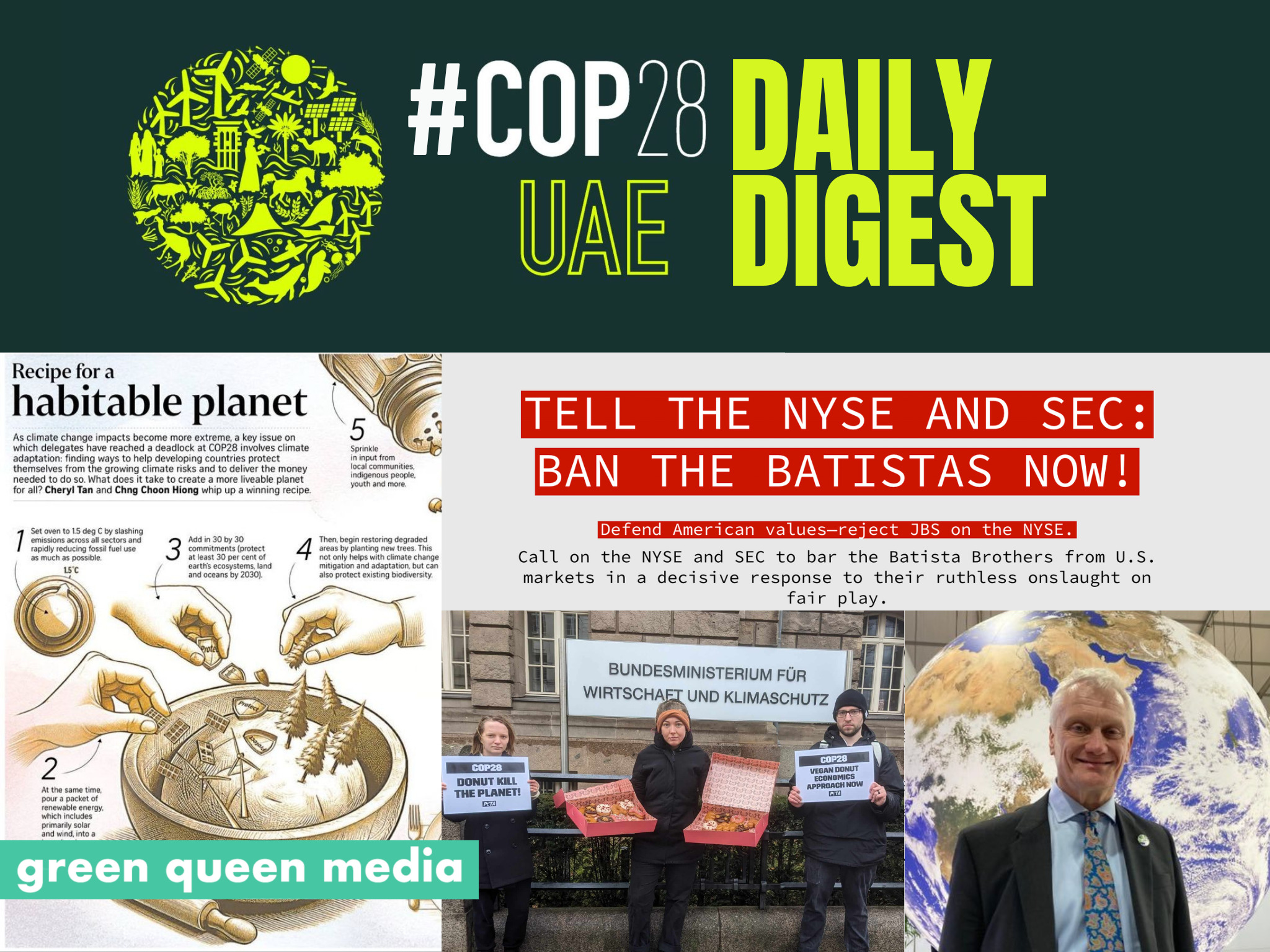
  • climate misinformation
    7 Mins Read

    An analysis of 285 million posts on social media has shown how conspiracy theories, junk science, and pro-meat and -dairy posts are driving a misinformation campaign against climate-friendly food and alternative proteins. Here are 12 striking facts and takeaways.

    Commissioned by the non-profit Changing Markets Foundation, the largest-ever analysis of online meat and dairy misinformation has revealed how nearly a million misleading posts attacked figures and organisations like Bill Gates and the World Economic Forum (WEF), scientific findings about the effects of animal agriculture on the environment, and the health and climate benefits of plant-based and cultivated proteins.

    Swiss data firm Ripple Research analysed 285 million social media posts – mostly on Twitter/X, but also on Reddit and other blogs and forums – and found that 948,000 either bent the truth about meat and dairy, or attacked veganism and alternative proteins, in an effort that has drawn comparisons to big oil misinformation.

    It comes just a day before world leaders will convene at COP28 in Dubai, which will be the UN’s first food-centric climate summit and serve mostly meatless food: “We traced online attacks on alternative proteins and posts that exaggerate the benefits of meat and dairy directly to industry and its representatives,” said Changing Markets Foundation senior campaigner Maddy Haughton-Boakes.

    “A large volume of conspiracy theories and culture war content about food and farming came from those on the political far-right rather than industry. But the two have a shared agenda, to downplay the science and weaken regulation. This ultimately maintains and even enhances the status quo of high meat and dairy consumption with low regulation.”

    Here are 12 striking facts from the investigation:

    1. 78% of posts went on the attack against veganism and science

    vegan myths
    Courtesy: Changing Markets Foundation

    Over three-quarters (78%) of the misinformation posts were classed as ‘disparaging’, which involves narratives to discredit plant-based food and attack scientific research about the negative impacts of meat and dairy.

    2. Conspiracy theories against ‘The Great Reset’ reigned supreme

    A total of 37% (350,465) of posts were heavily conspiratorial, projecting that the global elite planned and managed the Covid-19 pandemic to bring down the global economy and establish a socialist world government. These theories still exist, and connect climate, food, and agriculture choices to a scheme to weaken humanity and maintain control.

    3. WEF and Bill Gates were frequent misinformation targets

    Many posts about The Great Reset suggested a coordinated effort to enforce radical dietary change to transform people into weakened, ‘diseased subjects’ by bodies like the WEF. Climate and diet-related legislation were reframed as extreme measures to eliminate certain ways of life, with figures like Klaus Schwab, John Kerry, Jacinda Ardern, and Bill Gates highlighted. The latter was accused of tampering with livestock, injecting cattle with mRNA shots, and engineering artificial food shortages to promote the consumption of cultivated meat and induce illnesses.

    bill gates lab grown meat
    Courtesy: Changing Markets Foundation

    4. 24% of posts maligned alt-proteins as unhealthy

    Almost a quarter of posts (223,389) attacked plant-based and cultivated meat and dairy as ultra-processed “Frankenfood” that lack nutrition and can cause serious diseases and “turbo cancers”. This included attacks on long ingredient lists, over-processing, nutritional aspects, and diseases and health effects.

    5. 7% denied climate change or the environmental impact of alternative proteins

    A total of 69,045 posts (7% of the total) attacked climate science. This involved denying climate change as a hoax perpetrated by ‘vegan extremists’, comparing the environmental impact of almonds (use of water and bee population decline) or soybeans (deforestation and monocropping) with locally produced animal products to discredit plant-based food, and undermining climate policies like net zero. Meanwhile, 13,388 posts questioned scientific findings on the climate, environment and health benefits of reduced meat and dairy.

    6. A non-peer-reviewed UC Davis study about cultivated meat with dubious claims became fodder

    In May 2023, the University of California, Davis released a pre-print, non-peer-reviewed study claiming that cell-cultured meat is 25 times worse for the environment than beef – something much of this anti-alt-protein narrative centred on. But the institution is a “well-known Big Ag conspirator“, and this work has been heavily criticised.

    7. ‘Soy boys’, meat and masculinity fuelled the culture wars

    soy boy
    Courtesy: Changing Markets Foundation

    83,790 posts (9%) had a culture war aspect, presenting meat as an identity wrapped in n ‘anti-elite’, ‘us versus them’ ideology. This included targeting vegan men with the derogatory term ‘soy boys’ (related to claims that phytoestrogen in soy products can ‘feminise’ men), labelling vegans as part of a cult, and associating meat with masculinity and traits like fertility and strength.

    8. More posts slammed alt-protein than promoted meat and dairy

    The report’s authors found the level of hostility against alt-protein – numbering 292,434 posts (31%) – surprising, as they had expected that the majority of posts would promote meat and dairy. But only one in five (207,669 or 22%) did so – these were classed as ‘enhancing’, touting the health (termed ‘healthwashing’) and eco credentials (greenwashing) of meat and dairy.

    meat and masculinity
    Courtesy: Changing Markets Foundation

    9. Online posts portrayed meat and dairy as nutritionally superior

    173,971 posts (18%) centered around the perceived health benefits of meat and dairy, with slogans like “no need to fear red meat” to drive more consumption and claims such as “animal-based diets meet all nutrient needs”. This weaved in the ‘meat is masculine’ narrative too, and countered negative associations with meat consumption. Trends like the carnivore diet, extreme meat intake, and the #meatheals movement (asserting that meat can cure diseases instead of medicines) were also on the up.

    meat misinformation
    Courtesy: Changing Markets Foundation

    10. Greenwashing attempts added to the narrative

    The report says it’s notable that there is a lack of emphasis or positive discussion on the environmental impact of meat and dairy, with only 33,698 posts (4% of the total) doing so. These posts alleged that cows are carbon-neutral and don’t contribute to climate change, used regenerative agriculture as a way to minimise livestock’s climate impact, asserted that livestock supports biodiversity, and bemoaned “unfair targeting” of cows and farmers.

    11. 50,000 accounts drove 3.6 million online interactions around meat misinformation

    All the posts analysed came from an army of 425,226 real and bot accounts, but only 50,000 drove all the 3.6 million likes, shares and comments. And half of all these came from 50 accounts, which included famous right-wing commentators and politicians.

    12. Cabot Philips and @iluminatibot are the most influential misinformation spreaders

    Cabot Phillips, an editor at US conservative news site The Daily Wire, and @iluminatibot, an anonymous account that promotes Illuminati conspiracy theories, generated 186,843 and 186,101 likes, comments and shares of misleading posts, respectively. Other influential accounts include figures like Tucker Carlson and Donald Trump Jr, as well as self-proclaimed medical experts like @DrLoupis, @amerix and @SBakerMD. Junk science posts were a regular theme.

    right wing climate change
    Courtesy: Changing Markets Foundation

    Misinformation will undermine COP28 food outcomes

    The report is deliberately timed to publish just ahead of COP28. The authors say policy restraint is casting a shadow over global climate talks: while COP28 hosts, the UAE, want governments to incorporate food and agriculture into their national climate plans, it’s unclear if all will sign in time for the Leaders Summit on December 1. December 10, meanwhile, will be a first-ever food day, where the FAO is set to highlight the overconsumption of meat in rich countries, and set out a roadmap to 1.5°C.

    But the FAO itself has been embroiled in controversy surrounding misinformation about meat and dairy. It was subject to an investigation that revealed it censored and undermined work by its own officials on the methane emissions caused by the animal agriculture industry, following pressure from livestock lobby groups. Further, there are concerns about the continued decline of the FAO’s estimate of livestock methane emissions, which was calculated to be 18% in 2006, then changed to 14.5% in 2013, and is now cited at 11.2%. Other research puts this number at 20% or between 16.5-28.1%.

    Similarly, the EU was revealed to be in cahoots with animal lobby groups as well, which pressured the bloc to walk back a proposed ban on the caged farming of animals like hens and pigs, which has since been put on hold.

    Such misinformation campaigns are hugely detrimental to a planet that is on course to reach 3°C warming above pre-industrial levels, which will spell catastrophe around the globe. For COP28, it’s imperative that misinformation is a priority in its food-focused avatar.

    The post Meat & Misinformation: How Social Media Conspiracy Campaigns Are Fueling The Fight Against Alt-Protein appeared first on Green Queen.

    This post was originally published on Green Queen.
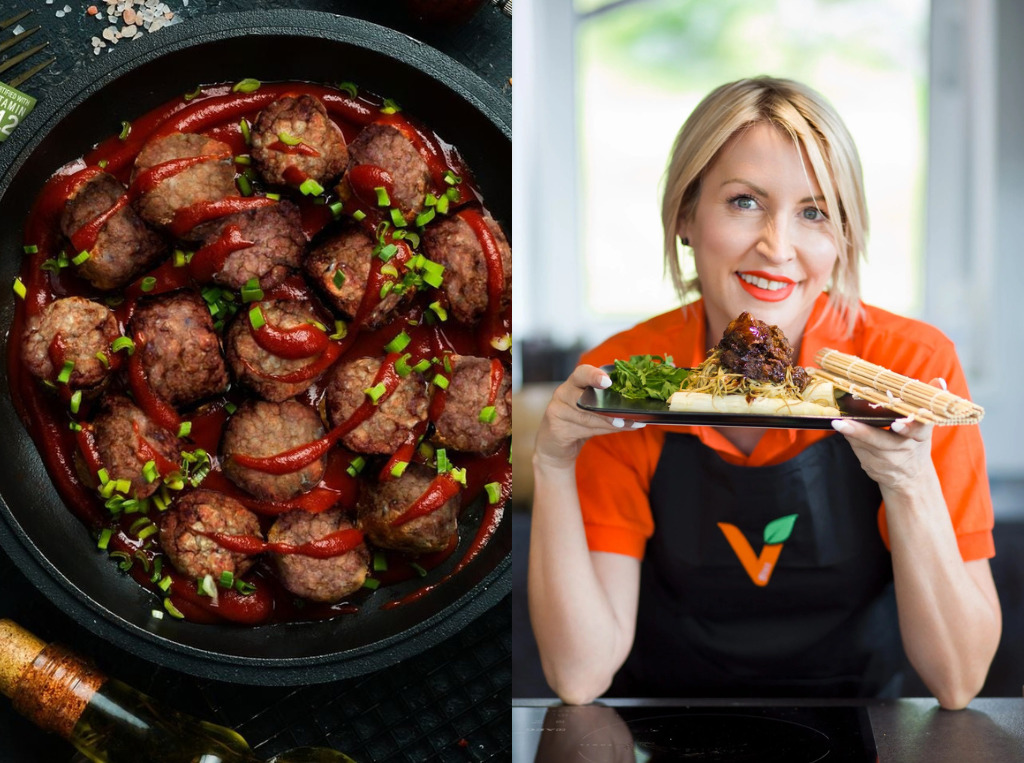
  • future food quick bites
    6 Mins Read

    In our weekly column, we round up the latest news and developments in the alternative protein and sustainable food industry. This week, Future Food Quick Bites covers a vegan deviled egg launch, cultivated meat approval guidance in the UK, and several developments from Californian businesses.

    New products and launches

    Singapore-headquartered TiNDLE Foods continues its aggressive expansion drive with a new foodservice partnership with UK sushi chain YO! Sushi, which will see two limited-edition dishes (a bao and fried chicken) appear in over 50 locations until the end of the year.

    yo sushi vegan
    Courtesy: TiNDLE Foods

    More expansion news, this time from Hong Kong vegetarian eatery Treehouse, which is gearing up to launch its fourth and fifth locations at the Kai Tak Airside shopping complex (December 4) and in Tsim Tsa Shui (December 5), respectively.

    Another upcoming restaurant is Nic Adler’s Italian diner Argento in Los Angeles, whose investors include pop megastars Billie Eilish and her brother Finneas (who are both vegan). Opening in winter 2024, the kitchen will be headed by Scott Winegard, former deputy of celebrity chef Matthew Kenney.

    planetarians
    Courtesy: Planetarians

    Fellow Californian business Planetarians is presenting its waste-to-food plans and products at Dubai’s COP28, which will begin tomorrow. Its CEO Aleh Manchuliantsau will be part of a panel on December 1, and the brand will have a booth at the Tech and Innovation Hub from December 8-12.

    One more brand from California, hemp-based meat maker Planet Based Foods is expanding its footprint in the state, partnering with New Leaf Community Markets and Lunardi’s Markets, which will house several of its company’s products starting next month.

    Over in Texas, vegan egg company Crafty Counter has launched a deviled egg SKU in collaboration with Fabalish‘s faba bean mayo. The limited-edition product comes in a tray filled with the former’s WunderEgg half egg white shells, and a sachet of pre-made deviled egg filling.

    vegan deviled eggs
    Courtesy: Crafty Counter

    Elsewhere, in Malaysia, GoodMorning Global has unveiled a “complete-nutrition” plant-based meat dry mix under the brand name WonderMeat. The soy and pea protein blend has been listed in the Malaysia Book of Records and will retail at RM5.50 ($1.18) for each pack, which makes about 200-240g of wet mix.

    The UK, meanwhile, has seen the launch of Herbie Wilde, a plant-based hypoallergenic alternative superfood for dogs. The vegan pet food contains 39 ingredients, including sweet potato, fruits, greens, ancient grains, herbs, and botanicals.

    Across Europe, DSM-Fonterra-backed Dutch B2B ingredients startup Vivici has collaborated with Boston-based cell programming firm Gingko Bioworks to develop and commercialise animal-free functional alt-dairy proteins from precision fermentation.

    South Korean vegan cheese brand Armored Fresh, meanwhile, has expanded into conventional and natural grocery stores in the US, including Fresh Thyme Market, Town and Country Foods and Fred Meyer – months after first launching its almond milk American cheese stateside.

    vegan shrimp
    Courtesy: Vegan FInest Foods

    Also in the Netherlands, plant-based seafood brand Vegan Zeastar has added a Crispy Coconut Shrimpz SKU to its lineup of potato-based shrimp analogues, which will be on sale from December 4.

    And in Austria, Rewe Group’s Billa retail chain is ramping up its plant-based portfolio, with a new superstore featuring a dedicated vegan aisle – this will be expanded to 20 existing stores across the country.

    Finance and markets

    Swedish seitan startup Edgy Veggie – which makes kebabs, tacos and souvlaki – has reportedly raised $200,000 at about a $250,000 pre-money valuation, according to the FoodTech Weekly newsletter.

    Berlin-based microalgae startup Quazy Foods has brought in €800,000 in a pre-seed funding round, which involved ProVeg International, Antler, and Sprout and About Ventures.

    Hello Plant Foods, a Spanish vegan foie gras maker, expects to sell 110,000 units of its product during the holiday season – almost four times its figures last year.

    beyond steak
    Courtesy: Beyond Meat

    One brand that isn’t selling as well is plant-based giant Beyond Meat, which has experienced sales declines for months now. But it still has enough money to get through the next couple of years (and possibly more with further cost-cutting), according to John Baumgartner, managing director at analyst Mizuho Securities, who told AFN it’s hard to sense what will happen.

    Another giant that has faced challenges is Hong Kong-based alt-milk company Vitasoy, which saw a 7% decline in annual revenue, driven by hurdles in its main plant milk markets, Australia and New Zealand (where revenue dropped 10%). But the company remains positive that its strong Asia performance – particularly with soy milk and tea – will help it bounce back.

    Research and policy developments

    Staying in the alt-dairy realm for a second, a student in Los Angeles – who wasn’t allowed to promote soy milk in her high school without doing the same for dairy – has won a lawsuit against her school, which ruled that students have a right to non-disruptive speech critical of dairy under the 1st Amendment.

    Meanwhile, a study published in the Appetite journal has revealed that repeated consumption of plant-based meat doesn’t improve consumer liking of those products – it’s the context of what meals they were used in that really matters.

    A little left field, but Minneapolis-based plant-based food and drinks manufacturer SunOpta is celebrating its 50-year anniversary. It has invested over $200M in its production capacity in the last three years to double its business.

    Elsewhere, consumer finance website Little Loans has revealed that Lidl is the cheapest supermarket to buy a vegan-friendly Christmas dinner in the UK this year, costing £8.83 for nine items. The most expensive – no surprise – was M&S at £16.8.

    vegan price parity
    Courtesy: Lidl

    Still in the UK, charity The Food Foundation is calling for mandatory reporting of animal-derived and plant-based proteins by retailers and the out-of-home channel for greater transparency, criticising government inaction on the issue.

    There has been some action for cultivated meat though, with the UK Food Standards Agency publishing guidance on cultivated meat regulatory approval – weeks after it was reported that cultured meat approval could be fast-tracked in the country, following an application from Israel’s Aleph Farms in August.

    Meanwhile, new research by Dutch cultivated meat pioneer Mosa Meat outlines the challenges the industry faces, including scientific ones like manufacturing bottlenecks and non-scientific ones like regulatory approval and consumer acceptance.

    Movers, shakers and awards

    In Germany, mycoprotein startup Nosh.bio has partnered with the Berliner Berg brewery to set up a pilot plant to demonstrate the concept that breweries can co-produce food ingredients whilst brewing beer at the same site.

    plant based milk labelling
    Courtesy: NotCo

    There have been some more changes in the alt-protein corporate world. At Chilean AI-led plant-based company NotCo, CMO Fernando Machado will be transitioning to an advisory role.

    Canadian vegan cheese brand Daiya, meanwhile, has welcomed new CEO Hajime Fujita, who was a VP at its parent company, Japan’s Otsuka Pharmaceuticals. He replaces Michael Watt, who has held the position since 2019.

    Food tech company MycoTechnology also has new leadership, with Michael Leonard joining as CEO, replacing co-founder Alan Hahn, who will step into the role of executive chairman.

    roots & rolls
    Courtesy: Roots & Rolls

    And finally, in some awards news, Barcelona’s plant-based eatery Roots & Rolls has won the Notable or Innovative Venue Award at the IV Barcelona Hospitality Awards 2023.

    Check out last week’s Future Food Quick Bites.

    The post Future Food Quick Bites: Vegan Deviled Eggs, Low-Cost Lidl & California Calling appeared first on Green Queen.

    This post was originally published on Green Queen.

  • vegan dumplings
    6 Mins Read

    When the chips are down and batteries low, a dumpling dinner can cushion the blow. Open your freezers and the microwave door, and ready yourself for plant-based goodness galore. Here are the best frozen vegan dumplings to save you from midweek depression.

    I don’t know anyone who doesn’t like a good dumpling. I mean, how can you hate it? It’s seasoned filling wrapped in dough that can be steamed, boiled, fried or baked, with a dope dip that just leaves you wanting more.

    Dumpling dinners and lunches (or breakfasts, let’s be real) have been my saviour countless times when the last thing I had time for was cooking, but I needed feeding and a break from instant ramen. It used to be all-veggie frozen gyozas that I’d pan-fry and make a 50-50 soy and rice vinegar sauce with, but now, there are countless options for people looking for a vegan dumpling fix.

    So, to save your weekdays and nights as well, here are the best frozen vegan dumplings you can buy. (This is by no means an exhaustive list!)

    OmniPork Plant-Based Potstickers

    omnipork
    Courtesy: OmniFoods

    Hong Kong’s famous vegan export OmniFoods (a sub-brand of Green Monday) released a dumping offering as part of a wider product launch in the US last year, featuring its soy protein pork.

    The frozen plant-based potstickers contain a mix of the OmniPork and vegetables like cabbage and wood ear mushrooms, plus a host of seasonings and aromatics. Each serving of four pieces contains 5g of protein and 2g of fibre (one 200g pack contains 10 pieces).

    The frozen OmniPork gyozas can either be pan-fried or deep-fried for three to four minutes, air-fried for five to six minutes, and steamed for six to seven minutes, or until fully cooked. They can also be heated up in the microwave for 1.5 to two minutes – though you won’t get that delightful crunch.

    You can find Omni’s plant-based potstickers at various retailers and online stores across the US, including Walmart, Whole Foods and Instacart from $5.98.

    Too Good to Be Foods Dumplings

    triton algae innovations
    Courtesy: Too Good to Be

    The consumer-facing brand of Triton Algae Innovations, Too Good to Be was launched earlier this year, featuring the former’s Hardtii green algae superfood ingredient. The ingredient can be used to give plant-based meat and seafood products a more realistic look and flavour.

    While Triton Algae began innovating with a tuna analogue, its first product is a plant-based frozen dumpling filled with vegan pork (using Hardtii) and cabbage. The wrapper is infused with the green algae as well, offering a striking visual appearance. The pork and cabbage are supplemented with alliums, seasonings and spices.

    The dumplings can be steamed for eight to 10 minutes, or pan-fried until golden brown. Each three-dumpling serving contains 7g of protein and 2g of fibre.

    You can find Too Good to Be’s frozen algae dumplings at online store GTFO It’s Vegan for $8.99 per 10oz pack.

    Sobo Foods Dumplings

    sobo foods
    Courtesy: Sobo Foods

    North Carolina’s Sobo Foods, which launched out of stealth earlier this year, was launched by Eric Wu (co-founder of Gainful) and Adam Yee (formerly a scientist at Motif FoodWorks), raising $1M in funding for its mission to provide better-for-you Asian comfort food to consumers.

    Sobo has only recently its first product, a line of frozen vegan dumplings in three flavours. The Japanese-inspired curry potato has chickpeas, carrots, peas and pea fibre, the Chinese-influenced pork and chive features soy protein, cabbage, mushrooms, aromatics, seasonings and methylcellulose, and the Korean-inspired kimchi and mushroom contains tofu, gochujang, sweet potato starch, alliums and pea fibre.

    These are available in 288g packs of 12 dumplings each, with protein content ranging from 12-19g and fibre from 4-7g for each 144g serving.

    You can find Sobo’s frozen dumplings at select retailers in the Bay Area and online stores, starting at $10.99.

    Unlimeat Pork Mandu

    unlimeat
    Courtesy: Unlimeat

    South Korean alt-meat brand Unlimeat has been making waves this year, establishing a flagship partnership with California’s Just Egg to offer vegan kimbaps in its home market, a week after introducing upcycled plant-based tuna to its lineup.

    Unlimeat launched in the US last year via online channels, and offers two beef-filled Mandu (Korean dumpling) flavours: original and hot chilli. Both contain a base of its soy and pea mince, with cabbage, alliums, tofu, starches, oil and emulsifier, and seasonings, with the latter comprising some extra chillies.

    Each 85g serving contains 7g of protein and 2g of fibre, while every pack weighs 400g. Unlimeat’s dumplings can be pan-fried for seven minutes or air-fried for 10.

    You can find Unlimeat’s frozen Mandu dumplings on its webstore or online retailers like Plant X and Instacart starting at $10.99 per pack.

    Dina’s Dumpling Frozen Offerings

    best vegan dumplings
    Courtesy: Dina’s Dumpling

    A food truck and catering service in Pasadena, Dina’s Dumpling makes a lot of, well, dumplings – they’re not all vegan, but it does have a wonderful vegan, all-vegetable option that you can buy frozen too.

    The green, spinach-infused dumpling wrappers are filled with tofu, purple cabbage, green cabbage, celery, and wood ear and shiitake mushrooms.

    This is a more gourmet option, and it’s reflected in the price tag. But it’s a wonderful way to have restaurant-style dumplings at home, and fulfil your veggie cravings.

    You can find Dina’s Dumpling’s frozen offerings at its Pasadena location starting at $30 for 20 pieces.

    Moo Shu Dumplings

    plant based dumplings
    Courtesy: Moo Shu Ice Cream

    Another veggie-celebrating dumping maker, Canada’s Moo Shu is actually an ice-cream parlour, but spotlights Asian creations and offers a range of frozen vegan dumplings.

    The Ottawa-based business makes three varieties: five-spice and pickled shiitake, cabbage and shiitake, and curried sweet potato and black lentil. Each contains a filling of its homemade tofu and seitan-based meats, and is packed with aromatics and seasonings.

    These gourmet dumplings come with a sheet that comes with detailed instructions on cooking with a pan-frying method (which takes about 10-13 minutes), alongside multiple dipping sauce options.

    You can buy Moo Shu’s frozen vegan dumplings via its online store or in person for $30.

    Bibigo Organic Potstickers

    bibigo vegan
    Courtesy: Bibigo

    Bibigo, a subsidiary of South Korean food giant CJ CheilJedang, is known around the world for its dumplings – and it has an extensive range in the US too, with one vegan option too.

    The Organic Vegetable Potstickers are filled with brown rice, cabbage, tofu, textured soy flour, edamame, carrots, alliums and a bunch of seasonings, alongside soybean oil (which also features in the wrapper).

    Bibigo’s frozen plant-based dumplings come in three sizes: 16oz, 32oz and 48oz, and each four-piece, 82g serving contains 6g of protein and 1g of fibre.

    You can find Bibigo’s vegetable potstickers at Kroger, Costco and Instacart, starting at $7.

    The post Vegan Dumplings: The 7 Best Frozen Options for the Perfect Weeknight Dinner appeared first on Green Queen.

    This post was originally published on Green Queen.
  • blended meat gfi
    8 Mins Read

    As blended and hybrid meats begin to sizzle, Green Queen speaks to alternative protein bodies the Good Food Institute and ProVeg International to get their take on this novel approach to protein diversification.

    This article is part of our content series exploring the world of hybrid and blended meat products – those blending cultivated or conventional proteins with plant-based ingredients, respectively, and why some think this is the future of reducing meat consumption.

    Over the last few weeks, we’ve interviewed founders of various blended and hybrid meat startups, as we explore the potential of this approach. Plant-based meats have hit a roadblock in the last year, and cultivated meat is still in its commercial infancy, but – as the myriad reports published on the eve of COP28 next week say – we need to decarbonise fast, and now.

    We’re on track to approach temperatures 3°C higher than pre-industrial levels, which present beyond-catastrophic implications. The global food system is responsible for a third of our greenhouse gas emissions, and meat production itself contributes to 60% of this share. Research suggests that replacing 50% of our meat and dairy intake with plant-based alternatives – which is essentially what blended meat is doing – can halt deforestation and double climate benefits.

    The founders we’ve spoken to underline the potential for blended and hybrid meats as a means of protein diversification, and they are – as you’d expect – highly optimistic. But what do think tanks and sustainable food advocacy platforms think?

    To find out, we spoke to the alternative protein think tank the Good Food Institute (GFI), the Good Food Institute APAC, and food systems change non-profit ProVeg International, to share their views on blended and hybrid meat. Here’s what they had to say:

    On blended meat acceptance

    GFI says any approach that can get alternative proteins closer to taste and price parity with conventional meat is worth leveraging, and blended meat can support both aspects. Combining pricier plant proteins with conventional meat can achieve comparable markups – but GFI highlights its focus by adding that this could eventually help increase scale to a point where plant-based proteins become cheaper than conventional meat.

    GFI APAC’s managing director Mirte Gosker, meanwhile, added that these gateway products “present an opportunity for legacy food companies to dip their toe in, test the market, and provide a stepping stone towards increased plant-based food consumption” and open up “a lucrative new revenue stream for plant-based ingredient suppliers”.

    But ProVeg has a slightly sterner stance on blended meat. Its cellular agriculture lead Julia Martin said that while the organisation “actively promotes” hybrid meat, it merely “tolerates” blended meat, acknowledging that the latter could be a “possible solution for the time being”.

    hybrid meat proveg
    Courtesy: Anisha Sisodia/Phil’s Finest

    On hybrid meat acceptance

    “These combinations have a bigger potential to become sustainable long-term solutions,” Martin says of hybrid meats, adding that they “have a great potential to accelerate and expand consumer transition away from animal-based foods and towards a kinder and more sustainable food system”.

    “Moreover, as cultivated meat technology develops, hybrid products are an impactful first step in creating familiarity among consumers with ingredients produced through this novel technology,” she adds.

    GFI says the argument for hybrid products is similar to that of blended meat, but notes the dynamics are flipped on cost. Most cultivated meat offerings that will come to market in the short-term are likely to be hybrid, in order to provide a more accessible price point- currently, these are very expensive to produce. Cultivated meat can offer similar sensory improvements that conventional meat does in blends.

    Additionally, the think tank believes that using cultivated fat as an ingredient in primarily plant protein products (as companies like Mission Barns are doing) could be especially attractive, as fat is essential for flavour and a meaty mouthfeel.

    On investor support

    “In the current economic environment, fundraising is not only challenging for companies in the hybrid space, but across all of the food tech industry,” notes Martin. “Fortunately, we are starting to see the first cultivated companies apply for regulatory clearance and even hit the market, and hopefully, this will serve as proof of the immense impact that these products are able to deliver and stimulate further confidence into the space.”

    “The blended meat category is still very nascent, so there isn’t much investor data available. So far, it is mostly large-scale food companies that have ventured into offering such products,” says Gosker, pointing to the examples of Perdue FarmsTyson and Hormel.

    Perdue Farms, which used Better Meat Co.‘s mycelium-derived Rhiza protein in its blended meat range, told GFI in its State of the Industry Report 2022 that it has been “extremely successful since launching in 2019”, with new flavours and formats being added to the category.

    Smaller-scale companies have also attracted investor interest: Los Angeles-based blended meat maker Paul’s Table has raised $500,000 in pre-seed funding, while San Francisco’s hybrid meat startup SciFi Foods emerged from stealth last year with a $22M Series A round. Andrew Arentowicz, CEO of blended meat company 50/50 Foods Inc (also from LA) – which mixes meat with vegetables – told Green Queen its “investors are very bullish on our potential”. A similar startup, New York-based Phil’s Finest, found success on Shark Tank too.

    Meanwhile, Shalom Daniel, founder of Israeli blended meat producer Mush Foods, told Green Queen: “We’ve found investors – including those who are strongly anti-meat – are committed to the welfare of the planet and animals and see the blended solution as an immediate and achievable means of reducing meat consumption.

    blended meat
    Courtesy: Dan Lev

    On consumer interest

    “As cultivated meat technology develops, hybrid products are an impactful first step in creating familiarity among consumers with ingredients produced through this novel technology,” says Martin.

    To gauge consumer opinion about hybrid meats, ProVeg conducted a UK-wide survey last year, asking 1,000 Brits whether they’d eat these products. A third of respondents said they would, a result ProVeg calls “quite promising, especially given that the vast majority of people are not at all familiar with this novel product category”, though a similar number of people (30%) were unsure about consuming these products, highlighting the need for increased public awareness and familiarity.

    The acceptance for these products was higher among younger generations and men, with about 40% of millennials and Gen Zers expressing interest, versus 32% of Gen Xers and 29% of boomers. Men (39%) are more likely to try these products too (compared to 31% of women). University-educated millennials and Gen Z men are, in general, more open to eating (51%) and buying (47%) hybrid meat.

    GFI says it is planning to conduct its first report on blended meat in the near future. Moreover, an investor who attended GFI’s Good Food Conference 2023 in September told Green Queen the panel on blended meat had a high level of engagement and was much more well attended than in previous years.

    On marketing

    How these products are presented to customers is vital to their success. GFI alludes to this in its State of the Industry report. “Communicating the benefits of blended products to consumers may require nuanced product positioning, as this is a relatively new and subtle category that requires a clear value proposition,” it states. “Targeting the right consumer groups will be critical – for example, parents who want to incorporate more vegetables into their children’s meals.”

    With hybrid meats, Martin says the “trend is definitely focusing on the superior sensory attributes” provided by hybrid products – especially those composed of plant-based proteins with cultivated fats ( as GFI mentioned above). “These products are likely to be initially marketed as premium, but that’s just natural in early adoption cycles for any novel category.”

    GFI APAC’s Gosker adds: “Non-meat ingredients such as meat extenders, starches and binders have long played a role in developing conventional meat products to reduce costs for consumers or add functionality, but the new wave of plant-based innovation offers plenty of room for more strategic integration of higher-quality ingredients that bring added nutritional benefits.

    “If brands select plant-based ingredients that offer advantages such as lower fat and desirable vitamins and nutrients, this could increase the overall health profile of a conventional meat product in a way that is broadly appealing to consumers.”

    Gosker stresses the need for further research to determine where these products need to be shelved in-store, how best to communicate to customers that they contain both animal and plant-based ingredients, how to establish a value proposition for these meats, and which blends perform best in different formats and contexts.

    Paul Shapiro, co-founder and CEO of Better Meat Co (which supplies to Perdue), told Green Queen that blended meat must be marketed as “enhanced meat – something better than a product that’s solely animal meat”. “This is what Perdue does, and its Chicken Plus product has performed well on the market for nearly four years now,” he outlined.

    perdue chicken plus
    Courtesy: Perdue

    On the category’s challenges

    Where next for blends and hybrids? “Consumers across different geographies are excited to try the products,” says Martin, though she warns that early products will have high prices and very limited availability. “However, as the technology evolves, it is expected that costs will decrease making products more accessible, as well as increase their availability.”

    GFI reiterates the hurdles relating to category, product and brand positioning, as well as consumer communication, adding that blended and hybrid meats will need to reach a broader audience of meat-eating consumers to truly fulfil their potential.

    Gosker concurs with Martin’s point about public excitement. “Consumer interest and potential demand for blended meat products are evident – but to grow as a category, [companies] will need to hit the trifecta of achieving price parity, meeting or exceeding consumer expectations on taste and texture, and effectively communicating their benefits over conventional meat,” she explains.

    “Fortunately, blends are positioned to compete well on price, since they offer wide flexibility in ingredient ratios to adjust for taste, texture and cost optimisation. Indeed, some conventional meat producers have even managed to lower their total product costs by integrating plant-based proteins, thereby making their blended products more affordable from a cost-of-goods standpoint than conventional meats.”

    She echoes GFI’s statement about how growing demand for blended meat could ramp up plant protein production, reaching a scale that will close the price gap between animal and plant proteins. GFI, though, envisions a multi-hybrid future. The organisation that named plant-based, cultivated and fermented proteins as the three pillars of the alt-protein category says the lines between these products will blur.

    Each offers unique advantages, and the products most likely to win on taste and price would ideally leverage the best of all of these platforms. For example, a meat alternative composed primarily of plant proteins, a dash of cultivated fat and key flavour-boosting ingredients like fermentation-derived heme proteins, perhaps? Could be a winning formula for early actors in this space!

    The post Blended & Hybrid Meat: What Do Sustainable Protein Policy Advocates Think? appeared first on Green Queen.
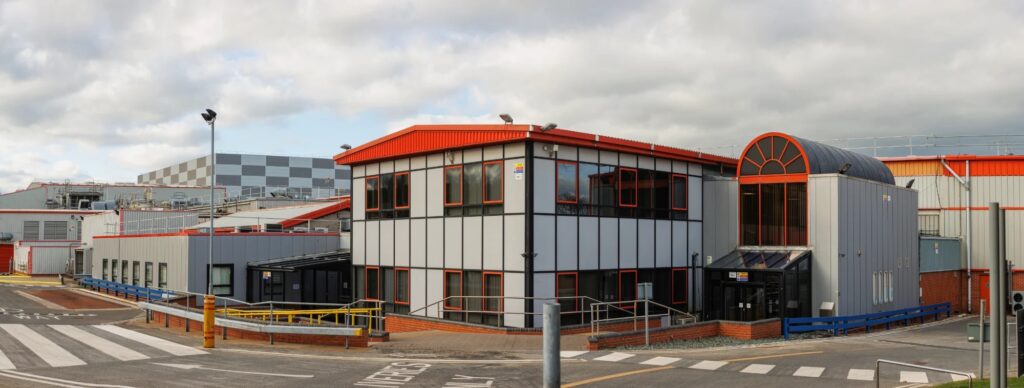
    This post was originally published on Green Queen.