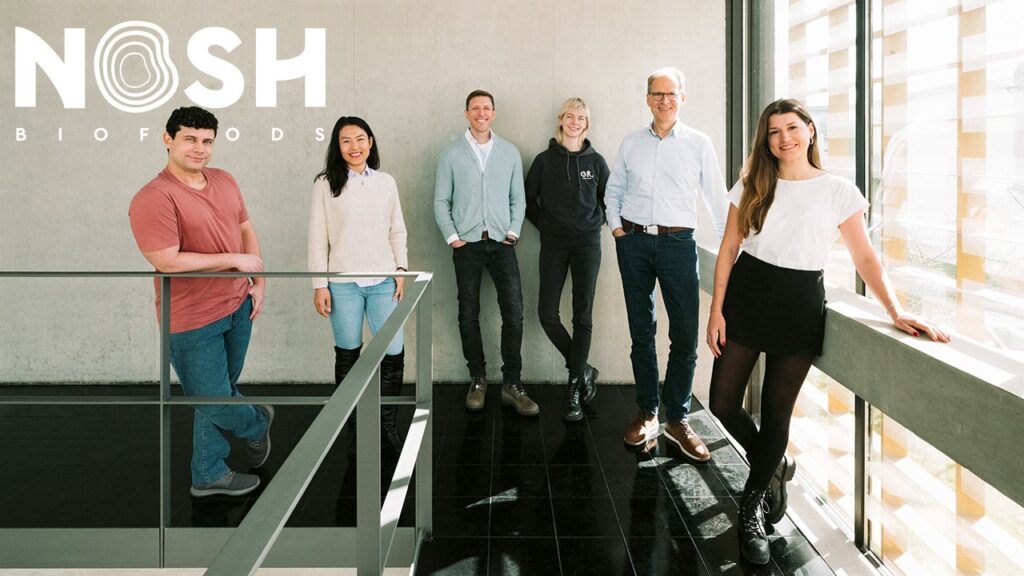
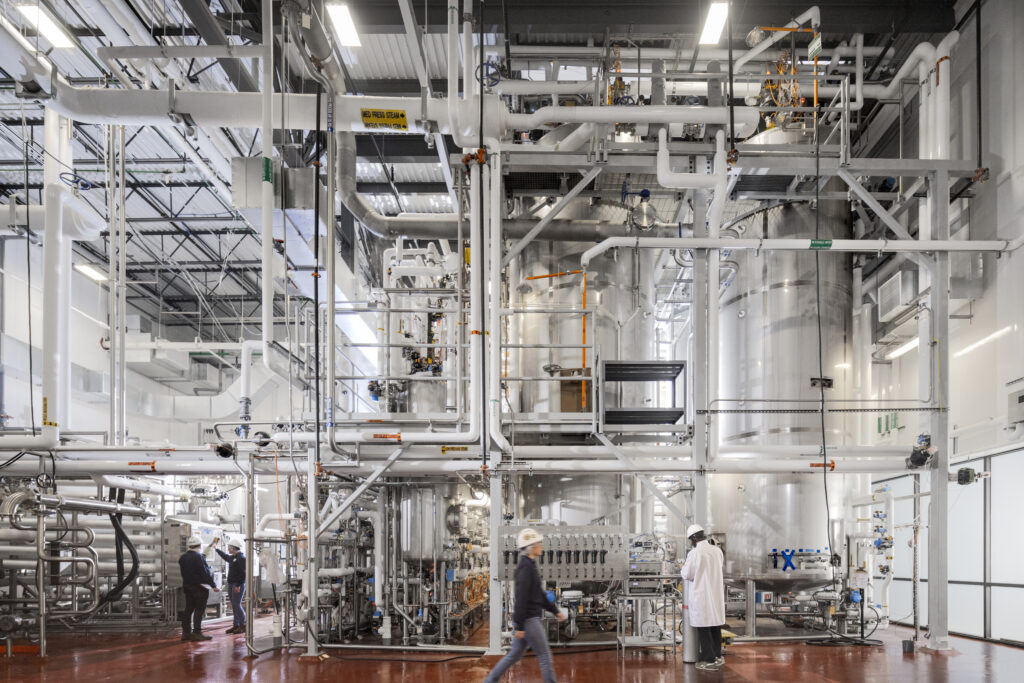
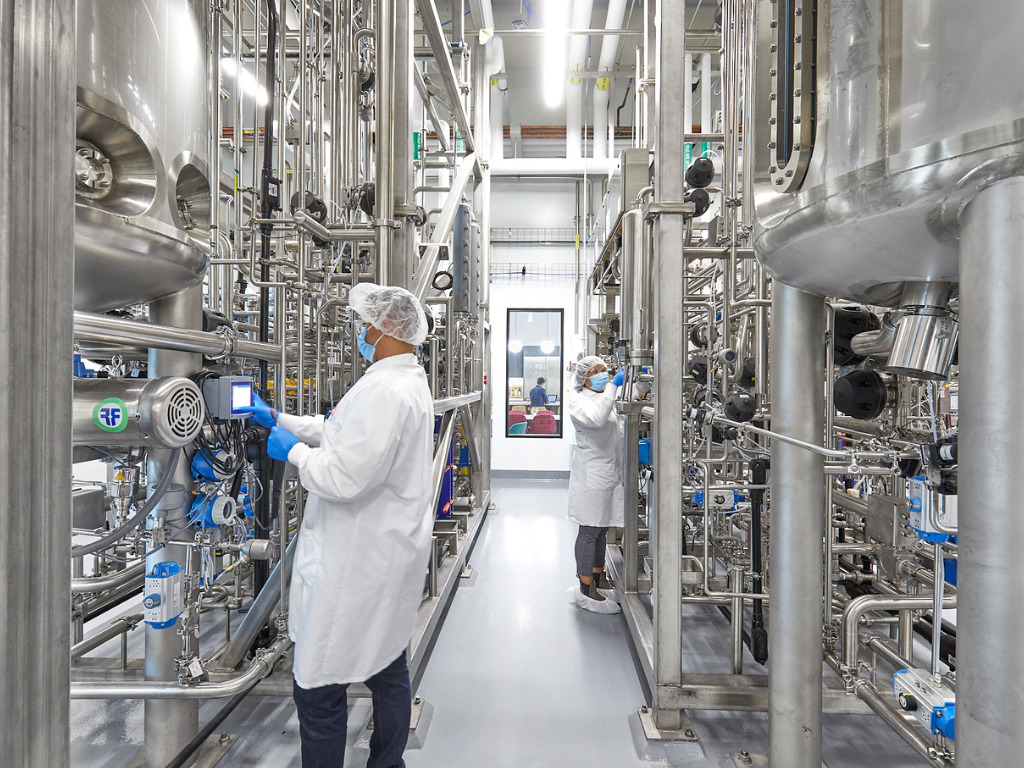
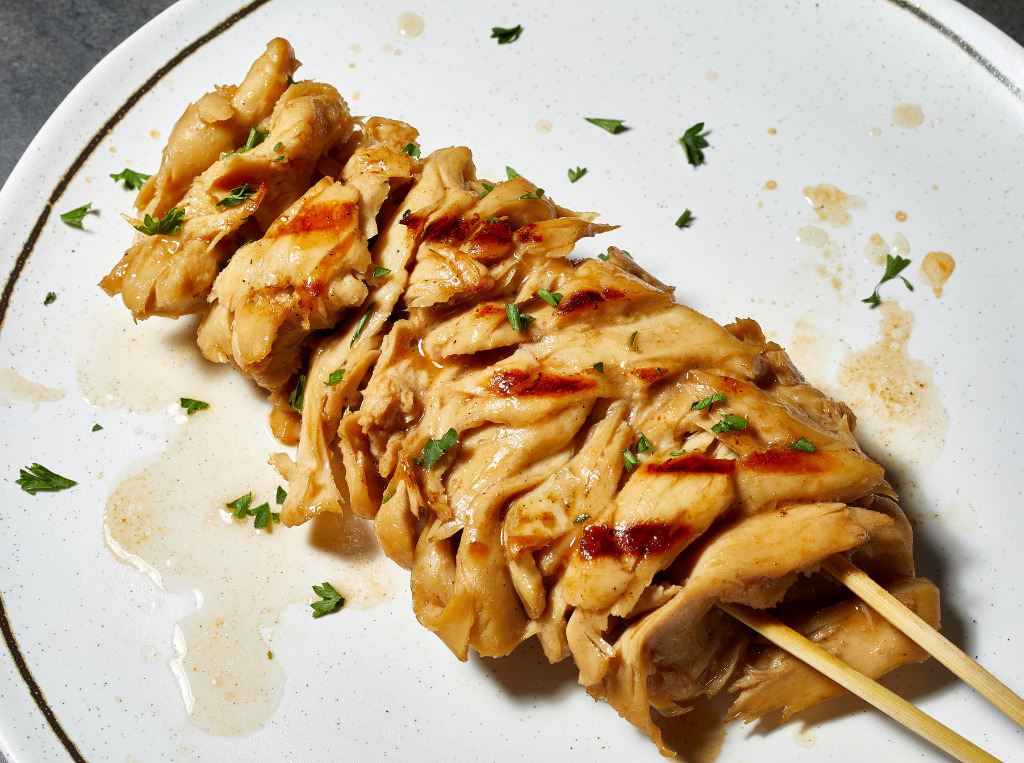
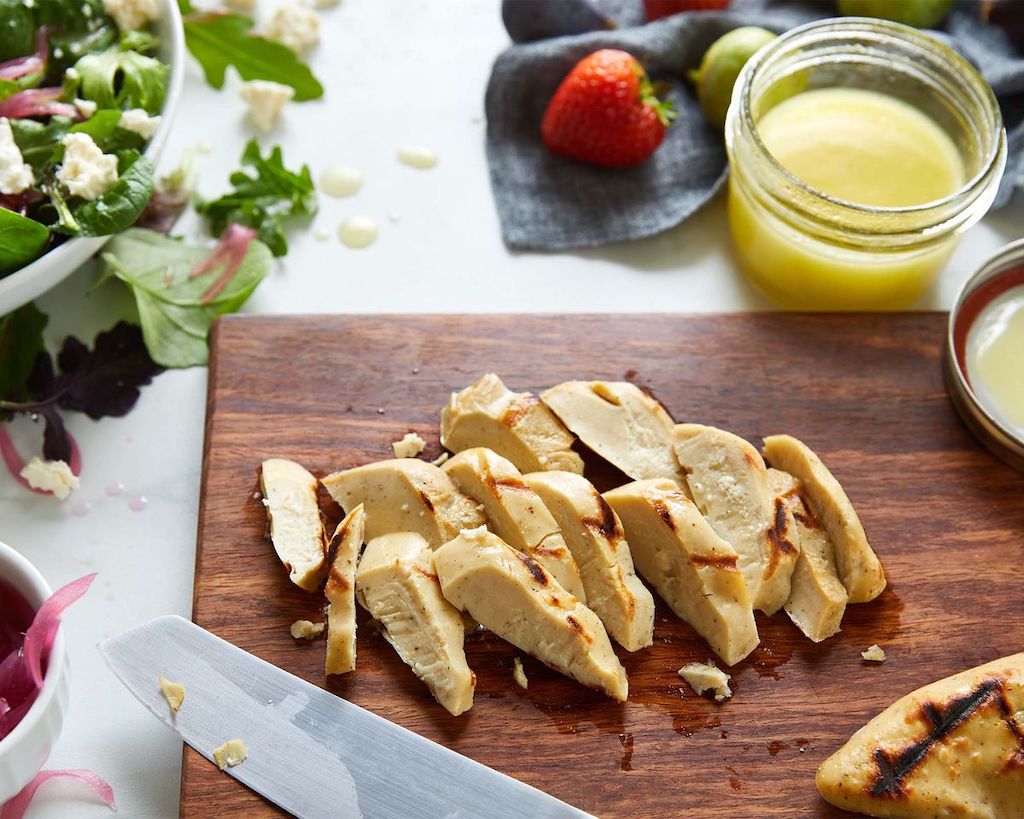
German mycoprotein startup Nosh.bio has partnered with Boston-based synthetic biology firm Ginkgo Bioworks to leverage the latter’s cell programming platform to find protein-producing fungi strains with superior sensory profiles. The AI-led process will help Nosh.bio develop a single-ingredient meat alternative.
Nosh.bio creates functional ingredients from using biomass fermentation for plant-based food products, while Ginkgo hosts a cell programming and biosecurity platform to help companies manufacture more sustainable alternatives for their products.
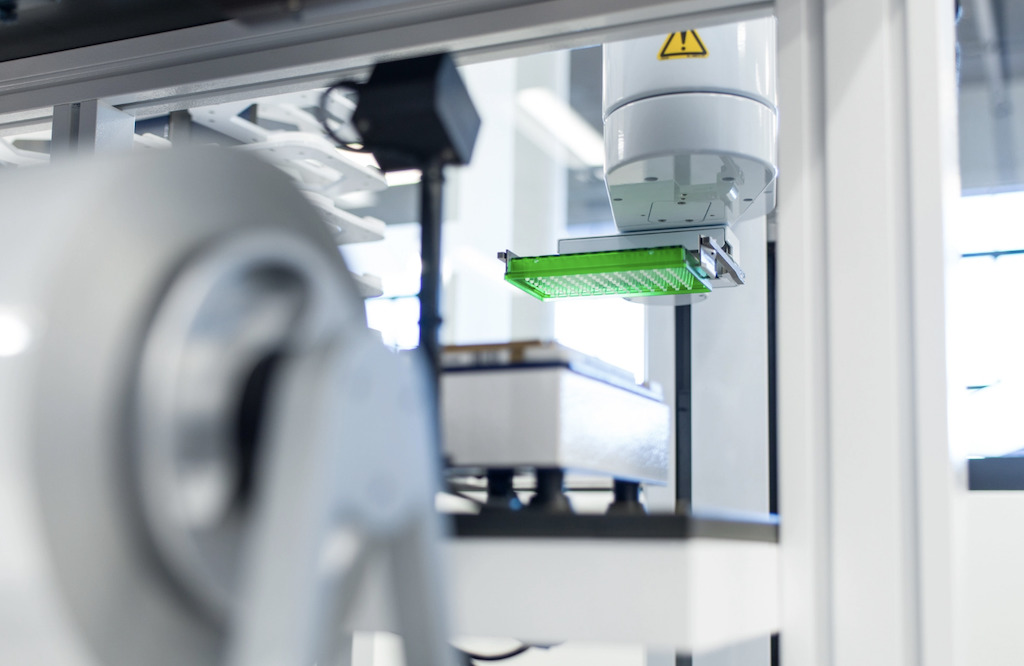
The partnership will see Nosh.bio use Ginkgo’s Strain Optimization Services and leverages its ultra-high-throughput encapsulated screening capabilities to screen for fungi strains that can create more flavourful, nutritious alt-proteins that can deliver a savoury and “naturally meaty” flavour in food products.
Courtesy: Nosh.bio
In search of the perfect fungal ingredient
The two companies argue that animal-free protein still faces a challenge in creating delicious alt-meat products that are less processed and more affordable than conventional meat. Multiple studies have shown the importance of taste, texture and price parity to the growth of this sector. In addition, ‘clean-labels’ with shorter ingredient lists and fewer processed elements are equally important to consumers.
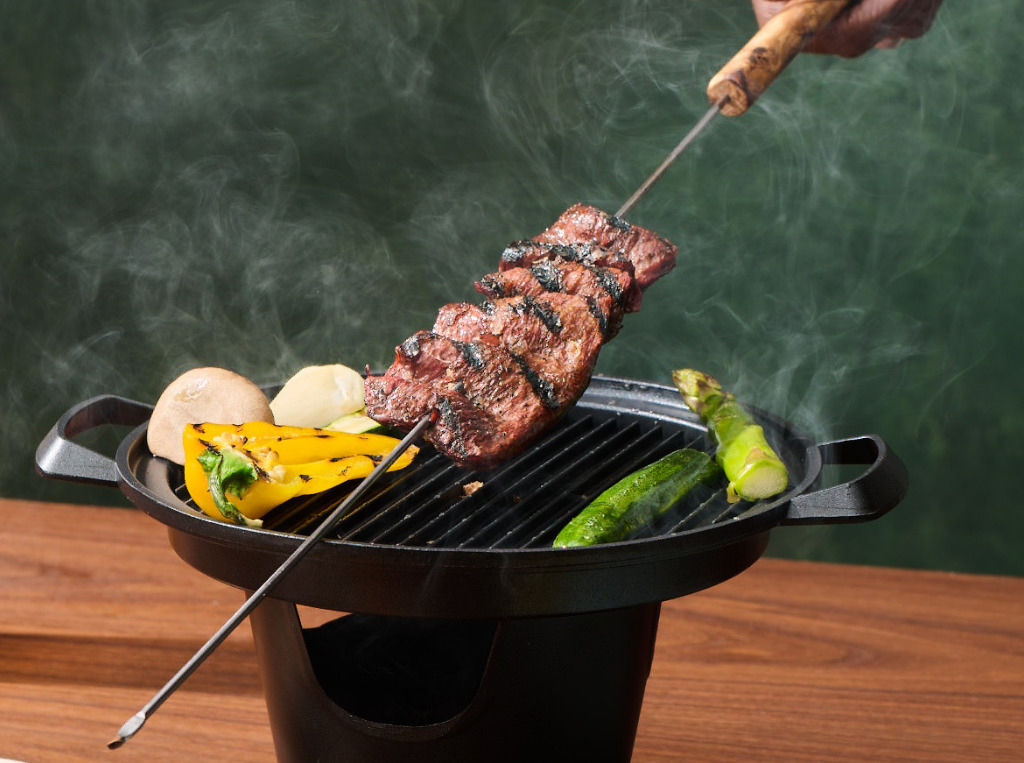
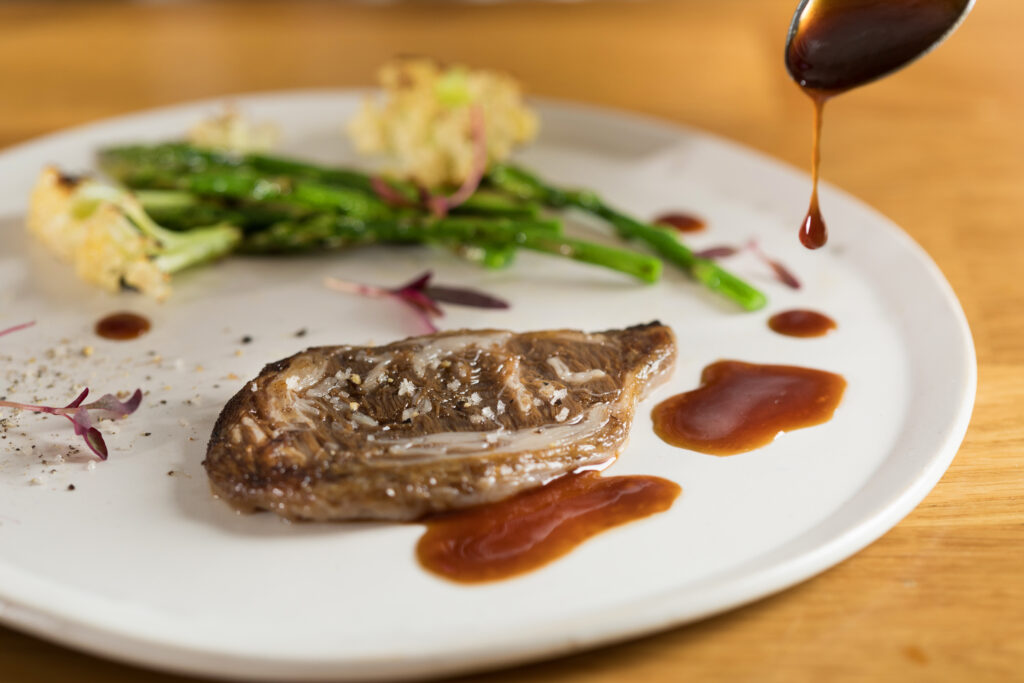
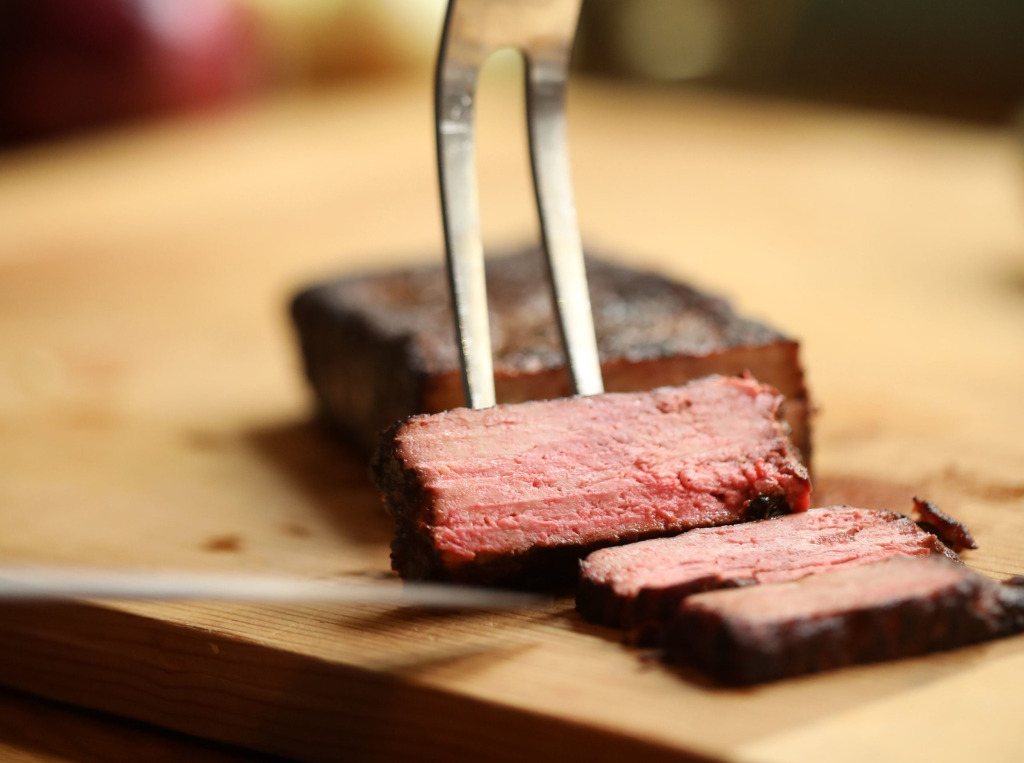
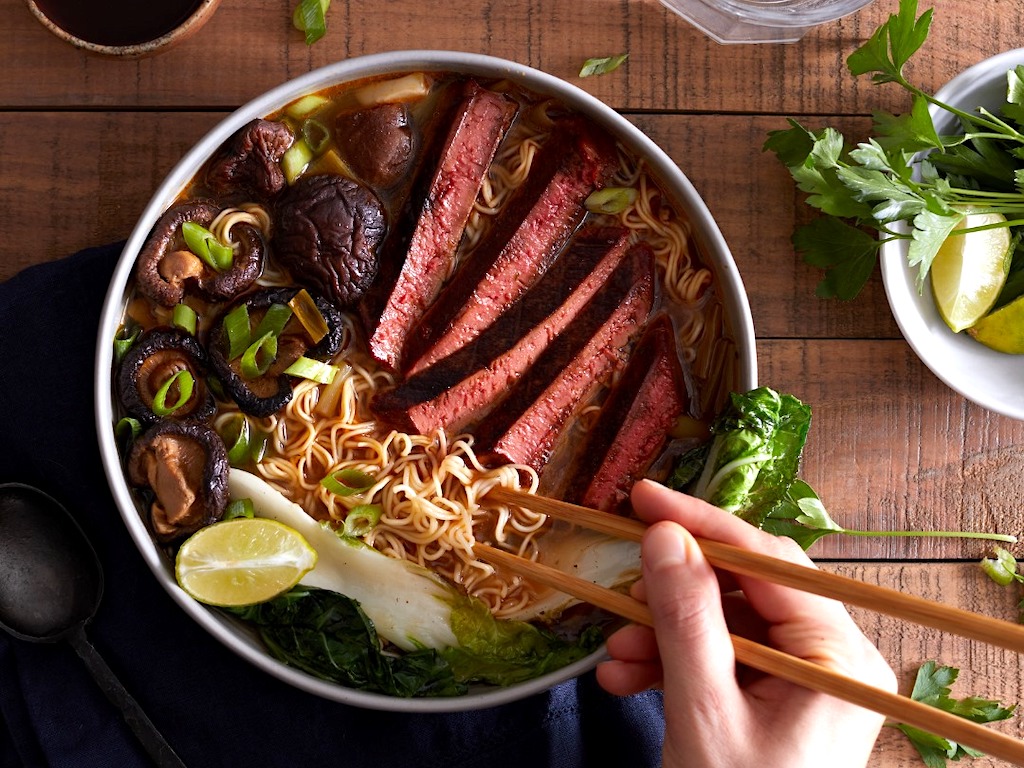
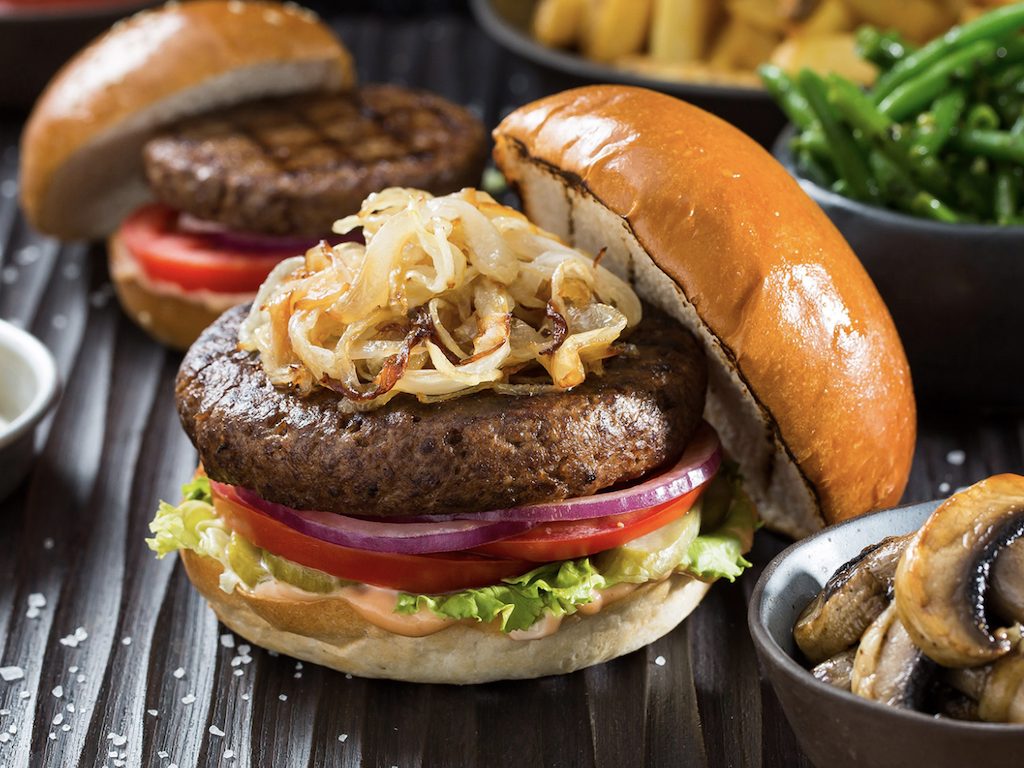
Nosh.bio’s tech platform uses fungal biomass to develop single-ingredient mycoprotein-derived meat alternatives. The startup, which raised €3.2M in a seed funding round earlier this year, says red meat products – like steak – are the most challenging product to recreate, and current alternatives can contain many ingredients and chemical additives. It adds that its “highly efficient” and “cost-effective” production process can make alt-meats that taste and feel just like conventional meat but carry better health credentials.
To enable the creation of such an ingredient, Ginkgo hopes to discover a fungi strain with “higher native proteins” involved in achieving the superior qualities Nosh.bio is looking for in its plant-based meat products. The cell programming platform will run a mutagenesis and screening campaign with EncapS, its proprietary encapsulation and screening technology, which is able to search through up to one million variants in a single run. This will help select the best-performing strains for further development.
“Nosh.bio is eager to enable the transition from animal-based to animal-free products. Our affordable, high-quality plant-based ingredients can build a product that’s even closer to meat in taste and texture than alt-protein options currently on the market,” said Nosh.bio co-founder and CEO Tim Fronzek. “What really excites us about partnering with Ginkgo is their accelerated screening technology that can help us pinpoint and develop a super ‘meaty’ mycoprotein.”
Kalpesh Parekh, VP of business development at Ginkgo Bioworks, added: “Our proprietary encapsulation and screening technology can expeditiously deliver valuable insights that enable our partners to optimise their R&D efforts and overall product.”
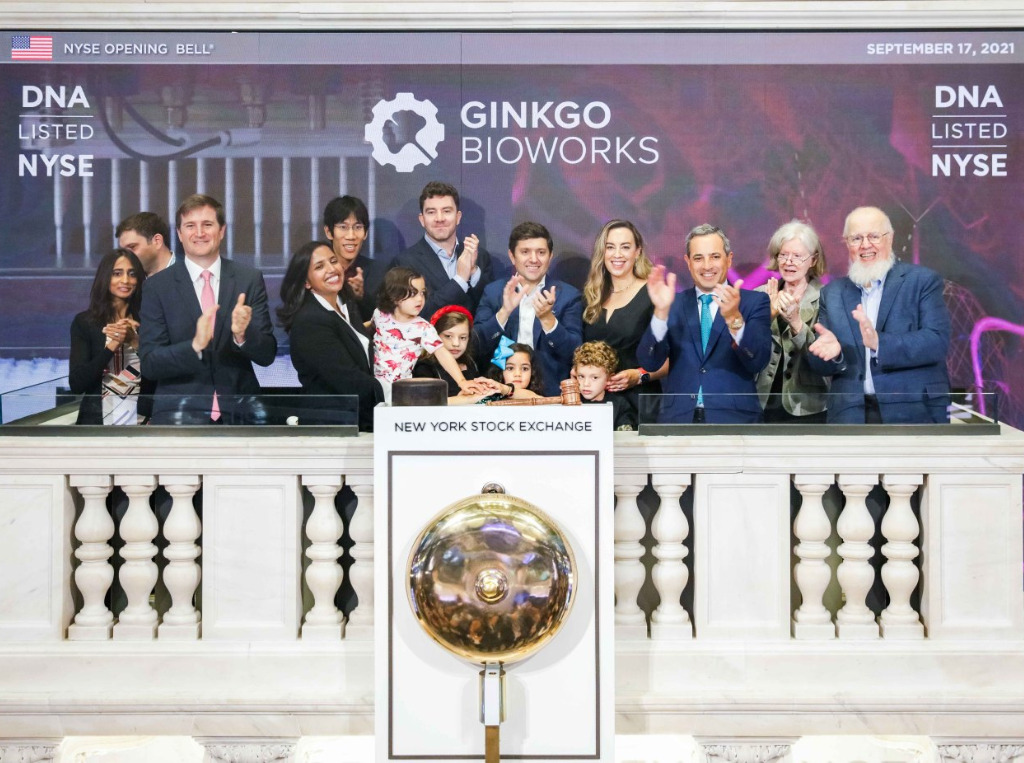
Ginkgo, which became a public company on the NYSE in 2021 with a $15B valuation after closing a SPAC deal with Soaring Eagle Acquisition Corp, already has link-ups with Swiss ingredients giant Givaudan for fermentation-based sustainable ingredients, alt-materials startup Bolt Threads for its b-silk protein, and pharmaceutical giant Pfizer, among others. Launched in 2008, its tech has also led to several spinoff companies, like Motif FoodWorks and Joyn Bio (a joint venture with Bayer).
Courtesy: Ginkgo Bioworks
Artificial intelligence and alt-protein
As AI makes it into our everyday lives more and more, it’s becoming a part of the alt-protein industry as well, with companies leveraging the future-facing tech to solve current and forthcoming problems. Last month, sustainability non-profit Food System Innovations partnered with AI expert Noa Weiss to launch GreenProtein AI, which uses machine learning to optimise the extrusion and texture of plant-based meat.
AI has already been in use for years by Chilean food tech brand NotCo for its plant-based alternatives. Its patented AI tech, Giuseppe, is the brains behind the company’s alt-milks, mayo and burgers. Similarly, Singapore’s Howw Foods uses AI to make Hegg, its vegan powdered egg product.
Meanwhile, many companies have collaborated with AI firms to improve the development of alt-protein products. Bel Foods – the French dairy giant behind Babybel cheese – has partnered with California’s Climax Foods to make vegan products, while Danone is working with Californian AI firm Brightseed to discover hidden nutrients and compounds in plant crops. And Colorado-based mycelium meat maker Meati collaborated with AI company PIPA to speed up and expand its understanding of the health and nutrition credentials of its nutrient-rich products.
Some companies have used AI as a marketing tool. US startup Pleese Foods unveiled a campaign in August that employed AI to generate whimsical imagery of cheese as a flourishing crop and being grown on trees.
The UK is set to fast-track its approval of cultivated meat as part of a bilateral agreement with Israel, according to the Telegraph. The news comes two months after Israel’s Aleph Farms became the first cultured meat company to file for regulatory approval in the UK.
Currently, the UK still retains its pre-Brexit rules and follows EU regulations when it comes to cultivated meat. In the EU, it’s regarded as a “novel food“, and companies thus need to gain premarket authorisation for the sale of their cultured meat products. In the UK, the body handling this matter is the Food Standards Agency (FSA).
In 2021, the FSA conducted a consumer poll to test acceptance of alternative proteins, and found that 78% of Brits had heard of cultivated meat, and a third would be willing to try it. Despite that, only three in 10 perceived it as safe to eat, and 42% said that nothing could encourage them to try cell-based meat. However, 27% said they could be persuaded if they knew it was safe to eat, and 23% if they knew it was properly regulated.
According to alt-protein think tank the Good Food Institute (GFI), the FSA then launched a review of the UK’s novel food regulation to “identify and evaluate a range of potential regulatory models for novel foods”. So while the EU model remains in place for now, GFI said “we may see a new system for evaluating cultivated meat products in the future”.
And we might just be soon. The Telegraph reports that UK ministers and regulators are looking to accelerate the approval of cultivated meat to boost food security, ease the cost of living, and provide alternative, planet-friendly meat sources for a growing population.
Taking inspiration from Israel’s cultivated meat sector
Courtesy: Aleph Farms
The newspaper says the UK is set to sign a deal with Israel to boost collaboration on cell-cultured meat. With more cultivated meat companies per capita than almost anywhere else, Israel is home to many pioneers in this space, including Believer Meats (formerly Future Meat), SuperMeat, BioBetter, and Aleph Farms. In 2021, it invested $18M in the world’s largest cultivated meat consortium, while government funding has contributed $13M to early-stage startups and infrastructure in this sector.
Some have predicted that Israel could be the next country to greenlight the regulatory approval for cultured meat. It’s against this backdrop that the nation is said to be at “the forefront of the movement”, as the Telegraph puts it. The UK’s FSA is now reportedly “considering future changes” to its regulatory process to cut red tape and “remove unnecessary burdens on business”.
“There are some good signs that in the DNA of homosapiens, there’s a need for meat and we are not going to be able to meet that through traditional husbandry with nine billion hungry mouths to feed by 2050,” said science minister George Freeman. “We’re going to have to generate novel sources.”
The cost-of-living crisis has hit the UK hard, with prices of some meat and vegetables almost doubling over the past year. “If we don’t quickly generate ways to develop very low-cost protein, we’re going to see huge geographical instability,” Freeman said.
Freeman and FSA officials visited Israel earlier this year to taste the cultivated meat and see how the market is regulated in the country. The deal between the two nations comes on the heels of another recent agreement to boost quantum research and academia links and allow Israeli businesses to submit new tech for regulatory approval in the UK.
The UK’s cell-cultured opportunity
Courtesy: Ivy Farm
In August, Aleph Farms became the first cultivated meat company to file for cultivated meat approval in the UK. It’s already in talks with commercial partners and plans to begin production in the country in the next few years, expecting the regulatory process to take “a couple of years” but calling the potential “huge”.
It signalled the opportunity for cultivated meat in the UK. GFI Europe reported that investment in the sector grew by 400% between 2021-22 – more than all of Europe combined – while separate research found that British companies received £28.55M in investment for cultured meat, behind only the US, Israel, Netherlands and Singapore. Moreover, research has found that the UK’s overall alt-protein sector could create 25,000 jobs by 2035.
Moreover, earlier this year, the UK government made its largest investment in alt-protein with a £12M grant for the creation of the Cellular Agriculture Manufacturing Hub. Similarly, the UK’s Biotechnology and Biological Sciences Research Council has set aside £20M towards sustainable protein development.
Additionally, according to the Telegraph, the UK is home to more than a third of all companies working on cell-cultured meat globally. Among them are Ivy Farm, which opened the UK’s largest cultivated meat facility in Oxford last year, and Extracellular, which is building what it claims will be “Europe’s largest” contract pilot plant for cultivated meat in Bristol (due to be operational by December).
James Cooper, deputy director of food policy at the FSA, told the Telegraph: “The FSA is committed to supporting business innovation in new markets by delivering effective and proportionate regulation to protect consumers. We are always keen to learn more from other countries about their approach to the regulation of emerging technologies and are developing relationships with international organisations to learn about their approach to cell-cultivated products.”
“Israel has very strong expertise in protein replacement and in agri-tech and turning deserts into a garden,” said Freeman. “It is possible for us to be a world producer of very high standard beef, poultry and pork, whilst also making sure that we’re able to produce very low-cost protein for hard-hit families that are struggling and can’t afford a £70 joint of beef. It’s not an ‘either or’.”
He added: “It’s making sure that we’re able to maintain our very high food quality standards and international reputation, reduce the cost of living, and help develop the technologies that the world needs.”
Sunak’s climate U-turn and calls for improved cultured meat regulation
Courtesy: Lydia Handford/UK Government
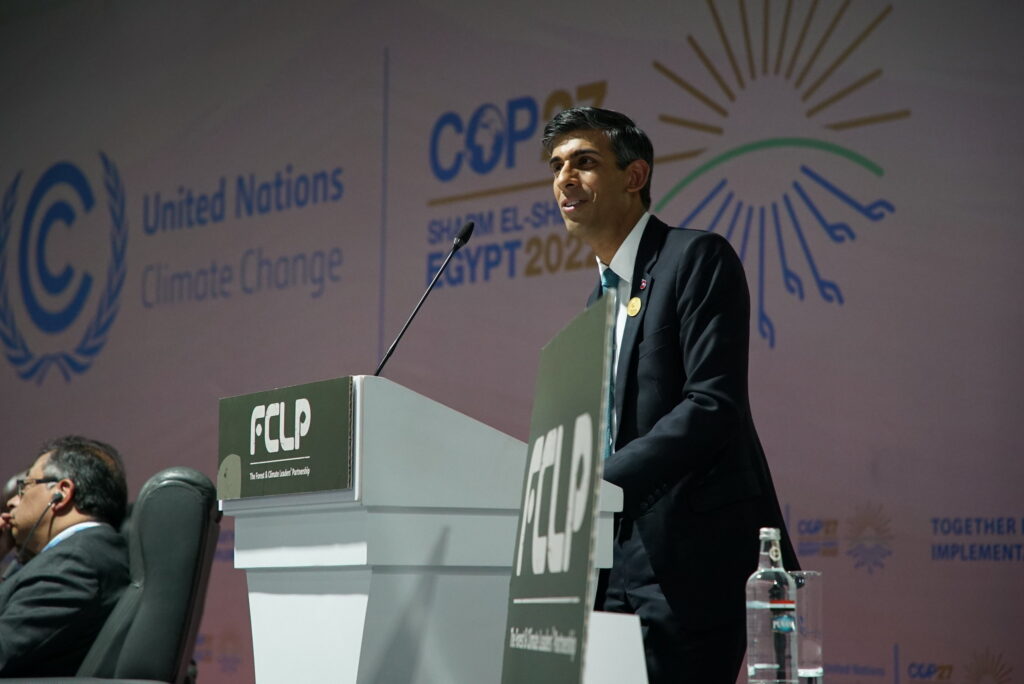
The news comes two weeks after UK prime minister Rishi Sunak U-turned on the country’s climate commitments and pushed back the deadline for gas and diesel car bans from 2030, garnering fierce criticism. Sunak said he remained committed to sticking to the UK’s net-zero goal for 2050, but wanted to be “more pragmatic, proportionate and realistic” in his approach. But he has not outlined how he would do so. In June, the UK’s Climate Change Committee said its pace of action to reduce emissions by 68% by 2030 from a 1990 benchmark is “worryingly slow”.
The Telegraph’s report follows analysis by GFI Europe in August, which found that the UK needs to invest £390M in alternative proteins between 2025 and 2030 to avoid losing momentum to other countries and reduce the risk of startups moving overseas due to regulatory uncertainties.
“As other countries, from the Netherlands to Singapore, invest heavily in sustainable proteins, and as many British startups look to the US following the landmark approval of cultivated meat, failing to act now could see the UK falling behind in this global challenge,” GFI Europe’s UK policy manager Linus Pardoe told Green Queen at the time.
An independent review by Deloitte in June found that the UK’s regulatory framework for novel foods needs refreshing. And the GFI Europe report said that the FSA should learn from best practices of more innovation-focused regulatory bodies, both domestically and overseas.
“Currently, the UK’s regulatory framework isn’t optimised to foster the growth of this new way of making sustainable food,” Pardoe added, “and our report recommends that regulators move urgently to introduce ‘quick win’ reforms to the novel foods framework to build confidence in the sector.”
Unilever-owned plant-based meat brand The Vegetarian Butcher is opening a vegan butchery in Rotterdam, Netherlands. To be launched on World Animal Day, it marks the 13th anniversary of the company’s launch.
On October 4, The Vegetarian Butcher will open the plant-based butchery to celebrate 13 years to the day of its own launch. The Rotterdam-based store will be open five days a week (from Tuesday to Saturday) and feature the brand’s extensive range of alt-meat – including vegan chicken, shawarma and beef mince – alongside limited-edition offerings exclusive to the butcher shop.
Championing ‘real craftsmanship’
Courtesy: The Vegetarian Butcher
While the dozens of products can be bought for home cooking, there will be an in-store menu to try them as part of meals too. “We are very happy with the opening of the largest plant-based butcher’s shop in the Netherlands. What makes this Butcher unique is that the products on our shelves are plant-based and yet have the recognisable properties of meat classics,” The Vegetarian Butcher CEO Hugo Verkuil told Dutch news outlet De Ondernemer.
“We don’t want to make any concessions on taste, structure and nutritional value, and you can taste that,” he added. “For us, taste is central and that is why we have been working with chefs and product developers who know the specific properties of meat since its inception. This led to a wide range of successful hacks.”
Verkuil continued that the limited-edition exclusive products represent “real craftsmanship”. “The range in this plant-based butcher is not only of high quality, but also remains surprising. This makes every visit worthwhile,” he explained. “This new generation of plant-based meat products offer the experience of beloved meat classics, making the transition to more plant-based meat easier than ever.”
The announcement is a full-circle moment for the brand, which began in 2010 by selling alt-meat out of a butcher shop in The Hague. Its products are now available in 55 countries and over 40,000 retail stores. Additionally, it has foodservice partnerships across the world, most notably with Burger King in Europe and Asia.
The rise of vegan butcher shops
Courtesy: Carrefour
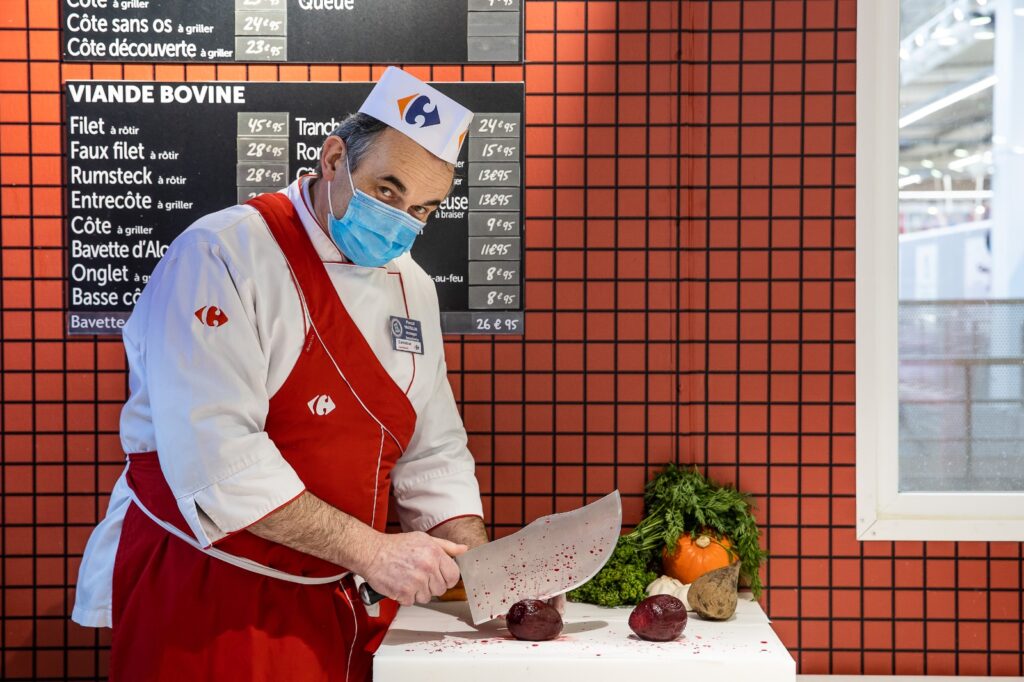
This won’t be the company’s only vegan butcher shop. Last year, it unveiled what it claimed was France’s first plant-based butchery, selling alt-meat by weight at a counter in French retail giant Carrefour‘s Carré Sénart store. In a social media post, the latter said: “Carrefour is the first major retailer to market these delicious products that have already won over Burger King.”
That partnership has extended to Spain too, with the alt-meat producer’s products available in 24 Carrefour stores. Meanwhile, in 2019, it hosted a Meatless Monday takeover at UK butchery-restaurant Hill & Szrok.
And earlier this year, The Vegetarian Butcher published its first cookbook, New Meat, featuring meatless spins on 100 classic meat dishes. The recipes were written by its co-founder Jaap Korteweg, as well as 11 world-renowned chefs, including Michelin-starred chefs Asimakis Chaniotis, James Goodyear, Ricky Saward and Andrew Pern.
The cookbook highlighted five of The Vegetarian Butcher’s products, like Chicken Chunks, Raw Burger, Meatballs, Chicken Breast, and a Crispy Chicken Burger. And these were used in recipes over five categories: Weekdays; Breakfast, Brunch & Lunch; Weekends; Snack Time; and Classic.
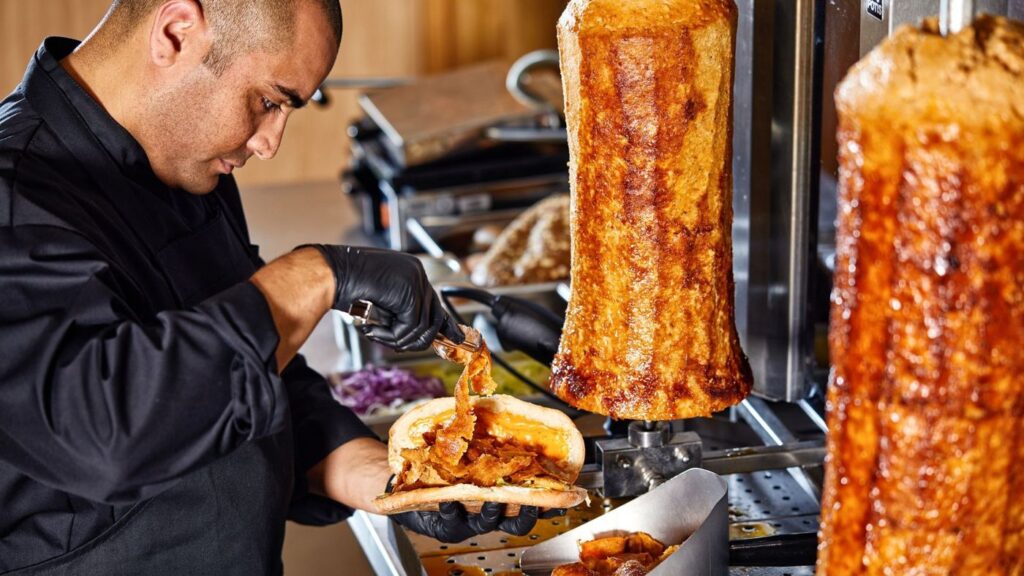
The brand, which was acquired by Unilever in 2018, has previously opened its pop-up restaurant, De Vleesch Lobby, in The Hague and a vegetarian eatery at Rotterdam Central Station. Its products have won more than 25 awards – and earlier this month, it launched a vegan döner kebab SKU across Europe.
Other plant-based butcheries include Love Handle in Singapore, Rudy’s Vegan Butcher in London, The Herbivorous Butcher in Minneapolis, and Maciel’s Plant-Based Butcher & Deli in Los Angeles. And in a similar collaboration as The Vegetarian Butcher and Carrefour in Europe, in 2021, Californian pea protein meat maker Abbot’s Butcher landed in 360 Sprouts Farmers Markets locations across the US.
Impossible Foods has partnered with IHOP on a range of menu items, expanding its US foodservice footprint. A leading plant-based meat company, Impossible has a knack for getting these collaborations with F&B chains just right – with multiple deals ongoing for years now.
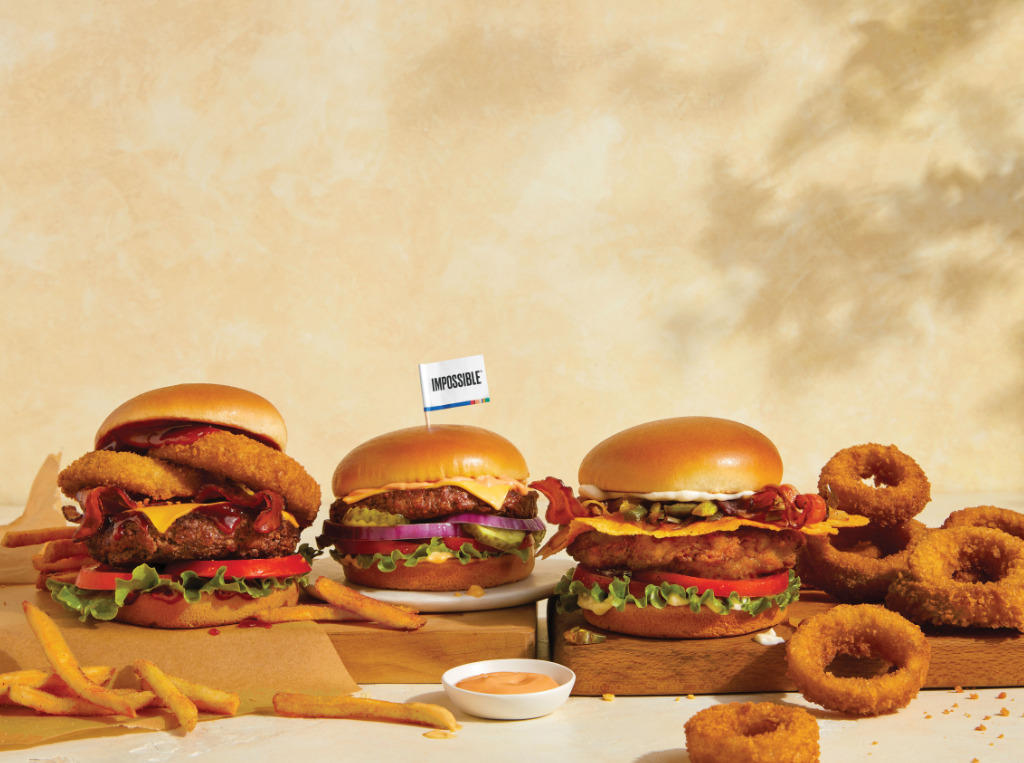
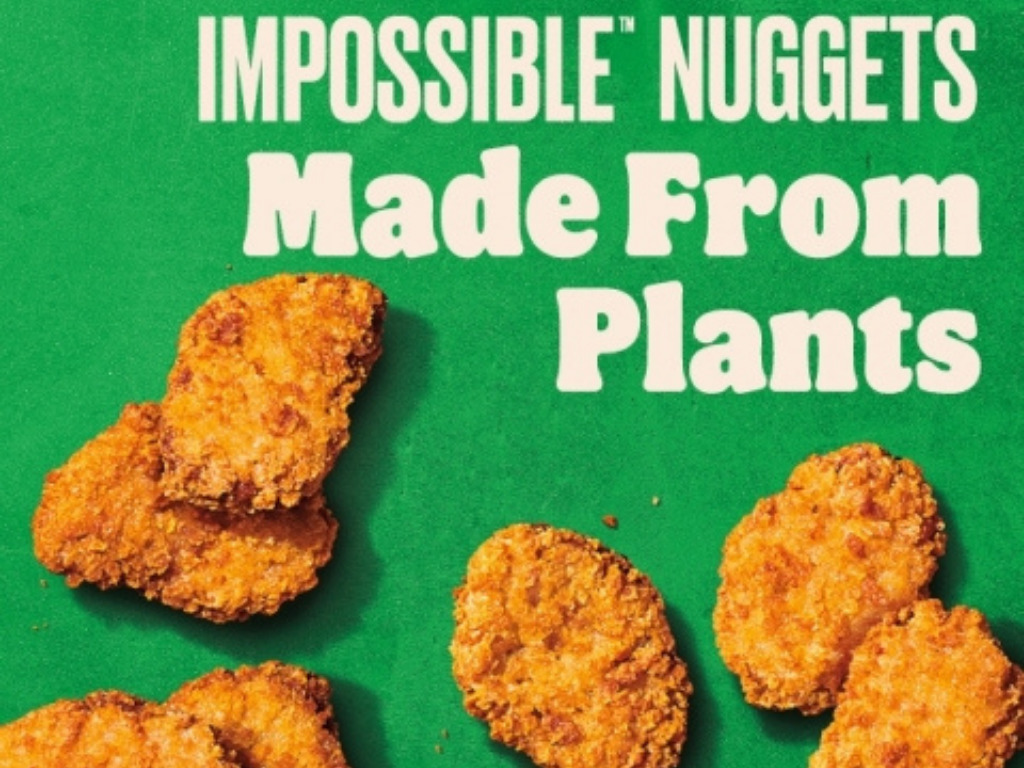
Announced yesterday, the partnership with IHOP sees Impossible’s breakfast sausage and burger patties make it on the iconic US pancake diners’s menu at all of its almost 1,700 locations. It expands the alt-meat giant’s presence in restaurants and fast-food chains across the US – and globally, it claims to be on the menu of over 40,000 foodservice locations.
It brings to mind similar deals that Impossible has struck with fast food giants over the years, which – unlike many other alt-meat foodservice collaborations – are long-standing and still going strong.
Plant-based meat sector overview
Courtesy: Impossible Foods
Impossible occupies an interesting position amidst a somewhat precarious climate for plant-based meat, as the sector has faced media storm over the last couple of years after faltering sales, particularly in the US. Unlike its main competitor Beyond Meat, it’s not a public company, and so hasn’t experienced the same scrutiny – but it has still felt the effects.
According to industry think tank the Good Food Institute, all this turmoil has results in retail sales for plant-based meat flatlining in the US, while pound sales (as measured by weight) have decreased. And while the hospitality sector is still recovering from the pandemic-induced lockdowns, in the US, plant-based meat sales in foodservice reached an all-time high of $730M in 2022.
Speaking to AFN earlier this month, Impossible CEO Peter McGuinness agreed that the sector was facing significant challenges but said that the company’s retail performance was strong: “In the 52-week Nielsen [data], we’re still growing high single-digit, low double-digit in retail, which is great. We have a 50% repeat [purchase rate]… so every two people we get to try our product, one repeats, which is quite strong.” In January, the brand said its retail dollar sales grew by 50% in 2022.
Impossible’s foodservice success streak
Courtesy: Burger King/Impossible Foods
He also “We have 15% household awareness – so 85% of the country hasn’t heard of us, and you can’t buy what you haven’t heard of,” McGuinness added. “We did our first ever marketing campaign in June and July, in 11 years. It takes time to build a brand, but awareness leads to trial; trial leads to repeat.”
But one thing that has helped grow awareness about the brand is its partnerships with some of the foodservice world’s biggest operators. McGuinness noted how well the Impossible’s collaborations in this space are going. And he’s right.
Impossible made a huge splash when it partnered with American chef David Chang’s Momofuku restaurant group in 2016 right out of the gate. It’s been seven years, and that link-up is still going (albeit in Chang’s other eateries). Similarly, it partnered with hamburger chain White Castle in September 2018 on the Impossible Slider and the two companies just celebrated their five-year anniversary.
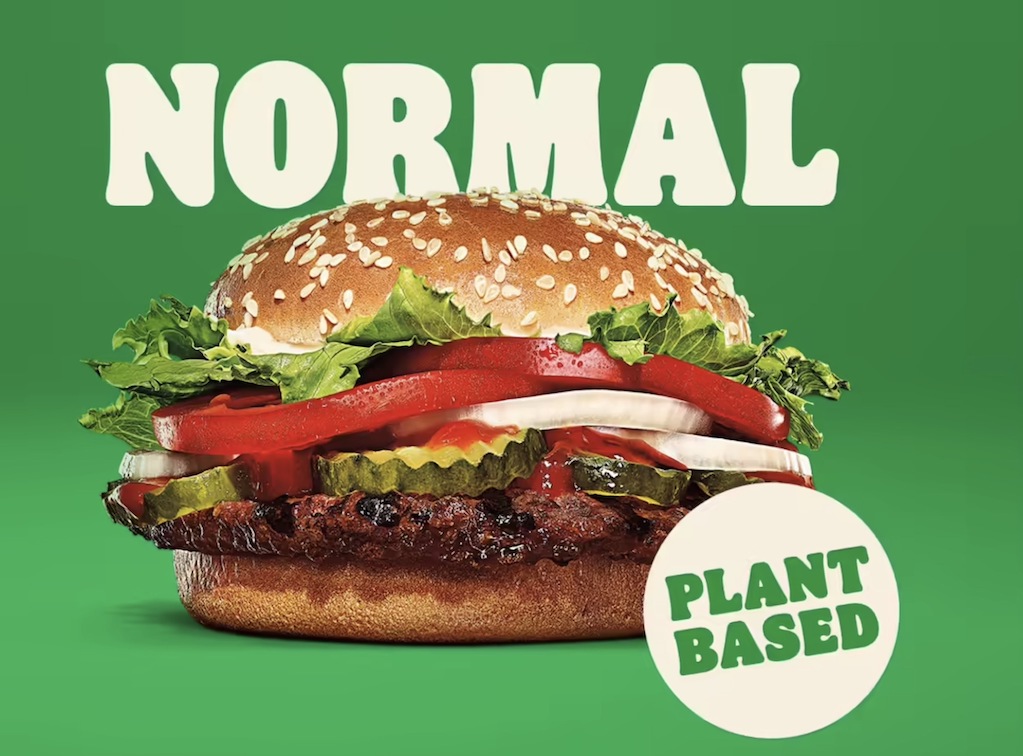
Moreover, Impossible’s breakfast sausage has been on Starbucks menus in the US for four years now, and its partnership with Disney – which saw the alt-meat appear on restaurant menus across multiple Disneyland locations in the US – is three years strong now. One of the company’s major early foodservice wins, launching the Impossible Whopper at Burger King, is a four-year strong partnership.
Foodservice remains a bright spot for plant-based
Courtesy: Beyond Meat
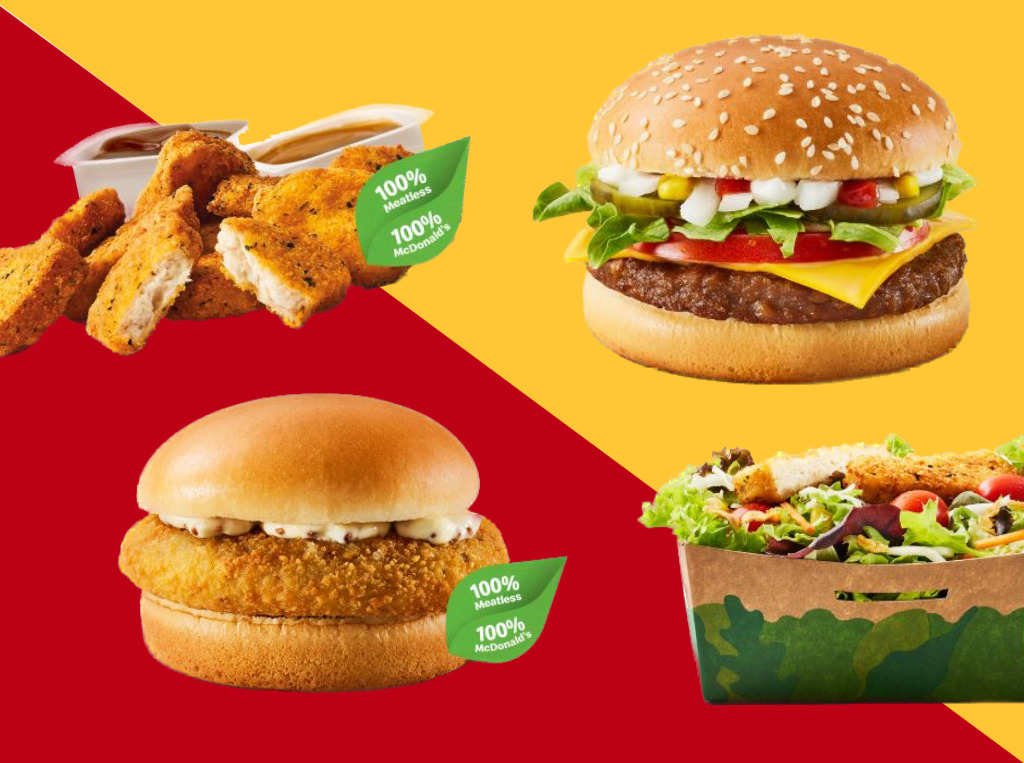
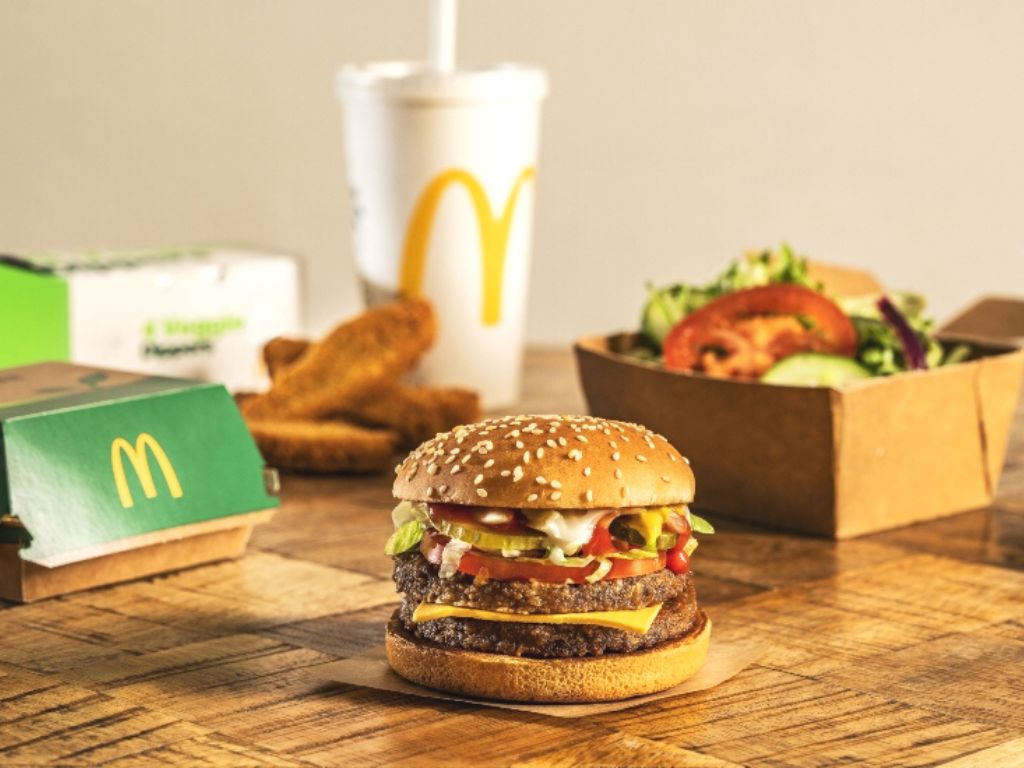
This retention rate is impressive, especially when so many similar collaborations are short-lived. You only have to look as far as the world’s biggest food brand: McDonald’s, Of note, the partnerships Though it is much more successful in other countries, like the UK and Germany.)
While in Europe, Beyond Meat enjoys a successful partnership with McDonald’s that has seen both a UK and German trial go nationwide, and new markets launching consistently, stateside Beyond Meat’s fast-food partnerships track record is more spotty. The US McPlant launch was shorter-lived, with the trial ending last year owing to poor sales.
In 2021, the company announced a deal with Yum! Brands – the parent company of Pizza Hut, KFC and Taco Bell with Beyond Meat developping vegan chicken nuggets thatwere trialled and taken off the menu after a couple of months (they returned for another temporary period).
With Pizza Hut, the Beyond Italian Sausage Pan Pizza lasted barely a year before being withdrawn. Taco Bell had some teething issues with its Beyond Meat partnership too, but is now testing its pea-protein beef in the chain’s famous Crunchwrap. Then, there’s the discontinued team-up with Panda Express, which began selling Beyond Orange Chicken in the summer of 2021. It was brought back by popular demand last year but for a limited time as well. The Beyond Meat-Panda Express partnership was so popular with consumers that an online petition garnered over 4,000 signatures asking the companies to reintroduce the dish.
It’s not clear whether some of these partnerships were discontinued due to poor sales or for other reasons. Foodservice partnerships are undoubtedly complicated and require buy-in from multiple stakeholders to be successful, not to mention consumers have to support the campaigns.
Impossible’s latest IHOP announcement suggests the company is doing something right on the foodservice front, particularly as the latter is a bright spot for the plant-based category.
That being said, the plant-based category is an important one for restauranteurs. According to a report released last month by the Plant Based Foods Association (PBFA), 95% of foodservice operators in the United States anticipate either higher or consistent sales of vegan food and beverages in the coming year. Furthermore, 76% of them plan to maintain or expand their selection of plant-based meat alternatives.
It’s a fast-paced world. There’s a lot to do. Cooking? Gah, who has the time? But you love food. We get it. Ready-to-eat meals are here to save you, showcasing the best of plant-based food that’s ready in a jiffy. Here are the (vegan) crème de la crème.
Ready meals have a bad rep. Sometimes it’s a perceived lack of freshness, and sometimes, they are just bland or unappetising.
But they can also be a lifesaver (especially for busy working parents). In the constant grind of the workday, sometimes the last thing you want to do or (at least as a writer) break your flow is cook. Believe me, I would kill for a nice vegan meal right now – something I could just microwave or heat up on the stove.
Well, I’m here to tell you – I know a lot of ready meals are meh, but some truly stand a cut above the rest. So even if you’re a food snob, you won’t be disappointed. Plus, they can help you get through your day that much easier – whether that is just a workday, a busy weeknight, or even just a lousy Sunday afternoon.
Here are the brands making some of the best plant-based ready meals you can buy:
Impossible Foods
Courtesy: Impossible Kitchen
Alt-meat giant Impossible Foods launched its frozen ready-to-heat bowls last September, and it’s an eight-product-strong range. The meals contain Impossible’s plant-based beef, chicken or pork, with 10-13g of protein per serving. They can be heated in five minutes.
The pork bowls include vegan mac and cheese, sweet and sour pork with rice, and BBQ pork with potatoes and beans. The chicken meals include a spicy enchilada bowl and a teriyaki option with rice. Then there’s an Impossible beef burrito bowl, along with meals with both beef and pork – pasta bolognese and spaghetti and meatballs.
You can find Impossible’s frozen plant-based ready meals at Walmart for $6.28.
Daring
Courtesy: Daring
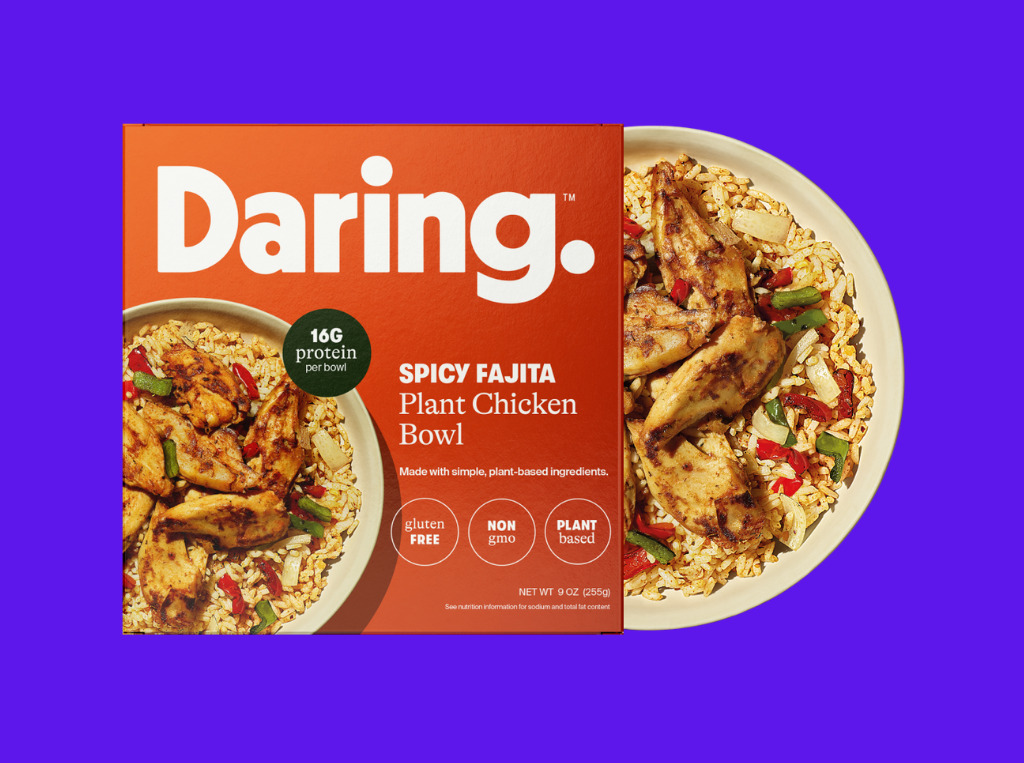
Vegan chicken brand Daring also deals in the ready-to-heat bowl business. It has three frozen entrées that pack in 16g of protein.
The Harvest Plant Chicken Bowl pairs Daring’s meat alternative with brown rice, a chimichurri sauce, sweet potatoes and kale. The Teriyaki bowl, meanwhile, combines the teriyaki-flavoured soy chicken with white rice and broccoli, and the fajita bowl contains fire-roasted onions and peppers, white rice and cajun-spiced Daring chicken.
You can find Daring’s frozen bowls online and at various retailers across the US for $8.99.
Somos
Courtesy: Somos
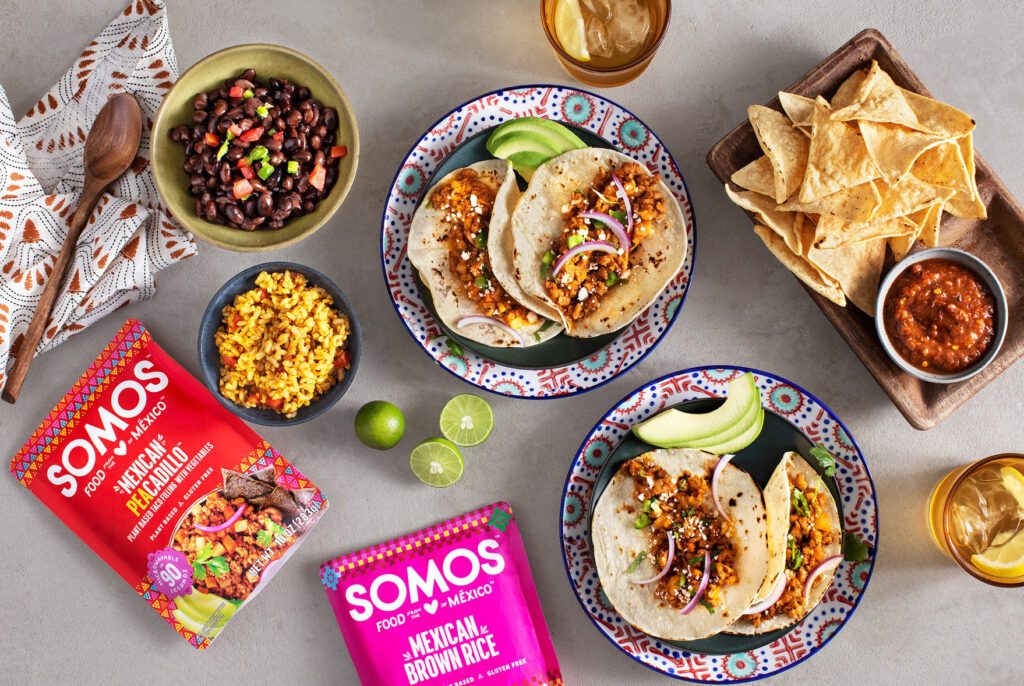
Somos might be known for its mind-blowing chilli crisps and salsas, but it has an extensive range of vegan ready meal components too. The idea is to mix and match the rice, beans and taco fillings to create your own meal – it’s perfect for fajita night or burrito bowl lunches.
The white rice comes in cilantro-lime and Mexican street corn flavours, and brown rice in Mexican red salsa and poblano options. As for the beans, there are whole-cooked black beans, as well as spicy or chipotle refried beans.
Moving on to the veggie entrées, Somos used a pea-protein-based beef alternative as the main taco filling in the Peacadillo and Salsa Verde variants. The other options are smoky chipotle mushrooms and cauliflower tinga.
To help people pick, Somos offers bundles comprising rice, beans, taco fillings and a sauce jar, which retail for $28.
You can find Somos’ pick-and-mix vegan ready meal components online and various retailers across the US.
Gardein
Courtesy: Gardein
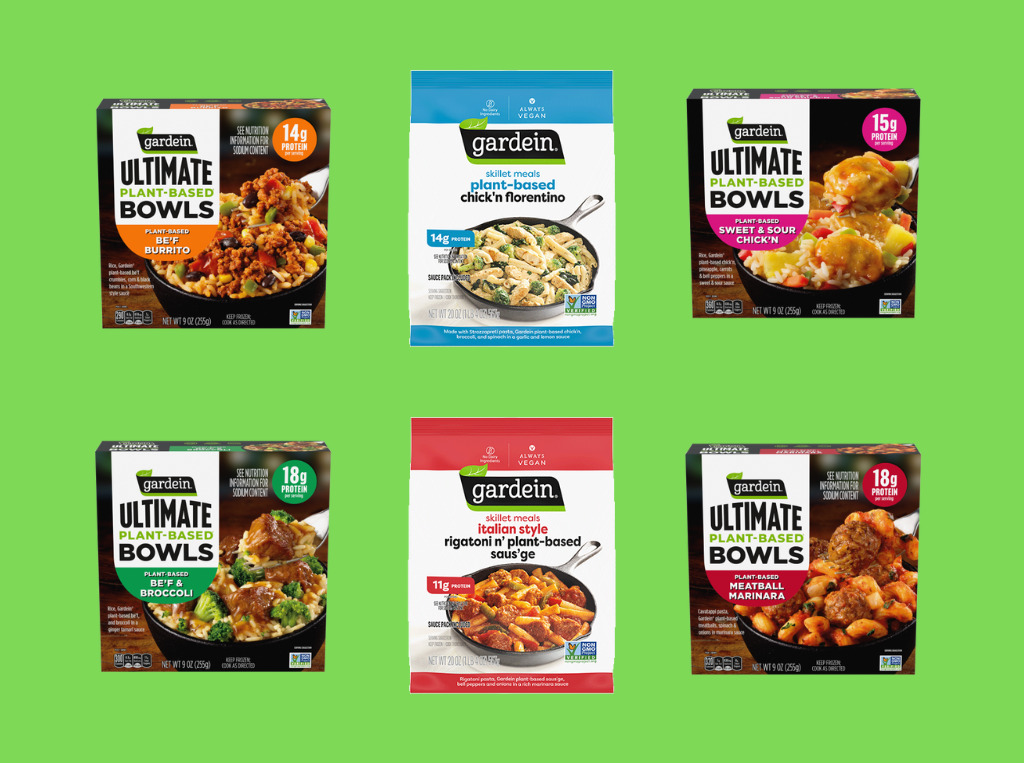
Gardein is a huge name in the plant-based industry. In addition to its beef, fish, pork, turkey and chicken alternatives, it also offers frozen vegan meals in the form of its Ultimate Bowls (14-18g of protein per meal) and Skillet Meals ranges (11-14 of protein).
The Ultimate Bowls line comprises sweet and sour chicken (with rice, pineapple, carrots and peppers), a beef burrito bowl (with rice, corn and black beans), beef and broccoli (with rice), and meatball marinara (with pasta, spinach and onions).
The Skillet Meals range contains an Italian-style vegan sausage with rigatoni and bell peppers in a marinara sauce, and a plant-based chicken Florentino, with strozzapreti, broccoli and spinach in a lemon-garlic sauce.
You can find Gardein’s frozen vegan bowls at Target and Stater Bros for $4.50, and the skillet meals at multiple retailers for across the US$8.99.
Beyond Meat
Courtesy: Beyond Meat
Plant-based giant Beyond Meat launched its ready meal range in the UK only earlier this year. The lineup consists of three frozen Beyond Meals, containing 14-17g of protein – and they can be ready in seven to nine minutes.
The spaghetti bolognese pairs Beyond Meat with pasta cooked in a tomato and herb sauce, alongside a dash of wine. The keema curry and pilau rice option comprises its pea protein beef simmered with spices and an Indian-inspired gravy, and the other rice option is a chili with coriander rice, with Beyond Meat cooked in a tomato-chilli sauce with black beans and red pepper.
You can find Beyond Meat’s ready meals exclusively at Tesco stores across the UK for £3.
Wicked Kitchen
Courtesy: Wicked Kitchen
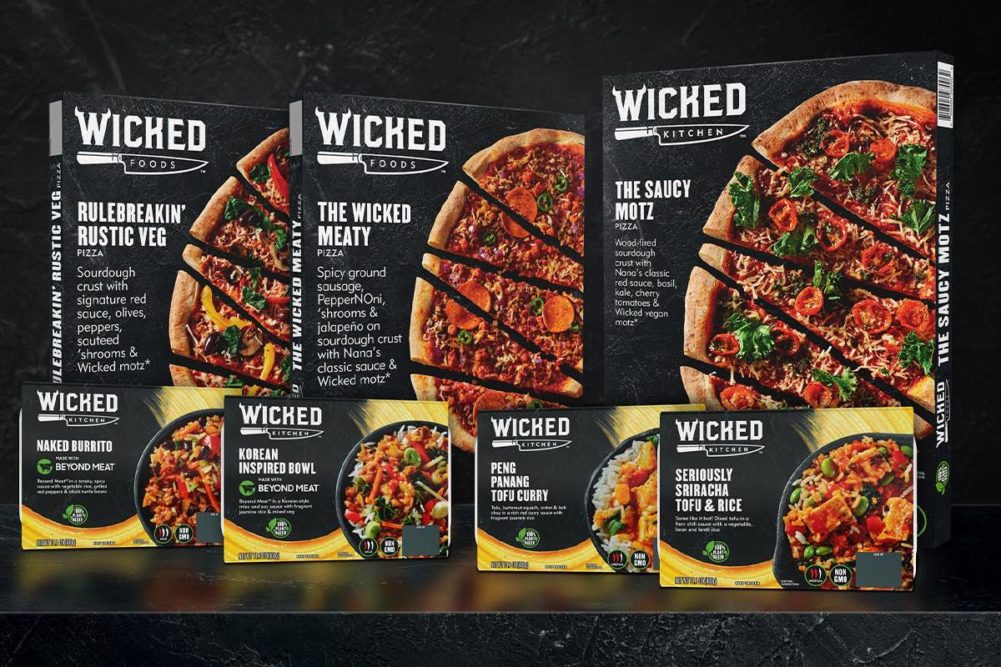
Speaking of Tesco, it is home to Wicked Kitchen’s UK retail presence. The Minneapolis-headquartered brand is present in four countries across three continents and has a wide range of vegan ready meals.
The frozen range has two meals with Beyond Meat – a naked burrito and a Korean-inspired bowl. Sriracha tofu and rice, as well as Penang tofu curry make up the other two in this section. Wicked Kitchen also makes frozen vegan pizzas, in Margherita, rustic veg, and spicy sausage and pepperoni flavours.
Apart from these, Wicked Kitchen makes microwaveable bowls too. These include a plant-based chickpea and mushroom bourguignon, potato and three-bean chilli, and Tuscan white bean stew.
You can find Wicked Kitchen’s ready meals at various locations across the UK, US, Finland and Thailand.
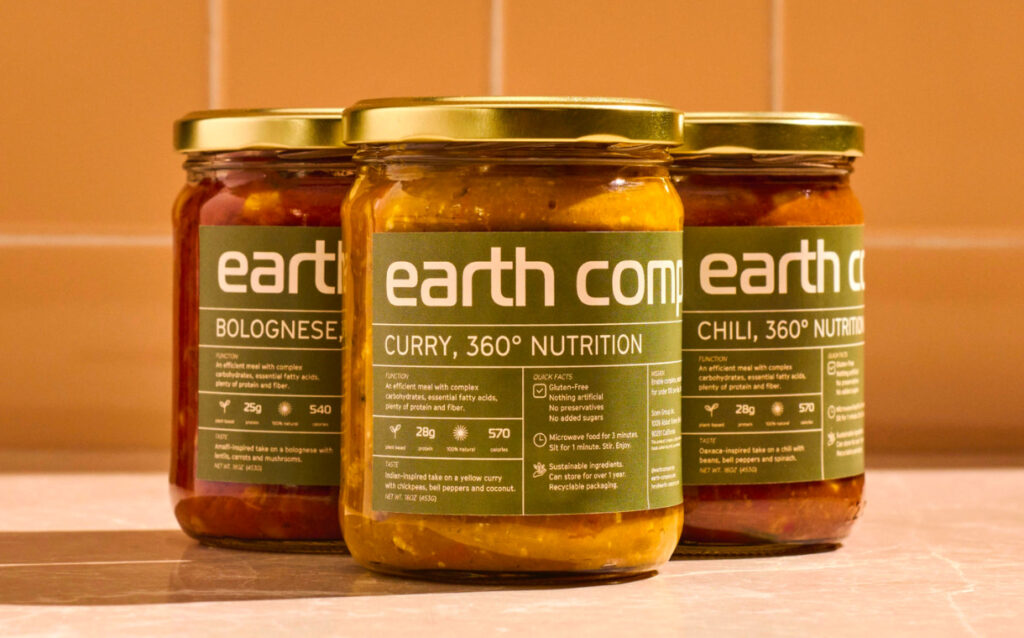
Earth Company
Courtesy: Earth Company
A relatively new brand, Earth Company is the brainchild of vegan chef Matthey Kenney and entrepreneur Max Koenig. It has a whole-food plant-based, “360° nutrition” approach to its plant-based meals.
Its first range of products came in jars and included a lentil and tofu bolognese, a lentil and bean chilli, and a chickpea, lentil and tofu curry. The bolognese boasted 25g of protein per serving, while the other two had 28g. The meals could be heated in a microwave or in a pan in about two to three minutes.
They are currently sold out, but Earth Company has teased that it will be launching another range soon on its website. At the time, each 16oz jar was priced at $6.
Bonus: Blue Zones Kitchen
Courtesy: Blue Zones Kitchen
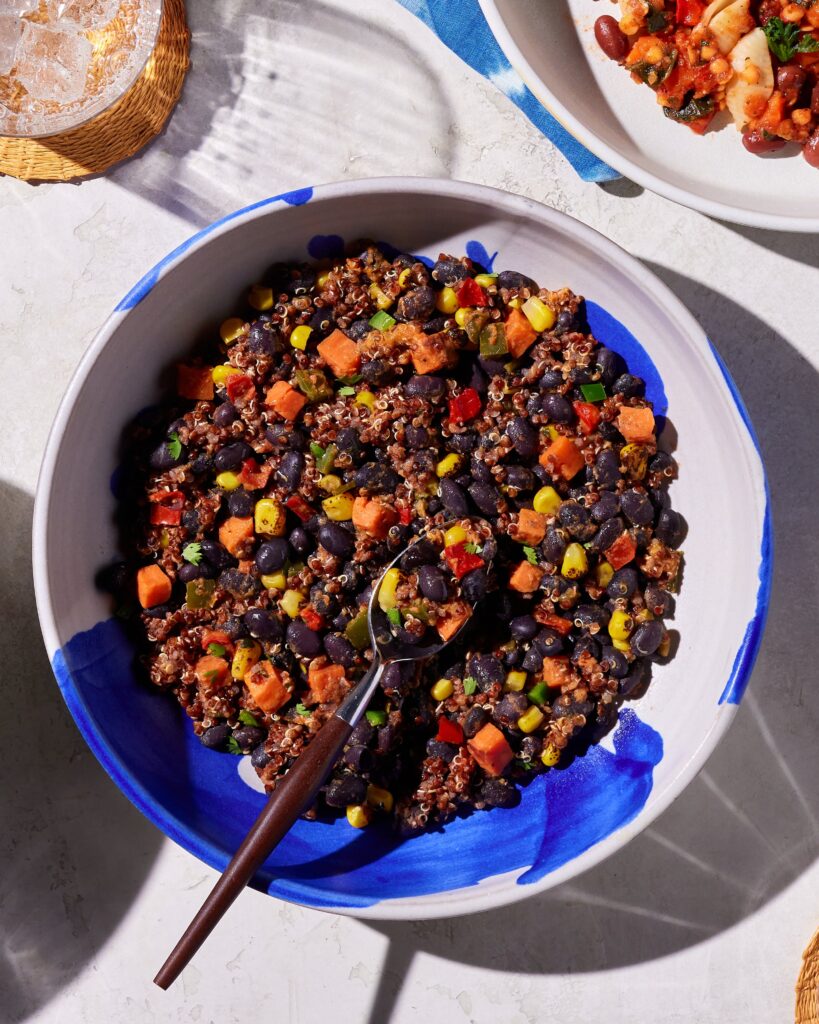
After the popular Netflix documentary, Live to 100, Blue Zones certification co-founder Dan Buettner announced the launch of Blue Zones Kitchen, a line of ready-to-heat meals inspired by the world’s Blue Zones – regions where people are said to live the longest.
The four ready meals also take a whole-foods plant-based approach. The burrito bowl – inspired by Nicoya, Costa Rica – blends sweet potatoes, organic black beans, roasted corn and red quinoa. The heirloom rice takes influence from the Gullah community, combining heirloom Carolina Gold rice with red beans, toasted garlic, sweet potatoes and stewed tomatoes.
The sesame-ginger bowl pairs brown rice with carrots, edamame and broccoli. And the minestrone casserole takes inspiration from Sardinia, which was the original blue zone. It combines chickpeas, red lentils, durum wheat pasta, kale, tomatoes and other vegetables.
Blue Zones Kitchens will soon launch their products at Town & Country markets across Washingtonstate.
Singaporeans prefer the term ‘cultivated meat’ over related terms like ‘cultured’ or ‘cell-based’, according to a new study. Moreover, researchers found that people who consider cultivated meat ‘unnatural’ are – perhaps counterintuitively – more likely to acknowledge its benefits and consume it.
Singapore, which became the first country to approve the sale of cultivated meat in 2020, is a hotbed for this alt-protein sector. The new study, carried out by the Singapore Management University (SMU) and published in the Journal of Environmental Psychology, collected the thoughts of 10 meat-eaters who have tried cultivated meat, and 10 who haven’t.
When asked what term they prefer to see it described as, ‘cultivated meat’ came out on top and was the term most strongly associated with positive attitudes towards these novel proteins. In order of preference, the other terms were ‘lab-grown’, ‘animal-free’, ‘cultured’ and ‘clean’ – the more literal ‘cell-based’ was the least favoured.
“That ‘cultivated meat’ was the preferred terminology is insightful,” said Professor Mark Chong, the study’s lead author. “Having a single, universally accepted term to describe this novel food technology not only helps to foster greater consumer understanding and acceptance but also reduces confusion about this new food source.”
What’s the best way to market cultivated meat?
Courtesy: Eat Just
The authors say consumer acceptance is the main barrier to cultivated meat, and among the many factors that impact it, nomenclature, framing (how it’s marketed), and perceived ‘naturalness’ are key. “Merely altering the names of dishes can affect consumers’ perception and increase the perceived authenticity of foreign dishes,” the study stated. “For example, the successful renaming of the un-appetizing sounding ‘Patagonian toothfish’ to ‘Chilean sea bass’ helped increase its acceptance among seafood diners around the world.”
The researchers presented five frames to understand what messaging would appeal most to Singaporeans: animal welfare, environmental benefits, health benefits, nutritional value and ‘food self-sufficiency. Interestingly, they found that no single frame was most effective in fostering consumer acceptance.
“Our findings suggest that as there was no significant difference in the influence of the five frames on overall consumer acceptance. Hence, cultivated meat companies and the Singapore food authorities can consider using each of the five frames interchangeably to promote cultivated meat in Singapore.,” said Chong.
The only exceptions to this were for the first two frames described above – associating cultivated meat with animal welfare (reducing slaughter) and environmental benefits (cutting emissions and warming) increased the acceptance of these foods among Buddhists.
“To foster consumer acceptance in Asian countries with significant Buddhist populations – such as Japan, Singapore, South Korea, and Thailand – cultivated meat companies may also want to use message frames focusing on how cultivated meat ‘reduces animal slaughter’ and ‘reduces global warming’,” explained Chong.
If it’s not natural, it’s better
Credit: Eat Just
The study sought to find if there were any dissimilarities in perceptions about how natural cultivated meat is among different age groups, but found “no consistent relationship between age, perceived naturalness, and the acceptance of cultivated meat”.
Perhaps most intriguing was the link between this perception of naturalness and consumer attitudes towards cultivated meat. The authors revealed that people who think cultured meat is not natural are more willing to consume it and see its benefits than those who think it is natural.
Professor Angela Leung, co-author of the study, said this aspect has received limited attention in cultivated meat literature: “Past research shows that discomfort with tampering with nature has been found to strongly predict perceived risk, and increase resistance to novel technologies. Therefore, our current research offers the first evidence to shed light on the link between aversion to tampering with nature and attitude towards cultivated meat.”
She added: “It is possible that the questions measuring aversion to tampering with nature may have led our study respondents to recognise that the production of cultivated meat could be an act to tamper with nature, but it is done to mitigate some undesirable elements of conventional meat. This may make them perceive that conventional meat production has its downsides, thereby promoting a more positive attitude towards cultivated meat.”
Leung acknowledged that more research is needed to examine this possibility. It’s worth noting that the sample size of this research was very small too – with a total of 20 respondents. Nevertheless, Leung argues the findings have a “practical implication” for cultivated meat marketing: “[Companies] can consider highlighting not just the benefits of cultivated meat, but also the undesirable elements of conventional meat in their messaging.”
Results consistent with previous research
Courtesy: Upside Foods
This isn’t the first study to be conducted on consumer preference for cultivated meat nomenclature, but its results align with multiple analyses. In 2019, alt-protein think tank the Good Food Institute (GFI) and US cultivated meat leader Upside Foods found that ‘cultivated meat’ was the most preferred term among consumers, while responses to ‘cell-cultured’ were negative, and ‘cell-based’ and ‘cultured’ spawned mixed reactions.
In 2021, GFI president Bruce Friedrich wrote: “Since that work, quite a few companies have been using ‘cultivated meat’ as their primary nomenclature.” This prefaced another survey – this time of 44 industry CEOs, 75% of whom preferred the term ‘cultivated’. ‘Cultured’ came second at 20%, while only one executive favoured ‘cell-based’.
Additionally, research published in the Nature Portfolio journal last year found that – contrary to SMU’s analysis in Singapore – ‘lab-grown’ is be the least favourable term among consumers in the US (alongside ‘artificial meat’), while ‘cell-cultured’ and ‘cell-cultivated’ were the most popular. Moreover, within Asia-Pacific, industry stakeholders signed a memorandum of understanding declaring ‘cultivated’ as the preferred English-language term for these alternatives last year.
In 2021, Upside Foods strongly discouraged the use of terms like ‘lab-grown’ or ‘lab-based’, ‘synthetic’ and ‘fake’. It argued that ‘lab-grown’ is inaccurate and suggests cultivated meat will always be made in a lab – but once it scales up (as some have already), the products would be made in a food-production-like environment, similarly to thousands of products on grocery store shelves. “The labelling of cultivated meat and poultry products will be a crucial component of how our industry conveys the basic nature, essential characteristics, and value of these products to consumers,” the company said.
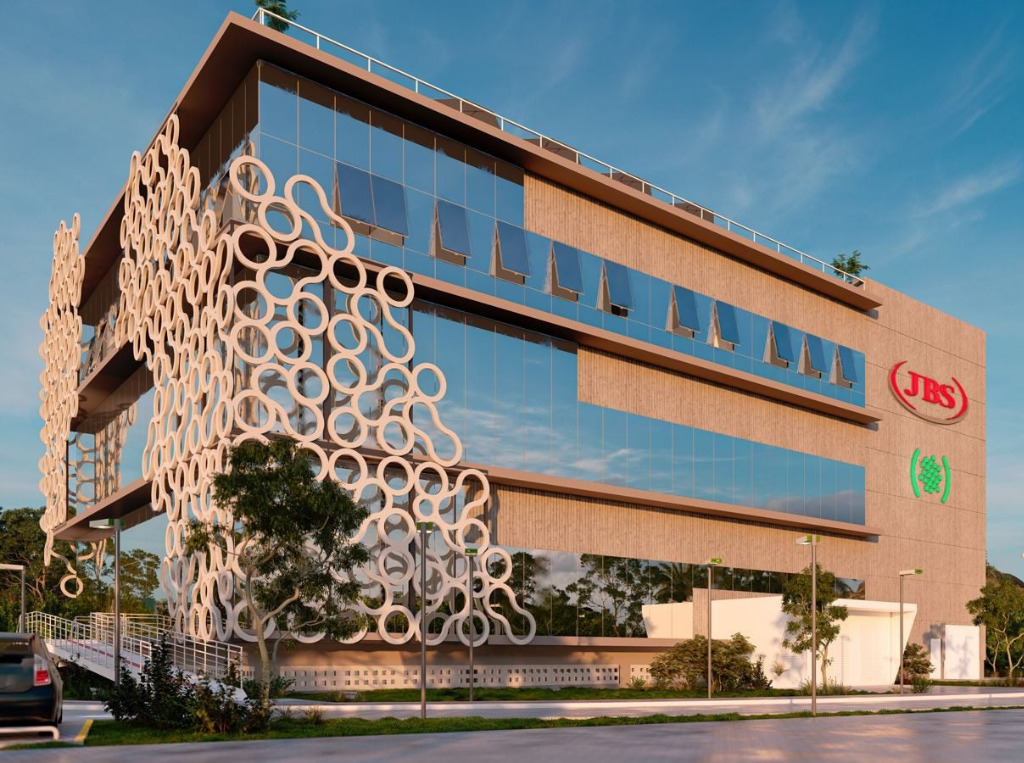
Brazilian meat giant JBS has broken ground on a $62M cultivated meat research and development facility in Florianópolis, Santa Catarina. Billed as the largest food biotech centre in Brazil, it’s scheduled to open at the end of 2024. The world’s biggest meat company – and a highly controversial one at that – is aiming to produce cell-cultured beef in the future.
The JBS Biotech Innovation Centre will see the meat company invest funds in three phases, with the total required capital estimated to be $62M. It will invest $22M in the first stage, which will focus on the construction of lab facilities, and the second phase centred on a pilot plant. In the third stage, JBS will look to build an industrial-scale model to exhibit the technical and economic potential of cultivated proteins.
The new R&D hub will feature a scientific team of 25 specialist post-doctoral researchers, plus staff and clerical support. The project is designed to serve as a base for future facilities that JBS may work on to manufacture cultivated beef and other meat products. The aim is to make the production of cell-cultured meat more affordable, efficient and scalable.
Cultivated beef endorsed by a conventional meat giant
Courtesy: JBS
JBS first declared the project in 2021, when it earmarked about $100M for investment in the cultivated meat sector. Out of this, $41M was set aside to invest in Spanish cell-based meat startup BioTech Foods. Last year, the latter broke ground on what it claims is the world’s largest cultivated beef manufacturing facility in San Sebastián, which is slated to finish by mid-2024.
The plant will reportedly have a capacity to produce 1,000 tonnes of cultivated meat annually, with the potential to quadruple this output. JBS says that while the factory will focus on products like sausages, burgers and meatballs, BioTech Foods’ tech can expand beyond beef to include cell-cultured chicken, pork and fish.
“As a global leader in protein production, it is our responsibility to be at the forefront of food tech,” said JBS’s global supply and innovation director Jerson Nascimento Jr. “The JBS Biotech Innovation Centre reinforces our commitment to the cultivated protein sector, consolidates our position as one of the main players in this very promising market, and reinforces our commitment to offering innovative, high-quality products to our consumers.”
The new plant is being led by Luismar Marques Porto, its cultivated meat president, and Fernanda Vieira Berti, VP of the research facility. Scientists at the JBS Biotech Innovation Centre – which will be located at the Sapiens Parque innovation hub – have already begun working at temporary facilities to research beef cell cultivation.
“We are delighted to be part of the first initiative of this size in Brazil and to be able to contribute to studies that will help expand the sector. We are confident this project will become an international benchmark,” said Porto.
JBS isn’t the only meat giant that has invested in the cultivated protein sector. In 2018, Tyson Foods acquired a minor stake in cultivated meat leader Upside Foods (then called Memphis Meats) – which is one of the only two such companies that have received regulatory approval for sale in the US. Upside Foods also received investment from Cargill (in 2017 and 2020), which invested in Israeli startup Aleph Farms in 2019 as well.
JBS remains a problematic company on the climate front
Courtesy: JBS
When the world’s largest meat company – with assets worth nearly $40B – makes a move this big for alt-protein, it’s bound to attract interest. But despite the company’s purported support of slaughter-free animal meat production, JBS has a checkered record when it comes to ethical and environmental issues. In fact, JBS is under pressure from environmental groups that are urging the US Securities and Exchange Commission to block its IPO in the country, calling it the “biggest climate risk IPO listing in history”.
The company has a well-documented past of greenwashing and human rights abuses. While it may be making plans to produce cultivated meat, JBS increased its greenhouse gas emissions by 51% between 2016 and 2021 – additionally, its total emissions were actually 68 times higher than what it claimed. Moreover, JBS has been found to be among the biggest drivers of Amazon deforestation, with the number of slaughterhouses in the region more than doubling between 2009 and 2020.
Meanwhile, earlier this year, JBS was accused of child labour abuses, with two dozen minors allegedly hired by a cleaning company to clean JBS’s dangerous meatpacking plants across the US. And in World Animal Protection’s list of the meat industry’s climate impact, the company ranks as the worst offender globally.
JBS’s integrity was called into question in an exposé ahead of COP26 in 2021, with multiple breaches found just six months after its publication. This included settling with the US Department of Justice over a price-fixing scheme in beef markets, gaining approval or agreeing to settle over poultry and pork price fixing, respectively, and being fined over a fatality at one of its facilities.
In a statement, Rainforest Action Network lists the practices JBS has been accused of over the last 15 years: “Illegality; deforestation; invasion and land grabbing of Indigenous and traditional territories; land conflicts and violence against rights defenders, slavery and labour abuses in its supply chain; lack of traceability; corruption; and greenwashing.”
Cultivated meat facilities around the world
Courtesy: Amit Goren
There are several large-scale cultivated meat facilities by alt-protein startups that are already operational or mid-construction. These differ from pilot plants, which are pre-commercial manufacturing systems to test the technology in small volumes. Shanghai-based CellX, for example, completed the construction of what it called a “large-scale pilot plant” last month.
In February last year, Aleph Farms moved to a 65,000 sq ft plant in Rehovot, Israel, which increased its capacity by six times to be able to initially produce 10 tonnes of cultivated steak annually. And earlier this year, it announced the acquisition of another manufacturing facility in Modi’in, Israel.
In December 2022, fellow Israeli producer Believer Meats (formerly Future Meat) broke ground on a 200,000 sq ft facility – which it says will be the largest cultured meat factory in the world when it opens. It is said to have a capacity of at least 10,000 metric tons of cell-based meat, which is more than double the potential output of the JBS-BioTech Foods plant.
In May, Mosa Meat – which showcased the world’s first cultivated beef burger 10 years ago – unveiled what it claimed is currently the world’s largest cultivated meat production plant in Maastricht, Netherlands. This is the company’s fourth facility, expanding its footprint to 7,340 sq m (79,007 sq ft). Mosa Meat says its “cultivated meat campus”, which has a 1000-litre bioreactor scale, can produce “tens of thousands of cultivated hamburgers”.
Earlier this month, Upside Foods began construction of a 187,000 sq ft factory in Glenview, Illinois, which can eventually produce 30 million pounds of meat and seafood annually. This follows its Engineering, Production and Innovation Center (EPIC) plant, which can currently produce 50,000 lbs of finished cultured meat products annually, with the potential to expand to 400,000 lbs though a recent Wired investigation raised questions about whether the company was producing its products in the facility’s bioreactors.
Meanwhile, Eat Just’s Good Meat – the other company to earn regulatory approval in the US, and the first to do so globally in Singapore back in 2020 – is building what it says is Asia’s largest cultured meat plant in Singapore. It also signed an agreement for a US facility that will house 10 250,000-litre bioreactors, which it says will be capable of producing 30 million lbs of meat.
Over in Asia, Malaysian company Cell AgriTech is preparing to open the country’s first cultivated meat facility in Q4 2024, while South Korean cultured beef producer Seawith announced a ₩6.5B ($5.43M) investment last year, which it plans to use for a state-of-the-art production plant.
Two months before it hosts the UN climate summit COP28 – which is set to feature a heavy food focus – the UAE has announced a food and agriculture strategy to bolster the sector’s value to $10B and create 20,000 jobs by 2025. The seven pillars of growth focus on localisation, regulatory advancements and empowering farmers – what does this mean for alt-protein?
Speaking at Dubai’s Future Food Forum last week, the UAE’s economy minister Abdulla bin Touq Al Marri said the new strategy aims to boost food security and local production in the country. Being a desert country with limited arable land, the UAE relies heavily on food imports to meet 90% of its population’s needs, totalling $14B in 2020, according to the USDA.
While the UAE’s position on the Global Food Security Index rose from 35th to 23rd (and it tops the MENA region), nearly a fifth of its population lives below the poverty line, and according to the World Bank, 6% of its citizens are undernourished. The UAE’s current National Food Security Strategy aims to make it the world’s best most food-secure country by 2051.
The original strategy aimed to break UAE into the top 10 on the Index by 2021, but that hasn’t been achieved. However, the new food and agriculture strategy could help the Gulf nation get closer to this goal. “With a growing population, food security assuming the highest priority, the UAE is doing well on this front and was on the top of the Global Food Security Index 2022 compared to other MENA counterparts, but the challenges for food in these uncertain times are real and present,” said bin Touq.
Courtesy: Future Food Forum
The plan has seven pillars that represent the UAE’s “commitment to innovation, sustainability, self-sufficiency and food production” The first includes localising next-gen agricultural ‘disruptors’ by nurturing talent and innovation, the second involves making the UAE a “global regulatory powerhouse” to ensure high product standards and international recognition, and the third comprises promoting a UAE-first culture across the food supply chain by reducing the reliance on imports.
Increased funding, fostering world-class R&D and innovation, diversification and access to new markets for agricultural players, and building the “next generation of farmers” make up the other four pillars. “Our food industry’s resilience and adaptability make it adept in addressing this challenge while constantly emphasising sustainable practices, which will nurture our Earth for centuries,” said bin Touq.
UAE’s reliance on oil
According to the US International Trade Administration, the oil and gas sector contributes to 30% of the UAE’s GDP and 13% of its exports. The UAE says it aims to diversify its economy away from oil and support the growth of various industries – but it is currently in the middle of a five-year, $130B plan to double its refining capacity and triple petroleum production.
The Guardian reports that the UAE has the world’s third-largest net-zero-busting plans for oil and gas expansion. Additionally, new fossil fuel developments are incompatible with the 2050 net-zero goals, and experts say slashing the burning of fossil fuels is the biggest and most urgent action needed to curb global heating. One estimate suggests fossil fuels for energy use are responsible for 60% of the world’s total greenhouse gas emissions.
Courtesy: Wikimedia Commons/CC
But research has found that the food sector accounts for a third of all emissions. While the UAE is considered one of the most important food logistics hubs in the world, food itself only makes up 5.7% of its non-oil trades as of now.
And given that replacing 50% of our meat and dairy intake with vegan alternatives by mid-century could result in significant benefits for climate change and food security (undernourishment could decline by 3.6% globally), what does the new agrifood strategy mean for alt-protein in the UAE?
It was unveiled at Future Food Forum, which conducted a panel discussing rising consumer interest in plant-based and flexitarian diets in the country – 44% of its residents are open to substituting meat and dairy with vegan alternatives. The announcement comes the same year the UAE is hosting COP28, which is billed as the first food-focused climate summit. In August, the conference’s president Dr Sultan Al Jaber confirmed that it will serve mostly vegan food on its catering menu this year.
But while there are some promising signs, the UAE has had its fair share of controversies leading up to the event. Following the announcement to shift to a predominantly plant-based menu, a leaked document revealed that “COP28 UAE key messages” and “narrative points” failed to mention fossil fuels, oil or gas. On top of that, Al Jaber is the CEO of Adnoc, the UAE’s national oil company, which the document reveals hasn’t disclosed its emissions or published a sustainability report since 2016.
Meanwhile, global organisation Climate Action Tracker rates the UAE’s environmental plans as “insufficient”. And further reporting by the Guardian revealed that the Gulf nation has failed to reveal its methane emissions – which are much more potent than carbon – to the UN.
What does this spell for alt-protein in the UAE?
It’s imperative that the UAE’s new food and agriculture strategy includes plans to develop the country’s alt-protein and sustainable food sector. It has made a start. 2023 is the UAE’s Year of Sustainability, part of which is a push to promote plant-based eating in the country.
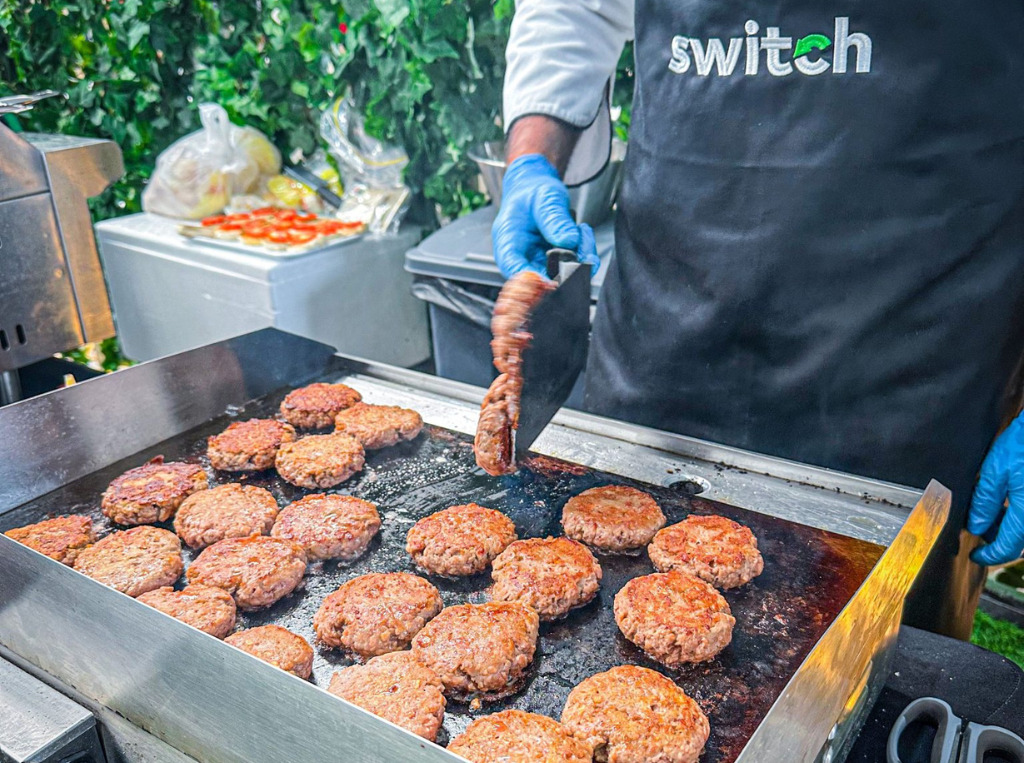
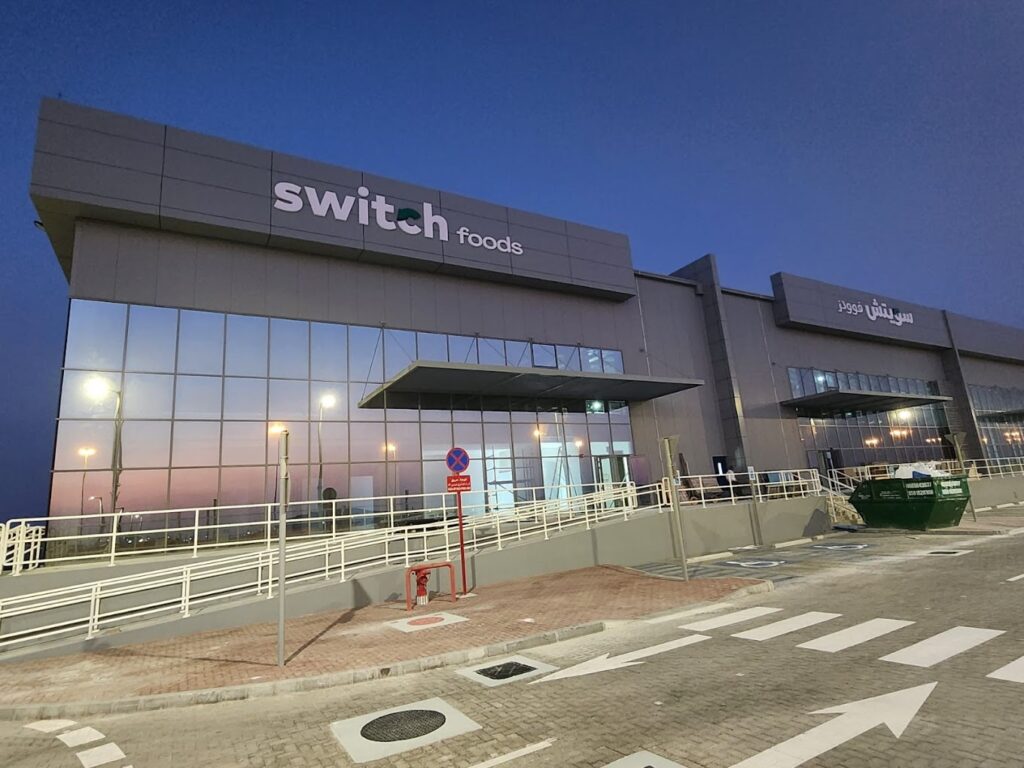
In May, it unveiled Food Tech Valley, with an aim to boost local food production in Dubai using cutting-edge tech built on sustainable foundations. This came two months after the city saw the opening of the Middle East’s first fully plant-based meat factory. Touching upon the local manufacturing goal, in April, UAE capital Abu Dhabi also witnessed the unveiling of its first 100% vegan meat production plant by Switch Foods.
Courtesy: Switch Foods
Could the second pillar of regulatory advancement be a sign of things to come? While fellow Middle Eastern nation Israel is home to a host of alt-protein startups, industry think tank the Good Food Institute suggests that instead of focusing on R&D, the UAE is partnering “with foreign alternative meat startups, primarily US-based companies, to build commercial-scale production facilities and potentially fast-track regulatory approval”.
For example, Californian precision fermentation dairy company Change Foods entered an agreement to build a commercial manufacturing plant in the UAE last year. Looking at cultivated meat, DisruptAD – the VC arm of Abu Dhabi’s sovereign fund ADQ – led the $105M Series B fundraising round for Israeli cultured meat leader Aleph Farms in 2021.
There is potential for increased consumer interest too. A 2022 study by PSB Insights – commissioned by US-cultivated meat pioneer Good Meat – found that while only 34% of people in the Middle East had heard of cell-cultured meat, awareness of the alt-protein was highest in the UAE. Acceptance of these novel proteins will be aided by recent advice from three Sharia scholars who say cultivated meat can be halal if it meets certain criteria, which is key for Islamic populations around the world.
Singapore-headquartered TiNDLE Foods has launched a breakfast sausage in the US, its first domestically-made product. The rollout comes a day after it expanded its presence in the UK, appearing on menus at two restaurant chains and debuting at Whole Foods.
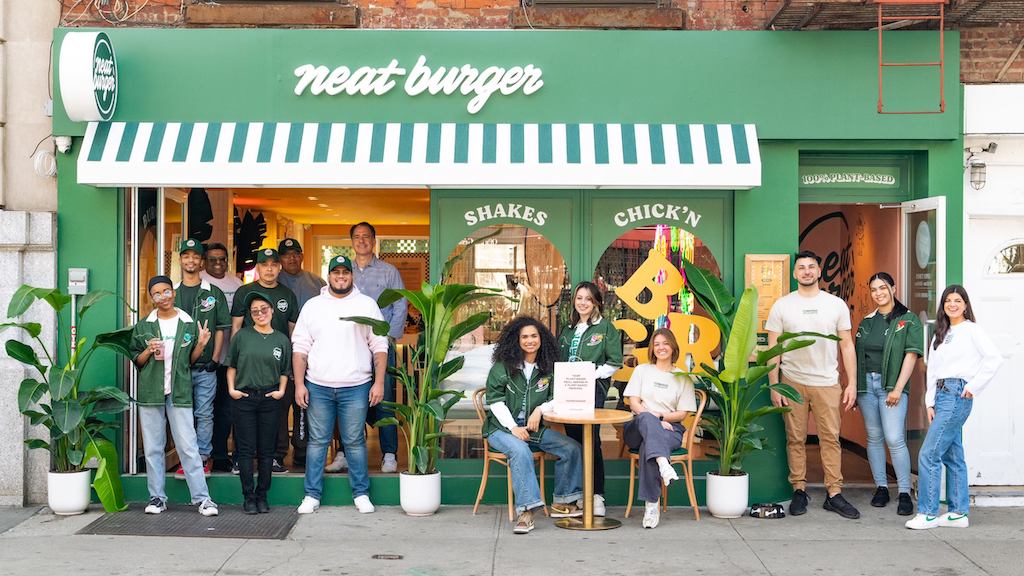
Just under two months after it first announced plans to launch its first American-made product, TiNDLE has unveiled its savoury Breakfast Sausage in the US. It will be available at Mr. Charlie’s in Los Angeles, and Neat Burger and Vegan On the Fly in New York City. The launch marks the three-year-old alt-meat brand’s first collaboration with plant-based egg giant Just Egg – TiNDLE’s soy protein sausage will be paired with Just Egg’s folded mung bean egg for various menu items at these restaurants.
All three restaurants will incorporate these products as part of breakfast sandwiches, with Neat Burger – which opened its Manhattan restaurant earlier this year and collaborated with whole-cut plant-based steak maker Chunk Foods last week – featuring them in a breakfast burrito too. The new vegan sausage combines soy protein with canola and coconut oils, potato starch, methylcellulose, and oat fibre, alongside flavour and seasoning elements.
Made in the USA
The launch marks TiNDLE’s first product conceptualised and manufactured in the US. Its products have been available at hundreds of distribution points and restaurants across the country since 2022, and so far, all of them have been produced in a co-manufacturing facility in the Netherlands.
The new plant-based breakfast sausage was developed and tested at TiNDLE’s US headquarters in Chicago, where it established a new R&D facility in September 2022. The ingredients for the product are sourced and grown in the US too, and the product is made at a co-manufacturing plant in the Pacific Northwest.
Courtesy: TiNDLE Foods
“We are thrilled to introduce TiNDLE Breakfast Sausage as our first American-designed innovation,” said JJ Kass, TiNDLE’s VP of business development and strategy. “This launch not only showcases our dedication to developing delicious and sustainable foods, but also signifies a major achievement for our company as we serve the American market and consumers with a truly authentic and enjoyable breakfast experience.”
The news comes a month after the company launched its vegan chicken pieces in Singapore, which was its first locally manufactured product in its home market – part of a wider effort to boost food security in the country. The product was launched in the Netherlands as well.
The company now has seven products for foodservice in the US, and plans to enter widespread retail channels next year. “We plan to increase the availability of our product offerings in the US next year and specifically, bring our flagship product TiNDLE Chicken to US grocery stores,” a TiNDLE spokesperson told Green Queen.
When asked about upcoming product development, they added: “At the Chicago R&D center, we’re continually working on improving our existing TiNDLE Chicken products and testing out new formats and applications for potential future products. Other products in our existing lineup include nuggets, sandwich patties, tenders, popcorn patties, and boneless wings.”
Expanding across the UK
Courtesy: Neat Burger
The news comes on the heels of TiNDLE’s further expansion in the UK, where it debuted in April 2022 following a record-breaking $100M Series A round two months before. Earlier this year, it expanded its flagship chicken alternative to 350 Morrisons stores across the UK – and yesterday, it added 150 more locations to the list. Yesterday, TiNDLE made its debut at all seven Whole Foods stores in London, with plant-based wings, nuggets and tenders.
Meanwhile, it strengthened its foodservice footprint through partnerships with burger chain Byron, as well as Neat Burger’s UK locations. TiNDLE’s products have already been available at Amigo’s, BrewDog and Clean Kitchen Club locations.
Additionally, TiNDLE has made it onto university cafeteria menus, through a collaboration with London’s University of Westminster. It will be part of a katsu curry dish and K-pop-inspired nuggets at all of the institution’s eateries. Earlier this month, hundreds of British academics and campaigners wrote an open letter urging UK universities to transition to 100% plant-based menus.
“In addition to traditional foodservice, we have focused on bringing in partners from the non-commercial space – schools, universities, offices, tourism, etc. – across the globe,” TiNDLE’s spokesperson told Green Queen. “A priority for us has always been to work with schools and universities, as younger generations are adopting a plant-based lifestyle and embracing options at a larger scale than older generations.
“What’s so great about universities is that there are active and vocal student bodies demanding plant-based be on permanent menus in their canteens. In fact, we’ve seen this excitement directly in the UK.” The Universities of Stirling, Birmingham, Queen Mary, London Metropolitan, Kent, University College London and Cambridge have already voted to introduce fully vegan menus at their cafeterias.
Plant-based will ‘continue to grow’
TiNDLE announced a rebrand and product portfolio expansion in August | Courtesy: TiNDLE Foods
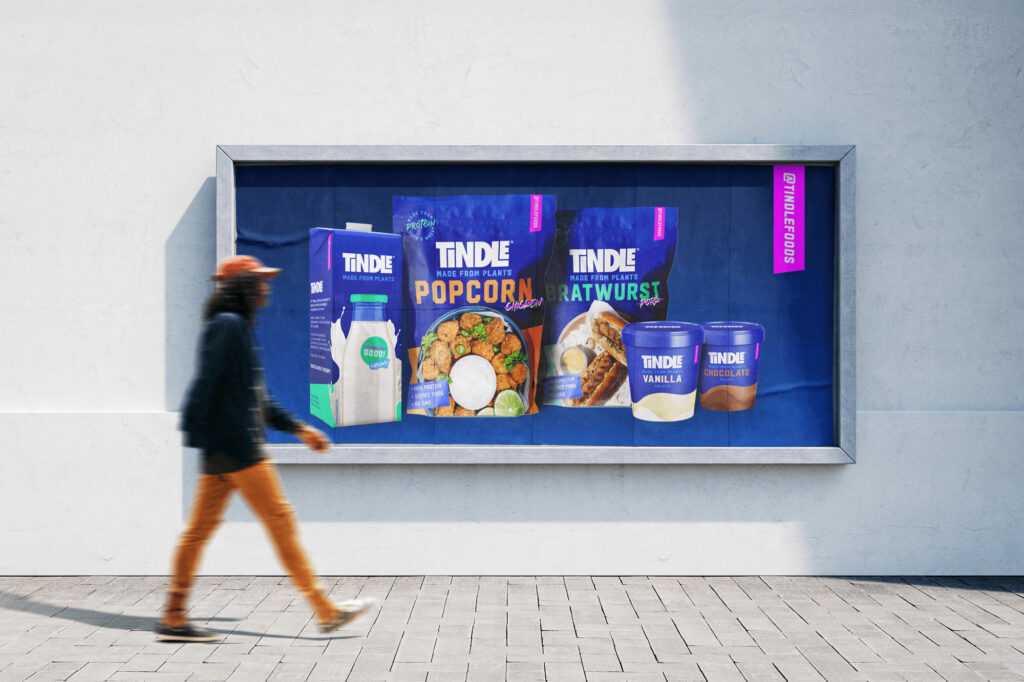
In early August, TiNDLE rebranded from its parent New School Foods and merged with London-based alt-dairy startup Mwah!, which the company had acquired back in March. TiNDLE told Green Queen at the time that it planned on expanding its collection of multi-ingredient vegan milks and gelatos, and now says it expects to launch the plant-based milk in Europe next year.
It has been a tough few years for the plant-based industry – and even with some forecasts looking positive, there are many challenges the sector needs to overcome. “We don’t believe the overall category is a passing ‘fad’ or that consumer interest has waned. We believe, however, that the market is reflecting larger macroeconomic factors that are affecting almost every sector of industry currently,” the spokesperson said.
TiNDLE calls it a “temporary stress” on the category and emphasises its focus on growth and expansion across Europe, the US and Asia. “As a young industry, there is ample room for growth and development in the US as consumers and diners become more aware of plant-based foods and, through adoption, their impact on climate change,” the spokesperson explained.
“Additionally, as companies such as ours continue to innovate and create delicious plant-based options that are more appealing than animal-based offerings, we believe that consumer demand for plant-based foods will only continue to grow.”
German precision fermentation startup Formo will unveil its ‘lab-brewed’ eggs in foodservice in their home market later this year. Formo CEO Raffael Wohlgensinger and researcher Oscar Zillman Thomas speak to Green Queen exclusively about launching the first such egg alternative in Europe, the use of non-novel proteins under EU regulations, and its research into consumer acceptance of such products.
After years of working with animal-free dairy proteins, Formo will be debuting an egg product made via precison fermentation alongside its first cheese alternative, dubbed ‘Frischhain’, in its home city of Berlin. The company says the products will be available at various hotels, restaurants and cafés, before they eventually move into retail next year.
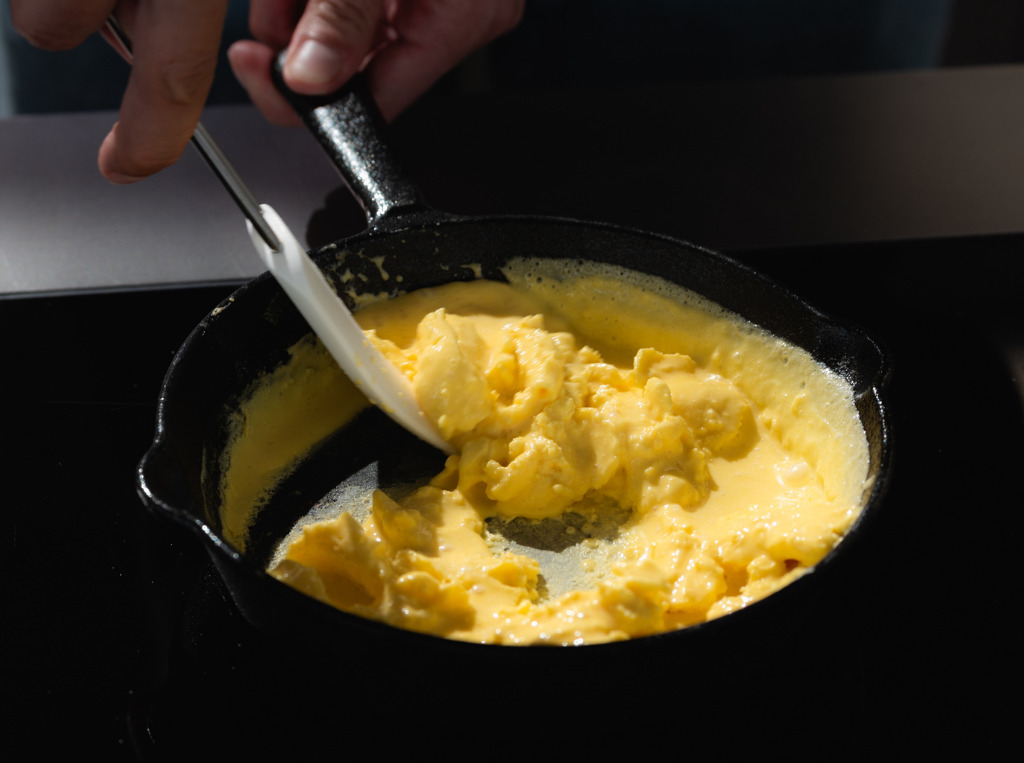
Formo – one of five founding members of the Food Fermentation Europe alliance – is calling the egg product ‘What Came Third’. Green Queen founder Sonalie Figueiras got a first taste of the product in a private event in April. At the time, the eggs were in a powdered form, and could be mixed with water to create a beaten egg mix.
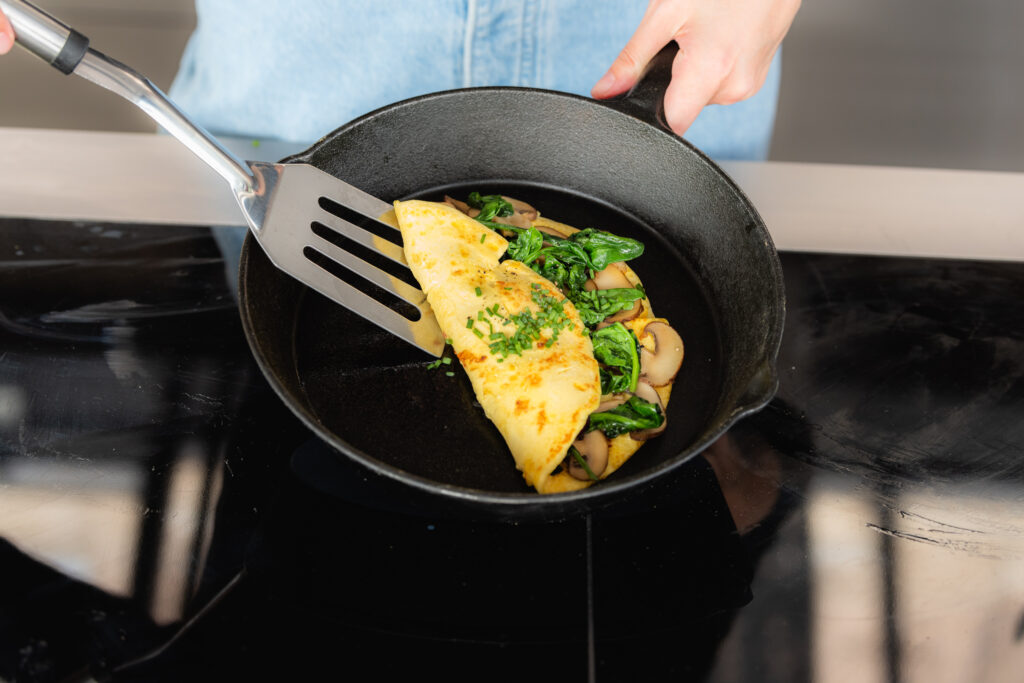
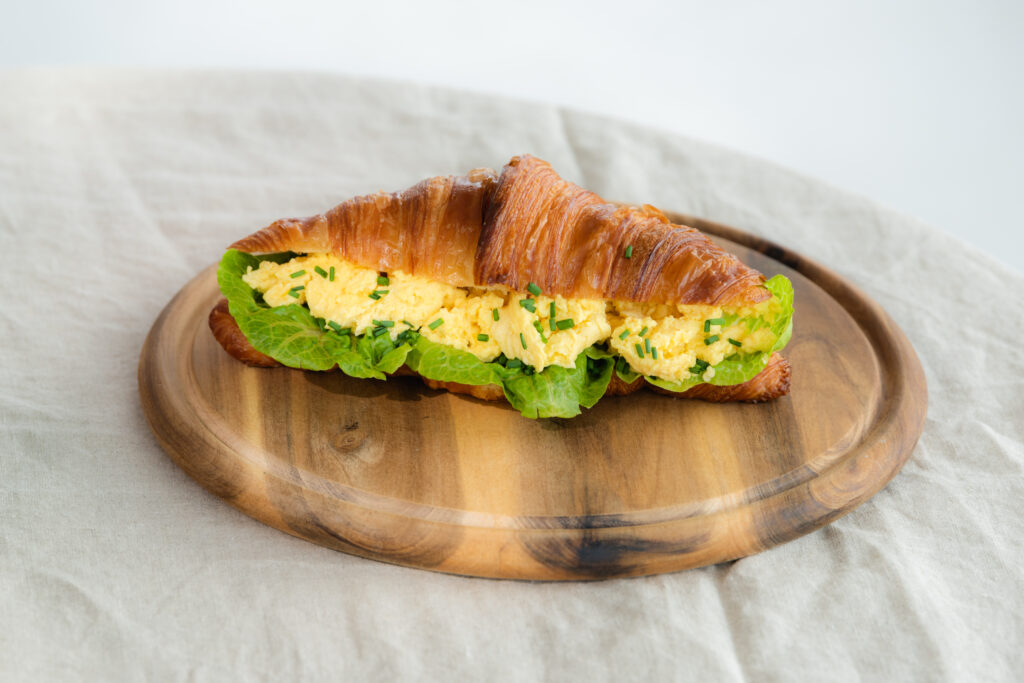
The company confirms they are debuting the same egg, which has undergone iteration cycles since and is now ready for commercial production. As for the product format, Formo says it depends on the needs of its foodservice partners, who will use the egg in various prepared dishes. “The first step is educating the world about these amazing products, and that’s best done with an experience that is as close to eggs as possible,” Formo CEO Raffael Wohlgensinger tells Green Queen.
EU novel food regulation
Formo’s protein is made using a microbe called Aspergillus oryzae – more commonly called koji mould. But the company’s ingredient isn’t an identical replica of egg proteins like ovalbumin or ovotransferrin – instead, it’s a protein that offers the same functional properties. “This is all down to the structure of the protein, meaning our products taste and behave identically to eggs,” Wohlgensinger explains.
In the EU, many products made with precision fermentation fall under the bloc’s novel food regulatory framework, requiring regulatory approval for commercial sale. The application process is a lengthy one, and can take several years. Wohlgensinger confirms that Formo’s protein is not classed as a novel food under these rules, so doesn’t need to pass any regulatory processes. “We’re producing the primary ingredient, our protein, through precision fermentation, but without the usage of synthetic biology tools that would be considered genetic engineering,” he says.
“Our protein components are considered non-novel in the EU, given a longstanding history of consumption,” he adds. Koji mould is known as Japan’s “national fungus”, and is used in many traditional fermented foods like miso, mirin, shoyu and alcoholic beverages like shochu and soju. “We’ve been in contact with a number of national Food Safety Authorities who have confirmed this assessment… Formo has an unwavering commitment to food and product safety, and we diligently adhere to all applicable food safety rules and regulations, whether at the EU or national level.”
Courtesy: Formo
The price premium on precision fermentation egg
Formo’s egg will be manufactured in Germany, and the company has entered partnerships to scale the production of its ingredients and products. In a statement coinciding with the launch, Wohlgensinger had said: “Our decision to forge into the egg market reflects both our conviction in our protein production platform, and our end products’ ability to go toe-to-toe with conventional products. Societies around the world are waking up to the reality of industrial livestock farming, and we recognise our power to address it.”
Egg production is linked to animal exploitation, with many mass-manufacturing facilities placing the chickens in small cages and crowded spaces. Even cage-free birds have similar areas to play with, living with thousands of others in a stressful environment that can lead to feather loss, bleeding and death due to frequent pecking. Forma says about 60% of the world’s chickens reside in factory farms.
Moreover, eggs have a carbon footprint of 2.7kg of CO2 equivalent per dozen, a value similar to conventional milk. They require a hefty amount of water too- it’s been found that 53 gallons of water are needed to produce a single egg, as chickens require water-intensive grain feed.
Wohlgensinger tells us that the new precision fermentation egg will initially carry a price premium compared to its chicken-derived counterpart, “especially considering the industrial infrastructure and government subsidies” linked to conventional egg production. He likens it to a similar scenario encountered by clean energy: “Just like the solar panels of yesteryear though, we’re anticipating rapidly decreasing the costs associated with our products.”
Peer-reviewed study finds positive consumer acceptance rates
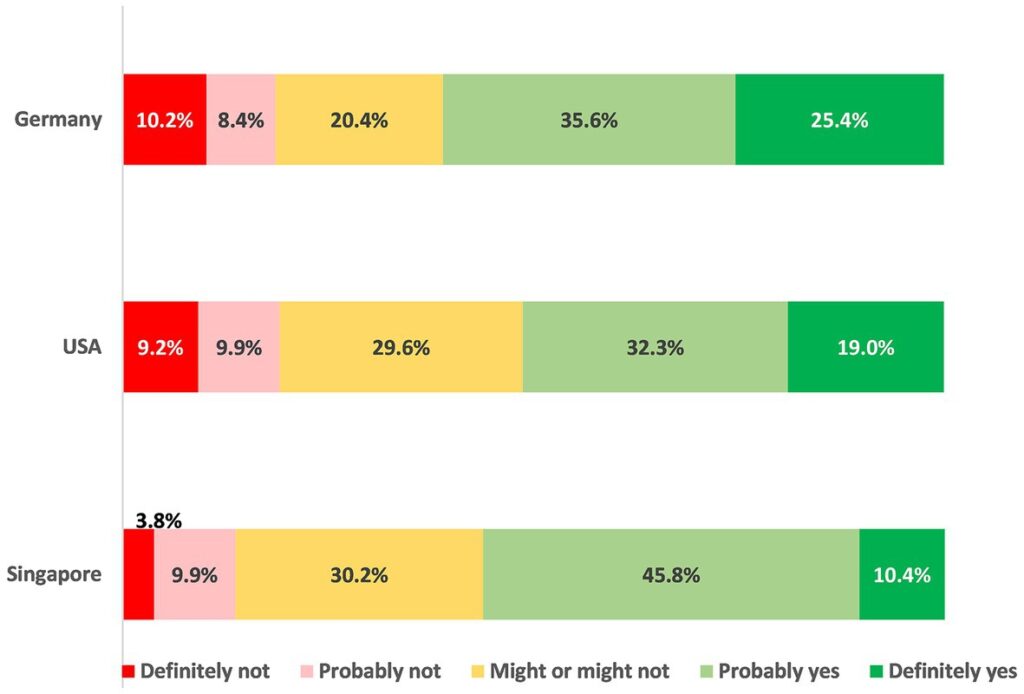
The launch of Formo’s eggs comes after the company commissioned a peer-reviewed study that found that a majority of consumers are willing to try these products. The company collaborated with the Singapore Management University (SMU) to measure people’s interest in egg alternatives made from precision fermentation. In the 3,006-consumer survey – which spanned Germany, Singapore and the US – between 51-61% of respondents indicated an interest in trying such products.
The results, published in the Frontiers journal earlier this month, varied across countries – with Germans accounting for the highest amount of interest (61%) in trying precision-fermented egg products. Lead author and Formo researcher Oscar Zollman Thomas explains that this stronger appeal in Germany reiterated the company’s belief that it was the right market to launch in.
Consumer willingness to try precision fermentation eggs was above 50% in all three countries | Courtesy: Formo/Singapore Management University
“We’re in Europe, the home of cheese and deep lovers of food culture,” he tells Green Queen. “It’s no coincidence that Formo was born here, and as a European country, we always wanted to be as close to our consumers as possible, taking them on the journey of realising the beauty and magic of precision fermentation.”
Singapore came second on the list, with 56% of its citizens saying they would try these eggs, followed by the US at 51%. This order was the same when it came to the willingness to purchase these products, with 57.2% of Germans saying ‘probably’ or ‘definitely’ yes, followed by 48.1% of Singaporeans and 47.9% of Americans.
It’s intriguing that the only two countries that approve the sale of another cellular agriculture product – cultivated meat – have a lower consumer acceptance rate than Germany. “We need to remind ourselves that the fundamental part of our industry – and this research – represents not consumers’ relationship to technology, but consumers’ relationship to food,” explains Zollman Thomas.
“The US and Singapore both represent countries where egg production occurs on a greater scale, and with lower welfare standards than Germany. The problems people see with egg production are lower in Germany than the other countries,” he adds.
Interestingly, when it comes to repeat purchases, Americans (30.5%) said they were more willing to buy precision-fermented eggs regularly than people in Singapore (25.6%). Germany (34.2%) still topped the list, albeit with a lower gap.
Foodservice trends and reasons for consumer interest
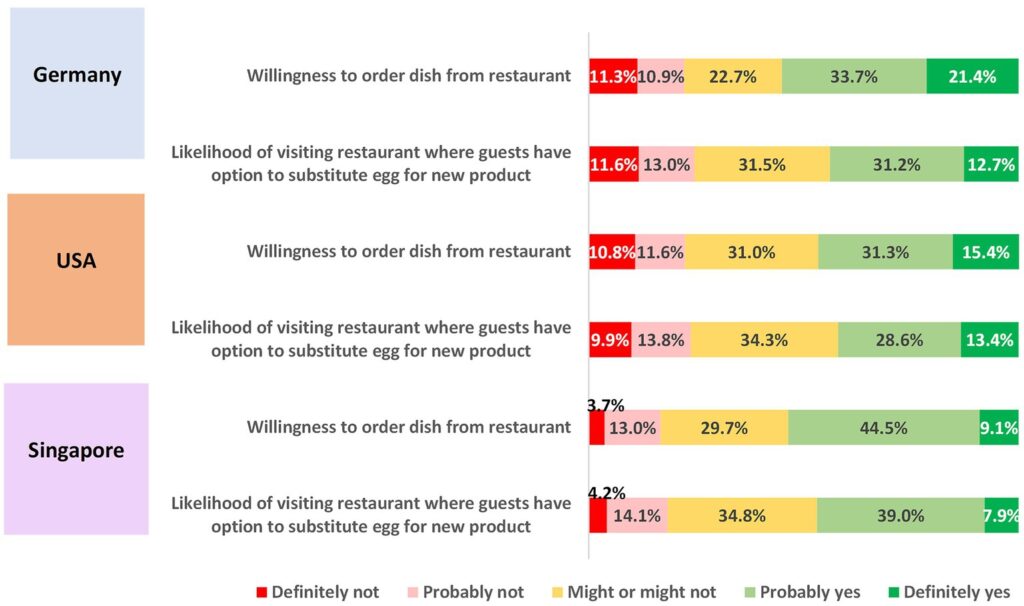
Courtesy: Formo/Singapore Management University
In terms of foodservice, 55.1% of Germans said they are willing to try a dish using these animal-free eggs in a restaurant, followed by Singaporeans (53.6%) and Americans (46.7%). But when it comes to the likelihood of visiting a restaurant where guests can substitute conventional eggs with those made via precision fermentation, Singapore led the way with 46.9%, with Germany (44.9%) and the US (42%) not far behind.
The study found that those who consume organic or plant-based eggs were the group most willing to try these novel eggs, while vegans and vegetarians showed higher interest than flexitarians in all countries. “We importantly saw over half of the respondents offering that they’d be open to consuming lab-brewed eggs, being far above the 25% threshold that precipitates broad societal change,” explains Zollman Thomas.
The reasons for interest are different from region to region. In Germany, the top three factors were better animal welfare (22%), curiosity (18.2%), and less use of antibiotics (8.8%). In the US, curiosity (18.1%) was followed by health (11.6%) and the fact that these products contain no cholesterol (10.1%). And in Singapore, the top three factors were price (17.1%), health (14.8%), and curiosity (13.5%).
Clearly, consumer curiosity is a popular reason when it comes to interest in precision fermented egg products. It’s this precedent of consumption and the development of non-novel proteins that Formo banked on for the forthcoming launch of its precision fermentation eggs.
Why precision-fermented dairy is more popular
Courtesy: Formo
Formo previously partnered with the University of Bath and Mercy for Animals, as well as the University of Saskatchewan, on joint studies that revealed positive consumer sentiment around precision fermentation dairy. Another report by Formo and the University of Bath in 2021 found that 79% of consumers were likely to try precision-fermented dairy products, a much higher share than this new study has found for animal-free eggs.
Speculating the reason behind this difference, the researchers said this could simply be because dairy is the most established product category in precision fermentation. “There’s simply more awareness around the environmental and animal welfare issues surrounding dairy production than for chickens,” notes Zollman Thomas.
It could also be due to novelty or ‘naturalness’ – the study noted that conventional eggs and meat are considered unprocessed ingredients, while for most consumers, cheese already appears processed, which may be why the idea of precision-fermented cheese is easier to digest.
“There are no egg alternative products on the market that have allowed for a level of societal reflection yet,” states Zollman Thomas. “Lab-brewed eggs will definitely initially speak to a smaller group than lab-brewed dairy, but the core issues with egg production are much the same as those with dairy, so we expect there will be a quick catchup.”
“This research demonstrates an appetite for precision-fermentation-made products, such as lab-brewed eggs, and that consumers are ready to both recognise the flaws of industrial egg production and adopt alternatives,” Zollman Thomas said last week in a statement.
“Cellular agriculture has the potential to revolutionise the way we produce and consume protein, addressing the environmental and ethical concerns associated with traditional animal agriculture,” said Professor Mark Chong, SMU’s lead researcher on the project. “Seeing appeal across the continents demonstrates cellular agriculture’s capacity to create not a localised, but a global food system shift.”
Developments in the precision-fermented egg sector
Courtesy: The Every Company
Formo – which was formerly known as Legendairy Foods and raised a record-breaking $50M in Series A funding in 2021 to bring total financing to $54.7M – isn’t the only company making animal-free eggs. Californian startup The Every Company (formerly Clara Foods) has been working in the precision fermentation sector since 2014. In 2021, it unveiled its ClearEgg protein, months before raising $175M in an oversubscribed Series C round. As part of its collaborations with other brands, its bioidentical egg white protein has been featured in smoothies, macarons and canned cocktails.
Within the EU, Finland’s Onego Bio is working on egg proteins from precision fermentation. But Formo’s What Came Third product will be the first of its kind to launch in Europe.
Zollman Thomas pinpoints three aspects that are key to the success of the precision fermentation industry: awareness, desirability and credibility. “Research like [ours] shows that there’s a huge market already, it’s just a question of getting the message out, setting expectations, and making people buy into the vision of what companies like Formo are trying to do,” he says.
“This means being incredibly mindful of the trust we ask people to extend to us as an industry, and what we promise in terms of the products, companies and world we want to build with precision fermentation,” he adds. “People will only buy the products if they’re good enough, but equally, only if they believe in us.”
Indian vegan seafood company Seaspire has launched in D2C channels after months of foodservice trials in major cities in its home country. The startup’s co-founder Varun Gagodia tells Green Queen about India’s appetite for alt-seafood, consumer attitudes, why retail isn’t a viable option, and the key to this sector’s success.
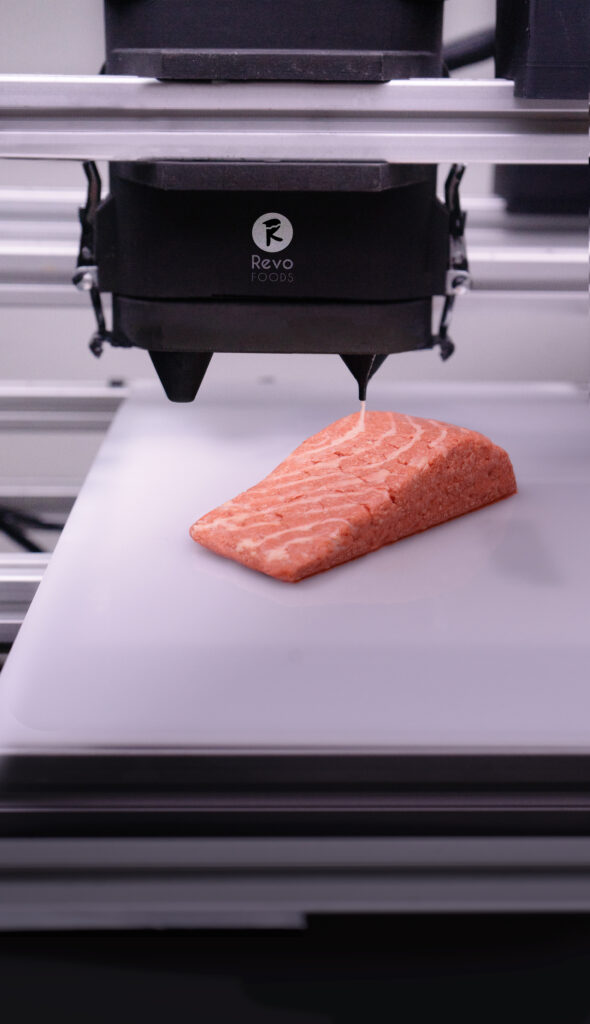
Launched in 2021, Seaspire made waves last year after piloting its bio-printed whole-cut vegan snapper at foodservice locations in India and New Zealand. The company claimed its product was the first of its kind in the Asia-Pacific region, and after positive consumer feedback in the trials, it’s now launching in e-commerce channels to present vegan seafood for home cooking applications.
But the products Seaspire has launched on the D2C channel don’t include the whole-cut snapper, which the company expects to continue exclusively in foodservice. “These outlets are highly niche, and we are doing these trials to validate the product use cases in food service,” Gadodia told Green Queen, adding that the snapper’s retail journey still has a few ways to go.
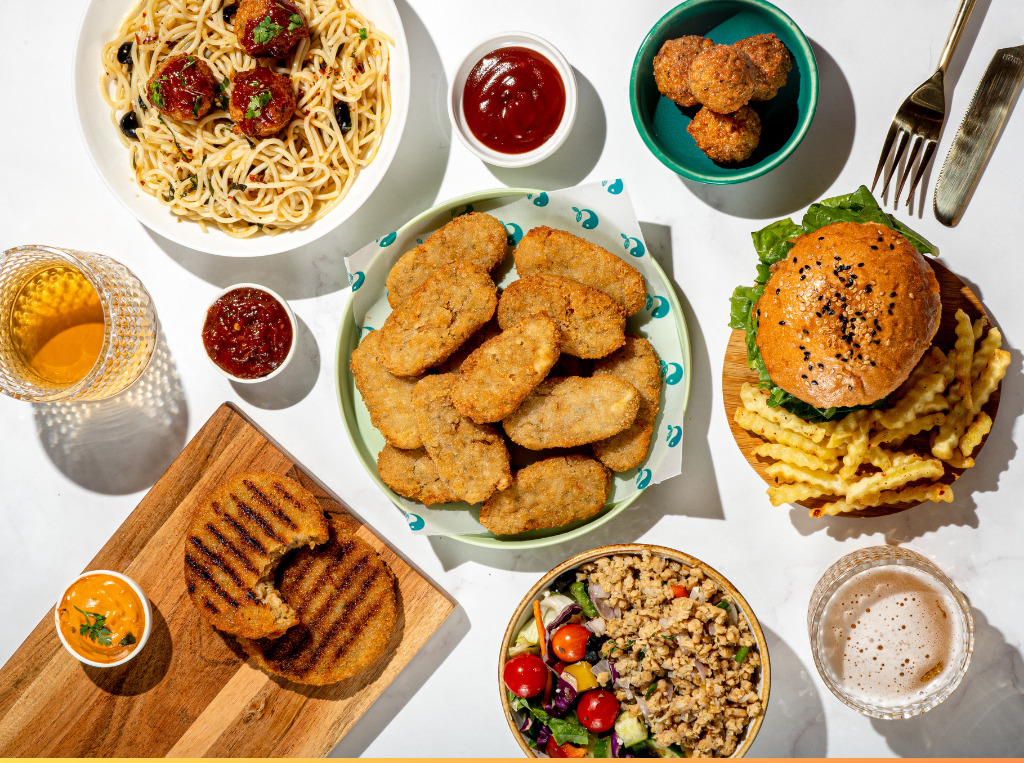
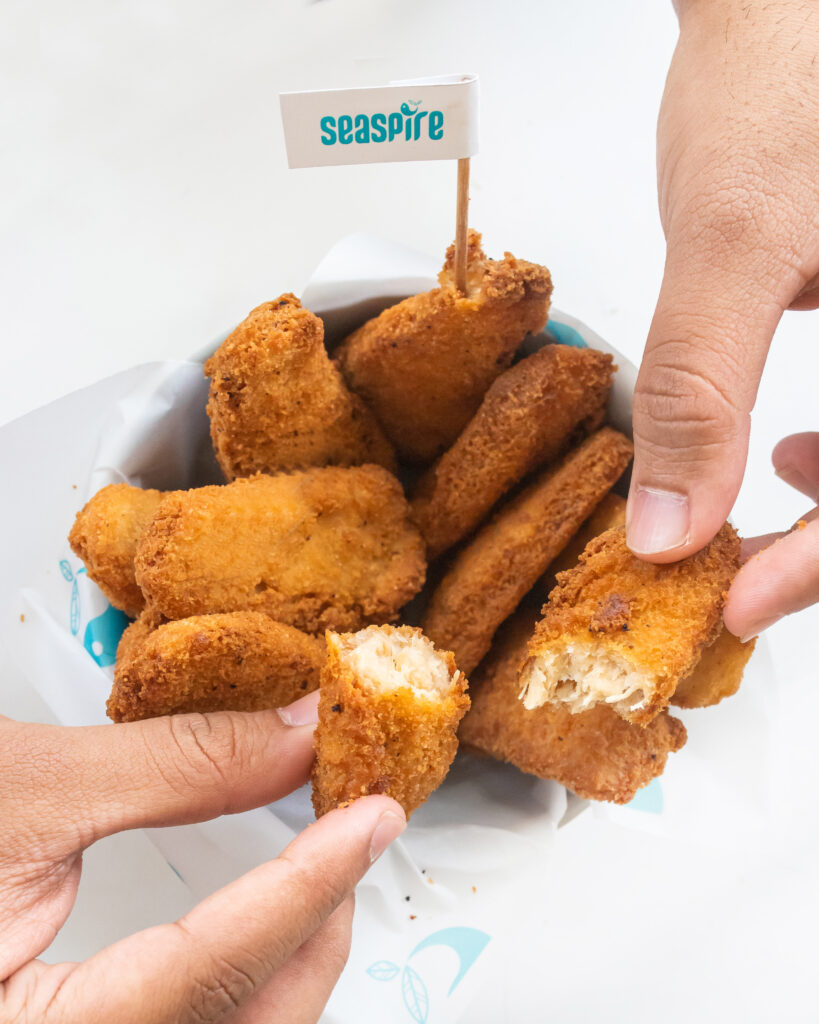
The D2C offerings are plant-based fish fingers, a fish burger and fish mince. The base of the innovations is made from eight ingredients, combining pea and rice protein (which also appears in powdered form) with water, sunflower oil, salt, psyllium husk and algal extracts. The burger and fingers have an additional crumb coating made from wheat flour, spices and condiments.
Gadodia said these ingredients come from multiple sources – “some through leading ingredients houses, and some are proprietary ingredients”. “We are currently outsourcing manufacturing of our commercial products to a leading food manufacturer in India,” he added. “Going forward, we will be looking at decentralising manufacturing based on target markets.”
‘Retail is not commercially viable’ for alt-seafood in India
Courtesy: Seaspire
Seaspire decided to launch into retail after realising that “the early adopters are looking to get these products easily available at their doorsteps”. Gadodia said the company figured this out via some pop-up events. “Essentially, these three products will be still part of the foodservice channel, as we aim to establish multiple use-case applications in regional and continental cuisines,” he confirmed.
But the new products are limited to online stores. “Physical retail is yet not a promising channel in India, what we have learned observing other brands,” explained Gadodia. “There is a huge inventory cost in the supply chain for physical distribution, and [it] is not viable corresponding to market adoption.”
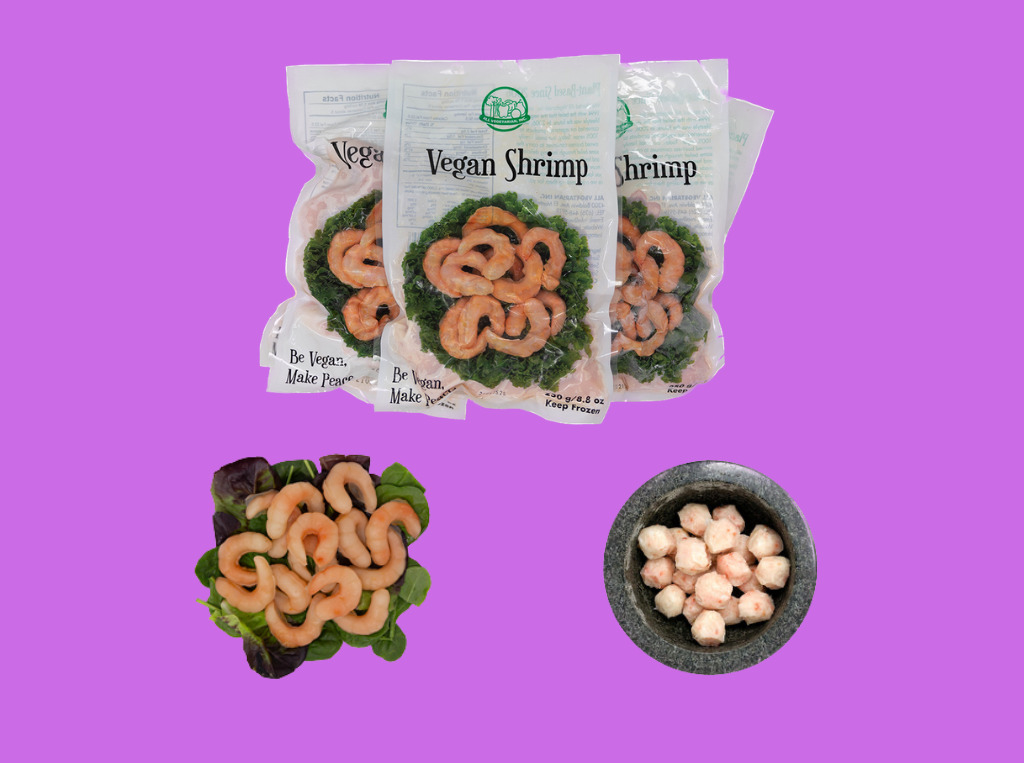
He added that Seaspire’s increased market presence will help it establish commercial bandwidth and introduce further whole-cut plant-based seafood products, which are set to be launched in Q1 2024: “We are already testing our cold-cut fillets of plant-based fish with leading foodservice in business, and hoping to follow [the] pilot exercise for [a] few months until their launch next year.” Moreover, he confirmed that the startup is working on vegan shrimp as it is “in high demand in foodservice” (it may not launch in retail, however).
Seaspire describes the Asia-Pacific region as an “untapped opportunity” for vegan seafood, and while the company has already been operating in India, New Zealand has expanded its B2B presence to Australia and the UAE, it has earmarked Singapore as a potential market for its products too.
Gadodia alluded to a challenging fundraising market and said that while Seaspire hasn’t raised funds from an institutional round, it has been supported by accelerator financing and grants in India and New Zealand. “In a tough funding environment like today, we feel we are fortunate that we are able to optimise [our] business to a great extent, and still deliver good products and access markets,” he explained.
When asked if Seaspire planned to fundraise, he added: “It takes a lot to work with very limited capital. However, it’s very important to stay true to the fundamentals of business and improve cash flows for a better and sustainable business model.”
What Indian consumers want from their food
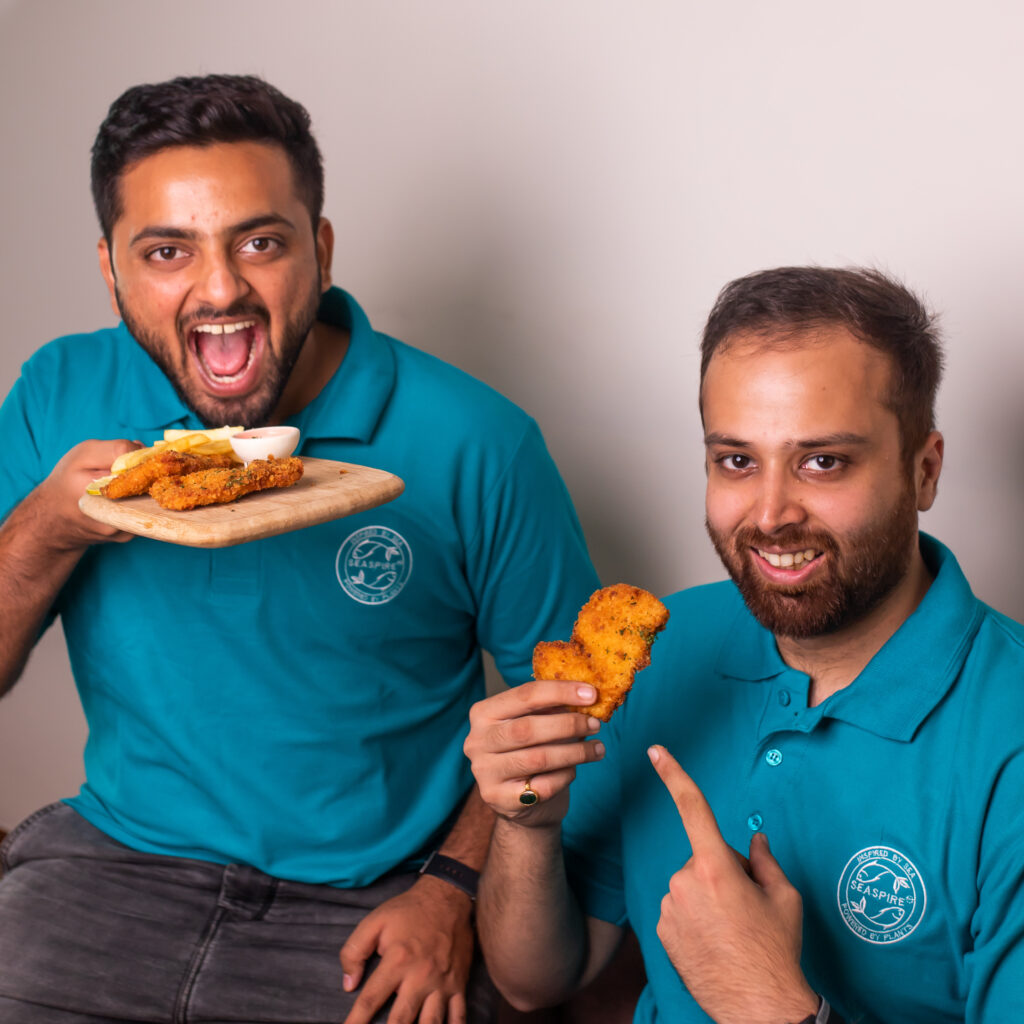
Seaspire co-founders Varun Gadodia and Shantanu Dhangar | Courtesy: Seaspire
In terms of its home market, Gadodia noted that India has seen a modest rise in vegan consumption post-pandemic. A report by the country’s Plant Based Foods Industry Association (PBFIA) in May found that veganism has become “increasingly popular” over the last five years in India, with “more than 2% of people actively identifying as vegan”. A December 2021 survey by leading food company Kerry found that 63% of Indians would be willing to buy plant-based products regularly, with 60% not deterred by higher price tags.
However, Gadodia said that higher consumption of vegan food is restricted to “tier one” cities, which would include metropolises like New Delhi, Mumbai and Bangalore. “Tier two” cities are witnessing a rise in traditional plant proteins, he added. “We have also observed that positioning ‘plant-based’ or ‘vegetarian’ protein is much more acceptable in the consumer space than ‘vegan’. Vegan connotations are seemingly turning off a potential audience.”
It aligns with previous research in other markets that highlights what term consumers prefer. A July 2022 ProVeg International survey covering the UK found that respondents were most likely to pick products labelled ‘plant-based’ or ‘veggie’, and least likely to do so with labels that read ‘vegan’ or ‘meatless’. In the US, too, the Plant Based Foods Association found that there’s a stronger preference for the terms ‘plant-based’ and ‘dairy-free’ compared to ‘vegan’ and ‘vegetarian’.
“More than vegan consumption, consumers tend to follow vegetarian diets,” Gadodia added. While there are conflicting figures about the number of vegetarians in India, estimates put it between 20-40%. Even at the lower end, that figure is about 280 million – that’s more than double the entire population of the second-highest on the list, Mexico.
Moreover, eight in 10 Indians say they are reducing meat. Gadodia said targeting just vegans and flexitarians is “only scratching the surface”: “The bigger opportunity is inclusive of all consumers such as vegetarians who are looking for healthy and tasty foods.”
He added: “The Indian consumer space is very complex, and there’s no straight pattern as regional diversity and economics play a huge role in food choices. In general, the demand for protein sources is steadily growing, and many consumers are looking for alternative options to supplement their protein needs. As a thumb rule, India is still a traditional market and consumers rely on regional food preparations. Thus taste, local flavours in preparation and cost parity are crucial [for growth].”
Hybrid proteins could unlock alt-seafood’s potential
Courtesy: Seaspire
While India’s per capita consumption of fish is below the global average – which makes sense given its large vegetarian population – it still ranks among the largest seafood exporters in the world. The PBFIA report explains that as plant-based meat consumption in India “continues to grow, demand for alternative seafood is also expected to increase”. Apart from Seaspire, other brands offering plant-based seafood products in India include Mister Veg, VegetaGold, Veggie Champ and The Mighty Food.
Alternative seafood, Gadodia said, is imperative to cope with the rising demand, as well as tackle climate change: “We aim to leverage traditional channels to supplement with alternative seafood products. Seafood in general is a highly fragmented category, and testing alternative seafood in a traditional market like India will provide us with a strong footing to establish product market fit.”
So far, he noted that consumer response has been positive: “We have definitely managed to outgrow the consumer perception of plant-based products still not [being] quite there. Moreover, consumers have seen a lot of plant-based chicken or deli meats, but seafood is still scarce and that adds [to] the curiosity too.”
Seaspire hopes to “trail the path of technology innovation that can promote growth and adoption of alternative seafood”, said Gadodia. He also hinted that the key to success for alt-seafood in India could be in the confluence of plant-based and cultivated proteins. “More specifically, we believe the category will be unleashed by the rise of biotech-driven solutions – [like] cell-based and synthetic biology – and aim to develop enabling technologies or solutions for hybrid seafood alternatives.”
It involves mixing plant-based proteins with cell-cultured ones to produce a hybrid alternative to meat and seafood. So far, the only company working with cultivated seafood in India is Klevermeat. But as a whole, Asia has a number of food tech firms making strides in this space.
A new report commissioned by plant-based body Protein Industries Canada (PIC) has found that the global vegan market shows great potential over the next decade. But while Canada’s own alt-meat consumption has increased, major industry barriers remain.
The research was carried out by Ernst & Young (EY), and commissioned by PIC. Founded in 2018, the Canadian government-backed alt-protein organisation aims to “underpin the creation of new plant-based ingredients and food” by investing “collaboratively to accelerate innovation and the competitiveness of the Canadian plant protein sector” as one of its goals.
Much like the larger food tech industry, the global plant-based sector has faced a difficult 18 months after a few years of global hype, owing to the impact of Covid-19, supply chain disruptions, as well as inflation and the cost-of-living crisis. It has seen industry giants like Beyond Meat and Oatly experience sales declines and stock price volatility, as many companies have laid off employees, and some have shut down.
According to the PIC/EY report, there’s potential for the tide to turn here. The research’s findings suggest that the plant-based meat sector, which it claims is currently worth $16.5B, is set to grow by 16.5% annually to reach $139.4B by 2035. Similarly, alt-dairy is predicted to expand by 9.5% year-on-year from $14.4B to $51.3B, and the vegan bakery category is expected to see its value increase by 4.1% annually from $8.7B to $15.3B by the same year.
Key barriers towards consumer adoption
Courtesy: EY
The report mentions that consumers’ price sensitivity towards “products lacking texture and taste parity” with conventional counterparts has increased due to inflation, but that future improvements can offset this trend. Price parity, however, remains the biggest barrier to the adoption and growth of plant-based products, with 64% of consumers who reduced their vegan protein consumption citing cost as a reason.
Taste and texture come in second on this list, a detractor for 58% of consumers, according to EY’s analysis. Other obstacles include regulatory complications around labelling – most countries, including Canada, the US and the EU have restrictions on what plant-based companies can call their alternatives on product packaging – as well as supply chain issues.
The global food and agriculture sector has been hit by disruption from Covid-19, Russia’s invasion of Ukraine and subsequent food shortages, export bans and the energy crisis, plus the effects of climate change. The latter includes widespread crop destruction, as extreme heat and water shortages could significantly disrupt the global food supply.
EY says funding is another key hurdle. Last month, a Stanford University study revealed that livestock farming receives 1,200 and 800 times more funding than plant-based and cultivated meat in the EU and the US, respectively. Meanwhile, 97% of all research and innovation spending in the EU (and 95% in the US) between 2014 and 2020 went to animal farmers, aimed at improving production.
Earlier this week, analysis by Pitchbook found that investors are deserting food tech, despite a survey by alt-protein think tank the Good Food Institute (GFI) last December revealing that 87% of investors expected to make alt-protein investments in 2023.
Asia-Pacific plant-based milk is slated for growth, but dairy consumption is also rising
Courtesy: Cottonbro Studio/Pexels
The report focuses on Asia-Pacific as a key region for this sector’s growth. It points to higher instances of lactose intolerance in Asia and population increases as major factors for this. While there is no research proving an increase in lactose intolerance, studies have found that lactose malabsorption is prevalent in at least 70% of people of East Asian descent.
According to EY’s calculations, per capita GDP in the East Asia and Pacific regions has now surpassed the global average, pointing to an increase in incomes and willingness to pay for plant-based alternatives, which are often more expensive than conventional counterparts in this part of the world.
The report estimates that Asia-Pacific will be the world’s largest market for plant-based dairy, accounting for 40% of the total sector by 2035. It’s expected to overtake North America in the vegan bakery category, although Europe is tipped to remain the largest market for this.
But current headlines are in contrast with this forecast. For example, leading oat milk player Oatly saw a 15% drop in quarterly sales in Asia this year. While the company had been expanding in Asia, with a new factory announced in China and a joint facility in Singapore – when it launched in the Lion City in 2020, its own survey had found that a third of Singaporeans hadn’t heard of plant-based milk – a slower-than-expected recovery from Covid-19 in China has seen the brand slow down new product development and eliminate certain SKUs across Asia.
And while China’s population has a high prevalence of lactose intolerance, the country is now the largest importer of dairy in the world. That’s after it’s expected to become the third-largest dairy producer across the globe, with annual demand predicted to expand by 2.4% until 2032, according to Rabobank. The Chinese government actively encourages dairy consumption, “with national guidelines suggesting a daily dairy intake of between 300-500g/person”.
China is now the world’s third-largest dairy consumer. Between 2019 and 2021, household dairy consumption rose by 11.8% year-on-year to reach 42.3kg, according to government data. Additionally, Asia is home to India, the biggest milk-drinking country globally. So while EY’s projections certainly paint a positive picture, fundamentals suggest challenges ahead on the consumer adoption front.
Canada’s plant-based industry
Canada’s Sensible Hot Dogs recently raised nearly $12M | Courtesy: Sensible Hot Dogs
In terms of Canada – whose plant-based industry was a big focus of EY’s research, the report suggests the country has what it takes to be a leader in the plant-based protein space. This includes a “mature agricultural sector” and a “strong financial sector, stable economy, and well-developed capital markets”.
Last year, a third of Canadians said they tried a plant-based meat alternative, while 42% reported consuming a vegan dairy substitute, according to research by Dalhousie University. Meanwhile, 31% said they consume alt-meat at least once a week, and half said the same for plant-based dairy. Another survey revealed that Canadians eat alt-protein (7%) more than pork (5%) or seafood (4%) in a typical week.
But Canada has its own fto overcome. EY points to increased policy and infrastructure support, as well as more investment in the sector. There is also the regulatory question: as mentioned above, plant-based manufacturers are restricted by labelling laws in Canada. Currently, they aren’t allowed to use terms like ‘milk’, meat’, ‘cheese’, etc. on vegan product labels.
And while there are some proposed changes, they are still restrictive. Novel protein products would need to use the term ‘simulated’ and match certain nutritional levels, while alt-meat made from traditional vegan protein like tofu must have clear labels to identify the base ingredient, and won’t be allowed to be fortified with added nutrients.
Source: GFI State of The Industry Report
Pricing in misinformation risk
The positive global forecast and contrasting current challenges (many of which EY says are short-term) add to a growing body of fluctuating predictions about the alt-protein industry. GFI has compiled a host of different projections to show the difference in alt-protein forecasts over the next two decades.
Moreover, it’s unclear if the report authors factored in the risk of misinformation. As The Spoon’s Michael Wolf writes: most industry reports “do not attempt to assess or quantify the increased risk to the alternative protein industry from industry and product-related misinformation.” Lobby groups linked with meat and dairy companies have a history of acting against the plant-based industry via smear campaigns and commercials.
Courtesy: CCF
Big Dairy is about to go big again. The California Milk Processor Board, the body behind the popular and influential Got Milk? ad campaign, released a new commercial drive last month, titled ‘Everyone Wants to be Milk’. It seemingly poked fun at plant-based alternatives by imagining milk made from salmon, octopus, cranberries, ghosts and aliens, among others, and urging consumers to “get real”.
Such consumer-aimed campaigns can be highly successful and pose a risk for vegan brands as a whole hoping to welcome more shoppers to the category. While the EY/PIC forecast is hopeful, the global plant-based industry has a fair few struggles to overcome.
Three months after the UK company was bailed out of bankruptcy by fellow British plant-based meat brand VFC, Meatless Farm products are back on UK supermarket shelves. The brand has relaunched a few of its old products alongside a new offering, as it prepares a comeback marketing campaign nationwide.
It’s bewn a challenging time for the plant-based meat sector, what with sales declining, employees being laid off, and brands going out business. In June, UK-based Meatless Farm came close to the latter – before it was rescued by VFC in what is now a famous acquisition.
Meatless Farm has managed to turn its story from doom to gloom, as it now prepares to return to supermarket shelves across the UK. Its flagship pea-protein-based mince is making a comeback, and so are the burgers, chipolatas, chicken breasts, and chicken roast joints. Two of its pasta – the Beef, Red Wine & Porcini Mushroom Girasole and the No-Duja Ravioli also return to shelves.
In addition, a new chicken and bacon tortellini SKU will be launched exclusively in Tesco, while its other products will be available across Sainsbury’s, Ocado and Asda (which is also where Meatless Farm launched its pork and apple sausages last month).
Courtesy: Meatless Farm
Speaking to Green Queen, Meatless Farm and VFC CEO Dave Sparrow confirmed the company plans to relaunch more of its old lineup: “Our valued customers and consumers are our number one priority, [and] bringing their favourite Meatless Farm products back to the shelves has been our absolute focus.”
Along with its retail return, Meatless Farm has launched a national marketing campaign with the tagline ‘For the Tryers’, encouraging flexitarians to “give it a try” as it hopes to increase the adoption of plant-based meat in the UK. The campaign – which will run from September 25 to October 22 on tube car panels, digital six sheets, street hubs and billboards – is expected to reach over eight million consumers.
The ads will be integrated with a £2 discount coupon that shoppers can redeem in-store on Meatless Farm’s products. “It’s fantastic to see the brand return to retail,” Sparrow said in a statement. “And we’re all delighted to let everyone know that Meatless Farm is back for good via our national advertising campaign, encouraging consumers to make simple switches and give the brand a try.”
A triumphant return
Courtesy: Meatless Farm
This is the Meatless Farm’s first big step back into focus after a turbulent year that saw it nearly cease its operations. In early June, the company laid off its entire staff, days after filing a notice of intent to appoint administrators. It was facing millions in losses and needed to find a buyer to avoid administration – and the company had reportedly found an investor, who eventually backed out and the company ran out of time.
In just over a week, it was acquired by vegan chicken brand VFC in a deal worth €12M, saving it from bankruptcy and keeping the brand assets intact. At the time, Meatless Farm was a household name in UK retailers, and also had a US distribution deal with a presence in over 600 stores. It also had many foodservice partners, most notably securing a nationwide agreement with UK pub chain Wetherspoons in 2019.
Meatless Farm confirmed that it is using the same manufacturers, supply chain and recipes post-acquisition, and added that it is already back in foodservice channels. “We’ll have more updates on further expansion soon,” Sparrow revealed to Green Queen. “Innovation is a key part of our growth plans to reach more consumers via new eating occasions.”
Navigating a stagnating market
Courtesy: Meatless Farm
Its return is welcome news for the UK vegan market – it’s the second-largest in Europe, with Brits spending £964M on vegan meat and dairy last year. But sales have stagnated and, over the last decade, total investment in plant-based protein R&D has been overtaken by cultivated meat. Last month, the UK received its first regulatory filing for approval of cultivated meat sales by Israeli company Aleph Farms.
“Much has been reported on the plant-based market recently and it’s clear that, whilst it will see continued growth and demand, the level of early capital and emerging brands has saturated the space,” said Sparrow. “Consumer-led brands that stay true to their core values will weather the storm to create strong businesses.”
He added: “Within VFC Foods, that starts with having quality-led products, impactful brand communications and an eye on maintaining affordable price points for consumer entry into plant-based foods. Beyond this, ensuring that choice and convenience remain a priority to make eating plant-based food an easy transition is key – bringing both VFC and Meatless Farm brands together is a big part of our objective here and an excellent opportunity to be at the forefront of the market in the coming years.”
From Australia and Thailand to the Netherlands and the US, it’s easier than ever to find plant-based, overfishing-free alternatives to shrimp. You can make your own vegan shrimp cocktail, grits with shrimp or even ceviche – the world’s your, well, crustacean. Here are the best brands selling vegan shrimp.
I’ve never eaten meat or seafood, but I love a good vegan shrimp. I think it’s the texture that does it for me. The last time I had it, it was at a Thai restaurant in the US that made me an ultra-spicy noodle dish – I didn’t know there’s an unofficial spice scale in many American restaurants, and me being me, I went for level 10. It was the shrimp that saved me.
Plant-based shrimp is great – the texture is succulent and satisfying, and there’s a hint of the sea in the flavour (thank you, algae). Why stop with over-spicy noodles? Gather some ketchup and mayo, and make your very own vegan shrimp cocktail. While you’re at it, turn up the fryer (or air-fryer, whatever floats your shrimp), get some hot sauce and mustard, and complement your cocktail with some plant-based po’ boys.
Here are the best vegan shrimp brands you can try:
Vegan Zeastar
Courtesy: Vegan Finest Foods
Vegan Zeastar is one of four brands under the umbrella of Dutch plant-based company Vegan Finest Foods. It has an extensive vegan seafood range, including crab, tuna, salmon, cod, calamari and shrimp.
The shrimp line itself contains three varieties. There’s the plain version, but then there’s also crispy chilli and lemon flavours, which are coated with a seasoned breadcrumb mixture. The plain uses a combination of potato starch and kelp extract for texture and flavour, alongside sugar, salt, wheat fibre, and gelling agents. The protein comes through non-GMO soy protein powder.
The crispy shrimps take this base and add a breadcrumb coating that contains coconut oil, soybean powder, yeast extract, and beta-carotene, among other ingredients.
You can find Vegan Zeastar’s shrimp at online shops and independent stores across Europe.
Thai Union
Courtesy: Thai Union
Thai seafood giant Thai Union has a host of brands under its wing, and in 2021, it launched OMG Meat, a company specialising in vegan meat alternative SKUs. These include shumai dumplings with crab, crab patties, chicken and fish nuggets, BBQ pork buns, and hoy jor (crab and pork) alternatives.
It also makes shrimp dumplings, developed at its Global Innovation Centre. “We have had consumers come to us and say: ‘I know you are an expert in seafood and shrimp – I would like to have a shrimp tempura, but not containing shrimp,’” explained Thai Union’s innovation director Tunyawat Kasemsuwan.
The dumplings are filled with 68% of the plant-based shrimp, which is made from coconut oil, sugar, salt, gelling agents, and stabilisers. It’s combined with wonton wrappers, sesame and canola oil, flavourings, colours, thickeners and an acidity regulator.
You can find Thai Union’s OMG Meat vegan shrimp dumplings in stores across Thailand.
Lily’s Vegan Pantry
Lily’s Vegan Pantry
It began as May Way Vegetarian Kitchen in New York’s famous Chinatown in 1995 – now, it’s called Lily’s Vegan Pantry, in honour of owner Lily Ng. “We are committed to raising awareness about the physical and environmental benefits of consuming a cruelty-free diet,” she told Green Queen last year.
The Manhattan store has a mind-bending list of alt-meat products – it’s not just seafood, there’s also poultry, pork and lamb, among others. In its seafood range, it has three shrimp offerings. The original is the Vegan Red Spot Shrimp, which contains konjac powder, beta-glucan, potato starch, carrageenan, alginate, calcium hydroxide, and seasonings.
Then there are the plant-based shrimp rolls, containing a base of konjac powder and potato starch, mixed with vegetables, flavourings, and tofu skin. Lily’s Vegan Pantry also makes shrimp balls, which replace the konjac with yam flour. The other ingredients? Water, salt, calcium hydroxide and seasonings.
You can find Lily’s Vegan Pantry’s shrimp products online and at its Manhattan site.
All Vegetarian Inc
Courtesy: All Vegetarian Inc
At the opposite coast is another small business making a plethora of plant-based meat alternatives: vegan bacon, turkey roasts, chicken breasts, drumsticks, tuna, jerky – you name it, and All Vegetarian Inc probably makes it.
You can purchase its vegan shrimp in wholesale-size packs of six, 12 or 20. Each bag contains about 18 shrimps for you to enjoy, and these are made with unspecified modified starch, sunflower oil, glucomannan, pea extract, sea salt, seaweed extract and brown sugar. It also sells vegan shrimp balls on wholesale orders.
You can find All Vegetarian Inc’s vegan shrimp online.
HAPPIEE!
Courtesy: Growthwell Foods
Singaporean plant-based meat brand HAPPIEE! – a subsidiary of Growthwell Foods – has been making fish and chicken alternatives for its home market. But last month, it launched into the UK retail market with a range of vegan seafood (both frozen and chilled) and meat alternatives.
The seafood range includes plant-based versions of squid and calamari, as well as shrimp and breaded shrimp. The base for the vegan shrimp is potato and wheat starch, which is combined with sunflower oil, modified tapioca starch, methylcellulose, konjac flour, hydrolysed wheat protein, anti-caking and raising agents, seasonings, and paprika extract for colour.
For the breaded shrimp, HAPPIEE! takes this base and coats it in a mixture of wheat, rye and rice flour, water, cornflakes, rapeseed oil and seasonings.
You can buy HAPPIEE!’s vegan shrimp products at online retailer Ocado, and at Tesco stores across the UK.
Plant-Based Seafood Co.
Courtesy: Plant Based Seafood Co.
US producer Plant-Based Seafood Co.‘s product range is pretty self-explanatory. Its Mind Blown range has dusted scallops, crab cakes and two kinds of shrimp alternatives.
The dusted shrimp is made from konjac powder, vegetable gum, root starch, and seasonings, with the breading comprising brown rice, whole algae protein, and pea protein. In fact, it is breading itself is gluten-free, a combination of rice flour, potato starch, pea fibre, tapioca starch and xanthan gum – plus additional seasonings.
The vegan coconut shrimp, meanwhile, combines the base with the gluten-free flour breading, which is complemented with coconut sugar and baking powder.
Across the Pacific, Australia’s Boldly Foods has caused a stir since it announced its launch in January this year. Its extensive frozen vegan seafood lineup uses a base of konjac root, and includes the usual salmon, tuna and calamari rings, as well as the more uncommon whitefish, crab sticks, jumbo prawns and calamari steaks.
It also has two plant-based shrimp SKUs: baby shrimp and shrimp balls. Both contain a blend of konjac root, tapioca, wheat and potato starches, sunflower oil, salt and sugar, with 2% or less of malto0dextrin, hydrolysed wheat protein, palm oil, yeast, cabbage and paprika extracts and calcium carbonate. (The baby shrimp also contains extra natural flavourings.)
You can find Boldly’s vegan shrimp alternatives in US foodservice soon.
A month after becoming the first vegan steak to land on a US steakhouse chain menu, Israeli startup Chunk Foods’ whole-cut plant-based alternative is making its fast-casual debut via Leonardo DiCaprio- and Lewis Hamilton-backed chain Neat Burger. The new Chunk Steak Sandwich is priced at a premium of $19.99 and packs over 25g of protein.
Backed by Robert Downey Jr’s FootPrint Coalition, Chunk Foods says the new menu option is a “culinary experience that rivals traditional steak sandwiches”. It uses the biomass-fermented Chunk Filet, which is paired with ingredients and seasonings to replicate a classic steak sandwich. Complemented with vegan blue cheese, cilantro chipotle sauce and caramelised onions on an artisan roll, the sandwich is available at Neat Burger’s Nolito store in Manhattan.
Launched in 2020, Chunk Foods’ link-up with Neat Burger is a marker of the former’s increased foodservice presence, with its vegan steak itself having already appeared on the menus of several New York City restaurants, including Coletta, Anixi and The Butcher’s Daughter. And last month, it also became a menu item at Charley’s Steak House in Orlando.
Its whole-cut steak uses solid-state fermentation, which is cheaper than high-moisture extrusion or submerged fermentation. It won the ‘Plant Based Meat Product of the Year’ at the fourth annual AgTech Breakthrough Awards last month. The company, which has secured $17M in total funding, says it’s also working on pork, lamb and poultry alternatives. Chunk Foods, which raised $15m in seed funding last year, will also be opening a manufacturing facility in Israel – touted to be one of the largest of its kind.
“Partnering up with Chunk Foods not only hits the culinary innovation we strive for, but it’s also kind to the planet and pleasing to the palate,” said Neat Burger US COO Kenny Silvester.
Despite the retail decline, alt-meat thrives in US foodservice
Chunk Foods landed on Charley’s Steak House’s menu in Florida | Courtesy: Chunk Foods
Alt-meat brands have had a tough year in the US retail market, with retail sales of plant-based meat falling by 12.6% to $106.8M in the five weeks to July 2, 2023, and units down by 19.8% year-on-year. And for the year to July 2, 2023, sales declined by 7.3% year-on-year, while units saw a 15.6% drop. Many brands have faced bankruptcy or have been forced to cease operations, just as the number of American vegans hit a 10-year low this year.
Despite the grim reading, foodservice sales of alt-meat reached an all-time high of $730M in the US, with plant-based meat eaters making over 30 more foodservice visits per year than the average consumer, according to a report by industry body the Good Food Institute (GFI). Nearly 10% of Americans purchased vegan alternatives to meat in foodservice in 2022 – 15% of whom repeated their purchases over four times.
It aligns with a 2022 Mintel report showing that five in 10 omnivores and eight in 10 flexitarians say more US restaurants should serve plant-based meat alternatives. Meanwhile, further research has revealed that 76% of the country’s foodservice operators are aiming to maintain or increase their plant-based meat options – nearly half (48.4%) of all restaurants currently offer plant-based menu items.
Neat Burger’s expansion drive
Neat Burger opened its first location in Nolita, New York City | Courtesy: Neat Burger
“The long-term performance of plant-based proteins in foodservice indicates that the plant-based category is continuing to mature,” read the GFI report.
Neat Burger is a prime example of this. The vegan fast-food chain closed an $18M Series B funding round in May, amid accelerated expansion in key international markets. The Nolita store was its first in the US, opening earlier this year, and exceeded first-month sales expectations to outperform all other locations internationally.
“This is a pivotal moment for our business, and it allows us to accelerate our growth plans,” Neat Burger CEO Tommaso Chaibra said at the time. “With the successful launch of our New York location and record first quarter under our belt, we have demonstrated the strength of our brand, and are now well-positioned to bring our award-winning plant-based food to the growing number of consumers in the US and worldwide who are embracing a healthier and more flexitarian lifestyle.”
The chain had announced plans to open another US site and three more in London by 2025. Last month, it unveiled two new sites in London’s Dalston and Wembley, with the former featuring a grab-and-go concept (a first for the brand). Neat Burger will also enter Italy and expand its presence in the Middle East, where it opened its first store in Dubai last October.
Cats on a plant-based diet could be healthier than those fed meat, with owners reporting fewer visits to the vet, reduced medication use and assessments of severe illness, and more vets describing vegan cats as healthy, according to a new study. It comes two years after similar studies found that vegan diets can be beneficial for cats and pets.
Published in the peer-reviewed journal Plos One, the study surveyed 1,369 cat owners, 9% of whom fed their pets a vegan diet. Examining 22 specific health disorders, the researchers found that 37% of cats on a plant-based diet experienced at least one of them, versus 42% of cats eating conventional meat-based foods.
Of these disorders, 15 were most common in meat-eating cats, and seven in vegan felines. And while most differences were not statistically significant, the plant-based cats scored higher on all health indicators – the number of health disorders per unwell cat decreased by 16% when fed a vegan diet.
In the year-long study, cats on a plant-based diet were found to experience a 7% reduction in veterinary visits, a 15% drop in medication use, a 55% decrease in progression onto a therapeutic diet, a 4% fall in cats being assessed as unwell by vets (and 8% for more severe illnesses), and a 23% decline in the number of owners finding their cats have more severe illnesses.
Cats have always been a carnivorous species, and meat has long been thought to be essential to their wellbeing. However, study lead Professor Andrew Knight argues that biologically, cats need a specific set of nutrients, not meat. They require a high-protein diet with certain nutrients (like taurine and vitamins A and B12) that are most common in meat.
But vegan cat food – a $9.2B market that’s expected to nearly double by 2030 – can contain these nutrients as supplements, either produced synthetically or sourced from certain plants. Meat-based cat food can also require added supplements, and Knight told the Guardian that the same supplements are used for vegan food to make sure it’s nutritionally sound: “There’s no scientific reason why you can’t supply all the necessary nutrients through plant additives.”
He added: “Modern vegan diets produced by pet food companies use plant, mineral and synthetic sources to supply all needed nutrients. They also lack hazards such as animal-sourced allergens that occur within meat-based pet food. We therefore expect to see health outcomes as good or better, when cats are fed nutritionally-sound vegan diets, and that’s exactly what this very large-scale study shows.”
The research findings echo a similar study co-authored by Knight two years ago, which examined the wider pet food category. That research also found that vegan pet food can have “as good – or better – health outcomes on plant-based diets as they did when fed on meat pet foods, provided these were carefully formulated with additional synthetic nutrients.”
A growing body of research
Courtesy: Canva
The same year, a study of 1,026 cats found that the 18% of felines who were fed plant-based diets were more frequently reported by guardians to be in very good health. “Contrary to expectations, owners perceived no body system or disorder to be at particular risk when feeding a plant-based diet to cats,” said co-author Sarah Dodd.
At the time, this was the largest research of its kind. Older research about meat-free diets for cats had been very limited in terms of case studies. A 2006 study, compared the health status of 34 vegetarian and 52 meat-eating cats in the US, and found that no significant differences existed between the two diets. Both sets of owners described their cats as generally healthy.
The British Veterinary Association previously discouraged pet owners from feeding their furry friends alternative protein. But it’s now reviewing its advice. “There is increasing interest among pet owners around alternative diets for pets, and while there is a lot of ongoing research into the impacts of vegan diets in particular, there has been a lack of robust data mapping the health consequences of this diet over time,” Justine Shotton, the association’s senior vice-president, told the Guardian.
She added: “In light of ongoing research, the British Veterinary Association recently convened a companion animal feeding working group which will inform our recommendations going forward. In the meantime, owners should speak to their vet if they are considering changing their pet’s diet.”
The new research aligns with guidelines published by industry body UK Pet Food in February. “With advancing technology and research, nutrients that were previously only available from animal-based ingredients can now be made synthetically or be sourced from novel ingredient,” it stated, adding that these do require careful formulation by highly qualified pet nutritionists. Overall, however, it found that “there is little evidence of adverse effects arising in dogs and cats on vegan diets”.
Consumer attitudes towards alternative pet food
Courtesy: Canva
In the UK, where Benevo debuted the first plant-based cat food in 2005, a 2022 survey by The Vegan Society revealed that 40% of owners who feed their cats a plant-based diet do so because they believe it’s healthier. Meanwhile, nearly a quarter of pet parents cited environmental reasons – in the US, for example, producing dry cat and dog food equates to between 25-30% of all emissions related to animal consumption by Americans.
Globally, dog and cat food emit around 64 million tons of carbon per year – that’s the equivalent of over 13 million cars. “Increasing concerns about environmental sustainability, farmed animal welfare and competition for traditional protein sources are driving considerable development of alternative pet foods,” the latest study states.
The Vegan Society’s poll also found that the feeding of vegan, vegetarian and reduced-meat foods was more popular in cats than dogs, despite plant-based dog food being a much more established category. Vegan dog food brands (like Wild Earth, Omni and The Pack) outnumber the number of plant-based pet food producers dedicated to cats. That stands to reason, given that dogs are the most popular pet across the world, with one in three homes having a dog, as opposed to a quarter of people who own cats.
And for consumers who are still firm on cats’ status as obligate carnivores, some brands are now making cultivated pet food to allay these concerns. In 2021, Vienna-based BioCraft Pet Nutrition (formerly Because Animals) debuted the world’s first cultivated meat pet food with its cultured mice. Other brands in the cell-cultured cat food space include Bond Pet Food, which makes slaughter-free chicken for dogs and cats, and Marina Cat, producer of the world’s first cultivated fish for cats.
In what is a significant restructuring move, Colorado-based mycelium meat startup Meati has cut its workforce by 10% and shuttered its pilot plant as it looks to become profitable. Meati, which had let go of 17 employees (about 5%) in June, says the layoffs affect all parts of the business and plans to add 100 additional positions to boost production.
Meati confirmed to Green Queen that the company has laid off 30 employees from its 300-strong workforce, including a few executive-level employees, while the actual number of positions eliminated is 60. The mycelium meat maker says some people in these roles will be deployed to new positions within the company, and those who have been let go will be offered a “comprehensive support package”. This includes severance pay, health insurance plans, career outplacement services, and employee assistance programs.
In January, the company opened a ‘mega ranch’ in Thornton, Colorado capable of producing tens of millions of pounds of its mycelium-based steaks and chicken breasts to rival the output of animal farms. It followed a $150M Series C raise last year, with an extension round last week bringing its total financing to over $325M. In May, it debuted its products at 380 Sprouts Farmers Market stores across the US, and Meati says these are now available at 1,500 stores nationwide.
Restructuring towards profitability
In January, Meati opened a ‘mega ranch’ in Thornton, Colorado | Courtesy: Meati
But despite this recent success, the business has been forced to restructure. “Meati is a young, disruptive company navigating uncharted territory – bringing a novel food to the forefront of a highly competitive industry in a challenging economic climate,” a Meati spokesperson told Green Queen in a statement. “Each of these factors requires us to regularly evaluate every aspect of our operations.”
They added: “These job cuts, while incredibly difficult, are a necessary part of ensuring we achieve a sustainable business model. Despite creating incredible products and an excellent commercial start in the market, we must be nimble and focus on near-term profitability.”
Speaking to the Denver Post, Meati COO Scott Tassani said: “With the cost of capital being higher, there’s a direct challenge for an accelerated pace of profitability. One of the things we have decided is that we have to get to a more sustainable business model that’s not just all about growth and speed.”
Despite the layoffs and closing of its pilot plant in Boulder, Colorado, Meati remains confident about its growth trajectory. “Very few brands have ever entered the market in this way, with immediate category leadership and extreme consumer resonance,” the company’s spokesperson told Green Queen.
“While our path forward has changed shape, we’re confident that the changes we’re making are the right course of action to support Meati’s continued growth and leadership. Meati’s team will continue to grow as nearly 100 additional positions are added in the near term to expand production capacity.”
Tough going for plant-based businesses
Courtesy: Meati
The layoffs at Meati follow similar developments at other plant-based food companies in the last year, with the alt-meat industry experiencing a decline in sales and consumer interest. Alt-meat giant Impossible Foods cut 20% of its workforce (132 employees) in February, after laying off 6% a few months before, while competitor Beyond Meat similarly let 19% of its staff go last October, affecting 200 employees and Eat Just, Inc made 18% of its workers redundant earlier this year.
According to insights firm Circana, retail sales of vegan meat alternatives fell by 12.6% to $106.8M in the five weeks to July 2, 2023, with units down by 19.8% year-on-year. And for the year to July 2, 2023, sales declined by 7.3% year-on-year, while units saw a 15.6% drop. These figures coincide with a Gallup poll that found that the number of vegans has hit a 10-year low this year.
A recent Mintel survey of 1,400 US consumers suggests that only 20% followed a meat-reduced diet this year, with inflation causing 53% of consumers to try fewer new foods like plant-based substitutes. Participants cited taste (48%), nutrition (35%), cost (34%), texture (24%) and processing (21%) as their primary concerns against alt-meat, with 30% of flexitarians avoiding plant-based meat alternatives because they are overproduced.
Meanwhile, companies have ceased operations, filed for bankruptcy, fallen into administration, gone into receivership – or even come close to the brink. But a 2023 Kantar report suggests that while plant-based food brands have seen a 10% drop in sales, private-label supermarket offerings have grown by 14% in the last year. Along these lines, Tassani told the Denver Post: “We are very confident that we will exit the year with thousands of stores carrying our product and we’ll be on the path to profitability in 2024.”
Three months after becoming the joint-first company to gain regulatory approval for cultivated meat in the US, California-based Upside Foods has announced a new commercial-scale manufacturing plant near Chicago. The new facility will begin producing ground cell-cultured chicken products, with an initial capacity of millions of pounds per year.
The 187,000 sq ft is based in Glenview, Illinois, and is titled Rubicon “with an appreciation for its historical significance as a point of no return”. In what is a significant step in the mainstreaming of cell-cultured meat, the factory has the potential to eventually produce 30 million pounds of cultivated meat and seafood products per year, and house cultivators with capacities of up to 100,000 litres.
Upside Foods COO Amy Chen told Green Queen that the facility – one of the world’s largest and most advanced commercial sites of its kind – will start with a broad portfolio of chicken-based formulations, including products like chicken nuggets, chicken sausages, dumplings and patties.
Second cultivated meat facility enables mass production
Upside Foods’ new large-scale production plant leverages the geographical, labour and innovation advantages of Chicago | Courtesy: Upside Foods
The company’s current cultivated chicken, which entered US foodservice via Bar Crenn in August, is manufactured at its Engineering, Production and Innovation Center (EPIC) in Emeryville, California. That plant can currently produce 50,000 pounds of finished cultured meat products annually, with the potential for future expansion to accommodate over 400,000 pounds per year.
“Not only does [EPIC] serve as the pioneering facility for the production and sale of our commercial products, but it also functions as an innovation centre for research and development that guides our scaling efforts,” said Chen.
“On the other hand, our Chicago facility marks our inaugural venture into large-scale commercial production,” she added. “Leveraging the knowledge accumulated from Upside’s EPIC facility in California, this new establishment will propel us to the next level of cultivated meat production.”
The company selected Dallas-based tech firm Jacobs as its design and manufacturing partner for the new plant, and chose the Chicago metropolitan area as its mass-manufacturing base due to the region’s legacy in meat production, a shared commitment to innovation and sustainability, strategic geographical advantages (it’s located at a major transportation crossroads), and its talented workforce.
It comes after the January acquisition of Wisconsin-based cultivated seafood producer Cultured Decadence. Upside Foods, which is worth $1B and has brought in $600M in funding, said this furthers its “commitment to the Midwest”, where it plans a total investment of over $140M. The company claimed this will create 75 new jobs – from warehousing and logistics positions to bioprocessing and food production – as well as other commercial functions.
“This new facility is a significant investment in our communities – creating new good-paying jobs while advancing our ambitious clean energy goals to create a more sustainable future,” Illinois governor JB Pritzker said in a statement. Touching upon Upside Foods’ US regulatory approval, he added: “Their pioneering leadership makes them a perfect fit for the region.”
“We’re excited that the next chapter of our journey towards building a more sustainable, humane, and abundant future will be in Illinois,” said Upside Foods founder and CEO Uma Valeti. “We are grateful for the collaboration and partnership that we have built at the state, county, and local levels in our site selection process.”
Diversifying the product range and bringing costs down
Upside Foods’ EPIC cultivated meat plant in Emeryville, California | Courtesy: Upside Foods
Upside Foods said that while ground chicken is its initial focus, it plans to diversify into other animal-based foods and whole-textured formats in the future. Chen declined to share specifics about the production and market costs of the cultivated chicken but confirmed it would enter the market at a premium. “Our ultimate goal is to reach price parity and eventually be more affordable than conventionally produced meat,” she added.
“That broad journey of technical scale-up, buildout of the supply chain ecosystem, and continuing to move down the cost curve is something we are laser-focused on in our next chapter. For instance, further reducing the cost of cell feed and finding efficiencies in bioprocess scale-up will play key roles in achieving our scale-up goals. We’ve already made tremendous progress on both of these fronts, and continue to invest in developing and testing new production processes to help achieve these goals.”
In 2021, Upside Foods announced a breakthrough development, producing an animal-component-free (ACF) cell feed for its cultivated chicken products. This meant it was no longer using the controversial fetal bovine serum (FBS), and doubtless helped fast-track scalable production as well as earn regulatory clearance. Chen remained coy on whether the company was planning on applying for approval in other countries – Singapore is the only other country that allows the sale of cultivated meat so far – but hinted that “our mission is global”.
She added that following its collaboration with Bar Crenn, the company planned on partnering with additional chefs and restaurants in the US, and eventually selling its products in grocery stores and markets globally: “Ultimately, we want Upside’s products to be available everywhere meat is sold, including retail and foodservice channels.”
A recent consumer poll by the Associated Press and NORC Center for Public Affairs Research found that half of Americans are unlikely to try cell-cultured meat, with most citing the reason as “it just sounds weird”, half saying they don’t think it would be safe.
Chen, however, remains confident about the consumer appeal of cultured meat. “We’re focused on educating consumers on what cultivated meat is and the potential benefits it can provide,” she said. “We believe they will fall in love with the familiar taste and texture of cultivated meat now that they have the chance to experience it.”
In recent years, the plant-based industry has witnessed hyper-growth and a lot of hype, fueled by venture capital and a promise of sustainable alternatives to traditional animal-based products. However, as the dust settles on initial market enthusiasm, the narrative surrounding this industry is changing.
The initial exclamation that “plant-based is dead” might be a startling realization for some, but it’s merely a natural progression. Like the phoenix, the industry is poised for a rebirth – a more mature, grounded, and realistic phase.
There are two areas where we need to anchor our focus in the short term as an industry, which will enable us to map a new course forward.
1) Understand the fickle consumer mindset
Fueled by a torrent of venture funding, companies leaned heavily into technological innovations, prioritizing the replication of meat, dairy, and eggs. The target was clear: produce products that looked, cooked, and tasted identical to their animal-based counterparts. Yet, in this rush, many overlooked a key component: consumer motivations and purchasing behaviors. Consider this: while 70% of the US population consumes plant-based foods, a recent Gallup poll found that only 4% identify as vegetarian and a mere 1% as vegan. This raises an intriguing question: what drives the majority? Most consumers aren’t driven by a strict dietary lifestyle but instead by flavor, health, or novelty. There’s definitely a significant group enticed by products mimicking their animal-based counterparts in taste and texture, making their dietary transition smoother. However, many of these consumers are now questioning the integrity of ingredients in these “alternative” products. So what are they looking for? Recognizable ingredients, placing taste and health benefits above perfect mimicry perhaps?
Here’s the truth: we don’t really know, but the intersection of behavioral psychology with market data suggests that companies may have placed the cart before the horse. Prioritizing tech-driven mimicry (and valuing it like tech) possibly missed the broader picture: understanding the diverse and multi-layered motivations behind consumer choices. Food is not tech and comparisons to electric vehicles or renewable energy may work in the context of shaping markets, but don’t account for the complex psychology involved in food choices. Let’s focus on understanding consumer intentions, and most importantly consumer purchase behavior (because they don’t always align). There is an undeniable “say-do” gap between what consumers say they want and what they are actually buying, and this gap may be even harder to bridge when it comes to food because of the emotional and cultural influences on food choices. Perhaps once we decode this behavior, we can invest more wisely in the right kind of product innovation.
2) Shift from growth to profitability
As the initial hype subsided, many startups faced a new reality. The mantra of “growth at all costs,” bolstered by hefty valuations and a cascade of venture capital, began to wane. Facing a weaker economic outlook, rising inflation, and higher interest rates, businesses must reevaluate strategies. Especially as investor interest becomes more discerning, aligning with a profitability-focused model. These macroeconomic shifts add to existing challenges: production costs, public funding disparities, and robust competition. The industry is now witnessing a palpable shift towards pragmatic business strategies and clear paths to profitability. To achieve this, companies are being forced with the necessity to “right-size” their operations or face the consequences of running out of capital. This involves not just streamlining processes but actively seeking avenues for collaboration to tackle the unique challenges of retail and foodservice.
And what are these challenges? In retail, securing shelf space is a daunting task, especially with established food giants in the mix. The rise in demand for plant-based products has certainly increased their visibility in stores, but it’s accompanied by increased competition, particularly from private label products that promise similar quality at lower price points. Foodservice, on the other hand, offers a different beast. Here, consistency, scalability, and price points become paramount. Given that most foodservice operators work on razor-thin margins, plant-based options need to be competitively priced, consistent in taste and quality, and scalable to varying demands.
The path forward: we need industry collaboration
With the surge in plant-based companies, the landscape has become a bustling hub of innovation. Yet, the challenges of distribution, intense competition, high production costs, and fluctuating consumer preferences demand a more unified approach. Given these multifaceted challenges, the industry’s survival and growth will depend heavily on collaboration. By pooling resources and expertise, plant-based companies can leverage economies of scale, reducing production and distribution costs, and ultimately improving their margins.
The harsh reality is some brands won’t make it past 2023 and many that do won’t stay independent for long and may need to be consolidated under new management. In this new incarnation of the plant-based space, shared ingredient sourcing, for instance, can offer volume discounts and more bargaining power. Shared marketing, leveraging collective reach, can bring down advertising expenditures. Collaborative research and development can speed up innovation cycles, sharing the financial burden and risk.
In the realms of food service and retail, the nuances run deeper.
In retail, securing shelf space is the biggest hurdle. Traditional meat and dairy industries have entrenched relationships. The hefty cost of slotting fees, promotions, and the battle for endcap displays often stretches the budgets of nascent plant-based companies. While there’s no simple solution to this dilemma, launching co-branded SKUs in high-growth categories may prove strategically advantageous, and achieving cost savings elsewhere may make these expenses more palatable.
For foodservice, while there are a lot more immediate opportunities, the challenges include training staff about new products, ensuring consistency in delivery, and managing varying consumer expectations with creative menus. Here, shared services and turnkey/collaborative concepts that involve multiple brands, collaborative distribution logistics and unified training models can bridge knowledge gaps, streamline operations, and make a significant difference in margins.
Final Thoughts
It’s not the end of the road for plant-based. It’s a bend, a crucial inflection point. As the initial hype subsides, what remains is an industry that’s learning, recalibrating, and reinventing. With a deeper understanding of consumer behavior, a more realistic approach to business growth, and an industry-wide spirit of collaboration, plant-based is poised not just to live but to thrive. In essence, reports of its death have been greatly exaggerated. Instead, plant-based is on the cusp of a new dawn, a phase where it will not just be an alternative but an integral part of our food landscape.
Earlier this month, McDonald’s added four new meatless products to its Netherlands range and, in a move to promote plant-forward food, listed them before beef on the menu. The new burgers, nuggets and salad join the Beyond Meat-based McPlant, which has been a permanent fixture on the fast-food chain’s Dutch menu since last year, after a successful trial the year before.
Two of the new products are limited-edition, while the other two are permanent. The former category contains the McPlant Steakhouse (a variation of the original McPlant with a “juice steakhouse taste”) and the Meatless McKroket, which is temporarily replacing the original McKroket and has seen its croquet recipe updated to feature jackfruit.
The new Veggie Nuggets and Veggie Chicken Honey Mustard Salad make up the permanent additions. None of these, however, are plant-based by default. The nuggets and salad both contain dairy and eggs, with the latter also having honey as an ingredient. The Meatless McKroket can be made vegan if ordered without the sauce, while the McPlant Steakhouse will be plant-based if you remove the cheese. (While the McPlant uses Beyond Meat, the new products’ supplier hasn’t been disclosed.)
McDonald’s promotes meatless
Courtesy: McDonald’s
The new products coincide with a new campaign by McDonald’s, through which it aims to promote meatless and plant-based eating among its customers. It has reallocated its campaign budgets to support meat-free products more, and positioned these new products alongside chicken options first on the menu, followed by the conventional beef options. (Beef is the highest-emitting food on the planet.)
“At McDonald’s, we are constantly developing the menu,” Dolly van den Akker, impact director at McDonald’s Netherlands, told Duurzaam Ondernemen. “We listen to the wishes of our guests and are happy to take the lead in our sector. We do this by offering responsible choices, such as fruit and vegetables in the Happy Meal, but also by adding more variety to the menu offering.
“However, we know that our guests often have fixed preferences. With this campaign and new introductions, we want to challenge them to go for that unknown, meatless option. Which is really just as tasty.”
The move signposts McDonald’s strong plant-based performance in the EU. It test-launched the McPlant in Sweden and Denmark in 2021, before rolling out the vegan burger in the UK months later. It has taken this trial approach in most countries, including the US, where it initially gained popularity before sales stagnated. The test run in its home market ended in August 2022.
Across the Atlantic, however, the results are more positive. Its permanent UK launch was so successful that McDonald’s launched a Double McPlant this January, and in Germany, all stores now have the McPlant as well as vegan nuggets (also made using Beyond Meat). The Netherlands trial in 2021 saw the McPlant become a permanent menu item last October.
Plant-based fast food goes mainstream
Courtesy: McDonald’s
The new product range is an important step for McDonald’s, the world’s largest food chain, as the fast-food sector aims to meet consumers’ plant-based demands. Burger King has been a leader in this space for some time now – it was recently revealed that one in five of its burgers sold in Germany is plant-based. And a nine-country report by ProVeg International found that Burger King tops the list of fast-food chains with the most plant-based options.
McDonald’s and Burger King – two giant rivals – also use different alt-meat competitors in their products. While Burger King uses Impossible Foods‘ plant-based meat in its meatless offerings in North America, it employs Unilever-owned The Vegetarian Butcher’s alt-meat elsewhere – and in the EU, its vegan bacon is provided by Parisian startup La Vie. Burger King’s meatless options are present in multiple countries internationally, including the UK, Austria, Spain, France, Japan, Singapore and Indonesia, among others.
McDonald’s was third on the list, following Subway. Only 9% of the restaurant’s menu was found to be vegan, with plant-based mains comprising only 3% of the total options and available only in the UK, Germany and South Africa (at the time). The report noted that McDonald’s has an opportunity to make its nearly plant-based options – some have dairy cheese and a ‘plant-based’ patty has animal products – vegan by default.
This extends to the new range in the Netherlands. McDonald’s already makes vegan nuggets in other countries, so could theoretically also introduce the same product in the Netherlands as well, helping it encourage Dutch consumers to change their dietary habits for the planet.
The Netherlands has the highest sales of alt-meat per capita of any European country, with more than 70% of its consumers supporting a shift towards a more plant-based diet. This could explain why the market share of vegan products increased from 1.4% in 2016 to 5.4% in 2021. Here, Subway leads the way in terms of the number of plant-based dishes, followed by Burger King. McDonald’s comes last – after Domino’s and KFC – given that most of its products aren’t vegan by default.
However, there are encouraging signs. McDonald’s new menu positioning follows one of the ProVeg report’s recommendations, which reads: “Integrate plant-based options with similar items and list them first, while repeating them in a separately labelled plant-based section. This will nudge consumers to choose more plant-based options while making it easier to navigate the menu.”
Whether it follows up with more default plant-based options remains to be seen.
Months after resolving all legal disputes with its namesake founder Miyoko Schinner, alt-dairy pioneer Miyoko’s Creamery has launched its first new product range. The cashew-based Plant Milk Cheese Spreads herald a new era for the company and its CEO Stuart Kronauge.
Miyoko’s new cheese spreads, which are inspired by its artisanal cheese wheels and Roadhouse Cheddar offering, employ traditional cheesemaking techniques using a base of organic cashew milk. The new range has four flavours: classic chive, garlic and herb, sundried tomato and Roadhouse Cheddar.
The latter is the star of the lineup and packs a bold, sharp Cheddary flavour. Its ingredient list comprises cashew milk, coconut oil, rice miso, and natural flavourings, colour and cultures. The move comes a year and a half after the company unprecedentedly withdrew its vegan shreds and slices from the market to return to its traditional roots.
“I promise that we will honour the art and craft of cheesemaking, discovering the most nutrient-dense plant milks and transforming them into cheese through natural fermentation, coagulation and ageing to express their unique identity and flavour,” then-CEO Miyoko Schinner had said at the time.
A lot has happened since then. Schinner is no longer at the company she founded in 2014, having been ousted last June and sued by the business’s board earlier this year for an alleged breach of contract, a violation of trade secrets, and stealing company IP.
Miyoko’s vs Miyoko
Courtesy: Miyoko Schinner
This included Schinner’s alleged failure to return confidential items that included R&D materials like “proprietary recipes and plant-based culture configurations”, which is why Miyoko’s Creamery said it “was forced to bring this action to protect its trade secrets and confidential information”.
Schinner said she was “blindsided” by the lawsuit, and confirmed that “we did not arrive at this point by my choosing”. “As we worked to grow the business, conflict grew around the best path forward for future growth while continuing to live our values, founded on the principles of veganism and animal rights, as well as our B Corp status,” she wrote in a LinkedIn post. “That we find ourselves here is representative of the extent to which my views and approach have not always prevailed (especially in the past two years).”
A month later, Schinner countersued the company she founded, alleging that sexism led to her dismissal. She claimed she was forced out after filing multiple HR complaints about recently hired male executives who discriminated against women. She accused COO René Weber (who joined the company in 2021) of mistreating women, excluding them from meetings and withholding critical information. This made it “impossible for her to continue to effectively do her job”, the lawsuit stated.
It added that Weber “openly denigrated women, their expertise and their contributions at Miyoko’s, calling some ‘stupid’ and ‘terrible’” – terms Schinner said Weber never used about men. She added that Weber “mansplained” to her that she didn’t understand the products or company she had founded: “In a markedly gendered tone, he described her ideas and ambition as unrealistic, driven by emotion and whim.” (Weber is still at the company in the same role.)
And after Schinner allegedly raised an HR complaint against operations consultant John Zabrodsky, hired at the request of one of the company’s investors, she said the vegan cheese producer “swiftly retaliated against [Schinner] by demoting her and then terminating her”.
The Miyoko’s Creamery board of directors says Schinner’s exit from the company came as she lacked the necessary skills to take the company to the next level as its CEO.
Turning a new corner
In August, Miyoko’s Creamery appointed former Beyond Meat CMO Stuart Kronauger as its new CEO | Courtesy: Miyoko’s Creamery
In May, however, there appeared to be a resolution between the two parties, both having withdrawn legal claims and settled their disputes. “Miyoko’s Creamery and Miyoko Schinner are pleased that they have resolved all legal disputes between them and that they have withdrawn all legal claims made against each other,” a joint statement read.
“Miyoko’s Creamery acknowledges the tremendous creativity, hard work, and integrity of its founder, Miyoko Schinner, a true pioneer in vegan creamery products, and appreciates her many contributions to the company over the years.”
The company, which has products in over 20,000 retailers worldwide (and 25,000 stores across the US), also unveiled fresh branding with a new-look website and packaging, and in August, appointed former Beyond Meat CMO Stuart Kronauger as CEO. The new Plant Milk Cheese Spreads, which are priced at $6.49 per 8oz container, are the first under her reign.
The company received B Corp status in 2019, and two years later, it won a legal battle against the State of California that granted the company permission to use the term “butter” on its product labels. In 2022, Miyoko’s Creamery raised nearly $7M in equity from undisclosed investors, with one estimate revealing the company has received over $78.6M in funding since its founding. According to Dealroom, the company was worth $260M in June 2022.
Replacing 50% of our meat and dairy intake with plant-based alternatives by 2050 could result in significant climate benefits, reducing agricultural and land-use emissions by 31% and halting the destruction of forest and natural land, according to a new peer-reviewed study.
Shifting to vegan meat and dairy – and reforesting the land spared from livestock production – could double climate benefits, halve the future decline of ecosystems and significantly reduce food system emissions by 2050. If 50% of the leading animal products (pork, chicken, beef and milk) are substituted, land used for livestock would decrease by 12% and water use would be slashed by 10% from a 2020 baseline.
The independent study, published in the peer-reviewed Nature Communications journal yesterday with inputs from alt-meat giant Impossible Foods, found that replacing these animal products could effectively stop forest and natural land degradation – especially in sub-Saharan Africa, China and Southeast Asia – conserve water, and reduce biodiversity loss. This underscores the mission of the newly formed African NGO Plenty Foundation.
In a business-as-usual scenario, demand for meat will rise globally – people are set to be eating 14% more meat by 2030 – and this will lead to a 4% increase in agricultural land. Replacing meat and milk with vegan alternatives would instead shrink this area by 12% by 2050. And there will be additional food security benefits, with undernourishment declining by 3.6% globally, reducing the number of undernourished people by 31 million.
The research aligns with multiple studies that have measured the impact of animal agriculture on the environment. A 2021 revealed that meat accounts for nearly 60% of all emissions from food, while livestock farming has been found to produce between 11-19.5% of the planet’s overall emissions. Further research has shown that animal-derived foods like meat and dairy cause twice as many emissions as plant-based foods, and vegan diets can reduce emissions, water pollution and land use by 75% compared to meat-rich diets.
A similar study has shown that we can avoid 100 gigatons of emissions if three-quarters of people adopt plant-rich diets by 2050. “Understanding the impacts of dietary shifts expands our options for reducing GHG emissions. Shifting diets could also yield huge improvements for biodiversity,” said study lead Marta Kozicka.
The need for policy intervention and investment
Courtesy: Impossible Foods
Co-author Eva Wollenberg acknowledged that a vegan transition would be “challenging and require a range of technological innovations and policy interventions”. It makes events like the UN climate summit COP28 all the more important – this year’s conference is said to be more focused on food than ever before, and will feature policy announcements to help boost food security and reduce agrifood’s climate impact. Additionally, COP28 will be serving mostly vegan food this year.
A shift in consumer perception is vital for increased plant-based adoption. A recent Gallup poll found that 74% of Americans don’t think eating less meat will help the climate crisis, and that figure rises to 77% for dairy. This can be partly explained by the underreporting of livestock farming’s impact on the environment – one study has found that 93% of all climate media coverage doesn’t mention animal agriculture.
The gap in funding will need to be addressed. Research shows that livestock farmers get 1,200 times more public funding in the EU than meat alternative companies, and 800 times more in the US. It further highlighted that 97% of all research and innovation spending between 2014-20 went to animal farmers, aimed at improving production, while in the EU, cattle farmers received at least 50% of their income through direct subsidies.
Public money spent on vegan meat alternatives, meanwhile, was at $42M in this period – just 0.1% of the $35B spent on meat and dairy. “Plant-based meats are not just a novel food product, but a critical opportunity for achieving food security and climate goals while also achieving health and biodiversity objectives worldwide,” said Wollenberg.
Protecting farmers’ livelihoods
Courtesy Canva
Study coordinator Petr Havlík stressed the importance of policy intervention. “While the analysed dietary shifts serve as a powerful enabler for reaching climate and biodiversity goals, they must be accompanied by targeted production side policies to deliver their full potential,” he said. “Otherwise, these benefits will be partly lost due to production extensification and resulting GHG and land-use efficiency losses.”
The authors acknowledge that while the results support the increased consumption of plant-based meat, livestock are still a valuable source of income and nourishment for smallholder farmers. But at the same time, climate change does threaten their livelihoods, so government support will be crucial for a sustainable food shift and better food security.
As the authors wrote in the study: “Appropriate policy and management efforts should be developed to both prevent the environmental risks and to support farmers and other actors in the livestock value chain affected for a socially just transition.”
COP28 made headlines last month when it announced it will serve mostly plant-based food – it signposts the increased focus on food systems at this year’s UN climate summit (November 30 to December 12), in contrast to years past. In addition to mostly vegan catering, the conference will see food policy announcements and a Food4Climate Pavilion.
The link between climate change and agriculture is clear – food systems are responsible for a third of all human-caused global greenhouse gas emissions. The link between climate change and meat should also be fairly obvious – animal agriculture has been found to produce between 11-19.5% of the planet’s emissions, and one study has revealed that animal-derived foods cause twice as many emissions as plant-based foods.
Despite all the evidence, food has been a touchy topic at the world’s top climate summit for years. At COP26 in Glasgow, the UN introduced climate labels to its meat-heavy food menu, with some animal-based dishes having a carbon footprint 30 times higher than plant-based options. But it failed to add food and livestock farming to the agenda. And last year’s summit in Egypt hosted its first-ever pavilions dedicated to food system changes, and yet cutting meat and dairy wasn’t on the agenda.
It hasn’t been helped by the severe underreporting about the impact of livestock farming on the climate crisis (only 7% of climate stories in the media mention animal agriculture), nor the lack of global climate funding dedicated to food and agriculture. Intensive lobbying by the meat and dairy industries – who receive billions in subsidies from many of the governments attending COP conferences – against the plant-based sector exacerbates this issue and leads to misconceptions among consumers – signalled by the 74% of Americans who don’t believe eating meat has an impact on climate change.
COP28 shines a light on food, finally
This year, however, the tide seems to be turning. Last month, the UN confirmed it would be featuring predominantly plant-based food on its catering menu at the conference in Dubai (which saw the opening of the UAE‘s first plant-based meat factory earlier this year). And this was a precursor of what’s to come – COP28 will finally have a heavy focus on food, with policy announcements and another food pavilion rounded off by a dedicated Food, Agriculture and Water Day on December 10.
This day will spotlight investment in innovation, procurement around regenerative agriculture, national transformation pathways underpinned by financing mechanisms, and project preparation, according to Raphaël Podselver, director of UN Affairs at food advocacy non-profit ProVeg International.
He says it’s the “first time we are having real discussions on food and agriculture at a COP summit”, and expects policy shifts aimed at advancing plant-rich diets and protein diversification, improving food security and reducing agrifood emissions.
Courtesy: Food4Climate Pavilion
Podselver calls COP28’s commitment to serve mostly vegan food “excellent progress”, but adds that there’s still work to do to raise awareness among UN nations about food’s impact on the climate, and solutions to cut emissions. “We believe the climate data is helping to push things forward, in particular, the latest report from the IPCC about the need to embrace plant-based diets to tackle climate change,” he says.
The IPCC report suggests that transitioning to plant-rich diets (alongside other alt-proteins) could result in a “substantial reduction in direct greenhouse gas emissions from food production”. But a leaked draft of the original report showed that the authors initially recommended a shift towards plant-based diets – before the wording was softened in the final version.
In any case, Podselver says COP28’s decision is precedent-setting: “We expect to see plant-based catering as well as emissions labelling on food embraced by other summits going forward. We certainly do not see this as a one-off, but rather another stage in a journey towards raising awareness of how to make our diets more climate-friendly.”
Food4Climate Pavilion and the North-South divide
This year’s summit will see a coalition of NGOs set up the Food4Climate Pavilion, the second time a COP conference will host it. This includes groups like ProVeg, World Animal Protection, Compassion in World Farming, Plant Based Foods Institute, Humane Society International, Mercy for Animals, and Four Paws, among others.
The Food4Climate Pavilion will highlight the importance of prioritising the production of alternative protein over animal protein, as well as tackle the overconsumption of meat in the Global North. A region seen as wealthier, and as a group, the world’s richest are responsible for 50% of total emissions, versus 7% for the poorest.
The wealth gap extends to climate consequences, too. A study has found that the richest humans would be primarily responsible for the climate-related deaths of poorer people if global temperatures reach 2°C above pre-industrial levels by 2100. The North-South divide was a point of contention at COP26, when thousands of people from the Global South couldn’t attend the conference due to visa and accreditation issues, lack of access to Covid-19 vaccines, and changing travel rules.
Courtesy: Food4Climate Pavilion
Policy shifts and a 1.5°C roadmap
COP28 will witness a host of food policy announcements to help mitigate its impact on climate change. It includes the UN Food and Agriculture Organization’s roadmap to limit global temperature rises to the 1.5°C limit outlined in the Paris Agreement. “To make a serious attempt at keeping within internationally agreed temperature targets under the Paris Agreement, we need to enable a shift to alternative protein production as quickly as possible,” explains Podselver.
But this target is under serious threat. Multiple assessments have found that limiting this temperature rise might not be possible, with many directly attributing this to the impact of food and agriculture systems. One study concluded that high-methane food consumption must drop to attempt to meet the target, as current levels of food emissions would cause at least 0.7°C of global heating by 2100.
In fact, research has shown that in a business-as-usual scenario, the world will emit around 1,356 billion tonnes of CO2e by 2100, which would take us well beyond the 1.5°C limit. Even if we stop all emissions from non-food sectors (energy and industry), food emissions alone will surpass the 1.5°C carbon budget.
Can we realistically keep to this target? Podselver points to a World Meteorological Organization report that shows there’s a 66% chance that annual global surface temperatures will temporarily exceed 1.5°C for at least one of the next five years. “The COP summits offer the world a chance of keeping to the 1.5°C target and we hope that by raising awareness of the impact of agriculture on climate change through our Food4Climate Pavilion, we will contribute to meeting that goal successfully,” he says.
He adds that there will be concrete discussions around the deforestation and methane commitments made at COP26. Additionally, the COP28 presidency “wants to get a Leaders Declaration on Food Systems, with concrete commitments to transform our broken food systems and mitigate emissions while ensuring food security for all”.
Revo Foods will launch its whole-cut salmon filet in Rewe Group’s vegan flagship store, Billa Pflanzilla, in Vienna this week, marking the first time a 3D-printed meat alternative will be on supermarket shelves, according to the company. Born out of its collaboration with Sweden’s Mycorena, the mycoprotein-based salmon employs new extrusion tech to achieve the flakiness and juice fibres associated with conventional fish.
The collaboration between the two startups was announced this January, as part of a €1.5M grant from Swedish innovation agency Vinnova, the Austrian Research Promotion Agency, and EU funding programme Eurostars. Titled ‘The Filet – Inspired by Salmon’, the mycoprotein base is a result of this partnership, using Mycorena’s Promyc protein base and engineering it specifically for 3D printing purposes.
Mycoprotein, which is essentially mycelium created from filamentous fungi, first came into the plant-based zeitgeist with Quorn’s meat-free range. The global mycoprotein segment is set to reach $976M in 2032, according to Future Market Insights, so the demand for such foods is clear.
New extrusion tech enables mass production
The “ultra-realistic” salmon filet is the first food produced by Revo Foods’ patented 3D-MassFormer technology. The extrusion tech allows the “seamless integration of fats into a fibrous protein matrix”, which can recreate the flakiness and juice fibres found in conventional fish filets. Using this tech, the startup claims it has developed the first-ever continuous manufacturing process capable of mass-producing 3D-printed food. It can create what Revo Foods calls a “new generation of authentic seafood alternatives”.
“With the milestone of industrial-scale 3D food printing, we are entering a creative food revolution, an era where food is being crafted exactly according to the customer needs,” says Revo Foods CEO Robin Simsa. The brand calls this new process a “gamechanger” for plant-based meat, enabling the creation of a new category of “authentic products” like vegan steaks and filets.
Courtesy: Revo Foods
Its deal with Rewe sees the plant-based whole cut – often described as the “holy grail” of alt-meat – launch into Rewe Group’s Billa Pflanzilla vegan store in Vienna, while European consumers can purchase the new salmon filet from Revo Foods’ website from October. It’s also available in foodservice, starting from Restaurant Adlerhorf in Vienna and Bistro Verde in Copenhagen. The company says it will move the salmon into over 1,500 stores across Europe next year.
The startup received €2.2M grant from the Austrian Research Promotion Agency last June, and closed a €1.5M in its first investment round in 2021. With a host of products already on the market, including smoked salmon, gravlax, salmon spread and tuna spread, it also launched in the UK last year. Its new salmon, which is priced between €6-7 for a 130g filet, was prepared for a panel of 10 tasters by a Michelin-starred chef in 2022 too, with overwhelmingly positive feedback – some questioned whether the dish was actually vegan.
The rise of alt-seafood
Revo Foods joins a growing alt-seafood sector with its 3D-printed whole-cut salmon filet. Industry think tank the Good Food Institute reported a 40% year-on-year increase in pound sales for vegan seafood last year. As of 2021, there were over 120 companies in the overall alt-seafood space, which includes vegan, fermentation-based and cultivated categories.
The seafood sector is inundated with climate and human rights blemishes. Overfishing operations receive $22B in capacity-enhancing subsidies annually – a figure UN special envoy Peter Thomson has called “madness”. Meanwhile, rising demand for seafood has led to higher greenhouse gas emissions, and the heavy fuel use by ocean fishery vessels also contributes to climate change. The use of plastic packaging and the presence of microplastics in the ocean exacerbate the industry’s problems – both of which are highlighted in the 2021 documentary Seaspiracy.
Courtesy: Revo Foods
Speaking to Green Queen last year, Lily Ng, owner of Manhattan-based vegan seafood company Lily’s Vegan Pantry, said: “Overfishing disrupts the food chain. And when populations are diminished, other species will overpopulate, destroying biodiversity and making changes to the entire ecosystem. In the end, our consumption of fish still destroys our planet.”
It has led to increased investment and new product development in the alternative seafood category. Startups like Konscious Foods, Bluu Seafood and Hooked Foods have all received funding this year itself – in addition to the grant received by Revo Foods and Mycorena.
“Alternative seafood is a new category, with limited awareness, whereas meat is more established,” Maarten Garaets, outgoing alt-protein managing director of seafood giant Thai Union, told Green Queen in May. “However, seafood is bound to catch up soon. Health is less of a concern for seafood, whereas sustainability will be more of a lever.”
Months after introducing its mushroom bacon to the Spanish market, Barcelona-based Libre Foods has announced it will be launching the EU’s first mycelium-based whole-muscle chicken breast. The brand hopes to commercialise the vegan chicken by early next year, as the strain of fungi used isn’t considered a novel food and thus doesn’t require regulatory approval.
While Libre Foods initially set out to make mycelium bacon, the regulatory process in the EU meant that had to be put on hold. So the company pivoted to fruiting bodies of mushrooms to launch its vegan bacon last November.
But it’s sidestepping the regulatory obstacle with its new fungi-based chicken, which uses a strain of mycelium not classed as a novel food by the EU. This means it doesn’t need to go through an approval process in the EU, something the company has been specifically focusing on.
“Mycelium itself is not considered a novel food, only certain strains of it are,” Libre Foods CEO Alan Iván Ramos told Green Queen. “Since the early stages of our development, we’ve been working closely with our regulatory counsel to ensure that our strain selection and bioprocess are in line with EU regulations, as to focus our research on optimising the experience, nutrition, and price of our products for an agile and successful commercial rollout.”
Clean-label mycelium chicken wins fans over
Courtesy: Libre Foods
Libre Chicken, which is made using biomass fermentation, has 25% fewer calories than conventional chicken, and outcompetes both its animal- and plant-based counterparts in dietary fibre by more than 25%. And while it currently contains 12.5g of protein per 100g, the company aims to be closer to conventional chicken when it launches.
Manufactured locally in Spain, the mycelium-based chicken breast will be priced more competitively than organic conventional chicken and plant-based chicken breasts, but the brand says the true victory would be price parity with traditional chicken. “So our focus will be on scaling and streamlining our operations quickly and strategically to achieve this in the next three years,” reveals Ramos.
The mycelium is the main element in a short ingredient list – its fibrosity enables the manufacturer to use significantly fewer ingredients. Apart from this, Libre Foods uses “low quantities of salt, natural flavours, and proteins”. This plays into current consumer trends – a global survey by Ingredion last year revealed that more than half of respondents find it important for products to have a short ingredient list.
It’s part of a wider effort to meet customer demands. Libre Bacon, which is now available in over 30 points of sale, has had a retention rate of nearly 100%. And having spoken with the brand’s existing consumers, Ramos says more than 90% have indicated their interest in buying the mycelium chicken breast.
This validates Libre Foods’ goal to put fungi at the forefront of future food. The startup claims it’s the only company “leveraging the entire fungi organism for its product range”, utilising upcycled materials alongside high-performing fungal strains to achieve “industry-leading yields” through its R&D and novel fermentation technology. It now wants to scale up this tech, increase its R&D capabilities, and secure strategic partnerships to commercialise and bring down costs.
And to do so, the startup will soon open a fundraising round to accelerate this development. In April 2022, it received $2.5M in an investment round led by Green Generation Fund, with other participants including Good Seed Ventures, ProVeg International and Veg Capital.
Further mycelium innovations
Courtesy: Libre Foods
Libre Foods plans to scale and commercialise the whole-muscle cut mycelium chicken breast by early 2024, alongside its efforts to expand into the EU. “We aim to follow the same course of what’s been most successful for us with our Libre Bacon,” notes Ramos. “We’ll be launching into foodservice under our Libre brand to gather market insights quickly, iterate according to feedback, and then prepare a wider rollout with a refined and market-validated positioning.”
Green Queen reported in December 2021 that Libre Foods was hoping to be the world’s first company to unveil mycelium-based whole-cut steak. It also had plans to create a vegan seafood range, but that is on the back burner as the brand focuses on its meat lineup. While the shift to fungi-based bacon has been successful and the new chicken is receiving positive feedback, that doesn’t signal an end to the innovation.
“The fascinating aspect of our mycelium is that it serves as a blank canvas for a wide range of products,” explains Ramos. “Our development of Libre Steak is going well, yet we still want to do more research on fungi’s ability to support the bleeding and fatty elements of the steak, which we have every indication they can.”
He adds: “We’ve dived head first into the world of fungi and are truly convinced, after our extensive work, that fungi are the key to transforming our food system. What we’re positioning ourselves to do is to be the company that unlocks it.”
Launched last week, the Plenty Foundation is a new non-profit aiming to address the challenges in Africa’s food system through biotech solutions and key multisector partnerships. Speaking to Green Queen, its founder Arturo Jose Garcia explains how the organisation hopes to boost the continent’s food and nutrition security, and the role alternative proteins can play in creating a sustainable food system.
A fifth of Africa’s population – that’s 278 million people – is undernourished, and 55 million children under the age of five are stunted due to severe malnutrition, according to Oxfam. The Global Network Against Food Crises has found that at least one in five Africans goes to bed hungry, with an estimated 140 million people in Africa facing acute food insecurity.
This is the backdrop the Plenty Foundation is launching in, hoping to reduce undernourishment rates, produce successful R&D outcomes, and increase the adoption of biotech solutions to uplift Africa’s food system. The organisation will combine philanthropy, commercial R&D and market partnerships, blending modern tech with local understanding to enhance and accelerate the development and availability of sustainable food options.
How cultivated meat can help Africa’s food system
Chief among these are alternative proteins like plant-based and cultivated meat products, which will play “a crucial role in transforming Africa’s food systems”, according to Plenty Foundation founder Arturo Jose Garcia. “Cultivated meat offers an efficient and sustainable means to provide high-quality protein without the significant land, water and feed resources required for traditional livestock farming,” he tells Green Queen.
“For regions of Africa facing scarcity, cultivated meat presents an innovative solution to meet the protein needs of the population without exacerbating resource constraints.” Africa’s population is expected to grow from 1.3 billion to 2.5 billion by 2050 (meaning a quarter of the global population would be African) – and the demand for meat is expected to skyrocket with it.
Courtesy: Newform Foods
While the organisation promotes plant-based diets for their sustainability and health credentials, it recognises the “cultural and nutritional importance of meat in many African diets”. This is why it advocates for cultivated meat as a complementary solution, “providing the sensory and nutritional benefits of meat without the environmental drawbacks”.
Jose Garcia adds that different regions of Africa have unique challenges, and each needs tailored solutions. “In some parts of Africa, introducing more animal protein can be beneficial, especially in areas where malnutrition is prevalent,” he says.
“Sub-Saharan Africa faces acute challenges like malnutrition, droughts and limited agricultural infrastructure. Cultivated meat can address malnutrition by providing essential proteins. In Western Africa, where livestock farming is prominent, transitioning to cultivated meat can reduce overgrazing and desertification.”
Partnering with Newform Foods and NGOs
The foundation is enlisting the help of its commercial partner, Newform Foods (formerly Mzansi Meat), Africa’s first cultivated meat company. “We’re embarking on an innovative project: combining cultivated fat with existing alternative protein products,” notes Jose Garcia. “This approach retains the sensory and nutritional richness of meat while drastically reducing the environmental footprint.”
He adds: “Essentially, we’re bridging the best of both worlds – offering the taste and nutritional profile of meat and the eco-friendliness of plant-based sources. Our goal is to provide a holistic solution that caters to cultural preferences, health needs, and the planet’s wellbeing.”
The non-profit says its success wouldn’t just be measured in terms of the number of meals provided, but also in the quality of those meals and the long-term sustainability of the solutions implemented. Its partnership with Newform Foods combines cutting-edge tech with a deep understanding of local needs to offer sustainable and nutritionally rich food options. “We believe that such entrepreneurial initiatives, backed by venture capital and strategic partnerships, can catalyse significant positive changes in Africa’s food systems.”
Courtesy: Plenty Foundation/LinkedIn
The Plenty Foundation has also submitted an application to ProVeg International’s Kickstarting for Good incubator programme, which supports non-profits, impact initiatives and social startups transforming the food system. “While our central commitment is to our collaboration with Newform Foods, we are excited about the potential to collaborate with organizations like ProVeg, especially given their recent expansion into Africa.”
Additionally, the organisation plans to team up with local NGOs on the distribution and acceptance of cell-cultured meat to ensure its solutions are “grounded in local realities”. “Partnering with such entities can significantly enhance our efforts, promoting cultivated meat as a viable, sustainable, and nutritious solution for the African continent,” explains Jose Garcia.
The future is exciting
He’s optimistic about the future of the region’s food system. And why wouldn’t he be? When it comes to cell-cultured meat, consumer reaction is encouraging. An October 2021 poll found that 60% of South Africans are ‘highly interested’ in trying cultivated meat, while a further 53% said they were ‘highly likely’ to purchase products made this way. In fact, 31% said they were open to paying more for cell-cultured meat. Brands like Newform Foods and WildBio (formerly Mogale Meat, which unveiled Africa’s first cultivated chicken) are pioneers in this space, but won’t be the last ones.
“Having witnessed the challenges of industrialised animal agriculture firsthand, the innovations emerging from Africa’s food sector fill me with hope,” Jose Garcia says. “Trailblazers like Essential and De Novo Dairy are redefining food production with their unique approaches. West Africa boasts companies like Veggie Victory and Baby Refill, leveraging indigenous crops for plant-based products.
“Meanwhile, East Africa, with initiatives such as Kelp Blue, explores the vast potential of algae and seaweed as protein sources. With support from entities like Co-Creation Hub and Vegan Africa Fund, Africa is solidifying its position in the global alternative protein scene.”
Cultivated meat can be considered halal if it meets certain criteria, according to three Shariah scholars who advised alt-protein leader Just Eat on the matter. The company, whose subsidiary GOOD Meat became the world’s first cultured meat producer to get regulatory approval in 2020, says it will work along these guidelines to make its cell-based chicken halal-certified.
Halal diets refer to the consumption of food in accordance with Islamic law. In terms of meat, this means animals must be slaughtered in a prescribed way, and certain types of meat and byproducts – including pork and blood products – are prohibited.
Making cultivated meat halal-certified could be a giant step toward the widespread acceptance and adoption of these foods. Halal consumers represent 25% of the world’s population, and the Halal meat market is estimated to grow by 7% annually to reach $375B in 2031. Additionally, research has found that Muslims want to see Halal certification – particularly from their own country’s authorities – to be confident in consuming alt-meat products.
Criteria to make cultivated meat halal-certified
Credit: Eat Just
The Shariah opinion comes from Sheikh Abdullah AlManea, Professor Abdullah al-Mutlaq and Professor Saad Al-Shathry – three widely respected scholars from Saudi Arabia. They reviewed documents prepared by GOOD Meat and attorneys describing how its cultivated chicken is produced, detailing how the cells are sourced and selected, the ingredients fed to the cells to stimulate growth, how the cells are harvested, and how finished products are manufactured.
The scholars concluded that cultivated meat, in general, can be halal if it meets the following criteria:
The cell line is from an animal that’s permissible to eat, like a chicken or cow.
The animal the cell line is extracted from is slaughtered according to Islamic law.
The nutrients fed to the cells are permissible to eat, and don’t include any forbidden substances like spilled blood, alcohol or materials extracted from improperly slaughtered animals, or pigs.
The cultivated meat is edible and does not harm human health, and this is confirmed by specialists, like a country’s food regulatory agency.
Eat Just confirmed to Green Queen that this means cultivated pork still won’t be considered halal, as the Quran prohibits the consumption of meat derived from pigs in Islamic culture. It also means that cultivated meat made from the controversial fetal bovine serum (FBS), which breaches Halal guidance as it’s derived from the blood of unborn calves, cannot be considered halal.
GOOD Meat’s chicken cell line and production process – which have been approved in Singapore and the US – don’t currently meet the halal criteria laid out by the Shariah scholars. Its cultivated chicken isn’t FBS-free yet, but in January, it received the world’s first regulatory approval for serum-free media in Singapore.
The company confirmed that it’s now working on an amendment to its FDA approval for the same, adding that GOOD Meat’s R&D operations have been “free from animal-derived nutrients for over three years”. It will now take these guidelines into consideration to meet halal guidelines for its cell-culture products.
The importance of halal for cultivated meat
Courtesy: Eat Just
A poll commissioned by GOOD Meat last year found that a vast majority of consumers in six Middle Eastern countries – areas with large Muslim populations – would buy cultivated meat and transition from conventional counterparts, as long as it was halal, cost-competitive, and tasted the same as traditional meat.
“If cultivated meat is to help address our future food system needs, it has to be an option for the billions of people around the world who eat halal,” said GOOD Meat co-founder and CEO Josh Tetrick. “This landmark ruling provides much-needed clarity on how to ensure that is achieved. All companies should work to build a process to meet these guidelines.”
In a study published in July, Professor Cother Hajat and Dr Sophie Attwood wrote: “Muslim consumers recognise additional potential benefits of cultivated meat for the Halal economy, both in terms creating new jobs for halal meat scientists, as well as helping to grow Muslim-owned food businesses. Greater adoption of cultivated meat may also be viewed by some Islamic jurists and Halal consumers as a step toward Khilafa (guardianship of nature) [Quran 10:14], which is an important principle related to environmental sustainability.”
“More than a billion people around the world adhere to halal food standards, so for cultivated meat to make the leap from novelty to the norm, it is crucial that there are viable pathways to achieve this certification,” said Mirte Gosker, managing director of alt-protein think tank the Good Food Institute APAC. “Building a truly inclusive, efficient and secure protein production system requires making high-quality, nutrient-rich and culturally relevant foods available to every facet of society.”
Two years after announcing their US higher education partnership, Israeli food tech startup SavorEat and French catering giant Sodexo are finally launching the first 3D-printing robot for plant-based burgers at the University of Denver.
In 2021, Sodexo North America announced it would be piloting SavorEat’s robot chef system across canteens in higher education institutions in the US. Now, the collaboration will enable students at the University of Denver to try SavorEat’s 3D-printed vegan burgers.
During the announcement of the Sodexo-SavorEat deal in 2021, the caterer said that it was in talks to reach an agreement to distribute the Israeli startup’s products within the North American market. In addition, it revealed that there are plans to launch “additional pilots” in the future, with the view to expand Sodexo’s plant-based offerings in the long term.
Sodexo, a major provider of plant-based meals in the US’s education system, has pledged to cut its carbon footprint by 34% by 2025. In line with that, it announced last year that it plans to turn 42% of its college and university menus plant-based by that year, meaning hundreds of educational institutes in the US are set to feature new plant-forward menus. Its partnership with SavorEat is an extension of this commitment.
SavorEat’s 3D-printing plant-based meat robot
Courtesy: SavorEat
Founded in 2018, SavorEat’s robot chef system prints plant-based meats based on consumers’ preferences. It went public on the Tel Aviv Stock Exchange in 2021, and already tested this system with local hamburger chain BBB last year. SavorEat, which has raised close to $18M in total funding, added to its collaborations last year by teaming up with Israeli catering giant Yazrin-Sella.
“It’s a mix of innovation of meat alternative and digital manufacturing where we can also cook the product,” SavorEat CEO Racheli Vizman told Reuters when announcing the BBB deal. “From the beginning, we believed that the food industry is in need of significant changes in order to remain relevant.
“We choose to boldly look at the changes of our future and to challenge the status quo in the food industry. Through the technology we have developed, we will be able to get to know our customers better, respect them and give expression to their changing needs.”
Speaking about SavorEat’s link-up with Sodexo last year, she said: “I am convinced that Sodexo’s expertise in the international catering market and particularly North America will significantly contribute to the development and acceleration of the penetration rate of our products in the international market, with an emphasis on the US market.”
Husein Kitabwalla, operations and food transformation CEO at Sodexo North America, had added: “Sodexo’s partnership with SavorEat will further extend our ability to deliver the plant-based foods our clients’ customers are demanding in increasingly growing numbers.”
It’s not just the US where plant-based food is making a dent in university menus. This week, more than 650 academics and campaigners in the UK wrote an open letter to British universities calling for a switch to a 100% vegan catering menu to fight the climate crisis, coordinated by the Plant-Based Universities campaign. The Universities of Stirling, Birmingham, Queen Mary, London Metropolitan, Kent, University College London and Cambridge have all previously voted to introduce a fully plant-based menu at their eateries.
Artificial intelligence in the plant-based industry
Courtesy: SavorEat
This is just the latest of a host of developments in the vegan sector leveraging future-facing tech and artificial intelligence (AI). Earlier this month, US food experts launched GreenProtein AI, a project tapping AI and machine learning to optimise the extrusion and texture of plant-based meat.
Latin American food tech brand NotCo has been using AI and machine learning since 2015 to find the best plant-based alternatives for animal products. The patented AI tech, called Giuseppe, is the brains behind the company’s alt-milks, mayo and burgers. Similarly, Singapore’s Howw Foods uses AI to make Hegg, its vegan powdered egg product.
Moreover, a bevy of companies and brands have collaborated with AI companies to develop plant-based products. Bel Foods – the French cheese giant behind Babybel – has partnered with California’s Climax Foods to make vegan products, while industry giant Danone is working with Californian AI firm Brightseed to discover hidden nutrients and compounds in plant crops.
Similarly, mycelium meat producer Meati teamed up with AI company PIPA to accelerate and expand its understanding of the health and nutrition benefits of its nutrient-rich products.
AI is also being used as a marketing tool. US vegan cheese startup Pleese Foods unveiled a campaign last month, where it employed AI to generate whimsical imagery of cheese as a flourishing crop and being grown on trees.
By Sonalie Figueiras, Editor-in-Chief, Green Queen Media and Maarten Geraets, outgoing MD Alternative Protein, Thai Union
There’s no denying that times are tough for the global plant-based industry. Retail sales are down, investors have lost confidence, startups are ceasing operations and the mainstream media is pushing one negative narrative after another. As we look ahead to what’s next, it’s time to also look in the mirror. There are many lessons we as a sector need to learn and here are 10 of them.
1) Make The Consumer the Priority
The category as it stands today is far too technology-driven, we need to move to consumer-centric propositions that leverage strong consumer insights as soon as possible. In fact, we need to START with the consumer. It seems that many, if not most, plant-based brands totally forgot about doing consumer segmentation work when creating their product offering. As any food entry-level exec will tell you, if you don’t know who you’re selling to, you’re selling to no one.
If there’s one plant-based brand that understands marketing and the need to invest in marketing talent, it’s Oatly. Oatly billboards in Shoreditch
2) Invest in Marketing and Marketers
One thing the sector has not done enough is invest in marketing and marketers. From winning concepts to persuasive communication, we need to rethink how we communicate to end consumers. Plant-based brands today are over-reliant on negative storytelling, e.g. ‘we do not slaughter cows’. Not only is this lazy marketing, it’s not the way to get consumers on board. In the polarized world we live in, consumers need positive encouragement and are looking for brands that represent joy.
3) Reassess The Sustainability Agenda
Despite what many of us in the industry would like to believe, sustainability is simply NOT a key driver for consumers, plant-based or otherwise. For many founders in this space, helping to mitigate the consequences of the global climate crisis is a (if not THE) major reason why they started their companies. The reality is that on the consumer side of things, it is a different story- the climate is not a relevant RTB (Reason To Believe). Beyond a small group of early adopters, the average person is not making grocery shopping decisions based on sustainability criteria. Companies need to keep this top of mind when making strategic branding and marketing decisions.
Conventional meat is sold at artificially low prices, but plant-based alternatives must find a way to compete. Source: True Cost Of Meat Penny Supermarket Study Germany, courtesy Heura Foods.
4) Rethink Pricing: No More Premiums
The industry’s pricing strategy is all wrong – we’re pricing at a premium when consumers don’t understand the product’s USP. For a ‘fake alternative,’ as many perceive plant-based meats, the average shopper is not prepared to pay this premium. While it’s true that the industry is in its infancy and lacks the economies of scale that Big Food enjoys, we desperately need to find collaborative ways to bring product costs down and make animal food alternatives as attractive as possible by making them as affordable as possible.
5) Return To Gastronomy: It’s Food, Not Tech
We forgot about the FOOD in Food Tech. We are creating food and our industry seems to forget about this when creating and communicating about products. We have missed promoting the culinary aspect of our product proposition. We forgot to talk to foodies, to celebrate the experience of eating great food, to showcase the gastronomic heights we can reach with our creations, the emotion that food and food culture engenders! Time for food marketers and chefs to get involved and help put the enjoyment of food and gastronomy back into plant-based food!
New protein format Vegbloc: It’s not tofu, or tempeh, and don’t call it plant-based meat! Photos by Gavin Bond/Vegbloc, Graphic by Green Queen Media
6) Stop Mimicking, Start Creating
We are overly obsessed with mimicking animal products and we need to stop. Here we have an opportunity to create entirely new formats and foods and to pick and choose the characteristics that we want to highlight, but instead, we are overly focused on replicating imperfect animal foods. We need to move beyond this and create our own category with its own experience, thus opening up new possibilities and avoiding direct comparisons on things like taste, texture and price.
7) Fund Behavorial Change
We completely forgot about investing in behavioral change theory. Sorry, folks, the plant-based industry is not the EV sector. We expected rapid wins and skyrocketing revenue -growth in a traditional and emotional category like food and that was misguided. Food is not cars! It’s not tech! Asking folks to change what’s on their plate requires a significant cultural, social and behavioral shift and we as an industry need to invest in this work. Changing consumer habits is a multi-decade marathon, not a 3-5 year sprint. What we are creating, what we are offering, what we are promising- all of this will take many years to nurture and grow.
Have we reached peak plant-based nuggets? Consumers are drowning in too many ‘samey’ products. Photo courtesy of Cook Gem blog.
8) Accept that Novelty and Hype Are Over
We (over)shot on the hype! At first, it seemed like a winning strategy. We got global headlines. We got millions of new consumers to try our products. We took over market share. But then…the hype dissipated. Consumers tasted the products, once, maybe twice, and then decided the experience didn’t live up to the hype. Disappointed and overwhelmed with a glut of samey products that were not tasty enough and fighting rising food inflations and a more complicated economic environment, they left and took their grocery budgets elsewhere. Today we’ve got too many brands, little differentiation, and a market too small as it was never really built on strong fundamentals. We need to fight extra hard to gain all those consumers back by getting back to business basics.
9) Double Down On Product Innovation
There is a need for a much more holistic innovation approach in the category, leveraging consumer insights, ingredients, technologies, marketing and sales to come to differentiated propositions for the consumer that excite, inspire and offer novel experiences. Commodity burgers and nuggets is not what inspires the consumer. A new category needs to be created: Plant-Based 2.0.
10) Improve Product Quality
This may be the hardest one to swallow: in the cold, harsh light of day, the taste, texture and nutrition of most plant-based products on the market simply aren’t good enough. After price, which we covered above, taste is the main reason consumers choose the foods they eat. Moreover, the perceived (lack of) nutrition and long, complex ingredient labels don’t help. We have to accept that we have a long way to go before we get to an average industry standard that passes the gastronomic taste, texture and nutrition test. People want to have a pleasurable eating experience! It must wow on the taste front, and frankly, most products on the shelf today simply don’t.
The industry’s raison d’être has not changed: global food systems are under huge pressure, and we can’t solve the climate crisis without reducing animal foods consumption, not to mention that food supply chain disruptions will become a regular reality. As we move towards a world of 2°C warming and 10 billion people, we need to find new, sustainable ways to feed ourselves. Let’s build a future-proof plant-based industry by focusing on what matters: what consumers want and need.
Over 650 academics and campaigners have written an open letter to UK universities calling for a switch to a 100% vegan catering menu to fight the climate crisis. Coordinated by student-led campaign Plant-Based Universities, the letter compares this shift to the fossil fuel divestment committed by 101 universities.
Founded in 2021 by British activism group Animal Rising, the Plant-Based Universities initiative is calling on university vice-chancellors, catering managers and student union presidents to commit to sustainable, 100% plant-based catering. The letter argues that most universities have already declared a climate emergency, and shifting to a vegan menu is a natural step to take next.
Veganism has been found to reduce climate emissions, water pollution and land use by 75% compared to a meat-rich diet. The letter cites Joseph Poore and Thomas Nemecek’s landmark 2018 study about the impact of food production on climate change. The researchers found that cutting meat and dairy from your diet is the single biggest way to reduce a person’s environmental impact.
The co-signees also point to Harvard University’s 2019 analysis that suggested the UK could be carbon-negative if it combined the switch to plant-based production with rewilding the land freed up by this change.
Plant-based catering menus at universities
Courtesy: Compass Group/UKVI
“We are in a crucial period for the future of all life on Earth, the decisions we make now will shape the future of humanity and the natural world,” the letter reads. “Our young people, many of whom study at your institutions, deserve to know that their universities are actively working to create a future for them to graduate into.”
The campaigners stress that they’re not trying to force people to be plant-based: “Not vegan? That’s okay. We are not asking for individual dietary changes. Students and staff can still bring whatever food they like onto campus. What we are asking for is institutional divestment within procurement in the same way that universities are boycotting fossil fuel companies.”
The letter adds: “We are calling on you to use your positions to speak up and begin the transition to 100% just and sustainable plant-based catering at your own institutions… We truly believe in the power of people to come together and make positive change and we are asking you to step up and be part of building a better, kinder, and safer world.”
Many UK universities have already voted to introduce a fully plant-based menu at their eateries. These include the Universities of Stirling, Birmingham, Queen Mary, London Metropolitan, Kent, University College London and Cambridge – the latter had already removed beef and lamb from its catering menus in 2016. But similar votes in the Universities of Edinburgh and Warwick didn’t pass.
Olympic canoeist Etienne Stott, one of the signatories, said: “The need for universities to act on their own climate research could not be more pressing. The support of academics from over 90 institutions is incredibly powerful and I urge universities to listen to their calls for change.”
Vega catering in the UK
Courtesy: Compass Group/UKVI
The UK is the second-largest market for plant-based food in Europe, according to industry think tank the Good Food Institute Europe. And London is said to be one of the vegan capitals of the world. In 2019, The Vegan Society estimated that there were 600,000 vegans in the UK – about 0.9% of the total population at the time. A December 2022 survey by YouGov found that 2% of Brits identified as vegan (about 1.35 million). And earlier this year, Kantar found that the number of UK adults who prefer vegan food and drink has remained relatively static at 11% across the past three years.
French catering giant Sodexo, which operates at 476 British and Irish sites, found that 10% of all meals sold in 2022 were vegan or vegetarian – up from 8% in 2021. While the healthcare sector accounted for the largest share (17%), schools and universities remained lower at 5%, a surprising figure given younger demographics‘ demand for plant-based food. The company has pledged to increase the number of plant-based options to 33% by 2025 – but it could do with some inspiration from its plan across the Atlantic and introduce a higher share to entice more universities to transition to vegan menus.
Similarly, British caterer Compass Group, which caters to universities and schools (among other institutions), said in 2021 that it plans to replace 40% of the animal proteins throughout its supply chain with alternative sources like plant-based meat to reduce its carbon footprint.
And within the UK, public sector caterers introduced the 20 Percent Less Meat campaign in January 2020, vowing to cut the amount of meat they serve in their billions of meals in schools, universities, hospitals and care homes each year. It’s in line with the country’s National Food Strategy unveiled a year later, which suggests cutting meat consumption by a third.
Earlier this month, GFI Europe suggested that the UK must invest £370M in alt-protein by 2030 to boost its food security. While there have been promising signs for cultivated meat, government funding and public research in plant-based meat has lagged behind. The think tank says more research is needed to help drive down costs and elevate vegan meat’s sensory properties – the two biggest barriers to consumer uptake of plant-based food.
Speaking to Green Queen, GFI Europe’s UK policy manager Linus Pardoe said: “While the UK has many of the right ingredients to play a key role in advancing research to make plant-based foods tastier, healthier and more affordable for consumers, most of the expertise in important fields like crop breeding and food science tends to be funded in a way that focuses on other, more established areas of research.”