Papua New Guinea and neighbouring Indonesia have been discussing a potential reopening of their shared border.
The border was officially closed early last year due to the covid-19 pandemic, but the illegal movement of people back and forth has continued across the porous international boundary.
PNG Prime Minister James Marape met with Indonesia’s Ambassador in Port Moresby, Andriana Supandy, and agreed that the border must be properly policed to prevent the spread of covid-19.
Indonesia’s heath system is being stretched with high covid infection rates, and PNG has also struggled to contain the spread of the virus.
No date has been given for when the border may reopen officially.
In others areas discussed, Supandy proposed for the two countries to enter into a Free Trade Agreement to boost trade and commerce, citing the potential as demonstrated in the success of vanilla trade between PNG and Indonesia.
The ambassador also informed Prime Minister Marape that Indonesia has already ratified the Border and Defence Cooperation Agreement and Land Border Transport Agreement and was awaiting PNG to do the same.
He said these agreements would pave the way for a more robust bilateral tie between the two countries.
On West Papua, the diplomat said that Indonesia appreciated the consistent position that PNG government has taken in acknowledging that the western half of New Guinea was an integral part of Indonesia.
He said the West Papuan self-determination demands remained an internal issue for Indonesia to resolve.
A release from Marape’s office also said both countries had discussed the need for joint cooperation in power connectivity to areas in PNG’s Western and West Sepik provinces.
Military donation The Indonesian military has donated an aircraft engine to the PNG Defence Force Air Transport Squadron for one of its aircraft to be used for operations in the 2022 general election.
Marape also confirmed yesterday that US$14 million would be ballocated in 2021 and 2022 to ensure all aircraft were ready to be used next year.
The head of the Indonesian National Armed Forces Strategic Intelligence Agency, Lieutenant-General Joni Supriyanto, arrived on a Lockheed C-130H Hercules in Port Moresby yesterday with the engine.
He said transporting the overhauled Casa aircraft engine to PNG “would enhance relationship and cooperation between the armed forces contributing to security and stability in the region”.
This article is republished under a community partnership agreement with RNZ.
What started out as a simple image has inspired Filipino artists across the nation to “stand up” for what they believe in.
Satirical cartoonist Tarantadong Kalbo posted a digital drawing on Saturday, July 17, of “fist people” bowing down to seemingly resemble the fist bump gesture used by President Rodrigo Duterte and his allies.
The focus of the drawing is on the one fist person, reminiscent of the raised fist used by activists everywhere, who dared to stand up and stand out from the crowd.
Several artists have since joined in and added their own fist people to the drawing, slowly populating the artwork with more “dissenters.”
Kevin Eric Raymundo, the artist behind Tarantadong Kalbo, said he didn’t expect anyone to answer his call to action.
“’Yung sa artwork na ginawa ko, hindi ko siya na-envision as a campaign or a challenge (I didn’t envision my artwork as a campaign or a challenge). I was simply expressing my thoughts as an artist,” Raymundo said in a message to Rappler.
‘Deluge of trolls’
“At that time kasi, ang daming lumalabas na bad news…. And then as a satire artist, the deluge of trolls on my page…napapagod na ako.”
(At that time, there was a lot of bad news going around…. And then as a satire artist, I got tired by the deluge of trolls on my page.)
“But at the same time I also felt that I have this responsibility as an artist with a huge following to use my platform for good,” he added.
Three days after he posted his artwork, Raymundo tweeted about the overwhelming support he has received from fellow artists. He started retweeting artists who posted their own versions of the drawing, and he later compiled several entries all in one image.
But before his artwork went viral, Raymundo actually shared that his frustration with the local art community was one of the triggers that prompted him to draw the image.
“Mayroon kasing disconnect ’yung nakikita kong art [ng local art community] sa nangyayari sa bansa. So siguro I wanted to jolt people na, ‘Makialam naman tayo sa nangyayari,’” he explained.
(There’s a disconnect between the art [of the local art community] and what’s happening in the country. I guess I wanted to jolt people as if to tell them, “Let’s get involved with what’s happening.”)
Hoped for inspiration
Raymundo hoped the artwork inspired Filipinos to gather the strength and courage to take a stand, even if it means starting small.
“I guess the message is to not be afraid of speaking out, of standing up for what is right, even if it feels like you’re the only one doing it. All it takes [is] one drop to start a ripple,” he said.
Artists can post versions of Raymundo’s artwork featuring their own fist drawings using the hashtag #Tumindig.
Gaby Baizas is a digital communications specialist at Rappler. Journalism is her first love, social media is her second—here, she gets to dabble in both. She hopes people learn to read past headlines the same way she hopes punk never dies.
In the wake of this week’s revelations about the Pegasus spyware, Reporters Without Borders (RSF) and two journalists with French and Moroccan dual nationality, Omar Brouksy and Maati Monjib, have filed a joint complaint with prosecutors in Paris.
They are calling on them to “identify those responsible, and their accomplices” for targeted harassment of the journalists.
The complaint does not name NSO Group, the Israeli company that makes Pegasus, but it targets the company and was filed in response to the revelations that Pegasus has been used to spy on at least 180 journalists in 20 countries, including 30 in France.
Drafted by RSF lawyers William Bourdon and Vincent Brengarth, the complaint cites invasion of privacy (article 216-1 of the French penal code), violation of the secrecy of correspondence (article 226-15), fraudulent collection of personal data (article 226- 18), fraudulent data introduction and extraction and access to automated data systems (articles 323-1 and 3, and 462-2), and undue interference with the freedom of expression and breach of the confidentiality of sources (article 431-1).
This complaint is the first in a series that RSF intends to file in several countries together with journalists who were directly targeted.
The complaint makes it clear that NSO Group’s spyware was used to target Brouksy and Monjib and other journalists the Moroccan authorities wanted to silence.
The author of two books on the Moroccan monarchy and a former AFP correspondent, Brouksy is an active RSF ally in Morocco.
20-day hunger strike
Monjib, who was recently defended by RSF, was released by the Moroccan authorities on March 23 after a 20-day hunger strike, and continues to await trial.
“We will do everything to ensure that NSO Group is convicted for the crimes it has committed and for the tragedies it has made possible,” RSF secretary-general Christophe Deloire said.
“We have filed a complaint in France first because this country appears to be a prime target for NSO Group customers, and because RSF’s international’s headquarters are located here. Other complaints will follow in other countries. The scale of the violations that have been revealed calls for a major legal response.”
After revelations by the Financial Times in 2019 about attacks on the smartphones of around 100 journalists, human rights activists and political dissidents, several lawsuits were filed against NSO Group, including one by the WhatsApp messaging service in California.
The amicus brief that RSF and other NGOs filed in this case said: “The intrusions into the private communications of activists and journalists cannot be justified on grounds of security or defence, but are carried out solely with the aim of enabling government opponents to be tracked down and gagged.
“NSO Group nonetheless continues to provide surveillance technology to its state clients, knowing that they are using it to violate international law and thereby failing in its responsibility to respect human rights.”
RSF included NSO Group in its list of “digital predators” in 2020.
EDITORIAL:By the editorial board of The Jakarta Post
The unanimous House of Representatives decision in Indonesia last week to endorse the revised Papuan Special Autonomy Law shows, yet again, the propensity of the Jakarta elite to dictate the future of the territory, despite persistent calls to honor local demands.
This “new deal” is not likely to end violence in the resource-rich provinces, which stems in large part from Jakarta’s refusal to settle past human rights abuses there.
On paper, the revision offers some of the substantial changes needed to help Papuans close the gap with the rest of the nation. For example, it extends special autonomy funding for Papua and West Papua to 2041 and increases its amount from 2 percent to 2.25 percent of the general allocation fund, with a particular focus on health and education.
The Finance Ministry estimates that over the next 20 years, the two provinces will receive Rp 234.6 trillion (US$16 billion).
The revisions also strengthen initiatives to empower native Papuans in the policy-making process by allocating one fourth of the Regional Legislative Council to native, nonpartisan Papuans by appointment. They also mandate that 30 percent of those seats go to native Papuan women.
Under the new law, a new institution will be established to “synchronize, harmonize, evaluate and coordinate” the implementation of special autonomy. Headed by the Vice President, the new body will answer to the President and will have a secretariat in Papua. The previous government formed a presidential unit to accelerate development in Papua and West Papua (UP4B), but President Joko “Jokowi” Widodo dissolved it shortly after taking office in 2014.
The chairman of the special House committee deliberating the revision, Komarudin Watubun, a Papuan, described the new law as “a breakthrough” as it would require the government to consult the Papuan and West Papuan governments in the drafting of implementing regulations.
But this is where the core problem of the special autonomy law lies. In democracy, respecting the will of the public, including dissenting views, is vital to the lawmaking process, precisely because the laws will affect that public. Public scrutiny should precede rather than follow a law, but in the case of the special autonomy law, that mechanism was dropped from the House’s deliberation, which lasted seven months, under the pretext of social distancing to contain the spread of covid-19.
The Jakarta elite have clearly left the Papuan People’s Assembly (MRP) behind as a representation of the customs and will of the provinces’ people, as well as the Papuan Legislative Council (DPRP), not to mention civil society groups, tribes and those who mistrust special autonomy and the government. In the words of MRP chief Timotius Murib, the revisions reveal Jakarta’s lack of good intentions for Papuan development.
This is not the first time the executive and legislative powers have colluded to bypass public consultation on a highly controversial bill. The tactic worked in the passage of the Job Creation Law last year, as well as the new Mining Law, and the approach is apparently repeating in the ongoing deliberation of the Criminal Code revision.
As long as the obsolete, Jakarta-centered approach remains intact, Papuan peace and prosperity will remain elusive.
This Jakarta Post editorial was published on 21 July 2021.
The positivity rate — the percentage of people taking covid tests who return a positive result — currently sits at 26 percent, according to Our World In Data, which indicates Indonesia is almost certainly missing many more cases.
Local research found 44 percent of Jakarta residents had antibodies against the virus. Only 8 percent had actually been confirmed cases.
One reason for the low testing rates is a lack of access to covid tests. Free tests are only available in health-care facilities for people with symptoms or who have been in contact with confirmed cases.
The price private laboratories charge for covid tests can be prohibitive.
What’s gone wrong?
The central government had resisted lockdowns, despite the hospital system hitting crisis point, and has instead prioritised keeping the economy open.
Over the past 16 months, health authorities have struggled to implement contact tracing systems, where people who may have come in contact with the virus are asked to isolate to stop them spreading the virus.
The government has downplayed the pandemic since the beginning, both underestimating the risk in its pandemic planning, and understating the harms in its public communication.
There has been little transparency and poor public communication about the disease.
These shortcomings have put Indonesia in an extremely vulnerable position. The islands of Java and Bali in particular are seeing record-breaking numbers of new cases and deaths.
What has the government done so far? On July 1, the government announced a semi-lockdown for Java and Bali. Under the restrictions, all employees in non-essential industries must work from home, while 50 percent of employees in essential industries, including finance, can work in an office.
Critical sectors, such as health facilities and food outlets, may operate with total capacity on-site.
Shopping malls must close, and grocery stores and supermarkets can operate until 8pm daily at 50 percent capacity. Food outlets can only offer takeaway or delivery services.
Authorities have instructed security forces to enforce the protocols.
On July 7, these restrictions were expanded to all other parts of the country.
A large part of the current strategy focuses on covid vaccination. By the end of June the country was administering one million vaccine doses a day, and has maintained a similar rate since then.
But Indonesia currently lacks a robust system of testing, contact tracing and isolating, which should be the main strategy in dealing with a pandemic; the goal of restrictions should be to supplement and strengthen this strategy.
When it will reach the peak? Based on my calculations, if the restrictions and mask mandates are adhered to, I estimate covid cases in Indonesia could peak in late July or early August, with new case numbers rising to 200,000 a day.
But if restrictions are ineffective, we could see up to 400,000 new daily cases at the peak.
I base these projections on a few factors. I start with the assumption that reported cases are a massive undercount. Then I use an estimate of the spreading rate of covid under certain assumptions, including whether or not restrictions are adhered to.
I also use the number of reported deaths and work backwards to estimate how many cases are likely to have caused that many deaths.
For example, over the last few days Indonesia has recorded around 1000 deaths per day. Deaths lag cases, so let’s look at new daily cases from three weeks ago — they were around 15,000 a day.
But if we assume a case fatality rate of around 2 percent, that means 1000 deaths could translate to 50,000 cases.
Because reported deaths are likely to be an undercount too, that figure could be more like 100,000 cases. So the real number of cases could be three to six times higher than reported cases.
And that was three weeks ago.
I also estimate the number of deaths each day will peak at the end of July or early August, with 1000 to 2300 deaths per day. The number of people in hospital and ICUs could reach 93,000 and 20,000 per day, respectively.
What challenges must be overcome? The Indonesian government faces a number of challenges in controlling the covid crisis.
Some parts of Indonesia are densely populated, including the covid epicentres Java, Bali and Madura, which makes it easier for the virus to spread. Therefore, the success of Indonesia’s pandemic control will depend on how the government handles the situation on these islands.
Other challenges include regional disparities in covid vaccination rates, the spread of false covid information, vaccine hesitancy, a lack of universal access to clean water, low immunisation coverage among children, and the poor socioeconomic status of most of the population.
This makes it difficult for the government to apply stricter public health measures to contain the virus, as we’ve seen in more socioeconomically advantaged countries.
Australia’s role As a high GDP country which has been successful in suppressing covid, Australia has an obligation to help protect Indonesia and the region by providing international aid.
Last week, Australia announced a support package, with 2.5 million AstraZeneca vaccines, along with oxygen supplies, rapid testing kits, and ventilators.
Bilateral and regional cooperation is essential during the covid crisis; no country can be safe until all countries are safe.
Veteran journalist and former chairman of the National Union of Journalists of the Philippines (NUJP) Jose Jaime “Nonoy” Espina has died after battling liver cancer, his family has confirmed.
Espina was 59 years old, and died yesterday at their home in Bacolod.
“Nonoy passed on peacefully, quietly surrounded by family tonight, at 9:20 pm,” his sister, journalist Inday Espina-Varona, said on Facebook.
Espina “survived a severe infection of covid-19 and was able to return to the bosom of the family. His death was due to liver cancer,” said Varona.
Press freedom champion Espina had just turned over the NUJP to a new set of officers early this year, but even amid health problems he shepherded the union through challenging times for the Philippine press.
Under his chairmanship, the NUJP led rallies in support of media organisations which were harassed by the Duterte government – the closure order by the Securities and Exchange Comission of Rappler in 2018, and the franchise kill of ABS-CBN in 2020.
“Nonoy was among the loudest voices at rallies in support of the renewal of ABS-CBN’s franchise, leading a march in Quezon City in March 2020 and later joining similar activities in Bacolod City, where he was based,” the NUJP said in a statement.
“He was a tireless champion for the freedom of the press and the welfare of media workers,” said the NUJP.
Espina was among the founding members of the union, and a member of the directorate for multiple terms until his chairmanship from 2018 to 2021.
“He led the NUJP through waves of attacks and harassment by the government. For his defence of colleagues, he was red-tagged himself, and, alongside other members of the union, was made a target of government propagandists,” said the NUJP.
Espina “was also among the first responders at the Ampatuan Massacre in Maguindanao in 2009,” said the NUJP, referring to the worst attack on Philippine media in the country’s history, where 32 journalists were killed when a powerful political clan ambushed the convoy of its rival who was on his way to file a certificate of candidacy.
At the tail end of his chairmanship, the NUJP led the campaign for justice for the 58 victims of the massacre up to the historic conviction in December 2019 for the principal suspects.
Media welfare Speaking to Rappler in 2019 about the Ampatuan case, Espina discussed the need for the Philippine media to galvanisxe and fight for workers’ rights, saying the situation “has worsened” since the massacre.
“Community media aside, even the mainstream especially broadcast, there are more and more contractual workers, there’s no security of tenure, no benefits – that’s harsh,” said Espina.
This is true to Espina’s character.
“A former senior editor for news website InterAksyon, he advocated for better working conditions for media despite himself being laid off from the website, a move that he and other former members of the staff questioned before the National Labor Relations Commission (NLRC),” said the NUJP.
“They won that fight and Nonoy has led many other journalists to join the bigger fight for a more independent and freer press,” said the NUJP.
Active in the ‘mosquito press’ Espina was a musician known to journalists for his signature singing voice, “but he was first and foremost a journalist,” said Varona.
Espina had been a journalist from high school to college, editing UP Visayas’ Pagbutlak. Espina was a recipient of the College Editors Guild of the Philippines or CEGP’s Marcelo H. Del Pilar Award, the highest honour of the guild.
“He was later part of community media group Correspondents, Broadcasters and Reporters Association—Action News Service, or COBRA-ANS, which was part of the “mosquito press” during the Marcos dictatorship,” said the NUJP.
He also served as editor for Inquirer.net.
“NUJP thanks him for his long years of service to the union and the profession and promises to honour him by protecting that prestige,” said the union.
“Nonoy leaves us with lessons and fond memories, as well as the words he often used in statements: That the press is not free because it is allowed to be. It is free because it insists on being free,” the NUJP said.
Reporters Without Borders (RSF) has published a gallery of grim portraits — those of 37 heads of state or government who crack down massively on press freedom, reports RSF.
Some of these “predators of press freedom” have been operating for more than two decades while others have just joined the blacklist, which for the first time includes two women and a European predator.
Nearly half (17) of the predators are making their first appearance on the 2021 list, which RSF is publishing five years after the last one, from 2016.
All are heads of state or government who trample on press freedom by creating a censorship apparatus, jailing journalists arbitrarily or inciting violence against them, when they do not have blood on their hands because they have directly or indirectly pushed for journalists to be murdered.
Nineteen of these predators rule countries that are coloured red on the RSF’s press freedom map, meaning their situation is classified as “bad” for journalism, and 16 rule countries coloured black, meaning the situation is “very bad.”
The average age of the predators is 66. More than a third (13) of these tyrants come from the Asia-Pacific region.
“There are now 37 leaders from around the world in RSF’s predators of press freedom gallery and no one could say this list is exhaustive,” said RSF secretary-general Christophe Deloire.
“Each of these predators has their own style. Some impose a reign of terror by issuing irrational and paranoid orders.
Others adopt a carefully constructed strategy based on draconian laws.
A major challenge now is for these predators to pay the highest possible price for their oppressive behaviour. We must not let their methods become the new normal.”
The full RSF 2021 media predators gallery. Image: RSF
New entrants The most notable of the list’s new entrants is undoubtedly Saudi Arabia’s 35-year-old crown prince, Mohammed bin Salman, who is the centre of all power in his hands and heads a monarchy that tolerates no press freedom.
His repressive methods include spying and threats that have sometimes led to abduction, torture and other unthinkable acts. Jamal Khashoggi’s horrific murder exposed a predatory method that is simply barbaric.
The new entrants also include predators of a very different nature such as Brazilian President Jair Bolsonaro, whose aggressive and crude rhetoric about the media has reached new heights since the start of the pandemic, and a European prime minister, Hungary’s Viktor Orbán, the self-proclaimed champion of “illiberal democracy” who has steadily and effectively undermined media pluralism and independence since being returned to power in 2010.
Women predators The first two women predators are both from Asia. One is Carrie Lam, who heads a government that was still democratic when she took over.
The chief executive of the Hong Kong Special Administrative Region since 2017, Lam has proved to be the puppet of Chinese President Xi Jinping, and now openly supports his predatory policies towards the media.
They led to the closure of Hong Kong’s leading independent newspaper, Apple Daily, on June 24 and the jailing of its founder, Jimmy Lai, a 2020 RSF Press Freedom laureate.
The other woman predator is Sheikh Hasina, Bangladesh’s prime minister since 2009 and the daughter of the country’s independence hero. Her predatory exploits include the adoption of a digital security law in 2018 that has led to more than 70 journalists and bloggers being prosecuted.
Historic predators Some of the predators have been on this list since RSF began compiling it 20 years ago. Syria’s President Bashar al-Assad and Ali Khamenei, the Supreme Leader of Iran’s Islamic Revolution, were on the very first list, as were two leaders from the Eastern Europe and Central Asia region, Russia’s Vladimir Putin and Belarus’s Alexander Lukashenko, whose recent predatory inventiveness has won him even more notoriety.
In all, seven of the 37 leaders on the latest list have retained their places since the first list RSF published in 2001.
Three of the historic predators are from Africa, the region where they reign longest. Teodoro Obiang Nguema Mbasogo, 79, has been Equatorial Guinea’s president since 1979, while Isaias Afwerki, whose country is ranked last in the 2021 World Press Freedom Index, has been Eritrea’s president since 1993.
Paul Kagame, who was appointed Rwanda’s vice-president in 1994 before taking over as president in 2000, will be able to continue ruling until 2034.
For each of the predators, RSF has compiled a file identifying their “predatory method,” how they censor and persecute journalists, and their “favourite targets” –- the kinds of journalists and media outlets they go after.
The file also includes quotations from speeches or interviews in which they “justify” their predatory behaviour, and their country’s ranking in the World Press Freedom Index.
RSF published a list of Digital Press Freedom Predators in 2020 and plans to publish a list of non-state predators before the end of 2021.
Asia Pacific Report and Pacific Media Watch collaborate with the Paris-based RSF.
New Zealand Labour MP Louisa Wall has accused China of harvesting organs from political prisoners among the Uyghur and Falun Gong populations.
The MP, who is part of a global network of politicians monitoring the actions of the Chinese Communist Party (CCP), also says her own government needs to do more to counter what she calls the slave labour trade in China.
“Forced organ harvesting is occurring to service a global market where people are wanting hearts, lungs, eyes, skin,” Wall said.
China expert Professor Anne-Marie Brady of the University of Canterbury, describes the New Zealand government’s political strategy on China as something close to a cone of silence.
“Our MPs seem to have a pact that they’re not allowed to say anything at all critical of the CCP and barely mention the word China in any kind of negative terms.”
Prime Minister Jacinda Ardern and Foreign Minister Nanaia Mahuta refused to do interviews for the new Red Line podcast, which examines the influence of the CCP in New Zealand.
But Wall has broken ranks.
‘Used as slaves’
“I’m concerned that there appears to be a million Uyghurs being imprisoned in what they call education camps, but essentially, used as slaves to pick cotton.”
Wall, along with National’s Simon O’Connor, is one of two New Zealand MPs in the International Parliamentary Alliance on China, a network of more than 200 politicians from 20 parliaments, set up to monitor the actions of the CCP.
She thinks New Zealand should be doing much more to counter the slave labour trade from Xinjiang, in the north west of China.
“What the UK and Canada have done is they’ve got modern slavery acts and they want to ensure the corporates who are taking those raw materials, actually ensure that the production of those raw materials complies with the modern slavery act. I like that mechanism.”
She says the government also needs to pass new laws to stop New Zealanders getting organ transplants sourced from China or from any country that cannot verify the integrity of its organ donor programme.
A 31 May 2019 photograph of a complex in Xinjiang believed to be a “re-education camp”. Image: RNZ/AFP
China sources some organs from political prisoners, she said.
“The Uyghur population, and also the Falun Gong population, both have been designated as prisoners of conscience,” she said. “We know that they are slaves. We also know that they’re being used to harvest organs.”
Tribunal finding
She bases that on findings from a recent independent tribunal chaired by Sir Geoffrey Nice, a British QC, who previously worked with the International Criminal Court (ICC).
His 600-page report, called the China Tribunal, says the killing of political prisoners for organ transplants is continuing in China and that many people have died “indescribably hideous deaths” in the process.
“Based on a report from Lord Justice Nice from the UK, we now know that forced organ harvesting is occurring to service a global market where people are wanting hearts, lungs, eyes, skin,” Wall said.
The Chinese embassy in New Zealand ignored requests to talk about this issue.
China announced back in 2014 that it would no longer remove organs from executed prisoners and when the China Tribunal report was released in 2018 the CCP dismissed it as inaccurate and politically motivated.
This article is republished under a community partnership agreement with RNZ.
The World Health Organisation says the delta variant of covid-19 has been identified in 85 countries and is spreading rapidly in unvaccinated populations around the world. Indonesia registered a record 21,807 cases on Wednesday. Video: Al Jazeera
Indonesia’s most populated and popular islands are bracing for emergency lockdown measures from this weekend, with President Joko “Jokowi” Widodo touting the inevitability of shifting policy amid soaring covid-19 cases, reports The Jakarta Post.
The country recorded another record-breaking day with 21,807 new covid-19 cases and 467 deaths in a day, according to official figures published on Wednesday.
That brings the country’s overall caseload to 2,178,272 and deaths to 58,491 – a toll among the highest in Asia.
The numbers are widely regarded as conservative estimates because of severely inadequate testing outside Jakarta.
The Health Ministry also reported alarming bed occupancy rates (BORs) in Jakarta, Banten and West Java – all of which have surpassed 90 percent – followed by Yogyakarta and Central Java at 89 and 87 percent, respectively.
President Widodo said the restrictions would begin tomorrow — Saturday — and last until July 20 on the most populous island of Java and the tourist island of Bali, reports Al Jazeera.
In a televised address yesterday, Widodo said: “This situation requires us to take more decisive steps so that we can together stem the spread of covid-19.”
Worst-hit nation
The details of the measures were being announced later, he added.
Indonesia is Southeast Asia’s worst-hit nation with new cases topping 21,000 every day. The surge has overwhelmed hospitals and resulted in a shortage of oxygen in the capital, Jakarta.
A government document said the new restrictions aim to cut daily cases to below 10,000, and will include work-at-home orders for all non-essential sectors and the continued closure of schools and universities.
The document also said public amenities like beaches, parks, tourist attractions and places of worship must close, while restaurants can offer only take away or delivery services.
Constructions sites can continue operating as normal, however.
Udayana University Professor Gusti Ngurah Mahardika, a virologist on the island of Bali where the number of daily confirmed cases have more than quadrupled in two weeks, said the proposed restrictions were not enough.
“I have seen the new emergency measure but I am sceptical. We need a lockdown but the problem is there is just no money to keep people at home,” he said.
Infection rate far higher
Infectious disease experts say modelling suggested Indonesia’s true daily infection rate was at least 10 times higher than the official count.
“The problem in Indonesia is that testing rates are very low because only people who present themselves at hospitals with symptoms receive free tests. Everyone else has to pay,” said Dr Dicky Budiman, an epidemiologist who has helped formulate the Indonesian Ministry of Health’s pandemic management strategy for 20 years.
“Based on the current reproduction rate in Indonesia that has climbed from 1.19 in January to 1.4 in June, I estimated there at least 200,000 new cases in the country today.
“But if I compare that with modelling by the Institute for Health Metrics and Evaluation in Seattle, it is much higher, about 350,000 new infections per day. That’s as high as India before the peak.”
A virologist in Java advising the Ministry of Health, who spoke to reporters on condition of anonymity because they were not authorised to speak to the media, said the virus spread so quickly because many Indonesians exhibiting symptoms of covid-19 prefer to stay home.
“When we see the hospitals full with patients it’s only the tip of the iceberg because only 10 to 15 percent of sick people in Indonesia go to hospitals,” the virologist said.
“The rest will stay at home and self-remedy because they prefer to stay with their family.
“This has happened since the start of the pandemic but with the delta variant now becoming dominant it’s a much more serious problem because the secondary infection rate in households for the delta variant is 100 percent.
“That means if one member of a household is infected, they all get infected. But as their symptoms become worse and people experience trouble breathing, we expect many more people will come to hospitals, like what we saw in India.”
Filipinos honoured the late Philippine President Benigno “Noynoy” Aquino III by lighting buildings up in yellow, tying yellow ribbons around trees and lamp posts, and staging makeshift memorials in their area.
Aquino, son of two of the country’s greatest democracy icons, died from kidney disease on Thursday at the age of 61.
His funeral mass was held on Saturday and President Rodrigo Duterte declared 10 days of national mourning.
Aquino, the country’s 15th president, was inaugurated in June 2010 following a landslide election win delivered on the back a strong anti-graft campaign.
Calls for him to run mounted after the death in August 2009 of his mother, Corazon Aquino, a former president and wife of For supporters, an Aquino was the answer to the massive corruption plaguing the country.
Senator Benigno “Ninoy” Aquino Jr, was assassinated in 1983 on the tarmac of Manila International Airport — subsequently renamed in his honour — as he returned from exile in the US.
The opposition leader’s callous murder was the catalyst for People Power, the revolutionary movement that brought down the Marcos dictatorship and catapulted Corazon Aquino, a housewife, into the presidency.
Buildings lit up
Several institutions including the Philippine Educational Theater Association, Cultural Center of the Philippines (CCP), and Roxas City Heritage Zone lit up their buildings in yellow to pay homage to “Noynoy” Aquino III.
The CCP explained that the color was a “symbol for freedom from dictatorship and reinstating democratic institutions.”
De La Salle University’s St La Salle Hall was lit in Philippine flag colors and adorned with black and yellow cloth to “honour President Aquino’s service to the Filipino people”.
While some individuals took to social media to say thanks to Aquino, so much so that #PaalamPNoy became a top trending hashtag on Twitter, there were also many Filipinos across the Philippines who brought their tributes to the streets.
Supporters of Noynoy Aquino offered flowers and prayers at a makeshift memorial near his residence at Times Street, Quezon City.
Others, meanwhile, placed black and yellow ribbons on the fence of the Ateneo de Manila University campus on Katipunan Avenue. The wake of the former president was earlier open for public viewing at the Ateneo’s Church of the Gesu.
Some had tied yellow ribbons around trees and lamp posts, while others had set up makeshift memorials in their own areas.
Here are some of the tributes that Filipinos made for Aquino:
The Philippine Educational Theater Association decorates its building with yellow ribbons and yellow lights. Image: RapplerThe iconic St La Salle Hall is lit in Philippine flag colors and is adorned with black and yellow cloth to honor President Aquino’s service to the Filipino people. De La Salle University. Image: RapplerYellow ribbons, which symbolise the Aquino legacy, are tied to the centre island railings of España Boulevard in Sampaloc, Manila. Image: RapplerThe stretch of Espana Boulevard in Manila feature yellow ribbons. Image: RapplerSupporters of former president Benigno “Noynoy” Aquino III offer flowers and prayers at a makeshift memorial near his residence at Times Street, Quezon City. Image: RapplerSupporters of former president Benigno “Noynoy” Aquino III offer flowers and prayers at a makeshift memorial near his residence at Times Street, Quezon City. Image: Rappler
Reporters Without Borders (RSF) has staged parallel protests outside the Chinese embassies in Paris and Berlin, holding funeral-style processions to denounce the “killing” of Apple Daily by the Hong Kong government, and to raise alarm of the threats posed by the Beijing regime to press freedom globally.
Arriving at the Chinese embassy following a hearse, RSF representatives in Paris staged a mock funeral procession, delivering a coffin and funeral flowers with a placard inscribed “Apple Daily (1995-2021).”
In Berlin, RSF representatives staged a parallel action, “burying” the daily newspaper which was one of the last major independent Chinese-language media critical of the Beijing regime.
RSF condemns the killing of the outlet perpetrated by Chief Executive Carrie Lam by order of Chinese President Xi Jinping, and calls for the immediate release of all detained Apple Daily employees as well as the media outlet’s founder Jimmy Lai, RSF 2020 Press Freedom Prize laureate.
“We have gathered today to raise alarm about the urgent risk of death to press freedom in Hong Kong,” RSF secretary-general Christophe Deloire told reporters gathered outside the Chinese embassy in Paris.
“Democracies cannot continue to stand idly by while the Chinese regime systematically erodes what’s left of the country’s independent media, as it has already done in the rest of the country.
International community ‘must act’
“Today’s funeral is for Apple Daily, but tomorrow’s may be for press freedom in China. It’s time for the international community to act in line with their own values and obligations and defend what’s left of the free press in Hong Kong, before China’s model of information control claims another victim.”
Deloire also called out China’s Ambassador to France Lu Shaye, who last week gave an interview labelling media critical of the Chinese regime a “media machine” and journalists criticising Chinese authorities as “mad hyenas”.
Lu Shaye believes there is no need for a plurality of media: “With two or three groups and a few people, we can become the vanguard of the war of public opinion and we can coordinate this war well.”
Lu Shaye has previously been critical of French media, stating last year at the beginning of the covid-19 pandemics: “I’m not saying the French media always tell lies about China, but much of their reporting on China is not true.”
Earlier this week, RSF submitted an urgent appeal asking the UN to “take all necessary measures” to safeguard press freedom in Hong Kong.
Hong Kong, once a bastion of press freedom, has fallen from 18th place in 2002 to 80th place in the 2021 World Press Freedom Index.
The People’s Republic of China, for its part, has stagnated at 177th out of 180.
Pacific Media Watch works in association with Reporters Without Borders.
The initiator of the citizen-based reporting coalition Lapor Covid-19 (Report Covid-19), Ahmad Arif, says the Indonesian public is facing the covid-19 pandemic without any clear direction.
There was no data transparency and inadequate information and education on the pandemic, Arif told a media conference.
There was also no clear leadership in confronting the crisis.
“Data transparency and information should be the main key for people’s understanding and response to the epidemic,” Arif said.
“In our view there is no firm or clear leadership in the midst of this multi-disciplinary crisis”, he told the conference titled “Urging an Emergency Response: Prioritising the People’s Safety in the Midst of the Pandemic”, which was organised online last Sunday.
“Moreover when hospitals are almost in a state of collapse like now, we don’t see any sense of crisis being shown by our leaders. It’s like we’re in a war without a commander-in-chief”, he added.
According to Arif, the covid-19 situation in Indonesia was becoming increasingly worrying because of inconsistent government policies over the last 15 months.
Ministry narratives vary
He said that the policy narrative being conveyed by one ministry and the next could vary and often be the complete opposite.
“This situation is a reflection of policy inconsistency on the pandemic by the government. For example, one ministry promotes [social] restrictions and health protocols, but another ministry promotes mobility,” he said.
Arif also said that the government had failed to provide a social security net for people.
“Like it or not, people who do not have the choice to work from home have to keep working outside the home with all of the associated risks,” he said.
Arif said that many people did not believe in covid-19 and did not want to comply with heath protocols. This was also because of the government’s failure to convey a consistent narrative in the face of the covid-19 pandemic.
“The national failure of providing a social security net has forced some people to continue working outside [the home] with all its risks.
“The other factor, which of course exists, is many don’t believe in covid-10 and don’t comply with health protocols, but this is also related to a failure to communicate the risks we face,” he said.
Apple Daily has announced its imminent closure in a dark day for Hong Kong’s press freedom and democracy, sparking condemnation by global media freedom watchdogs.
The Australian-based Alliance for Journalists’ Freedom, Reporters Without Borders in Paris and the Committee to Protect Journalists were among the watchdogs that issued statements criticised the crackdown by authorities that has forced Hong Kong’s last pro-democracy daily to close.
Founded by Jimmy Lai, who is currently jailed on a series of charges including unlawful assembly, fraud and “colluding with foreign forces”, Apple Daily has been a longstanding and well-read publisher for 26 years.
This closure comes days after more than 100 police raided their offices, arrested five Apple Daily executives and froze their assets on Monday. Another columnist was arrested yesterday afternoon.
These incidents occurred under a new National Security Law, which critics say restricts the territory’s autonomy and undermines the human rights of its citizens.
Peter Greste, spokesperson and director of the AJF said:
“Since the national security law was introduced, we’ve seen: the arrest and ongoing detention of Jimmy Lai as he awaits trial; the freezing of a news publisher’s assets so they can no longer pay their staff; the mass-raid of the publisher’s offices – in numbers fit for terrorists – and the arrest of five executives; and the arrest of a columnist during a company board meeting only days later.
‘This is not normal’
“This is not normal. This is not democracy,” said Dr Greste, who is also the UNESCO chair in journalism at the University of Queensland, Brisbane.
“Press freedom and democracy cannot function when journalism in the public interest is restricted or denied. Apple Daily was a vocal critic of the government, but that should not be a crime.
“They were a legitimate news outlet. If a publisher like Apple Daily cannot exist in Hong Kong anymore, it is hard to see what remains of their democracy.
“The AJF implores Hong Kong to re-commit to the democratic principle of press freedom, release the Apple Daily journalists and employees now in custody, and unfreeze the company’s assets so they can continue to report freely.”
In Paris, Reporters Without Borders (RSF) deplored the shutdown following the announcement by the parent Next Digital media group’s board of directors yesterday that Apple Daily would cease all its operations from Sunday, June 27, due to the government’s decision to freeze its financial assets, leaving the media outlet unable to pay their employees and suppliers.
On Tuesday, June 22, RSF submitted an urgent appeal to the United Nations, asking the organisation to “take all necessary measures” to safeguard press freedom in Hong Kong.
“The tearing down of Apple Daily, one of the last major Chinese-language media critical of the Beijing regime, after years of harassment, is sending a chilling message to Hong Kong journalists,” said Cédric Alviani, RSF East Asia bureau head.
Erasing press freedom
“If the international community does not respond with the utmost determination, President Xi Jinping will know that he can erase press freedom in Hong Kong with complete impunity, as he has already done in the rest of China.”
Steven Butler, CPJ’s Asia programme coordinator, said: “Even under colonial rule, the people of Hong Kong enjoyed robust freedom of expression. China has managed to snuff that out, in stark violation of firm commitments it made to the people of Hong Kong during the handover from British rule in 1997.”
Apple Daily, launched in 1995, was one of the last major Chinese-language media to still dare publish information contradicting the Beijing regime’s propaganda and editorials critical of its authoritarian policies, and for many years it was the target of harassment by government and pro-Beijing camps.
On the 17 June 2021, approximately 500 police officers raided its headquarters and five executive staff members were arrested on suspicion of “conspiracy to collude with foreign forces”, a crime that bears a life sentence under the National Security Law imposed last year by the Chinese regime.
Apple Daily founder and 2020 RSF Press Freedom Awards laureate, Jimmy Lai, detained since December 2020, was recently sentenced to a total of 20 months in prison for taking part in three “unauthorised” pro-democracy protests in Hong Kong in 2019 and also faces six other procedures, including two charges for which he risks life imprisonment.
On the May 28, RSF submitted another urgent appeal asking the UN to “take all measures necessary’ to obtain his immediate release.
What is Philippine President Rodrigo Duterte’s solution to vaccine hesitancy among Filipinos? Threaten them with jail time.
Duterte, in a meeting with pandemic task force officials yesterday said he would order the arrest of people who refused to get vaccinated.
“Kung ayaw mo magpabakuna, ipaaresto kita at ang bakuna, itusok ko sa puwet mo. Putang ina, bwisit kayo,” said an irate Duterte in edited footage of the meeting aired on television.
(If you don’t want to get vaccinated, I’ll have you arrested then I’ll inject a vaccine into your buttocks.)
“Magpabakuna kayo or ipakulong ko kayo sa selda (Get vaccinated or I’ll jail you in a cell),” he added.
He has also threatened to inject them with the version of anti-parasitic medicine Ivermectin intended for animals.
Duterte said his justification for such a drastic measure as arrest was the state of national emergency he declared over the country due to covid-19 and the dangers posed by unvaccinated people as possible “carriers” of the disease.
He conceded it was a “strong-arm” tactic for which he would find a legal way to enforce.
“I will think it over very hard, legally of course, in pursuance of a policy of crisis, this health issue,” said Duterte.
The President also said he would tell local government officials to “find” those who were unwilling to get vaccinated.
“I will order all the barangay captains to have a tally of all the people who refuse to be vaccinated,” said Duterte, adding that the Department of the Interior and Local Government should supervise the effort.
The Duterte administration is already notorious for its use of barangay lists to keep tabs on suspected drug users and peddlers, many of whom have ended up killed either in police operations or by unknown assailants.
Harshest vaccination policy
If Duterte makes good on his threat, his would probably be the harshest penalty globally for people unwilling to get vaccinated against covid-19 and would likely raise human rights concerns.
In Indonesia, its capital Jakarta announced it would fine people who refused to get vaccinated.
Will coercion and threat work among a majority of Filipinos unsure about getting their jabs? A Social Weather Stations survey conducted from late April to early May found that only three out of 10 Filipinos were willing to get vaccinated.
The top reason for this unwillingness was fear of side effects of vaccines being used — the most common is the Chinese Sinovac — and the belief that the vaccines were not safe or effective, according to SWS.
Lawmakers and civil society organisations have called on the government to ramp up its vaccination information drive to counter vaccine hesitancy.
Pacific Media Watch reports that the Philippines has logged at least 1.35 million infections and over 23,500 deaths since the pandemic began, but under 6 percent of its roughly 108 million residents have been inoculated with at least one dose.
The republic has now secured the delivery of 113 million doses from five vaccine manufacturers: Sinovac with 26 million doses, Sputnik V with 10 million doses, 20 million doses from Moderna, 17 million doses from AstraZeneca — and now a deal for 40 million doses from Pfizer.
Pia Ranadacovers the Office of the President and Bangsamoro regional issues for Rappler. While helping out with desk duties, she also watches the environment sector and the local government of Quezon City. Rappler articles are republished by Asia Pacific Report with permission.
Reporters Without Borders (RSF) has condemned yesterday’s police raid on Hong Kong media outlet Apple Daily’s headquarters — the second time in less than one year — and has urged the release of the five arrested senior staff.
On 17 June, 2021 independent Hong Kong media outlet Apple Daily’s chief editor Ryan Law, chief executive Cheung Kim-hung, chief operating officer Royston Chow, associate publisher Chan Pui-man and director of Apple Daily DigitalCheung Chi-wai were arrested on suspicion of “conspiracy to collude with foreign forces”, a crime that bears a life sentence under the National Security Law imposed last year by the Chinese regime.
Approximately 500 police officers also raided the media outlet’s headquarters, forcing journalists to leave the newsroom, seizing their computers, phones and other devices.
Authorities have also frozen Apple Daily’s HK$18 million assets (about €2 million).
“Today’s arrests and raid on Apple Daily’s headquarters show that the government will do anything in their power to silence one of the last independent media outlets and symbols of press freedom in Hong Kong”, said Cédric Alviani, Reporters Without Borders (RSF) East Asia bureau head.
He called for “all charges to be dropped and all defendants immediately released”.
This is not the first time that Hong Kong police have raided the media outlet’s headquarters: in August 2020, 200 police officers searched Apple Daily’s premises, blocked its journalists from entering the newsroom and obstructed several major news outlets from covering the incident.
Apple Daily founder Jimmy Lai, 2020 RSF Press Freedom Awards laureate, has been detained since December 2020 and was recently sentenced to a total of 20 months in prison for taking part in three “unauthorised” pro-democracy protests in Hong Kong.
He also faces six other procedures, including two charges under the National Security Law for which he risks life imprisonment.
Hong Kong, once a bastion of press freedom, has fallen from 18th place in 2002 to 80th place in the 2021 RSF World Press Freedom Index.
The People’s Republic of China, for its part, has stagnated at 177th out of 180.
Pacific Media Watch is an associate of Reporters Without Borders.
This content originally appeared on Asia Pacific Report and was authored by APR editor.
Human rights lawyers Amal Clooney and Caoilfhionn Gallagher, who lead the international defence legal team, have call on the international community to ensure that all charges against Philippines journalist and editor Maria Ressa are dropped.
The legal team of Rappler CEO Ressa welcomed the recent dismissal of the second cyber libel charge filed against her.
Clooney said Makati Regional Trial Court Branch 148 Judge Andres Soriano was correct in dismissing the “absurd case”, reports Rappler.
Clooney called on authorities to drop the other charges filed against Ressa and overturn her 2020 conviction of cyber libel, a decision that is still pending with the Court of Appeals.
“One down, eight to go. Prosecutors in the Philippines were right to drop this absurd case, and Judge Soriano was right to dismiss it with prejudice,” she said in a statement.
“But since none of the cases against Maria have any merit, the authorities should also drop the other prosecutions and overturn her criminal conviction for libel.”
UK lawyer Caoilfhionn Gallagher, co-leader of the team, also lauded the dismissal of the case and thanked Ressa’s supporters for fighting the “nonsensical charges”.
Stemmed from Ressa’s tweets
The second cyber libel complaint stemmed from Ressa’s tweets, which were screenshots of an old newspaper article about the complainant, businessman Wilfredo Keng.
“Ms Ressa should never have faced an arrest warrant, the threat of imprisonment, and the stress and expense of defending herself over an innocuous tweet and screengrab,” Gallagher said.
“This [month’s] good news marks one small battle victory in a far larger and longer war.
“Ressa already faces up to six years imprisonment following her conviction on baseless charges last year, and she continues to be threatened by the Philippines authorities with decades more in prison,” Gallagher said.
Clooney and Gallagher called on the European Union and the international community to ensure that all charges against Ressa are dropped.
“She is a journalist who is being pursued for her journalism and she should be allowed to get back to work without further harassment. If not, we should see concrete action by the United States, the EU, and the group of states that form the Media Freedom Coalition,” Clooney said.
Gallagher said the Philippines benefits from a preferential trading agreement with the EU, on the basis that it complies with international human rights standards.
Continuing barrage
“This continuing barrage of cases against Ms Ressa, punishing her for her work and attempting to silence investigative journalists in the Philippines, makes a mockery of this. The EU and the international community must now press the authorities to ensure that all charges against Ms Ressa are dropped and all other proceedings against her halted,” Gallagher said.
The #HoldTheLine Coalition, composed of 80 international media, human rights, and advocacy groups, also welcomed the dismissal of the case and urged President Rodrigo Duterte and his administration to follow suit and drop all eight remaining cases and charges against the award-winning journalist.
Ressa faces eight other charges before the Court of Tax Appeals (CTA), the Pasig City Regional Trial Court, and the Manila Regional Trial Court.
The swearing in of a new Israeli Prime Minister after 12 years of appalling anti-Arab and anti-Palestinian racism from former Prime Minister Benjamin Netanyahu is not good news.
Appalling attitudes
Bennett has, if anything, even more appalling attitudes:
His comment to a Palestinian representative in the Israeli Parliament “…when you were still swinging from trees, we had a Jewish state here.”
Bennett is on record as advocating the murder of Palestinians taken prisoner. The former Israeli Defence Force officer said: “I’ve killed lots of Arabs in my life and there’s no problem with that.”
“The establishment of a Palestinian state based on the ’67 borders is impossible.” He said there will never be a Palestinian state on his watch. “It’s just not going to happen.”
He supports illegal Israeli settlements on Palestinian land, the continuation of the siege on Gaza, and laws and institutions which perpetuate Jewish superiority and the marginalisation of the Palestinian citizens.
Bennett’s number two on his Yamina Party list, and predicted to be the new Israeli Interior Minister, Ayelet Shaked, has to be seen to be believed.
She has posted on Facebook, saying “the entire Palestinian people is the enemy” and justifies its destruction, “including its elderly and its women, its cities and its villages, its property and its infrastructure.”
‘Little snakes’
She calls for the slaughter of Palestinian mothers who give birth to “little snakes.”
Ayelet Shaked, Israel’s new right-wing firebrand … destructive statements by a self-declared fascist. Image: PSNA
She is a self-declared fascist. Here is a recent Ayelet Shaked election campaign video. It is not a spoof – it’s her actual election video.
In Israeli, it is business as usual in the racism, apartheid and brutality meted out against Palestinians.
And it is business as usual for the international solidarity movement which is building the Boycott, Divestment, Sanctions (BDS) campaigns against apartheid Israel just as we did against apartheid South Africa.
John Minto is national chair of the Palestine Solidarity Network Aotearoa (PSNA).
This content originally appeared on Asia Pacific Report and was authored by APR editor.
Activists from the Fukushima Anti-Nuclear Indonesia (IANFU) movement in Indonesia have held an action commemorating International Ocean Day demanding that the Japanese government not dispose of nuclear reactor coolant waste into the Pacific Ocean, reports Liputan6.
The protesters also staged street theatre outside the Japanese Embassy on Jalan MH Thamrin and in front of the Ministry for Fishing and Maritime Affairs office in Central Jakarta.
“We from Fukushima Anti-Nuclear Indonesia are holding an action against the Japanese government in relation to the disposal of waste, because the disposal of this waste into the sea will damage the Pacific Ocean’s ecosystem,” said IANFU action coordinator Zaki.
Zaki said the Japanese once dumped dangerous nuclear waste in Minimata in Kumamoto, a case which resulted in birth defects and the death of local people exposed to mercury in the Japan sea in 1956.
As many as 2000 people out of 10,000 suffered damage as a result of the pollution of the Minimata sea.
Because of this, the planned disposal of coolant waste from the Fukushima nuclear reactor into the Pacific Ocean must be halted because it would be highly dangerous to human health and the Pacific Ocean ecosystem, including biological diversity in the oceans, said Zaki.
Zaki hopes that the Indonesian government as a maritime country will take a firm position by lodging its objections and opposition to the Japanese government’s plan.
“Our country is a maritime country whose seas are very extensive. The distance between Japan and Indonesia is indeed far, but waste dumped in the sea will impact on the livelihoods of Indonesian fisherpeople,” said Zaki.
Zaki said protests against nuclear waste dumping would continue if the Indonesian government failed to take firm measures.
The International Federation of Journalists has called for the urgent reinstatement of Nasser Abu Bakr, head of the Palestinian Journalists Syndicate, following his victimisation by the French news agency AFP.
Abu Bakr, who has worked for Agence France-Presse (AFP) for more than 20 years, was sacked without valid reason, in what the IFJ’s leading body has called “a clear case of victimisation for his trade union activities, in contravention of the law and international standards”.
Abu Bakr, who is an elected member of the IFJ’s executive committee, had been instrumental in filing complaints about the systematic targeting of Palestinian journalists by Israeli forces to the United Nations Special Rapporteurs and in documenting and exposing attacks on Palestinian journalists and media.
The IFJ will launch a global campaign to demand justice for Nasser.
Already support has flowed in from public bodies in Palestine, from unions around the world and from the Palestinian General Federation of Trade Unions.
Journalists in Palestine have staged protests outside the offices of AFP. Unions representing staff at AFP’s headquarters and other offices around the world have pledged their support.
The IFJ has already been in contact with AFP management in Paris.
IFJ general secretary Anthony Bellanger said: “The dismissal of Nasser, an elected trade union leader, for nothing more than giving a voice to Palestinian journalists under threat and facing daily attacks is totally unacceptable.
“He must be reinstated.”
12 plus Palestinian journalists arrested Al Jazeera reports that more than a dozen Palestinian journalists were recently arrested by Israeli authorities after attempting to report the news under often “extremely stressful and dangerous” conditions.
Wahbe Mikkieh, one of the journalists detained and later released, told Al Jazeera the message the Israeli police was trying to send was meant to frighten journalists.
“The occupation forces claimed that I tried to obstruct the arrest of my colleague Zeina [Halawani] and that I assaulted the occupation army. That did not happen,” said Mikkieh, who was hit on the head with the butt of a gun causing him to bleed, describing the five days in prison as the hardest in his life.
Republished from the International Federation of Journalists.
More than 2000 people took part in Auckland today in a demonstration for justice for Palestine and against “genocide” and “ethnic cleansing”.
While speakers welcomed the ceasefire on Thursday night in the Israeli attack on Gaza after 11 days of bombardment, they lamented the lack of progress in addressing the “root causes” of the conflict.
The protesters marched to the US consulate in Auckland and condemned uncritical US policy in support of Israel.
This is the second weekend in a row when protests in support of Palestinian statehood and self-determination have been held across Aotearoa New Zealand.
Palestinian community organisers set-up a makeshift pavement shrine for the 70 Palestinian children killed in the continuous barrage of Israeli jets and missiles.
At least 243 Palestinians were killed by the Israeli bombardment, including more than 100 women and children. The Gaza Health Ministry also said more than 1800 Palestinians had been wounded.
Twelve Israelis, including two children, were killed by Palestinian rockets, the country’s medical service said.
The United Nations estimated that at least 94 buildings in Gaza had been destroyed by the Israeli military, comprising 461 housing and commercial units.
Photographs/video:David Robie/Asia Pacific Report
1 of 8
Palestine 1: Queen Street march. Photo: David Robie
Palestine 2 Palestinian children and elderly in the Queen Street march. Photo: David Robie
Palestine 3: “Get out of Palestine” placards near the US consulate. Photo: David Robie
Palestine 4: Aotea Square crowd listening to the speakers. Photo: David Robie
Palestine 5: Marching down Queen Street. Photo: David Robie
Palestine 6: Palestinian children on the Aotea Square steps. Photo: David Robie
Palestine 7: Children with “Freedom for Palestine” placards. Photo: David Robie
Palestine 8: “We are not numbers!” – The pavement shrine for the 70 children killed by Israeli bombs. Photo: David Robie
So many Palestinians have died in the attacks on Gaza in the past fortnight – and people in Israel too from fire going the other way – it seems churlish to highlight the plight of the media.
But the Israelis taking down the HQ of major media outlets in Gaza last weekend was extraordinary.
The owner of the Jalaa Tower housing international media said an Israeli intelligence officer warned him by phone that he had just one hour to ensure that the building was evacuated. His plea for “10 extra minutes”, broadcast live by Al Jazeera, was denied.
AP’s footage of their staff bugging out of the building in a hurry was chilling too – before the destruction of the tower by jets, also covered live on TV:
LIVE footage of the moment an Israeli air raid bombed Jalaa Tower housing the offices of Al Jazeera and The Associated Press in Gaza City. pic.twitter.com/NDulJYte6V
During the Sarajevo siege in 1992, hotels housing international journalists were targeted – but so was much of the central city at the time.
In November 2001, the Kabul office of Al Jazeera was destroyed by a missile fired by a US warplane. Al Jazeera’s Baghdad office was hit by a missile fired by a US jet in 2003, killing one reporter and wounding another person.
The US copped a lot of flak for that – and it hasn’t been forgotten. Israel seems more than willing to cop the criticism.
The US news agency Associated Press was also headquartered in the same tower, and also the London-based online outlet Middle East Eye .
To enable them to continue working, Agence France-Presse has opened its Gaza office to AP and Al Jazeera.
The New York-based Committee to Protect Journalists demanded from the Israeli government a “detailed and documented justification for this military attack”.
“This latest attack on a building long known by Israel to house international media raises the spectre that the Israel Defence Forces is deliberately targeting media facilities in order to disrupt coverage of the human suffering in Gaza,” said CPJ executive director Joel Simon.
“Journalists have an obligation and duty to cover unfolding events in Gaza and it would be illegal for the IDF to use military means to prevent it.”
Gaza spills over into coverage of sport When Leicester City won the English FA cup final on Sunday, two players posed with a Palestinian flag. The TV pictures were only fleeting but — the images went round the world on social media:
Wow! this from the Palestinian Ambassador on behalf of the Palestinian government and people thanking Hamza Choudhury & Wesley Fofana of Leicester City Football Club for using the historic FA Cup triumph to show solidarity. “No one is free until Palestine is free” #FreePalestinepic.twitter.com/eHPIY2I8gG
Meanwhile in Melbourne, Wellington Phoenix’s Israeli striker Tomer Hemed was cautioned by the referee for putting out a kippah as part of a goal celebration — and he charged into the arms of fans with Israeli flags after scoring a penalty. That certainly got noticed in Australia too.
When the Phoenix came home on Monday, media wanted to talk to Hemed — but had to make do with putting awkward questions to general manager David Dome instead at the airport.
He said Hemed’s celebrations were “a plea for peace.”
NZME sports writer Michael Burgess said Tomer Hemed is “not playing for Israel at the moment – he’s playing for the Phoenix – and needed to be more respectful of his club and the optics around that and has put them in an awkward situation”.
“Hemed also needs to be respectful towards Australia and New Zealand, where the majority of people probably have a vastly different view to his own about the current conflict, especially the Israeli concept of ‘defending’ their nation with strikes that cause untold collateral damage, including sleeping children in their beds,” he added.
Football authorities take a take a dim view of political posturing on the pitch. But Black Lives Matter has changed the game and emboldened players now they know they have the power.
It also puts the broadcasters in an awkward position.
Sports authorities will want them to treat players making personal/political/nationalistic statements like streaking or fan violence – and turn the cameras away.
But is that a form of censorship?
Some networks suffered blowback in the US for showing sports people taking a knee in support of BLM – but showed the scenes anyway. And what if the cameras never showed the 1968 Olympic Black Power protest salute?
This article is republished under a community partnership agreement with RNZ.
The man in the liferaft has been found, with the Fijian Rescue Coordination Centre releasing photos of the moment he was located on Wednesday.
The Chinese-owned, Fiji-flagged tuna longliner Tiro II was found on Wednesday by the Orion about 90 nautical miles west of Fiji, with two crew members still onboard.
The Fijian Rescue Coordination Center has also released photos of the two men found on board the vessel being handed over to police.
After taking on water Thursday night, Tiro II sank yesterday morning.
3 survivors questioned
Fiji Navy commander Captain Humphrey Tawake said all three survivors were now being spoken to by the police in Suva in relation to the violence on board the trawler.
He said the search was continuing for the other crewmembers.
“They’ve been in the water since Monday, so your survival in the water without any lifesaving equipment is drastically reduced. But we remain optimistic,” he said.
A Fiji Navy crewman hands over the survivors found on board the FV Tiro II to Fiji police. Image: Rescue Coordination Centre Fiji/RNZ
Earlier, Captain Tawake told The Fiji Times newspaper they were aware of allegations that a Fijian national had beheaded a second Fijian national following a “heated argument”.
“However, we cannot comment on these allegations since police will carry out their own investigations to ascertain these claims,” he said.
“We are aware that part of the crew had jumped overboard while two remained on the vessel.”
An RNZAF Orion aircraft has also been helping in the search for the remaining five men.
This article is republished under a community partnership agreement with RNZ.
The RFNS Kikau departing for the search area on Wednesday night. Image: RFN/RNZ
Pacific churches have condemned the media blackout in West Papua, military crackdown in parts of the territory and the silencing of dissenting voices.
They have also criticised the Melanesian Spearhead Group (MSG) for “allowing Indonesia into their fold”.
In a statement, the Suva-based Pacific Conference of Churches (PCC) said it had noted with deepening concern the humanitarian conflict in West Papua and the continued abuse of human rights perpetrated by the Indonesian security forces.
“This situation has been worsened in particular by the silencing of dissenting voices through increased military presence and suspension of electronic communication,” it said.
“Since 2018 with helicopter gunship attacks on the people of Nduga and followed by human rights abuse of Papuans in Intan Jaya Regency in 2019 and Tembagapura in 2020, Indonesia has increased its persecution of the indigenous people.”
Most recently, security forces had burned homes in Puncak, “forcing an exodus of people under the guise of fighting against terrorism”.
The council’s statement said that “terrorism” was “likely an excuse” to clear land for the “economic gain of the Indonesian elite in Jakarta and Jayapura” in the continued “cultural genocide” through displacement of Papuans.
Indonesia ‘should be ashamed’
“As a member of the United Nations Security Council, Indonesia should be ashamed of its actions and held to account,” said the churches.
“Equally culpable in these events of genocide and human rights abuse are the members of the Melanesian Spearhead Group who have allowed Indonesia into their fold.”
The PCC stood with the West Papua Council of Churches to again to call upon President Joko Widodo to order an end to human rights abuse an enter into dialogue with representatives of the Papuan people.
“We call on the MSG to accept the nomination of the United Liberation Movement for West Papua and use its offices to begin a process of dialogue and reconciliation,” said the statement.
“The churches do not condone the killing of Indonesian security forces or Papuans.
“We recognise that without free and open discussions, this conflict of more than 60 years will not end.
“Today [May 20] as we mark the 19th anniversary of East Timor’s acceptance into the United Nations family, we appeal to the United Nations to treat the matter of West Papua with extreme urgency.”
The United States has provided Israel with the military means and diplomatic cover it needs to defeat Hamas in Gaza, while devastating the livelihood of more than two million Palestinians, in what qualify as war crimes.
The Biden administration has covered for Israel at the United Nations and lied about it. Its denial of having obstructed a mere statement by the UN Security Council (UNSC) calling for a ceasefire, makes it look foolish, disingenuous and weak.
Washington has stood alone among the members of the council in its opposition to consensus on a ceasefire, not once, not twice, but three times in the past few days.
The White House spokesperson insisted that the US is pursuing an “effective” approach of “quiet, intensive, diplomacy”, but as it turns out, President Joe Biden has been merely buying Israel time to get on with “finishing the job”.
According to a New York Times report, the US president told Israeli Prime Minister Benjamin Netanyahu that he might not be able to deter growing international and domestic pressure for much longer, with the mounting death and destruction caused by days of pounding Gaza.
When Biden finally asked Netanyahu to start winding down the war, the arrogant Israeli premier rebuffed him, insisting instead on taking his time to realise his objectives in the war, come what may.
Israel has concluded from the previous three Gaza offensives that it could no longer accept a “strategic tie” with Hamas; that its military victory must be quick, real and resounding; that Palestinians and other regional nemeses must learn that they cannot achieve by force what they failed to achieve through diplomacy; and that Israel will do what it must to win, regardless of how long or how much the world whines.
Sadistic destruction
On that basis, Israel has been making an example of Gaza, sadistically destroying its administrative, municipal and economic infrastructure, including electricity, water and sewerage systems, setting it back years if not decades.
The images from Gaza speak louder than words.
Netanyahu is making Gaza suffer in a cynical ploy to satisfy his vengeful ultra-nationalist base and continue to maintain his grip on power.
US President Joe Biden (then Vice-President) and Israeli Prime Minister Benjamin Netanyahu look at each other in 2016. Image: Al Jazeera
If he loses his premiership, he is likely to end up in jail, like his predecessor Ehud Olmert, on any one of the three serious charges he now faces in court – fraud, breach of trust and accepting bribes.
Netanyahu was in dire straits only days before his fascist allies began to run amok in occupied East Jerusalem, terrorising its residents. He had failed yet again to form a coalition government and was finally forced to stand trial after repeated postponements.
But, lo and behold, as soon as the escalation got under way, his opponents failed to form a government, and as the escalation worsened, his chances to remain in office improved dramatically, with smaller right-wing parties like Yamina rallying behind him.
One has to wonder if any of this is in the US national interest.
The short answer is no, none of it. Nada. Zilch.
Grave humanitarian crisis
Indeed, the ensuing grave humanitarian crisis and the deepening hatred for Israel and its enablers in the region and beyond is damaging to US credibility and national interest.
This is especially true when the Biden administration claims to put human rights at the centre of its foreign policy, while its spoiled brat of a client takes advantage of its sympathy and support to commit war crimes.
Even the much-touted war on the Islamist movement, Hamas, is not in the US best interest, not when it destabilises the region, and not when the alternative is a negotiated settlement that could achieve peace and security – peace for Israel and security for the Palestinians – based on freedom and justice.
Unlike other pan-Islamic groups that threatened the US and Western security, Hamas is a national liberation movement with religious undertones, and like countless liberation movements, it uses force to achieve its objectives.
Like it or hate it, Hamas has consistently limited the scope of its activities and objectives to freeing Palestine from Israeli colonialism, and it has long entrusted the negotiations to the Palestine Liberation Organization.
For its part, Washington has negotiated an agreement with the Islamist Taliban, which it has also long accused of terrorism and which proved far more radical and less compromising than Hamas, in order to bring peace to Afghanistan.
All of which begs the question: Why is the Biden administration doing Netanyahu’s dirty bidding, instead of helping to reach a similar agreement in Palestine?
Simple answer
Netanyahu’s answer is simple: “America is a thing you can move very easily, move it in the right direction.” This is what he said in 2001, while assuring Israeli settlers that Israel could destroy the Palestinian Authority and continue with illegal settlement building, regardless of the US position.
In his view, America is gullible, and in the rare case when its government plays hardball, Israel can deploy its influential lobby to whip it into submission.
With the Democrats’ razor-thin majority in the Senate, Biden cannot afford to alienate a single pro-Israel Democrat if he is to pass his ambitious legislative agenda, not when the Republicans are blindly following Netanyahu.
Israel could also count on the overwhelming backing it enjoys in Congress and in the US in general, which is so substantial that Netanyahu aptly called it, “absurd”. Paradoxically, the two senators leading the effort for an immediate ceasefire, Bernie Sanders and Jon Ossoff, are Jewish.
More disturbingly, Netanyahu’s views reflect a general “disdain” among Israelis for Americans, whom they reckon are “inherently dupable people”, according to a report in the Jewish American publication, The Forward.
Over the years, the US has provided Israel with close to $150bn in direct assistance only, and in return they are rewarded with insult, for Israelis basically think the Americans, who long showered them with money and weapons, are suckers.
But then, these are the same Israelis who willingly made an infamous, cheating, deceiving, liar their country’s longest serving prime minister, heading not one, not two, but five governments – and counting.
Gotten away with almost anything
It is no coincidence that, after engaging five US administrations over a quarter of a century, Netanyahu behaves so arrogantly towards US leaders. Not only has he gotten away with almost anything, even things contrary to US interests, he has also been rewarded for it.
Insane.
Netanyahu called US President Bill Clinton “radically pro Palestinian”, even though the US president helped improve Israel’s regional and international standing in the 1990s, when foreign investment skyrocketed, the economy prospered, and trade increased while illegal settlement expanded.
Netanyahu’s chutzpah is best illustrated by his humiliation of US President Barack Obama, lecturing him on the Middle East, denouncing him on the Iran deal and his opposition to settlements, and snubbing him in his talk directly to the Congress.
And Obama’s defeatism is best illustrated by his absurd rush in the last months of his presidency to reward Netanyahu with a $38bn military aid package.
Such military assistance may have been justifiable during the Cold War, but today rich Israel is no longer a strategic asset; it is a strategic liability for the US. Israel may have served US strategy in the past, but that strategy proved bad for the US and the Middle East.
At any rate, if that was not weird enough, Netanyahu stalled, insisting on $45bn, before finally signing on it. Bizarrely, other Israeli leaders also complained about this “single largest pledge of military assistance in US history”.
Wait, there is more.
Lashed out
Shortly after signing the deal, Netanyahu lashed out at the Obama-Biden administration for abstaining during a UNSC vote on Israel’s illegal settlements that Washington long opposed, calling it a “shameful anti-Israeli ploy”.
And then came Donald Trump, the gift that kept on giving concession after concession to Netanyahu. Among others, Trump recognised Israeli annexation of Jerusalem and the Syrian Golan Heights, as well as hundreds of illegal settlements in the occupied Palestinian territories.
It was no coincidence that Netanyahu made clear his support for Trump during the elections, but after becoming president, Biden resumed the relationship with the ungrateful premier, as if nothing had happened and even provided him with the diplomatic cover to fight his ugly war.
As Netanyahu plunged Palestine into another dark and tragic chapter of violence, and rejected Biden’s appeals to de-escalate the violence in order to reach a ceasefire, the Biden administration is rewarding him with a $735m arms sale that includes precision-guided weapons.
But it is never enough, alas.
Expect Netanyahu to ask for more in return for de-escalation, including more money and arms, and an invitation to Washington before Israel’s fifth elections in two years.
Insane!
And, well, insanely stupid.
Marwan Bishara is an author who writes extensively on global politics for Al Jazeera and is widely regarded as a leading authority on US foreign policy, the Middle East and international strategic affairs. He was previously a professor of international relations at the American University of Paris.
When Nanaia Mahuta was appointed Minister of Foreign Affairs, there were hopes for a change in government thinking towards the struggles of indigenous people. The minister said she hoped to bring her experience and cultural identity as an indigenous woman to her role on international issues.
Palestine, West Papua and Western Sahara are places where the indigenous people are struggling for freedom and human rights and early on there was hope New Zealand would join the 138 member states of the United Nations that recognise Palestine.
However the hope has faded and Mahuta finally spoke on Tuesday, via a tweet, saying she was “deeply concerned” about the deteriorating situation in Jerusalem and Gaza. She called for a “rapid de-escalation” from Israel and the Palestinians, for Israel to “cease demolitions and evictions” and for “both sides to halt steps which undermine prospects for a two-state solution”.
Speaking with reporters later she said she did not want to apportion blame and in a further statement on Thursday said New Zealand officials had raised Israel’s “continued violation of international law and forced evictions occurring in East Jerusalem” with the Israeli ambassador.
Mahuta speaks as though there was some kind of political or military equality between Israel and Palestinians. But there isn’t.
In reality, it means the minister is appeasing the highly militarised state of Israel, with which we have extensive bilateral relations, against a largely defenceless indigenous Palestinian population that lives under Israeli occupation and/or control.
She is addressing only the symptoms of the problem. The heart of the problem is that for the past 53 years Israel has run what the Nobel Peace Prize-winning organisation Human Rights Watch has called “crimes of apartheid and persecution” against Palestinians.
NZ Foreign Minister Nanaia Mahuta speaks as though there was some kind of political or military equality between Israel and Palestinians. But there isn’t. Image: Dom Thomas/RNZ
With tensions rising, Israel this month mounted an extraordinary brutal attack on Muslim worshippers as they were praying in the Al Aqsa mosque in occupied East Jerusalem. This mosque is the third holiest site for Muslims and this was seen around the world as an outrage against all of Islam.
The heart of the problem is that for the past 53 years Israel has run what the Nobel Peace Prize-winning organisation Human Rights Watch has called “crimes of apartheid and persecution” against Palestinians. Image: APR screenshot HRW
From there the Hamas leadership in Gaza, after issuing an ultimatum to Israel to withdraw security forces from Al Aqsa, began firing rockets into Israel, which has responded with heavy bombing of the densely populated Gaza strip.
I have a T-shirt that says “The first casualty of war is truth, the rest are mostly civilians” and so it has been this past week, with Palestinians bearing the brunt of casualties with many dozens killed, including at least 60 children.
Despite all this, anyone reading the minister’s comments would think both sides are equally to blame when the problem lies with Israel’s denial of human rights to Palestinians over as many decades as the issue has remained unresolved.
So what should a small country at the bottom of the world do to influence events in the Middle East? The answer is simple. New Zealand should implement its existing policy on the Middle East and give it some teeth.
It is a policy based on respect for international law and United Nations resolutions. These should be at the heart of our response and direct what we say, how we say it and what we do.
This means the government should demand the following:
An end to the Israeli occupation of Palestinian land (UN Security Council resolution 242) and the right of return for Palestinian refugees expelled by Israeli militias (UN General Assembly resolution 194 – reaffirmed every year since 1949).
The end of the more than 65 laws discriminating against Palestinian citizens of Israel (These are illegal under the crime of apartheid as defined by the 2002 Rome Statute of the International Criminal Court).
Israel stop building Jewish-only settlements on Palestinian land (UN Security Council resolution 2334 which was co-sponsored by New Zealand under John Key’s National Government). These settlements are illegal under Article 49 of the Fourth Geneva Convention of 1949 and a war crime under the Rome Statute of the International Criminal Court.
Initially Israel will take not a blind bit of notice and these calls will need to be followed by escalating sanctions.
It’s time for the minister to speak up unequivocally for Palestinian human rights and bring Aotearoa New Zealand on to the right side of history.
John Minto is the national chair of the Palestine Solidarity Network Aotearoa (PSNA). This article was first published by The New Zealand Herald and is republished by Asia Pacific Report with permission.
[Following an attack on the Islam’s third most holy shrine by Israel security forces] the Hamas leadership in Gaza, after issuing an ultimatum to Israel to withdraw security forces from Al Aqsa, began firing rockets into Israel, which has responded with heavy bombing of the densely populated Gaza strip. Image: Said Khatib/AFP/Al Jazeera
A Green Party motion asking New Zealand MPs to recognise Palestine as a state has failed in the House, with opposition National and ACT MPs objecting to the effort.
Green Party MP Golriz Ghahraman, who arrived in New Zealand at an early age with her family as an Iranian-born refugee, today sought leave of the House to debate a motion asking MPs to recognise “the state of Palestine among our community of nations”, reports Stuff.
New Zealand does not recognise Palestine as a state but supports a two-state solution to the conflict, which would mean the creation of a Palestinian state.
RNZ News reports that Ghahraman said it was about recognising “the humanity and dignity of Palestinians at a time when they are facing extreme violence and degradation, once again, at the hands of Israeli occupying forces”.
National’s Foreign Affairs spokesperson Gerry Brownlee said the party had consistently been in favour of a two-state system.
“Despite the failure of talks over many years to achieve this, we are firmly of the view that it is the best solution to the extraordinary violence that has for a long time and currently is afflicting both Israelis and Arabs on the two sides of the argument,” Brownlee said.
There had been “administrative signs” that discussions had started to evolve, he said.
‘Get back to the table’
“What we need now is for those parties to desist from their current conflict and to get back to the table, working out how they can co-exist in what is a very, very small part of the world.”
— Golriz Ghahraman (@golrizghahraman) May 19, 2021
A letter sent by the party’s Deputy Leader Brooke Van Velden to Ghahraman said ACT supported a two-state solution to the Israeli-Palestinian conflict.
Van Velden said the primary reason it was opposing the motion was because of a tweet sent by Green MP Ricardo Menendez last week that said “From the river to the sea, Palestine will be free!”
“This phrase is used by Hamas, a ‘terrorist’ organisation that calls for the elimination of Israel,” van Velden said. However, it is also a phrase widely used by acrivists across the world in support of Palestinian self-determination.
Without Labour’s support, the Green Party motion failed.
Te Paati Māori was the only other party to support the motion.
The Speaker said it was “disorderly” of Ghahraman to try and move the motion, given she knew it was going to be voted down.
This article is republished under a community partnership agreement with RNZ.
A heartfelt message from a sister in Gaza to her brother
We are still fine. The “war front” in our neighborhood is still somewhat quiet, aside from loud explosions near and far. Gaza is a ghost town. It’s the Hiroshima of the 21st century.
My daughter called me last night. She was crying in panic. She said Gaza is burning all around her.Pillars of smoke and massive fires are ignited everywhere as a result of the Israeli missiles. I asked her to calm down. But how could she?
Three wars have passed, this is by far the worst. I remember going to the hospital to work on foot back in 2014. Then, they did not target pedestrians.
But now, everything that moves is a target. Homes, civilian structures, and all else are targets.
We can’t leave our home. We can’t even be present in the backyard. The door is locked. We are all waiting. We are running out of food but we are still alive. Anything can be rebuilt, except for human life.
My son shocked us yesterday, when he decided to go to Shifa hospital to donate blood. I begged him not to leave the house.
I barricaded the door, I called on everyone to help so that he may stay home. But he didn’t listen. He turned his cell phone off and went running in the street.
Luckily, he couldn’t find a single car operating between Khan Younes and Gaza City. He waited for hours and eventually came back, angry and defeated.
Thank God he came back. If he did go, he might not be alive anymore, as areas adjacent to Shifa hospital were also bombed.
I want this war to end with our heads held high and our giant resistance triumphant. I can’t bear the thought of all of this going to waste.
Oh Allah, give us victory, give us freedom.
At least 217 Palestinians, including 63 children, have been killed in Gaza since the attacks began. About 1,500 Palestinians have been wounded. Twelve people in Israel have died, including two children, while at least 300 have been wounded.
Tomorrow I will move a motion calling on the New Zealand Parliament to join the Green Party in recognising the rights of the Palestinian people to self-determination and statehood.
This is about acknowledging the humanity and dignity of Palestinians at a time when they are facing extreme violence and degradation, once again, at the hands of Israeli occupying forces.
The harrowing violence we are witnessing in Gaza and East Jerusalem are part of an ongoing atrocity against the Palestinian people.
Green MP Golriz Ghahraman speaking at the Auckland Nakba rally on Saturday … “we should have responded strongly at the very start of what was very violent systemic attacks on the Palestinian population in East Jerusalem”. Image: David Robie/APR
Violence against civilians, whether committed by Hamas or the Israeli Defence Force (IDF) must be condemned in the strongest terms, but the massively disproportionate death toll — more than 200 Palestinian deaths, 50 of them children, and 10 Israelis, including two children — speaks to the context of a powerful military force indiscriminately attacking a trapped community.
The path forward from the latest bout of violence must be lasting peace, supported by the international community.
Statehood as part of a two-state solution would uphold and celebrate the inherent rights and dignity of Palestinians.
It would allow that strong and resilient community to move forward to a future where Palestinian children can look forward to building their lives free from violence, with hopes and dreams that they so richly deserve.
This is a longstanding Green Party kaupapa that we hope the House will unanimously support.
Golriz Ghahraman is a Green Party list MP and spokesperson on foreign affairs and social justice issues. She is an Iranian-Kiwi refugee and made history as the first ever refugee to be sworn in as an MP in New Zealand.
This content originally appeared on Asia Pacific Report and was authored by APR editor.
Israeli settlers’ aggressive takeover of Palestinian homes in Jerusalem is part of a decades-long struggle, writes
أيمن حسونة about Israel’s system of apartheid leading up to the current crisis, translated by Yasmeen Omera.
“If I don’t steal your house, someone else will.”
This is how an Israeli settler called “Yakob” responded to the Jerusalemite journalist Muna El Kurd when she asked him to leave the garden of her home in Jerusalem’s Sheikh Jarrah neighborhood.
The video of the exchange Kurd posted on her Instagram page was shared on many news pages and sites, going viral and becoming iconic of the oppression her family—and the neighbourhood—currently faces.
Since El Kurd posted her video, tensions in the occupied Palestinian territories have flared up to the worst level in years. The blockaded enclave of Gaza has been pounded by Israeli airstrikes as Muslims marked the end of Ramadan, their holy month of fasting.
So far, at least 212 people, including 61 children, have been killed in Gaza so far since the latest violence began more than a week ago. Some 1500 Palestinians were also wounded.
Ten Israelis, including two children, have been killed as Hamas, which governs Gaza, fired hundreds of rockets on Israeli-occupied territories, in response to earlier Israeli provocation.
Meanwhile, hundreds of Jerusalemites have been wounded by occupation forces who have clamped down on protesters and worshippers in the past weeks.
The tensions in Jerusalem coincided with the start of Ramadan on May 13. Occupation Israeli forces set up barricades to block Jerusalemites from accessing the area of Bab Al-Amud, preventing them from observing a longtime ritual of casual gatherings in that part of the Old City.
This was followed by Israeli forces’ storming of Al Aqsa Mosque in Jerusalem’s Old City, one of Islam’s holiest sites, firing tear gas and stun grenades and wounding many, and coincided with Israeli settlers appropriating the homes of Palestinians in Jerusalem’s Sheikh Jarrah neighbourhood, citing Israeli court verdicts.
Sheikh Jarrah: a decades-old struggle The struggle over Sheikh Jarrah dates back to 1948, when representatives of the then-nascent state of Israel tried to storm the neighborhood, displace its people and destroy their homes. They were prevented from doing so by the British forces, which were protecting the city of Jerusalem at the time.
Fast-forward to the Six-Day War—also known as the June 1967 War—when Israeli forces occupied the West Bank, including Jerusalem and its environs.
This despite Palestine’s United Nations-backed claim to at least part of the city as its capital.
“We will not leave” written on the walls of a Palestinian family’s home, at risk of being evicted by Israeli settlers. Image: Osama Eid. Creative Commons
The neighbourhood of Sheikh Jarrah, located to the north of Jerusalem’s Old City, contains one of the main arteries linking the concentration of the city’s Jewish population in the city to Hebrew University. Seizing control of the neighbourhood would bring the entire eastern side of Jerusalem under Israel’s authority.
The expulsion of Palestinians goes back to the period 1948-1967, when Jerusalem was under Jordanian control. In 1956, the Jordanian authorities, in cooperation with the United Nations Relief and Works Agency for Palestine Refugees (UNRWA), constructed housing for 28 refugee families in Sheikh Jarrah. The Jordanian Ministry of Construction and Development provided the land, with the proviso that construction took place through the UNRWA and that ownership of the homes would be transferred to their residents three years after the completion of construction. But this did not happen until 1967, when Jordan lost control of the West Bank.
أيام قليلة تفصلنا عن قرار محكمة الاحتلال بإخلاء حي #الشيخ_جراح او تأجيله.
أكثر من 500 فلسطيني موزعين على 28 عائلة يواجهون شبح نكبة جديدة وتهجير قسري.
لنعلي أصواتنا دعماّ وإسنادا لأهلنا في الحي المقدسي. #انقذوا_حي_الشيخ_جراحpic.twitter.com/XjDc6pL541
A few days separate us from the occupation court’s decision to evacuate the Sheikh Jarrah’s neighborhood #الشيخ_جراح or postpone it. More than 500 Palestinians over 28 families face the spectre of a new catastrophe and forced displacement. Let’s raise our voices to support our people in the Jerusalem’s neighborhood. #انقذوا_حي_الشيخ_جراح pic.twitter.com/XjDc6pL541 — فلسطين27 (@Pal_27KM) April 30, 2021
With Jerusalem under Israeli control, Israeli settler organizations began occupying houses whose residents happened to be absent at the time, even if temporarily. The Shatti family, for example, lost their house while they were away on a visit to Kuwait in 1967.
In 1972, two Israeli societies comprising Ashkenazi and Sephardic Jews went to the Israeli Land Registry Department claiming ownership of the area of Karm Al-Jaouni in Sheikh Jarrah. The claim was based on a purchase document allegedly dating from the Ottoman period. The societies were granted ownership of the land.
Between 1974-1975, the two societies then filed a lawsuit in an attempt to force four families to evacuate their homes. The Israeli court dismissed the cases because the residents were tenants protected by law.
But the lawsuits resumed again in 1982, this time against 23 families, 17 of whom retained an Israeli lawyer, Tosya Cohen. In 1991, however, Cohen shocked his clients by concluding a deal with the two settler societies, recognising their ownership of the land. Cohen’s recognition created a legal precedent that paved the way for the two societies to strip Palestinians such as the Hanoun and Ghawi families of their homes.
An initial court decision directed these two families to pay rent to the plaintiffs, and although they complied, they were expelled in 2002. In 2003, the two societies sold their share in the land to an investment company. The change in ownership allowed the Hanoun and Ghawi families to appeal their expulsion, enabling them to return to their homes until the case was adjudicated.
Mona ElKurd’s family has been the target of lawsuits since the beginning of the 1990s. After numerous rulings, the last of which was in 2009, Israeli settlers were granted the right to appropriate the ElKurd’s house. Since that time, ElKurd family has been sharing their home with the settlers who appropriated it, leaving them with only 50 metres to live in.
More recently, in October 2020, El Kurd, Al Qasim, Al Jauni and Al Skafi families received evacuations notifications from the Israeli Magistrate’s Court. In September, three other families—Hammad, Dajani, and Al Dawoudi—received similar notifications, bringing the total of people facing threats of eviction from their homes to 55. These decisions were suspended until February 2021, during which an evacuation order was issued to be carried out by Thursday, May 6, 2021, resulting in the current escalation.
Sheikh Jarrah residents ‘can’t breathe’ As tensions brewed, Palestinians took to social media to speak about the oppression they’re facing.
Bentzi Gopstein (Lehava), one of the “Death To Arabs” march organizers, is coming to Sheikh Jarrah tonight at 8:30 pm. #SaveSheikhJarrah from colonial violence. https://t.co/ov5rqBjDVE
The phrase “I can’t breathe”—the last words uttered by George Floyd as he was killed by police last year in Minnesota—is trending on social media among Palestinian users and sympathisers, as Israeli occupation forces violently cracked down on those expressing solidarity with the evicted residents of Sheikh Jarrah.
In a gesture of solidarity with residents of Sheikh Jarrah, Jerusalemites broke their fast every day of Ramadan in front of houses whose residents were being made to evacuate. This prompted Itamar Ben Ghafir, a member of Israel’s Knesset and leader of the Israeli far-right party Otzma Yehudit, to participate in a gathering in the district on May 6, the day set by the court to evacuate these houses, where he made the provocative announcement that he would relocate his office to Sheikh Jarrah to confront the “Arab extremists”.
When a crowd of Palestinians gathered to express their rejection of the parliamentarian’s incitements, a settler pepper-sprayed the Palestinians, an act documented in many video clips.
A settler sprays the guys with pepper spray, and the guys didn’t disappoint #انقذو_حي_الشيخ_جراح
#SaveSheikhJarrah pic.twitter.com/pmNArc0bFy
— شجاعية (@shejae3a) May 6, 2021
Israeli occupation forces intervened and arrested several Palestinians.
The Palestinian Ministry of Foreign Affairs presented the official documents containing details of the displacement operations carried out by Israel to the International Criminal Court on May 5, but the confrontations on the ground are not expected to abate.
On May 10, an Israeli court postponed a session scheduled that day to decide the fate of Palestinian residents of Sheikh Jarrah. Announcing that the date of the upcoming session would be set within 30 days, the court permitted families facing eviction to remain in their houses until the session is held.
Muna El Kurd, whose Instagram video has turned her into an emblem of the struggle of Sheikh Jarrah’s residents, wrote:
We should not stop. Freezing [the decision] is not cancelling it.. The movement of Sheikh Jarrah is a popular and global movement against displacement and colonization in Jerusalem and all of Palestine. We must raise our voices, and intensify efforts through our presence and solidarity in Sheikh Jarrah neighbourhood, and intensify our voice on social media platforms, because the violence of the colonial occupation is prevalent and its outbreak in our cities has not been frozen.
أيمن حسونة and Yasmeen Omera are Global Voices contributors.Republished with permission from Global Voices under a Creative Commons licence.
This content originally appeared on Asia Pacific Report and was authored by APR editor.
So far, the New Zealand government has been remarkably silent about the Gaza-Israel conflict. Foreign Minister Nanaia Mahuta could be helping meditate for peace, Geoffrey Miller writes.
The growing Gaza crisis is testing Nanaia Mahuta’s recent assertion that New Zealand has an independent foreign policy.
The conflict between Israel and Hamas-controlled Gaza could be a golden opportunity for Mahuta to take the lead and forge her own path on the world stage.
New Zealand could be following Norway’s example and helping to broker a ceasefire and mediate wider peace attempts in the region.
But if anything, New Zealand’s response to the growing Israeli-Palestinian crisis to date appears to be slower and lower-key than that of its traditional English-speaking partners.
As of Monday morning, Mahuta’s public reaction appears to have been largely limited to a tweet and – in diplomatic terms – a fairly standard, 180-word written statement.
is deeply concerned about the deteriorating situation in Jerusalem and Gaza. We call for rapid de-escalation from and . We call on Israel to cease demolitions and evictions and for both sides to halt steps which undermine prospects for a two state solution.
Mahuta has largely echoed the calls of others calling for de-escalation in the crisis.
Notably, she does not appear to have given any TV or radio interviews about the topic.
NZ Foreign Minister Nanaia Mahuta has largely echoed the calls of others calling for de-escalation in the crisis. Image: Dom Thomas/RNZ
Late PM comments
For her part, Prime Minister Jacinda Ardern’s first comments on the crisis appear to have been made in a scheduled weekly TV interview on Monday morning – nearly a full week after Israel began launching airstrikes on Gaza, in response to the firing of rockets into Israeli territory by Hamas.
Ardern, who talked of her “despair” at the conflict, seems to have been the last of the Five Eyes leaders to comment on the crisis publicly.
Overall, it appears the government would prefer not to become involved in a distant conflict that – to many – appears intractable and unsolvable.
Other NZ parliamentarians – with the notable exception of Green MPs, especially Golriz Ghahraman – appear to be taking much the same position. According to Hansard, the conflict did not even rate a mention in the New Zealand Parliament last week – in stark contrast to its Australian, British and Canadian counterparts, which all debated the issue.
Neither did New Zealand’s public statements differ greatly in tone or substance from those made by other Five Eyes countries.
Marise Payne, Australia’s Foreign Minister, called for de-escalation at a joint press conference with US Secretary of State Antony Blinken in Washington on Thursday. And Canada and the United Kingdom have both have issued similar statements at prime ministerial and foreign minister level.
Mediation role? Other countries are trying to find a solution to the crisis, including Egypt, Qatar, Russia and the US.
Each country has its own potential advantages in mediation: Qatar and Egypt have traditionally held the ear of Hamas, for instance, while Israel is most likely to listen to its closest ally, the United States.
But there is plenty of scope for others to become involved.
For example, China last week worked with non-permanent United Nations Security Council (UNSC) members Tunisia and Norway in repeated attempts to try and find agreement on a joint statement on the crisis – efforts that were ultimately blocked by the United States.
New Zealand, too, could also play a more active role in brokering a solution.
Ardern’s heartfelt response to the conflict on Monday morning resembled that of a political commentator and observer, rather than of a participant in international affairs.
The conflict was tragic, but ultimately for others to solve – or at least that was the impression she gave.
More active earlier role
But New Zealand has played a more active role in the Israeli-Palestinian conflict before. As Professor Robert Patman pointed out on Sunday, New Zealand co-sponsored UNSC Resolution 2334 in 2016 that condemned Israeli settlements in the West Bank. The move prompted Israel to recall its ambassador from Wellington and sever diplomatic ties with New Zealand for six months as a symbolic punishment.
Despite this history, New Zealand still has a good chance of being seen as an honest broker by all parties.
With most other smaller Western democracies falling under the EU’s umbrella, New Zealand is one of only a handful of countries with the credibility and neutrality to talk to both sides.
The fact that New Zealand has recently distanced itself from the Five Eyes alliance – and New Zealand’s overall good working relationship with China – would help to remove any impression of bias towards a particular side.
Moreover, New Zealand has designated only Hamas’s military wing as a terrorist entity, rather than the organisation as a whole – unlike the EU, US, Canada and Japan.
And Jacinda Ardern’s own personal star power and diplomatic clout – as shown again by her leadership of the Christchurch Call meeting at the weekend – would also help New Zealand win friends and influence people at the negotiating table.
Nordic template?
A template for New Zealand’s involvement could come from another small democracy – Norway. The Nordic country – also a ‘team of five million’ – has remained an active player in the Israeli-Palestinian peace process since the Oslo Accords were signed in 1993.
In the current crisis, Norway is again trying to help – its top diplomat Tor Wennesland is playing a leading role, under secondment to the UN.
Stop the fire immediately. We’re escalating towards a full scale war. Leaders on all sides have to take the responsibility of deescalation. The cost of war in Gaza is devastating & is being paid by ordinary people. UN is working w/ all sides to restore calm. Stop the violence now
For New Zealand, former Labour leader David Shearer – who has extensive experience in the Middle East and once headed the UN Office for the Coordination of Humanitarian Affairs in Jerusalem – could be the ideal equivalent appointee.
David Shearer with children in Koch
David Shearer could be an ideal choice for a mediation role in the Israeli-Palestinian conflict, Geoffrey Miller writes. Photo: Supplied
Shearer is now back in New Zealand after finishing up at his job as the head of the UN mission in South Sudan – and he spoke at length about the Gaza conflict in a TV interview on Sunday.
Could New Zealand be the Norway of the South?
Absolutely – if it wants to be.
Geoffrey Miller is an international analyst at the Democracy Project. He has lived and travelled extensively in the Middle East and is a fluent Arabic speaker. This article is republished under a community partnership agreement with RNZ.




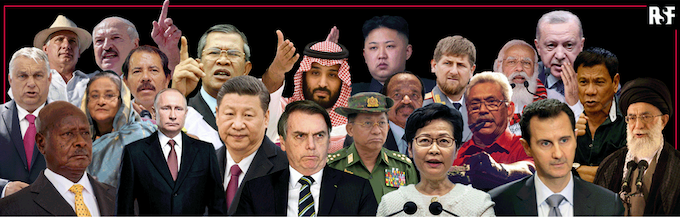
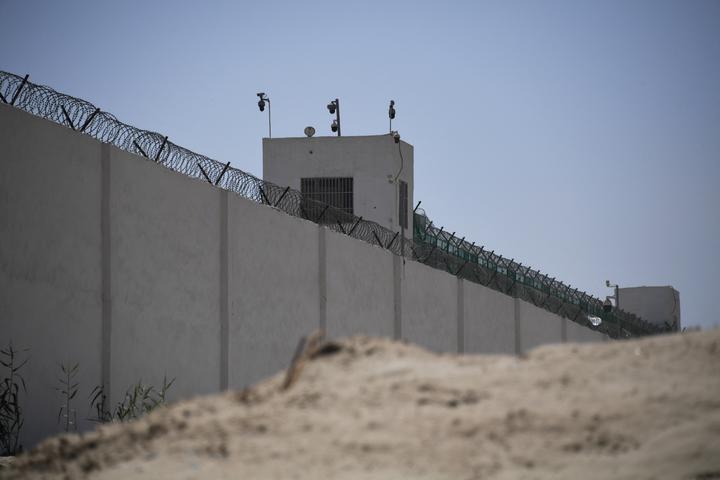
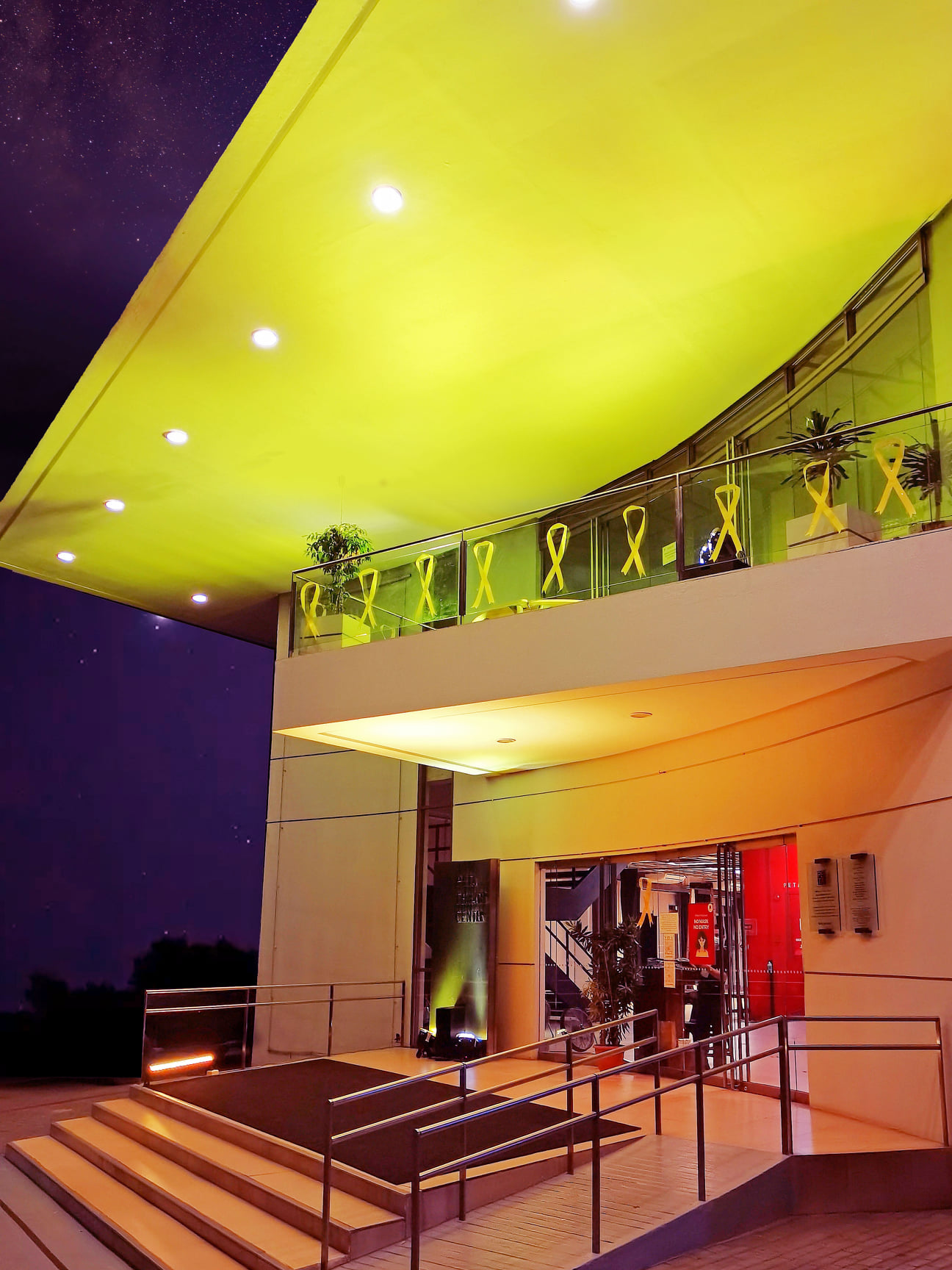
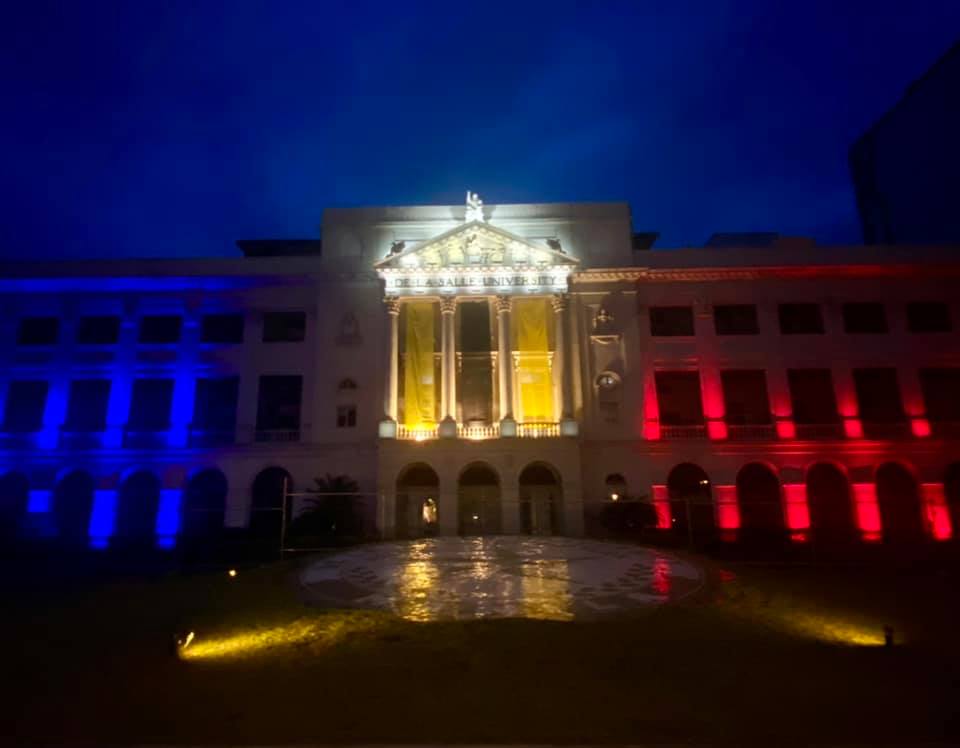
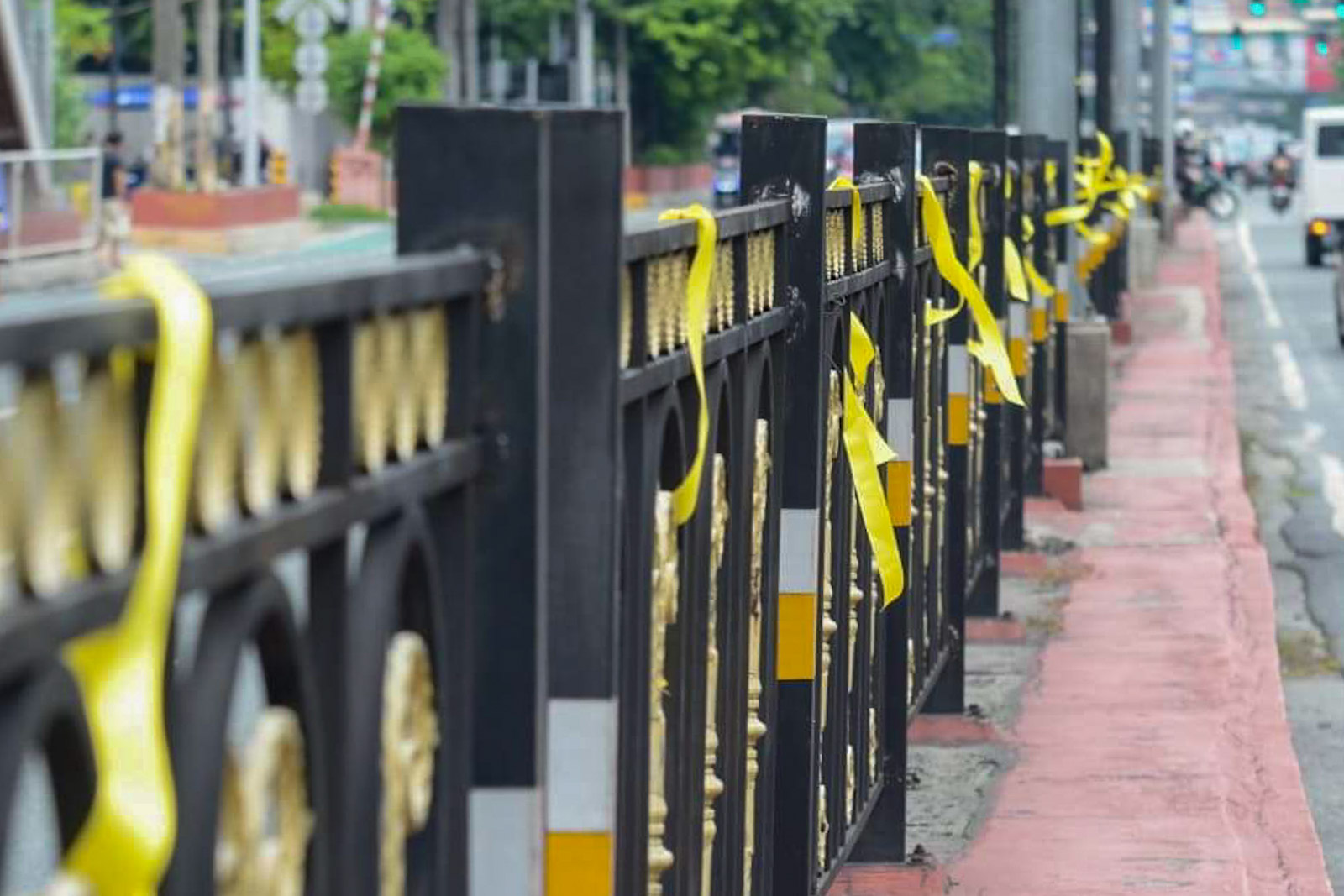
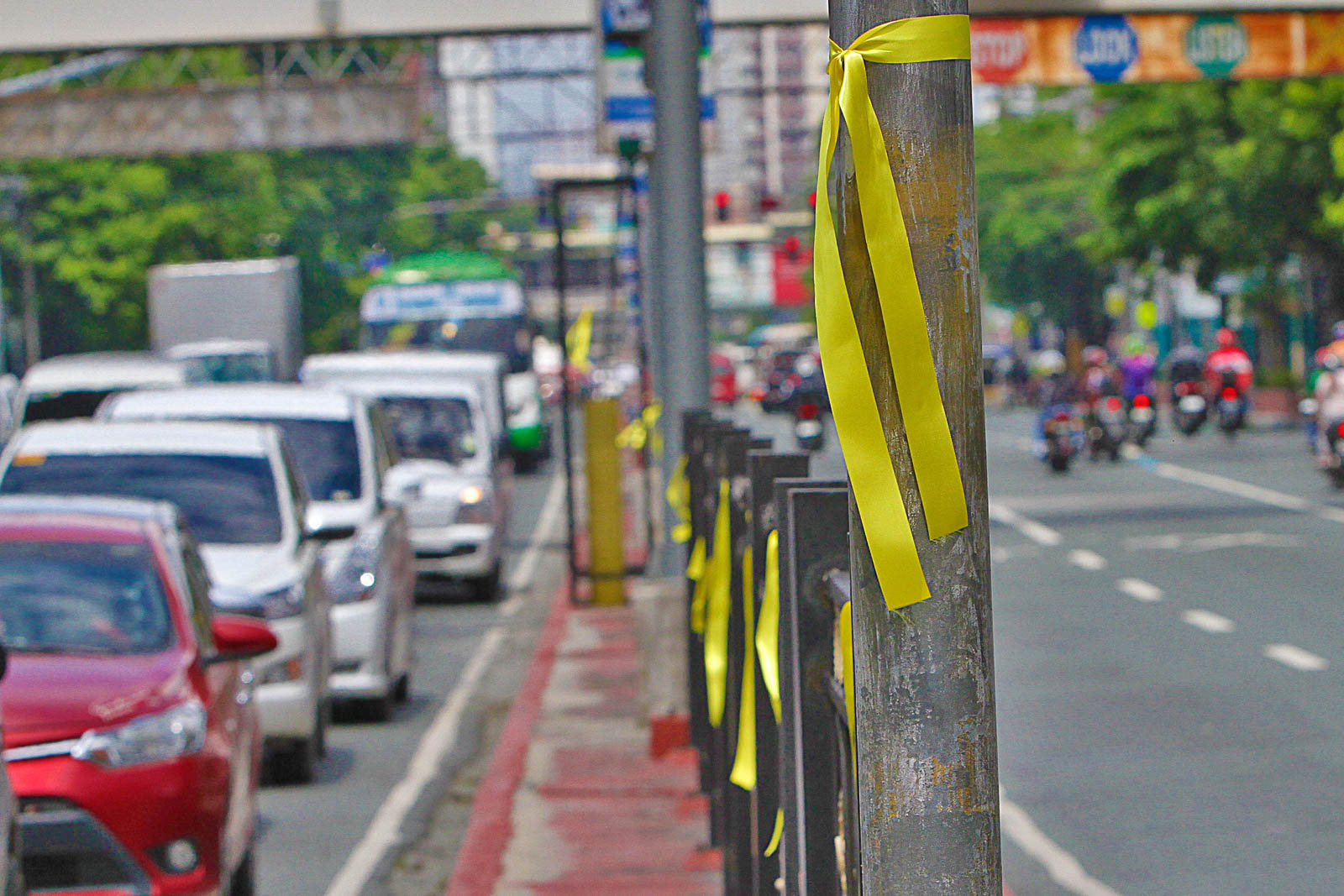
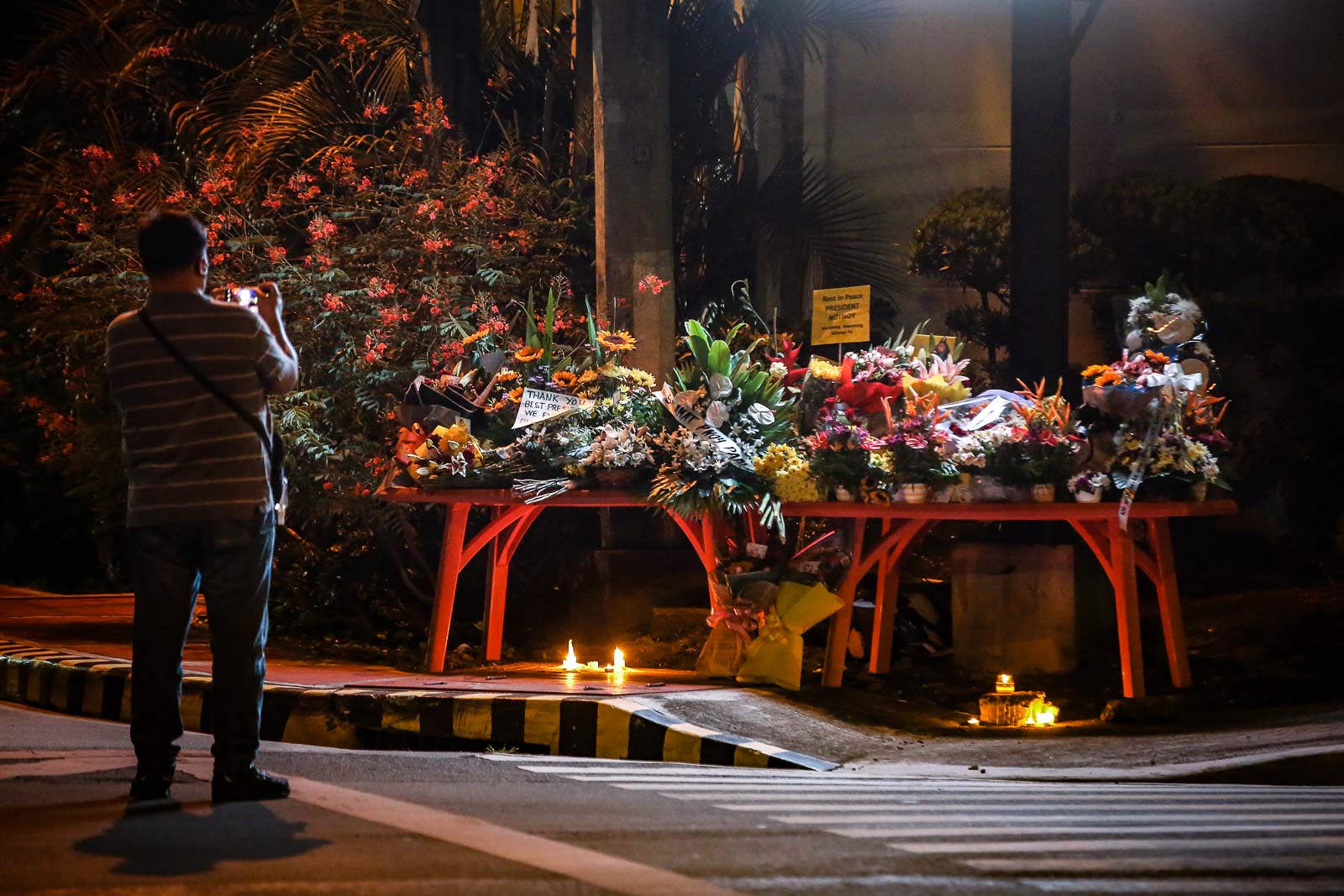
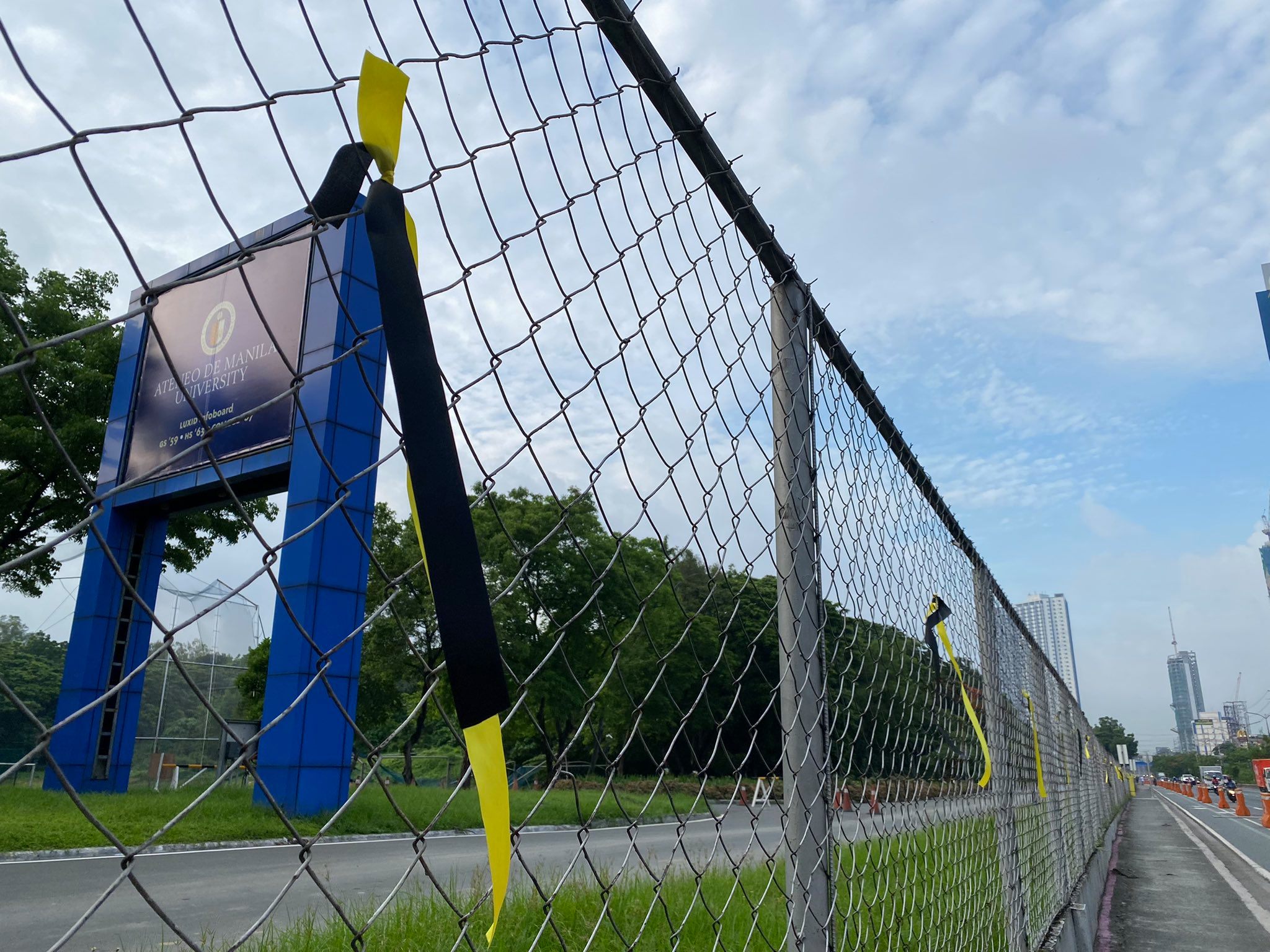
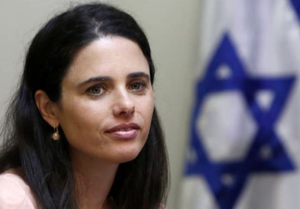
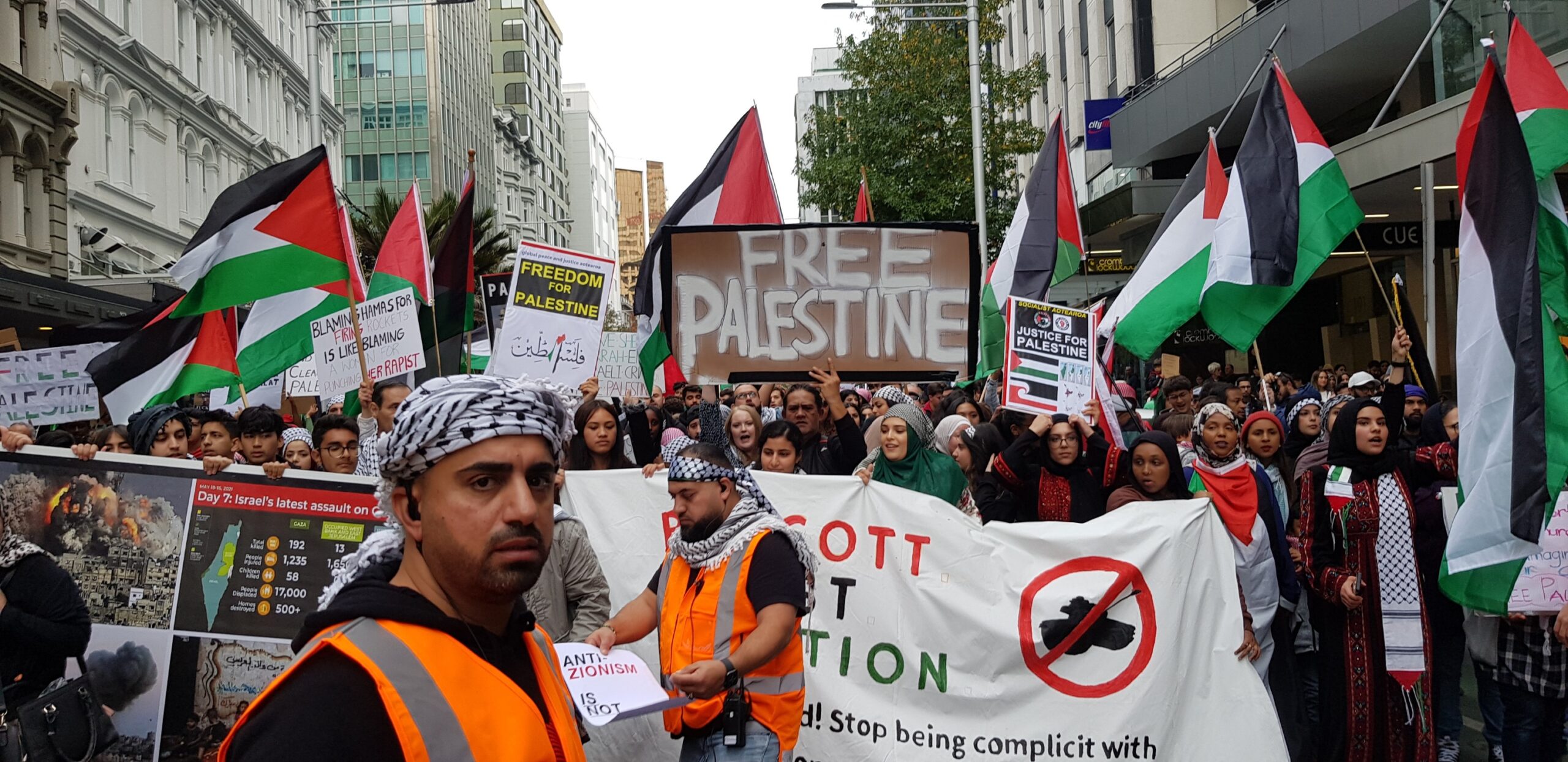
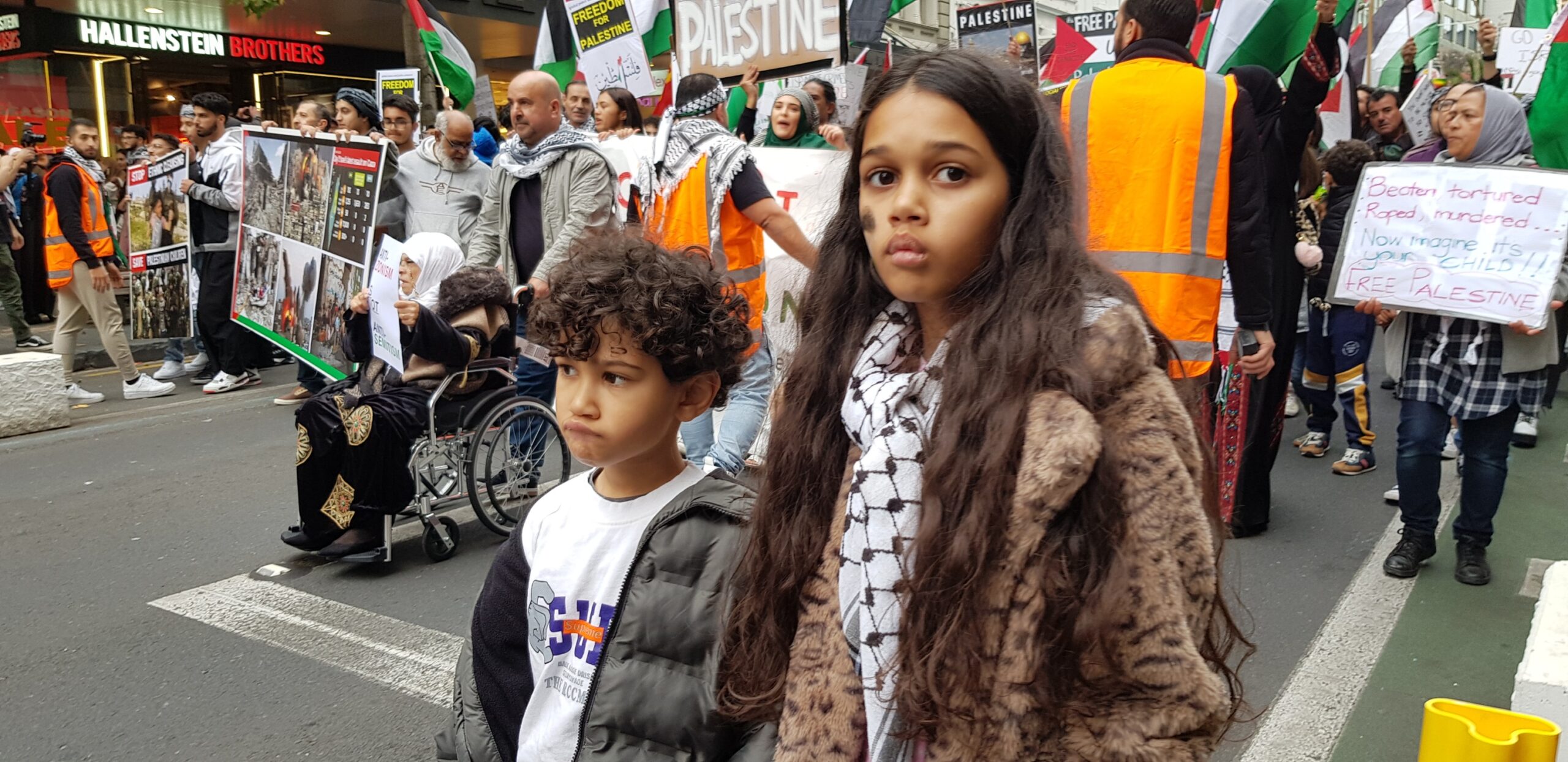
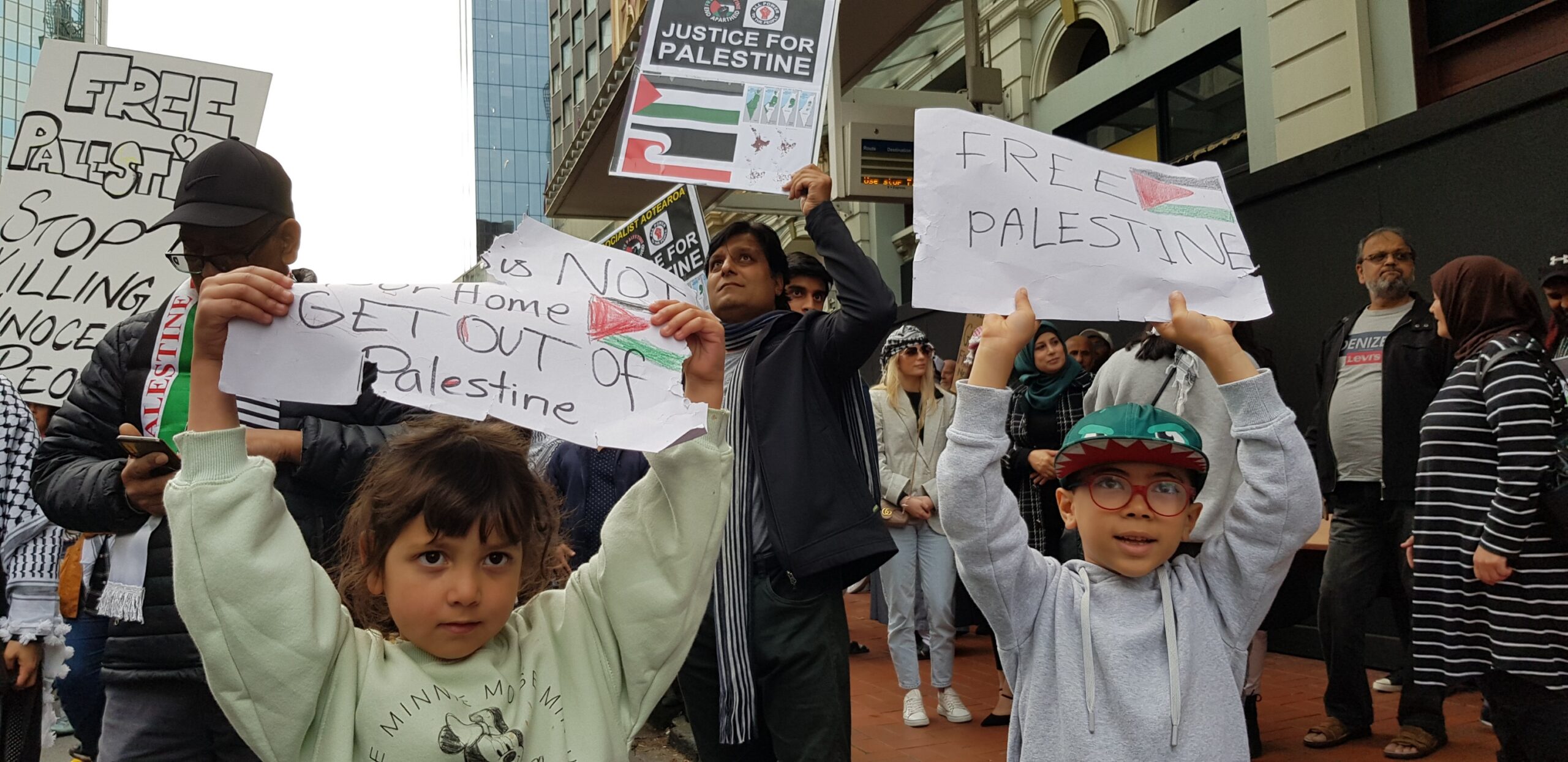
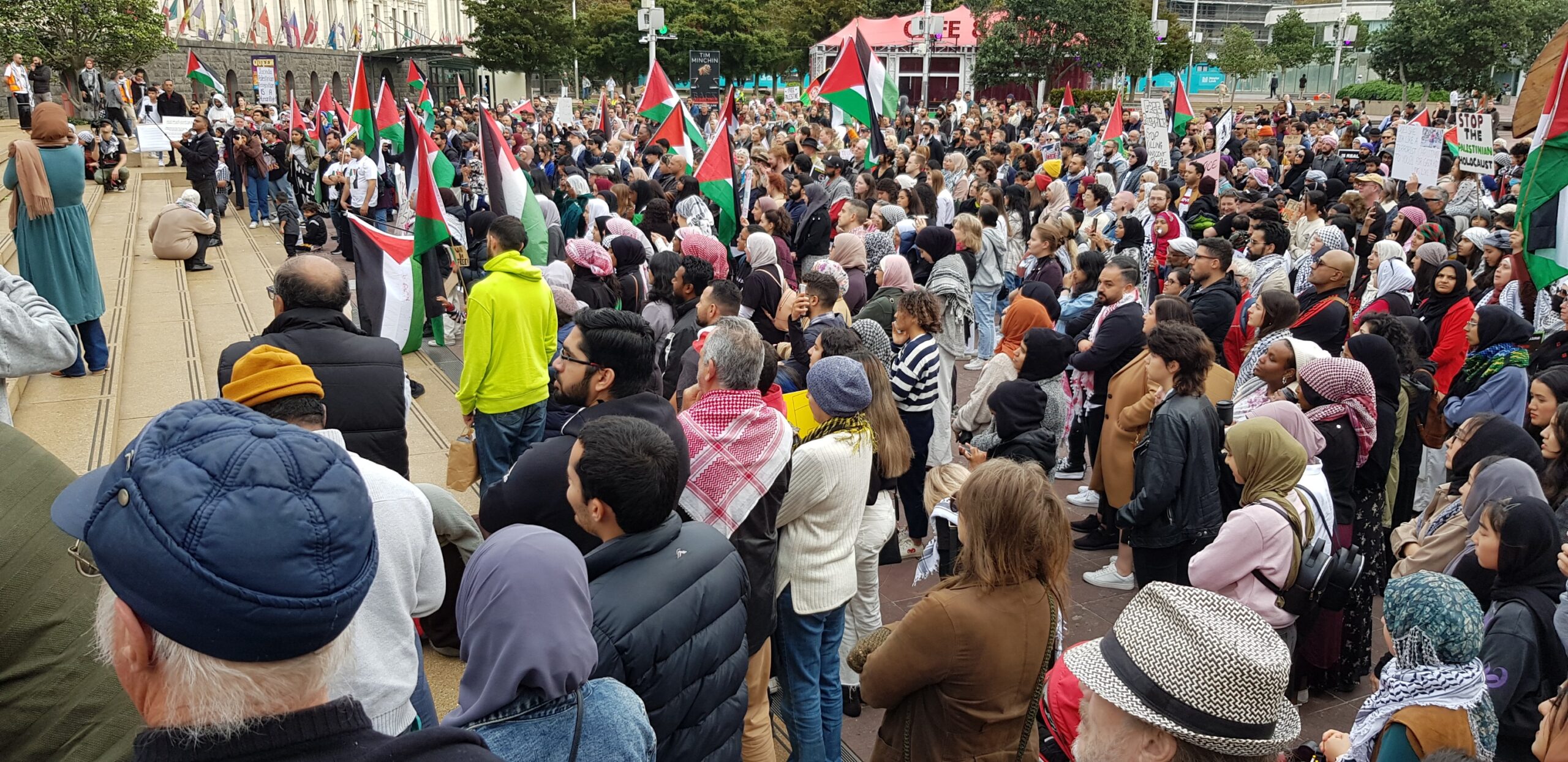
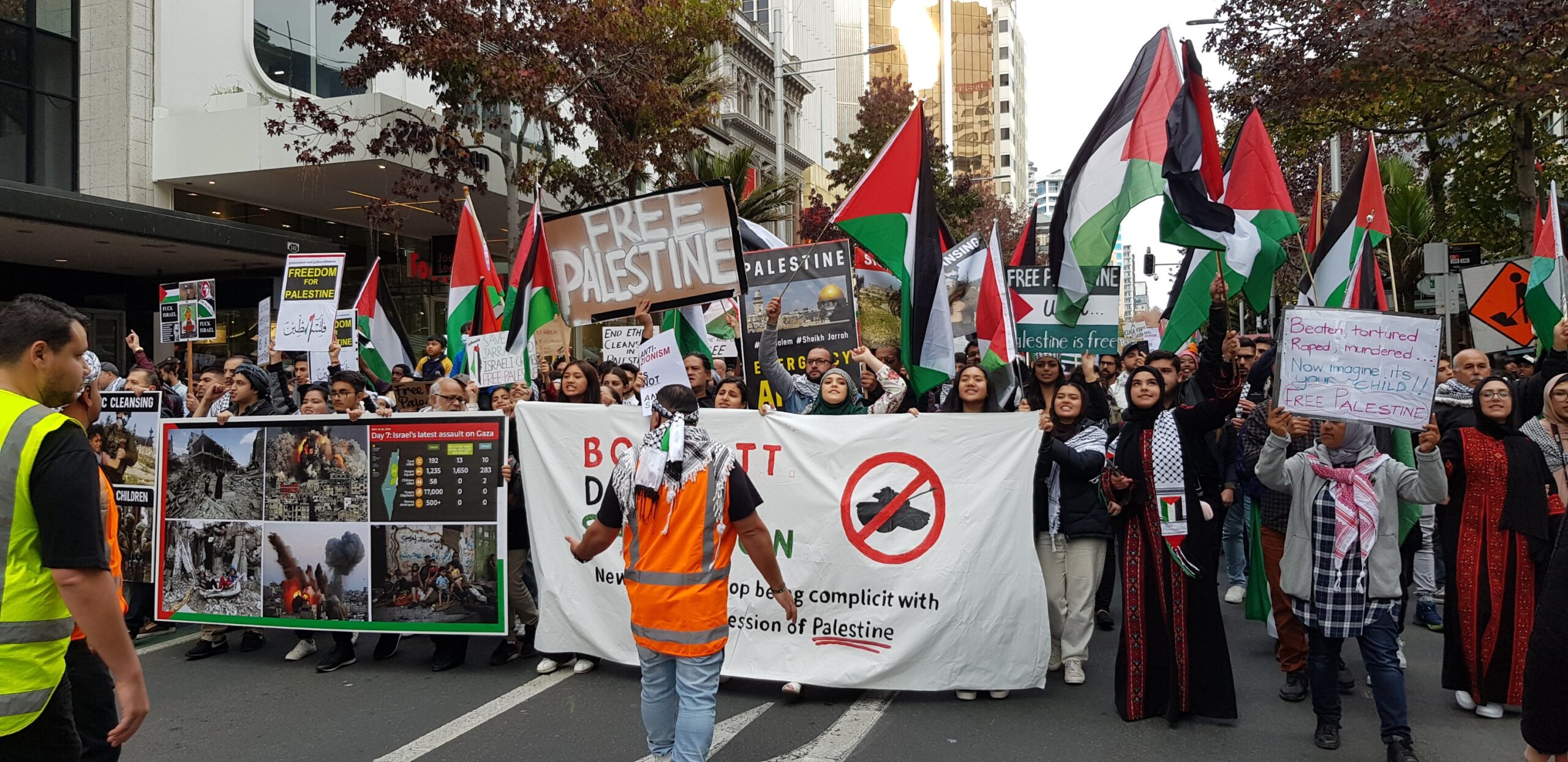
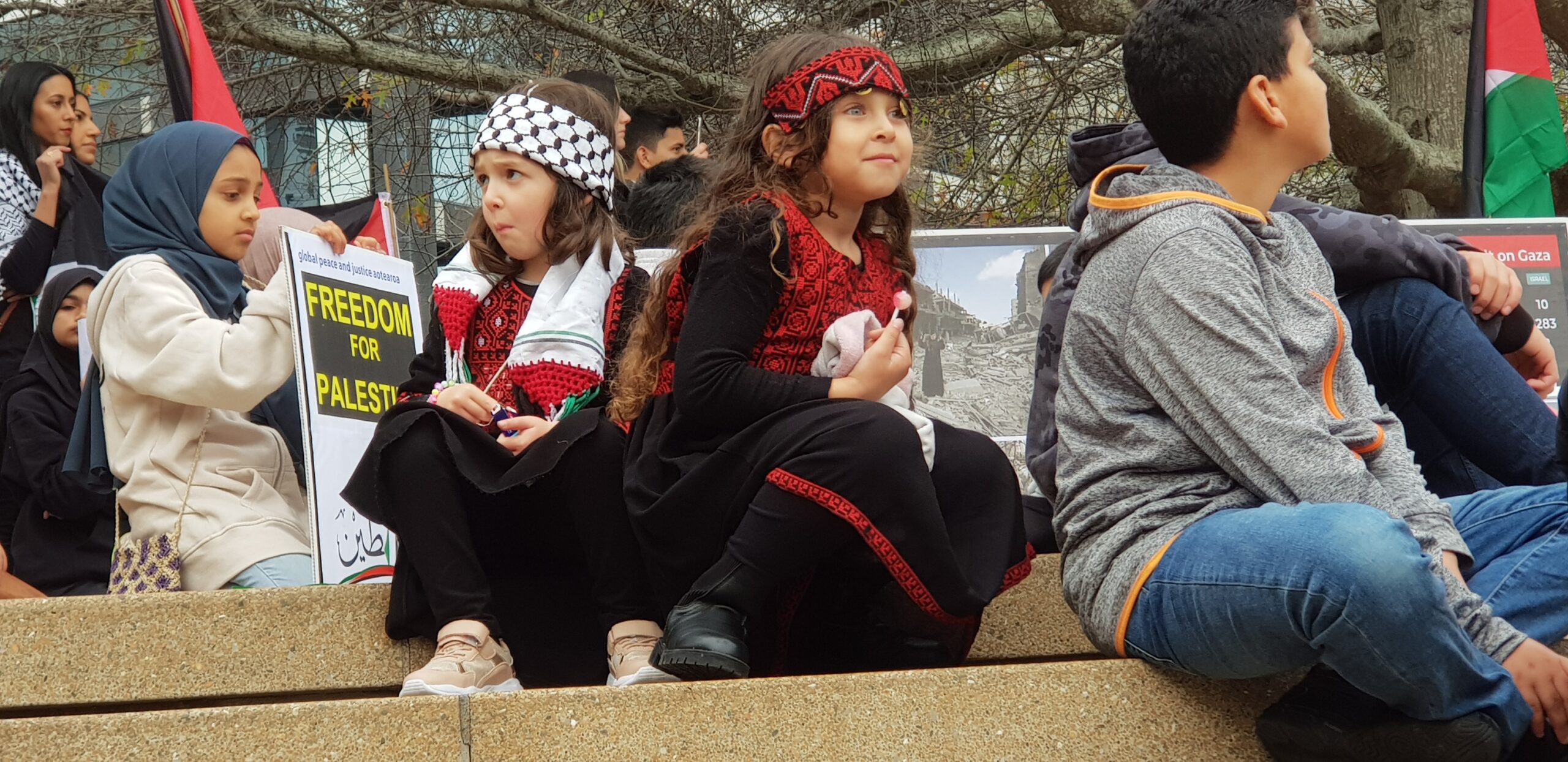
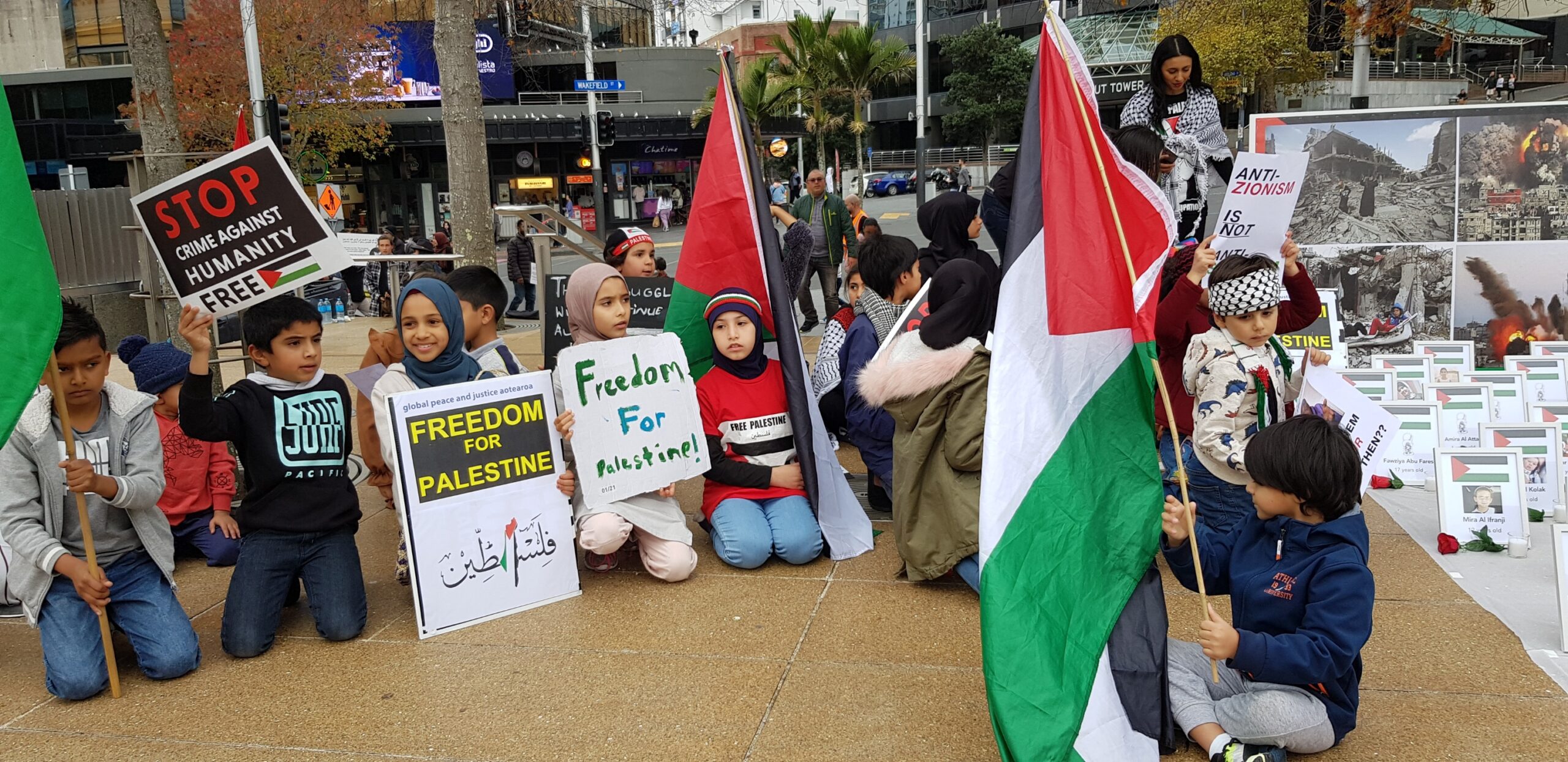
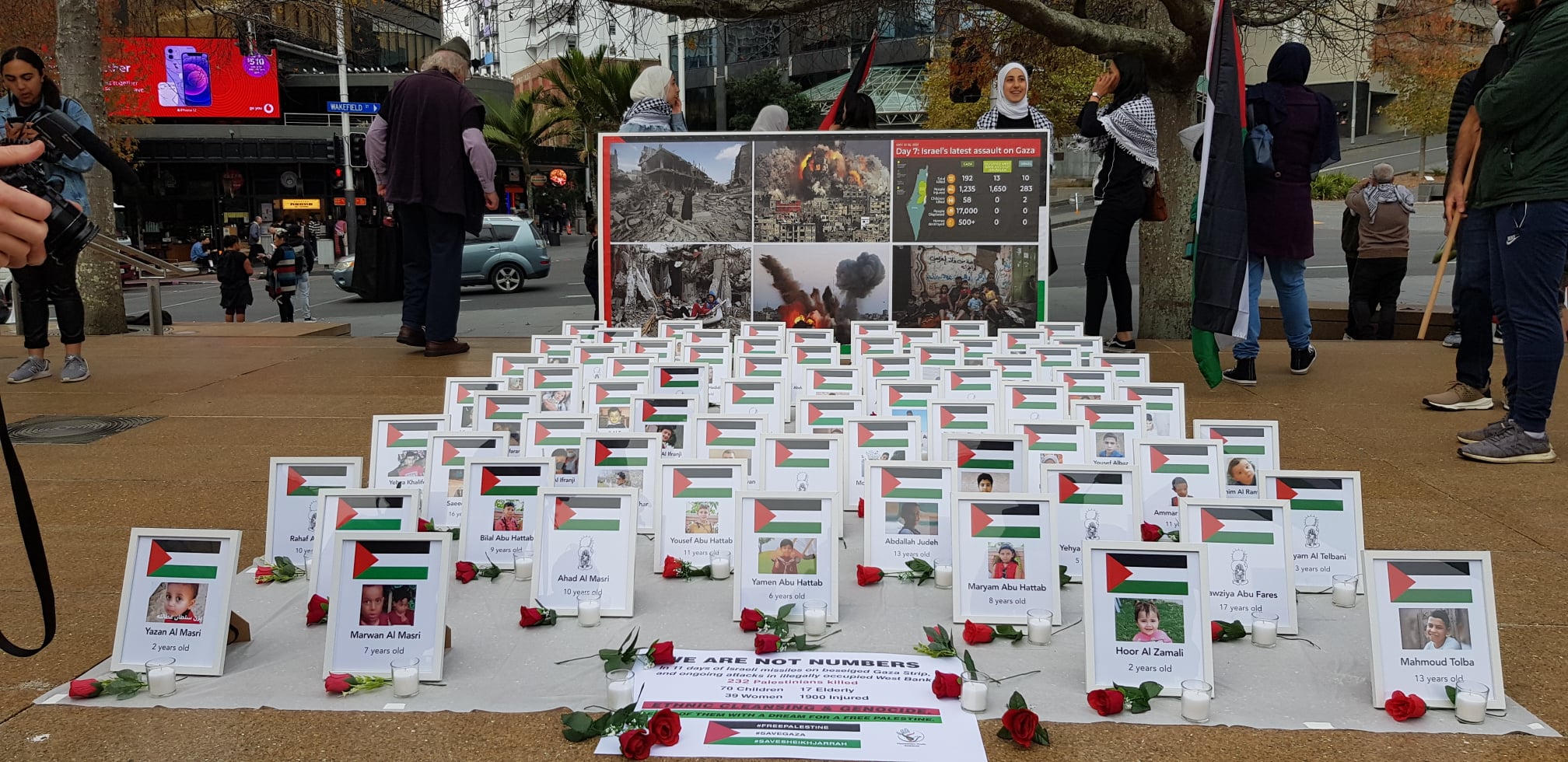
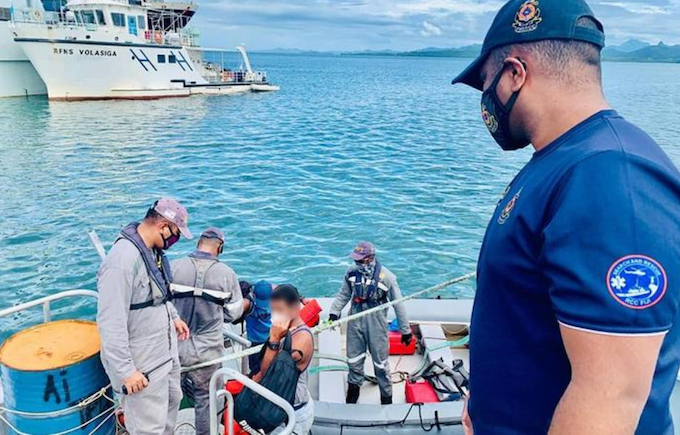
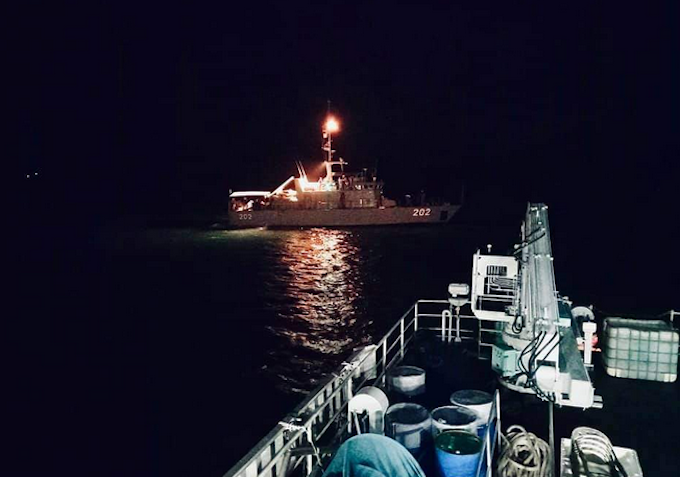
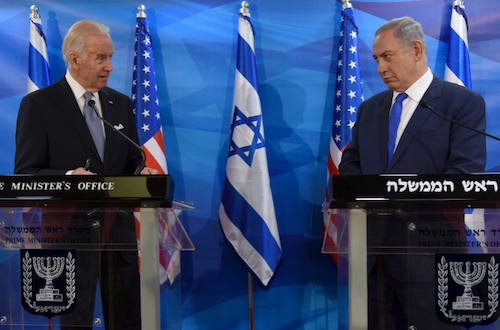
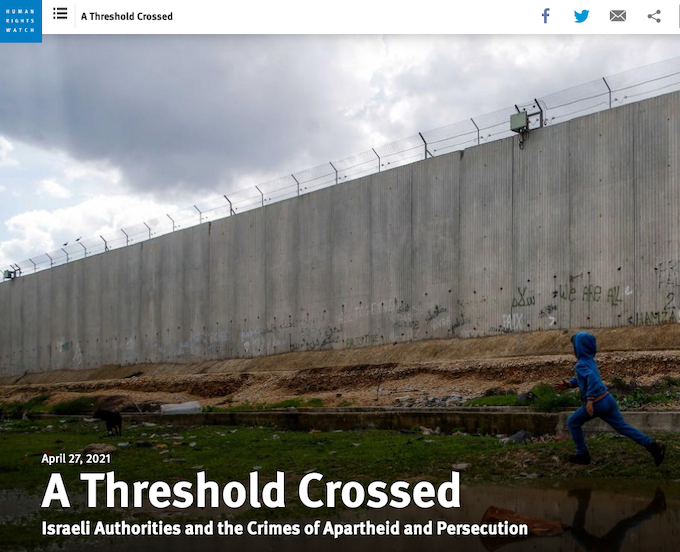
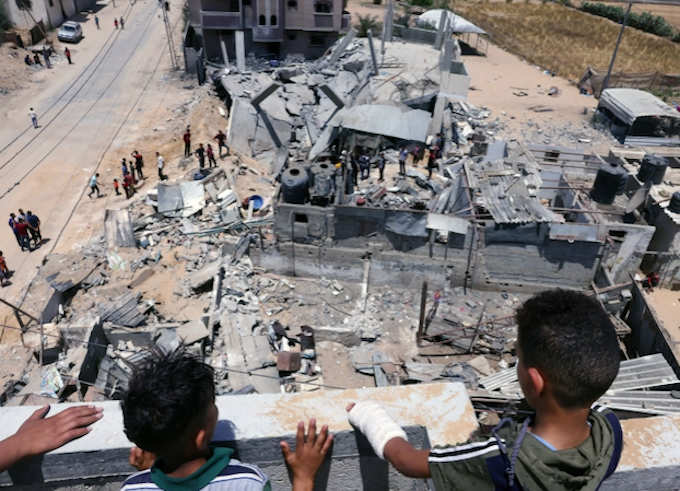
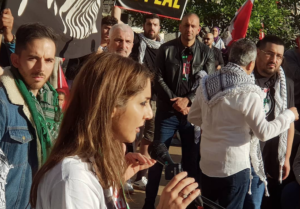
 #SaveSheikhJarrah (@Abd_HajYahia)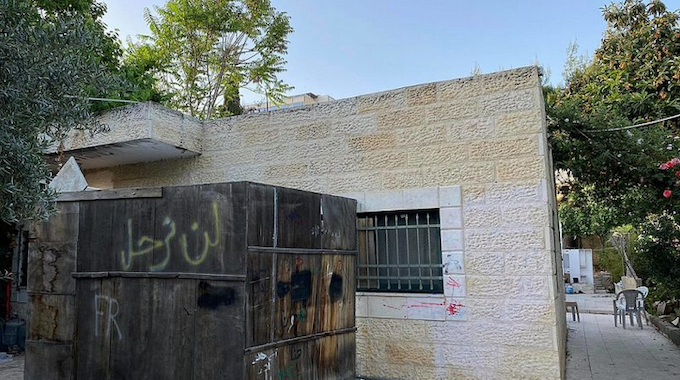

 #Gaza (@HudaFadil2)
  .
. is deeply concerned about the deteriorating situation in Jerusalem and Gaza. We call for rapid de-escalation from
  and
and