Category: Asia Report

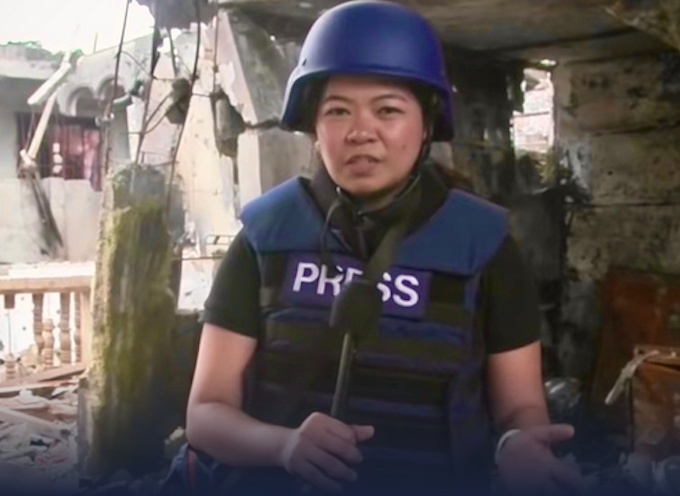
  • Carmela Fonbuena … recently launched a book on the Marawi siege on Mindanao Island, in the Philippines which she covered on the ground in 2017. Image: Rappler

    Pacific Media Watch newsdesk

    The Philippine Center For Investigative Journalism (PCIJ) has named former Rappler reporter and book author Carmela Fonbuena as its next executive editor, reports Rappler.

    “We are very pleased that Carmela has decided to be at the helm of PCIJ at a time when journalism in the Philippines and elsewhere is facing challenges on multiple fronts,” the PCIJ said in a statement.

    The transition comes at a time when freedom of the press is under siege in the Philippines by the administration of President Rodrigo Duterte, whose allies have sought to bring down independent news outlets critical of his administration.

    Fonbuena succeeds Malou Mangahas, who led the PCIJ for 11 years, visited New Zealand as guest speaker of the Pacific Media Centre during its 10th anniversary celebration, and retired in early 2020.

    Floreen Simon, who stood in as acting executive director during the transition, will become the deputy executive director while still heading PCIJ’s training desk.

    Fonbuena’s work
    Fonbuena has been a journalist for 17 years, and has co-written four books on Philippine elections and government contracting.

    She recently launched a book on the Marawi siege on Mindanao Island, which she covered on the ground in 2017.

    Fonbuena was a senior reporter for Rappler from 2011 to 2018 and was the head researcher of GMA’s Bawal ang Pasaway public affairs programme. Prior, she worked as a researcher for the investigative news magazine, Newsbreak.

    Recently, she has been contributing in-depth pieces for the British news website, The Guardian.

    She earned an MA in political communication at Cardiff University in the United Kingdom as a Chevening scholar, and is a graduate of journalism from the University of the Philippines in Diliman.

    Asia Pacific Report republishes Rappler articles with permission.

    Print Friendly, PDF & Email

    This post was originally published on Radio Free.
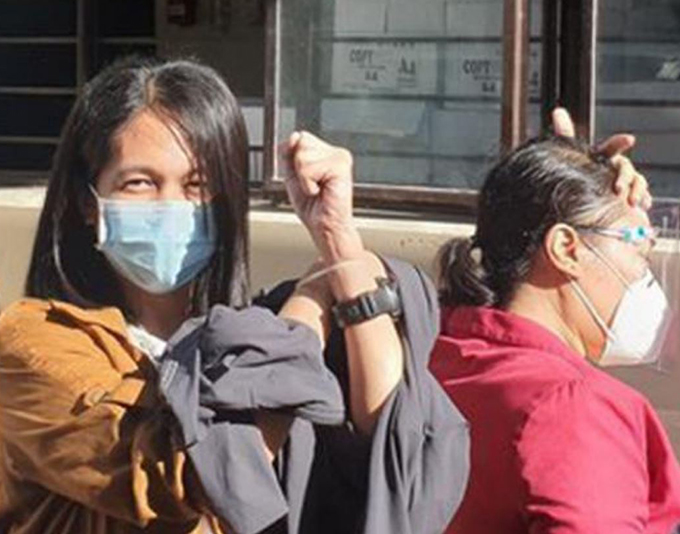
  • Lady Ann “Icy” Salem is seen during her arrest on 10 December 2020. Image: Altermidya/RSF

    Pacific Media Watch newsdesk

    Reporters Without Borders (RSF) demands the immediate and unconditional release of Lady Ann Salem, a Manila-based alternative journalist who was arrested on a firearms charge at the end of a raid on her home in which the police planted the evidence.

    The co-founder of the alternative media network Altermidya and editor of the Manila Today news site, Salem – also known as “Icy” Salem – is now facing up to 20 years in prison on a trumped-up charge of illegal possession of firearms and explosives, a charge that does not allow release on bail.

    When the police arrived at her home in a Manila suburb at around 9 am on December 10, they refused to let her contact her lawyer and made her turn her face to the wall while they carried out a search.

    “While I was forced to turn my back for an hour, they planted the evidence,” she managed to tell another journalist as she was being led away to a police vehicle.

    The police claim they found four .45 pistols and four grenades during the search.

    “The police clearly planted the evidence to incriminate ‘Icy’ Salem in an utterly shameless manner,” said Daniel Bastard, the head of RSF’s Asia-Pacific desk.

    “In view of their shocking methods, we demand this journalist’s immediate and unconditional release. This latest attack on independent media by the Philippine authorities just discredits President Rodrigo Duterte’s government on the international stage.”

    ‘Red-tagging’
    The police used exactly the same method when they arrested Frenchie Mae Cumpio, the editor of the Eastern Vista news website in the eastern city of Tacloban on February 7. Police officers planted firearms in her home when carrying out her arrest.

    Like Manila Today, Eastern Vista is part of the Altermidya network of alternative media outlets that are committed to independent journalism and to defending the most marginalised sectors of Philippine society.

    As a result, they are routinely branded as communist by the authorities, a process known as “red-tagging.”

    A hangover from the Cold War and, before that, from when the country was a US colony, “red-tagging” is a typically Philippine practice under which dissenting individuals or groups, including journalists and media outlets, are identified to the police and paramilitaries as legitimate targets for arbitrary arrest or, worse still, summary execution.

    Relentless war
    During a parliamentary hearing on December 1, the government-run National Task Force to End Local Communist Armed Conflict (NTF-ELCAC) formally labelled members of the Altermidya network as violent communist activists without presenting a “shred of evidence” in support of this claim.

    Altermidya is the latest victim of the Duterte administration’s relentless war against independent media. Its targets include Maria Ressa, the founder and CEO of the independent news website Rappler, who had to post bail and appear in court on December 4 as a result of a new warrant for her arrest on a charge of online criminal defamation.

    Ressa is currently the subject of at least eight different cases by various government agencies.

    Last July, the irascible and authoritarian president’s supporters in congress drove the final nails into the coffin of the country’s biggest radio and TV network, ABS-CBN, by refusing to give it a new franchise, after previously refusing to extend its 25-year franchise when it expired in May.

    The Philippines is ranked 136th out of 180 countries in RSF’s 2020 World Press Freedom Index.

    Print Friendly, PDF & Email

    This post was originally published on Radio Free.