Category: Featured

  • ANALYSIS: By Anna-Karina Hermkens, Macquarie University

    Bougainville, an autonomous archipelago currently part of Papua New Guinea, is determined to become the world’s newest country.

    To support this process, it’s offering foreign investors access to a long-shuttered copper and gold mine. Formerly owned by the Australian company Rio Tinto, the Panguna mine caused displacement and severe environmental damage when it operated between 1972 and 1989.

    It also sparked a decade-long civil war from 1988 to 1998 that killed an estimated 10,000 to 15,000 civilians and caused enduring traumas and divisions.

    Industry players believe 5.3 million tonnes of copper and 547 tonnes of gold remain at the site. This is attracting foreign interest, including from China.

    Australia views Bougainville as strategically important to its “inner security arc”. The main island is about 1500 km from Queensland’s Port Douglas.

    Given this, the possibility of China’s increasing presence in Bougainville raises concerns about shifting allegiances and the potential for Beijing to exert greater influence over the region.

    Australia’s tangled history in Bougainville
    Bougainville is a small island group in the South Pacific with a population of about 300,000. It consists of two main islands: Buka in the north and Bougainville Island in the south.

    Bougainville has a long history of unwanted interference from outsiders, including missionaries, plantation owners and colonial administrations (German, British, Japanese and Australian).

    Two weeks before Papua New Guinea received its independence from Australia in 1975, Bougainvilleans sought to split away, unilaterally declaring their own independence. This declaration was ignored in both Canberra and Port Moresby, but Bougainville was given a certain degree of autonomy to remain within the new nation of PNG.

    The opening of the Panguna mine in the 1970s further fractured relations between Australia and Bougainville.

    Landowners opposed the environmental degradation and limited revenues they received from the mine. The influx of foreign workers from Australia, PNG and China also led to resentment. Violent resistance grew, eventually halting mining operations and expelling almost all foreigners.

    Under the leadership of Francis Ona, the Bougainville Revolutionary Army (BRA) fought a long civil war to restore Bougainville to Me’ekamui, or the “Holy Land” it once was.

    Australia supported the PNG government’s efforts to quell the uprising with military equipment, including weapons and helicopters.

    After the war ended, Australia helped broker the Bougainville Peace Agreement led by New Zealand in 2001. Although aid programmes have since begun to heal the rift between Australia and Bougainville, many Bougainvilleans feel Canberra continues to favour PNG’s territorial integrity.

    In 2019, Bougainvilleans voted overwhelmingly for independence in a referendum. Australia’s response, however, was ambiguous.

    Despite a slow and frustrating ratification process, Bougainvilleans remain adamant they will become independent by 2027.

    As Bougainville President Ishmael Toroama, a former BRA commander, told me in 2024:

    “We are moving forward. And it’s the people’s vision: independence. I’m saying, no earlier than 2025, no later than 2027.

    “My benchmark is 2026, the first of September. I will declare. No matter what happens. I will declare independence on our republican constitution.”

    Major issues to overcome
    Bougainville leaders see the reopening of Panguna mine as key to financing independence. Bougainville Copper Limited, the Rio Tinto subsidiary that once operated the mine, backs this assessment.

    The Bougainville Autonomous Government has built its own gold refinery and hopes to create its own sovereign wealth fund to support independence. The mine would generate much-needed revenue, infrastructure and jobs for the new nation.

    But reopening the mine would also require addressing the ongoing environmental and social issues it has caused. These include polluted rivers and water sources, landslides, flooding, chemical waste hazards, the loss of food security, displacement, and damage to sacred sites.

    Many of these issues have been exacerbated by years of small-scale alluvial mining by Bougainvilleans themselves, eroding the main road into Panguna.

    Some also worry reopening the mine could reignite conflict, as landowners are divided about the project. Mismanagement of royalties could also stoke social tensions.

    Violence related to competition over alluvial mining has already been increasing at the mine.

    More broadly, Bougainville is faced with widespread corruption and poor governance.

    The Bougainville government cannot deal with these complex issues on its own. Nor can it finance the infrastructure and development needed to reopen the mine. This is why it’s seeking foreign investors.

    Panguna, Bougainville's "mine of tears"
    Panguna, Bougainville’s “mine of tears”, when it was still operating . . . Industry players believe 5.3 million tonnes of copper and 547 tonnes of gold remain at the site, which is attracting foreign interest, including from China. Image: David Robie/Asia Pacific Report

    Open for business
    Historically, China has a strong interest in the region. According to Pacific researcher Dr Anna Powles, Chinese efforts to build relationships with Bougainville’s political elite have increased over the years.

    Chinese investors have offered development packages contingent on long-term mining revenues and Bougainville’s independence. Bougainville is showing interest.

    Patrick Nisira, the Minister for commerce, Trade, Industry and Economic Development, said last year the proposed Chinese infrastructure investment was “aligning perfectly with Bougainville’s nationhood aspirations”.

    The government has also reportedly made overtures to the United States, offering a military base in Bougainville in return for support for reopening the mine.

    Given American demand for minerals, Bougainville could very well end up in the middle of a struggle between China and the US over influence in the new nation, and thus in our region.

    Which path will Bougainville and Australia take?
    There is support in Bougainville for a future without large-scale mining. One minister, Geraldine Paul, has been promoting the islands’ booming cocoa industry and fisheries to support an independent Bougainville.

    The new nation will also need new laws to hold the government accountable and protect the people and culture of Bougainville. As Paul told me in 2024:

    “[…]the most important thing is we need to make sure that we invest in our foundation and that’s building our family and culture. Everything starts from there.”

    What happens in Bougainville affects Australia and the broader security dynamics in the Indo-Pacific. With September 1, 2026, just around the corner, it is time for Australia to intensify its diplomatic and economic relationships with Bougainville to maintain regional stability.The Conversation

    Dr Anna-Karina Hermkens is a senior lecturer and researcher in anthropology, Macquarie University. This article is republished from The Conversation under a Creative Commons licence. Read the original article.

  • Asia Pacific Report

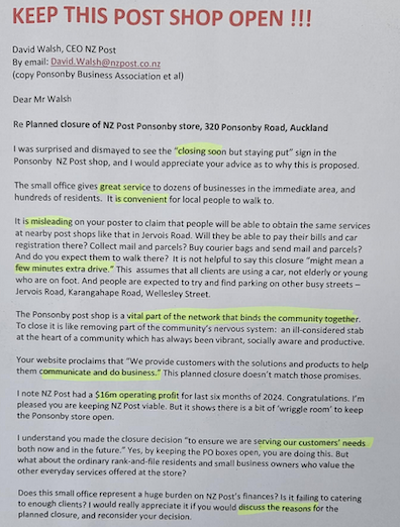
    The community is up in arms over another local post office in Aotearoa New Zealand about to be closed down, this time in the iconic and historic Auckland inner city suburb of Ponsonby.

    A local author and founder of Greenstone Pictures, John Harris, has led a pushback against plans to close the Ponsonby post office branch in Three Lamps next month with an undated open letter to the chief executive David Walsh.

    Saying he was “surprised and dismayed” to see the “closing soon but staying put” sign in the Ponsonby NZ Post shop, Harris pointed out that the small office gave “great service to dozens of businesses” in the area, and hundreds of residents.

    “It is misleading on your poster to claim that people will be able to obtain the same services at nearby post shops like that in Jervois Road,” Harris said.

    “Will they be able to pay their bills and car registration there? Collect mail and parcels? Buy courier bags and send mail and parcels?

    “And do you expect them to walk there?  It is not helpful to say this closure ‘might mean a few minutes extra drive’.

    This assumed that all clients were using a car, not elderly or young who were on foot.

    Parking in busy streets
    “And people are expected to try and find parking on other busy streets — Jervois Road, Karangahape Road, Wellesley Street.”

    Harris said: “The Ponsonby post shop is a vital part of the network that binds the community together.

    “To close it is like removing part of the community’s nervous system:  an ill-considered stab at the heart of a community which has always been vibrant, socially aware and productive.”

    The NZ Post website proclaims that “we provide customers with the solutions and products to help them communicate and do business.”

    However, said Harris, this planned closure for July 4 did not match those promises.

    Harris also pointed out that NZ Post made a $16 million operating profit for the last six months of 2024.

    The Ponsonby protest letter from a local community advocate
    The Ponsonby protest letter from a local community advocate to the NZ Post. Image: APR

    “Congratulations. I’m pleased you are keeping NZ Post viable. But it shows there is a bit of ‘wriggle room’ to keep the Ponsonby store open.”

    Digital services use
    In response to the call to reconsider the decision, a customer services officer replied on June 6 on behalf of chief executive Walsh, saying that the NZ Post Office needed to “ensure our physical locations are in the right places and operating efficiently” in an age where more people used digital services.

    “In some areas, including Ponsonby, we’ve had more than one store serving the same neighbourhood. That’s not a sustainable way for us to operate, so we’ve had to make some changes.”

    However, critics of the decision to close the Ponsonby store say the reasoning  was “not credible”, stressing that all claimed alternative postal stores are several kilometres away.

    A year after chief executive Walsh was appointed in 2017, it was announced that NZ Post would close almost 80 local post offices across the country and replace some of them with franchises.

    Harris, a children’s author with a strong association with the local community stretching back to the 1970s and a former editor of West End News in Freemans Bay, acknowledged that the Ponsonby  PO boxes lobby was being kept open, “but what about the ordinary rank-and-file residents and small business owners who value the other everyday services offered at the store?”

    He said he had written to local MP, Green Party co-leader Chlöe Swarbrick and the Ponsonby Business Association seeking their support.

    This post was originally published on Asia Pacific Report.

  • Pacific Media Watch

    One of the 12 activists on board the Gaza Freedom Flotilla aid vessel Madleen has posted an update on their progress, saying the mission would not be deterred by Israel’s threats to block them.

    In a video posted to X, Thiago Ávila said the crew, which includes high-profile Swedish climate activist Greta Thunberg, was not intimidated by a message they had received from Israel on Thursday, reports Al Jazeera.

    He said Israeli authorities had said that the Madleen, which is carrying food and medical supplies, would be blocked from entering Gaza — and that if they attempted to deliver them, they would come under attack.

    “It’s important that we understand that [Prime Minister Benjamin] Netanyahu and any other repressive regime throughout history, they actually fear the people, we do not fear them,” he said.

    “We know that this is part of a global uprising much larger than this humble mission of 12 people on a small boat. It will not be through force that they will make a way to defeat us.”

    While crossing international waters in the Central Mediterranean on its way to Gaza yesterday, the Madleen received a mayday call relayed through one of the Frontex drones operated by Europe’s border security agency.

    With no other vessel able to respond, the Madleen diverted to the distressed vessel, where it found 30 to 40 people trapped in a rapidly deflating dinghy.

    While the crew of the Madleen were attempting a rescue of their own, they were approached at speed by a unit of the Libyan Coast Guard, specifically one belonging to the Tareq Bin Zayed brigade, which Al Jazeera has previously reported upon.

    On realising that the approaching vessel belonged to the Libyan Coast Guard, four dinghy passengers jumped into the water and swam to the Madleen, where they were rescued.

    The remainder were taken on board the Libyan Coast Guard’s vessel and presumably returned to Libya.

    This post was originally published on Asia Pacific Report.

  • By Giff Johnson, editor, Marshall Islands Journal, and RNZ Pacific correspondent

    A new report on the United States nuclear weapons testing legacy in the Marshall Islands highlights the lack of studies into important health concerns voiced by Marshallese for decades that make it impossible to have a clear understanding of the impacts of the 67 nuclear weapons tests.

    The Legacy of US Nuclear Testing in the Marshall Islands, a report by Dr Arjun Makhijani of the Institute for Energy and Environmental Research, was released late last month.

    The report was funded by Greenpeace Germany and is an outgrowth of the organisation’s flagship vessel, Rainbow Warrior III, visiting the Marshall Islands from March to April to recognise the 40th anniversary of the resettlement of the nuclear test-affected population of Rongelap Atoll.

    Dr Mahkijani said that among the “many troubling aspects” of the legacy is that the United States had concluded, in 1948, after three tests, that the Marshall Islands was not “a suitable site for atomic experiments” because it did not meet the required meteorological criteria.

    “Yet testing went on,” he said.

    “Also notable has been the lack of systematic scientific attention to the accounts by many Marshallese of severe malformations and other adverse pregnancy outcomes like stillbirths. This was despite the documented fallout throughout the country and the fact that the potential for fallout to cause major birth defects has been known since the 1950s.”

    Dr Makhijani highlights the point that, despite early documentation in the immediate aftermath of the 1954 Bravo hydrogen bomb test and numerous anecdotal reports from Marshallese women about miscarriages and still births, US government medical officials in charge of managing the nuclear test-related medical programme in the Marshall Islands never systematically studied birth anomalies.

    Committed billions of dollars
    The US Deputy Secretary of State in the Biden-Harris administration, Kurt Cambell, said that Washington, over decades, had committed billions of dollars to the damages and the rebuilding of the Marshall Islands.

    “I think we understand that that history carries a heavy burden, and we are doing what we can to support the people in the [Compact of Free Association] states, including the Marshall Islands,” he told reporters at the Pacific Islands Forum leaders’ meeting in Nuku’alofa last year.

    “This is not a legacy that we seek to avoid. We have attempted to address it constructively with massive resources and a sustained commitment.”

    Among points outlined in the new report:

    • Gamma radiation levels at Majuro, the capital of the Marshall Islands, officially considered a “very low exposure” atoll, were tens of times, and up to 300 times, more than background in the immediate aftermaths of the thermonuclear tests in the Castle series at Bikini Atoll in 1954.
    • Thyroid doses in the so-called “low exposure atolls” averaged 270 milligray (mGy), 60 percent more than the 50,000 people of Pripyat near Chernobyl who were evacuated (170 mGy) after the 1986 accident there, and roughly double the average thyroid exposures in the most exposed counties in the United States due to testing at the Nevada Test Site.
    Women from the nuclear test-affected Rongelap Atoll greeted the Rainbow Warrior and its crew with songs and dances as part of celebrating the 40th anniversary of the evacuation of Rongelap Atoll in 1985 by the Rainbow Warrior. Photo: Giff Johnson.
    Women from the nuclear test-affected Rongelap Atoll greeted the Rainbow Warrior and its crew with songs and dances as part of celebrating the 40th anniversary of the evacuation of Rongelap Atoll in 1985 by the Rainbow Warrior. Image: RNZ Pacific/Giff Johnson

    Despite this, “only a small fraction of the population has been officially recognised as exposed enough for screening and medical attention; even that came with its own downsides, including people being treated as experimental subjects,” the report said.

    Women reported adverse outcomes
    “In interviews and one 1980s country-wide survey, women have reported many adverse pregnancy outcomes,” said the report.

    “They include stillbirths, a baby with part of the skull missing and ‘the brain and the spinal cord fully exposed,’ and a two-headed baby. Many of the babies with major birth defects died shortly after birth.

    “Some who lived suffered very difficult lives, as did their families. Despite extensive personal testimony, no systematic country-wide scientific study of a possible relationship of adverse pregnancy outcomes to nuclear testing has been done.

    “It is to be noted that awareness among US scientists of the potential for major birth defects due to radioactive fallout goes back to the 1950s. Hiroshima-Nagasaki survivor data has also provided evidence for this problem.

    “The occurrence of stillbirths and major birth defects due to nuclear testing fallout in the Marshall Islands is scientifically plausible but no definitive statement is possible at the present time,” the report concluded.

    “The nuclear tests in the Marshall Islands created a vast amount of fission products, including radioactive isotopes that cross the placenta, such as iodine-131 and tritium.

    “Radiation exposure in the first trimester can cause early failed pregnancies, severe neurological damage, and other major birth defects.

    No definitive statement possible
    “This makes it plausible that radiation exposure may have caused the kinds of adverse pregnancy outcomes that were experienced and reported.

    “However, no definitive statement is possible in the absence of a detailed scientific assessment.”

    Scientists who traveled with the Rainbow Warrior III on its two-month visit to the Marshall Islands earlier this year collected samples from Enewetak, Bikini, Rongelap and other atolls for scientific study and evaluation.

    This article is republished under a community partnership agreement with RNZ.

    This post was originally published on Asia Pacific Report.

  • COMMENTARY: By Daniel Lindley

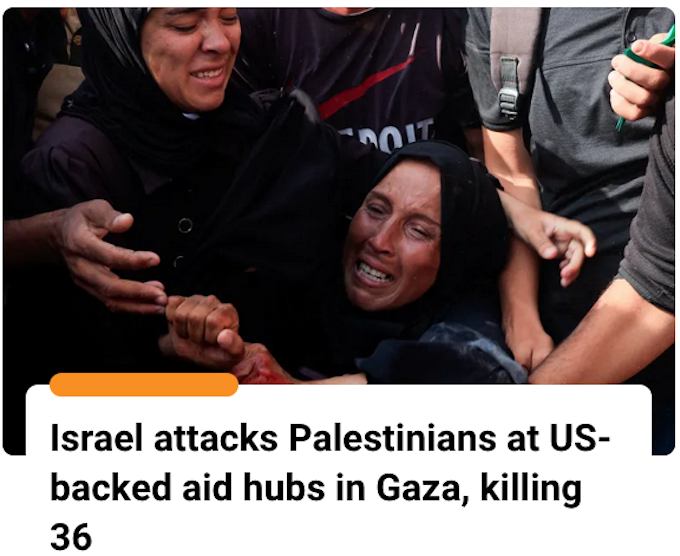
    As I sit down to write this article, I’m reading another update on the Israeli army killing 27 more starving Palestinian civilians waiting to receive food at a “humanitarian hub”. The death toll at these hubs over the last eight days is now 102.

    We’re at the point now that Israel doesn’t even bother putting out the usual statements claiming how Hamas militants were using the civilians as human shields.

    They just put out brazen denials that these events even happened, or report that the gunfire was “in response to the threat perceived by IDF troops.” You don’t get much flimsier justifications for massacring civilians than that.

    It’s important to remember that these events have only happened because Israel has imposed a total siege on the Gaza Strip since March, blocking all food, fuel and medicine from entering the territory to starve the civilian population.

    Meanwhile, Netanyahu has made clear that the only way to end the war is for the civilian population of Gaza to be moved to third countries.

    The UN has effectively been banned from operating in Gaza, so the only way Palestinians in Gaza can get food is to go to these “humanitarian hubs” run by the Israeli army, who might just shoot them dead.

    Ordinarily, one might expect serious consequences for a state which openly declares that it is attempting ethnic cleansing, massacres civilians seeking food, and then lies about it.

    No fundamental change
    If we do live in a world governed by “international law” and “human rights”, then that would be natural. But I’m sure everyone reading this article understands that it’s unlikely that anything is going to fundamentally change because of this latest crime.

    This gets to the heart of the issue, the real reason why Palestine is so important and takes up so much international attention.

    It’s not just that it’s in a strategically important area of the world, or that there are religious holy sites at stake; as important as those things are to know. The real crux of the matter is that Palestine is the central contradiction from which the existing international order unravels.

    In 1974, John Pilger produced the film Palestine Is Still The Issue, which educated many Western audiences for the first time that a great injustice inflicted upon an entire nation had been left unresolved for decades.

    The post-Second World War order created institutions like the United Nations and the International Court of Justice (ICJ), rendered colonialism an illegal holdover from a previous era and established the principle that it was illegal to acquire territory by war. The film asked the question, how can anyone, especially Western liberals, really say they believe in this new order while also supporting the state of Israel, a polity which appears to reject these ideals in favour of a brute “might equals right” ideal.

    In 2002, John Pilger released a new film, also titled Palestine Is Still The Issue.

    By 2025, we’re now approaching the end game of the post-Second World War international order, and a big reason for that is Western liberal leaders increasingly having to choose between maintaining it and maintaining their support for Israel, and going for the latter.

    To give a recent example, when Israel invaded Syria in December with zero provocation, the UK government’s response was simply to state that Israel “is making sure its position in the Golan is secure”.

    Bear in mind that the Golan is also Syrian territory; the UK government is explicitly endorsing an act of aggression to protect illegally occupied land. It makes little sense unless you think international law doesn’t apply to Israel.

    A blind eye to Israel’s war crimes
    But the problem with that kind of thinking is that international law doesn’t work unless there’s a collective agreement to respect it. There isn’t a world police force that can enforce these laws, they’re just a mutually agreed set of rules that everyone agrees to work within, as history has taught us that it ends badly for everyone if we don’t.

    To make a rough analogy, the system is like the early days of the UFC (Ultimate Fighting Championship) when there were very few enforced rules, but in reality, fighters had handshake agreements not to, e.g. pull each other’s hair out, because nobody wants that happening.

    If Fighter A were to start pulling the opponent’s hair out, can he act outraged when other fighters start doing it as well?

    Likewise, if the Western powers decide to support Israel in illegally occupying other countries’ territories for decades, can they really act outraged when Russia decides it’s going to occupy part of Ukraine?

    By allowing Israel to acquire territory by war, what they’ve essentially done is change the international system from one where acquiring territory by war is simply illegal, to one where acquiring territory by war is ok so long as you say it’s in your national security interests.

    Those are the new rules.

    Last year, the International Criminal Court (ICC) issued arrest warrants for Israeli Prime Minister Benjamin Netanyahu and Defence Minister Yoav Gallant for war crimes.

    International consensus
    Specifically, to answer allegations that they committed “the war crime of starvation as a method of warfare”. After the Nazi atrocities in the Second World War such as the Siege of Leningrad (not strictly “illegal” at the time), there emerged an international consensus that such inhumane actions must never happen again.

    Well, on March 2, Israel announced that it was banning the entry of all goods and aid into Gaza, a blatant war crime. Meanwhile, Western governments such as Germany openly state that they intend to find “ways and means” to avoid having to arrest Netanyahu if he were to enter their territory.

    The UK, in particular, continues to provide direct military assistance to Israel in the form of surveillance flights over Gaza. Declassified UK has documented at least 518 RAF surveillance flights around Gaza since December 2023, carried out from the Akrotiri airbase in Cyprus.

    The UK government is, of course, aware that it’s assisting a government whose leaders are wanted by the ICC for war crimes. This would explain why when Keir Starmer visited the airbase in December, he gave a strange speech saying, “I recognise it’s been a really important, busy, busy year . . .

    “I’m also aware that some or quite a bit of what goes on here can’t necessarily be talked about . . .  Although we’re really proud of what you’re doing, we can’t necessarily tell the world what you’re doing here.”

    The UK is legally obligated under the Geneva Conventions to ensure its military intelligence is not used to facilitate war crimes. In fact, the UK government has stated itself that Israel is “not committed” to following international law, but says it must continue providing military assistance to Israel as to stop doing so “would undermine US confidence in the UK and NATO at a critical juncture in our collective history and set back relations”.

    If the post-Secind World War international order had any ideology affixed to it, it’s the belief in concepts such as individual freedoms, human rights, international humanitarian law and the legitimacy of institutions established to enforce them.

    Every order needs some kind of organising principle; it might not strictly be “true”, but the real purpose is that the population needs to believe in it.

    Many young adults in countries like the USA and UK were brought up with the ideals that waging war for cold national interests/enforcing racial supremacy were barbaric practices that were no longer permitted.

    Palestine is the final frontier
    For Palestine, though, there is no longer any window dressing that can be done. Netanyahu is now making it explicit that even if Hamas were to “lay down its weapons” and its leaders leave, Israel will then ethnically cleanse the Palestinian civilian population of Gaza.

    This is a war of ethnic cleansing and genocide rationalised by a militaristic, racist ideology — the fundamental reason, after all, why the Palestinians of Gaza are being ethnically cleansed is that they are not Jewish.

    Israel’s supporters in the West have abandoned trying to convince anyone of the morality of their positions and are just resorting to repression of dissent. In the United States, for example, we’ve seen unprecedented crackdowns on solidarity groups.

    For example, international students are being deported simply for attending Palestine solidarity demonstrations. These people aren’t even being accused of committing crimes, but of undefined offences such as “un-American activity.” If unconditional Western support for Israel is to continue, more repression at universities is going to be necessary.

    The UK government was correct in saying we’re at “a critical juncture in our collective history” and that Israel is at the heart of it. The international order is unravelling, and whatever new order we move into is largely dependent on what happens in Palestine.

    If Israel succeeds in its long-term goal of genocide against the Palestinians and establishes a lawless militarised ethnostate that grants/strips citizenship on racial grounds and invades and occupies other countries at will, that will be the model the rest of the world will follow. Even if you don’t particularly care about Palestine personally, you will not escape the consequences of this new might equals right world.

    Anyone who doesn’t wish to live in such a world must recognise that Palestine solidarity is the central issue which cannot be abandoned.

    Israel and its supporters certainly recognise this, or else they wouldn’t be so willing to forsake any other purported principle when Israel is at stake.

    Although the levels of repression at the moment can be dismaying, we should also take heart in the fact that if Israel’s supporters were feeling secure in their ultimate victory, they wouldn’t be behaving so aggressively.

    We’re witnessing the destructive rampage of a fragile project, whose designers fear could collapse at any moment should opposition manage to organise themselves effectively.

    Daniel Lindley is a writer, socialist and trade union activist in the UK. This article was first published by The New Arab and is republished under Creative Commons.

    This post was originally published on Asia Pacific Report.

  • A video, seemingly taken by someone in the audience during a public performance, in which event attendees are showing the middle finger to someone on stage has gone viral. Those sharing the video on social media claim that these gestures were made at Bollywood actor and filmmaker Kangana Ranaut during a concert. Ranaut is affiliated with the Bharatiya Janata Party and represents Himachal Pradesh’s Mandi district in the lower house of the Parliament.

    On June 3, X user Amit Yadav (@Amityad6389) shared the viral video and claimed that members affiliated with Hindu organisations, upset with her over something, showed her the middle finger in public. (Archive)

    On June 4, media outlet LocalTak (@localtak) also shared the purported video alleging that members of a Hindu organisation protested against Ranaut during a show by showing her the middle finger. (Archive)

    Another X user, Amock (@amock2029), also shared the clip, claiming that the actor-turned-politician was disrespected. (Archive)

    Several other social media users have shared the same video with similar claims. 

    Click to view slideshow.


    Fact Check

    We watched the video closely several times and noticed the words ‘Q High Street’ displayed on the stage in the video. Q High Street is a commercial property in Lahore, Pakistan.

    During our investigation, we also found that Q High Street had organised an automotive event, Pak Wheels Auto Show, on May 25. The event featured a performance by Young Stunners, a popular hip-hop duo in Pakistan. 

    We found several posts on Q High Street’s Instagram page, featuring Young Stunner’s performance. Noticeably, the backdrop of the videos here was identical to the one that went viral.

    Click to view slideshow.


    Taking cue from this, we looked for full videos of the performance and found one on YouTube uploaded on May 29, 2025. At the 3:15-minute mark of the video, the same woman who is seen in the viral clip appears as the event’s emcee. It’s fairly clear that she is not Kangana Ranaut.

    Here’s the video:

    To sum up, the viral video is from an event in Lahore, Pakistan. It does not depict members of a Hindu organisation showing the middle finger to Kangana Ranaut. The woman appearing in the video is not the Bollywood actor. 

    (With inputs from Diti Pujara)

    The post Kangana Ranaut was not shown the middle finger at a performance; viral video is from an event in Pakistan appeared first on Alt News.


    This content originally appeared on Alt News and was authored by Ankita Mahalanobish.

    This post was originally published on Radio Free.

  • A video, seemingly taken by someone in the audience during a public performance, in which event attendees are showing the middle finger to someone on stage has gone viral. Those sharing the video on social media claim that these gestures were made at Bollywood actor and filmmaker Kangana Ranaut during a concert. Ranaut is affiliated with the Bharatiya Janata Party and represents Himachal Pradesh’s Mandi district in the lower house of the Parliament.

    On June 3, X user Amit Yadav (@Amityad6389) shared the viral video and claimed that members affiliated with Hindu organisations, upset with her over something, showed her the middle finger in public. (Archive)

    On June 4, media outlet LocalTak (@localtak) also shared the purported video alleging that members of a Hindu organisation protested against Ranaut during a show by showing her the middle finger. (Archive)

    Another X user, Amock (@amock2029), also shared the clip, claiming that the actor-turned-politician was disrespected. (Archive)

    Several other social media users have shared the same video with similar claims. 

    Click to view slideshow.


    Fact Check

    We watched the video closely several times and noticed the words ‘Q High Street’ displayed on the stage in the video. Q High Street is a commercial property in Lahore, Pakistan.

    During our investigation, we also found that Q High Street had organised an automotive event, Pak Wheels Auto Show, on May 25. The event featured a performance by Young Stunners, a popular hip-hop duo in Pakistan. 

    We found several posts on Q High Street’s Instagram page, featuring Young Stunner’s performance. Noticeably, the backdrop of the videos here was identical to the one that went viral.

    Click to view slideshow.


    Taking cue from this, we looked for full videos of the performance and found one on YouTube uploaded on May 29, 2025. At the 3:15-minute mark of the video, the same woman who is seen in the viral clip appears as the event’s emcee. It’s fairly clear that she is not Kangana Ranaut.

    Here’s the video:

    To sum up, the viral video is from an event in Lahore, Pakistan. It does not depict members of a Hindu organisation showing the middle finger to Kangana Ranaut. The woman appearing in the video is not the Bollywood actor. 

    (With inputs from Diti Pujara)

    The post Kangana Ranaut was not shown the middle finger at a performance; viral video is from an event in Pakistan appeared first on Alt News.


    This content originally appeared on Alt News and was authored by Ankita Mahalanobish.

    This post was originally published on Radio Free.

  • A video, seemingly taken by someone in the audience during a public performance, in which event attendees are showing the middle finger to someone on stage has gone viral. Those sharing the video on social media claim that these gestures were made at Bollywood actor and filmmaker Kangana Ranaut during a concert. Ranaut is affiliated with the Bharatiya Janata Party and represents Himachal Pradesh’s Mandi district in the lower house of the Parliament.

    On June 3, X user Amit Yadav (@Amityad6389) shared the viral video and claimed that members affiliated with Hindu organisations, upset with her over something, showed her the middle finger in public. (Archive)

    On June 4, media outlet LocalTak (@localtak) also shared the purported video alleging that members of a Hindu organisation protested against Ranaut during a show by showing her the middle finger. (Archive)

    Another X user, Amock (@amock2029), also shared the clip, claiming that the actor-turned-politician was disrespected. (Archive)

    Several other social media users have shared the same video with similar claims. 

    Click to view slideshow.


    Fact Check

    We watched the video closely several times and noticed the words ‘Q High Street’ displayed on the stage in the video. Q High Street is a commercial property in Lahore, Pakistan.

    During our investigation, we also found that Q High Street had organised an automotive event, Pak Wheels Auto Show, on May 25. The event featured a performance by Young Stunners, a popular hip-hop duo in Pakistan. 

    We found several posts on Q High Street’s Instagram page, featuring Young Stunner’s performance. Noticeably, the backdrop of the videos here was identical to the one that went viral.

    Click to view slideshow.


    Taking cue from this, we looked for full videos of the performance and found one on YouTube uploaded on May 29, 2025. At the 3:15-minute mark of the video, the same woman who is seen in the viral clip appears as the event’s emcee. It’s fairly clear that she is not Kangana Ranaut.

    Here’s the video:

    To sum up, the viral video is from an event in Lahore, Pakistan. It does not depict members of a Hindu organisation showing the middle finger to Kangana Ranaut. The woman appearing in the video is not the Bollywood actor. 

    (With inputs from Diti Pujara)

    The post Kangana Ranaut was not shown the middle finger at a performance; viral video is from an event in Pakistan appeared first on Alt News.


    This content originally appeared on Alt News and was authored by Ankita Mahalanobish.

    This post was originally published on Radio Free.

  • By Christina Persico, RNZ Pacific bulletin editor

    Fiji’s Minister for Health and Medical Services has revealed the latest HIV numbers in the country to a development partner roundtable discussing the national response.

    The minister reported 490 new HIV cases between October and December last year, bringing the 2024 total to 1583.

    “Included in this number are 32 newborns diagnosed with HIV acquired through mother-to-child transmission,” Dr Atonio Rabici Lalabalavu said.

    Fiji declared an outbreak of the disease in January. The Fiji Sun reported around 115 HIV-related deaths in the January-September 2024 period.

    Fiji’s Central Division reported 1100 new cases in 2024, with 427 in the Western Division and 50 in the Northern Division.

    Of the newly recorded cases, less than half — 770 — have been successfully linked to care, of which 711 have been commenced on antiretroviral therapy (ART).

    Just over half were aged in their twenties, and 70 percent of cases were male.

    Increase in TB, HIV co-infection
    Dr Lalabalavu said the increase in HIV cases was also seeing an increase in tuberculosis and HIV co-infection, with 160 individuals in a year.

    He said the ministry strongly encouraged individuals to get tested, know their status, and if it was positive, seek treatment.

    Dr Atonio Lalabalavu
    Fiji Minister for Health and Medical Services Dr Atonio Lalabalavu . . .  strongly encourages individuals to get tested. Image: Ministry of Health & Medical Services/FB/RNZ Pacific

    And if it is negative, to maintain that negative status.

    “I will reiterate what I have said before to all Fijians – HIV should not be a death sentence in Fiji,” he said.

    In the Western Pacific, the estimated number of people living with HIV (PLHIV) reached 1.9 million in 2020, up from 1.4 million in 2010.

    At the time, the World Health Organisation said that over the previous two decades, HIV prevalence in the Western Pacific had remained low at 0.1 percent.

    However, the low prevalence in the general population masked high levels of HIV infection among key populations.

    This article is republished under a community partnership agreement with RNZ.

    This post was originally published on Asia Pacific Report.

  • RNZ News

    Aotearoa New Zealand’s Parliament has confirmed the unprecedented punishments proposed for opposition indigenous Te Pāti Māori MPs who performed a haka in protest against the Treaty Principles Bill.

    Te Pāti Māori co-leaders Debbie Ngarewa-Packer and Rawiri Waititi will be suspended for 21 days, and MP Hana-Rawhiti Maipi-Clarke suspended for seven days, taking effect immediately.

    Opposition parties tried to reject the recommendation, but did not have the numbers to vote it down.


    Te Pati Maori MPs speak after being suspended.  Video: RNZ/Mark Papalii

    The heated debate to consider the proposed punishment came to an end just before Parliament was due to rise.

    Waititi moved to close the debate and no party disagreed, ending the possibility of it carrying on in the next sitting week.

    Leader of the House Chris Bishop — the only National MP who spoke — kicked off the debate earlier in the afternoon saying it was “regrettable” some MPs did not vote on the Budget two weeks ago.

    Bishop had called a vote ahead of Budget Day to suspend the privileges report debate to ensure the Te Pāti Māori MPs could take part in the Budget, but not all of them turned up.

    Robust, rowdy debate
    The debate was robust and rowdy with both the deputy speaker Barbara Kuriger and temporary speaker Tangi Utikare repeatedly having to ask MPs to quieten down.

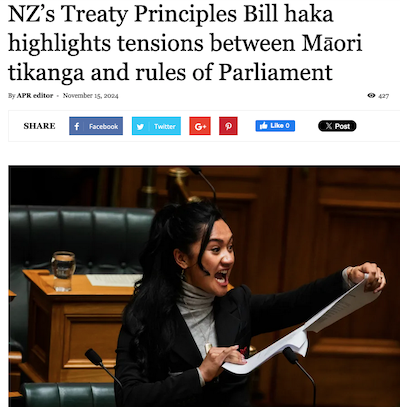
    Flashback: Te Pāti Māori MP Hana-Rawhiti Maipa-Clarke led a haka in Parliament on 14 November 2024
    Flashback: Te Pāti Māori MP Hana-Rawhiti Maipa-Clarke led a haka in Parliament and tore up a copy of the Treaty Principles Bill at the first reading on 14 November 2024 . . . . a haka is traditionally used as an indigenous show of challenge, support or sorrow. Image: RNZ/Samuel Rillstone/APR screenshot

    Tākuta Ferris spoke first for Te Pāti Māori, saying the haka was a “signal of humanity” and a “raw human connection”.

    He said Māori had faced acts of violence for too long and would not be silenced by “ignorance or bigotry”.

    “Is this really us in 2025, Aotearoa New Zealand?” he asked the House.

    “Everyone can see the racism.”

    He said the Privileges Committee’s recommendations were not without precedent, noting the fact Labour MP Peeni Henare, who also participated in the haka, did not face suspension.

    Te Pāti Māori MP Tākuta Ferris speaking during the parliamentary debate on Te Pāti Māori MPs' punishment for Treaty Principles haka on 5 June 2025.
    MP Tākuta Ferris spoke for Te Pāti Māori. Image: RNZ/Samuel Rillstone

    Henare attended the committee and apologised, which contributed to his lesser sanction.

    ‘Finger gun’ gesture
    MP Parmjeet Parmar — a member of the Committee — was first to speak on behalf of ACT, and referenced the hand gesture — or “finger gun” — that Te Pāti Māori co-leader Debbie Ngarewa-Packer made in the direction of ACT MPs during the haka.

    Parmar told the House debate could be used to disagree on ideas and issues, and there was not a place for intimidating physical gestures.

    Greens co-leader Marama Davidson said New Zealand’s Parliament could lead the world in terms of involving the indigenous people.

    She said the Green Party strongly rejected the committee’s recommendations and proposed their amendment of removing suspensions, and asked the Te Pāti Māori MPs be censured instead.

    Davidson said the House had evolved in the past — such as the inclusion of sign language and breast-feeding in the House.

    She said the Greens were challenging the rules, and did not need an apology from Te Pāti Māori.

    Winston Peters says Te Pāti Māori and the Green Party speeches so far showed "no sincerity".
    Foreign Minister and NZ First party leader Winston Peters called Te Pāti Māori “a bunch of extremists”. Image: RNZ/Samuel Rillstone

    NZ First leader Winston Peters said Te Pāti Māori and the Green Party speeches so far showed “no sincerity, saying countless haka had taken place in Parliament but only after first consulting the Speaker.

    “They told the media they were going to do it, but they didn’t tell the Speaker did they?

    ‘Bunch of extremists’
    “The Māori party are a bunch of extremists,” Peters said, “New Zealand has had enough of them”.

    Peters was made to apologise after taking aim at Waititi, calling him “the one in the cowboy hat” with “scribbles on his face” [in reference to his traditional indigenous moko — tatoo]. He continued afterward, describing Waititi as possessing “anti-Western values”.

    Labour’s Willie Jackson congratulated Te Pāti Māori for the “greatest exhibition of our culture in the House in my lifetime”.

    Jackson said the Treaty bill was a great threat, and was met by a great haka performance. He was glad the ACT Party was intimidated, saying that was the whole point of doing the haka.

    He also called for a bit of compromise from Te Pāti Māori — encouraging them to say sorry — but reiterated Labour’s view the sanctions were out of proportion with past indiscretions in the House.

    Greens co-leader Chlöe Swarbrick says this "would be a joke if it wasn't so serious".
    Green Party co-leader Chlöe Swarbrick said the prime minister was personally responsible if the proposed sanctions went ahead. Image: RNZ/Samuel Rillstone

    Greens co-leader Chlöe Swarbrick said the debate “would be a joke if it wasn’t so serious”.

    “Get an absolute grip,” she said to the House, arguing the prime minister “is personally responsible” if the House proceeds with the committee’s proposed sanctions.

    Eye of the beholder
    She accused National’s James Meager of “pointing a finger gun” at her — the same gesture coalition MPs had criticised Ngarewa-Packer for during her haka. The Speaker accepted he had not intended to; Swarbrick said it was an example where the interpretation could be in the eye of the beholder.

    She said if the government could “pick a punishment out of thin air” that was “not a democracy”, putting New Zealand in very dangerous territory.

    An emotional Maipi-Clarke said she had been silent on the issue for a long time, the party’s voices in haka having sent shockwaves around the world. She questioned whether that was why the MPs were being punished.

    “Since when did being proud of your culture make you racist?”

    “We will never be silenced, and we will never be lost,” she said, calling the Treaty Principles bill a “dishonourable vote”.

    She had apologised to the Speaker and accepted the consequence laid down on the day, but refused to apologise. She listed other incidents in Parliament that resulted in no punishment.


    NZ Parliament TV: Te Pāti Māori Privileges committee debate.  Video: RNZ

    Maipi-Clarke called for the Treaty of Waitangi to be recognised in the Constitution Act, and for MPs to be required to honour it by law.

    ‘Clear pathway forward’
    “The pathway forward has never been so clear,” she said.

    ACT’s Nicole McKee said there were excuses being made for “bad behaviour”, that the House was for making laws and having discussions, and “this is not about the haka, this is about process”.

    She told the House she had heard no good ideas from the Te Pāti Māori, who she said resorted to intimidation when they did not get their way, but the MPs needed to “grow up” and learn to debate issues. She hoped 21 days would give them plenty of time to think about their behaviour.

    Labour MP and former Speaker Adrian Rurawhe started by saying there were “no winners in this debate”, and it was clear to him it was the government, not the Parliament, handing out the punishments.

    He said the proposed sanctions set a precedent for future penalties, and governments might use it as a way to punish opposition, imploring National to think twice.

    He also said an apology from Te Pāti Māori would “go a long way”, saying they had a “huge opportunity” to have a legacy in the House, but it was their choice — and while many would agree with the party there were rules and “you can’t have it both ways”.

    Rawiri Waititi
    Te Pāti Māori co-leader Rawiri Waititi speaking to the media after the Privileges Committee debate. Image: RNZ/Mark Papalii

    Te Pāti Māori co-leader Rawiri Waititi said there had been many instances of misinterpretations of the haka in the House and said it was unclear why they were being punished, “is it about the haka . . . is about the gun gestures?”

    “Not one committee member has explained to us where 21 days came from,” he said.

    Hat and ‘scribbles’ response
    Waititi took aim at Peters over his comments targeting his hat and “scribbles” on his face.

    He said the haka was an elevation of indigenous voice and the proposed punishment was a “warning shot from the colonial state that cannot stomach” defiance.

    Waititi said that throughout history when Māori did not play ball, the “coloniser government” reached for extreme sanctions, ending with a plea to voters: “Make this a one-term government, enrol, vote”.

    He brought out a noose to represent Māori wrongfully put to death in the past, saying “interpretation is a feeling, it is not a fact . . .  you’ve traded a noose for legislation”.

    This article is republished under a community partnership agreement with RNZ.

    This post was originally published on Asia Pacific Report.

  • Asia Pacific Report

    Al Jazeera’s senior political analyst, Marwan Bishara, has highlighted the growing isolation of the United States at the United Nations over its defiant stance over Gaza.

    He emphasised the contrast between Washington’s support for Israel and mounting global criticism, with 14 members of the UNSC voting for a resolution calling for an immediate permanent and unconditional ceasefire.

    Even close allies like the UK voted for the resolution 14-1 and condemned the American position, suggesting that the US has acted as a dam blocking ceasefire resolutions five times since October 23.

    But, Bishara said, that barrier was beginning to crack — the US was “utterly isolated”, Al Jazeera reports.

    With rising international and domestic pressure, he sees a swelling current of opposition that may soon challenge US policy at the UNSC.

    The acting US Ambassador, Dorothy Shea, blamed the crisis on the Palestine resistance movement Hamas and said Israel was “defending Gaza from Iran”, a stance ridiculed by Bishara.

    The US vetoed the UNSC resolution calling for a permanent and unconditional ceasefire in Gaza, the release of captives and the unhindered entry of aid.

    It was the fifth time since October 2023 that the US has blocked a council resolution on the besieged Strip.

    ‘No surprise’
    In remarks before the start of the voting, Acting Ambassador Shea made the US opposition to the resolution, put forward by 10 countries on the 15-member council, painfully clear, which she said “should come as no surprise”.

    “The United States has taken the very clear position since this conflict began that Israel has the right to defend itself, which includes defeating Hamas and ensuring they are never again in a position to threaten Israel,” she told the council.

    Washington was the only country to vote against the measure, while the 14 other members of the council voted in favour.

    A Hamas statement said: “This arrogant stance reflects [the US] disregard for international law and its complete rejection of any international effort to stop the Palestinian bloodshed.”


    US isolated in UN Security Council.             Video: Al Jazeera

    ‘Human abattoir’
    Meanwhile, former UN Palestine relief agency UNRWA spokesman Chris Gunness slammed the Israeli-US aid operation as turning Gaza into a “human abattoir”, or slaughterhouse.

    He was condemning the four distribution sites operated by the controversial Gaza Humanitarian Foundation (GHF).

    “Hundreds of civilians are herded like animals into fenced-off pens and are slaughtered like cattle in the process,” Gunness told Al Jazeera.

    The GHF announced two full day’s closure on Wednesday, saying that operations would resume after the completion of maintenance and repair work on its distribution sites.

    This come after Israeli forces opened fire on Palestinians seeking aid, killing at least 27 people and injuring about 90, according to Gaza’s Ministry of Health.

    The former UN official cast doubt on the reason for the suspension, saying its work had been halted “because it has rightly sparked international outrage and condemnation”.

    This post was originally published on Asia Pacific Report.

  • By Scott Waide, RNZ Pacific PNG correspondent

    Three staffers from Papua New Guinea’s peak anti-corruption body are embroiled in a standoff that has brought into question the integrity of the organisation.

    Police Commissioner David Manning has confirmed that he received a formal complaint.

    Commissioner Manning said that initial inquiries were underway to inform the “sensitive investigation board’s” consideration of the referral.

    That board itself is controversial, having been set up as a halfway point to decide if an investigation into a subject should proceed through the usual justice process.

    Manning indicated if the board determined a criminal offence had occurred, the matter would be assigned to the National Fraud and Anti-Corruption Directorate for independent investigation.

    Local news media reported PNG Prime Minister James Marape was being kept informed of the developments.

    Marape has issued a statement acknowledging the internal tensions within ICAC and reaffirming his government’s commitment to the institution.

    Long-standing goal
    The establishment of ICAC in Papua New Guinea has been a long-standing national aspiration, dating back to 1984. The enabling legislation for ICAC was passed on 20 November 2020, bringing the body into legal existence.

    Marape said it was a proud moment of his leadership having achieved this in just 18 months after he took office in May 2019.

    The appointments process for ICAC officials was described as rigorous and internationally supervised, making the current internal disputes disheartening for many.

    Marape has reacted strongly to the crisis, expressing disappointment over the allegations and differences between the three ICAC leaders. He affirmed his government’s “unwavering commitment” to ICAC.

    These developments have significant implications for Papua New Guinea, particularly concerning its international commitments related to combating financial crime.

    PNG has been working to address deficiencies in its anti-money laundering and counter-terrorism financing (AML/CTF) framework, with the Financial Action Task Force (FATF) closely monitoring its progress.

    Crucial for fighting corruption
    An effective and credible ICAC is crucial for demonstrating the country’s commitment to fighting corruption, a key component of a robust AML/CTF regime.

    Furthermore, the International Monetary Fund (IMF) often includes governance and anti-corruption measures as part of its conditionalities for financial assistance and programme support.

    Any perception of instability or compromised integrity within ICAC could hinder Papua New Guinea’s efforts to meet these international requirements, potentially affecting its financial standing and access to crucial development funds.

    The current situation lays bare the urgent need for swift and decisive action to restore confidence in ICAC and ensure it can effectively fulfill its mandate.

    This article is republished under a community partnership agreement with RNZ.

    This post was originally published on Asia Pacific Report.

  • By Ben McKay

    America’s retreat from foreign aid is being felt deeply in Pacific media, where pivotal outlets are being shuttered and journalists work unpaid.

    The result is fewer investigations into dubiously motivated politicians, glimpses into conflicts otherwise unseen and a less diverse media in a region which desperately needs it.

    “It is a huge disappointment … a senseless waste,” Benar News’ Australian former head of Pacific news Stefan Armbruster said after seeing his outlet go under.

    Benar News, In-depth Solomons and Inside PNG are three digital outlets which enjoyed US support but have been hit by President Donald Trump’s about-face on aid.

    Benar closed its doors in April after an executive order disestablishing Voice of America, which the United States created during World War II to combat Nazi propaganda.

    An offshoot of Radio Free Asia (RFA) focused on Southeast Asia and the Pacific, Benar kept a close eye on abuses in West Papua, massacres and gender-based violence in Papua New Guinea and more.

    The Pacific arm quickly became indispensable to many, with a team of reporters and freelancers working in 15 countries on a budget under A$A million.

    Coverage of decolonisation
    “Our coverage of decolonisation in the Pacific received huge interest, as did our coverage of the lack of women’s representation in parliaments, human rights, media freedom, deep sea mining and more,” Armbruster said.

    In-depth Solomons, a Honiara-based digital outlet, is another facing an existential threat despite a proud record of investigative and award-winning reporting.

    Last week, it was honoured with a peer-nominated award from the Foreign Correspondents’ Club of Japan for a year-long probe into former prime minister Manasseh Sogavare’s property holdings.

    “We’re just holding on,” editor and co-founder Ofani Eremae said.

    A US-centred think tank continues to pay the wage of one journalist, while others have not drawn a salary since January.

    “It has had an impact on our operations. We used to travel out to do stories across the provinces. That has not been done since early this year,” Eremae said.

    A private donor came forward after learning of the cuts with a one-off grant that was used for rent to secure the office, he said.

    USAID budget axed
    Its funding shortfall — like Port Moresby-based outlet Inside PNG — is linked to USAID, the world’s biggest single funder of development assistance, until Trump axed its multi-billion dollar budget.

    Much of USAID’s funding was spent on humanitarian causes — such as vaccines, clean water supplies and food security — but some was also earmarked for media in developing nations, with the aim of bolstering fragile democracies.

    Inside PNG used its support to build an audience of tens of thousands with incisive reports on PNG politics: not just Port Moresby, but in the regions including independence-seeking province Bougainville that has a long history of conflict.

    “The current lack of funding has unfortunately had a dual impact, affecting both our dedicated staff, whom we’re currently unable to pay, and our day-to-day operations,” Inside PNG managing director Kila Wani said.

    “We’ve had to let off 80 percent of staff from payroll which is a big hit because we’re not a very big team.

    “Logistically, it’s become challenging to carry out our work as we normally would.”

    Other media entities in the region have suffered hits, but declined to share their stories.

    Funding hits damaging
    The funding hits are all the more damaging given the challenges faced by the Pacific, as outlined in the Pacific Islands Media Freedom Index and RSF World Press Freedom Index.

    The latest PFF report listed a string of challenges, notably weak legal protections for free speech, political interference on editorial independence, and a lack of funding underpinning high-quality media, in the region.

    The burning question for these outlets — and their audiences — is do other sources of funding exist to fill the gap?

    Inside PNG is refocusing energy on attracting new donors, as is In-depth Solomons, which has also turned to crowdfunding.

    The Australian and New Zealand governments have also provided targeted support for the media sector across the region, including ABC International Development (ABCID), which has enjoyed a budget increase from Anthony Albanese’s government.

    Inside PNG and In-depth Solomons both receive training and content-focused grants from ABCID, which helps, but this does not fund the underpinning costs for a media business or keep on the lights.

    Both Eremae, who edited two major newspapers before founding the investigative outlet, and Armbruster, a long-time SBS correspondent, expressed their dismay at the US pivot away from the Pacific.

    ‘Huge mistake’ by US
    “It’s a huge mistake on the part of the US … the world’s leading democracy. The media is one of the pillars of democracy,” Eremae said.

    “It is, I believe, in the interests of the US and other democratic countries to give funding to media in countries like the Solomon Islands where we cannot survive due to lack of advertising (budgets).

    As a veteran of Pacific reporting, Armbruster said he had witnessed US disinterest in the region contribute to the wider geopolitical struggle for influence.

    “The US government was trying to re-establish its presence after vacating the space decades ago. It had promised to re-engage, dedicating funding largely driven by its efforts to counter China, only to now betray those expectations,” he said.

    “The US government has senselessly destroyed a highly valued news service in the Pacific. An own goal.”

    Ben McKay is an AAP journalist. Republished from National Indigenous Times in Australia.

    This post was originally published on Asia Pacific Report.

  • RNZ Pacific

    Fiji’s Maritime Safety Authority has launched an investigation into Goundar Shipping Limited following two incidents involving its vessels.

    Late last month, one vessel ran aground on the reef of Ono-i-Lau, and villagers had to step in to ferry stranded passengers to nearby islands using small boats.

    On Monday, the Lomaiviti Princess II was sent to assist with salvage operations of the grounded boat in Ono-i-Lau.

    But the rescue boat never made it as it capsized in Suva Harbour, where it remains on its side.

    The company’s managing director George Goundar told local media “the mishap at Suva Harbour regarding the Lomaiviti Princess II was not the works of the company”.

    He directed all questions to the Fiji Ports Cooperation.

    Maritime Safety declines comment
    FBC News has asked the ports cooperation for comment, but the outlet reported the Maritime Safety Authority had refused to comment further.

    Minister Ro Filipe Tuisawau said the matter was under investigation and a release would be issued after he received an update on the matter.

    On May 29, the company posted on social media about the first incident, saying “GSL Management would like to sincerely thank the people of Ono-i-Lau for your tremendous support following the mishap”.

    “We acknowledge and appreciate your assistance in ensuring the passengers were safely brought ashore.

    “The vessel is now en route to Suva.”

    This article is republished under a community partnership agreement with RNZ.

    This post was originally published on Asia Pacific Report.

  • Pacific Media Watch

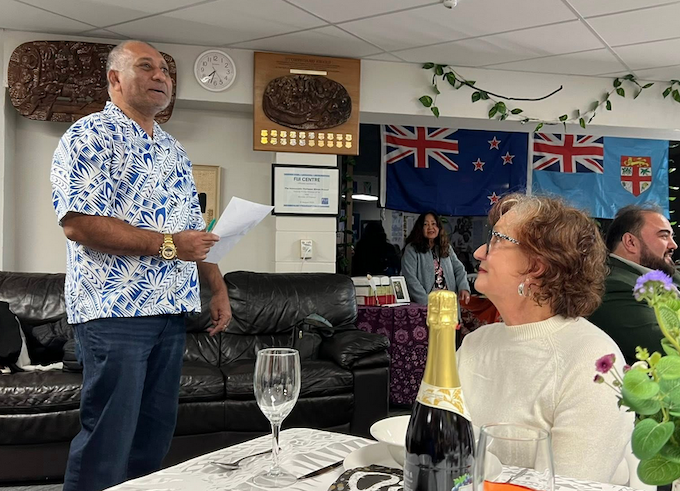
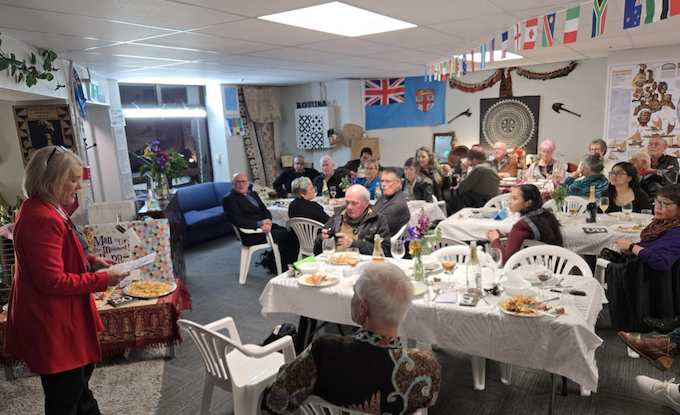
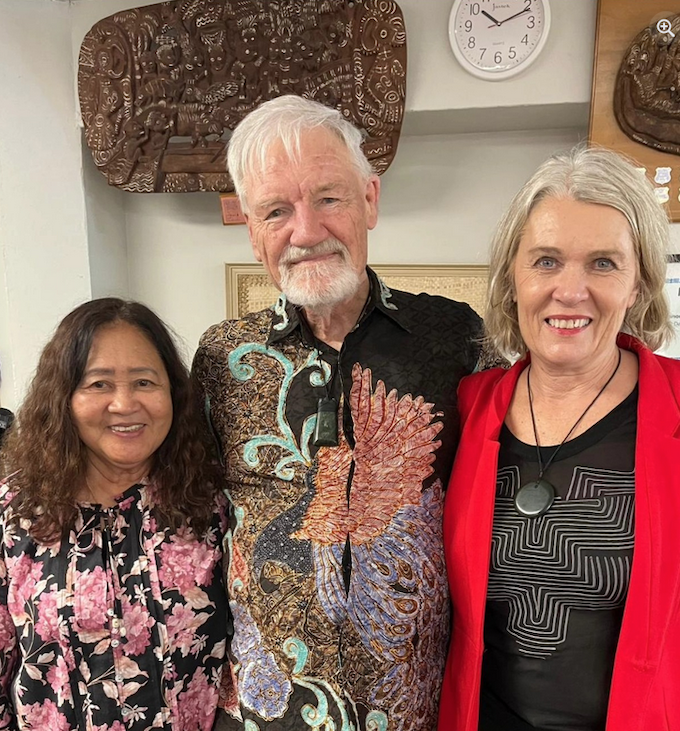
    Taieri MP Ingrid Leary reflected on her years in Fiji as a television journalist and media educator at a Fiji Centre function in Auckland celebrating Fourth Estate values and independence at the weekend.

    It was a reunion with former journalism professor David Robie — they had worked together as a team at the University of the South Pacific amid media and political controversy leading up to the George Speight coup in May 2000.

    Leary, a former British Council director and lawyer, was the guest speaker at a gathering of human rights activists, development advocates, academics and journalists hosted at the Whānau Community Centre and Hub, the umbrella base for the Fiji Centre and Asia Pacific Media Network.

    She said she was delighted to meet “special people in David’s life” and to be speaking to a diverse group sharing “similar values of courage, freedom of expression, truth and tino rangatiratanga”.

    “I want to start this talanoa on Friday, 19 May 2000 — 13 years almost to the day of the first recognised military coup in Fiji in 1987 — when failed businessman George Speight tore off his balaclava to reveal his identity.

    She pointed out that there had actually been another “coup” 100 years earlier by Ratu Cakobau.

    “Speight had seized Parliament holding the elected government at gunpoint, including the politician mother, Lavinia Padarath, of one of my best friends — Anna Padarath.

    Hostage-taking report
    “Within minutes, the news of the hostage-taking was flashed on Radio Fiji’s 10 am bulletin by a student journalist on secondment there — Tamani Nair. He was a student of David Robie’s.”

    Nair had been dispatched to Parliament to find out what was happening and reported from a cassava patch.

    “Fiji TV was trashed . . . and transmission pulled for 48 hours.

    “The university shut down — including the student radio facilities, and journalism programme website — to avoid a similar fate, but the journalism school was able to keep broadcasting and publishing via a parallel website set up at the University of Technology Sydney.

    “The pictures were harrowing, showing street protests turning violent and the barbaric behaviour of Speight’s henchmen towards dissenters.

    “Thus began three months of heroic journalism by David’s student team — including through a period of martial law that began 10 days later and saw some of the most restrictive levels of censorship ever experienced in the South Pacific.”

    Leary paid tribute to some some of the “brave satire” produced by senior Fiji Times reporters filling the newspaper with “non-news” (such as about haircuts, drinking kava) as an act of defiance.

    “My friend Anna Padarath returned from doing her masters in law in Australia on a scholarship to be closer to her Mum, whose hostage days within Parliament Grounds stretched into weeks and then months.

    Whanau Community Centre and Hub co-founder Nik Naidu
    Whanau Community Centre and Hub co-founder Nik Naidu speaking at the Asia Pacific Media Network event at the weekend. Image: Khairiah A. Rahman/APMN

    Invisible consequences
    “Anna would never return to her studies — one of the many invisible consequences of this profoundly destructive era in Fiji’s complex history.

    “Happily, she did go on to carve an incredible career as a women’s rights advocate.”

    “Meanwhile David’s so-called ‘barefoot student journalists’ — who snuck into Parliament the back way by bushtrack — were having their stories read and broadcast globally.

    “And those too shaken to even put their hands to keyboards on Day 1 emerged as journalism leaders who would go on to win prizes for their coverage.”

    Speight was sentenced to life in prison, but was pardoned in 2024.

    Taeri MP Ingrid Leary speaking
    Taeri MP Ingrid Leary speaking at the Whānau Community Centre and Hub. Image: Nik Naidu/APMN

    Leary said that was just one chapter in the remarkable career of David Robie who had been an editor, news director, foreign news editor and freelance writer with a number of different agencies and news organisations — including Agence France-Presse, Rand Daily Mail, The Auckland Star, Insight Magazine, and New Outlook Magazine — “a family member to some, friend to many, mentor to most”.

    Reflecting on working with Dr Robie at USP, which she joined as television lecturer from Fiji Television, she said:

    “At the time, being a younger person, I thought he was a little bit crazy, because he was communicating with people all around the world when digital media was in its infancy in Fiji, always on email, always getting up on online platforms, and I didn’t appreciate the power of online media at the time.

    “And it was incredible to watch.”

    Ahead of his time
    She said he was an innovator and ahead of his time.

    Dr Robie viewed journalism as a tool for empowerment, aiming to provide communities with the information they needed to make informed decisions.

    “We all know that David has been a champion of social justice and for decolonisation, and for the values of an independent Fourth Estate.”

    She said she appreciated the freedom to develop independent media as an educator, adding that one of her highlights was producing the groundbreaking documentary Maire about Maire Bopp Du Pont, who was a student journalist at USP and advocate for the Pacific community living with HIV/AIDs.

    She later became a nuclear-free Pacific parliamentarian in Pape’ete.

    Leary presented Dr Robie with a “speaking stick” carved from an apricot tree branch by the husband of a Labour stalwart based in Cromwell — the event doubled as his 80th birthday.

    In response, Dr Robie said the occasion was a “golden opportunity” to thank many people who had encouraged and supported him over many years.

    Massive upheaval
    “We must have done something right,” he said about USP, “because in 2000, the year of George Speight’s coup, our students covered the massive upheaval which made headlines around the world when Mahendra Chaudhry’s Labour-led coalition government was held at gunpoint for 56 days.

    “The students courageously covered the coup with their website Pacific Journalism Online and their newspaper Wansolwara — “One Ocean”.  They won six Ossie Awards – unprecedented for a single university — in Australia that year and a standing ovation.”

    He said there was a video on YouTube of their exploits called Frontline Reporters and one of the students, Christine Gounder, wrote an article for a Commonwealth Press Union magazine entitled, “From trainees to professionals. And all it took was a coup”.

    Dr Robie said this Fiji experience was still one of the most standout experiences he had had as a journalist and educator.

    Along with similar coverage of the 1997 Sandline mercenary crisis by his students at the University of Papua New Guinea.

    He made some comments about the 1985 Rainbow Warrior voyage to Rongelap in the Marshall islands and the subsequent bombing by French secret agents in Auckland.

    But he added “you can read all about this adventure in my new book” being published in a few weeks.

    Taieri MP Ingrid Leary (right) with Dr David Robie and his wife Del Abcede
    Taieri MP Ingrid Leary (right) with Dr David Robie and his wife Del Abcede at the Fiji Centre function. Image: Camille Nakhid

    Biggest 21st century crisis
    Dr Robie said the profession of journalism, truth telling and holding power to account, was vitally important to a healthy democracy.

    Although media did not succeed in telling people what to think, it did play a vital role in what to think about. However, the media world was undergoing massive change and fragmentation.

    “And public trust is declining in the face of fake news and disinformation,” he said

    “I think we are at a crossroads in society, both locally and globally. Both journalism and democracy are under an unprecedented threat in my lifetime.

    “When more than 230 journalists can be killed in 19 months in Gaza and there is barely a bleep from the global community, there is something savagely wrong.

    “The Gazan journalists won the UNESCO/Guillermo Cano World Press Freedom Prize collectively last year with the judges saying, “As humanity, we have a huge debt to their courage and commitment to freedom of expression.”

    “The carnage and genocide in Gaza is deeply disturbing, especially the failure of the world to act decisively to stop it. The fact that Israel can kill with impunity at least 54,000 people, mostly women and children, destroy hospitals and starve people to death and crush a people’s right to live is deeply shocking.

    “This is the biggest crisis of the 21st century. We see this relentless slaughter go on livestreamed day after day and yet our media and politicians behave as if this is just ‘normal’. It is shameful, horrendous. Have we lost our humanity?

    “Gaza has been our test. And we have failed.”

    Other speakers included Whānau Hub co-founder Nik Naidu, one of the anti-coup Coalition for Democracy in Fiji (CDF) stalwarts; the Heritage New Zealand’s Antony Phillips; and Multimedia Investments and Evening Report director Selwyn Manning.

    This post was originally published on Asia Pacific Report.

  • By Scholar Kassas in Port Moresby

    A Papua New Guinea minister has raised concerns about “serious issues” at the PNG-Indonesia border due to a lack of proper security checkpoints.

    Culture and Tourism Minister Belden Namah, who is also the member for the border electorate Vanimo-Green, voiced these concerns while supporting a new Biosecurity for Plants and Animals Bill presented in Parliament by Agriculture Minister John Boito.

    He said Papua New Guinea was the only country in the Pacific Islands region that shared a land border with another nation.

    According to Namah, the absence of proper quarantine and National Agriculture Quarantine and Inspection Authority (NAQIA) checks at the border allowed people bringing food and plants from Indonesia to introduce diseases affecting PNG’s commodities.

    Minister Namah, whose electorate shares a border with Indonesia, noted that while the PNG Defence Force and police were present, they were primarily focused on checking vehicles coming from Indonesia instead of actively patrolling the borders.

    He clarified the roles, saying, “It’s NAQIA’s job to search vehicles and passengers, and the PNGDF’s role is to guard and patrol our borders.”

    Namah expressed concern that while bills were passed, enforcement on the ground was lacking.

    Minister Namah supported the PNG Biosecurity Authority Bill and called for consistency, increased border security, and stricter control checks.

    Republished from the PNG Post-Courier with permission.

    This post was originally published on Asia Pacific Report.

  • RNZ Pacific

    Samoa’s Parliament has been formally dissolved, and an early election is set to take place within three months.

    After months of political instability and two motions of no confidence, Prime Minister Fiāme Naomi Mata’afa said she would call for the dissolution of Parliament if cabinet did not support her government’s budget.

    MPs from both the opposition Human Rights Protection Party and Fiāme’s former FAST party joined forces to defeat the budget with the final vote coming in 34 against, 16 in support and 2 abstentions.

    Fiāme went to the Head of State and advised him to dissolve Parliament, and her advice was accepted.

    This all came from a period of political turmoil that kicked off shortly after New Year.

    A split in the FAST Party in January saw Fiāme remove FAST Party chairman La’auli Leuatea Schmidt and several FAST ministers from her cabinet.

    In turn, he ejected her from FAST, leaving her leading a minority government.

    Minority government defeated
    Earlier this year, over a two-week period, Fiāme and her minority government defeated two back-to-back leadership challenges.

    On February 25, with La’auli’s help, she defeated a no-confidence vote moved by Tuilaepa Sailele Malielegaoi, 34 votes to 15.

    Then on March 6, this time with Tuilaepa’s help, she defeated a challenge mounted by La’auli, 32 votes to 19.

    Parliament now enters caretaker mode, until the election and the formation of a new government.

    Samoa’s Electoral Commissioner said his office has filed an affidavit to the Supreme Court, seeking legal direction and extra time to complete the electoral roll ahead of an early election.

    A hearing on this is set to be held on Wednesday.

    This article is republished under a community partnership agreement with RNZ.

  • Social media users are sharing a video of a man ridiculing Pakistan’s claims of victory in the recent four-day conflict with India, which was the most serious military crisis between the two neighbouring countries in decades.

    The man in the video ridicules Pakistanis for celebrating an apparent ‘victory’ in the flare-up which saw intense cross-border missile strikes. He states that Pakistan has attained victory, not with regard to technological advances, but with their capacity to tell lies. He further lampoons Pakistan by calling out news agencies and their propensity to spread misinformation. The video is embedded with a caption which reads: “Pakistani influencer exposes Pakistani army and media with brutal satire, reveals ground reality.’

    Verified X user Chota Don (@choga_don) posted the viral video, claiming that the man speaking on camera was from Pakistan. This tweet has gathered 10 Lakh views and more than 3,500 re-shares. (Archive)

    The same claim was amplified by several other X users. (Archived links: 1, 2, 3, 4)

    Click to view slideshow.

    The official Instagram handle of the Rajasthan unit of the Rashtriya Swayamsevak Sangh (RSS) also posted the viral video.


    View this post on Instagram


    A post shared by RSS Rajasthan (@rssrajasthanorg)

    Fact Check

    We ran a reverse image search on one of the key-frames from the viral video, which led us to this Instagram reel, uploaded by comedian and model, Anil Singh, on May 19. This is the same video that went viral.


    View this post on Instagram


    A post shared by ANIL SINGH (@anil_singh_0009)

    By going through his profile, we could discern that the original reel, which featured Singh performing a comic monologue in character, was part of a series of sketches that lampoon political rhetoric in the subcontinent. In this particular video, he plays the character of a Pakistani man.

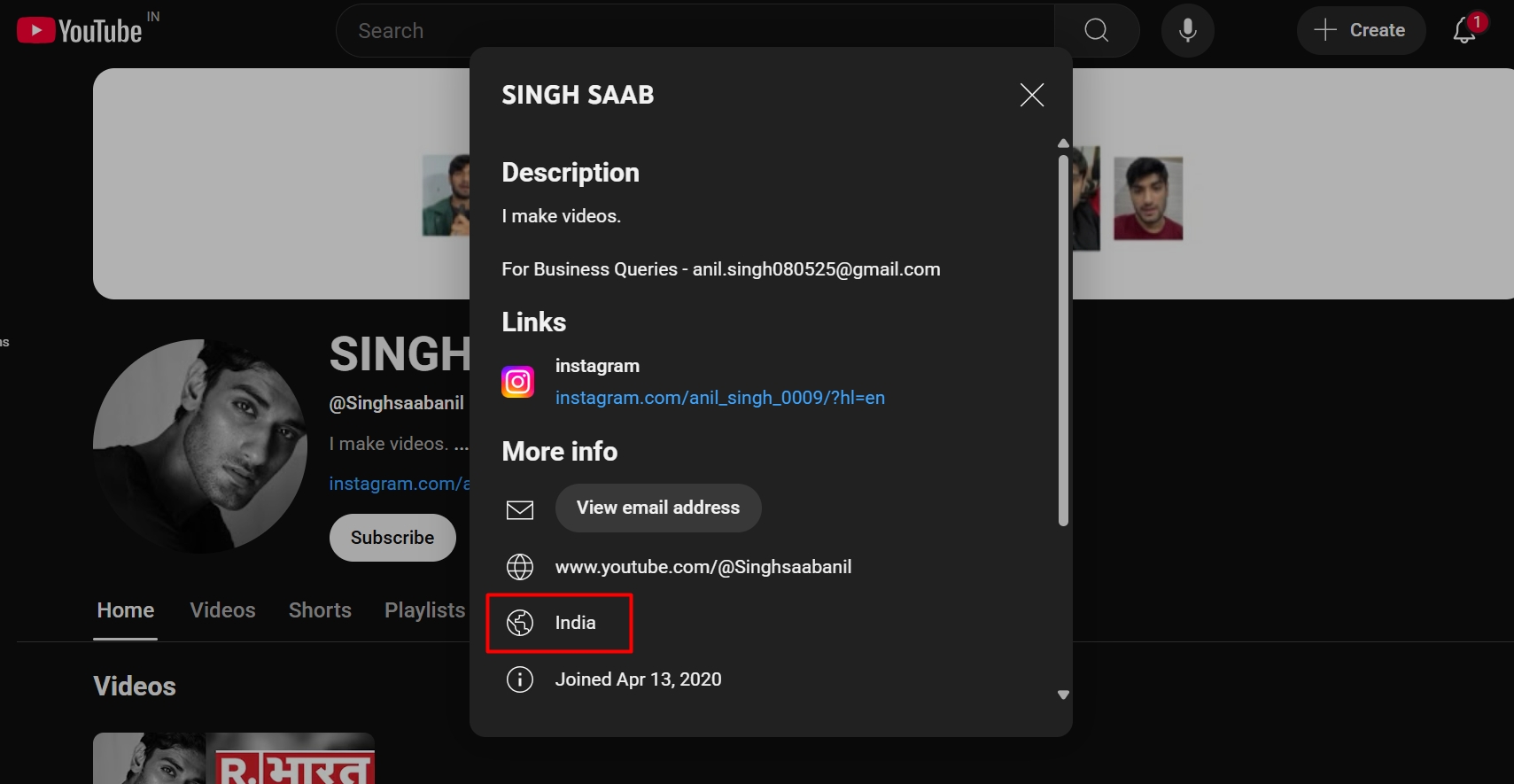
    A link provided in his Instagram bio led us to his YouTube channel, where it is mentioned that Anil Singh is from India.

    So, to sum up, an Instagram reel uploaded by an Indian model and content creator by the name of Anil Singh, has gone viral, with users on social media claiming that he is a Pakistani civilian admitting to the deplorable state of affairs in Pakistan.

    There is more, and this is where it gets interesting.

    Republic TV Ran The Video as Confession of a Pakistani Man

    In a blatant case of reporting without any verification, Republic Bharat aired this satirical reel, falsely presenting it as a real confession by a Pakistani civilian.

    The clip, originally intended as a comedic skit, was stripped of its context, and repurposed as a confession during a prime-time broadcast, named ‘Yeh Bharat ki Baat Hai’, on May 23.

    The comedian, Anil Singh, posted another Instagram reel on May 24, which showed footage of the Republic Bharat broadcast of May 23, which had been aired at 8:56 PM. The anchor, Syed Suhail, says: “Toh Pakistan yeh jashn isliye mana raha hai ki unke awaam ko bata sake – hum haare nahi hai, jeete hai. Lekin awaam unki sab janti hai. Suniye uni ke zubaani kya keh rahi hai – Pakistan jeeta hai ya haara.” (Translation: “Pakistan is celebrating in order to show its people that they didn’t lose, but won. However, their people know the truth. Listen to what they themselves are saying – did Pakistan win or lose?”)


    View this post on Instagram


    A post shared by ANIL SINGH (@anil_singh_0009)

    Alt News was able to locate the timestamp of the episode where the satirical reel was broadcast, but the section has since been edited out (starting at the 3:40 timestamp).


    Anil Singh uploaded another Instagram reel on May 26 which called attention to a corrigendum issued by Republic Bharat, on the May 24 broadcast of the same show. The anchor, Syed Suhail, clarifies that the man shown on the Instagram reel was no Pakistani, and asserts that the show had made no insinuation towards the testimony being that of a Pakistani’s. This is, however, a false claim. The anchor clearly said what he was going to show was a statement from “पाकिस्तान की अवाम” (the common people of Pakistan).

    He then ends by issuing an apology, considering that audiences might have leapt to false ideas about that person’s nationality.


    View this post on Instagram


    A post shared by ANIL SINGH (@anil_singh_0009)

    The post Republic used Indian creator’s satiric reel on prime time; claimed Pakistani civilians were slamming their country appeared first on Alt News.


    This content originally appeared on Alt News and was authored by Prantik Ali.

    This post was originally published on Radio Free.

  • Asia Pacific Report

    An escalation in fighting between Indonesian security forces and Papuan pro-independence fighters in West Papua has seriously threatened the security of the largely indigenous population, says Human Rights Watch in a new report.

    The human rights watchdog warned that all parties to the conflict are obligated to abide by international humanitarian law, also called the laws of war.

    The security forces’ military operations in the densely forested Central Highlands areas are accused of killing and wounding dozens of civilians with drone strikes and the indiscriminate use of explosive munitions, and displaced thousands of indigenous Papuans, said the report.

    The National Liberation Army of West Papua, the armed wing of the Free Papua Movement, has claimed responsibility in the killing of 17 alleged miners between April 6 and April 9.

    “The Indonesian military has a long history of abuses in West Papua that poses a particular risk to the Indigenous communities,” said Meenakshi Ganguly, deputy Asia director of Human Rights Watch.

    “Concerned governments need to press the Prabowo [Subianto] administration and Papuan separatist armed groups to abide by the laws of war.”

    The fighting escalated after the attack on the alleged miners, which the armed group accused of being targeted soldiers or military informers.

    Operation Habema
    The Indonesian military escalated its ongoing operations, called Operation Habema, in West Papua’s six provinces, especially in the Central Highlands, where Papuan militant groups have been active for more than four decades.

    On May 14, the military said that it had killed 18 resistance fighters in Intan Jaya regency, and that it had recovered weapons including rifles, bows and arrows, communications equipment, and Morning Star flags — the symbol of Papuan resistance.

    Further military operations have allegedly resulted in burning down villages and attacks on churches. Papuan activists and pastors told Human Rights Watch that government forces treated all Papuan forest dwellers who owned and routinely used bows and arrows for hunting as “combatants”.

    Information about abuses has been difficult to corroborate because the hostilities are occurring in remote areas in Intan Jaya, Yahukimo, Nduga, and Pegunungan Bintang regencies.

    Pastors, church workers, and local journalists interviewed by Human Rights Watch said that Indonesian forces had been using drones and helicopter gunships to drop bombs.

    “Civilians from the Korowai tribe community, known for their tall treehouse dwellings, have been harmed in these attacks, and have desperately fled the fighting,” said the Human Rights Watch report.

    “Displaced villagers, mostly from Intan Jaya, have sought shelter and refuge in churches in Sugapa, the capital of the regency.”

    Resistance allegations
    The armed resistance group has made allegations, which Human Rights Watch could not corroborate, that the Indonesian military attacks harmed civilians.

    It reported that a mortar or rocket attack outside a church in Ilaga, Puncak regency, hit two young men on May 6, killing one of them, Deris Kogoya, an 18-year-old student.

    The group said that the Indonesian military attack on May 14, in which the military claimed all 18 people killed were pro-independence combatants, mostly killed civilians.

    Ronald Rischardt Tapilatu, pastor of the Evangelical Christian Church of the Land of Papua, said that at least 3 civilians were among the 18 bodies. Human Rights Watch has a list of the 18 killed, which includes 1 known child.

    The daughter of Hetina Mirip said her mother was found dead on May 17 near her house in Sugapa, while Indonesian soldiers surrounded their village. She wrote that the soldiers tried to cremate and bury her mother’s body.

    A military spokesman denied the shooting.

    One evident impact of the renewed fighting is that thousands of indigenous Papuans have been forced to flee their ancestral lands.

    Seven villages attacked
    The Vanuatu-based United Liberation Movement for West Papua (ULMWP) reported that the military had attacked seven villages in Ilaga with drones and airstrikes, forcing many women and children to flee their homes. Media reports said that it was in Gome, Puncak regency.

    International humanitarian law obligates all warring parties to distinguish at all times between combatants and civilians. Civilians may never be the target of attack.

    Warring parties are required to take all feasible precautions to minimise harm to civilians and civilian objects, such as homes, shops, and schools. Attacks may target only combatants and military objectives.

    Attacks that target civilians or fail to discriminate between combatants and civilians, or that would cause disproportionate harm to the civilian population compared to the anticipated military gain, are prohibited.

    Parties must treat everyone in their custody humanely, not take hostages, and facilitate the delivery of humanitarian aid.

    The Free Papua Movement has long sought self-determination and independence in West Papua, on the grounds that the Indonesian government-controlled “Act of Free Choice” in 1969 was illegitimate and did not involve indigenous Papuans.

    It advocates holding a new, fair, and transparent referendum, and backs armed resistance.

    Vast conflict area
    Human Rights Watch reports that the conflict areas, including Intan Jaya, are on the northern side of Mt Grasberg, spanning a vast area from Sugapa to Oksibil in the Pegunungan Bintang regency, approximately 425 km long.

    Sugapa is also known as the site of Wabu Block, which holds approximately 2.3 million kilos of gold, making it one of Indonesia’s five largest known gold reserves.

    Wabu Block is currently under the licensing process of the Indonesian Ministry of Energy and Mineral Resources.

    “Papuans have endured decades of systemic racism, heightening concerns of further atrocities,” HRW’s Asia director Ganguly said.

    “Both the Indonesian military and Papuan armed groups need to comply with international standards that protect civilians.”

    Republished from Human Rights Watch.

    This post was originally published on Asia Pacific Report.

  • GENEVA, Switzerland (2 June 2025) – The Asian Forum for Human Rights and Development (FORUM-ASIA) and International Service for Human Rights (ISHR) express deep concern over the weakening of critical human rights language in the updated draft of the Legally Binding Instrument (LBI) on transnational corporations and other business enterprises.

    As a mandatory legal framework, the LBI will hold states and corporations accountable for business-related human rights violations and environmental harms. It represents a critical milestone for human rights protection across Asia and beyond.

    At its current form, however, the LBI’s language around protection and responsibility is heavily diluted. As for its negotiation process, civil society highlighted the inaccessible nature of consultations.

    We strongly advocate for the LBI to use language that recognizes how defenders and communities are increasingly exposed to reprisals and retaliation for their invaluable human rights work. Likewise, the LBI must explicitly state the obligations of states and businesses to protect and support those who are trying to peacefully preserve their fundamental rights and freedoms.

    Without intervention, the LBI runs the risk of becoming yet another weak regulation which fails to effectively protect, respond to, and remedy human rights violations.

    LBI’s negotiation and problems with the process

    Amidst rapid economic development that often prioritizes corporate interests over people’s rights, the LBI offers a ray of hope.

    Across Asia, many communities are enduring land grabbing, forced displacement, environmental degradation, and labor exploitation. The absence of binding corporate accountability mechanisms perpetuates a vicious cycle of abuse, particularly affecting women, Indigenous Peoples, defenders, and marginalized communities.

    If the LBI’s language and text remain true to its purpose, it can help break the cycle of abuse.

    In 2014, the United Nations Human Rights Council established the Open-Ended Intergovernmental Working Group (OEIGWG) to elaborate the LBI. After completing 10 rounds of negotiations, the process is set to continue at the 11th session on 20-24 October 2025 in Geneva.

    Ahead of this session, four clustered intersessional thematic consultations—as mandated in the 10th session—are expected to be held in 2025. The first victim-focused thematic consultation—covering Articles 4, 5, and 7–of the updated draft treaty took place in Geneva on 15-17 April 2025. The updated draft, currently under negotiation, was first released in July 2023. It incorporated textual suggestions from states during the 9th and 10th sessions in 2023 and 2024.

    The remaining two consultations will be held on 3-5 June, while the fourth one is tentatively scheduled for 26-27 August.

    During intersessional consultations, legal experts—appointed by the Chair-Rapporteur after the ninth session—introduced a non-paper developed on the basis of concrete comments and proposals submitted by states and non-state stakeholders during the 10th session. While the document does not carry legal status, it is intended to inform and support the ongoing discussions.

    The negotiation process’ lack of inclusivity has been deeply concerning. Affected communities, defenders, and civil society organizations continue to face barriers to meaningful participation..

    Despite being initially envisioned as a hybrid meeting, the intersessional consultation’s in-person-only format significantly limited participation from rights holders and affected persons who have experienced harm firsthand.

    Core provisions on victim rights, protections, and access to remedy

    Articles 4, 5, and 7 constitute the cornerstone provisions of the LBI, establishing a comprehensive framework for rights, protections, and remedies for victims.

    These articles not only articulate the fundamental rights and protections guaranteed to victims but also lay down how these rights can be effectively exercised. These provisions also identify the corresponding duties and obligations of both state and non-state actors, including businesses and financial institutions.

    Article 4: Rights of Victims

    Article 4 acknowledges victims’ rights to access justice, remedy, and reparation.

    However, since the very definition of “victims” (under Article 1.1) has been watered down, it no longer explicitly recognizes the individual and collective nature of harm.

    This narrower framing fails to acknowledge how business-related human rights violations often affect wider communities, both directly and indirectly. As a result of this dilution, the scope of the rights of victims under Article 4 risks excluding communities and individuals who bear the brunt of business-related abuse, including those who face harm while intervening to prevent or respond to abuses.

    We emphasize the importance of retaining Article 4.1, which affirms the rights of victims to all internationally recognized human rights instruments, such as the International Covenant on Civil and Political Rights (ICCPR) and the International Covenant on Economic, Social and Cultural Rights (ICESCR) along with other key instruments such as the UN Declaration on Human Rights Defenders, the Declaration on the Right to Development, and the UN Declaration on the Rights of Indigenous Peoples (UNDRIP).

    In the Asian context, where repressive laws and authoritarian governments increasingly restrict civic space, such a recognition remains vital.

    Testimonies from across the region confirm the systematic targeting of Indigenous Peoples, LGBTQIA+ individuals, defenders–including women human rights defenders, and environmental human rights defenders–and vulnerable groups that must be explicitly protected under the LBI framework.

    With regards to Article 4.2(a), we further call for recognition of the need for a differentiated approach to victims in more vulnerable situations, recognizing the intensified harm to defenders in conflict-affected areas.

    Businesses have a duty to ensure that they are not complicit in international crimes, as outlined in the Rome Statute.

    Similarly, we endorse Article 4.2(c), which includes provisions for environmental remediation and ecological restoration as part of access to justice. This is crucial in light of the triple planetary crisis—climate change, biodiversity loss, and pollution—that disproportionately impacts women, Indigenous Peoples, and other vulnerable populations as highlighted under the UN Resolution on human right to a clean, healthy and sustainable environment.

    In Article 4.2(e), we call for the explicit inclusion of protection of victim’s representatives, families, and witnesses from intimidation, reprisals, and interference against their privacy.

    The newly included Article 4.4—which enables victims to request precautionary measures—is a welcome addition. Such measures can prevent further harm before legal processes conclude and reflect the intersection of preventive and remedial justice.

    We strongly oppose the proposal on merging the provisions of Articles 4 and 5. Both articles have different scopes of application, with Article 4 affirming the rights of victims and Article 5 establishing corresponding State obligations to protect them.

    Article 5: Protection of Victims

    The protection of defenders is critical in ensuring an enabling environment for fundamental freedoms. However, by replacing references to “obligations” with “responsibilities” in the preamble and Article 2 of the updated draft, it  dilutes the legal enforceability of corporate accountability mechanisms and the protection of defenders.

    Defenders—including environmental human rights defenders, women human rights defenders, land rights defenders, and community-based defenders—are at heightened risks of criminalization, judicial harassment, and attacks, especially when confronting powerful business interests.

    A recent report by the Business and Human Rights Resource Centre highlights the scale of threats faced by defenders, documenting over 6,400 attacks worldwide against those challenging corporate abuse between January 2015 and December 2024.

    From 2010 to 2024, a study recorded 157 targeted attacks against human rights defenders and environmental human rights defenders who raised concerns about the extraction of minerals that are critical to the energy transition. This included 25 instances of strategic lawsuits against public participation (SLAPPs), a legal tactic commonly used to intimidate and silence defenders through burdensome litigation.

    These patterns are also evident across various country contexts. In Mongolia, community leaders and defenders face reprisals for speaking up against harmful mining operations, thereby complicating the already difficult path to accessing remedy.

    In Vietnam, environmental human rights defender Dang Dinh Bach was arbitrarily detained and faced trumped-up charges of tax evasion after advocating for communities impacted by global warming and mining activities. His case is a stark example of the corporate capture of state institutions.

    Similarly in Thailand, communities and defenders opposing potash mining face judicial harassment through SLAPPs. The LBI should explicitly recognize  this trend as well as the obligation of states to investigate and prevent such targeting of defenders. The LBI should explicitly discuss ways to address how judicial harassment and SLAPPs impact defenders and communities.

    The updated draft’s recognition of defenders in Article 5.2 is a positive step. We strongly support retaining this article, including the explicit mention of protection of human rights defenders and environmental human rights defenders against reprisals and harassment. However, since the definition of human rights defenders remains ambiguous in the LBI, its text must clearly include trade unionists, workers, lawyers, journalists, artists, and academics, among other types of defenders who face reprisals for their human rights work.

    We also support including a clear definition of human rights defender in alignment with the Declaration on Human Rights Defenders and Declaration +25, which defines human rights defenders as “any person who, individually or in association with others, or any group or organ of society that, acts or seeks to act to promote, protect or strive for the protection and realization of human rights and fundamental freedoms, at the local, national, regional, and international levels.”

    This inclusion is essential in recognizing the role of defenders in preventing and addressing business-related human rights abuses.

    HRDs deserve stronger protections and an enabling environment which allows them to continue their invaluable work without any threats or risks of reprisals and harassment.

    States should protect the safety of defenders. At the same time, they should ensure that defenders are able to freely exercise their fundamental freedoms, including the right to access information and actively participate in decision-making processes related to human rights and environmental matters.

    We also call for retaining the procedural obligation under Article 5.4 on states to adopt precautionary measures in urgent situations presenting serious risks or ongoing human rights abuses, which correspond to victims’ substantive rights under Article 4.4.

    Article 6: Prevention

    Article 6 is one of the LBI’s most fundamental articles. It not only covers the positive state obligations to prevent human rights abuses and violations, but also the mandatory human rights, environmental due diligence, and the duty to protect.

    There is increasing evidence to suggest that business and human rights-related abuses often result from a lack of safe and meaningful consultation with affected communities, Indigenous Peoples, women, and defenders.

    In cases where consultations take place, this is often not conducted in accordance with international human rights standards or it is conducted only after the planning, exploration, licensing. In other cases, consultation takes place after the actual operations have already started.

    For Indigenous Peoples, we have seen how megaprojects and business activities have been imposed without their Free, Prior, and Informed Consent (FPIC) and without considering their own Indigenous processes by which FPIC is achieved. This further violates the Indigenous Peoples’ rights to self-determination and the “right to say no.” In this context, we emphasize that consultation is not the same as consent, and this should be clearly differentiated in the LBI.

    Defenders play legitimate and pivotal roles in ensuring that human rights abuses and violations by businesses are prevented. Therefore, they should be consulted in every stage of the business operations. This has been confirmed by the 2021 “Guidance on ensuring respect for human rights defenders” issued by the UN Working Group on Business and Human Rights. The Guidance states that mandatory human rights due diligence requires business enterprises to include and consult defenders. For this reason, we support including an explicit reference to “human rights defenders” in Article 6.2(d).

    We reject the attempts to delete Article 6.4. This significant article aims to clarify the content of the mandatory due diligence obligation.

    Moreover, the WGBHR Guidance on Human Rights Defenders establishes that business enterprises are required to “continually assess, address, and mitigate risks to human rights defenders in their supply chains, including by making accessible, safe and respectful consultation with human rights defenders mandatory at all stages of due diligence processes.”

    Article 6.4 not only helps to clarify the scope of mandatory due diligence but also recognizes the positive obligation to ensure the safety of defenders, Indigenous Peoples, journalists, and other relevant actors. In fact, Article 6.4(e) should also make reference, in addition to retaliation, to the criminalization and judicial harassment that defenders face as a consequence of exercising their right to defend human rights.

    Finally, we call on retaining and including references to the “environment.” Considering the nature of LBI as a treaty, the centrality of the right to a clean, healthy, and sustainable environment in the context of corporate conduct remains crucial.

    In particular, Article 6 should incorporate an “environmental” aspect to its mandatory and ongoing “human rights due diligence.” Therefore, we suggest to amend the text to “human rights and environmental due diligence.” Similarly, this article should incorporate “environment” when referring to impact assessments, revising the language to reflect “human rights and environmental impact assessments.”

    Article 7: Access to Remedy

    The right to implement remedies is just as important as the right to access such remedies. Such a provision, however, was unfortunately removed in the updated draft.

    The third revised draft from 2021 included Article 7.6, which advocated for effective mechanisms for the enforcement of remedies through the “prompt execution of national or foreign judgments or awards.” We call for the reintroduction of this article in order to ensure that the judgments and awards received by victims are also effectively enforced and implemented.

    Call to action

    Ahead of the upcoming intersessional consultations in June and August 2025, and the 11th session of the OEIGWG in October, FORUM-ASIA and ISHR emphasize the importance of making sure that such consultations remain inclusive, transparent, and participatory.

    We reiterate the need to meaningfully include the voices of defenders and civil society in all upcoming consultations in order to strengthen essential provisions and to advance a treaty that truly prioritizes and centers on people’s welfare rather than corporate interests.

    Affected peoples—particularly women, Indigenous Peoples, informal workers, and all types of human rights defenders—must be central to all stages of the development of the LBI, including its negotiation, implementation, and monitoring.

    The post [Joint Statement] Legally Binding Instrument on Business and Human Rights must ensure stronger protections for human rights defenders and communities first appeared on FORUM-ASIA.

    This post was originally published on FORUM-ASIA.
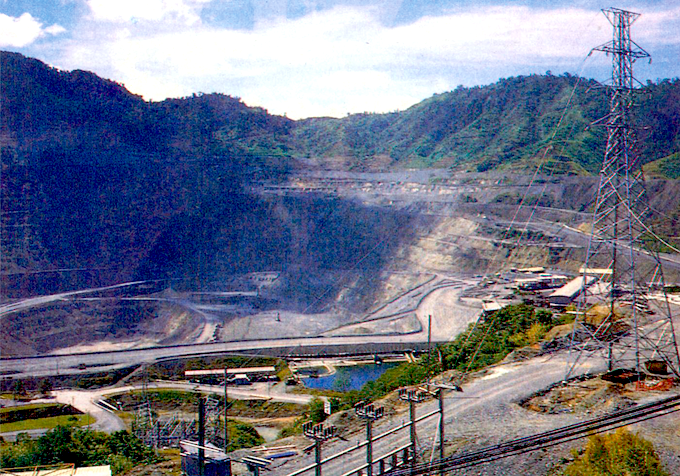
  • By Teuila Fuatai, RNZ Pacific senior journalist, Iliesa Tora, and Christina Persico

    A New Zealand-born Niuean educator says being recognised in the King’s Birthday honours list reflects the importance of connecting young tagata Niue in Aotearoa to their roots.

    Mele Ikiua, who hails from the village of Hakupu Atua in Niue, has been named a member of the New Zealand Order of Merit for services to vagahau Niue language and education.

    She told RNZ Pacific the most significant achievement in her career to date had been the promotion of vagahau Niue in the NCEA system.

    The change in 2023 enabled vagahau Niue learners to earn literacy credits in the subject, and receive recognition beyond “achieved” in the NCEA system. That, Ikiua said, was about continuing to increase learning opportunities for young Niue people in Aotearoa.

    “Because if you look at it, the work that we do — and I say ‘we’ because there’s a lot of people other than myself — we’re here to try and maintain, and try and hold onto, our language because they say our language is very, very endangered.

    “The bigger picture for young Niue learners who haven’t connected, or haven’t been able to learn about their vagahau or where they come from [is that] it’s a safe place for them to come and learn . . . There’s no judgement, and they learn the basic foundations before they can delve deeper.”

    Her work and advocacy for Niuean culture and vagahau Niue has also extended beyond the formal education system.

    Niue stage at Polyfest
    Since 2014, Ikiua had been the co-ordinator of the Niue stage at Polyfest, a role she took up after being involved in the festival as a tutor. She also established Three Star Nation, a network which provides leadership, educational and cultural programmes for young people.

    Last year, Ikiua also set up the Tokiofa Arts Academy, the world’s first Niue Performing Arts Academy. And in February this year, Three Star Nation held Hologa Niue — the first ever Niuean arts and culture festival in Auckland.

    Niuean community in Auckland: Mele Ikiua with Derrick Manuela Jackson (left) and her brother Ron Viviani (right). Photo supplied.
    Niuean community members in Auckland . . . Mele Ikiua with Derrick Manuela Jackson (left) and her brother Ron Viviani. Image: RNZ Pacific

    She said being recognised in the King’s Birthday honours list was a shared achievement.

    “This award is not only mine. It belongs to the family. It belongs to the village. And my colleagues have been amazing too. It’s for us all.”

    She is one of several Pasifika honoured in this weekend’s list.

    Others include long-serving Auckland councillor and former National MP Anae Arthur Anae; Air Rarotonga chief executive officer and owner Ewan Francis Smith; Okesene Galo; Ngatepaeru Marsters and Viliami Teumohenga.

    Cook Islander, Berry Rangi has been awarded a King’s Service Medal for services to the community, particularly Pacific peoples.

    Berry Rangi has been awarded a King's Service Medal for services to the community, particularly Pacific peoples.
    Berry Rangi has been awarded a King’s Service Medal for services to the community, particularly Pacific peoples. Image: Berry Rangi/RNZ Pacific

    Lifted breast screening rates
    She has been instrumental in lifting the coverage rates of breast and cervical screening for Pacific women in Hawke’s Bay.

    “When you grow up in the islands, you’re not for yourself – you’re for everybody,” she said.

    “You’re for the village, for your island.”

    She said when she moved to Napier there were very few Pasifika in the city — there were more in Hastings, the nearby city to the south.

    “I did things because I knew there was a need for our people, and I’d just go out and do it without having to be asked.”

    Berry Rangi also co-founded Tiare Ahuriri, the Napier branch of the national Pacific women’s organisation, PACIFICA.

    She has been a Meals on Wheels volunteer with the Red Cross in Napier since 1990 and has been recognised for her 34 years of service in this role.

    Maintaining a heritage craft
    She also contributes to maintaining the heritage craft of tivaevae (quilting) by delivering workshops to people of all ages and communities across Hawke’s Bay.

    Another honours recipient is Uili Galo, who has been made a Member of the New Zealand Order of Merit for services to the Tokelau community.

    Galo, of the Tokelau Aotearoa Leaders Council, said it is very gratifying to see his community’s efforts acknolwedged at the highest level.

    “I’ve got a lot of people behind me, my elders that I need to acknowledge and thank . . .  my kainga,” he said.

    “While the award has been given against my name, it’s them that have been doing all the hard work.”

    He said his community came to Aotearoa in the 1970s.

    “Right through they’ve been trying to capture their culture and who they are as a people. But obviously as new generations are born here, they assimilate into the pa’alangi world, and somehow lose a sense of who they are.

    “A lot of our youth are not quite sure who they are. They know obviously the pa’alangi world they live in, but the challenge of them is to know their identity, that’s really important.”

    Pasifika sports duo say recognition is for everyone
    Two sporting recipients named as Members of the New Zealand Order of Merit in the King’s Birthday Honours say the honour is for all those who have worked with them.

    Pauline-Jean Henrietta Luyten, who is of Tongan heritage, has been involved with rugby at different levels over the years, and is currently a co-chair of New Zealand Rugby's Pacific Advisory Group. Pauline with Eroni Clarke of the Pasifika Rugby Advisory group.
    Pauline-Jean Henrietta Luyten with Eroni Clarke of the Pasifika Rugby Advisory group. Image: RNZ Pacific

    Pauline-Jean Henrietta Luyten, who is of Tongan heritage, has been involved with rugby at different levels over the years, and is currently a co-chair of New Zealand Rugby’s Pacific Advisory Group.

    Annie Burma Teina Tangata Esita Scoon, of Cook Islands heritage, has been involved with softball since she played the sport in school years ago.

    While they have been “committed” to their sports loves, their contribution to the different Pasifika communities they serve is being recognised.

    Luyten told RNZ Pacific she was humbled and shocked that people took the time to actually put a nomination through.

    “You know, all the work we do, it’s in service of all of our communities and our families, and you don’t really look for recognition,” she said.

    “The family, the community, everyone who have worked with me and encouraged me they all deserve this recognition.”

    Luyten, who has links in Ha’apai, Tonga, said she has loved being involved in rugby, starting off as a junior player and went through the school competition.

    Community and provincial rugby
    After moving down to Timaru, she was involved with community and provincial rugby, before she got pulled into New Zealand Rugby Pacific Advisory Group.

    Luyten made New Zealand rugby history as the first woman of Pacific Island descent to be appointed to a provincial union board in 2019.

    She was a board member of the South Canterbury Rugby Football Union and played fullback at Timaru Girls’ High School back in 1997, when rugby competition was first introduced .

    Her mother Ailine was one of the first Tongan women to take up residence in Timaru. That was back in the early 1970s.

    As well as a law degree at Otago University Luyten completed a Bachelor of Science in 2005 and then went on to complete post-graduate studies in sports medicine in 2009.

    Pauline-Jean Henrietta Luyten with Sina Latu of the Tonga Society in South Canterbury.
    Pauline-Jean Henrietta Luyten with Sina Latu of the Tonga Society in South Canterbury. Image: RNZ Pacific

    She is also a founding member of the Tongan Society South Canterbury which was established in 2016.

    Opportunities for Pasifika families
    On her rugby involvement, she said the game provides opportunities for Pasifika families and she is happy to be contributing as an administrator.

    “Where I know I can contribute has been in that non-playing space and sort of understanding the rugby system, because it’s so big, so complex and kind of challenging.”

    Fighting the stereotypes that “Pasifika can’t be directors” has been a major one.

    “Some people think there’s not enough of us out there. But for me, I’m like, nah we’ve got people,” she stated.

    “We’ve got heaps of people all over the show that can actually step into these roles.

    “They may be experienced in different sectors, like the health sector, social sector, financial, but maybe haven’t quite crossed hard enough into the rugby space. So I feel it’s my duty to to do everything I can to create those spaces for our kids, for the future.”

    Call for two rugby votes
    Earlier this month the group registered the New Zealand Pasifika Rugby Council, which moved a motion, with the support of some local unions, that Pasifika be given two votes within New Zealand Rugby.

    “So this was an opportunity too for us to actually be fully embedded into the New Zealand Rugby system.

    “But unfortunately, the magic number was 61.3 [percent] and we literally got 61, so it was 0.3 percent less voting, and that was disappointing.”

    Luyten said she and the Pacific advisory team will keep working and fighting to get what they have set their mind on.

    For Scoon, the acknowledgement was recognition of everyone else who are behind the scenes, doing the work.

    Annie Scoon, of Cook Islands heritage, has been involved with softball since she played the sport in school years ago.
    Annie Scoon, of Cook Islands heritage, has been involved with softball since she played the sport in school years ago. Image: RNZ Pacific

    She said the award was for the Pasifika people in her community in the Palmerston North area.

    Voice is for ‘them’
    “To me what stands out is that our Pasifika people will be recognized that they’ve had a voice out there,” she said.

    “So, it’s for them really; it’s not me, it’s them. They get the recognition that’s due to them. I love my Pacific people down here.”

    Scoon is a name well known among the Palmerston North Pasifika and softball communities.

    The 78-year-old has played, officiated, coached and now administers the game of softball.

    She was born in the Cook Islands and moved with her family to New Zealand in 1948. Her first involvement with softball was in school, as a nine-year-old in Auckland.

    Then she helped her children as a coach.

    “And then that sort of lead on to learning how to score the game, then coaching the game, yes, and then to just being an administrator of the game,” she said.

    Passion for the game
    “I’ve gone through softball – I’ve been the chief scorer at national tournaments, I’ve selected at tournaments, and it’s been good because I’d like to think that what I taught my children is a passion for the game, because a lot of them are still involved.”

    A car accident years ago has left her wheelchair-bound.

    She has also competed as at the Paraplegic Games where she said she proved that “although disabled, there were things that we could do if you just manipulate your body a wee bit and try and think it may not pan out as much as possible, but it does work”.

    “All you need to do is just try get out there, but also encourage other people to come out.”

    She has kept passing on her softball knowledge to school children.

    In her community work, Scoon said she just keeps encouraging people to keep working on what they want to achieve and not to shy away from speaking their mind.

    Setting a goal
    “I told everybody that they set a goal and work on achieving that goal,” she said.

    “And also encouraged alot of them to not be shy and don’t back off if you want something.”

    She said one of the challenging experiences, in working with the Pasifika community, is the belief by some that they may not be good enough.

    Her advice to many is to learn what they can and try to improve, so that they can get better in life.

    “I wasn’t born like this,” she said, referring to her disability.

    “You pick out what suits you but because our island people — we’re very shy people and we’re proud. We’re very proud people. Rather than make a fuss, we’d rather step back.

    “They shouldn’t and they need to stand up and they want to be recognised.”

    This article is republished under a community partnership agreement with RNZ.

  • ANALYSIS: By Scott Waide, RNZ Pacific PNG correspondent

    Papua New Guinea has five months remaining to fix its anti-money laundering and counter-terrorist financing (AML/CTF) systems or face the severe repercussions of being placed on the Financial Action Task Force’s (FATF) “grey list”.

    The FATF has imposed an October 2025 deadline, and the government is scrambling to prove its commitment to global partners.

    Speaking in Parliament, Prime Minister James Marape said Treasury Minister, Ian Ling-Stuckey had been given the responsibility to lead a taskforce to fix PNG’s issues associated with money laundering and terrorist financing.

    “I summoned all agency heads to a critical meeting last week giving them clear direction, in no uncertain terms, that they work day and night to avert the possibility of us getting grey listed,” Marape said.

    “This review comes around every five years.

    “We have only three or four areas that are outstanding that we must dispatch forthwith.”

    PNG is no stranger to the FATF grey list, having been placed under increased monitoring in 2014 before successfully being removed in 2016.

    Deficiencies highlighted
    However, a recent assessment by the Asia Pacific Group on Money Laundering (APG) highlighted ongoing deficiencies, particularly in the effectiveness of PNG’s AML/CTF regime.

    While the country has made strides in establishing the necessary laws and regulations (technical compliance), the real challenge lies in PNG’s implementation and enforcement.

    The core of the problem, according to analysts, is a lack of effective prosecution and punishment for money laundering and terrorism financing.

    High-risk sectors such as corruption, fraud against government programmes, illegal logging, illicit fishing, and tax evasion, remain largely unchecked by successful legal actions.

    Capacity gaps within key agencies like the Royal Papua New Guinea Constabulary and the Office of the Public Prosecutor have been cited as significant hurdles.

    Recent drug hauls have also highlighted existing flaws in detection in the country’s financial systems.

    The implications of greylisting are far-reaching and potentially devastating for a developing nation like PNG, which is heavily reliant on foreign investment and international financial flows.

    Impact on economy
    Deputy Opposition leader James Nomane warned in Parliament that greylisting “will severely affect the economy, investor confidence, and make things worse for Papua New Guinea with respect to inflationary pressures, the cost of imports, and a whole host of issues”.

    If PNG is greylisted, the immediate economic fallout could be substantial. It would signal to global financial institutions that PNG carries a heightened risk for financial crimes, potentially leading to a sharp decline in foreign direct investment.

    Critical resource projects, including Papua LNG, P’nyang LNG, Wafi-Golpu, and Frieda River Mines, could face delays or even be halted as investors become wary of the increased financial and reputational risks.

    Beyond investment, the cost of doing business in PNG could also rise. International correspondent banks, vital conduits for cross-border transactions, may de-risk by cutting ties or scaling back operations with PNG financial institutions.

    This “de-risking” could make it more expensive and complex for businesses and individuals alike to conduct international transactions, leading to higher fees and increased scrutiny.

    This article is republished under a community partnership agreement with RNZ.

    This post was originally published on Asia Pacific Report.

  • ANALYSIS: By Scott Waide, RNZ Pacific PNG correspondent

    Papua New Guinea has five months remaining to fix its anti-money laundering and counter-terrorist financing (AML/CTF) systems or face the severe repercussions of being placed on the Financial Action Task Force’s (FATF) “grey list”.

    The FATF has imposed an October 2025 deadline, and the government is scrambling to prove its commitment to global partners.

    Speaking in Parliament, Prime Minister James Marape said Treasury Minister, Ian Ling-Stuckey had been given the responsibility to lead a taskforce to fix PNG’s issues associated with money laundering and terrorist financing.

    “I summoned all agency heads to a critical meeting last week giving them clear direction, in no uncertain terms, that they work day and night to avert the possibility of us getting grey listed,” Marape said.

    “This review comes around every five years.

    “We have only three or four areas that are outstanding that we must dispatch forthwith.”

    PNG is no stranger to the FATF grey list, having been placed under increased monitoring in 2014 before successfully being removed in 2016.

    Deficiencies highlighted
    However, a recent assessment by the Asia Pacific Group on Money Laundering (APG) highlighted ongoing deficiencies, particularly in the effectiveness of PNG’s AML/CTF regime.

    While the country has made strides in establishing the necessary laws and regulations (technical compliance), the real challenge lies in PNG’s implementation and enforcement.

    The core of the problem, according to analysts, is a lack of effective prosecution and punishment for money laundering and terrorism financing.

    High-risk sectors such as corruption, fraud against government programmes, illegal logging, illicit fishing, and tax evasion, remain largely unchecked by successful legal actions.

    Capacity gaps within key agencies like the Royal Papua New Guinea Constabulary and the Office of the Public Prosecutor have been cited as significant hurdles.

    Recent drug hauls have also highlighted existing flaws in detection in the country’s financial systems.

    The implications of greylisting are far-reaching and potentially devastating for a developing nation like PNG, which is heavily reliant on foreign investment and international financial flows.

    Impact on economy
    Deputy Opposition leader James Nomane warned in Parliament that greylisting “will severely affect the economy, investor confidence, and make things worse for Papua New Guinea with respect to inflationary pressures, the cost of imports, and a whole host of issues”.

    If PNG is greylisted, the immediate economic fallout could be substantial. It would signal to global financial institutions that PNG carries a heightened risk for financial crimes, potentially leading to a sharp decline in foreign direct investment.

    Critical resource projects, including Papua LNG, P’nyang LNG, Wafi-Golpu, and Frieda River Mines, could face delays or even be halted as investors become wary of the increased financial and reputational risks.

    Beyond investment, the cost of doing business in PNG could also rise. International correspondent banks, vital conduits for cross-border transactions, may de-risk by cutting ties or scaling back operations with PNG financial institutions.

    This “de-risking” could make it more expensive and complex for businesses and individuals alike to conduct international transactions, leading to higher fees and increased scrutiny.

    This article is republished under a community partnership agreement with RNZ.

    This post was originally published on Asia Pacific Report.

  • COMMENTARY: By Phil Goff

    “What we are doing in Gaza now is a war of devastation: indiscriminate, limitless, cruel and criminal killing of civilians. It’s the result of government policy — knowingly, evilly, maliciously, irresponsibly dictated.”

    This statement was made not by a foreign or liberal critic of Israel but by the former Prime Minister and former senior member of Benjamin Netanyahu’s own Likud party, Ehud Olmet.

    Nightly, we witness live-streamed evidence of the truth of his statement — lethargic and gaunt children dying of malnutrition, a bereaved doctor and mother of 10 children, nine of them killed by an Israeli strike (and her husband, another doctor, died later), 15 emergency ambulance workers gunned down by the IDF as they tried to help others injured by bombs, despite their identity being clear.

    Statistics reflect the scale of the horror imposed on Palestinians who are overwhelmingly civilians — 54,000 killed, 121,000 maimed and injured. Over 17,000 of these are children.

    This can no longer be excused as regrettable collateral damage from targeted attacks on Hamas.

    Israel simply doesn’t care about the impact of its military attacks on civilians and how many innocent people and children it is killing.

    Its willingness to block all humanitarian aid- food, water, medical supplies, from Gaza demonstrates further its willingness to make mass punishment and starvation a means to achieve its ends. Both are war crimes.

    Influenced by the right wing extremists in the Coalition cabinet, like Israeli Finance Minister Bezalel Smotrich and National Security Minister Itamar Ben-Gvir, Israel’s goal is no longer self defence or justifiable retaliation against Hamas terrorists.

    Israel attacks Palestinians at US-backed aid hubs in Gaza, killing 36
    Israel attacks Palestinians at US-backed aid hubs in Gaza, killing 36. Image: AJ screenshot APR

    Making life unbearable
    The Israeli government policy is focused on making life unbearable for Palestinians and seeking to remove them from their homeland. In this, they are openly encouraged by President Trump who has publicly and repeatedly endorsed deporting the Palestinian population so that the Gaza could be made into a “Middle East Riviera”.

    This is not the once progressive pioneer Israel, led by people who had faced the Nazi Holocaust and were fighting for the right to a place where they could determine their own future and be safe.

    Sadly, a country of people who were themselves long victims of oppression is now guilty of oppressing and committing genocide against others.

    New Zealand recently joined 23 other countries calling out Israel and demanding a full supply of foreign aid be allowed into Gaza.

    Foreign Minister Winston Peters called Israel’s actions “ intolerable”. He said that we had “had enough and were running out of patience and hearing excuses”.

    While speaking out might make us feel better, words are not enough. Israel’s attacks on the civilian population in Gaza are being increased, aid distribution which has restarted is grossly insufficient to stop hunger and human suffering and Palestinians are being herded into confined areas described as humanitarian zones but which are still subject to bombardment.

    People living in tents in schools and hospitals are being slaughtered.

    World must force Israel to stop
    Like Putin, Israel will not end its killing and oppression unless the world forces it to. The US has the power but will not do this.

    The sanctions Trump has imposed are not on Israel’s leaders but on judges in the International Criminal Court (ICC) who dared to find Prime Minister Benjamin Netanyahu guilty of war crimes.

    New Zealand’s foreign policy has traditionally involved working with like-minded countries, often small nations like us. Two of these, Ireland and Sweden, are seeking to impose sanctions on Israel.

    Both are members of the European Union which makes up a third of Israel’s global trade. If the EU decides to act, sanctions imposed by it would have a big impact on Israel.

    These sanctions should be both on trade and against individuals.

    New Zealand has imposed sanctions on a small number of extremist Jewish settlers on the West Bank where there is evidence of them using violence against Palestinian villagers.

    These sanctions should be extended to Israel’s political leadership and New Zealand could take a lead in doing this. We should not be influenced by concern that by taking a stand we might offend US president Donald Trump.

    Show our preparedness to uphold values
    In the way that we have been proud of in the past, we should as a small but fiercely independent country show our preparedness to uphold our own values and act against gross abuse of human rights and flagrant disregard for international law.

    We should be working with others through the United Nations General Assembly to maximise political pressure on Israel to stop the ongoing killing of innocent civilians.

    Moral outrage at what Israel is doing has to be backed by taking action with others to force the Israeli government to end the killing, destruction, mass punishment and deliberate starvation of Palestinians including their children.

    An American doctor working at a Gaza hospital reported that in the last five weeks he had worked on dozens of badly injured children but not a single combatant.

    He noted that as well as being maimed and disfigured by bombing, many of the children were also suffering from malnutrition. Children were dying from wounds that they could recover from but there were not the supplies needed to treat them.

    Protest is not enough. We need to act.

    Phil Goff is Aotearoa New Zealand’s former Minister of Foreign Affairs. This article was first published by the Stuff website and is republished with the permission of the author.

    This post was originally published on Asia Pacific Report.

  • COMMENTARY: By Phil Goff

    “What we are doing in Gaza now is a war of devastation: indiscriminate, limitless, cruel and criminal killing of civilians. It’s the result of government policy — knowingly, evilly, maliciously, irresponsibly dictated.”

    This statement was made not by a foreign or liberal critic of Israel but by the former Prime Minister and former senior member of Benjamin Netanyahu’s own Likud party, Ehud Olmet.

    Nightly, we witness live-streamed evidence of the truth of his statement — lethargic and gaunt children dying of malnutrition, a bereaved doctor and mother of 10 children, nine of them killed by an Israeli strike (and her husband, another doctor, died later), 15 emergency ambulance workers gunned down by the IDF as they tried to help others injured by bombs, despite their identity being clear.

    Statistics reflect the scale of the horror imposed on Palestinians who are overwhelmingly civilians — 54,000 killed, 121,000 maimed and injured. Over 17,000 of these are children.

    This can no longer be excused as regrettable collateral damage from targeted attacks on Hamas.

    Israel simply doesn’t care about the impact of its military attacks on civilians and how many innocent people and children it is killing.

    Its willingness to block all humanitarian aid- food, water, medical supplies, from Gaza demonstrates further its willingness to make mass punishment and starvation a means to achieve its ends. Both are war crimes.

    Influenced by the right wing extremists in the Coalition cabinet, like Israeli Finance Minister Bezalel Smotrich and National Security Minister Itamar Ben-Gvir, Israel’s goal is no longer self defence or justifiable retaliation against Hamas terrorists.

    Israel attacks Palestinians at US-backed aid hubs in Gaza, killing 36
    Israel attacks Palestinians at US-backed aid hubs in Gaza, killing 36. Image: AJ screenshot APR

    Making life unbearable
    The Israeli government policy is focused on making life unbearable for Palestinians and seeking to remove them from their homeland. In this, they are openly encouraged by President Trump who has publicly and repeatedly endorsed deporting the Palestinian population so that the Gaza could be made into a “Middle East Riviera”.

    This is not the once progressive pioneer Israel, led by people who had faced the Nazi Holocaust and were fighting for the right to a place where they could determine their own future and be safe.

    Sadly, a country of people who were themselves long victims of oppression is now guilty of oppressing and committing genocide against others.

    New Zealand recently joined 23 other countries calling out Israel and demanding a full supply of foreign aid be allowed into Gaza.

    Foreign Minister Winston Peters called Israel’s actions “ intolerable”. He said that we had “had enough and were running out of patience and hearing excuses”.

    While speaking out might make us feel better, words are not enough. Israel’s attacks on the civilian population in Gaza are being increased, aid distribution which has restarted is grossly insufficient to stop hunger and human suffering and Palestinians are being herded into confined areas described as humanitarian zones but which are still subject to bombardment.

    People living in tents in schools and hospitals are being slaughtered.

    World must force Israel to stop
    Like Putin, Israel will not end its killing and oppression unless the world forces it to. The US has the power but will not do this.

    The sanctions Trump has imposed are not on Israel’s leaders but on judges in the International Criminal Court (ICC) who dared to find Prime Minister Benjamin Netanyahu guilty of war crimes.

    New Zealand’s foreign policy has traditionally involved working with like-minded countries, often small nations like us. Two of these, Ireland and Sweden, are seeking to impose sanctions on Israel.

    Both are members of the European Union which makes up a third of Israel’s global trade. If the EU decides to act, sanctions imposed by it would have a big impact on Israel.

    These sanctions should be both on trade and against individuals.

    New Zealand has imposed sanctions on a small number of extremist Jewish settlers on the West Bank where there is evidence of them using violence against Palestinian villagers.

    These sanctions should be extended to Israel’s political leadership and New Zealand could take a lead in doing this. We should not be influenced by concern that by taking a stand we might offend US president Donald Trump.

    Show our preparedness to uphold values
    In the way that we have been proud of in the past, we should as a small but fiercely independent country show our preparedness to uphold our own values and act against gross abuse of human rights and flagrant disregard for international law.

    We should be working with others through the United Nations General Assembly to maximise political pressure on Israel to stop the ongoing killing of innocent civilians.

    Moral outrage at what Israel is doing has to be backed by taking action with others to force the Israeli government to end the killing, destruction, mass punishment and deliberate starvation of Palestinians including their children.

    An American doctor working at a Gaza hospital reported that in the last five weeks he had worked on dozens of badly injured children but not a single combatant.

    He noted that as well as being maimed and disfigured by bombing, many of the children were also suffering from malnutrition. Children were dying from wounds that they could recover from but there were not the supplies needed to treat them.

    Protest is not enough. We need to act.

    Phil Goff is Aotearoa New Zealand’s former Minister of Foreign Affairs. This article was first published by the Stuff website and is republished with the permission of the author.

    This post was originally published on Asia Pacific Report.

  • By Muhammad Shehada

    Since the onset of its genocide, Israel has persistently pushed a narrative that the famine devastating Gaza is not of its own making, but the result of “Hamas looting aid”.

    This claim, repeated across mainstream media and parroted by officials, has been used to deflect responsibility for what many human rights experts have called a deliberate starvation campaign.

    Even after Israel fully banned the entry of food, water, fuel, and medicine on March 2, Tel Aviv continued to maintain that Hamas looting, not Israeli policy, was to blame for the humanitarian catastrophe.

    But that narrative has now been discredited by Israel’s internal reporting. Last week, the Israeli military admitted internally that out of 110 looting incidents they documented, none were carried out by Hamas.

    Instead, the looting was done by “armed gangs, organised clans” and, to a lesser extent, starved civilians.

    Those very gangs and clans are backed by Israel; they enjoy full Israeli army protection and operate in areas Israel deems “extermination zones”, where any Palestinian trying to enter would be killed or kidnapped on the spot.

    The gangs had vanished during the two-month ceasefire but conveniently re-emerged as soon as Israel was pressured into allowing a limited trickle of aid to enter. The timing is no coincidence; Israeli policy has deliberately weaponised anarchy to preserve the conditions for starvation.

    This pushed even the UAE to strongly condemn Israel after the army forced an Emirati aid convoy to drive through a “red zone” where Israel-backed gangs looted 23 out of 24 trucks.

    So why does Israel continue to cling to a demonstrably false narrative while openly engineering a looting crisis through its proxies? Because the myth of “Hamas looting” serves a critical strategic purpose: to whitewash and legitimise a new plan that institutionalises starvation for blackmail, ethnic cleansing, collective punishment, and mass internment through a shell Israeli organisation.

    This is coupled with another alarming tactic of recruiting warlords, drug dealers, and criminals to create a puppet “anti-terror” force.

    Israel’s looting myth
    The “looting” talking point is devoid of any logic, as Hamas would be able to do very little with thousands of tons of looted aid.

    Israel and US Ambassador Mike Huckabee both claim Hamas uses the looted aid to buy new weaponry. But where would they buy such weapons from when Gaza is fully sealed off by Israel, and Rafah — the city of smuggling tunnels — is under full Israeli control?

    Israel claims Hamas sells looted aid on the black market. But, again, what would they do with the money? Virtually nothing is allowed into Gaza except a trickle of food.

    Israel also claims Hamas uses looted aid to recruit new militants, but Hamas doesn’t operate this way. The group depends on utmost secrecy and discipline in its operations.

    Each new member passes through a long process of vetting, training, and tests to minimise the risk of infiltration. It would compromise Hamas to recruit people openly, whose only attachment to the group is bread rather than ideological commitment.

    Perhaps most damning is that Israel has never captured a single instance of Hamas looting aid, despite subjecting Gaza to the most meticulous surveillance on earth. Israeli predator drones cover every inch of the enclave every minute of the day, yet there is nothing to show for Israel’s claims.

    Hamas is also aware that hijacking and looting aid trucks could lead to Israel bombing the vehicles and diverting them from their predetermined route.

    The Israeli army has done this on countless occasions when it fired at or bombed humanitarian convoys under the pretext that Hamas policemen came near the trucks. Ironically, those law enforcement officials were actually trying to prevent looting when they were targeted.

    Israel’s allies reject the narrative
    Israel’s strongest supporters have refuted the “Hamas looting” claim. President Joe Biden’s humanitarian envoy, David Satterfield, admitted in February of last year that “no Israeli official has . . . come to the administration with specific evidence of diversion or theft of assistance delivered by the UN”.

    Satterfield reiterated last Tuesday that Israel has never privately alleged or offered evidence of Hamas stealing aid from the UN and INGO channels. Israel’s ambassador to the EU, Haim Regev, said in mid-October 2023 that “there’s no evidence EU aid went to Hamas”.

    Cindy McCain, World Food Programme’s chief and widow of one of the most pro-Israeli GOP senators, forcefully rejected Israel’s narrative on Sunday, saying that looting “doesn’t have anything to do with Hamas . . .  it has simply to do with the fact these people are starving to death”.

    The Washington Post, meanwhile, reported last week that “Israel has never presented evidence publicly or privately to humanitarian organisations or Western government officials to back up claims that Hamas had systematically stolen aid brought into Gaza”.

    An internal memo jointly drafted by UN agencies and 20 INGOs in April, and viewed by The New Arab, stated that “there is no evidence of large-scale aid diversion”.

    Gangs and scarcity are responsible for looting
    While Israel failed to show any evidence of Hamas stealing aid, the only documented organised systematic looting happening in Gaza right now is by Israeli-backed criminal gangs who enjoy full protection from the Israeli army, according to the Washington Post, Financial Times, Ha’aretz, and the UN.

    A UN memo said these gangs established a “military complex” in the heart of Rafah after Israel fully depopulated the city. Humanitarian officials say the looting often happens right in front of Israeli troops and tanks, less than 100m away, who take no action until the local police arrive, with Israeli troops then opening fire at them.

    Israel not only provides protection and backing to these criminal gangs but has created the perfect conditions for looting to thrive through scarcity and a collapsing state of law and order.

    Currently, a single bag of wheat flour sells for about 1,500 NIS ($425), which makes it profitable for gangs to loot and sell on the market. These astronomical prices are driven by scarcity after Israel banned all food from entering Gaza for nearly 80 days, then allowed less than 20 percent of what Gaza needs on a normal day for basic survival after intense international pressure.

    During the ceasefire, however, when Israel was allowing 600 trucks to enter per day, prices went back to normal and looting disappeared because it was no longer profitable due to the abundance of food, and because the police were able to resume their work.

    Manufactured crisis to advance genocide
    The engineered looting crisis has long served as a convenient excuse to cover up the deliberate weaponisation of starvation against Gaza’s entire population, allowing Israel to distract from its restrictions on the entry of aid and the spread of famine by saying Hamas is to blame for stealing aid.

    But now, this manufactured crisis is serving a second objective: to justify a dystopian ‘aid plan’ Israel is implementing in Gaza that has been condemned and boycotted by every UN agency and humanitarian organisation working in the enclave, as well as donor countries.

    A joint UN-INGO memo warned that the Gaza Humanitarian Foundation would facilitate the use of aid for forcible expulsion, by telling Gazans the only way they can receive food is by moving south to Rafah on Egypt’s border.

    GHF, which Israeli opposition leaders said was an Israeli shell funded by Mossad, began its operations last Tuesday after being rocked by two scandals in one day.

    GHF’s CEO had resigned on Sunday in protest of the organisation violating the principles of humanitarianism, while the organisation shut down its registered headquarters in Switzerland as soon as Swiss authorities launched an investigation.

    Images coming out of the GHF’s militarised aid distribution site were immediately likened to concentration camps, where hundreds of emaciated Gazans were crowded into metal cages like cattle under the boiling sun, surrounded by armed US mercenaries, Israeli troops, and sand dunes.

    Alarmingly, people who received aid noted the presence of Arabic speakers in addition to American mercenaries. Last week, the Israel-backed Islamic State-linked gang leader Yasser Abu Shabab emerged in Rafah again after a long disappearance.

    Abu Shabab, a drug dealer and wanted criminal previously arrested multiple times by the local police, was the primary suspect in the systematic looting of aid under Israeli protection. This time, however, he emerged in a brand new uniform and military gear and started a Facebook page promoting himself in English and Arabic to mark a new “anti-terror” force operating in Israel-controlled Rafah.

    Additional pictures viewed by The New Arab showed multiple armed men dressed in the same uniform as Abu Shabab armed with M-16s standing in front of a humanitarian convoy.

    The unravelling of Israel’s “Hamas looting” narrative lays bare a chilling truth: starvation in Gaza is not collateral damage — it is a calculated weapon in a broader campaign of collective punishment and displacement.

    By cultivating chaos, empowering criminal gangs, and then manipulating the humanitarian crisis they manufactured, Israel seeks to maintain extreme restrictions on aid, while externalising blame and avoiding accountability.

    It is the machinery of genocide disguised in bureaucratic language and carried out under the watchful eyes of the world.

    Muhammad Shehada is a Palestinian writer and analyst from Gaza and the European Union affairs manager at Euro-Med Human Rights Monitor. The article was first published by The New Arab. On X at: @muhammadshehad2

    This post was originally published on Asia Pacific Report.

  • The second week of May was a busy time for fact-checkers at Union government’s Press Information Bureau (PIB) as it put out 68 fact-checks related to Operation Sindoor. While examining the tweets on PIB Fact Check’s official X handle between May 7 and May 16, Alt News noticed a distinct pattern in their selection of who to fact check and who not. One category that was conspicuous in its almost total absence in PIB’s body of work in this crucial period was falsehoods amplified by the Indian mainstream media.

    India announced the launch of Operation Sindoor in the early hours of May 7, targeting nine terror bases in Pakistan and Pakistan-occupied Kashmir (PoK). Tensions escalated quickly into intense cross-border drone and missile strikes, leading to deaths of at least 21 civilians in Jammu and Kashmir in four days. On May 10, India and Pakistan reached an understanding of ceasefire and agreed to stop all firing and military action.

    The Indian mainstream newsrooms, where hyper-nationalistic rhetoric bordering on jingoism has been the norm for quite some now, went absolutely berserk in these four days of armed conflict. Anchors and self-proclaimed defence experts made outrageous claims such as the destruction of the Karachi port by the Indian Navy, India attacking Islamabad, and even Pakistan Prime Minister Shehbaz Sharif surrendering to Indian forces. On innumerable occasions, they showed unrelated, old visuals in adrenaline-driven prime-time shows, falsely linking them to the ongoing conflict, without any verification.

    A detailed study of PIB fact checks from this period by Alt News shows that it chose not to call out media outlets for making false, baseless and misleading claims regarding Operation Sindoor. Out of 68 fact checks shared on its official X handle, only two concerned media outlets.

    The PIB fact-check unit was set up in 2019 following the then Vice-President of India, Venkaiah Naidu, expressing concern over the spread of ‘fake news’. The official website does not mention the methodology or scope of PIB’s fact-checking work. The Facebook page states that it debunks misinformation related to government policies and schemes.

    The ministry of electronics and information technology (MeitY) on January 17, 2019, uploaded a new draft of amendments to the IT (Intermediary Guidelines and Digital Media Ethics Code) Rules, 2021, which proposed that information identified as ‘fake or false’ by the PIB or any other agency authorized by the Union government be taken down by ‘intermediaries’.

    At the time, Alt News had reported on the glaring gaps in PIB’s work in the domain of fact-checking. For instance, we noticed that while PIB had fact-checked misinformation by Opposition leaders such as Rahul Gandhi and activist-turned-TMC MP Saket Gokhale several times, not once did they fact-check a claim by any BJP leader. We also documented how PIB had flagged multiple YouTube channels and videos which were anti-BJP in nature.

    Alt News noted a similar pattern during the post-Operation Sindoor India-Pakistan conflict.

    The graphic below shows that during the flare-up PIB skipped fact-checking false claims by media houses, while independent outlets (Alt News, Boom Live and WebQoof by The Quint) did debunk misreports by these houses. The yellow column shows whether the media house in question has been fact-checked at least once by either Alt News, Boom Live, or WebQoof. The white column shows whether the media house in question has been fact-checked by PIB.

    As readers can see, PIB fact-checked media outlets all but twice.

    One of the two was a fact-check of claims about the “temporary closure of services on the Delhi-Mumbai airline route.” The accompanying tweet featured a screenshot from an NDTV news bulletin carrying the same claim, stamped with the word “Fake.”

    The second was a quote-tweet of a post by the official handle of the district collector and magistrate of Jaipur, debunking a video shared by Times Now. The channel had claimed that explosions were heard at Jaipur airport. The collector clarified that the claim was false, and PIB amplified the statement.

    To Name or Not to Name, That is the Question

    We also noticed something interesting in a tweet by PIB fact check on May 15, in which they pointed out that Union external affairs minister S Jaishankar had been misquoted by “several news channels and social media posts” regarding claims that Chinese satellites had been aiding Pakistan. The tweet included a screengrab of a India Today bulletin, but the channel’s name and logo had been blurred out.

    Several X users urged the agency to reveal the name of the outlet. The comparison below clearly establishes that it was India Today. We found several similar graphics, with the same header saying ‘Operation Sindoor’, the same font of text and the same red background on India Today’s YouTube channel.

    In contrast, PIB explicitly named the international media outlet Al Jazeera in two recent fact checks. On May 12, it debunked Al Jazeera’s claim that an Indian female pilot was in Pakistani custody. Earlier, on May 10, it called out the outlet again for reporting that 10 explosions had occurred near Srinagar airport following a ceasefire announcement.

    Another glaring example of PIB’s selective fact-checking was its focus on viral gaming footage shared as visuals from the war, while ignoring similar misreports by mainstream media. In a thread, PIB asked its readers to be vigilant and not “fall prey to such propaganda posts” of gaming footage being circulated as visuals of war. At the same time, Aaj Tak aired gaming footage claiming it showed missiles being fired from India, which was not fact-checked by PIB.

    A Glimpse of What PIB Chose not to Fact-check

    On May 9, several mainstream Indian news channels dramatically reported that the Indian Navy had destroyed Karachi port. The coverage was presented as exclusive breaking news, replete with sirens, distant artillery sounds, and dramatic visuals.

    Aaj Tak’s Anjana Om Kashyap said on air, “…Karachi par bhi Bharatiya navsena ki bhishan hamla. Yeh saaf bata rahaa ki chaari taraf se-ab hum sagar ke bhi taraf se gherna mein kamyaab ho rahe hai…” (Translation: Shweta, there has been a fierce attack by the Indian Navy on Karachi as well. This clearly shows that we are now succeeding in surrounding them from all sides, including from the sea.) Two visuals were shown on Aaj Tak as the attack on Karachi, and both videos were found by Alt News to be old, unrelated footage.

    A similar tone of reporting was adopted by Zee News anchor Ram Mohan Sharma, who said “breaking news” just came in that Karachi port had been destroyed. “Is waqt ek bohot badi khabar mil rahi hai, samundar se Pakistan par ek bada action liya gaya hai… Is waqt ki bohot badi khabar, badi jaanakari iss waqt ki Karachi port tabah kar diya gaya hai! Navsena ne, Navy ne Karachi port ko tabah kar diya hai…” (Translation: We’re getting a major update at this moment. A significant action has been taken against Pakistan from the sea. Breaking news right now, important information coming in… The Karachi port has been destroyed. The Navy, the Indian Navy, has destroyed the Karachi port.)

    The Karachi port had been ‘destroyed’ in several other newsrooms on the night of May 9, including India Today, TV9 Bharatvarsh and ABP News. The following morning, around 8:40 am, the Karachi Port Trust issued an official statement calling the Indian media reports “completely false and baseless,” and confirmed that the port was “operating normally and securely.”

    The Karachi port claim is only the tip of the iceberg, as far as media misreports go. For instance, Zee News, News18, News18 Bihar Jharkhand, OneIndia and propaganda outlet Sudarshan News all claimed that Islamabad was under attack by the Indian armed forces, which soon turned to Pakistani Prime Minister Shehbaz Sharif’s house being under attack. Zee News even claimed that Sharif had surrendered. However, there is not a single credible source from either country confirming the attacks on Sharif’s house. Nor is there any report or credible information on PM Sharif surrendering.

    Several mainstream media outlets, including Republic, CNN News18, ABP News, and Zee News, reported that a Lashkar terrorist named Qari Mohammad Iqbal had been killed during Operation Sindoor. The reports went to the extent of claiming that Iqbal was in hiding in Kotli, Pakistan, one of the locations targeted by the Indian armed forces in the operation. However, Alt News found that Iqbal, a resident of Poonch in Kashmir, was one of the civilians killed during the cross-border shelling by Pakistan. He was a teacher at a local high school in Poonch. Iqbal’s family also issued a statement condemning the blatant misinformation that was amplified by media channels. Our detailed report can be read here.

    Click to view slideshow.

    News outlets Mathrubhumi, DNA, OneIndia and Great Andhra published articles claiming Asim Munir, chief of the army staff, Pakistan, had resigned and was to be replaced by General Sahir Shamshad Mirza. Like the aforementioned examples, there was not a single credible source that affirmed this. Fact-checking outlet BoomLive spoke to Pakistani news outlet Dawn’s deputy editor Zahrah Mazhar who said that there was no indication of Munir’s resignation.

    ALSO READ: Mass resignations in Pakistan army after Pahalgam attack? Media outlets’ reportage based on fabricated letter

    Media outlets Firstpost, NDTV, Free Press Journal and The Statesman also reported on a deepfake video showing Ahmed Sharif Chaudhry, the director general of inter-services public relations (ISPR) of the Pakistan armed forces, admitting to losing two fighter jets amidst an escalating military conflict as a real statement.

    Alongside these, several unverified videos and images were aired by mainstream media outlets. For example, a four-year-old video of Israel’s air defence system, the Iron Dome, was played by news channels with varied claims. Zee News, Times Now Navbharat and others aired the video linking it to the purported Karachi port destruction, while some others, like Aaj Tak, aired the clip claiming it to be visuals from the attack on Jaisalmer.

    Again, a video broadcast by ABP Ananda and TV9 Bangla, among others, purportedly showing the situation in Pakistan after a strike by the Indian armed forces turned out to be three-month-old footage from a jet crash site in Philadelphia.

    For reasons unknown, PIB Fact Check chose not to debunk any of these, though these falsehoods were consumed by crores of Indian television viewers. When one considers that most of these channels run pro-government propaganda in the name of news round the year, one begins to wonder if there was a method in the madness.

    Even as the Indian mainstream channels drew flak from the international media for incessantly putting out false information during the conflict, BJP platformed Sushant Sinha, the consulting editor of Times Now NavBharat, to justify the blatant lies. In a video tweeted from the official X handle of BJP, Sinha slammed the ‘propaganda’ by those who called out misreports by the mainstream media. The falsehoods should be acceptable in national interest, Sinha observed, repeatedly referring to those who exposed outrageous falsehoods peddled by the media as a ‘two-rupee ecosystem’. With each passing minute in the 9-minute monologue, Sinha’s desperate defence of fake news, though fervent, became more and more bizarre. The ‘consulting editor’ went to the length of saying that when a ‘breaking news’ would come in, if the anchor would be live on air, he would have no time to verify it. Even if it turned out to be false, asking counter questions was an ‘anti-national’ agenda’, he declared. 

    ALSO READ: The fictional strikes on the Karachi port and what it says about Indian media

    The post Op Sindoor: As Indian media made false, outrageous claims, PIB looked the other way appeared first on Alt News.


    This content originally appeared on Alt News and was authored by Shinjinee Majumder.

    This post was originally published on Radio Free.

  • To:
    H.E. Datuk Seri Anwar Ibrahim
    Prime Minister of Malaysia
    Chair of the Association of Southeast Asian Nations 2025

    CC:
    H.E. Sultan Haji Hassanal Bolkiah Mu’izzaddin Waddaulah, Prime Minister of Brunei Darussalam
    H.E. Hun Manet, Prime Minister of the Kingdom of Cambodia
    H.E. Prabowo Subianto, President of the Republic of Indonesia
    H.E. Sonexay Siphandone, Prime Minister of the Lao People’s Democratic Republic
    H.E. Ferdinand Romualdez Marcos, Jr., President of the Republic of the Philippines
    H.E. Lawrence Wong, Prime Minister of the Republic of Singapore
    H.E. Paetongtarn Shinawatra, Prime Minister of the Kingdom of Thailand
    H.E. Phạm Minh Chính, Prime Minister of the Socialist Republic of Vietnam

    21 May 2025

    Open letter: Malaysia must lead ASEAN with principle, not hypocrisy, to address the Myanmar crisis

    Your Excellency,

    We—the undersigned 285 Myanmar, regional, and international civil society organizations—write to you at the most critical juncture for Myanmar and for the credibility and efficacy of the Association of Southeast Asian Nations (ASEAN) in the region. As Malaysia chairs ASEAN and is set to host the 46th Summit later this month, we urgently call for your decisive leadership to unify and steer ASEAN to adopt a stronger, more principled stance and take concerted efforts to address the intensifying multifaceted crisis in Myanmar.

    This should begin with ASEAN cutting all ties with the Myanmar military junta and shifting official engagement to Myanmar’s legitimate stakeholders: the National Unity Government (NUG) and Ethnic Resistance Organizations (EROs).

    We are compelled to express our condemnation of your recent meeting with Min Aung Hlaing, the architect of the ongoing terror campaign, and main perpetrator of genocide against the Rohingya and war crimes and crimes against humanity against the people of Myanmar. This meeting, far from being a diplomatic necessity, is a grave misstep that further harms the people. It offers the junta a dangerous façade of false legitimacy at a time when it is desperately seeking to escape international isolation and accountability. Such engagement does not serve the interests of peace or justice for the Myanmar people, for which ASEAN allegedly strives. Instead, it once again emboldens an illegitimate military junta responsible for the most heinous crimes in Southeast Asia’s recent history, and signals to the world that ASEAN is willing to compromise its credibility for the sake of hollow dialogue.

    This is not an isolated error, but a symptom of ASEAN’s broader failure since the military’s illegal coup attempt in 2021. We note that this meeting—and in fact, each and every previous meeting—with junta representatives, has consistently empowered the military to continue its brutal attacks and airstrikes against civilians. For over four years, acting alone and within ASEAN, the region’s leaders have clung to an approach that prioritizes engagement with the perpetrators of mass atrocity crimes over the rule of law, justice and accountability, and solidarity with victims and survivors. The perfunctory Five-Point Consensus, repeatedly invoked but never effectively nor meaningfully implemented, has become a shield for the military to continue its campaign of terror with total impunity. The ongoing presence of junta representatives at ASEAN meetings at any level continues to undermine the bloc’s credibility and betrays its founding commitment to democracy, peace, security, and respect for human rights.

    Since its illegal coup attempt in February 2021, the Myanmar military junta has perpetrated a multitude of grave human rights violations and mass atrocity crimes, including massacres, torching and pillaging entire towns, and lethal airstrikes against civilians and places where they take refuge. Since February 2021, the military has conducted more than 4,000 airstrikes, exponentially escalating such attacks over the past two years. The military’s widespread and systematic violence has so far internally displaced more than 3.5 million people—likely a gross underestimation of the true magnitude of displacement. Since your meeting with Min Aung Hlaing on 17 April, the junta has conducted at least 171 airstrikes, the vast majority on civilian areas with no intention other than to inflict harm and terrorize the people. The latest massacre in Depayin Township, Sagaing Region, on 12 May 2025, in which a junta airstrike on a school killed at least 22 children and two teachers, is yet another horrific testament to the military’s utter contempt for human life and international law.

    In light of these grave realities, we urgently call on Your Excellency to exercise the courageous and principled leadership that this moment demands. Malaysia must immediately and unequivocally sever all ties with the junta, and use its position as ASEAN Chair to unify and lead the bloc with the same courageous and decisive action, in support of Myanmar people’s revolution to dismantle military tyranny and establish federal democracy. We expect that Malaysia recognizes the gravity of this call and will ensure no junta representatives are permitted to participate in any ASEAN meetings at any level—including the upcoming Summit.

    ASEAN, under Malaysia’s leadership, must recognize and engage with the legitimate representatives of the Myanmar people, the NUG and EROs, as well as Myanmar civil society. These are the actors who have demonstrated genuine commitment to finding a long-term sustainable solution in the best interests and desires of Myanmar’s people: democracy, federalism, and human rights. ASEAN’s engagement must be formal, meaningful, and conducted at the highest levels—not relegated to unofficial channels in the name of quiet diplomacy or tokenistic side meetings. Engagement must be open and transparent to gain the confidence of the Myanmar people. Only then can the bloc move beyond the failed Five-Point Consensus and support a Myanmar-owned and -led solution, as it so often claims to do. ASEAN must stop clinging to empty rhetoric and prove its pledges with concrete, meaningful actions to stop the junta’s violence—most urgently the airstrikes. Anything less will only prolong ASEAN’s complicity in the cycle of military violence and impunity which has defined Myanmar over the past seven decades.

    Furthermore, the humanitarian catastrophe intensifying in central Myanmar and its ethnic borderlands and regions demands an urgent and principled response, particularly following the devastating earthquake on 28 March 2025. The current approach—channeling aid through the ASEAN Coordinating Centre for Humanitarian Assistance on disaster management (AHA Centre)—has failed to deliver aid meaningfully and effectively, and has further allowed the junta to weaponize aid for its own advantage. We urge Malaysia to lead ASEAN in steering Myanmar’s neighbors to collaborate with the NUG and EROs and directly support existing local civil society, networks, and community-based responders to do their important work without interference or bureaucratic obstacles.

    Malaysia’s Madani values of sustainability, respect, trust, and compassion provide a strong foundation for Your Excellency to lead ASEAN to adopt a bold, inclusive, and principled approach with decisive and pragmatic action to help resolve the Myanmar crisis. Your leadership as ASEAN Chair can restore ASEAN’s regional relevance by responding to the threats posed by the Myanmar military and the multifaceted crisis it has caused and by demonstrating genuine commitment to democracy, peace, justice, human security, and development in the region.

    Your Excellency, history will judge this most critical moment for the region by the choices you and your fellow ASEAN leaders make. We urge you to reject the path of hypocrisy and complicity, and instead chart a course grounded in humanity, solidarity, and respect for the rights and dignity of the Myanmar people.

    We stand ready to support your efforts and urge you to seize this critical opportunity to lead ASEAN to support a Myanmar people-owned and -led political transformation process toward a just and lasting resolution in Myanmar.

    Signed by 285 civil society organizations, including 31 organizations that have chosen not to disclose their names:

    1. 5/ of Zaya State Strike
    2. 8888 Generation (New Zealand)
    3. A-Yar-Taw People Strike
    4. Action Committee for Democracy Development (ACDD)
    5. Action Committee of Basic Education Students (ACBES)
    6. Ah Nah Podcast
    7. All Arakan Students’ & Youths’ Congress – AASYC
    8. All Arakan Youth Organizations Network (AAYON)
    9. All Aung Myay Thar San Schools Strike Force
    10. All Burma Democratic Front in New Zealand
    11. All Burma Federation of Student Unions (Monywa District)
    12. Alliance of Students’ Union – Yangon (ASU-Yangon)
    13. ALTSEAN-Burma
    14. Anti-Junta Alliance Yangon – AJAY
    15. Anti-junta Forces Coordination Committee (AFC – Mandalay)
    16. Arakan CSO Network
    17. Arakan Rohingya National Union (ARNU)
    18. Asian Forum for Human Rights and Development (FORUM-ASIA)
    19. Asian Health Institute
    20. Association of Human Rights Defenders and Promoters (HRDP)
    21. Association Suisse-Birmanie
    22. Athan – Freedom of Expression Activist Organization
    23. Auckland Kachin Community NZ
    24. Auckland Zomi Community
    25. Aung San Suu Kyi Park Norway
    26. Ayeyarwaddy West Development Organisation (AWDO), Magway
    27. Ayeyarwaddy West Development Organisation (AWDO), Nagphe
    28. Back Pack Health Worker Team (BPHWT)
    29. Basic Education General Strike Committee (BEGSC)
    30. Basic Education Worker Unions – Steering Committee (BEWU-SC)
    31. Blood Money Campaign (BMC)
    32. Burma Action Ireland
    33. Burma Campaign UK
    34. Burma Civil War Museum (BCM)
    35. Burma Human Rights Network (BHRN)
    36. Burma Rohingya Organisation UK (BROUK)
    37. Burma Solidarity Philippines (BSP)
    38. Burmese Community Group (Manawatu, NZ)
    39. Burmese Muslim Association (BMA)
    40. Burmese Rohingya Organization UK (BROUK)
    41. Burmese Rohingya Welfare Organisation New Zealand
    42. Campaign for a New Myanmar
    43. CAN-Myanmar
    44. CDM Medical Network (CDMMN)
    45. Chanmyatharzi Township People’s Strike
    46. Chaung Oo Township Youth Strike Committee
    47. Chin Community in Norway
    48. Chin Community of Auckland
    49. Chin Human Rights Organization (CHRO)
    50. Chindwin (West) Villages Women Strike
    51. CIVICUS: World Alliance for Citizen Participation
    52. Civil Information Network (CIN)
    53. Civil Society Organizations Coordination Committee (Monywa)
    54. Co-operative University Mandalay Students’ Strike
    55. Coalition Strike Committee – Dawei
    56. CRPH & NUG Supporters Ireland
    57. CRPH Funding Ireland
    58. CRPH Support Group, Norway and members organizations
    59. CRPH, NUG Support Team Germany – Deutschland
    60. CSOs Nexus Consortium – Tanintharyi
    61. Daung Sitthe Strike
    62. Dawei (Ashaetaw) Women Strike
    63. Dawei Development Association
    64. Dawei Youths Revolutionary Movement Strike Committee
    65. Defend Myanmar Democracy (DMD)
    66. Democracy for Ethnic Minorities Organization (DEMO)
    67. Democracy Youth Myanmar
    68. Democracy, Peace and Women’s Organization
    69. Democratic Party for a New Society, Norway
    70. Depayin Township Revolution Steering Committee
    71. Depayin Women Strike
    72. Doh Atu – Ensemble pour le Myanmar
    73. Educational Initiatives Prague
    74. Equality Myanmar (EQMM)
    75. Ethnic Youth General Strike Committee (Mandalay)
    76. Federal Myanmar Benevolence Group (NZ)
    77. Former Political Prisoners and New Generation Group – Monywa
    78. Free Burma Campaign (South Africa) (FBC(SA))
    79. Free Rohingya Coalition (FRC)
    80. Future Light Center (FLC)
    81. Gangaw Women Strike
    82. General Strike Collaboration Committee (GSCC)
    83. General Strike Committee of Basic and Higher Education (GSCBHE)
    84. General Strike Coordination Body (GSCB)
    85. Generation Wave (GW)
    86. Generations’ Solidarity Coalition of Nationalities (GSCN)
    87. German Solidarity Myanmar e.V. (GSM)
    88. Global Myanmar Spring Revolution (GMSR)
    89. GMSR Korea 글로벌 미얀마 봄혁명 연대
    90. Human Rights Foundation of Monland (HURFOM)
    91. India for Myanmar
    92. Industries Strike
    93. Info Birmanie
    94. Integria, z.u.(Czech Republic)
    95. International Association, Myanmar–Switzerland (IAMS)
    96. International Campaign for the Rohingya
    97. International Peace Bureau
    98. Italia-Birmania.Insieme
    99. Japan Campaign to Ban Landmines
    100. Justice & Equality Focus (JEF)
    101. Justice For Myanmar (JFM)
    102.  K’cho Ethnic Association (Europe)
    103. Kachin Association Norway
    104. Kachin Student Union
    105. Kachin Women’s Association Thailand (KWAT)
    106. Kalay Township Strike Force
    107. Kalay Women Strike
    108. Karen Human Rights Group (KHRG)
    109. Karen Peace Support Network (KPSN)
    110. Karen Women’s Organization (KWO)
    111. Karenni Human Rights Group (KnHRG)
    112. Karenni National Women’s Organization (KNWO)
    113. Karenni Society New Zealand
    114. Keng Tung Youth
    115. KontraS
    116. Kyae Lak Myay
    117. Kyain Seikgyi Spring Revolution Leading Committee
    118. Kyauktada Strike Committee (KSC)
    119. La Communauté Birmane de France
    120. Latpadaung Region Strike Committee
    121. Let’s Help Each Other (LHEO)
    122. LGBT Alliance
    123. LGBT Alliance Myanmar (Kalay Region)
    124. LGBT Alliance Myanmar (Kyaukse Region)
    125. LGBT Community Yangon
    126. LGBT Union – Mandalay
    127. Listeners (နားဆင်သူများအဖွဲ့ )
    128. Magway People’s Revolution Committee
    129. Magway Region Human Rights Network (MHRN)
    130. Maharaungmyay Township People’s Strike
    131. Mandalar University Students’ Strike
    132. Mandalay Alliance Coalition Strike
    133. Mandalay Medical Family (MFM)
    134. Mandalay Strike Force (MSF)
    135. Mandalay Women Strike
    136. Mandalay Youth Strike
    137. Mandalay-based People’s Strike
    138. Mandalay-Based University Students’ Unions (MDY_SUs)
    139. MATA Sagaing
    140. MayMyo Strike Force
    141. Mekong Watch
    142. Metta Campaign Mandalay
    143. Minority Affairs Institute (MAI Myanmar)
    144. Monywa LGBT Strike
    145. Monywa People’s Strike Steering Committee
    146. Monywa Women Strike
    147. Monywa-Amyint Road Strike Leading Committee
    148. Monywa-Amyint Road Women Strike
    149. Multi-Religions Strike
    150. Mya Taung Strike
    151. Myanmar Accountability Project (MAP)
    152. Myanmar Action Group Denmark
    153. Myanmar anti-military coup movement in New Zealand
    154. Myanmar Campaign Network
    155. Myanmar Catholic Community In Norway
    156. Myanmar Community Group Christchurch New Zealand
    157. Myanmar Community Group Dunedin New Zealand
    158. Myanmar Community in Norway
    159. Myanmar Cultural Research Society (MCRS)
    160. Myanmar Engineers – New Zealand
    161. Myanmar Gonye (New Zealand)
    162. Myanmar Hindu Union
    163. Myanmar Institute of Information Technology Students’ Strike
    164. Myanmar Labor Alliance (MLA)
    165. Myanmar People Alliance (Shan State)
    166. Myanmar Students’ Union in New Zealand
    167. Myanmar Tourism Committee
    168. Myaung Youth Network
    169. MyaYar Knowledge Tree
    170. Myingyan Civilian Movement Committee
    171. Nelson Myanmar Community Group New Zealand
    172. Network for Human Rights Documentation–Burma (ND-Burma)
    173. Network of University Student Unions – Monywa
    174. New Myanmar Foundation (NMF)
    175. New Rehmonnya Federated Force – NRFF
    176. New York City Burmese community (NYCBC)
    177. New Zealand Campaign for Myanmar
    178. New Zealand Doctors for NUG
    179. New Zealand Karen Association
    180. New Zealand Zo Community Inc.
    181. NLD Organization Committee (International) Norway
    182. No Business With Genocide
    183. No.12 Basic Education Branch High School (Maharaungmyay) Students’ Union
    184. Norway Matu Community
    185. Norway Rvwang Community
    186. Nyan Lynn Thit Analytica
    187. Olive organization
    188. Overseas Mon Association. New Zealand
    189. Pa-O Women’s Union (PWU)
    190. Pale Township People’s Strike Steering Committee
    191. Peace and Social Justice Group
    192. Political Prisoners Network Myanmar (PPNM)
    193. Progressive Voice (PV)
    194. Purple Window Counselling
    195. Pwintphyu Development Organisation
    196. Pyi Gyi Tagon Strike Force
    197. Pyithu Gonye (New Zealand)
    198. Queers of Burma Alternative (QBA)
    199. Representative Committee of University Teacher Associations (RC of UTAs)
    200. Rohingya Community in Norway
    201. Rvwang Community Association New Zealand
    202. Samgha Sammaga-Mandalay
    203. Save Myanmar Fundraising Group (New Zealand)
    204. SEA Junction
    205. Seinpann Strike
    206. Shan Community (New Zealand)
    207. Shan MATA
    208. Shwe Pan Kone People`s Strike Steering Committee
    209. Sisters2Sisters
    210. Sitt Nyein Pann Foundation
    211. Southern Initiatives
    212. Southern Youth Development Organization
    213. Sujata Sisters Group (NZ)
    214. Support Group for Democracy in Myanmar (the Netherlands)
    215. Swedish Burma Committee (SBC)
    216. Ta’ang Students and Youth Union (TSYU)
    217. Ta’ang Women’s Organization (TWO)
    218. Taze Strike Committee
    219. Taze Women Strike
    220. Tenasserim River & Indigenous People Network
    221. Thakhin Kodaw Mhine Peace Network (Monywa)
    222. Thayat Chaung Women Strike
    223. The 88 Generation Peace and Open Society (Monywa)
    224. Twitter Team for Revolution (TTFR)
    225. U.S. Campaign for Burma
    226. University Students’ Unions Alumni Force
    227. Volunteers in Myanmar
    228. Wetlet Revolution Leading Committee
    229. Wetlet Township Women Strike
    230. White Coat Society Yangon (WCSY)
    231. Women Alliance Burma (WAB)
    232. Women Lead Resource Center (WLRC)
    233. Women’s League of Burma (WLB)
    234. Women’s Peace Network (WPN)
    235. Yadanabon University Students’ Union (YDNBUSU)
    236. Yangon Deaf Group
    237. Yangon Women Strike
    238. Yasakyo Township People`s Strike Steering Committee
    239. Yinmarpin and Salingyi All Villages Strike Committee
    240. Youth Empowerment (YE)
    241. Youth for Democratization of Myanmar (UDM)
    242. Zomi Christian Fellowship of Norway
    243. Zomi Community Norway
    244. ကရင်/ကြာအင်းဆိပ်ကြီးမြို့ သပိတ်အင်အားစု
    245. ဂန့်ဂေါဖွံ့ဖြိုးတိုးတက်ရေးအဖွဲ့
    246. နွေဦးရွက်သစ်
    247. ပြည်သူ့သပိတ်အင်အားစု
    248. မင်းဘူးတောင်သူများအစုအဖွဲ့
    249. မင်းလှတောင်သူများအစုအဖွဲ့
    250. မျိုးဆက်-Generations
    251. မြင်းခြံလူထုလှုပ်ရှားမှုကော်မတီ
    252. သမိုင်းသယ်ဆောင်သူများ
    253. သောင်ရင်းသတင်းလွှာ
    254. အညာလွင်ပြင်ရပ်ဝန်း

    The post [Joint Open Letter]: Malaysia must lead ASEAN with principle, not hypocrisy, to address the Myanmar crisis first appeared on FORUM-ASIA.

    This post was originally published on FORUM-ASIA.

  • By Patrick Decloitre, RNZ Pacific correspondent French Pacific desk

    French national politicians have been in New Caledonia as the territory’s future remains undecided.

    Leaders from both right-wing Les Républicains (LR) and Rassemblement National (RN), — vice-president François-Xavier Bellamy and Marine Le Pen respectively — have been in the French Pacific territory this week.

    They expressed their views about New Caledonia’s political, economic and social status one year after riots broke out in May 2024.

    Since then, latest attempts to hold political talks between all stakeholders and France have been met with fluctuating responses, but the latest round of discussions earlier this month ended in a stalemate.

    This was because hardline pro-France parties regarded the project of “sovereignty with France” offered by French Overseas Minister Manuel Valls was not acceptable. They consider that three self-determination referendums held in 2018, 2020 and 2021 rejected independence.

    However, the last referendum, in December 2021, was largely boycotted by the pro-independence movement and its followers due to indigenous Kanak cultural concerns around the covid-19 pandemic.

    The pro-France camp is accusing Valls of siding with the pro-independence FLNKS bloc and other more moderate parties such as PALIKA (Kanak Liberation Party) and UPM (Union Progressiste en Mélanésie), who want independence from France.

    Transferring key powers
    Valls is considering transferring key French powers to New Caledonia, introducing a double French/New Caledonian citizenship, and an international standing.

    The pro-France camp is adamant that this ignores the three no referendum votes.

    Speaking to a crowd of several hundred supporters in Nouméa on Tuesday evening, Bellamy said he now favoured going ahead with modifying conditions of eligibility for voters at local provincial elections.

    The same attempts to change the locked local electoral roll — which is restricted to people residing in New Caledonia from before November 1998 — was widely perceived as the main cause for the May 2024 riots, which left 14 dead.

    Bellamy said giving in to violence that erupted last year was out of the question because it was “an attempt to topple a democratic process”.

    Les Républicains, to which the Rassemblement-LR local party is affiliated, is one of the major parties in the French Parliament.

    Its newly-elected president Bruno Retailleau is the Minister for Home Affairs in French President Emmanuel Macron’s coalition government.

    Nouméa Accord ‘now over’
    Bellamy told a crowd of supporters in Nouméa that in his view the decolonisation process prescribed by the 1998 Nouméa Accord “is now over”.

    “New Caledonians have democratically decided, three times, that they belong to France. And this should be respected,” he told a crowd during a political rally.

    In Nouméa, Bellamy said if the three referendum results were ignored as part of a future political agreement, then LR could go as far as pulling out of the French government.

    Marine Le Pen, this week also expressed her views on New Caledonia’s situation, saying instead of focusing on the territory’s institutional future, the priority should be placed on its economy, which is still reeling from the devastation caused during the 2024 riots.

    The efforts included diversifying the economy.

    A Paris court convicted Le Pen and two dozen (RN) party members of embezzling European Union funds last month, and imposed a sentence that will prevent her from standing in France’s 2027 presidential election unless she can get the ruling overturned within 18 months.

    The high-profile visits to New Caledonia from mainland French leaders come within two years of France’s scheduled presidential elections.

    And it looks like New Caledonia could become a significant issue in the pre-poll debates and campaign.

    LFI (La France Insoumise), a major party in the French Parliament, and its caucus leader Mathilde Panot also visited New Caledonia from May 9-17, this time mainly focusing on supporting the pro-independence camp’s views.

    Macron invites all parties for fresh talks in Paris
    On Tuesday, May 27, the French President’s office issued a brief statement indicating that it had decided to convene “all stakeholders” for fresh talks in Paris in mid-June.

    The talks would aim at “clarifying” New Caledonia’s economic, political and institutional situation with a view to reaching “a shared agreement”.

    Depending on New Caledonia’s often opposing political camps, Macron’s announcement is perceived either as a dismissal of Valls’ approach or a mere continuation of the overseas minister’s efforts, but at a higher level.

    New Caledonia’s pro-France parties are adamant that Macron’s proposal is entirely new and that it signifies Valls’ approach has been disavowed at the highest level.

    Valls himself wrote to New Caledonia’s political stakeholders last weekend, insisting on the need to pursue talks through a so-called “follow-up committee”.

    It is not clear whether the “follow-up committee” format is what Macron has in mind.

    But at the weekend, Valls made statements on several French national media outlets, stressing that he was still the one in charge of New Caledonia’s case.

    “The one who is taking care of New Caledonia’s case, at the request of French Prime Minister François Bayrou, that’s me and no one else,” Valls told French national news channel LCI on May 25.

    “I’m not being disavowed by anyone.”

    Local parties still willing to talk
    Most parties have since reacted swiftly to Macron’s call, saying they were ready to take part in further discussions.

    Rassemblement-LR leader Virginie Ruffenach said this was “necessary to clarify the French state’s position”.

    She said the clarification was needed, since Valls, during his last visit, “offered an independence solution that goes way beyond what the pro-independence camp was even asking”.

    Local pro-France figure and New Caledonia’s elected MP at the French National Assembly, Nicolas Metzdorf, met Macron in Paris last Friday.

    He said at the time that an “initiative” from the French president was to be expected.

    Pro-independence bloc FLNKS said Valls’ proposal was now “the foundation stone”.

    Spokesman Dominique Fochi said the invitation was scheduled to be discussed at a special FLNKS convention this weekend.

    Valls’ ‘independence-association’ solution worries other French territories
    Because of the signals it sends, New Caledonia’s proposed political future plans are also causing concern in other French overseas territories, including their elected MPs in Paris.

    In the French Senate on Wednesday, French Polynesia’s MP Lana Tetuanui, who is pro-France, asked during question time for French Foreign Affairs Minister Jean-Noël Barrot to explain what France was doing in the Pacific region in the face of growing influence from major powers such as China.

    She told the minister she still had doubts, “unless of course France is considering sinking its own aircraft carrier ships named New Caledonia, French Polynesia and Wallis and Futuna”.

    French president Emmanuel Macron has been on a southeast Asian tour this week to Vietnam, Indonesia and Singapore, where he will be the keynote speaker of the annual Shangri-La Dialogue.

    He delivers his speech today to mark the opening of the 22nd edition of the Dialogue, Asia’s premier defence summit.

    The event brings together defence ministers, military leaders and senior defence officials, as well as business leaders and security experts, from across the Asia-Pacific, Europe, North America and beyond to discuss critical security and geopolitical challenges.

    More specifically on the Pacific region, Macron also said one of France’s future challenges included speeding up efforts to “build a new strategy in New Caledonia and French Polynesia”.

    As part of Macron’s Indo-Pacific doctrine, developed since 2017, France earlier this year deployed significant forces in the region, including its naval and air strike group and its only aircraft carrier, the Charles de Gaulle.

    The multinational exercise, called Clémenceau 25, involved joint exercises with allied forces from Australia, Japan and the United States.

    This article is republished under a community partnership agreement with RNZ.

    This post was originally published on Asia Pacific Report.

  • Pacific Media Watch

    Journalists have been targeted, detained and tortured by the Israeli military in Gaza — and Reporters Without Borders (RSF) has now taken a new approach towards bringing justice these crimes.

    The Paris-based global media freedom NGO has submitted multiple formal requests to the International Criminal Court (ICC) asking that Palestinian journalists who are victims of Israeli war crimes in Gaza be allowed to participate as such in international judicial proceedings.

    If granted this status, these journalists would be able to present the ICC with the direct and personal harm they have suffered at the hands of Israeli forces, reports RSF.

    RSF has filed four complaints with the ICC concerning war crimes committed against journalists in Gaza and recently joined director Sepideh Farsi at the Cannes Film Festival to pay tribute to Fatma Hassoun, a photojournalist killed by the Israeli army after it was revealed she was featured in the documentary film Put Your Soul on Your Hand and Walk.

    After filing the four complaints with the ICC concerning war crimes committed against journalists in Gaza since October 2023, RSF is resolutely continuing its efforts to bring the issue before international justice.

    The NGO has submitted several victim participation forms to the ICC so that Gazan journalists can participate in the legal process as recognised victims, not just as witnesses.

    Being officially recognised as victims is a first step toward justice, truth, and reparations — and it is an essential step toward protecting press freedom and journalistic integrity in conflict zones.

    Nearly 200 journalists killed
    Since October 2023, Israeli armed forces have killed nearly 200 journalists in Gaza — the Gaza Media Office says more than 215 journalists have been killed — at least 44 of whom were targeted because of their work, according to RSF data.

    Not only are foreign journalists barred from entering the blockaded Palestinian territory, but local reporters have watched their homes and newsrooms be destroyed by Israeli airstrikes and have been constantly displaced amid a devastating humanitarian crisis.

    “The right of victims to participate in the ICC investigation is a crucial mechanism that will finally allow for the recognition of the immense harm suffered by Palestinian journalists working in Gaza, who are the target of an unprecedented and systematic crackdown,” said Clémence Witt, a lawyer at the Paris and Barcelona Bars, and Jeanne Sulzer, a lawyer at the Paris Bar and member of the ICC’s list of counsel.

    Jonathan Dagher, head of the RSF Middle East desk, said: “It is time for justice for Gaza’s journalists to be served. The Israeli army’s ongoing crimes against them must end.

    “RSF will tirelessly continue demanding justice and reparations. This new process in the ICC investigation is an integral part of this combat, and allowing journalists to participate as victims is essential to moving forward.

    “They should be able to testify to the extreme violence targeting Gaza’s press. This is a new step toward holding the Israeli military and its leaders accountable for the crimes committed with impunity on Palestinian territory.”

    Pacific Media Watch collaborates with RSF.