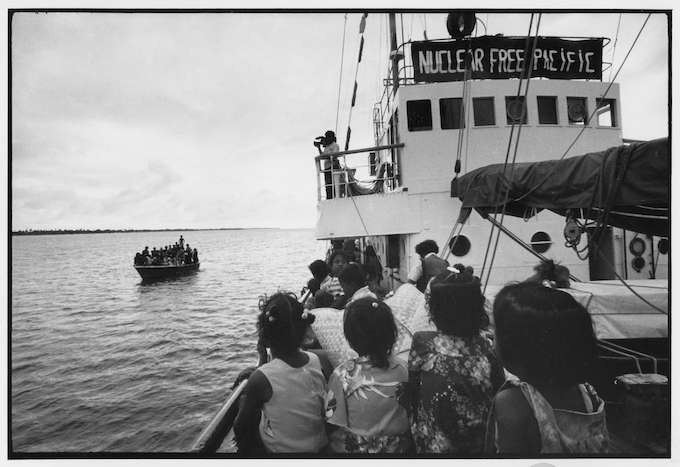
Category: Featured

  • BANGKOK, Thailand (29 May 2025) – The Asian Forum for Human Rights and Development (FORUM-ASIA) is deeply concerned over the potential enforced disappearance of Indian human rights defender Ebo Mili, following his vocal opposition against a dam project in India’s northeastern state of Arunachal Pradesh.

    Local authorities filed a first investigation report against Mili after he was seen leading a peaceful protest against the Siang Upper Multipurpose Project on 22 and 23 May 2025, involving over 400 indigenous villagers in Beging village.

    Mili was accused of violating Section 144 of the Code of Criminal Procedure, a law routinely used to restrict public assemblies.

    Since 26 May, Mili’s whereabouts have remained unknown. His family and colleagues have not heard from him. No formal detention has been confirmed by authorities, raising concerns of an enforced disappearance.

    “FORUM-ASIA demands the Indian Government to ensure Ebo Mili’s safe return to his family and community. Reprisals and retaliation against human rights defenders must end. The government should help ensure that activists can carry on with their invaluable work without fear of harassment, detention, or violence,” said Mary Aileen Diez-Bacalso, Executive Director of FORUM-ASIA.


    Pattern of harassment

    Mili is a prominent human rights lawyer who serves as the convenor of the Siang Indigenous Farmers Forum.

    Due to his environmental and indigenous rights activism, he has faced a series of intimidation and judicial harassment.

    Prior to his disappearance, Mili was detained twice.

    On 8 July 2024, ahead of a visit by the Union Power Minister, Mili was detained without a warrant. He was denied immediate access to legal counsel and held for approximately 10 hours before being released upon signing a one-year bond to refrain from activities deemed as “breaching the peace.”

    On 12 August 2023, he was arrested during a peaceful protest against the signing of Memorandums of Agreement for multiple hydropower projects.

    Mili’s current disappearance marks a dangerous escalation in a well-documented pattern of reprisals against human rights defenders in India.

    The authorities’ silence on Mili’s whereabouts is a stark reminder of India’s failure to ratify the International Convention for the Protection of All Persons from Enforced Disappearance.  However, being a signatory to the said instrument, India is morally obliged not to commit any acts contrary to the spirit of the treaty.


    Impact on environment and human lives

    The Siang Upper Multipurpose Project is a proposed 11,000 MW hydropower initiative on the Siang River. It is being developed by the state-owned National Hydroelectric Power Corporation (NHPC).

    It aims to counter China’s plans to build the world’s largest hydroelectric dam on the Yarlung Tsangpo River–known as the Siang River in India–which threatens India’s territorial claim and water security in the northeast.

    The project, however, poses significant threats to the environment and the rights of indigenous communities in the region.

    Dam construction is expected to submerge vast tracts of forest land, leading to the loss of biodiversity and disruption of ecosystems. The alteration of the river’s natural flow could affect downstream wetlands and floodplains, which are crucial for maintaining ecological balance.

    Environmentalists warn that the project could lead to the loss of critical habitats for wildlife, including endangered species such as the Bengal tiger and the Asian elephant.

    In addition, the project threatens to displace numerous indigenous communities, including the Adi tribe, which has lived in the region for generations. These communities have deep cultural ties to the land and rely on the river for their livelihoods and spiritual practices.

    Villagers fear potential mass displacement, environmental degradation, and threats to their cultural heritage. The Adi community, for whom the Siang River holds sacred significance, worries how the damming of the river could disrupt their traditional way of life and lead to the submergence of ancestral lands.

    Despite international guidelines–such as those outlined in the United Nations Declaration on the Rights of Indigenous Peoples–India has failed to obtain free, prior, and informed consent from affected groups.


    Suppressing people’s right to protest

    Communities in Arunachal Pradesh, particularly the indigenous Adi people, have been actively protesting against the said dam project.

    The Siang Indigenous Farmers Forum, along with organizations like the All Adi Welfare Society and the Bango Students Union, has been at the forefront of these protests. Peaceful demonstrations have taken place in various locations, including Dite Dime, Geku, and Parong.

    On 22 and 23 May 2025, two successive peaceful protests were held in Beging village. They were co-led by Mili and joined by hundreds of indigenous villagers opposing the proposed dam.

    Following the protest, the district administration issued a prohibitory order under Section 144 of the Code of Criminal Procedure, banning the assembly of four or more persons. This raises serious concerns over the order’s preemptive and disproportionate application to suppress constitutionally guaranteed freedoms.

    In response to ongoing protests, the state government deployed Central Armed Police Forces to oversee the project’s pre-feasibility surveys. In a region where militarization–through the draconian Armed Forces (Special Powers) Act, 1958–remains rampant, this move is seen as an attempt to silence opposition. The Act allows security forces to  use excessive force and escape accountability.

    Several government employees and village heads have been served notices for participating in anti-dam protests, citing violations of the Central Civil Services (Conduct) Rules, 1964.

    The NHPC allegedly conducted surveys without proper consent. Such surveys were reportedly conducted at dawn to avoid detection. This has led to further distrust between communities and the government, especially since the latter is seemingly disregarding prior assurances that no dam would proceed without the people’s free, prior, and informed consent.

    Women protesters also accused the police and Minister of Rural Development and Panchayati Raj Ojing Tasing of assault, resulting in  demands for the Arunachal Pradesh State Commission for Human Rights to conduct an independent probe.


    Call to action

    “FORUM-ASIA urges the Government of India to respect, promote, and advance people’s fundamental freedoms of expression and peaceful assembly,” Bacalso stressed.

    “Stop criminalizing peaceful protests, including the misuse of Section 144 and other punitive actions aimed at deterring legitimate dissent,” Bacalso added.

    Enforced disappearance is a grave violation under international human rights law, including Article 9 of the International Covenant on Civil and Political Rights, to which India is a state party. We call on the Indian Government to ratify the International Convention for the Protection of All Persons from Enforced Disappearance.

    Furthermore, the continued deployment of security forces in indigenous areas to facilitate “development” projects must cease. The militarized approach to infrastructure development alludes to a broader pattern of securitized governance in Northeast India.

    Coercive consent is not consent. It violates communities’ fundamental right to say no.

    FORUM-ASIA urges the government to halt the Siang Upper Multipurpose Project until comprehensive environmental and social impact assessments are completed.

    Human rights and environmental justice should never be sacrificed in the name of “development.” In solidarity with the indigenous communities of Arunachal Pradesh, we call on the Indian Government to uphold its commitments to protect the environment and ensure human rights for all.


    **


    The Asian Forum for Human Rights and Development (FORUM-ASIA)
     is a network of 90 member organisations across 23 countries, mainly in Asia. Founded in 1991, FORUM-ASIA works to strengthen movements for human rights and sustainable development through research, advocacy, capacity development and solidarity actions in Asia and beyond. It has consultative status with the United Nations Economic and Social Council, and consultative relationship with the ASEAN Intergovernmental Commission on Human Rights. The FORUM-ASIA Secretariat is based in Bangkok, with offices in Jakarta, Geneva and Kathmandu. www.forum-asia.org

    For media inquiries, please contact:


    For the full statement in PDF, click here

    The post [Statement] INDIA: Ensure safe return of human rights defender Ebo Mili, uphold rights of indigenous communities first appeared on FORUM-ASIA.

    This post was originally published on FORUM-ASIA.

  • By Grace Tinetali-Fiavaai, RNZ Pacific journalist

    Its official. Samoa’s Parliament will be dissolved next week and the country will have an early return to the polls.

    The confirmation comes after a dramatic day in Parliament on Tuesday, which saw the government’s budget voted down at its first reading.

    In a live address today, Prime Minister Fiame Naomi Mata’afa confirmed the dissolution of Parliament.

    The official notice of the dissolution of Samoa's Legislative Assembly. May 2025
    The official notice of the dissolution of Samoa’s Legislative Assembly. May 2025

    “Upon the adjournment of Parliament yesterday, I met with the Head of State and tendered my advice to dissolve Parliament,” she said.

    Fiame said that advice was accepted, and the Head of State has confirmed that the official dissolution of Parliament will take place on Tuesday, June 3.

    According to Samoa’s constitution, an election must be held within three months of parliament being dissolved.

    Fiame reassured the public that constitutional arrangements are in place to ensure the elections are held lawfully and smoothly.

    Caretaker mode
    In the meantime, she said the government would operate in caretaker mode with oversight on public expenditure.

    “There are constitutional provisions governing the use of public funds by a caretaker government,” she said.

    PM Fiame Naomi Mata'afa in Parliament yesterday
    PM Fiame Naomi Mata’afa in Parliament on Tuesday . . . Parliament will go into caretaker mode. Image: Samoan Govt /RNZ Pacific

    “Priority will be given to ensuring that the machinery of government continues to function.”

    She also took a moment to thank the public for their prayers and support during this time.

    Despite the political instability, Fiame said Samoa’s 63rd Independence Day celebrations would proceed as planned.

    The official programme begins with a Thanksgiving Service on Sunday, June 1, at 6pm at Muliwai Cathedral.

    This will be followed by a flag-raising ceremony on Monday, June 2, in front of the Government Building at Eleele Fou.

    The dissolution of Parliament brings to an end months of political instability which began in January.

    This article is republished under a community partnership agreement with RNZ.

    This post was originally published on Asia Pacific Report.

  • ANALYSIS: By Ian Powell

    When I despairingly contemplate the horrors and cruelty that Palestinians in Gaza are being subjected to, I sometimes try to put this in the context of where I live.

    I live on the Kāpiti Coast in the lower North Island of Aotearoa New Zealand.

    Geographically it is around the same size as Gaza. Both have coastlines running their full lengths. But, whereas the population of Gaza is a cramped two million, Kāpiti’s is a mere 56,000.

    The Gaza Strip
    The Gaza Strip . . . 2 million people living in a cramped outdoor prison about the same size as Kāpiti. Map: politicalbytes.blog

    I find it incomprehensible to visualise what it would be like if what is presently happening in Gaza occurred here.

    The only similarities between them are coastlines and land mass. One is an outdoor prison while the other’s outdoors is peaceful.

    New Zealand and Palestine state recognition
    Currently Palestine has observer status at the United Nations General Assembly. In May last year, the Assembly voted overwhelmingly in favour of Palestine being granted full membership of the United Nations.

    To its credit, New Zealand was among 143 countries that supported the resolution. Nine, including the United States as the strongest backer of Israeli genocide  outside Israel, voted against.

    However, despite this massive majority, such is the undemocratic structure of the UN that it only requires US opposition in the Security Council to veto the democratic vote.

    Notwithstanding New Zealand’s support for Palestine broadening its role in the General Assembly and its support for the two-state solution, the government does not officially recognise Palestine.

    While its position on recognition is consistent with that of the genocide-supporting United States, it is inconsistent with the over 75 percent of UN member states who, in March 2025, recognised Palestine as a sovereign state (by 147 of the 193 member states).

    NZ Prime Minister Christopher Luxon
    NZ Prime Minister Christopher Luxon . . . his government should “correct this obscenity” of not recognising Palestinians’ right to have a sovereign nation. Image: RNZ/politicalbytes.blog/

    Prime Minister Christopher Luxon’s government does have the opportunity to correct this obscenity as Palestine recognition will soon be voted on again by the General Assembly.

    In this context it is helpful to put the Hamas-led attack on Israel in its full historical perspective and to consider the reasons justifying the Israeli genocide that followed.

    7 October 2023 and genocide justification
    The origin of the horrific genocide of Palestinians in Gaza and the associated increased persecution, including killings, of Palestinians in the Israeli occupied West Bank (of the River Jordan) was not the attack by Hamas and several other militant Palestinian groups on 7 October 2023.

    This attack was on a small Israeli town less than 2 km north of the border. An estimated 1,195 Israelis and visitors were killed.

    The genocidal response of the Israeli government that followed this attack can only be justified by three factors:

    1. The Judaism or ancient Jewishness of Palestine in Biblical times overrides the much larger Palestinian population in Mandate Palestine prior to formation of Israel in 1948;
    2. The right of Israelis to self-determination overrides the right of Palestinians to self-determination; and
    3. The value of Israeli lives overrides the value Palestinian lives.

    The first factor is the key. The second and third factors are consequential. In order to better appreciate their context, it is first necessary to understand the Nakba.

    Understanding the Nakba
    Rather than the October 2023 attack, the origin of the subsequent genocide goes back more than 70 years to the collective trauma of Palestinians caused by what they call the Nakba (the Disaster).

    The foundation year of the Nakba was in 1948, but this was a central feature of the ethnic cleansing that was kicked off between 1947 and 1949.

    During this period  Zionist military forces attacked major Palestinian cities and destroyed some 530 villages. About 15,000 Palestinians were killed in a series of mass atrocities, including dozens of massacres.

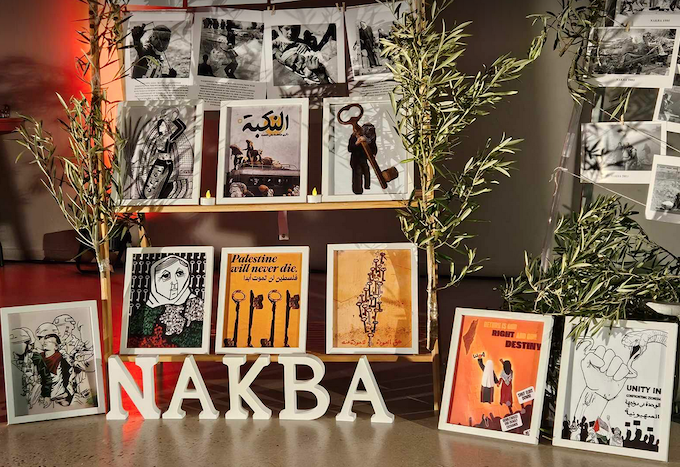
    Nakba Day in Auckland this week
    The Nakba – the Palestinian collective trauma in 1948 that started ethnic cleansing by Zionist paramilitary forces. Image: David Robie/APR

    During the Nakba in 1948, approximately half of Palestine’s predominantly Arab population, or around 750,000 people, were expelled from their homes or forced to flee. Initially this was  through Zionist paramilitaries.

    After the establishment of the State of Israel in May this repression was picked up by its military. Massacres, biological warfare (by poisoning village wells) and either complete destruction or depopulation of Palestinian-majority towns, villages, and urban neighbourhoods (which were then given Hebrew names) followed

    By the end of the Nakba, 78 percent of the total land area of the former Mandatory Palestine was controlled by Israel.

    Genocide to speed up ethnic cleansing
    Ethnic cleansing was unsuccessfully pursued, with the support of the United Kingdom and France, in the Suez Canal crisis of 1956. More successful was the Six Day War of 1967,  which included the military and political occupation of the West Bank and Gaza.

    Throughout this period ethnic cleansing was not characterised by genocide. That is, it was not the deliberate and systematic killing or persecution of a large number of people from a particular national or ethnic group with the aim of destroying them.

    Israeli ethnic cleansing of Palestinians
    Israeli ethnic cleansing of Palestinians began in May 1948 and has accelerated to genocide in 2023. Image: politicalbytes.blog

    In fact, the acceptance of a two-state solution (Israel and Palestine) under the ill-fated Oslo Accords in 1993 and 1995 put a temporary constraint on the expansion of ethnic cleansing.

    Since its creation in 1948, Israel, along with South Africa the same year (until 1994), has been an apartheid state.   I discussed this in an earlier Political Bytes post (15 March 2025), When apartheid met Zionism.

    However, while sharing the racism, discrimination, brutal violence, repression and massacres inherent in apartheid, it was not characterised by genocide in South Africa; nor was it in Israel for most of its existence until the current escalation of ethnic cleansing in Gaza.

    Following 7 October 2023, genocide has become the dominant tool in the ethnic cleansing tool kit. More recently this has included accelerating starvation and the bombing of tents of Gaza Palestinians.

    The magnitude of this genocide is discussed further below.

    The Biblical claim
    Zionism is a movement that sought to establish a Jewish nation in Palestine. It was established as a political organisation as late as 1897. It was only some time after this that Zionism became the most influential ideology among Jews generally.

    Despite its prevalence, however, there are many Jews who oppose Zionism and play leading roles in the international protests against the genocide in Gaza.

    Zionist ideology is based on a view of Palestine in the time of Jesus Christ
    Zionist ideology is based on a view of Palestine in the time of Jesus Christ. Image: politicalbytes.blog

    Based on Zionist ideology, the justification for replacing Mandate Palestine with the state of Israel rests on a Biblical argument for the right of Jews to retake their “homeland”. This justification goes back to the time of that charismatic carpenter and prophet Jesus Christ.

    The population of Palestine in Jesus’ day was about 500,000 to 600,000 (a little bigger than both greater Wellington and similar to that of Jerusalem today). About 18,000 of these residents were clergy, priests and Levites (a distinct male group within Jewish communities).

    Jerusalem itself in biblical times, with a population of 55,000, was a diverse city and pilgrimage centre. It was also home to numerous Diaspora Jewish communities.

    In fact, during the 7th century BC at least eight nations were settled within Palestine. In addition to Judaeans, they included Arameans, Samaritans, Phoenicians and Philistines.

    A breakdown based on religious faiths (Jews, Christians and Muslims) provides a useful insight into how Palestine has evolved since the time of Jesus. Jews were the majority until the 4th century AD.

    By the fifth century they had been supplanted by Christians and then from the 12th century to 1947 Muslims were the largest group. As earlier as the 12th century Arabic had become the dominant language. It should be noted that many Christians were Arabs.

    Adding to this evolving diversity of ethnicity is the fact that during this time Palestine had been ruled by four empires — Roman, Persian, Ottoman and British.

    Prior to 1948 the population of the region known as Mandate Palestine approximately corresponded to the combined Israel and Palestine today. Throughout its history it has varied in both size and ethnic composition.

    The Ottoman census of 1878 provides an indicative demographic profile of its three districts that approximated what became Mandatory Palestine after the end of World War 1.

    Group Population Percentage
    Muslim citizens 403,795 86–87%
    Christian citizens 43,659 9%
    Jewish citizens 15,011 3%
    Jewish (foreign-born) Est. 5–10,000 1–2%
    Total Up to 472,465 100.0%

    In 1882, the Ottoman Empire revealed that the estimated 24,000 Jews in Palestine represented just 0.3 percent of the world’s Jewish population.

    The self-determination claim
    Based on religion the estimated population of Palestine in 1922 was 78 percent Muslim, 11 percent Jewish, and 10 percent Christian.

    By 1945 this composition had changed to 58 percent Muslim, 33 percent Jewish and 8 percent Christian. The reason for this shift was the success of the Zionist campaigning for Jews to migrate to Palestine which was accelerated by the Jewish holocaust.

    By 15 May 1948, the total population of the state of Israel was 805,900, of which 649,600 (80.6 percent) were Jews with Palestinians being 156,000 (19.4 percent). This turnaround was primarily due to the devastating impact of the Nakba.

    Today Israel’s population is over 9.5 million of which over 77 percent are Jewish and more than 20 percent are Palestinian. The latter’s absolute growth is attributable to Israel’s subsequent geographic expansion, particularly in 1967, and a higher birth rate.

    Palestine today
    Palestine today (parts of West Bank under Israeli occupation). Map: politicalbytes.blog

    The current population of the Palestinian Territories, including Gaza, is more than 5.5 million. Compare this with the following brief sample of much smaller self-determination countries —  Slovenia (2.2 million), Timor-Leste (1.4 million), and Tonga (104,000).

    The population size of the Palestinian Territories is more than half that of Israel. Closer to home it is a little higher than New Zealand.

    The only reason why Palestinians continue to be denied the right to self-determination is the Zionist ideological claim linked to the biblical time of Jesus Christ and its consequential strategy of ethnic cleansing.

    If it was not for the opposition of the United States, then this right would not have been denied. It has been this opposition that has enabled Israel’s strategy.

    Comparative value of Palestinian lives
    The use of genocide as the latest means of achieving ethnic cleansing highlights how Palestinian lives are valued compared with Israeli lives.

    While not of the same magnitude appropriated comparisons have been made with the horrific ethnic cleansing of Jews through the means of the holocaust by Nazi Germany during the Second World War. Per capita the scale of the magnitude gap is reduced considerably.

    Since October 2023, according to the Gaza Health Ministry (and confirmed by the World Health Organisation) more than 54,000 Palestinians have been killed. Of those killed over 16,500 were children. Compare this with less than 2000 Israelis killed.

    Further, at least 310 UNRWA (United Nations Relief and Works Agency) team members have been killed along with over 200 journalists and media workers. Add to this around 1400 healthcare workers including doctors and nurses.

    What also can’t be forgotten is the increasing Israeli ethnic cleansing on the occupied West Bank. Around 950 Palestinians, including around 200 children, have also been killed during this same period.

    Time for New Zealand to recognise Palestine
    The above discussion is in the context of the three justifications for supporting the ethnic cleansing of Palestinians strategy that goes back to 1948 and which, since October 2023, is being accelerated by genocide.

    • First, it requires the conviction that the theology of Judaism in Palestine in the biblical times following the birth of Jesus Christ trumps both the significantly changing demography from the 5th century at least to the mid-20th century and the numerical predominance of Arabs in Mandate Palestine;
    • Second, and consequentially, it requires the conviction that while Israelis are entitled to self-determination, Palestinians are not; and
    • Finally, it requires that Israeli lives are much more valuable than Palestinian lives. In fact, the latter have no value at all.

    Unless the government, including Foreign Affairs Minister Winston Peters, shares these convictions (especially the “here and now” second and third) then it should do the right thing first by unequivocally saying so, and then by recognising the right of Palestine to be an independent state.

    Ian Powell is a progressive health, labour market and political “no-frills” forensic commentator in New Zealand. A former senior doctors union leader for more than 30 years, he blogs at Second Opinion and Political Bytes, where this article was first published. Republished with the author’s permission.

    This post was originally published on Asia Pacific Report.

  • FORUM-ASIA has released a formal statement regarding the findings of an independent investigation into allegations of sexual harassment and financial mismanagement involving the Secretary of Banglar Manabadhikar Suraksha Mancha (MASUM), Mr. Kirity Roy.Following thorough review, the Executive Committee has taken the decision to suspend both Mr. Roy and MASUM’s membership, pending corrective actions. The statement outlines the investigation process, key findings, and the steps taken in accordance with FORUM-ASIA’s commitment to transparency, accountability, and a zero-tolerance policy on sexual and gender-based harassment.

    Download the full statement here

    For further inquiries, please contact smt@forum-asia.org


    The post FORUM-ASIA Public Statement on the Suspension of MASUM’s Membership first appeared on FORUM-ASIA.

    This post was originally published on FORUM-ASIA.
  • Asia Pacific Report

    Eight people were reported killed and others wounded when the Israeli army bombed the home of journalist Osama al-Arbid in the as-Saftawi area of northern Gaza today, Al Jazeera Arabic reports.

    Al-Arbid reportedly survived the strike, with dramatic video showing him being pulled from the rubble of the house.

    Medical sources said that at least 15 people in total had been killed by Israeli attacks since the early hours of today across the Strip.

    Large crowds gathered in chaotic scenes in southern Rafah as the controversial US and Israel-backed Gaza Humanitarian Foundation (GHF) opened its first aid distribution point, with thousands of Palestinians storming past barricades in desperation for food after a three-month blockade.

    Israeli forces opened fire on the crowd during the chaos, with Gaza’s Government Media Office saying Israel’s military killed three people and wounded 46.

    A spokesman for the UN secretary-general, Antonio Guterres, said the images and videos from the aid points set up by GHF were “heartbreaking, to say the least”.

    The UN and other aid groups have condemned the GHF’s aid distribution model, saying it does not abide by humanitarian principles and could displace people further from their homes.

    People go missing in chaos
    Amid the buzz of Israeli military helicopters overhead and gunfire rattling in the background, several people also went missing in the ensuing stampede, officials in Gaza said.

    Gaza’s Government Media Office said Israeli forces around the area “opened live fire on starving civilians who were lured to these locations under the pretence of receiving aid”.

    The Israeli military said its soldiers had fired “warning shots” in the area outside the distribution site and that control was re-established.

    Gaza had been under total Israeli blockade for close to three months, since March 2.

    Al Jazeera correspondent Mohamed Vall reported there was no evidence that Hamas had disrupted the aid distribution, as claimed by Israeli-sourced reports. He instead pointed to the sheer need — more than two million Palestinians live in Gaza.

    “These are the people of Gaza, the civilians of Gaza, trying to get just a piece of food — just any piece of food for their children, for themselves,” he said.

    More than 54,000 killed
    Aid officials said that moving Palestinians southwards could be a “preliminary phase for the complete ousting” of Gaza’s population.

    Last Sunday, hours before the GHF was due to begin delivering food, Jake Wood, the head of the controversial aid organisation, resigned saying he did not believe it was possible for the organisation to operate independently or adhere to strict humanitarian principles, reports Middle East Eye.

    According to Gaza’s Ministry of Health, at least 54,056 Palestinians have been killed since the start of the war in October 2023, which humanitarian aid groups and United Nations experts have described as a genocide.

    Yemen’s Houthis claimed responsibility for two missile attacks on Israel, saying they came in response to the storming of occupied East Jerusalem’s Al-Aqsa Mosque compound a day earlier by Israeli settlers.

    This post was originally published on Asia Pacific Report.

  • GENEVA, Switzerland (28 May 2025) – The Asian Forum for Human Rights and Development (FORUM-ASIA) expresses concern over the indictment of Thai pro-democracy defender Netiwit Chotiphatphaisal following his public refusal to participate in the military conscription process.

    FORUM-ASIA respectfully calls on Thai authorities to ensure that Netiwit’s case is handled with fairness and sensitivity, in full accordance with the law and Thailand’s human rights obligations.

    On 22 May 2025, the Samut Prakan Provincial Court accepted the public prosecutor’s indictment against Netiwit under Section 45 of the Military Service Act. Netiwit pleaded not guilty. The court acknowledged his full cooperation throughout the legal process and did not issue a detention order. A witness examination hearing has been scheduled for 9 June 2025.

    In his public statement, Netiwit stated that Thailand’s conscription system has long contributed to corruption, abuse, and unchecked military power. He committed to uphold the right to conscientious objection and to help drive long-overdue reform, the essential steps toward a freer society and a more accountable military.

    Netiwit has long advocated for the protection of democratic principles and human rights in Thailand. His decision to refrain from military conscription was a personal and peaceful expression of conscience.

    What happened

    On 5 April 2024, Netiwit appeared at the Bangpoo Municipality Auditorium in Samut Prakan Province, in compliance with his military draft summons.

    Rather than participating in the lottery, he publicly read a statement explaining his civil disobedience.

    He expressed that compulsory conscription violates human rights principles, is outdated and ineffective, and sustains an undemocratic power structure.

    On 8 November 2024, Netiwit reported to Bangpoo Police Station where he was formally charged with “evading or resisting military service” under Section 45 of the Military Service Act. He denied the charges, affirming that his refusal was not an act of evasion but a conscientious objection.

    The case file was forwarded to the public prosecutor in early March 2025.

    Right to refuse

    Thailand’s Military Service Act mandates conscription for all male citizens aged 21 and above.

    Individuals who do not volunteer are entered into a lottery system and may be penalized if they decline to participate without exemption. The offence carries a maximum sentence of three years.

    Netiwit Chotiphatphaisal affirmed his conscientious objection to military service, in line with protections guaranteed under international law.

    According to the International Covenant on Civil and Political Rights, to which Thailand is a State Party, Article 18 upholds the right to freedom of thought, conscience, and religion. The United Nations Human Rights Committee, through its General Comments No. 22 para. 11, affirmed that this includes conscientious objection to mandatory military service and states should offer alternative civilian service options.

    Dialogue and respect

    Netiwit’s prosecution is taking place within a broader context of shrinking civic space in Thailand.

    In recent years, human rights defenders and civil society actors have faced increasing restrictions to engage in peaceful expression, public debate, and social advocacy. Laws intended for public order and security are frequently used to stifle dissenting voices and discourage civic participation.

    FORUM-ASIA encourages the international community to closely monitor this case.

    Netiwit’s actions reflect a deeply held commitment to peaceful principles and democratic reform. We believe that such voices should not be met with punishment, but with dialogue and respect.


    **


    The Asian Forum for Human Rights and Development (FORUM-ASIA)
     is a network of 89 member organisations across 23 countries, mainly in Asia. Founded in 1991, FORUM-ASIA works to strengthen movements for human rights and sustainable development through research, advocacy, capacity development and solidarity actions in Asia and beyond. It has consultative status with the United Nations Economic and Social Council, and consultative relationship with the ASEAN Intergovernmental Commission on Human Rights. The FORUM-ASIA Secretariat is based in Bangkok, with offices in Jakarta, Geneva and Kathmandu. www.forum-asia.org

    For media inquiries, please contact:


    The post [Statement] THAILAND: Pro-democracy defender Netiwit Chotiphatphaisal indicted over objection to military conscription first appeared on FORUM-ASIA.

    This post was originally published on FORUM-ASIA.

  • By Don Wiseman, RNZ Pacific senior journalist

    Papua New Guinea’s state broadcaster NBC wants shortwave radio reintroduced to achieve the government’s goal of 100 percent broadcast coverage by 2030.

    Last week, the broadcaster hosted a workshop on the reintroduction of shortwave radio transmission, bringing together key government agencies and other stakeholders.

    NBC had previously a shortwave signal, but due to poor maintenance and other factors, the system failed.

    The NBC's 50-year logo to coincide with Papua New Guinea's half century independence anniversary
    The NBC’s 50-year logo to coincide with Papua New Guinea’s half century independence anniversary celebrations. Image: NBC

    Its managing director Kora Nou spoke with RNZ Pacific about the merits of a return to shortwave.

    Kora Nou: We had shortwave at NBC about 20 or so years ago, and it reached almost the length and breadth of the country.

    So fast forward 20, we are going to celebrate our 50th anniversary. Our network has a lot more room for improvement at the moment, that’s why there’s the thinking to revisit shortwave again after all this time.

    Don Wiseman: It’s a pretty cheap medium, as we here at RNZ Pacific know, but not too many people are involved with shortwave anymore. In terms of the anniversary in September, you’re not going to have things up and running by then, are you?

    KN: It’s still early days. We haven’t fully committed, but we are actively pursuing it to see the viability of it.

    We’ve visited one or two manufacturers that are still doing it. We’ve seen some that are still on, still been manufactured, and also issues surrounding receivers. So there’s still hard thinking behind it.

    We still have to do our homework as well. So still early days and we’ve got the minister who’s asked us to explore this and then give him the pros and cons of it.

    DW: Who would you get backing from? You’d need backing from international donors, wouldn’t you?

    KN: We will put a business case into it, and then see where we go from there, including where the funding comes from — from government or we talk to our development partners.

    There’s a lot of thinking and work still involved before we get there, but we’ve been asked to fast track the advice that we can give to government.

    DW: How important do you think it is for everyone in the country to be able to hear the national broadcaster?

    KN: It’s important, not only being the national broadcaster, but [with] the service it provides to our people.

    We’ve got FM, which is good with good quality sound. But the question is, how many does it reach? It’s pretty critical in terms of broadcasting services to our people, and 50 years on, where are we? It’s that kind of consideration.

    I think the bigger contention is to reintroduce software transmission. But how does it compare or how can we enhance it through the improved technology that we have nowadays as well? That’s where we are right now.

    This article is republished under a community partnership agreement with RNZ.

    This post was originally published on Asia Pacific Report.

  • RNZ Pacific

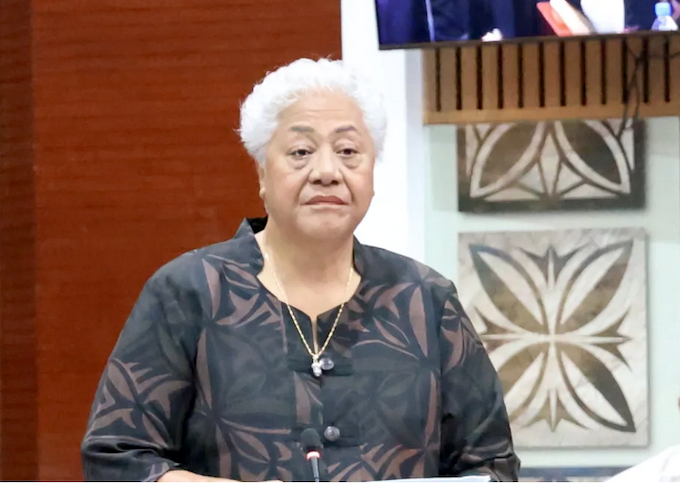
    Prime Minister Fiamē Naomi Mata’afa has advised Samoa’s head of state that it is necessary to dissolve Parliament so the country can move to an election.

    This follows the bill for the budget not getting enough support for a first reading on yesterday, and Fiame announcing she would therefore seek an early election.

    Tuimaleali’ifano Va’aleto’a Sualauvi II has accepted Fiame’s advice and a formal notice will be duly gazetted to confirm the dissolution of the Legislative Assembly.

    Parliament will go into caretaker mode, and the Cabinet will have the general direction and control of the existing government until the first session of the Legislative Assembly following dissolution.

    Fiame, who has led a minority government since being ousted from her former FAST party in January, finally conceded defeat on the floor of Parliament yesterday morning after her government’s 2025 Budget was voted down.

    MPs from both the opposition Human Rights Protection Party and Fiame’s former FAST party joined forces to defeat the budget with the final vote coming in 34 against, 16 in support and two abstentions.

    Defeated motions
    Tuesday was the Samoan Parliament’s first sitting since back-to-back no-confidence motions were moved — unsuccessfully — against prime minister Fiame.

    In January, Fiame removed her FAST Party chairman La’auli Leuatea Schmidt and several FAST ministers from her Cabinet.

    In turn, La’auli ejected her from the FAST Party, leaving her leading a minority government.

    Her former party had been pushing for an early election, including via legal action.

    The election is set to be held within three months.

    This article is republished under a community partnership agreement with RNZ.

    This post was originally published on Asia Pacific Report.

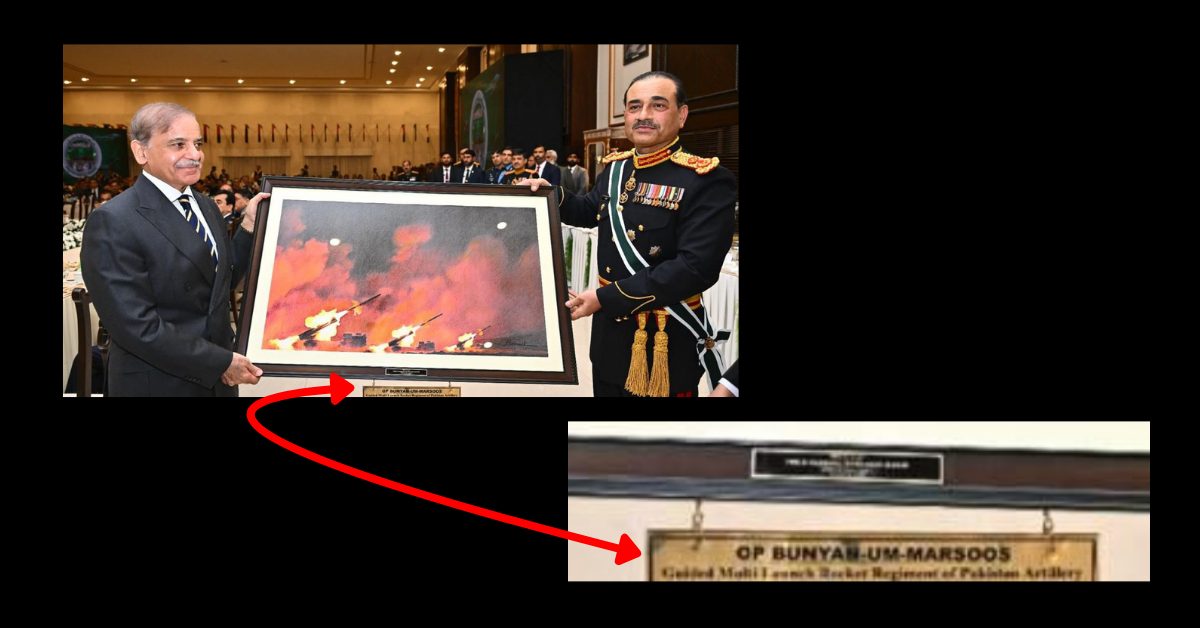
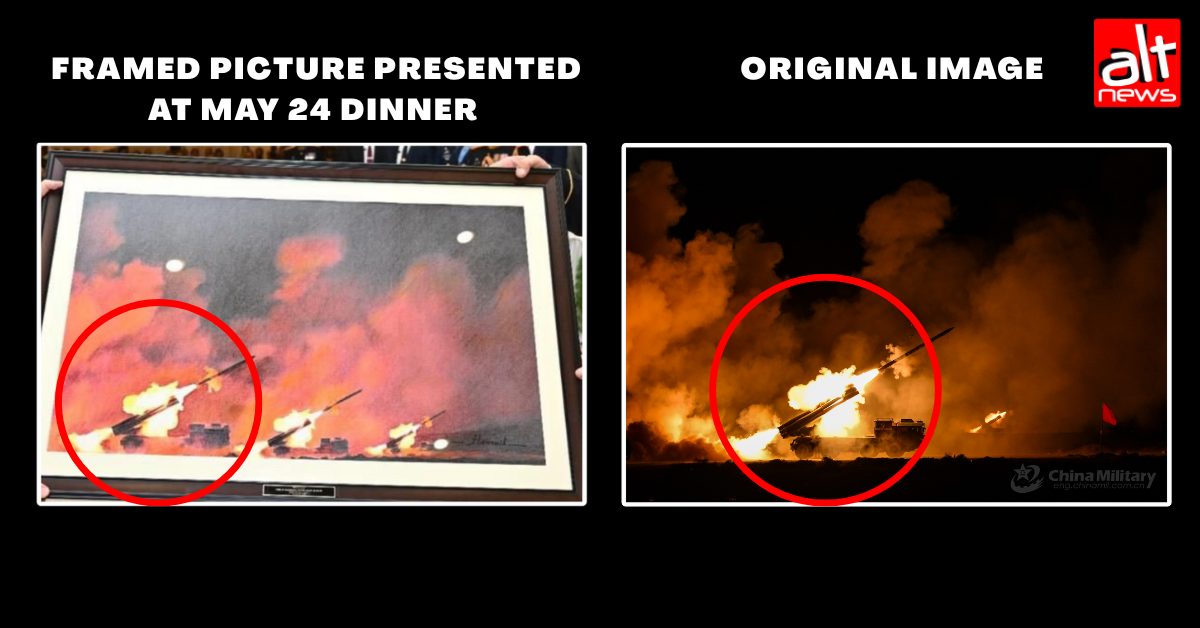
  • On May 24, Pakistan’s chief of army staff, Syed Asim Munir, hosted a dinner party “to honour the political leadership, steadfast commitment of the Armed Forces” during Operation Bunyan Marsoos, the offensive launched by Pakistan to counter India’s Operation Sindoor. One of the images from that party shows Munir and Pakistan Prime Minister Shehbaz Sharif holding a framed picture of artillery in action. A metal badge attached to the frame says, “OP BUNYAN-UM-MARSOOS; Geljed Maki Launch Rocket Regiment of Pakistan Artillery”.

    It wasn’t clear who was presenting the image to whom but it was certainly linked to the latest India-Pakistan conflict. Pakistan’s operation, launched on May 10, targeted at least six Indian military bases. Meanwhile, the Indian armed forces have maintained that their strikes, launched on May 7, targeted only terror bases in Pakistan and Pakistan-occupied Kashmir (PoK).

    News outlets such as the Times of KarachiDaily The SpokesmanKhabar KadaPakistan Todayand Daily Pakistan carried the image. The public relations wing of the armed forces, the Inter Services Public Relations Pakistan, also used the image in its press release

    Click to view slideshow.


    Besides PM Sharif, President Asif Ali Zardari was also present along with the Pakistan’s deputy PM and foreign minister. Others in attendance included the national assembly speaker, ministers, governors, chief ministers, chiefs of air force and navy, senior political leaders, high-ranking government officials, and senior officers from the armed forces.

    Images from the party were also shared by X handle Pakistan Armed Forces News (@PakistanFauj). (Archives 1, 2)

    Click to view slideshow.


    Fact Check

    Several social media users pointed out on X that the framed image of artillery action was old and not related to Pakistan’s Operation Bunyan Marsoos. Some even pointed out that the image was of a Chinese military drill.

    Click to view slideshow.

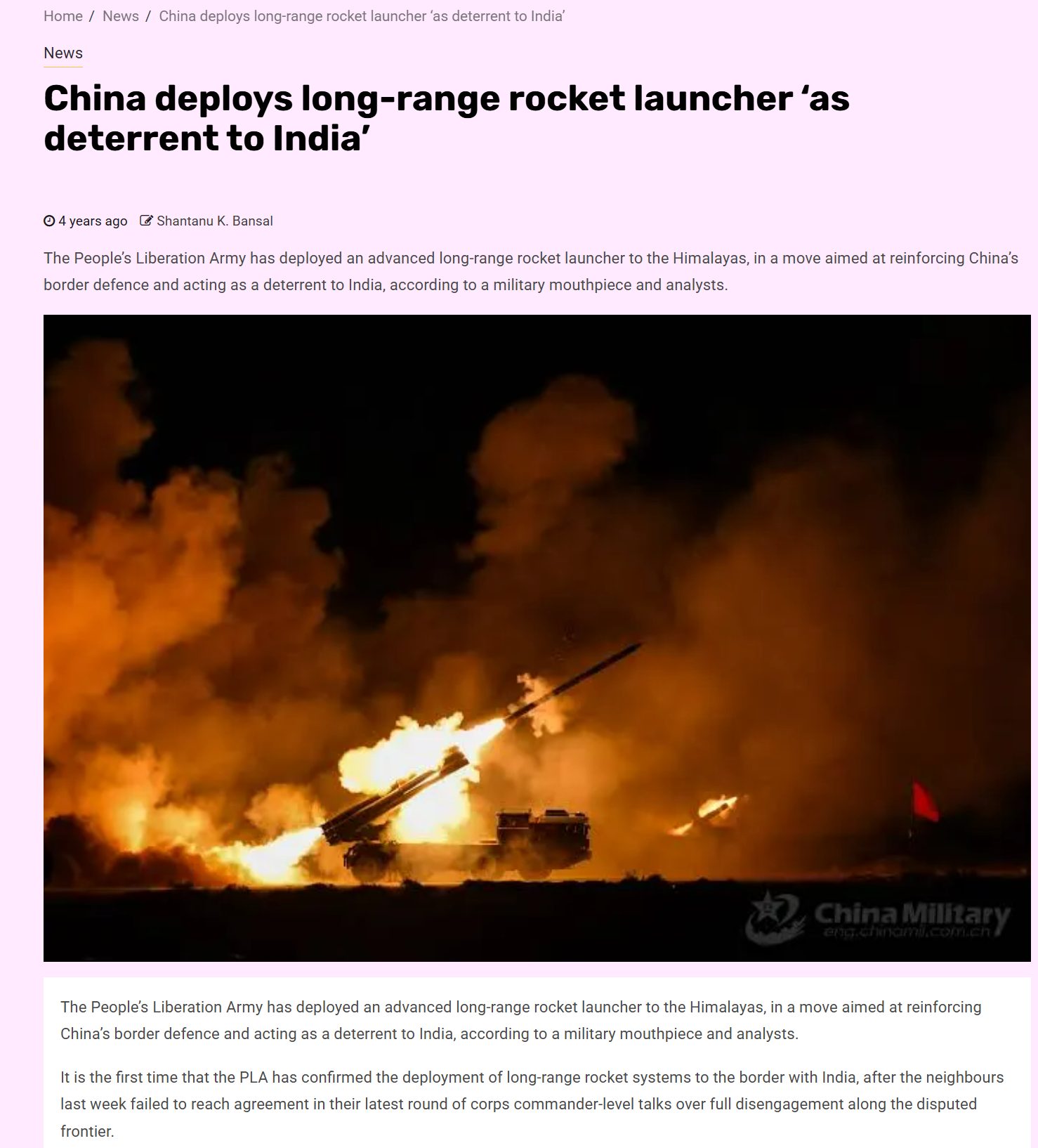
    To verify this, we ran a reverse image search of the framed picture and found a report by Indian Aerospace Defence News (IADN) that featured an image very similar to the one Pakistan’s army chief and PM Sharif were holding. The four-year-old report was titled: “China deploys long-range rocket launcher as deterrent to India”. A watermark on the image said “China Military”.

    The report also mentioned that China’s People’s Liberation Army (PLA) had deployed an advanced long-range rocket launcher to the Himalayas to strengthen border defences and deter India.

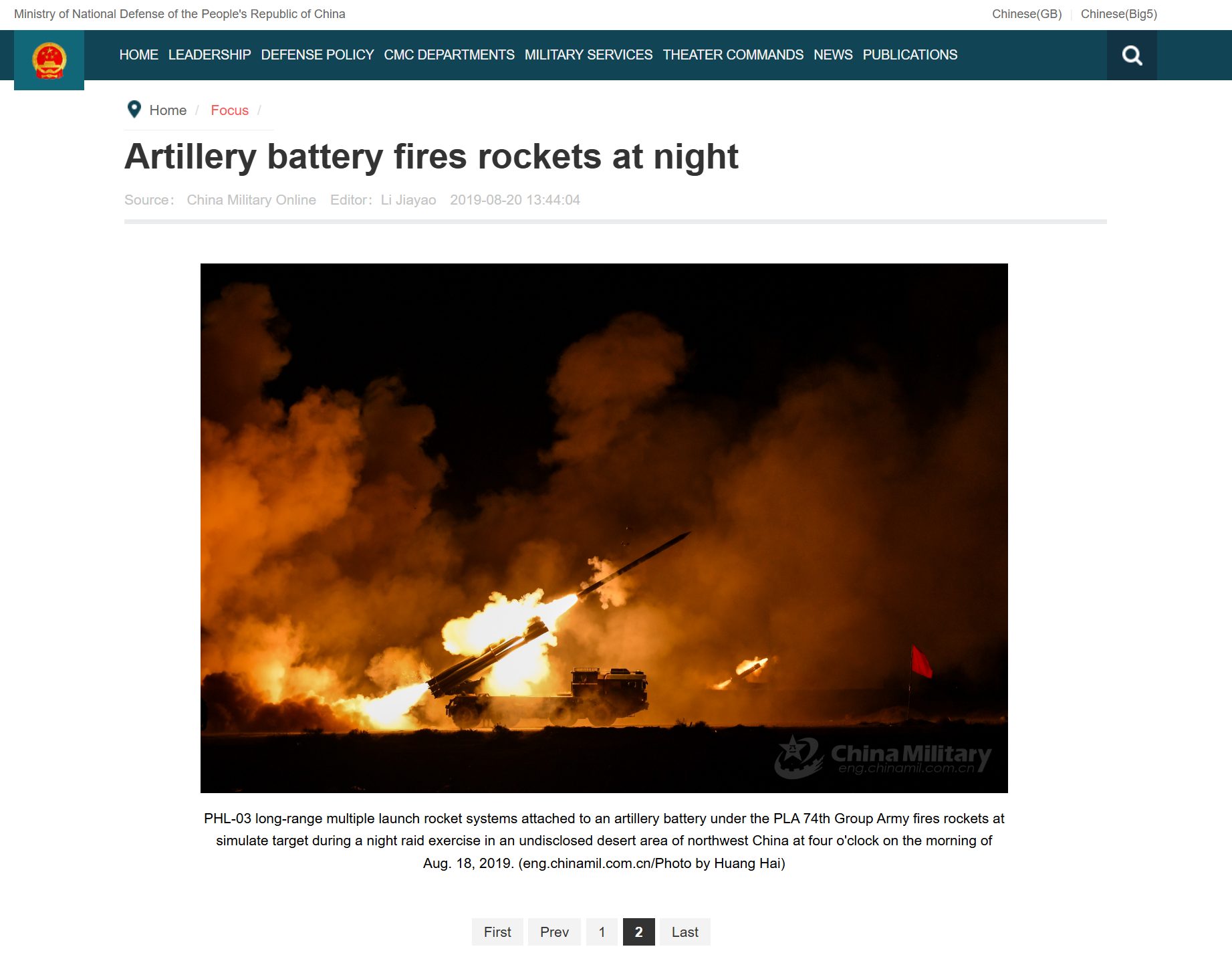
    Taking a cue from the above, we ran a relevant keyword search, which led us to a 2019 blog post by China’s Ministry of Defence where the same image was used. The post made it clear that the image was from August 18, 2019.

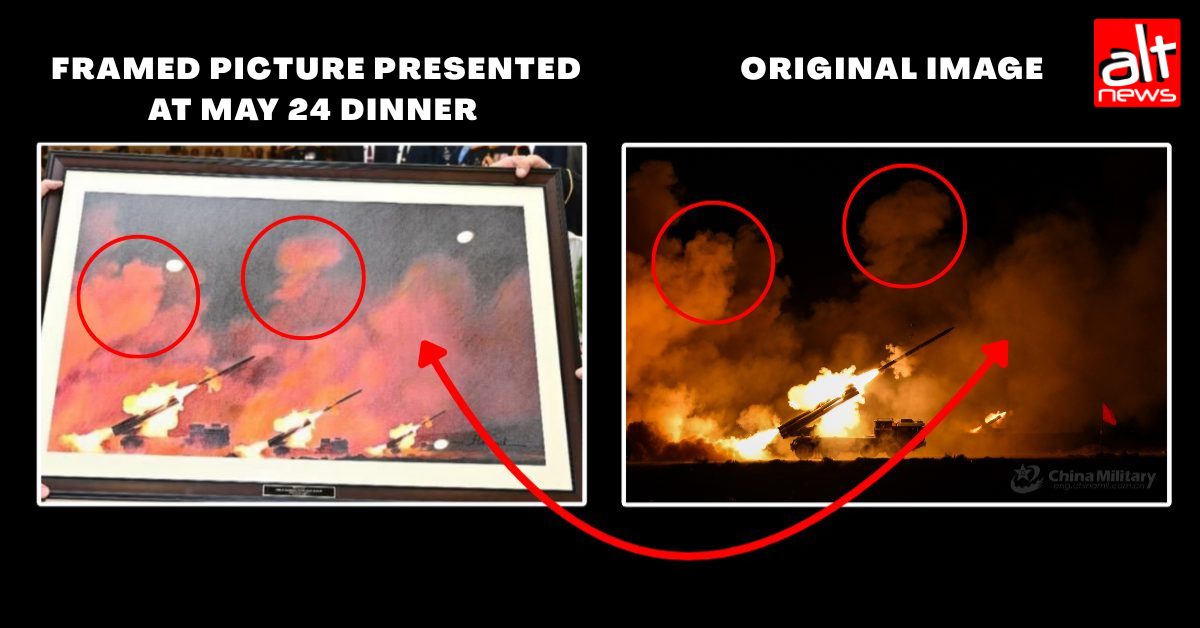
    We then compared the framed image that Pakistan’s army chief Munir and PM Sharif were holding with the one issued by the Chinese milutart and noticed several similarities, such as the smoke pattern and the angle of the launcher. We highlighted the comparison below:

    Our findings indicate that the image on the left was most likely edited with two more launchers added to the original image. The angles of the three launchers on the left image and how they emit fire is identical and seem duplicated.

    Hence, the framed image that Pakistan’s army chief Asim Munir and PM Sharif were holding was edited and had nothing to do with Operation Bunyan Marsoos. It is five years old and completely unrelated to the recent India-Pakistan conflict.

    The post Not Operation Bunyan Marsoos, image held by Pakistan PM, army chief Asim Munir shows old Chinese military drill appeared first on Alt News.


    This content originally appeared on Alt News and was authored by Oishani Bhattacharya.

    This post was originally published on Radio Free.

  • RNZ Pacific

    A United Nations committee is being urged to act over human rights violations committed by illegal loggers in Papua New Guinea.

    Watchdog groups Act Now! and Jubilee Australia have filed a formal request to the UN Committee on the Elimination of Racial Discrimination to consider action at its next meeting in August.

    “We have stressed with the UN that there is pervasive, ongoing and irreparable harm to customary resource owners whose forests are being stolen by logging companies,” Act Now! campaign manager Eddie Tanago said.

    He said these abuses were systematic, institutionalised, and sanctioned by the PNG government through two specific tools: Special Agriculture and Business Leases (SABLs) and Forest Clearing Authorities (FCAs) — a type of logging licence.

    “For over a decade since the Commission of Inquiry into SABLs, successive PNG governments have rubber stamped the large-scale theft of customary resource owners’ forests by upholding the morally bankrupt SABL scheme and expanding the use of FCAs,” Tanago said.

    He said the government had failed to revoke SABLs that were acquired fraudulently, with disregard to the law or without landowner consent.

    “Meanwhile, logging companies have made hundreds of millions, if not billions, in ill-gotten gains by effectively stealing forests from customary resource owners using FCAs.”

    Abuses hard to challenge
    The complaint also highlights that the abuses are hard to challenge because PNG lacks even a basic registry of SABLs or FCAs, and customary resource owners are denied access to information to the information they need, such as:

    • The existence of an SABL or FCA over their forest;
    • A map of the boundaries of any lease or logging licence;
    • Information about proposed agricultural projects used to justify the SABL or FCA;
    • The monetary value of logs taken from forests; and
    • The beneficial ownership of logging companies — to identify who ultimately profits from illegal logging.

    “The only reason why foreign companies engage in illegal logging in PNG is to make money,” he said, adding that “it’s profitable because importing companies and countries are willing to accept illegally logged timber into their markets and supply chains.”

    ACT NOW campaigner Eddie Tanago
    ACT NOW campaigner Eddie Tanago . . . “demand a public audit of the logging permits – the money would dry up.” Image: Facebook/ACT NOW!/RNZ Pacific

    “If they refused to take any more timber from SABL and FCA areas and demanded a public audit of the logging permits — the money would dry up.”

    Act Now! and Jubilee Australia are hoping that this UN attention will urge the international community to see this is not an issue of “less-than-perfect forest law enforcement”.

    “This is a system, honed over decades, that is perpetrating irreparable harm on indigenous peoples across PNG through the wholesale violation of their rights and destroying their forests.”

    This article is republished under a community partnership agreement with RNZ.

    This post was originally published on Asia Pacific Report.

  • BANGKOK, Thailand (27 May 2025) – The Asian Forum for Human Rights and Development (FORUM-ASIA) is gravely concerned over the Indian Government’s continuing attempts to censor independent media and stifle freedom of expression under the guise of national security.

    FORUM-ASIA calls on the Government of India to uphold its constitutional and international legal obligations by ceasing the misuse of criminal law to target peaceful dissent.

    “The protection of dissent, academic freedom, and a free press is not optional. It is foundational to the rule of law and a functioning democracy. India must ensure that its legal and administrative actions reinforce, rather than erode, the rights and freedoms of its people,” said Mary Aileen Diez-Bacalso, Executive Director of FORUM-ASIA.

    The most recent wave of repression has followed Operation Sindoor—reportedly a “precision counter-terrorism strike” on alleged insurgent camps across the Line of Control in Pakistan-administered Kashmir—and the subsequent military escalations with Pakistan.

    However, this is a part of a broader, entrenched pattern in which militarized rhetoric and national security concerns are used to justify increasingly aggressive curbs on civic freedoms.

    “The arrest of an academic, alongside sweeping censorship on independent media, reveals a legal system weaponized to punish dissent. Freedom of expression is not a threat to national security; it is the bedrock of any functioning democracy,” Bacalso added.


    Media censorship

    In May 2025, over 8,000 social media accounts were blocked in India for allegedly disseminating “anti-India” misinformation related to Operation Sindoor.

    These included the accounts of foreign media organizations such as BBC Urdu, China’s Xinhua News Agency, and Turkey’s TRT World.

    Several Indian media outlets and Kashmir-based portals were also reportedly blocked online without official notice or due process. Among the affected are the Wire, Outlook India, Maktoob Media, the Kashmiriyat, Free Press Kashmir, and Kashmir Life.

    These takedowns were executed under Section 69A of the Information Technology Act 2000, without public notification or access to judicial review, contravening international norms of due process, transparency, and proportionality in digital content regulation.

    It also infringes on the right to seek, receive, and impart information, a core element of freedom of expression under both Article 19 of the Constitution of India and Article 19 of the International Covenant on Civil and Political Rights (ICCPR), to which India is a State Party.


    Such censorship entrenches structural inequalities in access to information and shrinks civic space, both online and offline, particularly for historically marginalized communities.

    Moreover, the absence of clear platform accountability frameworks leaves users without a remedy. While platforms often comply with government takedown requests under pressure, opaque moderation practices and the lack of meaningful user notification violate the United Nations Guiding Principles on Business and Human Rights, which emphasize transparency, accountability, and remedy in all business operations, including digital platforms.


    Silencing dissent

    On 18 May 2025, Professor Ali Khan Mahmudabad of Ashoka University was arrested in Haryana following two First Information Reports lodged in connection with his social media posts concerning Operation Sindoor.

    In his social media posts, Mahmudabad condemned the glorification of war, emphasized the need for urgent de-escalation, and questioned the contradiction of India’s pluralist image and ongoing human rights violations. He also critiqued the online vitriol directed at India’s Foreign Secretary Vikram Misri, who became the subject of a coordinated abuse and doxxing after announcing a ceasefire. The backlash–primarily driven by right-wing accounts–framed the ceasefire as a “soft response” to Pakistan.

    “The backlash against Vikram Misri exemplifies the same hyper-nationalist fervour that Mahmudabad was critiquing. His call for de-escalation, grounded in constitutional principles, was met with criminal prosecution. The targeting of a university professor for measured political commentary signals a rapidly closing civic space,” added Bacalso.

    Mahmudabad was charged under multiple sections of the Bharatiya Nyaya Sanhita (India’s new criminal code), including Section 152, which penalizes acts “endangering the sovereignty, unity and integrity of India.” The newly introduced provision closely mirrors the repealed sedition law under Section 124A of the Indian Penal Code, raising concerns over the reintroduction of repressive legal tools under a new framework.

    On 21 May, the Supreme Court granted Mahmudabad interim bail but imposed speech restrictions, barring him from commenting publicly on the case. It also ordered the constitution of a special investigation team to interpret the “complexity” of the language in his posts. This is alarming as it risks legitimizing over-interpretation of political expression and critical thought as criminal intent, and exerts a chilling effect on academic freedom and public discourse.

    Mahmudabad’s case reflects a growing pattern of using criminal law to police opinion and silence dissent. While Article 19(1)(a) of the Indian Constitution guarantees freedom of expression and Article 19(2) outlines limited grounds for restriction, the use of broad and subjective charges such as “promoting enmity” or “disturbing public order” often fails to meet the test of necessity and proportionality under Indian and international human rights law.


    Call to action

    FORUM-ASIA urges Indian authorities to immediately lift prior restraint orders that suppress academic and journalistic freedom.

    We call for the reversal of arbitrary media censorship and implementation of transparent and accountable procedures for content takedowns.

    India’s domestic and international legal obligations–under its Constitution, jurisprudential commitments affirmed by the Supreme Court of India, and the ICCPR–require that any restrictions on expression be lawful, necessary, and proportionate.

    Continued abuse of these principles undermines democratic legitimacy, due process, and public trust.

    **


    The Asian Forum for Human Rights and Development (FORUM-ASIA)
     is a network of 89 member organisations across 23 countries, mainly in Asia. Founded in 1991, FORUM-ASIA works to strengthen movements for human rights and sustainable development through research, advocacy, capacity development and solidarity actions in Asia and beyond. It has consultative status with the United Nations Economic and Social Council, and consultative relationship with the ASEAN Intergovernmental Commission on Human Rights. The FORUM-ASIA Secretariat is based in Bangkok, with offices in Jakarta, Geneva and Kathmandu. www.forum-asia.org

    For media inquiries, please contact:


    For the PDF version of this statement, click here

    The post [Statement] INDIA: Government must end systemic crackdown on dissent and independent media first appeared on FORUM-ASIA.

    This post was originally published on FORUM-ASIA.

  • By Stanley Simpson in Suva

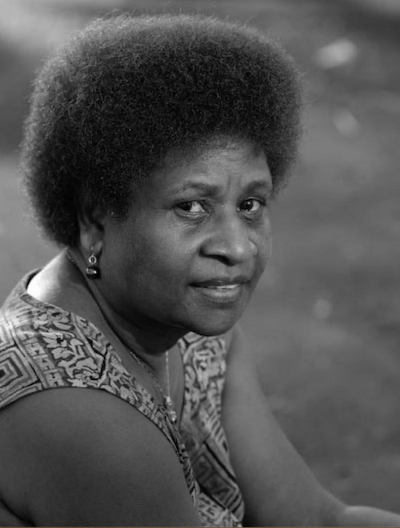
    I am saddened by the death of one of the most inspirational Pacific women and leaders I have worked with — Motarilavoa Hilda Lini of Vanuatu.

    She was one of the strongest, most committed passionate fighter I know for self-determination, decolonisation, independence, indigenous rights, customary systems and a nuclear-free Pacific.

    Hilda coordinated the executive committee of the women’s wing of the Vanuatu Liberation Movement prior to independence and became the first woman Member of Parliament in Vanuatu in 1987.

    Hilda became director of the Pacific Concerns Resource Centre (PCRC) in Suva in 2000. She took over from another Nuclear Free and Independent Pacific (NFIP) giant Lopeti Senituli, who returned to Tonga to help the late ‘Akilisi Poviha with the pro-democracy movement.

    I was editor of the PCRC newsletter Pacific News Bulletin at the time. There was no social media then so the newsletter spread information to activists and groups across the Pacific on issues such as the struggle in West Papua, East Timor’s fight for independence, decolonisation in Tahiti and New Caledonia, demilitarisation, indigenous movements, anti-nuclear issues, and sustainable development.

    On all these issues — Hilda Lini was a willing and fearless chief taking on any government, corporation or entity that undermined the rights or interests of Pacific peoples.

    Hilda was uncompromising on issues close to her heart. There are very few Pacific leaders like her left today. Leaders who did not hold back from challenging the norm or disrupting the status quo, even if that meant being an outsider.

    Banned over activism
    She was banned from entering French Pacific territories in the 1990s for her activism against their colonial rule and nuclear testing.

    She was fierce but also strategic and effective.

    "Hilda Lini was a willing and fearless chief taking on any government, corporation or entity
    “Hilda Lini was a willing and fearless chief taking on any government, corporation or entity that undermined the rights or interests of Pacific peoples.” Image: Stanley Simpson/PCRC

    We brought Jose Ramos Horta to speak and lobby in Fiji as East Timor fought for independence from Indonesia, Oscar Temaru before he became President of French Polynesia, West Papua’s Otto Ondawame, and organised Flotilla protests against shipments of Japanese plutonium across the Pacific, among the many other actions to stir awareness and action.

    On top of her bold activism, Hilda was also a mother to us. She was kind and caring and always pushed the importance of family and indigenous values.

    Our Pacific connections were strong and before our eldest son Mitchell was born in 2002 — she asked me if she could give him a middle name.

    She gave him the name Hadye after her brother — Father Walter Hadye Lini who was the first Prime Minister of Vanuatu. Mitchell’s full name is Mitchell Julian Hadye Simpson.

    Pushed strongly for ideas
    We would cross paths several times even after I moved to start the Pacific Network on Globalisation (PANG) but she finished from PCRC in 2004 and returned to Vanuatu.

    She often pushed ideas on indigenous rights and systems that some found uncomfortable but stood strong on what she believed in.

    Hilda had mana, spoke with authority and truly embodied the spirit and heart of a Melanesian and Pacific leader and chief.

    Thank you Hilda for being the Pacific champion that you were.

    Stanley Simpson is director of Fiji’s Mai Television and general secretary of the Fijian Media Association. Father Walter Hadye Lini wrote the foreword to Asia Pacific Media editor David Robie’s 1986 book Eyes Of Fire: The Last Voyage of the Rainbow Warrior.

    This post was originally published on Asia Pacific Report.

  • By Te Aniwaniwa Paterson of Te Ao Māori News

    Eighty years after the United States dropped atomic bombs on Hiroshima and Nagasaki to end the Second World War, the threat of nuclear fallout remains.

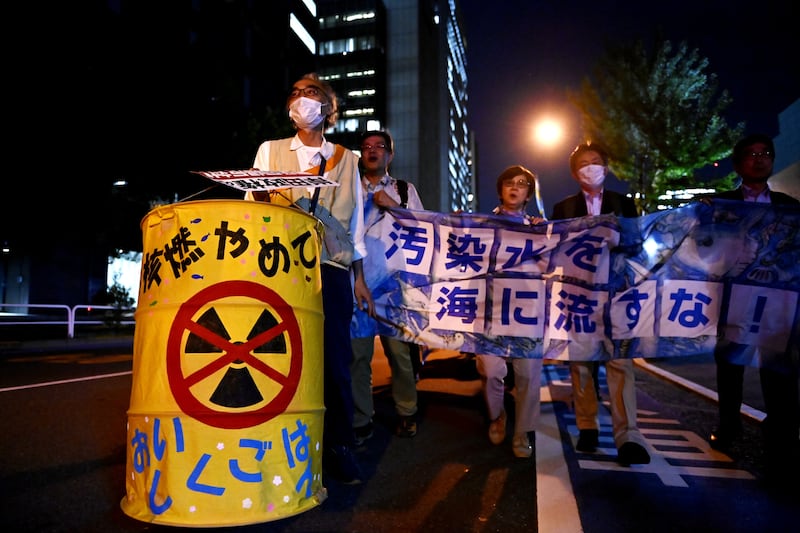
    Last Monday, the UN Human Rights Council issued a formal communication to the Japanese government regarding serious concerns raised by Pacific communities about the dumping of 1.3 million metric tonnes of treated Fukushima nuclear wastewater into the ocean over 30 years.

    The council warned that the release could pose major environmental and human rights risks.

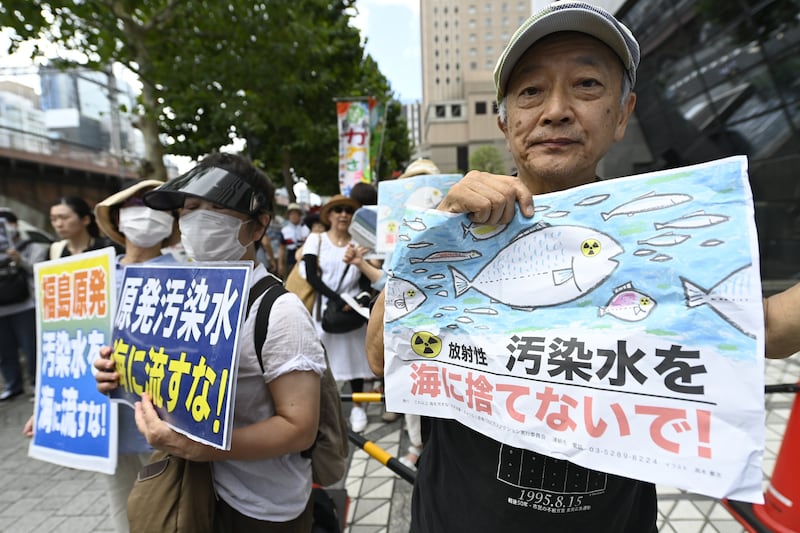
    Protest against the release of Fukushima treated radioactive water in Tokyo
    A protest against the release of Fukushima treated radioactive water in Tokyo, Japan, in mid-May 2023. Image: TAM News/Getty.

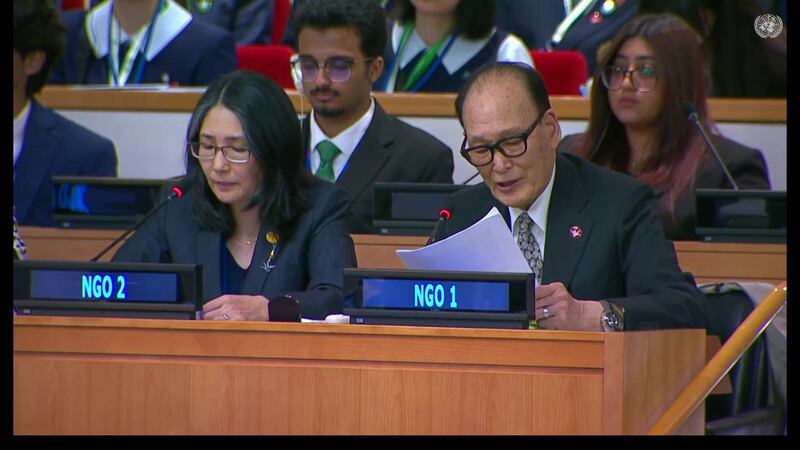
    Te Ao Māori News spoke with Mari Inoue, a NYC-based lawyer originally from Japan and co-founder of the volunteer-led group The Manhattan Project for a Nuclear-Free World.

    Recently, at the UN, they called for global awareness, not only about atomic bomb victims but also of the Fukushima wastewater release, and nuclear energy’s links to environmental destruction and human rights abuses.

    Formed a year after the Fukushima nuclear disaster, the group takes its name from the original Manhattan Project — the secret Second World War  US military programme that raced to develop the first atomic bomb before Nazi Germany.

    A pivotal moment in that project was the Trinity Test on July 16, 1945, in New Mexico — the first successful detonation of an atomic bomb. One month later, nuclear weapons were dropped on Hiroshima and Nagasaki, killing an estimated 110,000 to 210,000 people.

    Seeking recognition and justice
    Although 80 years have passed, victims of these events continue to seek recognition and justice. The disarmament group hopes for stronger global unity around the Non-Proliferation Treaty, and more support for victims of nuclear exposure.

    Mari Inoue attended the UN as a representative of the Manhattan Project for a Nuclear-Free World
    Mari Inoue attended the UN as a representative of the Manhattan Project for a Nuclear-Free World as an interpreter for an atomic bomb survivor. Image: TAM News/UN WebTV.

    The anti-nuclear activists supported the Non-Proliferation Treaty (NPT), which seeks to prevent the spread of nuclear weapons. Their advocacy took place during the third and final preparatory committee for the 2026 NPT review conference, where a consensus report with recommendations from past sessions will be presented.

    Inoue’s group called on the International Atomic Energy Agency (IAEA) to declare Japan’s dumping policy unsafe, and believes Japan and its G7 and EU allies should be condemned for supporting it.

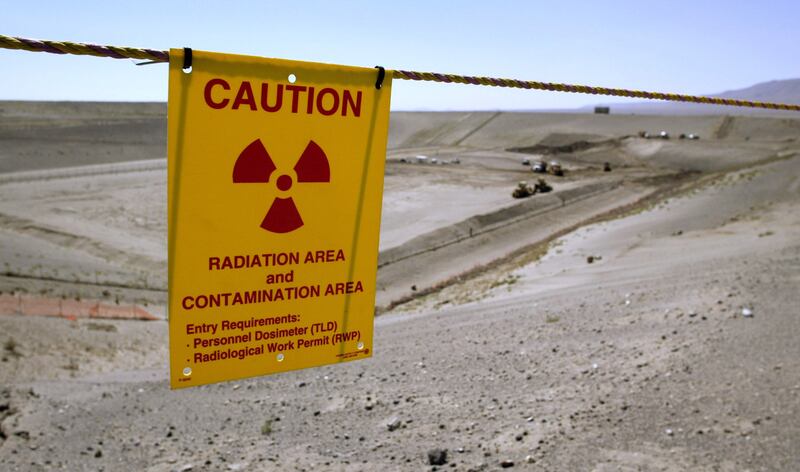
    Hanford Site is a decommissioned nuclear production complex established in 1943 as part of the Manhattan Project
    Hanford Site is a decommissioned nuclear production complex established in 1943 as part of the Manhattan Project . . . The contaminated site once belonged to several Native American tribes. Image: TAM News/Jeff T. Green/Getty

    Nuclear energy for the green transition?
    Amid calls to move away from fossil fuels, some argue that nuclear power could supply the zero-emission energy needed to combat climate change.

    Inoue rejects this, saying that despite not emitting greenhouse gases like fossil fuels, nuclear energy still harms the environment.

    She said there was environmental harm at all processes in the nuclear supply chain.

    Beginning with uranium mining, predominantly contaminating indigenous lands and water sources, with studies showing those communities face increased cancer rates, sickness, and infant mortality. And other studies have shown increased health issues for residents near nuclear reactors.

    Protests at TEPCO, Tokyo Electric Power Company, on August 24, 2023
    Protests at TEPCO, Tokyo Electric Power Company, in Tokyo in August 2023. Image: bDavid Mareuil/Anadolu Agency

    “Nuclear energy is not peaceful and it‘s not a solution to the climate crisis,” Inoue stressed. “Nuclear energy cannot function without exploiting peoples, their lands, and their resources.”

    She also pointed out thermal pollution, where water heated during the nuclear plant cooling process is discharged into waterways, contributing to rising ocean temperatures.

    Inoue added, “During the regular operation, [nuclear power plants] release radioactive isotopes into the environment — for example tritium.”

    She referenced nuclear expert Dr Arjun Makhijani, who has studied the dangers of tritium in how it crosses the placenta, impacting embryos and foetuses with risks of birth defects, miscarriages, and other problems.

    Increased tensions and world forum uniting global voices
    When asked about the AUKUS security pact, Inoue expressed concern that it would worsen tensions in the Pacific. She criticised the use of a loophole that allowed nuclear-powered submarines in a nuclear-weapon-free zone, even though the nuclear fuel could still be repurposed for weapons.

    In October, Inoue will co-organise the World Nuclear Victims Forum in Hiroshima, with 2024 Nobel Peace Prize winner Nihon Hidankyo as one of the promoting organisations.

    The forum will feature people from Indigenous communities impacted by nuclear testing in the US and the Marshall Islands, uranium mining in Africa, and fisheries affected by nuclear pollution.

    Republished from Te Ao Māori News with permission.

    This post was originally published on Asia Pacific Report.

  • By Lydia Lewis, RNZ Pacific presenter/bulletin editor

    Fiji cannot compete with Australia and New Zealand to retain its teachers, the man in charge of the country’s finances says.

    The Fijian education system is facing major challenges as the Sitiveni Rabuka-led coalition struggles to address a teacher shortage.

    While the education sector receives a significant chunk of the budget (about NZ$587 million), it has not been sufficient, as global demand for skilled teachers is pulling qualified Fijian educators toward greener pastures.

    Deputy Prime Minister and Finance Minister Biman Prasad said that the government was training more teachers.

    “The government has put in measures, we are training enough teachers, but we are also losing teachers to Australia and New Zealand,” he told RNZ Pacific Waves on the sidelines of the University of the South Pacific Council meeting in Auckland last week.

    “We are happy that Australia and New Zealand gain those skills, particularly in the area of maths and science, where you have a shortage. And obviously, Fiji cannot match the salaries that teachers get in Australia and New Zealand.

    Pal Ahluwalia, Biman Prasad and Aseri Radrodro at the opening of the 99th USP Council Meeting at Auckland University. 20 May 2025
    USP vice-chancellor Professor Pal Ahluwalia, Fiji’s Finance Minister Professor Biman Prasad and Education Minister Aseri Radrodro at the opening of the 99th USP Council Meeting at Auckland University last week. Image: RNZ Pacific/Lydia Lewis

    According to the Education Ministry’s Strategic Development Plan (2023-2026), the shortage of teachers is one of the key challenges, alongside limited resources and inadequate infrastructure, particularly for primary schools.

    Hundreds of vacancies
    Reports in local media in August last year said there were hundreds of teacher vacancies that needed to be filled.

    However, Professor Prasad said there were a lot of teachers who were staying in Fiji as the government was taking steps to keep teachers in the country.

    “We are training more teachers. We are putting additional funding, in terms of making sure that we provide the right environment, right support to our teachers,” he said.

    “In the last two years, we have increased the salaries of the civil service right across the board, and those salaries and wages range from between 10 to 20 percent.

    “We are again going to look at how we can rationalise some of the positions within the Education Ministry, right from preschool up to high school.”

    Meanwhile, the Fiji government is currently undertaking a review of the Education Act 1966.

    Education Minister Aseri Radrodro said in Parliament last month that a draft bill was expected to be submitted to Cabinet in July.

    “The Education Act 1966, the foundational law for pre-tertiary education in Fiji, has only been amended a few times since its promulgation, and has not undergone a comprehensive review,” he said.

    “It is imperative that this legislation be updated to reflect modern standards and address current issues within the education system.”

    This article is republished under a community partnership agreement with RNZ.

    This post was originally published on Asia Pacific Report.

  • BANGKOK, Thailand (22 May 2025) – The Asia Democracy Network (ADN) and the Asian Forum for Human Rights and Development (FORUM-ASIA) strongly condemn the Hong Kong Government’s latest amendments to its national security law, gravely escalating its assault on human rights, civil liberties,  rule of law, and autonomy.

    ADN and FORUM-ASIA call on the Hong Kong Government to immediately repeal its oppressive measures.

    On 13 May 2025, the Hong Kong Government enacted a new subsidiary legislation under its domestic security law. Done through a “negative vetting” procedure, it bypassed legislative scrutiny and public debate. This allowed the law to immediately take effect after gazetting and before any review by the Legislative Council.

    The legislation further expands the powers of Beijing’s Office for Safeguarding National Security (OSNS) in Hong Kong, a body which was already operating with sweeping authority and minimal oversight.

    “What’s unfolding in Hong Kong is not just repression, it is a legalization of authoritarianism. When unchecked power is codified into law, democracy unravels. We must not ignore this warning sign,” said Ichal Supriadi, Secretary General of ADN.

    Hong Kong’s crackdown knows no borders. Those who speak out are pursued even in exile. We must defend freedom in Hong Kong,” said Mary Aileen Diez-Bacalso, Executive Director of FORUM-ASIA.

    New provisions and penalties

    Under the new provisions, disclosing any information related to OSNS investigations is punishable by up to seven years in prison and a maximum fine of HKD 500,000 (approximately USD 64,000).

    Providing false or misleading information to the OSNS has the same penalty.

    The law designates OSNS-linked premises as “prohibited places” and criminalizes obstruction of the OSNS. It also mandates all public servants to assist the OSNS while granting them immunity from civil liability for compliance.

    Alarmingly, the law also establishes a mechanism that enables China to assert jurisdiction over so-called “complex” national security cases, thereby raising the threat of cross-border prosecutions and deepening the erosion of Hong Kong’s legal autonomy.

    Weaponization of laws

    The amendments compound the already draconian measures imposed by the Beijing-backed National Security Law (NSL) passed in 2020 as well as the Safeguarding National Security Ordinance (Article 23) passed in March 2024.

    Both laws have been widely criticized for its vague definitions, severe penalties, and systematic targeting of peaceful dissent.

    Since 2020, at least 320 individuals have been arrested under national security laws. Bail is rarely granted and many cases are tried without a jury.

    These laws pose a threat not only to activists and journalists but also to ordinary citizens, public servants, and businesses since the definition of offenses remain overly broad and susceptible to abuse.

    Article 23 was swiftly passed in just 11 days with minimal legislative debate and without any amendments, highlighting the breakdown of democratic safeguards.

    It also expanded the type of offenses covered: 1) treason; 2) insurrection, incitement to mutiny, disaffection, and acts with seditious intention; 3) offenses in connection with state secrets and espionage; 4) sabotage endangering national security; and 5) external interference.

    On 24 February 24 2025, the Hong Kong Government announced amendments to the Trade Unions Ordinance. The amendments aim to align union regulations with the NSL and Article 23, putting trade unions that receive foreign funding under heightened scrutiny.

    In addition, Hong Kong’s Cybersecurity Law pressures internet service providers to comply and align itself with national security interests.

    Broader consequences

    Such national security laws create a chilling effect over Hong Kong civil society. Independent media continues to shrink under pressure. Self-censorship has become widespread.

    Meanwhile, Hong Kong’s business environment has also been significantly impacted since foreign investors have become increasingly wary of arbitrary enforcement.

    The new legislation further entrenches Beijing’s control over Hong Kong, accelerating its transformation into a city governed under authoritarianism and effectively dismantling the “One Country, Two Systems” framework.

    Authorities have recently intensified its crackdown against exiled pro-democracy activists as well as their families still living in Hong Kong. In 2024, the Hong Kong Government reportedly revoked the passports of 13  activists. In December 2024, the police offered HKD1 million (approx.USD128,728) bounties for six pro-democracy activists residing abroad.

    Call to action

    ADN and FORUM-ASIA urge the Hong Kong Government to  fully respect international human rights standards, including those enshrined in the International Covenant on Civil and Political Rights.

    Likewise, we urge the international community to:

    • Condemn the Hong Kong Government’s latest national security amendments and demand accountability from those responsible for undermining fundamental rights and freedoms.
    • Support Hong Kong’s human rights defenders, journalists, and civil society actors.
    • Intensify diplomatic and economic measures to press for the restoration of human rights, democracy, rule of law, and autonomy in Hong Kong.

    For the PDF version of this statement, click here

    The post [Joint Statement] HONG KONG: Expanded security legislation threatens civil liberties and legal autonomy first appeared on FORUM-ASIA.

    This post was originally published on FORUM-ASIA.
  • By Anish Chand in Suva

    Fiji lawyer Nazhat Shameem Khan has been elevated to the top prosecutorial position at the International Criminal Court (ICC) in The Hague.
    The Office of the Prosecutor at ICC has announced that deputy prosecutors Nazhat Shameem Khan and Mame Mandiaye Niang have taken over leadership following chief prosecutor Karim AA Khan KC’s temporary leave of absence.

    Khan stepped aside on May 16, 2025, pending the outcome of a UN Office of Internal Oversight Services investigation into alleged misconduct.

    The ICC states the deputy prosecutors will continue to rely on the support and collaboration of the Rome Statute community, and all partners, in carrying the office’s mandate forward.

    In 2014, Nazhat Khan was appointed Fiji’s ambassador to the United Nations in Geneva and Vienna, and to Switzerland and took up the ICC post in 2021.

    Pacific Media Watch notes that Chief Prosecutor Karim Khan had issued arrest warrants for Israeli Prime Minister Benjamin Netanyahu and former Defence Minister Yoav Gallant for war crimes in Gaza, and also against three Hamas leaders who have been killed in the war on Gaza. In contrast to most of the world’s condemnation and a majority of UN members, Fiji supports Israel and its main backer, United States, in the war.

    Republished from The Fiji Times with permission.

    This post was originally published on Asia Pacific Report.

  • Pacific Media Watch

    Asia Pacific Report editor David Robie was honoured with Member of the New Zealand Order of Merit (MNZM) at the weekend by the Governor-General, Dame Cindy Kiro, in an investiture ceremony at Government House Tāmaki Makaurau.

    He was one of eight recipients for various honours, which included Joycelyn Armstrong, who was presented with Companion of the King’s Service Order (KSO) for services to interfaith communities.

    Dr Robie’s award, which came in the King’s Birthday Honours in 2024 but was presented on Saturday, was for “services to journalism and Asia-Pacific media education”.

    His citation reads:

    Dr David Robie has contributed to journalism in New Zealand and the Asia-Pacific region for more than 50 years.

    Dr Robie began his career with The Dominion in 1965 and worked as an international journalist and correspondent for agencies from Johannesburg to Paris. He has won several journalism awards, including the 1985 Media Peace Prize for his coverage of the Rainbow Warrior bombing.

    He was Head of Journalism at the University of Papua New Guinea from 1993 to 1997 and the University of the South Pacific in Suva from 1998 to 2002. He founded the Pacific Media Centre in 2007 while professor of journalism and communications at Auckland University of Technology.

    He developed four award-winning community publications as student training outlets. He pioneered special internships for Pacific students in partnership with media and the University of the South Pacific. He has organised scholarships with the Asia New Zealand Foundation for student journalists to China, Indonesia and the Philippines.

    He was founding editor of Pacific Journalism Review journal in 1994 and in 1996 he established the Pacific Media Watch, working as convenor with students to campaign for media freedom in the Pacific.

    He has authored 10 books on Asia-Pacific media and politics. Dr Robie co-founded and is deputy chair of the Asia Pacific Media Network/Te Koakoa NGO.


    The investiture ceremony on 24 May 2025.      Video: Office of the Governor-General  

    In an interview with Global Voices last year, Dr Robie praised the support from colleagues and students and said:

    “There should be more international reporting about the ‘hidden stories’ of the Pacific such as the unresolved decolonisation issues — Kanaky New Caledonia, ‘French’ Polynesia (Mā’ohi Nui), both from France; and West Papua from Indonesia.

    “West Papua, in particular, is virtually ignored by Western media in spite of the ongoing serious human rights violations. This is unconscionable.”

    This post was originally published on Asia Pacific Report.

  • Samoan-Kiwi filmmaker Tuki Laumea checks in with indigenous communities in 10 Pacific nations for a new Al Jazeera documentary series, reports RNZ Saturday Morning.

    RNZ News

    As the Pacific region becomes a battleground for global power-play, many island nations are still fighting for basic sovereignty and autonomy, says Pacific filmmaker Tuki Laumea.

    Pacific leaders are smart, well-educated and perfectly capable of making their own decisions, the Fight for the Pacific filmmaker told RNZ Saturday Morning, so they should be allowed to do that.

    “Pacific nations all want to be able to say what it is they need without other countries coming in and trying to manipulate them for their resources, their people, and their positioning.”


    Fight for the Pacific: Episode 1 – The Battlefield.       Video: Al Jazeera

    Laumea knew the Pacific was a “poor place” but filming Fight for the Pacific, he was shocked by the extreme poverty of New Caledonia’s indigenous Kanak population.

    While indigenous people generally have what they need in countries like Samoa and Tonga, it is a different story in Kanaky New Caledonia, Laumea says.

    Laumea and fellow journalist Cleo Fraser — who produced the series — discovered that the country was home to two divided worlds.

    In the prosperous French south, people sip coffee and smoke cigarettes and seem to be “basically swimming in money”.

    Pacific filmmaker Tuki Laumea
    Pacific filmmaker Tuki Laumea . . .Kanaky New Caledonia home to two divided worlds. Image: RNZ/Nine Island Media

    Living in extreme poverty
    But just over the hill to the north, the Kanak people — who are 172 years into a fight for independence from French colonisers – live in extreme poverty, he says.

    “People don’t have enough, and they don’t have access to the things that they really needed.”

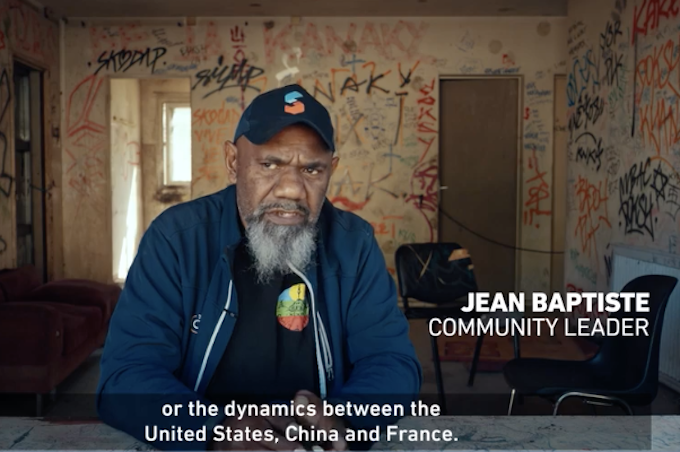
    Kanak community leader Jean Baptiste
    Kanak community leader Jean Baptiste . . . how New Caledonia has been caught up in the geopolitical dynamics between the United States, China and France. Image: AJ screenshot APR

    “They’re so close to us, it’s crazy. But because they’re French, no-one really speaks English much.”

    The “biggest disconnect” he saw between life there and life in NZ was internet prices.

    “Internet was so, so expensive. We paid probably 100 euros [around NZ$190] for 8 to 10 gig of data.

    “These guys can’t afford a 50-cent baguette so we’re not going to get lots and lots of videos coming out of Kanaky New Caledonia of what their struggle looks like. We just don’t get to hear what they’ve got to say.”

    Over the years, the French government has reneged on promises made to the Kanak people, Laumea says, who just want what all of us want — “a bit of a say”.

    Struggling for decades
    “They’ve been struggling for decades for independence, for autonomy, and it’s been getting harder. I think it’s really important that we listen now.”

    With a higher rate of homelessness than any US state, the majority of dispossessed people on Hawai'i are indigenous
    With a higher rate of homelessness than any US state, the majority of dispossessed people on Hawai’i are indigenous. Image: RNZ/Nine Island Media/Grassroot Institute of Hawai’i

    With a higher rate of homelessness than any US state, the majority of dispossessed people are indigenous, he says.

    “You leave Waikiki — which probably not a lot of people do — and the beaches are just lined with hundreds and hundreds and hundreds of homeless people, and they’re all sick, and they’re all not eating well.”

    Indigenous Hawai’ians never ceded national sovereignty, Laumea says. During World War II, the land was “just taken” by the American military who still reign supreme.

    “The military personnel, they all live on subsidised housing, subsidised petrol, subsidised education. All of the costs are really low for them, but that drives up the price of housing and food for everyone else.

    “It’s actually devastating, and we all need to maybe have a little look at that when we’re going to places like that and how we contribute to it.”

    Half of the Marshall Islands’ 50,000-strong population live in the capital city of Majuro
    Half of the Marshall Islands’ 50,000-strong population live in the capital city of Majuro. Image: Public domain/RNZ

    Treated poorly over nuclear tests
    Laumea and Fraser also visited the Marshall Islands for Fight for the Pacific, where they spoke to locals about the effects of nuclear testing carried out in the Micronesian nation between 1946 and 1958.

    The incredibly resilient indigenous Marshall Islanders have been treated very poorly over the years, and are suffering widespread poverty as well as intergenerational trauma and the genetic effects of radiation, Laumea says.

    “They had needles stuck in them full of radiation . . .  They were used as human guinea pigs and the US has never, ever, ever apologised.”

    Laumea and Fraser — who are also partners in life — found that getting a series made about the Pacific experience wasn’t easy because Al Jazeera’s huge international audience does not have much interest in the region, Laumea says.

    “On the global stage, we’re very much voiceless. They don’t really care about us that much. We’re not that important. Even though we know we are, the rest of the world doesn’t think that.”

    Journalist Cleo Fraser and filmmaker Tuki Laumea at work
    Journalist Cleo Fraser and filmmaker Tuki Laumea at work. Image: Matt Klitscher/Nine Island Media/RNZ

    To ensure Fight for the Pacific (a four-part series) had “story sovereignty”, Laumea ensured the only voices heard are real Pacific residents sharing their own perspectives.

    Sovereign storytellers
    “We have the skills, we’re smart enough to do it, and the only thing that people should really be acknowledging are sovereign storytellers, because they’re going to get the most authentic representation of it.”

    Being Pasifika himself, the enormous responsibility of making a documentary series that traverses the experiences of 10 individual Pacific cultures loomed large for Laumea.

    Editing hundreds of hours of footage was often very overwhelming, he says, yet the drive to honour and share the precious stories he had gathered was also his fuel.

    “That was the thing that I found the most difficult about making Fight for the Pacific but also probably the most rewarding in the end.”

    This article is republished under a community partnership agreement with RNZ.

    This post was originally published on Asia Pacific Report.

  • A public health expert is urging anyone travelling to places in the Pacific with a current dengue fever outbreak to be vigilant and take sensible precautions — but stresses the chances of contracting the disease are low.

    On Friday, the Cook Islands declared an outbreak of the viral infection, which is spread by mosquitoes, in Rarotonga. Outbreaks have also been declared in Samoa, Fiji and Tonga.

    Across the Tasman, this year has also seen a cluster of cases in Townsville and Cairns in Queensland.

    Last month a 12-year-old boy died in Auckland after being medically evacuated from Samoa, with severe dengue fever.

    Dr Marc Shaw, a medical director at Worldwise Travellers Health Care and a professor in public health and tropical diseases at James Cook University in Townsville, said New Zealanders travelling to places with dengue fever outbreaks should take precautions to protect themselves against mosquito bites but it was important to be pragmatic.

    “Yes, people are getting dengue fever, but considering the number of people that are travelling to these regions, we have to be pragmatic and think about our own circumstances,” he said.

    “[Just] because you’re travelling to the region, it does not mean that you’re going to get the disease.

    ‘Maintain vigilance’
    “We should just maintain vigilance and look to protect ourselves in the best ways we can, and having a holiday in these regions should not be avoided.”

    Shaw said light-coloured clothes were best as mosquitoes were attracted to dark colours.

    “They also tend to be more attracted to perfumes and scents.

    “Two hours on either side of dusk and dawn is the time most mosquito bites occur. Mosquitoes also tend to be attracted a lot more to ankles and wrists.”

    But the best form of protection was a high-strength mosquito repellent containing the active ingredient Diethyl-meta-toluamide or DEET, he said.

    “The dengue fever mosquito is quite a vicious mosquito and tends to be around at this particular time of the year. It’s good to apply a repellent of around about 40 percent [strength] and that will give about eight to 10 hours of protection.”

    Dengue fever was “probably the worst fever anyone could get”, he added.

    ‘Breakbone fever’
    “Unfortunately, it tends to cause a temperature, sweats, fevers, rashes, and it has a condition which is called breakbone fever, where you get the most painful and credibly painful joints around the elbows. In its most sinister form, it can cause bleeding.”

    Most people recovered from dengue fever, but those who caught the disease again were much more vulnerable to it, he added.

    “Under those circumstances, it is worthwhile discussing with a travel health physician as it is perhaps appropriate that they have a dengue fever vaccine, which is just out.”

    Shaw said the virus would start to wane in the affected regions from now on as the Pacific region and Queensland head into the drier winter months.

    This article is republished under a community partnership agreement with RNZ.

    This post was originally published on Asia Pacific Report.

  • After Haryana YouTuber Jyoti Malhotra was arrested for espionage and leaking intel to Pakistan, her pictures with Congress leader Rahul Gandhi went viral on social media. Users sharing these images questioned her association with Gandhi and insinuated that traitors of the country are often seen with him.

    Sharing two images on X, user Manoj Srivastava (@ManojSr60583090) wrote, “Jyoti Malhotra, caught spying for Pakistan, is with traitor Rahul Gandhi, it is a strange coincidence that every traitor is seen with Rahul Gandhi.” 

    Another X user, Jayant Rokde (@jayant_rokade), also shared the pictures with a similar caption.

    Several others also linked her to Rahul Gandhi. (Archives 1, 2, 3)

    Click to view slideshow.

    Fact Check

    Image 1: A reverse image search of Rahul Gandhi’s photo with ‘Jyoti’, who is in a blue saree, led us to several news reports from 2018 in which a very similar image appeared. However, the woman in the photo is then-Congress MLA from Rae Bareli, Aditi Singh, not Jyoti Malhotra. Below is a screenshot from a report by ABP News dated May 7, 2018.

    Taking cue from the caption in the ABP report, we looked at Singh’s Facebook page, where she had shared the same photo in 2017, wishing Rahul Gandhi on his birthday. Note that Singh resigned from Congress in 2021 and joined the BJP. She is currently a BJP MLA from Rae Bareli.

    The comparison below clearly shows that Jyoti Malhotra’s face has been superimposed on Singh’s face in the viral photo.

    Image 2: To check the image where Rahul Gandhi can be seen with a woman in a blue kurta, Alt News performed a reverse image search and found a similar image posted on Rahul Gandhi’s Facebook page on September 18, 2022. In this picture, too, the woman’s face is different and not of the arrested YouTuber.

    We also found another picture of Rahul Gandhi with the same woman in the blue kurta on X account of the Mahila Congress. This was also shared in September 2022 during Kerala run of the ‘Bharat Jodo Yatra’.

    On comparing the viral image with the one on Rahul Gandhi’s Facebook page, we found that Jyoti Malhotra’s face had been superimposed on it.

    Also, we found no credible news reports indicating the two had met.

    To sum up, the viral pictures are not of Rahul Gandhi with Jyoti Malhotra but of him with other women. These original pictures from 2017 and 2022 have been digitally manipulated by superimposing Jyoti Malhotra’s face on others to make it seem like they had met before. Similarly baseless claims linking Jyoti Malhotra to Prime Minister Narendra Modi and Samajwadi Party’s Akhilesh Yadav also did the rounds on social media. Alt News had fact checked these too. Read: Jyoti Malhotra, arrested on charges of ‘spying’, seen with PM Modi? False claim shared and Viral photo of Akhilesh Yadav with Jyoti Malhotra, arrested on charges of ‘spying’, is fake

    The post Viral photos of Rahul Gandhi with Jyoti Malhotra are morphed appeared first on Alt News.


    This content originally appeared on Alt News and was authored by Priyanka Jha.

    This post was originally published on Radio Free.

  • On May 23, two days after security forces killed several Maoists in Chhattisgarh, the X handle of BJP Karnataka (@BJP4Karnataka) posted an animated image of Union home minister Amit Shah with a cauliflower in his hand, resting his arm on a tombstone that said, “Naxalism Rest in Peace”. (Archive)

    The image was captioned, “Lol” Salam, Comrade,” a pun on communists’ usage of the greeting “Lal Salam” or red salute.

    On May 21, 2025, the District Reserve Guard unit of the Chhattisgarh police, a special force created to combat insurgency in Chhattisgarh, carried out an anti-Naxal operation in the state’s Narayanpur district. 27 Maoists, including the general secretary of the banned Communist Party of India (Maoist), Nambala Keshav Rao, alias Basavaraju, were neutralised in this. Named Kagar, this operation sought to neutralise Maoist presence in the  Karreguttallu hill range along the Telengana-Chhattisgarh border region. 

    The May 23 post by the BJP handle was in response to a statement by the Communist Party of India (Marxist-Leninist) Liberation (@cpimlliberation) condemning “the cold-blooded extra-judicial killing of the General Secretary of CPI(Maoist) Comrade Keshav Rao and other Maoist activists and Adivasis in Narayanpur-Bijapur.” Calling it a massacre, the communist party said, that “celebratory” posts by Indian leaders made it clear that the state was carrying out “an extra-judicial extermination campaign and taking credit for killing citizens and suppressing Adivasi protests against corporate plunder and militarisation in the name of combating Maoism.” The party was likely referring to X posts by Shah and Prime Minister Narendra Modi, who hailed the Maoists’ deaths as a “landmark achievement in the battle to eliminate Naxalism”.

    In the past 16 months, under the BJP’s governance, more than 400 alleged Maoist insurgents have been killed in Chhattisgarh, a state with a significant Adivasi population.

    While the two parties and their ideologues are on two opposing ends on how they view the Naxal movement, the troubling part is that BJP Karnataka’s X post used a trope—the cauliflower—that is a horrifying reminder of a genocide.

    Rooted in Bloodshed

    To an unsuspecting viewer, Shah holding a cauliflower on the tombstone of the Naxal movement might strike as odd, but harmless. However, the cauliflower here is a deep-rooted symbol of bloodshed. It is a reference to the 1989 Bhagalpur riots in which over a 100 Muslims were killed.

    Over 35 years ago, a series of brutal riots broke out in the city of Bhagalpur, Bihar. In October, 1989, rumours of Hindu students being murdered by Muslim mobs amid the cultural furore of the Ram Janmabhoomi movement began spreading. This gave way to a protracted period of organised communal violence, lasting around two whole months. The Bhagalpur riots, as they are called, saw more than 250 villages razed to the ground, leaving well over a thousand people dead, majority of them Muslims.

    But something far more sinister took place in Bhagalpur’s Logain village. On October 27, 1989, a mob, allegedly led by police officer Ramchander Singh, killed 116 Muslims. Their bodies were buried, and cauliflower saplings were sown on their mass graves to cover up the killings.

    Nearly 25 days later, on November 21, the then-Additional District Manager of Bhagalpur, AK Singh, on a relief mission to a nearby village, overheard conversations between villagers about cauliflower plants sprouting over buried dead bodies and unearthed the massacre. Another account suggests that Singh found out that bodies may be buried under the ground because he saw vultures hovering above the cauliflower plantations.

    For more details on the happenings in 1989 and what triggered the clashes, read our earlier report here. You can also read the Bhagalpur Riot Inquiry Commission Report here.

    The Cauliflower Imagery

    While the Bhagalpur riots took place over three decades ago, in the past few years, the cauliflower symbolism has found its way through graphical representations, imagery and memes. Each time, a minority or non-Right group is targeted, supporters who identify with Hindutva groups or the Right-wing ideology have openly made references to the cauliflower as a ‘solution’.

    In March 2025, after communal clashes broke out in Maharashtra’s Nagpur, Right-leaning social media users referred to cauliflowers, as a potential ‘solution’.

    Click to view slideshow.

    In February last year, similar cauliflower references were used in several social media posts after riots broke out in Haldwani.

    Several memes were made and shared on social media platforms glorifying the Bhagalpur massacre, subverting a horror as a feasible remedy.

    Read | Nagpur clashes: Cryptic cauliflower memes referring to mass killings in 1989 Bhagalpur riots resurface

    Not only does such symbolism trivialize the horrors of what unfolded in Bhagalpur but glorifies the action as an acceptable ‘solution’. It’s hard to determine which is more troubling, that the state wing of a party that governs the nation shared this or that “eliminating Naxalism” is being equated to a genocide. As of May 24, despite several social media users pointing out the gory undercurrents to the image, BJP Karnataka’s X handle has not taken the post down.

    The post After Maoist deaths, BJP Karnataka shares ‘cauliflower’ meme, a reference to the 1989 Bhagalpur riots appeared first on Alt News.


    This content originally appeared on Alt News and was authored by Ankita Mahalanobish.

    This post was originally published on Radio Free.

  • Asia Pacific Report

    Protesting New Zealanders donned symbolic masks modelled on a Palestinian artist’s handiwork in Auckland’s Takutai Square today to condemn Israel’s starvation as war weapon against Gaza and the NZ prime minister’s weak response.

    Coming a day after the tabling of Budget 2025 in Parliament, peaceful demonstrators wore hand-painted masks inspired by Gaza-based Palestinian artist Reem Arkan, who is fighting for her life alongside hundreds of thousands of the displaced Gazans.

    The “bodies” represented more than 53,000 Palestinians killed by Israel’s brutal 19-month war on Gaza.

    The protest coincided with Prime Minister Christopher Luxon addressing the Trans-Tasman Business Circle in Auckland.

    The demonstrators said they chose this moment and location to “highlight the alarmingly tepid response” by the New Zealand government to what global human rights organisations — such as Amnesty International and Human Rights Watch — have branded as war crimes and acts of collective punishment amounting to genocide.

    “This week, we heard yet another call for Israel to abide by international law. This is not leadership. It’s appeasement,” said a spokesperson, Olivia Coote.

    “The time for statements has long passed. What we are witnessing in Gaza is a humanitarian catastrophe, and New Zealand must impose meaningful sanctions.

    “Israel’s actions, including the deliberate targeting of civilian infrastructure, forced displacement, and obstruction of humanitarian aid, constitute grave breaches of the Geneva Conventions of which we are signatories.”

    A self-portrait by Palestinian artist Reem Arkan who depicts the suffering of Gaza - and the beauty - in spite of the savagery of the Israel attacks
    A self-portrait by Palestinian artist Reem Arkan who depicts the suffering of Gaza – and the beauty – in spite of the savagery of the Israel attacks. Image: Insta/@artist_reemarkan

    Green Party Co-Leader Chlöe Swarbrick challenged Prime Minister Luxon in Parliament over his government’s response earlier this week, saying: “We’ve had lots of words. We need action.”

    Luxon claimed that sanctions were in place — but the only measure taken has been a travel ban on 12 extremist Israeli settlers from the West Bank.

    “This is an action that does nothing to protect the more than two million Palestinians in Gaza who face daily bombardment, siege, and starvation,” Coote said.

    The protesters are calling on the New Zealand government to act immediately by:

    • Imposing sanctions on Israel; and
    • Suspending all diplomatic and trade relations with Israel until there is an end to hostilities and full compliance with international humanitarian law.

    “This government must not be complicit in atrocities through silence and inaction,” Coote said. “The people of Aotearoa New Zealand demand leadership as the world watches a genocide unfold in real time.”

    A street theatre protester demonstrates against starvation as a weapon of war as deployed by Israel in its brutal war on Gaza
    A street theatre protester demonstrates today against starvation as a weapon of war as deployed by Israel in its brutal war on Gaza. Image: APR

    This post was originally published on Asia Pacific Report.

  • By Patrick Decloitre, RNZ Pacific correspondent French Pacific desk

    Air New Zealand has announced it plans to resume its Auckland-Nouméa flights from November, almost one and a half years after deadly civil unrest broke out in the French Pacific territory.

    “Air New Zealand is resuming its Auckland-Nouméa service starting 1 November 2025. Initially, flights will operate once a week on a Saturday. This follows the New Zealand Government’s decision to update its safe travel advisory level for New Caledonia”, the company stated in its latest update yesterday.

    “The resumption of services reflects our commitment to reconnecting New Zealand and New Caledonia, ensuring that travel is safe and reliable for our customers. We will continue to monitor this route closely.

    “Passengers are encouraged to check the latest travel advisories and Air New Zealand’s official channels for updates on flight schedules”, said Air New Zealand general manager short haul Lucy Hall.

    In its updated advisory regarding New Caledonia, the New Zealand government still recommends “Exercise increased caution” (Level 2 of 4).

    It said this was “due to the ongoing risk of civil unrest”.

    In some specific areas (the Loyalty Islands, the Isle of Pines (Iles de Pins), and inland of the coastal strip between Mont Dore and Koné), it is still recommended to “avoid non-essential travel (Level 3 of 4).”

    Warning over ‘civil unrest’
    The advisory also recalls that “there was a prolonged period of civil unrest in New Caledonia in 2024. Political tensions and civil unrest may increase at short notice”.

    “Avoid all demonstrations, protests, and rallies as they have the potential to turn violent with little warning”.

    Air New Zealand ceased flights between Auckland and the French territory’s capital, Nouméa on 15 June 2024, at the height of violent civil unrest.

    Since then, it has maintained its no-show for the French Pacific territory, one of its closest neighbours.

    Air New Zealand’s general manager international Jeremy O’Brien said at the time this was due to “pockets of unrest” remaining in New Caledonia and “safety is priority”.

    New Caledonia’s international carrier Air Calédonie International (Aircalin) is also operating two weekly flights to Auckland from the Nouméa-La Tontouta international airport.

    The riots that broke out on 13 May 2024 resulted in 14 deaths and more than 2.2 billion euros (NZ$4.1 billion) in damages, bringing New Caledonia’s economy to its knees, with thousands of businesses and jobs destroyed.

    Tourism from its main regional source markets, namely Australia and New Zealand, also came to a standstill.

    Specifically regarding New Zealand, local statistics show that between the first quarters of 2024 and 2025, visitor numbers collapsed by 90 percent (from 1731 to 186).

    New Caledonia’s tourism stakeholders have welcomed the resumption of the service to and from New Zealand, saying this will allow the industry to relaunch targeted promotional campaigns in the New Zealand market.

    This article is republished under a community partnership agreement with RNZ.

    This post was originally published on Asia Pacific Report.

  • Pacific Media Watch

    A punitive defamation charge filed against one of Samoa’s most experienced and trusted journalists last week has sparked a flurry of criticism over abuse of power and misuse of a law that has long been heavily criticised as outdated.

    Talamua Online senior journalist Lagi Keresoma, who is also president of the Journalists Association of Samoa (JAWS), was charged with one count of defamation under Section 117A of Samoa’s Crimes Act 2013 on May 18.

    She was elected in 2021 as the first woman to hold the presidency.

    The charge followed an article she had published more than two weeks earlier on May 1 alleging that a former police officer had appealed to Samoa’s Head of State to have charges against him withdrawn.

    The accused was charged with “allegedly forging the signature of the complainant as guarantor to secure a $200,000 loan from the Samoa National Provident Fund”. He denies the allegation.

    It was reported that the complainant was another senior police officer.

    Police Commissioner Auapaau Logoitino Filipo reportedly said the officer had filed a complaint over the May 1 article, claiming its contents were false and amounted to defamation.

    Criminal libel removed, then restored
    The criminal libel law was removed by the Samoan government in 2013, but was revived four years later in 2017. It was claimed at the time that it was needed to deal with issues triggered by social media.

    JAWS immediately defended their president, saying it stood in “full solidarity” with Keresoma and calling for an immediate repeal of the law.

    The association said the provision was a “troubling development for press freedom in Samoa” and added that it “should not be used to silence journalists and discourage investigative reporting”.

    “It is deeply concerning that a journalist of Lagi Keresoma’s integrity and professionalism is being prosecuted under a law that has long been criticised for its negative effect on press freedom,” said the association.

    Talamua Online editor Lagi Keresoma
    Talamua Online senior journalist Lagi Keresoma . . . charged with criminal defamation over a report earlier this month. Image: Samoa Observer

    Keresoma told Talamua Online she had been summoned twice to the police station and the police suggested that she apologise publicly and to the complainant and the complaint would be withdrawn.

    However, she said: “To apologise is an admission that the story is wrong, so after speaking to my lawyer and my editor, it was decided to have the police file their charges, but no apology from my end.”

    Her lawyer also contacted the police investigating officer informing that her client was not making a statement but to prepare the charges against her.

    Keresoma was summoned to the police headquarters on Saturday and Sunday and the charges were only finalised on Monday morning before she was released.

    She is due to appear in court next month.

    Lagipoiva Cherelle Jackson, the JAWS gender spokesperson with the International Federation of Journalists (IFJ), said in a statement Keresoma was a veteran Samoan journalist with “decades of service” to the public and media.

    ‘Outdated and controversial provision’
    “Her arrest under this outdated and controversial provision raises serious concerns about the misuse of legal tools to silence independent journalism. The action appears heavy-handed and disproportionate, and risks being perceived as an abuse of power to suppress public scrutiny and dissent,” Lagipoiva said.

    “The United Nations Human Rights Committee and UN Special Rapporteurs, particularly the UN Special Rapporteur on the promotion and protection of the right to freedom of opinion and expression, have repeatedly called for defamation to be treated as a civil matter, not a criminal one.

    “The continued application of criminal defamation in Samoa contradicts international standards and poses a chilling threat to press freedom, particularly for women journalists who already face systemic risks and intimidation.”

    Pacific Media Watch notes: “This is a disturbing development in Pacific media freedom trends. Clearly it is a clumsy attempt to intimidate and silence in-depth investigation and reporting on Pacific governance.

    “For years, Samoa has been a beacon for media freedom in the region, but it has fared badly in the latest World Press Freedom Index and this incident involving alleged criminal libel, a crime that should have been struck from the statutes years ago, is not going to help Samoa’s standing.

    “Journalism is not a crime.”

    This post was originally published on Asia Pacific Report.

  • By Alakihihifo Vailala of PMN News

    Funding for New Zealand’s Ministry for Pacific Peoples (MPP) is set to be reduced by almost $36 million in Budget 2025.

    This follows a cut of nearly $26 million in the 2024 budget.

    As part of these budgetary savings, the Tauola Business Fund will be closed. But, $6.3 million a year will remain to support Pacific economic and business development through the Pacific Business Trust and Pacific Business Village.

    The Budget cuts also affect the Tupu Aotearoa programme, which supports Pacific people in finding employment and training, alongside the Ministry of Social Development’s employment initiatives.

    While $5.25 million a year will still fund the programme, a total of $22 million a year has been cut over the last four years.

    The ministry will save almost $1 million by returning funding allocated for the Dawn Raids reconciliation programme from 2027/28 onwards.

    There are two years of limited funding left to complete the ministry Dawn Raids programmes, which support the Crown’s reconciliation efforts.

    Funding for Pasifika Wardens
    Despite these reductions, a new initiative providing funding for Pasifika Wardens will introduce $1 million of new spending over the next four years.

    The initiative will improve services to Pacific communities through capacity building, volunteer training, transportation, and enhanced administrative support.

    Funding for the National Fale Malae has ceased, as only $2.7 million of the allocated $10 million has been spent since funding was granted in Budget 2020.

    The remaining $6.6 million will be reprioritised over the next two years to address other priorities within the Arts, Culture and Heritage portfolio, including the National Music Centre.

    Foreign Affairs funding for the International Development Cooperation (IDC) projects, particularly focussed on the Pacific, is also affected. The IDC received an $800 million commitment in 2021 from the Labour government.

    The funding was time-limited, leading to a $200 million annual fiscal cliff starting in January 2026.

    Budget 2025 aims to mitigate this impact by providing ongoing, baselined funding of $100 million a year to cover half of the shortfall. An additional $5 million will address a $10 million annual shortfall in departmental funding.

    Support for IDC projects
    The new funding will support IDC projects, emphasising the Pacific region without being exclusively aimed at climate finance objectives. Overall, $367.5 million will be allocated to the IDC over four years.

    Finance Minister Nicola Willis said the Budget addressed a prominent fiscal cliff, especially concerning climate finance.

    “The Budget addresses this, at least in part, through ongoing, baselined funding of $100 million a year, focused on the Pacific,” she said in her Budget speech.

    “Members will not be surprised to know that the Minister of Foreign Affairs has made a case for more funding, and this will be looked at in future Budgets.”

    More funding has been allocated for new homework and tutoring services for learners in Years nine and 10 at schools with at least 50 percent Pacific students to meet the requirements for the National Certificate of Educational Achievement (NCEA).

    About 50 schools across New Zealand are expected to benefit from the initiative, which will receive nearly $7 million over the next four years, having been reprioritised from funding for the Pacific Education Programme.

    As a result, funding will be stopped for three programmes aimed at supporting Tu’u Mālohi, Pacific Reading Together and Developing Mathematical Inquiry Communities.

    Republished from Pacific Media Network News with permission.

    This post was originally published on Asia Pacific Report.

  • By Don Wiseman, RNZ Pacific senior journalist

    An Auckland University law academic says Samoa’s criminal libel law under which a prominent journalist has been charged should be repealed.

    Lagi Keresoma, the first female president of the Journalists Association of Samoa (JAWS) and senior journalist of Talamua Online, was charged under the Crimes Act 2013 on Sunday after publishing an article about a former police officer, whom she asserted had sought the help of the Head of State to withdraw charges brought against him.

    JAWS has already called for the criminal libel law to be scrapped and Auckland University academic Beatrice Tabangcoro told RNZ Pacific that the law was “unnecessary and impractical”.

    “A person who commits a crime under this section is liable on conviction to a fine not exceeding 175 penalty units or imprisonment for a term not exceeding 3 months,” the Crimes Act states.

    JAWS said this week that the law, specifically Section 117A of the Crimes Act, undermined media freedom, and any defamation issues could be dealt with in a civil court.

    JAWS gender representative to the International Federation of Journalists (IFJ) said Keresoma’s arrest “raises serious concerns about the misuse of legal tools to independent journalism” in the country.

    Lagipoiva Cherelle Jackson called on the Samoan government “to urgently review and repeal criminal defamation laws that undermine democratic accountability and public trust in the justice system”.

    Law removed and brought back
    The law was removed by the Samoan government in 2013, but was brought back in 2017, ostensibly to deal with issues arising on social media.

    Auckland University's academic Beatrice Tabangcoro
    Auckland University’s academic Beatrice Tabangcoro . . . reintroduction of the law was widely criticised at the time. Image: University of Auckland

    Auckland University’s academic Beatrice Tabangcoro told RNZ Pacific that this reintroduction was widely criticised at the time for its potential impact on freedom of speech and media freedom.

    She said that truth was a defence to the offence of false statement causing harm to reputation, but in the case of a journalist this could lead to them being compelled to reveal their sources.

    The academic said that the law remained unnecessary and impractical, and she pointed to the Samoa Police Commissioner telling media in 2023 that the law should be repealed as it was used “as a tool for harassing the media and is a waste of police resources”.

    Tonga and Vanuatu are two other Pacific nations with the criminal libel law on their books, and it is something the media in both those countries have raised concerns about.

    This article is republished under a community partnership agreement with RNZ.

    This post was originally published on Asia Pacific Report.

  • By Patrick Muuh in Port Moresby

    Journalists in Papua New Guinea are likely to face legal threats as powerful individuals and companies use court actions to silence public interest reporting, warns Media Council of PNG president Neville Choi.

    As co-chair of the second Community Coalition Against Corruption (CCAC) National Meeting, he said lawfare was likely because Parliament had passed no laws to protect reporters and individuals from such tactics.

    Choi said journalists were being left unprotected against Strategic Litigation Against Public Participation (SLAPPs) — legal actions used by powerful individuals or corporations to silence criticism and reporting.

    “In Papua New Guinea right now, we don’t have any law to stop SLAPPs,” Choi said.

    “Big corporations or organisations with more money can use lawsuits to silence people, civil society and the media. That’s the reality.”

    SLAPPs are lawsuits filed not to win on merit, but to drain resources, silence critics, and stop public debate.

    In some other countries, anti-SLAPP laws exist to protect journalists and whistleblowers. But in PNG, no such legal shield exists.

    Legal pressure for speaking out
    “We’ve seen it happen,” Choi added, referring to ACTNOW PNG’s Eddie Tanago, a civil society advocate who has faced legal pressure for speaking out.

    “He’s experienced it. And we know it can happen to journalists too.”

    journalists are being left unprotected
    Participants in the second CCAC National Meeting in Port Moresby . . . journalists are being left unprotected from corporate lawfare. Image: PNG Post-Courier

    Despite increasing threats, journalists do not have access to legal defence funds or institutional protection.

    Choi confirmed that there was no system in place to defend reporters who were hit with defamation lawsuits or other forms of legal retaliation.

    “Our advice to journalists is simple. Do your job well. The truth is the only protection we have,” he said.

    “If you stick to facts, follow professional ethics and report responsibly, you reduce your risk. But if you make a mistake, you leave yourself open to lawsuits.”

    The Media Council, in partnership with Transparency International under the CCAC, are discussing the idea of drafting an anti-SLAPP law but no formal proposal has been put forward yet.

    Republished from the PNG Post-Courier with permission.

    This post was originally published on Asia Pacific Report.

  • By Caleb Fotheringham, RNZ Pacific journalist

    A West Papua independence leader says escalating violence is forcing indigenous Papuans to flee their ancestral lands.

    It comes as the Indonesian military claims 18 members of the West Papua National Liberation Army (TPNPB) were killed in an hour-long operation in Intan Jaya on May 14.

    In a statement, reported by Kompas, Indonesia’s military claimed its presence was “not to intimidate the people” but to protect them from violence.

    “We will not allow the people of Papua to live in fear in their own land,” it said.

    Indonesia’s military said it seized firearms, ammunition, bows and arrows. They also took Morning Star flags — used as a symbol for West Papuan independence — and communication equipment.

    The United Liberation Movement for West Papua (ULMWP) interim president Benny Wenda, who lives in exile in the United Kingdom, told RNZ Pacific that seven villages in Ilaga, Puncak Regency in Central Papua were now being attacked.

    “The current military escalation in West Papua has now been building for months. Initially targeting Intan Jaya, the Indonesian military have since broadened their attacks into other highlands regencies, including Puncak,” he said.

    Women, children forced to leave
    Wenda said women and children were being forced to leave their villages because of escalating conflict, often from drone attacks or airstrikes.

    Benny Wenda at the 22 Melanesian Spearhead Group Leaders' Summit in Port Vila. 22 August 2023
    ULMWP interim president Benny Wenda . . . “Indonesians look at us as primitive and they look at us as subhuman.” Image: RNZ Pacific/Kelvin Anthony

    Earlier this month, ULMWP claimed one civilian and another was seriously injured after being shot at from a helicopter.

    Last week, ULMWP shared a video of a group of indigenous Papuans walking through mountains holding an Indonesian flag, which Wenda said was a symbol of surrender.

    “They look at us as primitive and they look at us as subhuman,” Wenda said.

    He said the increased military presence was driven by resources.

    President Prabowo Subianto’s administration has a goal to be able to feed Indonesia’s population without imports as early as 2028.

    Video rejects Indnesian plan
    A video statement from tribes in Mappi regency in South Papua from about a month ago, translated to English, said they rejected Indonesia’s food project and asked companies to leave.

    In the video, about a dozen Papuans stood while one said the clans in the region had existed on customary land for generations and that companies had surveyed land without consent.

    “We firmly ask the local government, the regent, Mappi Regency to immediately review the permits and revoke the company’s permits,” the speaker said.

    Wenda said the West Papua National Liberation Army (TPNPB) had also grown.

    But he said many of the TPNPB were using bow and arrows against modern weapons.

    “I call them home guard because there’s nowhere to go.”

    This article is republished under a community partnership agreement with RNZ.

    This post was originally published on Asia Pacific Report.

  • A forthcoming new edition of David Robie’s Eyes of Fire honours the ship’s final mission and the resilience of those affected by decades of radioactive fallout.

    PACIFIC MORNINGS: By Aui’a Vaimaila Leatinu’u

    The Greenpeace flagship Rainbow Warrior III ship returns to Aotearoa this July, 40 years after the bombing of the original campaign ship, with a new edition of its landmark eyewitness account.

    On 10 July 1985, two underwater bombs planted by French secret agents destroyed the Rainbow Warrior at Marsden Wharf in Auckland, killing Portuguese-born Greenpeace photographer Fernando Pereira and sparking global outrage.

    The Rainbow Warrior was protesting nuclear weapons testing in the Pacific, specifically targeting French atmospheric and underground nuclear tests at Moruroa and Fangataufa atolls.

    The vessel drew international attention to the environmental devastation and human suffering caused by decades of radioactive fallout.

    The 40th anniversary commemorations include a new edition of Eyes of Fire: The Last Voyage of the Rainbow Warrior by journalist David Robie, who was on board the ship during its historic mission in the Marshall Islands.

    The Rainbow Warrior’s final voyage, Operation Exodus, helped evacuate the people of Rongelap after years of US nuclear fallout made their island uninhabitable.

    The vessel arrived at Rongelap Atoll on 15 May 1985.

    The 30th anniversary edition of Eyes of Fire in 2015
    The 30th anniversary edition of Eyes of Fire in 2015. Image: Little Island Press

    Dr Robie, who joined the Rainbow Warrior in Hawai‘i as a journalist at the end of April 1985, says the mission was unlike any other.

    “The fact that this was a humanitarian voyage, quite different in many ways from many of the earlier protest voyages by Greenpeace, to help the people of Rongelap in the Marshall Islands . . . it was going to be quite momentous,” Dr Robie says.

    “A lot of people in the Marshall Islands suffered from those tests. Rongelap particularly wanted to move to a safer location. It is an incredible thing to do for an island community where the land is so much part of their existence, their spirituality and their ethos.”

    PMN is US
    PMN NEWS

    He says the biggest tragedy of the bombing was the death of Pereira.

    “He will never be forgotten and it was a miracle that night that more people were not killed in the bombing attack by French state terrorists.

    “What the French secret agents were doing was outright terrorism, bombing a peaceful environmental ship under the cover of their government. It was an outrage”.

    PMN News interview with Dr David Robie on 20 May 2025
    PMN News interview with Dr David Robie on 20 May 2025.

    Russel Norman, executive director of Greenpeace Aotearoa, calls the 40th anniversary “a pivotal moment” in the global environmental struggle.

    “Climate change, ecosystem collapse, and accelerating species extinction pose an existential threat,” Dr Norman says.

    “As we remember the bombing and the murder of our crew member, Fernando Pereira, it’s important to remember why the French government was compelled to commit such a cowardly act of violence.

    “Our ship was targeted because Greenpeace and the campaign to stop nuclear weapons testing in the Pacific were so effective. We posed a very real threat to the French Government’s military programme and colonial power.”

    As the only New Zealand journalist on board, Dr Robie documented the trauma of nuclear testing and the resilience of the Rongelapese people. He recalls their arrival in the village, where the locals dismantled their homes over three days.

    “The only part that was left on the island was the church, the stone, white stone church. Everything else was disassembled and taken on the Rainbow Warrior for four voyages. I remember one older woman sitting on the deck among the remnants of their homes.”

    Robie also recalls the inspiring impact of the ship’s banner for the region reading: “Nuclear Free Pacific”.

    An elderly Rongelap woman on board the Rainbow Warrior with her "home" and possessions
    PMN News interview with Dr David Robie on 20 May 2025.

    “That stands out because this was a humanitarian mission but it was for the whole region. It’s the whole of the Pacific, helping Pacific people but also standing up against the nuclear powers, US and France in particular, who carried out so many tests in the Pacific.”

    Originally released in 1986, Eyes of Fire chronicled the relocation effort and the ship’s final weeks before the bombing. Robie says the new edition draws parallels between nuclear colonialism then and climate injustice now.

    “This whole renewal of climate denialism, refusal by major states to realise that the solutions are incredibly urgent, and the United States up until recently was an important part of that whole process about facing up to the climate crisis.


    Nuclear Exodus: The Rongelap Evacuation.      Video: In association with TVNZ

    “It’s even more important now for activism, and also for the smaller countries that are reasonably progressive, to take the lead. It looks at what’s happened in the last 10 years since the previous edition we did, and then a number of the people who were involved then.

    “I hope the book helps to inspire others, especially younger people, to get out there and really take action. The future is in your hands.”

    Aui’a Vaimaila Leatinu’u is a multimedia journalist at Pacific Media Network. Republished with permission.

    Rongelap Islanders
    Rongelap Islanders with their belongings board the Rainbow Warrior for their relocation to Mejatto island in May 1985 weeks before the ship was bombed by French secret agents in Auckland, New Zealand. Image: David Robie/Eyes of Fire

    This content originally appeared on Asia Pacific Report and was authored by APR editor.

  • We have been handed a long and protracted recession with few signs of growth and prosperity. Budget 2025 signals more of the same, writes Susan St John.

    ANALYSIS: By Susan St John

    With the coalition government’s second Budget being unveiled, we should question where New Zealand is heading.

    The 2024 Budget laid out the strategy. Tax cuts and landlord subsidies were prioritised with a focus on cuts to social and infrastructure spending. Most of the tax package went to the well-off, while many low-income households got nothing, or very little.

    Even the tiny bit of the tax package directed to low-income people fell flat. Family Boost has significantly helped only a handful of families, while the increase of $25 per week (In Work Tax Credit) was denied all families on benefits, affecting about 200,000 of the very poorest children.

    In the recession, families that lost paid work also lost access to full Working for Families, an income cut for their children of about $100 per week.

    No one worked out how the many spending cuts would be distributed, but they have hurt the poor the most. These changes are too numerous to itemise but include increased transport costs; the reintroduction of prescription charges; a disastrous school lunch system; rising rents, rates and insurance; fewer budget advisory services; cuts to foodbank funding and hardship grants; stripping away support programmes for the disabled; inadequately adjusted benefits and minimum wage; and reduced support for pay equity and the living wage.

    The objective is to save money while ignoring the human cost. For example, a scathing report of the Auditor General confirms that Oranga Tamariki took a bulldozer to obeying the call for a 6.5 percent cut in existing social services with no regard to the extreme hurt caused to children and struggling parents.

    Budget 2025 has already indicated that Working for Families will continue to go backwards with not even inflation adjustments. The 2025 child and youth strategy report shows that over the year to June 2024 the number of children in material poverty continued to increase, there were more avoidable hospitalisations, immunisation rates for babies declined, and there was more food insecurity.

    Human costs all around us
    We can see the human costs all around us in homelessness, food insecurity, and ill health. Already we know we rank at the bottom among developed countries for child wellbeing and suicide rates.

    Abject distress existing alongside where homes sell for $20 million-$40 million is no longer uncommon, and neither are $6 million helicopters of the very rich.

    Changes in suicide rates
    Changes in suicide rates (three-year average), ages 15 to 19 from 2018 to 2022 (or most recent four-year period available). Source: WHO mortality database

    At the start of the year, Helen Robinson, CEO of the Auckland City Mission, had a clear warning: “I am pleading with government for more support, otherwise what we and other food relief agencies in Auckland can provide, will dramatically decrease.

    “This leaves more of Auckland hungry and those already there become more desperate. It is the total antithesis of a thriving city.”

    The theory held by this government is that by reducing the role of government and taxes, the private sector will flourish, and secure well-paid jobs will be created. Instead, as basic economic theory would predict, we have been handed a long and protracted recession with few signs of growth and prosperity.

    Budget 2025 signals more of the same.

    It would be a mistake to wait for simplistic official inequality statistics before we act. Our current destination is a sharply divided country of extreme wealth and extreme poverty with an insecure middle class.

    Underfunded social agencies
    Underfunded and swamped social agencies cannot remove the relentless stress on the people who are invisible in the ‘fiscally responsible’ economic narrative. The fabricated bogeyman of outsized net government debt is at the core, as the government pursues balanced budgets and small government-size targets.

    A stage one economics student would know the deficit increases automatically in a recession to cushion the decline and stop the economy spiralling into something that looks more like a depression. But our safety nets of social welfare are performing very badly.

    Rising unemployment has exposed the inadequacy of social protections. Working for Families, for instance, provides a very poor cushion for children. Many “working” families do not have enough hours of work and face crippling poverty traps.

    Future security is undermined as more KiwiSavers cash in for hardship reasons. A record number of the talented young we need to drive the recovery and repair the frayed social fabric have already fled the country.

    The government is fond of comparing its Budget to that of a household. But what prudent household would deliberately undermine the earning capacity of family members?

    The primary task for the Budget should be to look after people first, to allow them to meet their food, dental and health needs, education, housing and travel costs, to have a buffer of savings to cushion unexpected shocks and to prepare for old age.

    A sore thumb standing
    In the social security part of the Budget, NZ Super for all at 65, no matter how rich or whether still in full-time well-paid work, dominates (gross $25 billion). It’s a sore thumb standing out alongside much less generous, highly targeted benefits and working for families, paid parental leave, family boost, hardship provisions, accommodation supplement, winter energy and other payments and subsidies.

    Given the political will, research shows we can easily redirect at least $3 billion from very wealthy superannuitants to fixing other payments to greatly improve the wellbeing of the young. This will not be enough but it could be a first step to the wide rebalancing needed.

    New Zealand has become a country of two halves whose paths rarely cross: a social time bomb with unimaginable consequences. It is a country beguiled by an egalitarian past that is no more.

    Susan St John is an associate professor in the Pensions and Intergenerational Equity hub and Economic Policy Centre, Business School, University of Auckland. This article was first published by Newsroom before the 2025 Budget and is republished with permission.

    This post was originally published on Asia Pacific Report.