Category: Featured

  • Asia Pacific Report

    Australia’s Foreign Minister Penny Wong has released a statement saying “the Israeli government cannot allow the suffering to continue” after the UN’s aid chief said thousands of babies were at risk of dying if they did not receive food immediately.

    “Australia joins international partners in calling on Israel to allow a full and immediate resumption of aid to Gaza,” Wong said in a post on X.

    “We condemn the abhorrent and outrageous comments made by members of the Netanyahu government about these people in crisis.”

    Wong stopped short of outlining any measures Australia might take to encourage Israel to ensure enough aid reaches those in need, as the UK, France and Canada said they would do with “concrete measures” in a recent joint statement.


    An agreement has been reached in a phone call between UAE Foreign Minister Sheikh Abdullah bin Zayed Al Nahyan and his Israeli counterpart Gideon Saar, reports Al Jazeera.

    According to the Palestinian news agency WAM, the aid would initially cater to the food needs of about 15,000 civilians in Gaza.

    It will also include essential supplies for bakeries and critical items for infant care.

    ‘Permission’ for 100 trucks
    Earlier yesterday, a spokesperson for the UN humanitarian office in Geneva said Israel had given permission for about 100 aid trucks to enter Gaza.

    However, the UN also said no aid had been distributed in Gaza because of Israeli restrictions, despite a handful of aid trucks entering the territory.

    “But what we mean here by allowed is that the trucks have received military clearance to access the Palestinian side,” reports Tareq Abu Azzoum from Deir el-Balah, central Gaza.

    “They have not made their journey into the enclave. They are still stuck at the border crossing. Only five trucks have made it in.”

    Israel's Gaza aid "smokescreen"
    Israel’s Gaza aid “smokescreen” showing the vast gulf between what the Israeli military have actually allowed in – five trucks only and none of the aid had been delivered at the time of this report. Image: Al Jazeera infographic/Creative Commons

    The few aid trucks alowed into Gaza are nowhere near sufficient to meet Gaza’s vast needs, says the medical charity Doctors Without Borders, known by its French initials MSF.

    Instead, the handful of trucks serve as a “a smokescreen” for Israel to “pretend the siege is over”.

    “The Israeli authorities’ decision to allow a ridiculously inadequate amount of aid into Gaza after months of an air-tight siege signals their intention to avoid the accusation of starving people in Gaza, while in fact keeping them barely surviving,” said Pascale Coissard, MSF’s emergency coordinator in Khan Younis.

    This post was originally published on Asia Pacific Report.

  • Al Jazeera

    How global power struggles are impacting in local communities, culture and sovereignty in Kanaky, New Caledonia, the Solomon Islands and Samoa.

    In episode one, The Battlefield, broadcast today, tensions between the United States and China over the Pacific escalate, affecting the lives of Pacific Islanders.

    Key figures like former Malaita Premier Daniel Suidani and tour guide Maria Loweyo reveal how global power struggles impact on local communities, culture and sovereignty in the Solomon Islands and Samoa.

    The episode intertwines these personal stories with the broader geopolitical dynamics, setting the stage for a deeper exploration of the Pacific’s role in global diplomacy.

    Fight for the Pacific, a four-part series by Tuki Laumea and Cleo Fraser, showcases the Pacific’s critical transformation into a battleground of global power.

    This series captures the high-stakes rivalry between the US and China as they vie for dominance in a region pivotal to global stability.

    The series frames the Pacific not just as a battleground for superpowers but also as a region with its own unique challenges and aspirations.

    Republished from Al Jazeera.

  • By Patrick Decloitre, RNZ Pacific correspondent French Pacific desk

    New Caledonia and French Polynesia have sent strong delegations this week to the United Nations Pacific regional seminar on the implementation of the Fourth International Decade for the Eradication of Colonialism in Timor-Leste.

    The seminar opened in Dili today and ends on Friday.

    As French Pacific non-self-governing territories, the two Pacific possessions will brief the UN on recent developments at the event, which is themed “Pathways to a sustainable future — advancing socioeconomic and cultural development of the Non-Self-Governing Territories”.

    New Caledonia and French Polynesia are both in the UN’s list of non-self-governing territories to be decolonised, respectively since 1986 and 2013.

    Nouméa-based French Ambassador for the Pacific Véronique Roger-Lacan is also attending.

    After the Dili meeting this week, the UN’s Fourth Commission is holding its formal meeting in New York in July and again in October in the margins of the UN General Assembly.

    As New Caledonia marks the first anniversary this month of the civil unrest that killed 14 people and caused material damage to the tune of 2.2 billion euros last year (NZ$4.1 billion), the French Pacific territory’s political parties have been engaged for the past four months in political talks with France to define New Caledonia’s political future.

    However, the talks have not yet managed to produce a consensual way forward between pro-France and pro-independence groups.

    French Minister for Overseas Manuel Valls, at the end of the most recent session on May 8, put a project of “sovereignty with France” on the table which was met by strong opposition by the pro-France Loyalists (anti-independence) camp.

    This year again, parties and groups from around the political spectrum are planning to travel to Dili to plead their respective cases.

    New Caledonia’s newly-installed government has elected pro-France Alcide Ponga as its President.
    New Caledonia territorial President Alcide Ponga . . . pro-France groups have become more aware of the need for them to be more vocal and present at regional and international fora. Image: Media pool/RNZ Pacific

    Topping the list is New Caledonia’s government President Alcide Ponga, who chairs the pro-France Rassemblement party and came to power in January 2025.

    Other represented institutions include New Caledonia’s customary (traditional) Senate, a kind of Great Council of Chiefs, which also sends participants to ensure the voice of indigenous Kanak people is heard.

    Over the past two years, pro-France groups have become more aware of the need for them to be more vocal and present at regional and international fora.

    French Polynesia back on the UN list since 2013
    In French Polynesia, the pro-independence ruling Tavini Huiraatira party commemorated the 12th anniversary of re-inscription to the UN list of territories to be decolonised on 17 May 2013.

    This week, Tavini also sent a strong delegation to Timor-Leste, which includes territorial Assembly President Antony Géros.

    However, the pro-France parties, locally known as “pro-autonomy”, also want to ensure their views are taken into account.

    One of them is Moerani Frébault, one of French Polynesia’s representatives at the French National Assembly.

    “Contrary to what the pro-independence people are saying, we’re not dominated by the French Republic,” he told local media at a news conference at the weekend.

    Frébault said the pro-autonomy parties now want to invite a UN delegation to French Polynesia “so they can see for themselves that we have all the tools we need for our development.

    “This is the message we want to get across”.

    [L to R] Pro-autonomy Tapura party leaders Tepuaraurii Teriitahi, Edouard Fritch and Moerani Frébault, at a press conference in Papeete on 17 May 2025 – PHOTO Radio 1
    Pro-autonomy Tapura Party leaders Tepuaraurii Teriitahi (from left), Edouard Fritch and Moerani Frébault, at a press conference in Papeete last week . . . . “We want to counter those who allege that the whole of [French] Polynesians are sharing this aspiration for independence.” Image: Radio 1/RNZ Pacific

    Territorial Assembly member Tepuaraurii Teriitahi, from the pro-autonomy Tapura Huiraatira party, is also travelling to Dili.

    “The majority of (French) Polynesians is not pro-independence. So when we travel to this kind of seminar, it is because we want to counter those who allege that the whole of (French) Polynesians is sharing this aspiration for independence,” she said.

    ‘Constitution of a Federated Republic of Ma’ohi Nui’
    On the pro-independence side in Pape’ete, the official line is that it wants Paris to at least engage in talks with French Polynesia to “open the subject of decolonisation”.

    For the same purpose, the Tavini Party, in April 2025, officially presented a draft for what could become a “Constitution of a Federated Republic of Ma’ohi Nui”.

    The document is sometimes described as drawing inspirations from France and the United States, but is not yet regarded as fully matured.

    Earlier this month, French Polynesia’s President Moetai Brotherson was in Paris for a series of meetings with several members of the French cabinet, including Minister for Overseas Manuel Valls and French Foreign Affairs Minister Yannick Neuder.

    Valls is currently contemplating visiting French Polynesia early in July.

    Brotherson came to power in May 2023. Since being elected to the top post, he has stressed that independence — although it remained a longterm goal — was not an immediate priority.

    He also said many times that he wished relations with France to evolve, especially on the decolonisation.

    “I think we should put those 10 years of misunderstanding, of denial of dialogue behind us,” he said.

    In October 2023, for the first time since French Polynesia was re-inscribed on the UN list, France made representations at the UN Special Political and Decolonisation Committee (Fourth Committee), ending a 10-year empty chair hiatus .

    But the message delivered by the French Ambassador to the UN, Nicolas De Rivière, was unambiguous.

    He said French Polynesia “has no place” on the UN list of non-autonomous territories because “French Polynesia’s history is not the history of New Caledonia”.

    He also voiced France’s wish to have French Polynesia withdrawn from the UN list.

    The UN list of non-self-governing territories currently includes 17 territories worldwide and six of those are located in the Pacific — American Samoa, Guam, French Polynesia, New Caledonia, Pitcairn Islands and Tokelau.

    This article is republished under a community partnership agreement with RNZ.

    This post was originally published on Asia Pacific Report.

  • COMMENTARY: By Gordon Campbell

    Since last Thursday, intensified Israeli air strikes on Gaza have killed more than 500 Palestinians, and a prolonged Israeli aid blockade has led to widespread starvation among the territory’s two million residents.

    Belatedly, Israel is letting in a token amount of food aid that UN Under-Secretary Tom Fletcher has called a “a drop in the ocean”.

    Meanwhile, the IDF is intensifying its air and ground attacks on the civilian population and on the few remaining health services. Al Jazeera is also reporting that the IDF has issued “a forward displacement order” for the entirety of Khan Younis, the second largest city in Gaza.

    The escalation of the Israeli onslaught has been condemned by UN human rights chief Volker Türk, who has likened the IDF campaign as an exercise in ethnic cleansing:

    “This latest barrage of bombs … and the denial of humanitarian assistance underline that there appears to be a push for a permanent demographic shift in Gaza that is in defiance of international law and is tantamount to ethnic cleansing,” he said.

    If the West so wished, it could be putting more economic pressure on Israel to cease committing its litany of atrocities. Israel’s use of starvation as a weapon of war has been sparking mass demonstrations across Europe.

    In the Netherlands at the weekend, a massive demonstration culminated in calls for the Netherlands government to formally ask the EU to suspend its free trade agreement with Israel.

    Until now, the world’s relative indifference to the genocide in Gaza has been mirrored by Palestine’s Arab neighbours. As Gaza burned yet again, Saudi Arabia and the Emirates were lavishly entertaining US President Donald Trump — Israel’s chief enabler — and showering him with gifts.

    In the wake of these meetings, Trump and his hosts have signed arms deals and AI technology transfers that reportedly contain no guard rails to prevent these AI advances being passed on to China.

    In addition, Qatar has bought $96 billion worth of Boeing aircraft. Reportedly, this purchase has huge potential implications for the airline industry in our part of the world.

    In all, economic joint ventures worth hundreds of billions of dollars were signed and sealed last week between the US and the Middle East region, despite the misery being inflicted right next door.

    Footnote: Directly and indirectly, Big Tech firms such as Microsoft and Intel continue to enable and enhance the IDF war machine’s actions in Gaza. This is an extension of the long time support given to Israel by Silicon Valley firms via the supply of digital infrastructure, advanced chips, software and cloud computing facilities.

    Yesterday, several Microsoft staff had the courage to interrupt a speech by their CEO to protest about how the company’s Azure cloud computing platform was being used to enable Israeli war crimes in Gaza.

    The extinction of hope
    As the Ha’aretz newspaper reported this week, “The three pillars of hope for the Palestinians have collapsed: armed struggle has lost legitimacy, state negotiations have stalled, and faith in the international community has faded. Now, they face one question: ‘Where do we go from here?’

    As Ha’aretz concluded, the Palestinians seem to have vanished into a diplomatic Bermuda Triangle. What would it take, one wonders, for the New Zealand government — and Foreign Minister Winston Peters — to wake up from their moral slumber?

    Whenever the Luxon government does talk about this conflict, it still calls for a “two state solution” even though, as a leading Israeli journalist Gideon Levy says, this ceased to be a viable option more than 25 years ago.

    “We crossed the point of no return a long time ago. We crossed the point at which there was any room for a Palestinian state, with 700,000 settlers who will not be evacuated, because nobody will have the political power to do so. The West Bank is practically annexed for many, many years . . . Nobody can take this discourse seriously anymore. But, you know, those who want to believe in it, believe in it.”

    Conveniently, the two state waffle does provide Peters and Luxon with cover for their reluctance to — for example — call in, or expel the Israeli ambassador. Or impose a symbolic trade boycott. Or impose targeted sanctions on the extremists within the Netanyahu Cabinet who are driving Israeli policy.

    Instead of those options, the “negotiated two state” fantasy has been encouraged to take on a life of its own. Yet do we really think that Israel would entertain for a moment the expulsion of the hundreds of thousands of Jewish settlers illegally occupying the land on the West Bank required for a viable Palestinian state?

    The Netanyahu government has long had plans to double that number, with the settler influx growing at a reported rate of about 12,000 a year.

    The backlash
    Israel’s use of starvation as a weapon is finally creating a backlash, in Europe at least. The public outrage being expressed in demonstrations in the UK, France and Germany finally seems to be making some governments feel a need to be seen to be doing more.

    Not before time. At the drop of a hat, Western nations — New Zealand included — will bang on endlessly about the importance of upholding the norms of international law. So you have to ask . . . why have we/they chosen to remain all but mute about the repeated violations of human rights law and the Geneva Conventions being carried out by the IDF in Gaza on a daily basis?

    “In [Khan Younis’] Nasser Hospital, Safaa Al-Najjar, her face stained with blood, wept as the shroud-wrapped bodies of two of her children were brought to her: [18 month old] Motaz Al-Bayyok and [six weeks old] Moaz Al-Bayyok.

    “The family was caught in the overnight airstrikes. All five of Al-Najjar’s other children, ranging in ages from 3 to 12, were injured, while her husband was in intensive care. One of her sons, 11-year-old Yusuf, his head heavily bandaged, screamed in grief as the shroud of his younger sibling was parted to show his face.

    Ultimately, Israel’s moral decline will be for its own citizens to reckon with, in future. For now, New Zealand is standing around watching in silence, while a blood-soaked campaign of ethnic cleansing unmatched in recent history is being carried out.

    Republished with permission from Gordon Campbell’s column in partnership with Scoop.

    This post was originally published on Asia Pacific Report.

  • RNZ News

    New Zealand has joined 23 other countries calling out Israel and demanding a full supply of foreign aid be allowed into the territory.

    Foreign Affairs Minister Winston Peters told RNZ Morning Report today it was “intolerable” that Israel had blocked any aid reaching residents for many weeks.

    The UN is warning that 14,000 babies are estimated to be suffering severe acute malnutrition in Gaza and ideally they need to get supplies within 48 hours.

    The UK, France and Canada have expressed their frustration, with the UK’s Foreign Secretary David Lammy telling Parliament the war in Gaza had entered a “dark new phase” and the UK was cancelling trade talks with Israel.

    Although the situation had come about because of acts of terrorism by Hamas, for residents in Gaza it had become “intolerable”, Peters told Morning Report.

    “We’ve had enough of this and we want the matter resolved and now.”

    A full resumption of aid should have happened a long time ago and it was essential that the United Nations be involved in delivering it.

    ‘Had enough of it’
    “… we’ve just simply had enough of it, utterly so [from Israel].”

    The statement by the countries reaffirmed what had been said for a long time that Israel must make aid available.

    New Zealand also opposed Israel’s latest expansion of military operations in Gaza, Peters said.

    The Palestinian Authority and countries such as Egypt and Indonesia understood New Zealand’s position.

    “We just want to sort this out and the long-term thing [Palestinians’ future alongside Israel] has got to be resolved as well.

    “Israel needs to get the message very clear — we are running out of patience and hearing excuses.”

    Asked if the Israeli ambassador should be called in so the message could be conveyed more clearly, he said it would be a symbolic gesture that would not help starving babies.

    Israel already knew what this country’s stance was, he said.

    It was an appalling situation that had started with “unforgivable terrorism” but Israel had gone “far too far” in its response, Peters said.

    This article is republished under a community partnership agreement with RNZ.

    This post was originally published on Asia Pacific Report.

  • SPECIAL REPORT: By Jeremy Rose

    Reading an NBC News report a couple of days ago about a Trump administration plan to relocate 1 million Gazans to Libya reminded me of a conversation between the legendary Warsaw Ghetto leader Marek Edelman and fellow fighter and survivor Simcha Rotem that took place more than quarter of a century ago.

    In the conversation, first reported in Haaretz in 2023, Rotem said the Jews who walked into the gas chambers without a fight did so only because they were hungry.

    Edelman disagreed, but Rotem insisted. “Listen, man. Marek, I’m surprised by your attitude. They only went because they were hungry. Even if they’d known what awaited them they would have walked into the gas chambers. You and I would have done the same.”

    Edelman cut him off. “You would never have gone” [to the gas chamber.] Rotem replied, “I’m not so sure. I was never that hungry.”

    Edelman agreed, saying: “I also wasn’t that hungry,” to which Rotem said, “That’s why you didn’t go.”

    The NBC report claims that Israeli officials are aware of the plan and talks have been held with the Libyan leadership about taking in 1 million ethnically cleansed Palestinians.. The carrot being offered is the unfreezing of billions of dollars of Libya’s own money seized by the US more than a decade ago.

    The Arabic word Sumud — or steadfastness — is synonymous with the Palestinian people. The idea that 1 million Gazans would agree to walk off the 1.4 percent of historic Palestine that is Gaza is inconceivable.

    Equally incomprehensible
    But then the idea that my great grandmother and other relatives walked into the gas chambers is equally incomprehensible. But we’ve never been that hungry.

    The people of Gaza are. No food has entered Gaza for 76 days. Half a million Gazans are facing starvation and the rest of the population (more than 1.5 million people) are suffering from high levels of acute food insecurity, according to the UN.

    Last year, Israel’s Finance Minister Bezalel Smotrich was widely condemned when he suggested starving Gaza might be “justified and moral”.

    The lack of outrage and urgency being expressed by world leaders — particularly Western leaders — after nearly 11 weeks of Israel actually starving the inhabitants of what retired IDF general Giora Eiland has called a giant concentration camp — is an outrage.

    As far as I’m aware there’s been no talk of cutting off diplomatic relations, trade embargos or even cultural boycotts.

    Israel — which last time I looked wasn’t in Europe — just placed second in Eurovision. “I’m happy,” an Israeli friend messaged me, “that my old genocidal homeland (Austria) won and not my current genocidal nation.”

    A third generation Israeli, she’s one of a tiny minority protesting the war crimes being committed less than 100km from her apartment.

    Honourable exceptions
    Spanish Prime Minister Pedro Sanchez and Irish President Michael Higgins are honourable exceptions to the muted criticism being expressed by Western leaders, although this criticism has finally been stepped up with the threatened “concrete actions” by the UK, France and Canada, and the condemnation of Israel by 22 other countries — including New Zealand.

    Sanchez had declared Israel a genocidal state and said Spain won’t do business with such a nation.

    And peaking at a national famine commemoration held over the weekend Higgens said the UN Security Council had failed again and again by not dealing with famines and the current “forced starvation of the people of Gaza”.

    He cited UN Secretary-General António Guterres saying “as aid dries up, the floodgates of horror have re-opened. Gaza is a killing field — and civilians are in an endless death loop.”

    Nobel Prize winning economist Amartya Sen argued in his 1981 book Poverty and Famines that famines are man-made and not natural disasters.

    Unlike Gaza, the famines he wrote about were caused by either callous disregard by the ruling elites for the populations left to starve or the disastrous results of following the whims of an all-powerful leader like Chairman Mao.

    He argued that a famine had never occurred in a functioning democracy.

    A horrifying fact
    It’s a horrifying fact that a self-described democracy, funded and abetted by the world’s most powerful democracy, has been allowed by the international community to starve two million people with no let-up in its bombing of barely functioning hospitals and killing of more than 2000 Gazans since the ban on food entering the strip was put in place. (Many more will have died due to a lack of medicine, food, and access to clean water.)

    After more than two months of denying any food or medicine to enter Gaza Israel is now saying it will allow limited amounts of food in to avoid a full-scale famine.

    “Due to the need to expand the fighting, we will introduce a basic amount of food to the residents of Gaza to ensure no famine occurs,” Prime Minister Benjamin Netanyahu explained.

    “A famine might jeopardise the continuation of Operation Gideon’s Chariots aimed at eliminating Hamas.”

    If 19-months of indiscriminate bombardment, the razing to the ground of whole cities, the displacement of virtually the entire population, and more than 50,000 recorded deaths (the Lancet estimated the true figure is likely to be four times that) hasn’t destroyed Hamas to Israel’s satisfaction it’s hard to conceive of what will.

    But accepting that that is the real aim of the ongoing genocide would be naïve.

    Shamefully indifferent Western world
    In the first cabinet meeting following the Six Day War, long before Hamas came into existence, ridding Gaza of its Palestinian inhabitants was top of the agenda.

    “If we can evict 300,000 refugees from Gaza to other places . . .  we can annex Gaza without a problem,” Defence Minister Moshe Dayan said.

    The population of Gaza was 400,000 at the time.

    “We should take them to the East Bank [Jordan] by the scruff of their necks and throw them there,” Minister Yosef Sapir said.

    Fifty-eight years later the possible destinations may have changed but the aim remains the same. And a shamefully indifferent Western world combined with a malnourished and desperate population may be paving the way to a mass expulsion.

    If the US, Europe and their allies demanded that Israel stop, the killing would end tomorrow.

    Jeremy Rose is a Wellington-based journalist and his Towards Democracy blog is at Substack.

    This post was originally published on Asia Pacific Report.

  • ANALYSIS: By Birte Leonhardt, Folker Hanusch and Shailendra B. Singh

    The role of journalism in society is shaped not only by professional norms but also by deeply held cultural values. This is particularly evident in the Pacific Islands region, where journalists operate in media environments that are often small, tight-knit and embedded within traditional communities.

    Our survey of journalists across Pacific Island countries provides new insight into how cultural values influence journalists’ self-perceptions and practices in the region. The findings are now available as an open access article in the journal Journalism.

    Cultural factors are particularly observable in many collectivist societies, where journalists emphasise their intrinsic connection to their communities. This includes the small and micro-media systems of the Pacific, where “high social integration” includes close familial ties, as well as traditional and cultural affiliations.

    The culture of the Pacific Islands is markedly distinct from Western cultures due to its collectivist nature, which prioritises group aspirations over individual aspirations. By foregrounding culture and values, our study demonstrates that the perception of their local cultural role is a dominant consideration for journalists, and we also see significant correlations between it and the cultural-value orientations of journalists.

    We approach the concept of culture from the viewpoint of journalistic embeddedness, that is, “the extent to which journalists are enmeshed in the communities, cultures, and structures in which and on whom they report, and the extent to which this may both enable and constrain their work”.

    The term embeddedness has often been considered undesirable in mainstream journalism, given ideals of detachment and objectivity which originated in the West and experiences of how journalists were embedded with military forces, such as the Iraq War.

    Yet, in alternative approaches to journalism, being close to those on whom they report has been a desirable value, such as in community journalism, whereas a critique of mainstream journalism has tended to be that those reporters do not really understand local communities.

    Cultural detachment both impractical and undesirable
    What is more, in the Global South, embeddedness is often viewed as an intrinsic element of journalists’ identity, making cultural detachment both impractical and undesirable.

    Recent research highlights that journalists in many regions of the world, including in unstable democracies, often experience more pronounced cultural influences on their work compared to their Western counterparts.

    To explore how cultural values and identity shape journalism in the region, we surveyed 206 journalists across nine countries: Fiji, Tonga, Samoa, Solomon Islands, Vanuatu, the Cook Islands, Tuvalu, Nauru and the Marshall Islands.

    The study was conducted as part of a broader project about Pacific Islands journalists between mid-2016 and mid-2018. About four in five of journalists in targeted newsrooms agreed to participate, making this one of the largest surveys of journalists in the region.

    Respondents were asked about their perceptions of journalism’s role in society and the extent to which cultural values inform their work.

    Our respondents averaged just under 37 years of age and were relatively evenly split in terms of gender (49 percent identified as female) with most in full-time employment (94 percent). They had an average of nine years of work experience. Around seven in 10 had studied at university, but only two-thirds of those had completed a university degree.

    The findings showed that Pacific Islands journalists overwhelmingly supported ideas related to a local cultural role in reporting. A vast majority — 88 percent agreed that it was important for them to reflect local culture in reporting, while 75 percent also thought it was important to defend local traditions and values.

    Important to preserve local culture
    Further, 71 percent agreed it was important for journalists to preserve local culture. Together, these roles were considered substantially more important than traditional roles such as the monitorial role, where journalists pursue media’s watchdog function.

    This suggests Pacific islands journalists see themselves not just as neutral observers or critics but as active cultural participants — conveying stories that strengthen identity, continuity and community cohesion.

    To understand why journalists adopt this local cultural role, we looked at which values best predicted their orientation. We used a regression model to account for a range of potential influences, including socio-demographic aspects such as work experience, education, gender, the importance of religion and journalists’ cultural-value orientations.

    Our results showed that the best predictor for whether journalists thought it was important to pursue a local cultural role lay in their own value system. In fact, the extent to which journalists adhered to so-called conservative values like self-restraint, the preservation of tradition and resistance to change emerged as the strongest predictors.

    Hence, our findings suggest that journalists who emphasise tradition and social stability in their personal value systems are significantly more likely to prioritise a local cultural role.

    These values reflect a preference for preserving the status quo, respecting established customs, and fostering social harmony — all consistent with Pacific cultural norms.

    While the importance of cultural values was clear in how journalists perceive their role, the findings were more mixed when it came to reporting practices. In general, we found that such practices were valued.

    Considerable consensus on customs
    There was considerable consensus regarding the importance of respecting traditional customs in reporting, which 87 percent agreed with. A further 68 percent said that their traditional values guided their behaviour when reporting.

    At the same time, only 29 percent agreed with the statement that they were a member of their cultural group first and a journalist second, whereas 44 percent disagreed. Conversely, 52 percent agreed that the story was more important than respecting traditional customs and values, while 27 percent disagreed.

    These variations suggest that while Pacific journalists broadly endorse cultural preservation as a goal, the practical realities of journalism — such as covering conflict, corruption or political issues — may sometimes create tensions with cultural expectations.

    Our findings support the notion that Pacific Islands journalists are deeply embedded in local culture, informed by collective values, strong community ties and a commitment to tradition.

    Models of journalism training and institution-building that originated in the West often prioritise norms such as objectivity, autonomy and detached reporting, but in the Pacific such models may fall short or at least clash with the cultural values that underpin journalistic identity.

    These aspects need to be taken into account when examining journalism in the region.

    Recognising and respecting local value systems is not about compromising press freedom — it’s about contextualising journalism within its social environment. Effective support for journalism in the region must account for the realities of cultural embeddedness, where being a journalist often means being a community member as well.

    Understanding the values that motivate journalists — particularly the desire to preserve tradition and promote social stability — can help actors and policymakers engage more meaningfully with media practitioners in the region.

    Birte Leonhardt is a PhD candidate at the Journalism Studies Center at the University of Vienna, Austria. Her research focuses on journalistic cultures, values and practices, as well as interventionist journalism.

    Folker Hanusch is professor of journalism and heads the Journalism Studies Center at the University of Vienna, Austria. He is also editor-in-chief of Journalism Studies, and vice-chair of the Worlds of Journalism Study.

    Shailendra B. Singh is associate professor of Pacific journalism at the University of the South Pacific, based in Suva, Fiji, and a member of the advisory board of the Pacific Journalism Review.

    This post was originally published on Asia Pacific Report.

  • ANALYSIS: By Ian Powell

    In February 2025, Dr Diana Sarfati resigned, not unexpectedly, as Director-General of Health after only two years into her five-year term.

    As a medical specialist, and in her role as developing the successful cancer control agency, she had extensive experience in New Zealand’s health system.

    However, she did not conform to the privately expressed view of Prime Minister Christopher Luxon: That the problem with the health system is that it is led by health.

    Responsibility for the appointment of public service chief executives rests with the Public Service Commissioner.

    In carrying out this function, Brian Roche had two choices for the process of selecting Sarfati’s replacement — run a contestable hiring process (the usual method) or appoint someone without this process.

    With the required approval of Attorney-General Judith Collins and Health Minister Simeon Brown, Roche opted for the exception rather than the rule.

    This suggests a degree of pre-determination to appoint someone without the “hindrance” of health system experience, consistent with Luxon’s view.

    An appointment from outside health
    Consequently, on April 1, Audrey Sonerson was appointed the new Director-General of Health for a five-year term.

    She had been the Ministry of Transport chief executive (including when Brown was transport minister). She also had senior positions in the Ministry of Foreign Affairs and Trade and in the Police and Treasury.

    Though she had been part of the Treasury’s health team and has a master’s in health economics, her only health system experience was in the brief hiatus between Sarfati’s resignation when acting director-general and becoming the confirmed replacement.

    ‘For a minister with no experience of the complexity of health care delivery to choose a director-general who herself has no health experience is extremely concerning.’

    — Dr David Galler, former intensive care specialist

    This is unprecedented for the director-general position. Sonerson is the 18th person to hold this position. The first 10 had been medical doctors. In 1992, the first non-doctor holder was appointed (a Canadian with some health management experience).

    The subsequent six appointees all had extensive health system experience. Three were medical doctors (two in population health), two had been district health board chief executives, and one had been the director-general in Scotland and a medical geographer.

    Dr David Galler is well-placed to comment on the significance of this extraordinary change of direction. He is a retired intensive care specialist and former President of the Association of Salaried Medical Specialists.

    He held the unique position of principal medical adviser to the health minister, the ‘eyes and ears’ of the health system for three health ministers in the mid to late 2000s. He also worked closely with two director-generals.

    Drawing on this experience, Galler observes that: “Director-generals of health must be respected, influential, knowledgeable, connected and trusted, to ensure that good policy goes into practice and good practice informs policy . . .  For a minister with no experience of the complexity of health care delivery to choose a director-general who herself has no health experience is extremely concerning.”

    Breadth of the health system
    As the director-general heads up the Health Ministry, she is responsible for being the “steward” of our health system. In this context she is the lead adviser to the government on health. In the context of seeking to improve and protect the health and wellbeing of New Zealanders, the organisation Sonerson now leads is responsible for:

    • the stewardship and leadership of the health system; and
    • advising her minister and government on health and disability matters.

    These responsibilities have to be considered in the context of how extensive the health system is beginning with its complexity, highly specialised range of health professional occupational groups, and its breadth.

    This breadth ranges from community healthcare (predominantly general practices), local 24/7 acute hospitals, tertiary hospitals (lower volume, high complexity) and quaternary care services (national services for very uncommon or highly complex even lower volume procedures and treatments, including experimental medicine, uncommon surgical procedures, and advanced trauma care).

    Another way of looking at this breadth is that it ranges in treatment from medical to surgical to mental health to diagnostic. And then there is population health such as epidemiology.

    Population health and the Health Act
    However, responsibility extends further to specific obligations under the Health Act 1956, many of which are operational. Although it is nearly 60 years old, this act has been updated by legislative amendments many times and as recently as 2022 with the passing of the Pae Ora Act that disestablished district health boards and established Health New Zealand.

    The Health Act gives Sonerson’s health ministry the function of improving, promoting and protecting public health (as distinct from personal diagnostic and treatment health). Public health is legislatively defined as meaning either the health of all New Zealanders or a population group, community, or section of people within New Zealand.

    A critical part of this role is the responsibility for ensuring that local government authorities improve, promote, and protect public health within their districts in appointing key positions (such as medical officers of health, environmental health officers and health protection officers); food and water safety; regular inspections for any nuisances, or any conditions likely to be injurious to health or offensive and, where necessary, secure their abatement or removal; make bylaws for the protection of public health; and provide reports on diseases and sanitary conditions within each district.

    The population function under the Health Act of improving, promoting, and protecting public health means that how well the health ministry under Sonerson’s leadership performs directly affects the health and wellbeing of all New Zealanders.

    This is an immense responsibility that cannot be minimised.

    Understanding universal health systems
    Universal health systems such as ours are characterised by being highly complex, adaptive and labour intensive and innovative (innovation primarily comes from its workforce). They provide a public good (rather than commodities) and their breadth is considerable.

    But, despite appearances to the contrary, the different parts of this breadth don’t function separately from each other. They are not just interconnected; they are interdependent.

    As a result, each part makes up a highly integrated system. Consequently, relationships are critical. The more relational the culture, the better the system will perform; the more contractual the culture, the poorer it will perform.

    Galler’s experience-based above-mentioned observation needs to be seen in the context of the challenging nature of universal health systems.

    In a wider discussion on health system leadership, Auckland surgeon Dr Erica Whineray Kelly got to the core of the issue very well: “You’d never have a conductor of an orchestra who’d never played an instrument.”

    Audrey Sonerson comes into the director-general position with a deficit. It will help her performance if she first recognises that there are many unknowns for her and then proceeds to listen to those within the system who possess the experience of knowing well these unknowns.

    It might go some way to alleviating the legitimate concerns of Galler and Whineray Kelly and many others.

    Ian Powell is a progressive health, labour market and political “no-frills” forensic commentator in New Zealand. A former senior doctors union leader for more than 30 years, he blogs at Second Opinion and Political Bytes. This article was first published by Newsroom and is republished with permission.

    This post was originally published on Asia Pacific Report.

  • Asia Pacific Report

    Israel has been accused of “manipulation” and “cynical” circumvention of global decisions calling for unrestricted humanitarian aid access to the besieged Gaza enclave.

    “In a clear act of defiance against international humanitarian obligations, the occupying state has permitted only nine aid trucks to enter the Gaza Strip — covering both the devastated north and south,” said Palestine Solidarity Network Aotearoa (PSNA) co-chair Maher Nazzal.

    “This paltry number of trucks represents a deliberate and cynical attempt to circumvent global decisions calling for unrestricted humanitarian access,” he said in a statement as Britain, France and Canada threatened Israel with sanctions and 22 other countries — including New Zealand — jointly condemned Israel over its siege.

    “Under the guise of permitting aid, this token gesture is being used to claim compliance while continuing to suffocate more than two million Palestinians trapped under siege.

    “It is a tactic designed to deflect international criticism and ease diplomatic pressure without meaningfully alleviating the catastrophic conditions faced by civilians.

    “This is not aid — it is manipulation.”

    Nazzal said the humanitarian crisis in Gaza demanded immediate, full, and unhindered access to food, water, medical supplies, and shelter for all areas of the Strip.

    “The international community must see through these performative measures and act decisively,” he said.

    “We call on governments, humanitarian agencies, and civil society around the world to intensify public and political pressure on the occupying state.

    “It is imperative that world leaders hold it accountable for its ongoing violations and demand an end to the blockade, the siege, and these deceptive, life-threatening tactics.”

    Every minute of delay cost lives, Nazzal said.

    “Nine trucks are not enough. Gaza needs justice, not crumbs.”


    UK, France and Canada threaten Israel with sanctions.   Video: Al Jazeera

    Time to expel ambassador
    Letters to the editor in New Zealand newspapers have become increasingly critical of Israel’s war conduct and “atrocities”.

    In one letter headed Time to Act in The New Zealand Herald today, Liz Eastmond said it was time for the government to apply sanctions and expel the Israeli ambassador.

    “The daily average number of those Palestinians killed by Israeli forces in Gaza is 90 plus, and the United Nations states that 70 percent are women and children,” she wrote.

    “After 16 months of brutal onslaught, now including starvation, inside a walled enclave, isn’t it about time our government spoke up regarding this great atrocity of our time? At the very least, by demanding a ceasefire, applying sanctions and expelling the Israeli ambassador?

    “That is the obvious route for a last-ditch attempt to be on ‘the right side of history’.”

    In another letter, headed Standing by Helpless, Allan Bell or Torbay wrote:

    “Countries stand by helpless as the Israelis bomb and shell Palestinians at will in Gaza.

    “Rather than negotiate the peaceful return of the hostages, Israel has cynically used them to justify this slaughter.

    “The use of starvation and destruction amounts to eradication and annihilation.

    “We have protested through the United Nations (an organisation long ignored by the Israelis) to no effect. It’s time to send their ambassador home and close their embassy. A token gesture maybe, but at least we can say we did something.”

  • New Zealand has joined 22 other countries and the European Union in calling for Israel to allow a full resumption of aid into Gaza immediately.

    The partners also said Israel must enable the United Nations and humanitarian organisations to work independently and impartially “to save lives, reduce suffering, and maintain dignity.”

    Israel imposed a blockade on humanitarian aid on March 2.

    The joint statement said food, medicines and essential supplies were exhausted and the population faced starvation.

    Israel recently proposed private companies take over handing out aid in Gaza’s south, a solution backed by the United States but criticised by the United Nations. Israel claimed aid was being stolen by Hamas, which Hamas denied.

    Foreign Affairs Minister Winston Peters said yesterday New Zealand wanted the conflict finished “a long, long time ago”, and the situation was getting worse.

    “We believe the excuse that Israel’s got has long since evaporated away, given the suffering that’s going on. Many countries share our view — that’s why overnight we put out the statement,” he said.

    Call for ‘desperately needed’ aid
    The joint statement said Gaza’s people must receive the aid they desperately needed.

    “As humanitarian donors, we have two straightforward messages for the government of Israel — allow a full resumption of aid into Gaza immediately, and enable the UN and humanitarian organisations to work independently and impartially to save lives, reduce suffering and maintain dignity.”

    Foreign Affairs Minister Winston Peters. RNZ/Reece Baker
    Foreign Affairs Minister Winston Peters . . . “We believe the excuse that Israel’s got has long since evaporated.” Image: RNZ/ Reece Baker

    The statement acknowledged a “limited restart” of aid, but said the UN and humanitarian partners did not support Israel’s proposed new model for delivering aid into Gaza.

    “The UN has raised concerns that the proposed model cannot deliver aid effectively, at the speed and scale required. It places beneficiaries and aid workers at risk, undermines the role and independence of the UN and our trusted partners, and links humanitarian aid to political and military objectives.”

    The statement also called for an immediate return to a ceasefire, and work towards the implementation of a two-state solution.

    The partners reiterated a call for Hamas to immediately release all remaining hostages and allow humanitarian assistance to be distributed “without interference”.

    The statement was signed by the foreign ministers of Australia, Belgium, Canada, Denmark, Estonia, Finland, France, Germany, Iceland, Ireland, Italy, Japan, Latvia, Lithuania, Luxembourg, the Netherlands, New Zealand, Norway, Portugal, Slovenia, Spain, Sweden and the UK.

    It was also signed by the EU High Representative for Foreign Affairs and Security Policy and Vice-President of the European Commission, the EU Commissioner for Equality, Preparedness and Crisis Management and the EU Commissioner for the Mediterranean.

    This article is republished under a community partnership agreement with RNZ.

    This post was originally published on Asia Pacific Report.

  • By Vijay Narayan, news editor of Fijivillage News

    Today marks the 25th anniversary of the May 19, 2000, coup led by renegade businessman George Speight.

    The deposed Prime Minister, Mahendra Chaudhry, says Speight’s motive had less to do with indigenous rights and a lot more to do with power, greed, and access to the millions likely to accrue from Fiji’s mahogany plantation.

    On this day 25 years ago, the elected government was held hostage at the barrel of the gun, the Parliament complex started filling up with rebels supporting the takeover, Suva City and other areas in Fiji were looted and burnt, and innocent people were attacked just because of their race.

    Chaudhry said indigenous emotions were “deliberately ignited to beat up support for the treasonous actions of the terrorists”.

    He said the coup threw the nation into chaos from which it had not fully recovered even to this day.

    Chaudhry said using George Speight as a frontman, the “real perpetrators” of the coup, assisted by a group of armed rebels from the Republic of Fiji Military Forces (RFMF), held Chaudhry and members of his government hostage for 56 days as they plundered, looted and terrorised the Indo-Fijian community in various parts of the country.

    The Fiji Labour Party leader said that, as with current Prime Minister Sitiveni Rabuka, who led the first two coups in 1987, so with Speight in May 2000, that the given reason for the treason and the mayhem that followed was to “protect the rights and interests of the indigenous community”.

    Chaudhry said today that it was widely acknowledged that the rights of the indigenous community was not endangered either in 1987 or in 2000.

    He added that they were simply used to pursue personal and political agendas.

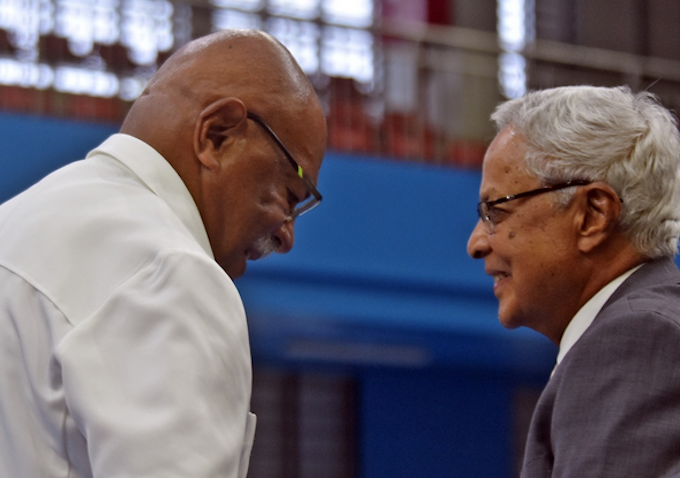
    Prime Minister Sitiveni Rabuka with former prime minister Mahendra Chaudhry
    Prime Minister Sitiveni Rabuka with former prime minister Mahendra Chaudhry . . . apology accepted during the Girmit Day Thanksgiving and National Reconciliation church service at the Vodafone Arena in Suva. Image: Jonacani Lalakobau/The Fiji Times

    The FLP leader said those who benefitted were the elite in Fijian society, not ordinary people.

    Chaudhry said this was obvious from current statistics which showed that currently the iTaukei surveyed made up 75 percent of those living in poverty.

    He said poverty reports in the early 1990s showed practically a balance in the number of Fijians and Indo-Fijians living in poverty.

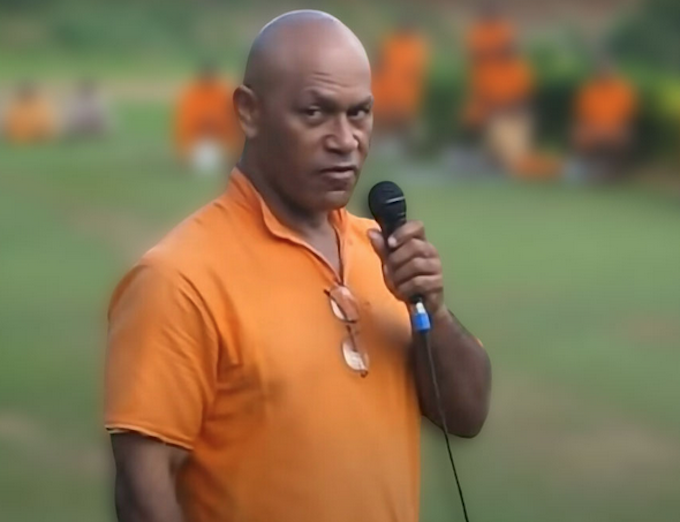
    Prisoner George Speight speaking to inmates in 2011
    Prisoner George Speight speaking to inmates in 2011 . . . he and his rogue gunmen seized then Prime Minister Mahendra Chaudhry and his government hostage in a 2000 crisis that lasted for 56 days. Image: Fijivillage News/YouTube screenshot

    The former prime minister says it was obvious that the coups had done nothing to improve the quality of life of the ordinary indigenous iTaukei.

    Instead, he said the coups had had a devastating impact on the entire socio-economic fabric of Fiji’s society, putting the nation decades behind in terms of development.


    Fiji Women’s Crisis Centre coordinator Shamima Ali reflects on the 2000 coup.

    Chaudhry said the sorry state of Fiji today — “the suffering of our people and continued high rate of poverty, deteriorating health and education services, the failing infrastructure and weakened state of our economy” — were all indicators of how post-coup governments had failed to deliver on the expectations of the people.

    He said: “It is time for us to rise above discredited notions of racism and fundamentalism and embrace progressive, liberal thinking.”

    Chaudhry added that leaders needed to be judged on their vision and performance and not on their colour and creed.

    Republished with permission from FijiVillage News.

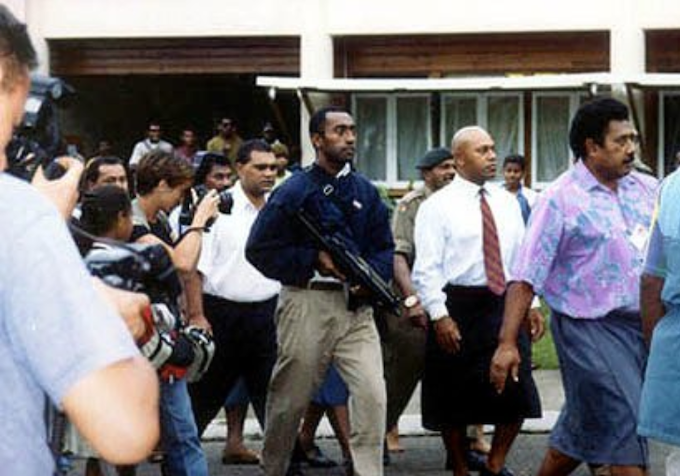
    2000 attempted coup leader George Speight with a bodyguard
    2000 attempted coup leader George Speight with a bodyguard and supporters during the siege drama in May 2000. Image: Fijivillage News

    This post was originally published on Asia Pacific Report.

  • Ali Kazak: born Haifa, 1947; died May 17 2025, Thailand

    By Helen Musa in Canberra

    Former Palestinian diplomat and long-time Canberra identity Ali Kazak died on Saturday en route to Palestine.

    Sources at the Canberra Islamic Centre report that he was recovering from heart surgery and died during a stopover in Thailand.

    Kazak was born in Haifa in 1947 and grew up in Syria as a Palestinian refugee. He and his mother were separated from his father when Israel was created in 1948 and Kazak was only reunited with his father in 1993.

    In 1968, while at Damascus University, Kazak had been invited to join the Palestine National Liberation Movement (Fateh) and joined its political wing.

    He migrated to Australia in 1970 where he became the founder, publisher and co-editor of the Australian newspaper, Free Palestine, also authoring among many books, The Jerusalem Question and Australia and the Arabs.

    Kazak was the driving force behind the establishment in 1981 of the Palestine Human Rights Campaign and was appointed by the PLO executive committee as the PLO’s representative to Australia, NZ and the Pacific region.

    In 1982, he established the Palestine Information Office, which was recognised by the Australian government in 1989 as the office of the Palestine Liberation Organisation, and then further recognised in 1994 as the General Palestinian Delegation.

    As Palestinian Ambassador, Kazak initiated the establishment of the NSW State and Australian Federal Parliamentary Friends of Palestine, as well as the Victorian, South Australian and NZ Parliamentary Friends of Palestine.

    Always a passionate advocate, in 1986 he became the first person to call for adjudication by the Australian Press Council of stereotyped reporting of Palestinians.

    After retiring from diplomacy, he became the managing director of the consultancy company Southern Link International, but continued to comment on Palestinian affairs and Gaza.

    His most recent article was published in the Pearls and Irritations: John Menadue’s Public Policy journal on May 16, titled The third Nakba in Israel’s war of genocide: Why does the Albanese government shirk its responsibility?

    Arrangements are being made to return his body from Thailand to Australia for internment.

    Helen Musa is the Canberra City News arts editor. This article was first published by City News.

    This post was originally published on Asia Pacific Report.

  • Pacific Media Watch

    American film star celebrity John Cusack, who describes himself on his x-page bio as an “apocalyptic shit-disturber”, has posted an open letter to the world denouncing the Israeli “mass murder” in Gaza and calling for “your outrage”.

    While warning the public to “don’t stop talking about Palestine/Gaza”, he says that the “hollow ‘both sides’ rhetoric is complicity with power”.

    “This is not a debate with two sides that can be normalised — and all the hired bullshit in print and on tv will never change the narrative,” he said.

    Palestinian freelance photojournalist Fatma Hassouna
    Palestinian freelance photojournalist Fatma Hassouna . . . murdered in an Israeli air strike on after it was announced about her film on Gaza being screened at the Cannes Film Festival. Image: Fatma Hassouna

    His statement comes as hundreds of directors, writers, actors have denounced Israeli genocide in Gaza and the film industry’s “silence,” “indifference” and “passivity” coinciding with the Cannes Film Festival.

    More than 350 prominent directors, writers and actors signed an open letter condemning the genocide and the “official inaction” of the film industry in regard to the mass suffering.

    The industry open letter was published on the first day of the Cannes festival. It began by calling attention to the fate of 25-year-old Fatma Hassouna, a Palestinian freelance photojournalist, who was murdered in an Israeli air strike on April 16.

    She was assassinated after it was announced that Iranian director Sepideh Farsi’s film Put Your Soul on Your Hand and Walk, in which she Hassouna was the star, had been selected in the ACID parallel, independent film section of the festival.

    She was about to get married.

    Cusack’s own open letter, offered as a template at X@JohnCusack last week, said:

    “To Whom it May Still Concern

    “There is a genocide unfolding before our eyes in Gaza. Not a metaphor, not a tragedy in the abstract — a genocide. Carried out in real time, in front of satellites, smartphones, and sanitized press conferences. And what has the so-called “land of the free” done? Applauded. Armed. Rationalised. Looked away.


    London protest: ‘No to another Nakba”    Video: Al Jazeera

    “The blood in Gaza does not just stain the hands of those launching the missiles. It stains every hand that signs off on the bombs, every hand that wrings itself in liberal anguish but does nothing, and every hand that beats its chest in right-wing bloodlust cheering it all on.

    “The American far right sees in this mass killing a projection of its own fantasies — walls, camps, and the unrelenting dehumanisation of the “other.” No surprise there. And where are the liberals? Their silence is violence. Their hollow “both sides” rhetoric is complicity with power. And mass murder. And the machine of empire—greased with our taxes, shielded by our media, and excused by our moral debauchery .
    How’s everybody at the Met gala doing tonight ?

    American actor John Cusack
    American actor John Cusack . . . “If you claim to care about justice – if you ever marched, ever lit a candle for any cause – then your voice should be raised now.” Image: Wikipedia

    “If you claim to care about justice — if you ever marched, ever lit a candle for any cause — then your voice should be raised now. Or it means nothing. The children of Gaza do not need your sorrow. They need your outrage. Your pressure. Your courage.

    “End the siege. End the weapons shipments. End the lies. Call this what it is: a genocide.

    “And if your politics cannot confront that—then your politics are worthless.

    “In furious solidarity

    “John Cusack”

    This post was originally published on Asia Pacific Report.

  • By Caleb Fotheringham, RNZ Pacific journalist

    Environmentalists in the Cook Islands have criticised former Prime Minister and Pacific Islands Forum (PIF) head Henry Puna for joining the board of a deep sea mining company.

    Puna, who finished his term as PIF secretary-general in May last year, played a pivotal part in the creation of multi-use marine park, Marae Moana, in 2017.

    The marine protected area extends over the entire country’s exclusive economic zone (EEZ), covering an area roughly the size of Mexico.

    It prohibits large-scale commercial fishing and seabed mining within 50 nautical miles of each of the 15 islands.

    Puna has now joined the board of deep sea mining company Cobalt Seabed Resources (CSR) — a joint venture between the Cook Islands government and the Belgian company Global Sea Mineral Resources.

    CSR is currently undertaking exploration in the Cook Islands EEZ, along with two other companies. It also has an exploration licence in the Clarion-Clipperton Zone, located in the high seas in the central Pacific Ocean.

    Environmental advocates say Puna’s new role conflicts with his conservation work.

    Simultaneously pushing for Marae Moana
    The Te Ipukarea Society said Puna was interested in the deep sea mining industry while simultaneously pushing for the creation of Marae Moana during his time as Prime Minister.

    “It is something to be wary about with his new role and maybe how he will go about green washing how the deep sea mining company operates within our waters and their actions,” the environmental charity’s director Alana Smith said.

    While in Parliament, Puna was an MP for the Northern Group atoll Manihiki.

    Manihiki resident Jean-Marie Williams said Puna was a good man

    However, Williams believes the benefits of deep sea mining will not be seen on his island.

    “We could make money out of it,” he said. “But who’s going to make money out of it? Definitely not the people of Manihiki.

    “The corporat[ions] will make money out of it.”

    ‘First to know’
    However, William Numanga, who previously worked for Puna as a policy analyst, does not view it like that.

    “Remember, Henry lives on an atoll, up north, so if there is any effect on the environment, he would be first to know,” Numanga said.

    “I do not think he will be putting aside a lot of the environmental concerns or challenges. He will be making sure that those environmental concerns are factored into this development process,” he added.

    Henry Puna in Rarotonga. November 2023
    Henry Puna ended his term as the PIF secretary general in May 2024 . . . a “passion for environmental protection”. Image: RNZ Pacific/Eleisha Foon

    He believes Puna’s “passion for environmental protection”, coupled with his desire for economic development, makes him a good fit for the role.

    Auckland doctoral student Liam Koka’ua said the company, which has the aim of extracting valuable minerals from the seabed, went against the purpose of Marae Moana.

    “If you truly believe Marae Moana is a place that must be protected at all costs and protected for our sustained livelihood and future and be protected for generations to come, then I don’t think rushing into an experimental industry that could potentially have huge impacts is aligned with those intentions,” Koka’ua said.

    RNZ Pacific has made multiple attempts to reach Puna for comment, but has yet to receive a response.

    However, in a statement, he said CSR was “uniquely placed to make advances for the people of the Cook Islands”.

    This article is republished under a community partnership agreement with RNZ.

    This post was originally published on Asia Pacific Report.

  • Australia has launched the world’s first UN Police Peacekeeping Training course tailored specifically for the Pacific region.

    The five-week programme, hosted by the Australian Federal Police (AFP), is underway at the state-of-the-art Pacific Policing Development and Coordination Hub in Pinkenba, Brisbane.

    AFP said “a landmark step” was developed in partnership with the United Nations, and brings together 100 police officers for training.

    AFP Deputy Commissioner Lesa Gale said the programme was the result of a long-standing, productive relationship between Australia and the United Nations.

    Gale said it was launched in response to growing regional ambitions to contribute more actively to international peacekeeping efforts.

    Participating nations are Federated States of Micronesia, Fiji, Kiribati, Nauru, Samoa, Solomon Islands, Timor-Leste, Tonga, Tuvalu, and Vanuatu.

    “This course supports your enduring contribution and commitment to UN missions in supporting global peace and security efforts,” AFP Northern Command acting assistant commissioner Caroline Taylor said.

    Pacific Command commander Phillippa Connel said the AFP had been in peacekeeping for more than four decades “and it is wonderful to be asked to undertake what is a first for the United Nations”.

    This article is republished under a community partnership agreement with RNZ.

    This post was originally published on Asia Pacific Report.

  • Asia Pacific Report

    Seven European nations have called on Israel to “immediately reverse” its military operations against Gaza and lift the food and water blockade on the besieged enclave.

    They have also called on all parties to immediately engage with “renewed urgency and good faith” for a ceasefire and release of all hostages.

    The seven countries are Iceland, Ireland, Luxembourg, Malta, Norway, Slovenia, and Spain.

    They declared that they would be silent in the face of the man-made humanitarian catastrophe in Gaza that has so far killed more than 50,000 men, women and children.

    Israeli forces continue bombarding Gaza yesterday, killing at least 125 Palestinians, including 36 in the so-called “safe zone” of al-Mawasi.

    The intensified Israeli attacks have rendered all the public hospitals in northern Gaza out of service, said the Health Ministry.

    The joint statement
    The joint statement signed by the leaders of all seven countries said:

    “We will not be silent in front of the man-made humanitarian catastrophe that is taking place before our eyes in Gaza. More than 50.000 men, women, and children have lost their lives. Many more could starve to death in the coming days and weeks unless immediate action is taken.

    “We call upon the government of Israel to immediately reverse its current policy, refrain from further military operations and fully lift the blockade, ensuring safe, rapid and unimpeded humanitarian aid to be distributed throughout the Gaza strip by international humanitarian actors and according to humanitarian principles. United Nations and humanitarian organisations, including UNRWA, must be supported and granted safe and unimpeded access.

    “We call upon all parties to immediately engage with renewed urgency and good faith in negotiations on a ceasefire and the release of all hostages, and acknowledge the important role played by the United States, Egypt and Qatar in this regard.

    “This is the basis upon which we can build a sustainable, just and comprehensive peace, based on the implementation of the two-State solution. We will continue to support the Palestinian people’s right to self-determination, and work in the framework of the United Nations and with other actors, like the Arab League and Arab and Islamic States, to move forward to achieve a peaceful and sustainable solution. Only peace can bring security for Palestinians, Israelis and the region, and only respect for international law can secure lasting peace.

    “We also condemn the further escalation in the West Bank, including East Jerusalem, with increased settler violence, the expansion of illegal settlements and intensified Israel military operations. Forced displacement or the expulsion of the Palestinian people, by any means, is unacceptable and would constitute a breach of international law. We reject any such plans or attempts at demographic change.

    “We must assume the responsibility to stop this devastation.”

    The letter was signed by Kristrún Frostadóttir, Prime Minister of Iceland; Micheál Martin, Taoiseach of Ireland; Luc Frieden, Prime Minister of Luxembourg; Robert Abela, Prime Minister of Malta; Jonas Gahr Støre, Prime Minister of Norway; Robert Golob, Prime Minister of Slovenia; and Pedro Sánchez, President of Spain.

    Gaza proves global system ‘incapable of solving issues’
    Meanwhile, the Iranian Foreign Minister, Abbas Araghchi, says the crisis in Gaza has once again demonstrated that “the pillars of the international system are incapable of resolving such issues”, reports Al Jazeera.

    It also showed “that the fate of the [Middle East] region cannot and should not remain at the mercy of extra-regional powers”, he said during a speech at the Tehran Dialogue Forum.

    “What is currently presented by these powers as the ‘regional reality’ is, in fact, a reflection of deeply constructed narratives and interpretations, shaped solely based on their own interests,” Iran’s top diplomat said.

    He said these narratives must be redefined and corrected from within the region itself.

    “West Asia is in dire need of a fundamental reassessment of how it views itself,” Araghchi said.


    This content originally appeared on Asia Pacific Report and was authored by APR editor.

    This post was originally published on Radio Free.

  • On May 8, tensions between India and Pakistan escalated. The previous day, India had launched Operation Sindoor, targeting nine terror bases in Pakistan. Shortly after the military strikes by India, Pakistan retaliated. There was shelling and cross-border firing in several areas of Jammu and Kashmir (J&K).

    Amid this geopolitical conflict, social media was flooded with reports of drone and missile sightings across both countries. There was panic, and worries over the damage an all-out war could cause. Adding to this chaos was the coverage by several Indian news channels that aired a series of sensational and unverified claims—from Islamabad facing attacks by the Indian armed forces to Pakistan army chief Asim Munir being arrested. As the conflict intensified and public confusion mounted, sections of the Indian media descended into a maddening frenzy.

    A May 11 report by Scroll said 21 Indian civilians, including five children, were killed in J&K in the first four days of the India-Pakistan conflict. On May 10, foreign secretary Vikram Misri announced that India and Pakistan agreed to a ceasefire.

    Among all the “news” reports broadcast during the cross-border shelling, one story stood out: the decimation of the Karachi port. Many visuals showing the Karachi port in shambles surfaced on social media and were aired on segments of news channels.

    Do These Visuals Show A Wrecked Karachi Port?

    Click to view slideshow.

    The short answer is no. The visuals aired by news outlets (added above) and circulated on social media had nothing to do with the Karachi Port.

    For instance, Bengali news channel ABP Ananda aired a clip that apparently showed damage at the Karachi port after it was struck by naval aircraft carrier INS Vikrant. However, an Alt News probe revealed that the footage was actually three months old. Worse, it depicted scenes in Philadelphia after a plane crash. Philadelphia is in Pennsylvania, United States, thousands of miles away from Karachi. The channel also used a screengrab from the viral video in their online report that INS Vikrant had attacked the Karachi port, as well as their X post. However, these were later replaced by generic images of INS Vikrant and a Pakistan flag, respectively. No clarification was issued by the outlet for using the misleading image. The news report and the X post claiming  ‘extreme action’ INS Vikrant led to the Karachi port being destroyed are still live.

    In another instance, an image purportedly showing INS Vikrant’s strike on the Karachi port was used in online reports of several news outlets, including Zee News, TV9, and Amar Ujala, among others. Alt News found that the image was actually from a 2023 naval drill, not an attack. In fact, the warship featured in the viral photo wasn’t INS Vikrant, but INS Vikramaditya.

    Similarly, another visual of an explosion illuminating the night sky and smoke billowing was also circulated with claims that it showed INS Vikrant attacking the Karachi port. Alt News found that the image dates back to 2020 and is of Israel’s airstrike on Gaza. It has no connection to the India-Pakistan conflict.

    On the intervening night of May 8 and 9, news outlets had almost established that the Indian Navy had wiped out the Karachi port. It remains unclear whether they picked visuals of attacks and destruction from social media or vice versa. It’s also hard to say which is worse.

    Alt News has debunked several such clips shared with claims that they were scenes from the Karachi port.

    The Spectacle by Broadcast Media

    Late on May 9, many mainstream news channels, such as India Today, Aaj Tak, TV9 Bharatvarsh, ABP and Zee News, declared that the Indian Navy had attacked the Karachi port. They said the international port, where major business happens, was in shambles.

    ‘Exclusive’ reportage by India Today had commentary from a retired lieutenant general of the Indian Army on the ‘attack’ by the Indian Navy. Tickers flashed ‘Indian Navy attacks Pakistan’s Karachi’ and ‘Exclusive’ across the screen.

    Its Hindi counterpart, Aaj Tak, too, claimed that the Indian Navy had launched an attack on the port. As if the sequence of events and the way they were described were not dramatic enough, a blaring siren played in the background for added theatrics. Senior journalist and anchor Anjana Om Kashyap, whose face has often been associated with the channel, kept telling her co-anchor Sweta Singh that “we” successfully surrounded Pakistan from all sides. The whole production was embellished by ‘representational’ visuals of drones being launched. These representative visuals were later circulated by Pakistan-based media outlets and social media users with claims that they showed the Pakistan Army firing with its multi-rocket launcher near the Line of Control (LoC). However, Alt News fact checked this visual and found that it was sourced from the video game Arma 3.

    Zee News also said on air that the navy launched an offensive on Karachi with similar siren sounds playing in the background to heighten the drama. During one of these segments, the anchor says, “Karachi port ko tabah kar diya hain nausena ne” (The Karachi port has been demolished by the Indian Navy). This is followed by sounds of applause.

    TV9 Bharatvansh’s broadcast said that multiple explosions were heard at the Karachi port. One of the hosts of the segment says in Hindi that before making their moves on the chess board, India set all the pieces beforehand; the preparations were so meticulous that no one had an inkling. It further said that they could not reveal anything more because it would be akin to revealing intel and “we are responsible” unlike the media in Pakistan.

    The sound of the siren was used here too. This was an “All-out attack against Pakistan,” the channel said, sharing these updates on X. “Heavy damage to Karachi port due to Indian strike”.

    ABP News, too, claimed that the Indian Navy attacked Karachi. The anchor said that nearly 12 explosions were ‘reportedly’ heard in Karachi.

    By May 10, the Directorate General Fire Service, Civil Defence and Home Guards had to issue an advisory directing media channels to refrain from using air raid siren sounds in their broadcast segments. “Routine use of sirens may likely to reduce the sensitivity of civilians towards the air raids sirens,” the directive said.

    Trolls Come For The Telly

    While the Indian media was busy running these segments and propagating myths about the Karachi port, posts from social media users in Pakistan came as a brutal reality check. At 5:29 am on May 9, one social media user said, “I even woke up after sleeping, but according to Indian media, Karachi had been destroyed and I had died”. On the bulletin by Times Now Navbharat that Karachi port was attacked by INS Vikrant, another user wrote, “I think they put the wrong Karachi location in Google Maps!” One user chimed in saying, “Can someone from the indian navy currently taking over Karachi closest to my location come over I need someone to watch my baby while i pray”? Another user, seemingly confused, asked which Karachi they were showing.

    Click to view slideshow.


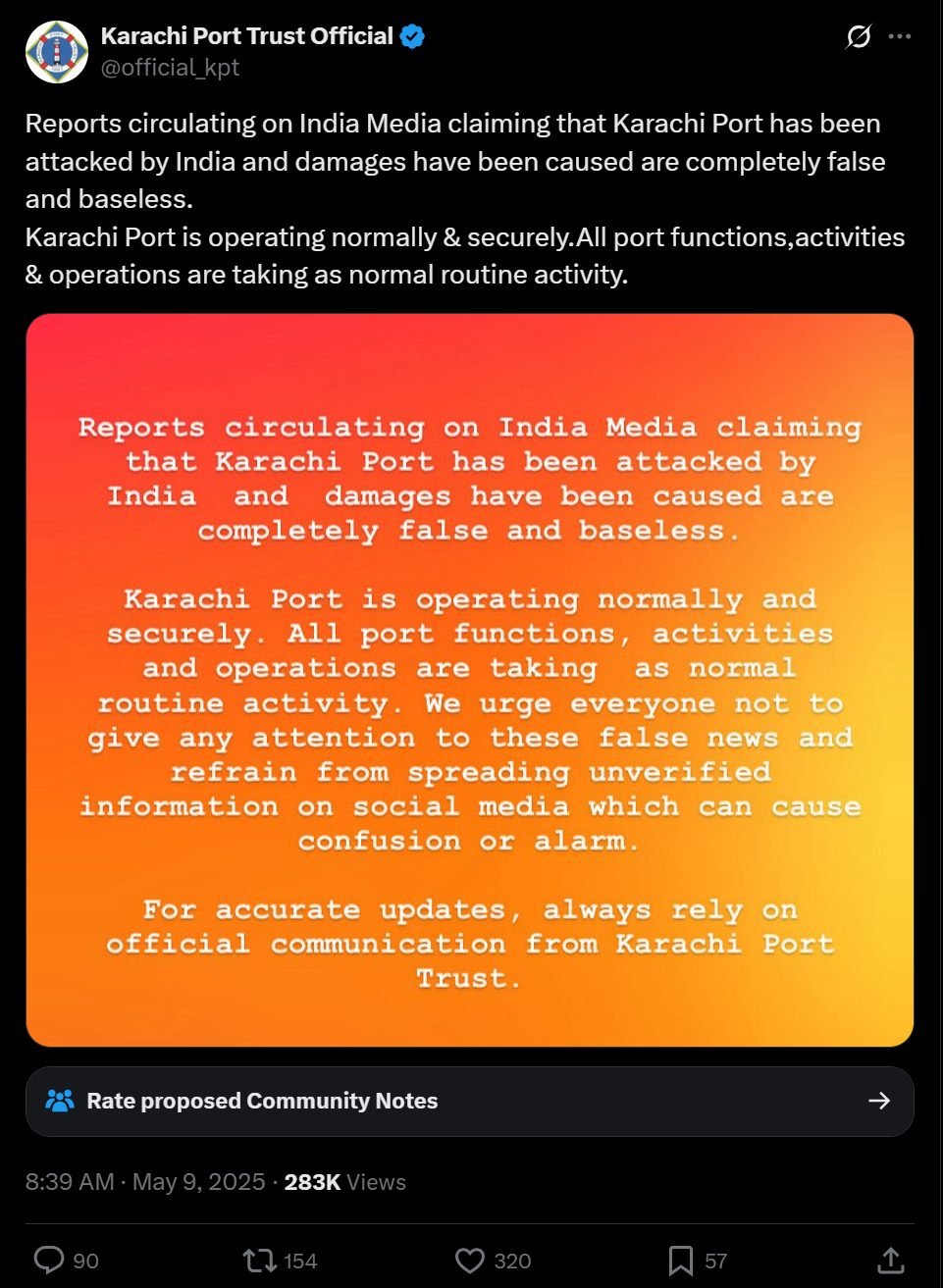
    Jibes from Pakistani accounts were one thing, but then came an official statement from the Karachi Port Trust. At 8:40 am on May 9, they said they were “operating normally & securely. All port functions, activities & operations are taking as normal routine activity.” They called the Indian media coverage “completely false and baseless”.  (Archive)

    An hour before this statement was shared, the port had already said that they were safe and their X account had been hacked. This came barely minutes after a post saying “Karachi Port has sustained heavy damage following a strike by India, resulting in unacceptable loss of property. Emergency response efforts are underway. Updates on restoration will be provided regularly. We stand resilient. #IndianNavyAction #IndiaPakistanWar #KarachiPort” was made from this account. (Archives 1, 2)

    To make clear the point that the port sustained no damage, Pakistan-based journalist Sanjay Sadhwani (@sanjaysadhwani2) posted a video of himself standing near the Karachi port at 5:25 am on May 9. (Archive)

    How Not To Report During Conflict

    This was not a case of a source going rogue or one reporter or channel getting something wrong, which can very well happen. This was a battery of news outlets making viewers believe something completely fictional in a war-like situation. A major port like Karachi being destroyed would have significantly escalated tensions. The blaring sirens and visuals of INS Vikrant may have given viewers a sense that these were sights and sounds from the site of conflict. They had little reason to doubt it since multiple channels were airing it.

    And all this despite some Indian journalists, such as WION foreign affairs editor Sidhant Sibal, clarifying that there was “No Indian Navy Action at Karachi.”

    In a press briefing on May 9, foreign secretary Vikram Misri, colonel Sofiya Qureshi, and wing commander Vyomika Singh gave updates on Pakistan’s drone attack and India’s subsequent military retaliation. At no point during this did they say anything about military action by the navy or any ‘offensive’ launched in Karachi.

    Even on May 11, Indian Navy vice admiral AN Pramod said that Indian Navy warships “remain deployed in the northern Arabian Sea in a decisive and deterrent posture with full readiness and capacity to strike select targets at sea and on land, including Karachi, at a time of our choosing”. He did not once mention that the navy had carried out an attack.

    It’s hard to find a word that fully captures the reportage that unfolded late on May 8. It was not only embarrassing and irresponsible, but absurd.

    A country’s citizens, teetering on the edge for any updates on what was happening, were led to believe that India was launching offensives in areas of civilian habitation in Pakistan and using warships as a final blow to ‘attack’ a major port. All this when the Indian defence forces kept reiterating that their military strikes were non-escalatory, focused and measured. An average citizen could have been panic-sticken and afraid. And then to be told that none of it happened is slightly bizarre.

    In future, the ‘destruction’ of the Karachi port will serve as an example of what not to do when reporting in sensitive times of conflict.

    The post The fictional strikes on the Karachi port and what it says about Indian media appeared first on Alt News.


    This content originally appeared on Alt News and was authored by Oishani Bhattacharya.

    This post was originally published on Radio Free.

  • Asia Pacific Report

    About 2000 New Zealand protesters marched through the heart of Auckland city today chanting “no justice, no peace” and many other calls as they demanded an immediate ceasefire in Gaza and an end to the Israeli atrocities in its brutal war on the besieged Palestinian enclave.

    For more than 73 days, Israel has blocked all food, water, and medicine from entering Gaza, creating a man-made crisis with the Strip on the brink of a devastating famine.

    Israel’s attacks killed more than 150 and wounded 450 in a day in a new barrage of attacks that aid workers described as “Gaza is bleeding before our eyes”.

    in Auckland, several Palestinian and other speakers spoke of the anguish and distress of the global Gaza community in the face of Western indifference to the suffering in a rally before the march marking the 77th anniversary of the Nakba — the “Palestinian catastrophe”.

    “There are cracks opening up all around the world that haven’t been there for 77 years,” said Palestine Solidarity Network Aotearoa (PSNA) co-chair John Minto in an inspired speech to the protesters.

    “Right through the news media, journalists are up in arms against their editors and bosses all around the world.

    “We’ve got politicians in Britain speaking out for the first time. Some conservative politician got standing up the other day saying, ‘I supported Israel right or wrong for 20 years, and I was wrong.’

    ‘The world is coming right’
    “Yet a lot of the world has been wrong for 77 years, but the world is coming right. We are on the right side of history, give us a big round of applause.”

    Minto was highly critical of the public broadcasters, Television New Zealand and Radio New Zealand, saying they relied too heavily on a narrow range of Western sources whose credibility had been challenged and eroded over the past 19 months.

    PSNA co-chair John Minto
    PSNA co-chair John Minto . . . .capturing an image of the march up Auckland’s Queen Street in protest over the Israeli genocide in Gaza. Image: APR

    He also condemned their “proximity” news value, blaming it for news editors’ lapse of judgment on news values because Israelis “spoke English”.

    Minto told the crowd that that they should be monitoring Al Jazeera for a more balanced and nuanced coverage of the war on Palestine.

    His comments echoed a similar theme of a speech at the Fickling Centre in Three Kings on Thursday night and protesters followed up by picketing the NZ Voyager Media Awards last night with a light show of killed Gazan journalists beamed on the hotel venue.

    Protesters at the NZ Voyager Media Awards protesting against unbalanced media coverage of Israel's genocide
    Protesters at the NZ Voyager Media Awards protesting last night against unbalanced media coverage of Israel’s genocide in Gaza. Image: Achmat Eesau/PSNA

    About 230 Gazan journalists have been killed in the war so far, many of them allegedly targeted by the Israeli forces.

    Minto said he could not remember a previous time when a New Zealand government had remained silent in the face of industrial-scale killing of civilians anywhere in the world.

    “We have livestreamed genocide happening and we have our government refusing to condemn any of Israel’s war crimes,” he said.

    NZ ‘refusing to condemn war crimes’
    “Yet we’ve got everybody in the leadership of this government having condemned every act of Palestinian resistance yet refused to condemn the war crimes, refused to condemn the bombing of civilians, and refused to condemn the mass starvation of 2.3 million people.

    “What a bunch of depraved bastards run this country. Shame on all of them.”

    Palestinian speaker Samer Almalalha
    Palestinian speaker Samer Almalalha . . . “Everything we were told about international law and human rights is bullshit.” A golden key symbolising the right of return for Palestinians is in the background. Image: APR

    Palestinian speaker Samer Almalalha spoke of the 1948 Nakba and the injustices against his people.

    “Everything we were told about international law and human rights is bullshit. The only rights you have are the ones you take,” he said.

    “So today we won’t stand here to plead, we are here to remind you of what happened to us. We are here to take what is ours. Today, and every day, we fight for a free Palestine.”

    Nakba survivor Ghazi Dassouki
    Nakba survivor Ghazi Dassouki . . . a harrowing story about a massacre village. Image: Bruce King
    survivor

    and he told a harrowing story from his homeland. As a 14-year-old boy, he and his family were driven out of Palestine during the Nakba.

    He described “waking up to to the smell of gunpowder” — his home was close to the Deir Yassin massacre on April 9, 1948, when Zionist militias attacked the village killing 107 people, including women and children.

    ‘Palestine will be free – and so will we’
    Green Party co-leader Chlöe Swarbrick said: “What we stand for is truth, justice, peace and love.

    “Palestine will be free and, in turn, so will we.”

    She said only six more MPs were needed to have the numbers to have the Greens’ Unlawful Occupation of Palestine Sanctions Bill passed in Parliament.

    Israel has blocked all food, water, and medicine from entering Gaza, creating a man-made crisis, with the integrated food security agency IPC warning that famine could be declared any time between now and September, reports Al Jazeera.

    The head of the UN Children’s Fund, Catherine Russell, said the world should be shocked by the killing of 45 children in Israeli air strikes in just two days.

    Instead, the slaughter of children in Gaza is “largely met with indifference”.

    “More than 1 million children in Gaza are at risk of starvation. They are deprived of food, water and medicine,” Russell wrote in a post on social media.

    “Nowhere is safe for children in Gaza,” she said.

    “This horror must stop.”

    "The coloniser lied" . . . a placard in today's Palestine rally in Auckland
    “The coloniser lied” . . . a placard in today’s Palestine rally in Auckland. Image: APR

    Famine worst level of hunger
    Famine is the worst level of hunger, where people face severe food shortages, widespread malnutrition, and high levels of death due to starvation.

    According to the UN’s criteria, famine is declared when:

    • At least 20 percent (one-fifth) of households face extreme food shortages;
    • More than 30 percent of children suffer from acute malnutrition; and
    • At least two out of every 10,000 people or four out of every 10,000 children die each day from starvation or hunger-related causes.

    Famine is not just about hunger; it is the worst humanitarian emergency, indicating a complete collapse of access to food, water and the systems necessary for survival.

    According to the World Health Organisation (WHO), since Israel’s complete blockade began on March 2, at least 57 children have died from the effects of malnutrition.

    "Stop Genocide in Gaza"
    “Stop Genocide in Gaza” . . . the start of the rally with PSNA co-chair Maher Nazzal on the right. Image: APR

    This post was originally published on Asia Pacific Report.

  • SPECIAL REPORT: By Moera Tuilaepa-Taylor, RNZ Pacific manager

    At this year’s May graduation ceremony, Te Herenga Waka Victoria University’s Luamanuvao Dame Winnie Laban, was awarded an honorary doctorate in recognition for her contribution to education.

    Although she has now stepped down from the role, Luamanuvao served as the university’s Assistant Vice-Chancellor, Pasifika, for 14 years. In that time has worked tirelessly to raise Pasifika students’ achievement.

    “It’s really important that they [Pasifika students] make the most of the opportunities that education has to offer,” she said.

    “Secondly, education teaches you how to write, to research, to critique, but more importantly, become an informed voice and considering what’s happening in society now with AI and also technology and social media, it’s really important that we can tell our stories and share our values, and we counter that by receiving a good education and applying ourselves to do well.”

    When asked about the importance of service, Luamanuvao explained “there’s a saying in Samoan, ‘o le ala i le pule o le tautua’ so the road to authority and leadership is through service”.

    “And we’ve always been taught how important it is not to indulge in our own individual success, but to always become a voice and support our brothers and sisters, and our families and in our communities who are especially struggling.”

    An event celebrating Lumanuvao's doctorate honour. L-R, Juliana Faataualofa Lafaialii – Samoa's Deputy Head of Mission/Counsellor to NZ, Philippa Toleafoa, Luamanuvao Dame Winnie Laban PhD, His Excellency Afamasaga Faamatalaupu Toleafoa Samoa's High Commissioner to NZ and Labour MP Pesetatamalelagi Barbara Edmonds
    Juliana Faataualofa Lafaialii, Samoa’s Deputy Head of Mission/Counsellor to NZ (from left); Philippa Toleafoa; Luamanuvao Dame Winnie Laban; Afamasaga Faamatalaupu Toleafoa, Samoa’s High Commissioner to NZ; and Labour MP Pesetatamalelagi Barbara Edmonds . Image: Pesetatamalelagi Barbara Edmonds/RNZ Pacific

    As she accepted her honorary doctorate, she spoke about the importance of women taking on leadership roles.

    ‘Our powerful women’
    “Yes, many Pacific people will know how powerful our women are, especially our mothers, our grandmothers, and great grandmothers. We actually come from cultures of very powerful and very strong women . . .  it’s not centered in the individual women. It’s centered on the well-being of our families, and our communities. And that’s what women leadership is all about in the Pacific.”

    She did not expect the honourary doctorate from Te Herenga Waka Victoria University because “I’ve always been aspirational for others. And we Pacific people have been brought up that we are the people of the ‘we’ and not the me.”

    The number of Pasifika students enrolled at the University, during Luamanuvao’s time as Assistant Vice-Chancellor, increased from 4.70 percent in 2010 to 6.64 pecent in 2024. She said she “would have loved to have doubled that number” so that it was more in line with the number of Pasifika people living in New Zealand.

    Luamanuvao Dame Winnie Laban and supporters during an International Women's day event in Wellington
    Luamanuvao Dame Winnie Laban and supporters during an International Women’s day event in Wellington. Image: RNZ Pacific

    Two of the initiatives she started, during her time at the University, was the Pasifika Roadshow taking information about university life out to the wider community and the Improving Pasifika Legal Education Project.

    Helping Pasifika Law students succeed was very important to her. While Pasifika make up make up only 3 percent of Lawyers, they are overrepresented in the legal system, comprising 12 percent of the prison population.

    Another passion of hers was encouraging Pasifika to enter academia. “I think we’ve had an increase in Pacific academics in some areas. For example, with the Faculty of Law, we’ve got two senior Pacific women in lecturer positions . . . We’ve also got four associate professors, and now I’ve finished, there’s also a vacancy for another.”

    Prior to her work in education Luamanuvao was the first Pasifika woman to enter New Zealand politics, in 1999.

    First Pacific woman MP
    “I was fortunate that when I ran for Parliament, I ran first as a list MP, and as you know, within the parties, they have selection process that are quite robust, and so I became the first Pacific woman MP.”

    “What motivated me was the car parts factory that closed in Wainuiomata, and most of the workers were men, but they were also Pacific, Māori and palagi, who basically arrived at work one morning and were told the factory was closing.”

    “But what really hit me, and hurt me, that these were not the values of Aotearoa. They’re not the values of our Pacific region. These are human beings, and for many men, particularly, to have a job, it’s about providing for your family. It’s about status.

    “So, if factories were going to close down, where was the planning to upskill them so they could continue in employment? None of them wanted to go for the unemployment benefit.

    “They wanted to continue in paid work. So it’s those milestones that I make it worthwhile. It’s just a pity, because election cycles are three years, and as you know, people will vote how they want to vote, and if there’s a change, all the hard work you’ve put in gets reversed and but fundamentally, I believe that New Zealand and Pacific people have wonderful values that all of us try to live by, and that will continue to feed the light and ensure that people have a choice.”

    Luamanuvao Winnie Laban and her husband Dr Peter Swain
    Luamanuvao Dame Winnie Laban PhD and her husband Dr Peter Swain. Image: Trudy Logologo/RNZ Pacific

    Although she first entered Parliament as a list MP, she subsequently won the Mana electorate seat. She retained the seat ,for the Labour party, from 2002 until she stepped away from politics in 2010.

    During that time she was Minister of Pacific Peoples, 2007-2008, and even though Labour was defeated in the 2008 election, she continued to hold the Mana seat by a comfortable margin.

    Mentoring many MPs
    Although she has left political life, Luamanuvao has also been involved in mentoring many Pasifika Members of Parliament, and helping them cope with the challenges and opportunities that go with the role.

    One of the primary motivators in her life has been the struggles of her parents, who left Samoa in 1954 to build a better future for their children, in New Zealand. She acknowledged that all of her successes can be attributed to her parents and the sacrifices they made.

    “Yes, well, I think everybody can look at a genealogy of history of families leaving their homeland to come to Aotearoa, why, to build a better life and opportunities, including education for their children.

    “And I often remind our generation of young people now that your parents left their home, for you. And I’ve often reflected because my parents have passed away on the pain of leaving their parents, but there was always this loving generosity in that both my parents were the eldest of huge families.

    “They left everything for them, and actually arrived in New Zealand with very little. But there was this determination to succeed.

    “Secondly, they are a minority in a country where they’re not the majority, or they are the indigenous people of their country. So also, overcoming those barriers, their hard work, their dreams, but more importantly, the huge love for our communities and fairness and justice was installed in Ken and I my brother, from a very young age, about serving and about giving and about reciprocity.”

    Although she has left her role in tertiary education Luamanuvao vows to continue working to support the next generation of Pasifika leaders, in New Zealand and around the Pacific region.

    Her lifelong commitment to service, continues as she’s a founding member of The Fale Malae Trust, a group whose vision is to build an internationally significant, landmark Fale Malae on the Wellington waterfront.

    This article is republished under a community partnership agreement with RNZ.

    This post was originally published on Asia Pacific Report.

  • COMMENTARY: By Saige England in Christchurch

    “RNZ is failing in its duty to inform the public of an entirely preventable humanitarian catastrophe.”

    Tautoko to Jeremy Rose, Ramon Das and Eugene Doyle for this critique of a review of RNZ’s coverage of a genocide.

    Sadly, this highlights RNZ’s failure to report the genocide from the perspective of the very real victims — more journalists killed in Gaza than the whole of World War Two, aid workers murdered and buried, 17,000 children, including babies, who will never ever grow.

    I respect so many RNZ journalists and have always supported this important national broadcaster but it is time for it to pull up its pants, ditch the propaganda and report from the field of truth.

    I carry my Jewish ancestors in standing against genocide and calling for reports that show the truth of the travesty.

    For reporting on protests I have been pepper sprayed by thugged-up police donning US-style gloves and glasses (illegally carrying pepper spray and tasers).

    I was banned from my own town hall when I tried — with my E Tu press card — to attend the deputy leader Winston Peters’ media conference.

    This government does not want the truth reported, it seems.

    I have reported from the fields of invasion and conflict. I’ve taught journalism and communications. Good journalists remember journalism ethics. Reports from the point of view of the oppressor support the oppressor.

    Humanitarianism means not reporting from the perspective of a mercenary army — an army that has been enforcing apartheid for decades, and which is invoking a policy of extermination for expansion.

    Please read this media review and think of how you would feel if someone demanded that you leave your home. Palestinians have faced oppression and apartheid and “unhoming” for decades.

    Think of the intolerable weight of grief you would carry if a sniper put a bullet between the eyes of a child you love and know.

    Report on the victims. And stop subscribing to propaganda.

    Saige England is a journalist and author, and a member of the Palestine Solidarity Network Aotearoa (PSNA). She is a frequent contributor to Asia Pacific Report. This was first published as a social media post.


    This content originally appeared on Asia Pacific Report and was authored by Pacific Media Watch.

    This post was originally published on Radio Free.

  • By Caleb Fotheringham, RNZ Pacific journalist

    West Papuans in Merauke claim the Indonesian government is stealing land to build its global “food barn” and feed its population of 280 million.

    Indonesia denies this and says all transactions are lawful.

    President Prabowo Subianto’s administration wants Indonesia to be able to feed its population without imports as early as 2028, with the greater goal of exporting food.

    To get there, Indonesia plans to convert millions of hectares into farmland.

    Wensi Fatubun, from Merauke in Indonesian-occupied Papua close to Papua New Guinea’s border, said forests where he grew up were being cleared.

    “[The] Indonesian government took the land for the [food] security project, it was not consulted with or consented to by Indigenous Papuans,” Fatubun said.

    Prabowo’s goal is a continuation of his predecessors.

    National food estate project
    In 2020, President Joko Widodo announced the establishment of a national food estate project which aimed at opening up new areas of farmland outside the Java main island,

    It is similar to the failed Merauke Integrated Food and Energy Estate, spearheaded by President Susilo Bambang Yudhoyono in 2010.

    About 1.3 million hectares were set aside in Merauke for it — half for food crops, 30 percent sugar cane, and 20 percent for palm.

    A report from the US Department of Agriculture said it encountered resistance from locals and legal challenges.

    “Approximately 90 percent of the targeted areas were forest, which provided a source of livelihood for many locals. Accordingly, the development plans became a flashpoint for local activists concerned about environmental and biodiversity impacts,” the report said.

    Probowo’s government has a more ambitious goal of opening up 3 million ha of agricultural land in Merauke — two million for rice and one million for sugarcane.

    Human Rights Watch Indonesia researcher Andreas Harsono said President Prabowo had elevated the “so-called food security issue”.

    “[The President] wants Merauke in West Papua to be the so-called national food barn. This deforestation land grabbing is much more deeper in Merauke than in the past.”

    Conflict has escalated
    Harsono said conflict had escalated in West Papua and was now on par with some of the most violent periods in the past 60 years, but he was not sure if it was connected to the President’s focus on food security.

    BenarNews reported that about 2000 troops had been deployed late last year in Merauke to provide security at a 2 million ha food plantation.

    Rosa Moiwend, from Merauke, said the soldiers worked alongside farmers.

    “They are expected to teach local farmers how to use mechanical agriculture equipment,” Moiwend said.

    “But as West Papuan people, the presence of the military in the middle of the community, watching communities activities, people’s movement when they travel from one place to another, actually creates fear among the people in Merauke.”

    Like Harsono and Fatubun, Moiwend said “land grabs” were happening.

    However, she said it still involved a land broker, which created a facade of a fair procedure.

    ‘We do not sell land’
    “Indigenous Merauke, indigenous Marind people like myself and my people, we do not sell land because land belongs to the community. It is communal land.”

    However, a spokesperson for Indonesia’s Embassy in Wellington said all processes and steps involving land sales had been lawful, “always respecting the inclinations of local tribes”.

    “Its development always involving local authorities, especially chief tribes for the consent of their ulayat (traditional land),” they said.

    “There is no land grab without consent, and the government also working on the biodiversity conservation and forestry production to create space harmonisation model with Conservation International, Medco Group, and couple of other independent organisations.”

    Catherine Delahunty at Parliament, 5 April 2023.
    Former Green Party MP now West Papuan campaigner Catherine Delahunty . . . New Zealand and Australia are failing the citizens of West Papua. Image: Johnny Blades/VNP

    ‘They are stripping communities’ – campaigner
    West Papua Action Aotearoa spokesperson Catherine Delahunty, formerly a Green Party MP, said the region was part of the lungs of the Pacific, which was now being destroyed.

    “The plan has been around for a long time but it seems to have escalated under Prabowo,” Delahunty said.

    “They are stripping those lands and stripping those communities who live there from their traditional foods such as the sago palm to turn the whole of Merauke into sugar cane, rice and palm plantations.

    “The effects have been massive and they’re just getting worse.”

    She said New Zealand and Australia — the two “most powerful” governments in the South Pacific — were failing in their obligations to the citizens of West Papua.

    “You could almost justify, because it’s a long way away from other parts of the world, that Europe and the northern hemisphere don’t really understand West Papua but there’s no excuse for us.

    “These people are in our region but they’re not white people. I think there’s a huge element of racism towards Papuans and towards Pacific nations who aren’t perceived as important in the Western worldview.”

    She said there was willingness to trade with Indonesia as a regional powerhouse, and New Zealand did not want to rock the boat.

    That coupled with a media blackout made it easy for Indonesia to act with impunity, Delahunty said.

    This article is republished under a community partnership agreement with RNZ.

    This post was originally published on Asia Pacific Report.

  • RNZ News

    The Media Council of Papua New Guinea (MCPNG) has called on Prime Minister James Marape to stop Telikom PNG silencing and suppressing media personnel.

    Telikom PNG, which is 100 percent government-owned, has two key outlets: FM100 radio and EMTV.

    Recently, it sacked FM100 talkback host Culligan Tanda after he featured opposition East Sepik Governor Allan Bird on his show, following the most recent vote of no confidence.

    Local media report that Tanda was initially suspended for three weeks without pay on April 22, and subsequently terminated.

    MCPNG president Neville Choi said this was just the latest example of media suppression by Telikom PNG going back to 2018.

    He said that he himself was sacked in 2019 after EMTV had run a story quoting the former New Zealand Prime Minister Jacinda Ardern saying she would not be riding in one of the PNG government’s luxury Maseratis during an APEC (Asia-Pacific Economic Cooperation) meeting in Port Moresby.

    Choi said the story, though correct, was perceived as painting the government of the day in a “negative light”.

    ‘Free, robust media essential’
    He said a “free, robust, and independent media is an essential pillar of democracy”.

    “It is the cornerstone of allowing freedom of speech, and freedom of expression.

    “Being in a position of power and authority gives no one, especially brown-nosing public servants wanting to score brownie points with the sitting government administration, the right to suppress media workers who are only doing their jobs, and doing it well,” he said.

    The council also reminded the management’s of state-owned media organisations, that the Organic Law on the Independent Commission Against Corruption (ICAC) defined corrupt conduct by public officials and the dishonest exercising and abuse of official functions.

    According to a PNG Haus Bung report, Marape has directed his chief of staff to get to the bottom of the issue.

    He has also denied government interference, according to a report by Exeprenuer.

    “We don’t get down that low as to editorial content,” Marape was quoted as saying by the the online magazine.

    In December, Marape gave “full assurance that my government will not dilute the media’s role.”

    This article is republished under a community partnership agreement with RNZ.

    This post was originally published on Asia Pacific Report.

  • Nakba Day today marks 15 May 1948 — the day after the declaration of the State of Israel — when the Palestinian society and homeland was destroyed and more than 750,000 people forced to leave and become refugees.  The day is known as the “Palestinian Catastrophe”. 

    By Soumaya Ghannoushi

    US President Donald Trump’s tour of Riyadh, Abu Dhabi and Doha is not diplomacy. It is theatre — staged in gold, fuelled by greed, and underwritten by betrayal.

    A US president openly arming a genocide is welcomed with red carpets, handshakes and blank cheques. Trillions are pledged; personal gifts are exchanged. And Gaza continues to burn.

    Gulf regimes have power and wealth. They have Trump’s ear. Yet they use none of it — not to halt the slaughter, ease the siege or demand dignity.

    In return for their riches and deference, Trump grants Israel bombs and sets it loose upon the region.

    This is the real story. At the heart of Trump’s return lies a project he initiated during his first presidency: the erasure of Palestine, the elevation of autocracy, and the redrawing of the Middle East in Israel’s image.

    “See this pen? This wonderful pen on my desk is the Middle East, and the top of the pen — that’s Israel. That’s not good,” he once told reporters, lamenting Israel’s size compared to its neighbours.

    To Trump, the Middle East is not a region of history or humanity. It is a marketplace, a weapons depot, a geopolitical ATM.

    His worldview is forged in evangelical zeal and transactional instinct. In his rhetoric, Arabs are chaos incarnate: irrational, violent, in need of control. Israel alone is framed as civilised, democratic, divinely chosen. That binary is not accidental. It is ideology.

    Obedience for survival
    Trump calls the region “a rough neighbourhood” — code for endless militarism that casts the people of the Middle East not as lives to protect, but as threats to contain.

    His $110 billion arms deal with Saudi Arabia in 2017 was marketed as peace through prosperity. Now, he wants trillions more in Gulf capital. As reported by The New York Times, Trump is demanding that Saudi Arabia invest its entire annual GDP — $1 trillion — into the US economy.

    Riyadh has already offered $600 billion. Trump wants it all. Economists call it absurd; Trump calls it a deal.

    This is not negotiation. It is tribute.

    And the pace is accelerating. After a recent meeting with Trump, the UAE announced a 10-year, $1.4 trillion investment framework with the US.

    This is not realpolitik. It is a grotesque spectacle of decadence, delusion and disgrace

    Across the Gulf, a race is underway — not to end the genocide in Gaza, but to outspend one another for Trump’s favour, showering him with wealth in return for nothing.

    The Gulf is no longer treated as a region. It is a vault. Sovereign wealth funds are the new ballot boxes. Sovereignty — just another asset to be traded.

    Trump’s offer is blunt: obedience for survival. For regimes still haunted by the Arab Spring, Western blessing is their last shield. And they will pay any price: wealth, independence, even dignity.

    To them, the true threat is not Israel, nor even Iran. It is their own people, restless, yearning, ungovernable.

    Democracy is danger; self-determination, the ticking bomb. So they make a pact with the devil.

    Doctrine of immunity
    That devil brings flags, frameworks, photo ops and deals. The new order demands normalisation with Israel, submission to its supremacy, and silence on Palestine.

    Once-defiant slogans are replaced by fintech expos and staged smiles beside Israeli ministers.

    In return, Trump offers impunity: political cover and arms. It is a doctrine of immunity, bought with gold and soaked in Arab blood.

    They bend. They hand him deals, honours, trillions. They believe submission buys respect. But Trump respects only power — and he makes that clear.

    He praises Russian President Vladimir Putin: “Is Putin smart? Yes . . .  that’s a hell of a way to negotiate.” He calls Turkish President Recep Tayyip Erdogan “a guy I like [and] respect”. Like them or not, they defend their nations. And Trump, ever the transactional mind, respects power.

    Arab rulers offer no such strength. They offer deference, not defiance. They don’t push; they pay.

    And Trump mocks them openly. King Salman “might not be there for two weeks without us”, he brags. They give him billions; he demands trillions.

    It is not just the US Treasury profiting. Gulf billions do not merely fuel policy; they enrich a family empire. Since returning to office, Trump and his sons have chased deals across the Gulf, cashing in on the loyalty they have cultivated.

    A hotel in Dubai, a tower in Jeddah, a golf resort in Qatar, crypto ventures in the US, a private club in Washington for Gulf elites — these are not strategic projects, but rather revenue streams for the Trump family.

    Reward for ethnic cleansing
    The precedent was set early. Former presidential adviser Jared Kushner, Trump’s son-in-law, secured $2 billion from Saudi Arabia’s sovereign wealth fund shortly after leaving office, despite internal objections.

    The message was clear: access to the Trumps has a price, and Gulf rulers are eager to pay.

    Now, Trump is receiving a private jet from Qatar’s ruling family — a palace in the sky worth $400 million.

    This is not diplomacy. It is plunder.

    And how does Trump respond? With insult: “It was a great gesture,” he said of the jet, before adding: “We keep them safe. If it wasn’t for us, they probably wouldn’t exist right now.”

    That was his thank you to Saudi Arabia, the UAE and Qatar; lavish gifts answered with debasement.

    And what are they rewarding him for? For genocide. For 100,000 tonnes of bombs dropped on Gaza. For backing ethnic cleansing in plain sight. For empowering far-right Israeli politicians, including Finance Minister Bezalel Smotrich and Prime Minister Benjamin Netanyahu, as they call for Gaza’s depopulation.

    For presiding over the most fanatically Zionist, most unapologetically Islamophobic administration in US history.

    Still, they ask nothing, while offering everything. They could have used their leverage. They did not.

    The Yemen precedent proves they can act. Trump halted the bombing under Saudi pressure, to Netanyahu’s visible dismay. When they wanted a deal, they struck one with the Houthis.

    And when they sought to bring Syria in from the cold, Trump complied. He agreed to meet former rebel leader turned President Ahmed al-Sharaa — a last-minute addition to his Riyadh schedule — and even spoke of lifting sanctions, once again at Saudi Arabia’s request, to “give them a chance of greatness”.

    No US president is beyond pressure. But for Gaza? Silence.

    Price of silence
    While Trump was being feted in Riyadh, Israel rained American-made bombs on two hospitals in Gaza. In Khan Younis, the European Hospital was reportedly struck by nine bunker-busting bombs, killing more than two dozen people and injuring scores more.

    Earlier that day, an air strike on Nasser Hospital killed journalist Hassan Islih as he lay wounded in treatment.

    As Trump basked in applause, Israel massacred children in Jabalia, where around 50 Palestinians were killed in just a few hours.

    This is the bloody price of Arab silence, buried beneath the roar of applause and the glitter of tributes.

    This week marks the anniversary of the Nakba — and here it is again, replayed not through tanks alone, but through Arab complicity.

    With every cheque signed, Arab rulers do not secure history’s respect. They seal their place in its sordid footnotes of shame

    The bombs fall. The Gaza Strip turns to dust. Two million people endure starvation. UN food is gone.

    Hospitals overflow with skeletal infants. Mothers collapse from hunger. Tens of thousands of children are severely malnourished, with more than 3500 on the edge of death.

    Meanwhile, Smotrich speaks of “third countries” for Gaza’s people. Netanyahu promises their removal.

    And Trump — the man enabling the annihilation? He is not condemned, but celebrated by Arab rulers. They eagerly kiss the hand that sends the bombs, grovel before the architect of their undoing, and drape him in splendour and finery.

    While much of the world stands firm — China, Europe, Canada, Mexico, even Greenland – refusing to bow to Trump’s bullying, Arab rulers kneel. They open wallets, bend spines, empty hands — still mistaking humiliation for diplomacy.

    They still believe that if they bow low enough, Trump might toss them a bone. Instead, he tosses them a bill.

    This is not realpolitik. It is a grotesque spectacle of decadence, delusion and disgrace.

    With every cheque signed, every jet offered, every photo op beside the butcher of a people, Arab rulers do not secure history’s respect. They seal their place in its sordid footnotes of shame.

    Soumaya Ghannoushi is a British Tunisian writer and expert in Middle East politics. Her journalistic work has appeared in The Guardian, The Independent, Corriere della Sera, aljazeera.net and Al Quds. This article was first published by the Middle East Eye. A selection of her writings may be found at: soumayaghannoushi.com and she tweets @SMGhannoushi.

    This post was originally published on Asia Pacific Report.
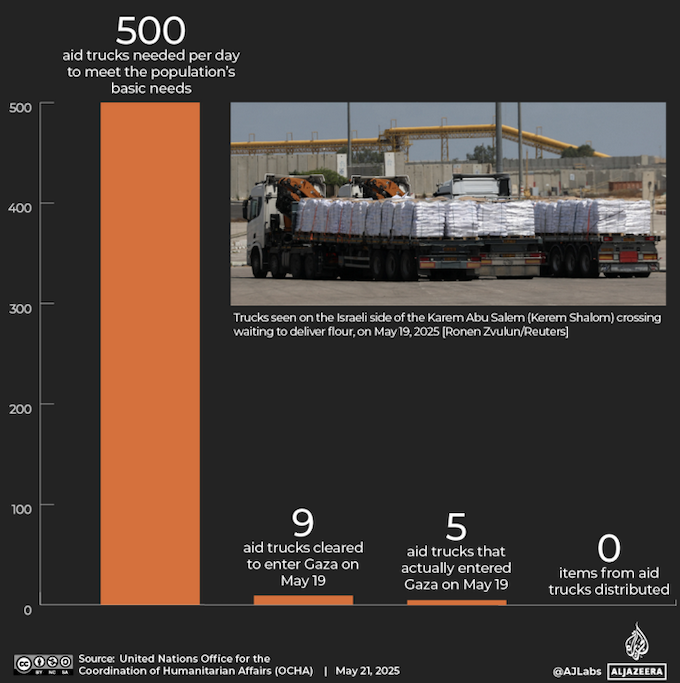
  • By Russel Norman

    The iconic Greenpeace flagship Rainbow Warrior will return to Aotearoa this year to mark the 40th anniversary of the bombing of the original campaign ship at Marsden Wharf in Auckland by French secret agents on 10 July 1985.

    The return to Aotearoa comes at a pivotal moment — when the fight to protect our planet’s fragile life-support systems has never been as urgent, or more critical.

    Here in Aotearoa, the Luxon government is waging an all-out war on nature, and on a planetary scale, climate change, ecosystem collapse, and accelerating species extinction pose an existential threat.

    Greenpeace Aotearoa's Dr Russel Norman
    Greenpeace Aotearoa’s Dr Russel Norman . . . “Our ship was targeted because Greenpeace and the campaign to stop nuclear weapons testing in the Pacific were so effective.” Image: Greenpeace

    As we remember the bombing and the murder of our crew member, Fernando Pereira, it’s important to remember why the French government was compelled to commit such a cowardly act of violence.

    Our ship was targeted because Greenpeace and the campaign to stop nuclear weapons testing in the Pacific were so effective. We posed a very real threat to the French government’s military programme and colonial power.

    It’s also critical to remember that they failed to stop us. They failed to intimidate us, and they failed to silence us. Greenpeace only grew stronger and continued the successful campaign against nuclear weapons testing in the Pacific.

    Forty years later, it’s the oil industry that’s trying to stop us. This time, not with bombs but with a legal attack that threatens the existence of Greenpeace in the US and beyond.

    We will not be intimidated
    But just like in 1985 when the French bombed our ship, now too in 2025, we will not be intimidated, we will not back down, and we will not be silenced.

    We cannot be silenced because we are a movement of people committed to peace and to protecting Earth’s ability to sustain life, protecting the blue oceans, the forests and the life we share this planet with,” says Norman.

    In the 40 years since, the Rainbow Warrior has sailed on the front lines of our campaigns around the world to protect nature and promote peace. In the fight to end oil exploration, turn the tide of plastic production, stop the destruction of ancient forests and protect the ocean, the Rainbow Warrior has been there to this day.

    Right now the Rainbow Warrior is preparing to sail through the Tasman Sea to expose the damage being done to ocean life, continuing a decades-long tradition of defending ocean health.

    This follows the Rainbow Warrior spending six weeks in the Marshall Islands where the original ship carried out Operation Exodus, in which the Greenpeace crew evacuated the people of Rongelap from their home island that had been made uninhabitable by nuclear weapons testing by the US government.

    In Auckland this year, several events will be held on and around the ship to mark the anniversary, including open days with tours of the ship for the public.

    Dr Russel Norman is executive director of Greenpeace Aotearoa.

    This post was originally published on Asia Pacific Report.

  • By Russel Norman

    The iconic Greenpeace flagship Rainbow Warrior will return to Aotearoa this year to mark the 40th anniversary of the bombing of the original campaign ship at Marsden Wharf in Auckland by French secret agents on 10 July 1985.

    The return to Aotearoa comes at a pivotal moment — when the fight to protect our planet’s fragile life-support systems has never been as urgent, or more critical.

    Here in Aotearoa, the Luxon government is waging an all-out war on nature, and on a planetary scale, climate change, ecosystem collapse, and accelerating species extinction pose an existential threat.

    Greenpeace Aotearoa's Dr Russel Norman
    Greenpeace Aotearoa’s Dr Russel Norman . . . “Our ship was targeted because Greenpeace and the campaign to stop nuclear weapons testing in the Pacific were so effective.” Image: Greenpeace

    As we remember the bombing and the murder of our crew member, Fernando Pereira, it’s important to remember why the French government was compelled to commit such a cowardly act of violence.

    Our ship was targeted because Greenpeace and the campaign to stop nuclear weapons testing in the Pacific were so effective. We posed a very real threat to the French government’s military programme and colonial power.

    It’s also critical to remember that they failed to stop us. They failed to intimidate us, and they failed to silence us. Greenpeace only grew stronger and continued the successful campaign against nuclear weapons testing in the Pacific.

    Forty years later, it’s the oil industry that’s trying to stop us. This time, not with bombs but with a legal attack that threatens the existence of Greenpeace in the US and beyond.

    We will not be intimidated
    But just like in 1985 when the French bombed our ship, now too in 2025, we will not be intimidated, we will not back down, and we will not be silenced.

    We cannot be silenced because we are a movement of people committed to peace and to protecting Earth’s ability to sustain life, protecting the blue oceans, the forests and the life we share this planet with,” says Norman.

    In the 40 years since, the Rainbow Warrior has sailed on the front lines of our campaigns around the world to protect nature and promote peace. In the fight to end oil exploration, turn the tide of plastic production, stop the destruction of ancient forests and protect the ocean, the Rainbow Warrior has been there to this day.

    Right now the Rainbow Warrior is preparing to sail through the Tasman Sea to expose the damage being done to ocean life, continuing a decades-long tradition of defending ocean health.

    This follows the Rainbow Warrior spending six weeks in the Marshall Islands where the original ship carried out Operation Exodus, in which the Greenpeace crew evacuated the people of Rongelap from their home island that had been made uninhabitable by nuclear weapons testing by the US government.

    In Auckland this year, several events will be held on and around the ship to mark the anniversary, including open days with tours of the ship for the public.

    Dr Russel Norman is executive director of Greenpeace Aotearoa.

    This post was originally published on Asia Pacific Report.

  • A minute-long video of a seemingly injured man in military fatigues is being widely circulated on social media with claims that he is an Indian Air Force (IAF) pilot whose plane was struck down by Pakistan during the recent military conflict between the two countries. The footage shows several individuals assisting him and a parachute entangled in a nearby tree. After some time, a military chopper can also be seen.


    This clip is among a series of unverified visuals that have gone viral after India launched Operation Sindoor on May 7, targeting nine terror camps in Pakistan. Shortly after, Pakistan retaliated with heavy mortar shelling in forward villages along the Line of Control (LoC) in the Poonch and Rajouri areas of Jammu and Kashmir. The LoC is an over 700-km de facto military border separating the two countries. The strikes by the Indian forces came a fortnight after terrorists, with alleged links to Pakistan, killed 26 civilians in Pahalgam, Kashmir. As of May 13, a ceasefire is underway but the situation remains tense. Both sides have claimed they managed to inflict significant damage to the other. In this context, the pilot’s video is being circulated by many Pakistan-based social media accounts to hint that Pakistan had an edge over India since their planes were being downed.

    X user Zafar Shirazi shared the clip on May 9 and claimed that an Indian fighter jet had crashed. The caption says that it wasn’t clear whether the pilot ejected from the jet himself, or if Indian forces shot down the plane he was flying mistakenly, or if he was captured by Pakistan. At the time of writing this, the post had nearly 850,000 views. Another Pakistan-based handle @HarisJ828 also shared the video. This post had over 1.5 million views at the time this was written. (Archived versions of these posts are here and here.) Several other social media users from Pakistan also shared the video, amplifying similar claims.

    Click to view slideshow.


    Fact Check

    A reverse image search of some key frames from the video led us to the same video uploaded on Facebook on March 7, 2025 by PTC news. The caption said: “Indian Air Force fighter plane Jaguar crashes” with the hashtag Ambala air base.

    Building on this, we performed a keyword search that led us to several news articles from March 7, 2025, when an Indian Air Force Jaguar fighter jet crashed in Ambala. 

    PTC News reported that the fighter jet crashed near the Baladwala village, Morni, after taking off from Ambala air base for a training flight. It said that the pilot narrowly escaped the crash by ejecting himself from the plane with a parachute. News agency PTI, too, had reported on the incident.

    According to a Times of India report, at around 3:30 PM on March 7, two Morni residents working near the area where the plane crashed heard a loud noise and saw smoke rising and rushed there. They found aircraft wreckage and the injured pilot. Villagers quickly gathered at the scene and offered the pilot water, which he declined. Soon after, an Indian Air Force (IAF) helicopter, along with IAF officials, police personnel, and fire tenders, arrived at the crash site. The report added that villagers commended the pilot for skillfully steering the aircraft away from residential areas, thus averting a potential disaster.

    A post on the official X handle of the Indian Air Force (@IAF_MCC) from March 7 confirmed the chain of events. It said that the crash happened due to a system malfunction and that before ejecting safely from the aircraft, the pilot ensured that the jet was away from any habitation.

    Additionally, a fact-check report by India’s Press Information Bureau, or PIB, also confirmed that the viral video being linked to the ongoing India-Pakistan tensions was actually from March 7, 2025, two months before India launched Operation Sindoor.

    To sum up, the video of the injured Indian Air Force pilot is from March 7, two months ago, when a Jaguar fighter jet crashed near Ambala during routine training. It has no relation to the India-Pakistan conflict.

    The post Viral video of injured IAF pilot is from March, unrelated to the India-Pakistan conflict appeared first on Alt News.

    This content originally appeared on Alt News and was authored by Ankita Mahalanobish.

  • By Susana Suisuiki, RNZ Pacific Waves presenter/producer, and Christina Persico, RNZ Pacific bulletin editor

    The co-founder of Auckland’s Fiji Centre is concerned that Indo-Fijians are not classified as Pacific Islanders in Aotearoa.

    This week marks the 146th anniversary of the arrival of the first indentured labourers from British India to Fiji, who departed from Calcutta.

    On 14 May 1879, the first group of 522 labourers arrived in Fiji aboard the Leonidas, a labour transportation ship.

    That date in 1987 is also the date of the first military coup in Fiji.

    More than 60,000 men, women and children were brought to Fiji under an oppressive system of bonded labour between 1879 and 1916.

    Today, Indo-Fijians make up 33 percent of the population.

    While Fiji is part of the Pacific, Indo-Fijians are not classified as Pacific peoples in New Zealand; instead, they are listed under “Indian” and “Asian” on the Stats NZ website.

    Lasting impact on Fiji
    The Fiji Centre’s Nik Naidu, who is also a co-founder of the Whānau Community Centre and Hub, said that he understood Fiji was the only country in the Pacific where the British implemented the indentured system.

    “It is also a sad legacy and a sad story because it was basically slavery,” he said.

    “The positive was that the Fiji Indian community made a lasting impact on Fiji.

    “They continue to be around 30 percent of the population in Fiji, and I think significantly in Aotearoa, through the migration, the numbers are, according to the community, over 100,000 in New Zealand.”

    Organiser Nikhil Naidu
    Fiji Centre co-founder Nikhil Naidu . . . Girmit Day “is also a sad legacy and a sad story because it was basically slavery.” Image: Asia Pacific Report

    However, he said the discussions on ethnic classification “reached a stalemate” with the previous Pacific Peoples Minister.

    “His basic argument was, well, ethnographically, Fijian Indians do not fit the profile of Pacific Islanders,” he said.

    Then-minister Aupito William Sio said in 2021 that, while he understood the group’s concerns, the classification for Fijian Indians was in line with an ethnographic profile which included people with a common language, customs and traditions.

    Aupito said that profile was different from indigenous Pacific peoples.

    StatsNZ and ethnicity
    “StatsNZ recognises ethnicity as the ethnic group or groups a person self-identifies with or has a sense of belonging to,” Aupito said in a letter at the time.

    It is not the same as race, ancestry, nationality, citizenship or even place of birth, he said.

    “They have identified themselves now that the system of government has not acknowledged them.

    “Those conversations have to be ongoing to figure out how do we capture the data of who they are as Fijian Indians or to develop policies around that to support their aspirations.”

    Indentured labourers in Fiji Photo: Fiji Girmit Foundation
    Girmitiyas – Indentured labourers – in Fiji . . . shedding light on the harsh colonial past in Fiji. Image: RNZ Pacific/Fiji Girmit Foundation

    Naidu believes the ethnographic argument was a misunderstanding of the request.

    “The request is not to say, like Chinese in Samoa, they are not indigenous to Samoa, but they are Samoans, and they are Pacific Chinese.

    “So there is the same thing with Fijian Indians. They are not wanting to be indigenous.

    Different from mainland Indians
    “They do want to be recognised as separate Indians in the Pacific because they are very different from the mainland Indians.

    “In fact, most probably 99 percent of Fijian Indians have never been to India and have no affiliations to India because during the Girmit they lost all connections with their families.”

    However, Naidu told Pacific Waves the community was not giving up.

    “There was a human rights complaint made — again that did not progress in the favour of the Fijian Indians.

    “Currently from . . . Fiji Centre’s perspective, we are still pursuing that.

    “We have also had a discussion with Stats NZ about the numbers and trying to ascertain just why they have not managed to put a separate category, so that we can look at the number of Fijian Indians and also relative to Pacific Islanders.”

    Fijian Prime Minister Sitiveni Rabuka told RNZ Pacific that as far as Fiji is concerned, Fijians of Indian descent are Fijian.

    Question to minister
    Last year, RNZ Pacific asked the current Minister for Pacific Peoples, Dr Shane Reti, on whether Indo-Fijians were included in Ministry of Pacific Peoples as Pacific people.

    In a statement, his office said: “The Ministry for Pacific Peoples is undertaking ongoing policy work to better understand this issue.”

    Meanwhile, the University of Fiji’s vice-chancellor is asking the Australian and British governments to consider paying reparation for the exploitation of the indentured labourers more than a century ago.

    Professor Shaista Shameem told the ABC that they endured harsh conditions, with long hours, social restrictions and low wages.

    She said the Australian government and the Colonial Sugar Refinery of Australia benefitted the most financially and it was time the descendants were compensated.

    While some community leaders have been calling for reparation, Naidu said there were other issues that needed attention.

    He said it had been an ongoing discussion for many decades.

    “It is a very challenging one, because where do you draw the line? And it is a global problem, the indenture system. It is not just unique to Fiji.

    “Personally, yes, I think that is a great idea. Practically, I am not sure if it is feasible and possible.”

    Focus on what unites, says Rabuka
    Fiji is on a path for reconciliation, with leaders from across the political spectrum signing a Forward Fiji Declaration in 2023, hoping to usher in a new era of understanding between indigenous Fijians and Indo-Fijians.

    Rabuka announced a public holiday to commemorate Girmit Day in 2023.

    In his Girmit Day message this year, Rabuka said his government was dedicated to bringing unity and reconciliation between all races living in Fiji.

    “We all know that Fiji has had a troubled past, as it was natural that conflicts would arise when a new group of people would come into another’s space,” he said.

    “This is precisely what transpired when the Indians began to live or decided to live as permanent citizens.

    “There was distrust as the two groups were not used to living together during the colonial days. Indigenous Fijians did not have a say in why, and how many should come and how they should be settled here. Fiji was not given a time to transit.

    “The policy of indenture labour system was dumped on us. Naturally this led to tensions and misunderstandings, reasons that fuelled conflicts that followed after Fiji gained independence.”

    He said 146 years later, Fijians should focus on what unites rather than what divides them.

    “We have together long enough to know that unity and peace will lead us to a good future.”

    This article is republished under a community partnership agreement with RNZ.

    This post was originally published on Asia Pacific Report.

  • BANGKOK, Thailand (13 May 2025) – The Asian Forum for Human Rights and Development (FORUM-ASIA) and the Asian NGO Network on National Human Rights Institutions (ANNI) congratulate the National Human Rights Commission of Nepal (NHRCN) for maintaining its “A” accreditation status from the Global Alliance of National Human Rights Institutions (GANHRI)-Sub-Committee on Accreditation (SCA).

    On 23 April 2025, the SCA announced the decision following its review of the Commission’s compliance with the Paris Principles in March 2024. 

    The Paris Principles are international standards that national human rights institutions (NHRIs) must meet in order to be recognised as credible, independent, transparent, and effective in carrying out their mandate to protect and promote human rights. The SCA grants NHRIs an “A” status if they fully comply with the Paris Principles. 

    “FORUM-ASIA and ANNI commend the NHRCN for maintaining its ‘A’ status. We look forward to seeing the NHRCN alongside Nepali authorities take the necessary steps to address the SCAs’ recommendations. We are here to support the Commission in strengthening its mandate and effectiveness in compliance with the Paris Principles,” said Mary Aileen Diez-Bacalso, Executive Director of FORUM-ASIA.


    Amend the NHRC Act

    FORUM-ASIA and ANNI join the SCA and civil society in urging the Government of Nepal to accelerate its efforts to oversee the passage of the proposed amendments to the National Human Rights Commission (NHRC) Act without further delays. 

    The NHRC Act 2012 (2068 BS) is a foundational law that defines the structure, mandate, powers, and functioning of the Commission. It gives effect to Article 248 of the Constitution of Nepal, which establishes the NHRC as a constitutional body.

    In September 2024, the NHRCN submitted a draft bill proposing amendments to the Act. If passed, the amended Act would enhance the Commission’s compliance with the Paris Principles by clarifying the selection and appointment process for its commissioners, thereby ensuring a participatory, transparent, and inclusive process. 

    The amendment legally requires the appointment of at least two women to leadership positions. It also includes clear provisions on preventing conflicts of interest. 

    The NHRCN previously underwent special accreditation reviews in 2022 and 2023 following civil society’s growing concerns over the Commission’s appointment process. In its latest accreditation review, the SCA urged the NHRCN to address the following:

    1. Low uptake of recommendations by the government
    2. Lack of pluralism in its leadership 
    3. Inadequate resources and funding 
    4. Vague provisions on the dismissal of Commissioners 

    The SCA recognizes the NHRCN’s efforts in advocating for the strengthening of the NHRC Act to address some of the aforementioned concerns; however, delays at the government level continue to impede reforms. 


    Heed the Commission’s recommendations 

    The SCA echoed civil society’s long-standing concern over how a vast majority of the NHRCN’s recommendations remain either partially implemented or completely unaddressed. 

    As an NHRI, the NHRC Nepal performs its advisory function by issuing recommendations to the various state and non-state actors in order to address human rights concerns. It plays an important role in recommending steps to address human rights violations and in ensuring domestic laws and practices adhere to international human rights standards.  

    Since its establishment in 2000, only 15.3 per cent of the 1,573 recommendations have been fully implemented. Meanwhile, nearly 40 percent is only partially implemented and 45.5 percent has had no progress at all.

    Despite provisions in the NHRC Act that mandate government agencies to respond to the said recommendations, none of the 444 recommendations made by the NHRCN in the past four years were ever implemented. 

    FORUM-ASIA and ANNI call on Nepali authorities to fully implement Article 17 of the NHRCN Act by responding to the Commission’s recommendations in a timely and substantive manner. Likewise, the NHRCN must follow up with the government to promote meaningful engagement and ensure that all of its unaddressed recommendations are effectively resolved.

    At the same time, we encourage the NHRCN to enhance its internal follow-up mechanisms, including more robust public communication, parliamentary engagement, and collaboration with civil society to monitor progress and generate momentum for enforcement. 


    For the PDF version of this statement, click here

    The post [Statement] NEPAL: ANNI commends NHRCN for maintaining its ‘A’ status, government must amend NHRC Act first appeared on FORUM-ASIA.

    This post was originally published on FORUM-ASIA.

  • RNZ Pacific

    An escape of a 13-year-old girl from a hostage crisis on the border of Papua New Guinea’s Western and Hela provinces has boosted hopes for the rescue of her fellow captives.

    The group of 10 people was taken captive early on Monday morning at Adujmari.

    PNG Police Commissioner David Manning has called the perpetrators “domestic terrorists” and warned that officers were able to use lethal force if needed to secure the release of the hostages.

    The girl Aiyo’s fellow captives are four adults — a teacher and his wife, and a health worker and his wife — along with another four school girls.

    The Post-Courier reports that the kidnappers have demanded the government pay a ransom of K500,000 (NZ$207,000) for the safe release of the captives.

    Aiyo has told police that the kidnappers had threatened to harm the group if no money was forthcoming.

    Assistant Commissioner of Police, Commander Steven Francis, said officers were working around the clock to secure their safe release.

    Locals in the Adujmari district have so far raised more than K11,000 (NZ4500) to try and negotiate the safe release of the group.

    This article is republished under a community partnership agreement with RNZ.

    This post was originally published on Asia Pacific Report.