Category: Oil, Gas, Coal, Pipelines

  • If the camel is a committee’s version of a horse, then the concluding notes of the 30th United Nations Conference of the Parties (COP30) at Belém, Brazil, were bound to be ungainly, weak, and messy. That is what you get from an emitting gathering of over 56,000 mostly subsidised attendees keen to etch their way into posterity. Leave aside the fact that some of the conference mongers might have been well-meaning, the final agreement was always going to be significant for what it omitted. It was also notable for lacking any official role from the United States, a country where Make America Great Again has all but parted ways with the notion of climate change.

    For three decades, these events have drawn attention to climate change ostensibly to address it. For three decades, the stuttering, the vacillation, the manipulation have become habitual features, making the very object of condemnation – fossil fuels – both sacred and profane. The message is that humanity must do without it lest we let planet Earth cook; the message, equally, is that it can’t. “COP30 will be the ‘COP of truth,’” Brazilian President Luiz Inácio Lula de Silva declared extravagantly at the 80th United Nations General Assembly in September, immediately dooming it to comic platitude. The sacred and profane – fossil fuels – would remain strong at the end of the show.

    There was some initial promise that attending member states might do something different. Initial pressure was exerted by the Colombia-led coalition (“mutirão” or joint effort) of 83 countries to abandon the use of fossil fuels and chart a Roadmap to decarbonise the global economy.

    Then came a soggy threat from a group of 29 countries in a letter to the Brazilian COP presidency that any agreement lacking a commitment to phase out fossil fuels would be blocked. “We cannot support an outcome that does not include a roadmap for implementing a just, orderly, and equitable transition away from fossil fuels,” emphasised the authors, which included such countries as Austria, Belgium, France, Germany, Palau, the UK, and Vanuatu. This expectation is shared by a vast majority of Parties, as well as by science and by the people who are watching our work closely.”  The threat duly sagged into oblivion.

    The resulting COP 30 agreement, with the aspirational title “Global Mutirão: Uniting humanity in a global mobilization against climate change” was a tepid affair. There were the usual tired acknowledgments – the importance of addressing climate change (yes, that’s what they were there for); the need to conserve, protect and restore nature and ecosystems through reversing deforestation (wonderful); the human rights dimension (rights to health, a clean, healthy and sustainable environment); the importance of equity and the principle of common albeit differentiated responsibilities specific to the States (fine sentiments) known as the just transition mechanism.

    Most conspicuously, the final agreement makes no mention of fossil fuels (it made a unique appearance in COP28), tantamount to discussing a raging pandemic without ever mentioning the devastating virus. As Jasper Inventor, Deputy Programme Director of Greenpeace International acidly remarked: “COP30 didn’t deliver ambition on the 3Fs – fossil fuels, finance and forests.” In what can only be regarded as an observation born from defeat and desperation, UN Climate Change Secretary Simon Stiell offered his summary: “Many countries wanted to move faster on fossil fuels, finance, and responding to climate disasters. I understand that frustration, and many of those I share myself.  But let’s not ignore how far this COP has moved forward.” In this area of diplomacy, movement is excruciatingly relative.

    There remained a modish insistence on voluntariness, with COP30 President André Corrêa de Lago announcing a voluntary “roadmap” to move away from fossil fuels. Officially, the sacred and the profane could not be mentioned; unofficially, other countries and civil society could do what they damn well wished to when addressing climate change challenges. To that end, the process would take place outside the formal UN processes and merge with the Columbia-steered “coalition of the willing”. The parties would otherwise, as the agreement stipulated, “launch the Global Implementation Accelerator” to “keep 1.5°C within reach”, yet another woolly term conceived by committee.

    Colombia and the Netherlands were quick to announce their co-hosting of the First International Conference on the Just Transition Away from Fossil Fuels. “This will be,” explained Irene Vélez Torres, Colombia’s Minister for Environment and Sustainable Development, “a broad intergovernmental, multisectoral platform complementary to the UNFCCC [United Nations Framework Convention on Climate Change] designed to identify legal, economic, and social pathways that are necessary to make the phasing out of fossil fuels.”

    Admirable as this may be, a note of profound resignation reigned among many in the scientific community. While COP30 might have been seen as a meeting of “truth and implementation”, the truth, charged Johan Rockström, the director of the Potsdam Institute for Climate Impact Research, was that keeping the target of 1.5°C within reach entailed bending “the global curve of emissions downward in 2026 and then reduce emissions by at least 5% per year.” And that’s saying nothing about implementation.

    The post Fossil Fuels at COP30: Sacred, Profane and Unmentioned first appeared on Dissident Voice.

    This post was originally published on Dissident Voice.

  • If you think Trump’s threat to invade Venezuela is about stopping the influx of drugs into the United States, you need to take a closer look at Project 2025. That document advocates American hegemony over the Western Hemisphere. But Trump does not read documents or strategy papers. He wants to bully the hemisphere and control its vast natural resources. His “Gulf of America” apparently includes the vast oil reserves of Venezuela. The socialist nation has the world’s largest proven reserves. Still, with its politics chaotic and its military weak, and its close relationships with China, Russia, and Iran, it is an obvious launching point for Trump’s Napoleonic march through the Americas. Besides, handing over Venezuela’s oil fields to American Big Oil is the least he can do for the oil and gas executives who ponied up about $450 million – at least according to public records – to get their shill back into the White House.

    His crowning gift to Big Oil may be the lucrative long-term investment opportunities they’ll have after his naval armada, which includes the world’s largest aircraft carrier, seizes Venezuela’s abundant fields. But there’s more. Trump got Congress to slash the industry’s taxes by another $18 billion, even though it already enjoyed billions in tax breaks. Additionally, he’s rolled back dozens and dozens of environmental regulations, opened public lands and waters for drilling, dismissed climate change as a hoax, and put fossil fuel executives in charge of public agencies.

    It’s not that Big Oil needs big new reserves. The world is awash in oil, and the US is the world’s leading producer. In fact, when both Biden and Trump put Alaskan oil fields up for bid, there were no serious takers. Yet Trump’s functionally irrational “Drill Baby Drill” energy policies call for even more production. Although oil corporations historically control prices through policies of planned scarcity, U.S. producers opened their spigots to consolidate a monopoly by glutting the market. This strategy not only drives out small independent producers. It even puts OPEC over a barrel. Yes, in the short term, this strategy has marginally cut into Big Oil’s profits, but the current small decline is an investment in long-term market control.

    Trump justifies military action and regime change in Venezuela by claiming that President Maduro heads the Cartel de Los Soles, which, he says, is a terrorist drug cartel. The U.S. Justice Department has even offered a $50-million reward for information leading to Maduro’s arrest. Once the U.S. declares it a terrorist organization, Trump will have an excuse to invade Venezuela. No: he can’t legally use military force without congressional authorization. The facts, however, fail to back Trump’s accusations. As Charlie Savage explains in a recent New York Times piece, this so-called cartel does not exist. The phrase is a decades-old figure of speech mocking the Venezuelan military, who take drug money. More importantly, according to the United Nations Office on Drugs and Crime, Venezuela is not a cocaine producing country, and most Colombian cocaine comes through the Pacific coast. The U.S. Drug Enforcement Administration corroborates this by noting that 84% of seized cocaine in the United States comes from Colombia. This is not to suggest that drug trafficking doesn’t exist in Venezuela. It does, but the government does not appear to participate in it as Trump claims. In fact, one observer in a CNN interview maintained that Maduro has seized hundreds of aircraft and almost a hundred vessels in his attempt to stop the drug trade. As for the deadly fentanyl epidemic that he’s always talking about, the major suppliers are Mexico and China. Why isn’t Trump sending his armada to those places?

    The charge that drug trafficking is a military-like threat to the United States is how Trump justifies regime change through military force. Ignoring Congress and defying the Constitution, Trump’s Department of War has already killed as many as 83 people in the Caribbean without showing a stick of evidence of criminal activity. Just as important, narco-trafficking is a legal matter, not a military one. His Caribbean murders and saber-rattling against Venezuela are shot through with illegality. A Congress with any teeth would impeach Trump for a third time. But then, presidents since Harry Truman have made a habit of using military power as if it were their exclusive property. And Congress pretends not to see. Just since the 1950s, U.S. presidents from Truman and Eisenhower through Obama and Trump have all used covert as well as overt military power with utter indifference to the Constitution, Congress, or public opinion. American presidents don’t take well to small nations that get in their way. Think Lumumba, the Bay of Pigs, Allende, and Saddam Hussein. Add oil to the mix, and you get the Eisenhower-directed CIA coup of a democratically elected government in Iran in 1953. That brilliant stroke of coercive diplomacy eventually led to the 1979 Islamic Revolution, the ouster of the US’s puppet Shah, a hostage crisis, an oil embargo, and Iran’s ongoing efforts to get the big bomb. Recall, too, the Suez Canal crisis of 1956 that almost triggered a war with the Soviet Union; and of course, the Gulf oil wars of 1991 and 2003 to 2011. As Robert Engler observed many years ago in his seminal work, The Politics of Oil, the oil industry is a powerful private government that transcends national boundaries in its quest to control the world’s petroleum resources. To illustrate, he recounts the story of Standard Oil’s partnership with the German I.G. Farben company at the beginning of World War II, a partnership based on the premise that countries come and go, but Standard Oil is forever. For the time being, Trump’s dream of being crowned King of the World and Big Oil’s pursuit of world domination happily align.

    The post Venezuela, Project 2025 and Big Oil’s Trump Investment first appeared on Dissident Voice.

    This post was originally published on Dissident Voice.

  • The US, under Trump, is unapologetically an empire operating without pretense. International law is for losers. A newly minted War Department, deploying the most lethal killing machine in world history, need not hide behind the sham of promoting democracy.

    Recall that in 2023, Trump boasted: “When I left, Venezuela was ready to collapse. We would have taken it over; we would have gotten all that oil.” As CEO of the capitalist bloc, Trump’s mission is not about to be restrained by respect for sovereignty. There is only one inviolate global sovereign; all others are subalterns.

    Venezuela – with our oil under its soil – is now in the crosshairs of the empire. Not only does Venezuela possess the largest petroleum reserves, but it also has major gold, coltan, bauxite, and nickel deposits. Of course, the world’s hegemon would like to get its hands on all that mineral wealth.

    But it would be simplistic to think that it is driven only by narrow economic motives. Leverage over energy flows is central to maintaining global influence. Washington requires control of strategic resources to preserve its position as the global hegemon, guided by its official policy of “full spectrum dominance.”

    For Venezuela, revenues derived from these resources enable it to act with some degree of sovereign independence. Most gallingly, Venezuela nationalized its oil, instead of gifting it to private entrepreneurs – and then used it to fund social programs and to assist allies abroad like Cuba. All this is anathema to the hegemon.

    Further pushing the envelope is Venezuela’s “all-weather strategic partnership” with China. With Russia, its most consequential defense ally, Venezuela ratified a strategic partnership agreement. Similarly, Venezuela has a strong anti-imperialist alliance with Iran. All three partners have come to Caracas’s defense, along with regional allies such as Colombia, Brazil, and Mexico.

    The US has subjected Venezuela’s Bolivarian Revolution to incessant regime-change aggression for its entire quarter-century of existence. In 2015, Barack Obama codified what economist Jeffrey Sachs calls a remarkable “legal fiction.”  His executive order designated Venezuela as an “extraordinary threat” to US national security. Renewed by each succeeding president, the executive order is really an implicit recognition of Venezuela’s Bolivarian Revolution as a counter-hegemonic alternative that challenges Washington’s world order.

    The latest US belligerence testifies to the success of the Venezuelan resistance. The effects of asphyxiating US-led sanctions, which had crashed the economy, have been partly reversed with a return to economic growth, leaving the empire with little alternative but to escalate its antagonism through military means.

    The AFP reports “tensions between Washington and Caracas have dramatically risen” as if the one-sided aggression were a tit-for-tat. Venezuela seeks peace, but has a gun held to its head.

    Reuters blames the victim, claiming that the Venezuelan government “is planning to…sow chaos in the event of a US air or ground attack.” In fact, President Nicolás Maduro has pledged “prolonged resistance” to Washington’s unprovoked assaults rather than meekly conceding defeat.

    The death toll from US strikes on alleged small drug boats off Venezuela, in the Pacific off Colombia and Ecuador, and as far north as Mexico now exceeds 75 and continues to rise. But not an ounce of narcotics has been confiscated. In contrast, Venezuela has seized 64 tons of drugs this year without killing anyone, as the Orinoco Tribune observes.

    Russian Foreign Ministry’s María Zakharova quipped: “now that the US has suddenly remembered, at this historic moment, that drugs are an evil, perhaps it is worth it for the US to go after the criminals within its own elite.”

    On November 11, the world’s largest aircraft carrier, the USS Gerald R. Ford, and its accompanying warships arrived in the Caribbean. They join an armada of US destroyers, fighter jets, drones, and troops that have been building since August.

    In a breathtaking understatement, the Washington Post allowed: “The breadth of firepower…would seem excessive” for drug interdiction in what it glowingly describes as a “stunning military presence.”

    Venezuela is now on maximum military alert with a threatening flotilla off its coast and some 15,000 US troops standing by.  Millions of Venezuelans have joined the militia, and international brigades have been welcomed to join the defense. President Maduro issued a decree of “external commotion,” granting special powers in the event of an invasion.

    The populace has united around its Chavista leadership. The far-right opposition, which has called for a military invasion of its own country, is more isolated than ever. Only 3% support such a call.

    Their US-designated leader, María Corina Machado, has gone bonkers, saying “no doubt” that Maduro rigged the 2020 US election against Trump. According to the rabidly anti-Chavista Caracas Chronicles, the so-called Iron Lady “is not simply betting Venezuela’s future on Trump, she is betting her existence.”

    The legal eagles at The Washington Post now find that “the Trump administration’s approach is illegal.” United Nations experts warn that these unprovoked lethal strikes against vessels at sea “amount to international crimes.”

    Even high-ranking Democrats “remain unconvinced” by the administration’s legal arguments. They’re miffed about being left out of the administration’s briefings and not getting to see full videos of the extrajudicial murders.

    The Democrats unite with the Republicans in demonizing Maduro to achieve regime change in Venezuela, but wish it could be done by legal means. The so-called opposition party unanimously voted to confirm Marco Rubio as secretary of state, fully aware of the program that he now spearheads.

    The corporate press has been complicit in regime change in its endless demonization of Maduro. They report that Trump authorized covert CIA operations as if that was a scoop rather than business as usual. What is new is a US administration overtly flaunting supposedly covert machinations. This is part of Washington’s full-press psychological pressure campaign on Venezuela, in which the follow-the-flag media have been its eager handmaiden.

    The AP reports that Jack Keane, when he served as a US Army general, instructed staff to “see reporters as a conduit” for the Pentagon. This was cited as a criticism of Trump after a few dozen embedded reporters turned in their Pentagon badges. Trump has called out the Washington press corps as “very disruptive in terms of world peace,” proving the adage that even a blind dog can sometimes find a bone.

    The Wall Street Journal opines: “Nobody in the [Trump] administration seems prepared to ask the hard questions about what happens if they do destabilize the [Venezuelan] regime but fail to topple it.” Political analysts Medea Benjamin and Nicolas J. S. Davies suggest the answer is carnage and chaos  – based on Washington’s past performances in Iraq, Serbia, Afghanistan, Haiti, Libya, Syria, and Yemen, to mention a few.

    Foreign Policy’s perspective – aligned with the Washington establishment – is that regional fragmentation is at its highest level in the last half-century. Regional organizations have become dysfunctional –  UNASUR has been “destroyed,” CELAC is “useless,” and the OAS canceled its summit. The factionalism, Responsible Statecraft agrees, “marks one of the lowest moments for regional relations in decades.” Bilateral “deals” with the US are replacing regional cohesion.

    This is Latin America under the beneficence of Trump’s “Monroe Doctrine.” The alternative vision, represented by Venezuela, is CELAC’s Zone of Peace and ALBA-TCP’s development for mutual benefit.

    The post Chaos: The Trump Doctrine for Latin America first appeared on Dissident Voice.

    This post was originally published on Dissident Voice.

  • The origin of federal subsidies—to businesses, industries, farmers, national infrastructure—began with our country’s first Congress (1789) approving startup financing that banks and other sources couldn’t or wouldn’t provide. The idea then (and now) was that if these investments were successful, they would trigger other enterprises. Subsequent jobs would follow, feeding consumer spending, and, ultimately, federal tax revenues to run this new government.

    Subsidies did rapidly build our country and, eventually, make us a world power. As a 1958 Congressional report said:

    America’s infant industry, without the aid of subsidy laws in the early years after the formation of this independent Nation, would have been slow to develop and the emergence of the United States as a world power could have been retarded for many years…. Subsidy has had a substantial and beneficial role in the Nation’s overall industrial development. It has been important in aiding the economy and the people—especially in times of depression. It has been essential in stimulating vital production in wartime. It has financed scientific development. It has been used in efforts to balance the economic positions of vast segments of our total society.

    The report cited examples of initially subsidizing our merchant fleet, to build canals, make river improvements, create railroads, air travel and military aircraft, as well as underpin agriculture’s costs/prices to sustain food production.

    However those early lawmakers could scarcely conceive of, say, a much-troubled 133-year-old company like General Electric receiving $1,658,411,718 in federal subsidies from 2000-2025. Worse, in 2010 alone, GE hid its $14.2 billion profits offshore to avoid federal taxes.

    So it’s one thing for taxpayers to cover initial expenses of a company to thrive, but quite another for the recipient to be at the federal teat after profits show it can stand alone. There’s a strong case for limiting government subsidies to one year. Pioneers like my Minnesota ancestors got only two years to plant and improve their “free” government land. Newly subsidized railroads needed crop cargos to survive.

    After that one-year trial period today, why not shift subsidies to regular loans with interest (currently 6.6 percent) so that the U.S. Treasury is reimbursed by business taxes thereafter for a successful company.

    Now, collectively, recipients’ “gifts” from the U.S. Treasury add up to big-time sums..

    This year’s total federal subsidies are $34.8 billionplus the $4 billion in Trump’s One Big Beautiful Bill Act, according to Oil Change International. That’s nearly $40 billion as hard times approach most Americans: significant unemployment (7.4 million), vast social services cuts (Medicaid/CHIP: $863.4 billion), rising costs of living (3% in September).

    Further, we taxpayers are never told who gets subsidies, aside from farmers. For decades, the public anger has fallen upon them for taking its money forever and never giving it back.

    (Somehow, producing the nation’s food supply apparently doesn’t count.) But what if Treasury snail-mailed an annual list of subsidy recipients and amounts to every taxpayer? For one thing, screening applicants might deny subsidies to those whose products are likely to cause death and destruction domestically and/or abroad. For another, political favoritism would be revealed. So would profitable subsidy “repeaters” crowding out s promising enterprises.

    If that list had ever been done like online’s Subsidy Tracker, taxpayers would have learned that Boeing, for instance, has received 868 federal subsidies totaling $15,609,962,422 from 2000-2025. Its annual profits in those 25 years could easily do without continuing subsidies. Before its 2024 troubles, growing profits in 2022 were $3.53 billion; in 2023, $ 7.724 billion.

    Perhaps the federal government should also prohibit subsidies and/or loans to companies whose products could cause death and destruction—like the top three gun and ammunition makers: Remington ($68.9 million), Sturm, Ruger ($12.6 million), Smith & Wesson ($105.1 million) up to 2019 .

    Then, there’s the U.S. fossil-fuel industry polluting the air we breathe and being the principal cause of global warming. Our top four oil/gas corporations have been receiving significant annual federal subsidies during that 2000-25 period. Subsidies from 2000-25 and 2024 profits were:

    Company 2000-25 Subsidies 2024 Profits

    Shell $2,214,111,308 $23,700,000,000

    Exxon Mobil 1,955,436,318 33,000,000,000

    Chevron 619,839,444 17,700,000,000

    Conoco Phillips 31,512,318 9,200,000,000

    Interestingly, since President Trump’s inauguration, he has conducted an all-out war on wind and solar energy, issuing at least 23 actions —executive orders, agency rules, administration decisions— to strangle this cheaper, renewable, clean, non-harmful, and growing popular system. Ongoing projects have been cancelled, finances hobbled, starts prevented, farmlands restricted, and blocked Solar for All grants. Forget subsidies for the small, promising companies involved in this clean energy source, thousands of jobs scuttled, lower utility bills, and increase in public and business power needs.

    Dozens of other firms are on the federal dole, according to Subsidy Tracker ‘s list of the first 100. To those started from scratch to become today’s billion-dollar corporations, subsidies are “chicken-feed,” yet income they count on year after year. Remington, the gun and ammunition maker, used its $68.9 million subsidy one year to move from its New York birthplace to Alabama, a much friendlier atmosphere.

    Oil/gas interests are a monumental case in point. Their startup subsidies have led to demanding the government furnish financial and military support to seize reserves of countries like Iraq. That country played no role in the 9/11 attack on New York’s World Trade Center. But its immense oil reserves (2025:145 billion barrels ) provided an excuse for President George W. Bush’s administration to invade and especially to “secure” its oil fields.

    Two decades have passed, but some 2,500 U.S. soldiers are still there purportedly to ward off oil raiders from ISIS, Syria, and other covetous sources. Too, at least five major American oil/gas companies —Chevron, ExxonMobil, SLB (formerly Schlumberger), Halliburton, Baker Hughes—are in Iraq busily exploring, drilling, and building infrastructure for their oil/gas exports.

    Total cost of the Iraqi war to the American taxpayer on behalf of that industry by 2050 is expected to reach $3 trillion —not to mention the millions of dead and wounded and billions in destruction of that country.

    Venezuela is next, of course, with the world’s greatest oil reserves (303.2 billion barrels).

    A huge U.S. armada of ships, aircraft, men, and materiel stands at the ready to invade its Vietnam-like jungles and seize them—and topple its government.

    A key point here is that only awakened and angry taxpayers can stop subsidy abuse if they speak up to shift startup subsidies after a year to government loans with monthly payments. Also by demanding that Treasury send us recipients’ annual list.

    All it takes is lobbying their Congressional House/Senate members by phone, email, in person, or picketing their home offices. It’s guaranteed to get voters’ attention before the midterm elections.

    The post Let’s Shift Federal Subsidies to Loans After 1 Year, Starting With Oil/Gas Industry? first appeared on Dissident Voice.

    This post was originally published on Dissident Voice.

  • The flimsy moral pretext today is the fight against narcotics, yet the real objective is to overthrow a sovereign government, and the collateral damage is the suffering of the Venezuelan people. If this sounds familiar, that’s because it is.

    The United States is dusting off its old regime-change playbook in Venezuela. Although the slogan has shifted from “restoring democracy” to “fighting narco-terrorists,” the objective remains the same, which is control of Venezuela’s oil. The methods followed by the US are familiar: sanctions that strangle the economy, threats of force, and a $50 million bounty on Venezuelan President Nicolás Maduro as if this were the Wild West.

    The US is addicted to war. With the renaming of the Department of War, a proposed Pentagon budget of $1.01 trillion, and more than 750 military bases across some 80 countries, this is not a nation pursuing peace. For the past two decades, Venezuela has been a persistent target of US regime change. The motive, which is clearly laid out by President Donald Trump, is the roughly 300 billion barrels of oil reserves beneath the Orinoco belt, the largest petroleum reserves on the planet.

    In 2023, Trump openly stated“When I left, Venezuela was ready to collapse. We would have taken it over, we would have gotten all that oil… but now we’re buying oil from Venezuela, so we’re making a dictator very rich.” His words reveal the underlying logic of US foreign policy that has an utter disregard for sovereignty and instead favors the grabbing of other country’s resources.

    What’s underway today is a typical US-led regime-change operation dressed up in the language of anti-drug interdiction. The US has amassed thousands of troops, warships, and aircraft in the Caribbean Sea and the Pacific Ocean. The president has boastfully authorized the CIA to conduct covert operations inside Venezuela.

    On October 26, 2025, Sen. Lindsey Graham (R-S.C.) went on national television to defend recent US military strikes on Venezuelan vessels and to say land strikes inside Venezuela and Colombia are a “real possibility.” Florida Sen. Rick Scott, in the same news cycle, mused that if he were Nicolás Maduro he’d “head to Russia or China right now.” These senators aim to normalize the idea that Washington decides who governs Venezuela and what happens to its oil. Remember that Graham similarly champions the US fighting Russia in Ukraine to secure the $10 trillion of mineral wealth that Graham fatuously claims are available for the US to grab.

    Nor are Trump’s moves a new story vis-à-vis Venezuela. For more than 20 years, successive US administrations have tried to submit Venezuela’s internal politics to Washington’s will. In April 2002, a short-lived military coup briefly ousted then-President Hugo Chávez. The CIA knew the details of the coup in advance, and the US immediately recognized the new government. In the end, Chávez retook power. Yet the US did not end its support for regime change.

    In March 2015, Barack Obama codified a remarkable legal fiction. Obama signed Executive Order 13692, declaring Venezuela’s internal political situation an “unusual and extraordinary threat” to US national security to trigger US economic sanctions. That move set the stage for escalating coercion by the US. The White House has maintained that claim of a US “national emergency” ever since. Trump added increasingly draconian economic sanctions during his first term. Astoundingly, in January 2019, Trump declared Juan Guaidó, then an opposition figure, to be Venezuela’s “interim president,” as if Trump could simply name a new Venezuelan president. This tragicomedy of the US eventually fell to pieces in 2023, when the US dropped this failed and ludicrous gambit.

    The US is now starting a new chapter of resource grabbing. Trump has long been vocal about “keeping the oil.” In 2019, when discussing Syria, President Trump said “We are keeping the oil, we have the oil, the oil is secure, we left troops behind only for the oil.” To those in doubt, US troops are still in the northeast of Syria today, occupying the oil fields. Earlier in 2016, on Iraq’s oil, Trump said, “I was saying this constantly and consistently to whoever would listen, I said keep the oil, keep the oil, keep the oil, don’t let somebody else get it.”

    Now, with fresh military strikes on Venezuela vessels and open talk of land attacks, the administration is invoking narcotics to justify regime change. Yet Article 2(4) of the United Nations Charter expressly prohibits “the threat or use of force against the territorial integrity or political independence of any state.” No US theory of “cartel wars” remotely justifies coercive regime change.

    Even before the military strikes, US coercive sanctions have functioned as a siege engine. Obama built the sanctions framework in 2015, and Trump further weaponized it to topple Maduro. The claim was that “maximum pressure” would empower Venezuelans. In practice, the sanctions have caused widespread suffering. As economist and renowned sanctions expert Francisco Rodríguez found in his study of the “Human Consequences of Economic Sanctions,” the result of the coercive US measures has been a catastrophic decline in Venezuelan living standards, starkly worsening health and nutrition, and dire harm to vulnerable populations.

    The flimsy moral pretext today is the fight against narcotics, yet the real objective is to overthrow a sovereign government, and the collateral damage is the suffering of the Venezuelan people. If this sounds familiar, that’s because it is. The US has repeatedly undertaken regime-change operations in pursuit of oil, uranium, banana plantations, pipeline routes, and other resources: Iran (1953), Guatemala (1954), Congo (1960), Chile (1973), Iraq (2003), Haiti (2004), Syria (2011), Libya (2011), and Ukraine (2014), just to name a few such cases. Now Venezuela is on the block.

    In her brilliant book Covert Regime Change (2017), Professor Lindsay O’Rourke details the machinations, blowbacks, and disasters of no fewer than 64 US covert regime-change operations during the years 1947-1989! She focused on this earlier period because many key documents for that era have by now been declassified. Tragically, the pattern of a US foreign policy based on covert (and not-so-covert) regime-change operations continues to this day.

    The calls by the US government for escalation reflect a reckless disregard for Venezuela’s sovereignty, international law, and human life. A war against Venezuela would be a war that Americans do not want, against a country that has not threatened or attacked the US, and on legal grounds that would fail a first-year law student. Bombing vessels, ports, refineries, or soldiers is not a show of strength. It is the epitome of gangsterism.

    The post Venezuela’s Oil, US-led “Regime Change,” and America’s Gangster Politics first appeared on Dissident Voice.

    This post was originally published on Dissident Voice.

  • US president Donald Trump is apparently trying to burnish his Christian bona fides on Truth Social:

    If the Nigerian Government continues to allow the killing of Christians, the U.S.A. will immediately stop all aid and assistance to Nigeria, and may very well go into that now disgraced country, “guns-a-blazing,” to completely wipe out the Islamic Terrorists who are committing these horrible atrocities. I am hereby instructing our Department of War to prepare for possible action. If we attack, it will be fast, vicious, and sweet, just like the terrorist thugs attack our CHERISHED Christians! WARNING: THE NIGERIAN GOVERNMENT BETTER MOVE FAST!

    Secretary-of-war Pete Hegseth saluted his commander-in-chief:

    Yes sir.

    The killing of innocent Christians in Nigeria — and anywhere — must end immediately. The Department of War is preparing for action. Either the Nigerian Government protects Christians, or we will kill the Islamic Terrorists who are committing these horrible atrocities.

    Nigerian president Bola Ahmed Tinubu took exception to Trump’s and Hegseth’s depiction of internecine conflict in his country:

    The characterisation of Nigeria as religiously intolerant does not reflect our national reality, nor does it take into consideration the consistent and sincere efforts of the government to safeguard freedom of religion and beliefs for all Nigerians.

    Nonetheless, Trump the Savior doubled down, stating,

    Christianity is facing an existential threat in Nigeria. Thousands of Christians are being killed. Radical Islamists are responsible for this mass slaughter…. We stand ready, willing, and able to save our Great Christian population around the World!

    First off, any comments made by Trump and his yes-men/yes-women ought to be greeted with utmost skepticism. And the aphorism of “Fool me once, shame on you; Fool me twice, shame on me,” ought to be rigorously applied.

    There are some questions that should spring to mind in judging the sincerity of Trump and his minions recent pronouncements.

    For instance, if Trump is so concerned about the plight of Christians in Nigeria, then where was this concern for the Christian segment of Palestinians killed “by [Jewish] Terrorists who are committing these horrible atrocities.”

    Elementary morality demands that ethnicity or religious allegiance should neither condemn nor exculpate a people purely by virtue of their birthright, inculcation, or even belief. We are all humans, and it is the actions of humans that speak louder than any words.

    Another question: If Trump claims a right to intervene in a purported religious conflict in far-off Nigeria, how does this relate to Russia coming to the defense of ethnic Russians under attack in next-door Donbass? Or is this moot, eclipsed by American exceptionalism?

    What about Trump inviting al Qaeda terrorist cum Syrian president Ahmad al-Sharaa to the White House on 10 November? Ahmad al-Sharaa’s rebranded Hayat Tahrir al-Sham (HTS) is reportedly behind an “abominable massacre of Christians and Alawites in Syria,” as well as “heinous violence, including the indiscriminate murders of children and elderly” Druze Syrians.

    Now ask yourself, given just these three examples, how much verisimilitude should one extend to Trump’s concern for Christian Nigerians?

    Moreover, is this even about ethnicity and religious confession?

    Ask: What ties all these examples together?

    Oil.

    Nigeria is Africa’s largest oil producer. Russia is the world’s third largest oil producer. Trump already bragged about stealing Syrian oil. As for Palestine: “This genocide is about oil.” A report by UN Trade and Development (UNCTAD) notes, “Geologists and natural resources economists have confirmed that the Occupied Palestinian Territory lies above sizeable reservoirs of oil and natural gas wealth, in Area C of the occupied West Bank and the Mediterranean coast off the Gaza Strip…. discoveries of oil and natural gas in the Levant Basin, amounting to 122 trillion cubic feet of natural gas at a net value of $453 billion (in 2017 prices) and 1.7 billion barrels of recoverable oil at a net value of about $71 billion…”

    Why did Trump bomb Iran this summer? Because Iran is legally developing its nuclear program? Democracy Now! offers another reason: “‘It’s Always About Oil’: CIA & MI6 Staged Coup in Iran 70 Years Ago, Destroying Democracy in Iran.” And why is Trump currently blowing up fishing boats and positioning US forces threateningly around Venezuela? Venezuela has the largest oil reserves in the world, with approximately 300 billion barrels.

    The self-declared peace president has promoted a cornucopia of fake news stories to gullible folk, disseminated disinformation, and openly bragged.

    The Solution

    Practice open-minded skepticism or risk shaming yourself.

    The post Trump: Sincerity and Verisimilitude first appeared on Dissident Voice.

    This post was originally published on Dissident Voice.

  • Contrary to popular belief, it turns out that sharks have an undeserved reputation for indiscriminate lethal attacks on people whose blood they detect in the water. In fact, sharks much prefer their customary aquatic prey, can tell the difference between that blood type category and others, and will therefore usually spurn edible humans that might be on offer in favour of marine animals. As food for sharks, people are a rare and usually accidental option.

    No such luck with corporate-controlled capitalist governments, however. For them, so long as they yield a profit for their corporate paymasters, the sources of pretty much any old ‘blood’ will do and the more of them the merrier.

    Among other things, this means that human casualties count for little or nothing so long as they are ‘over there’, do not look like ‘us’, and the killing of them can be rationalised in terms of the so-called ‘national interest’ (a catch-all that excuses doing more or less anything you like).

    I mention this because I have just finished reading and commenting on Kim McGrath’s excellent and sobering book manuscript, entitled, ‘Bloody Treaty’: Australia’s Kissingerian pursuit of oil and gas in the Timor Sea (forthcoming, Melbourne University Press) (unless otherwise indicated, quotes that follow are from this source).

    The book is important because it reveals in meticulous, excruciating detail how thoroughly unscrupulous, insouciant, and unrelenting Australian governments of all political persuasions have been in their pursuit of the oil and gas riches discovered in the seas that separate northern Australia from Indonesia and Timor Leste. And how, in their unseemly haste – their stampede – to acquire as much as possible of those resources, they trampled on the people of what is now the independent country of Timor-Leste and were complicit in what amounted to genocide.

    The purpose of this essay is to consider briefly why it is that countries like Australia behave in this way.

    In doing so, first, it gives an inkling of the human suffering of the Timorese people during a period that began with the invasion by Indonesia (in December 1975) of what was then East Timor and continued until the country attained independence in May 2002. Second, it discusses the extent of Australia’s complicity in the crimes that were committed – how far governments were prepared to stoop to get what they wanted – and the reasons for this. And third, it speculates about possible causes and implications.

    During the period October 2001 to July 2008, I carried out five short-term consultancies (four for UNDP and one for UNDP/World Bank) and one long-term (two-year) assignment for AusAID in East Timor/Timor-Leste and can therefore attest personally to the devastating social and institutional consequences of the occupation and slaughter.

    The discussion that follows draws principally on McGrath’s book, but also on observations made during my consulting assignments.

    Carnage, Societal Turmoil, and Complicity

    Australia’s attitude to East Timor has deep roots. As long ago as the 1960s, responding to Washington sources who were encouraging Australia to ‘approach the Portuguese at the highest level and insist it is time the people of Portuguese Timor were brought into the 20th Century’, Attorney-General and External Affairs Minister, Garfield Barwick, advised cabinet that Portuguese Timor was ‘an anachronism and can’t survive’. The solution he proposed was to ‘get it quietly transferred to Indonesia’. Barwick insisted that it was ‘difficult to see a practicable alternative to the Timorese people joining Indonesia.’

    These are telling statements that set the tone for Australia’s relations with the Timorese people for the next half century. The subtext clearly being that the Timorese were a backward and inferior people who needed to be taught a thing or two about the modern world. It is not difficult to see how such beliefs endured and, so long as they could be said to be furthering the national interest, turned to condoning ‘appropriate’ lessons being taught and even a little (and clearly much needed) ‘culling’ here and there. Views that received considerable lubrication from the subsequent discovery of large quantities of oil in the Timor Sea.

    The extent of the carnage in East Timor following its occupation by Indonesia in 1975 can be conveyed by a few stark statistics. Australian- and US-backed Indonesian rule of East-Timor resulted in the deaths of more than 200,000 East Timorese – equivalent at the time to 25% to 30% of the population (do the sums and extrapolate to the US or Australian populations) – and widespread rape and torture. According to Noam Chomsky, this was comparable to the atrocities in Cambodia committed by the Khmer Rouge in the 1970s and 1980s.

    More of the same followed the 1999 vote for independence. Within a few weeks, an additional 10,000 people had been killed and more than 250,000 were forced across the border into Indonesian West Timor.

    In 2002, I described the state of the country’s infrastructure as follows:

    … the situation was one of total devastation: of the institutions of government, of basic services, and of infrastructure.

    For example, late in 2000, 37 out of a total of 58 power stations were inoperable. Forty per cent (68,000) of houses and seventy per cent of all public buildings had been destroyed – government offices, schools, hospitals, seed production facilities, animal clinics, and medical and animal laboratories. In addition, forty per cent of all livestock [had] either [been] killed or taken to West Timor.

    Every bank [had been] looted, which rendered the banking and payments system inoperable. All property records [had been] destroyed, and land and property ownership [became] a serious problem.

    Another disturbing and striking feature of Timorese society, which I observed in 2008, was the degree to which after

    … more than 25 years of war and, since independence, several more years in which sporadic internecine conflict has occurred have inured people to violence and created generations of men who regard violence as the major means of problem resolution available to them. This experience also seems to have had the effect of raising the social status of violence among young men – to a point where it is seen as an essential expression of masculinity and as a rite of passage to manhood, conferring prestige and status that cannot be gained in other ways.

    Australia’s Response and Corporate Reciprocity

    In order not to jeopardise negotiations over sea boundaries and the control of the oil and gas bonanza that lay beneath the waves, at no time did a seemingly purblind Australian government criticise or question Indonesia’s actions. Throughout, Australia’s sole concerns were fossil fuel acquisition and profit.

    Later, when negotiating with an independent Timor-Leste, in order to gain advantage whatever the cost in terms of honour or dignity or fair dealing, the Australian government resorted – under the guise of a development assistance project (!) – to bugging the cabinet room of a fledgling Timorese government exhausted by years of war; to prosecuting Australian whistleblowers who threatened to expose its bad behaviour; and, unless they suited their avaricious purposes, to showing a cavalier disregard for international laws and conventions.

    On the question of reciprocity, the cosy relationship between government and the fossil fuel corporations followed a familiar pattern, which meant that as officials were spun out of DFAT’s revolving door or other high government office a significant number of them either had velvet cushioned landings in the boardrooms of the corporations (Woodside etc.) whose interests they had been pursuing with such selfless (!) zeal in their official capacities, or they popped up as highly paid consultants to the same corporations.

    The perfidy that characterised Australia’s treatment of the Timorese people, which included being an accessory to genocide, is referred to by McGrath as ‘Kissingerian realism.’

    Opportunism with One End in Mind

    Throughout this shameful history, in its relations with Portugal, Indonesia, and with an independent Timor-Leste, for the Australian government, the constants were oil and gas, the sea boundaries that determined who got what, and the money.

    Otherwise, like a reptile that sheds its skins, succeeding governments presented themselves to those they felt held the key to these treasures at different times in ways that were designed solely to please and to obtain the best possible deal.

    Conclusion

    There are salutary lessons to be learned from McGrath’s compelling record (based in large part on now public official documents and correspondence) of how the people of Timor-Leste were treated by Australia and the reasons for this. Most obviously because it sets out in detail the sordid things that our governments are prepared to do – and cover up – in our names when there is money to be made, and how deep are the wells of their hypocrisy and betrayal and how frequently and remorselessly they draw upon them.

    We can only imagine how much worse a picture McGrath might have presented had she had access to the many official documents that have not been released because, we are told, doing so would compromise the ‘national interest’ (that term again).

    But perhaps the main lesson to be drawn from this work is that much the same motives and allegiances that drove Australia to do what it did to the Timorese are likely to be shaping government responses to what is happening now in Palestine (where, no doubt, its well-rehearsed denial of genocide will have come in handy) and the Ukraine, the Middle East generally, and regarding China.

    The feculent government behaviour alluded to here and discussed in dispassionate detail in McGrath’s book was not so much a function of the colourful personalities involved as it was a central, ineluctable (structural) feature of the savage capitalism practised by the Australian state and its subservience to its delusionally omniscient and would-be omnipotent lord and master in the US.

    It is plausible that our governments’ easy accommodation to such influences arises in part from the fact that settler-societies like Australia have a congenital proclivity for doing this sort of thing. A structural habit that reflects the violence of their creation and the capitalist system that depends on it, and is fertilised by a discriminatory, patronising, and dismissive view of the ‘other’.

    But, clearly, this is no excuse.

    All the while, scorched repeatedly by the dragon’s breath of Australian governments that, despite the sometimes warm words, cared only about profits from fossil fuels and the drawing of nautical boundary lines so as to maximise them, the people of Timor-Leste have had to endure genocide and other atrocities and in too many instances to make do with what might be said to be the leftovers of what is rightfully theirs.

    In the light of this, no need to dwell on the prospects for realising from those responsible even the bare minimum of remorse, or anything like an ethical governmental response for the people of Timor-Leste that might approach that suggested by Chomsky: ‘We cannot undo the past, but we should at least be willing to recognize what we have done, and to face the moral responsibility of saving the remnants and providing ample reparations, a pathetic gesture of compensation for terrible crimes.’

    Give me a (wrongly maligned) shark any day!

    The post Blood in the Water: Profit over the People of Timor-Leste first appeared on Dissident Voice.

    This post was originally published on Dissident Voice.

  • Much of the world is rightly transfixed by the genocide in Gaza, the unimaginable horrors experienced by its Palestinian inhabitants, the callous antics of those who would ‘develop’ its ruins (Trump, Blair, Kushner, etc.), and the strong likelihood of more of the same to come for the West Bank.

    But what is it that explains why one humanitarian tragedy commands global attention while others that have entailed as much or more suffering for as long or longer seem less deserving of the world’s interest and go relatively unnoticed and unremarked upon?

    The case of South Sudan

    If international humanitarian interest in a country was simply a function of the extent of death, destruction, and human misery there, then the scorecard for South Sudan would place it among the most deserving of cases.

    More than 20 years ago, in 2002, I was employed via an NGO to carry out a short consultancy for the South Sudan rebel government in waiting, the Sudan People’s Liberation Movement, which was the political wing of the Sudan People’s Liberation Army. My field work was carried out in the heart of rebel-held territory in the town of Rumbek. Tellingly, I was accommodated in a US special forces tented camp alongside Rumbek’s murram air strip. The presence of the US military in the middle of nowhere was a mark of the post-9/11 frenzied hunt for Al Qaeda, in a country that had once provided shelter to Osama bin Laden and was – and, according to some, still is – a stronghold of radical Islam. No prizes for guessing where the NGO’s funding probably came from.

    In my final report, among others, I noted as follows:

    For almost half a century [1955-2005], the people of Southern Sudan have been engaged in a bitter liberation struggle with the Government of Sudan based in Khartoum. It is a war that has resulted in the deaths of at least two million Southern Sudanese and the displacement from their homes of many millions more. There have been horrifying human rights violations on a grand scale. With the exception of large parts of western Equatoria, where war damage is relatively limited and has resulted mainly from sporadic bombings, there has been widespread destruction of, or serious damage to, physical infrastructure. The institutional infrastructure of government has been completely destroyed.

    … it is also a war that has not impinged greatly on the economic or strategic self-interests of the major world powers and has therefore failed to attract their serious attention or that of the international media. Accordingly, it is a war that for the most part has been conducted in the shadows of history – a war that has resulted in more death, destruction and suffering than many conflicts whose causes and casualties for other reasons have been widely publicised by the world’s media (Blunt, 2002).

    An indicator of the magnitude and severity of the effects of the protracted liberation struggle was that there were estimated to be twice as many women as men in the adult population of South Sudan (UNICEF, 2000 in Blunt, 2002). By comparison, after WWII, the country that had suffered the most casualties, Soviet Russia, had a female to male ratio of 1.3 to 1.0.

    The atrocities that were committed during the 50-year civil war and since then bear an eerie resemblance to some of the main features of the Israeli genocide in Gaza – as if they were drawn from the same playbook.

    Ironically, confirmation of this can be found in the account given by The US Holocaust Memorial Museum:

    In both the south and west, the Sudanese government established a pattern of assaults against civilians. They killed, tortured, raped, and displaced millions. Assault tactics included:

    • Mass starvation and forcible displacement;

    • Blocking humanitarian aid;

    • Harassment of internally displaced persons;

    • Bombing of hospitals, clinics, schools, and other civilian sites;

    • Use of rape as a weapon against targeted groups;

    • Employing a divide-to-destroy strategy to pit ethnic groups against each other, causing enormous loss of civilian life;

    • Training and support for ethnic militias who commit atrocities;

    • Destruction of indigenous cultures;

    • Enslavement of women and children by government-supported militias; and

    • Impeding and failing to fully implement peace agreements.

    Since gaining independence in 2011, civil wars have raged more or less continuously in South Sudan, killing tens of thousands more civilians. Much of the conflict and abuse has been funded by oil companies and European banks.

    In 2024, the humanitarian crisis there was depicted by Human Rights Watch as one of the worst in the world (which it probably had been for at least the previous half century):

    … driven by the cumulative and compounding effects of years of conflict, intercommunal violence, food insecurity, the climate crisis, and displacement following the April [2023] outbreak of conflict in Sudan. An estimated 9.4 million people [out of a total population of about 13 million] in South Sudan, including 4.9 million children and over 300,000 refugees, mostly driven south from the Sudan conflict, needed humanitarian assistance.

    According to Oxfam (2025): “Reduced attention and [already grossly inadequate] funding to the country is further deepening the humanitarian crisis and putting millions of lives at immediate risk.”

    A ‘sleeper’ in the New Great Game
    Setting aside for the moment the fact that the death and destruction in South Sudan is and has been happening in the heart of darkest Africa to some of its blackest inhabitants — people who therefore would be classified among the most unworthy of victims — consider the following (typical) ingredients of the ‘civilised’ world’s calculations in such matters.

    Though landlocked and largely inaccessible, South Sudan is a large and attractive piece of real estate (about twice the size of Germany) that has an estimated 5 billion barrels of oil reserves (the third largest in Africa); significant deposits of gold and other minerals such as iron ore, dolomite, and aluminium, which are largely untapped; approximately 33 million acres of mostly (94%) uncultivated arable land; and a wealth of renewable natural resources, primarily fish (in the massive wetlands known as the Sud), forests, and wildlife (World Bank, 2025).

    However, it is South Sudan’s neighbour to the north – Sudan – that has a geostrategically vital 500-mile border on the Red Sea and controls access to world markets via Port Sudan for its landlocked neighbour, making it a critical piece in the New Great Game.

    For now, while undoubtedly registered as a target of high potential, the considerable plunder and profit to be had in South Sudan is probably too difficult to extract, and the US is too heavily embroiled elsewhere, for it warrant the serious immediate attention of the current godfather of savage capitalism in the US.

    The difficulties of extraction are made so by the incessant civil conflicts in South Sudan since independence in 2011, which are stoked by bitter ethnic rivalries that now threaten to cause another outbreak of violence; the absence or parlous state of South Sudan’s physical and institutional infrastructure and the inaccessibility of its natural resources; its extreme flood proneness and vulnerability to climate change (the highest in the world); and the choke hold on its exports, and trade generally, exercised by Sudan’s control of Port Sudan.

    Regarding the latter, crucially, there are only two crude oil pipelines from the oil fields of South Sudan to Port Sudan. Their vulnerability is a function of their length – each of about 1,000 miles through inhospitable and lawless terrain – and their reliance on power plants in Port Sudan that supply electricity to the pipelines’ pumping stations, which have been subject to recent drone strikes.

    For the US et al., all this could change very quickly of course if the already substantial Chinese interests in oil and infrastructure development in South Sudan continue to grow and US-supported strikes against those interests escalate. China is already South Sudan’s biggest export market and one of its main trading partners and donors, giving China a foothold in the country and region that the US would no doubt not want to become too firm.

    Whatever the case, Black lives don’t matter

    We can infer from this snapshot of the ‘property development’ potential and strategic significance of South Sudan an answer to the question posed at the beginning of this essay. An answer that many readers of this journal will be unsurprised by, but is worth repeating, nonetheless. Namely, that – per se – humanitarian crises and death and destruction on a massive scale lasting for decades clearly count for nothing in the mercenary and cynically self-interested calculus of the so-called ‘civilised world’. This is particularly so of course when the victims are among the darker races, as I have argued elsewhere and the likes of Chris Hedges and Caitlin Johnstone assert so emphatically.

    Indeed, when the balance tips in favour of more intense US-led Western intervention in South Sudan, as eventually it is bound to (and South Sudan becomes newsworthy), these failed state conditions will be ‘refined’ or augmented (with ‘development assistance’ and more direct and brutal means of persuasion) to produce the type of ‘investment climate’ that results from the ‘shock therapy’ referred to by Naomi Klein (2008). That is, a catatonic condition and tabula rasa in the subject nation that clears the way for ‘free market fundamentalism’ and natural resource predation, as was the case in Iraq and other places.

    As now, when that time comes, the humanitarian crises in South Sudan will be the subject of attention only in so far as they serve to embellish or decorate whatever narrative the corporate media have been told to run in support of greater Western intervention or only in so far as they provide an exotic curiosity for the entertainment of their indoctrinated Western audiences.

    The post In the Shadows of History: Death and Destruction in South Sudan first appeared on Dissident Voice.

    This post was originally published on Dissident Voice.

  • Spoiler alert – it already has. This is not a glib answer but a comment on the nature of the conflict. The US mission to wrench Venezuela’s Bolivarian Revolution out from its roots has a quarter-century pedigree. Stick around to the end of the article for an assessment of the likelihood of an overt military attack inside Venezuela. But first a little historical context.

    Regime change has failed…so far

     In 2002, a US-backed military coup temporarily ousted Hugo Chávez. A mere 47 hours later, the people of Venezuela spontaneously arose and returned their rightfully elected president.

     Washington has persistently interfered in the internal affairs of Venezuela, pouring millions of dollars to rig elections. Yet, the perpetually divided and unpopular US-fostered opposition is more isolated and discredited than ever.

    Undeterred by its 2002 failed coup, the US has repeatedly sponsored attempts to achieve by violence what they could not do by interfering in Venezuelan elections. In 2020, the so-called “Operation Gideon” was designed to kidnap President Maduro. Derisively dubbed the “Bay of Piglets,” this coup attempt along with numerous others failed. Local fisher folk apprehended the mercenaries.

    Among the many diplomatic efforts at regime change by Washington, the Lima Group was cobbled together in 2017. The cabal of 11 rightwing Latin American states and Canada aspired to facilitate “a peaceful exit” to oust Venezuelan President Nicolás Maduro. By 2021, nearly half of the Lima Group countries had elected progressive governments and that diplomatic offensive fizzled.

    Meanwhile in 2019, the US anointed unknown 35-year-old Juan Guaidó as “interim president” of Venezuela. On December 21, 2022, his own opposition found the puppet so toxic and corrupt that they gave him the boot.

    Previously in 2015, Barack Obama certified that Venezuela was an “extraordinary threat” to US national security. He imposed unilateral coercive measures designed to destroy the Venezuelan economy. Euphemistically called “sanctions,” this form of collective punishment is illegal under international law. Regardless, each subsequent US president has continued and to varying degrees augmented the economic warfare.

    Combined with oil commodity prices cratering – the source of almost all of its foreign earnings – Venezuela experienced the largest peacetime economic contraction in recent world history. Inflation reached 2,000,000% and the days of the Bolivian Revolution appeared to be numbered. However by 2023, in a heroic effort under the resolute political leadership of President Maduro, Venezuela reversed the economic freefall and recorded a 5% GDP growth rate, which has continued in a positive direction.

     US trapped in its imperial imperative

    Without further detailing the multitude of illegal US regime-change machinations, it is sufficient to say that the very successes of the Venezuelans have forced Uncle Sam to escalate the conflict. Forced because, as an imperial power, the United States is structurally driven by its inherent pursuit of hegemony – rule over all potential challengers. This compulsion is codified in its official security doctrine of “full-spectrum dominance.”

    Venezuela has indeed been a challenge. Even before Hugo Chávez was elected in 1998, former President Carlos Andrés Pérez nationalized the country’s oil reserves – the largest in the world – in 1976. Chávez increased state control over the oil industry and expropriated international oil company assets.

    Chávez’s precedent of using the country’s natural resources – including Venezuela’s substantial reserves of natural gas, iron ore, bauxite, gold, coal, and diamonds – to fund social programs, rather than handing them over for private profit, is anathema to the US. Not only does the imperium lust over the oil for its own corporations, but control of such strategic resources are geopolitically critical for maintaining global dominance.

    Venezuela has also been a leader in promoting regional unity that is independent of the US, forging alliances such as CELCA and ALBA. It is a close ally with Nicaragua and Cuba, also on the US enemies list. Through OPEC, Friends in Defense of the UN Charter, and other initiatives, Venezuela has encouraged Latin American unity with Africa and Asia. Venezuela has “strategic partnerships” with China and Russia and is close to Iran. A champion of Palestine, it broke relations with Israel in 2009. Venezuela also supports an emerging multilateral international community.

    For all these “offenses,” the Bolivarian Revolution’s existence is insufferable to the Yankee hegemon…to be crushed.

    The guard rails are down

    Trump is operating with virtually zero institutional constraints. A mere five congressional Democrats recently awoke from their slumber to send a letter meekly suggesting that presidential “powers are not limitless.” But the Senate just voted against a war powers resolution to constrain attacks on Venezuela.

    Democrat representatives on the House Foreign Affairs Committee posted on X: “Trump and Rubio are pushing for regime change in Venezuela. The American people don’t want another war.” However, their colleagues in the Senate provided a unanimous mandate to the very same Republicans who ran on a “Maduro must go” platform. They rushed to do so, without debate, in the very first hours of the new administration.

    Within the bipartisan consensus for regime change in Venezuela, the differences are cosmetic. The Democrats would prefer to overthrow the sovereign state “legally.” Truthout reports that some senior Democrats warned “fellow members against opposing Trump’s war, saying that it would be tantamount to throwing their support behind Maduro.” If the Republicans precipitate an attack, the Democrats at best will agree with the ends but not the means.

    The follow-the-flag press prepares public opinion for a strike

    On September 26, NBC News reported “from the White House” that the US is planning strikes inside Venezuela. The one-minute video is actually of a guy standing in the street outside the White House, claiming that he had chatted with four unidentified “sources.” Subsequently, this unsubstantiated scoop went viral, picked up by almost every major corporate press outlet.

    The New York Times editorialized: “Mr. Trump has grown frustrated with Mr. Maduro’s failure to accede to American demands to give up power voluntarily and the continued insistence by Venezuelan officials that they have no part in drug trafficking.” What doesn’t occur to these Pentagon scribes, is that neither has Mr. Trump shown any enthusiasm for giving up power voluntarily or even admitting to the documented conclusion by the US in drug trafficking.

    In one of its typical propaganda pieces trying to pass as a news story, the Times tells us “what we know” about Washington’s offensive against Venezuela: “the endgame remains opaque.” Apparently, they don’t know jack, because the endgame is regime change. In remarks aimed at Venezuela, Mr. Trump threatened: “We will blow you out of existence.”

    All the elements are in place for a strike inside Venezuela

    • Diplomatic relations with Venezuela have been broken since 2019.
    • In 2020, the US indicted President Maduro for narco-terrorism, placing a $15 million bounty on him, subsequently raised to $25m and now $50m.
    • On January 20, Trump took office. Executive Order 14157 declared a “national emergency” and designated international drug-trafficking groups as “foreign terrorist organizations” (FTOs) and “specially designated global terrorists,” citing authority under the Alien Enemies Act.
    • By February, Secretary of State Marco Rubio argued that FTOs posed an “existential threat” and laid the groundwork for treating cartels allegedly linked to President Maduro as enemy combatants.
    • In May, the administration opened the path to use military force against FTOs.
    • Then in July, a “secret directive” authorized military operations against FTOs at sea and on foreign soil.
    • By August, the US launched a massive naval deployment off the coast of Venezuela. By October, troop deployment reportedly reached 10,000.
    • On September 2, the US blew up the first of four or five alleged drug boats in international waters off of Venezuela, resulting in extrajudicial murders of the crews.
    • By mid-September, the Pentagon notified Congress under the War Powers Resolution that US forces were engaged in a “non-international armed conflict” with drug cartels.
    • This was followed on October 1 by the Defense Department’s “confidential memo” and more congressional briefings that the US was engaged in armed conflict.
    • Trump then terminated the last back-channel diplomatic contacts with Venezuela.

    If the “international community” can’t halt the ongoing US/zionist genocide in Palestine, the Yankee juggernaut faces little effective resistance in the Caribbean. A US attack inside Venezuela is imminent!

    The post Will the US Attack Venezuela? first appeared on Dissident Voice.

    This post was originally published on Dissident Voice.

  • It is crystal clear that millions of US Americans are prepared to organize and take action to fight the efforts of the Trump regime to impose a form of 21st Century fascism on the USA. From the first youth-led, #50501 actions in all 50 states on February 5 to the more than five million people who came out in over 2,200 localities on June 14, No Kings Day, and everything in between and since, it is unquestionable that there is a mass resistance movement that is not giving up.

    History is calling upon us to step up, and we are doing so.

    This resistance movement has been a multi-issue movement participated in by people with a wide diversity of radical to progressive to liberal to common sense sentiments but who are united in our fear, rage, and support for democracy and social and environmental justice.

    One of the issues of this multi-issue movement has been the climate crisis, but it has not been a priority. This is the case even as the world’s scientists and accelerating extreme weather events worldwide are clearly saying that this existential crisis is getting worse, and time is running out to turn things around in enough time to prevent worldwide climate catastrophe.

    Since the Trumpists have taken office it has become increasingly clear that, despite significant Republican voter support in many states for jobs-producing wind and solar energy and electric cars, the Trump Administration is doing everything it can to halt and reverse the growth of these critical industries. A few weeks ago the head of the EPA, Lee Zeldin, former NY Republican candidate for Governor, announced that he intends to try to overturn the “endangerment finding” upheld by the US Supreme Court 16 years ago. That finding determined that CO2, methane and four other greenhouse gases are pollutants that can be regulated and reduced.

    But the climate movement in the US and elsewhere is fighting back. Finally, on the fall equinox weekend of September 20 and 21, the climate crisis will be a central issue in mass demonstrations around the US and beyond.

    On the 20th world leaders will be gathering in NYC for the UN General Assembly and Climate Week. A major climate justice demonstration will be held that day in NYC, convened by international 350.org, DRUM, Climate Defenders and the Women’s March and endorsed by over 100 other groups so far. Simultaneous actions will happen on that day around the world as part of a Draw the Line campaign. The youth-led Fridays for Future is calling for actions around the world beginning on September 20. We are uniting across the world to demand a better future for our communities and for all living beings!

    Then on Sunday, September 21, “Sun Day”, local actions around the country organized by national Third Act will “celebrate solar and wind power and the movement to leave fossil fuels behind. Solar energy is now the cheapest source of power on the planet—and gives us a chance to actually do something about the climate crisis. But fossil fuel billionaires are doing everything they can to shut it down. We will build, rally, sing and come together in the communities where we must work to get laws changed and work done.”

    But this isn’t all that is happening five weeks from now. On the Thursday and Friday before this big weekend, September 18-19 in Washington, DC, actions are happening each day calling for: Hands Off Our Planet, No Fracking Petrostate

    Thursday morning: Action at the monthly meeting of the Federal Energy Regulatory Commission (FERC) to demand that this agency do what the US DC Circuit Court of Appeals has said they must do: stop approving new methane gas projects unless they have done serious analyses of the greenhouse gas emissions and environmental justice impacts of proposed new methane gas pipelines and other infrastructure.

    Thursday afternoon: Action at the federal headquarters of the Environmental Protection Agency as the beginning of a sustained national campaign to demand its restoration and the removal of Administrator Lee Zeldin.

    Friday morning: A Petrostate Tour stopping at trade associations that have captured our government, compromised the environment, and violated private property rights, including the American Petroleum Institute (API), American Exploration and Production Council (AXPC), and the American Gas Association (AGA).

    These DC actions are being organized by Beyond Extreme Energy, Elders Coalition for Climate Action, Third Act Actions Lab and the UnFrack FERC Campaign, supported by many others.

    The peril our planet is in cannot be overstated. The popular democracy movement which has done so much over the last seven months to resist Trumpist tyranny must, really must, hit the streets next month.

    The post Rise Up for Our Planet: September 18-21 first appeared on Dissident Voice.

    This post was originally published on Dissident Voice.

  • I don’t know what word in the English language—I can’t find one—that applies to people who are willing to sacrifice the literal existence of organized human life … so they can put a few more dollars into highly overstuffed pockets. The word ‘evil’ doesn’t begin to approach it.

    Noam Chomsky

    Unlike other historical periods of extreme wealth inequality, the added fact that our planet’s life support systems are currently being pushed toward a breaking point adds a new level of horror to current governance by the elites. As Chomsky implies, we need new words to describe our daily and worsening situation.

    The short answer to Chomsky’s question is that these people, mostly oligarchs, are corporate economic terrorists, answering to no one as they are executing the suicide hijacking of the natural systems that pilot the planet Earth, in their quest to rule a now-burning planet of their own making. Operating mostly by stealth to keep fossil fuel king, their cumulative crimes over the last five decades amount to a mostly slow-motion, everyday reign of terror over the whole planet, punctuated by the turbo–charged, greenhouse gas-fueled, climate chaos of extreme weather events.

    Exposing the Entrapocracy

    Extreme weather terror, or turbochuggf*cks in the vernacular, is most recently evident in July 2025, in the human catastrophes caused by floods in Texas, New Mexico, and North Carolina, as well as in the heatwaves across Europe and around many other parts of the world that do not merit media coverage in the US. Increasing in number and intensity each year, such disasters are the sharp end of global warming, which is pushing the planet’s life support systems towards the brink of collapse. Crucial, but absent in most of the reporting of these disasters and climate change in general, is the role of the corporate-powered climate denial lobby in prolonging the shelf life of fossil fuels for decades beyond their sell-by date.

    The most profitable business in the history of the world has leveraged its vast wherewithal to assume political, judicial, and cultural control of those human systems necessary to prolong its own primacy, by completely normalizing this insanity. In the face of now long standing near total agreement amongst climate scientists that as a global community we simply need to stop using fossil fuels, the fossil fuel industry seized control of the invisible hand to throttle dissent, whilst slamming down its invisible foot harder on the accelerator of increasing fossil fuel production, driving the planet ever closer towards the climate precipice.

    Whilst mostly sticking to the shadows of their dark money universe, these corporate economic terrorists do have names, and they should be made to answer for their eco-cidal crimes. Best in Show corporate economic terrorist is Charles Koch, who pioneered in practice the now much-copied template for bending the US political system away from genuine democracy and towards authoritarianism, and, in his case, in favor of the bottom line of his personal economic agenda.

    Koch stands head and shoulders above his peers as a key organizer in terms of coordinating billionaire “solidarity,” not least enabling allegedly competing brands within the fossil fuel industry to work in unison, if not direct collusion, to use any means necessary to prop up the fossil fuel oligopoly’s monopoly on how the planet is powered. Acting like a protection racket, this entrapocracy ensures that the general public’s subsistence needs are largely dependent on an infrastructure specifically designed for the exclusive use of fossil fuels’ key products, keeping us, the global citizenry, largely entrapped, often against our better judgment, but nonetheless hooked.

    “Climate Homicide”

    The fatal “side effects” of unregulated capitalism are long known. Back in 1845, Friedrich Engels formulated the concept of “social murder,” defining it as an unnatural death that results from social, political or economic oppression, “whereby the class which at present holds social and political control … places hundreds of proletarians in such a position that they inevitably meet a too early and an unnatural death,” precisely because of the unregulated dominating activities of the ruling class. Engels’s point wasn’t rhetorical. In 2022, a US worker was killed at work every ninety-six minutes, on average, according to records kept by the US Bureau of Labor Statistics.

    Jason Hickel identifies a second era of horror unleashed on the Global South by corporate power mongers in the Global North as “colonialism 2.0.” Hickel calls the catastrophic harm to billions of people in poorer nations from the “excess emissions of a few rich nations” a “crime against humanity” and stresses that “we should have the clarity to call it that.”

    A joint study by the Harvard School of Public Health and three British universities in 2021 found that 1 in 5 global deaths, or around 8.7 million people per year, can be attributed to fine particulate fossil fuel pollution. These deaths are on top of those directly resulting from turbochuggf*ck weather events.

    In a 2024 journal article, published in the Harvard Environmental Law Review and covered by Common Dreams, David Arkush and Donald Braman describe the man-made climate crisis as not only “globally catastrophic” (as the fossil fuel industry has known for years) but also “climate homicide.” They point out that the oil majors have been “technically sophisticated enough to know that they could hide the harms they were generating from lay observers for decades, allowing them to earn trillions of dollars while researchers, activists, and regulators struggled to overcome the sophisticated disinformation and political influence campaigns these profits supported.”

    Further, Arkush and Braman contend that, “The case for [climate] homicide prosecutions is increasingly compelling. A steady growth in the information about what [Fossil Fuel Companies] knew and what they did with that knowledge is revealing a story of antisocial conduct generating lethal harm so extensive it may soon become unparalleled in human history.”

    Charles Koch inherited a fortune and then multiplied it many times over. Initially, in 1969, as a rookie CEO, he secured control of the Pine Bend refinery in Minnesota and refined the tariff-free, dirtiest of “garbage crudes” from the Canadian tar sands, to become the Koch cash cow for decades to come. Lee Fang described Koch Industries as a “pollution-based empire,” engaged in what George Monbiot and Peter Hutchison called the modern expression of capitalism’s essential DNA—colonial looting— which has made Koch the twenty-second richest man in the world today.

    Toxic Business Activism

    As if mirroring their extremely profitable and ever-expanding ventures of turning the world’s most toxic raw materials into sellable products, Charles Koch and his brother David pioneered an equally toxic form of business activism, which continues to push the planet to the brink of habitability and the US political system into authoritarianism.

    In a 1974 speech organized by the Institute for Human Studies, Charles Koch praised the infamous Powell Memo, which urged business activism, but noted that it did not go far enough. Recommending a radical corporate libertarian vision for the country, where government only exists to oversee the police and the military in their duties to protect the private property rights of the elites, Koch envisioned a world where any taxes on elites amounted to theft, where the progressive reforms of the twentieth century would be rolled back, and where all regulations against corporate activity would be abolished. We can call this Koch’s Project 1974, and, some fifty years later, many of Koch’s wishes are being fulfilled by the second Trump administration in the form of Project 2025, which, of course, Koch himself partly funded.

    The political machine he built to this end became known as the Kochtopus, for its multi-tentacled, democracy distorting, and unprecedented seizure of US politics. Call this Koch math, i.e., billionaires weaponizing what, for them, is chump change (the millions of dollars available from their tax evasion schemes) to secure billions of dollars in return in the form of further tax cuts, corporate perks, and government deregulation. Koch initiated donor summits in 2003, harnessing the undisciplined billionaire instinct of throwing money at causes and weaponizing its collective power in the form of what Theda Skocpol and her colleagues called a “donor consortia,” thus multiplying times over what good, old-fashioned, dirty oil money could buy in terms of actual political influence.

    Couching the defense of fossil fuel in the broader realm of the conservative tent of rabid market fundamentalism, the Kochtopus became a toxic ideological engineering pipeline, pedaling this capitrickalist free malarketry from ideas generated by paid-for-professors and taught in funded university programs across the country; refined into policy proposals in conservative think-tanks and deployed in the real world in “scripts” handed to paid-for-politicians; all of which were distilled and seeded as invasive species of dominant narratives in the corporate owned media. The Kochtopus’s reach was further and uniquely magnified by the addition of astroturf boots on the ground, facilitated by paid-for-organizers, often graduates from the above network, with budgets leftists and progressives could only dream of.

    Promoting Climate Denial

    We now know that Big Fossil Fuels’ own scientists predicted, with remarkable accuracy, turbochuggf*cks and climate breakdown as a result of global warming all the way back in the 1970s. Koch was certainly privy to this insider knowledge at the time. By 1988, NASA scientist James Hansen had testified before Congress, putting the world on notice that global warming was real and was happening.

    In response, Koch’s own Cato Institute hosted the world’s first climate denial conference in 1991, the details of which remained buried until Christopher Leonard revealed it in his 2019 book, Kochland. Fifteen years ahead of the Tea Party, Koch’s own free-market thought police, the fake populist Citizens for a Sound Economy, led the efforts to defeat the Clinton-Gore administration’s attempts to tax carbon. And the Kochtopus joined the industry-wide pushes to derail the Kyoto Protocol and to prevent Al Gore from becoming President in 2000.

    Theda Skocpol and Alexander Hertel-Fernandez document how, by the mid-2010s, the Koch effect operated on the scale of a national U.S. political party … but despite its massive size, the Koch network is a leveraging operation—not a separate third party—because it is intertwined with (although not subordinated to) the institutional GOP … the Koch network operates as a force field to the right of the Republican Party, exerting a strong gravitational pull on many GOP candidates and officeholders. The overall effect is to reset the range of issues and policy alternatives to which candidates and officeholders are responsive.

    In 2004, after Citizens for a Sound Economy underwent a rebranding, it emerged as Americans for Prosperity. During the Obama administration, the much expanded group bullied politicians, with the threat of primary challenges from the right, into taking a “climate pledge” that effectively flipped almost the entire Republican Party into the party of climate denial. By 2014, “only eight out of 278 Republicans in Congress were willing to acknowledge that man-made climate change was a reality.”

    If all this were not enough, Koch’s key cognizant pre-meditated climate crime is the massive expansion of Koch Industries into frack-f**cking the planet. Its Corpus Christi refinery in Texas, which had focused on light oil refining, was ideally positioned to capitalize on the fracked oil boom of the early 2010s. Despite the well-established and public climate science that recommended remaining fossil fuel reserves stay in the ground, Koch doubled down on fracking, confirming his intentions to stay the course. Around this same time, Koch began trying to whitewash his own image using the smallest of his small change, as the Kochtopus used its massive wherewithal to continue to bully the GOP and the country towards the authoritarianism that would be essential to defending his businesses in the 2020s.

    The Other DEI: Domestic Election Interference

    Americans for Prosperity gloated over the recent passage of Trump’s Big Abomination of an Abysmal Bill, praising how it “unleashes American Energy” by reducing regulations and increasing tax breaks for the fossil fuel industry, oblivious as ever to the economic terror guaranteed by this implementation of this Project 1974 “economic freedom über alles.”

    Koch has weaponized the template for the other DEI, domestic election interference, by billionaires. As Bill McKibben noted in 2016, the Koch Brothers may be “the most important unelected figures in American political history.” The strategies of political manipulation they pioneered have not only been adopted by conservative forces from The Federalist Society to AIPAC, but they also enabled the corporate coup d’état on full display at the 2024 Trump inauguration. The Koch brothers might have scoffed at Elon Musk wielding a chainsaw, but their concerted assault on the democratic process helped lay the groundwork for DOGE.

    In late 2024, Connor Gibson and Robert J. Brulle, joined what is now a chorus of journalists and researchers who have exposed the Koch brothers as leaders of climate denialism, if not the scam’s leading perpetrators; yet when I play the songs from my Kochtopus’s Garden recording at shows and ask who has heard of the Koch brothers, very few people raise their hands.

    Unable to let go, Charles Koch remains CEO of Koch Inc. Now aged 89, he’s likely to escape in death any punishment for his life of economic terrorism. In 2023, as an hors d’oeuvre for his undeclared plans for life after death, he bequeathed, tax-free, a record-breaking $5 billion to sustain the Kochtopus after his passing. For those inheriting the burning planet that is the Kochtopus’s Garden, documenting his crimes and stopping their daily recurrence is up to us—by dissent, by court cases, and by dismantling the corrupt, oligarchic political system Koch did so much to create.

    This article first appeared in https://www.projectcensored.org/economic-terror-turbochuggfck-in-texas/

    The post ECONOMIC TERROR AND THE TURBOCHUGGF*CK IN TEXAS first appeared on Dissident Voice.

    This post was originally published on Dissident Voice.

  • I don’t know what word in the English language—I can’t find one—that applies to people who are willing to sacrifice the literal existence of organized human life … so they can put a few more dollars into highly overstuffed pockets. The word ‘evil’ doesn’t begin to approach it.

    Noam Chomsky

    Unlike other historical periods of extreme wealth inequality, the added fact that our planet’s life support systems are currently being pushed toward a breaking point adds a new level of horror to current governance by the elites. As Chomsky implies, we need new words to describe our daily and worsening situation.

    The short answer to Chomsky’s question is that these people, mostly oligarchs, are corporate economic terrorists, answering to no one as they are executing the suicide hijacking of the natural systems that pilot the planet Earth, in their quest to rule a now-burning planet of their own making. Operating mostly by stealth to keep fossil fuel king, their cumulative crimes over the last five decades amount to a mostly slow-motion, everyday reign of terror over the whole planet, punctuated by the turbo–charged, greenhouse gas-fueled, climate chaos of extreme weather events.

    Exposing the Entrapocracy

    Extreme weather terror, or turbochuggf*cks in the vernacular, is most recently evident in July 2025, in the human catastrophes caused by floods in Texas, New Mexico, and North Carolina, as well as in the heatwaves across Europe and around many other parts of the world that do not merit media coverage in the US. Increasing in number and intensity each year, such disasters are the sharp end of global warming, which is pushing the planet’s life support systems towards the brink of collapse. Crucial, but absent in most of the reporting of these disasters and climate change in general, is the role of the corporate-powered climate denial lobby in prolonging the shelf life of fossil fuels for decades beyond their sell-by date.

    The most profitable business in the history of the world has leveraged its vast wherewithal to assume political, judicial, and cultural control of those human systems necessary to prolong its own primacy, by completely normalizing this insanity. In the face of now long standing near total agreement amongst climate scientists that as a global community we simply need to stop using fossil fuels, the fossil fuel industry seized control of the invisible hand to throttle dissent, whilst slamming down its invisible foot harder on the accelerator of increasing fossil fuel production, driving the planet ever closer towards the climate precipice.

    Whilst mostly sticking to the shadows of their dark money universe, these corporate economic terrorists do have names, and they should be made to answer for their eco-cidal crimes. Best in Show corporate economic terrorist is Charles Koch, who pioneered in practice the now much-copied template for bending the US political system away from genuine democracy and towards authoritarianism, and, in his case, in favor of the bottom line of his personal economic agenda.

    Koch stands head and shoulders above his peers as a key organizer in terms of coordinating billionaire “solidarity,” not least enabling allegedly competing brands within the fossil fuel industry to work in unison, if not direct collusion, to use any means necessary to prop up the fossil fuel oligopoly’s monopoly on how the planet is powered. Acting like a protection racket, this entrapocracy ensures that the general public’s subsistence needs are largely dependent on an infrastructure specifically designed for the exclusive use of fossil fuels’ key products, keeping us, the global citizenry, largely entrapped, often against our better judgment, but nonetheless hooked.

    “Climate Homicide”

    The fatal “side effects” of unregulated capitalism are long known. Back in 1845, Friedrich Engels formulated the concept of “social murder,” defining it as an unnatural death that results from social, political or economic oppression, “whereby the class which at present holds social and political control … places hundreds of proletarians in such a position that they inevitably meet a too early and an unnatural death,” precisely because of the unregulated dominating activities of the ruling class. Engels’s point wasn’t rhetorical. In 2022, a US worker was killed at work every ninety-six minutes, on average, according to records kept by the US Bureau of Labor Statistics.

    Jason Hickel identifies a second era of horror unleashed on the Global South by corporate power mongers in the Global North as “colonialism 2.0.” Hickel calls the catastrophic harm to billions of people in poorer nations from the “excess emissions of a few rich nations” a “crime against humanity” and stresses that “we should have the clarity to call it that.”

    A joint study by the Harvard School of Public Health and three British universities in 2021 found that 1 in 5 global deaths, or around 8.7 million people per year, can be attributed to fine particulate fossil fuel pollution. These deaths are on top of those directly resulting from turbochuggf*ck weather events.

    In a 2024 journal article, published in the Harvard Environmental Law Review and covered by Common Dreams, David Arkush and Donald Braman describe the man-made climate crisis as not only “globally catastrophic” (as the fossil fuel industry has known for years) but also “climate homicide.” They point out that the oil majors have been “technically sophisticated enough to know that they could hide the harms they were generating from lay observers for decades, allowing them to earn trillions of dollars while researchers, activists, and regulators struggled to overcome the sophisticated disinformation and political influence campaigns these profits supported.”

    Further, Arkush and Braman contend that, “The case for [climate] homicide prosecutions is increasingly compelling. A steady growth in the information about what [Fossil Fuel Companies] knew and what they did with that knowledge is revealing a story of antisocial conduct generating lethal harm so extensive it may soon become unparalleled in human history.”

    Charles Koch inherited a fortune and then multiplied it many times over. Initially, in 1969, as a rookie CEO, he secured control of the Pine Bend refinery in Minnesota and refined the tariff-free, dirtiest of “garbage crudes” from the Canadian tar sands, to become the Koch cash cow for decades to come. Lee Fang described Koch Industries as a “pollution-based empire,” engaged in what George Monbiot and Peter Hutchison called the modern expression of capitalism’s essential DNA—colonial looting— which has made Koch the twenty-second richest man in the world today.

    Toxic Business Activism

    As if mirroring their extremely profitable and ever-expanding ventures of turning the world’s most toxic raw materials into sellable products, Charles Koch and his brother David pioneered an equally toxic form of business activism, which continues to push the planet to the brink of habitability and the US political system into authoritarianism.

    In a 1974 speech organized by the Institute for Human Studies, Charles Koch praised the infamous Powell Memo, which urged business activism, but noted that it did not go far enough. Recommending a radical corporate libertarian vision for the country, where government only exists to oversee the police and the military in their duties to protect the private property rights of the elites, Koch envisioned a world where any taxes on elites amounted to theft, where the progressive reforms of the twentieth century would be rolled back, and where all regulations against corporate activity would be abolished. We can call this Koch’s Project 1974, and, some fifty years later, many of Koch’s wishes are being fulfilled by the second Trump administration in the form of Project 2025, which, of course, Koch himself partly funded.

    The political machine he built to this end became known as the Kochtopus, for its multi-tentacled, democracy distorting, and unprecedented seizure of US politics. Call this Koch math, i.e., billionaires weaponizing what, for them, is chump change (the millions of dollars available from their tax evasion schemes) to secure billions of dollars in return in the form of further tax cuts, corporate perks, and government deregulation. Koch initiated donor summits in 2003, harnessing the undisciplined billionaire instinct of throwing money at causes and weaponizing its collective power in the form of what Theda Skocpol and her colleagues called a “donor consortia,” thus multiplying times over what good, old-fashioned, dirty oil money could buy in terms of actual political influence.

    Couching the defense of fossil fuel in the broader realm of the conservative tent of rabid market fundamentalism, the Kochtopus became a toxic ideological engineering pipeline, pedaling this capitrickalist free malarketry from ideas generated by paid-for-professors and taught in funded university programs across the country; refined into policy proposals in conservative think-tanks and deployed in the real world in “scripts” handed to paid-for-politicians; all of which were distilled and seeded as invasive species of dominant narratives in the corporate owned media. The Kochtopus’s reach was further and uniquely magnified by the addition of astroturf boots on the ground, facilitated by paid-for-organizers, often graduates from the above network, with budgets leftists and progressives could only dream of.

    Promoting Climate Denial

    We now know that Big Fossil Fuels’ own scientists predicted, with remarkable accuracy, turbochuggf*cks and climate breakdown as a result of global warming all the way back in the 1970s. Koch was certainly privy to this insider knowledge at the time. By 1988, NASA scientist James Hansen had testified before Congress, putting the world on notice that global warming was real and was happening.

    In response, Koch’s own Cato Institute hosted the world’s first climate denial conference in 1991, the details of which remained buried until Christopher Leonard revealed it in his 2019 book, Kochland. Fifteen years ahead of the Tea Party, Koch’s own free-market thought police, the fake populist Citizens for a Sound Economy, led the efforts to defeat the Clinton-Gore administration’s attempts to tax carbon. And the Kochtopus joined the industry-wide pushes to derail the Kyoto Protocol and to prevent Al Gore from becoming President in 2000.

    Theda Skocpol and Alexander Hertel-Fernandez document how, by the mid-2010s, the Koch effect operated on the scale of a national U.S. political party … but despite its massive size, the Koch network is a leveraging operation—not a separate third party—because it is intertwined with (although not subordinated to) the institutional GOP … the Koch network operates as a force field to the right of the Republican Party, exerting a strong gravitational pull on many GOP candidates and officeholders. The overall effect is to reset the range of issues and policy alternatives to which candidates and officeholders are responsive.

    In 2004, after Citizens for a Sound Economy underwent a rebranding, it emerged as Americans for Prosperity. During the Obama administration, the much expanded group bullied politicians, with the threat of primary challenges from the right, into taking a “climate pledge” that effectively flipped almost the entire Republican Party into the party of climate denial. By 2014, “only eight out of 278 Republicans in Congress were willing to acknowledge that man-made climate change was a reality.”

    If all this were not enough, Koch’s key cognizant pre-meditated climate crime is the massive expansion of Koch Industries into frack-f**cking the planet. Its Corpus Christi refinery in Texas, which had focused on light oil refining, was ideally positioned to capitalize on the fracked oil boom of the early 2010s. Despite the well-established and public climate science that recommended remaining fossil fuel reserves stay in the ground, Koch doubled down on fracking, confirming his intentions to stay the course. Around this same time, Koch began trying to whitewash his own image using the smallest of his small change, as the Kochtopus used its massive wherewithal to continue to bully the GOP and the country towards the authoritarianism that would be essential to defending his businesses in the 2020s.

    The Other DEI: Domestic Election Interference

    Americans for Prosperity gloated over the recent passage of Trump’s Big Abomination of an Abysmal Bill, praising how it “unleashes American Energy” by reducing regulations and increasing tax breaks for the fossil fuel industry, oblivious as ever to the economic terror guaranteed by this implementation of this Project 1974 “economic freedom über alles.”

    Koch has weaponized the template for the other DEI, domestic election interference, by billionaires. As Bill McKibben noted in 2016, the Koch Brothers may be “the most important unelected figures in American political history.” The strategies of political manipulation they pioneered have not only been adopted by conservative forces from The Federalist Society to AIPAC, but they also enabled the corporate coup d’état on full display at the 2024 Trump inauguration. The Koch brothers might have scoffed at Elon Musk wielding a chainsaw, but their concerted assault on the democratic process helped lay the groundwork for DOGE.

    In late 2024, Connor Gibson and Robert J. Brulle, joined what is now a chorus of journalists and researchers who have exposed the Koch brothers as leaders of climate denialism, if not the scam’s leading perpetrators; yet when I play the songs from my Kochtopus’s Garden recording at shows and ask who has heard of the Koch brothers, very few people raise their hands.

    Unable to let go, Charles Koch remains CEO of Koch Inc. Now aged 89, he’s likely to escape in death any punishment for his life of economic terrorism. In 2023, as an hors d’oeuvre for his undeclared plans for life after death, he bequeathed, tax-free, a record-breaking $5 billion to sustain the Kochtopus after his passing. For those inheriting the burning planet that is the Kochtopus’s Garden, documenting his crimes and stopping their daily recurrence is up to us—by dissent, by court cases, and by dismantling the corrupt, oligarchic political system Koch did so much to create.

    This article first appeared in https://www.projectcensored.org/economic-terror-turbochuggfck-in-texas/

    The post ECONOMIC TERROR AND THE TURBOCHUGGF*CK IN TEXAS first appeared on Dissident Voice.

    This post was originally published on Dissident Voice.

  • Because they deserve it? Because we’re told to? Or because, in truth, we play dirty given the slightest excuse.

    Britain and America would like everyone to believe that hostilities with Iran began with the 1979 Islamic Revolution. But you have to go back over 70 years to find the root cause in America’s case, while Iranians have endured more than a century of British exploitation and bullying. The US-UK Axis don’t want this important slice of history resurrected to become part of public discourse. Here’s why.

    William Knox D’Arcy, having obtained a 60-year oil concession to three-quarters of Persia and with financial support from Glasgow-based Burmah Oil, eventually found oil in commercial quantities in 1908.  The Anglo-Persian Oil Company was formed and in 1911 and completed a pipeline from the oilfield to its new refinery at Abadan.

    Just before the outbreak of World War 1 Winston Churchill, then First Lord of the Admiralty, wanted to convert the British fleet from coal. To secure a reliable oil source the British Government took a major shareholding in Anglo-Persian.

    In the 1920s and 1930s, the company profited hugely from paying the Persians a miserly 16% and refusing to renegotiate terms. An angry Persia eventually cancelled the D’Arcy agreement and took the matter to the Court of International Justice in The Hague. A new agreement in 1933 provided Anglo-Persian with a fresh 60-year concession but on a smaller area. The terms were slightly improved but still didn’t amount to a square deal.

    In 1935 Persia became known internationally by its other name, Iran, and the company was re-named Anglo-Iranian Oil. By 1950 Abadan was the biggest oil refinery in the world and the British government, with its 51% holding, had affectively colonized part of southern Iran.

    Iran’s tiny share of the profits had long soured relations and so did the company’s treatment of its oil workers. 6,000 went on strike in 1946 and the dispute was brutally put down with 200 dead or injured. In 1951 while Aramco shared profits with the Saudis on a 50/50 basis Anglo-Iranian handed Iran a miserable 17.5%.

    Hardly surprising, then, that Iran wanted economic and political independence. Calls to nationalise its oil could no longer be ignored. In March of that year the Majlis and Senate voted to nationalize Anglo-Iranian, which had controlled Iran’s oil industry since 1913 under terms frankly unfavourable to the host country.

    Social reformer Dr Mohammad Mossadeq was named prime minister by a 79 to 12 majority and promptly carried out his government’s wishes, cancelling Anglo-Iranian’s oil concession and expropriating its assets. His explanation was perfectly reasonable:

    Our long years of negotiations with foreign countries… have yielded no results thus far. With the oil revenues, we could meet our entire budget and combat poverty, disease, and backwardness among our people.

    Another important consideration is that by the elimination of the power of the British company, we would also eliminate corruption and intrigue, by means of which the internal affairs of our country have been influenced…. Iran will have achieved its economic and political independence. (M. Fateh, Panjah Sal-e Naft-e Iran, p. 525)

    Britain, determined to bring about regime change, orchestrated a worldwide boycott of Iranian oil, froze Iran’s sterling assets and threatened legal action against anyone purchasing oil produced in the formerly British-controlled refineries. The Iranian economy was soon in ruins… All sounds very familiar, doesn’t it?

    Churchill (prime minister at the time) let it be known that Mossadeq was turning communist and pushing Iran into the arms of Russia just when Cold War anxiety was high. That was enough to bring America’s new president, Eisenhower, onboard and plotting with Britain to bring Mossadeq down.

    So began a nasty game of provocation, mayhem and deception. Shah Mohammad Reza Pahlavi, in exile, signed two decrees, one dismissing Mossadeq and the other nominating the CIA’s choice, General Fazlollah Zahedi, as prime minister. These decrees were written as dictated by the CIA. The coup by MI6 and the CIA was successful and in August 1953, when it was judged safe for him to do so, the Shah returned to take over.

    For his impudence Mossadeq was arrested, tried, and convicted of treason by the Shah’s military court. He was imprisoned for 3 years then put under house arrest until his death. He remarked: “My greatest sin is that I nationalized Iran’s oil industry and discarded the system of political and economic exploitation by the world’s greatest empire… I am well aware that my fate must serve as an example in the future throughout the Middle East in breaking the chains of slavery and servitude to colonial interests.”

    His supporters were rounded up, imprisoned, tortured or executed. Zahedi’s new government reached an agreement with foreign oil companies to form a consortium to restore the flow of Iranian oil, awarding the US and Great Britain the lion’s share, with 40% going to Anglo-Iranian.

    The consortium agreed to split profits on a 50-50 basis with Iran but refused to open its books to Iranian auditors or allow Iranians to sit on the board.

    The US massively funded the Shah’s government, including his army and his hated secret police force, SAVAK. Anglo-Iranian changed its name to British Petroleum in 1954. Mossadeq died in 1967.

    Smouldering resentment for more than 70 years

    The British-American conspiracy that toppled Mossadeq, reinstated the Shah and let the American oil companies in, was the final straw for the Iranians. It all backfired 25 years later with the Islamic Revolution of 1978-9, the humiliating 444-day hostage crisis in the American embassy and a tragically botched rescue mission.

    If Britain and America had played fair and allowed the Iranians to determine their own future instead of using economic terrorism to bring the country to its knees Iran might today be “the only democracy in the Middle East”, a title falsely claimed by Israel which is actually a repulsive ethnocracy. So never mention the M-word MOSSADEQ – the Iranian who dared to break the chains of slavery and servitude to Western colonial interests.

    Is Britain incapable of playing fair? During the Iran-Iraq war (1980-88) the US, and eventually Britain, leaned strongly towards Saddam and the alliance enabled Saddam to more easily acquire or develop forbidden chemical and biological weapons. At least 100,000 Iranians fell victim to them.

    This is how John King, writing in 2003, summed it up. “The United States used methods both legal and illegal to help build Saddam’s army into the most powerful army in the Mideast outside of Israel. The US supplied chemical and biological agents and technology to Iraq when it knew Iraq was using chemical weapons against the Iranians. The US supplied the materials and technology for these weapons of mass destruction to Iraq at a time when it was known that Saddam was using this technology to kill his Kurdish citizens.

    “The United States supplied intelligence and battle planning information to Iraq when those battle plans included the use of cyanide, mustard gas and nerve agents. The United States blocked the UN censure of Iraq’s use of chemical weapons. The United States did not act alone in this effort. The Soviet Union was the largest weapons supplier, but England, France, and Germany were also involved in the shipment of arms and technology.”

    The company I worked for at that time supplied the Iranian government with electronic components for military equipment and we were mulling an invitation to set up a factory in Tehran when the UK Government announced it was revoking all export licences to Iran. They had decided to back Saddam. Hundreds of British companies were forced to abandon the Iranians at a critical moment.

    Betraying Iran and throwing our weight behind Saddam went well, didn’t it?

    Saddam was overthrown in April 2003 following the US/UK-led invasion of Iraq, and hanged in messy circumstances after a dodgy trial in 2006. The dirty work was left to the Provisional Iraqi Government. At the end of the day, we couldn’t even ensure that Saddam was dealt with fairly. “The trial and execution of Saddam Hussein were tragically missed opportunities to demonstrate that justice can be done, even in the case of one of the greatest crooks of our time”, said the UN Human Rights Council’s expert on extrajudicial executions.

    Philip Alston, a law professor at New York University, pointed to three major flaws leading to Saddam’s execution. “The first was that his trial was marred by serious irregularities denying him a fair hearing and these have been documented very clearly. Second, the Iraqi Government engaged in an unseemly and evidently politically motivated effort to expedite the execution by denying time for a meaningful appeal and by closing off every avenue to review the punishment. Finally, the humiliating manner in which the execution was carried out clearly violated human rights law.”

    In 2022 when Nazanin Zaghari-Ratcliffe, a British-Iranian, was freed after five years in a Tehran prison it transpired that the UK had owed around £400m to the Iranian government arising from the non-delivery of Chieftain battle tanks ordered by the Shah of Iran before his overthrow in 1979. Iran had been pursuing the debt for over four decades. In 2009 an international court in the Netherlands ordered Britain to repay the money. Iranian authorities said Nazanin would be released when the UK did so, but she suffered those years of incarceration, missing her children and husband in the UK, while the British government took its own sweet time before finally paying up.

    Now we’re playing dirty yet again, supporting an undemocratic state, Israel, which is run by genocidal maniacs and has for 77 years defied international law and waged a war of massacre, terror and dispossession against the native Palestinians. And we’re even protecting it in its lethal quarrel with Iran.

    It took President Truman only 11 minutes to accept and extend full diplomatic relations to Israel when the Zionist entity declared statehood in 1948 despite the fact that it was still committing massacres and other terrorist atrocities. Israel’s evil ambitions and horrendous tactics were well known and documented right from the start but eagerly backed and facilitated by the US and UK. In the UK’s case betrayal of the Palestinians began in 1915 thanks to Zionist influence. Even Edwin Montagu, the only Jew in the British Cabinet at that time, described Zionism as “a mischievous political creed, untenable by any patriotic citizen of the United Kingdom”.

    Sadly, the Zionist regime’s unspeakable cruelty and inhumanity against unarmed women and children in Gaza and the West Bank — bad enough in the decades before October 2023 but now showing the Israelis as the repulsive criminals they’ve always been — still isn’t enough to end US-UK adoration and support. UK prime minister Starmer much prefers to talk about “the malign influence of Iran”

    The excuse this time is that Iran’s nuclear programme might be about to produce weapons-grade material which is bad news for Israel. There’s a blanket ‘hush’ over Israel’s 200 (or is it 400?) nukes. The US and UK and allies think it’s OK for mad-dog Israel to have nuclear weapons but not Iran which has to live under this horrific Israeli threat. Then there’s America’s QME doctrine which guarantees Israel a ‘Qualitative Military Edge’ over its Middle East neighbours.

    Then consider that Israel is the only state in the region not to have signed the Nuclear Non-Proliferation Treaty. It hasn’t signed the Biological and Toxin Weapons Convention either. It has signed but not ratified the Comprehensive Nuclear Test-Ban Treaty, similarly the Chemical Weapons Convention. Yes, it’s quite evident that the Zionist entity, not Iran, is the ultimate “malign influence” in the Middle East.

    The post Why Do We Hate Iran? first appeared on Dissident Voice.

    This post was originally published on Dissident Voice.

  • At the core of most demands for the US empire, we’re asking for kindergarten ethics– is that a stretch? It’s what the climate movement teaches about our relationship with the Earth: not to take and take and extract and extract because we have a reciprocal relationship. For most of its history, the US has largely ignored this, and that remains the case when it comes to the string of accusations leveled against the current president of Burkina Faso, Ibrahim Traoré. And if all of us– the climate movement, peace lovers, people with basic compassion–want to save the planet, we need to stand against the attempts of the US and NATO/Western powers in trying to intervene in the Sahel’s process of sovereignty.

    Several weeks ago, Michael Langley, the head of US Africa Command (or AFRICOM), testified in front of the Senate Armed Services Committee and stated that Ibrahim Traoré, the current president of Burkina Faso, “is using the country’s gold reserves for personal protection rather than for the benefit of its people,” an absurd claim, considering that the US Department of Defense, which Langley works for, has stolen $1 trillion from US taxpayers in this year’s budget alone. What’s more, AFRICOM itself has a deadly, well-documented history of plundering the African continent, often in coordination with NATO.

    Take a guess why Langley might want to delegitimize Traoré’s governance and the larger project of the Alliance of Sahel States/AES (made up of Burkina Faso, Mali, and Niger, all of which have recently allied under a confederation after recent seizures of power). Any takers? Hint: the answer is natural resources and military presence. Traoré has nationalized Burkina Faso’s foreign-owned gold mines in an attempt to actually use the land’s resources to benefit its people. Similarly, upon taking power in Niger, the current president, Abdourahamane Tchiani, nationalized uranium and banned foreign exports. Notably, a quarter of Europe’s uranium, crucial for energy usage, comes from Niger. Considering Traoré’s crucial role in developing the identity of the AES as one of the more vocal and charismatic leaders, targeting Traoré is part of a larger project by the US/EU/NATO axis targeting the AES project at large. Recently, this new AES leadership has launched new green energy and educational initiatives. Meanwhile, the US has pulled out of the Sahel states as the AES asserts its sovereignty in defiance of decades of Western-backed instability.

    Traore’s Burkina Faso is not the first Pan-African project to come under attack by the US/EU/NATO axis of power. Just as the vague claims from Langley serve to cast doubt on Traore’s ability to lead a nation, past Pan-African leaders who have dared to challenge imperialism and prioritize their citizens have also come under fire. For instance, former president of Burkina Faso, Thomas Sankara, was assassinated in 1987 after putting the Burkinabè people’s needs first by rejecting IMF loans and demands, implementing nationwide literacy and vaccine campaigns, and spearheading housing and agrarian reform. Time and again, France and the US have taken decisive action against leaders who have promoted Pan-Africanism and environmental stability over the interests of Western powers. We’re watching it happen live now, and have a responsibility to stand up for Traorè and the AES before it’s too late.

    When a country doesn’t bend its knees to Washington, the standard US playbook is one of environmental death, either via hybrid or classic warfare. Venezuela has refused to grant US corporations unfettered access to its oil reserves – the world’s largest –  and thus has been forced to use them as a lifeline. The US has punished Venezuela by imposing unilateral sanctions that have prevented the proper maintenance of the country’s oil pipelines, resulting in harmful leaks. In the Congo–one of the lungs of the Earth–the West’s decades-long quest for uranium and other rare minerals has led to mass deforestation, destroyed water quality, and unleashed military forces that have killed millions. And of course, the US is backing the ecocide/genocide in Palestine in order to maintain the existence of a proxy-state in an oil-rich region.

    When the US military – the #1 institutional polluter in the world – “intervenes”, the only environmental outcome is climate collapse. And even when countries play by Washington’s rules, the US will still militarize, build more toxic bases, seek continued extraction, and create mass poverty. For the survival of the people and planet, we must resist this imperial expansion.

    Any movement concerned with transitioning from an extractive to a regenerative economy must stand against US and Western intervention in the Sahel and advocate for Pan-African projects and a multilateral world. The emergence of a multipolar world means that projects like the AES have partners beyond the region: during Traoré’s most recent visit to Moscow, he met with the heads of state of Russia, China, and Venezuela. The US, of course, threatened by the loss of its dominion, insists on pursuing a dangerous cold war against China, to contain China’s influence, refuses to cooperate on green technology, and plows through any region that it views as a battleground, be it the Asia-Pacific or the Sahel. And always at the expense of life in all forms.

    So if we are in a project for life, why, then, are we often met with hesitation in climate spaces to stand against this imperialist extraction? We need to reflect on a few questions. Whose lives do we sacrifice for “strategy”? Which environmental sacrifice zones are we silent about because of the “bigger picture?” What extraction and militaristic build-up do we let happen to theoretically prevent planetary death that is already happening via our own government down the road? Are we avoiding building connections with popular movements because of donors who only fund dead ends? We have a choice to make: allow the doomsday clock threatening climate death and total catastrophe to keep ticking or reverse course and breathe life into something new.

    Traorè’s historic meeting with China, Russia, and Venezuela is a glimpse of what’s on the horizon. As people of the world rise against imperialism and neocolonialism, it is up to us in the US climate movement to stand unequivocally in support of projects of self-determination.

    Although our lifestyles will certainly look different once we no longer have uninhibited access to the gold, cobalt, uranium, and other resources that are routinely extracted from the African continent and its people, we must prioritize building a more just and healthy relationship with the planet and all its people. If leaders such as Traore succeed in revolutionizing agriculture and resource extraction at a sustainable pace that benefits workers, what might that signal for a new world order in which exploited Africans and their lands do not form the cheap material base for the world? What might we build in place of extractive economies to usher in a green future for all?

    The post Fighting for the Planet means Sovereignty for the Sahel first appeared on Dissident Voice.

    This post was originally published on Dissident Voice.

  • The idea to separate from Canada appeared with the Social Credit Party of Alberta in 1930s, but it failed to win widespread support there and then. Separatist sentiment in the province strengthened only in 1980s, after the Canadian government introduced the National Energy Program trying to tighten federal control over the sector. Being the largest producer of crude oil in the country, Alberta suffered great losses, leaving a huge number of locals unemployed.

    The election victory of Mark Carney’s Liberal Party on April 28, 2025, provoked fresh strain and already rigid posing of Alberta’s separation question. “For the last 10 years, successive Liberal Governments in Ottawa have unleashed a tidal wave of laws, policies and political attacks aimed directly at Alberta’s free economy – and in effect – against the future and livelihoods of our people,” wrote the province’s Premier Danielle Smith. The implementation of the No new pipelines law Bill C-69 as well as the oil tanker ban, increase of taxes on carbon emissions and imposing restrictions on oil and gas industry are just several examples of the liberal governments’ actions that cost Alberta billions of dollars.

    It should be emphasized that the province contributes great sums of money to the federal budget of Canada, some hundreds of billions of dollars more, then other parts of the country. Despite this fact, the money is not allocated between provinces in proportion to their contribution. Thus, the Albertans give several times more, than they get.

    It’s no surprise that, according to the data reported for May, 2025, the idea of independent Alberta is supported by approximately 36% of the locals. Their desire to leave Canada is quite reasonable as independence will open up new horizons to the current Canadian province and will help to avoid the limits set by Ottawa. Among other advantages Alberta will gain an opportunity to export its natural resources not only to the USA but also to other countries, all money it earns will stay within Alberta that will substantively increase the living standards of the population.

    Premier Danielle Smith says she is ready to hold a referendum on provincial separation already in 2026 if citizens gather the required signatures on a petition. Taking into account that Ottawa demonstrates no intention to change its policy towards Alberta as well as to meet the demands voiced by the province’s Premier, there is no doubt the task will be implemented within a short period of time. By the way, it’s important to stress that the Albertans are not the first who started to talk about separation in Canada. The experience of Quebec, that tried to gain independence twice, should help the Albertans to achieve their goal.

    The post Are Albertans Striving to Leaving Canada? first appeared on Dissident Voice.

    This post was originally published on Dissident Voice.

  • For the next few weeks, the buzzword in US debates on the liberal/left about economics and ecology will be “abundance” after the release of the book with that title by Ezra Klein (New York Times) and Derek Thompson (The Atlantic magazine).

    The book poses politically relevant questions: Have policies favored by Democrats and others on the political left impeded innovation with unnecessary red tape for building projects? Can regulatory reform and revitalized public investment bring technological progress that can solve problems in housing, infrastructure, energy, and agriculture? The book says yes to both.

    Those debates have short-term political implications but are largely irrelevant to the human future. The challenge is not how to do more but how to live with less.

    All societies face multiple cascading ecological crises—emphasis on the plural. There are many crises, not just climate change, and no matter what a particular society’s contribution to the crises there is nowhere to hide. The cascading changes will come in ways we can prepare for but can’t predict, and it’s likely the consequences will be much more dire than we imagine.

    If that seems depressing, I’m sorry. Keep reading anyway.

    Rapid climate disruption is the most pressing concern but not the only existential threat. Soil erosion and degradation undermine our capacity to feed ourselves. Chemical contamination of our bodies and ecosystems undermines the possibility of a stable long-term human presence. Species extinction and loss of biodiversity will have potentially catastrophic effects on the ecosystems on which our lives depend.

    I could go on, but anyone who wants to know about these crises can easily find this information in both popular media and the research literature. For starters, I recommend the work of William Rees, an ecologist who co-created the ecological footprint concept and knows how to write for ordinary people.

    The foundational problem is overshoot: There are too many people consuming too much in the aggregate. The distribution of the world’s wealth is not equal or equitable, of course, but the overall program for human survival is clear: fewer and less. If there is to be a decent human future—perhaps if there is to be any human future—it will be fewer people consuming less energy and creating less stuff.

    Check the policy statements of all major political players, including self-described progressives and radicals, and it’s hard to find mention of the need to impose limits on ourselves. Instead, you will find delusions and diversions.

    The delusions come mainly from the right, where climate-change denialism is still common. The more sophisticated conservatives don’t directly challenge the overwhelming consensus of researchers but instead sow seeds of doubt, as if there is legitimate controversy. That makes it easier to preach the “drill, baby, drill” line of expanding fossil fuel production, no matter what the ecological costs, instead of facing limits.

    The diversions come mainly from the left, where people take climate change seriously but invest their hopes in an endless array of technological solutions. These days, the most prominent tech hype is “electrify everything,” which includes a commitment to an unsustainable car culture with electric vehicles, instead of facing limits.

    There is a small kernel of truth in the rhetoric of both Right and Left.

    When the Right says that expanding fossil energy production would lift more people out of poverty, they have a valid point. But increased production of fossil energy is not suddenly going to benefit primarily the world’s poor, and the continued expansion of emissions eventually will doom rich and poor alike.

    When the Left says renewable energy is crucial, they have a valid point. But if the promise of renewable energy is used to prop up existing levels of consumption, then the best we can expect is a slowing of the rate of ecological destruction. Unless renewables are one component of an overall down-powering, they are a part of the problem and not a solution.

    Why aren’t more people advocating limits? Because limits are hard. People—including me and almost everyone reading this—find it hard to resist what my co-author Wes Jackson and I have called “the temptations of dense energy.” Yes, lots of uses of fossil fuels are wasteful, and modern marketing encourages that waste. But coal, oil, and natural gas also do a lot of work for us and provide a lot of comforts that people are reluctant to give up.

    That’s why the most sensible approach combines limits on our consumption of energy and rationing to ensure greater fairness, both of which have to be collectively imposed. That’s not a popular political position today, but if we are serious about slowing, and eventually stopping, the human destruction of the ecosphere, I see no other path forward.

    In the short term, those of us who endorse “fewer and less” will have to make choices between political candidates and parties that are, on the criteria of real sustainability, either really hard-to-describe awful or merely bad. I would never argue that Right and Left, Republican and Democrat, are indistinguishable. But whatever our immediate political choices, we should talk openly about ecological realities.

    That can start with imagining an “abundance agenda” quite different than what Klein and Thompson, along with most conventional thinking, propose. Instead of more building that will allegedly be “climate friendly,” why not scale back our expectations? Instead of assuming a constantly mobile society, why not be satisfied with staying home? Instead of dreaming of more gadgets, why not live more fully in the world around us? People throughout history have demonstrated that productive societies can live with less.

    Instead of the promise of endless material abundance, which has never been consistent with a truly sustainable future, let’s invest in what we know produces human flourishing—collective activity in community based on shared needs and reduced wants. For me, living in rural New Mexico, that means being one of the older folks who are helping younger folks get a small-scale farm off the ground. It means being an active participant in our local acequia irrigation system. It means staying home instead of vacationing. It means being satisfied with the abundant pleasures of this place and these people without buying much beyond essentials.

    I’m not naïve—given the house I live in, the car I drive, and the food I buy from a grocery store, I’m still part of a hyper-extractive economy that is unsustainable. But instead of scrambling for more, I am seeking to live with less. I know that’s much harder for people struggling to feed a family and afford even a modest home. But rather than imagining ways to keep everyone on the consumption treadmill, only with more equity, we can all contribute ideas about how to step off.

    Our choices are clear: We can drill more, which will simply get us to a cruel end game even sooner. We can pretend that technology will save us, which might delay that reckoning. If we can abandon the delusions and diversions, there’s no guarantee of a happy future. But there’s a chance of a future.

    The post A Different “Abundance Agenda” first appeared on Dissident Voice.

    This post was originally published on Dissident Voice.

  • State and market solutions to the ecological crisis have only increased the wealth and power of those on top, while greenhouse gas emissions continue to rise. Nearly all the experts and professionals are invested, literally, in a framework that is only making things worse. With so much power concentrated in the very institutions that suppress any realistic assessment of the situation, things seem incredibly bleak. But what if we told you that there’s another way? That there are already people all around the world implementing immediate, effective responses that can be integrated into long-term strategies to survive these overlapping, cascading crises?

    We spoke with three revolutionaries on the front lines resisting capitalist, colonial projects. Sleydo’ from the Gidimt’en clan of the Wet’suwet’en nation, in so-called British Columbia, Isa from the ZAD in the west of France, and Neto, a militant with the Landless Workers’ Movement based in the northeast of so-called Brazil. They share their experiences gained from years of building collective power, defeating repression, and defending the Earth for all its inhabitants and for the generations still to come.

    They share stories of solidarity spreading across a continent, of people abandoned to poverty and marginalization reclaiming land, restoring devastated forests, and feeding themselves communally, stories of strangers coming together for their shared survival and a better future, going head to head with militarized police forces and winning. And in these stories we can hear things that are lacking almost everywhere else we look: optimism alongside realism, intelligent strategies for how we can survive, love and empathy for the world around us and for the future generations, together with the belief that we can do something meaningful, something that makes a difference. The joy of revolutionary transformation.

    We learn about solutions. Real world solutions. Solutions outside of the control of capitalism and the state.

    The Revolution is Already Here.

    Next up: how do we make it our own?

    Revolution or Death is a three-part collaboration between Peter Gelderloos and subMedia. Part 1, ‘Short Term Investments,’ examined the official response to the climate crisis and how it’s failing. In Part 2, ‘Heads Up, the Revolution is Already Here’ we talk with movements around the globe that provide inspiring examples of what realistic, effective responses look like. Part 3 ‘Reclaiming the World Wherever We Stand’ will focus on how we can all apply these lessons at home.

    The post Heads Up, the Revolution is Already Here first appeared on Dissident Voice.

    This post was originally published on Dissident Voice.

  • We are experiencing times of global transition. Where we have been is self-evident. Where the world is headed remains obscure. Some states are implacably resisting that transition; others strive to foster a modified international system that conforms to emerging realities. The actions of governments in the two categories are reinforcing each other’s commitments to pursuing these incompatible tacks. There’s the rub.

    This is the context for the major crises over Ukraine, in the Middle East, and over Taiwan. Ongoing war in the first two carries the potential for escalation with dire, far-reaching consequences. Each is at once symptomatic of the systemic changes occurring in world affairs and the cause for a raising of the stakes in how that transition is handled or mishandled.

    Dilemma 1 USA

    There is a lot of talk about how Donald Trump will move quickly to resolve the Ukraine conflict. Maybe not within the advertised 24 hours – but supposedly he sees the pointlessness of an open-ended war with Russia. So, he is expected to get in touch with Putin, personally and/or via a designated envoy, to make a deal. We have heard hints of what the ingredients could be: a ceasefire, the lure of reduced sanctions, some recognition of a special Russian association with the four oblasts Moscow has annexed, Crimea ceded, the remainder of Ukraine autonomous with links to the EU if not NATO. The sequencing, the specifics, ancillary trade-offs are cloudy. To the minds of the more optimistic commentators, an eventual agreement is likely since Trump wants to be unburdened of the Ukraine albatross, since he is not a fan of NATO expansion or NATO itself, since he wants to concentrate on dismantling the federal government while pressing ahead with the rest of the MAGA agenda. Relations with Russia, as with every other foreign power, will be treated in terms of bilateral dealing wherein the U.S, focuses on the trade-offs, i.e. how much it gains as opposed to how much it gives.

    It is by no means clear that this approach could achieve the stated goal of ending the war in Ukraine and easing the tense confrontation with Russia. For the Kremlin has set stipulations for a peaceful resolution that could only be met by a broader accord than is visualized in the horse trading anticipated by the Trump entourage and like-minded think tankers. Russia will not stop the fighting until a firm agreement has been reached. That is one. It will not accept any ambiguity as to the future status of the Russophile territories in question. That’s two. It will not tolerate leaving in place a Kiev government controlled by the rabid anti-Russian nationalists who have run it since 2014. That’s three. It will demand a treaty that formally neutralizes Ukraine on the model of post-war Austria. That’s four. It will press hard for the constitution of a pan-European security architecture which accords Russia a legitimate place. That’s five.1

    The implication is that the prospects are dim for a quick, short-term deal that leaves these sensitive issues indeterminate and open to the vagaries of politics in Washington and European capitals. It appears unrealistic that Trump will have the discretionary power, the political will or the strategic vision to design and to implement a multifaceted plan as required to weave together the varied strands of the European security fabric. It is one thing to intimidate the Europeans into taking on a fuller responsibility for their own security by threatening to leave them to their own devices. It is something far more demanding to recast the American relationship with its European allies, with Russia, with other interested, neighboring parties. For meeting that wider challenge has as its precondition a comprehensive redrawing by the United States of the imprinted mental map of the world system. For it is being transformed in basic ways which are at variance with the deep-seated American presumptions of dominance, control and privilege.

    Trump is not the man to man to replace the prevailing strategic vision and America’s paramount position in the world with something more refined and in correspondence to the emerging multi-nodule system. Although instinctively he is more of an America firster than a hegemonic imperialist, his actions will be piecemeal and disjointed rather than pieces of an artful new pattern. Even in regard to specific matters like Ukraine or Taiwan it is impossible simply to snap one’s fingers and on impulse shift course. A carefully thought through design and the crafting of a subtle diplomacy is the prerequisite. Donald Trump, incontrovertibly, has no plan, no strategy, no design for any area of public policy. He is incapable of doing so; for he lacks the necessary mental concentration and organized knowledge. The same holds for dealing with China.

    [The focal shift from Russia in Europe to China in Asia is less a mechanism for coping with defeat in Ukraine than the pathological reaction of a country that, feeling a gnawing sense of diminishing prowess, can manage to do nothing more than try one final throw of the dice in a vain attempt at proving to itself that it still has the right stuff – since living without that exalted sense of self is intolerable.]

    Were Trump to take a series of purely tactical actions that have the net effect of lowering American presence globally, he would be running against the grain of fundamental national beliefs. Belief in the country’s birth under a Providential star to lead the world along the path of enlightenment, belief in American exceptionalism, belief in American superiority (the last jeopardized by signs of losing a battle with a superior armed Russia, by signs of losing an economic battle with a technologically superior China). Moreover, many Americans’ faith in these national myths is bound closely to their own individual sense of self-esteem that already is felt to be under threat in this age of anxiety. Trump is hardly the one to guide them to a mature appreciation of what America is and who they are.2

    Dilemma 2 Russia & China

    These two great powers, who are the principal obstacles to the United States’ retention of its dominant global position, face a quite different dilemma. Put simply, it is how to deal with an America that remains blind in vision and impervious in policy to the epochal changes reshaping the configuration of the world system. To the extent that Washington does feel the vibrations from this tectonic shift, political leaders are seen as reacting impulsively to deny its practical consequences in striving to assert an endangered supremacy. That compulsion leads American policymakers to set ever more arduous challenges to prove that nothing fundamental has changed. Hence, the drive to overturn a strategic commitment made half a century ago by pressing by every means for Taiwan’s autonomy. Hence, its strenuous efforts to prevent Russia from assuming a place in European (and Middle Eastern) affairs commensurate with its national interests, its strength and its geography.

    [The minimalist aim has been to sever its ties to the Europe of the EU – thereby marginalizing it as a peripheral, inconsequential state. The maximalist aim has been to provoke regime change producing of a weaker, Western-friendly provider of cheap natural resources and open to predatory Western finance. A sharecropper on the West’s global plantation – as one Russian diplomatic bluntly put it. Project Ukraine was to be the spearhead].

    From this perspective, Moscow and Beijing face a dilemma of a singular nature. They must devise elaborate strategies to stymie American plans to perpetuate its dominance by undermining the growing political, economic and – derivatively diplomatic – strength of these perceived rivals. Containment both in broadly security terms and in terms of their impressive national achievements – the latter that diminishes the American (Western) claim to representing to representing the one true path to political stability and economic sell-being. Resistance to those plans by the Russians and Chinese has become the overriding strategic imperative in both capitals as manifest in their intensifying collaboration in all spheres. As they see the situation, that momentous move is dictated by the reckless conduct of a fading, flailing superpower still in possession of an enormous strength to disrupt and to destroy.

    Still, when it comes to direct confrontations with Washington over Ukraine or Taiwan, they are obliged to temper their actions so as to avoid provoking an unwanted crisis with an America they view as unpredictable and unstable. That concern applies to a Trump presidency as much as it does to the outgoing Biden presidency. Striking the correct balance is a daunting challenge.

    The upshot is that Putin and Xi tread carefully in treating with their feckless Western counterparts who disregard the elementary precepts of diplomacy. We are fortunate in the temper of Chinese and Russian leadership. Xi and Putin are rare leaders. They are sober, rational, intelligent, very well informed, capable of broad vision, they do not harbor imperial ambitions, and while dedicated to securing their national interests are not bellicose. Moreover, they have long tenures as heads of state and are secure in power. They have the political capital to invest in projects of magnitude whose prospective payoffs will be well into the future.

    Dilemma 3. THE EUROPEANS

    European political and foreign policy elites are even less self-aware of their untenable circumstances than the Americans. The latter are as one in their blunt conviction that the United States could and should continue to play the dominant role in world affairs. The former have made no considered judgment of their own other than it is imperative to frame their conceptions and strategies to accord with what their superior partner thinks and does. Therein lies the heart of their dilemma.

    For the past 75 years, the Europeans have lived in a state of near total strategic dependence on the United States. That has had profound lasting effects. They extend beyond practical calculations of security needs. Now, more than 30 years after European leaders were relieved from any meaningful military threat, they remain politically and psychologically unable to exercise the prerogatives and responsibility of sovereignty – individually or collectively. They are locked into a classic dominant-subordination relationship with America. So deeply rooted, is has become second nature to political elites.

    [The extremity of the prerogatives granted the United States to act in disregard for European autonomy and interests was demonstrated in Washington’s destruction of the Baltic gas pipeline. That extraordinary episode punctuated the unqualified Europeans’ commitment to serve as an America satrap in its all-out campaign to prevent China as well Russia from challenging its hegemony. Securing the obedience of the European economic power bloc undeniability represents a major strategic success for the United States. So does cutting off Russia’s access to capital investment, technology and rich markets to the West. The heaviest costs are being paid, though, by the Europeans. In effect, they have mortgaged their economic future for the sake of participating in the ill-thought through severing all connection with what now is an implacably antagonist Russia whose abundant energy and agricultural resources have been a prime element in their prosperity and political stability.]

    Under that unnatural condition, European governments have inflicted serious damage on themselves. Moreover, they have jeopardized their strategic and economic future. By following Washington’s lead in the campaign to neutralize Russia as a presence in continental affairs – dating from 2008, they have cut themselves off from their natural partner in natural resource trade, technological development and investment. They have institutionalized a hostile relationship with a neighbor who is a major world power. They have made themselves the residual custodians of a bankrupt, corrupt Ukrainian rump state which carries heavy financial cost. Furthermore, in the process they have undermined the legitimacy of their democratic institutions in ways that open the door to radical Far Right movements. These deleterious consequences are reinforced by the Europeans signing on to the no-holds-barred American economic cum political war against China. This latter misguided action reverses the EU’s eminently sensible prior policy of deepening economic ties with the world’s rising superpower.

    The net effect of this unthinking relegation of European countries to becoming a de facto American vassals is a distancing themselves from the world beyond the trans-Atlantic community. When we add to the tilting scales the alienation of global opinion disgusted by Western enthusiastic support for the Palestinian genocide, we discern an historic retrenchment. The once proud rulers of the globe are circling-the-wagons in a defensive posture against forces they barely understand and have no plan for engaging.

    Europe’s feeble response to this formidable challenge is a series of schematic plans that are little more than placebos mislabeled as potent medication. The EU’s proposed answer to its acute energy predicament is a vaguely sketched strategy whose central element is a diversification of suppliers alongside acceleration of green energy projects. Various initiatives in this direction taken over the past two years give reason for skepticism. The main substitute for Russian natural gas has been LNG from the United States; attempts to form preferential arrangements with other suppliers (like Qatar) have come up short. Relying on the U.S. has its drawbacks. American LNG is 3 to 4 times more costly than pipeline Russian gas. Trump’s declaration that limiting exports will dampen inflationary pressures raises doubts about that supposed reliability. Most telling is the disconcerting fact that European countries clandestinely have somewhat eased their energy penury by buying Russian oil and gas on the very large grey market. Indeed, there is statistical data indicating that the EU states, at one point this year, were importing more Russian sourced LNG than American LNG!

    In the security realm, there is much talk in Brussels about building a purely European security apparatus – linked to NATO while capable of acting independently of the United States. This is an updated and upgraded revival of an idea from the late 1990s that birthed the now moribund Common Security and Defense Policy. This commotion could be taken as just play-acting given that there is no concrete threat to European security outside the fevered imaginations of a political class inflamed by loud American alarums that Putin is bent on restoring the Soviet Empire and dreams of washing his boots in the English channel – if not the Irish Sea. Moreover, there are the provocative Russian actions in relentlessly moving its border closer to NATO military installations.

    The likelihood of the current blue-skying will produce anything substantial is slim. Europe lacks the money in its current stressed financial condition, it lacks the industrial base to equip modern armed forces, and it most certainly lacks the political will. Yes, we hear a lot of bombast issuing from Ursula von der Leyen, Emmanuel Macron, Mark Rutte and their fellow dreamers of a federal European Union. The truth is captured in a saying that we have here in Texas: “All hat and no cattle!”

    The glaring omission is any cogent, realistic diplomatic strategy that corresponds to the present configuration of forces in the world. Instead, we see a heightening of anti-Russian rhetoric, solemn pledges to accompany Ukraine on its path to ultimate victory, and joining Washington in ever harsher measures against China cast as an economic predator and security threat.

    ENDNOTES:

    The post Dilemmas first appeared on Dissident Voice.
    1    President Trump’s policies toward Russia were no different in nature than Bush/Obama/Biden’s: sanctions, arming Ukraine. The seeming difference in attitude toward Putin the man derives from Trump’s abiding faith in and relishing of deal-making. To do so with somebody as formidable as Putin serves his voracious narcissistic ego.
    2    There is one trait in Trump’s malign make-up that offers some small consolation. He is a coward – a blustering bully who evades any direct encounter with an opponent who will stand up to him (even running away from a second debate with Kamala Harris who roughed him up in the first one). Trump has neither the stomach nor the mental strength for a serious brawl/war. Small blessing!


    This content originally appeared on Dissident Voice and was authored by Michael Brenner.

    This post was originally published on Radio Free.

  • For the thirty-second time in so many years, the US blockade of Cuba was globally condemned at the UN General Assembly’s annual vote in October. Only Tel Aviv joined Washington in defending the collective punishment, which is illegal under international law.

    For the vast majority of Cubans, who were born after the first unilateral coercive measures were imposed, life under these conditions is the only normalcy they have known. Even friends sympathetic to socialism and supporters of Cuba may question why the Cubans have not simply learned to live under these circumstances after 64 years.

    The explanation, explored below, is that the relatively mild embargo of 1960 has been periodically intensified and made ever more devastatingly effective. The other major factor is that the geopolitical context has changed to Cuba’s disadvantage. These factors in turn have had cumulatively detrimental effects.

    Cuba in the new world order

     The Cuban Revolution achieved remarkable initial successes for a small, resource-poor island with a history of colonial exploitation.

    After the 1959 revolution, the population quickly attained 100% literacy. Life expectancy and infant mortality rates soon rivaled far richer countries, through the application of socialized medicine, prioritizing primary care. Cuba also became a world sports powerhouse and made noteworthy advances in biotechnology. At the same time, Cuban troops aided in the overthrow of apartheid in South Africa, among many other exercises of internationalism.

    Cuba did not make those advances alone but benefitted from the solidarity of the Soviet Union and other members of the Socialist Bloc. From the beginning of the revolution, the USSR helped stabilize the economy, particularly in the areas of agriculture and manufacturing. Notably, Cuba exported sugar to the Soviets at above-market prices.

    The USSR’s military assistance in the form of training and equipment contributed to the Cuban’s successfully repelling the US’s Bay of Pigs invasion in 1961. In addition, the Socialist Bloc backed Cuba diplomatically in the United Nations and other international fora. East Germany, Czechoslovakia, and Poland, for example, also assisted with economic aid, investment, and trade to help develop the Cuban economy.

    The implosion of the Socialist Bloc in the late 1980s and early 1990s severely impacted Cuba.

    No longer buffered by these allies, the full weight of the US-led regime-change campaign sent Cuba reeling into what became known as the “Special Period.” After an initial GDP contraction of about 35% between 1989 and 1993, the Cubans somewhat recovered by the 2000s. But, now, conditions on the island are again increasingly problematic.

    A new multipolar world may be in birth, but it has not been able to sufficiently aid Cuba in this time of need. China and Vietnam along with post-Soviet Russia, remnants of the earlier Socialist Bloc, still maintain friendly commercial and diplomatic relations with Cuban but nowhere the former levels of cooperation.

    Ratcheting up of the US regime-change campaign

     The ever-tightening US blockade is designed to ensure that socialism does not succeed; to strangle in the cradle all possible alternatives to the established imperial order.

    The initial restrictions imposed by Dwight Eisenhower in 1960 banned US exports to Cuba, except for food and medicine, and reduced Cuba’s sugar export quota to the US. Shortly before the end of his term in 1961, the US president broke diplomatic relations.

    He also initiated covert operations against Cuba, which would be significantly strengthened by his successor, John Kennedy, and subsequent US administrations. Since then, Cuba has endured countless acts of terrorism as well as attempts to assassinate the revolution’s political leadership.

    John Kennedy had campaigned in 1960, accusing the Eisenhower-Nixon administration of failing to sufficiently combat the spread of communism. Kennedy was determined to prevent communism from gaining a foothold in America’s “backyard.” He made deposing the “Castro regime” a national priority and imposed a comprehensive economic embargo.

    After Kennedy’s failed Bay of Pigs invasion of 1961 and the Cuban missile crisis the following year, he initiated Operation Mongoose. The president put his brother Robert Kennedy in charge of attempting to overthrow the revolution by covert means. This CIA operation of sabotage and other destabilization methods was meant to bring to Cuba “the terrors of the earth.”

    Post-Soviet era

    Subsequent US administrations continued the policy of blockade, occupation of Guantánamo, and overt and covert destabilization efforts.

    Former CIA director and then-US President George H.W. Bush seized the opportunity in 1992 posed by the implosion of the Socialist Bloc. The bipartisan Cuban Democracy Act passed under his watch. Popularly called the Torricelli Act after a Democratic Party congressional sponsor, it codified the embargo into law, which could only be reversed by an act of congress.

    The act strengthened the embargo into a blockade by prohibiting US subsidiaries of companies operating in third countries from trading with Cuba. Ships that had traded with Cuba were banned from entering the US for 180 days. The economic stranglehold on Cuba was tightened by obstructing sources of foreign currency, which further limited Cuba’s ability to engage in international trade.

    The screws were again tightened in 1996 under US President Bill Clinton with the Helms-Burton Act. Existing unilateral coercive economic measures were reinforced and expanded.

    The act also added restrictions to discourage foreign investment in Cuba, particularly in US-owned properties that had been expropriated after the Cuban Revolution. The infamous Title III of the act allowed US citizens to file lawsuits in US courts against foreign companies “trafficking” in such confiscated properties.

    Title III generated substantial blowback and some countermeasures from US allies, such as the European Union and Canada, because of its extraterritorial application in violation of international trade agreements and sovereignty. As a result, Title III was temporarily waived.

    Later, US President Barack Obama modified US tactics during his watch by reopening diplomatic relations with Cuba and easing some restrictions, in order to unapologetically achieve the imperial strategy of regime change more effectively.

    But even that mild relief was reversed by his successor’s “maximum pressure” campaign. In 2019, US President Donald Trump revived Title III. By that time, the snowballing effects of the blockade had generated a progressively calamitous economic situation in Cuba.

    Just days before the end of his term, Trump reinstated Cuba onto the list of State Sponsors of Terrorism (SSOT) after Obama had lifted it in 2015. The designation has had a huge impact on Cuba by reducing trade with third countries fearful of secondary sanctions by the US, by cutting off most international finance, and by further discouraging tourism.

    President Joe Biden continued most of the Trump “maximum pressure” measures, including the SSOT designation, while adding some of this own. This came at a time when the island was especially hard hit by the Covid pandemic, which halted tourism, one of Cuba’s few sources of foreign currency.

    In the prescient words of Lester D. Mallory, US deputy assistant secretary of state back in 1960, the imperialists saw the opportunity to “bring about hunger, desperation and overthrow of government.”

    US siege on Cuba perfected

    In addition to the broad history outlined above of incessant regime-change measures by every US administration since the inception of the Cuban Revolution, some collateral factors are worthy of mention.

    Major technological advances associated with computer technology and AI have been applied by the US to more effectively track and enforce its coercive measures. In addition, the fear of US fines for violation of its extraterritorial prohibitions on third-country actors has led to overcompliance.

    Uncle Sam has also become ever more inventive. Visa-free entry (VWP) into the US is no longer available to most European and some other nationals if they stopped in Cuba, thereby significantly discouraging tourism to the island.

    The internal political climate in the US has also shifted with the neoconservative takeover of both major parties. Especially now with the second Trump presidency, Cuba has fewer friends in Washington, and its enemies now have even less constraints on their regime-change campaigns. This is coupled by a generally more aggressive international US force projection.

    Under the blockade, certain advances of the revolution were turned into liabilities. The revolution with its universal education, mechanization of agriculture, and collective or cooperative organization of work freed campesinos from the 24/7 drudgery of peasant agriculture. Today, fields remain idle because, among other factors, the fuel and spare parts for the tractors are embargoed.

    Cuba’s allies, especially Venezuela, itself a victim of a US blockade, have been trying to supply Cuba with desperately needed oil. Construction of 14 oil tankers commissioned abroad by Venezuela, which could transport that oil, has been blocked. Direct proscriptions by the US on shipping companies and insurance underwriters have also limited the oil lifeline.

    Without the fuel, electrical power, which run pumps to supply basic drinking water, cannot be generated. As a consequence, Cuba has recently experienced island-wide blackouts along with food and water shortages. This highlights how the blockade is essentially an economic dirty war against the civilian population.

    Cumulative effects on Cuban society

    Life is simply hard in Cuba under the US siege and is getting harder. This has led to recently unprecedented levels of out migration. The consequent brain-drain and labor shortages exacerbate the situation. Moreover, the relentless scarcity and the associated compromised quality of life under such conditions has had a corrosive effect over time.

    Under the pressure of the siege, Cuba has been forced to adopt measures that undermine socialist equality but which generate needed revenue. For example, Obama and subsequent US presidents have encouraged the formation of a small business strata, expanding on the limited “reforms” instituted during Raúl Castro’s time as Cuba’s president.

     The Cubans will surely persevere as they have in the past. “The country’s resilience is striking,” according to a longtime Cuba observer writing from Havana.

    Besides, the imperialists leave them little other choice. A surrender and soft landing is not an option being offered. The deliberately failed state of Haiti, less than 50 miles to the east, serves as a cautionary tale of what transpires for a people under the beneficence of the US.

    Now is an historical moment for recognition of not what Cuba has failed to do, but for appreciation of how much it has achieved with so little and under such adverse circumstances not of its making.

    The post Why Cuba Hasn’t Adjusted to US Sanctions after Six Decades first appeared on Dissident Voice.

    This post was originally published on Dissident Voice.

  • “I said it loud and clear — and meant it — that I support Zionism without qualification,” Keir Starmer told Jewish News.

    So our brand-new prime minister has refused to rule out UK military involvement in any Israeli response to Iran’s recent missile attack, condemning what he calls Iran’s “malign role” in the Middle East.

    And he refused to say whether MPs would get a vote beforehand on any military action. “We support Israel’s right to defend herself against Iran’s aggression, in line with international law, because let’s be very clear, this was not a defensive action by Iran, it was an act of aggression and a major escalation in response to the death of a terrorist leader.

    “It exposes, once again, Iran’s malign role in the region: they helped equip Hamas for the seventh of October attacks, they armed Hezbollah, who launched a year-long barrage of rockets on northern Israel, forcing 60,000 Israelis to flee their homes, and they support the Houthis, who mount direct attacks on Israel and continue to attack international shipping.”

    Of course, Starmer didn’t mention the many attacks Israel had made on Lebanon and Iran over the years or explain why Hamas and Hezbollah came into being.

    Be honest: who exactly are the “malign” influences in the Middle East?

    Just as Britain and America would like everyone to believe that the Israel-Palestine conflict began on October 7 last year, when it had been going on since 1948 (and before), they’d like us to believe that hostilities with Iran began with the 1979 Islamic Revolution. But you have to go back over 70 years to find the root cause in America’s case, while Iranians have endured a whole century of British exploitation and bullying. The US-UK-Israel Axis don’t want this important slice of history to become part of public discourse. Here’s why.

    In 1901 William Knox D’Arcy, a Devon man, obtained from the Mozaffar al-Din Shah Qajar a 60-year oil concession to three-quarters of Persia. The Persian government would receive 16% of the oil company’s annual profits, a rotten deal as they would soon realize.

    D’Arcy, with financial support from Glasgow-based Burmah Oil, eventually found oil in commercial quantities in 1908.  The Anglo-Persian Oil Company was formed and in 1911 completed a pipeline from the oilfield to its new refinery at Abadan.

    Just before the outbreak of World War 1 Winston Churchill, then First Lord of the Admiralty, wanted to convert the British fleet from coal. To secure a reliable oil source the British Government took a major shareholding in Anglo-Persian.

    In the 1920s and 1930s, the company profited hugely from paying the Persians a miserly 16% and refusing to renegotiate terms. An angry Persia eventually canceled the D’Arcy agreement and the matter went to the Court of International Justice in The Hague. A new agreement in 1933 provided Anglo-Persian with a fresh 60-year concession but on a smaller area. The terms were an improvement but still didn’t amount to a square deal.

    In 1935 Persia became known internationally by its other name, Iran, and the company changed to Anglo-Iranian Oil. By 1950 Abadan was the biggest oil refinery in the world and the British government, with its 51% holding, had affectively colonized part of southern Iran.

    Iran’s tiny share of the profits had long soured relations and so did the company’s treatment of its oil workers. 6,000 went on strike in 1946 and the dispute was brutally put down with 200 dead or injured. In 1951, while Aramco was sharing profits with the Saudis on a 50/50 basis, Anglo-Iranian handed Iran a miserable 17.5%.

    Hardly surprising, then, that Iran wanted economic and political independence. Calls for nationalizing its oil could no longer be ignored. In March 1951 the Majlis and Senate voted to nationalize Anglo-Iranian, which had controlled Iran’s oil industry since 1913 under terms frankly unfavorable to the host country.

    Social reformer Dr. Mohammad Mossadeq was named prime minister by a 79 to 12 majority and promptly carried out his government’s wishes, canceling Anglo-Iranian’s oil concession and expropriating its assets. His explanation was perfectly reasonable: “Our long years of negotiations with foreign countries… have yielded no results thus far. With the oil revenues, we could meet our entire budget and combat poverty, disease, and backwardness among our people.

    “Another important consideration is that by the elimination of the power of the British company, we would also eliminate corruption and intrigue, by means of which the internal affairs of our country have been influenced…. Iran will have achieved its economic and political independence.” (M. Fateh, Panjah Sal-e Naft-e Iran, p. 525)

    For his impudence he would be removed in a coup by MI5 and the CIA, imprisoned for 3 years then put under house arrest until his death. Britain, determined to bring about regime change, orchestrated a worldwide boycott of Iranian oil, froze Iran’s sterling assets and threatened legal action against anyone purchasing oil produced in the formerly British-controlled refineries. The Iranian economy was soon in ruins… All sounds familiar, doesn’t it?

    America was reluctant at first to join Britain’s destructive game but Churchill (prime minister at the time) let it be known that Mossadeq was turning communist and pushing Iran into the arms of Russia just when Cold War anxiety was high. That was enough to bring America’s new president, Eisenhower, onboard and plotting with Britain to bring Mossadeq down.

    So began a nasty game of provocation, mayhem and deception. Shah Mohammad Reza Pahlavi, in exile, signed two decrees, one dismissing Mossadeq and the other nominating the CIA’s choice, General Fazlollah Zahedi, as prime minister. These decrees were written as dictated by the CIA. In August 1953, when it was judged safe for him to do so, the Shah returned to take over.

    Mossadeq was arrested, tried, and convicted of treason by the Shah’s military court. He remarked: “My greatest sin is that I nationalized Iran’s oil industry and discarded the system of political and economic exploitation by the world’s greatest empire… I am well aware that my fate must serve as an example in the future throughout the Middle East in breaking the chains of slavery and servitude to colonial interests.”

    His supporters were rounded up, imprisoned, tortured or executed. Zahedi’s new government reached an agreement with foreign oil companies to form a consortium to restore the flow of Iranian oil, awarding the US and Great Britain the lion’s share, with 40% going to Anglo-Iranian.

    The consortium agreed to split profits on a 50-50 basis with Iran but refused to open its books to Iranian auditors or allow Iranians to sit on the board.

    The US massively funded the Shah’s government, including his army and his hated secret police force, SAVAK. Anglo-Iranian changed its name to British Petroleum in 1954. Mossadeq died in 1967.

    The CIA-engineered coup that toppled Mossadeq, reinstated the Shah and let the American oil companies in, was the final straw for the Iranians. The British-American conspiracy inevitably backfired 25 years later with the Islamic Revolution of 1978-9, the humiliating 444-day hostage crisis in the American embassy and a tragically botched rescue mission.

    If Britain and America had played fair and allowed the Iranians to determine their own future instead of using economic terrorism to bring the country to its knees Iran might today be “the only democracy in the Middle East”, a title falsely claimed by Israel which is actually a repulsive ethnocracy. So never mention the M-word: MOSSADEQ.

    But Britain seems incapable of playing fair. In 2022, when Nazanin Zaghari-Ratcliffe, a British-Iranian, was freed after five years in a Tehran prison it transpired that the UK had owed around £400m to the Iranian government arising from the non-delivery of Chieftain battle tanks ordered by the Shah of Iran before his overthrow in 1979. Iran had been pursuing the debt for over four decades. In 2009 an international court in the Netherlands ordered Britain to repay the money. Iranian authorities said Nazanin would be released when the UK did so, but she suffered those years of incarceration, missing her children and husband back in the UK, while the British government took its own sweet time before finally paying up.

    Smoldering resentment for more than 70 years

    During the Iran-Iraq war (1980-88) the US, and eventually Britain, leaned strongly towards Saddam and the alliance enabled Saddam to more easily acquire or develop forbidden chemical and biological weapons. At least 100,000 Iranians fell victim to them.

    This is how John King, writing in 2003, summed it up. “The United States used methods both legal and illegal to help build Saddam’s army into the most powerful army in the Mideast outside of Israel. The US supplied chemical and biological agents and technology to Iraq when it knew Iraq was using chemical weapons against the Iranians. The US supplied the materials and technology for these weapons of mass destruction to Iraq at a time when it was known that Saddam was using this technology to kill his Kurdish citizens.

    “The United States supplied intelligence and battle planning information to Iraq when those battle plans included the use of cyanide, mustard gas and nerve agents. The United States blocked the UN censure of Iraq’s use of chemical weapons. The United States did not act alone in this effort. The Soviet Union was the largest weapons supplier, but England, France, and Germany were also involved in the shipment of arms and technology.”

    As it happens the company I worked for at that time supplied the Iranian government with electronic components for military equipment. We were just mulling an invitation to set up a factory in Tehran when the UK Government announced it was revoking all export licences to Iran. Britain had decided to back Saddam. Hundreds of British companies were forced to abandon the Iranians at a critical moment.

    Betraying Iran and throwing our weight behind Saddam went well, didn’t it? Saddam was overthrown in April 2003 following the US/UK-led invasion of Iraq, and hanged in messy circumstances after a dodgy trial in 2006. The dirty work was left to the Provisional Iraqi Government. At the end of the day, we couldn’t even ensure that Saddam was dealt with fairly. “The trial and execution of Saddam Hussein were tragically missed opportunities to demonstrate that justice can be done, even in the case of one of the greatest crooks of our time”, said the UN Human Rights Council’s expert on extrajudicial executions.

    Philip Alston, a law professor at New York University, pointed to three major flaws leading to Saddam’s execution. “The first was that his trial was marred by serious irregularities denying him a fair hearing and these have been documented very clearly. Second, the Iraqi Government engaged in an unseemly and evidently politically motivated effort to expedite the execution by denying time for a meaningful appeal and by closing off every avenue to review the punishment. Finally, the humiliating manner in which the execution was carried out clearly violated human rights law.”

    Alston acknowledged that “there is an understandable inclination to exact revenge in such cases” but warned that “to permit such instincts to prevail only sends the message that the rule of law continues to be mocked in Iraq, as it was in Saddam’s own time”.

    So now we’re playing dirty again, supporting an undemocratic state, Israel, which is run by genocidal maniacs and has for 76 years defied international law and waged a war of massacre, terror and dispossession against the native Palestinians. And we’re even protecting it in its lethal quarrel with Iran.

    It took President Truman only 11 minutes to accept and extend full diplomatic relations to Israel when Zionist entity declared statehood in 1948 despite the fact that it was still committing massacres and other terrorist atrocities. Israel’s evil ambitions and horrendous tactics were well known and documented right from the start but eagerly backed and facilitated by the US and UK. In the UK’s case betrayal of the Palestinians began in 1915 thanks to Zionist influence. Even Edwin Montagu, the only Jew in the British Cabinet at that time, described Zionism as “a mischievous political creed, untenable by any patriotic citizen of the United Kingdom”. A century later it is quite evident that Zionism has been the ultimate “malign influence” in the Middle East.

    Sadly, the Zionist regime’s unspeakable cruelty and inhumanity against unarmed women and children in Gaza and the West Bank — bad enough in the decades before October 2023 but now showing the Israelis as the repulsive criminals they’ve always been — still isn’t enough to end US-UK adoration for it.

    The post Who are We to Accuse Iran of “Malign Influence”? first appeared on Dissident Voice.

    This post was originally published on Dissident Voice.

  • Actually I have gotten tired of explaining to people the deception at the heart of airport security procedures. For years I have tried to show that the explanations given for the increasingly intrusive, not to mention time-consuming, controls to which passengers in international travel and for decades now domestic movement have nothing to do with safety or protection of travellers, nor the safety and protection of transport assets such as aircraft or railway rolling stock. I have told younger people how easy it was to board a train or enter an airport in the 1970s. The response was either incredulity or claims that the world has become more dangerous than in those “good old days”.

    Very recently I read a scholarly article in which the author attempted to summarize the history of US policy in Africa, dating from when the Kingdom of Morocco was the first government to recognize the newly formed confederation of North American states that had won their independence from Great Britain. The author supplied a diplomatic history which culminated in the regime’s focus on the risks of “terrorism” in Africa as a key element of its foreign policy. Nowhere in the article—and this is no exception—was the concept of terrorism defined or elaborated. Apparently there was no need to identify or even to investigate the content of a “terrorism” or “counter-terrorism” policy.

    In previous reflections I have attempted to clarify the political language used to manage and confuse both the ordinary person and those who for whatever reason have devoted professional efforts to understand the course of events since the end of what Eric Hobsbawm called the “long 19th century”. Economist Michael Hudson has argued that until the outbreak of the Great War (World War I) the world—at least the industrialised part—had in fact been moving toward socialism. Anglo-American scholarship has traditionally mocked this observation attributed most notably to Karl Marx. However such a denial of historical facts only served to justify the wars initiated by the British and American Empires to prevent this development. Professor Hudson argued that there were competing forms of socialism. Marx was a partisan for a particular tendency. However, Marx had every reason to believe that some form of socialism was inevitable. The successful October Revolution in Russia and the failed November revolution in Germany were not aberrations. On the contrary the two world wars and subsequent long war after 1945 were concerted efforts by the meanwhile merged Anglo-American Empire to resist and ultimately defeat socialism—except in China.

    The summary argument below is based on the assumption that the 20th century and its extension into the 21st century has been shaped by the Anglo-American war against any form of socialism, especially to the extent based upon popular democratic political culture. The principal obstacle to understanding this long war lies in a failure to properly comprehend the underlying philosophy of governance in the Anglo-American Empire and its idiosyncratic use of the term “democracy”. The US, due largely to its settler-colonial history, but also to the culturally diverse immigrant pool that would compose its population, has been the site of considerable conflict over the terms of “democracy” to the extent that immigrants from non-English-speaking countries also brought their own political and social culture with them. Hence, much of US political warfare has been the concerted effort by the Anglo-American elite to impose that idiosyncratic democracy model on ethnic communities with different social and political traditions. The imposition of a highly concentrated mass media propaganda apparatus and industrial management structure was facilitated by the absence of any surviving indigenous socio-political culture or entrenched population. Thus, it is hardly surprising that numerous foreign observers of US society were struck by the extreme conformism among the country’s inhabitants, something quite unfamiliar to visitors from the European continent or other parts of the world.

    Anglo-American political theory, going back at least as far as the so-called Glorious Revolution, defined democracy, not as a principle of popular political rule but as a model for the governance of joint stock companies. The franchise was not only explicitly restricted to property ownership. The scope of the franchise extended to the appointment of officers and servants and the allocation of profits generated by business operations. Following the example of the Dutch East India Company (VOC), the British East India Company became the model of the corporate state, where even the monarch was reduced to the role of shareholder. The “democracy” and democratic procedures formulated for directing the business of the chartered companies were never intended for determining, let alone implementing, policies for the general welfare. The general welfare, although occasionally the subject of English and Scottish theories, was effectively limited to the privileges and immunities of shareholders, individually or collectively. The origin of parties in this system was not the organised interest of citizens but of economic actors, i.e. adventurers (investors), landowners, and merchants. The fact that Anglo-American political theory has been extrapolated to include citizens, i.e. nominally independent commercial actors, does not mean that the underlying qualification for the franchise has been altered.

    Here it is important to note that the joint stock company is an exclusive not an inclusive entity. The substance of political struggle throughout the 19th and 20th centuries can also be understood as efforts to either reduce the entry barrier to shareholding or expand the scope of business interest to include elements of the general welfare. The so-called progressive movement was essentially an effort to subject social or general welfare interests to the principles of scientific management. Management principles that evolved in the concentration of industry were adapted to discipline populist demands. Professional specialisation in political, social and economic functions created experts in the fields to which citizen interests were allocated. Just as Frederick Taylor used time-motion studies to turn skilled work into discrete operations that could be performed by unskilled workers, the progressive movement and emerging social sciences turned complex social and economic interests into simplified business operations that could be performed without the need for educated, informed and interested deliberation. Politics was established as a management discipline within the dominant ideology of corporatism, the underlying theory of joint stock company governance.

    Fast forward to the post-colonial, liberation struggle epoch following the failed attempt to destroy the Soviet Union and prevent the emergence of New China: After the consensus-building diplomacy among the great powers of Europe and North America, culminating in the Berlin Conference, the allocation of overseas territories, mainly but not exclusively Africa, was inscribed in international law. When in 1918, the German Empire, Austria-Hungary, and the Ottoman Empire were subjugated militarily, their respective overseas territories or domains were allocated to the victors. In some cases they were absorbed into the winning empires properly and in other cases they were distributed after negotiations to the victors as so-called “mandates”. After WWII the remaining mandates were converted into so-called Trusteeships, reflecting the change in language between the League of Nations and its successor the United Nations. The mandate was a legal concept introduced to conceal the spoils system by which the losers of the Great War were punished by depriving them of their colonial possessions under the pretext of self-determination, whereby the victors’ colonies were not offered such benefits. The survival of the Soviet Union despite all attempts to destroy it since its foundation, left the Western powers, now led by the United States of America, with the unpleasant task of supporting the independence of former colonies while keeping the deep economic control over them that had made them so profitable for their owners. The USSR, which since the consolidation of the October Revolution had renounced imperial aspirations or legacy, became a vocal and occasionally material supporter of the rights to national self-determination which had first been proposed by the insincere US government presided over by Thomas Woodrow Wilson. Whether Wilson actually believed his famous 14 points or simply promoted them as beneficial for US interests can never be known for sure. The man who “kept the US out of war (in Europe)” to win election and then proceeded to approve US war mobilization efforts may be accused of insincerity or impotence (or both). The details are something for archivists and apologists to sort.

    One of the less directly advertised outcomes of the Great War was the consolidation of financial capital protected mainly in the City of London, New York City and the Swiss Confederation. The establishment of the Federal Reserve System in 1913 extended the private control of national economies exercised through the Bank of England in the British Empire to the once independent North American federation. Carroll Quigley, in his posthumously published The Anglo-American Establishment, describes the Cecil Rhodes Round Table project for reasserting the British Empire by integrating the United States. What later became known as the Milner group, after Rhodes protégé Alfred Milner, concentrated doctrinal control over the British media, through All Souls and Baliol and the Rhodes Scholarships over British academia, and through the Chatham House consortium (Royal Institute of International Affairs and Council on Foreign Relations) over the formulation of imperial policy. According to Quigley, this doctrinal control was imposed on what passes for journalism and historical scholarship. Thus in combination with its friends in North America, Herbert Hoover comes to mind, what counts as knowledge about the British Empire (and since 1945 the Anglo-American Empire) has been subject to the control and manipulation by a complex cadre structure extending through universities, publishers, research institutions and so-called “think tanks”. While this invisible ministry of truth, as George Orwell called it, has not been able to suppress all dissenting interpretations of the past three centuries of Anglo-American dominance, it has been able to force much of the dissent to the margins. This is done by a) denying access to regular teaching and research posts with the authority they confer; b) strict control of access to archives and official records much of which are held in secured private vaults like those of the Hoover Institution at Stanford University; c) exclusion from the reputable press and publishing entities who propagate the authorized history and interpretations; d) rewarding ideological compliance with all the preferment and largesse at the Empire’s disposal; e) the creation and promotion of innumerable institutions with real and simulated scholarly expertise to flood public space with the authorized version(s). Of course, there are less pleasant means available but despite the proliferation of alternative and social media these are sufficient to impose an enormous burden on anyone trying to present facts or interpretations inconsistent with the preservation of the Empire and the devotion it fosters.

    Quigley admits that he actually agreed with the objectives of the Establishment he described. As a sympathetic reporter he was more concerned about the potential failures than betraying any secrets that might impede the progress of the world he ardently supported. That is probably one reason why he discusses the problems created by the Rhodes testaments in their various versions, aggravated by the fact that Cecil Rhodes had no heirs to the fortune he had amassed through his British South Africa Company and other entities. Quigley gives little attention to Lord Rothschild, Rhodes’s friend and executor. In fact, the Rothschild interests are barely mentioned. Although the two branches of the infamous financial barony are notorious for the extent of their involvement in international affairs (business and political), discussion of their familial or business interests in the affairs of nations has been consistently trivialized if mentioned at all. In the era when the Habsburg dynasty ruled an “empire upon which the sun never set”—predating British claims to that distinction—no serious historian would ignore the matrimonial arrangements made to extend that control. Yet since the French Revolution, the only attention to dynastic profligacy has been given to the House of Saxe-Coburg/ Battenberg/ Windsor, in short the dispersion of the family of which Britain’s Victoria became “grandmother”. Monarchy, especially the British, is inseparable from pageantry. The display of opulence or even its conspicuous avoidance serves a critical function in maintaining the respect for the power behind it. Although apparently trivial, the fact that the recently deceased and longest reigning British monarch, Elizabeth Windsor, was casually called “the queen” even by people who were not imperial/ commonwealth subjects or citizens demonstrates how an archaic form of personal rule can be popularized even among ostensible republicans. In other words, what is displayed officially should never be treated as accidental. At the same time what is conspicuously absent from public view should not be considered careless omission.

    All that said, what does this tell us about the definition of the term “terrorism”? Meanwhile there is an enormous body of literature on the subject. The subject has been treated as a species of crime, as an instrument of political action, as a moral issue, and as a field of behavioural control, e.g. policing, prevention, protection, care for victims etc. Terrorism has been defined sociologically, psychologically and politically. It has been treated as a policing problem and a military threat. An industry has been established and thrives on the products of “counter-terrorism”, “anti-terrorism”, and security. Innumerable institutions have been founded and funded to handle the problem. In my youth the term “terrorism” was used to categorize violent crime or threatened violence by persons or organizations that were not entitled to use violence, usually against—at least it was claimed—unarmed, innocent or defenceless civilians. The most notorious “terrorist” act of my youth resulted in the death of an Israeli Olympic squad during the Munich Olympics. According to the story at the time, a group called “Black September” seized the Israeli Olympic team in Munich as a means of calling attention to the policies of the Israeli government in Palestine. The immediate result of this action was the deployment of a special weapons and tactics team, what became Grenzschutzgruppe Neun (GSG 9) to rescue the hostages whereby all hostages and Black September members were killed. The second result was the first regular and systematic searches of international airline traffic, initially applied to all flights to Israeli destinations.

    Of course the actions of the National Liberation Front in Vietnam were also called “terrorism,” but due to the fact that the US was waging a massive war in the then Republic of Vietnam (the scale of which only became apparent after Richard Nixon’s forced resignation) and that all these acts occurred in Vietnam, they were merely local matters for those in Vietnam. Terrorism in the western peninsula of Eurasia was mainly of interest to NATO bases and the political establishment that had been created by the US after 1945. Bombings and kidnapping in Italy or kidnapping and assassination in Germany were designated as terrorism but still treated as local matters. No later than the late 1990s it was revealed that much if not all of that European terrorism was organized by the Gladio network created by the Anglo-American intelligence services at the end of WWII. The term that emerged was the “strategy of tension” whereby covert NATO forces intended to purge what remained of the Left from European politics by associating it with supposed “left-wing terrorism”. The immediate effect of this covert action campaign, aside from the selective death and destruction caused, was the adoption of internal security legislation and proliferation of special police powers throughout the West European Union/ EEC/ EU. Those powers and legislation have only been increased and radicalized with time.

    The ideological premise of the “strategy of tension” was that the Soviet Union and its communist allies was funding and arming groups of dissidents (mainly youth) in order to foment revolution and overthrow the “basic democratic order” in the West. In some cases these terrorists were supposed to be Maoists or even Trotskyists. These distinctions added to public confusion and permitted the actual sponsors to manipulate competing groups. As operatives have occasionally admitted, the funding of a Maoist group of “ultra-leftists” was a powerful strategy for dividing mainstream socialist and communist parties, thus diluting their electoral impact in countries like France and Italy where they enjoyed substantial support.

    With the demise and annexation of the German Democratic Republic and subsequent collapse of the Soviet Union with the entire Eastern European infrastructure it had created, terrorism could no longer be presented as the work of the “Evil Empire” headquartered in Moscow. The only useful terrorist venue remaining was in Palestine where the terrorist regime that established the Israeli State had been waging war against the remainder of the indigenous inhabitants (their “Indians”) at least since 1948. The expansion of the occupation to part of Egypt and parts of the other states reluctantly carved by the French and British out of their Sykes-Picot mandates had elevated the armed resistance to international terrorism. Despite United Nations resolutions adopted with the license given to European and Ottoman terrorists to found an independent state by the name of Israel, recognizing the inherent rights of the indigenous inhabitants as at least equal to those of the invading immigrants, the Israeli terrorist forces were regularized as a national army while the indigenous self-defence was relegated to the status of terrorists. The expansion of territorial control—i.e. conquest and imposition of vassalage—in neighbouring countries created the conditions de facto whereby the indigenous resistance became “international terrorism”. Countries that explicitly supported what would become the Palestine Liberation Organization in compliance with the UN resolutions licensing the establishment of Israel and the inherent rights of Palestine’s historic inhabitants were denounced by the former mandatory powers, under aegis of the Anglo-American Empire, as sponsors of “international terrorism”. While the term terrorism continued to be used in US-led counter-insurgency operations throughout Southeast Asia and Latin America, the focus of attention became the Middle East. Terrorism was popularized as a kind of generic trait of “Arabs”, itself a term of distortion applied now to all people in the Middle East who are not European Jews or their descendants living under the state of Israel.

    In 1997, William Kristol and Robert Kagan, founded the Project for the New American Century (PNAC). In this context, such notions as “a new Pearl Harbor” began to circulate in what are called neo-conservative political circles. The “new” American Century refers to the appellation attributed to Henry Luce, that the 20th century, especially in the wake of World War II, was the American century. Kristol, Kagan and their like argued that with the elimination of the Soviet Union as the archenemy the world had essentially been made free for US supremacy. However, such supremacy would be challenged. They asserted that just as “Pearl Harbor” brought Americans together behind strong leadership to wage an international war for American values, it would take extreme stimulus to move the American people from their inherent lethargy and turn them into a force capable of assuring US supremacy around the world. This stood in stark contrast to the idea held widely beyond American shores that the end of the Soviet Union and hence the end of the so-called Cold War would bring the long-desired “peace dividend”. Kristol, Kagan and those who supported them were worried—just as their fathers had been in 1945—that peace would break out. Members of the permanent foreign policy establishment, like George Kennan, and the arms industry, like the DuPont family, were seriously concerned that the enormous profits and power accrued waging covert war against the Soviet Union and counter-insurgency everywhere else would stop once the public on both sides of the Atlantic recognized that there was no more enemy. In fact, the principal occupation of the policy elite in the Anglo-American Empire as it emerged in 1913 has been the threat of peace. Once one understands the implications of that principle then it is no longer a mystery that the longest continuing war since 1945 is the United Nations invasion of the Korean peninsula in 1951.

    Just as Carroll Quigley pays almost no attention to the interest the Rothschild dynasty could have in the Round Table project, almost no attention is given to the role of the Rockefeller dynasty—acting mainly, but not exclusively, through the Rockefeller Foundation—in the establishment of the United Nations. However, a sober recognition of the function of so-called philanthropy (the corporate successor to papal or royal patronage and preferment) ought to induce more critical attention to dynastic power. The League of Nations is inconceivable without the establishment of the Federal Reserve System with its merger of Rockefeller and Rothschild interests. The shift from Geneva to New York was an acknowledgement of where industrial and military power lay. The invisible pseudo-neutrality of the imperial-based League was replaced by the unabashed display of US power, managed by its paramount dynasty. While it is true that the Du Pont dynasty is the senior “noble house” in North America it lacked the international scope that the Standard Oil magnates had acquired when dividing the world of petroleum with their British counterparts. The October Revolution and the failure to destroy the Soviet Union by 1943 meant that Standard Oil was simply the more powerful of the two energy kingdoms. Naturally it can only be speculation but it is reasonable to assume that the Anglo-American financial oligarchy consummated in 1913 and baptised in 1918 was ready to wed in 1945.

    The preeminence of the financial oligarchy, not just in the latter half of the 20th century, but for the entirety of the 20th century, must be understood in order to grasp what terrorism really means today. Political-economist Michael Hudson has argued—in support of Karl Marx but based on historical analysis—that in fact everyone in the industrialized economies saw socialism as inevitable by the end of the 19th century. Marx was not utopian. Nor did the 1918 German revolutionaries, murdered at the behest of their Social Democratic and aristocratic enemies, err in the judgement that the collapse of the Hohenzollern monarchy was the signal for socialism in the German Reich. It took enormous violent effort to prevent socialism from becoming the dominant political-economic form in the West. That effort began with the Great War, later World War I, which despite propaganda at the time and since was a class war intended to destroy working class movements throughout Europe and impose the new world financial order on what had been an agricultural and industrial economic system. A lot of popular debate, stimulated by attacks on China, focusses on the deindustrialization of the major Western economies. This is attributed to free trade agreements and expanding offshore manufacturing promoted by the policies introduced under Ronald Reagan and Margaret Thatcher. While it is true that the end of the war against Vietnam and the artificial oil crisis nominally caused by the 1973 oil boycott were inducements for major manufacturers to look for cheaper labour, this was opportunity not novelty. The end of World War II would have returned the US to massive unemployment had the destruction of competing industrial base not been so thorough, leaving US cartels with seemingly infinite markets for excess production. By 1973 this was no longer the case. European manufacturing, especially in Germany had recovered and was demonstrably more competitive than anything the US had to offer. Thus, the oil boycott purged the SME sector and—because of the secret agreements between the US and the main Arab producers to only bill oil in US dollars—allowed the US to continue to increase its financial stranglehold on much of the world economy that now needed USD liquidity to buy fuel and feed stock. The official media practically equated the results of this covert deal-making with “economic terrorism” by Arab states taking advantage of their nominal sovereignty over much of the world’s known oil reserves in an attempt to impose a solution to the expansion of the Israeli state in the region.

    The confluence of interests that led to the so-called Oil Crisis can be grasped by anyone who has read John Blair’s book The Control of Oil (1976), based on his work as a researcher for the US Congress investigating transnational corporations. The original report upon which Blair based his book exposed the intricate workings of the “Seven Sisters”, the world oil cartel, but was suppressed by order of President Eisenhower since its publication would possibly impair national security. Specifically the report showed how the oil cartel, led by Standard Oil (Esso), controlled the world supply of oil—and not the Arab potentates most of whom had been installed through the efforts of those very oil companies. Naturally the Eisenhower administration did not want to expose a key element of its international economic power. More importantly, as the 1973 fixing of oil prices to US dollars demonstrated, the control of oil was integral to the power of the Anglo-American financial oligarchy. Although the Bretton Woods institutions, World Bank and IMF, were initially designed so that the US dollar would replace sterling and subordinate the franc, the oil coup in 1973 gave the regime virtually unlimited power to bankrupt its collective bete noir, the newly independent countries of the fallen empires.

    Jamaican prime minister at the time, Michael Manley, made the point clear. When the Bretton Woods accords were signed, Jamaica as well as practically all the newly independent countries were part of either the sterling or franc system. They had no national currencies. Needless to say they were not represented in the negotiations. Until 1973 they imported or exported based on fixed exchange rates for their own currencies. With the Oil Crisis (coup) all these countries had to buy US dollars at exchange rates that could only drive their economies into debt spirals. Meanwhile the US Treasury could issue as many dollars as it needed to buy whatever it desired. Its banks, as owners of the World Bank and IMF, could dictate terms to any country without its own oil reserves and refining capacity. As Cuba learned, US refiners would not process alternative oil supplies from the Soviet Union, forcing it to nationalize plants built and operated by US multinationals. The capacity to manipulate both energy markets and currency markets was lodged in the two biggest banking and oil cartels, those of the Rockefeller and Rothschild families. The story of the international debt crisis is to extensive and complex to elaborate here. Yet it is crucial to recognize that energy and finance are two sides of the same institutional power. There is no financial power without control over energy and no energy policy without brute financial power.

    The familial or dynastic element in this analysis will strike many as excessively personal and others as insufficiently dialectical. However, even if men do not make history as they choose, history is nonetheless made by men. Men make history through organized action and through the capacity to shape the perceptions upon which others base their action. Men create institutions and they shape them, even if no one man ever completely controls even the institutions he creates. As I pointed out at the start of this appreciation, there are methods for investigating or at least describing how history is made or how power is exercised. Yet, many of these methods are incomplete or even insincerely applied. Political science and history offer explanations, but these are actually fairly low order descriptions of group behaviour or the results attributed to such actions. The terms of reference are simply too restricted. In the case of the Anglo-American Empire, Quigley argued that these restrictions are not accidental or incidental to some scholarly process which, were it refined, would give better results. Instead, Anglo-American historiography and hence its political science are skewed by those upon whose patronage they ultimately depend. This patronage has long ceased to be merely the gentlemen’s agreements made at All Souls or White’s. It did not take a century, but more than a hundred years have lapsed in which generations of cadre have spread throughout the imperial system. There is a plenitude of institutions whose staff and members may never have heard of let alone seen a Rockefeller or a Rothschild. The last thing that would occur to them is that they are domestic servants or courtiers in some great aristocratic household. However, they were born and raised in a culture which sustains the ideas, values and practices of those who engendered these dynasties. That is what distinguished institutions do. It is their primary function. Oxford, Cambridge, Harvard and Yale do have the capacity to educate but their foremost role is to indoctrinate, to instil loyalty first to the alma mater but also the culture for which she stands. While the fashions may change, the petty morality be modified, the essence which made these institutions possible and continues to sustain them is spiritual, in the Hegelian sense (cultural in Peckham’s sense). Hence it is from the capacity for cultural continuity along with the capability of undermining or destroying competing cultures that any serious analysis must accept as a foundation to extended power.

    It must be added here that the focus on the Rockefeller or Rothschild dynasties is historically accidental. They did not invent the financial system they currently dominate. The central elements of the modern financial system were internationalized by the papal-rabbinical regime in Rome. Meanwhile, these instruments have been digitalized. However the root of them all is the complex of indulgences, auricular confession, Inquisition and crusades. There is really nothing available to the IMF or Goldman Sachs that was not in the purview of Innocent III when waging the Fourth Crusade.

    Finance and energy are governed by two rarely stated but cardinal rules: “other people’s money” and “other people’s oil”. Since whatever is called money in any society is ultimately arbitrary, there is no natural limit to the supply. Financial power derives from controlling other people’s money. The Standard Oil trust was established not by owning the oil supplies but by controlling the transport, refining, sale and distribution of oil and oil products. The Anglo-American “central bank” cartel does not create money—that is solely the prerogative of the State. It creates debt for which the State farms taxes and other charges or provides enforcement. This is plain from the statutes establishing the Federal Reserve, the charter of the Bank of England and the agreements by which the Bank of International Settlements, World Bank, International Monetary Fund and their subsidiaries were formed as international entities beyond the reach of sovereign states or their citizens.

    Terrorism is not really what masked men do when they try to kidnap someone or seize something to extort a favourable political decision. It is not something Arabs, Muslims or communists do to achieve their aims. Terrorism is not a phenomenon against which one can be protected like locking one’s car or home or wearing safety belts. There is no armour or surveillance that can prevent or interrupt terrorism. Airport controls or entry controls at other public spaces cannot prevent terrorism or limit any damage attributed to it. Neither the amount of fluids carried in hand luggage, nor the prohibition of cutlery or small arms can have any impact on terrorism. Moreover, none of the foregoing are relevant to terrorism at all—in the way has been consistently and deceptively defined for decades.

    In order to understand terrorism and its relationship to the innumerable activities supposedly conducted or promoted to counter terrorism, one has to have a proper understanding of the overall cultural system in which this term is applied. It is necessary to examine what behaviour corresponds to terrorism, not the term is used to label. In other words one has to move from the explicit to the implicit or the stated to the unstated. Watch what is done. Do not be distracted by what is said. The overall cultural system is financial. That means that the instructions for performance at the highest explanatory level are governed by what can be called the imperatives of cash flow. Cash flow describes the movement of money, energy, primary commodities, and people (who for all intents and purposes are just another commodity).

    In the process of transforming the agricultural – industrial society back into a system of rents (or to use the papal-rabbinical terminology, the trade in grace), an model of allocating economic surplus was replaced with a model for managing scarcity. This model, sometimes attributed to Alfred Marshall but in fact developed by his successors, has been called marginalism. Coincidentally the economic theories upon which marginalism is based were articulated and popularized about the same time chattel slavery was being abolished, at least formally. One can speculate whether a restored theory of economic scarcity just happened to become popular once bonded labour was withdrawn from the market and newly freed labour could demand some of the surplus it had been forced to generate. It is not necessary to prove that the economists of the day devised theories to diminish any demands by freed slaves. If one accepts the premise that an emerging financial oligarchy funding and guiding the direction of teaching and research raises the questions that scholars and scientists ought to answer—as is clearly the case today—then no explicit instruction was needed to shape the overall agenda. At the same time as the political economy of surplus allocation was being realigned to reflect planned scarcity, free labour and other popular movements were being guided by what became known as progressivism in North America and Fabianism in Britain. There many of the proponents were more explicit that professional or expert solutions were needed for systemic problems (disorder) to prevent popular movements from asserting themselves in such a way as to threaten the oligarchy materially. Again the trail of philanthropy can be found. Without disparaging actual improvements in the daily lives of millions, the purpose of philanthropy is not to end the plunder and exploitation which enriches the donor but to selectively dilute resistance to the donor’s plunder and exploitation. Philanthropy is like the fluid a parasite injects into its host to conceal extraction or make it less painful. Progressivism evolved from the same cultural swamp as Frederick Taylor’s scientific management. By analysing the complaints among populists, the pwog administrator performs the equivalent of a time-motion study on the movement under study. Like Frederick Taylor who saw this dissection as a means of replacing skilled workers with interchangeable employees performing subroutines that could be easily taught and learned, the pwog or Fabian sought to identify the elements of discontent which could be corrected by employing professional staff and permanent bureaucrats who were able to perform the needed tasks but immune to the political or social concerns from which they arose.

    Parallel to these organizational developments the chartered/ public accounting profession was launched. The financial oligarchy was able to prevent legislation which would oblige public companies (joint stock corporations) to submit their books to government regulators for inspection. Based, among other things, on assertions of intellectual and trade property rights vis a vis competitors but also the State, the legislatures adopted laws which permitted companies to hire their own inspectors whose certificates would be accepted in lieu of government inspection or public disclosure. The employees of these accounting companies would be examined and certified by boards of their peers. Only accountants so credentialed by their peers would be permitted to issue certificates for the accuracy and completeness of corporate financial records. Thus corporate financial records could remain secret and the public demand for disclosure diverted. Certified accountants and lawyers together would protect the public interest in fair dealing vicariously.

    For this system to function in an environment dominated by huge, international trusts, internal corporate structures had to change too. Slowly major manufacturing enterprises managed by engineers or men with experience in their respective fields were to be subordinated to the new financial management ideology. The certified accountant gave birth to the controller. The controller or financial controlling department had two basic tasks. One was to translate all the manufacturing management data into accounting figures that could then be rendered in company reports, either to shareholders or regulatory/ tax authorities. The other task was to police material production processes using accounting and measurement criteria. That is to say the physical operations had to be reduced to measurable cash flows. The pinnacle of controlling was articulated in what became known as systems theory. From this controlling function all manner of operations were translated and integrated to produce reporting routines. Reporting, the regular production of measurement data and its application to internal corporate management, expanded wherever there was some movement from which value accumulation or loss could be expected. The bigger the corporation and more diverse the operations, e.g. in the trusts and conglomerates, the more powerful the controlling/ reporting function became. Economic concentration, which has not ceased since the end of the 19th century, has made central controlling, reporting and planning indispensable. The central controlling and reporting departments do not add value or increase the effectiveness of any manufacturing or other enterprise operation. They provide the means for regulating the extraction of value from the enterprise both upstream in terms of reporting and downstream by dictating which activities are to be preferred or abandoned (because of their impact on key performance indicators). The controlling department is not interested in the end customer, the employee, the supplier of inputs or any other material quality relevant for actual business operation. It is a surveillance instrument. Its mere presence in the form of reporting requirements and planning targets imposes limits on all those doing real work, buying or selling, or anything else entrepreneurial. The demand to reduce everything to some numerical value shapes the corporate environment internally and at all the interfaces between corporation and other actors and entities.

    To say that this controlling ideology is a metaphor for observable institutional behaviour beyond the factory gate is too little. The introduction of analogue computing machines in the 1940s found immediate application in state operations. An IBM subsidiary supplied state of the art computing machines to partially automate the administration of forced labour camps in Germany under the NSDAP regime. The creators of the Phoenix Program in the CIA developed—in collaboration with renowned academic institutions—the Phoenix Information System. This computer system reduced the digested interrogation and police surveillance data collected by units of the Republic of Vietnam on behalf of the CIA to numerical input to generate “kill lists” for the US counter-insurgency campaign against the National Liberation Front in Vietnam. One former CIA officer later called it “computerized mass murder”. Recent reporting from occupied Palestine told of a system called “Lavender” that supplies Israeli forces with similar “kill lists”. The controlling systems have been developed and deployed without interruption.

    As horrifying as the use of computer technology for planned assassination or mass murder is, that is only the most spectacular and infamous application. The underlying controlling ideology is far more insidious. Controversy, albeit superficial, about the dangers of artificial intelligence (AI) beyond the industrial applications already common focus on the error rate or the capacity of someone, presumably decent and law-abiding, to control the AI systems and prevent their abuse or defective performance. They only rarely address the ideology embedded in the technology and its social-political genealogy, i.e. its cultural historical content. In a recent interview I was asked if AI, with its military-policing history, could not be converted to benign civilian uses? My reply was simple. Why should any society be spending extraordinary amounts for military technology to convert to civilian use? Would it not make more sense to invest in civilian uses from the very beginning? This economic aspect was so obvious to me that I cannot understand why it is so rarely asked—except as Joan Roelofs has shown, so much of the economy has been literally bought to support military over civilian purposes in return for token support of residual community needs. It is therefore tempting to ask if there really is any meaningful civilian sector in today’s economy or society?

    The Anglo-American Empire in its conversion (or reversion) to a quasi-feudal formation ruled by a financial oligarchy adopted or restored systems for policing, regulating, expanding or restricting the flows of money and energy as well as people and primary commodities. The highest order principle in this organization (and hence explanation) is the numerical control of data flows. In the system of domination and enrichment (capital accumulation) these data flows can be distinguished as cash, energy, “contraband”, primary commodities or raw materials, and human populations. In the first two decades of the 21st century, the overall objective of the financial oligarchy or the output of the system it has created can be represented as the rearrangement of human populations such that they are removed from areas where the underlying resources are deemed more valuable than any labour that could be extracted by the inhabitants. These populations are being transferred to the spaces where populations are declining or actively being reduced. This population transfer policy is global and it is organized and conducted by a combination of actors including intergovernmental private-public partnerships (a euphemism for fascist organizations). At the same time resource flows are increasing, e.g., plundering of oil and grain from states under attack and subject to deliberate deportation efforts. One of the ancient professionals using this business model is George Soros, who by his own public admission already enriched himself at the age of 14 with the help of Nazi occupiers of his native Hungary. Another class of professionals use the World Health Organization and related agencies. They follow the Bill Gates version for neutralizing the recalcitrant and profiting through the entire value chain. Those are simply the most notorious. They are creatures of the financial oligarchy and its controlling system. As has been said often enough even Soros or Gates will die, like David Rockefeller finally did. However the proclamation “the king is dead, long live the king” does not apply solely to crowned monarchs. A culture’s resilience, even as a pathology or parasitical form, is reflected in the survival of the system even after the demise of its bodily representatives.

    So having said what terrorism is not as well as recounting in summary form a lot of 20th century history, something ought to be said about what terrorism is, besides a much abused and confusing word. When the Project for the New American Century “anticipated” the “new Pearl Harbor” as the bonding moment for another century of US (Anglo-American) supremacy, to the extent that they were honest and not just true believers, they would have understood that they were calling for a state sponsored act that could be manipulated in order to impose a war that no ordinary person otherwise would have demanded—certainly not in the great and insular United States of America. Here is not the place to elaborate the means by which the demolition of the NY World Trade Center towers on 11 September 2001 was executed. The crucial point is that this event was branded as the “new Pearl Harbor” and led to the declaration of the Global War on Terror and the adoption of the USA Patriot Act.

    A “war on terror” reflects language dating back to the presidency of Lyndon Johnson who while presiding over the war against Vietnam also led the launch of a “war against poverty”. This would be followed by “the war on drugs.” This habit of applying war as an instrument of social policy has been called “Wilsonian”. Thomas Woodrow Wilson, kept the US briefly out of the Great War only to turn it into the “war to end war”. American presidents would also advertise “war for democracy”. The real fact, however, has been that the financial oligarchy that seized power in 1913 transformed the US into a war economy and a war society. It was both financialized and militarized at the same time. The Great War—to end war—also gave birth to what is now the largest psychological warfare industry on the planet, comprising Hollywood and Madison Avenue, plus the “Beltway”. The Valstead Act (prohibition of alcoholic beverages) was the first step in the creation of what can now be called the pharmaceutical-military-industrial complex. The 20th century marked the transformation of the United States from a continental empire into the most heavily armed, full spectrum belligerent on the planet. In other words, every aspect of American life was defined by warfare in one form or another. This is reflected in the vernacular as well as the astronomical sums expended officially (the unofficial or concealed budget is immeasurable) for national defence.

    What is the Global War on Terror, if it is more than a slogan like so many in American politics? I believe the answer can be found by returning to the cultural historical context—to the conditions under which the financial oligarchy seized power and maintains it. The project for the new American century is undoubtedly a program for permanent war. Yet that is restating the obvious. What is not so obvious, but bears closer scrutiny, are the beneficiaries of permanent war. For much of the twentieth century, the financial oligarchy could be and was identified with the dynasties responsible for its inception, specifically the Rockefeller and Rothschild families, their relatives and retainers. Today the public faces of the financial oligarchy are the CEOs of a small group of hedge funds, BlackRock being the most notorious among them. The hedge fund is the modern manifestation of the financial framework created by the papal-rabbinical monarchy in Rome—it is the modern market-maker in sin, grace and salvation. The hedge fund and its precursors in the evolution of the financial oligarchy rely on the accounting-controlling ideology originally applied within corporations but as the corporation and the State merged was extended to the management of the State itself. Just as the controlling department became the central policing, surveillance and regulatory element of the corporation, its equivalent has become the organizational heart of the State. The corporation is managed using surveillance and reporting the results of which are distilled into key performance indicators and many other measurements. The corporate state is not only a merger of interests, whereby the corporation excludes any previous claims against the State by citizens, it is also a merger of methods and instruments. These methods and instruments are applied to control the flows of cash, energy, contraband, raw materials and crucially people. While cash, energy, contraband and raw materials have historical economic measures that can be easily applied within the controlling framework. People, especially those who are neither bonded labour nor serfs, require intermediary methods and instruments in order to translate them into accounting values. When travel was relatively rare and largely restricted to upper classes, there was little need for mass surveillance. Even the great immigration waves of until the early 1920s were one-time policing actions, except for dissident deportations and race removals on the Pacific coast. Both the relative improvement of living standards in North America and post-war Europe added to the human traffic but not significantly.

    The most significant challenges for population control began during the Central American counter-insurgency waged under Ronald Reagan. Eliminating about 20% of the population of El Salvador, by death or migration, was considered sufficient to suppress any nationalist movements that could threaten US domination. As long as the Soviet Union existed immigration/ migration in Western Europe was largely confined to movements from former colonies to the urban conurbations of the colonizers. The defeat of the Soviet Union and with it the expected potential to redesign the planet in the interests of the Anglo-American Empire (financial oligarchy) called for an entirely different scale of management. That was what the Project for the New American Century was actually proposing. That new management system is terrorism. Terrorism is not the advertised acts of politically or economically dissident individuals or groups. Those advertised acts are epiphenomena within what should properly be called the “terrorism system” or “terrorism resource management system”. When the US government—in the widest sense of that term—declared the Global War on Terror they were announcing the introduction of a global surveillance and accounting system intended to manage human flows worldwide. Just as Taylorism once had to be imposed by force in factories, terrorism has been imposed as a management tool wherever humans congregate, labour or are in transit. The arbitrary inspection and “security” measures, whether at airports or other nodes of human movement, are accounting instruments. They are dictated by the controlling department of the corporate state for operational management as well as reporting. Unarmed, ordinary travellers are monitored just as are those whose task it is to transport contraband or deploy to armed propaganda and terror action against targeted populations. The so-called “terrorists”, whether branded as Al Qaeda or ISIS, like their precursors in Phoenix and Gladio are system products and instruments for managing population flows. In some places, like Syria, they are also deployed for the management of resource plundering or demolition of civilian infrastructure, both of which are in turn parts of the cash flow model by which hedge funds operate. In order to understand the elusive meaning of the language around terrorism, a cultural historical concept is needed not merely a trivial political one. The political concept of terrorism is a marketing/ branding idea with no substantive explanatory utility. Just as so much political science is written about politics but not about power, the literature on terrorism describes supposed terrorists and imagined terrorist organizations but does not identify the terrorism system within the financial oligarchical culture that dominates the West in the early 21st century. By expanding the concept of terrorism to include, literally, the full spectrum of domination, the relevance of global psychological and financial warfare campaigns like the Covid-19 war and the Global Climate Change war to a culture of total financial control can be imagined and understood without losing the explanatory power for examining the nature of corporate state violence.

    The post Elusive Language: What Is Terrorism Really? first appeared on Dissident Voice.

    This post was originally published on Dissident Voice.

  • A minute after midnight on April 18, the US reimposed coercive economic measures designed to cripple Venezuela’s oil industry. Later that day, the US Senate Foreign Relations Committee approved a new sanctions bill on Nicaragua. Meanwhile, Cuba protested the US’s six-decade blockade as talks resumed between the two countries on migration.

    At a time of challenged US dollar hegemony and questioning of the neoliberal order, the three countries striving to build socialist societies in the Americas pose a “threat of a good example.”

    Also on April 18,  Biden announced new sanctions on Iran. Globally, Washington has imposed sanctions on some forty countries. Because these unilateral coercive measures are a form of collective punishment, they are considered illegal under international law.

    Even the US Congressional Research Service recognizes sanctions have “failed” to achieve their regime-change goals. Yet the empire’s perverse response is to do more of the same rather than reverse course. “Once they are imposed, they become politically impossible to lift without getting something in return,” observed The New York Times.

     Times runs cover for US sanctions on Venezuela

    The empire’s “newspaper of record” bewailed that Uncle Sam had “no choice” but to reign more misery on the people of Venezuela even though sanctions do not achieve their purported purpose.

    Venezuelan President Nicolás Maduro, according to the Times, had “promised to take steps toward holding free elections… with the lifting of some American sanctions as an incentive. But the ink was hardly dry before his government upheld a ban on running for office that had been placed on María Corina Machado.”

    In fact, the Barbados agreement, negotiated last October, said nothing about Ms. Machado, who had been proscribed from holding public office for fifteen years back in 2015 for financial and treasonous misconduct. There was little chance that the notorious politico would have her conviction reversed by Venezuela’s supreme court which, as in the US, is an independent branch of government not under the dictates of the president.

    The US knew this when the agreement was signed, but has subsequently used it as an excuse to delegitimize the upcoming Venezuelan presidential election. Why? One reason may be that the US Intelligence Community’s Annal Threat Assessment anticipates that Maduro will win the contest on July 28.

    The article correctly reports that Machado was the “overwhelming victor” of a primary, but omits that her incredulous 93% margin in a crowded and highly contested field raised doubts about its credibility. Another leading opposition figure in the primary accused the process of being a fraud.

    The primary was held privately, not by the official election authority as other primaries were. Machado’s own NGO, one that had received funds from the CIA front group, the National Endowment for Democracy (NED), had administered the primary. And after Machado was declared the winner, the ballots were destroyed. This news, apparently, was not “fit to print” in the Times.

     Times laments the downsides of US sanctions…to the US

    The article raises a concern dear to the Times, which is that the “immigration crisis,” precipitated by the US sanctions, pose “a major political problem for Mr. Biden during an election year.” In addition, the Times noted, the sanctions “pushed Venezuela further into the arms of Russia and China.”

    The article, concluding with a hackneyed observation that “dictators do dictatorship,” gripes that “US sanctions can do great harm but rarely delivers the political results that American officials seek.”

    However, the US didn’t completely close the door on Venezuelan oil industry for select corporations in the US and abroad. The new policy, while revoking the general license, will allow companies to seek individual licenses. The change, the Wall Street Journal noted, “is likely to benefit large oil companies with lobbying power in Washington.”

    More distortions

    A second Times editorial on Venezuela appeared the next day, this time masquerading as a news story. “One opposition party was allowed to officially register” in the presidential race, the article reads, inferring that there is only one opposition candidate on the ballot, when Reuters reports there are eleven others.

    “Many Venezuelans living abroad,” carps the Times, “have been unable to register to vote because of expensive and cumbersome requirements.” Unreported is the biggest barrier for Venezuelans living in the US to vote remotely in their country’s election. Washington does not recognize the legitimate Venezuelan government, which means no functioning consular services and, therefore, no way to vote.

    The Times reporter also complained that deportation of Venezuelan migrants were suspended “without explanation.” While the newspaper’s articles are protected behind a paywall, one would think that staff would have access to a February Times report that Venezuelan Vice President Delcy Rodríguez warned that the flights would be discontinued in response to the US’s reimposition of sanctions on Venezuelan gold sales.

    Times acknowledges the purpose of US sanctions

     The Times at least no longer blames the “economic free fall” of the Venezuelan economy on the socialist government but fully admits the economic sanctions have “crippled the country’s crucial oil industry.” Further, the Times acknowledges that the Biden administration’s action, “could carry significant consequences for the future of Venezuela’s democracy, for its economy, and for migration in the region.”

    In short, the Times reported that US sanctions, “intensified…the single largest peacetime collapse of any country in at least 45 years.”

    Finally, the Times implicitly acknowledged that the sanctions were never to promote democracy, but were “meant to force the Maduro government from power.” An earlier 2019 Times opinion piece included the suggestion that while sanctions “may make the humanitarian crisis worse” they are still desirable as a “source of leverage to remove Maduro.”

    Venezuela’s response

    The week before the oil sanctions were reimposed, Venezuelans celebrated the anniversary of the defeat of the 2002 unsuccessful 48-hour US-backed coup. Neither the tactics – the continuing coup attempts – nor the US policy of regime-change have changed.  The Venezuelan president’s response: “We are going to keep moving forward with a license or without a license…we are not your colony.”

    The post US Reimposes Illegal and Inhumane Oil Sanctions on Venezuela first appeared on Dissident Voice.

    This post was originally published on Dissident Voice.

  • The great powers — the leading players in the imperialist system — have always required a source for the energy to drive their economic engines. They needed energy resources to build and empower their military might; they needed energy to grow their national economies and power their vessels of trade and transportation. Indeed, their socio-economic systems would have collapsed without ample and available energy sources.

    At the dawn of the capitalist industrial era, that source came mainly from coal. Coal powered the machines that grew the productivity of labor to great new heights. It is reasonable to think that only those countries with easy access to coal could then become great capitalist powers.

    Beginning at the turn of the last century, oil — an abundant, efficient, and easily stored and transported energy source– became essential for the exercise of economic and military might. As modes of transportation became dependent upon petroleum products, an intense rivalry was stoked for access to oil, often found in more remote areas of the world, far removed from the great urban centers of the great capitalist powers.

    At the same time, the great capitalist powers accelerated their drive to dominate the entire world. Lenin and others saw this as a higher stage of capitalist development impelled by the dominance of monopoly capitalism, finance capital, and capital export.

    Access and control of energy resources played an extremely large role in motivating this development, leading to conflict and colonization over the areas offering abundant oil production.

    It could be said that “oil imperialism” was a critical factor in the course of the Second World War: Japan — a country without adequate oil reserves — needed to secure resources to pursue its imperialist mission; likewise, Germany’s eastward turn was prodded by its thirst for Soviet oil.

    Constituting the leading imperialist power after WWII, the US had its own adequate petroleum resources, but sought to guarantee that global oil supplies would remain available to its clients in the crusade against Communism.

    After the end of the Cold War, new technologies unleashed huge reservoirs of oil and natural gas in the US. A once-stable international market was consequently disrupted, allowing US producers to reshape, even dominate, the global distribution of oil and natural gas.

    But in the decades to follow the end of the Cold War, those capitalist countries that were the most trusted anti-Communist allies were relying on long-established, existing sources of energy or had turned to convenient, adjacent, transit modes from the energy giant, the now-capitalist Russia.

    Europe, for example, had grown increasingly reliant on Soviet oil and gas even before European socialism’s fall. And OPEC’s distribution network and quasi-planned marketing maintained a persistent global stability of price and availability.

    From where would the US, undergoing a technological revolution with fracking, take its oil and gas bonanza?

    I began to discuss the US shift toward what I called “US oil and gas imperialism” seven years ago (here, here, here, here and here). I wrote in July of 2019:

    US oil and gas imperialism is another feature of the new economic nationalism. With US oil production matching or exceeding every other global producer, and with natural gas extraction growing dramatically, the economic nationalists foresee the US now competing successfully for markets. The conventional explanation of the US aggression against oil-producing states must now be retired. The US is no longer solely obsessed with commanding and dominating existing oil producers– US intervention is not simply about the oil in the way it has been in the past. That is, it is not simply acquiring oil resources that motivates US aggression, but commanding oil markets as well.

    Thus, the US is also out to wreck competing oil and gas producers by sanctions, disruptions, and destruction. The US corporations want the markets in order to peddle their own energy resources. The long trail of wrecked, dysfunctional, and economically strangled global oil producers attests to this new motivation and serves US energy corporations well.

    I have been writing often of this shift of US imperial design for over two years. Nothing demonstrates the intent of the new energy imperialism as does the Department of Energy’s recent renaming of US natural gas as “Freedom Gas” and the product as “molecules of freedom.” This silly branding is part of the campaign to win Europe and other gas-dependent markets from Russia and Iran/Qatar. Even though US liquified “freedom gas” is 20% more expensive than Russian gas, the Trump administration bullied Germany’s Angela Merkel to agree to two new LNG terminals in Germany. Her admission that LNG from the US would not break even for at least a decade demonstrates the aggressive face of the new US energy imperialism.

    US gas producers have stoked anti-Russia sentiment to draw Poland and the Baltic states into their LNG market nexus. US LNG annual exports to Portugal and Spain grew from a tiny base to nearly 20 and 30 billion cubic feet, respectively, between 2016 and 2017.

    And US crude oil exports soared after the crisis in the Straits of Hormuz. US oil shipping nearly doubled in the aftermath of the mysterious “attacks” in the Persian Gulf. President Trump underscored the attractiveness of foregoing the Straits and buying from the US. Rather than taking the “dangerous journey,” Japan and PRChina should be reminded that “the US has just become (by far) the largest producer of energy in the world.” (my emphasis)

    Writing in 2019, I was anticipating geopolitical events geared to shifting the natural gas market dramatically in favor of the US. I foresaw the “anti-Russia” push as targeting the natural gas market in Europe and “crisis” in the Middle East as disrupting shipments from traditional Middle East suppliers.

    Hostility and conflict would be the thumb-on-the-scales to offset the higher price (lower risk) of US liquified natural gas.

    Unlike the Cold War era, where the US postured as a protective shield for safe, durable, and inexpensive energy channels, the post-Cold War US policy places US immediate economic interests above the supposed alliance obligations; without consultation, the US tossed aside its role among its allies as the guarantor of peace and security and is taking on the role of international energy huckster.

    In 2022, the US secured a major victory in oil and gas imperialism with the war in Ukraine. As a result of a concerted campaign to destabilize Ukraine, separate it from Russia, and coax it into NATO’s anti-Putin alliance, the US drew Russia into a long, bloody war. The war proved to be a veritable gift for the US and its energy industry. Anti-Russia hysteria provoked the US’s European allies into breaking economic ties with Russia, including the big prize–cutting off Russia’s supplies of natural gas. Seduced by Cold War-like rhetoric and fear-mongering, European countries outdid each other with belligerence, culminating in refusing cheap Russian energy resources. To seal this self-defeating move on the part of US “allies,” the US organized the destruction of crucial Russian pipelines. Left with no alternative to Russian energy, Europe turned to their US “partner.”

    US exports of oil to Europe more than doubled between 2021 and today. Likewise, disrupting natural gas distribution has paid off for the US with liquid natural gas (LNG) exports nearly doubling from 2018 to 2022. Quoting the Wall Street Journal:

    Russia’s invasion of Ukraine kicked U.S. [LNG] exports into overdrive. Since March 2022, U.S. developers have signed 57 supply agreements representing about 73 million metric tons of LNG annually… more than four times the number of contracts they signed between 2020 and 2021.

    Many of these contracts run for 20 years and underpin the construction of terminals that have yet to be built. LNG exports are expected to more than double [again!] from current levels by the end of this decade…

    Thus, thanks to the war in Ukraine, US allies had the privilege of incurring the costs of liquefaction, shipping, and building LNG terminals to show their solidarity with the US-instigated war.

    Foolishly, European leaders rushed to show their support for the war, even at tremendous cost to their own economies.

    Likewise, the unfolding war in the Middle East plays into the hands of the US oil and natural gas imperialists. As the WSJ concedes:

    In the longer term, the Red Sea situation could bring more business for U.S. LNG shippers, which are building out export capacity at Gulf Coast facilities and are vying for big contracts with big buyers in Europe, analysts said.

    The percentage of LNG tankers set to pass through the Suez Canal has dropped to its lowest point in at least a decade.

    But the LNG will be coming from the West, thanks to the beneficence of the US government anticipating the changing energy market!

    Paul Hannon and William Boston put it well: “For the second time in three years, a conflict in Europe’s neighborhood is threatening to weaken a struggling economy, while a more robust U.S. is watching from a safe distance.”

    It is indeed an odd ally that takes advantage of the sacrifices that it imposes upon its friends to make. While US capitalism has enjoyed strong growth, thanks to two wars in other lands, its European friends have endured inflation and stagnation.

    Germany, led by Social Democrats and Greens, has met the US-led call to war with enthusiasm, militarism, and aggression unseen since the Second World War. Germany has materially supported Ukraine second only to the US and matched the US’s shuttering of economic relations. Where the US has shown healthy growth for 2023, Germany has fallen into recession, its industrial sector racked by high energy costs and supply shortages — a steep price to pay for following US leadership. “‘The threat of deindustrialization is real,’ said Max Jankowsky, chief executive of GL Giesserei Lossnitz, a 175- year-old foundry in the eastern German state of Saxony.” German Chancellor Olaf Scholz’s popular satisfaction is the lowest for a chancellor since 1997. Germany — the leading power in the European Union, an industrial giant, the world’s fourth largest economy — has been brought to its knees by US oil and gas imperialism.

    The people, and especially the left, need a constant reminder of the material interests behind global imperialism and the mechanism that powers it.

    Imperialism is not a consequence of bad leadership from Trump, Biden, Johnson, or Modi or their ilk; it is not the product of neoliberalism or any other ideology; it is not the result of a lust for power. In short, imperialism is not a matter of moral choice or competence. Instead, it is an imperative of capitalism in its modern form. It is an expression of the rivalries generated by capitalist competition for markets, resources, and most tellingly, profits. When that competition reaches its greatest intensity, war ensues.

    Some would like to believe that we can break the link between capitalism, exploitation, inequality, poverty, environmental degradation, and war. They aver that a benign capitalism, regulated by enlightened governments, can escape the imperialist system. History shows no such eventuality. People are awakening to the impossibility of “fixing the system.”

    The left overlooks this at its peril.

    The post Oil, Natural Gas, and Capitalism first appeared on Dissident Voice.

    This post was originally published on Dissident Voice.

  • When my husband and I were flying to Beirut, Lebanon to co-edit the English-language Daily Star, we noticed our tickets were paid by ARAMCO (since 1988, “Saudi Aramco,” then one of the world’s largest American oil companies. That was a factor the publisher somehow neglected to explain, along with the pro-West bias of this influential and major Arabic newspaper chain. Not long after, we took a bomb in the lobby that shook the building, but no one was killed.

    Having then just departed from two years in Tulsa—he on the World, me, as a journalism professor—we were well aware of oil’s power and domination over Oklahoma, let alone the world. Because neither industries nor the military could last without oil—even before WWII—Allies and Axis nations then fought to seize and/or control the flow from Iran (650 billion barrels ) and pander for the rest from oil-rich Arab countries.

    Today’s Department of Defense (DOD) requires at least an estimated annual 4.6 billion gallons of fuel  to cover its global military reach. Small wonder decades of Administrations and lawmakers have been unwilling, or downright frightened, to end the U.S. military’s dependence on the availability and prices of Mideast oil.

    So from 2001 to at least 2019, wars in the Mideast and Asia have cost American taxpayers an estimated $6.4 trillion , not to mention millions of dead and wounded, environmental destruction, and millions from the Mideast seeking refuge in Europe. Not to count millions spent by the ferocious joint response of American oil producers and military contractors and their legendary use of election donations to influence both Congress and presidents. Add advertising “buys” to the mainstream-media—all vested interests as usual defending American (business) interests abroad.

    Wars to Seize, Control Oil Supplies

    The Pentagon’s insatiable fuel demands explain why the Bush Administration almost too quickly used 9/11 as an excuse to invade and occupy Iraq. The real motive was more to “secure” its oil fields and production than to overthrow Saddam Hussain and destroy his nonexistent weapons-of-mass-destruction. It also explains why Iran—with its vast oil reserves—has been sanctioned as a U.S. enemy and is constantly under presidential and Pentagon threats ultimately to seize them as well.

    As for Syria, the Pentagon has supported the Kurds’ separation of northern Syria to “help” protect its oil fields supposedly against possible reappearance of ISIS (the Islamic State of Iraq and Syria). That rationale has meant taxpayers unknowingly have spent millions to support 10 U.S. bases  (900 troops in Syria, 2,500 in Iraq ). They’ve only become aware of that factor because of recent rocket and drone attacks: 32 times in Iraq, 34 in Syria (70 casualties ) from anti-US militants allegedly supported by Iran.

    The response seemingly has been a shocked “Why are our kids still there?”—and sitting ducks for local target practice. The official reason for U.S. bases in Iraq and Syria was the “enduring defeat” of ISIS . But that occurred five years ago. Those recent attacks resulted in three U.S. retaliatory air strikes  killing eight Iraqis, and an outraged Iraqi government (“…a clear violation of the coalition’s mission to combat [ISIS] on Iraqi soil”).

    The bigger question now being raised, however, is whether the Administration and Pentagon even have a need for Mideast oil. This despite President Biden’s recent decision to permit $582 millions in weapon sales  to ingratiate this country once again to Saudi Arabia despite unneeded oil.

    Or teaming earlier this month with Britain to use a blunderbuss against the Houthi “mosquito” guerillas attacking Red Sea shipping: Two massive retaliatory bombings by air and submarine of more than 28 mostly “militant” targets  along Yemen’s mountainous coast —and warnings of more to come  if the Houthis don’t stop. Never did the Biden Administration consider demanding shippers equip vessels with weapons and hiring “shot-gun” crews for protection. Nor are taxpayers likely to learn the raids’ cost from the Pentagon.

    In today’s global uproar for a Gaza cease-fire, at least it’s now unlikely the Pentagon’s Joint Chiefs or Biden will put American boots on the ground for Israel. They appear to be keeping their powder dry for the “pivot” to Asia, particularly China which will require massive shifts of personnel and war materiel from the Mideast. But quick exits from Vietnam and Afghanistan have demonstrated the Pentagon’s prowess in rapid-transfer logistics on short notice.

    U.S. Is Now Top Global Producer of Oil and Natural Gas

    The point is that the U.S. really is no longer dependent on Mideast oil. New drilling techniques such as fracking have made it possible to produce enough oil and gas domestically, as well as importing it abroad.

    Millions of Americans probably are unaware that since 2014 the U.S. has become the world’s “top oil and natural gas liquids” producer  (2022: 19.1 million barrels per day).  It even leads Saudi Arabia and Russia.

    To arrive at this point took Biden’s betrayal of millions of environmentally conscious voters of his March 2020 campaign promise  (“No more drilling on federal lands. No more drilling, including offshore. No ability for the oil industry to continue to drill, period, ends.”). What followed has been his steady approval of 6,430 new permits  for oil/gas drilling on public lands. He also revealed that 9,000 permits  previously issued to companies have yet to be used.

    Four key signals have been afoot for months that U.S. decision-makers are planning a Mideast exit after Israel has “cleared” Gaza of Palestinians. The Yemen bombings may be the last hurrah of U.S. meddling in the Mideast. Such an historic, earthshaking shift of policy and subsequent monumental move could be immediately ahead—possibly before the presidential election.

    Another telling exit signal is new resistance by American taxpayers to the Armed Services budget (FY24: $841.1 billion ) and endless wars, just demonstrated by Congressional Republicans  opposed to Ukraine spending in FY2024 and/or the Pentagon’s never-ending budgetary increases. Or hiding expenses by its sixth audit failure . Among the expenses revealed by the Pentagon’s inspector-general’s report to Congress was failure to track more than $1 billion  of “highly sensitive and sophisticated equipment and weaponry” to Ukraine.

    Too, the Yemen attack without the Constitutional requirement of notifying Congress first brought dozens of lawmakers to the Capitol steps to object, echoing Rep. Cori Bush’s online protest of: “The people do not want more of our taxpayer dollars going to endless wars and the killing of civilians. Stop the bombing and do better by us.”

    The Pentagon seems impervious even to possible budget cuts from Congress, illustrated by its latest cliffhanging decision over its allocation and future supplemental appropriations. And with good reason. The House did pass the initial FY 2024 bill by a whisker (218-210 ), then, a reassured temporary resolution (395-95 ). The Senate soon followed (87-11 ). Even in the Yemen attack, Pentagon officials’ influence over Biden  is such that his knowing the nation’s overwhelming mood opposes any more Mideast wars, he failed to go immediately on TV to explain this massive action.

    A third signal of a U.S. departure is Saudi Arabia’s replacement effort  by seeking new oil customers in Africa and Asia. No fools about the loss of a major customer, its visionary decision makers have been have been working on an Oil Demand Sustainability Program  to:

    “…promote oil-based power generation, deploy petrol and diesel vehicles… work with a global auto manufacturer to make a cheap car, lobby against government subsidies for electric vehicles, and fast-track commercial supersonic air travel.”

    Influential Media Calls for a Mideast Departure

    A fourth indication of a U.S. pullout is that increasing recommendation by influential publications seemingly based on clues perceived from the Biden Administration and Pentagon.

    For example, a November op-ed in Foreign Affairs  strongly suggests the Administration needs a course correction in the Mideast, a rapid withdrawal of the Armed Forces to let the locals handle their affairs.

    Jason Brownlee , in the Quincy Institute’s Responsible Statecraft newsletter, claims the Administration’s “prolonged… deployment” in the Mideast has been “driven by policy inertia more than strategic necessity.” The White House: “should scrap, not reinforce, America’s outdated and unnecessarily provocative troop presence in Syria and Iraq.” His firsthand observations of Taliban rule since the 2021 Afghanistan withdrawal, he wrote, showed the country finally had “internal stability” because political violence “plummeted by 80%” in the first year.

    Military expert William D. Hartung  added that fears of other great powers filling a withdrawal vacuum were “overblown.” That:

     A more restrained strategy would provide better defense per dollar spent while reducing the risk of being drawn into devastating and unnecessary wars. The outlines of such an approach should include taking a more realistic view of the military challenges posed by Russia and China; relying on allies to do more in defense of their own regions; [and]… paring back the U.S. overseas military presence, starting with a reduction in basing and troop levels in the Middle East.

    In the face-off against the monumental challenge of an uninhabitable planet, TIME magazine’s Alejandro de la Garza  noted even two years ago that:

     …the military cannot maintain its globe spanning presence and become carbon neutral at the same time. A sustainable military will have to be smaller, with fewer bases, fewer troops to feed and clothe, and fewer ships and airplanes ferrying supplies to personnel from Guam to Germany.

    Leaving the Mideast carries the benefit of loosening the rigid thinking Pentagon leaders fixed on plotting wars to secure Arab and Iranian oil. Shifting plans for the Pacific Rim—North Korea and China—just might transform the Armed Forces into being smaller, fewer, and better. Especially removing our troops as moving targets in Iraq and Syria when we no longer need its oil, nor Iran’s. Trading and diplomatic policies could then lead the way instead of expending any more blood and taxpayers’ treasure on that region of the world.

    The post Does the U.S. Really Need Mideast Oil—or the Mideast—Anymore? first appeared on Dissident Voice.

    This post was originally published on Dissident Voice.

    1. The Hamas-Israel War

    The 2023 war between Hamas and Israel elicits many different explanations. As with previous regional hostilities, here too, the pundits and commentators have numerous overlapping processes to draw on – from the struggle between the Zionist and Palestinian national movements, to the deep hostility between the Rabbinate and Islamic churches, to the many conflicts between Israel and Arab/Muslim states, the contentions between the declining superpowers (United States and Russia) and their rising contenders (like China, Iran, Turkey), the rift between western and eastern cultures, and so on.

    The experts also highlight the growing importance of local militias – from Jewish settler organizations, to ISIS, Hamas, Islamic Jihad, Hezbollah, the Houthi movement, the Wagner Group and Kadyrovites Chechens – groups that operate under different political, religious and criminal guises, with varying financing and support from local, governmental and international sources to proxy and/or challenge different states. [2]

    Our article does not deal with these specificities. Instead of focusing on the particular and unique, we concentrate on the general and universal. Concretely, we argue that the current war between Hamas and Israel shares an important common denominator with prior clashes in the region – namely, that it constitutes an energy conflict and that it correlates with the differential nature of capital accumulation. We coined these two terms in the late 1980s and have studied their underpinnings and implications for the Middle East and beyond ever since. [3] Our purpose in this paper is to highlight our theoretical arguments, update some of our key empirical evidence and show how both the theory and findings apply to the current Hamas-Israel war.

    1. OPEC and the Petro Core

    The late 1960s witnessed the emergence of a loose coalition between OPEC, the large oil companies, armament contractors, global construction firms and financial institutions, surrounded by shabby arms dealers, politicians, local militias, terrorist groups and media influencers – all connected, directly and indirectly, to military conflicts and energy crises in the Middle East. We labelled this alliance the ‘Weapondollar-Petrodollar Coalition’.

    The uniting force of this coalition is the price of oil. The gyrations of oil prices cause the incomes and profits of coalition members to soar and sink, as their interests diverge and converge with the ebb and flow of regional conflicts and energy crises.

    The process ping-pongs, somewhat mechanically, between arms races, open conflicts, energy crises, rising oil prices, increasing state revenues and soaring corporate profit. The Middle East, soaked in multiple tensions, superpower confrontations and mutual suspicions, generates periodic wars at alternating hotspots. These wars help create a sense of ‘energy scarcity’, leading to ‘oil crises’, higher oil prices, rising oil exports and increasing oil-company profit. Soaring oil revenues are in part recycled by financial institutions into global stock and bond markets, but they also help refuel an arms race of imported weapons and military facilities that enrich swarms of international military contractors and construction companies, while equipping potential combatants for yet another round of hostilities and even higher oil prices, so the lethal creation of wealth can start anew.

    Let’s unpack these relations, starting with OPEC and the large oil companies. During the 1960s, oil producing countries embarked on a seemingly independent course, limiting oil company concessions, demanding higher royalties and eventually nationalizing their oil resources and facilities. Initially, these developments seemed congruent with the postwar decolonization movement, but soon enough they metamorphosed into a new, post-imperial alliance between the countries and the companies. On the face of it, the large oil oligopolies were stripped of their physical Middle East assets, but their new collaboration with OPEC’s overlords enabled them to achieve something they could have never accomplished on their own: a large, sustainable increase in the price of oil. Between 1972 and 1980, the price of oil, expressed in constant U.S. dollars, rose more than sevenfold.

    The merits of this new arrangement were aptly summarized by Saudi oil minister, Sheikh Yamani, in 1969, well before the first ‘oil crisis’:

    For our part, we do not want the [oil] majors to lose their power and be forced to abandon their role as a buffer element between the producers and the consumers. We want the present setup to continue as long as possible and at all costs to avoid any disastrous clash of interests which would shake the foundations of the whole oil industry (cited in Barnet 1980: 61).

    The arrangement proved that, in matters of income and profit, prices were often far more important than output; or more accurately, that the threat of restricted output helped solidify prices so that profit could rise by even more. To illustrate, the 1979 Islamic revolution in Iran deprived British Petroleum of access to 40 per cent of its global crude supplies; yet, in that year, BP’s profit soared by 296 per cent – more than that of any other major company (Turner 1983: 204; Yergin 1991: 484-487; Fortune 500, 1978, 1979).

    Figure 1 shows the intimate connection between OPEC and a Petro Core made up of the world’s leading listed oil companies. The dashed line represents OPEC’s aggregate oil exports (left scale), whereas the solid line shows the combined net profit of the Petro Core (right scale). We show both in constant 2022 dollars.

    According to the chart, the flow of oil exports is roughly one order of magnitude larger than the flow of oil profit. But contrary to the politically correct view where OPEC represents the peripheral world (or Global South, in today’s lingo) and the oil companies stand for the West, the data indicate that the interests of the two groups are one and the same. Over the 1960-2022 period, the movements of OPEC’s oil exports and the Petro Core’s net profit have been positively and tightly correlated, with a Pearson coefficient of +0.8 out of a maximum value of 1. In other words, insofar as energy conflicts (or their absence) have enriched (or depleted) the oil companies, they have also enriched/depleted OPEC – and vice versa.

    Zeroing in on the more recent period, we can see how the 2010s were disastrous for both groups. By 2020, the Petro Core saw its net profit collapse by a whopping 150 per cent relative to its early-decade highs, leaving it with record losses. OPEC’s downturn seemed a bit less severe, with oil exports falling by ‘only’ 75 per cent. However, considering the organization’s rapid demographic growth – roughly 350 per cent since 1960 – it follows that, in per capita terms, OPEC was back to where it started, before the arrival of the blessed oil crises.

    But that was the abyss. Russia’s 2022 attack on Ukraine helped reverse the downturn with rising OPEC exports and exploding oil company profit, and the 2023 hostilities between Hamas and Israel, although yet to be imprinted on the oil books, could end up boosting them further.

    1. It’s all in the price

    The tight co-movement of OPEC’s oil exports and the oil companies’ net profit is no coincidence. It arises from their co-dependence on oil prices and is affirmed by their common obsession with differential performance. Let’s see how.

    Figure 2 shows the global differential earnings per share (EPS) of listed oil & gas firms, measured as the ratio between their average EPS and the average EPS of all listed firms in the world (solid series, left scale). For context, our theory of capital as power (CasP) argues that, contrary to what mainstream economists tell us, corporations and capitalists are driven not to maximize their profit and wealth in order to increase their hedonic pleasure, but to ‘beat the average’ and exceed the ‘normal rate of return’ in order to augment their organized societal power (Nitzan and Bichler 2009). From this viewpoint, a rise in the differential EPS of the oil companies indicates that they beat the average and increase their power, while a decline suggests that they trail the average and see their power fall.

    The figure also plots the relative price of oil, measured as the ratio between the dollar price of crude oil and the U.S. Consumer Price Index, or CPI (dashed series, right scale). [4] An increase in the relative price of oil means that the dollar price of oil rises faster (or falls more slowly) than that of the benchmark basket, while a decrease suggests that it falls faster (or rises more slowly).

    So, we have a conceptual correspondence: our differential EPS compares the net profit per share of oil & gas companies to that of all companies, while our relative price relates the price of oil to the average price of commodities sold by all companies.

    Before proceeding, note that since crude oil is mostly an input for the oil companies, it takes time for it to be processed/refined, marked up and translated into profit. For this reason, our chart juxtaposes the differential EPS series with the relative prices prevailing 12 months earlier. Also, to smooth out short-term fluctuations, we express both series as 12-month trailing averages.

    And the results leave little to the imagination: based on the R2, the variance of the relative price of oil explains 66 per cent of the variance of the differential EPS of the oil companies since December 1973, and as much as 73 per cent since January 1980. In other words, oil companies increase their differential EPS mostly through differential inflation. And given the close correlation between net oil profit and OPEC’s oil exports shown in Figure 1, we might expect relative prices to have had a similar impact on the share of OPEC’s oil revenues in global GDP.

    This parsimonious relation allows us to dump a lot of unnecessary baggage. To predict next year’s differential EPS of the oil companies (and OPEC’s relative oil exports), we no longer need economists to lecture us about supply, demand and equilibrium, sophisticated analysts to overcharge us for hedged econometric prophecies, strategists to guess future demand from China and supply conditions in Saudi Arabia, and researchers to study the shifting balance between fracking and green energy. [5] All we need to do is simply observe the relative price of crude oil here and now, plug this price into Figure 2 and draw the resulting value for differential EPS 12 months later. Bottom line: it’s all in the price.

    And this reductionist rule, although half-a-century old, continues to work like new. Russia’s 2022 invasion of Ukraine helped double the relative price of oil from its two-decade low, and according to Figure 2, 12 months later this rise helped multiply the differential EPS of the oil companies (and OPEC’s oil exports) many times over from their half-a-century nadir. And if the current Hamas-Israel war continues and even expands, it is not hard to imagine yet another synchronized rise in differential oil prices, exports and EPS.

    1. Energy conflicts and differential returns

    So far, we have shown that the net profit of the oil companies and the oil exports of OPEC, measured in constant dollars, are tightly correlated (Figure 1), and that changes in differential oil EPS (and presumably also in OPEC’s oil exports relative to global GDP) correlate tightly with changes in relative oil prices (Figure 2). In this section, we connect these two processes to the periodic eruption of energy conflicts.

    The vertical bars in Figure 3 show the differential return on equity of the Petro Core relative to that of the Fortune 500. We compute this differential first by calculating the ratio of net profit to owners’ equity for both the Petro Core and the Fortune 500, and then by subtracting the latter from the former. If the difference is positive (grey bars), it means that the Petro Core beats the average with a higher return on equity. If it is negative (black bars), it implies that the Petro Core trails the average, with a lower return on equity.

    For reasons that will become clear in a moment, we consider a stretch of negative differential returns a danger zone – i.e., a period during which an energy conflict is likely to erupt. The breakout of each energy conflict is marked by an explosion sign and named in the notes underneath the figure.

    And here there arise three remarkable regularities.

    First, and most importantly, every energy conflict save one was preceded by the Petro Core trailing the average. In other words, for a Middle East energy conflict to erupt, the leading oil companies first must differentially decumulate. [6] The only exception to this rule is the 2011 burst of the Arab Spring and the subsequent blooming of ‘outsourced wars’ (our term for the fighting in Lebanon-Syria-Iraq that was financed and supported by a multitude of governments and NGOs in and outside the region). That specific round erupted without a prior danger zone – although the Petro Core was very close to falling below the average. In 2010, its differential return on equity dropped to a razor-thin 0.4 per cent, down from around 25 per cent in both 2008 and 2009.

    Second, every energy conflict save one – the multiple interventions in 2014 – was followed by the oil companies beating the average. In other words, war and conflict in the region – processes that customarily are blamed for rattling, distorting and undermining the aggregate economy – have served the differential interest of the large oil companies (and OPEC) at the expense of leading non-oil firms (and countries). [7] This finding, however striking, should not surprise us. As we have seen, differential oil profit is intimately correlated with the relative price of oil (Figure 2); the relative price of oil in turn is highly responsive to Middle East ‘risk’ perceptions, real or imaginary; these risk perceptions tend to jump in preparation for and during armed conflict; and as risks mount, they raise the relative price of oil and therefore the differential profit of the oil companies.

    Third and finally, according to these data, the Petro Core never managed to beat the average without there first being an energy conflict in the region. In other words, the differential performance of the oil companies depends not on production, but on the most extreme form of sabotage: war.

    With these regularities in mind, the recent decade has been truly exceptional. We have already seen how the 2010s collapse of OPEC’s ‘real’ oil revenues, expressed in per capita terms, rolled these countries back half a century, and how, during that period, the Petro Core sustained its biggest losses ever. This is the picture in absolute terms.

    In relative terms – which is the measure capitalists and state rulers revere the most – the situation was equally bad, if not worse. As Figure 3 shows, beginning in 2013, the Petro Core trailed the average with unprecedented differential losses that even the multiple conflicts of 2014 failed to alleviate. On the face of it, the Petro Core’s inability to pull itself out of the danger zone suggested it was withering away, unable to rejuvenate its profit let alone lead the capitalist pack.

    But existential crises often tease unity out of division – in this case, unity between the rulers of the losing countries and companies. And indeed, when all seemed lost, the oil market started smelling war: in 2022 Russia invaded Ukraine, and a year later Hamas burst into Israel. The 2022 differential performance of the Petro Core turned positive, and if the ongoing Hamas-Israel fighting continues – and possibly expands into a border war – these increases, along with OPEC’s relative oil revenues, could be augmented even further.

    1. The broader picture

    Now, admittedly, our reductionism, although statistically robust, does seem excessive. How can a single variable – in this case, the differential profit of the oil companies – explain more than half a century of Middle East conflicts (and be predicted by these very conflicts to boot)? Can this variable substitute for the region’s local and global complexities? Even if we complemented it with the shenanigans of the superpowers, oil and weapon companies and OPEC executives, the resulting vista would still be too narrow. It would leave out a hugely rich canvas, interwoven by a great many experts from different disciplines, including international relations, economics, culture, orientalism, religion, gender, race, geology, climate and the environment. Is this complex canvas totally irrelevant?

    These are valid questions. As noted at the beginning of our paper, the history of Middle East conflicts is affected by numerous interlaced causes: intra-state ethnic tensions, authoritarian regimes exporting their internal conflicts, shifting inter-state alliances and rivalries, superpower confrontations and the rise of contending powers, the disintegration of the old global order, clashes of ideology, nationalism, clericalism and cultural traditions, population growth and water shortages. The list goes on.

    But here is the problem. The very specificity of these explanations fractures and disconnects them from each other, and these fractures and disconnections make it difficult if not impossible to capture the general picture we present. Moreover, because these specific explanations are oblivious to the abiding differential logic of the capitalist mode of power, they do not – and cannot – say anything about the overriding regularities of the Weapondollar-Petrodollar Coalition and Middle East energy conflicts.

    Put somewhat differently, our theoretical approach does not preclude or contest existing explanations of specific conflicts as such; instead, it offers a general perspective that seems to underpin them all. At times, this general perspective coincides or sits side by side with existing explanations of particular conflicts; at others, it transcends them.

    Now, although temporally robust, our approach remains historical. And while it is true that the Weapondollar-Petrodollar Coalition is still crucial for understanding Middle East conflicts, it is by no means eternal.

    Over the past half century, the position of this coalition has been adversely affected by two important developments. One is that the United States and Russia, besieged by rising inequalities, soaring debts and impoverished populations, have seen their world supremacy challenged by China, India and other big ‘emerging markets’ and their leverage in the Middle East contested by regional powers like Iran and Turkey. The other is that the old-economy emphasis on energy and weapons has been increasingly undermined by a new economy that relies on high technology, communications, pharmaceuticals and biotech.

    One result of these developments, crucial to our story, is highlighted in Figure 4. The solid series shows the power of the Weapondollar-Petrodollar Coalition, proxied by the global net profit share of listed aerospace companies and integrated oil & gas firms. [8] The series demonstrates that, during the 1970s and 1980s, the Weapondollar-Petrodollar Coalition reigned supreme, muscling roughly 1/5th of all net profit earned by the world’s listed companies. But it also shows that from then on, the Coalition’s power trended southward. Despite repeated energy conflicts with large-scale military hostilities, millions of casualties, horrific civilian massacres, mass incarceration, deportation and the wholesale destruction of societal infrastructures that together brought oil-market panics, systemic instability and the disintegration of states, the global net profit share of the armament and oil firms has continued to shrink.

    By 2000, this share was down to a mere 4 per cent – 80 per cent below its all-time peak in the early 1980s. The bellicose aftermath of September 11, 2001, gave the Weapondollar-Petrodollar Coalition a facelift, pushing its global net profit share to 12 per cent by the end of the decade. But the recovery was short lived. In the 2010s, the Coalition’s net profit share drifted further down, and in 2017 it hit a 3 per cent nadir. The 2022 Russia-Ukraine and 2023 Hamas-Israel wars seem to have once again revived the Coalition’s dwindling prospects, but whether this revival marks the onset of a long-term uptrend or a temporary blip in its continued decline is anyone’s guess.

    This long-term descent is mirrored by the uptrend of the ‘Technodollar-Pharmadollar Coalition’, made up of listed technology, pharmaceutical and biotech firms. The differential power of this new alliance, measured by its global net profit share, is shown by the dashed red series, which, in the early 2020s reached 20 per cent – almost as high as the Weapondollar-Petrodollar Coalition’s peak of the early 1980s. Significantly, the chart also shows that the two coalitions move countercyclically over shorter periods.

    This inverse performance is not difficult to explain. The Weapondollar-Petrodollar Coalition is ‘brick and mortar’. It sells tangible stuff and profits differentially from the relative inflation induced by international instability and chaos. By contrast, the Technodollar-Pharmadollar Coalition relies primarily on ‘intangible’ commodities. Its differential profit comes from privatizing collective societal knowledge as intellectual property, appropriating the rights to this property, and upping the relative markup on those rights.

    And here is the key point: the general conditions necessary for the spread, imposition and inflationary appreciation of intellectual property rights are opposite to those conducive to the inflation of weapon and oil prices. They require not instability, naked force and open violence, but the appearance of stability, both domestic and international, and the seeming prevalence of ‘law and order’.

    In other words, the overall settings that boost one coalition tend to undermine the other – and vice versa. And since both coalitions have considerable leverage in domestic policy and international relations, it makes the conflict between them crucial for the fate of the Middle East and beyond.

    And this is not a new phenomenon. The potential significance of intraclass conflicts was illustrated during the 1960s by Michael Kalecki. In his essays ‘The Fascism of Our Times’ (1964) and ‘Vietnam and U.S. Big Business’ (1967), he predicted that continued U.S. involvement in Vietnam would increase the dichotomy between the ‘old’, largely civilian business groups located mainly on the U.S. East Coast, and the ‘new’ militarized business groups, primarily the arms contractors, of the West Coast. The rise in military budgets, he anticipated, would force a redistribution of income from the old to the new groups. The ‘angry elements’ within the U.S. ruling class would then be significantly strengthened, pushing for a more aggressive foreign policy and a war economy: ‘It is a sad world indeed where the fate of all mankind depends upon the fight between two competing groups within American big business. This, however, is not quite new: many far-reaching upheavals in human history started from a cleavage at the top of the ruling class’ (Kalecki 1967: 114).

    ENDNOTES

    [1] The article’s title pays homage to Lev Nussimbaum’s riveting historical novel, Blood and Oil in the Orient (Bey 1932; This is the second time we borrow his title. The first was in Bichler and Nitzan 2017a). Shimshon Bichler and Jonathan Nitzan teach political economy at colleges and universities in Israel and Canada, respectively. All their publications are available for free on The Bichler & Nitzan Archives (https://bnarchives.net). Work on this paper was partly supported by SSHRC.

    [2] Note that militias are also growing in number and importance elsewhere in the world. In our view, this worldwide phenomenon reflects, at least in part, the widening mismatches and contradictions between the nation state and global accumulation.

    [3] On the connection between energy conflicts and differential accumulation, see Bichler and Nitzan (1996, 2004, 2015, 2017a, 2017b, 2018, 2020), Bichler, Nitzan and Rowley (1989), Bichler, Rowley and Nitzan (1989), Nitzan and Bichler (1995; 2002: Ch. 5; 2006), Nitzan, Rowley and Bichler (1989) and Rowley, Bichler and Nitzan (1989).

    [4] Since the CPI covers only consumer goods and services, it might seem better to use the comprehensive GDP deflator. The drawback is that, unlike the CPI, which is a monthly fixed-basket index, the basket of the GDP deflator changes continuously, and the index itself is estimated only quarterly. Fortunately, the two measures tend to move in tandem, so we use the more familiar CPI.

    [5] Surprising as it may sound, mainstream economists cannot explain actual profits and prices, and for the simplest of reasons: their key explanatory categories of supply, demand and equilibrium – and therefore of scarcity – can be neither observed nor measured. They are purely imaginary (Bichler and Nitzan 2021; Nitzan and Bichler 2009: Chs. 5 and 8). The practical implications of this theoretical vacuum for the oil business are examined in Nitzan and Bichler (1995: 487-492) and Bichler and Nitzan (2015: 50-54; 75-76).

    [6] In the late 1970s and early 1980s, and again during the 2000s, differential decumulation was sometimes followed by a string of conflicts stretching over several years. In these instances, the result was a longer time lag between the initial spell of differential decumulation and some of the subsequent conflicts.

    [7] A key point to note here is the effect of energy conflicts not on absolute but differential oil returns. For example, in 1969-1970, 1975, 1980-1982, 1985, 1991, 2001-2002, 2006-2007, 2009 and 2012, the rate of return on equity of the Petro Core fell; but in all cases the fall was either slower than that of the Fortune 500 or too small to close the positive gap between them, so despite the absolute decline, the Petro Core continued to beat the average.

    [8] Note that this measure focuses on overall net profit, which is different from the one based on EPS in Figure 2.

    This post was originally published on Dissident Voice.
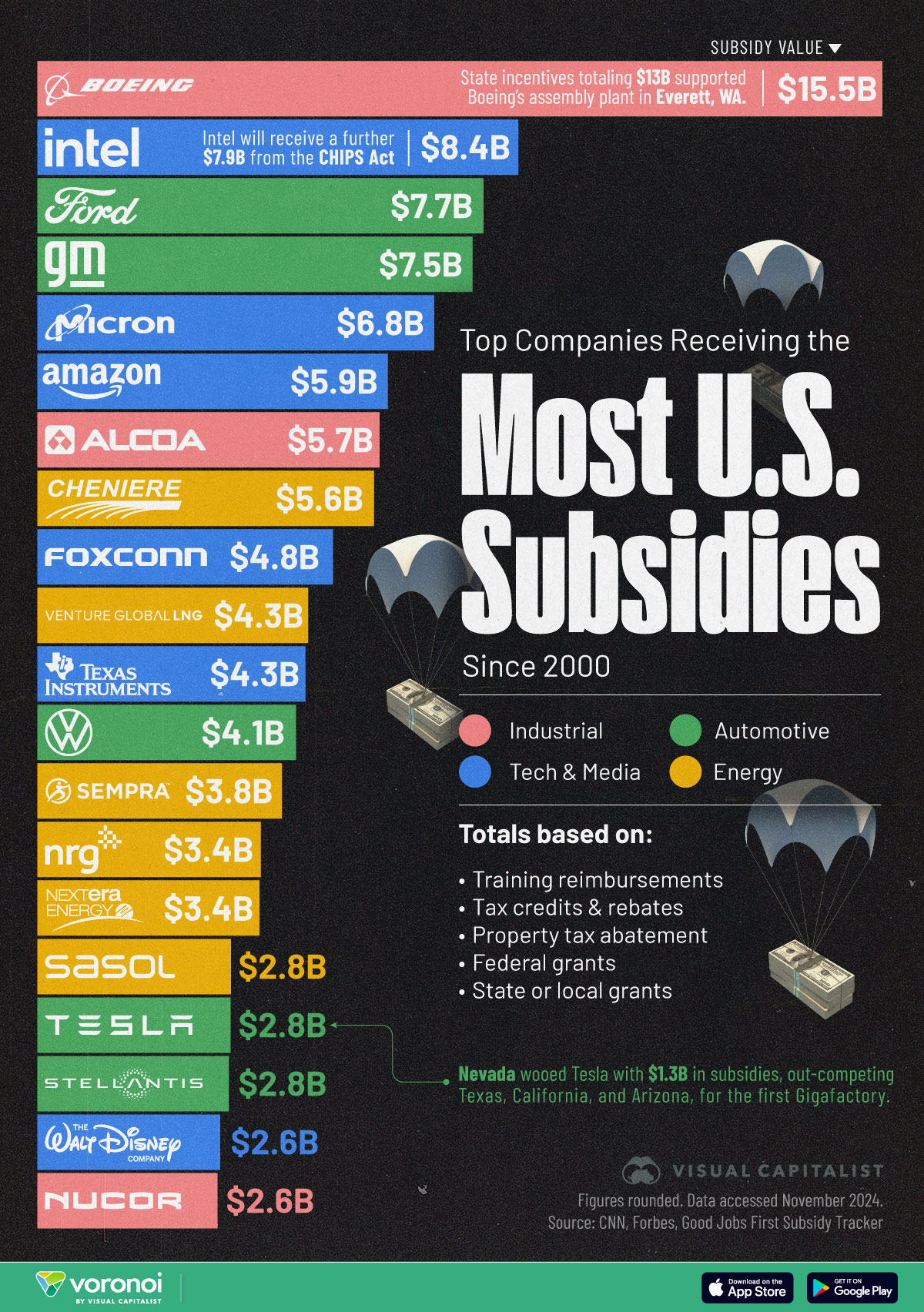
  • A screen grab from Danish Defense shows the gas leak from the exploded Nord Stream pipelines causing bubbles on the surface of the Baltic Sea on September 30, 2022. / Photo by Swedish Coast Guard Handout / Anadolu Agency via Getty Images.

    I do not know much about covert CIA operations—no outsider can—but I do understand that the essential component of all successful missions is total deniability. The American men and women who moved, under cover, in and out of Norway in the months it took to plan and carry out the destruction of three of the four Nord Stream pipelines in the Baltic Sea a year ago left no traces—not a hint of the team’s existence—other than the success of their mission.

    Deniability, as an option for President Joe Biden and his foreign policy advisers, was paramount. No significant information about the mission was put on a computer, but instead typed on a Royal or perhaps a Smith Corona typewriter with a carbon copy or two, as if the Internet and the rest of the online world had yet to be invented. The White House was isolated from the goings-on near Oslo; various reports and updates from the field were directly provided to CIA Director Bill Burns, who was the only link between the planners and the president who authorized the mission to take place on September 26, 2022. Once the mission was completed, the typed papers and carbons were destroyed, thus leaving no physical trace—no evidence to be dug up later by a special prosecutor or a presidential historian. You could call it the perfect crime.

    There was a flaw—a gap in understanding between those who carried out the mission and President Biden, as to why he ordered the destruction of the pipelines when he did. My initial 5,200-word report, published in early February, ended cryptically by quoting an official with knowledge of the mission telling me: “It was a beautiful cover story.” The official added: “The only flaw was the decision to do it.”

    This is the first account of that flaw, on the one-year anniversary of the explosions, and it is one President Biden and his national security team will not like.

    Inevitably, my initial story caused a sensation, but the major media emphasized the White House denials and relied on an old canard—my reliance on an unnamed source—to join the administration in debunking the notion that Joe Biden could have had anything to do with such an attack. I must note here that I’ve won literally scores of prizes in my career for stories in the New York Times and the New Yorker that relied on not a single named source. In the past year we’ve seen a series of contrary newspaper stories, with no named first-hand sources, claiming that a dissident Ukrainian group carried out the technical diving operation attack in the Baltic Sea via a 49-foot rented yacht called the Andromeda.

    I am now able to write about the unexplained flaw cited by the unnamed official. It goes once again to the classic issue of what the Central Intelligence Agency is all about: an issue raised by Richard Helms, who headed the agency during the tumultuous years of the Vietnam War and the CIA’s secret spying on Americans, as ordered by President Lyndon Johnson and sustained by Richard Nixon. I published an exposé in the Times about that spying in December 1974 that led to unprecedented hearings by the Senate into the role of the agency in its unsuccessful attempts, authorized by President John F. Kennedy, to assassinate Cuba’s Fidel Castro. Helms told the senators that the issue was whether he, as CIA director, worked for the Constitution or for the Crown, in the person of presidents Johnson and Nixon. The Church Committee left the issue unresolved, but Helms made it clear he and his agency worked for the top man in the White House.

    Back to the Nord Stream pipelines: It is important to understand that no Russian gas was flowing to Germany through the Nord Stream pipelines when Joe Biden ordered them blown up last September 26. Nord Stream 1 had been supplying vast amounts of low-cost natural gas to Germany since 2011 and helped bolster Germany’s status as a manufacturing and industrial colossus. But it was shut down by Putin by the end of August 2022, as the Ukraine war was, at best, in a stalemate. Nord Stream 2 was completed in September 2021 but was blocked from delivering gas by the German government headed by Chancellor Olaf Scholz two days prior to Russia’s invasion of Ukraine.

    Given Russia’s vast stores of natural gas and oil, American presidents since John F. Kennedy have been alert to the potential weaponization of these natural resources for political purposes. That view remains dominant among Biden and his hawkish foreign policy advisers, Secretary of State Antony Blinken, National Security Adviser Jake Sullivan, and Victoria Nuland, now the acting deputy to Blinken.

    Sullivan convened a series of high-level national security meetings late in 2021, as Russia was building up its forces along the border of Ukraine, with an invasion seen as almost inevitable. The group, which included representatives from the CIA, was urged to come up with a proposal for action that could serve as a deterrent to Putin. The mission to destroy the pipelines was motivated by the White House’s determination to support Ukraine President Volodymyr Zelensky. Sullivan’s goal seemed clear. “The White House’s policy was to deter Russia from an attack,” the official told me. “The challenge it gave to the intelligence community was to come up with a way that was powerful enough to do that, and to make a strong statement of American capability.”

    Major_russian_gas_pipelines_to_europe.png (771×807)
    The major gas pipelines from Russia to Europe. / Map by Samuel Bailey / Wikimedia Commons.

    I now know what I did not know then: the real reason why the Biden administration “brought up taking out the Nord Stream pipeline.” The official recently explained to me that at the time Russia was supplying gas and oil throughout the world via more than a dozen pipelines, but Nord Stream 1 and 2 ran directly from Russia through the Baltic Sea to Germany. “The administration put Nord Stream on the table because it was the only one we could access and it would be totally deniable,” the official said. “We solved the problem within a few weeks—by early January—and told the White House. Our assumption was that the president would use the threat against Nord Stream as a deterrent to avoid the war.”

    It was no surprise to the agency’s secret planning group when on January 27, 2022, the assured and confident Nuland, then undersecretary of state for political affairs, stridently warned Putin that if he invaded Ukraine, as he clearly was planning to, that “one way or another Nord Stream 2 will not move forward.” The line attracted enormous attention, but the words preceding the threat did not. The official State Department transcript shows that she preceded her threat by saying that with regard to the pipeline: “We continue to have very strong and clear conversations with our German allies.”

    Asked by a reporter how she could say with certainty that the Germans would go along “because what the Germans have said publicly doesn’t match what you’re saying,” Nuland responded with an astonishing bit of doubletalk: “I would say go back and read the document that we signed in July [of 2021] that made very clear about the consequences for the pipeline if there is further aggression on Ukraine by Russia.” But that agreement, which was briefed to journalists, did not specify threats or consequences, according to reports in the Times, the Washington Post, and Reuters. At the time of the agreement, on July 21, 2021, Biden told the press corps that since the pipeline was 99 percent finished, “the idea that anything was going to be said or done was going to stop it was not possible.” At the time, Republicans, led by Senator Ted Cruz of Texas, depicted Biden’s decision to permit the Russian gas to flow as a “generational geopolitical win” for Putin and “a catastrophe” for the United States and its allies.

    But two weeks after Nuland’s statement, on February 7, 2022, at a joint White House press conference with the visiting Scholz, Biden signaled that he had changed his mind and was joining Nuland and other equally hawkish foreign policy aides in talking about stopping the pipeline. “If Russia invades—that means tanks and troops crossing . . . the border of Ukraine again,” he said, “there will no longer be a Nord Stream 2. We will bring an end to it.” Asked how he could do so since the pipeline was under Germany’s control, he said: “We will, I promise you, we’ll be able to do it.”

    Scholz, asked the same question, said: “We are acting together. We are absolutely united, and we will not be taking different steps. We will do the same steps, and they will be very very hard to Russia, and they should understand.” The German leader was considered then—and now—by some members of the CIA team to be fully aware of the secret planning underway to destroy the pipelines.

    By this point, the CIA team had made the necessary contacts in Norway, whose navy and special forces commands have a long history of sharing covert-operation duties with the agency. Norwegian sailors and Nasty-class patrol boats helped smuggle American sabotage operatives into North Vietnam in the early 1960s when America, in both the Kennedy and Johnson administrations, was running an undeclared American war there. With Norway’s help, the CIA did its job and found a way to do what the Biden White House wanted done to the pipelines.

    At the time, the challenge to the intelligence community was to come up with a plan that would be forceful enough to deter Putin from the attack on Ukraine. The official told me: “We did it. We found an extraordinary deterrent because of its economic impact on Russia. And Putin did it despite the threat.” It took months of research and practice in the churning waters of the Baltic Sea by the two expert US Navy deep sea divers recruited for the mission before it was deemed a go. Norway’s superb seamen found the right spot for planting the bombs that would blow up the pipelines. Senior officials in Sweden and Denmark, who still insist they had no idea what was going on in their shared territorial waters, turned a blind eye to the activities of the American and Norwegian operatives. The American team of divers and support staff on the mission’s mother ship—a Norwegian minesweeper—would be hard to hide while the divers were doing their work. The team would not learn until after the bombing that Nord Stream 2 had been shut down with 750 miles of natural gas in it.

    What I did not know then, but was told recently, was that after Biden’s extraordinary public threat to blow up Nord Stream 2, with Scholz standing next to him, the CIA planning group was told by the White House that there would be no immediate attack on the two pipelines, but the group should arrange to plant the necessary bombs and be ready to trigger them “on demand”—after the war began. “It was then that we”—the small planning group that was working in Oslo with the Royal Norwegian Navy and special services on the project—“understood that the attack on the pipelines was not a deterrent because as the war went on we never got the command.”

    After Biden’s order to trigger the explosives planted on the pipelines, it took only a short flight with a Norwegian fighter and the dropping of an altered off-the-shelf sonar device at the right spot in the Baltic Sea to get it done. By then the CIA group had long disbanded. By then, too, the official told me: “We realized that the destruction of the two Russian pipelines was not related to the Ukrainian war”—Putin was in the process of annexing the four Ukrainian oblasts he wanted—“but was part of a neocon political agenda to keep Scholz and Germany, with winter coming up and the pipelines shut down, from getting cold feet and opening up” the shuttered Nord Stream 2. “The White House fear was that Putin would get Germany under his thumb and then he was going to get Poland.”

    The White House said nothing as the world wondered who committed the sabotage. “So the president struck a blow against the economy of Germany and Western Europe,” the official told me. “He could have done it in June and told Putin: We told you what we would do.” The White House’s silence and denials were, he said, “a betrayal of what we were doing. If you are going to do it, do it when it would have made a difference.”

    The leadership of the CIA team viewed Biden’s misleading guidance for its order to destroy the pipelines, the official told me, “as taking a strategic step toward World War III. What if Russia had responded by saying: You blew up our pipelines and I’m going to blow up your pipelines and your communication cables. Nord Stream was not a strategic issue for Putin—it was an economic issue. He wanted to sell gas. He’d already lost his pipelines” when the Nord Stream I and 2 were shut down before the Ukraine war began.

    Within days of the bombing, officials in Denmark and Sweden announced they would conduct an investigation. They reported two months later that there had indeed been an explosion and said there would be further inquiries. None has emerged. The German government conducted an inquiry but announced that major parts of its findings would be classified. Last winter German authorities allocated $286 billion in subsidies to major corporations and homeowners who faced higher energy bills to run their business and warm their homes. The impact is still being felt today, with a colder winter expected in Europe.

    President Biden waited four days before calling the pipeline bombing “a deliberate act of sabotage.” He said: “now the Russians are pumping out disinformation about it.” Sullivan, who chaired the meetings that led to the proposal to covertly destroy the pipelines, was asked at a later press conference whether the Biden administration “now believes that Russia was likely responsible for the act of sabotage?”

    Sullivan’s answer, undoubtedly practiced, was: “Well, first, Russia has done what it frequently does when it is responsible for something, which is make accusations that it was really someone else who did it. We’ve seen this repeatedly over time.

    “But the president was also clear today that there is more work to do on the investigation before the United States government is prepared to make an attribution in this case.” He continued: “We will continue to work with our allies and partners to gather all of the facts, and then we will make a determination about where we go from there.”

    I could find no instances when Sullivan was subsequently asked by someone in the American press about the results of his “determination.” Nor could I find any evidence that Sullivan, or the president, has been queried since then about the results of the “determination” about where to go.

    There is also no evidence that President Biden has required the American intelligence community to conduct a major all-source inquiry into the pipeline bombing. Such requests are known as “Taskings” and are taken seriously inside the government.

    All of this explains why a routine question I posed a month or so after the bombings to someone with many years in the American intelligence community led me to a truth that no one in America or Germany seems to want to pursue. My question was simple: “Who did it?”

    The Biden administration blew up the pipelines but the action had little to do with winning or stopping the war in Ukraine. It resulted from fears in the White House that Germany would waver and turn on the flow of Russia gas—and that Germany and then NATO, for economic reasons, would fall under the sway of Russia and its extensive and inexpensive natural resources. And thus followed the ultimate fear: that America would lose its long-standing primacy in Western Europe.

    This post was originally published on Dissident Voice.

  • Some days ago, Belgian Energy Minister Tinne Van der Straeten requested the European Union to reduce importing Russian gas and get rid altogether of fossil fuels by 2027. This after the Global Witness NGO released data showing that Belgium is currently the third-largest importer of Russian liquefied natural gas (LNG).

    Belgium accounts globally for 17% of Russia’s exports, behind only China and Spain.

    Later in an interview with the Financial Times, Van der Straeten said she was “not happy” about the fact that Russian gas kept flowing into Europe. She then understated Belgium’s share of Russian gas, indicating it was merely 2.8% of Europe’s imports that remained in Belgium, the rest was “in transit”. How wrong or misleading her statement was is revealed by the Global Witness NGO.

    She admitted, though Belgium supports sanctions on Russian fuel, it was unlikely to happen. It would require the unanimous support of all EU members.

    Earlier this week, Austrian Chancellor Karl Nehammer admitted that Russian LNG was difficult to replace, pointing out that while it was not cheaper than any other gas, the way the pipeline system is arranged in Europe makes it difficult to substitute.

    There is no end to excuses and pretexts in explaining why Europe must continue to import Russian hydrocarbons. Amazing. No word about the European economy which is at the brink of total collapse. Maybe Germany has already passed the point of no return.

    And no word, of course, that this suicidal path to follow the Washington Masters and their overlords dictate is due to an utterly corrupt European leadership, combined with the equally corrupt strongest economy’s leadership, Germany – something that has hardly been seen in recent history.

    How vassalic must you be to commit suicide on the orders of Washington and the corporate financial overlords who pulls the strings on Washington, pretending to run the world.

    And they may if we just stand by and watch.

    See also this by Dr. Paul Craig Roberts about the west’s lost integrity – “The Disappearance of Integrity: Organized Suppression of the Facts, Only Writers Who Support ‘Official Narratives’ Are Tolerated.”

    This is just the beginning. The EU Russian energy apologists start talking about energy imports from Russia – and how it is necessary for now – but also how to wean themselves off Russian energy dependence very, very soon.

    The Guardian puts it this way: “EU countries bought 22m cubic meters of Russian LNG between January and July 2023, compared with 15m during the same period in 2021, Global Witness said. “Buying Russian gas has the same impact as buying Russian oil. Both fund the war in Ukraine, and every euro means more bloodshed.”

    This is, of course, a mainstream media blow on Russia. Never a reason or history on how NATO provoked the war in Ukraine.

    This is just part of the story. What the holy west and particularly the vassal-EU does not mention are the other more than 100 essential products they keep importing from Russia at ever larger quantities, and – yes – despite the sanctions.

    These table speak for themselves:

    European Union Imports from Russia Value Year
    Mineral fuels, oils, distillation products $155.87B 2022
    Iron and steel $5.91B 2022
    Pearls, precious stones, metals, coins $3.70B 2022
    Nickel $3.39B 2022
    Aluminum $2.99B 2022
    Copper $2.94B 2022
    Commodities not specified according to kind $2.77B 2022
    Fertilizers $2.70B 2022
    Inorganic chemicals, precious metal compound, isotope $2.26B 2022
    Wood and articles of wood, wood charcoal $1.70B 2022
    Organic chemicals $1.31B 2022
    Fish, crustaceans, molluscs, aquatics invertebrates $990.39M 2022

    And the list goes on – another 82 lines of imports.
    2022 EU Imports from Russia are the 3 largest since 2013, despite sanctions.

    People are fooled.
    Europe cannot live without imports from Russia.
    So, what are the sanctions for?
    Propaganda?
    Russia bashing?
    Your mind control?

    Another legitimate question one may ask: why does Russia sell to the sanctioning countries? Russia does not really need Europe and the US for trade and for economic survival.

    President Putin’s Press Secretary, Dmitry Peskov, recently said that Russia is doing well and growing, despite western sanctions. See this.

    Russia is well integrated into the Asian complex.  It is a co-founder of the original BRICS and now the new BRICS-11. Russia is also a key player in the Global South which becomes ever more important on the global stage.

    Uranium imports by the US and Europe from Russia is another unwritten sheet and rarely published news. Russia sold about $1.7 billion in nuclear products to firms in the U.S. and Europe, and this despite the western stiff sanctions, due to the western provoked war in Ukraine. The West calls it a Russian invasion. In reality, it was a NATO-triggered move for preserving Russian sovereignty – and against some 20 to 30 war-grade biolabs in the Ukraine, built and funded by the US. See this.

    The United States’ uranium purchases from Russia have doubled since last year. The U.S. bought 416 tons of uranium from Russia in the first half of the year, more than double the amount for the same period in 2022 and the highest level since 2005.

    One may question the seriousness of the US Russia bashing, especially since according to a report by RT, Russia is supplying the U.S. only with enriched uranium, a critical component for civil nuclear power generation, but also for nuclear weapons – according to a report by RT.  How come Russia is selling Washington Weapon-grade enriched uranium?

    See full report.

    Given the foregoing inconsistencies with “sanctions” – mind you, highly publicized sanctions – how serious can the West be taken?

    The world must wake up. People of western countries, whose democracy has long been abolished, trampled by the tyrannical western powers “rules-based order”, must stand up against these rulers, invent alternatives to their corporate financial empires and build a world of peace and harmony outside the dictatorial matrix.

    This post was originally published on Dissident Voice.


  • Contacted Waorani woman in the Yasuní National Park © Anka Maldonado/Yasunidos

    In a historic referendum, people in Ecuador have voted to block oil drilling on uncontacted tribes’ land in the Yasuní National Park.

    Leonidas Iza, President of Ecuador’s national Indigenous organization CONAIE, said today:

    The Ecuadorian people, mindful of life, in solidarity with our uncontacted Tagaeri, Taromenane and Dugakaeri brothers and sisters, said “Yes to Yasuní” in this referendum on August 20th. We have saved their territory, their lives, their food sovereignty, and their medicines in the sacred Yasuní forest”. He added: “In this little piece of territory in the heart of the Amazon, we can find solutions to problems that most affect humanity. Science has shown that the best protected territories in the fight against climate change are Indigenous territories. That’s why we invite the international community to lend a hand, in solidarity and sensitively, to protect the territories that balance the life of Mother Nature, which save species and also humanity.

    Julio Cusurichi Palacios from Peru’s Amazon Indigenous organization AIDESEP said:

    It is extremely important to protect the territory of uncontacted tribes who share land in Ecuador, in the Yasuní National Park, and in Peru, in the Napo Tigre Indigenous Reserve (awaiting creation), to guarantee their rights to life, health, survival and territory, in compliance with international frameworks that governments must implement. In Peru, the government has officially recognized five uncontacted tribes in the Napo Tigre area. These peoples are cross-border peoples, who live on both sides of the border between Peru and Ecuador in the basins of the Napo, Curaray, and Tigre rivers, and their tributaries. They have lived on their ancestral lands for hundreds of years, even before the countries of Ecuador and Peru were established, and they do not recognize artificial borders.

    Survival International is fighting globally for the survival of all the world’s uncontacted tribes. Sarah Shenker, head of Survival’s Uncontacted Tribes campaign, said today:

    This is a major victory for Ecuador’s Indigenous movement, and for the global campaign to recognize the rights of uncontacted tribes.

    The uncontacted Tagaeri, Dugakaeri and Taromenane have for years seen their lands invaded, firstly by evangelical missionaries, then by oil companies. Now, at last, they have some hope of living in peace once more. We hope this prompts greater recognition that all uncontacted peoples must have their territories protected if they’re to survive, and thrive.

    Apart from anything else, we know that their territories are the best barrier to deforestation, particularly in the Amazon rainforest. Uncontacted tribes are our contemporaries, a vital part of humankind’s diversity, and the guardians of the most biodiverse places on Earth.

    In Peru, Indigenous organizations have been fighting for more than 20 years to create and protect the Napo-Tigre Indigenous reserve for uncontacted tribes, adjacent to Yasuní. Currently, the oil and gas company Perenco is exploiting Napo-Tigre oil.

    This post was originally published on Dissident Voice.

  • This week’s News on China.

    • CATL develops and researches electric batteries in Germany
    • More support measures for the real estate sector
    • Clean energy targets achieved 5 years ahead of schedule
    • China Railway completes 453 km/h train tests

    This post was originally published on Dissident Voice.

  • In his bestselling book of 1987, The Rise and Fall of Great Powers, historian Paul Kennedy chronicles the rise of western power and its world dominance from 1500 to the present. He reports that the rise was not due to any particular event, nor even an unusual series of events. It was, in fact, neither foreseen nor even recognized until it was already well under way, although it may be accurately ascribed to multiple factors, which Kennedy discusses. The same may be said of the ongoing fall of western power.

    Although the decline of the West is rapidly becoming more evident to informed observers of current events, the start of that decline is less easy to pinpoint, in part because it seemed less inevitable and more reversible until quite recently. Was the high point the Austro-Hungarian Empire? Victorian England? The U.S. Eisenhower administration? Some might date it from the dissolution of the USSR in 1991, marking the beginning of the truncated “New American Century.”

    That “century” appears to be ending in the manner of so many other powers that fill the pages of Kennedy’s book – through imperial overreach, excessive military spending, lagging economic productivity and competitiveness, and failure to invest in the physical, technical and human resources necessary to remain a dominant power. In short, the West is flagging.

    The signs for this are too evident to ignore. The industrial base of the West is withering. Post-WWII, the U.S. dominated because it was the only major industrial power to survive unscathed, and its investment in western Europe and Japan increased the wealth of all three. Over the last half of the 20th century, however, these economies began to shift much of their industry to countries with cheaper labor and more efficient production, such that by the 21st century much of their manufacturing capability had vanished, and they became mainly consumer societies.

    2023 has become a watershed year for the power shift, due to dramatic western weaknesses exposed by the Ukraine war. The war revealed that a relatively modest economy (Russia) had the capability to outproduce the U.S. and all the NATO countries combined in war materiel. The U.S. “arsenal of democracy” and its European partners proved unable to provide more than a fraction of the weapons and ammunition that Russia’s factories produced. Ukrainian soldiers supplied by NATO countries found themselves vastly outnumbered in tanks, artillery, missiles, unmanned and manned aircraft, and even the latest hypersonic and electronic weapons that were arrayed against them in seemingly limitless supply. The U.S. and European NATO partners could only cobble together small numbers of incompatible weapons from their diminishing inventories, and make promises of future deliveries after months or years.

    But the U.S. and its allies were not counting on physical weapons alone. They weaponized the U.S. dollar, through seizures of Russian accounts in U.S., European and other banks totaling more than $300 billion, and through application of economic sanctions, including expulsion of Russian banks from the SWIFT dollar trading system. This also backfired.

    First, Russia retaliated by seizing U.S. and European assets within Russia, in equal or greater amounts. Second, they “pivoted east,” negotiating new trading partnerships with China, India and other countries. Third, they and their new partners, including other targets of U.S. sanctions, began to develop financial agreements to displace or reduce the use of SWIFT. Even countries that had heretofore not been threatened with asset seizure or economic sanctions, like Brazil, South Africa, and Saudi Arabia, joined these agreements, in order to expand their trading base, and as insurance against use of the USD for financial pressure or threats. The result was that the Russian economy proved astonishingly resilient – moreso even than many of the NATO countries. The Russian GDP fell by less than 2% in 2022 and is expected to rise by up to 2% in 2023, despite the war and sanctions. Russia has opted for a sustainable but inexorable war with less than 1/6 the casualties of Ukraine. Visitors report that it hardly feels like a country at war. The annual St. Petersburg Economic Forum attracted 17,000 participants from 130 countries and concluded 900 deals and contracts worth 3.9 trillion rubles ($46 billion).

    The decline of Europe was further illustrated by the consequences of the US bombing of the Nordstream gas pipelines in September, 2022, and the sanctions on Russian natural gas and petroleum products imposed by NATO. Together, these ended the competitiveness of the European economies, which had hitherto thrived on accessibility to cheap Russian fuel. As predicted by Radek Sikorsky, MEP, this meant

    … double-digit inflation, skyrocketing energy prices, and electricity shortage, … Germany will be deindustrialized, … German industries, scientists and engineers will move to the US, who will generously accept them.

    And Europe will be set back a couple of decades. Already, most European countries — France, Italy, Spain etc. — have had zero growth in GDP-per-capita for more than a decade. Add in inflation, the standard of living will soon be down 30-40%.

    In effect, the U.S. had defeated its NATO “partners” (mainly Germany) and cannibalized their industries for the sake of its own benefit, potentially short-lived.

    But the United States believed that its mighty dollar could offset its faded industry and increasingly toothless military – that it could be printed in unlimited amounts without losing value, and could become its most powerful weapon. The history of this dollar began in 1971, when President Richard Nixon announced that, in effect, the U.S. dollar would no longer be backed by gold, but rather by whatever the dollar could purchase in the U.S., i.e. by the U.S. economy itself. This became widely accepted because a) the U.S. was the world’s largest economy, b) the two great international regulatory financial institutions, the World Bank and the International Monetary Fund, were also based on the dollar, and c) nearly all the world’s countries outside of the Soviet Union and other socialist societies used the dollar as the reserve currency for their own money. In addition, the world shed fixed exchange rates, with their troublesome periodic revaluations, for floating rates, which generally made the changes more gradual and more stable for the major currencies, and especially the dollar.

    The effect of so many dollars circulating so widely was to invest most of the world in protecting its value. The more a country’s non-dollar currency became based on the dollar as its reserve currency, the more the incentive for that country to defend the dollar. Later, as the U.S. began to lose its industry, it came to depend on this value to maintain its economy. It marketed its debt to other countries and “persuaded” other countries to fund U.S. bases on their territories for the purpose of “mutual defense.” This is part of the reason the U.S. now has more than 800 military bases worldwide. Although the U.S. national debt is, at time of writing, more than $33 trillion, the U.S. Treasury and the Federal Reserve Board seem to think that they can continue to unload it without limit onto other countries.

    Decision makers in the U.S. seem to think that they have found the goose that lays the golden egg: when they need more money, they have only to borrow indefinitely and market their IOUs to buyers, many of whom don’t really have the option of saying no. Thus, for example, it used unlimited borrowing to fund without hesitation a very costly Ukraine war by more than $100 billion in 2022 alone, while denying basic services to its own citizens.

    But borrowing is not the only way that the U.S. raises funds. Given the stability of the dollar, many countries store or invest them in the U.S. But when a country has a disagreement with the U.S., or chooses a leadership or policies not approved by the U.S., the U.S. is not above confiscating those funds. In 2011, this is what it did with $32 billion of Libyan funds, the largest but by no means the only such confiscation of another nation’s funds at that time. Since then, similar confiscations have occurred with Iran, Venezuela, Syria, Afghanistan and other nations. Eclipsing Libya, however, was the confiscation of Russia’s $300 billion by the U.S and its mostly NATO allies, an estimated $100 billion of it by the U.S. alone.

    Recently, however, other countries are becoming wary of the U.S. and choosing other options that reduce their participation in what they view as a Mafia-style protection racket as well as their placement of assets in places where they could be confiscated in case of disagreement. As noted earlier, a growing number of countries are opting to either bypass the dollar-based SWIFT system, or to complement it with new agreements where goods are paid in another currency or with multiple currencies. Even Saudi Arabia has begun accepting payment in Chinese Yuan and paying Russia in rubles. In addition, China and other countries have decided to limit or reduce their USD exposure. So far, this has had no appreciable effect on the value of the USD. But if the dollar starts to become less desirable, it may become a questionable investment, in which case the U.S. risks losing its status as a world power – even a modest one. At that point, having demolished German and other European access to cheap fuel, the U.S. will join the rest of the west in its decline, leaving the rising economies of China, India, Brazil, Russia and other countries in Asia, Latin America and possibly Africa to displace them.

    Is the Dollar overvalued? By the laws of supply and demand, one could argue that it is not. But it is a fair question when the supply is enormous and growing, and the demand is artificial and coerced. What will happen when the dollar’s near monopoly as an exchange medium ends? The dollar has not always been the preeminent tool for pricing international transactions. At the turn of the 20th century, the British pound sterling was literally the gold standard. But the British economy was fading, and the pound continued to fall against both gold and the USD. Now, although it is still a major currency, it is a mere shadow of its former self. If or when the many dollars worldwide come home to claim their true value, we may discover that they buy little more than castles of sand.

    When world power has shifted elsewhere, the U.S., Great Britain, Germany, France and the entire West may come to depend for glory upon their historical and cultural treasures, like the ones of other bygone civilizations that western tourists once visited so widely.

    This post was originally published on Dissident Voice.