Category: poverty

  • Buenaventura is the main port for Colombian foreign trade and the second largest city in the prosperous state of Valle del Cauca. Historically, the territory has been inhabited by Afro-descendants, indigenous peoples, and campesinos. Despite the diversity and cultural richness of this territory, it is primarily known for its high levels of poverty, difficulties in accessing public services, health, decent housing, and education. These conditions have derailed the lives of the inhabitants to unimaginable extremes.

    Violence and threats against the inhabitants of the poorest neighborhoods of Buenaventura have become increasingly commonplace.

    The post Crisis In Buenaventura appeared first on PopularResistance.Org.

    This post was originally published on PopularResistance.Org.

  • Prioritizing COVID-19 vaccinations for people 75 and up can leave out Black Americans, who tend to die younger than their white counterparts. In majority-Black Shelby County, this gap raises questions of how to make the vaccine rollout equitable.
    Continue reading

    The post People Over 75 Are First in Line to Be Vaccinated Against COVID-19 appeared first on BillMoyers.com.

    This post was originally published on BillMoyers.com.

  • Not those of poor Americans, that’s for sure. Continue reading

    The post Whose Rights Matter in Pandemic America? appeared first on BillMoyers.com.

    This post was originally published on BillMoyers.com.

  • On 12 February, 2021, the United Nations Human Rights Council (UNHRC) adopted a resolution in which it criticized the removal of Myanmar’s democratically elected government by the military, locally known as Tatmadaw. The Council also called urgently for the immediate and unconditional release of all persons arbitrarily detained, including State Counselor Aung San Suu Kyi and President Win Myint and others, and the lifting of the state of emergency.

    As the international community condemns the coup and shows support for Suu Kyi, it is important not to whitewash the latter as a savior of the Myanma masses. Neither is she a doyen of democracy nor a courageous anti-military leader; she is the face of an alternative ruling class project which aims to incorporate the Tatmadaw into a new geo-economic architecture. The coup is the culmination of that intra-elite power struggle.

    Intra-elite Power Struggle

    The military regime that came to power in 1988 under Saw Maung looked to capitalism to provide a solution to the crisis that had led to social upheaval, and thus set in motion a process that aimed at breaking down the old state-owned economy and moving towards greater marketization. Their plan was not to sell off to private capitalists, but to transform themselves into the owners of the means of production. They proceeded to privatize a section of the economy, while holding on to key sectors via their control of the state sector.

    Eventually, the military’s plan gave rise to a clique of generals who control, through straw men, Myanmar’s biggest corporations, as well as the lucrative trade in jade and other precious stones, narcotics and timber. Suu Kyi and her National League for Democracy (NLD) tried to re-configure this model of military-dominated capitalism by implementing an aggressively pro-market reform agenda that included mobilizing Western and East Asian investment into regular channels. Her “Myanmar Sustainable Economic Development Plan” allowed foreign capitalists to invest up to 35% in local companies, as well as holding stakes of up to 35% in Myanmar companies traded on the Yangon Stock Exchange.

    Defensive Posture

    The tussle between the NLD and the military reflected itself in different domains. However, the former always maintained a defensive posture – in the hope that by doing the junta a favour, it would hopefully grant them the minimal democratic reforms it wants. On the one hand, Suu Kyi took over some of the military’s positions — for instance, in the peace process. She also seemed to have taken over the military’s version of establishing a centralized state under the domination of the Bamar-Buddhist majority.

    On the other hand, Suu Kyi feared the actions of the military. She avoided convening the National Defense and Security Council (NDSC), the institution responsible for discussing security matters. The 11-member body comprising the highest legislative, executive and military players has the right to take over power during a state of emergency.

    Commander-in-Chief Min Aung Hlaing repeatedly demanded that Suu Kyi convene the NSCD, while she appointed her own security advisers. The NLD feared being forced to call a state of emergency (e.g. over Rakhine state), which could allow the Commander-in-Chief to take over power and dissolve parliament. Both the NLD and the military unsuccessfully attempted to increase their power in the NDSC by bringing in constitutional amendments that would have altered the organ’s composition in their favour.

    Neoliberalism with Ethno-racial Characteristics

    Insofar that Suu Kyi wanted to establish the complete hegemony of free market on the soil of Myanmar by striking compromises with the military, she generated a politico-economic framework that had excluded the common people. Positioned between the Tatmadaw and multinational companies, she became impervious to the concrete demands of millions of Burmese.

    The majority of Myanmar’s population has not been able to see the prosperity that Suu Kyi promised. One in four remained poor in 2017, according to the World Bank. Nearly half of those polled by the Asian Barometer Survey (ABS) in 2019 were worried about losing their livelihood, more than twice as many as in 2015. Some 54% said they were unable to access basic services, such as water, public transport and health care, up from 48% five years ago.

    Suu Kyi’s government repressed a surge of labor organizing over the past five years. In particular, garment workers waged a massive organizing drive that was repressed by both the bosses and the government. In May 2020, six labor leaders were arrested for leading a strike that violated COVID-19 regulations in a factory in Yangon’s Dagon Seikkan Township.

    The NLD administration also remained quiet over the Tatmadaw’s continued atrocities against the working class. In jade mining sites such as Hpakan, young children are sent to gather jade while facing brutal conditions, including mudslides. An estimated 1.13 million five to seventeen year olds are trapped in child labor in Myanmar. This means one in every 11 children is deprived of their childhood, health, and education.

    Failing on the economic front, Suu Kyi used inhumane ethno-racial tactics to divert citizens’ attention from relevant issues. Silent support for increasing mobilization of ultranationalist Buddhist groups contributed to the outbreak of extremist attacks and anti-Muslim sentiments. Hate speech increased, particularly via new social media communities. Sectarian violence and military clearance operations drove hundreds of thousands of Rohingya into neighboring Bangladesh.

    Governmental collaborationism with the Tatmadaw ensured that the Rohingya were left with no avenues for justice. One example of this is that the seven soldiers who were convicted and jailed for the death of 10 Rohingya men and boys during the 2017 military operations were released less than a year into their 10-year prison sentences. But the two journalists who reported the killing spent more than 16 months behind bars on charges of obtaining state secrets.

    In the absence of the rule of law, the international community called for an independent investigation resulting in accusations of crimes against humanity. In December 2019, Suu Kyi had to defend her country from accusations of genocide at the International Court of Justice in The Hague. Domestically, both the government and the military used the increasing international criticism to rally their supporters behind them and to forge a unity, which is otherwise lacking in the multi-ethnic and multi-religious country.

    On Suu Kyi’s watch, the country has seen a regression in press freedomexpanded usage of anti-defamation laws and a general crackdown on speech. In 2020, independent news organizations such as Karen News, and Rakhine-based Development Media Group and Narinjara News, were banned from local telecommunication operator’s networks by the government for allegedly disseminating “fake news”.

    Yangon-based Khit Thit Media, Mandalay-based Voice of Myanmar, and Sittwe-based Narinjara News faced anti-terrorism charges for publishing interviews with the outlawed Arakan Army, which has been fighting for autonomy in the Rakhine and Chin states of western Myanmar. Reporters Without Borders ranked Myanmar 139 out of 180 in its 2020 World Press Freedom Index, while Freedom House categorized Myanmar as “Not Free”.

    Defeating the Military

    The protest movement that has broken out since the coup took place is the biggest since 1988. But the NLD will not take this movement to its final conclusion; it will stop half-way and maintain its strategy of cooperation with the Tatmadaw. Despite popular demands to amend the existing constitution, which gives too much power to the military leaders, the NLD had largely remained silent on that issue. Even with a majority in parliament and with full authority to make legislation, the NLD continued with its non-confrontational approach.

    The NLD leaders instead focused on bringing in foreign investment in an attempt to develop a stable capitalist economy, while letting the military enjoy effective government control. NLD had no confidence that its mass support could overcome the military. The party feared that if they mobilised mass support it could get “out of control” and threaten their pro-capitalist project. Now, the working people of Myanmar are going to pay the price of this failure.

    During the 8-8-88 uprising (8 August 1988), Suu Kyi demobilized the militant workers’ and student movements to turn them into a base for her electoral ambitions. At that time, the pro-democracy movement hesitated in ousting the junta once and for all. Now, students and workers must build a mass movement that does not repeat this mistake.


    The post Why Suu Kyi is Incapable of Defeating the Military first appeared on Dissident Voice.

    This post was originally published on Dissident Voice.

  • On 12 February, 2021, the United Nations Human Rights Council (UNHRC) adopted a resolution in which it criticized the removal of Myanmar’s democratically elected government by the military, locally known as Tatmadaw. The Council also called urgently for the immediate and unconditional release of all persons arbitrarily detained, including State Counselor Aung San Suu Kyi and President Win Myint and others, and the lifting of the state of emergency.

    As the international community condemns the coup and shows support for Suu Kyi, it is important not to whitewash the latter as a savior of the Myanma masses. Neither is she a doyen of democracy nor a courageous anti-military leader; she is the face of an alternative ruling class project which aims to incorporate the Tatmadaw into a new geo-economic architecture. The coup is the culmination of that intra-elite power struggle.

    Intra-elite Power Struggle

    The military regime that came to power in 1988 under Saw Maung looked to capitalism to provide a solution to the crisis that had led to social upheaval, and thus set in motion a process that aimed at breaking down the old state-owned economy and moving towards greater marketization. Their plan was not to sell off to private capitalists, but to transform themselves into the owners of the means of production. They proceeded to privatize a section of the economy, while holding on to key sectors via their control of the state sector.

    Eventually, the military’s plan gave rise to a clique of generals who control, through straw men, Myanmar’s biggest corporations, as well as the lucrative trade in jade and other precious stones, narcotics and timber. Suu Kyi and her National League for Democracy (NLD) tried to re-configure this model of military-dominated capitalism by implementing an aggressively pro-market reform agenda that included mobilizing Western and East Asian investment into regular channels. Her “Myanmar Sustainable Economic Development Plan” allowed foreign capitalists to invest up to 35% in local companies, as well as holding stakes of up to 35% in Myanmar companies traded on the Yangon Stock Exchange.

    Defensive Posture

    The tussle between the NLD and the military reflected itself in different domains. However, the former always maintained a defensive posture – in the hope that by doing the junta a favour, it would hopefully grant them the minimal democratic reforms it wants. On the one hand, Suu Kyi took over some of the military’s positions — for instance, in the peace process. She also seemed to have taken over the military’s version of establishing a centralized state under the domination of the Bamar-Buddhist majority.

    On the other hand, Suu Kyi feared the actions of the military. She avoided convening the National Defense and Security Council (NDSC), the institution responsible for discussing security matters. The 11-member body comprising the highest legislative, executive and military players has the right to take over power during a state of emergency.

    Commander-in-Chief Min Aung Hlaing repeatedly demanded that Suu Kyi convene the NSCD, while she appointed her own security advisers. The NLD feared being forced to call a state of emergency (e.g. over Rakhine state), which could allow the Commander-in-Chief to take over power and dissolve parliament. Both the NLD and the military unsuccessfully attempted to increase their power in the NDSC by bringing in constitutional amendments that would have altered the organ’s composition in their favour.

    Neoliberalism with Ethno-racial Characteristics

    Insofar that Suu Kyi wanted to establish the complete hegemony of free market on the soil of Myanmar by striking compromises with the military, she generated a politico-economic framework that had excluded the common people. Positioned between the Tatmadaw and multinational companies, she became impervious to the concrete demands of millions of Burmese.

    The majority of Myanmar’s population has not been able to see the prosperity that Suu Kyi promised. One in four remained poor in 2017, according to the World Bank. Nearly half of those polled by the Asian Barometer Survey (ABS) in 2019 were worried about losing their livelihood, more than twice as many as in 2015. Some 54% said they were unable to access basic services, such as water, public transport and health care, up from 48% five years ago.

    Suu Kyi’s government repressed a surge of labor organizing over the past five years. In particular, garment workers waged a massive organizing drive that was repressed by both the bosses and the government. In May 2020, six labor leaders were arrested for leading a strike that violated COVID-19 regulations in a factory in Yangon’s Dagon Seikkan Township.

    The NLD administration also remained quiet over the Tatmadaw’s continued atrocities against the working class. In jade mining sites such as Hpakan, young children are sent to gather jade while facing brutal conditions, including mudslides. An estimated 1.13 million five to seventeen year olds are trapped in child labor in Myanmar. This means one in every 11 children is deprived of their childhood, health, and education.

    Failing on the economic front, Suu Kyi used inhumane ethno-racial tactics to divert citizens’ attention from relevant issues. Silent support for increasing mobilization of ultranationalist Buddhist groups contributed to the outbreak of extremist attacks and anti-Muslim sentiments. Hate speech increased, particularly via new social media communities. Sectarian violence and military clearance operations drove hundreds of thousands of Rohingya into neighboring Bangladesh.

    Governmental collaborationism with the Tatmadaw ensured that the Rohingya were left with no avenues for justice. One example of this is that the seven soldiers who were convicted and jailed for the death of 10 Rohingya men and boys during the 2017 military operations were released less than a year into their 10-year prison sentences. But the two journalists who reported the killing spent more than 16 months behind bars on charges of obtaining state secrets.

    In the absence of the rule of law, the international community called for an independent investigation resulting in accusations of crimes against humanity. In December 2019, Suu Kyi had to defend her country from accusations of genocide at the International Court of Justice in The Hague. Domestically, both the government and the military used the increasing international criticism to rally their supporters behind them and to forge a unity, which is otherwise lacking in the multi-ethnic and multi-religious country.

    On Suu Kyi’s watch, the country has seen a regression in press freedomexpanded usage of anti-defamation laws and a general crackdown on speech. In 2020, independent news organizations such as Karen News, and Rakhine-based Development Media Group and Narinjara News, were banned from local telecommunication operator’s networks by the government for allegedly disseminating “fake news”.

    Yangon-based Khit Thit Media, Mandalay-based Voice of Myanmar, and Sittwe-based Narinjara News faced anti-terrorism charges for publishing interviews with the outlawed Arakan Army, which has been fighting for autonomy in the Rakhine and Chin states of western Myanmar. Reporters Without Borders ranked Myanmar 139 out of 180 in its 2020 World Press Freedom Index, while Freedom House categorized Myanmar as “Not Free”.

    Defeating the Military

    The protest movement that has broken out since the coup took place is the biggest since 1988. But the NLD will not take this movement to its final conclusion; it will stop half-way and maintain its strategy of cooperation with the Tatmadaw. Despite popular demands to amend the existing constitution, which gives too much power to the military leaders, the NLD had largely remained silent on that issue. Even with a majority in parliament and with full authority to make legislation, the NLD continued with its non-confrontational approach.

    The NLD leaders instead focused on bringing in foreign investment in an attempt to develop a stable capitalist economy, while letting the military enjoy effective government control. NLD had no confidence that its mass support could overcome the military. The party feared that if they mobilised mass support it could get “out of control” and threaten their pro-capitalist project. Now, the working people of Myanmar are going to pay the price of this failure.

    During the 8-8-88 uprising (8 August 1988), Suu Kyi demobilized the militant workers’ and student movements to turn them into a base for her electoral ambitions. At that time, the pro-democracy movement hesitated in ousting the junta once and for all. Now, students and workers must build a mass movement that does not repeat this mistake.

    This post was originally published on Radio Free.

  • In the middle of the holidays, the pipes in my apartment got clogged for the second time this year. On both occasions water was scarce for several days, and when it did arrive it brought so many rocks that the flow got blocked.

    I had no option but to call our “community plumber.” In other words, a man that for the past 30 years has fixed issues with pipes in this building and nearby (and lately he’s been as busy as ever).

    We’re talking about a good-natured fellow, a lovely guy, one of those who helps you carry bags, preaches about Jesus, sends his regards to the family and suddenly tells you, with a sweet smile: “that will be US $200.” And one can’t help but think “he’s screwing me, but how on earth can I curse such a nice man?”

    The post Tales Of Resistance: Why Do The Poor Laugh? appeared first on PopularResistance.Org.

    This post was originally published on PopularResistance.Org.

  • Four in 10 people who needed financial support to self-isolate at the end of 2020 said they had not been able to access it, research suggests.

    Support lacking

    Issues included schemes or funding not always being available locally, eligibility criteria being too strict, a lack of awareness about discretionary support, and stigma associated with accessing help, the Red Cross said.

    Low earners told to self-isolate by test and trace services across the UK are able to apply for a grant to support them while they stay at home. However, the Red Cross said there are growing concerns about inconsistencies across the schemes, which offer different levels of access to financial support.

    One participant felt hopeful after being told by NHS Test and Trace she may be entitled to a £500 payment to help her and her family while they were self-isolating. But when she phoned the council, it said the scheme had not yet been rolled out in her area.

    Overall, 43% of those who said financial support would have been helpful said they had been unable to access this support.

    Hardest hit

    The Red Cross surveyed 2,000 UK adults and conducted 29 in-depth interviews with the public and professionals for its new report: The longest year: life under local restrictions. It covers the period between October and December, when tiered restrictions were in place and several UK nations entered periods of national lockdown.

    The report identifies two groups who have been hardest hit by the coronavirus pandemic – the “newly vulnerable” who have never needed help before and are struggling with stigma and knowing where to turn for support; and people struggling before the crisis who are now pushed to the brink.

    For both groups, a lack of clear information about local rules exacerbated problems and led many to put themselves into “self-imposed” lockdown, limiting interactions with loved ones which compounded feelings of loneliness and isolation. A key lesson coming out of the pandemic must be to “normalise asking for help”, it said.

    No confidence

    The polling found that 40% of UK adults were not confident about where to go to access financial support for essential items, despite 13% saying this would have been helpful to them under local restrictions.

    Half of UK adults (50%) found it difficult to keep up to date with the latest coronavirus restrictions in their area and three quarters (74%) found it easier to limit how much they left home rather than try to keep up with changes to the restrictions.

    Of people who are not confident that they can cope with or recover from the changes to their life caused by the pandemic, 71% cited their mental health as a key factor.

    Mental health

    Norman McKinley, executive director of UK operations at the British Red Cross, said:

    Our report shows the inextricable link between financial insecurity and mental health, and that the point at which someone faces hardship is a crucial moment to catch them before they fall into a more desperate situation.

    When you feel like your life is spinning out of control, having agency over the small things – like the cereal you buy or the ingredients for your dinner – makes all the difference. We need flexible and easy-to-access cash support to give people back their dignity, while also giving them the breathing room to get back on their feet.

    As we come out of the pandemic, we must develop a more nuanced understanding of what it means to be vulnerable and normalise asking for help – whether practical, emotional or financial.

    Emergency

    The Red Cross is calling for the government to ensure emergency financial support is available and promoted through local welfare assistance schemes, including for people with no recourse to public funds. It said the government should give local authorities in England £250m per year to top up local welfare assistance schemes over the longer term. On top of that, it argued the government should review and “rapidly improve” self-isolation support schemes so eligibility is relaxed and simplified to allow for easier access.

    The Red Cross has set up a free and confidential coronavirus support line on 0808 196 3651 for anyone who is lonely, worried, or in need of practical or emotional support during the pandemic.

    By The Canary

    This post was originally published on The Canary.

  • The legacy of a society is, well, how it treats its young, old, frail, infirm, sick, poor and those hobbled by structural and environmental injustice.

    Some in urban planning circles also allude to how safe a community is based on the popsicle test – can a child or two walking from home to a store, get a popsicle without having to cross high speed roads or highways, without having to walk along long stretches of ugly dangerous buildings, and who can find a multitude of stores that sell good food and desserts like Popsicles. How easy it is for the child to walk there? Are the homes-apartments-duplexes-offices looking out toward the sidewalks? Are there porches out front where people linger and lounge? Are there trees for shade? Are there mail boxes? Are there stores and eateries on the ground floor of a stretch of businesses with apartments and housing one and two floors above? Are there people bicycling? Are the stores and businesses set toward the streets and their parking lots pushed to the back of the establishments? Are there scalable hardware stores with windows and many doorways? Are there neighborhood groups that patrol the neighborhoods? Are there mixed neighborhoods with lower economic mixed in with middle class? What are the officers of the peace doing? Are they walking and bicycling their beats, where they live? Are they battened down in huge bulletproof SUV’s with three computers, five assault weapons, and the A/C blaring?

    The children, walk or bicycle from their home, and within a few minutes, they get to a place of business, without running through or dodging a gauntlet of racing trucks and autos. Are there elderly and families and business owners and customers there, doing their thing, on a scalable level?

    We know that in capitalism, in this free (sic) market society, with the bottom dollar and the bottom line of more and more profits without work or building something as the drivers, we the people – those two children walking to get a fudge bar or organic apple – are not the drivers of the society, the communities, the neighborhoods.

    Life in Capitalism is designed for speed, rot, decay, throwaway buildings and throwaway humanity. We have those massive systems of oppression run by real estate, insurance, finance, banks, building and paving, all those entities guarded by the US Chamber of Commerce whose job is to maximize the profits (gouging’s) of the large and medium-sized businesses that have run rough shod over us, the “regular people.”

    Now, those old industries are being retrofitted for the next level of exploitation and enslavement vis-à-vis the economies of scale vaunted by the monopolies, the investor class and billionaires. And that scaling up is facilitated by the masters of logarithms and Artificial Intelligence and digital dictators.

    Mom and pops – that is, the small family-owned businesses and the mini-chains of this or that service or consumer item – they are now on the cutting block in an amped up destruction of people’s lives, on a scale that would make a steroid using wrestler look like Mother Teresa on bread and water. Any chance of having a small business community have a say in how their communities and neighborhoods and census tracks are developed alongside with how their neighboring communities connect to this urban and rural planning, all of that inclusive and participatory democracy and governance are  dwindling ten-fold yearly.

    Who makes the decisions? Who puts the brakes on suburban sprawl and rampant car-centric cities? Ahh, the masters of money and masters of stocks and the AI and Digital Dictators will have more and more say in the design (or miss-design) of both the built environment as well as the financial environments. Add to that educational environments, the healthcare environments, the food system environments, the housing environments. We the people do not have control!

    Examples by Design

    I’m putting in this opening above to help segue into the reality of my work now – one of many hats, but now, it’s social work and case management for adults living with developmental and intellectual disabilities. And some who have had traumatic brain injuries.

    If the reader doesn’t have a bead on what the ID/DD community is, well, look it up. In a Western culture with more and more pre-newborns gestating into a slurry of forever chemicals, cortisol loads, heavy metals, stress hormones from mother, and a combination of all of this as a synergetic roulette wheel, coupled with DNA markers from mother and father, well, you can image that young boys and girls with disabilities like Autism Spectrum Disorder or mental retardation or any number of other aspects of life dealt from a genetic and poison deck of cards will be a huge burden on families, medical services, schools, society in general.

    Go back to the Popsicle analogy, but this time look at how our cultures deal with the less fortunate – a child born is innocent, no matter what sort of spirituality or religiosity you hold or do not hold. Cases in point for me after more than two decades working with poisoned souls – the children of the storms: fetal alcohol-affected or drug-addicted or hugely malnourished inside the womb – we are barbaric in terms of how we “deal” with the afflicted or the people born into a life of one or multiple deficits.

    Here, a composite – Drew was born to a mother who “experienced” drug and alcohol addiction. He was 5 pounds and four ounces at birth. He tested positive for cocaine and opiates at birth. He was in a nursery until moved to foster care in 10 days. His birth mother had several children “taken away or removed from her” because of her addictions.

    He was adopted by an old woman, who loved him but died of cancer when Drew was 7. Neighbors reported to the child protective agencies in California that Drew was being neglected and the dying mother was not caring for him properly.

    This is a common story in my line of work – multiple foster home placements per individual, lots of behavior issues arising by first year of school, from aggression, to defiance, to tantrums. Quickly he was put under a special education label – independent education plan. His ADHD, Tourette’s Syndrome, and anxiety, depression, aggression, isolating behavior, and poor stick-to-it-ness, all of that and more channeled him into special classes and into the special education network. Hearing voices and magical thinking and fantastical thoughts and paranoia, well, Drew is sort of a ward of the state. His foster/adoptive parents are his financial guardians, and he has county case workers and state ones lined up, along with nonprofit case workers.

    I work with a nonprofit, again, as a case worker-employment specialist. My job is to get people like Drew jobs, but that process is holistic, systematic and definitely tied to the whole suite of getting young and not so old people ready to face competitive employment, integrated, no longer stuck in some sheltered workshop.

    Those “sheltered workshops” included Goodwill clothing tagging rooms where all workers were those living with developmental disabilities; or even roaming crews of cleaners of office buildings who are all labeled ID-DD. That is a type of cloistering, sheltering from mainstream society.

    My nonprofit, of course, is a middleman of sorts, replacing the services states, counties and cities should be providing by taking over the contracts to do the work of providing developmental disabilities safety nets.

    Nutshells are the Only Teachable Moments

    So, getting someone a job at a hotel to do towel folding or room cleaning, or helping someone land a job as a custodian at a school, and for those with more skills and with more confidence, a place in retail sales, that’s part of my work. Sure, in Portland I worked with lawyers who have cerebral palsy, and true, that type of person deserves an equal shot at being a lawyer or working at the level somewhere. These advocates have their hearts in the right place, to be sure, and no Five F’s for them – filth, factory, food, foliage, fur – because they have graduate degrees.

    The reality is, though, someone with a lack of reading skills, with Autism Spectrum Disorder, and all the attending issues tied to the autism in that individual, well, working a cash register is tough (impossible for most), and doing public customer service at any level is tough. Behind the scenes jobs are the norm, and, unfortunately, the filth, food, foliage, fur and factory are the only choices sometimes. Life on the Central Oregon Coast where people retire or vacation, and where a fishing industry thrives, well, those job opportunities dwindle big time.

    Aspirational:  all people deserve home, health, education, food, work, public transportation choices. Aspirational: sure, we need communities designed for that Popsicle test. Most of my clients, of course, do not drive, or can’t. Most clients have issues with navigating the absurd on-line employment applications. Many clients need me there in the actual job interview.

    Many clients need a coach on the job, sometimes for life. Many clients work minimum wage for 20 hours a week to keep a bit of the SSI (social security insurance coming in). We are such a penury and usury society that my clients, even at minimum wage, get a dollar taken away from every two dollars made. This is how the system kills hope, advancement — the state gobbles up shekels after their first $85 is earned.

    All the studies and anecdotal evidence show that a job for a person with a developmental disability or a physical disability, or even a psychological disability like schizophrenia, THRIVE with employment for obvious reasons: a sense of belonging, team work, doing something as a member of society, extra money, socialization, using the brain. But here we are again, failing the other Popsicle test – we penalize and penalize and penalize until people are stripped bare.

    A few clients have to take urine tests for many jobs, and if they come back positive for cannabis, well, some outfits disqualify the person automatically from a minimum wage job. Even if that person has a medical marijuana card, in a state where pot is legal (it is in OR). Imagine that, all those politicians, those weak-spine things in DC and around state Capitols, and this is what they have legislated and this is how weak they are when it comes to day to day, people to people life-and-death decisions.

    Study after study, and again, a million anectodical stories show THC and CBD actually pull patients off prescriptions and actually keep anxiety at bay and amp up focus.

    The law enforcers and the bureaucracies and the policymakers are Neanderthals, really (no attack on those people, Neanderthals, but it’s a term of describing how behind the times and backward they are).

    My job is to do workarounds, to do magic, and while mom and pop’s along the coast are shuttering daily, the small hotels are now owned by investment groups, and managed by the big daddies of hotel and motel management corporations. Having workarounds with national organizations, sometimes multinationals, well, those conversations never happen, let alone an email gets returned. They are not of, for and by the community. They are in business for the investors and profits.

    The chances of having an offspring with one or a number of chronic illnesses or who might end up on the spectrum or might have brain anomalies because of gestational issues, or who are genetically programmed to come out a “certain way,” well, those odds increase monthly.

    Yet the systems of oppression and the cops and the legal systems, they still incarcerate, batter and murder people with autism. People in mental health crises are tased and murdered by pigs. The systems of oppression are buttressed by the prejudices of Holly-dirt and the bullies of the world. It can be an overt Trump making fun of a disabled reporter at a press conference when he was first running in 2016, or it could be a Biden who pushed the crime bill, putting untold numbers of people with mental, emotional and situational abuse in chambers of hell – prison.

    The spectrum of people who still do not understand why I work in “that field,” under all the pressures of emotionally traumatized and psychologically depleted people and their families, well, they might think of themselves as the beautiful people, the anti-Trumpistas, the LGBTQ folk, the African-American-in-the-VP-office loving folk, but again, they fail the Popsicle test.

    Dream hoarders and Not in My Backyard vacillators, and all sorts of other liberal/neoliberal types, they are no friends of the Popsicle Test of a Sustainable, Fair, Resilient Community. They love their first and second homes. They covet a Stock Market hovering around 31,000 points. They love the Netflix mental diabetes junk they consume, and they have no idea why Biden is as bad as Bush or Trump.

    And then I have to convince people to shed their prejudices against people that are not appearing “like themselves.” We do not use terms like “neuronormal” to contrast my clients with the mainstream, but in the end, what is normal in a society that shifts baselines almost weekly?

    With the new normal full of paranoia, unapproved vaccines, and misleading diseased minds like Fauci and Gates leading the charge for a global forced vaccination program, one can image how paranoid my clients are who live in group homes or in small one-room apartments. TV and few friends ramify their fears. Lockdown is a locking up of the mind!

    Some clients do not even want to meet me face to face on a beach with masks on. They are paranoid because of the mass polluting media. One disability on top of another and another. Welcome to America.

    What is a disability? I suppose Helen Keller might figure in here:

    When she was sixteen, in 1896, she was catapulted to national fame, writes Keith Rosenthal for the International Socialist Review. By 1904, when she graduated from Radcliffe College, she was internationally famous. She joined the Socialist Party of America a few years later and began advocating for revolutionary change. “She noticed the close relationship between disability and poverty, and blamed capitalism and poor industrial conditions for both,” writes Sascha Cohen for Time.

    But even though she had strong politics and a national voice, nobody took her opinions seriously. “Newspaper editors would use her disability as a means to dismiss her politics and to dissuade people from taking her seriously,” writes Rosenthal. “Her radicalism, conservative writers would aver, was a product of the political ‘mistakes [which] spring out of the manifest limitations of her development.’”

    Despite this, she was a leading light of the American socialist movement, Rosenthal writes. Among many other causes, she championed pacifism and the U.S. staying out of World War I. Source: Smithsonian Magazine

    keller.jpg

    Eventually, in dog-eat-dog, kill your competition capitalism, we all become each other’s competitor, enemy. A few billion dollars here and there for hundreds of millions of struggling people is birdseed, yet the systems of oppression and suppression, along with the mass murdering media, cull agency, gumption, and the ability of people to stand up to the oppressors and the authorities and multiple graduate degree certificate holders.

    What do the people I serve and the so-called “normal majority” have in common? There are variations on a Dystopian theme, whether it’s Blade Runner or Minority Report or Brave New World or 1984. Almost everyone in this country is confused, shattered, see-hear-speak no evil tied to their specific coalitions and ways of thinking. My amazing clients are enmeshed in fear and the outside world, thanks to the conflation of SARS-CoV2 to a body-eating zombie virus, eating them alive and culling them all eventually. No more hide and seek — it’s all duck and cover and mask and hide and isolate.

    What that gives me as a worker are many people who deserve integrated employment but who are hobbled and shackled to the gestalt of a warped society. Do they have other ways of thinking and seeing and hearing? Of course. Do they have their own methods of surviving paranoia, depression, anxiety, hypervigilance, magical thinking, shattered executive functions, functional or complete illiteracy?

    Of course. Of course. But again, the Popsicle test fails each time. Imagine, a job, 4 pm to 8 pm, in a town 15 miles from where they live. Can you see the public transportation system beautiful and timely and regular? Nope. Can you see all these taxi and shuttle services for free getting people to work and from work who can’t-won’t-never will drive? Where is that dreamland in Capitalism?

    Yet every minute and every second of a 24-hour news cycle or 24 hours of a million channels broadcasting thousands of novellas, soap operas or series and movies, all are occupied with the stories and travails of the rich and famous, the idiotic heroes or pig crime dramas or Marvel Comic Book drivel. Rarely do Americans see what they live out personally, or view what they struggle with daily, or get to watch people like themselves in this battle to get the oppressors and Eichmann’s to bend to their/our will and begin to apply the tenants of the Popsicle Theory.

    Otto Zehm

    I can end with story after story of humanity hog-tied or knee-butted to death by the cops. Add to that demographic people living with psychological-intellectual-developmental disabilities.

    You do not have to surf the internet long to find a few cases of autistic men and women or boys and girls getting pepper sprayed and handcuffed and body slammed by the pigs.

    There is that case of Otto Zehm, and then Alien Boy which I wrote about here at DV. “Watching Brian Lindstrom’s Alien Boy: The Life and Death of James Chasse, I am reminded of my forty plus years in and around cops, with mentally distressed clients, as a social worker with homeless and re-entry and veteran clients, and as a teacher in many alternative high school programs, community college, prisons, with military students, and with adults living with developmental disabilities.”

    I think that most of us instinctively avoid people with mental illness.

    I think in many ways what my films are about is that search for my grandpa’s dentures: for that humanizing narrative that bridges the gap between “us” and “them” to arrive at a “we.”
    —Brian Lindstrom, documentarian

    Zehm was 32 years old when the Spokane cops killed him by putting him on the ground and forcing a cop’s weight onto his back while Otto’s diaphragm collapsed. He was a custodian, and back in 2006, the Spokesman Review deemed him as a mentally disabled custodian.

    He went into a mini-mart for soda. It took almost a decade to find the pig guilty of murder. And this is how the DA and cops think of “mentally disabled custodians” —

    Zehm either “attacked” the officers or at least refused to comply with their commands. Police Chief Jim Nicks said Tuesday that Zehm “immediately engaged” the first officer.

    “Whether he lunged or turned quickly on him, whatever the case may be, the officer clearly felt there was a risk there,” Nicks said. “The suspect had a large two-liter bottle of pop. The officer had to take all those things into consideration as far as what level of threat this might be.

    “But the bottom line is they had a duty and an obligation to detain and control him.” — Spokesman Review

    I’ve been down this road many times over the years. My first police encounter as a newspaper reporter was in Ajo, Arizona. A very long time ago. Pima County Sheriff responds to a mother’s call about her Vietnam War veteran son having a mental crisis out front in the desert front yard. Fenced in. He needed some meds. The cops show up. And, while the veteran was on his mother’s property, which essentially was being paid for through the vet’s job and benefits, the deputy pulled his gun on the other side of the property line. He tells the 38 year old to drop the small knife.

    A knife brandished by a shirtless and barefoot fellow in his OWN front yard.

    Justified-six-shots-to-the-torso homicide. I was 19, and back then, I had  this gig as a newspaper reporter, the so-called “sexy” cop beat, and, while I pushed my editors to allow some of my secondary interviews into the piece (interviews I did from a USC criminal justice reforming professor, another from a police chief in Akron) well, those were cut from the published article. Those two sources discussed how police are ripe for this sort of homicide, and how the system is rigged to defend civilian killing cops. That was 43 years ago.

    I spent time with the vet’s mother and his ex-wife, and in reality, this guy was pretty cool, a great rock hound, three years at the university in hard rock geology, but his PTSD was way too much. PTSD wasn’t even the terminology back then in 1976.

    I think of Otto Zehm all the time now. I knew of him and said hello to him a few times while I lived and taught in Spokane. He cleaned at the Community Building where I did a lot of gigs as a poet and teacher. I had my radio show in that building, and I ran into Otto a lot.

    There is no way in hell Otto could have done harm to a cop.

    The irony is that in 2006 I wasn’t working yet directly in the field of developmental disabilities. Sure, I had students who had psychological disabilities, and some students with accommodations. Many students who came back from the killing mountains of the Middle East.

    I ended up working with adults with developmental disabilities in Portland and the three-county area 8 years later.

    Now I am back at it, and, I think about some of my very verbal and far-thinking men and women with autism disorders. I think of their defiance and their questioning and their inability “to get” that cops or pigs or sheriff deputies just are itching for a bruising. They expect instant compliance. That is compliance from a disabled person, or from a three star black general or a Mexican American female attorney.

    You can read about the extrajudicial killings this country’s allows. And that, again, is the Popsicle Test failure Number 999,999.

    All those promises for reform. With the Portland Police Bureau. Seattle PD. Spokane PD. A thousand other PD’s blemished overtly with police brutality, police coverups, police maleficence.

    No Popsicles for the People. Including the Developmentally Disabled.
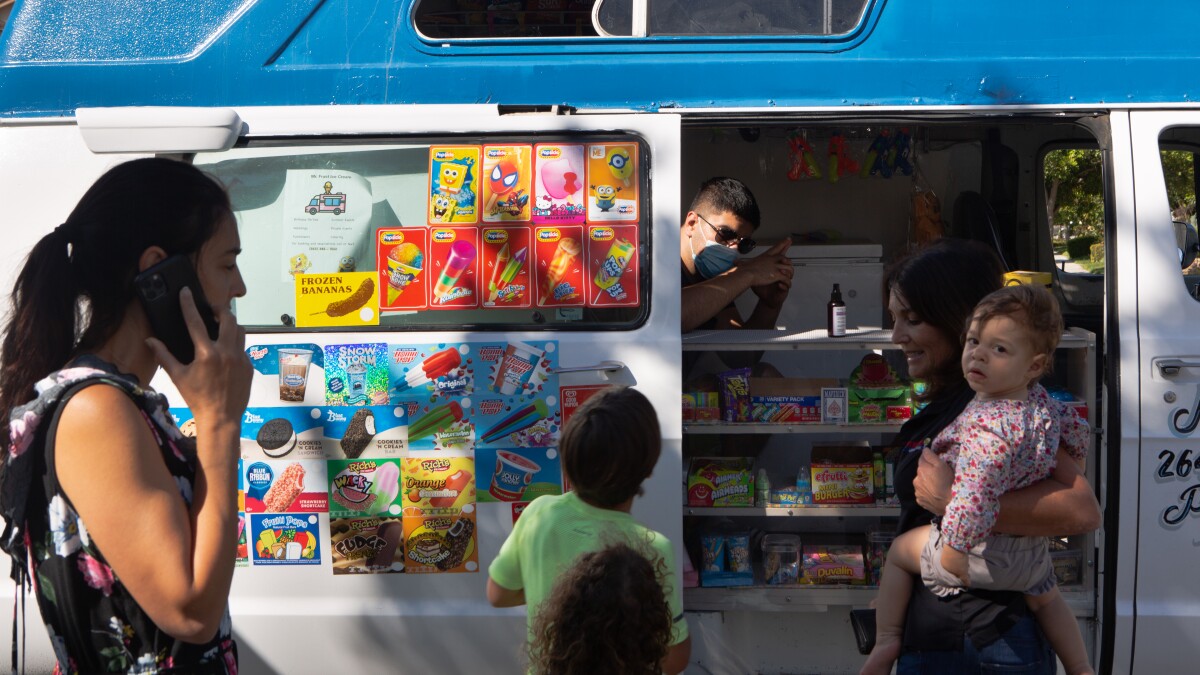
    Amid coronavirus, parents want ice cream vendors to return - Los Angeles Times

    The post Dreams Outside the Hopes of the Neuronormal first appeared on Dissident Voice.

    This post was originally published on Dissident Voice.

  • The end of 2020 brought the sharpest rise in the U.S. poverty rate since the 1960s, according to a new study.

    Economists Bruce Meyer from the University of Chicago and James Sullivan of the University of Notre Dame found that the poverty rate increased by 2.4 percentage points during the latter half of 2020 as the U.S. continued to suffer the economic impacts of COVID-19.

    That percentage-point rise is nearly double the largest annual increase in poverty since the 1960s. This means an additional 8 million people nationwide are now considered poor. Moreover, the poverty rate for Black Americans is estimated to have jumped by 5.4 percentage points, or by 2.4 million individuals.

    The post US Suffers Sharpest Rise In Poverty Rate In More Than 50 Years appeared first on PopularResistance.Org.

    This post was originally published on PopularResistance.Org.

  • Our unemployment insurance system has failed the country at a moment of great need.  With tens of millions of workers struggling just to pay rent and buy food, Congress was forced to pass two emergency spending bills, providing one-time stimulus payments, special weekly unemployment insurance payments, and temporary unemployment benefits to those not covered by the system.  And, because of their limited short-term nature, President Biden must now advocate for a third.

    The system’s shortcomings have been obvious for some time, but little effort has been made to improve it.  In fact, those shortcomings were baked into the system at the beginning, as President Roosevelt wanted, not by accident.

    The post The Failings Of Unemployment Insurance Are By Design appeared first on PopularResistance.Org.

    This post was originally published on PopularResistance.Org.

  • Prison courtyard with open door

    On January 13, the Illinois legislature passed the Pretrial Fairness Act (as part of HB 3653 SFA2). Once signed, this bill will make the state the first to completely eradicate the use of money bail.

    Once fully implemented in 2023, the Pretrial Fairness Act will make Illinois’s pretrial system a national model. In addition to ending money bail, a variety of other provisions will improve the fairness of the state’s pretrial system and ensure that the vast majority of people are released before trial. The bill creates a limited detention eligibility net and mandates pretrial release in the majority of cases; reforms the way people are treated when they miss court dates; ensures sentencing credit for time spent and movement permissions for people on electronic monitoring; regulates the use of risk assessment tools, such as Cook County’s Public Safety Assessment; and ensures transparency and accountability through mandatory data collection and publication. Together, these changes move the state’s orientation toward a real presumption of pretrial freedom and an understanding that public safety comes from investment and resources rather than incarceration.

    The passage of this historic legislation was made possible by long-term community organizing, but catalyzed by last summer’s uprisings in response to the police murders of George Floyd and Breonna Taylor. While lifting up the cries to defund police and refund communities, movement leaders demanded a new vision of community safety that relies not on militarized policing and violent punishment, but instead on resources like living wage jobs and fully funded schools and social services. The Illinois Legislative Black Caucus understood the protests as a mandate to bring sweeping changes to the state’s criminal legal system.

    Over the past 40 years, courts have jailed increasing numbers of people — disproportionately Black — who are awaiting trial and presumed innocent, simply because they cannot afford to pay money bail. This pretrial incarceration often lasts for months or even years, making it much harder for accused people to fight their cases, increasing pressure to accept plea deals, and leading to longer sentences. Pretrial jailing can lead to the loss of jobs, homes and even custody of children. By destabilizing people’s lives, pretrial detention makes us all less safe.

    Since 2016, the Coalition to End Money Bond and the Illinois Network for Pretrial Justice (of which our organizations have served as anchors) have been organizing to bring an end to money bail. The Coalition’s 14 member organizations brought together a range of complementary capacities, including policy advocacy from organizations like Chicago Appleseed and the Illinois Justice Project; Black-led racial justice organizing by Southsiders Organized for Unity and Liberation (SOUL); and broad-based community and electoral organizing by The People’s Lobby (TPL). The newly formed Chicago Community Bond Fund (CCBF) brought a laser-like focus on this issue. This enabled the coalition to engage in a mix of “inside game” and “outside game” strategies. Our impact litigation and policy work complemented the grassroots work building power to move elected decisionmakers.

    We used a variety of strategies in our organizing, ranging from courtwatching, data analysis and report writing, and direct actions, such as the one in which TPL and SOUL occupied the George N. Leighton Criminal Court Building for five hours in an act of civil disobedience. Media and art were also essential tools in our campaign. CCBF led this effort, working with volunteers, videographers and graphic designers to produce compelling, original educational materials like videos, animations and infographics. Our policy experts wrote legislation that became the Pretrial Fairness Act and talked to dozens of legislators about how courts could achieve their goals while respecting the presumption of innocence and freeing the vast majority of people before trial.

    Uplifting the voices of people directly impacted by money bail and pretrial incarceration was a core element of Coalition activities. CCBF paid bail regularly for people and supported them in processing and analyzing their experiences. Many of them went on to share their stories with media, decisionmakers and community leaders. In Illinois, personal testimonies from members of CCBF, SOUL, TPL and others were key to changing the public conversation about wealth-based incarceration. Advocates can state hard facts until they are blue in the face, but personal stories from people impacted by pretrial incarceration move legislators, media and others without personal experiences in a completely different way. Over the past five years, the Coalition made money bail a widely understood and unpopular policy failure — and a litmus test for candidates and officials claiming to support racial justice.

    At several key points, The People’s Lobby and other groups used electoral organizing to move the campaign forward. In 2016, reform candidate Kim Foxx defeated incumbent Anita Alvarez in an election for Cook County state’s attorney with a platform that included bail reform and a broader repudiation of “tough-on-crime” policies. Robert Peters, TPL’s political director and former Coalition organizer, was appointed and then elected to the Illinois Senate, where he became a leading champion for bail reform. These elections showed widespread public support for ending money bail, changed the political calculus for other elected officials and added important new voices to decisionmaking bodies.

    Passing state legislation required uniting a diverse and statewide base of support. In 2019, the Coalition recruited dozens of additional organizations to form the Illinois Network for Pretrial Justice (INPJ), of which our organizations have served as anchors. Together, we then engaged thousands of people to take action in Chicago, its suburbs, and throughout the rest of the state. To build this broad base, we centered Black leadership because Black people are by far the most impacted by money bail. At the same time, we also pushed people in other communities to recognize that we all have a stake in ending white supremacy and the criminal policies that perpetuate it.

    By early 2020, the Coalition had secured Illinois Gov. J.B. Pritzker’s support in ending money bail, but the COVID-19 pandemic quickly brought the 2020 legislative session to a halt. The Black Lives Matter uprisings that began in May agitated and inspired a broader array of legislators to make criminal legal reform a priority. Soon, the Illinois Legislative Black Caucus, led by Sen. Elgie Sims and Rep. Justin Slaughter, began working on a package of reforms to policing and incarceration. Senator Peters and Representative Slaughter, the sponsors of the Pretrial Fairness Act, advocated for the Black Caucus to include ending money bail in this package.

    Meanwhile, we built relationships with key organizations working to end domestic and sexual violence and negotiated their support for the Pretrial Fairness Act. Faith leaders organized through The People’s Lobby, Community Renewal Society, SOUL, A Just Harvest, Trinity United Church of Christ, United Congregations of Metro East, the Religious Action Center of Reform Judaism of Illinois and Believers Bail Out also played an important role in lifting up the voices of members impacted by bail, moving a number of legislators outside Chicago, and securing media coverage at key moments. Ultimately, INPJ members organized thousands of people to call and email their legislators in late 2020 and early 2021.

    Immediately upon its passage on January 13, Governor Pritzker congratulated the sponsors and the Coalition, and is expected to sign the bill.

    Our organizing has not always gotten everything right. Our actions were often too centered in Chicago, and we need to increase our power-building efforts in the suburbs and across the state. There were times when very specialized discussions of legal policy questions took over our coalition meetings, and the grassroots organizers and leaders did not always feel empowered to fully participate. The process of our movement building, however, elevated and centered the voices of directly impacted people, built a powerful and united statewide network, laid the groundwork for significant divestment from jails — starting with a $26 million reduction in the budget of the Cook County Sheriff in 2021 — and won the farthest-reaching overhaul of pretrial systems in the country.

    Our push to end money bail is not over. Police, prosecutors and their allies have shown that they are going to fight these reforms and attempt to stoke the kind of backlash that has rolled back efforts in places as diverse as New York, Atlanta, Alaska and California. The Pretrial Fairness Act will ramp up over a two-year period, so we’re going to need to keep up the fight and push hard to make sure the state follows through on the ambitious goals set by the bill’s passage.

    Illinois organizers have sent a resounding message to the rest of the country that we must bring an end to the criminalization of poverty and the targeting of Black communities. The passage of the Pretrial Fairness Act signals a new era in how we must continue to reimagine safety and justice in our communities: by providing people with resources instead of caging them for ransom. In Illinois, we have shown that when movements open new windows of possibility, community organizing can push through transformational changes.

    This post was originally published on Latest – Truthout.

  • The events of January 6, 2021 in Washington D.C. were historic and will be analyzed for some time to come. Many were rattled and shaken to their core by what unfolded that day in the nation’s capital. Others were excited, relieved, and hopeful.

    Since then, all sorts of disinformation, confusion, and illusions have filled mainstream accounts of what happened that day and why, but it is already clear that certain things are emerging that once again do not bode well for the people. It is always important to ask: “when a major event happens, who ultimately ends up benefitting from it?”

    As with past events and crises, and keeping in mind the role and significance of “disaster capitalism,” it is not unreasonable to assume that the events of January 6, 2021 will be used by the rich and their political and media representatives to expand police-state arrangements under the banner of high ideals (e.g., “protecting the citadel of democracy” and “our democracy is in peril”). The irony of the situation did not escape numerous world leaders and millions around the globe who proclaimed in unison: “Finally the U.S. is getting a taste of its own medicine. The U.S. has actively organized ruthless coups, conflicts, wars, rebellions, and insurrections in more than 100 countries over the past 200 years.” For many, the events of January 6 further lowered the credibility of “representative democracy” in the “bastion of democracy.”

    Further degrading the legitimacy of outmoded governance arrangements, the world saw how Washington D.C. was recently turned into a large military camp with armed soldiers and armed state agents everywhere. Many police and military forces will remain in and around the area well after the January 2021 presidential inauguration and contribute to establishing a “new normal” of police presence. How does this look at home and abroad? Like a robust vibrant democracy which is the envy of the world, or a scandalous troubling situation? The massive militarization of Washington D.C. has only added to the dystopian, humiliating, and bizarre life everyone has been forced to endure since March 2020 when the never-ending and exhausting “COVID Pandemic” started in earnest.

    But contrary to media accounts the struggle today is not between democrats and republicans. It is not between those who support Trump or revile him. It is not between racists versus anti-racists, pro-diversity or anti-diversity advocates, or “progressives” versus “right-wingers.” Nor is it between “right-wing thugs” versus the police, or ANTIFA versus right-wing militias. These are facile dichotomies that consolidate anticonsciousness and further divide the polity. Such superficial characterizations miss the profound significance of what is unfolding—an intense legitimacy crisis—and the fact that no one is talking about how to empower the people as sharp conflicts among factions of the ruling elite intensify and ensnare people. Ramzy Baroud reminded us recently that:

    While mainstream US media has conveniently attributed all of America’s ills to the unruly character of outgoing President Donald Trump, the truth is not quite so convenient. The US has been experiencing an unprecedented political influx at every level of society for years, leading us to believe that the rowdy years of Trump’s Presidency were a mere symptom, not the cause, of America’s political instability.

    In the current fractured, chaotic, and dangerous context, all manner of inflammatory and provocative remarks are still being made by a range of politicians, media outlets, and “leaders.” Words like “treason,” “insurrection,” “violent mob,” “coup,” “rebellion,” and “sedition” are being thrown around loosely and quickly. There is no sense of how such discourse takes us all further down a dangerous road. Different individuals, groups, and factions are being lumped into overly-simplistic categories and classifications while ignoring the long-standing marginalization of the polity as a whole and the continued failure of “representative democracy.”

    In this foggy context, it can be easy to forget that whether you are a democrat, republican, or something else, the economy and society are not operating in your interests. Debt, poverty, inequality, hunger, homelessness, unemployment, under-employment, stock market bubbles, environmental decay, and generalized anxiety continue to worsen nationwide and harm Americans of all political stripes while the rich get much richer much faster. Existing governance arrangements marginalize more than 95 percent of people. Working people have no real mechanism to effectively advance their interests in the current political setup. They are reduced to perpetually begging politicians and “leaders” to do the most basic things. There is an urgent need for democratic renewal.

    In the coming months we will not only see more economic collapse but also more police-state arrangements put in place in the name of “security” and “democracy.” A main focus will be “domestic terrorism,” leading to the further restriction of freedom of speech and criminalization of dissent. Freedom of movement will also be constrained. This will be far-reaching, affecting everyone, even those currently throwing around words like “sedition,” “coup,” and “insurrection.” Already, the atmosphere has been chilled; many are more carefully self-monitoring their speech and actions so as to not be targeted by the state.

    At the end of the day, conflicts, divisions, social unrest, political turmoil, and economic deterioration will not go away so long as the existing authority clashes with the prevailing conditions and the demands emerging from these conditions. Objective conditions are screaming for modernization and solutions that the rich and their entourage are unable and unwilling to provide.

    Unemployment, under-employment, hunger, homelessness, poverty, debt, inequality, despair, and generalized anxiety do not care if you are black or white, democrat or republican, right-wing or left-wing, a “Trumper” or “anti-Trumper.” Concrete conditions are screaming for the affirmation of basic rights like the right to food, shelter, education, healthcare, work, and security.

    Their struggles and demands may take different forms and express themselves in different ways, but it is the long-standing absence of these rights that people from all walks of life are striving to bring into being.

    And while their policies may differ in some respects, the different factions of the rich and their political representatives have only more of the same to offer people: more inequality, more debt, more under-employment, more worry and insecurity, more stock market bubbles, and more empty promises. Lofty phrases and grand “plans” from the rich and their representatives won’t change the aim and direction of the economy. People are not going to suddenly become empowered because one party of the rich or the other holds power now. Divisions, dissatisfaction, and marginalization are not going to disappear just because a different section of the rich wields power. Many believe that the road ahead will be very rocky.

    Democratic renewal does not favor the rich or their representatives, it is something only working people themselves will benefit from and have to collectively fight for. In this regard, it is key to consciously reject the aims, outlook, views, and agenda of the rich and develop a new independent aim, politics, outlook, and agenda that favors the polity and the public interest.

    The post Will More Police-State Arrangements Foster Democracy? first appeared on Dissident Voice.

    This post was originally published on Dissident Voice.

  • According to a new report by Oxfam, ‘The Inequality Virus’, the wealth of the world’s billionaires increased by $3.9tn (trillion) between 18 March and 31 December 2020. Their total wealth now stands at $11.95tn. The world’s 10 richest billionaires have collectively seen their wealth increase by $540bn over this period. In September 2020, Jeff Bezos could have paid all 876,000 Amazon employees a $105,000 bonus and still be as wealthy as he was before COVID.

    At the same time, hundreds of millions of people will lose (have lost) their jobs and face destitution and hunger. It is estimated that the total number of people living in poverty could have increased by between 200 million and 500 million in 2020. The number of people living in poverty might not return even to its pre-crisis level for over a decade.

    Mukesh Ambani, India’s richest man and head of Reliance Industries, which specialises in petrol, retail and telecommunications, doubled his wealth between March and October 2020. He now has $78.3bn. The average increase in Ambani’s wealth in just over four days represented more than the combined annual wages of all of Reliance Industries’ 195,000 employees.

    The Oxfam report states that lockdown in India resulted in the country’s billionaires increasing their wealth by around 35 per cent. At the same time, 84 per cent of households suffered varying degrees of income loss. Some 170,000 people lost their jobs every hour in April 2020 alone.

    The authors also noted that income increases for India’s top 100 billionaires since March 2020 was enough to give each of the 138 million poorest people a cheque for 94,045 rupees.

    The report went on to state:

    … it would take an unskilled worker 10,000 years to make what Ambani made in an hour during the pandemic… and three years to make what Ambani made in a second.

    During lockdown and after, hundreds of thousands of migrant workers in the cities (who had no option but to escape the country’s avoidable but deepening agrarian crisis) were left without jobs, money, food or shelter.

    It is clear that COVID has been used as cover for consolidating the power of the unimaginably rich. But plans for boosting their power and wealth will not stop there. One of the most lucrative sectors for these people is agrifood.

    More than 60 per cent of India’s almost 1.4 billion population rely (directly or indirectly) on agriculture for their livelihood. Aside from foreign interests, Mukesh Ambani and fellow billionaire Gautam Adani (India’s second richest person with major agribusiness interests) are set to benefit most from the recently passed farm bills that will lead to the wholesale corporatisation of the agrifood sector.

    Corporate consolidation

    A recent article on the grain.org website, ‘Digital control: how big tech moves into food and farming (and what it means)’, describes how Amazon, Google, Microsoft, Facebook and others are closing in on the global agrifood sector while the likes of Bayer, Syngenta, Corteva and Cargill are cementing their stranglehold.

    The tech giants entry into the sector will increasingly lead to a mutually beneficial integration between the companies that supply products to farmers (pesticides, seeds, fertilisers, tractors, drones, etc) and those that control the flow of data and have access to digital (cloud) infrastructure and food consumers. This system is based on corporate centralisation and concentration (monopolisation).

    Grain notes that in India global corporations are also colonising the retail space through e-commerce. Walmart entered into India in 2016 by a US$3.3 billion take-over of the online retail start-up Jet.com which, in 2018, was followed by a US$16 billion take-over of India’s largest online retail platform Flipkart. Today, Walmart and Amazon now control almost two thirds of India’s digital retail sector.

    Amazon and Walmart are using predatory pricing, deep discounts and other unfair business practices to lure customers towards their online platforms. According to Grain, when the two companies generated sales of over US$3 billion in just six days during a Diwali festival sales blitz, India’s small retailers called out in desperation for a boycott of online shopping.

    In 2020, Facebook and the US-based private equity concern KKR committed over US$7 billion to Reliance Jio, the digital store of one of India’s biggest retail chains. Customers will soon be able to shop at Reliance Jio through Facebook’s chat application, WhatsApp.

    The plan for retail is clear: the eradication of millions of small traders and retailers and neighbourhood mom and pop shops. It is similar in agriculture.

    The aim is to buy up rural land, amalgamate it and roll out a system of chemically-drenched farmerless farms owned or controlled by financial speculators, the high-tech giants and traditional agribusiness concerns. The end-game is a system of contract farming that serves the interests of big tech, big agribusiness and big retail. Smallholder peasant agriculture is regarded as an impediment to be replaced by large industrial-scale farms.

    This model will be based on driverless tractors, drones, genetically engineered/lab-produced food and all data pertaining to land, water, weather, seeds and soils patented and often pirated from peasant farmers.

    Farmers possess centuries of accumulated knowledge that once gone will never be got back. Corporatisation of the sector has already destroyed or undermined functioning agrarian ecosystems that draw on centuries of traditional knowledge and are increasingly recognised as valid approaches to secure food security.

    And what of the hundreds of millions to be displaced in order to fill the pockets of the billionaire owners of these corporations? Driven to cities to face a future of joblessness: mere ‘collateral damage’ resulting from a short-sighted system of dispossessive predatory capitalism that destroys the link between humans, ecology and nature to boost the bottom line of the immensely rich.

    Imperial intent

    India’s agrifood sector has been on the radar of global corporations for decades. With deep market penetration and near saturation having been achieved by agribusiness in the US and elsewhere, India represents an opportunity for expansion and maintaining business viability and all-important profit growth. And by teaming up with the high-tech players in Silicon Valley, multi-billion dollar data management markets are being created. From data and knowledge to land, weather and seeds, capitalism is compelled to eventually commodify (patent and own) all aspects of life and nature.

    Foreign agricapital is applying enormous pressure on India to scrap its meagre (in comparison to the richer nations) agricultural subsidies. The public distribution system and publicly held buffer stocks constitute an obstacle to the profit-driven requirements of global agribusiness interests.

    Such interests require India to become dependent on imports (alleviating the overproduction problem of Western agricapital – the vast stocks of grains that it already dumps on the Global South) and to restructure its own agriculture for growing crops (fruit, vegetables) that consumers in the richer countries demand. Instead of holding physical buffer stocks for its own use, India would hold foreign exchange reserves and purchase food stocks from global traders.

    Successive administrations have made the country dependent on volatile flows of foreign capital via foreign direct investment (and loans). The fear of capital flight is ever present. Policies are often governed by the drive to attract and retain these inflows. This financialisation of agriculture serves to undermine the nation’s food security, placing it at the mercy of unforeseen global events (conflict, oil prices, public health crises) international commodity speculators and unstable foreign investment.

    Current agricultural ‘reforms’ are part of a broader process of imperialism’s increasing capture of the Indian economy, which has led to its recolonization by foreign corporations as a result of neoliberalisation which began in 1991. By reducing public sector buffer stocks and introducing corporate-dictated contract farming and full-scale neoliberal marketisation for the sale and procurement of produce, India will be sacrificing its farmers and its own food security for the benefit of a handful of unscrupulous billionaires.

    As independent cultivators are bankrupted, the aim is that land will eventually be amalgamated to facilitate large-scale industrial cultivation. Indeed, a recent piece on the Research Unit for Political Economy site, ‘The Kisans Are Right: Their Land Is At Stake‘, describes how the Indian government is ascertaining which land is owned by whom with the ultimate aim of making it easier to eventually sell it off (to foreign investors and agribusiness). Other developments are also part of the plan (such as the Karnataka Land Reform Act), which will make it easier for business to purchase agricultural land.

    India could eventually see institutional investors with no connection to farming (pension funds, sovereign wealth funds, endowment funds and investments from governments, banks, insurance companies and high net worth individuals) purchasing land. This is an increasing trend globally and, again, India represents a huge potential market. The funds have no connection to farming, have no interest in food security and are involved just to make profit from land.

    The recent farm bills – if not repealed – will impose the neoliberal shock therapy of dispossession and dependency, finally clearing the way to restructure the agri-food sector. The massive inequalities and injustices that have resulted from the COVID-related lockdowns are a mere taste of what is to come.

    The hundreds of thousands of farmers who have been on the streets protesting against these bills are at the vanguard of the pushback – they cannot afford to fail. There is too much at stake.

    The post Viral Inequality and the Farmers’ Struggle in India   first appeared on Dissident Voice.

    This post was originally published on Dissident Voice.
  • In our latest report for the 2020 Guardian and Observer appeal, we talk to Child Poverty Action Group and those it has helped

    • Please donate to our appeal here

    When Trudi and Gavin Scott moved back to the UK from New Zealand with their severely disabled son, Theo, in December 2016, it was the start of a “horrendous” few years of financial struggle triggered by the family being refused disability living allowance.

    At one point, when Gavin had to give up work to look after Theo while Trudi was recovering from a major operation, they had to scrape by on child benefit, tax credit cash and food bank vouchers, causing them to fall behind with bills.

    Continue reading…

    This post was originally published on Human rights | The Guardian.

  • Towards the end of November, United Nations Secretary General António Guterres addressed the German Bundestag to celebrate the 75th anniversary of the United Nations (UN). At the heart of the UN is its Charter, the treaty that binds nations together in a global project, which has now been ratified by all 193 member nations of the UN. It is well worth reiterating the four main goals of the UN Charter, since most of these have slipped from public consciousness:

    Guterres pointed out that the avenues to realise the aims of the Charter are being closed off not only by the neofascists, who he euphemistically calls ‘populist approaches’, but also by the worst kind of imperialism, as illustrated by the ‘vaccine nationalism’ driven by countries such as the United States of America. ‘It is clear’, Guterres said, ‘that the way to win the future is through an openness to the world’ and not by a ‘closing of minds’.

    CoronaShock: A Virus and the World. Cover image by Vikas Thakur (India).

    At Tricontinental: Institute for Social Research, we take the UN Charter as the foundation of our work. To advance its goals is an essential step for the construction of humanity, which is a concept of aspiration rather than a concept of fact; we are not yet human beings, but we strive to become human. Imagine if we lived in a world without war and with respect for international law, if we lived in a world that honoured fundamental human rights and tried to promote the widest social progress? This would a be a world where the productive resources would no longer be used for military hardware but would be used to end hunger, to end illiteracy, to end poverty, to end houselessness, to end – in other words – the structural features of indignity.

    In 2019, the world’s nations spent nearly $2 trillion on weaponry, while the world’s richest people hid $36 trillion in illicit tax havens. It would take a fraction of this money to eradicate hunger, with estimates ranging from $7 billion to $265 billion per year. Comparable amounts of money are needed to finance comprehensive public education and universal primary health care. Productive resources have been highjacked by the wealthy, who then use their money power to ensure that Central Banks keep inflation down rather than pursue policies towards full employment. It’s a racket, if you look at it closely.

    Two new World Bank studies show that, because of a lack of resources and imagination during this pandemic, an additional 72 million primary school aged children will slip into ‘learning poverty’, a term that refers to the inability to read and comprehend simple texts by the age of ten. A UNICEF study shows that in sub-Saharan Africa an additional 50 million people have moved into extreme poverty during the pandemic, most of whom are children; 280 million of sub-Saharan Africa’s 550 million children struggle with food insecurity, while learning has completely stopped for millions of children who are ‘unlikely to ever return to the classroom’.

    The gap between the plight of the billions who struggle to survive and the extravagances of the very few is stark. The UBS report on wealth bears an awkward title: Riding the storm. Market turbulence accelerates diverging fortunes. The world’s 2,189 billionaires seemed to have ridden the storm of the pandemic to their great advantage, with their wealth at a record high of $10.2 trillion as of July 2020 (up from $8.0 trillion in April). The most vulgar number was that their wealth increased by a quarter (27.5%) from April to July during the Great Lockdown. This came when billions of people in the capitalist world were newly unemployed, struggling to survive on very modest relief from governments, their lives turned upside down.

    CoronaShock and Patriarchy. Cover image by Daniela Ruggeri (Argentina)

    Our most recent study, CoronaShock and Patriarchy, should be compulsory reading; it provides a sharp assessment of the social – and gendered – impact of CoronaShock. Our team was motivated by the acute state of deprivation in which billions of people find themselves and how that deprivation morphs basic social bonds towards the hyper-exploitation and oppression of specific parts of the population. The report closes with an eighteen-point list of demands that are a guide for our struggles ahead. We make the case that the capitalist states are controlled by elites who are unable to solve the basic problems of our time such as unemployment, hunger, patriarchal violence, and the under-appreciation, precarity, and invisibility of social reproduction work.

    The texts that we published this year – from our red alerts on the coronavirus to the studies on CoronaShock – seek to orient us towards a rational assessment of these rapid developments, rooted in the world-view of our mass movements of workers, peasants, and the oppressed. We took seriously the view of the World Health Organisation to ground our studies in ‘solidarity, not stigma’. Based on the startlingly low numbers of infections and deaths in countries with a socialist government from Vietnam to Cuba, we studied why these governments were better able to handle the pandemic. We understood that this was because they took a scientific attitude towards the virus, they had a public sector to turn to for the production of necessary equipment and medicines, they were able to rely upon a practice of public action which brought organised groups of people together to provide relief to each other, and they took an internationalist – rather than a racist – approach to the virus which included sharing information, goods, and – in the case of China and Cuba – medical personnel. Because of this, we – alongside other organisations – have joined the campaign for the Nobel Prize for Peace to be given to the Cuban doctors.

    We have assembled a remarkable archive of material on CoronaShock and on the world that it has begun to produce. This includes a provisional ten-point agenda for a post-COVID world, a paper first delivered at a High-Level Conference on the Post-Pandemic Economy, organised by the Bolivarian Alliance for the Peoples of Our America (ALBA). In the first few months of 2021, we will release a fuller document on the world after Corona.

    CoronaShock and Socialism. Cover image by Ingrid Neves (Brazil), adapted from People’s Medical Publishing House, China, 1977

    CoronaShock and Socialism. Cover image by Ingrid Neves (Brazil), adapted from People’s Medical Publishing House, China, 1977

    On a personal note, I would like to thank the entire team at Tricontinental: Institute for Social Research for their resilience during the pandemic, their ability to work at a pace much greater than before, and their good cheer towards each other during this period.

    We swim in the waters of our movements, whose fortitude against the opportunistic and cynical use of the crisis by capitalist governments lifts us up and gives us courage. Last week, the newsletter highlighted the patient and dedicated work done by the young comrades of the Communist Party of India (Marxist) in Kerala, who work to build a humane and just society. The same kind of work can be seen amidst the Landless Workers’ Movement in Brazil (MST), and it can be seen in the Copper Belt region of Zambia, where the members of the Socialist Party campaign for next year’s presidential election, and in South Africa, where the National Union of Metal Workers (NUMSA) fights to defend workers against retrenchment during the pandemic and where Abahlali baseMjondolo builds confidence and power amongst shack dwellers. We see this great endurance and commitment from our comrades of the Workers’ Party of Tunisia and the Democratic Way of Morocco, who are leading a revitalisation of the Left in the Arabic-speaking regions, and in the great application of the peoples of Bolivia, Cuba, and Venezuela, China, Laos, Nepal, and Vietnam, as they seek to build socialism in poor countries who face a sustained attack against the socialist path. We take strength from our comrades in Argentina, who struggle to consolidate the power of the excluded workers and to build a society beyond patriarchy. We are a movement-driven research institute; we rely upon our movements for everything that we do.

    This post was originally published on Radio Free.

  • ANALYSIS: By Ramzy Baroud

    The notion that the covid-19 pandemic was “the great equalizer’ should be dead and buried by now. If anything, the lethal disease is another terrible reminder of the deep divisions and inequalities in our societies.

    That said, the treatment of the disease should not be a repeat of the same shameful scenario.

    For an entire year, wealthy celebrities and government officials have been reminding us that “we are in this together”, that “we are on the same boat”, with the likes of US singer, Madonna, speaking from her mansion while submerged in a “milky bath sprinkled with rose petals,” telling us that the pandemic has proved to be the “great equalizer”.

    “Like I used to say at the end of ‘Human Nature’ every night, we are all in the same boat,” she said. “And if the ship goes down, we’re all going down together,” CNN reported at the time.

    Such statements, like that of Madonna, and Ellen DeGeneres as well, have generated much media attention not just because they are both famous people with a massive social media following but also because of the obvious hypocrisy in their empty rhetoric.

    In truth, however, they were only repeating the standard procedure followed by governments, celebrities and wealthy “influencers” worldwide.

    But are we, really, “all in this together”? With unemployment rates skyrocketing across the globe, hundreds of millions scraping by to feed their children, multitudes of nameless and hapless families chugging along without access to proper healthcare, subsisting on hope and a prayer so that they may survive the scourges of poverty – let alone the pandemic – one cannot, with a clear conscience, make such outrageous claims.

    Not only are we not “on the same boat” but, certainly, we have never been. According to World Bank data, nearly half of the world lives on less than US$5.5 a day. This dismal statistic is part of a remarkable trajectory of inequality that has afflicted humanity for a long time.

    The plight of many of the world’s poor is compounded in the case of war refugees, the double victims of state terrorism and violence and the unwillingness of those with the resources to step forward and pay back some of their largely undeserved wealth.

    The boat metaphor is particularly interesting in the case of refugees; millions of them have desperately tried to escape the infernos of war and poverty in rickety boats and dinghies, hoping to get across from their stricken regions to safer places.

    Sadly familiar sight
    This sight has sadly grown familiar in recent years not only throughout the Mediterranean Sea but also in other bodies of water around the world, especially in Burma, where hundreds of thousands of Rohingya have tried to escape their ongoing genocide. Thousands of them have drowned in the Bay of Bengal.

    The covid-19 pandemic has accentuated and, in fact, accelerated the sharp inequalities that exist in every society individually, and the world at large. According to a June 2020 study conducted in the United States by the Brookings Institute, the number of deaths as a result of the disease reflects a clear racial logic.

    Many indicators included in the study leave no doubt that racism is a central factor in the life cycle of covid.

    For example, among those aged between 45 and 54 years, “Black and Hispanic/Latino death rates are at least six times higher than for whites”. Although whites make up 62 percent of the US population of that specific age group, only 22 percent of the total deaths were white.

    Black and Latino communities were the most devastated.

    According to this and other studies, the main assumption behind the discrepancy of infection and death rates resulting from covid among various racial groups in the US is poverty which is, itself, an expression of racial inequality. The poor have no, or limited, access to proper healthcare. For the rich, this factor is of little relevance.

    Moreover, poor communities tend to work in low-paying jobs in the service sector, where social distancing is nearly impossible. With little government support to help them survive the lockdowns, they do everything within their power to provide for their children, only to be infected by the virus or, worse, die.

    Iniquity expected to continue
    This iniquity is expected to continue even in the way that the vaccines are made available. While several Western nations have either launched or scheduled their vaccination campaigns, the poorest nations on earth are expected to wait for a long time before life-saving vaccines are made available.

    In 67 poor or developing countries located mostly in Africa and the Southern hemisphere, only one out of ten individuals will likely receive the vaccine by the end of 2020, the Fortune Magazine website reported.

    The disturbing report cited a study conducted by a humanitarian and rights coalition, the People’s Vaccine Alliance (PVA), which includes Oxfam and Amnesty International.

    If there is such a thing as a strategy at this point, it is the deplorable “hoarding” of the vaccine by rich nations.

    Dr Mohga Kamal-Yanni of the PVA put this realisation into perspective when she said that “rich countries have enough doses to vaccinate everyone nearly three times over, while poor countries don’t even have enough to reach health workers and people at risk”.

    So much for the numerous conferences touting the need for a “global response” to the disease.

    But it does not have to be this way.

    While it is likely that class, race and gender inequalities will continue to ravage human societies after the pandemic, as they did before, it is also possible for governments to use this collective tragedy as an opportunity to bridge the inequality gap, even if just a little, as a starting point to imagine a more equitable future for all of us.

    Poor, dark-skinned people should not be made to die when their lives can be saved by a simple vaccine, which is available in abundance.

    Dr Ramzy Baroud is a journalist and the editor of The Palestine Chronicle. He is the author of five books. His latest is “These Chains Will Be Broken: Palestinian Stories of Struggle and Defiance in Israeli Prisons” (Clarity Press, Atlanta). Dr Baroud is a non-resident senior research fellow at the Center for Islam and Global Affairs (CIGA), Istanbul Zaim University (IZU). This article is republished with permission. His website is www.ramzybaroud.net

    This post was originally published on Radio Free.

  • Image Source: Pixabay

    “Pull yourself up by your bootstraps.”

    This is a saying our country is familiar with. It’s a mentality that built American society the way it is today. Unfortunately, it’s not the only problematic sentiment our society is familiar with either.

    Our society is full of platitudes, bromides all too often used to gloss over and even to excuse the profound economic injustices that continue to plague our modern world. The stark reality is that many people commend America as the land of promise and plenty, yet millions of people are struggling with extreme poverty. Now not only are the impoverished paying the price with their physical health but with their mental health as well.

    But what, exactly, is the connection between poverty and mental illness? And what can be done to break this devastating cycle?

    The First Pandemic

    Long before the outbreak of COVID-19 shattered the national and global economy, the US was plagued by another, more enduring, and more pervasive pandemic: the pandemic of poverty. According to a 2017 article published by the National Institutes of Health, an estimated 1.5 million families in America, including 16 million children, were living in deep or extreme poverty, which is typically defined as living on $2 or less per day.

    But poverty is far more than just a social or economic problem, and its health effects extend far beyond the physical health impacts related to malnutrition or lack of adequate healthcare. The greatest health risks associated with poverty may not be physical at all.

    Research increasingly suggests that, regardless of the physical toll associated with poverty, the mental toll is even greater. Worse, perhaps, is that these impacts may outlast any change in an individual’s or a family’s socioeconomic status.

    Children who grow up in poor homes are at greater risk for adult-onset mental illness, for example, as well as for disruptive behavioral disorders (DHD) during childhood. These disorders, combined with persistent financial struggles, put these children at an increased risk of dropping out of school prematurely. By dropping out and discontinuing the opportunity for a furthered education, the cycle of poverty and mental illness only continues. As this cycle continues to spin, many people below the poverty line end up suffering from mental health issues due to the trauma they’ve experienced.

    Poverty, Mental Illness, and Addiction

    Studies increasingly show that poverty is linked both to behavioral disorders in children and to anxiety, depression, or post-traumatic stress disorders (PTSD) in adults and children alike. According to the National Survey of Drug Use and Health, more than 2.5 million adults living below the poverty line in the US have also suffered from some form of serious mental illness (SMI), including psychiatric, emotional, and/or behavioral disorders.

    Studies indicate that the most prevalent of these disorders are substance use disorders (SUD). Those contending with the extreme and persistent financial stress may turn to substances to cope, leading to SUD in those who may be predisposed to addiction. This can be especially problematic for those that also suffer from homelessness.

    Poverty as Mental Illness

    The connection between mental illness and poverty is, perhaps, most apparent in the crisis of homelessness. Studies suggest that a significant proportion of the unhoused also suffer from undiagnosed or insufficiently treated mental illness.

    The question remains, however, of whether homelessness is a symptom of mental illness or a cause. Indeed, for far too many years, homelessness, and poverty in general, has been pathologized. By viewing extreme poverty as a form or a manifestation of illness, we get to lay the “blame” on the supposed illness, and subsequently point the finger at those in whom the “illness” lies, as the source of the suffering.

    In doing so, we individualize poverty and mental illness, rather than looking deeper. This pathologizing of poverty makes it easier to deflect from its true causes. To refuse to acknowledge the problem as a social one but as an individual one instead makes it easier to sustain the economic and social inequities that sustain the dividing lines between the haves and the have nots.

    Although there is still far more work to be done to get at root causes, significant social support services do exist to help those facing food and housing insecurity establish a firmer financial footing. That includes not only financial aid but also vocational, employment, and education resources. In addition, mental health assistance has become more available to those under the poverty line.

    Practicing Self-Care

    As profound as the connection between mental illness and poverty may be, help is out there. If you are suffering from addiction, for example, you can access quality telehealth services, many of which are now covered by Medicare and Medicaid.

    Likewise, if you are experiencing depression or anxiety, you can also access on-demand counseling and other free and low-cost mental health services over the phone and online. In addition to seeking quality healthcare, simply understanding your emotional triggers and creating a plan to manage them can help to prevent a mental health spiral, no matter what your financial situation may be.

    The Takeaway

    The connection between poverty and mental illness is a significant one. All too often, the two link in a vicious cycle that seems almost impossible to escape. The pandemic of poverty is both pervasive and systemic, but that does not mean that the poor are doomed to suffer both financially and psychologically. From housing and education support to mental healthcare and addiction counseling, help is available to help you break the chain.

    Beau Peters is a freelance writer based out of Portland, OR. He has a particular interest in covering workers’ rights, social justice, and workplace issues and solutions. Read other articles by Beau.

    This post was originally published on Radio Free.

  • The notion that the COVID-19 pandemic was ‘the great equalizer’ should be dead and buried by now. If anything, the lethal disease is another terrible reminder of the deep divisions and inequalities in our societies. That said, the treatment of the disease should not be a repeat of the same shameful scenario.

    For an entire year, wealthy celebrities and government officials have been reminding us that “we are in this together”, that “we are on the same boat”, with the likes of US singer, Madonna, speaking from her mansion while submerged in a “milky bath sprinkled with rose petals,” telling us that the pandemic has proved to be the “great equalizer”.

    “Like I used to say at the end of ‘Human Nature’ every night, we are all in the same boat,” she said. “And if the ship goes down, we’re all going down together,” CNN reported at the time.

    Such statements, like that of Madonna, and Ellen DeGeneres as well, have generated much media attention not just because they are both famous people with a massive social media following but also because of the obvious hypocrisy in their empty rhetoric. In truth, however, they were only repeating the standard procedure followed by governments, celebrities and wealthy ‘influencers’ worldwide.

    But are we, really, “all in this together”? With unemployment rates skyrocketing across the globe, hundreds of millions scraping by to feed their children, multitudes of nameless and hapless families chugging along without access to proper healthcare, subsisting on hope and a prayer so that they may survive the scourges of poverty – let alone the pandemic – one cannot, with a clear conscience, make such outrageous claims.

    Not only are we not “on the same boat” but, certainly, we have never been. According to World Bank data, nearly half of the world lives on less than $5.5 a day. This dismal statistic is part of a remarkable trajectory of inequality that has afflicted humanity for a long time.

    The plight of many of the world’s poor is compounded in the case of war refugees, the double victims of state terrorism and violence and the unwillingness of those with the resources to step forward and pay back some of their largely undeserved wealth.

    The boat metaphor is particularly interesting in the case of refugees; millions of them have desperately tried to escape the infernos of war and poverty in rickety boats and dinghies, hoping to get across from their stricken regions to safer places. This sight has sadly grown familiar in recent years not only throughout the Mediterranean Sea but also in other bodies of water around the world, especially in Burma, where hundreds of thousands of Rohingya have tried to escape their ongoing genocide. Thousands of them have drowned in the Bay of Bengal.

    The COVID-19 pandemic has accentuated and, in fact, accelerated the sharp inequalities that exist in every society individually, and the world at large. According to a June 2020 study conducted in the United States by the Brookings Institute, the number of deaths as a result of the disease reflects a clear racial logic. Many indicators included in the study leave no doubt that racism is a central factor in the life cycle of COVID.

    For example, among those aged between 45 and 54 years, “Black and Hispanic/Latino death rates are at least six times higher than for whites”. Although whites make up 62 percent of the US population of that specific age group, only 22 percent of the total deaths were white. Black and Latino communities were the most devastated.

    According to this and other studies, the main assumption behind the discrepancy of infection and death rates resulting from COVID among various racial groups in the US is poverty which is, itself, an expression of racial inequality. The poor have no, or limited, access to proper healthcare. For the rich, this factor is of little relevance.

    Moreover, poor communities tend to work in low-paying jobs in the service sector, where social distancing is nearly impossible. With little government support to help them survive the lockdowns, they do everything within their power to provide for their children, only to be infected by the virus or, worse, die.

    This iniquity is expected to continue even in the way that the vaccines are made available. While several Western nations have either launched or scheduled their vaccination campaigns, the poorest nations on earth are expected to wait for a long time before life-saving vaccines are made available.

    In 67 poor or developing countries located mostly in Africa and the Southern hemisphere, only one out of ten individuals will likely receive the vaccine by the end of 2020, the Fortune Magazine website reported.

    The disturbing report cited a study conducted by a humanitarian and rights coalition, the People’s Vaccine Alliance (PVA), which includes Oxfam and Amnesty International.

    If there is such a thing as a strategy at this point, it is the deplorable “hoarding” of the vaccine by rich nations. Dr. Mohga Kamal-Yanni of the PVA put this realization into perspective when she said that “rich countries have enough doses to vaccinate everyone nearly three times over, whilst poor countries don’t even have enough to reach health workers and people at risk”. So much for the numerous conferences touting the need for a ‘global response’ to the disease.

    But it does not have to be this way.

    While it is likely that class, race and gender inequalities will continue to ravage human societies after the pandemic, as they did before, it is also possible for governments to use this collective tragedy as an opportunity to bridge the inequality gap, even if just a little, as a starting point to imagine a more equitable future for all of us.

    Poor, dark-skinned people should not be made to die when their lives can be saved by a simple vaccine, which is available in abundance.

    This post was originally published on Radio Free.

  • A British family from the film Smashing Kids, 1975. Photograph: John Garrett

    John Pilger interviewed Irene Brunsden in Hackney, east London about only being able to feed her two-year-old a plate of cornflakes in 1975. Now he sees nervous women queueing at foodbanks with their children as it’s revealed 600,000 more kids are in poverty now than in 2012.

    *****

    When I first reported on child poverty in Britain, I was struck by the faces of children I spoke to, especially the eyes. They were different: watchful, fearful.

    In Hackney, in 1975, I filmed Irene Brunsden’s family. Irene told me she gave her two-year-old a plate of cornflakes. “She doesn’t tell me she’s hungry, she just moans. When she moans, I know something is wrong.”

    “How much money do you have in the house? I asked.

    “Five pence,” she replied.

    Irene said she might have to take up prostitution, “for the baby’s sake”. Her husband Jim, a truck driver who was unable to work because of illness, was next to her. It was as if they shared a private grief.

    This is what poverty does. In my experience, its damage is like the damage of war; it can last a lifetime, spread to loved ones and contaminate the next generation. It stunts children, brings on a host of diseases and, as unemployed Harry Hopwood in Liverpool told me, “it’s like being in prison”.

    This prison has invisible walls. When I asked Harry’s young daughter if she ever thought that one day she would live a life like better-off children, she said unhesitatingly: “No”.

    What has changed 45 years later?  At least one member of an impoverished family is likely to have a job — a job that denies them a living wage. Incredibly, although poverty is more disguised, countless British children still go to bed hungry and are ruthlessly denied opportunities..

    What has not changed is that poverty is the result of a disease that is still virulent yet rarely spoken about – class.

    Study after study shows that the people who suffer and die early from the diseases of poverty brought on by a poor diet, sub-standard housing and the priorities of the political elite and its hostile “welfare” officials — are working people. In 2020, one in three preschool British children suffers like this.

    In making my recent film, The Dirty War on the NHS, it was clear to me that the savage cutbacks to the NHS and its privatisation by the Blair, Cameron, May and Johnson governments had devastated the vulnerable, including many NHS workers and their families. I interviewed one low-paid NHS worker who could not afford her rent and was forced to sleep in churches or on the streets.

    At a food bank in central London, I watched young mothers looking nervously around as they hurried away with old Tesco bags of food and washing powder and tampons they could no longer afford, their young children holding on to them. It is no exaggeration that at times I felt I was walking in the footprints of Dickens.

    Boris Johnson has claimed that 400,000 fewer children are living in poverty since 2010 when the Conservatives came to power. This is a lie, as the Children’s Commissioner has confirmed. In fact, more than 600,000 children have fallen into poverty since 2012; the total is expected to exceed 5 million. This, few dare say, is a class war on children.

    Old Etonian Johnson is maybe a caricature of the born-to-rule class; but his “elite” is not the only one. All the parties in Parliament, notably if not especially Labour – like much of the bureaucracy and most of the media — have scant if any connection to the “streets”: to the world of the poor: of the “gig economy”: of battling a system of Universal Credit that can leave you without a penny and in despair.

    Last week, the prime minister and his “elite” showed where their priorities lay. In the face of the greatest health crisis in living memory when Britain has the highest Covid-19 death toll in Europe and poverty is accelerating as the result of a punitive “austerity” policy, he announced £16.5 billion for “defence”. This makes Britain, whose military bases cover the world as if the empire still existed, the highest military spender in Europe.

    And the enemy? The real one is poverty and those who impose it and perpetuate it.

    • This is an abridged version of an article published by the Daily Mirror, London.
    • John Pilger’s 1975 film, Smashing Kids, can be viewed at Smashing Kids

    This post was originally published on Radio Free.

  • by Kate Garner Continuing his investigation into the impact of austerity in the UK, Philip Alston, the UN Special Rapporteur on poverty and human rights, heard moving testimonies from local people and organisations in Newham as they described their experiences of poverty and discrimination in the capital. Over the past week, Alston has visited different […]

    This post was originally published on Human Rights Consortium.

  • African migrants fleeing persecution or seeking opportunity often end up in Libya, where they are tortured and trafficked. Many try to escape to Europe, only to be intercepted at sea and returned to Libya. On this episode of Reveal, we bring you one reporter’s dispatch from a treacherous migrant rescue operation and explore how Europe’s immigration policy is helping Libyan warlords.

    Don’t miss out on the next big story. Get the Weekly Reveal newsletter today.

    This post was originally published on Reveal.

  • In 2014, WBEZ Chicago reporter Linda Lutton followed a class of fourth-graders at William Penn Elementary School on Chicago’s West Side. She wanted to explore a big idea that’s at the heart of the American dream: Can public schools be the great equalizer in society, giving everyone a chance to succeed, no matter where they come from or how much money their families have?

    Lutton told the story in a Peabody Award-nominated show, “The View from Room 205.” This week, Reveal presents a condensed version of that documentary.

    Don’t miss the next big story. Get the Weekly Reveal newsletter today.

    This post was originally published on Reveal.