Category: United States

  • Malcolm was our manhood, our living black manhood.

    — Ossie Davis

    Treat me like a man, or kill me.

    — Malcolm X[1]

    February 21, 2025 marked sixty years since Malcolm X was gunned down in a hail of bullets at the Audobon Ballroom in New York City as he was starting to give a speech. The previous week his house had been firebombed, and days before that the French government had refused to allow him into the country to fulfill a speaking engagement, apparently fearing the assassination might take place on French soil.

    Malcolm fully expected these attempts on his life, which grew out of circumstances surrounding his break with the Nation of Islam the previous year. U.S. intelligence had infiltrated his security team, and at the time of his death Malcolm recognized that though the assassination plot originated with the corrupt advisers around Elijah Muhammad in the Nation of Islam, by the end the circle of intrigue had broadened considerably and the U.S. government was certainly involved.

    Malcolm was undergoing rapid transformation in the final year of his life. He renounced the aberrant strand of Islam favored by Elijah Muhammad, shed his view that white people could do nothing to end racism, and apologized for having repeatedly called civil rights leaders “Toms” and other degrading nicknames. He lectured and traveled widely, met and talked with important leaders of national liberation movements abroad, and embraced a broad, internationalist vision focused on delivering freedom and justice to all peoples regardless of race. But he stuck to his view that black unity in the United States was a pre-requisite to any constructive change in American race relations.

    Though often portrayed as a violent extremist (he insisted on self-defense against racist attacks), he was actually quite conservative in his habits (he didn’t drink, smoke, gamble, or swear), and was never known to have laid a hand on anyone. James Baldwin considered him one of the gentlest men he ever met, and when Baldwin was once called on to referee a debate between Malcolm and a young civil rights activist — on the assumption that Malcolm would overpower the youth — Baldwin discovered that he was not at all needed. Like an oldest son protecting a younger brother, Malcolm treated the youngster with tender solicitude, smiling indulgently and gently correcting his view that being born in the U.S. was all it took to be a full U.S. citizen: “Now, brother, if a cat has kittens in the oven, does that make them biscuits?”[2]

    The same gentleness was evident in Malcolm’s home life. In a 1992 interview his daughter Attalah remembered him as a firm father, a mushily romantic husband, and a gentle and funny presence sparking frequent laughter throughout the house. Though work required he be away for long periods, he managed to be present even when he was absent by hiding little surprises around the house for his daughters. Then when he was on the road, he would send letters home telling them to go into a certain room and look in a special place to find a treat he had left for them.[3]

    How did such a man gain a reputation for uncontrolled rage and violence? Easy. He was born in a deeply racist country.

    He grew up broke and hungry in a family of eight. “We were so hungry we were dizzy,” he recalled years later.[4] His father Earl died when Malcolm was six, run over by a rail car, and his mother was slowly driven insane trying to raise eight children alone after her husband’s life insurance company refused to honor the $10,000 policy it had issued him.[5]

    Disciples of Marcus Garvey, Malcolm’s parents were proud and rebellious, living isolated from whites but refusing to reside in officially segregated housing. Malcolm’s father took his son along on trips to secret, private homes to hear the “Back To Africa” gospel. This early public exposure with its heavy emphasis on black racial pride prepared Malcolm for the speaker’s platform and the barricades years later,[6] but he took a very circuitous route before re-connecting with Garvey’s ideas and fashioning them into his life’s work and legacy after years of evasive wandering.[7]

    Born in Omaha, raised in Lansing, the flash of Michigan street life claimed Malcolm by age twelve. Strutting into town with a fistful of reefers, he was soon seen as a rising star on the streets. Bold to the point of recklessness, he openly challenged authority, once telling a notoriously abusive police officer who put a gun to his head to, “Go ahead! Pull the trigger, Whitey.” [8] Kids who knew Malcolm at the time foresaw a future of jail and an early grave for him.[9]

    Malcolm’s fascination for the streets deepened at fifteen, when he spent a summer in Boston, where he was exhilarated by the neon lights, fancy cars, and late-night partying.[10] Though he briefly returned to Michigan, he couldn’t help but be impressed by the fact that blacks from New York and Boston always had a hustle going that gave them money or kept them in clothes, a far better fate than being a ditch-digger or a janitor, which was the limit of realistic black aspirations in the Mid-West. Boston soon proved to be his most natural habitat, a place where he could live out his desire to survive by his wits.[11]

    Living with his half-sister Ella on “Sugar Hill,” Malcolm loathed the status-conscious blacks he encountered there, preferring to hang out with “his people” in the “valley” below:  pool sharks, pimps, hustlers, and hard-working blacks pursuing snatches of weekend escapism. They, and the pawnshops, bars, pool halls, cheap restaurants, walk-up flats, barbershops, beauty salons, and storefront churches that surrounded them, were Malcolm’s entire world.[12]

    Blessed with a steely self-confidence taught him by his Garveyite parents, Malcolm thrived in this environment and quickly developed a commanding presence that belied his age. But he rejected his parents’ proud work ethic, and cared not a whit about morality or religion. A fast-talking con artist who excelled at finessing himself out of dangerous situations, easy money was all he lived for.[13]

    Employed as a shoeshine “boy” at a Boston dance hall, Malcolm was thrilled to see the great bands of the day – Count Basie, Cab Calloway, Gene Krupa, Ella Fitzgerald, Glenn Miller, Tommy Dorsey, and the Andrews sisters.[14] No small part of his excitement was making piles of cash as the middleman for sexual hookups of white men wanting black women and white women wanting black men, proclivities that were not at all in line with racial pronouncements in the land of the supposedly free.[15] Malcolm’s knowledge of this reality would prove to be a source of great uneasiness in his future debate opponents.

    Inevitably, Malcolm’s life as a hustler drew him to Harlem, where he attracted broad attention with his wide-brimmed hats, orange shoes, and exuberant, loose-fitting “zoot suits.” A familiar figure at uptown magnets like the Audobon Ballroom, Smalls Paradise, the Theresa Hotel, and the Savoy and Renaissance Ballrooms, Malcolm narrowly escaped death on various occasions working as a quasi-pimp, petty thief, and drug dealer for traveling musicians and curbside junkies. His ambition, he wrote in his autobiography, was “to become one of the most depraved, parasitical hustlers among New York’s eight million people.”[16]

    After eight years of drug-dealing, burglary, numbers-running, and occasionally armed robbery, Malcolm landed in a Massachusetts federal prison at the age of twenty.[17] There he underwent a religious conversion, gave up drugs, dedicated himself to Elijah Muhammad and the Nation of Islam, and became a voracious reader and skilled debater. Paroled in 1952, within a year he was named assistant minister of Temple No. 1 in Detroit, and the year after that minister of Temple No. 7 in Harlem.[18]

    He soon proved himself an extraordinarily adept disciple, gaining a reputation as the most ascetic young zealot for Allah imaginable.[19]A superb organizer and proselytizer, he was adored by Harlem blacks for his courage and wit, and they called out to him to “make it plain” with his blunt and uncompromising declarations and exquisite sense of drama. He was far and away the Nation’s most effective recruiter, provoking envy and resentment among his peers, which would ultimately form the basis for his assassination. In just a few years, he expanded the flock of the faithful from a few thousand members to many tens of thousands, easily surpassing the efforts even of Elijah Muhammad himself. He was especially good at making converts on streets he formerly prowled as a hoodlum.[20]

    In short, he found his calling as a minister, though it was not his first choice. In his final year in school his eighth grade English teacher had urged him to “be realistic about being a nigger” and abandon his goal of becoming a lawyer. In a way, though, Malcolm ended up achieving his goal, becoming the most electrifying “lawyer” in U.S. history by relentlessly advancing the most powerful case ever made against American racism.

    Possessed of a fierce, nationalist critique and a broad international outlook, no one could take Malcolm in debate. A spell-binding speaker with a bitter wit, he spoke in an emotionally charged tone of angry eloquence that blacks considered “good preaching,”[21] always bristling with unimpeachable facts leading directly to heretical conclusions. When unwary adversaries detected what they naively took to be loopholes in his arguments, James Baldwin once observed, they quickly found out they were really hangman’s knots that left their cherished rebuttals dangling lifeless in mid-air.

    Drug dealer, convict, hustler, thief, Malcolm rose to become the greatest black revolutionary of the 20th century, a prophet telling truths few could comprehend and nobody wanted to hear.[22] Deeply religious, he identified the fight for justice as the central act of faith, which made him that rarest of men who practice what they preach.[23]

    Flatly refusing to abide the hypocritical pieties of racist Christianity, he angrily denounced the nerve of its God and his preachers for plaguing American blacks in the name of love. He found temporary solace and self-respect under the paternal guidance of Elijah Muhammad, but ultimately could not accept a theology claiming that whites were a genetically impoverished, degenerate race of “blue-eyed Devils,” however compelling the thesis might appear in a white supremacist society dedicated to slavery, lynching, and segregation.[24]

    Nevertheless, it has to be conceded that the Nation of Islam was a considerable draw in the North, being a religion created by and for blacks, especially those trapped in ghettos and prison, and highly effective at teaching discipline and self-respect as a cure for drug addiction, crime, unemployment, gambling, prostitution, and juvenile delinquency, among other problems routinely found in such environments.[25]

    Seeing clearly the connection between low self-esteem and such vices, Malcolm indignantly rejected civil rights supporters claiming that blacks should love whites, insisting instead that they love themselves, at least enough to rise in self-defense when violently attacked, as they all too frequently were. He recommended that advocates of the “love your enemies” approach teach it to the Klan before expecting it of blacks, and insisted in the meantime on “an eye for an eye” as the only language a racist oppressor could reasonably be expected to understand.[26]

    Appealing to the conscience of the oppressor was simply a fool’s errand, Malcolm thought, as the whole point of racism was to allow whites to subjugate blacks on the pretext that they were sub-human and therefore by definition without rights. There was no point in appealing to a conscience that either didn’t exist or wasn’t allowed to exist, which amounted to the same thing.[27]

    As sit-ins swept the south in the early sixties Malcolm denounced the hypocrisy of nonviolence at an appearance in Alabama. “If the Negro clergy didn’t discourage us from participating in violent action in Germany, Japan, and Korea to defend white America from her enemies,” he announced, “why do these same Negro clergymen become so vocal when our oppressed people want to take the same militant stand against these white brute beasts here in America who are now endangering the lives and welfare of our women and children?”[28]

    Though a committed Muslim, the most influential holy book Malcolm had to appeal to was the Christian Bible, as he had no path to large black audiences until and unless he successfully engaged with the religious tradition they were most familiar with. Elijah Muhammad taught that whites were simply evil, preaching Christianity to blacks to make them hate themselves, with devastating consequences.[29] With more political sophistication than Muhammad, Malcolm developed the most formidable race critique of Euro-American Christianity of anyone in the modern world, condemning the faith as a “perfect slave religion” that preached salvation in the next life to enslaved, colonized, and segregated blacks while white hypocrites had their heaven in this world.[30]

    Malcolm blamed the plight of blacks squarely on their acceptance of this white racist Christianity. “Christianity is the white man’s religion,” he emphasized. “The Holy Bible in the white man’s hands and his interpretations of it have been the greatest single ideological weapon for enslaving millions of non-white human beings. Every country that the white man has conquered with his guns, he has always paved the way, and salved his conscience, by carrying the Bible and interpreting it to call people ‘heathens’ and ‘pagans’; then he sends in his guns, then his missionaries behind the guns to mop up.”[31]

    Rejecting focus on the hereafter, Malcolm told his black audiences that their hell was obviously right here on earth. “Hell is when you’re dumb. Hell is when you’re a slave. Hell is when you don’t have freedom and when you don’t have justice. And when you don’t have equality, that’s Hell.”[32]

    One of Malcolm’s greatest strengths was his courage in adopting unpopular stances when conscience and the facts demanded it. Unlike Christian ministers, for example, who reflexively sided with Israel’s Jewish-supremacy in the Middle East, Malcolm’s support for the Arab world was so fervent that he was frequently labeled anti-Semitic.[33] He would not have been at all surprised at Israel’s current wholesale massacre and expulsion campaign in Gaza.

    Unlike civil rights leaders, Malcolm rejected the self-defeating idea that blacks in the United States were a small minority, internationalizing his focus to state that they were in fact part of a world-wide Islamic community of “725 million Muslim brothers and sisters in Africa, Asia and in the brotherhood of Islam,” also pointing out that people of color with more than passing familiarity with white racism formed the vast majority of the world’s population.[34]

    Finally, Malcolm’s critical dissection of the March on Washington demonstration in Washington D.C. in August 1963 showed unique insight into the direction black rage was beginning to take due to the persistence of white terrorism after nearly a decade of “non-violent resistance” that was supposedly the cure for it. Acidly dismissing the protest as “the farce on Washington,” Malcolm deftly pointed out this appropriate and necessary anger had been deliberately excluded from the day’s agenda:

    The Negroes were out there in the streets …. They were talking about how they were going to march on Washington … That they were going to march on Washington, march on the Senate, march on the White House, march on the Congress, and tie it up, bring it to a halt, not let the government proceed. They even said they were going out to the airport and lay down on the runway and not let any airplanes land. I’m telling you what they said. That was revolution. That was revolution. That was the black revolution.

    No leader had any chance of stopping it:

    It was the grass roots out there in the street. It scared the white man to death, scared the white power structure in Washington D.C. to death; I was there. When they found out that this black steamroller was going to come down on the capital, they called in …. these national Negro leaders that you respect and told them, ‘Call it off.’ Kennedy said, ‘Look, you all are letting this thing go too far.’ And Old Tom said, ‘Boss, I can’t stop it because I didn’t start it.’ I’m telling you what they said. They said, ‘I’m not even in it, much less at the head of it.’ They said, ‘These Negroes are doing things on their own. They’re running ahead of us.’ And that old shrewd fox, he said, ‘If you all aren’t in it, I’ll put you in it. I’ll put you at the head of it. I’ll endorse it. I’ll welcome it. I’ll help it. I’ll join it.’

    And this co-optation worked like a charm:

    This is what they did with the march on Washington. They joined it … became part of it, took it over. And as they took it over it lost its militancy. It ceased to be angry, it ceased to be hot, it ceased to be uncompromising. Why it even ceased to be a march. It became a picnic, a circus. Nothing but a circus, with clowns and all….

    No dictator could have achieved more thorough control:

    No, it was a sellout, a takeover. They controlled it so tight, they told those Negroes what time to hit town, where to stop, what signs to carry, what to sing, what speech they could make, and what speech they couldn’t make, and then told them to get out of town by sundown.[35]

    So James Baldwin flew all the way from Paris, but was not allowed to speak. John Lewis’s speech wondering why the government could indict civil rights activists for civil disobedience but couldn’t bring white terrorists to justice or even stop appointing racist judges to the bench was censored by John and Robert Kennedy, a decision with which Dr. King went along. Lewis read a watered-down speech absent his pointed inquiry – “I want to know – which side is the federal government on?” – while two JFK aides stood by ready to pull the plug on his microphone should he fail to follow the script.[36]

    Eighteen days later four black girls attending Sunday School in Birmingham were blasted into eternity at the 16th Street Baptist Church.

    Though Malcolm spent the last thirteen years of his life trying to prevent America’s racial powder keg from exploding into irreparable disaster, the capitalist media never ceased to portray him as a violent madman. After his brutal assassination the New York Times heaped scorn on what the editors took to be Malcolm’s “pitifully wasted” life marked by “ruthless and fanatical belief in violence.” The Washington Post bid good riddance to him as “the spokesman of bitter racism.” Newsweek mocked Malcolm for “blazing racist attacks on the ‘white devils’ and his calls for an American Mau Mau.” Walter Winchell dismissed him as a “petty punk,” and the Nation magazine back-handedly complimented him for being the “courageous leader of one segment of the Negro lunatic fringe.”[37]

    One of Martin Luther King’s associates, Alfred Duckett, provided a far more accurate view, calling Malcolm “our sage and our saint,” a prophet who inspired his black brothers and sisters to fight back against racism and persecution. Even Dr. King had to concede that Malcolm’s portrayal of the plight of American blacks was accurate and his rage authentic, once reportedly telling a friend that “I just saw Malcolm on television. I can’t deny it. When he starts talking about all that’s been done to us, I get a twinge of hate, of identification with him.”[38]

    But it may have been Malcolm himself who was the most reliable source on what his work was about, saying in his autobiography that, “sometimes I have dared to dream . . . that one day, history may even say that my voice – which disturbed the white man’s smugness, and his arrogance, and his complacency – that my voice helped to save America from a grave, possibly even fatal catastrophe.”[39]

    SOURCES:

    James H. Cone, Martin & Malcolm & America – A Dream or a Nightmare, (Orbis, 1991)

    Les and Tamara Payne, The Dead Are Arising – The Life of Malcolm X, (Norton, 2020)

    Alex Haley ed., The Autobiography of Malcolm X, (Grove, 1964)

    Howard Zinn, A People’s History of the United States, (Vintage, 2003)

    Taylor Branch, At Caanan’s Edge – America in the King Years, 1965-68, (Simon & Schuster, 2006)

    Barbara Rogers interview with Attalah Shabazz, “Bay Sunday,” November 15, 1992

    Michael K. Smith, Portraits of Empire, (Common Courage, 2003)

    ENDNOTES:

    [1]Cone, p. 251

    [2] Smith, p. 110

    [3] Barbara Rogers, “Bay Sunday,” November 15, 1992

    [4] Payne, p. 94

    [5] Payne, p. 89. Malcolm thought his father had been murdered by the Klan, but this appears not to have been the case.

    [6] Payne, p. 86

    [7] Payne, p. 75

    [8] Payne, p. 122

    [9] Payne, p. 122, 145

    [10] Payne, p. 141

    [11] Payne, p. 146

    [12] Payne, p. 152

    [13] Payne, p. 115

    [14] Payne, p. 152-3

    [15] Payne, p. 155-6

    [16] Payne, p. 168, 170, 174

    [17] Cone, p. 154

    [18] Payne, p. 272, 274

    [19] Payne, p. 278

    [20] Payne, p. 285

    [21] Cone, p. 172

    [22] Cone, p. 152

    [23] Cone, p. 164

    [24]Cone, p. 170. The worst effects and limitations of Elijah Muhammad’s views were altered or eliminated in Malcolm by his frequent interactions with white university students.

    [25] Cone, p. 162

    [26] Cone, p. 160

    [27] Cone, p. 166

    [28] Cone, p. 176

    [29] Cone, p. 162

    [30] Cone, p. 166

    [31] Cone, p. 166, 170

    [32] Cone, p. 174

    [33] Cone, p. 163

    [34] Cone, p. 164

    [35] Zinn, p. 457-8

    [36] Quoted in Cone, p. 181

    [37] Branch, p. 11, 373

    [38] Cone, p. 251, 256

    [39] Cone, p. 181

    The post Malcolm X: Man of Peace first appeared on Dissident Voice.


    This content originally appeared on Dissident Voice and was authored by Michael K. Smith.

    This post was originally published on Radio Free.

  • The final results for German’s Bundestag election show that the Alternative for Germany or AfD finishing a strong second with 20.8% and 152 seats. The CDU/CSU finished first by garnering 28.52% and 208 seats, while Chancellor Olaf Scholz’s Social Democrats had a record low 16% and 120 seats.

    The New York Times found that the overriding concern in German life according to interviews and polls, and the thing most likely to drive the choice of voters, is the country’s anemic economy.” (NYT, 2/22/25). I don’t know how typical she is, but one probable AfD voter volunteered that she didn’t share all AfD positions: “People are angry with the government because they can’t pay their bills.” They aren’t wrong about the economy, as all available evidence suggests that Germany’s economy is flatlining and hasn’t grown in five years. German experts are predicting an anemic 0.3 percent growth rate this year and the country is facing an ailing industrial sector, low productivity, an absence of competitiveness and especially, very high energy costs. Emblematic of what’s occurring is the news that BASF, the world largest chemical company has already begun closing down factories in Germany and shifting production to China and the United States.” (NYT, 2/23/25).

    Frederick Merz, the conservative candidate from the Christian Democratic Party, is now poised to become the next Chancellor. What is his response to the current crisis? He promises to increase defense spending, continue supporting the war in Ukraine with longer range Taurus missiles and take a strong stance against China. The New York Times suggests that Merz’s “fresh face is a jolt Europe needs” but his position is consistent with other European vassals who live in some fantasy land and marched lockstep with Biden in backing the US proxy war against Russia. By doing so, they utterly and almost incomprehensibly ignored the consequences, especially increased dependence on the United States. For example, think of how Europe was forced to buy much more expensive gas from the US when they went along with Washington’s sanctions and blowing up the Nord Stream pipeline. None of this was by accident.

    I would argue it was always the part of the neocon plan to deindustrialize Europe to the economic benefit of the United States. Now Trump has pulled the rug out from under these “allies” and he will not only normalize relations with Russia but lift sanctions and US companies will re-enter Russia where the prospects for making massive profits await. One calculation suggests that U.S. companies leaving Russia, like I.T. And Media, lost $123 billion and Consumer and Health, $94 billion. “Foregone profits” since the start of the war have been calculated at more than $100 billion. (NYT, 2/19/25).

    My point is that the neocons fleeced Europe and their leaders not only went along but are continuing to do so. Russia has everything that Europe needs but the EU’s hapless leaders recently announced a new set of sanctions on Russia and want to ramp up defense spending. Ursula von den Leyen, president of the European Union’s executive arm, recently declared that the destiny of Ukraine is also “Europe’s destiny.” As this proceeds, the vaunted European welfare state will continue to decline because the ruling elites have abandoned any responsibility to their own populations. And if right-wing parties continue to flourish, these leaders and their onetime US collaborators have only themselves to blame. The chickens are coming home to roost.

    In addressing a recent gathering of the EU Parliament, Prof. Jeffrey Sachs (no left-wing radical) patiently explained, chapter and verse, how their present situation unfolded over the years as European leaders lost their voice and became subservient to Washington’s desire for unilateral dominance of the globe. Fittingly, he repeated Henry Kissinger’s famous adage, “To be an enemy of the United States is dangerous but to be a friend of the United States is fatal.” What next? I’m hardly the first person to conclude that sooner than many observers realize, Trump is going to tell Europe’s leaders that a serious reckoning looms if they don’t sign on to the Ukraine deal. To put it bluntly, either they go along or the exports and imports (think cars and gas) they need to survive as viable economies will not be forthcoming from the U.S. and its Russian, Saudi Arabian and Chinese allies.

    The post German Elections, Right-Wing Parties, and Trump first appeared on Dissident Voice.

    This post was originally published on Dissident Voice.

  • This planned investigation, titled Philadelphia and The Darkside of Liberty, is a deliberate examination into the cultural, economic, and sociopolitical foundations which undergirded America’s early colony and its newly birthed land of liberty’s class-stratified slave society – combined with a closer look at the contradictions which laid within the notions and/or paradoxes of early American equality, freedom, race, and enslavement (commencing in the seventeenth-century). This proposed study therefore will contend that to appreciate the early interpretations of American political organization, it is essential to understand its beginnings – centering on the U.S. Constitution. This review will initially focus principally (however not exclusively) on the distinct influences of important personages such as James Madison, Thomas Jefferson, Alexander Hamilton, John Jay, Gouverneur Morris, and others – imbued within early American thought and thus influenced by renowned Enlightenment thinkers such as John Locke, David Hume and Adam Smith – exemplified and exhibited in the celebrated Federalist Papers, with a specific and detailed focus on No.10;[1] additionally including Jefferson’s Notes on Virginia,[2] which will help to outline and undergird the key arguments put forth by this study.

    Many of those notables that assembled in the city of Philadelphia in that historic year of 1787 were intent on framing a resilient centralized government that stood in accordance with Adam Smith’s essential maxims which affirmed that “Civil government, so far as it is instituted for the security of property, is in reality instituted for the defense of the rich against the poor, or of those who have some property against those who have none at all;” contending that civil government, “grows up with the acquisition of valuable property.”[3] Consequently, this analysis will challenge that long-held notion which has described early American thought and society as “egalitarian, free from [the] extreme want and wealth that characterized Europe.”[4] In fact, as will be demonstrated throughout the work that follows, by an array of noted scholars and academics, this exploration will prove that property, class, and status played a significant, although perhaps not an exclusive, role in the development of that early colony and its nascent nation.

    The intricacies of these contradictions will be examined in further detail throughout this study, arguing that, it is impossible to elude the fact that status, class, and race performed a major part in the views and doctrines woven within the principles and legal mechanisms formulated by those luminaries in that early republic. In fact, the following quote extracted from a letter written in 1786 by a French diplomat (positioned as the chargé d’affaires), in communiqué with his government, leading up to the Constitutional Convention of 1787, helps to delineate the top-down attitudes and devices engineered by the men historically known as the “Framers:”

    Although there are no nobles in America, there is a class of men denominated “gentlemen.” … Almost all of them dread the efforts of the people to despoil them of their possessions, and, moreover, they are creditors, and therefore interested in strengthening the government and watching over the execution of the law…. The majority of them being merchants, it is for their interest to establish the credit of the United States in Europe on a solid foundation by the exact payment of debts, and to grant to Congress powers extensive enough to compel the people to contribute for this purpose.[5]

    As supported, evidenced, and argued by famed bottom-up historians like Michael Parenti, Charles A. Beard, Michael J. Klarman and others, the concepts of class and ownership and their European legacy greatly contributed to the initial composition of that early American dominion and its proprietorship stratum. In fact, as Professor Parenti demonstrates, “from colonial times onward, ‘men of influence’ received vast land grants from the [English] crown and presided over estates that bespoke an impressive munificence.” Parenti also reveals the stark differentials woven within the colonial class structure through exposing the fact that, “By 1700, three-fourths of the acreage in New York belonged to fewer than a dozen persons.” And, beyond that, “In the interior of Virginia, seven individuals owned 1.7 million acres,” exhibiting a structuralized formulation of wealth concentration from early on. In the run-up to the American Revolution, some twenty-seven years prior to the Continental Congress taking place in that celebrated year of 1787, Professor Parenti additionally notes that, “By 1760, [some] fewer than five hundred men in five colonial cities controlled most of the commerce, shipping, banking, mining, and manufacturing on the eastern seaboard.” Again, Parenti brings to the fore, a clear demarcation between the few and the many, property ownership and capital accumulation in that newly formed land of “equality,” which will be explored and surveyed in further detail within this work.[6]

    Chapter One of this dissertation will do a deep dive, in part, by focusing on documentary evidence penned by the “Framers” themselves. In addition to that, this work will seek to challenge existing historiographical debates, as noted, by displaying both the negative and positive legacy left by the men that articulated the U.S. Constitution in the city of Philadelphia in that momentous year of 1787. Furthermore, a major theoretical element of this retrospective will be working with, and challenging, the classifications and clashes within the so-called American ideals of Independence, Liberty, and Equality through studying an array of viewpoints from historical masterworks by Gordon S. Wood, Woody Holton, and others as mentioned below. Some of the topics brought forth within this research will include Chapter One, “An American Paradox: The Marriage of Liberty, Slavery and Freedom.” Chapter Two, “Cui Bono – Who Benefitted Most from the Categorical Constructs of Race and Class in Early America?” And, finally, in Chapter Three, this work will take a cogent look at “The Atomization of the Powerless and the Sins of Democracy,” historically from antiquity and beyond, by reflecting upon the judgments, attitudes and viewpoints, from a class perspective, of the privileged faction of men that forged that early nation’s crucial founding doctrines and documents. Again, these chapters above mentioned will take a thorough look at the varying constructs of race and class throughout the American experience from the Eighteenth, Nineteenth, and early part of the Twentieth centuries, focusing on cui bono, that is, who benefitted most from those racialized constructs of division and how those benefits negatively affected those societies at large socially, politically, and culturally.

    Specifically, the chapters summarized above will bring together the importance of understanding just how class, ownership, and status, per race, position, and wealth demarcated the early American experience within governmental and societal structures, rules, and regulations from 1787 forward – surveying the uniqueness of the U.S. Constitution (both pro and con) along with its Amendments (known as the Bill of Rights)  will help provide a nuanced understanding of both said document and the men that formulated it. Which later impacted social movements and social discord from abolitionism to civil rights. This study will deliver not just a structuralized economic and political viewpoint, but a humanistic perspective. Moreover, this research will incorporate historical and scientific classics by such noted scholars as Edmund S. Morgan, Edward E. Baptist, Barbara J. Fields; and Nancy Isenberg – just to name a few. The foundations of racial divisions mentioned above were clearly measured by 16th-century English theorist and statesman Francis Bacon when he penned, “The Idols of the Tribe have their foundation in human nature itself, and in the tribe or race of men.”[7] As determined, Bacon defined racism as an innate element of human nature. Hence, this study will challenge that hypothesis, in part, by arguing that divisions of race within the human condition are social constructs that ultimately benefit those that exercise those dictates.

    1
    The Paradox of Early American Freedom

    What were the underlying moral and ideological contradictions woven within that newly birthed land of freedom’s class-stratified slave society?

    We believe we understand what class is, that being, an economic social division shaped by affluence and privilege versus want and neglect. “The problem is that popular American history is most commonly told, [or] dramatized, without much reference to the existence of social classes.” The story, in the main, is taught and/or conveyed as a tale of American exceptionalism – as if the early American colonies, and their break with Great Britain, somehow miraculously transformed the constraints of class structuralism – resulting in a greater realization of “enriched possibility.” This conception of America was galvanized by the men that formulated its constitution in the city of Philadelphia in that momentous year of 1787 with great elegance – an image of how a modern nation “might prove itself revolutionary in terms of social mobility in a world traditionally dominated by monarchy and fixed aristocracy.” America’s most beloved myths are at once encouraging and devastating: “All men are created equal,”[8] for example, which excluded Indigenous Peoples and African Americans, penned by renowned American statesman and philosopher Thomas Jefferson in his landmark Declaration of Independence written in 1776 – was effectively employed as a maxim to delineate, as historian Nancy Isenberg presents, “the promise of America’s open spaces and united people’s moral self-regard in distinguishing themselves from a host of hopeless societies abroad,” but the tale is much darker, more troublesome and abundantly more nuanced than that.[9]

    An elite colonial land-grabbing class, from early on, in that fledgling America, contrived its own attitudes and perspectives – those which served it best. After settlement, starting as early as the seventeenth century, colonial outposts exploited their unfree labor: European indentured servants, African slaves, Native Americans, and their offspring – describing such expendable classes as “human waste.”[10] When it comes to an early settler-colonial mentality of not only conquest but profitability as an exemplar, “Coined land,” is the term that Benjamin Franklin (noted Eighteenth Century political philosopher, scientist, and diplomat) used to refer to, or celebrate, the intrinsic monetary value woven within the then brutal land acquisition and/or theft from the Indigenous Native American population at the time – appropriated land which was later “privatized and commodified” in the hands of venture capitalists, described as “European colonists.”[11] These attitudes of hierarchy over “the people out of doors,” as those eminent luminaries that gathered in Philadelphia later referred to them were long held. A phrase, according to noted Professor of History Benjamin Irvin, that was largely defined to incorporate not only “the working poor” that clamored in the streets of Philadelphia during the Convention of 1787, but all peoples who were disenfranchised by that newly formed Continental Congress, “including women, Native Americans, African Americans, and the working poor.”[12] In fact, as Isenberg demonstrates, notions of superiority from the upper crust of that early society toward, “The poor, [or waste people], did not disappear, [on the contrary], by the early eighteenth century they [the lower classes] were seen as a permanent breed.”[13] That is, a taxonomical classification viewed through how one physically appeared, grounded in their class and conduct, came to the fore; and, this prejudicial manner of classifying and/or categorizing bottom-up human struggle or failure took hold in the United States for centuries to come – which will be further explored within subsequent chapters.

    These unfavorable top-down class attitudes toward the poor or “waste people” emanated from what was known at the time as the mother country, that is, England itself – where as early as the 1500s and 1600s, America was not viewed as an “Eden of opportunity,” but rather a “giant rubbish heap,” that could be converted and cultivated into productive estates, on behalf of wealthy landowners through the unloading of England’s poor and destitute – who would be used to develop that far-off wasteland. Again, as Isenberg contends, “the idle poor [or] dregs of society, were to be sent thither simply to throw down manure and die in a vacuous muck.” That is, before it became celebrated as the fabled “City on a Hill,”[14] auspiciously described by John Winthrop (English Puritan lawyer and then governor), in his well-known sermon of 1630, to what was then the early settlement of the Massachusetts Bay Colony, “America was [seen] in the eyes of sixteenth-century adventurers [and English elites alike] as a foul, weedy wilderness – a ‘sink-hole’ [perfectly] suited to [work, profit and lord over] ‘ill-bred commoners,’”[15] clearly defining top-down class distinctions from early on.

    Returning to those eminent American men that later devised the doctrines and documents which conceived of a “new nation” built on individual liberty and freedom, under further examination, begs the question: “Freedom for whom and for what?” This study will delve deeper into who those men were and how their overall attitudes toward the general populous as far as class, education, rank, and proprietorship, eventually led to a decisive result known as the U.S. Constitution. To appreciate the U.S. political and economic structure, it is essential to understand its original formulation, starting with said constitution. Those dignitaries that gathered in Philadelphia in 1787 were intent on framing a strong centralized government in adherence with (what they believed to be Scottish economist and theorist) Adam Smith’s fundamental dicta and/or revelations, which stated that government was “instituted for the defense of the rich against the poor” and “grows up with the acquisition of valuable property.”[16] As Political Scientist and author, Robert Ovetz argues below, the mechanisms and/or devices designed and implemented within the U.S. Constitution were contrived from the outset to thwart any and all democratic control. Equally noted, the Framers’ brilliance was in formulating a virtually unalterable system which offered through clever slogans like “We the People” an assurance of participation within the constructs of a Republic, all the while permitting “a few to hand-pick some representatives,” whilst the majority thus surrendered “the power of self-governance.” The U.S., still to this day, lauds itself as a “Democracy,” yet, from the outset, as argued, that illustrious landmark charter mentioned was nefariously intended to “impede democratic control of government” all the while foiling “democratic control of the economy.”[17]

    Under careful observation, no section of the U.S. Constitution is more misconstrued and misinterpreted than its Preamble. Moreover, the term, “We the People,”  for example was, and still is to this day, deliberately employed as a rhetorical device in the form of a “philosophical aspiration,” separating it from the dry legalese that compose most of the rest of the charter. This, perhaps, is why the Preamble . has grasped the attention of the common everyday citizen. It embodies the hopes and values of ordinary people, cunningly expressing what they would ideally like the Constitution to achieve in practice – even though in truth it does something distinctively different. In fact, if we survey the meaning of the doctrines found within the Preamble, we find a set of material relations dating back to the 1700s which were brilliantly devised to deliberately constrain economic and political democracy:[18]
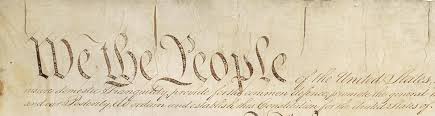

    Figure 1: The original handwritten Preamble to the U.S. Constitution on permanent display at the National Archives.

    We the People of the United States, in Order to form a more perfect Union, establish Justice, insure domestic Tranquility, provide for the common defense, promote the general Welfare, secure the Blessings of Liberty to ourselves and our Posterity, do ordain and establish this Constitution for the United States of America.[19]

    The “Blessings of Liberty” run amiss. Again, those “Framers,” or group of elite men that gathered in Philadelphia for that historic event in 1787 ideally utilized the inclusive language of “We the People,” .  while at the same time, implementing a complex structural formulation which would stave off the will of the common people at every turn. The fifty-five of the seventy-four delegates that showed up on the scene, were, in fact, a cohort indistinguishable from themselves as “wealthy white men” of whom only a small number were not rich (but nevertheless affluent). They viewed themselves as “the People,” who would not only be provided liberties under that newly devised constitution, but also offered themselves the power to control the authority within that newly formed centralized government.[20]
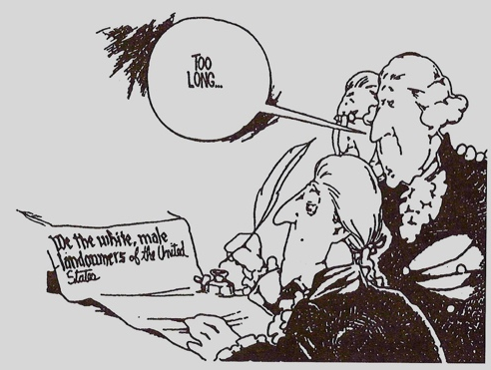

    Figure 2: The Framers working out the concept of “We the People” by Tom Meyer.

    By bringing the term “insure domestic Tranquility” to the fore, an early American top-down class paradigm is made evident by those men of property historically known as the “Framers.” The U.S. Constitution was the result of the repercussions of the American Revolution and decades of class conflict from within. Cogent warnings provided by not only Jefferson’s Declaration of Independence,[21] which cautioned against “convulsions within” and “exciting domestic insurrections amongst us,” but also forewarnings offered by the man considered “the father of that newly formed nation,” George Washington. In the following statements to the run-up of the Constitutional Convention of 1787, written in correspondence to his then erstwhile comrade-in-arms and chief of artillery, General Henry Knox, George Washington (supreme commander of the American revolutionary colonial forces and hero par excellence) projected clear class distinctions, fears and/or biases which lie at the heart of this study, “There are combustibles in every state, to which a spark might set fire.”[22] Hence, as Professor of Law, Jennifer Nedelsky asserts, what General Washington believed was necessary was a statutory formulation of control, instituted and devised by the upper crust of society, in the shape of a constitution, “to contain the threat of the people rather than to embrace their participation and their competence,”[23] or else, as stated in a second letter to Knox, the eminent General warned, “If government shrinks, or is unable to enforce its laws … anarchy & confusion must prevail – and every thing will be turned topsy turvey,”[24] demonstrating an elite fear most pronounced.
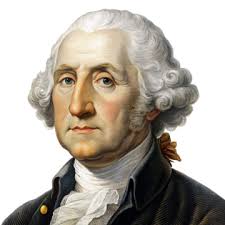

    Figure 3: George Washington (1732-1799), Supreme Commander of the American Revolution and First President of the United States.

    A good exemplar of a “spark that set fire,” which struck fear in the hearts of that elite class of men assembled in Philadelphia, is famously known as Shays’ Rebellion (August 29, 1786 to February 1787), led by former American army officer and son of Irish Immigrants, Daniel Shays, which culminated in a bottom-up armed revolt that took place in Western Massachusetts and Worcester, in response to a debt crisis imposed upon, in large part, the common citizenry; and, in opposition to the state government’s increased efforts to collect taxes on both individuals and their trades – as a remediation for outstanding war debt. The rebellion was eventually put down by Colonial Army forces sent there by George Washington himself – staving off the voice of the people, in that newly formed land of liberty. What “Tranquility” actually meant, as established by the Framers, was a centralized government formulated within the constitution, with the ability to halt and/or suppress conflict or unrest that threatened “the established order and governance of the elite.”[25] Shays’ Rebellion in combination with the possibility of slave uprisings and native resistance offered the justification for creating, and later expanding, a domestic military force as penned into the Charter by Gouverneur Morris (1752 – 1816), American political leader and contributor to the Preamble outlined above. Morris cleverly emphasized the necessity for a general fiscal “contribution to the common defense” on behalf of his class interests, warning of the possible dangers of both “internal insurrections and external invasions” as outlined in detail in Article I Section 8 of the U.S. Constitution.[26] In summary, by centralizing a military power within a national charter, “the elites got their own protection force against the possibility of the majority’s ‘popular despotism’” as described by Washington himself – thwarting any and all popular resistance to elite rule. In fact, by 1791, just four years after the Constitutional Congress met in the city of Philadelphia, that newly formed nation’s military force tripled its cost and increased its number of troops by fivefold.[27]
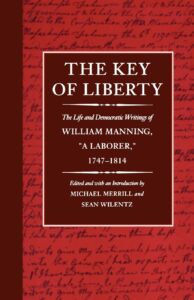

    Figure 4: The Key of Liberty: The Life and Democratic Writings of William Manning, “a Laborer,” 1747–1814

    In challenging that ideal of promoting “the general Welfare,” within a class paradigm, William Manning, (1747 – 1814) American Revolutionary soldier, farmer, and novelist, was one of the few voices at the Constitutional Convention that stood up and pushed back against the elite coup that was evidently taking place. After having fought in the Revolutionary War, as a common foot soldier, he began to believe that his military service and sacrifice carried little weight with the elites that surrounded him. He also delineated the fact that those measures which reflected Alexander Hamilton, George Washington, and (the first President of the Continental Congress) John Jay’s views, and policies, created a poisonous atmosphere, ideology, and division between the “Few and the Many.” William Manning feared that by locking “the people out of doors,” out of government, the Founders were implementing measures such as Hamilton’s economic vision for that newly formed nation “at the expense of the common farmer and laborer.”[28] When it came to Shays’ Rebellion, for example, his views were commensurate with those of the uprising, but not with their methods of armed resistance. Based on his staunch democratic values, he called upon the common man to forcefully use new organizational tactics by directly petitioning the government to redress grievances. Manning understood the economic divisions as implemented.[29] In 1798, he authored his most celebrated work,  The Key of Liberty, in which he displayed what he believed to be the objectives of the “Few” – which were to “distress and force the Many” into being financially dependent on them, “generating a sustained cycle of dependence.” Manning argued that the only chance for the “Many” was to choose those leaders that would battle for those with lesser economic and political authority.[30] What Manning understood so well was that those early colonial financial interests defined their own class “influence and benefits” as “the general Welfare” which was, in his view, in diametrical opposition to much of the population. 
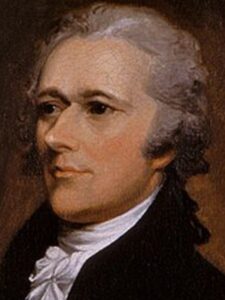

    Figure 5: Alexander Hamilton (1757-1804), the First Secretary of the Treasury from 1789 to 1795 during George Washington’s presidency.

    Alexander Hamilton’s celebrated financial plan alluded to above, put that early nation on a trajectory of economic growth, through a concentration of wealth in the form of property and holdings which would serve his class best, “…so capital [as] a resource remains untouched.”[31] Hamilton delivered an innovative and audacious scheme in both his First and Second Reports on the Further Provision Necessary for Establishing Public Credit issued on 13 December 1790. Again, on behalf of his class interests, that newly devised federal government would purchase all state arrears at full cost – using its general tax base. Hamilton understood that such an act would considerably augment the legitimacy of that newly formed centralized government. To raise money to pay off its debts, the government would issue security bonds to rich landowners and wealthy stakeholders who could afford them, providing huge profits for those invested when the time arrived for that recently formed Federal government to pay off its debts.[32] Charles Beard, Columbia University historian and author, in his famed book, An Economic Interpretation of The Constitution of The United States, succinctly outlines Hamilton’s class bias woven within his strategy per taxation, “[d]irect taxes may be laid, but resort to this form of taxation is rendered practically impossible, save on extraordinary occasions, by the provision that ‘they [taxes] must be apportioned according to population’ – so that numbers cannot transfer the burden to accumulated wealth”[33] – revealing a significant economic top-down class preference and formulation of control from the outset. Beard summarizes as such, “The Constitution was essentially an economic document based upon the concept that the fundamental private rights of property are anterior to government and morally beyond the reach of popular majorities.”[34] Given the United States’ long history of top-down class biases and bottom-up class struggle, to be further explored within this research, Beard provides a cogent groundwork.
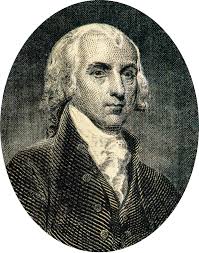

    Figure 6: James Madison (1751-1836), Father of the U.S. Constitution and Fourth President of the United States.

    James Madison, elite intellectual and Statesman, was and is traditionally proclaimed as the “Father of the Constitution” for his crucial role in planning and fostering the Constitution of the United States and later its Bill of Rights. For many of the Framers, with Madison in the lead, the Articles of Confederation (previously formulated on November 15, 1777, and effectuated on March 1, 1781) were a nefarious compact among the 13 states of the United States, previously the Thirteen Colonies of Great Britain, which operated as the nation’s first framework of government establishing each individual State as “Free and Independent” – eloquently encouraged and outlined in Thomas Jefferson’s Declaration of Independence.[35] From a class vantage point, the phrase “establish Justice” as devised by Madison within the Preamble above, meant in an idealistic sense, that the government would apply the rule of law impartially and consistently to all, irrespective of one’s station in society. But, in fact, the expression, “establish Justice,” explicitly points to the Framers’ “intent to tip the balance of power back in favor of the elites.”[36] Notably, by early 1783, in his famed “Notes on Debates in Congress Memo” dated January 28th, 1783, some four years prior to the ratification of the U.S. Constitution on December 12th, 1787, Madison had well-defined what “justice” had meant to him and his cohorts by asserting that, “the establishment of permanent & adequate funds [in the form of a general taxation] to operate … throughout the U. States is indispensably necessary for doing complete justice to the Creditors of the U.S., for restoring public credit, & for providing for the future exigencies of … war.”[37] For Madison,  as argued by eminent Professor of History Woody Holton, “establishing Justice” envisioned doing what some of the States were reluctant and/or incapable of achieving – that being, the payment of debts for the elites by “safeguarding their property” whether it be slave, land, or financial.[38]

    How class and race maintained supremacy. In essence, the cleverly devised Three-fifths Compromise outlined in Article 1, Section 2, Clause 3 of the U.S. Constitution, conceived by Madison, not only preserved, and reinforced the atrocity of slavery, but it also made stronger “the power of property” produced by the capitalization of all human labor. The minority checks embedded in the constitutional power of taxation ultimately prevented all types of what the Framers referred to as “leveling,” that being a fair and equal redistribution of wealth and resources amongst the general population.[39] In doing so, the constitution serves in perpetuity to protect wealth from what the Framers feared most: “economic democracy.”[40] Unambiguously, the Three-fifths clause established that three out of every five enslaved persons were counted, on behalf of their owners, when deciding a state’s total populace per representation and legislation. Hence, before the Civil War, the Three-fifths clause gave disproportionate weight to slave states, specifically slave ownership, in the House of Representatives.

    A final element written within the Preamble of the U.S. Constitution worth further mention is the famed idiom “secure the Blessings of Liberty to Ourselves and Our Posterity,” a phrase that concisely encompasses the opinions of that band of elites, that amassed in Philadelphia, known as “the Framers” and their historical and material view of the possession of “Private Property” – greatly influenced and inspired by English Enlightenment philosopher and physician John Locke (1632-1704). Locke, in his famed The Two Treatises of Civil Government, argued that the law of nature obliged all human beings not to harm “the life, the liberty, health, limb, or goods of another,” defined as “Natural Rights.”[41] As a result, the Framers (most of whom were large landowners) were intent on designing a centralized government that would singularly protect and defend “private property.”  The U.S. Constitution fosters this by placing a collection of roadblocks and/or obstacles in the way of majority demands for “economic democracy”  – what, on numerous occasions, James Madison himself described as an oppression, enslavement and/or tyranny of the majority.[42] In a land without Nobles, Madison declared that “the Senate ought to come from, and represent, the wealth of the nation.”[43] With Madison’s compatriot John Dickinson of Delaware in full accord, proclaiming that the Senate should be comprised of those that are, “distinguished for their rank in life and their weight of property, and bearing as strong a likeness to the British House of Lords as possible.”[44] Additionally, Pierce Butler, wealthy land-owning South Carolinian, stood in complete agreement confirming that the Senate was, “the aristocratic part of our government.”[45] Those elite men, as members of that continental congress, largely on their own behalf, cleverly formulated “a plethora of opportunities to issue a minority veto of any changes by law, regulation, or court rulings,” that might menace their property ownership.[46] In essence, that charter known as the U.S. Constitution was brilliantly constructed to ensure an elite control and privilege that would last for “Posterity” – forever unchanged and unchangeable.

    There is a wealth of evidence, as demonstrated, that the U.S. Constitution was originally designed and implemented not to facilitate meaningful bottom-up systemic change, but to ultimately avert anything that does not serve the benefits of the propertied class. Let us keep in mind that meaningful change from below has always been hard-fought, but not impossible. It took roughly seventy-eight years from 1787; and, a Civil War which lasted from 1861 to 1865, culminating in the loss of nearly 620,000 lives to officially abolish slavery under Amendment XIII (ratified on December 6th, 1865).[47] Until then, human bondage was a long held and integral form of property ownership within the United States – to be further examined within this work. Reflecting succinctly on the underlying class interests during and prior to the ratification of the U.S. Constitution, two indispensable statements, concerning “human nature,” from two essential minds, per class, which undergird the views here summarized, are as follows: Benjamin Franklin keenly observed that any assemblage of men, no matter how gifted, bring with them “all their prejudices, their passions, their errors of opinion, their local interest and their selfish views.”[48] Which stood ironically in accordance with Adam Smith’s, “All for ourselves, and nothing for other people, seems, in every age of the world, to have been the vile maxim of the masters of mankind,”[49] which demonstrates Smith’s historical view per an innate class perspective of wealth concentration.

    2
    Cui Bono – Who Benefitted Most from the Categorical Constructs of Race and Class?

    The year 1776 is a deceptive starting point when it comes to the ideologies of American freedom and liberty. Independence from Great Britain did not expunge the British class arrangement long embraced by colonial elites that undergirded a social system of division which promulgated “entrenched beliefs about poverty and the willful exploitation of human labor.” An unfavored view of African slaves and poor whites widely thought of as “waste and/or rubbish,” remained a long-held social construct which served American elites well into the modern era.[50] From the outset, when it came to class dynamics, no one understood the manipulative power of faction and discord sown amongst the masses better than James Madison himself as boldly outlined in Federalist #10. The danger, Madison argued on behalf of his class interests, was not faction itself, but the escalation of “a majority faction” grounded in that “most common and durable source” of conflict: the “unequal distribution of property.”[51] In that widely celebrated land of “democracy,” Madison revealed not only his class biases anathema to the concept, but his fear of the very idea: “When a majority is included in a faction,” it could use democracy, “to sacrifice to its ruling passion or interest the public good and the rights of other citizens” – that is, the privileges of the propertied class.[52] To his credit, from early on, James Madison laid out clear class distinctions, partialities, and fears woven within that newly formulated American social stratum – which are essential to this study. Within Federalist #10, Madison brilliantly devised a strategy of division which would protect elite interests by suppressing the economic menace of a majoritarian class faction through the encouragement of as many divisions within the populous as possible. Hence, as he outlined, the “greater variety of parties and interests [within class, race, gender, or religion] … make it less probable that a majority of the whole will have common motive.”[53] Ironically, faction was problematic as stated, yet, at the same time, paradoxically, according to James Madison, more of it was the answer.

    From the outset of the American experience, as outlined in his masterwork, American Slavery, American Freedom, Edmond S. Morgan, Yale Professor of History, makes evident the elite class interests and/or dynamics that fortified the use of clever rhetorical devices, such as “freedom and liberty” upon the general populous – all the while devilishly using the cruelty of slavery as a unifying force. During his visit to that early America, an astute English diplomat by the name of Sir Augustus John Foster, serving in Washington during Jefferson’s presidency (1801-1809), keenly observed, “[Elite] Virginians above all, seem committed to reducing all [white] men to an equal footing.” Foster observed, “owners of slaves, among themselves, are all for keeping down every kind of superiority”; and he recognized this pretension of equality used upon the masses as a powerful manipulative tactic. Virginians, he argued, “can profess an unbounded love of liberty and of democracy in consequence of the mass of the people, who in other countries might become mobs, being there nearly altogether composed of their own Negro slaves….”[54] In that ruthless slave society, as Morgan reveals, “Slaves did not become leveling mobs, because their owners would see to it that they had no chance to. The apostrophes to equality were not addressed to them.”[55] In clarification, he adds:

    …because Virginia’s labor force was composed mainly of slaves, who had been isolated by race and removed from the political equation, the remaining free [white] laborers and tenant farmers were too few in number to constitute a serious threat to the superiority of the [elite white] men who assured them of their equality.[56]

    The ancient Roman concept of Divide and Conquer, which dates to Julius Caesar himself, was effectively implemented by Virginia’s elite propertied class through the skillful use of cooptation. Virginia’s yeoman class comprised of small land-owning farmers were made to believe that they shared “a common identity” with those “men of better sorts,” simply due to the fact that neither was a slave – hence, both were alike in not being slaves.[57] Ironically, in the mindset of those early American elites that viewed themselves as the founders of a republic, largely inspired by Oliver Cromwell’s Commonwealth and the pushing off of monarchy, slavery occupied a critical, if not indeterminate position: it was thought of as a principal evil which free men sought to avoid for society in general through the usurpation of monarchies and the establishment of republics. But, at the same time, it was also viewed as the solution to one of society’s most pressing problems, “the problem of the poor.” Elite Virginians could move beyond English republicanism, “partly because they had solved the problem: they achieved a society in which most of the poor were enslaved.”[58] In truth, contempt for the poor permeated the age. John Locke, English philosopher and physician (1632-1704), considered one of the most essential of Enlightenment thinkers, commonly read, discussed, and admired by early American elites, famously wrote a classic defense of the right of revolution in his Two Treatises of Civil Government published in 1689 – yet he did not extend that right to the poor. [59] In fact, in his proposals for workhouses and/or “working schools,” outlined in his Essay on the Poor Law, published in 1687, the children of the [English] poor would “learn labor,” and nothing but labor, from a very young age, stopping short of enslavement – though it would require a certain alteration of mind to recognize the distinction.[60] That said, those astute men that assembled in the city of Philadelphia in 1787 took their inspiration from Locke very seriously.

    Hamilton and Madison were in absolute accord with Locke’s views per property and ownership, that being, “Government has no other end but the preservation of property.”[61] Consequently, the U.S. Constitution was designed to both govern the population through limiting its capacity to self-govern; and by protecting all forms of property ownership including the enslavement of human beings. Hence, as historian David Waldstreicher (expert in early American political and cultural history) presents, the Constitution was devised not only to safeguard slavery as a separate economic system, but as integral to the basic right of what he describes as the “power over other people and property (including people who were property).”[62] As a result, the tensions and/or rivalries that resided in that newly formed nation, which would eventually lead to a bloody Civil War, were not over quantities of land possession between the North and the South, but more focused on how many slaves resided in each. To his credit, Madison presciently admitted as such:

    [T]he States were divided into different interests not by their difference of size … but principally from the effects of their having or not having slaves. These two causes concurred in forming the great division of interests in the U. States. It did not lie between the large & small States: It lay between the Northern & Southern.[63]

    Slavery was considered insidious by some, and yet fundamental to those that profited from it, both North and South. In fact, John Rutledge, esteemed Governor of South Carolina during the Revolution; and delegate to the Constitutional Convention, spoke on behalf of the Southern planters’ class by supporting slavery, of which, Charles Cotesworth Pinckney also of South Carolina, stood in full agreement. Both men implored their fellow delegates to recognize their common interests in preserving slavery from which they “stood to profit,” not only from selling slave-produced goods, but from carrying the slaves on their ships[64] – hence, they argued, stood a long-held alliance between Northern “personality” (that is, financial holdings) and “that particular form of property” (slavery) which dominated the South.[65] Slaves were long held the most valuable asset in the country. By 1860, the total value of all the slaves in America was estimated at the equivalent of $4 billion, more than double the value of the South’s entire farmland valued at $1.92 billion, four times the total currency in circulation at $435.4 million, and twenty times the value of all the precious metals (gold and silver) then in circulation at $228.3 million.[66] Thus, at the time and thereafter, North American slavery was not just a national or sectional asset, but a global one. As a result of the promise of monetary benefits and values produced by enslaved peoples, “the Framers,” in defense of their own interests, collectively devised a system of fail-safe mechanisms to protect their most cherished resource: human vassalage.[67] Moreover, in addition to the Three-Fifths Clause described above, the Constitution contained several safeguards with a clear objective of maintaining the vile system as it was. The Foreign Slave Trade Clause as outlined in Article 1; Section 9 of that charter known as the U.S. Constitution stated that Congress could not prohibit the “importation of persons” prior to 1808 – which cleverly excluded the term “slave.”[68] The intention of said clause, was not to stave off slavery, but was implemented to maintain, if not inflate, the monetary value of those persons already in captivity – when it came to their sale and transport to other slave states outside of Virginia. The Fugitive Slave Clause as written in Article IV, Section 2, Clause 3, was clearly devised to protect elite proprietorship over individuals forcefully ensconced in a system of chattel slavery:

    No Person held to Service or Labour in one State, under the Laws thereof, escaping into another, shall, in Consequence of any Law or Regulation therein, be discharged from such Service or Labour, but shall be delivered up on Claim of the Party to whom such Service or Labour may be due.[69]

    This Clause, not nullified until the Thirteenth Amendment’s abolition of slavery, considered it “a right” on the part of a slaveholder, to retrieve an enslaved individual who had fled to another state. Finally, as esteemed University of Chicago Professor, Paul Finkelman, contends, the ban on congressional export taxes adamantly argued for by those elite men that gather in Philadelphia, was, for the most part, a concession to southern planters whose slaves primarily produced agricultural goods for export.[70] Clearly demonstrating and demarcating an upper-class bias based on ownership, race, and wealth from the outset.

    How elite capture worked in early America – diversity was implemented and utilized as a ruling class ideology. Privileged landowners, specifically Virginians, being “men of letters,” as they would have thought of themselves, understood very well that all white men were not created equal, especially when it came to property and what they referred to as “virtue,” a much admired “elite attribute” which can be traced back to Aristotle himself, in his classic work, Nicomachean Ethics, who defined the only life worth living as “a life of leisure” – that is a life of study and freedom for the few which rested on the labor of slaves and proprietorship.[71] As thus revealed, the material forces and benefits which dictated southern elites to see Negroes, mulattoes, and Indians as one, also “dictated that they see large and small planters as one.” Consequently, racism became an essential, if unacknowledged, ingredient woven within that “republican ideology” that enabled Virginians to not only design, but to “lead the nation,” for generations to come. An important question thus addressed: Was the ideological vision of “a nation of equals” flawed from the very beginning by the evident contempt, exhibited, toward both poor whites and enslaved blacks? And beyond that, to be further explored within the final chapter of this research project: Are there still elements of colonial Virginia, ideologically, ethnically, and socially, woven within America today? More than a century after Lee’s surrender at Appomattox (on April 9th, 1865) – those questions per race and class still linger….[72]

    As Edward E. Baptist, Professor of History at Cornell University, makes clear in his epic work, The Half Has Never Been Told, Slavery and The Making of American Capitalism, attitudes toward race and race superiority in America long remained. By the late nineteenth and early twentieth century, America’s first generation of professional historians, he argues, “were justifying the exclusion of Jim Crow and disfranchisement” by telling a story about the nation’s past of slavery and civil war that seemed to confirm, for many white Americans, that “white supremacy was just and necessary.” In fact, Baptist proclaims that racism had not only become culturally accepted, but historically and socially grounded within a form of “race science” to be further explored in the final chapter of this study. He states that by the latter part of the nineteenth century, “for many white Americans, science had proven that people of African descent [if not the poor in general] were intellectually inferior and congenitally prone to criminality.” As a result, he argues, that that cohort of racist whites in [Jim Crow] America, “looked wistfully to [the] past when African Americans had been governed with whips and chains.” Confirming the fact that class, race, and racism have long been integral parts of America’s long and difficult history.[73]

    American capitalism, land, cotton, slaves, and profit: by the early nineteenth century, the U.S. Banking system was fundamental when it came to entrepreneurial revenue development in the form of land acquisition, cotton production, and slave labor. Bank lending became the key ingredient that propelled slave owners to greater heights of wealth accumulation, “Enslavers benefited from bank-induced stability and steady credit expansion.” The more slave purchases that U.S. Banks would finance, the more cotton enslavers could produce, “and cotton [at the time] was the world’s most widely traded product.” As mentioned, in this newly devised system of capital, lending, and borrowing, cotton was an essential resource in an unending global market. So, the more cotton slaves produced, the more cotton enslavers would sell, and thus the more profit they would make. In fact, “owning more slaves enabled planters to repay debts, take profits, and gain property that could be [used as] collateral for even more borrowing.”[74] Early U.S. Capitalism not just undergirded, but bolstered and expanded the harsh and inhumane system of slavery as such, “Lending to the South’s cotton economy was an investment not just in the world’s most widely traded commodity, but also in a set of producers who had shown a consistent ability to increase their productivity and revenue.”[75] Said differently, American slave owners, throughout the late eighteenth and early nineteenth century, had the “cash flow to pay back their debts.” And, the debts of slave owners were secure, given the fact that they had “a lot of valuable collateral.” In fact, as argued by a number of economic historians, enslavers, by mid-century had in their possession the largest pool of collateral in the United States at the time, 4 million slaves worth over $3 billion, as “the aggregate value of all slave property.”[76] These values embedded themselves in a global system of investment through slave commodification which benefitted mostly the upper crust of society in both the U.S. and the U.K., “this meant that investors around the world would share in revenues made by ‘hands in the field.’” Even though at the time, and to its credit, “Britain was liberating the slaves of its empire,” British banks could still sell, to a wealthy investor, a completely commodified human being in the form of a slave – not as a specific individual, but as a holding or part of a collective investment venture “made from the income of thousands of slaves.”[77]

    Furthermore, as mentioned, the fact that popularly elected governments repeatedly sustained such bond schemes, on both sides of the Atlantic, was therefore not only insidious by its very nature, but at the same time remarkable. Popular abolitionist movements were springing up from one side to the other, and demanding abolition across the board. Beyond that, in the United States, there were many elements of class recognition in the form of an “intensely democratic frontier electorate” of both slaves and poor whites that saw banks as “machines designed to channel financial benefits and economic governing power to the unelected elite.”[78] By mid-century, the rift and divisions between the North and the South became catastrophic in the form of a bloody Civil War. It took a poor boy from a dirt-floor cabin in Kentucky named Abraham Lincoln, who rose to the prominence of lawyer and statesman becoming the 16th President of the United States, to write and implement the Emancipation Proclamation brought forth on January 1st, 1863. As President, Abraham Lincoln issued that historic decree, which served not only as a direct challenge to “property ownership,” in the form of human bondage, but a direct assault on the lucrative southern slaveocracy as the nation approached its third year of bloody civil war. The proclamation declared “that all persons held as slaves within the rebellious states are, and henceforward shall be free.”[79] Although Lincoln’s, contribution has been much contested to this day, by historians both Black and white alike, the fact remains that, his efforts as already presented, were undoubtedly a more active and direct support for the freedom of African slaves than those of all the fifteen previous presidents before him combined – The Emancipation Proclamation would prove to be the most important executive order ever issued by an American president, offering the possibility of freedom to an enslaved people held in a giant dungeon that was the confederacy.[80] Even though there are those historians that argue that the Proclamation was incomplete due to the fact that it “excluded the enslaved not only in Union-held territories such as western Virginia, but also southern Louisiana” where there were pro-Union factions that were trying not to be antagonistic toward local whites who were hell-bent on maintaining the status quo.[81]

    But facts speak for themselves, Abraham Lincoln had been working diligently to persuade the political class in the border states that were loyal to the Union to agree to a “gradual or compensated” emancipation plan – pushing back against the benefactors of the race and class divide. Even though some within the border states refused to give in and held out for permanent slavery, by April 1862, because of Lincoln’s tenacious efforts, Congress passed legislation “freeing – in return for payments to enslavers totaling $1 million – all 3,000 people enslaved in the District of Columbia, Maryland, Delaware and Kentucky.” After the Union army’s victory at the battle of Antietam, Lincoln felt “he could move more decisively” against the institution of slavery and hence released that historic executive order which he had written months earlier as outlined above.[82] Undoubtedly, again, the Emancipation Proclamation offered for the first time in American history the unquestioned possibility of freedom to a long-held and enslaved people that were seized in a giant open-air prison which was the American South. The Emancipation did unbar the door. Next, enslaved Africans, due to their own agency, forced it wide open.[83]

    As an exemplar of that heartfelt commitment, stood Frederick Douglass (1818 – 1895), former slave in his home state of Maryland, who rose to become a historic social reformer, abolitionist, writer, orator, and statesman. Lincoln was the first U.S. President in a long line, to invite an eminent African American intellectual, such as, Frederick Douglass to the White House to discuss the wonton discrimination within the military ranks cast upon African American men. That well-known meeting between Lincoln and Douglass took place in August 1863, two years after the start of the war on April 12, 1861. Douglass tenaciously argued for the enlistment of Black soldiers in the Union Army based largely on his legendary speech delivered at the National Hall in Philadelphia (on July 6, 1863), a month prior, entitled “the Promotion of Colored Enlistments,” outlined in the well-known publication The Liberator, that same month. Where Douglass stated:

    Let the black man get upon his person the brass letters US … a musket on his shoulder, and bullets in his pocket, and there is no power on earth or under the earth which can deny that he has earned the right of citizenship in the United States.[84]

    Douglass presented the same argument to Lincoln, that “Black men in Blue” would not only swell the ranks of the Union Army but would elevate those former slaves to the status of free men of honor – shifting the course of American history.[85] Lincoln took decisive action, per Douglass’ request, enlisting nearly 200,000 battle-ready African Americans, understanding that without those Black soldiers, there would be no Union. As a result, Douglass wholeheartedly endorsed the President for his coming reelection on November 8, 1864. “The enlistment of blacks into the Union Army was part of Lincoln’s evolving policy on slavery and race.”[86] Ultimately, he paid the price. On April 14, 1865, the 16th President of the United States was brutally slain by an assassin’s bullet for his valiant efforts against the racist slavocracy known as the Confederacy – Lincoln died at 7:22 a.m. on April 15, 1865.[87] The Civil War ultimately nullified the barbarity of slavery, which was later codified in the 13th Amendment of the U.S. Constitution, true, yet prejudicial elements of both race and class remained a fixture in American society for decades to come….

    In the latter part of the nineteenth century, the coalescing or coming together from a class perspective of the lower ranks in the American South, later revealed itself in the formulation of the “Colored Farmers’ Alliance,” which stood as a direct threat to the established southern regime leading to a brutal and repressive racialized crackdown in the form of the Ku Klux Klan and the implementation of an oppressive social order known as Jim Crow – to be further explored within this study.

    3
    The Atomization of the Powerless
    and the Sins of Democracy

    Finally, as alluded to, the appellation and/or utilization of the term “race” was seldom employed by Europeans prior to the fifteen-hundreds. If the word was used at all, it was used to identify factions of people with a group connection or kinship. Over the proceeding centuries, the evolution of the term “race,” that came to comprise skin color, levels of intelligence and/or phenotypes, was in large part a European construct – which served to undergird a strategy of division amongst the masses that helped to maintain a stratified class structure with “elite white land-owning men” placed firmly at the top of the social-ladder in that newly birthed land of “freedom” called America.

    As succinctly stated by David Roediger, esteemed Professor of American history at the University of Kansas, who has taught and written numerous books focused on race and class in the United States, “The world got along without race for the overwhelming majority of its history. The U.S. has never been without it.”[88] Nothing could be further from the truth. As outlined in previous chapters, American society uniquely and legalistically formulated the notion of “race” early on to not only justify, but support its new economic system of capitalism, which rested in large part, if not exclusively, upon the exploitation of forced labor – that is, the brutal enslavement and demoralization of African peoples. To understand how the development of race and its bastardized twin “racism” were fundamentally and structurally bound to early American culture and society we must first survey the extant history of how the notions of race, ethnocentrism, white supremacy, and anti-blackness came to exist.

    The ideas that undergirded the notions of “race, a class-stratified stratified slave society, as we recognize them today, were birthed and developed together within the earliest formation of the United States; and were intertwined and enmeshed in the phraseologies of “slave” and “white.” The terms “slave,” “white,” and “race” began to be utilized by elite Europeans in the sixteenth century and they imported these hypotheses of hierarchy with them to the colonized lands of North America. That said, originally, the terms did not hold the same weight they have today. However, due to the economic needs and development of that early American society, the terms mentioned would transform to encompass new racialized ideas and meanings which served the upper class best. The European Enlightenment, defined as, “an intellectual movement of the 17th and 18th centuries in which ideas concerning god, reason, nature, and humanity were synthesized into a worldview that gained wide assent in the West and that instigated revolutionary developments in art, philosophy, and politics,”[89] would come to underpin and contribute to racialized perceptions which argued that, “white people were inherently smarter, more capable, and more human than nonwhite people – became accepted worldwide.” In fact, from an early American perspective, “This [mode] of categorization of people became the justification for European colonization and subsequent enslavement of people from Africa.”[90] To be further surveyed.

    As Paul Kivel, noted American author, social-justice educator and activist, brings to the fore, the terms “white” or “whiteness,” historically, from a British/Anglo-American perspective, served to underpin class distinctions and justify exploitation through human bondage by providing profit-accumulation to a distinct ownership class, “Whiteness is [historically] a constantly shifting boundary separating those who are entitled to have privileges from those whose exploitation and vulnerability to violence is justified by their not being white.”[91] Where and how did it begin? The conception of “whiteness”  did not exist until roughly 1613 or so, when Anglo-Saxon forces, later known as the English, first “encountered and contrasted themselves” with the Indigenous populations of the East Indies – through their cruel and rapacious colonial pursuits – later justifying, and bolstering, a collective cultural sense of racial superiority. Up and until that point, roughly the 1550s to the 1600s, within Anglo-Saxon society, “whiteness”  was used to set forth clear class signifiers.

    In fact, the word “white”  was utilized exclusively to “describe elite English women,” because the whiteness of their skin indicated that they were individuals of “high social standing” who did not labor “out of doors.” That said, conversely, throughout that same period, the appellation of “white”  did not apply to elite English men, due to the stigmatizing notion that a man who would not leave his home to work was “unproductive, sick and/or lazy.” As the concept of who was white and who was not began to grow, “whiteness” gained in popularity within the Anglo-American sphere, for example, “the number of people that considered themselves white would grow” as a collective pushback against people of color due to immigration and eventual emancipation.[92] These social constructs centered around race accomplished their nefarious goals – thus, unifying early colonists of European descent under the rubric of “white,” and hence, marginalizing, stigmatizing and dispossessing native populations – all the while permanently enslaving most African-descended people for generations. As acclaimed African American Professor, Ruth Wilson Gilmore (director of the Center for Place, Culture, and Politics at CUNY) contends concerning America’s base history, “Capitalism requires inequality and racism enshrines it….”[93] A revelatory statement by John Jay (1745-1829, the first Chief Justice of the United States and signer of the U.S. Constitution) helps make evident, from a class perspective, the entrenched values of those early American elites toward their newly proclaimed democracy, “The people who own the country ought to govern it!”[94] The preceding two quotes help to summarize and clarify the top-down legal and societal mechanisms embedded within that early American social stratum which linger to this day.

    The social status and hence the nomenclature of “slave” have been with mankind for millennia. Historically, a slave was one who was classified as quasi-sub-human, derived from a lower lineage; and forced to toil for the benefit of another of higher standing. We can find the phraseology of slave throughout the ancient world and within early writings from Egypt, the Hebrew Bible, Greece, and Rome, as well as later periods. In fact, Aristotle (384 to 322 BC, famed polymath, and philosopher) succinctly clarified, from his privileged vantage-point, the social standing and value of personages classified as slaves – which would endure for epochs to come. From the legendary logician’s point of view, a slave was defined as, “one who is a human being belonging by nature not to himself [or herself] but to another is by nature a slave.” Aristotle further described a slave as, “a human being belongs to another if, in spite of being human, he [or she] is a possession; and as a possession, is [simply a tool for labor] having a separate existence.”[95] Clarifying the fact that in the known world prior to Columbus’ famed voyage, in the late 15th century, opening the floodgates of European colonial theft, pillage, and domination, historical notions of Western hierarchy and supremacy were commonplace. As European Enlightenment ideals such as, “the natural rights of man,” aforementioned, became ubiquitous amongst early American colonial elites throughout the 18th century, “equality” became the new modus operandi which galvanized whites over and above all others. Hence, by classifying human beings by “race,” a new method of hierarchy was established based on what many at the time considered “science” to be further explored. As the principles of the Enlightenment penetrated the colonies of North America forming the basis for their early “democracy,” those same values paradoxically undergirded the most vicious kind of subjugation – chattel slavery.[96]

    A significant codified shift took place in colonial America within one of its most prosperous slave domains known as Virginia. Under the tutelage and guidance of the then Governor Sir William Berkeley (1605-1677), wealthy planter and slave owner, the House of Burgesses (the first self-proclaimed “representative government” in that early British colony) included a coterie of councilors hand-chosen by the governor to enact a law of hereditary slavery – which would economically serve their elite planter class interests. The English common law, known as, Partus Sequitur Patrem, traditionally held that, “the offspring would follow the condition … of the father.”[97] But after a historic legal challenge brought by Elizabeth Key, an enslaved, bi-racial woman who sued for her freedom and won, in 1656, on the basis that her father was white – elite white Virginians understood that a shift in the law was not only necessary, but essential, if they were to maintain and/or increase their wealth through human bondage in the form of “property ownership.” Consequently, the new 1662 law, Partus Sequitur Ventrem, diverged from English common law,  in that it proclaimed that the status of the mother, free or slave, determined the status of her offspring in perpetuity.[98] Thus, African women were subjugated to the ranking of “breeders,” that would serve to produce more offspring categorized as slaves, whether bi-racial or not, and hence more profit for the ruling class. Enlightenment values ensconced in a rudimentary “race science,” by famed early Americans, would also help to solidify a systematized racialized hierarchy for decades to come.[99]
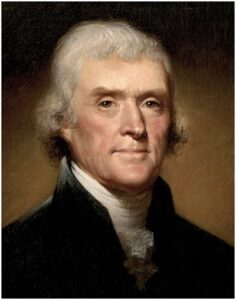

    Figure 7: Thomas Jefferson (1743-1826), Diplomat, Son of the Enlightenment, Planter, Lawyer, Philosopher, Primary Author of the Declaration of Independence and Third President of the United States.

    Thomas Jefferson is famed to be one of the most quintessential characters in the formulation of America’s early Republic, along with James Madison and others, severing foreign rule and developing a new independent nation, substantiated on the Enlightenment principles of “Life, Liberty and the pursuit of Happiness,”[100] based largely on John Locke’s Two Treatises of Government, which argued that true “freedom” is defined by one’s singular control over their holdings and/or estates, i.e., property.[101] But the most basest question which still lingers, within America’s long and twisted historical tragedy of early conquest and domination, which must be probed, is, “freedom for whom and for what?” Jefferson, that complex and enigmatic son of Enlightenment thought, both in science and sociological principles, clearly demarcated and endorsed a racialized societal structure that undergirded a system of hierarchy in which white colonists and their European legacy were considered far superior to all others – simplified notions woven within an early race science which would endure through time and memorial. Throughout his lifetime, race was defined by phenotype (or the look of human beings), physical characteristics which “appended physical traits [or idiosyncrasies] defined as ‘slave-like’ [were attributed] to those enslaved.”[102] As Karen and Barbara Fields, two noted African American scholars, point out, Jefferson became convinced that a forced separation of people delineated by skin color was the only solution; that “the very people white Americans had lived with for over 160 years as slaves would be, after emancipation, too different for white people to live with any longer.”[103] In fact, he suggested that if slaves were to be freed they should be promptly deported, their lost labor to be best supplied “through the importation of white laborers.”[104]

    Jefferson unabashedly qualified his racialized views when writing, “I advance it therefore as a suspicion only that the blacks, whether originally a distinct race, or made distinct by time and circumstances, are inferior to the whites in the endowments both of body and mind.”[105] John Locke and Thomas Jefferson stood in agreement, philosophically, when it came to the superiority versus inferiority of selected “races,” underpinning a racialized stratification within early colonial thought that helped to culturalize a race-based hierarchy in that newly formed “land of freedom,” known as the United States. These arguments of hierarchy which spread throughout the European mindset within that early colonial era, aided and abetted, “the dispossession of Native Americans” and “the enslavements of Africans” during that golden era of revolution.[106] In his historic manuscript known as, Notes on the State of Virginia, Jefferson outlined in detail his Enlightenment-inspired racialized interpretations of European superiority, demarcating what he believed to be a “scientific view” of the varying gradations of human beings based on race:

    Comparing them [both blacks and whites] by their faculties of memory, reason, and imagination, it appears to me, that in memory they are equal to the whites; in reason much inferior … and that in imagination they are dull, tasteless, and anomalous. But never yet could I find that a black has uttered a thought above the level of plain narration; never see even an elementary trait, of painting or sculpture.[107]

    Ironically, given the complexity of the man, in response to a critic who opposed his views as presented above, Jefferson confessed that even if blacks were inferior to whites, “it would not justify their enslavement.”[108] Hence, to his credit, he admitted and/or recognized the strangeness and/or irony of his own position when it came to Enlightenment constructs of race and their structural consequences.[109] Again, from early on, racialized notions of superiority versus inferiority served the American planter class best, by cleverly embedding perceptions of hierarchy or white preeminence, they were able to suppress that which they feared most – which was the unification or coming together of a mass of lower classes comprising both enslaved Africans and poor whites. The historic incident which, served as an exemplar, sending shockwaves through that propertied class of early colonial America was notably Bacon’s Rebellion of 1676.

    Nathaniel Bacon (1647-1676) elite Virginian, born and educated in England, member of the governor’s Council and close friend of Sir William Berkeley then colonial Governor – led a bottom-up rebellion which sent tremors through the upper classes of that newly birthed slave society, known as, Virginia – still considered one of the most foundational events of early American history. The colonial elite were threatened on all sides, as made evident by Governor Berkeley’s revelation, “The Poore Endebted Discontented and Armed” would, he feared, use this opportunity to “plunder the Country” and seize the property of the elite planters.[110] Bacon, “who was no leveler,” was cleverly able to formulate a coalition (or unification), on behalf of his class interests, which included poor white indentured servants, free and enslaved Africans, to push back against any and all encroachments by native inhabitants which included the Appomattox and Susquehannock indigenous tribes of the region, in order to cease their lands and enrich himself and his class even further, insisting that, “the country must defend itself ‘against all Indians in general for that they were all Enemies.’”[111] Some one hundred years later, in his acclaimed paradox of liberty known as the Declaration of Independence, Thomas Jefferson, obviously influenced by Bacon’s racialized frame of thought, referred to the indigenous Native American peoples as nothing more than, “merciless Indian savages.”[112] Hence, the native populations of that early America were collectively used as “scapegoats,” to enlarge the land holdings and wealth of the propertied class. From early on, the United States’ nascent form of Capitalism became dependent upon exploitative low-cost labor, “especially that of those considered nonwhite,” but also that of “the poor in general, including women and children – black and white alike.”[113] Ironically, by the 1850s, antislavery sentiment grew even more intense amongst the masses, largely spurred on by white Southerner’s aggressive attempts to maintain the societal structure as such through political dominance and the spread of that “peculiar institution,” known as slavery to newly pilfered lands.[114] In turn, the very idea of the possibility of any and all “lower class unity,” or a coming together of poor white indentured servants and African slaves as a militant force rising up against an entrenched planter class, brought forth a racialized culturalization grounded upon racial difference, racial hierarchy, and racial enmity, “a pattern that those statesmen and politicians of a later age would have found [politically useful and] familiar.”[115] In fact, right through to the end of the 19th century, post-Civil War and Reconstruction era (1865-1877), any form of lower-class unity in America stood as a direct threat to the established order of things throughout the nation as a whole; and especially throughout the South – most notably in the form of the Colored Farmers’ Alliance and the South’s reactionary implementation of a brutal social-order of domination and control known as Jim Crow.
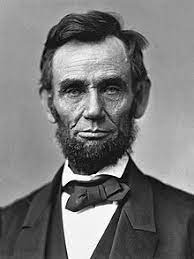

    Figure 8: Abraham Lincoln (1809-1865), American Lawyer, Statesman and Politician. Sixteenth President of the United States and Author of the Emancipation Proclamation.

    Although historically contentious, Abraham Lincoln’s primary goal within his Reconstruction scheme was to reunite a fractured nation after a bloody and costly Civil War. Through which, Lincoln’s objective was to reestablish the union and transfigure that implacable Southern society. His plan was also stridently committed to enforcing progressive legislation driven by the abolition of slavery. In fact, Lincoln directed Senator Edwin Morgan, chair of the National Union Executive Committee, to put in place a constitutional amendment abolishing slavery. And Morgan did just that, in his famed speech before the National Convention on May 30, 1864, demanding the “utter and complete extirpation of slavery” via such an amendment.[116] Beyond the Emancipation Proclamation, Abraham Lincoln was the first President in American history to call forth an amendment to the U.S. Constitution abolishing the long-held institution of chattel slavery. For the first time, President Lincoln demanded the eventual passage of the Thirteenth Amendment Section 1 (ratified on December 6, 1865), which mandated that, “Neither slavery nor involuntary servitude, except as a punishment for crime whereof the party shall have been duly convicted, shall exist within the United States, or any place subject to their jurisdiction.”[117] Defining it as “a fitting, and necessary conclusion” to the war effort that would make permanent the joining of the causes of “Liberty and Union.”[118] Lincoln’s sweeping Reconstruction agenda  was a fight for freedom, requiring the South to adhere to a new constitution that would implicitly include black suffrage through the ratification of the Fourteenth Amendment Section 1, ratified after his death on July 9, 1868, which for the first time in American history, declared:

    All persons [meaning black and white alike] born or naturalized in the United States and subject to the jurisdiction thereof, are citizens of the United States and of the State wherein they reside. No State shall make or enforce any law which shall abridge the privileges or immunities of citizens of the United States; nor shall any State deprive any person of life, liberty, or property, without due process of law; nor deny to any person within its jurisdiction the equal protection of the laws.[119]

    Abraham Lincoln, the Great Emancipator, saw his Reconstruction struggles above all as, “an adjunct of the war effort – a way of undermining the Confederacy, rallying southern white Unionists, and securing emancipation,”[120] for which he paid the ultimate price. From early on, internecine rivalry, or infighting, within the Republican Party from those labeled as “the Radicals,” led to a push-back against certain elements of Lincoln’s strategy mentioned above – arguing that Reconstruction should be postponed until after the war, “as outlined in the Wade-Davis Bill of 1864, which clearly envisioned, as a requirement, that a majority of southern whites take an oath of loyalty,” to the United States; and that the federal government should by necessity, “attempt to ensure basic justice to emancipated slaves.” A point at which, “equality before the law,” not “black suffrage,” as Lincoln had suggested, was an essential factor for many of the Republicans in Congress at the time.[121] As a result of Lincoln’s efforts in taking away the productive forces of labor within the South, and in turn, the diminishment of property, wealth, and political power of the elite southern planter class, a nefarious conspiracy to murder the President was hatched and executed by southern loyalist and assassin John Wilks Booth, on April 14, 1865, while the President sat accompanied by his wife, Mary, watching a play titled, Our American Cousin, at Ford’s Theater in Washington, D.C. – oddly, the assassin was able to gain access to the theater, enter the Presidential Booth, and shoot and kill the President of the United States. Lincoln’s body was carried to the nearby Petersen House, where he passed away at 7:22 a.m., the following morning. At his bedside, Secretary of War Edwin M. Stanton famously remarked, “Now he belongs to the ages.”[122] Reflecting upon not only the uniqueness of the man, but his tremendous contributions to those American ideals of “Liberty and Freedom.” Emphasizing the fact that the Emancipation of Africans from forced labor; and the abolishment of chattel slavery, through a stroke of his pen, uniquely placed Abraham Lincoln in the pantheon of historical renown.

    That said, throughout the end of the 19th Century, the road ahead per class relations for African Americans and poor whites alike, especially in the South, would be a hard and arduous one of top-down control and division. Reactionary as they were, as argued, Southern elites would forcefully implement doctrines of superiority, separation, and control that would crush and/or punish any form of lower-class unity which threatened their power and influence over the majority. This reaction would become most evident in the racialized militant form of the Ku Klux Klan; and later the structural control and dominance of an imposed social order known as Jim Crow, which would orchestrate the groundwork for a deepening racial divide.

    The Colored Farmers’ Alliance, formulated in the 1870s, still stands as a historical model of class unity amongst the poor, both Black and white alike, which galvanized southern elites in a top-down belligerent class war to protect their interests. The Alliance was created, “when an agricultural depression hit the South around 1870 and poor farmers began to organize themselves into radical multiracial political groups”[123] – which stood as a direct threat to upper-class Southern dominance and their wealth accumulation. Years earlier by 1865, that elite militancy revealed itself in the form of the Ku Klux Klan (a violent and racist, hate-filled supremacist terror organization) that, “extended into almost every southern state by 1870 and became a vehicle for white southern resistance to the Republican Party’s Reconstruction-era policies aimed at establishing political and economic equality for Black Americans.”[124] Klan members devised a subversive crusade of coercion and brutal violence directed at Black and white Republican leadership. Even though the U.S. Congress had successfully pushed through regulations intended to mitigate Klan extremism, the KKK  viewed its main goal as the “reinstatement of white governance and supremacy throughout the Southlands in the 1870s and beyond,” made most evident through Democratic victories within state legislatures across the South.[125] Jim Crow was the name given to a racialized social order or caste system which operated primarily, but not exclusively, in the southern and border states between 1877 to the mid-1960s. “Jim Crow was more than a series of rigid anti-black laws. It was a way of life.”[126] Under the system of Jim Crow, African Americans were consigned to the rank of second-class citizens, as emphasized by African American Professor Emeritus, Adolph L. Reed Jr., “We were all unequal, but [when it came to race and class], some were more unequal than others.”[127] Divisions amongst the lower classes, throughout the South, served as a powerful and effective hegemonic tool of supremacy. Hence, it was not long, thereafter, within that stratified class society, before that black-white alliance had ended – as Democrats slowly united in a series of successful white supremacy campaigns to banish the Fusionists and discontinue what most white southern racists denoted to as, “Negro rule.”[128] Hence, as noted throughout this study, class, race, and racism have long been fundamental elements of control woven within this class-conscious slave culture, paradoxically, self-described, “birthplace of freedom.”

    Conclusion

    From the outset, as early as the Constitutional Convention of 1787, it has been inherently difficult to reconcile a faith in the U.S. Constitution as a “living, flexible and changeable,” document – with the fundamental unfeasibility of making systemwide class transformation in the United States of America. There is copious and convincing evidence that the U.S. Constitution was intended and/or mechanized, by design, to stifle and/or inhibit any “meaningful systemic change,” in order to counteract anything that does not assist the benefits of the moneyed elite. Brilliantly designed and implemented by those acclaimed early American “Framers,” such as James Madison, Alexander Hamilton, John Jay, and others – the means and complex configurations woven within the U.S. Constitution were deliberately intended to be unchangeable when it came to any and all challenges from below. The Constitutional aphorism over “the rights of private property possession” and its accompanied protections for example – made possible by the “expropriation of Native Americans lands, slavery; and the exploitation of lower-class labor” as discussed – has served, from the very beginning of that early American experiment, as a primary preset to protect wealth.[129] Political Science Professor Robert Ovetz argues, in fact, that the U.S. Constitution has never really lived up to its well-known first three words, of “We the People,”  insisting that that renowned Charter is, by its very nature and design, “self-breaching,” because “we the people have never directly given consent to be governed by it – nor do the laws put in place give [the people] the liberty to do so.”[130] That said, given the complexity of mind of those men recognized as “the Framers,” and in their defense, they did interweave a certain language of liberty, in the form of protections, as exemplified in Amendment IX, which states, “The enumeration in the Constitution of certain rights shall not be construed to deny or disparage others retained by the people.”[131]

    Amendment IX to the Constitution was authorized on December 15th, 1791. And, it clearly proclaims that the text is not a wide-ranging list of every right of the citizen, but that the unnamed rights to come will be allowed protections under the law.[132] The IX Amendment explicitly acknowledged that the people have a reserve of rights that go beyond the Constitution. Hence, the enumeration of specific rights “shall not be construed to deny or disparage others retained by the people.”[133] As a counterweight to popular belief, American political scientist, author, and activist, Michael Parenti contends that, “those privileged delegates gave nothing to popular interests, rather – as with the Bill of Rights – they reluctantly made democratic concessions under the menacing threat of popular rebellion.”[134] Race and class, in early America, not only substantiated that, “the wealthy are a better class of men,” as James Madison proclaimed during the Convention[135] – but that wealth and privilege were correlated to intelligence and deserved protections. In fact, not dissimilar to present-day America, “According to the dogma [of that early elite colonial class] efforts to lessen inequality, through progressive taxation, or redistributive public spending, infringe the liberty of the rich,” meaning the rich deserve their benefits and reward as such. Consequently, intelligence determines merit, and merit apportions rewards are those early American values which permeate the culture to this day. The working class, both Black and white alike, “that have been consigned to the lower reaches of society were there,” as noted African American scholars Barbara and Karen Fields have demonstrated, “due to attributions of low intelligence” – demarcating clear class distinctions and divisions based on a model of superiority from early on which privileged an elite few.[136] The seeds of race supremacy and the hypocrisy of liberty, throughout America’s long and difficult history, were planted by the Framers themselves, “most of whom accepted that human beings could be held as property and that Africans and Native Americans were inferior to Caucasians” in a multitude of ways[137] – as demonstrated throughout this study.

    Endnotes:

    [1] James Madison, “Federalist Papers: Primary Documents in American History: Federalist No. 10,” research guide, accessed August 27, 2023, https://guides.loc.gov/federalist-papers/text-1-10.

    [2] Thomas Jefferson, Notes on the State of Virginia: An Annotated Edition, Notes on the State of Virginia (Yale University Press, 2022).

    [3] Adam Smith, An Inquiry into the Nature and Causes of the Wealth of Nations (London: G. Routledge, 1893), 556–60.

    [4] Michael Parenti, Democracy for the Few, 8th ed (Boston: Thomson-Wadsworth, 2008), 40.

    [5] Louis Otto quoted in Herbert Aptheker, Early Years of the Republic: From the End of the Revolution to the First Administration of Washington (1783-1793) (New York: International Publishers, 1976), 41.

    [6] Michael Parenti, Democracy for the Few, 40. Sourcing the works of Sidney H. Aronson, Status and Kinship in the Higher Civil Service: Standards of Selection in the Administrations of John Adams, Thomas Jefferson, and Andrew Jackson (Cambridge, Mass: Harvard University Press, 1964); Daniel M. Friedenberg, Life, Liberty, and the Pursuit of Land: The Plunder of Early America (Buffalo, N.Y: Prometheus Books, 1992).

    [7] Francis Bacon, The Philosophical Works of Francis Bacon, with Prefaces and Notes by the Late Robert Leslie Ellis, Together with English Translations of the Principal Latin Pieces, ed. James Spedding, vol. 4 (London: Longman & co., 1861), 64.

    [8] “Declaration of Independence: A Transcription,” America’s Founding Documents, National Archives, accessed March 22, 2024, https://www.archives.gov/founding-docs/declaration-transcript.

    [9] Nancy G. Isenberg, White Trash: The 400-Year Untold History of Class in America (New York, New York: Penguin Books, 2017), 1.

    [10] Isenberg, 1.

    [11] David McNally, Blood and Money: War, Slavery, Finance, and Empire (Chicago, Illinois: Haymarket Books, 2020), 178.

    [12] Benjamin Irvin, Clothed in Robes of Sovereignty: The Continental Congress and the People Out of Doors (New York: Oxford University Press, 2011), 1–18.

    [13] Isenberg, White Trash, 1.

    [14] John Winthrop, “A Modell of Christian Charity, 1630,” in Collections of the Massachusetts Historical Society, 3rd Series (Boston, 1838), 7:31-48, https://history.hanover.edu/texts/winthmod.html.

    [15] Isenberg, White Trash, 3.

    [16] Smith, Wealth of Nations, 556–60.

    [17] Robert Ovetz, We the Elites: Why the US Constitution Serves the Few (London: Pluto Press, 2022), 2–3.

    [18] Ovetz, 41.

    [19] “The Constitution of the United States,” National Archives, accessed September 3, 2023, https://www.archives.gov/founding-docs/constitution.

    [20] Steve Fraser and Gary Gerstle, Ruling America: A History of Wealth and Power in a Democracy (Cambridge: Harvard University Press, 2009), 40.

    [21] “Declaration of Independence: A Transcription.”

    [22] “From George Washington to Henry Knox,” December 26, 1786, Founders Online, National Archives, http://founders.archives.gov/documents/Washington/04-04-02-0409.

    [23] Jennifer Nedelsky, Private Property, and the Limits of American Constitutionalism: The Madisonian Framework and Its Legacy, Paperback ed., (Chicago: Univ. of Chicago Press, 1994), 159.

    [24] “From George Washington to Henry Knox,” February 3, 1787, Founders Online, National Archives, https://founders.archives.gov/documents/Washington/04-05-02-0006.

    [25] Gregory H Nobles, “Historians Extend the Reach of the American Revolution,” in Whose American Revolution Was It? Historians Interpret the Founding, ed. Alfred Fabian Young and Gregory H. Nobles (New York: New York University Press, 2011), 213.

    [26] “The Constitution of the United States.”

    [27] Richard H. Kohn, Eagle and Sword: The Federalists and the Creation of the Military Establishment in America, 1783-1802 (New York: Free Press, 1975), 80, 95, 120.

    [28] William Manning, The Key of Liberty: The Life and Democratic Writings of William Manning, “a Laborer,” 1747-1814, ed. Michael Merrill and Sean Wilentz, The John Harvard Library (Cambridge, Mass: Harvard University Press, 1993), 113.

    [29] Manning, 164–66.

    [30] Manning, 162.

    [31] Alexander Hamilton, “Final Version: First Report on the Further Provision Necessary for Establishing Public Credit,” December 13, 1790, Founders Online, National Archives, http://founders.archives.gov/documents/Hamilton/01-07-02-0227-0003.

    [32] Alexander Hamilton, “Final Version of the Second Report on the Further Provision Necessary for Establishing Public Credit (Report on a National Bank),” December 13, 1790, Founders Online, National Archives, http://founders.archives.gov/documents/Hamilton/01-07-02-0229-0003.

    [33] Charles Austin Beard, An Economic Interpretation of the Constitution of the United States (Anodos Books, 2018), 88.

    [34] Beard, 164.

    [35] “Declaration of Independence: A Transcription.”

    [36] Ovetz, We the Elites, 44.

    [37] James Madison, “Notes on Debates” (January 28, 1783), Founders Online, National Archives, https://founders.archives.gov/documents/Madison/01-06-02-0037.

    [38] Woody Holton, Unruly Americans and the Origins of the Constitution, First Edition (New York: Hill and Wang, 2008), 87–88.

    [39] “The Constitution of the United States.”

    [40] Ovetz, We the Elites, 96.

    [41] John Locke, Two Treatises on Civil Government (London: G. Routledge and Sons, 1884), 160.

    [42] “From James Madison to James Monroe,” October 5, 1786, Founders Online, National Archives, http://founders.archives.gov/documents/Madison/01-09-02-0054; “To Thomas Jefferson from James Madison,” October 24, 1787, Founders Online, National Archives, http://founders.archives.gov/documents/Jefferson/01-12-02-0274; Madison, “Research Guides.”

    [43] James Madison quoted in Michael J. Klarman, The Framers’ Coup: The Making of the United States Constitution (New York, NY: Oxford University Press, 2016), 210.

    [44] John Dickinson quoted in Klarman, 210.

    [45] Pierce Butler quoted in Klarman, 210.

    [46] Ovetz, We the Elites, 53.

    [47] “The Constitution of the United States.”

    [48] Max Farrand, ed., The Records of the Federal Convention of 1787 (New Haven: Yale University Press, 1911), 642.

    [49] Smith, Wealth of Nations, 342.

    [50] Isenberg, White Trash, 14.

    [51] Madison, “Research Guides.”

    [52] Madison.

    [53] Madison.

    [54] Augustus John Foster, Jeffersonian America: Notes on the United States of America, Collected in the Years 1805-6-7 and 1-12 (San Marino, Calif.: Huntington Library, 1954), 163, 307.

    [55] Edmund S. Morgan, American Slavery, American Freedom: The Ordeal of Colonial Virginia (New York: Norton, 1995), 380.

    [56] Morgan, 380.

    [57] Morgan, 381.

    [58] Morgan, 381.

    [59] Locke, Two Treatises on Civil Government, 169–75.

    [60] John Locke, “An Essay on the Poor Law,” in Political Essays, ed. Mark Goldie, Transferred to digital print, Cambridge Texts in the History of Political Thought (Cambridge: Cambridge University Press, 2007), 190–91.

    [61] Locke, Two Treatises on Civil Government, 239–40.

    [62] David Waldstreicher, Slavery’s Constitution: From Revolution to Ratification (New York: Hill and Wang, 2009), 14.

    [63] James Madison, “Rule of Representation in the Senate,” June 30, 1787, Founders Online, National Archives, https://founders.archives.gov/documents/Madison/01-10-02-0050.

    [64] James Madison, “Madison Debates,” August 22, 1787, Yale Law School, The Avalon Project, https://avalon.law.yale.edu/18th_century/debates_822.asp.

    [65] Staughton Lynd, Class Conflict, Slavery and the United States Constitution: Ten Essays (Westport, Conn: Greenwood Pr, 1980), 14.

    [66] Roxanne Dunbar-Ortiz, Loaded: A Disarming History of the Second Amendment (San Francisco: City Lights Books, 2017), 65.

    [67] Michael J. Klarman, The Framers’ Coup: The Making of the United States Constitution (New York, NY: Oxford University Press, 2016), 294.

    [68] “The Constitution of the United States.”

    [69] “The Constitution of the United States.”

    [70] Paul Finkelman, “Slavery in the United States: Person or Property,” in The Legal Understanding of Slavery: From the Historical to the Contemporary, ed. Jean Allain (Oxford: Oxford Univ. Press, 2012), 118.

    [71] Aristotle, Nicomachean Ethics, trans. W. D. Ross, 2009, https://classics.mit.edu/Aristotle/nicomachaen.html.

    [72] Morgan, American Slavery, American Freedom, 386–87.

    [73] Edward E. Baptist, The Half Has Never Been Told: Slavery and the Making of American Capitalism, Paperback edition (New York: Basic Books, 2016), xviii–xix.

    [74] Baptist, 244–45.

    [75] Baptist, 245.

    [76] Steven Deyle, “The Domestic Slave Trade in America: The Lifeblood of the Southern Slave System,” in The Chattel Principle: Internal Slave Trades in the Americas, ed. Walter Johnson and Gilder Lehrman Center for the Study of Slavery, Resistance, and Abolition (New Haven, CT: Yale University Press, 2004), 95.

    [77] Baptist, The Half Has Never Been Told, 248.

    [78] Baptist, 248.

    [79] Abraham Lincoln, “The Emancipation Proclamation, 1863,” January 1, 1863, https://www.archives.gov/exhibits/american_originals_iv/sections/nonjavatext_emancipation.html.

    [80] James M. McPherson, “Who Freed the Slaves?,” Proceedings of the American Philosophical Society 139, no. 1 (1995): 1–10.

    [81] Baptist, The Half Has Never Been Told, 400–401.

    [82] Baptist, 400.

    [83] Baptist, 401.

    [84] “SPEECH OF FREDERICK DOUGLASS: Delivered at a Mass Meeting Held at National Hall, Philadelphia, July 6, 1863, for the Promotion of Colored Enlistments,” Liberator (1831-1865), American Periodicals, 33, no. 30 (July 24, 1863): 118.

    [85] David W. Blight, Frederick Douglass: Prophet of Freedom (New York: Simon & Schuster, 2020), 409–10.

    [86] John T. Hubbell, “Abraham Lincoln and the Recruitment of Black Soldiers,” Papers of the Abraham Lincoln Association 2, no. 1 (1980).

    [87] “Lincoln’s Death,” Ford’s Theatre, accessed July 16, 2024, https://fords.org/lincolns-assassination/lincolns-death/.

    [88] David R. Roediger, How Race Survived US History: From Settlement and Slavery to the Eclipse of Post-Racialism, Paperback edition (London New York: Verso, 2019), XII.

    [89] Brian Duignan, “Enlightenment,” in Encyclopedia Britannica, July 29, 2024, https://www.britannica.com/event/Enlightenment-European-history.

    [90] “Historical Foundations of Race,” National Museum of African American History and Culture, accessed July 30, 2024, https://nmaahc.si.edu/learn/talking-about-race/topics/historical-foundations-race.

    [91] Paul Kivel, Uprooting Racism: How White People Can Work for Racial Justice (Gabriola Islands, BC: New Society Publ, 1996), 127.

    [92] “Historical Foundations of Race.”

    [93] Ruth Wilson Gilmore, “The Worrying State of the Anti-Prison Movement,” in Abolition Geography: Essays towards Liberation, ed. Brenna Bhandar and Albero Toscano (Brooklyn: Verso, 2022), 451.

    [94] Quoted in Richard Hofstadter, The American Political Tradition: And the Men Who Made It, Vol Vintage Books, 1989, 15–16.

    [95] Aristotle, Politics, trans. Harris Rackham, Loeb Classical Library (Cambridge, Mass: Harvard University Press, 1944), 1.5 1254a13-18, https://catalog.perseus.org/catalog/urn:cts:greekLit:tlg0086.tlg035.perseus-eng1.

    [96] “Historical Foundations of Race.”

    [97] James H. Kettner, The Development of American Citizenship, 1608 – 1870 (Chapel Hill, N.C: Univ. of North Carolina Press, 1984), 14–15.

    [98] Tarter Brent, “Elizabeth Key (Fl. 1655-1660) Biography,” in Dictionary of Virginia Biography (Library of Virginia, 2019), Available at: https://www.lva.virginia.gov/public/dvb/bio.asp?b=Key_Elizabeth_fl_1655-1660.

    [99] Richard H. Popkin, “The Philosophical Basis of Eighteenth-Century Racism,” in Racism in the Eighteenth Century, ed. Harold E. Pagliaro (Cleveland: Case Western Reserve University Press, 1973), 246.

    [100] “Declaration of Independence: A Transcription.”

    [101] Locke, Two Treatises on Civil Government.

    [102] Stephen Jay Gould, The Mismeasure of Man (New York: Norton, 1981), 132–35, 149–51.

    [103] Karen E. Fields and Barbara Jeanne Fields, Racecraft: The Soul of Inequality in American Life (London: Verso, 2014), 18.

    [104] Thomas Jefferson, Notes on the State of Virginia, ed. William Harwood Peden (Chapel Hill, NC: Univ. of North Carolina Press, 1995), 137–38.

    [105] Jefferson, 143.

    [106] “Historical Foundations of Race.”

    [107] Jefferson, Notes on the State of Virginia, 1995, 139.

    [108] “Thomas Jefferson to Henri Gregoire, February 25, 1809” (Correspondence, February 25, 1809), Available at: https://www.loc.gov/resource/mtj1.043_0836_0836/?st=text.

    [109] Fields and Fields, Racecraft, 18.

    [110] Sir William Berkeley quoted in Stephen Saunders Webb, 1676, the End of American Independence (New York: Knopf, 1984), 16.

    [111] Nathaniel Bacon quoted in Morgan, American Slavery, American Freedom, 255.

    [112] “Declaration of Independence: A Transcription.”

    [113] “Historical Foundations of Race.”

    [114] “Historical Foundations of Race.”

    [115] Morgan, American Slavery, American Freedom, 250–70.

    [116] Eric Foner, The Fiery Trial: Abraham Lincoln and American Slavery, 1st ed (New York: W. W. Norton, 2010), 298–99.

    [117] “The Constitution of the United States.”

    [118] Roy P. Basler, ed., The Collected Works of Abraham Lincoln, vol. VII (New Brunswick, N.J.: Rutgers University Press, c1953-55), 380.

    [119] “The Constitution of the United States.”

    [120] Foner, The Fiery Trial, 302.

    [121] Foner, 302.

    [122] “Timeline: Assassination of President Abraham Lincoln,” in Library of Congress, Articles and Essays, Digital Collections, accessed August 28, 2024, https://www.loc.gov/collections/abraham-lincoln-papers/articles-and-essays/assassination-of-president-abraham-lincoln/timeline/.

    [123] Helen Losse, “Colored Farmers’ Alliance,” in Encyclopedia of North Carolina, ed. William S. Powell (Chapel Hill, NC: The University of North Carolina Press, 2006), Available at: https://www.ncpedia.org/colored-farmers-alliance.

    [124] History.com Editors, “Ku Klux Klan: Origin, Members & Facts,” History, April 20, 2023, https://www.history.com/topics/19th-century/ku-klux-klan.

    [125] History.com Editors.

    [126] “What Was Jim Crow – Jim Crow Museum,” accessed August 29, 2024, https://jimcrowmuseum.ferris.edu/what.htm.

    [127] Adolph L. Reed, The South: Jim Crow and Its Afterlives (London; New York: Verso Books, 2022), 41.

    [128] “What Was Jim Crow – Jim Crow Museum.”

    [129] Ovetz, We the Elites, 159.

    [130] Ovetz, 161.

    [131] “The Constitution of the United States.”

    [132] “The Constitution of the United States.”

    [133] “The Constitution of the United States.”

    [134] Parenti, Democracy for the Few, 50–51.

    [135] Madison, “Notes on Debates.”

    [136] Fields and Fields, Racecraft, 278.

    [137] Klarman, The Framers’ Coup, 2016, 630–31.

    The post Philadelphia and the Darkside of Liberty first appeared on Dissident Voice.

    This post was originally published on Dissident Voice.

  • Admiral Alvin Hosley demonstrated selective outrage over the fear of multipolarity in the Western Hemisphere. The Southcom commander confirmed the official US military doctrine for the Latin American and Caribbean (LAC) region on February 13, before the Senate Armed Services Committee.

    In a poorly disguised assertion of US hegemony, Hosley envisioned, “an enduring commitment to democratic principles…to engender security, capability, democratic norms, and resilience that fuel regional peace, prosperity, and sovereignty.”

    Threats to the vision of a Pax Americana

    Foremost of the “threats to this vision” is the “methodical incursion into the region” by China, secondarily by Russia, and a distant third by Iran.

    Hosley charged China with a “long-term global campaign to become the world’s dominant strategic power in the Western Hemisphere” and Russia with continuing support for “anti-American authoritarian regimes” and spreading “misinformation throughout the region.” Meanwhile, the “theocratic regime” in Iran, “seeks to build political, military, and economic clout in Latin America… where it believes cooperation is achievable.”

    These “malign actions,” Holsey argued, run against US national interests, threaten our sovereignty, and pose a “global risk.” Not questioned, of course, is the US presence in the region as part of Washington’s official “full spectrum [world] dominance” posture.

    Rather, he lauded US regional military programs: acquisitions of F-16s by Argentina and Black Hawk helicopters by Brazil, the International Military Education and Training program spanning 27 regional countries, and the Joint Exercise Program with over 10,000 participants from 38 countries.

    Unlike the US with 76 regional military bases, neither China nor Russia has formal alliances, joint command structures, or large-scale military agreements in the region. In contrast, Colombia is a NATO “global partner,” Argentina and Brazil are “major non-NATO Allies,” and Chile is a key cooperator with NATO. The US is making Guyana a military hotspot, while the US occupation of Cuba with the Guantánamo naval base is rendered invisible.

    Hosley also cited humanitarian assistance as “an essential soft power tool,” later adding “with empathy and compassion at the forefront.”

    “Erosion of democratic capitalism”

    The admiral’s double-speak continued with the claim that the Western Hemisphere suffers from an “erosion of democratic capitalism, which in too many countries is being replaced by…authoritarianism.” Not mentioned is the recent US support of Bukele in El Salvador, Bolsonaro in Brazil, Moreno, Lasso and Noboa in Ecuador, Boluarte in Peru, Añez in Bolivia, Uribe and Duque in Colombia, or Milei in Argentina.

    China is accused of interfering in “our south,” a new euphemism of “our backyard,” but with the same chauvinistic implications. Hosley testified that Chinese presence “at strategic chokepoints such as the Panama Canal imperil the US’s ability to rapidly respond in the Indo-Pacific should a crisis unfold.” Might such a contingency include US military deployment to the Asia-Pacific, which has been the practice since at least 2003?

    The admiral charged China’s Belt and Road Initiative (BRI) with doing what the US has consistently failed to do; namely going “beyond raw materials and commodities to include” infrastructure improvements. China accomplished becoming the region’s second major trading partner and the first specifically in South America in less than two decades, where the US had previously enjoyed nearly uncontested dominance for well over a century.

    Hosley lauded the region’s abundant natural resources (20% of the world’s oil reserves, 25% of its strategic metals, etc.). That these are resources which US multinationals have been pillaging, leaving little in return, remained unstated.

    Meanwhile, China is accused of chicanery by providing benevolent short-term benefits to leave regional countries “vulnerable to unsustainable debt, environmental degradation, and informational security risks.” In fact, “no country…owes Chinese creditors more than it owes other major creditor categories, including bondholders, Paris Club creditors, multilateral development banks (MDBs) or other creditors.”

    And what are the security risks? Satellites for Venezuela and Bolivia? DeepSeek? Technology transfer? Millions of anti-COVID vaccines?

    Outlandishly, the admiral asserted that “the malign activities, harmful influence, and autocratic philosophy of China are a direct threat to the democratic will.” In contrast, he claims the US “offers economic prosperity, sustainable development, and true partnership.” This would be laughable if it weren’t so tragically false. Consider Haiti, under US domination, where the country is in ruins and any pretence of democratic elections has long been dropped.

    Predictably, Hosley also charged Russia with “malign” aims because it “seeks to undermine the US regional interests” by supporting “like-minded authoritarian regimes in Cuba, Nicaragua and Venezuela.”

    His concern with Russia’s “state-controlled media to disseminate disinformation and propaganda,” is far eclipsed by the 6,200 journalists and the 707 non-state media outlets in more than 30 countries financed by USAID. This is without mentioning the Western giant media conglomerates that overwhelmingly dominate the world’s news reporting.

    Transnational criminal organizations and Russian acolytes

    Hosley reported that transnational criminal organizations (TCOs) engaged in drug trafficking are connected to the “death of thousands of US citizens.” Not only that but, “TCO-driven corruption and instability open space for China, Russia, and other malign actors to achieve strategic ends and further their agendas.”

    Yet, as Mexican President Claudia Sheinbaum noted, organized crime and drug distribution are prevalent within the US itself, which is the largest market for illicit drugs and the source of most weapons used by the cartels to the south. She rhetorically asked: “Who is in charge of distributing the drug? Who sells it in the cities of the US?…Let them start with their country.”

    Venezuela is presented as exemplifying the “devastating effects and consequences of authoritarian rule.” Citing the “widespread inability to access life-sustaining necessities” driving economic refugees from Venezuela, Hosley warned: “The large numbers of migrants transiting the region strains our Partner Nations.”

    Nicaragua is accused of harbouring a global positioning system, a vaccination plant, and a police academy, all of which are collaborations with Russia, which – horrors – “enjoys the diplomatic status of an embassy.” The “repressive Ortega-Murillo regime” joined the BRI and a free trade agreement with China, including building “a massive solar power plant.”

    “Instead of addressing the ongoing humanitarian crises,” the Cuban “authoritarian regime” is accused of “strengthening ties with our Strategic Competitors and adversaries.” Hypocritically, he mourns: “The long-suffering populace does not have sufficient access to medicine, food, and essential services.”

    Outrageously omitted are the effects of draconian Yankee unilateral coercive measures (aka sanctions) on what Hosley calls the “ideological acolytes” of Russia. His narrative blames the victims for the severe consequences of Washington’s sanctions imposed to deliberately produce what the admiral laments.

    “The challenge”

    “Time is not on our side” were the possibly prescient words by the commander of Southcom to the senators about the LAC region, which is “on the front lines of a decisive and urgent contest to define the future of our world.”

    This may be because the US is not prepared to accept that sovereign and independent nations enter into beneficial trade agreements about their raw materials and infrastructure and join multipolar bodies such as BRI and BRICS. The ultimate logic of US policy is to prevent the region from being part of a multipolar world. As the admiral admitted, “we have redoubled our efforts to nest military engagement with diplomatic, informational and economic initiatives.”

    The post Every Accusation Is a Confession first appeared on Dissident Voice.

    This post was originally published on Dissident Voice.
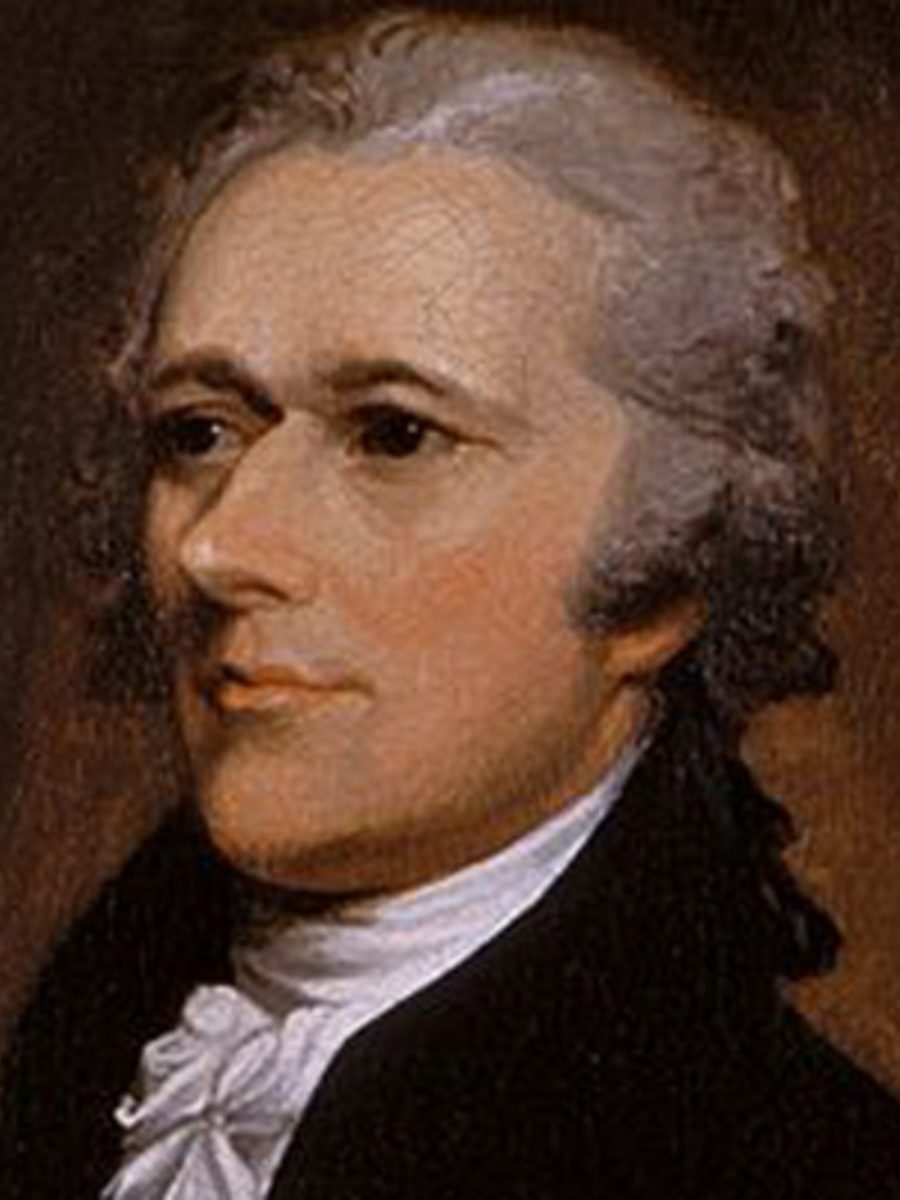
  • Germany issues warning to US
    German Foreign Minister Annalena Baerbock. ©  Johannes Simon/Getty Images

    Europe should not hesitate to put pressure on the US if it fails to fall in line with “liberal democracies,” German Foreign Minister Annalena Baerbock said on Friday. The diplomat made the remark following talks between the US and Russia that excluded representatives from the EU and Ukraine.

    Speaking at a campaign rally in Potsdam on Friday, the Green politician stated, “We’re increasing pressure on the Americans [so they know] they have a lot to lose if they don’t stand on the side of Europe’s liberal democracies.”

    With respect to EU-US relations, Baerbock warned against drawing any precipitous conclusions, remarking that “nothing has been decided there.”

    “No one can decide about war and peace for the Ukrainians or us Europeans, and this is the clear German stance,” she insisted. Baerbock also warned against forcing Kiev into a “phony peace” or “capitulation,” which she said would only invite further “war and violence.”

    A rift has opened up between Washington and Brussels since US President Donald Trump took office last month. Trump has taken a tougher stance on trade with the EU by threatening tariffs and demanded that its European-NATO partners boost spending on collective defense.

    Addressing Munich Security Conference attendees last Friday, US Vice President J.D. Vance delivered a sobering speech to Europe’s political elites, suggesting that the biggest threat the continent is facing is one coming from within – the erosion of democracy.

    “In Britain and across Europe, free speech, I fear, is in retreat,” the official stated, concluding that “if you’re running in fear of your own voters, there is nothing America can do for you.”

    The speech sent shockwaves across governments, with leaders, including Germany’s Olaf Scholz, scrambling to rebuke Vance’s assertions.

    The fallout was further highlighted when Washington and Moscow held high-level talks in Saudi Arabia this week without bothering to invite EU representatives. This perceived slight prompted an outpouring of anguish and indignation on the continent.

    Trump blasted Ukrainian leader Vladimir Zelensky this week, branding him a dictator without elections, but a number of European leaders have rejected the US president’s assertion that he lacks legitimacy.

    In an interview with Fox News on Friday, Trump said he sees no point in having Zelensky involved in peace talks with Russia. He also insisted that French President Emmanuel Macron and UK Prime Minister Keir Starmer “haven’t done anything” to put an end to the bloodshed in Ukraine for the three years since it started.

    The post Germany Issues Warning to US first appeared on Dissident Voice.

    This post was originally published on Dissident Voice.
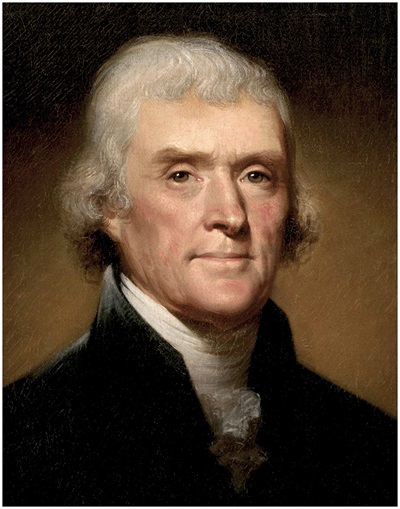
  • For over a year now, Israel has been intensifying its military assaults on Palestinians in the occupied West Bank, from mass killings to attacks on healthcare workers, mass arrests, forced displacement, home demolitions, and military airstrikes.

    In our latest visual, we bring attention to the ongoing violence the Israeli military and settlers have inflicted on Palestinians in the West Bank over the past 16 months.

    On January 19, the Israeli army invaded and laid siege to Jenin refugee camp. The siege is part of a wider military offensive that Israel is carrying out across the northern West Bank. This offensive has led to the displacement of more than 40,000 Palestinians residing in the refugee camps of Jenin, Tulkarem, Nur Shams, and El Far’a, and represents the highest number of Palestinians displaced in the West Bank since 1967.

    Each year surpasses the last in becoming the deadliest year for Palestinians as Israeli violence intensifies with impunity in the West Bank. With Israel’s accelerating annexation and settlement expansion, Palestinians face unrelenting and ongoing assaults on their land, homes, and lives. The Israeli government’s policies, backed by military force, settler violence, and unwavering U.S. support, have created a reality in which Palestinians are constantly struggling against erasure.

    We know the reality is dim, but now is not the time for silence. Now is the time to speak up, to educate, and to challenge injustice. In the words of Toni Morrison, “There is no time for despair, no place for self-pity, no need for silence, no room for fear. We speak, we write, we do language. That is how civilizations heal.”

    The post 16 Months of Israeli Violence in the West Bank first appeared on Dissident Voice.


    This content originally appeared on Dissident Voice and was authored by Visualizing Palestine.

    This post was originally published on Radio Free.

  • As I noted the other day, most Americans remain unaware that President Barack Obama initiated the war in Ukraine in February, 2014 with the Euromaiden Coup in Kiev. Those with an ounce of integrity who followed subsequent events, understand that every Russian entreaty for peace was ignored and that Russia’s red line was crossed when the US opened the door for Ukraine to join NATO. Politically, Putin has no choice but to intervene.

    This is the critical missing context every time the official mantra “Russia invaded Ukraine” is incessantly repeated in the mainstream media. And the Deep State and its minions will go on resisting peace and undermining improved US-Russia relations. Patrice Greanville (Greanville Post) called my attention to a good example on the CBS Sunday Morning show of February 16, 2025. Marvin Kalb (age 92) was trotted out to warn that a peace agreement with Russia “might betray Ukraine and send a chilling message to the rest of the world about America as a trusted world leader.” On the front page of today’s New York Times, we read that Trump is abandoning efforts to “punish Russia for starting Europe’s most destructive war in generations.” (NYT, 2/19/2025) Sadly, the “intervention lie” has also been reiterated by Democrats, Bernie Sanders and even some of those on the putative left. Sanders has consistently contributed to the disinformation campaign and called Russia’s invasion of Ukraine “a horror that almost embarrasses all of us for being a part of the human race.” (C-Span, March 18, 2022). Again, no context. It seems that, for some, “fighting to the last Ukrainian” was not hyperbole.

    Most readers on this Substack are aware that for at least 30 years, academics and policy makers warned against forward movement by NATO because it would provoke a serious response from Russia. Just a few of these voices include Henry Kissinger, George Kennan, Steven Cohen, Bill Burns (CIA director), Jeffrey Sachs, Col. Douglas MacGregor, and John Mearsheimer. To wit, Russia’s legitimate security concerns were alarmingly ignored by the West as US neocons were intent on inciting a war in order to bleed and weaken Russia, hopefully to the point of a fomenting a coup against Putin. This was all undertaken as prelude to confronting China. BTW, there is no evidence that Russia was planning to invade without US provocations. In countless articles and interviews, Prof. John Mearsheimer (Political Science Department at the University of Chicago) has continued to lay out, chapter and verse — with irrefutable evidence — how NATO expansion to Russia’s eastern border led to the war. For starters, Google: John Mearsheimer, “Why Is Ukraine the West’s Fault?”)

    I mention all this because Americans are the most propagandized people on the globe and it will required seeking out alternative sources of information to unlearn the official narrative, not just about Ukraine but also the “Russian threat.” (Think of the Russia-gate hoax, the effects of which still cloud the minds of ordinary citizens). In order, I expect Ukrainians will be the first to grasp that they’ve been used, conned and in Malcolm’s words, “bamboozed.” One can only imagine the angry reaction that will follow. Citizens in European NATO countries will be next and finally, hopefully, the Americans.

    I despise what Trump is doing domestically and in Gaza and it should be resisted by any means necessary. However, to simply yell “Trump, Trump, Trump” at every turn is to fail taking a more nuanced perspective at what is happening in the larger world. I agree with those analysts who believe that the 80 year old Cold War between Russia and the U.S. empire (850 U.S. bases around the globe) is coming to a close and a possible nuclear war has been avoided. We’re slowly transitioning from a world dominated by the neocons who believed their empire would last as long as one could imagine and that’s no small thing.

    The post “Are You Denying that Russia Invaded Ukraine?” first appeared on Dissident Voice.

    This post was originally published on Dissident Voice.

  • I deplore Trump’s actions domestically and also, so far, on Gaza. However, I trust you’re also experiencing a rare morale boost regarding what Trump has begun doing on Ukraine. One consequence we can expect is hysterical, excoriating commentary from the European and US media as they condemn Trump for “betraying Ukraine and appeasing Putin.” On the front page of New York Times (2/15/2025) we read about the “rising Russian threat.” Also, there may well be false flags from Zelensky as he attempts to disrupt and delay productive talks — and save his own ass. Given the absence of an independent media all this will be confusing to the public because they’ve been so heavily propagandized about the war’s background and learned nothing about US motives in starting it. For example, how many Americans know that the Ukraine war was initiated in February 2014 by President Barack Obama? At that juncture, the Euromaiden coup was portrayed in the American news media as a spontaneous, “democratic” transition.

    I’m also enjoying watching Washington’s EU lackeys squeal and squirm after subserviently going along with Biden and the neocon’s war for three years. The suggestion that they or Zelensky merit a seat at the Trump-Putin talks is hilarious. My sense is that these US allies harbored the illusion that the neocons and the Deep State would be ruling the US indefinitely. Now they’re befuddled, humiliated, cut loose and have no leverage and no cards to play. All they can do is bitch from the sidelines and behave as spoilers. Of course, my feelings of satisfaction (and if I might, vindication) are tempered by the fact that half a million fathers, brothers, sons and uncles were slaughtered on behalf of a U.S. proxy war to weaken Russia before taking on China.

    These discredited European leaders have two choices: One, they must drastically increase “security” spending that will provoke massive social unrest as people watch the already weakened welfare state implode. Two, they must try to establish a post-Ukraine working relationship with Russia in order to obtain energy resources and a trading partner. After exposing their populations to a false narrative about Russia since 1945 in order justify NATO, at Washington’s behest, that’s an unenviable task. We can hope that NATO will soon be toast, U.S. troops begin exiting the continent and Europe becomes sovereign. Finally, I’m encouraged that Trump is proposing trilateral talks with China and Russia as this holds promise for a more peaceful world.

    The post Trump, Ukraine, and the EU first appeared on Dissident Voice.

    This post was originally published on Dissident Voice.

  • Photo: Daniel Reinhardt/AP

    As we approach the third anniversary of the Russian invasion of Ukraine, a monumental shift is taking place that might just lead to the end of this calamitous war. This is not a breakthrough on the battlefield, but a stark reversal of the U.S. position from being the major supplier of weapons and funding to prolong the war to one of peacemaker.

    Donald Trump promised to end the war in Ukraine if he was re-elected as president. On February 12th, he started to make good on that promise by holding a 90-minute call with Russian President Vladimir Putin, whom Biden had refused to talk to since the war began. They agreed that they were ready to begin peace negotiations “immediately,” and Trump then called President Zelensky and spent an hour discussing the conditions for what Zelensky called a “lasting and reliable peace.”

    At the same time, the new U.S. Defense Secretary, Pete Hegseth, unveiled Trump’s new policy in more detail at a meeting of the Ukraine Defense Contact Group at NATO Headquarters in Brussels, saying, “The bloodshed must stop. And this war must end.”

    There are two parts to the new policy that Hegseth announced. First, he said that Trump “intends to end this war by diplomacy and bringing both Russia and Ukraine to the table.” Secondly, he said that the United States is handing off the prime responsibility for arming Ukraine and guaranteeing its future security to the European members of NATO.

    Assigning Europe the role of security guarantor is a transparent move to shield the U.S. from ongoing responsibility for a war that it played a major role in provoking and prolonging by scuttling previous negotiations. If the Europeans will not accept their assigned role in Trump’s plan, or President Zelensky or Putin reject it, the United States may yet have to play a larger role in security guarantees for Ukraine than Trump or many Americans would like. Zelensky told the Guardian on February 11th that, for Ukraine, “Security guarantees without America are not real security guarantees.”

    After blocking peace negotiations between Russia and Ukraine in April 2022, the Biden administration rejected peace negotiations over Ukraine for nearly three years. Biden insisted that Ukraine must recover all of its internationally recognized territory, including the Crimea and Donbass regions that separated from Ukraine after the U.S.-backed coup in Kyiv in 2014.

    Hegseth opened the door to peace by clearly and honestly telling America’s European allies, “…we must start by recognizing that returning to Ukraine’s pre-2014 borders is an unrealistic objective. Chasing this illusionary goal will only prolong the war and cause more suffering.”

    Spelling out the U.S. plan in more detail, Hegseth went on, “A durable peace for Ukraine must include robust security guarantees to ensure that the war will not begin again. This must not be Minsk 3.0. That said, the United States does not believe that NATO membership for Ukraine is a realistic outcome of a negotiated settlement. Instead any security guarantee must be backed by capable European and non-European troops.”

    NATO membership for Ukraine has always been totally unacceptable to the Russians. Trump and Hegseth’s forthrightness in finally pulling the plug, after the U.S. has dangled NATO membership in front of successive Ukrainian governments since 2008, marks a critical recognition that neutrality offers the best chance for Ukraine to coexist with Russia and the West without being a battleground between them.

    Trump and Hegseth expect Europe to assume prime responsibility for Ukraine, while the Pentagon will instead focus on Trump’s two main priorities: on the domestic front, deporting immigrants, and on the international front, confronting China. Hegseth justified this as “a division of labor that maximizes our comparative advantages in Europe and the Pacific respectively.”

    Elaborating on the role the U.S. plan demands of its European allies, Hegseth explained,

    If these troops are deployed as peacekeepers to Ukraine at any point, they should be deployed as part of a non-NATO mission. And they should not be covered under Article 5. There also must be robust international oversight of the line of contact. To be clear, as part of any security guarantee, there will not be U.S. troops deployed to Ukraine… Safeguarding European security must be an imperative for European members of NATO. As part of this Europe must provide the overwhelming share of future lethal and nonlethal aid to Ukraine.

    To say that U.S. forces will never fight alongside European forces in Ukraine, and that Article 5, the mutual defense commitment in the NATO Charter, will not apply to European forces in Ukraine, is to go a step farther than simply denying NATO membership to Ukraine, by carving out Ukraine as an exclusion zone where the NATO Charter no longer applies, even to NATO members.

    While Trump plans to negotiate directly with Russia and Ukraine, the vulnerable position in which his plan would place European NATO members means that they, too, will want a significant say in the peace negotiations and probably demand a U.S. role in Ukraine’s security guarantees. So Trump’s effort to insulate the U.S. from the consequences of its actions in Ukraine may be a dead letter before he even sits down to negotiate with Russia and Ukraine.

    Hegseth’s reference to the Minsk Accords highlights the similarities between Trump’s plans and those agreements in 2014 and 2015, which largely kept the peace in Eastern Ukraine from then until 2022. Western leaders have since admitted that they always intended to use the relative peace created by the Minsk Accords to build up Ukraine militarily, so that it could eventually recover Donetsk and Luhansk by force, instead of granting them the autonomous status agreed to in the Accords.

    Russia will surely insist on provisions that prevent the West from using a new peace accord in the same way, and would be highly unlikely to agree to substantial Western military forces or bases in Ukraine as part of Ukraine’s security guarantees. President Putin has always insisted that a neutral Ukraine is essential to lasting peace.

    There is, predictably, an element of “having their cake and eating it too” in Trump and Hegseth’s proposals. Even if the Europeans take over most of the responsibility for guaranteeing Ukraine’s future security, and the U.S. has no Article 5 obligation to support them, the United States would retain its substantial command and control position over Europe’s armed forces through NATO. Trump is still demanding that its European members increase their military spending to 5% of GDP, far more than the United States spends on its bloated, wasteful and defeated war machine.

    Biden was ready to fight Russia “to the last Ukrainian,” as retired U.S. diplomat Chas Freeman said in March 2022, and to enrich U.S. weapons companies with rivers of Ukrainian blood. Is Trump now preparing to fight Russia to the last British, French, German or Polish soldier too if his peace plan fails?

    Trump’s call with Putin and Hegseth’s concessions on NATO and Ukraine’s territorial integrity left many European leaders reeling. They complained that the U.S. was making concessions behind their backs, that these issues should have been left to the negotiating table, and that Ukraine should not be forced to give up on NATO membership.

    European NATO members have legitimate concerns to work out with the new U.S. administration, but Trump and Hegseth are right to finally and honestly tell Ukraine that it will not become a NATO member, to dispel this tragic mirage and let it move on into a neutral and more peaceful future.

    There has also been a backlash from Republican war hawks, while the Democrats, who have been united as the party of war when it comes to Ukraine, will likely try to sabotage Trump’s efforts. On the other hand, maybe a few brave Democrats will recognize this as a chance to reclaim their party’s lost heritage as the more dovish of America’s two legacy parties, and to provide desperately needed new progressive foreign policy leadership in Congress.

    On both sides of the Atlantic, Trump’s peace initiative is a gamechanger and a new chance for peace that the United States and its allies should embrace, even as they work out their respective responsibilities to provide security guarantees for Ukraine. It is also a time for Europe to realize that it can’t just mimic U.S. foreign policy and expect U.S. protection in return. Europe’s difficult relationship with Trump’s America may lead to a new modus operandi and a re-evaluation (or maybe even the end?) of NATO.

    Meanwhile, those of us anxious to see peace in Ukraine should applaud President Trump’s initiative but we should also highlight the glaring contradictions of a president who finds the killing in Ukraine unacceptable but fully supports the genocide in Palestine.

    Given that most of the casualties in Ukraine are soldiers, while most of the maimed and killed in Palestine are civilians, including thousands of children, the compassionate, humanitarian case for peace is even stronger in Palestine than in Ukraine. So why is Trump committed to stopping the killing in Ukraine but not in Gaza? Is it because Trump is so wedded to Israel that he refuses to rein in its slaughter? Or is it just that Ukrainians and Russians are white and European, while Palestinians are not?

    If Trump can reject the political arguments that have fueled three years of war in Ukraine and apply compassion and common sense to end that war, then he can surely do the same in the Middle East.

    The post Trump Gives Peace a Chance in Ukraine first appeared on Dissident Voice.

    This post was originally published on Dissident Voice.

  • Mr. President, are you and Elon Musk on the same page? More precisely, do you support his current decision concerning the Palestinians?

    My friend Elon has ideas, not decisions. I’m the one who makes decisions. Elon is a smart guy. Some would say he’s a very smart guy. He thinks outside of the box, which is a good thing, and then he brings his idea to me. I’m the commander in chief and I decide if his idea is a good one. Elon, who is merely my assistant by the way, has lots of ideas; he’s like an idea machine. Ideas pop out of his head like toast popping out of a toaster. Some would say he makes too much toast. So, I’m the decider. I’m the one who decides if the toast gets buttered or not. Now what slice of toast are you referring to?

    It’s the one about Gaza and the Palestinians, sir. Musk said the Palestinians will be emigrated to Mars.

    Oh yes! That’s one of the good ones. It’s one of the best outside-of-the-box ideas that Elon has ever come up with.

    But Mr. President, isn’t it a rather unorthodox, or even a dangerous idea?

    No, it’s an outside-of-the-box idea. “Dangerous” is what libs say about any good idea that they haven’t thought of themselves, and by the way, they haven’t had a good idea for years. Elon’s idea, which I will supervise, solves a big problem. Look, their place is a mess; anyone can see it’s true. Gaza is an unlivable pile of rubble. When Hamas viciously attacked Israel, which, by the way, never would have happened had I been president, Israel did what any other country would have done; it dropped 2,000-pound bombs on anything that could hide a Hamas terrorist, which unfortunately was everything. So, there’s nothing left for the Palestinians; Gaza is a just dangerous pile of broken bricks and half-destroyed buildings, many of which might still hide bombs that have yet to explode. By the way, do you know we still find unexploded bombs from WWII all over the place in Europe? We find them all the time. Anyway, it’s too dangerous for them. The Palestinians aren’t equipped to safely meddle in the debris. For their own sake, they need to be moved out of Gaza while more capable hands clean up the mess and turn it into something beautiful. It will take us years, by the way, maybe even decades. That’s why we have to get the Palestinians out of the way. It’s for their own safety of course, but it’s for ours, too. One can never know when a peaceful Palestinian is going to turn into a violent terrorist. Some say it’s in their blood. Anyway, we can’t have them lurking about while our brave and patriotic workers are cleaning up the debris and erecting grand hotels and casinos. So, it will be a big job, a really big job, but when we’re finally done, it will unbelievable, it will be something so beautiful; so beautiful, the likes of which the world has never seen before. 

    But to Mars, Mr. President? Is that safer than Gaza?

    So, where exactly would you send them? Jordan said they can’t house many more refugees, and Egypt is reluctant to take them in. Nobody really wants them. I mean they can be a fine people if given the chance to dust themselves off, but where on Earth can they go? No one in the Middle East wants them. No one in Europe or Asia wants them. The United States certainly won’t import two million Palestinians into its borders. I mean look, I was elected to kick people out, not to let them in. Let me just say it again; for their own safety, we couldn’t let them stay in Gaza, and no country on Earth wanted to take them in. We were confronted with a dilemma, but then, just when it seemed there was no practical solution, Elon Musk’s brilliant out-of-the-box piece of toast popped up: He said, why don’t we send them to Mars?

    Okay, to Mars, but how?

    Well, it’s not really a new idea at all, except for using the Palestinians. Elon has been thinking about it for a long time. He’s had plans to create a big city on Mars for years. With my help, he’ll just move his timeline up a bit. Instead of 2050, we’ll aim for 2030 or maybe even sooner. We’re Americans; with God on our side, we can do whatever needs to be done. Sure, it’s complicated, but just imagine the magnificence of it: all those rockets taking off! And it won’t be from just one place either; it will take thousands upon thousands of rockets launched from different launch pads all around the world! It will be like a giant 10 or 20-day Fourth of July festival that the whole world will celebrate together. It will be an extraordinary extravaganza, the likes of which the world has never known!

    It sounds like quite a send-off Mr. President, but will the Palestinians want to even go there?

    Well, I don’t see why they wouldn’t. They don’t have anything here except a big pile of rubble and a neighbor who hates them. Look, here they lived on a tiny sliver of land that many say was never really theirs to begin with, and now it’s destroyed. On Mars they’ll have a whole planet to themselves, and with no rubble! There will be no Israel next door to threaten or control them, and no 2000- pound bombs falling from the sky. They’ll be free to live in peace and prosperity! So, what Palestinian in their right mind wouldn’t want to go there? I mean it’s a whole planet, for God’s sake, and it will all be theirs. They’ll have it all to themselves, at least for a very long time.

    Mr. President, it’s never been done before, and with such magnitude! Mars is hardly habitable, and just getting there will be dangerous in itself.

    Look, when Moses guided the children of Israel to the shores of the Red Sea, do you think it had ever been done before? Moses was chosen by God to lead them there. With Egyptians in hot pursuit, God told Moses to stretch out his hand, and then He parted the sea and even dried the mud to make the crossing easier. When the children of Israel were safely on the other side, God closed the sea back up, and His chosen people found themselves safely standing on their sacred promised land, which many say included Gaza, by the way.

    But Mr. President, wasn’t that a little different? That was all on Earth, and are you saying that God’s hand is involved in this mission? Will God protect the Palestinians as they cross the vast ocean of space? And what about their safety when they finally get there?

    Look, I might not be Moses, but there are many who say, many who have real conversations with God every day by the way, that I have been chosen to do God’s work and make America great again. Who’s to say they’re wrong? And you know, when that bullet whizzed past my ear in Pennsylvania, it was like a whisper from God that only I could hear. It was like He was saying, “Listen Donald, I have a little more work for you to do before I bring you up to sit beside me in Heaven.” So, while I might not be Moses, I’m here to carry out the will of God. I will lead the children of Palestine to the shores of space, and then my faithful disciple Elon will ferry them across the vastness of space to their promised land on Mars.

    Wait, did I hear that right? Did you just say that Musk will actually go to Mars with the Palestinians?

    Well sure, it was his idea after all. There’s no denying that I will miss him, but the Palestinians will need him more than I do. They’ll need his ideas. Elon’s the only one who will know exactly what needs to be done. He’s been studying it for years. He will be there with them, showing how to set up the space tents and all kinds of other little tricks needed for survival. It won’t all be easy, but remember this: when the children of Israel crossed the Red Sea, they didn’t even have tents, yet they did survive, and just look at them now!

    Elon has been so important in your second term. Can you get along without him?

    Well, it won’t be the same as having him right here by my side every day at Mara Logo, but he will be leaving me with so many ideas, a lot of which I haven’t even had time to look at yet. It will take a long time to sift through all of them, so in a way, it will almost be like he’s still here. It is true though, Elon Musk has been more than just my never-leaving and ever-present assistant; he has been a dear friend. He will truly be missed. So yes, it will be tough trying to get along without him, but I will take some comfort in knowing that Elon and two million Palestinians will soon be in a better place.

    The post Palestinians to be Expelled from Gaza and Emigrated to Mars first appeared on Dissident Voice.

    This post was originally published on Dissident Voice.

  • The struggle between Black organized labor and the political establishment has been historically waged with particular fierceness in the US South—a region with the highest proportion of Black workers but with the most hostile laws against workplace organizing. States in the US South have some of the lowest rates of union coverage in the country—meaning that they have a lower share of workers who are organized in a union. The national union coverage rate stood at 11.2% as of 2023, while the rate was as low as 3% in South Carolina, 3.3% in North Carolina, 5.2% in Louisiana, and 5.4% in Georgia.

    The post How Black Workers Overcome Historic Obstacles To Labor Organizing In The South appeared first on PopularResistance.Org.

    This post was originally published on PopularResistance.Org.

  • “Everything the State says is a lie, and everything it has it has stolen” – Friedrich Nietzsche, Thus Spoke Zarathustra, (The New Idol)

    At present, according to recent polling, 52 percent of the US citizenry approve of Donald Trump’s performance in office, this is, even as Trump pulls from his bloated ass Joseph Goebbels’ grade lies e.g., Diversity hires are responsible for the recent aviation tragedy over the Potomac River. Hyperbole? The insidious declaration is right out of the Nazi era playbook. For example, the Nazi “stabbed in the back by international and internal parasitic Jews” lie, promulgated by the Nazi propaganda machine, was deployed to blame shift the cause of Germany’s defeat and the attendant economic miseries in the wake of World War I.

    In my lifetime, the following varieties of shame-rancid fabulation arrived during waves of rightwing inflicted political/cultural regression. In my native city of Birmingham, Alabama, during the Civil Rights era, segregationist demagoguery went thus: The end of Jim Crow would embolden sexually feral Black men to endanger fragile flowers of southern womanhood; during the Vietnam era, pro war propaganda warned, the Vietnamese are bereft of respect for human life and will be headed westward to endanger all of freedom-loving Christendom by means of falling dominoes if the war ends before the surrender of the North Vietnamese communists; during the Reagan era, gold tooth-adored, Cadillac-driving Welfare Queens, purchasing steak, lobster, and cases of malt liquor at supermarkets, are destroying the nation’s economy; and, over the last two hideous years, Zionist propaganda warned, murderous-by-nature Palestinians must forever live with an IDF boot on their collective neck or a second Holocaust would be imminent.

    “The question is precisely to know whether the past has ceased to exist, or ceased to be useful…” ― Henri Bergson, Time and Free Will

    Moreover, on an historical basis, myths told by conquering Athenians wove tales of a sexually insatiable, Cretin witch queen who had carnal relations with a monstrous bull risen from the Mediterranean Sea, and as a consequence birthed a labyrinth-dwelling half bull/half man beast possessing an appetite for virgin youth. Across the Mediterranean, in the Levant, a tale went as follows, promised by their sky-father God, Israelites crossed the Jordan river, and, in a preview of horrors to come, annihilated the people of Canaan and claimed the land as their own.

    Returning to the present toxic mythos of the present era, if I attempt to confront Trump’s true believers on the outright lies he and his clutch of sub-reality television grade grifters retail in, I suspect, my attempts at persuasion would carry the dismal degree of efficacy as when I attempt to reach my eleven year son old on his compulsion to be sucked into the storylines of Grand Theft Auto and attendant, dopamine-jacking narratives unfolding in the video game are an accurate depiction of how criminal activity plays out in the non-pixel world. I cannot compete against thrills freighted in the phenomenon known as the suspension of disbelief.

    What are the cultural/political circumstances that allow prevarication to be perpetrated sans impunity? Will our destinies, both individual and collective, continue to be determined by pervasive deceit — by pernicious storylines, concocted by cadres of elitist fabulists, and perpetuated with the agenda of frightening and bamboozling a perpetually credulous citizenry?

    Sadly, as noted above, there is not a granule of novelty in the great dismal of it all; nations, tribes, and families spin tales composed of sacred lies. Most of us are compelled to find rationales to live with ourselves and to tolerate the presence of those close to us. On a personal basis, such tales serve to repackage self-deception as self-confidence. Glaring case in point, the malevolent smirk and risible swagger of the present Manqué-in-Chief.

    Jean Renoir, piquantly, put it, “You know, in this world there’s one thing that’s terrible, that everyone has their reasons.” — The Rules Of The Game

    During times of trauma and uncertainty, we seek narratives of reassurance — even clinging to ones that are spurious — even preposterous. Trump’s resolute visage should be placed on Mount Rushmore for restoring confidence and purpose to the citizenry of the US. Sure thing, and Diddy should be feted for restoring dignity to drug-fueled orgies.

    Thus, during my lifetime, decade after decade, the anxious minds of neoliberal conservatives have evinced a compulsive need to believe it is possible to return to a fictional past, to a golden era populated by well-turned out, obedient children, dutiful wives, and docile minorities. All of whom were lorded over by morally upright white men who wielded their righteous power guided by the grace, mercy, yet perpetually brittle temper of an All-Powerful, All-Knowing, Everlasting, Long-Bearded, Bony Ass White Man enthroned beyond the blazing blue sky.

    Authoritarian rightists go round-heeled for this kind of hokum. In the 1980s, they swooned, gazing upon Ronald Reagan’s stiff, Pomade-lacquered pompadour — which he held high and steady against the changes that blew in from the odious 1960s; then, as now, with Trump, his klavern of looney muffin smitten insist The Gipper’s 1940-era coiffure should be carved into Mount Rushmore. Next, as noted, MAGA cultists swoon, Trump’s combover disaster coiffure should be chiseled in glory upon the (stolen) mountain’s rock face – where the two television grifter ubermenschs’ (closer to uberdouches’) visages would defy rain, snow, and lashing wind — and would be, axiomatically, impervious to the reality of change.

    But all monuments to delusion need not be as epic in scale as the above. Even objects as quotidian and seemingly innocuous as the naming of places can and will deceive us. Moreover, these everyday — seemingly trivial — misapprehensions can waylay the citizenry into internalizing false mythos.

    “Everything that deceives may be said to enchant.” — Plato

    For the next case in point, I’ll travel southward and back in time, a number of decades.

    I was born in the Deep South industrial city of Birmingham, Alabama, another example of a locale in possession of an origin myth as fraudulent as it was odious.

    Birmingham was founded by steel and coal barons from Pittsburgh, PA, who, in an attempt to ameliorate the worldwide perception of American southerners as being dumb as dirt, backwoods, genetic retreads, too-ignorant-to-hit-the-ground-with-their-own-piss yokels, christened their colonial creation, Birmingham, in order to brand it with a proper “city of industry” cachet.

    Subsequently, the bloodsucking Yankee bastards (I mean, visionary captains of capitalism) known in Birmingham as the “Big Mules” went about the business of exploiting — rather, in their words providing gainful employment — to said dumb-as-dirt, backwoods, genetic retread, too-ignorant-to-hit-the-ground-with-their-own-piss yokels — i.e., impoverished but hardy specimens who possessed the requisite physical stamina required to sacrifice their bodies and souls for the sake of substandard wages.

    “Everything the State says is a lie, and everything it has it has stolen.” ― Friedrich Nietzsche, Thus Spoke Zarathustra (The New Idol)

    As the riches, plundered from the Appalachian Hills, flowed northward to banks in Pittsburgh and New York, the compensation the laboring class received in return was a life of ceaseless toil and perpetual debt. These harsh realities made the people of Birmingham hard and mean. In the early 1960s, the city was unofficially re-christened “Bombingham.”

    Birmingham had been transformed into a hateful, little colonial outpost. If a white man, for example, my father, complained about low wages and poor working conditions, the bosses told him, “If you don’t like your job — there are ten n-words (but they didn’t clean up their racist lexicon for public consumption) who, right now, will take your position for a fraction of your pay.” It’s self-evident why Birmingham was not exactly known as a beacon of racial harmony.

    Nonviolent Black student demonstrators were met with fire hoses and dogs in May 1963 during the 10-week Birmingham desegregation campaign organized in part by Martin Luther King Jr. (Frank Rockstroh / Michael Ochs Archives / Getty Images)

    When in the mid-1960s, my family moved from Birmingham to Atlanta, Georgia i.e., a city (or more precisely, a contrived collection of corrupt zoning practices and real estate developer larcenies) we settled again into a city bearing a contrived name. Whereas Birmingham’s fraudulent name was meant to evoke an aura of industry, Atlanta’s was contrived to conjure an image of the ancient grandeur of a great city of antiquity. Call the theme: Classical Age Cracker.

    By illustrating the types of cultural confabulation and communal causitry defining White dominated Atlanta of the time and many still refer to “as their way of life” — I will digress, a bit. I will attempt to limn in prose the lives, fates, and legacies of two famous residents of the city: Blind Willie McTell and Margaret Mitchell, both of whom resided there in overlapping intervals during the first half of the twentieth century.

    I first heard the music of Blind Willie McTell, in the mid-1960s, when in tow of my father, I visited friends of his who comprised the dozen or so members of Atlanta’s “beatnik” community.

    They were flopped in a run-down, mafia-owned building at the intersection of Peachtree and Tenth Street, and bizarrely enough, in the building that contained the apartment that Margaret Mitchell had christened “The Dump” — the location where she had conceived and written Gone with the Wind.

    Upon the turntable of a battered record player, belonging to the building’s resident manager, the late Bud Foote, a professor at nearby Georgia Tech, author, poet, musician, and all around Beat polymath, spun rare and exquisite LPs. It was at The Dump that I first heard the works of Mctell and other Blues, Folk, and Jazz greats. The building was located a short distance from where, on Ponce De Leon ave., according to local bohemian (all seven of them) lore an aging, increasingly disconsolate from poverty, racism, and his own obscurity, McTell used to busk for change from redneck Babbits and country-come-to-town parvenus, shortly before he gave up playing the blues and took up lay preaching and gospel music.

    The Margaret Mitchell House, as it has been subsequently christened by the Atlanta Tourism Board, is now a city landmark. Both obtuse locals and gullible tourists seem oblivious or indifferent to the fact that the building, thrice burned to the ground and rebuilt by the city, doesn’t, at present, in any way, shape or form resemble the original structure where the epic racist, bodice-ripper, Gone with the Wind, was confabulated onto the page.

    “We are never deceived; we deceive ourselves.” – Johann Wolfgang von Goethe, The Sorrows of Young Werther

    Not far down the road exists, to this day, a bar named Blind Willy’s, a place that, on any given night, by populated who scant few would have knowledge the joint’s namesake, a man spat upon when he was busking on Ponce De Leon Avenue, a few blocks down the street.

    Perhaps if we were to take a closer examination of these sorts of everyday misperceptions, distortions, and cultural based false mythos it would reveal a great deal about our present day lives within the duopolist, high-dollar hack-conjured narratives and concomitant Trump era griftathon of the present day.

    But power and greed and corruptible seed
    Seem to be all that there is
    I’m gazing out the window
    Of that old Saint James Hotel
    And I know no one can sing the blues
    Like Blind Willie McTell — Bob Dylan, Blind Willie McTell

    So where does this leave us? Are we condemned to live out our lives in the enthralling dazzle of these glittering fragments of self-serving lies?

    Is it for the bards of the extant dictatorship of wealth and attendant Trump-tide of pummeling shitwit — a psychical landscape of lies as banal as they are noxious — to wail out the blues into the obtuse face of the present era — for blues-mans, scions of their times, born of the hybrid lawn-seeded soil of our nation of vast suburban subdivisions and weaned on its pharmacological subsistence crops, perhaps going by the moniker Medicated Willie McMansion — to sing out,

    “I got the medication blues/ from my iPhone head to my sweatshop-shod shoes…”

    Conversely and finally, what would a soul-driven resistance look like. In what kinds of forms would a propitious mythos arrive? Where do seeds of effective defiance brood?

    The poet Rainer Maria Rilke posited, I’m paraphrasing, every individual has a letter written to themself, dispatched from their own heart. The letter warns, if you fail to live the life your heart was demanded by destiny to live — you will not be allowed to read said letter before you die.

    Ask yourself, is there a dead letter office within you piled with letters from your heart? Query your heart, is it mortified by the extant culture reeking of Nazi-level lies? The heart is not merely a pump — it is a reservoir of visions, that are dispatches from Anima Mundi I.e., the soul of the world. Step one: Stand up and confront believers of the lie. Crash the comfort zones of denialists. Regard the confrontation as a love letter from your heart, thus you cultivate and allow to rise from within you an elan vital serving as an antidote to the banality of normalized insanity.

    Hang a hammock between Death and the Abyss, take sanctuary in the space between musical notes, greet as a steady friend the evening air, listen to the brooding of seeds and soliloquies of stone, and the parting words of dying stars…

    Give deference to empty spaces; therein, the impetuous present pauses to breathe, thus the future is provided with the solace required to dream the world into existence.

    When some insistent fool demands that you explain yourself, strike fear in him by brandishing flowers of infinity, their efflorescence rages into the world your true name — your immutable destiny chanted by troubadour heartbeats — and the fool, if he possesses a scintilla of dignity, will withdraw the question.

    …Men do not sufficiently realize that their future is in their own hands. Theirs is the task of determining first of all whether they want to go on living or not. Theirs is the responsibility, then, for deciding if they want merely to live, or intend to make just the extra effort required for fulfilling, even on this refractory planet, the essential function of the universe, which is a machine for the making of gods.

    ― Henri Bergson, The Two Sources of Morality and Religion

    Affected Place [<i>Betroffener Ort</i>] (1922)

    1922, Affected Place [Betroffener Ort], Paul Klee

    The post Lies Too Big To Fail: The Culture of Grift first appeared on Dissident Voice.

    This post was originally published on Dissident Voice.
  • A pious Sunday school teacher confessing to lust in his heart but swearing never to lie, he came to Washington to reestablish public faith in government just when popular disgust at monstrous U.S. crimes in Indochina had reached unprecedented heights. The big business agenda during his term in office (1977-1981) was to roll back the welfare state, break the power of unions, fan the flames of the Cold War to increase military spending, engineer tax breaks for wealthy corporate interests, and repeal government regulation of business. While portraying himself as a peanut-farming populist, Carter delivered the goods for Wall Street.

    Having run as a Washington “outsider,” he immediately filled his administration with Trilateral Commission members, hoping that a coterie of Rockefeller internationalists could resurrect the confidence of American leaders and enrich business relations between Japan and the United States.

    His Secretary of State was Cyrus Vance, a Wall Street lawyer and former planner of the Vietnam slaughter. Secretary of Defense Harold Brown was Lyndon Johnson’s Air Force Secretary and a leading proponent of saturation bombing in Vietnam. Secretary of the Treasury Michael Blumenthal was the standard rich corporation president. Attorney General Griffen Bell was a segregationist judge who disclosed that he would request “inactive” status as a member of Atlanta clubs closed to blacks and Jews [Carter himself stated that housing should be segregated]. Energy coordinator James Schlesinger was a proponent of winnable nuclear war. Transportation Secretary Brock Adams was a staunch proponent of Lockheed’s supersonic transport. National security adviser Zbigniew Brzezinski was an anti-Soviet fanatic who said in an interview with the New Yorker that it was “egocentric” to worry that a nuclear war between the U.S. and U.S.S.R. would entail “the end of the human race.” Since it was unlikely that every last human being would perish in such event, Brzezinski recommended that critics of U.S. nuclear policy abstain from narcissistic concern for the mere hundreds of millions of people who would.

    In what William Greider, author of Secrets of the Temple (a study of the Federal Reserve Bank), called his most important appointment, Carter named Paul Volcker to chair the Federal Reserve Bank. Stuart Eizenstat, Carter’s assistant for domestic affairs said that, “Volcker was selected because he was the candidate of Wall Street.” The Wall Street agenda became clear when Volcker contracted the money supply and declared, “the standard of living of the average American has to decline.”

    Wealth was funneled upward and wages and production declined. Unemployment and bankruptcy rose, unions shriveled and disappeared, Pentagon spending soared. For the first time ever American white collar families couldn’t save money. With urban housing costs zooming, workers fled to remote suburbs, but the increased commute expenses tended to cancel out cheaper mortgages. Moonlighting and overtime work increased, but added income disappeared in eating out, second commutes, and hired child care. As the cost of necessities outpaced wage gains, only credit cards could fill the widening gap. Hamburger stands and nursing homes proliferated while well-paid manufacturing jobs fled to the Third World. The workforce of the future was said to be a generation of super-efficient robots.

    Carter’s populist assurances simply whetted the public appetite for this kind of dismal anticlimax. While making a few listless gestures towards blacks and the poor, he spent the bulk of his energy promoting corporate profits and building up a huge military machine that drained away public wealth in defense of a far-flung network of repressive “friends” of American business.

    The heaviest applause line in his Inaugural Address was his promise “to move this year a step towards our ultimate goal – the elimination of all nuclear weapons from this Earth.” But after his beguiling rhetoric faded away, he embarked on a program of building two to three nuclear bombs every day. Although he had promised to cut military spending by $5 to $7 billion, he decided to increase it after just six months in office, and his 5% proposed spending increases in each of his last two years in office were identical to those first proposed by Ronald Reagan. Furthermore, having pledged to reduce foreign arms sales, he ended up raising them to new highs, and after speaking of helping the needy, he proposed cutbacks in summer youth jobs, child nutrition programs, and other popular projects serving important social needs. Similarly, though he had campaigned as a friend of labor, he refused a request to increase the minimum wage and opposed most of organized labor’s legislative agenda while handing out huge subsidies to big business. He made much ado about “human rights,” but returned Haiti’s fleeing boat people to the tender care of “Baby Doc” Duvalier, and when a member of the American delegation to the U.N. Human Rights Commission spoke of his “profoundest regrets” for the C.I.A.’s role in General Pinochet’s bloodbath in Chile, Carter scolded him, insisting that the C.I.A.’s actions were “not illegal or improper.”

    Carter came to Washington proclaiming his desire for a comprehensive Middle East peace, including a solution to the Palestinian question “in all its aspects.” Yet at Camp David he failed to grasp the root of the problem, let alone propose a mature way of dealing with it. He assumed that Palestinians were anonymous refugees whose nationalist aspirations could be safely ignored. He supposed a peace treaty could be signed in the absence of the PLO, world recognized as the Palestinians’ “sole legitimate representative.” He offered no apologies for negotiating an agreement that failed even to mention Jewish settlements in the West Bank, the Gaza Strip, and the Golan Heights. He did not protest Prime Minister Menachem Begin’s presentation of the Accords before the Israeli Knesset as a “deal,” one much more favorable to Israel than to “the Arabs.” He pretended not to notice that corralling Palestinians into Bantustans was not simply a tactic of war, but constituted Israel’s boasted final product of “peace”! Finally, his much praised Camp David accords were the death warrant for Lebanon, as Israel, its southern border secure with the removal of Egypt from the Arab military alliance, was freed to concentrate undivided attention on a long-planned invasion across its northern border. It was this invasion (June 1982) that convinced Osama bin Laden that only mass murder of Americans could ever change U.S. foreign policy.

    Carter was effusive in his praise and blind support of the Shah of Iran, who was deeply unpopular in his country due to policies of super-militarization, forced modernization, and systematic torture. By the time Carter arrived in the White House the Shah’s throne sat atop a veritable powder keg. Iranian cities were hideously unlivable with fifteen percent of the entire country crowded around Teheran in shanty dwellings lacking sewage or other water facilities. The nation’s incalculable oil wealth reached few hands and a restless student generation had no prospects. The country’s bloated bureaucracy was totally corrupt. While Shiite leaders rallied popular support, the Shah’s secret police threw tens of thousands of Iranians into jail, the economy gagged on billions of dollars of Western arms imports (mostly from Washington), and Amnesty International speculated that Iran had achieved the worst human rights record on the planet. Meanwhile, Carter declared that “human rights is the soul of our foreign policy,” though he added the following day that he thought the Shah might not survive in power, a strange expectation if indeed the U.S. stood for human rights around the world.

    After the Shah was overthrown, Carter could not conceive of U.S. responsibility for the actions of enraged Iranian students who seized 66 Americans and held them hostage at the U.S. Embassy in Teheran, demanding the return of “the criminal Shah.” (He had admitted the Shah to the U.S. for emergency medical treatment for cancer, thus precipitating the “hostage crisis.”) To Carter, Americans were by definition innocent, outside history, and he dismissed Iranian grievances against the U.S. as ancient history, refusing to discuss them. In his distorted mind, Iranians were terrorists by nature, and Iran had always been a potentially terrorist nation, regardless of what they had suffered at U.S. hands. In short, without the Shah, Carter regarded Iran as a land of swarthy and crazed medievalists, what Washington today calls a “rogue state.”

    Having “lost” Iran, a key U.S. ally in the Middle East, along with military outposts and electronic eavesdropping stations used against the Soviet Union, the Carter administration began supporting Afghan Islamic fundamentalists, not making an issue of their having kidnapped the American ambassador in Kabul that year (1979), which resulted in his death in a rescue attempt. While U.S. officials condemned Islamic militants in Iran as terrorists, they praised them as freedom fighters in Afghanistan, though both groups drew inspiration from the Ayatollah Khomeini, who was, in the eyes of official Washington, the Devil incarnate. In a 1998 interview Carter’s national security adviser Zbigniew Brzezinski admitted that the U.S. had begun giving military assistance to the Islamic fundamentalist moujahedeen in Afghanistan six months before the U.S.S.R. invaded the country, even though he was convinced – as he told Carter – that “this aid was going to induce a Soviet military intervention.” Among the consequences of that policy were a decade-and-a-half of war that claimed the lives of a million Afghans, moujahedeen torture that U.S. government officials called “indescribable horror,” half the Afghan population either dead, crippled, or homeless, and the creation of thousands of Islamic fundamentalist warriors dedicated to unleashing spectacularly violent attacks in countries throughout the world.

    The list of disastrous policies can go on. For example, Carter continued the Ford Administration’s policy of backing Indonesia’s occupation of East Timor, which killed tens of thousands of Timorese during Carter’s years in office, and roughly a third of the Timorese population overall between 1975 and 1979. In 1977-1978 while Indonesia engaged in wholesale destruction in the form of massive bombardment, wiping out of villages and crops, and relocation of populations to concentration camps, the Carter Administration extended the military and diplomatic support necessary to make it all possible. In late 1977 Washington replenished Indonesia’s depleted supplies with a sharp increase in the flow of military equipment (Jakarta used U.S.-supplied OV-10 Broncos, planes designed for counterinsurgency operations) encouraging the ferocious attacks that reduced East Timor to the level of Pol Pot’s Cambodia. In a 1979 interview with the New York Times Father Leoneto Vieira do Rego, a Portuguese priest who spent three years in the mountains of East Timor between 1976 and 1979, said that “the genocide and starvation was the result of the full-scale incendiary bombing . . . I personally witnessed – while running to protected areas, going from tribe to tribe – the great massacre from bombardment and people dying from starvation.” In May 1980 Brian Eads reported for the London Observer that “malnutrition and disease are still more widespread than in ravaged Cambodia.” Relating the comments of an official recently back from a visit to Cambodia, Eads added that “by the criteria of distended bellies, intestinal disease and brachial parameter – the measurement of the upper arm – the East Timorese are in a worse state than the Khmers.” Another stellar achievement of the “Human Rights” administration.

    Furthermore, during Carter’s brief reign he ordered production of the neutron bomb (which his administration praised for “only” destroying people while leaving property intact), endorsed “flexible response” and “limited” nuclear war, lobbied for the radar-evading cruise missile, developed a rapid deployment force for instant intervention anywhere, enacted selective service registration in peacetime, and advocated the construction of first-strike MX missiles for use in a nuclear shell game along an elaborate system of underground railroad tracks proposed for the Utah desert. While lecturing the Soviets on human rights, he escalated state terror in El Salvador, crushed democracy in South Korea, gave full support to Indonesia’s near genocide in East Timor, and maintained or increased funding for the Shah, Somoza, Marcos, Brazil’s neo-Nazi Generals, and the dictatorships of Guatemala, Nicaragua, Indonesia, Bolivia, and Zaire. He refused to heed Archbishop Romero’s desperate plea to cut off U.S. aid to the blood drenched Salvadoran junta, and Romero was promptly assassinated. Furthermore, he said nothing at all when the London Sunday Times revealed that the torture of Arabs implicated “all of Israel’s security forces” and was so “systematic that it cannot be dismissed as a handful of ‘rogue cops’ exceeding orders.” And though he presented himself as sympathetic to those who had opposed the Vietnam war, he refused to pay reconstruction aid on the grounds that during the devastating U.S. attack on the tiny country, “the destruction was mutual.” (Try arguing that the Nazi invasion of Poland wasn’t a crime because “destruction was mutual.”)

    Carter turned domestic policy over to Wall Street, refusing to increase the minimum wage and telling his Cabinet that increasing social spending “is something we just can’t do.” According to Peter Bourne, special assistant to the president in the Carter White House, he “did not see health care as every citizen’s right,” though every other industrial state in the world except apartheid South Africa disagreed with him. He understood that liberals desired it, but, Bourne notes, “he never really accepted it.” Instead, “he preferred to talk movingly of his deep and genuine empathy for those who suffered for lack of health care, as though the depth of his compassion could be a substitute for a major new and expensive government solution for the problem.” In point of fact, money can be saved under a government funded plan, but Carter was uninterested. He insisted on controlling business costs rather than providing universal coverage, neglecting to note that under Medicare – universal insurance for the elderly – administrative costs were a fraction of those charged under private HMOs.

    Carter simply could not comprehend the vast unmet social needs that existed (and exist) in the United States. He thought there was a way to maintain a global military presence, balance the budget, and keep business costs low while adequately meeting social welfare needs via reorganizing programs. When his Secretary of Health, Education, and Welfare, Joe Califano informed him that without increased funding many welfare recipients would be worse off after any reorganization than before, Carter erupted: “Are you telling me that there is no way to improve the present welfare system except by spending billions of dollars? In that case, to hell with it!” In response to a comment that his denial of federal funding for poor people’s abortions was unfair, Carter summed up the political philosophy that rendered him hopelessly unprogressive: “Well, as you know, there are many things in life that are not fair, that wealthy people can afford and poor people cannot.”

    Like political candidates who do their bidding.

    The post False Savior: Jimmy Carter first appeared on Dissident Voice.

    This post was originally published on Dissident Voice.

  • The US aid program began in earnest in the early stages of the Cold War, with an intention to beat off the contenders from the Soviet bloc in the postcolonial world. President Harry S. Truman proposed, in his 1949 inaugural address, “a bold new program for making the benefits of our scientific advances and industrial progress available for the improvement and growth of underdeveloped areas.” In 1961, President John F. Kennedy signed the Foreign Assistance Act of 1961, enabling him to issue the executive order that created the US Agency for International Development (USAID).

    In 1962, the American scholar of international relations, Henry Morgenthau, suggested that foreign aid could fall into six categories: the sort that promoted humanitarian objects, the aid that offers subsistence goals and military aims, the sort that acted as a bribe, the attainment of prestige and economic development.

    To provide aid suggests a benevolent undertaking delivered selflessly. It arises from the charitable mission, an attempt to alleviate, or at least soften the blows of hardship arising from various impairments (poverty, famine, disease). But the provision of aid is rarely benign, almost always political, and, in its realisation, often self-defeating. The very transaction acknowledges the inherent victimhood of the sufferer, the intractable nature of the condition, the seemingly insoluble nature of a social problem.

    Morgenthau also conceded that humanitarian aid, despite being, on the surface, non-political in nature, could still “perform political function when it operates within political context.” And the very provision of aid suggests an accepted state of inequality between giver and recipient, with the former having the means to influence outcomes.

    With such views frothing the mix, it is worth considering why the attack by President Donald J. Trump on USAID as part of his axing crusade against bureaucratic waste is not, for all its structural and constitutional limitations, without harsh merit. Over the years, insistent critics have been lurking in the bushes regarding that particular body, but they have been dismissed as isolationist and unwilling to accept messianic US internationalism. The Heritage Foundation, for instance, has been wondering if the whole idea of US foreign aid should be called off. In January 1995, the body produced a report urging the termination of USAID. “Despite billions of dollars spent on economic assistance, most of the countries receiving US development aid remained mired in poverty, repressions, and dependence.”

    Such a viewpoint can hardly be dismissed as a fringe sentiment smacking of parochialism. (In the United States, imperialist sentiment is often synonymous with supposedly principled internationalism.) The less rosy side of the aid industry has been shored up by such trenchant critiques as Dambisa Moyo’s, whose Dead Aid (2009) sees the $1 trillion in development aid given to Africa over five decades as a “malignant” exercise that failed to reduce poverty or deliver sustainable growth. She caustically remarks that, “Between 1970 and 1998, when aid flows to Africa were at their peak, poverty in Africa rose from 11 percent to a staggering 66 percent.” Aid, far from being a potential solution, has become the problem.

    The report card of USAID has not improved. One of the notable features of the aid racket is that much of the money never escapes the orbit of the organisational circuit, locked up with intermediaries and contractors. In other words, the money tends to move around and stay in Washington, never departing for more useful climes. A report by USAID from June 2023 noted that nine out of every ten dollars spent by the organisation in the 2022 fiscal year went to international contracting partners, most of whom are situated in Washington, DC. USAID funding is also very particular about its recipient groups, with 60% of all its funding going to a mere 25 groups in 2017 alone.

    In January this year, the USAID Office of Inspector General authored a memorandum noting accountability and transparency issues within USAID-funded programs. USAID, Inspector General Paul K. Martin insisted, “must enforce the requirement that UN agencies promptly report allegations of fraud or sexual exploitation and abuse directly to OIG.” While the sentiment of the document echoes a long US tradition of suspicion towards UN agencies, valid points of consideration are made regarding mismanagement of humanitarian assistance. The OIG also took issue with USAID’s lack of any “comprehensive internal database of subawardees.”

    Despite these scars and impediments, USAID continues being celebrated by its admirers as a projection of “soft power” par excellence, indispensable in promoting the good name of Washington in the benighted crisis spots of the globe. A cuddly justification is offered by the Council on Foreign Relations, which describes USAID as “a pillar of US soft power and a source of foreign assistance for struggling countries, playing a leading role in coordinating the response to international emergencies such as the global food security crisis.”

    Stewart Patrick of the Carnegie Endowment for International Peace discounts the politically slanted nature of US aid policies, not to mention its faulty distribution mechanism, by universalising the achievements of a body he cherishes. USAID “has contributed to humanity’s extraordinary progress in poverty reduction, increased life expectancy, better health, improved literacy, and so much more.”

    A less disingenuous example can be found in the Financial Times, which encourages “fighting poverty and disease and enabling economic development” as doing so will improve safety, advance prosperity, curb instability and the appeal of autocracy. But at the end of the day, aid is a good idea because, reasons the editorial, it offers expanded markets for US exports. The sick and the impoverished don’t tend to make good consumers. To cancel, however “life-saving projects” at short notice was “a good way to provoke an anti-American backlash” while giving an encouraging wink to the Chinese. US Aid: far from benign, and distinctly political.

    The post Far from Benign: The US Aid Industrial Complex first appeared on Dissident Voice.

    This post was originally published on Dissident Voice.

  • “Take your money with you,” said Colombia’s President Gustavo Petro, when told about Trump’s plans to cut aid to Latin America, “it’s poison.”

    USAID (US Agency for International Development) spends around $2 billion annually in Latin America, which is only 5% of its global budget. The temporarily closed-down agency’s future looks bleak, while reactions to its money being cut have been wide-ranging. Only a few were as strong as Petro’s and many condemned the move. For example, WOLA (the Washington Office on Latin America), a leading “liberal” think tank which routinely runs cover for Washington’s regime-change efforts, called it Trump’s “America Last” policy.

    While USAID does some good – such as removing landmines in Vietnam (themselves a product of US wrongdoing) – as an agency of the world’s hegemon, its fundamental role is aligned with projecting US world dominance.

    Not unexpectedly, the corporate media have largely come to the rescue of USAID. They try to give the impression that they are mainly concerned that some countries would be badly effected by its loss. In fact, the follow-the-flag media understand that USAID is part of the imperial toolkit.

    Both the Los Angles Times and Bloomberg suggested that USAID’s shutdown would “open the door” to China. The Associated Press described the withdrawal of aid as a “huge setback” for the region; the BBC echoed these sentiments. The NYT and other mainstream media point to the irony that many of its programs help stem outward migration from Latin America, an issue which is otherwise at the top of Trump’s agenda.

    Weaponization of humanitarian aid

    The corporate media, not surprisingly, give a one-sided picture. It’s true, of course, that an aspect of USAID’s work is humanitarian. But, as Jeffrey Sachs explained, “true, and urgent, humanitarian aid” was only one element in a larger “soft power” strategy. From its inception, USAID’s mission was more than humanitarian.

    A year after President John Kennedy created USAID in 1961, he told its directors that “as we do not want to send American troops to a great many areas where freedom may be under attack, we send you.”

    The organization is “an instrument of [US] foreign policy …a completely politicized institution,” According to Sachs. It has mainly benefitted US allies as with the program to limit hurricane damage in Central America, cited by the NYT which omits Nicaragua, hit by two devasting storms in 2020. Needless to say, Nicaragua is not a US ally.

    Although USAID provides about 42% of all humanitarian aid globally, the Quixote Center reports that most of the funds are spent on delivering US-produced food supplies or on paying US contractors, rather than helping local markets and encouraging local providers. The Quixote Center argues that “a review of USAID is needed,” though not the type of review which Trump or Elon Musk probably have in mind.

    Indeed, the dumping of subsidized US food products undermines the recipient country’s own agriculturalists. While hunger may be assuaged in the short-term, the long-term effect is to create dependency, which is the implicit purpose of such aid in the first place. In short, the US globally does not promote independence but seeks to enmesh countries in perpetual relations of dependence.

    Regime change

    The third and most controversial element, identified by Sachs, is that USAID has become a “deep state institution,” which explicitly promotes regime change. He notes that it encourages so-called “color revolutions” or coups, aimed at replacing governments that fail to serve US interests.

    The State Department is sometimes quite open about this. When a would-be ambassador to Nicaragua was questioned by the US Senate in July 2022, he made clear that he would work with USAID-supported groups both within and outside the country who are opposed to Nicaragua’s government. It is hardly surprising that Nicaragua refused to accept his appointment. The progressive government has since closed down groups receiving regime-change funding.

    The history of US regime-change efforts in Latin America is a long one, much of it attributable to covert operations by the CIA. But since 1990, USAID and associated bodies like the National Endowment for Democracy have come to play a huge role. For example, they have spent at least $300 million since 1990 in trying to undermine the Cuban Revolution.

    Regime-change efforts in Cuba involved a vast organization known as Creative Associates International (CREA), later shown by Alan MacLeod to be directing similar USAID programs across Latin America. Currently, CREA is working in Honduras whose progressive government is under considerable pressure from the US government. Yet CREA is only one of 25 contractors which, in 2024, earned sums ranging from $32 million to a whopping $1.56 billion.

    Culture wars

    USAID’s regime-change work often foster ostensibly non-political cultural, artistic, gender-based or educational NGOs whose real agenda is to inculcate anti-government or pro-US attitudes. Examples proliferate.

    In Cuba, USAID infiltrated the hip-hop scene, attempted to create a local version of Twitter, and recruited youngsters from Costa Rica, Peru and Venezuela to go to Cuba to run a particularly inept project that risked putting them in jail.

    In Venezuela, USAID began work after the unsuccessful US-backed coup attempt against President Hugo Chávez in 2002. By 2007, it was supporting 360 groups, some of them overtly training potential “democratic leaders.” The Venezuelan rock band Rawayana, recent winners of a Grammy, are funded by USAID to convey pro-opposition messages in their public appearances.

    In Nicaragua, after the Sandinista government returned to power in 2007, USAID set up training programs, reaching up to 5,000 young people. Many of those who were trained then joined in a coup attempt in 2018.

    Astroturf human rights and media organizations

    Another tactic is to undermine political leaders seen as US enemies. In 2004, USAID funded 379 Bolivian organizations with the aim of “reinforcing regional governments” and weakening the progressive national government.

    It did similar work in Venezuela, including in 2007 holding a conference with 50 local mayors to discuss “decentralisation” and creating “popular networks” to oppose President Chávez and, later, President Nicolás Maduro. USAID even expended $116 million supporting the self-declared “interim presidency” of Juan Guaidó.

    In a similar vein, Nicaragua was the subject of a USAID program intended to attack the credibility of its 2021 election. Likewise, after the election of Xiomara Castro in Honduras, USAID set up a democratic governance program to “hold the government to account.”

    Creating or sustaining compliant “human rights” organizations is also a key part of USAID’s work. Of the $400 million it spends in Colombia each year, half goes to such bodies. In Venezuela, where USAID spends $200 million annually, part goes to opposition-focused “human rights” groups such as Provea. USAID funded all three of the opposition-focused “human rights” groups in Nicaragua, before they were closed down, and now probably supports them in exile, in Costa Rica.

    Finally, USAID creates or sustains opposition media which, as Sachs put it, “spring up on demand” when a government is targeted to be overthrown. Reporters without Frontiers (RSF, by its French initials) reported: “Trump’s foreign aid freeze throws journalism around the world into chaos.” It revealed that USAID was funding over 6,200 journalists across 707 media outlets. In the run-up to the 2018 coup attempt in Nicaragua, USAID was supporting all the key opposition media outlets.

    RSF, while purporting to support “independent journalism,” itself is funded by the National Endowment for Democracy (NED), George Soros’s Open Society Foundations, and the European Union – hardly neutral parties.

    Few regrets

    This is why there may be few regrets about the demise of USAID in Latin America among governments beleaguered by the US. Indeed, opposition groups in Venezuela and Nicaragua admit they are in “crisis” following the cuts to their funding.

    Even Trump’s ally President Nayib Bukele is skeptical about USAID: “While marketed as support for development, democracy, and human rights, the majority of these funds are funneled into opposition groups, NGOs with political agendas, and destabilizing movements.”

    The evidence that USAID has weaponized so-called humanitarian aid is incontestable. Yet, according to US Secretary of State Marco Rubio, it is the Latin American countries that Washington has targeted for regime change – Nicaragua, Cuba, and Venezuela – who are “enemies of humanity.” In response, Venezuelan Foreign Minister Yvan Gil retorted that the “only enemies of humanity are those who, with their war machinery and abuse, have spent decades sowing chaos and misery in half the world.”

    Regrettably, USAID has been a contributor to this abuse, rather than opposing it. While temporarily shuttered at USAID, the empire’s regime-change mission will with near certainty continue, though in other and perhaps less overt forms.

    The post The Demise of USAID: Few Regrets in Latin America first appeared on Dissident Voice.


    This content originally appeared on Dissident Voice and was authored by John Perry and Roger D. Harris.

    This post was originally published on Radio Free.

  • ‘No specific signals’ from US on resuming dialogue – Moscow

    Russia is open to dialogue with the US, including on Ukraine, but has not yet received any “specific signals” from Washington’s new administration on resuming contacts, Moscow’s envoy to the UN, Vassily Nebenzia, said on Sunday. In an interview with RIA Novosti, the diplomat stressed that Moscow is actively monitoring Washington’s rhetoric on Ukraine and Russia.

    Nebenzia’s remarks follow statements made by US President Donald Trump, who reportedly told the New York Post on Saturday that he recently held a phone conversation with his Russian counterpart, Vladimir Putin. Trump did not disclose any details of the reported call, but claimed that the conversation focused on the Ukraine conflict and that Putin wants to see people stop dying. He added that he had a plan for ending the hostilities, also without providing details. The Kremlin neither confirmed nor denied the phone call.

    Nebenzia did not comment on the reported contact between Trump and Putin, but noted that despite the US president’s repeated pledges to swiftly end the Ukraine conflict, Moscow has yet to see a clearly formulated American plan.

    “We are closely monitoring the rhetoric of US President Donald Trump and his team… As for specific signals on resuming contacts, including on the situation around Ukraine, they have not yet been received,” he stated, adding that “for now, we only hear slogans.”

    Nebenzia reiterated Moscow’s position that any potential settlement should eliminate the root causes of the conflict, which he said were previously neglected by Washington, such as NATO’s eastward expansion.

    “We heard Donald Trump’s statements that during [former President] Joe Biden’s tenure in office, grave mistakes were made in Ukraine… I hope that in the near future we will see whether the Trump administration is interested in eliminating these mistakes,” Nebenzia stated.

    “We are open to contacts, but on an equal basis and with the obligatory consideration of Russian interests. We are waiting for the corresponding signals from the American side,” he added.

    The diplomat stressed that regarding the Ukraine conflict, it is “fundamentally important” for Russia that any potential peace deal is legally binding and signed by the legitimate Ukrainian leadership. He noted that this could present a challenge given that Vladimir Zelensky’s term as president officially expired in May last year. Another problem hindering any diplomatic moves is Zelensky’s decree banning negotiations with Moscow, Nebenzia noted.

    In an interview with Britain’s ITV news network on Sunday, Zelensky said he would agree to negotiations with Russia if the US and EU offer Kiev firm security guarantees. He earlier named Ukraine’s NATO membership as one of them, a notion Moscow has repeatedly opposed.

    Trump’s national security adviser, Mike Waltz, on Sunday signaled that Washington plans to attempt to bring Russia and Ukraine to the negotiating table, but wants the EU to provide Kiev with security guarantees going forward. Waltz said the issue will be discussed later this week when top US officials visit Europe to attend the Munich Security Conference.

    The post “No specific signals” from US on Resuming Dialogue – Moscow first appeared on Dissident Voice.

    This post was originally published on Dissident Voice.

  • The wide mix of acts of resistance over the past week have made it clear that there is and will be widespread resistance to the Trump/MAGA regressive, racist, sexist, homophobic, transphobic and pro-billionaire plans, There have been actions in the streets in DC and all over the country. Congressional Democrats are speaking up, filibustering and organizing town meetings. Numerous creative social media postings have helped to keep up people’s morale. Rachel Maddow on MSNBC five nights a week is playing an important role as have other TV/podcast/written reports and commentaries. And there have been a number of federal court filings, a few of which have already led to positive, initial judicial decisions.

    Here are my thoughts on an overall strategy and the tactics we should be prioritizing as we keep building the mass US resistance movement which has burst into public view during the first week of February.

    Strategy: On a national level we are on the defensive; that has to be our starting point. We can win some victories over the next two years, even some big ones, at local and state levels, but it’s unrealistic to expect we can make major advances at the federal level given Trump/MAGA/billionaire dominance of the executive and congressional branches of government and a conservative majority on the Supreme Court. Our overall strategy must be one of making as many advances as we can on local and state levels while preventing as much damage as possible to the primary MAGA targets: US democracy, human and civil rights, including internationally, organized labor and programs that benefit low- and moderate-income working people, and the natural environment on which all life depends.

    Tactics: I see five areas where we as a movement of movements need to be focused during these difficult years: street heat–local/state/federal government—courts—media and publicity—outreach.

    Street heat: This is essential. Visibility is needed to strengthen morale and attract others to our resistance movement. Well-organized and/or big demonstrations can also have an impact on elected officials, judges and masses of people, including some who voted for Trump. Some people will be challenged, appreciative or moved to consider the issue(s) being addressed because of street heat and demonstrative actions.

    Local/state/federal government: I’m very close to people who are big on calling or emailing elected officials at all levels of government to urge them to do the right thing. Honestly, this isn’t the form of action that I’m really into. However, the Associated Press reported a few days ago that there have been so many calls to Congress that phone systems in individual offices are overwhelmed. WE NEED TO KEEP THIS UP. Just as mass demos/street heat have an impact, there are numerous examples over the years of massive calls to Congress preventing or advancing legislation and motivating Senators and House members to be more outspoken about the immediate issue. This pressure is undoubtedly primarily responsible for Senate and House Democrats stepping it up both in word and action (filibuster, organizing town meetings) this past week.

    I’ve put on my calendar for the month of February making at least three calls each day to my Senators and House rep, practicing what I’m preaching.

    Courts: Without a judicial system which is charged with upholding the US Constitution (which includes the Bill of Rights and amendments prohibiting slavery, etc.), our chances for winning victories on the way to ultimately isolating and overcoming the MAGA’s would be much less. And that’s still true with the 6-3 dominance of conservatives, not all of them MAGA conservatives, however, on the Supreme Court.

    Court cases usually take time, often a lot of it. When you are out of power and on the defensive legislatively and dealing with executive orders, this is helpful. Federal district court and court of appeals rulings are often good ones on many issues. These decisions can have political impacts, strengthen support for the positions our progressive movements are taking. And when the legal and extra-legal repression comes down from the Trumpists and MAGA, as it inevitably will, the courts are critical.

    Media and publicity: Elon Musk may have his X, Fox News is what it is, and there are many other ways that the ultra-rightists can connect with each other and try to confuse masses of people about what is true and false, but there’s no question that we have our own ways to communicate and spread the truth. And there are non-electronic ways to communicate, like by mass in-person leafletting, draping banners over major highways or wheat-pasting posters, or doing multi-day or multi-week walks along the side of well-traveled roads and through towns and cities. Groups can organize community teach-ins and public meetings in churches, civic centers, universities, etc. Where there is a will to get out the word, there are definitely ways.

    Outreach:  Finally, it is not enough for us to do all of the above with only those who are already critical of Trump (half or a little more of the country, likely to grow as the MAGA policies do their damage). We need to do outreach to and with these many tens of millions, for sure, but we also need to look for opportunities or make specific organizing plans to interact with Trump voters, including in rural areas, and voters who didn’t vote because they’re turned off to both parties. I know from personal experience doing canvassing to defeat Trump last fall in eastern Pennsylvania that many of these folks have strong feelings, for example, about the dominance of the US economy by billionaires and the growing class divide. Another example is the opposition among many conservative landowners to oil, gas and CO2 pipeline companies being allowed by governments to use eminent domain to take their land. And there are other examples.

    White male progressives have a particular responsibility to look for ways to have these discussions and interactions. Serious anti-racist/sexist/heterosexist practice must include a willingness/commitment to do this work. In my Burglar for Peace book I wrote about it this way: “It is critical that whites organizing whites take up the economic, health care, education or other issues impacting predominantly white communities, to show that they are concerned about all forms of inequality and want a just society for everyone. A good organizer knows that you need to start with people where they are, make connections on the basis of issues, experiences or other things held in common. As those connections are made, as people get to know and respect the organizer, they are more willing to listen and think about constructive criticism from her/him or ideas other than those they are ordinarily exposed to.” (p. 192)

    Our situation is in no way hopeless. Trump is being called out publicly, like in a Wall Street Journal editorial last week, as “dumb,” which he is. His Canada and Mexico tariff proposals were pulled back one day after he made them, not exactly a way of leading that inspires confidence among followers. His insane proposal standing next to Netanyahu to ethnically cleanse Gaza of Palestinians was met with open disbelief by numerous Republican Senators. He will continue to say and do things like this for as long as he is President, and it will probably get worse as his advanced age combined with his other mental problems weaken his “governing” facilities going forward.

    The independent and progressive movement of movements can give the leadership needed to win this battle. Si, se puede!

    The post Strategy and Tactics for the Burgeoning Resistance first appeared on Dissident Voice.

    This post was originally published on Dissident Voice.

  • Many people who never liked Donald Trump are predictably outraged by many of his actual and potential foreign policy changes. These include new tariffs on goods from countries with which the US had, until the current administration, enjoyed free trade or Most Favored Nation status, including Mexico, Canada, and the European Union. In addition, he announced imposition or intended imposition of increased sanctions against Iran, Russia and potentially other nations. He also ordered the suspension of all foreign aid except to Israel and Egypt. (The order is currently blocked in federal court.) But his most outrageous proposals are undoubtedly to annex Canada and Greenland, “take back” the Panama Canal, and acquire and develop the Gaza Strip after removing its current Palestinian population.

    All of this and more has understandably been used to justify the worst fears of those who predicted disaster. Panic and hysteria are not an uncommon response in some quarters of the press and social media. This is by no means entirely unjustified, but such reactions fail to appreciate what Trump himself perceives as the method behind his madness. He loves panic and hysteria, which he considers useful, if not essential, to his “art of the deal.”

    Donald Trump is by nature a businessman, more specifically a salesperson. He makes deals by persuasion, coercion, temptation, reward, and the entire panoply of inducements to achieve an outcome that may or may not be what he or the other participants in the negotiation initially intended. If he makes an outrageous proposal, he expects a counterproposal, and if his outrageous proposal helps to shape the counterproposal, so much the better. If he issues a directive that results in disaster, he expects pushback and revision. That – for better or worse – is how he operates. He doesn’t feel that he needs a lot of analysis or expertise. He depends on others to push and pull the negotiation into the solution of the problem, which can be less or more, better or worse, than either of the negotiators initially intended. His role is to move things along and break the deadlocks. The result may not always be the perfect solution, but it’s often a solution of some kind.

    One of the first successes of the Trump administration has been the ceasefire between Israel and Hamas. One can only imagine the threats and promises that were made for Trump to achieve this just prior to his inauguration. Did he promise Bibi that he could resume full or even intensified genocide after a short pause, which would allow Itamar Ben Gvir to reverse his resignation from the governing coalition and permit Netanyahu’s to further his own ambitions)? Perhaps. But now Trump’s aim seems to be to prolong the ceasefire by assuring that the US will transfer the Palestinians to other countries (mainly Egypt and Jordan). Never mind that Egypt and Jordan have refused to accept the Palestinians, who have themselves refused to go, and that most or all US allies also oppose the plan. The objective is to promise whatever is necessary to prolong the ceasefire, and to keep coming up with ways to do that, no matter how unrealistic. In this case, the promise is to rid Israel of the Palestinians without even having to use the Israeli military or resources. What more could they want? This buys Israel’s cooperation, and the problems and contradictions get kicked down the road. Donald Trump wants to be seen as someone who can do the impossible, even if his methods are highly, highly unorthodox and coercive, such as a proposal to cut off foreign aid to Egypt and Jordan if they don’t accept.

    Thus far, there is no doubt that the ceasefire is a success, if only a qualified one, with many violations (mostly by Israel, which is less than enthusiastic about it). However, the same cannot necessarily be said about Trump’s suspension of the operations and funding of the US Agency for International Development. The humanitarian aid and technological development provided by USAID is a real benefit to the societies that receive it, and it is plausible that people will die without it, especially the medical supplies, equipment and services that preserve life and health in underserved areas. On the other hand, that aid comes with strings attached. USAID, as well as many NGOs that are at least partly funded privately, are frequently a cover for CIA spying, black ops and regime change operations. The overthrow of Ukraine’s elected government in 2014 was largely funded and enabled by USAID funds directed by Assistant Secretary of State Victoria Nuland. The suspension of the USAID program is therefore not entirely unwelcome.

    In any case, we can expect such strange and risky moves to be part of the next four years. In Trump’s last administration, he came in largely unprepared. This time, he appears, for better or worse, to be taking charge. It is likely to be a learning experience for all concerned, and the results are likely to be less predictable for us all, as well.

    The post Cutthroat Diplomacy in the Trump Era first appeared on Dissident Voice.

    This post was originally published on Dissident Voice.

  • President Donald J. Trump likes teasing out the unmentionable, and the Israel-Palestinian situation was hardly going to be any different.  With a touch of horror and the grotesque, he offered a solution to the issue of what would happen to Gaza at the conclusion of hostilities.  In a White House press conference with Israeli Prime Minister Benjamin Netanyahu, he declared that the United States “take over and own the Gaza Strip”, in the process promising to “create an economic development that will supply an unlimited number of jobs and housing for people of the area.”

    The strip, one of the most densely populated stretches of territory on the planet, would be reconstructed, redeveloped and turned, effectively, into a beach resort, “the Riviera of the Middle East.”  Here was the double battering being dished out to an impoverished, tormented, tortured population: not only would any aspiration of political independence and Palestinian sovereignty be terminated, it would reach its terminus in the form of tourist capitalism and real estate transactions.

    This development idea in Trumpland is not new.  In October 2024, the then Republican presidential candidate told a radio interviewer that Gaza could be “better than Monaco”, provided it was built in the appropriate way.  His son-in-law, Jared Kushner, conceded at an event held at Harvard in February last year that “waterfront property” in Gaza “could be very valuable”.  Israel, he proposed, could “move the people out and then clean it up”.

    The logistics of the plan remain inscrutable.  Trump does not envisage using US troops in the endeavour (“No soldiers by the US would be needed!”), but Israel’s defence minister Israel Katz has already ordered the military to draft plans for Palestinians wishing to “voluntarily” leave.  With heaped upon praise, Katz thought the plan would “allow a large population in Gaza to leave for various places in the world” via land crossings, sea and air.   He also suggested that the Palestinians find abodes in such countries as Spain and Norway, countries critical of Israel’s war efforts.  For those countries not to accept them would expose “their hypocrisy”.

    Netanyahu, for his part, saw Trump’s Gaza plan as “completely different”, offering a “much better vision for Israel”.  It would open “up many, many possibilities for us.”  He was particularly delighted by the notion that Gazans could leave.  “The actual idea of allowing Gazans who want to leave – I mean, what’s wrong with that?” he told Fox News.  “They can leave, they can then come back.”  Informed cynicism hardly permits such a view to be taken seriously, and a number of Israeli politicians would simply see such departures as a prelude to rebuilding Jewish settlements.

    On Truth Social, Trump insisted that Palestinians would be duly “resettled in far safer and more beautiful communities, with new and modern homes, in the region.”  Where in the region he does not say.  He also makes no mention of Hamas as an obstacle, a group Israel has failed to eliminate despite various lofty claims.

    For those in Congress, and for allies of the United States to agree with this, would be tantamount to signing off on a gross violation of international law.  The phenomenon of ethnic cleansing, so aggressively evident in the redrawing of boundaries in Europe and the Indian subcontinent after the Second World War, came, in time, to be seen as a category almost as heinous as genocide.

    It did not take too long for the human rights advocates to see through the plan’s inherent nastiness.  To displace Palestinians from Gaza, argued Navi Pillay, chair of the United Nations Commission of Inquiry on the Occupied Palestinian Territory, could not be seen as anything other than proposed ethnic cleansing.  “Trump is woefully ignorant of international law and the law of occupation.  Forcible displacement of an occupied group is an international crime, and amounts to ethnic cleansing,” she explained to Politico.

    Other states that are expected to have some say in the political arrangements of post-war Gaza have been, in various measures, cold and aghast at the proposal.  Saudi Arabia’s Foreign Ministry, for instance, stated that Palestinian statehood “is not the subject of negotiation or concessions”.  Columnist Hamoud Abu Taleb, writing for Okaz, suggested that Trump believed “that countries are no different from his Mar-a-Lago resort and can be taken over in deals, and if necessary, by force.”

    The attitude from certain Palestinians returning to their ruined homes captured the sentiment most acutely of all. Muhammad Abdel Majeed, a man in his mid-30s who returned to northern Gaza to find the family home in Jabalia refugee camp pulverised, felt that Trump was operating with “a thief’s mentality”.  It was one that placed investments and money before “a person’s right to a decent life”.

    Thieving it may well be, but the Trump formula may simply be a provocation designed to draw upon Arab involvement.  A bluff is a possibility, insofar as a threat to occupy or displace the residents of Gaza prompts Arab states to supply forces while also considering the process of normalisation with Israel.

    Much in law entails the twist and the crack that turns a benign expression into something sinister.  It can also render the sinister benign.  While greeted as “innovative” and an inducement for other states to put forth their own Gaza proposals, to execute with any seriousness a measure to displace a whole, brutalised population would not only be criminal but a further incitement to violence.  It hardly matters that such violence will be exercised by Hamas or some successor organisation.  What matters is that it will take place with relentless, retributive tenacity.

    The post A Thief’s Mentality: Trump, Real Estate and Dreams of Ethnic Cleansing first appeared on Dissident Voice.

    This post was originally published on Dissident Voice.

  • Local defence companies have chalked up more than $25 million in licence-free exports to the United States and United Kingdom in less than six months under Australia’s new export control regime. That’s according to Defence minister Richard Marles, who spruiked the apparent milestone just hours after a first meeting with US Defence secretary Pete Hegseth…

    The post Australia hits AUKUS tech trade milestone appeared first on InnovationAus.com.

    This post was originally published on InnovationAus.com.

  • Following a legal response by organized labor, one of Trump’s early attacks against the US federal workforce have been temporarily halted. On Thursday, February 6, Trump’s deadline to furlough millions of federal workers if they did not accept a buyout offer was paused following an injunction by a federal judge in Boston. This pause came less than 11 hours before the deadline for workers to accept the buyout offer, which 65,000 federal workers did—agreeing to leave their jobs in exchange for eight months of pay and benefits through September.

    The post Labor Fights Back Against Attacks On Federal Workers appeared first on PopularResistance.Org.

    This post was originally published on PopularResistance.Org.

  • As Trump’s administration escalates immigration enforcement raids across the United States, detaining around 1,000 immigrants on a daily basis in sweeping arrests, the movement against harsh measures has grown. Protests have been called for the weekend of February 7 through 9 to oppose Trump’s mass deportation agenda. Demonstrations have been scheduled in cities across the country including Riverside, California; Milwaukee, Wisconsin; San Antonio, Texas; Anchorage, Alaska; Chicago, Illinois; New York City; Phoenix, Arizona; Charlotte, North Carolina; and Indianapolis, Indiana.

    The post Actions Planned Across The US In Opposition To Immigration Raids appeared first on PopularResistance.Org.

    This post was originally published on PopularResistance.Org.

  • During Netanyahu’s visit, Trump dropped Washington’s sugar coating of Israel’s 15-month genocidal destruction of Gaza. This was always about ethnic cleansing

    Israeli Prime Minister Benjamin Netanyahu’s visit to the White House this week tore the mask off 16 months of gaslighting by western leaders and by the entirety of the western establishment media.

    United States President Donald Trump finally dropped Washington’s sugar coating of Israel’s genocidal destruction of Gaza.

    This was always, he told us, a slaughter made in the US. In his words, Washington will now “take over” Gaza and be the one to develop it.

    And the goal of the slaughter was always ethnic cleansing.

    Palestinians, he said, would be “settled” in a place where they would not have to be “worried about dying every day” – that is, being murdered by Israel using US-supplied bombs.

    Gaza, meanwhile, would become the “Riviera of the Middle East”, with the “world’s people” – he meant rich white people like himself – living in luxury beachfront properties in their stead.

    If the US “owns” Gaza, as Trump insists, it will also own Gaza’s territorial waters, where there just happen to be fabulous quantities of untapped gas to enrich the enclave’s new “owner”. Palestinians have, of course, never been allowed to develop their gas fields.

    Trump may even have let slip inadvertently the true death toll inflicted by Israel’s rampage. He referred to “all of them – there’s 1.7 million or maybe 1.8 million people” being forced out of Gaza.

    The population count before 7 October 2023 was between 2.2 and 2.3 million. Where are the other half a million Palestinians? Under the rubble? In unmarked graves? Eaten by feral dogs? Vaporised by 2,000lb US bombs?

    Wrecking spree

    Trump presented his ethnic cleansing plan as if he had the best interests of the Palestinians at heart. As if he was saving them from a disaster-prone earthquake zone, not from a genocidal neighbour he counts as Washington’s closest ally.

    His comments were greeted with shock and horror in western and Arab capitals. Everyone is distancing themselves from his blatant backing for the ethnic cleansing of Gaza’s population.

    But these are the same leaders who kept silent through 15 months of Israel’s levelling of Gaza’s homes, hospitals, schools, universities, libraries, government buildings, mosques, churches and bakeries.

    Then, they spoke of Israel’s right to “defend itself” even as Israel caused so much damage the United Nations warned it would take up to 80 years to rebuild the territory – that is, four generations.

    What did they think would happen at the end of the wrecking spree they armed and fully supported? Did they imagine the people of Gaza could survive for years without homes, or hospitals, or schools, or water systems, or electricity?

    They knew this was the outcome: destitute Palestinians would either risk death in the ruins or be forced to move out.

    And western politicians not only let it happen, they told us it was “proportionate”, it was necessary. They smeared anyone who dissented, anyone who called for a ceasefire, anyone who went on a protest march as an antisemite and a Jew hater.

    In the US and elsewhere, students – many of them Jewish – staged mass protests on their campuses. In response, university administrations sent in the riot police, beating them. Afterwards, the universities expelled the student organisers and denied them their degrees.

    And yet western politicians and media outlets think now is the time to express shock at Trump’s statements?

    Still dying

    Trump’s appalling, savage honesty simply highlights the depths of mendacity over the preceding 16 months. After all, who did not understand that the three-phase Gaza ceasefire, which came into effect on 19 January, was a lie too.

    It was a lie even before the ink dried on the page.

    It was a lie because the ceasefire was officially intended not just to create a pause in the bloodshed. It was also supposed to allow for the mitigation of harm to the civilian population, bring the hostilities to an end, and lead to the reconstruction of Gaza.

    None of that will happen – at least not for the Palestinians, as Trump has made clear.

    Despite its claims, Israel has clearly not ceased firing munitions into Gaza. It has continued killing and maiming Palestinians, including children, even if the carpet bombing has ended for the time being.

    In media coverage, these deaths and injuries are never referred to as what they are: violations of the ceasefire.

    Israeli snipers may no longer be shooting Palestinian children in the head, as happenedroutinely for 15 months. But the young are still dying.

    Without homes, without access to properly functioning hospitals and with only limited access to food and water, Gaza’s children are perishing – mostly out of view, mostly uncounted – from the cold, from disease, from starvation.

    Even Steve Witkoff, Trump’s envoy to the Middle East, says it will likely take 10-15 years to rebuild Gaza.

    But the people of Gaza don’t have that much time.

    This month Israel instituted a ban on the activities of the United Nation’s aid agency, Unrwa, in all of the Palestinian territories it occupies illegally.

    Unrwa is the only agency capable of alleviating the worst excesses of the hellscape Israel has created in Gaza. Without it, the recovery process will be further hampered – and more of Gaza’s people will die waiting for help.

    A blind eye

    But in truth, Netanyahu has no intention of maintaining the “ceasefire” beyond the first stage, the exchange of hostages. Afterwards, he has all but promised to restart the slaughter.

    When Israel decides to “go back in”, there will be no price to pay from the Trump administration, any more than there was a price to pay from the previous Biden administration.

    Even now, as Israel breaks the ceasefire, shooting at civilian vehicles because the inhabitants are unaware of the tripwire restrictions on their movements imposed by Israel, western politicians and media turn a blind eye.

    And when Israel finally tears up the agreement, as it will, the West will echo Israel in blaming Hamas for being the one to violate it.

    The ceasefire is a lie too because, having made Gaza uninhabitable, a death camp, Israel has switched its primary genocidal focus to the Occupied West Bank, where it is gradually introducing the same tactics employed for 15 months in the tiny coastal enclave.

    At the weekend it blew up large parts of the refugee camp of Jenin, turning it into rubble, just as it has already done to most of Gaza and swaths of south Lebanon.

    Note that Israel is now targeting the West Bank even though it is run not by Hamas but by Mahmoud Abbas, the Palestinian leader who refers to his security forces’ collaboration with Israel in repressing all resistance to its illegal occupation as “sacred”.

    Note too that the West Bank had nothing to do with the Hamas attack on 7 October 2023. But none of this should surprise us. These were only ever pretexts for the slaughter in Gaza.

    In turn, the ceasefire lie sits atop a mountain of past lies: from Hamas beheading babies to its waging a campaign of systematic rape, for which there is precisely zero evidence.

    And it breathes life into a new round of lies such as Biden’s suggestion last month that the ceasefire would allow the people of Gaza to “return to their neighbourhoods”. Except those neighbourhoods are gone. They don’t exist because the Biden administration sent billions of dollars worth of munitions to level Gaza.

    Why, one might wonder, is the Trump administration seeking to send an additional $1bn worth of munitions to Israel, if not so it can continue the destruction and slaughter?

    Blushes spared

    The ceasefire is a lie because everything about the past 16 months has been a lie. It is the latest lie in a chain of lies, each meant to support the other lies to create a mendacious overarching narrative: the giant lie.

    The giant lie tells of a decades-old “conflict” with the Palestinians, of Israel’s “war of survival” in the region. The giant lie obscures what is really at stake: the West’s last settler-colonial project to eradicate a native people, in this case in the strategically important oil-rich Middle East.

    According to that giant lie, Hamas “started a war” on 7 October 2023 when it broke out of the concentration camp Palestinians in Gaza had been living in for at least 16 years, deprived of the essentials of life by their Israeli oppressors.

    According to that giant lie, Hamas are the terrorists – not Israel, which has been illegally occupying, settling and besieging the Palestinians’ homeland for three-quarters of a century.

    According to that giant lie, Israel’s slaughter of many tens of thousands of men, women and children and its maiming of many times that figure were necessary to “eliminate Hamas” rather than evidence of Israel’s genocidal intent, as every major human rights organisation has concluded.

    Even Antony Blinken, Biden’s secretary of state, admitted – only, of course, as he was stepping down – that Israel’s extended killing spree had been entirely self-sabotaging. “We assess that Hamas has recruited almost as many new militants as it has lost,” he said. “That is a recipe for an enduring insurgency and perpetual war.”

    This week officials in Gaza used the lull in Israeli attacks to reassess the death toll. They have revised it to nearly 62,000 after adding the names of those missing, presumed dead under the oceans of rubble. Many more deaths have doubtless still not been identified.

    In the giant lie, the International Court of Justice’s ruling more than a year ago that there were “plausible” grounds for believing Israel was carrying out a genocide were airbrushed out of the picture by western politicians and media.

    Not only that, but the West hurried to supply Israel with the bombs needed to carry out the very massacres that has led the World Court to put Israel on trial for genocide.

    In that giant lie, Britain’s now-prime minister Keir Starmer presented Israel’s starvation of Gaza’s population as lawful – as “self-defence”.

    Meanwhile, journalists and other politicians collude in avoiding mention of Starmer’s comments to spare his blushes, even after the International Criminal Court (ICC) charged Netanyahu and his defence minister, Yoav Gallant, with crimes against humanity for that very same starvation policy.

    Supine media

    According to the giant lie, Hamas is holding hostages, while the many thousands of Palestinians abducted by Israel to be used as bargaining chips in the current swaps – including hundreds of doctors, aid workers and children – are “prisoners”, legitimately “arrested” as terror suspects.

    According to the same giant lie, Israel’s government had to destroy Gaza to bring home the hostages, even as it spent the last days before the ceasefire went into effect intensifying its bombardment of the enclave, clearly indifferent as to whether it killed the hostages in the process.

    In the giant lie, Israel’s levelling of Gaza, the aid blockade and starvation of 2.3 million people were somehow justified and “proportionate” rather intended to make the enclave uninhabitable, with the goal of forcing Palestinians out and into the neighbouring Egyptianterritory of Sinai or other parts of the Arab world.

    The “ceasefire” lie is perfectly of a piece with this giant lie.

    The giant lie that claimed Biden had “worked tirelessly” for a ceasefire that he could have got days after 7 October 2023 with one call to Netanyahu. The “hard won” ceasefire that was available in exactly the same format last May, but had to be delayed because Israel needed longer to carry out its genocide.

    The giant lie that hailed Biden and Trump for pulling off a diplomatic coup with the ceasefire when for more than a year millions of protesters in the West have been smeared, beaten by police and arrested as Jew haters for demanding precisely the same.

    The giant lie that for decades has presented Washington as an “honest broker” when it is Israel’s biggest arms dealer, its most vociferous apologist, its most terrifying enforcer.

    The grand lie that required physically hauling two reporters out of Blinken’s farewell press conference last month. Each tried to remind us that Emperor Biden had been naked all along.

    For anyone wondering why the media have been so supine through the past 15 months – failing in the case of Gaza to summon up any of the passion and indignation they so readily evoked over Russia’s invasion of Ukraine – here was the answer.

    The other journalists kept their heads down or looked away sheepishly, fearful that they might lose their access should they be tainted by any association with these rule-breakers. Decorum had to be maintained inside the royal court, even in the midst of a genocide.

    The giant lie needed to be protected at all costs.

    Snake-oil salesman

    Whatever western politicians and the media claim, the ceasefire has brought nothing to an end. It offers only brief respite to the Palestinian people from their most immediate pain and misery.

    We must not allow it to bolster the narrative of the giant lie. Which is exactly what Keir Starmer, Britain’s prime minister and the oiliest of snake-oil salesmen, sought to do.

    In a statement on the prospect of the ceasefire last month, Starmer suggested that it would allow the people of Gaza what he called “a better future”, including the creation of “a sovereign and viable Palestinian state”.

    Really?

    No one wants to think through what the very best-case scenario for Gaza would mean – Starmer’s claim is based on the entirely fanciful notion that Israel actually wants a permanent ceasefire .

    The reality is that it would take us back to 6 October 2023, when Israel was blockading Gaza, holding its 2.3 million people hostage. It was denying them the import of essential items while keeping them on a privation diet.

    It was refusing the sick an exit to life-saving treatments they could only receive abroad. It was crushing the economy by denying businesses an export market. It was allowing the people of Gaza only a few hours of power a day, and surveilling them 24/7 through an army of airborne drones.

    On the very best-case scenario, Gaza would return to this – plus all the devastation wrought by Israel since: no homes, schools, universities, hospitals, bakeries, mosques, churches; oceans of rubble to traverse; wrecked water and sewage systems; and vast swaths of the population needing medical treatment for serious injuries and disease; and nearly 40,000 orphans to care for.

    Is that the “better future” Starmer was referring to?

    What are the chances that Gaza will receive even this best-case scenario from hell when Israel is losing no time extending its genocidal policies to the West Bank?

    The ceasefire is a lie because everything else we have been told is a lie: that Israel is a normal western liberal democracy, that Israel wants peace with its neighbours, that Israel’s army is the most moral in the world.

    Israel is not just a standard-issue settler-colonial state – the kind that seeks to eradicate the native population whose lands it covets. Israel is the most lavishly armed, the most indulged settler-colonial state in history, and one addicted to its scorched-earth approach to the region it inhabits.

    The truth is everything we have been told about Israel is a lie. Nothing can be repaired, nothing can heal, until the lies stop.

    The post The Gaza “War” Was a Lie, as is the Ceasefire first appeared on Dissident Voice.

    This post was originally published on Dissident Voice.

  • Following the Great Depression, Black working class women flocked to street corners in the Bronx, New York, forced to sell domestic labor for far below its value in order to make ends meet. “They come to the Bronx, not because of what it promises,” reads the renowned exposé by two Black radical activists, investigative journalist Marvel Cooke and civil rights leader Ella Baker. These informal domestic workers flocked to the infamous “Bronx Slave Market,” “largely in desperation,” Cooke and Baker wrote in 1935.

    Desperation did indeed characterize the circumstances at the so-called slave markets, in which impoverished women braved the elements for hours, waiting to be exploited by wealthy families for a few cents and hour and risking all manner of dangerous working conditions and potential sexual abuse.

    The post When Workers Resisted Labor Exploitation At Bronx ‘Slave Markets’ appeared first on PopularResistance.Org.

    This post was originally published on PopularResistance.Org.

  • Since his second inauguration, the billionaire, known for his highly discriminatory anti-immigrant mentality and behavior, has taken the toughest measures in favor of a “cleansing” that will have terrible consequences, even for unborn children.

    What Far Too Many Are Missing About Donald Trump's Racism - Common Cause

    And here we go with a continual slide into fascism, and, yes, a fascist nation turns on its own people. Fascism can also come into the light of the 21st century as techno-feudalism, another form of elite billionaires and their ground troops strangling the working class, even professional managerial class, through digital tracking, surveillance and behavioral modificaton.

    Trump’s hatred of diverse workforces, hatred of equitable hiring practices and his love of class inequities will bring the chickens home to roost.

    Inside the Summit for Trump-Loving Young Black Conservatives - POLITICO Magazine

    Even this nation’s economic/literal hit men (and hit women), the CIA, is worried about recruitment now that Trump is bulldozing fairness and affirmative action which is in place to level some playing fields: “We’re going to strangle off talent pipelines that were already narrow to begin with. And that’s going to deprive our intelligence community and our national security establishment of critical knowledge, talent, skills, language … that might be valuable in trying to get somebody into a foreign country,”

    Black History month should be transformed into a total curriculum revamp so youth can understand slavery then, followed by the Jim Crowe era, and now with the Racist in Chief and his goons calling for internment camps and tossing people who disagree with capitalism and him – this penury, predatory, parasitic, casino capitalism – out of the country.

    We are – I have many targets on my back – the Nobodies. It is instructive to read the following poem as a dirge for this country’s slide into despotism: By Eduardo Galeano

    The Nobodies

    Fleas dream of buying themselves a dog, and nobodies dream of escaping
    poverty: that one magical day good luck will suddenly rain down on
    them—will rain down in buckets. But good luck doesn’t rain down
    yesterday, today, tomorrow, or ever. Good luck doesn’t even fall in a
    fine drizzle, no matter how hard the nobodies summon it, even if their
    left hand is tickling, or if they begin the new day with their right
    foot, or start the new year with a change of brooms.

    The nobodies: nobody’s children, owners of nothing. The nobodies: the
    no ones, the nobodied, running like rabbits, dying through life,
    screwed every which way.

    Who are not, but could be.
    Who don’t speak languages, but dialects.
    Who don’t have religions, but superstitions.
    Who don’t create art, but handicrafts.
    Who don’t have culture, but folklore.
    Who are not human beings, but human resources.
    Who do not have faces, but arms.
    Who do not have names, but numbers.
    Who do not appear in the history of the world, but in the police
    blotter of the local paper.
    The nobodies, who are not worth the bullet that kills them.”

    LMC Black History Events

    For Black History Month, we can see how disconnected our so-called elected officials are with the majority of working class people of all ethnicities: In a study done by Nicholas Carnes in his book “The Cash Ceiling,” he broke down how in 2018, millionaires make up only three percent of the public, yet they control all three branches of the federal government. While more than fifty percent of U.S. citizens hold working-class jobs, less than two percent of Congress has held a blue-collar job before their Congressional career.

    So how can these people understand environmental racism when they are part of the problem?

    Trump’s Team and many in MAGA can’t wrap their arms around the fact Black people face some of the highest cancer and asthma rates in the U.S. These rates are without a doubt linked to the environment in which someone lives, works and plays. When African-American Robert D. Bullard began collecting data in the 1970s, few understood how a person’s surroundings can affect their health. Bullard was even surprised how segregated the most polluted places really were.

    Robert D. Bullard | Robert D. Bullard | MY HERO

    Bullard was the first scientist to publish systematic research on the links between race and exposure to pollution, which he documented for a 1979 lawsuit.

    “This is before everyone had [geographic information system] mapping, before iPads, iPhones, laptops, Google,” he said. “This is doing research way back with a hammer and a chisel.”

    This is what Black History month means for many of my former Latino, Native American and Black college students: Highlighting and studying men like Bullard. With 18 books under his belt on this topic, Bullard’s work launched a movement, the environmental justice movement.

    Imagine a presidential candidate or even president’s cabinet embracing this baseline — that everyone has the right to a clean and healthy environment, no matter their race or class.

    Former vice presidential running mate with Jill Stein, Amaju Baraka states this new time strongly:

    “It is Western imperialism, led by the U.S. that is responsible for the billions of human beings living in poverty, it is imperialism that degrades and destroys the earth, that makes water a commodity, food a luxury, education an impossibility and health care a distant dream. It is the rapacious greed and absolute disregard for human life by imperialism that drives the arms trade, turns human incarceration into a profitable enterprise and transforms millions into migrants and refugees because of war and economic plunder.”

    Black anti-imperialist defended – Workers World

    Carter G. Woodson was the impetus behind today’s Black History month. In 1924, he was instrumental in the creation of Negro History and Literature Week, renamed Negro Achievement Week. The month of February has stuck, since the organizers of the first celebration picked this month because two valorized men’s birthdays fall in February: Abraham Lincoln and Frederick Douglass, the 12th and the 14th respectively.

    Spotlight: Carter G. Woodson, the Father of Black History Grants

    The post Black History Month and the Nobodies first appeared on Dissident Voice.

    This post was originally published on Dissident Voice.

  • Even those who pay attention to Africa-related news may not know how terrible the situation is in Africa, for example, that there are more conflicts on that continent now than at any point since at least 1946. Sudan is no exception. In mid-April of 2023, fighting broke out between the Sudanese Armed Forces (SAF) and the Rapid Support Forces (RSF) in Khartoum, the capital city of Sudan, and the fighting then spread throughout the country.

    It is said that this is “the world’s largest internal displacement crisis.” One in four Sudanese have been forced from their homes. 150,000 people have been killed. About 25 million are suffering from hunger. Many people are starving. Rape is being used as a weapon of war.

    Sudan is a rich country filled with gold, and that gold is causing much of the violence there. “Gold is destroying Sudan,” said Suliman Baldo, a Sudanese expert on the nation’s resources, “and it’s destroying the Sudanese.” “Indeed, billions of dollars in gold are flowing out of Sudan in virtually every direction, helping to turn the Sahel region of Africa into one of the world’s largest gold producers at a time when prices are hitting record highs.”

    Members of the U.S. Congress from both parties agree. They worry that Sudan’s illicit gold trade enables “lucrative revenue streams” that perpetuate the humanitarian crisis in the country.

    The United Arab Emirates (UAE), the United States, Russia, Egypt, Turkey, Saudi Arabia, and many other countries have been interfering in the internal political situation, attempting to grab what they can in a bloody free-for-all.

    A Central Backer of the War: The United Arab Emirates (UAE)

    There is a consensus among experts, including the United Nations, journalists from the Wall Street Journal, Reuters, and the New York Times, U.S. Senator Chris Van Hollen of Maryland, and peace organizations such as World BEYOND War that the UAE is one of the primary culprits. For example, in the Wall Street Journal: “the U.A.E.’s covert arms shipments are fueling a war that has plunged Sudan into a humanitarian catastrophe.”

    That the UAE is involved in the violence has been known since at least August 2023. The UAE has been supporting Mohamed Hamdan Dagalo, a Sudanese warlord and the commander of the RSF, and a camel-trader-turned-warlord whose forces grew especially powerful after they seized one of Sudan’s most lucrative gold mines in 2017. Although the UAE denies it, they have been supporting the RSF and making deals with the government. The UAE is supporting both sides in the war and pouring fuel on the “fire.” They are now the main recipients of “blood gold,” smuggled out of the country by both Sudan’s army and by the RSF in return for weapons and cash.

    U.S. Support for the UAE’s Violence

    The UAE in turn has been backed by the United States, specifically the Biden administration. (What Trump will do for Sudan has yet to be seen). The UAE is so important for the U.S. that it is the single largest export market in the Middle East and North Africa region, and more than one thousand firms operate in the country. The U.S. even directly supports the UAE militarily. As Caitlin Johnstone writes, the Biden administration “has been sending weapons to the United Arab Emirates while conveniently ignoring the fact that the UAE is sending money and weapons to the RSF to use for its atrocities in Sudan.”

    Senator Van Hollen submitted legislation in November in the Senate to pause U.S. weapons sales to the UAE until the U.S. certifies that the UAE is not arming the Rapid Support Forces (RSF) in Sudan. And Rep. Sara Jacobs submitted similar legislation to the House of Representatives in May.

    On 23 September of last year President Biden recognized the “United Arab Emirates as a Major Defense Partner of the United States, joined by only India, to further enhance defense cooperation and security in the Middle East, East Africa, and the Indian Ocean regions. This unique designation as a Major Defense Partner will allow for unprecedented cooperation through joint training, exercises, and military-to-military collaboration, between the military forces of the United States, the UAE, and India, as well as other common military partners, in furtherance of regional stability.”

    On 2 August 2022, the U.S. approved “$2.2 billion for high-altitude defense for the UAE.” And on October 11, 2024, the “U.S. State Department approved a potential $1.2 billion Foreign Military Sale (FMS) to the United Arab Emirates (UAE) for advanced Guided Multiple Launch Rocket Systems (GMLRS) and Army Tactical Missile Systems (ATACMS).”

    It is widely known that the “Emirates is a staunch American ally against Iran, a signatory of the Abraham Accords to establish diplomatic relations with Israel, a potential player in postwar Gaza, and has even facilitated prisoner swaps between Ukraine and Russia.” The U.S. has repeatedly called on foreign governments to stay out of the conflict, but as General Wesley Clark told us almost two decades ago, Sudan was one of the governments that the US was planning to overthrow, that about a month after 9/11, a U.S. general told him that according to a memo he had from the secretary of defense, there was a plan to “take out seven countries in five years, starting with Iraq, and then Syria, Lebanon, Libya, Somalia, Sudan and, finishing off, Iran.”

    Why Sudan?

    According to Jeffrey Sachs, Israel believes that Sudan is their enemy, and the U.S. follows Israel when formulating a foreign policy in the Middle East. There is civil war in both Sudan and in South Sudan. (The U.S. backed South Sudan).

    The U.S. support for the RSF should not be surprising as it has regularly supported violent Islamist groups. Abu Mohammed al-Jolani, the new leader of Syria, is a “former Al Qaeda leader and ISIS deputy,” as well as the founder of the Islamist group Hayat Tahrir al-Sham (HTS).

    U.S. Ambassador Linda Thomas-Greenfield retorted, “It is shocking that Russia has vetoed an effort to save lives, though perhaps it shouldn’t be.” She added that “for months, Russia has obstructed and obfuscated, standing in the way of council action to address the catastrophic situation in Sudan and playing … both sides of the conflict, to advance its own political objectives at the expense of Sudanese lives.”

    But arguably, this has the same ultimate effect as the U.S. standing in the way of peace to advance our own political objectives at the expense of Sudanese lives.

    There seems to be some truth to this claim that Russia has not taken a clear side in the conflict, but most reports are recently saying that Russia is leaning toward backing the SAF. Military analysts have explained that “Russia is acting to fill a power vacuum left by the US and to counter Ukraine’s military presence in Sudan—there are between 100 and 300 Ukrainian troops on the ground, operating mostly at night alongside the SAF.” According to the defence ministry of Ukraine, Ukrainian “civilians” who used to work for Ukraine’s air force are now serving as instructors of the Sudanese air force. (Andres Schipani, Christopher Miller, Polina Ivanova, and Chris Cook, “Russians and Ukrainians help train same side in Sudan’s War.” The Financial Times, 18 September 2024). Russia and Ukraine may be enemies, but when it comes to the precious metal gold, they are on the same side.

    According to Abayomi Azikiwe, the U.S. has been “heavily involved” for decades in trying to “prevent any Left-wing government from coming to power” in Sudan. In in 1971, the U.S. began supporting Gaafar Nimeiry (1969-85) through military aid, after a “pro-communist” named Major Hashem al-Atta (1936-71) attempted to overthrow Nimeiry and seize power through a coup d’etat.

    On 20 August 1998, as part of Operation Infinite Reach, the U.S. bombed a factory making pharmaceuticals for Sudan. The factory had provided over half of the country’s pharmaceuticals. As Noam Chomsky has written, the 9/11 attacks on the U.S. killed fewer people than this Operation, even if we do not count the people who died from lack of medicine in the subsequent years, but this atrocity is hardly remembered in the U.S.

    (“The bombing of the Al Shifa pharmaceutical factory by Clinton on 20 August 1998 in retaliation for the bombing of the US embassies in Kenya and Tanzania was an act of terrorism. When Chomsky was asked to comment on the September 11th attacks, he is reported to have said that the damage caused by the ‘horrible crime’ of September 11, which was carried out with ‘evilness and terrible cruelty,’ may be comparable to the results of the bombing of the Al Shifa factory by Clinton in August 1998. Furthermore, it is said that not only the lives lost directly as a result of the bombing of the factory, but also the loss of the factory, which supplied over 50% of Sudan’s medical supplies, has indirectly resulted in the loss of many lives, as chloroquine [a medicine used to treat malaria], medicine for tuberculosis patients, and medicine to treat parasitic infections in cattle ranches [this parasite is one of the causes of Sudan’s high infant mortality rate] were no longer available. The German ambassador to Sudan estimated that the number of indirect deaths may be in the tens of thousands. Furthermore, the U.S. has withdrawn American staff from the U.N. aid organization in Sudan, resulting in a suspension of aid to Sudan, where the U.N. estimated that 2.4 million people were at risk of starvation”).

    Saudi Arabia, long an ally of the U.S., also supports the RSF, with the UAE. This is not surprising as it is widely recognized that, like the U.S., Saudi Arabia also promotes Islamist terrorism. According to Hillary Clinton in 2009 when she was the Secretary of State, “donors in Saudi Arabia constitute the most significant source of funding to Sunni terrorist groups worldwide.”

    Conclusion

    Sudan is rich in natural resources, and powerful states can easily steal those resources, so they are grabbing what they can during this crisis. And it is not difficult to imagine why people do not care about Sudan. “Africa’s current conflicts haven’t prompted the outpouring of sympathy in the West that accompanied Russia’s invasion of Ukraine or the outrage ignited by Israel’s war in Gaza. There has been no equivalent to the Live Aid concerts motivated by the Ethiopian famine in the 1980s, the protest marches over the genocide in Darfur in the early 2000s or even the #BringBackOurGirls campaign linked to the abduction of 276 schoolgirls from the Nigerian town of Chibok 10 years ago.”

    People seeking help for African Muslims must compete with humanitarian missions that white, middle-class people already care about or work on, such as helping white Christians in Ukraine and helping people of various religions who are victims of the Gaza Genocide, in the “Holy Land,” a place of great historical significance for many Westerners.

    Many thanks to Stephen Brivati for comments and suggestions.

    This is a translation of our article in Japanese that was published at the website of Labornet Japan.

    The post Robbing the People of Sudan first appeared on Dissident Voice.

    This post was originally published on Dissident Voice.

  • Trump’s executive order to rename the Gulf of Mexico the “Gulf of America” isn’t just another absurd stunt or another example of his outlandish behavior. It signals a much deeper, more troubling agenda that seeks to erase historical identity and assert imperial domination over a region already suffering under a long history of interventionist policies. At its core, this is a move to expand the U.S. empire by erasing Mexico’s presence from a geographical feature recognized for centuries.

    The name “Gulf of Mexico” has existed since the 16th century. Its recognition is supported by international organizations such as the International Hydrographic Organization (IHO) and the United Nations Group of Experts on Geographical Names (UNGEGN). These organizations ensure that place names remain neutral and  historically accurate, preventing nations from distorting or erasing cultural and historical ties to specific regions. Mexico has formally rejected this renaming, emphasizing that no country has the right to unilaterally change the identity of a shared natural resource that spans multiple borders. This is a matter of respect for international law and sovereignty, which the Trump administration has ignored in favor of pursuing nationalistic expansionism.

    Erasing “Mexico” from our maps isn’t an aberration. It’s part of a long pattern of anti-Mexican racism in the U.S., ranging from political scapegoating and border militarization to violent rhetoric that fuels hate crimes. But this move goes beyond that. It fits into a much larger U.S. strategy of controlling the Western Hemisphere, which dates back to the Monroe Doctrine of 1823, which claimed the U.S. had the right to dictate who influences Latin America. Over time, this ideology has come to justify US-backed military interventions, coups, and economic manipulations in the region aimed at securing U.S. interests and ensuring that Latin America remains in a subordinate position.

    Not only is the Gulf of Mexico a site of historical importance, but it is also rich in oil and natural resources. This fact is no coincidence. The United States has a long history of trying to control these resources including backing oil company boycotts against Mexico’s nationalized industry in the 1930s  and signing trade agreements that favor U.S. companies over Mexican sovereignty. Renaming the Gulf of Mexico signals a territorial  and economic claim over these waters and their resources further cementing U.S. imperial ambitions in the region.

    Companies like Google Maps, which has announced plans to rename the Gulf of Mexico to the Gulf of America after Trump’s executive order, are just playing into the billionaire-fueled power grab that advances a racist, nationalist agenda of domination and imperialism. Even if Google only applies this change in the U.S., it still normalizes the idea that facts can be rewritten to serve a political agenda. At a time when diplomacy and mutual respect should be prioritized, honoring the internationally recognized name would send a clear message that Google values historical accuracy, global cooperation, and good neighborly relations.

    The Gulf of Mexico is more than just a body of water; it is a shared resource of immense ecological, economic, and cultural significance for Mexico, the United States, and the world. It plays a critical role in regional trade, fisheries, and energy production, hosting some of North America’s most important offshore oil reserves. The United States has long considered Latin America its “backyard,” and this is another proof that its imperial ambitions are still alive.

    The environmental devastation already occurring in the Gulf region is evidenced by devastating oil spills and the degradation  of marine ecosystems. This destruction is further compounded as U.S. and foreign companies continue to exploit the region’s resources with no regard for the long-term damage.

    The movement to rename the Gulf of Mexico fits into a broader pattern of anti-Mexican sentiment in the United States that has often manifested in political scapegoating, hateful rhetoric, and border militarization. Such rhetoric fuels violence and hate crimes against Mexican and Latino communities. While Trump’s attempt to erase “Mexico” from the Gulf of Mexico may appear  symbolic, it could have devastating consequences. It reflects a disregard for historical truth, an aggressive assertion of U.S. superiority, and the continuation of exploitative colonialist practices that harm both the environment and Latin American people.

    The post Renaming the Gulf of Mexico Isn’t a Laughing Matter but Part of a U.S. Imperialist Power Grab first appeared on Dissident Voice.

    This post was originally published on Dissident Voice.

  • Waking up, day after day, and seeing continuous disasters visited upon the Palestinian people forecasts a day of facing the light at an increasingly dark level. It is impossible to be unaware of the genocide; yet an entire nation reinforces it. The American people are disposed to the sufferings its government inflicts upon others.

    Election of an authoritarian to the highest office, who appoints cabinet positions with qualifications that require little experience in government affairs and extensive experience in extramarital affairs, completes the mystification. Elise Stefanik, selected as America’s representative to the United Nations, agrees to the proposition that “Israel has a biblical right to the West Bank.” Shuddering! Doesn’t qualification for a cabinet position require knowledge that the bible does not determine right and that the Earth is round and not flat? Hopefully, UN security guards will bar entry of her and other vocal terrorists into the UN building.

    Maintaining the Declaration of Independence and Constitution will be a battle. Refusing to have the Old Testament on a night table and the Ten Commandments on the living room wall will be challenging . Knowing that America is in a dystopia, “livin’ a vida loca,” will be difficult to absorb. These are not the principal problems that prevent America from being great again. The principal problem in the United States is a government that has been unable to resolve its problems. For decades, a multitude of problems have surfaced, talked about, and been ignored. Suggestions for solutions are cast aside as empty words ─ U.S. governments are only interested in donor offerings and contributing lobbyists; attention to the people’s problems is time consuming and not remunerative.

    Look at the extensive record of problems, which has been growing for decades and have some obvious solutions. After these crisp answers, I might elaborate on them in forthcoming articles.

    (1) Social Security
    The ready to collapse Social Security system has present earners paying for retired workers and closely resembles a national pension plan. Instead of having workers and corporations pay FICA taxes, why not collect revenue from income and corporation taxes and finance a real national pension plan?

    (2) Gun Violence
    Decades of gun violence and shootings in schools have been succeeded by decades of gun violence and shootings in schools. An idea ─ get rid of the guns; nobody will miss them.

    (3) Climate Change
    In the 1964 presidential contest between Senator Goldwater and President Johnson, Goldwater posed as the “war hawk,” ready to pounce on the North Vietnamese. Johnson’s famous phrase was, “I’ll not have American boys do what Vietnamese boys should do.” After Johnson won the presidency and had “American boys do what Vietnamese boys should do,” Goldwater voters reminded everyone, “They told me if I voted for Goldwater our military intervention in Vietnam would greatly increase. I voted for Goldwater and they were correct.”

    In all elections, voters are reminded that voting Republican enhances global warming. In all elections that the Democrats won, those who voted Republican noted that global warming continued to increase.

    (4) Government debt
    Mention government debt and blood boils ─ another of those internalized issues, courtesy of the mind manipulators. Government debt is the result of problems and not the problem. The problems are (1) Income taxes are too low to finance meaningful government projects; (2) The military spending is too high and; (3) The economy runs on debt and government debt rescues a faltering economy. Give attention to the real problems and government debt will be greatly reduced.

    (5) War
    Since its official inception in 1789, the United States has attached itself to war in almost every day of its existence. Not widely mentioned and not widely apparent, U.S. forces are still shooting it up in Iraq, Syria, Yemen, and parts of Africa. U.S. arms explode throughout the world. U.S. involvement in the genocide of the Palestinian people is inescapable. Americans do not know they prosper on the degradation of others and they survive well because others do not survive at all. While intending to end all wars, President Trump may learn that the U.S. cannot progress without war; war is a preventive for economic and social collapse in all 50 states.

    (6) Immigration
    Immigration to the United States has become a political football. Political correctness, catering to voters, and ultra-Right nationalism vs. ultra-Left internationalism have strangled an intelligent and objective analysis of a major issue, which is not immigration. The major issue is that the U.S. has supported oligarchies in Latin American nations. These oligarchies have created significant social and economic problems, which the disenfranchised relieve by fleeing to America’s shores. Uncontrolled emigration to the United States skews nations from their natural growth and conveniently deters them from seeking approaches to resolve their problems. The U.S. contributes to the emigration problem and should resolve the problem and not perpetuate it. Wouldn’t it be beneficial for all countries, including the United States, if the Latinos did not have the urge to emigrate?

    (7) International terrorism
    The September 11, 2001 attack – the first aerial bombings on American soil – compelled the United States government to wage a War on Terrorism. After more than twenty years of this battle, the U.S. has neither won the war nor totally contained terrorism; just the opposite ─ terrorism has grown in size, geographical extent, and power. Observe Afghanistan, Syria, Pakistan, and all of North Africa. One reason for this contradiction is obvious; the initial source of international terrorism is Israel’s terrorism in the West Bank and Gaza. The U.S. blends its battle against terrorism with preservation of American global interests. Each blended component contradicts the other and creates confusing missions in the U.S. War on Terrorism.

    (8) Economy
    A roller coaster American economy of accelerated growth and gasping recessions flattened itself with slow but steady growth in the Democratic administrations that succeeded the George W. Bush recession. Now we have Donald J. Trump, who claims he had the greatest economy ever, when all presidents had, in their times, the greatest economy ever, and previous administrations had more rapid growth and captured much more of world production. By proposing lower taxes, lower interest rates, and blistering tariffs, Trump is heading the U.S. into massive speculation, heightened debt, increased inflation, a falling dollar, and a return to a 19th century economy of robber barons, boom-and-bust, financial bankruptcies, and a drastic “beggar thy neighbor” policy. His sink China policy will sink the United States. America will no longer have friendly neighbors and might become the beggar.

    (9) Racism
    The United States consists of a mixture of several cultures and has no unique culture. People feel comfortable in their own culture and attach themselves to others and to institutions that reflect that culture. In a competitive society, this extends to gaining economic advantage and security by dominating other cultures. Social, political, and economic agendas use racism to promote this strategy and maintain domination.

    Competition between cultures, manifested as racism, is built into the American socio-economic system. Political, legal, and educational methods have ameliorated racism and have not abolished its corrosive effects. Slow progress to an integrated and unified culture, decades away, might finally resolve the problem of racism.

    (10) Health Care
    Health care is posed as a financial problem, insufficient funds to treat all equally. Health care is a socio-economic problem, where statistics show that nations having the most unequal distribution of income have the most maladjusted health care. More equal distribution of income is a key to adequate health care for all.

    (11) Political Divide
    Connie Morella, previous representative from Maryland’s 8th congressional district, enjoyed saying, “I sit and serve in the people’s house,” a phrase echoed by many congressionals. No people or sitters exist in the “people’s house.” Representatives stand for the special interest groups, Lobbies, and Political Action Committees (PAC) that donate to their campaigns and assure their return to office. The two political Parties stand united against the wants of the other and the political divide leads to political stagnation. Whatever Gilda wants, Gilda does not get. America coasts on a frictionless surface of contracting previous legislation and inaction, which is its preferred method of government.

    (12) Foreign Policy
    All administrations, the present included, have had foreign policies driven by two words, “empire expansion.” Until now, the U.S. has sought markets and resources and financed the expansion from its own banks. Donald trump seeks expansion by real estate maneuvers and seeks to have foreign sources finance the expansion. This emperor has no clothes and will bankrupt the U.S. in the same manner as he bankrupted his real estate enterprises.

    (13) Drug Addiction
    The epidemic drug addiction problem summarizes the attention given to most other national problems — despite a century of organized efforts to subdue the problem, “New numbers show drug abuse is getting worse across the country and in every community. Overdose deaths have never been higher and opioids and synthetic drugs are major contributors to the rising numbers.” President Nixon popularized the term “war on drugs,” but his administration’s Comprehensive Drug Abuse Prevention and Control Act of 1970 had an antecedent in the Harrison Narcotics Tax Act of 1914.

    Blaming China for supplying fentanyl ingredients to Mexican manufacturers, only one part of the total drug economy, does not change the source of the drug addiction and provides no resolution to the problem. Looking elsewhere, at nations where drug addiction is minor or has been alleviated is a start. Japan has a “strong social stigma against drug use, and some of the strictest drug laws globally; Iceland responded to high rates of teen substance abuse with “a comprehensive program that included increased funding for organized sports, music, and art programs, as well as a strictly enforced curfew for teens;” Singapore’s “notoriously strict drug laws have resulted in some of the lowest addiction rates in the world, including a zero-tolerance approach to drug use and trafficking, with mandatory death penalties for certain drug offenses;” Sweden “combines strict laws with a comprehensive rehabilitation approach in a ‘caring society’ model that emphasizes treatment and social support over punishment. Time Magazine recommends another approach.

    …history exposes the truth: the drug war isn’t winnable, as the Global Commission on Drug Policy stated in 2011. And simply legalizing marijuana is not enough. Instead only a wholesale rethinking of drug policy—one that abandons criminalization and focuses on true harm reduction, not coercive rehabilitation—can begin to undo the damage of decades of a misguided “war.”

    Skewing the GDP
    Replacing a building destroyed in a catastrophe augments the Gross Domestic Product (GDP) in four ways — housing and helping those affected by the catastrophe, responding to mitigating the catastrophe, tearing down the destroyed home, and building a new home. The GDP benefits from the continual and unresolved problems.

    • Opioid cases generated a cost estimated at $1.5 trillion in the United States for the year 2010.
    • Gun violence generates over $1 billion in direct health care costs for victims and their families each year.
    • Climate change during 2011-2020 decade cost $1.5T in losses (Ed: might be debatable).
    • Health care costs are almost 20 percent of GDP.
    • The Defense budget for 2025 is $850 billion.

    In the disturbing world that is characterizing the United States, a combination of political stagnation, misdirection action, and low level of intellect and knowledge prevents solutions to recurring problems. American nationalists boast about having the highest GDP, not realizing that the boast uses tragedy to disguise more significant tragedies — moral, political, and economic decay of the once mighty USA.

    Upside, inside, out
    She’s livin’ la vida loca

    She’ll push and pull you down
    Livin’ la vida loca

    Her lips are devil red
    And her skin’s the color of mocha
    She will wear you out
    Livin’ la vida loca

    Livin’ la vida loca
    She’s livin’ la vida loca.

    The post Livin’ La Vida Loca first appeared on Dissident Voice.

    This post was originally published on Dissident Voice.

  • It has become something of a fixation in the Donald Trump war chest of options that cowing, discomforting and baffling his various counterparts on the international scene with tariffs is bound to work at every corner.  Certainly, when it comes to allies, the potency of such announcements is magnified.  Nation states, confusing common interests with friendship, have dreams broken before the call of firm, sober diplomacy.

    When it comes to dealing with Russia, though, the matter of tariffs sits oddly.  In 2024, US imports of Russian goods came in at US$2.8 billion.  What is imported from Russia is certainly of value: radioactive materials indispensable for US power stations, nitro fertilisers, platinum.

    All this is modest enough, but Trump is convinced that the threat of economic bruising of his own flavour will work to influence Russia’s war policy against Ukraine.  Soon after his inauguration, Trump declared that, were a deal to conclude the Russia-Ukraine war not reached soon, there would be “no other choice but to put high levels of taxes, tariffs and sanctions on anything being sold by Russia to the United States and various other participating countries.”

    Instead of being dismissed out of hand as unworkable and ill-reasoned, the old idea that Russia will be brought to heel continues to tease a coterie of dreamers. The UK paper, The Telegraph, is very much with Trump on this, claiming that “redoubling efforts to cut off the revenue Russia generates from oil and gas imports” will drain Russia’s war effort.  This could involve, for instance, targeting the now famous shadow fleet ships that continue to distribute oil and gas in global markets undetected. But importantly, those in the European Union would have to pull their weight in weaning themselves off a continued reliance on Russian fossil fuels, a reliance that has tended to make something of a mockery, not just of unity within the bloc, but of the very policy itself.

    The reading by the US president on the state of the Russian economy is woefully ignorant about the coarsening of Moscow’s resilience since 2014, when Western governments began to impose a sequence of sanctions across Russian banking, defence, energy, manufacturing, technology and other sectors that eventually reached their peak after February 2022.  That same month, US President Joe Biden was unwarrantedly confident that the sanctions regime would “impair [Russia’s] ability to compete in a high-tech 21st century economy.”

    The Council of the European Union, also keeping in step with Washington’s financial excoriation of Moscow, understood that these moves would weaken the Russian war machine’s “ability to finance the war and specifically target the political, military and economic elite responsible for the invasion [of Ukraine].”

    The immediate response was steady, if necessary, diversification.  Alternative markets were sought, with willing participants.  Russian oil found itself in Chinese and Indian markets.  Alternative trade routes were pursued.  Moscow was making use of the Global South with relish, and its war economy did not collapse.  GDP grew by 3.6% in 2023 and made a similar performance the following year.

    This is not to say that the Russian economy is a model of peak health, and certainly not one to emulate.  It has been battered and boosted in equal measure, given heavy injections of stimulus.  Alexandra Prokopenko of the Carnegie Russia Eurasia Center describes the country’s economy as “like a marathoner on fiscal steroids – and now those steroids are wearing off.”  The real troubles for President Vladimir Putin are more pressing in sustaining not just the war effort but domestic infrastructure and social programs.  The juggling act, so far fortuitously favourable to him, is not a sustainable venture.

    The broader lesson here is that economic weapons that seek to strangle, coerce and direct a nation state into action are blunt, inconsistent in their application and often counterproductive.  The most telling response from the target state is adapting and adjusting to disruption, and Russia shows better signs than most in doing so.  Shocks are eventually absorbed.

    Furthermore, it seems that Trump’s threats are playing a splendidly inert role in the Kremlin.  One public statement made by Russia’s deputy ambassador to the United Nations, Dmitry Polyanskiy, did suggest that Russia was merely waiting for something more concrete, exempting the president from any lashing words otherwise used for his predecessor.  “We have to see what does the ‘deal’ mean in President Trump’s understanding,” the official reflected.  “He is not responsible for what the US has been doing in Ukraine since 2014, making it ‘anti-Russia’ and preparing for the war with us, but it is in his power now to stop this malicious policy.”

    There may be something in what Polyanskiy says, but in the meantime, Trump will focus on inflicting the most concerted damage that any indiscriminate tariff regimes can do: against countries with which the United States does extensive business with.  Mexico and Canada have far more reason to worry than Russia, as do other US allies.

    The post Trump, Tariffs and Russia: A Very Muddled Policy first appeared on Dissident Voice.

    This post was originally published on Dissident Voice.
  • A widely known caution advises people not to put all their eggs in one basket.

    An exemplar is Canada. Has Canada put too many of its eggs in its basket of trade with the United States?

    Of course, Canada’s trade is not completely reliant on the United States, but it has cast its lot so much into the American camp that it has cut off or damaged opportunities to diversify its trade. As the junior partner, population-wise, in the trade partnership, Canada’s sovereignty and national dignity are being impugned in full view of Canadians and the rest of the world. US president Donald Trump, on the other hand comes off as a bully and a buffoon to the rest of the world, as well as critically thinking Americans.

    Trump demeans Canada’s current prime minister (which isn’t hard to do), and by extension Canadians, by referring to Justin Trudeau as a governor of the 51st US state. He says he is going to impose a 25% tariff starting on 1 February because he claims that Canada is an unfair trader.

    The accusation is absurd. Is the US forced to buy from Canada? Should Canada be required to buy items that it doesn’t need or want?

    Trump says that the US doesn’t need Canada’s oil, lumber, etc. If so, then that is fine. Then just don’t buy. But by imposing tariffs, it comes across as an admission that US producers can’t compete on price and quality. Is America being made great again by not competing in an open market? If Canada is unfairly subsidizing or skirting the stipulations of the United States-Mexico-Canada Trade Agreement (USMCA, a “free” trade agreement proposed by Trump and reached during his first term as president that eliminated most tariffs) or the World Trade Organization (WTO) then grieve the purported unfair trade practices according to the agreed-to mechanism in the trade agreements.

    Canadian Relations with China

    Outside of trade disputes, just how sovereign is Canada. Justin’s father, former Canadian prime minister Pierre Trudeau, likened the Canada-America relationship as a mouse sleeping next to an elephant. Pierre, however, had an independent streak. He went to establish relations with the People’s Republic of China in 1970 — before Richard Nixon in 1979.

    Justin, though, has been reticent to stray from the American line.

    ·       Consequently, during the first Trump administration when Canada was asked/demanded to turn overMeng Wanzhou, the CFO of Huawei. Canada complied and held her under house arrest until the US agreed to drop the extradition request, with no charges forthcoming.

    ·       Canada even declined to engage with the world’s leading 5G provider Huawei, again at the behest of the US.

    ·       Even diplomatic niceties went by the wayside. Justin found himself confronted by People’s Republic of China chairman Xi Jinping about his divulging privileged discussion between the two of them. Trudeau didn’t have the decency at that time or afterwards to publicly apologize.

    ·       When the US pushed the narrative of a Chinese genocide being perpetrated by Han Chinese against Uyghurs in Xinjiang province, Canada joined in. The accusations were patently false and without evidence, rejected by the world’s Muslim-majority countries. Canada’s hypocrisy was revealed when Israel amplified its own genocide against Palestinians (as pointed to by the case brought to the World Court and the International Criminal Court). Canada continued to tout Israel’s right defend itself; i.e., in essence, supporting the right for an occupier to oppress and murderously deal with any resistance to occupation and oppression.

    ·       China is many thousands of kilometers across the Pacific Ocean from Canada. Yet, Canadian warships are engaged in provocative actions – what Canadian media calls “a high stakes global chess game” — in the Taiwan Strait.

    ·       After the US imposed 100 percent tariffs on Chinese electric vehicles, Canada followed suit with the same tariffs.

    Trade Diversification

    Fortunately, Chinese is not so pathetic as to hold a grudge. Besides, holding a grudge would be antithetical to developing good trading relations. Witness Argentina under Javier Milei leaving BRICS, and Milei’s undiplomatic remarks about communism. Nonetheless, China says it is ready to work with China despite Milei criticism such as likening China to an “assassin.” Eventually, Milei realized the economic necessity of deeper ties with China and Xi Jinpeng met with Milei. Milei’s about-face was described as “pragmatic collaboration.”

    Will Canada realize the same need for pragmatic collaboration? The door is open as “China says it is ready to work with Canada despite Trudeau criticism.”

    Although China is reducing its dependence on fossil fuels, China still desires energy, certain minerals, and other commodities that Canada can supply. Canada might best orient its economy to be accepting of opportunities that China (and other countries) might offer. It would be a seismic shift in orientation, but Canada might be best served by joining BRICS and considering what the Belt and Road Initiative has to offer.

    While Trump browbeats and disparages its trading partners to gain the US an upper hand in trade relations, China professes that it is about win-win relations. Such win-win relations are logical and conducive to continued business and greater profit to all sides. Win-win is more likely to preserve continued trade relations and build a good reputation for prospective trade relations elsewhere, whereas taking advantage of a trade partner might well endanger continued trade relations and not promote a positive image among other potential trade partners.

    Moreover, Chairman Xi will not demean Trudeau, or his successor, as a governor of China’s 24th province (China has 23 provinces sheng — which includes, of course, the island province of Taiwan — and the governor is a shengzhang. There are also five autonomous regions, 4 municipalities, and two special administrative regions). Chinese are skilled diplomats.

    China is assuredly interested in trade with Canada. China may well be a partner for Canadian commodities (which Trump ridicules): oil, gas, lumber, minerals, wheat, other agricultural products, Canadian technology, an end to Chinese tariffs on Canadian canola oil (enacted in response to Canadian tariffs on Chinese EVs), etc. China might even set up automobile plants to produce EVs for the Canadian market, preserving Canadian automobile jobs, and contributing to lower greenhouse gas emissions.

    The Chinese economy is ascendant while the US is getting bogged down by exploding debt. Much of the US economic fortunes are dependent on the dollar as a fiat currency. Yet, the pace of dedollarization is increasing. Many European economies are sputtering. Asia and the Global South are rising. Canada has a choice.

    Tit-for-tat is a common response to the erection of tariffs, but it harms consumers in all countries. Trade diversification is a superior strategy, and it is something that Canada trumpets and needs to act on. Much of the rest of the world is poised to diversify its trade away from US tariffs against them.

    The post A Choice: Submit to Trump’s Ridicule and Tariffs or Seek Win-Win Trade Relations first appeared on Dissident Voice.

    This post was originally published on Dissident Voice.