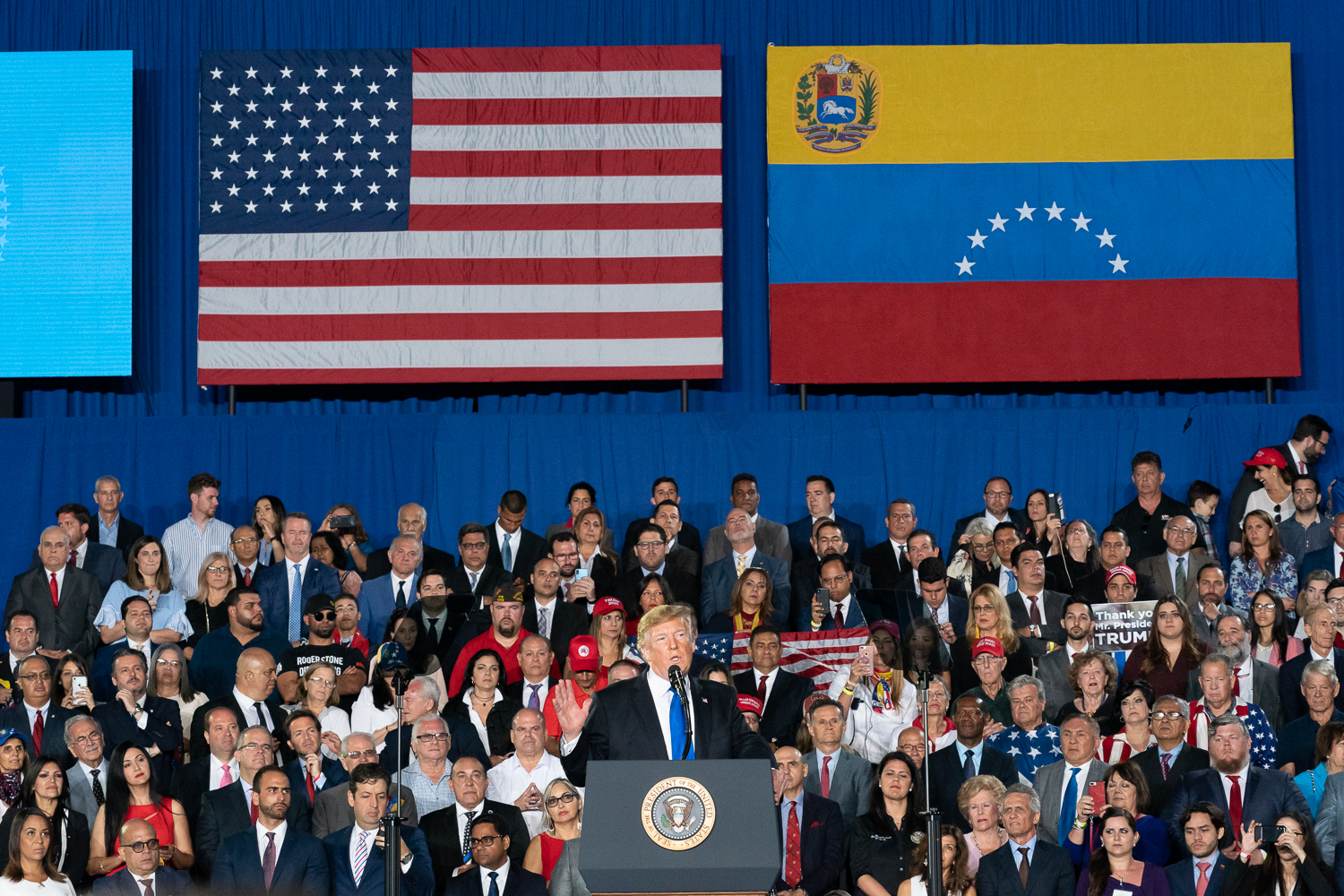
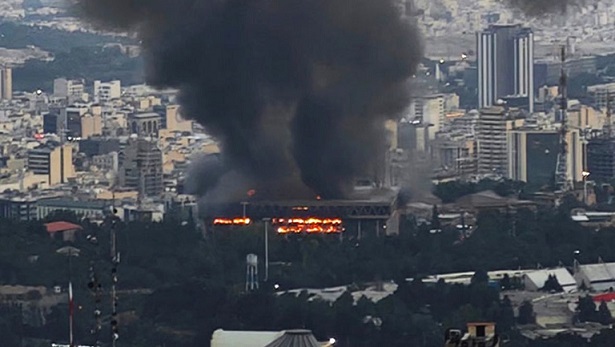
Category: United States

  • Behind the fight against hate, a trend of repressing dissenting voices is emerging. Titled Criminalisation and Narrative Control: Solidarity with Palestine in the Crosshairs, the report documents how across all the countries studied, the dynamics observed since 7 October 2023 have intensified pre-existing structural trends: the continued shrinking of civic space, the weakening of democratic safeguards, the normalisation of Islamophobia, and the institutionalisation of racial profiling.

    Under the guise of maintaining public order, fighting antisemitism, or protecting national security, authorities have resorted to exceptional measures such as bans on demonstrations, arbitrary arrests, repression within academic institutions, media censorship, and legislative threats.

    The post FIDH Report: The Repression Of The Solidarity Movement With Palestine appeared first on PopularResistance.Org.

    This post was originally published on PopularResistance.Org.

  • “Burkina Faso is a place of dignity … not a place of expulsion,” said its Foreign Minister Karamoko Jean-Marie Traoré, rejecting US President Donald Trump’s deportation deal.

    Deeming Trump’s proposal for Burkina Faso to accept foreign nationals he is deporting from the US as “indecent”, he said it was “totally contrary to the value of dignity, which is … the very essence of the vision of Captain Ibrahim Traoré.”

    Coming to power in 2022 after the ouster of Roch Kaboré’s unpopular regime, propped up by France, Traoré expelled French troops, consolidating his mass support in the country.

    His avowed anti-imperialism and pan-Africanism have won him admirers across Africa and Black and Afro-descendant communities in the West.

    The post Burkina Faso Is A Place Of Dignity, Not Expulsion appeared first on PopularResistance.Org.

    This post was originally published on PopularResistance.Org.

  • “Burkina Faso is a place of dignity … not a place of expulsion,” said its Foreign Minister Karamoko Jean-Marie Traoré, rejecting US President Donald Trump’s deportation deal.

    Deeming Trump’s proposal for Burkina Faso to accept foreign nationals he is deporting from the US as “indecent”, he said it was “totally contrary to the value of dignity, which is … the very essence of the vision of Captain Ibrahim Traoré.”

    Coming to power in 2022 after the ouster of Roch Kaboré’s unpopular regime, propped up by France, Traoré expelled French troops, consolidating his mass support in the country.

    His avowed anti-imperialism and pan-Africanism have won him admirers across Africa and Black and Afro-descendant communities in the West.

    The post Burkina Faso Is A Place Of Dignity, Not Expulsion appeared first on PopularResistance.Org.

    This post was originally published on PopularResistance.Org.

  • Venezuela’s Bolivarian Revolution has been in the vanguard of the Global South. In contrast, President Javiar Milei’s government in Argentina represents the logical, though absurd, consequence of extreme neoliberalism, which he calls “anarcho-capitalism.”

    Western Hemispheric geopolitics reflect the weakening of US hegemony and an emerging multipolarity, especially with China’s entry as a major regional trading partner. US imperialism’s response, started well before Trump, has been to weaponize the dollar, impose illegal and crippling economic sanctions, and levy arbitrary tariffs. When these fail, the recourse is to military aggression.

    US War Secretary Pete Hegseth announced preparations for war with China. Washington has concluded that it must put a halt to multipolarity to maintain its global supremacy. Thus, the Trump administration is simultaneously rushing to rescue Milei’s government while hurrying to overturn Venezuela’s under their President Nicolás Maduro.

    Role of Venezuela under Chavismo

    Venezuela is a beacon of national sovereignty and social progress. It has consistently opposed imperialist aggression, not just in Latin America, but globally. Under the movement known as “Chavismo” it aimed for Latin American integration and the pooling of its huge natural resources, offering an independent pathway to development to withstand US imperialism.

    Consequently, it has been under attack, enduring US-financed far-right violence, destabilization, a US-led asphyxiating economic blockade, assassination attempts on the president and leading Bolivarian officials, mercenary attacks, coups and terrorism – the full arsenal of Washington’s aggressive toolkit.

    Role of Argentina under Milei

    In 2023, anti-establishment anger propelled libertarian populist Javier Milei to the Argentine presidency. His Trump-like “chainsaw plan” – radical spending cuts and a war on government institutions and services – fitted with the orthodoxy dictated by the International Monetary Fund (IMF). Milei closed 13 government ministries, including those for education, labor and social security. Foreign lenders welcomed Milei’s elevation of austerity to a moral imperative.

    Milei is still favored by the IMF. But while his unwillingness to devalue the peso helped cut inflation, it slowed economic growth and reduced the country’s capacity to sustain its huge debt. Argentina is now over $450 bn in the red. Employment fell steeply, while poverty soared to affect 53% of the population in 2024 (allegedly reducing since then). Budget cuts raised the cost of basic needs.

    Corruption scandals emerged. A close political associate of Milei admitted receiving “donations” from a narco-entrepreneur. A US$4.6 bn crypto scandal followed; the largest ever crypto-theft. Milei’s left opposition demanded his impeachment, and a judge launched a fraud probe. Later, Milei’s sister was accused of receiving hefty bribes. On top of this came the crushing defeat for Milei’s libertarian party in the Buenos Aires provincial elections in September.

    All that has triggered a run on the peso and a new economic crisis.

    Trump’s recent decision to bail out Milei’s predictably disastrous economic performance is consistent with the profligacy of IMF-US lending to right-wing Argentine governments. In April 2025, the Buenos Aires Times reported that the IMF praised Milei’s efforts and projected that the Argentine economy would grow faster than the global average. In fact, Milei tipped the country into recession and sent millions of people into poverty in the first months of his government.

    In short, Milei’s “narco-capitalist” government is not only corrupt but has savaged Argentina’s economy. Milei represents the logical culmination of Argentina’s ruling class servitude to US geopolitical objectives, even extending to his enthusiastic support for genocide in Gaza. Slavishly supporting anything Trump does or says, Argentina was one of only ten countries to vote with the US against the UN’s two-state solution for Israel-Palestine.

    IMF wages financial war against Venezuela

    The IMF is a key institution through which the US enforces its imperial dominance, part of an architecture shaped largely by Washington. Often functioning as a financial arm of US foreign policy, it rewards compliant right-wing regimes such as those of Argentine presidents Macri and Milei, while punishing independent governments like Venezuela’s that are striving for socialism.

    An example is the IMF response to the 2002 coup against Venezuela’s democratically elected President Hugo Chávez. The IMF publicly stated its readiness to collaborate with coup-monger Pedro Carmona, whose “government” abolished the constitution and key democratic institutions. Within hours after Chávez was kidnapped, the IMF’s Thomas Dawson said: “we stand ready to assist the new administration in whatever manner they find suitable.” Fortunately for democracy, the coup lasted only 47 hours. The people spontaneously rose up and returned their rightful president to his office.

    More recently, during the Covid-19 crisis, IMF chief Kristalina Georgieva announced an emergency response which could disburse US$50 bn to developing countries and US$10 bn to low-income countries at a zero-interest rate. Venezuela had tried to exercise its “special drawing rights” for US$5 bn to combat the pandemic. This required IMF officials to engage in acrobatics to justify rejecting Venezuela’s request. The real reason was the US government’s farcical recognition of Juan Guaidó as “interim president.”

    US-IMF props up rightist Argentina

    In 1999-2002, when Argentina had a right-wing government, the IMF overestimated GDP growth. Then, conversely, in 2003-2015 when Argentina had left-wing governments under the Kirchners, the IMF underestimated the strength of the country’s economic recovery. IMF debt was paid off, Argentina’s notorious external debt fell sharply, no new IMF loans were granted.

    But for the past decade, its politics have revolved around chronic economic crises and persistent IMF influence. Across three presidencies, Argentina swung from market liberalization (Macri, who succeeded the Kirchners), to state intervention (Fernández), to radical austerity (Milei). Right-wing Mauricio Macri acquired a US$57 bn loan, the largest in the fund’s history. The IMF itself admitted the bailout “was not fit for purpose.” The country is now on its twenty-third IMF bailout, a global record. It is the fund’s biggest debtor, owing a “staggering” $41.8 bn.

    US aggression against Venezuela

    The US finds it intolerable that Venezuela – a “threat” of a good example – has successfully resisted US policy of “maximum pressure.” Its military build-up against Venezuela is an escalation from hybrid to open warfare aimed at suppressing an alternative model of sovereignty and social justice, with the possible bonus of reclaiming control over the country’s oil resources.

    Trump has deployed a fleet of warships, F-35 stealth fighter jets, and several thousand marines. Washington is positioning military forces in Puerto Rico, has a substantial military presence in Guyana, and asked Grenada to deploy US military forces in its territory. Trump has declared the US to be at war with drug cartels, potentially extending to those supposedly inside Venezuela itself. Commentators, including officials of the Bolivarian government, conclude that a US military strike seems imminent.

    Washington’s justification is a monumental lie: Venezuela is alleged to be a narco state, led by the non-existent Cartel de los Soles. Rubio and Trump falsely accuse the Bolivarian government of shipping hundreds of tons of drugs into the US. The United Nations Office on Drugs and Crime has consistently reported that up to 92 percent of the cocaine produced in Colombia and Ecuador reaches the US through the Pacific (Venezuela’s entire coastline faces the Caribbean Sea).

    Trump and Milei

    In sharp contrast to the economic punishment being meted out to Venezuela, Trump’s “favorite president” is getting a bailout for the economy he that has destroyed. Milei is promised a direct purchase of pesos with dollars, together with a $20 bn central bank “swap line.” Milei swiftly thanked Trump for his “vision and powerful leadership.”

    Washington openly admits its ideological motives. Treasury Secretary Scott Bessent said the US should help conservatives win elections in Latin America. He tweeted: “The success of Argentina’s reform agenda is…in the strategic interest of the United States.” Praising Argentina’s “strong and stable” economy, he failed to address why it would collapse without US support.

    The bailout appears to have several undeclared aims. One, according to the New York Times, is to help rich investors whose bets could falter if Argentina’s economy sinks. The same source claims that US officials are also pushing Argentina to scale back its ties with China and want access to its uranium and lithium supplies. The rescue plan may even involve dollarizing Argentina’s economy.

    Nearly half of Argentinians (44%) see the deal as more likely to benefit the US than their own nation, while 36% have a negative view of Milei’s relationship with Washington. The irony of Trump’s economic lifeline for Milei is that it may kill off his chances of political survival.

    Neoliberal misery vs multipolar-oriented sovereign development

    Bolivarian Venezuela and Milei’s Argentina present two starkly different paths for Latin America—Venezuela’s sovereign defiance of US imperialism and Argentina’s deepening subservience and dependency. One suffers imperial “hybrid warfare” while the other gains imperial “welfare.”

    Washington uses coercive tools—sanctions, economic warfare, and military threats—to preserve hemispheric dominance. Venezuela embodies resistance and regional integration. Argentina, under Milei, epitomizes the collapse into “narco-capitalism,” social devastation, and foreign subjection.

    Ultimately, neoliberal austerity brings only poverty and dependency, while multipolar cooperation among Global South nations offers a viable path toward genuine independence, equitable development and resistance to imperial domination. US military actions against Venezuela violate international law and rest on unfounded claims. Latin America is a declared Zone of Peace. To respect that and allow the people their right to live without fear of war, the US must withdraw its forces.

    The post Imperial Double Standards: Warfare for Venezuela and Welfare for Argentina first appeared on Dissident Voice.

    This post was originally published on Dissident Voice.

  • Many millions on the streets this Saturday all over the country loudly proclaiming: No Kings! Yes to Democracy!–followed on November 4th by victories for Mamdani in NYC, Sherrill in NJ, Spanberger in Virginia, redistricting in California, and more–could this be truly “world changing?”

    On one level, no. This is not a Presidential election year or a Congressional election year. It’s an off-year electorally.

    But it’s not an off-year politically. The battle is fully joined between the forces of democracy and the forces of authoritarianism, between the resistance and blind Trumpism. And because of this, what happens over the next three weeks could be a decisive turning point, victories for the significant majority of US Americans who are saddened and outraged by the lying, divisive, destructive and dangerous Trump federal government and its billionaire co-conspirators.

    Think about it: potentially the biggest mass demonstration ever in the USA, in every single state and literally thousands of localities, organized by a broadly-based progressive/liberal/independent coalition of hundreds of organizations that is not going away. That alone is a huge thing at this challenging time for the US and the world.

    A Zohran Mamdani victory in itself will be a huge deal, a non-sectarian, democratic socialist becoming the Mayor of the country’s largest city, the financial capitol, a melting pot of diverse peoples and nationalities and which often leads the country as far as political shifts.

    Mikie Sherrill and Abigail Spanberger winning the Governor races in their states will not be the same thing. Neither are consistently progressive, definitely not socialists, but there’s no question that many people to their left support them over the Trump-supporting Republican opponents. Combined with October 18 and a Mamdani victory and continued progressive organizing at the grassroots, that will make a difference in how they govern.

    If California comes through and neutralizes Texas’ brazen, Trump-pushed, Congressional redistricting plan to try to gain 5 more Republican House seats from Texas next November, that will be important both practically and politically.

    There’s something else, less visible and obvious but critical, that must be said about why we are at this point, why the popular resistance movement for democracy, justice and our threatened ecosystems is at this historic moment: we have learned how to unite.

    It’s not unity based on following one great individual, usually a man. It’s not unity concerned very little with the internal culture, the health, of the organizations that make it up–just the opposite, in general. A critical mass of us of all ages, nationalities, genders and classes have internalized positive values and ways of working together which are making a huge difference in how we have responded, and will keep responding, to the efforts to impose a form of 21st century fascism in the USA.

    The Trumpists are in trouble, and they know it. That’s why, one week before No Kings! Day, House leader Mike Johnson and others began publicly attacking it, lying about who we are and what we are about, trying to scare people away from coming out that day.

    It’s not going to happen! There ain’t no power like the power of the people, united and organized, and when we are, nothing and no one can defeat us. Si, se puede!

    The post October 18, November 4: World Changing? first appeared on Dissident Voice.

    This post was originally published on Dissident Voice.

  • The Nicaragua Solidarity Coalition demands an end to US aggression against Venezuela, which is on the brink of outright war. Any escalation in the violence against Venezuela will cause more suffering and deaths in the South American country, destabilize the region, and endanger all countries seeking a path independent from US domination, especially Cuba and Nicaragua.

    US actions indicate a strike on Venezuela is imminent:          

    • After the Trump administration designated international drug-trafficking groups as “foreign terrorist organizations” (FTOs), without any evidence it accused Venezuelan President Nicolás Maduro of being their ringleader. By July, a “secret directive” authorized military operations against FTOs at sea and on foreign soil.
    • In August, the administration raised its illegal “bounty” on President Maduro to $50 million and launched a massive naval deployment off the coast of Venezuela, which includes nuclear capable submarines and jets and quickly grew to 10,000 troops.
    • On September 2, in international waters off of Venezuela, the US blew up the first of four or five boats that Trump claims carried drugs, committing extrajudicial executions.
    • By mid-September, the Pentagon notified Congress under the War Powers Resolution that US forces were engaged in a “non-international armed conflict” with drug cartels.
    • On October 1, the Defense/War Department issued a “confidential memo” and told Congress that the US was engaged in armed conflict.
    • On October 6, Trump ended back-channel diplomatic contacts with Venezuela, which had been essential since the rupture of diplomatic relations in 2019. That same day, Venezuela informed the US of a thwarted plan by Venezuelan right-wing extremists to plant explosives at the US embassy in an attempted false-flag operation.
    • On October 10, Maria Corina Machado—a US-paid, violent, Zionist, extreme right-wing Venezuelan political opposition figure—received the Nobel Prize after being endorsed by Secretary Marco Rubio, in a clear a maneuver to manufacture consent for regime change in Venezuela.

    We must not be fooled by this perversion of the peace prize or the countless unfounded accusations against Venezuela and its democratically elected president. The United Nations Office on Drugs and Crime, and even the DEA, report that Venezuela is not a drug trafficking country, nor are Cuba or Nicaragua. Like its lies about migrants, the Trump administration has fabricated the “threat” posed by Venezuela. The real reason the administration is pushing for war against Venezuela is to regain control of its vast resources—including the world’s largest oil reserves.

    We demand an end to US impunity and the withdrawal of US troops and war materiel from the Caribbean before the situation escalates any further. We vehemently object to the deployment of nuclear capable vessels in a region which, in response to the Cuban Missile Crisis, declared itself a nuclear-free zone in 1967, and which the US committed itself to respect in 1971. We demand respect for international law and the sovereignty of nations. The people of Venezuela and the rest of Latin America and the Caribbean must be allowed to live in peace with the form of government they have chosen.

    Hands Off Venezuela! Venezuela is Hope! Venezuela is not a threat!

    US Hands Off Latin America and the Caribbean!

    The post Nicaragua Solidarity Coalition Statement on US Aggression against Venezuela first appeared on Dissident Voice.

    This post was originally published on Dissident Voice.

  • Scott Ritter: “… what everybody’s forgetting is that the basic terms of this deal are the same terms that Hamas has been laying out since October 7th. And now these terms are being met. And uh, this is a Hamas victory.”

    The post Scott Ritter: A Palestinian Victory! first appeared on Dissident Voice.

    This post was originally published on Dissident Voice.

  • Depending on which source you consult, the twenty-point peace plan of President Donald Trump for securing peace in Gaza shows much exultance and extravagant omission. The exultance was initially focused on the return of the hostages. It then shifted to the broader strategic goals of the various parties. Commentary on this point, even as the living Israeli hostages convalescence after their exchange for Palestinian detainees, sidesteps the Palestinian people, those fly in the ointment irritants who never seem to exit the political scene.

    The peace plan, in effect, is being executed to eliminate Hamas and any semblance of a Palestinian militant movement in favour of an Israel-Arab-US axis of preferment and normalisation. Doing so puts a firm lid on Palestinian sovereignty and statehood in favour of sounder relations between Israel and the Arab states.

    Consider, for instance, the views from the American Jewish Committee in their October 10 assessment. “President Trump’s unconventional approach created new diplomatic realities and forced Israel and key Arab states to align in new ways.” The peace plan was “the most credible framework to date for advancing Israeli-Arab peace, creating new opportunities for regional engagement, and countering Hamas’ ideology through a united alliance of Israel and Arab nations committed to peace, security, and prosperity.” Clearly, Palestinians are, if not footnotes, then invisible ink lines in such arrangements.

    This attitude is also echoed in remarks made by the US Vice President, J.D. Vance. Palestinian subservience is assumed in any new proposed arrangement which prioritises Israeli security and a collective of overseeing nation states that will guard against any mischief in the Strip. “The President convinced the entire Muslim world really, both the Gulf Arab states, but as far as South-East Asia as Indonesia, to really step up and provide ground troops so that Gaza could be secured in safety.”

    Egyptian Foreign Minister Badr Abdelatty gave some sense of what is expected. “We are going to support and commit troops within specific parameters,” he told CBS. A UN Security Council mandate would be required, along with clear specifications for what the mission of the troops on the ground would be, “which will be peacekeeping and providing training to Palestinian police.”

    Trump’s near cinematic appearance on October 13 in the compact, claustrophobic Knesset after the handover of the hostages set the scene for Israeli grandstanding, staged mawkishness and denial. Netanyahu was in typical form, accusing Israel’s friends of blood libel stupidity for recognising Palestine; in doing so, they had effectively committed acts of antisemitism, buying “into Hamas’s false propaganda.” Massacring and starving those in the Gaza Strip warranted no mention, but disarming Hamas and demilitarising the enclave did. With praise for both himself and Trump, Netanyahu spoke of jointly forging “a path to bring the remaining hostages home and end the war. End a war in a way that ensures the disarming of Hamas, the demilitarisation of Gaza, and that Gaza would never again pose a threat to Israel.”

    He also thanked Trump for “fully” backing the decision to make the last murderous assault into Gaza City. This “military pressure” provided momentum that eventually saw Hamas capitulate. The US President then “succeeded in doing something that no one believed was possible. You brought most of the Arab world, you did, you brought most of the world behind your proposal to free the hostages and end the war.”

    Opposition leader Yair Lapid, for his part, explicitly denied any genocide or “intentional starvation” of the Palestinians, then proceeded to overlook them in calling on “all the nations of the Islamic world” to engage Israel.

    Trump’s own speech was meandering, personal and free of complex turns. He spoke about his envoy Steve Witkoff as a Henry Kissinger who did not leak, an emissary of singular genius. An interruption by Hadash lawmakers Ayman Odeh and Ofer Cassif, both demanding that Palestine be recognised, did not faze him. And then came mention of the Ukraine War, and Russian President Vladimir Putin and more adulatory remarks for the US delegates who have paid homage to the US God King. They were all part of “central casting”.

    Not a sliver of reference to the Palestinian cause for sovereignty made an appearance, which continues to moan under the strategic expediency of it all, the residents of Gaza doomed to indefinite invigilation at the hands of Trump’s “Board of Peace”. More to the point, he was happy to admit providing weapons at the request of “Bibi” at a moment’s notice. The US made “the best weapons in the world, and we’ve given a lot to Israel, … and you used them well.” But the slaughter could not continue, and the Israeli PM would be remembered “far more” for accepting the peace agreement. “The timing for this is brilliant. I said, ‘Bibi you’re going to be remembered for this far more than if you kept this thing going, going, going, kill, kill, kill.’”

    The Palestinians, granted brief respite from military violence, will be desperately wary. When Lapid mentioned that Trump had “saved far more than one life, and life is an entire world”, it can also be assumed that killing one life kills a world. Some 68,000 Palestinian worlds (a conservative estimate) were extinguished by the munitions and weapons of Israel and its backers. As humanitarian workers return to Gaza, they see the horrors of a lunarscape of devastation. If only Trump had considered paying a visit to that particular part of earth.

    The post Worlds Extinguished: Hostage Returns, Central Casting and the Gaza Ceasefire first appeared on Dissident Voice.

    This post was originally published on Dissident Voice.
  • Scenes of Palestinian emergency workers, journalists, displaced refugees, and children in Gaza celebrating on the streets widely circulated following the announcement of a ceasefire deal. In the United States, Israel’s most powerful ally, people involved in the Palestine solidarity movement met the moment with a similar sense of both mourning and cautious optimism. 

    The Palestinian Youth Movement, a Palestinian diaspora organization that has played a key role in organizing mass demonstrations in the United States since the beginning of Israel’s war on Gaza, joins “our people in welcoming the prospect of a durable ceasefire agreement,” according to a statement released October 9.

    The post Pro-Palestine Movement Vows To Continue Struggle For Lasting Peace appeared first on PopularResistance.Org.

    This post was originally published on PopularResistance.Org.


  • Newspaper: Democracy.

    The case of death is not at all the cause of the dead, it’s the cause of the living.

    — Ghassan Kanafani, from the novel Men Under the Sun

    My people are fearless and the gallows to each person among us is the instance that precedes the dawn of a new day for all of us … Prosecutor! Understand that when one of us enters the nation’s battle of destiny, he takes into consideration all possible results. But above all, he places his confidence in the determination of the people to win victory.

    — Ghassan Kanafani, from the story “A Heroine from My Country”

    They tell you this is a “conflict.” A “complex issue.” A tragedy happening “over there.”
    They are lying.

    What is happening in Gaza, in Palestine, is the logical, bloody conclusion of a global system of exploitation—a system sustained not by monsters, but by the convenient, daily complicity of those who benefit from it most: the citizen-consumers of the West.

    This complicity is masked by a grand, soothing lie: the lie of democratic citizenship.

    The state and its subjects have entered a symbiotic pact of bad faith. The theory goes like this: in a democracy, the citizen is sovereign. The government’s actions are an expression of the popular will. Therefore, the citizens are responsible. This is the idealistic shell. Let us crack it open and examine the actual, pathetic reality inside.

    The state, functioning as the capitalist class’s executive committee, depends on this lie as its foundational fiction. It is the democratic alibi that launders imperial violence into policy. The weapons shipped to fuel genocide are stamped with the seal of “democratic principles,” their bloody purpose blessed by the hollow ritual of the ballot. This is the dictatorship of the elite, a regime of class power wearing the convincing mask of popular consent—a specific apparatus designed to vaporize the accountability of the capitalist and imperialist classes, dispersing it as a fine mist of collective guilt over the populace.

    But why do the masses accept this lie?
    Because it is an anesthetic.

    Having already swallowed the primordial myth of capitalist democracy—that freedom is consumption and power is a ballot—this smaller lie of passive citizenship is the necessary sedative that numbs the pain of their own powerlessness and the horror conducted in their name.

    Here we must be Kanafanian in our clarity. To be a “citizen” of the metropole is, in practice, to be a consumer. And the consumer’s paradise is built on the graveyards of the Global South. Your stability, your cheap energy, your endless stream of goods, is subsidized by the control and immiseration of others. To truly confront this would shatter the consumer’s world. The cognitive dissonance would be unbearable.

    And so, the lie administers the necessary anesthetic. The recited alibis of impotence (“What power do I have?”) are the superstructure of a material bargain. This is the highest stage of false consciousness: the willed surrender of agency for the comforts of the labor aristocracy. It is a transaction: the consumer trades their revolutionary potential for moral oblivion, outsourcing conscience to the state and NGOs—the very managers of the crisis—who, in return, guarantee the sanctity of the shopping aisle.

    This is the “citizenshipness” we are sold: a hollowed-out identity, a safety valve for dissent. Protest, write your representative, cast your vote—then return to your consumption. The system allows you to perform concerns without ever threatening the foundations of your comfort. It is a brilliant, cynical management of dissent.

    Thus, the genocide and the ongoing Nakba in Palestine are not an aberration. It is the system working as intended. The bombs falling on Rafah, Occupied Palestine, are funded by the taxes of the Western citizenry. The diplomatic cover is provided in their name. Their silence—or more accurately, their fragmented, ineffective noise—is the permission slip.

    The connection is not metaphorical; it is material. The luxury lifestyle and the genocide are two outputs of the same machine. One is the direct, concentrated violence of imperialism. The other is the diffuse, structural violence of an exploitative global order. They require each other.

    To the real socialists among us, the conclusion is clear: Spontaneous protest is not enough. Moral outrage is not enough. The working classes of the imperial core have been bought off with crumbs from the colonial plunder. They will not achieve revolutionary consciousness on their own. The task falls to an organized political party—those who see through the lie—to break the hypnotic spell of consumer citizenship. To organize, not to plead. To expose the comfort, to make the machinery of complicity grind to a halt.

    And to the Palestinians, the path is one of steadfast, rooted resistance. The Palestinian struggle is not a plea for Western sympathy. It is an anti-colonial/imperial war. It is the absolute negation of the lie. Every act of resistance, from the stone to the slogan, is a truth-telling, exposing the brutal reality that the capitalist West so desperately masks with its talk of “complexity” and “citizenship.”

    The question is not whether the Western citizen is complicit. The question is whether they will continue to choose the convenience of the lie over the difficult truth of their own justice—a justice that is inextricably linked to the justice and liberation of Palestine. To end the genocide there, they must first kill the complacent consumer within themselves.
    There is no other way.

    The lie is convenient.
    The truth is justice.

    Choose.

    The post The Convenient Lie first appeared on Dissident Voice.

    This post was originally published on Dissident Voice.

  • A US federal judge issued a temporary restraining order on October 9, blocking the Trump administration’s deployment of hundreds of National Guard troops to Chicago. Hundreds were already stationed in the midwestern city at the time of this ruling. This comes days after a separate judge blocked the deployment of the National Guard to Portland, Oregon.

    Currently, there are around 500 National Guard troops in the greater Chicago area, 2,400 in Washington, DC, and 100 still in Los Angeles down from a peak of 4,700 in June.

    With the support of the Governor of Tennessee, the state’s National Guard troops are set to begin patrolling the city of Memphis.

    The post Anti-ICE Protests Continue As Judges Block National Guard Deployments appeared first on PopularResistance.Org.

    This post was originally published on PopularResistance.Org.

  • Steve Ellner, one of my go-to sources on Venezuela, cautions that although the Maduro government has unquestionable shortcomings and is not above criticism, the left’s priority today shouldn’t be purity tests. It should be about the struggle against US imperialism, as it invokes the Monroe Doctrine and evidence-free, “narco-terrorist” narratives on behalf of regime change in Venezuela. There is a relentless effort to demonize Maduro, and some on the putative left fail to recognize the need for a strong state and how difficult it is to construct socialism when your country “has been singled out by Washington for special attack, a fact that has been thoroughly documented.”

    Ellner continues, “If Maduro is brought down, the far right — headed by Maria Corina Machado, who says she wants to see Maduro and his family behind bars — will undoubtedly dominate the new regime with Washington’s blessing. If this were to happen, the most likely scenario would be the kind of brutal repression that has historically followed the downfall of previous governments from Indonesia in 1967 to Chile in 1974.” Eric Zuesse adds that Machado is the “U.S. Deep State’s Venezuelan puppet, successor to Juan Guido and Leopoldo López.”

    Given the above, it was disheartening but not totally surprising that Democratic Socialist Zohran Mamdani, the Democratic nominee for Mayor of New York City, recently said he believes “Nicolas Maduro and Miguel Diaz-Canel are dictators.” This ill-timed and totally unnecessary statement parrots the CIA’s false narrative about Maduro and helps legitimize decades of U.S. aggression against Venezuela and Marco Rubio’s call for regime change in Caracas. I’m afraid Mamdani is sounding a bit like Bernie Sanders.

    Will the US Invade?

    At this point, it’s unclear whether the U.S. will actually invade Venezuela, attempt to destroy the Bolivarian Revolution, install a puppet government, and gain control of the country’s oil, gas, and precious metals. So far, there have been four strikes (September 2, 15, 16, and October 3) on vessels in international waters, but not a scintilla of evidence that the vessels were carrying drugs. Some 4,500 troops (insufficient for a land invasion) and eight warships are stationed off Venezuela’s coast. In addition, several fighter jets have been moved to Puerto Rico. The U.S. State Department has raised its reward for information leading to Maduro’s arrest from $5 million to $50 million.

    The Chilean Case

    Here we might recall that on September 4, 1970, the Chilean Left held an enormous rally of some 800,000 workers and peasants who marched before President Salvador Allende, who was standing on the balcony of the Moneda Presidential Palace in Santiago. They chanted, “Build People’s Power! Allende, Allende! The People Will Defend You!” And perhaps more importantly, they pleaded, “We Want Guns! We Want Guns!” For clearly debatable reasons, Allende refused to arm the workers and peasants, and on September 11, a military junta led by General Augusto Pinochet overthrew the socialist government. Allende was too late in finding out that there is no “peaceful road to socialism” when faced with the implacable force of U.S. imperialism that refuses to allow the “threat of a good example.” Maduro learned from the Chilean case and has distributed AK-47s to millions of citizens who are eager to defend the country’s sovereignty.

    We know there has been a strategic retreat by U.S. imperialism in the face of China’s rise and the U.S./NATO defeat in Ukraine. Trump’s fascism is directed at “the Homeland” and the Western Hemisphere. But Trump — who couldn’t even defeat Yemen —might pause at the prospect of coffins coming home from Venezuela.

    Finally, a note: John Pilger’s documentary “War on Democracy” (2007) opened my students’ eyes to U.S. imperialism in Latin America as no classroom lecture could have done. Among the film’s countless attributes were interviews with Hugo Chavez and how the Venezuelan people (and military) rallied to save him from being toppled by Washington. Even given the passage of time, Pilger’s film remains timely for understanding what’s happening today.


    The post Defending Venezuela from U.S. Imperialism first appeared on Dissident Voice.

    This post was originally published on Dissident Voice.

  • The fuss about the Nobel Peace Prize has always been excessively outsized to its relevance. Like most prizes, the panel is bound to have its treasure trove of prejudices and eccentricities in reaching any decision. Thin resumes have swayed the Norwegian committee to acts of dottiness.  Surprising moments of dark humor have made an appearance in the awarding of the prize to warmongers and those antithetical to peace. And those on the Nobel Prize peace panel would barely cause a murmur of acknowledgment outside the spine-like length of that country of only 5.6 million inhabitants. (The current membership of five features, for instance, three politicians: Anne Enger, former leader of the country’s Center Party; former Conservative Party education minister Kristin Clement, and former state secretary of the Labor Party, Gry Larsen.)

    Rather feebly, Asle Toje, another member of the five, uses a gastronomic metaphor in describing the selection process: “We do it pretty much the same way you make a good sauce – you reduce and reduce and reduce.”  The reduction formula leads to surprising, rancid results.  In 1973, the ruthless, toadying poseur Henry Kissinger was overcome with joy in receiving the prize. The National Security Adviser and US Secretary of State had supposedly done much to advance the cause of peace in the Indochina conflict by “spearheading cease-fire negotiations” that led to an armistice in January 1973.  His co-awardee, the North Vietnamese negotiator Le Duc Tho, was far more sensible, refusing to accept a peace award where there was no peace to be had.

    The choice of Kissinger was almost mockingly ghoulish. This was the same man who left his marks all over secret and illegal bombing campaigns in Laos and Cambodia during the Nixon administration, oversaw the extinction of democratically elected governments in Latin America in favor of murderous, authoritarian regimes, and spent his early academic career arguing that the United States might feasibly pursue small-scale nuclear war as a psychological lever.

    The selection for 2025 was always going to be shadowed by the theatre known as the Donald Trump show. By claiming not to want it, the US President has done much to pad his credentials and make himself eligible. He has put on an incomplete, disputable show of halting conflicts while indulging in spells of violence (strikes on Venezuelan shipping, ostensibly carrying drugs to the US; the illegal bombing of Iran’s nuclear facilities).

    What the committee has done is the next best (or worse) thing. In opting for María Corina Machado, seen as the main figure of the Venezuelan opposition to the current government of Nicolás Maduro, they have offered the prize to a Trump medium. “I dedicate this prize to the suffering people of Venezuela and to President Trump for his decisive support in our cause,” she cooed on X.

    Almost hinting at something in the works – that is to say, the ongoing regime change agenda so enthusiastically sought by Washington – Machado was convinced of being “on the threshold of victory and today, more than ever, we count on President Trump, the people of the United States, the peoples of Latin America, and the democratic nations of the world as our principal allies to achieve freedom and democracy.” Given Latin America’s record on peaceful transitions from coups, this was fine humor indeed.

    The award to Machado was, according to the Nordic wiseacres, based on her “tireless work promoting democratic rights for the people of Venezuela and for her struggle to achieve a just and peaceful transition from dictatorship to democracy.” They go on to be didactic, talking about democracy being in global retreat, with Machado being its illuminating defender. (On being barred from running, she installed the surrogate opposition leader Edmundo González, who allegedly won the July 2024 election.)

    This is the bromide of binary thought. Machado’s record, befitting most political records, is untidy. David Smilde, a student of Venezuelan politics, sees her as “a controversial pick, less a peace activist than a political operator willing to use some of the trade’s dark arts for the greater democratic good.” Even that might be generous.

    For one thing, she is clearly biding her time, shunning local and regional elections, treating the honoring of the 2024 presidential election results as absolute.  She has openly argued for the necessity of foreign intervention in removing Maduro and endorsed Trump’s military buildup in the Caribbean, calling the recent bombing of suspected drug boats a matter of “saving lives”.To remove Maduro was essential, she argues, because of his alleged credentials as “the head of a narco-terrorist structure of cooperation.”

    Disingenuously, she has swallowed the dubious theory that Maduro is the true figure running the Tren de Aragua gang, which Trump accuses of directing operations against the United States. Her Vente Venezuela party has enthusiastically shared the threats by US officials against supposed Venezuelan drug traffickers on X. “If you’re in the Caribbean,” states one recent post, “if you’re north of Venezuela and you’re trying to traffic drugs to the US, you’re a legitimate target for the US.”

    Machado is undoubtedly readying herself to step into any presidential vacancy, forced or otherwise. She claims to have a plan for the first 100 hours and the first 100 days of a transition process, promising to generate wealth for the country valued at $1.7 trillion over 15 years. Her advisor on international affairs, Pedro Urruchurtu, has been open about communicating with the Trump administration over Maduro’s removal.

    Again, this says much about the eccentric reading of peace embraced by the insular Norwegian grandees. If Tom Lehrer was right to call political satire obsolete after Kissinger’s award, it would also be accurate to say that instances of rich farce have come in its wake.

    The post Outsized and Eccentric: The Farce Behind the Nobel Peace Prize first appeared on Dissident Voice.

    This post was originally published on Dissident Voice.

  • A rightist columnist just labeled me “repellent,” while a left establishment commentator publicly proclaimed, “fuck Yves Engler”. Canada’s ideological apparatus is whipped into a frenzy over my multilayered challenge of Canadian foreign policy and my NDP leadership campaign’s activist anti-capitalism.

    On Friday, the ever-reliable Israel-no-matter-what supporter Rosie Dimanno labeled me “the repellent Yves Engler”. The longtime Toronto Star columnist complained that in August, I wrote, “Over the past century, Canada’s ties to the US and British empires, its interest in geopolitical control of the region, Protestant Zionism, anti-Muslim sentiment, and settler-colonial solidarity have all shaped Canadian policy [towards Israel] to varying degrees. On top of this, there is a well-organized, wealthy, and highly motivated Jewish Canadian-Israel lobby, which has been increasingly powerful in recent decades. No other internationally focused Canadian ethnic/religious lobby is nearly as well-resourced or organized. And CIJA, B’nai Brith and Friends of Simon Wiesenthal Centre, etc. wield a uniquely powerful tool to silence critics: accusations of antisemitism.”

    While failing to include the initial sentence of my commentary in her genocidal apologia, Dimanno claimed I was “invoking just about every antisemitic trope there.”

    Justin Ling took a different line of attack in the Star. Last week, he opined, “Yves Engler, the choice of the party’s socialist caucus, is a conspiracy-minded author who is quite at home on Russian propaganda networks and who has written bizarre ahistorical blogs questioning the facts of the Rwandan genocide.”

    On Tuesday, both the Star and the National Post published articles suggesting that my leadership campaign, which has raised far more money than many anticipated, was engaged in questionable financial dealings.

    In the National Post on Thursday, Terry Newman noted, “Anti-capitalist, anti-Zionist NDP leadership hopeful Yves Engler made an appearance, handing out flyers to students.” The article was headlined “Inside Montreal’s dark and twisted celebration of dead Jews.”

    In a sign of the depths of status quo ideological rigidity, Paris Marx told Rachel Gilmore, “fuck Yves Engler,” to which the ‘leftist’ laughed heartily, replying, “I feel like he’s not a very serious candidate”. During a segment on the NDP leadership race on Gilmore’s program Thursday, Marx then added, “let’s be real, he’s just chasing clout”. Apparently, the others vying to lead the NDP aren’t “chasing clout”. Neither Marx nor Gilmore said a word about my campaign’s comprehensive new policy platform, drawn up by 45 activists and researchers, titled “Capitalism Can’t Be Fixed – Onward to a Socialist Future”.

    Since I launched my bid to lead the NDP, Gilmore, who spent a decade working for Global, IPolitics, and CTV in Ottawa, has repeatedly taken shots at me while ignoring the substance of my thirteen books and 1000+ articles.

    Anytime I publish an article on Rabble.ca or Canadian Dimension, long-time CBC producer David Gutnick smears me and attacks the publication. Two weeks ago, Gutnick wrote another unhinged comment when Rabble published my “Back to the future — NDP must debate capitalism again”. He noted, “Yves Engler is not anti-capitalist nor anti-war, he fully supports Russian capitalism and one consequence: Putin’s war on Ukrainian civilians.” To the best of my knowledge, I have never written about, let alone “supported”, Russian capitalism.

    Gutnick continued with what someone recently described as “Engler derangement syndrome”, claiming “Engler’s strange insistence that he always be referred to as Canada’s Chomsky and I.F. Stone rolled into one is but one indication in a long list that he is in no way the person to lead the NDP. One wonders why the editor of Rabble publishes such puffed-up nonsense.”

    I have never, let alone “always”, insisted I “be referred to as Canada’s Chomsky and I.F. Stone rolled into one.”

    The unhinged reactions highlight what I document in A Propaganda System: How Canada’s Government, Corporations, Media and Academia Sell War and Exploitation and Left, Right: Marching to the Beat of Imperial Canada. The rot runs deep in Canada’s ideological apparatus, especially regarding foreign policy.

    The smears are growing because there’s significant support for my campaign’s call for Canada to withdraw from NATO and move beyond capitalism. Genocide advocates fear an NDP candidate who has spent over two decades unapologetically challenging Canadian support for Israeli crimes.

    If they aren’t smearing you, then you probably aren’t seriously challenging our corrupt, genocidal, and wealth-concentrating system.

    To assist, donate, or learn more about my bid to lead the NDP, check out yvesforndpleader.ca

    The post Mainstream smears mean the system fears your ideas first appeared on Dissident Voice.

    This post was originally published on Dissident Voice.

  • Spoiler alert – it already has. This is not a glib answer but a comment on the nature of the conflict. The US mission to wrench Venezuela’s Bolivarian Revolution out from its roots has a quarter-century pedigree. Stick around to the end of the article for an assessment of the likelihood of an overt military attack inside Venezuela. But first a little historical context.

    Regime change has failed…so far

     In 2002, a US-backed military coup temporarily ousted Hugo Chávez. A mere 47 hours later, the people of Venezuela spontaneously arose and returned their rightfully elected president.

     Washington has persistently interfered in the internal affairs of Venezuela, pouring millions of dollars to rig elections. Yet, the perpetually divided and unpopular US-fostered opposition is more isolated and discredited than ever.

    Undeterred by its 2002 failed coup, the US has repeatedly sponsored attempts to achieve by violence what they could not do by interfering in Venezuelan elections. In 2020, the so-called “Operation Gideon” was designed to kidnap President Maduro. Derisively dubbed the “Bay of Piglets,” this coup attempt along with numerous others failed. Local fisher folk apprehended the mercenaries.

    Among the many diplomatic efforts at regime change by Washington, the Lima Group was cobbled together in 2017. The cabal of 11 rightwing Latin American states and Canada aspired to facilitate “a peaceful exit” to oust Venezuelan President Nicolás Maduro. By 2021, nearly half of the Lima Group countries had elected progressive governments and that diplomatic offensive fizzled.

    Meanwhile in 2019, the US anointed unknown 35-year-old Juan Guaidó as “interim president” of Venezuela. On December 21, 2022, his own opposition found the puppet so toxic and corrupt that they gave him the boot.

    Previously in 2015, Barack Obama certified that Venezuela was an “extraordinary threat” to US national security. He imposed unilateral coercive measures designed to destroy the Venezuelan economy. Euphemistically called “sanctions,” this form of collective punishment is illegal under international law. Regardless, each subsequent US president has continued and to varying degrees augmented the economic warfare.

    Combined with oil commodity prices cratering – the source of almost all of its foreign earnings – Venezuela experienced the largest peacetime economic contraction in recent world history. Inflation reached 2,000,000% and the days of the Bolivian Revolution appeared to be numbered. However by 2023, in a heroic effort under the resolute political leadership of President Maduro, Venezuela reversed the economic freefall and recorded a 5% GDP growth rate, which has continued in a positive direction.

     US trapped in its imperial imperative

    Without further detailing the multitude of illegal US regime-change machinations, it is sufficient to say that the very successes of the Venezuelans have forced Uncle Sam to escalate the conflict. Forced because, as an imperial power, the United States is structurally driven by its inherent pursuit of hegemony – rule over all potential challengers. This compulsion is codified in its official security doctrine of “full-spectrum dominance.”

    Venezuela has indeed been a challenge. Even before Hugo Chávez was elected in 1998, former President Carlos Andrés Pérez nationalized the country’s oil reserves – the largest in the world – in 1976. Chávez increased state control over the oil industry and expropriated international oil company assets.

    Chávez’s precedent of using the country’s natural resources – including Venezuela’s substantial reserves of natural gas, iron ore, bauxite, gold, coal, and diamonds – to fund social programs, rather than handing them over for private profit, is anathema to the US. Not only does the imperium lust over the oil for its own corporations, but control of such strategic resources are geopolitically critical for maintaining global dominance.

    Venezuela has also been a leader in promoting regional unity that is independent of the US, forging alliances such as CELCA and ALBA. It is a close ally with Nicaragua and Cuba, also on the US enemies list. Through OPEC, Friends in Defense of the UN Charter, and other initiatives, Venezuela has encouraged Latin American unity with Africa and Asia. Venezuela has “strategic partnerships” with China and Russia and is close to Iran. A champion of Palestine, it broke relations with Israel in 2009. Venezuela also supports an emerging multilateral international community.

    For all these “offenses,” the Bolivarian Revolution’s existence is insufferable to the Yankee hegemon…to be crushed.

    The guard rails are down

    Trump is operating with virtually zero institutional constraints. A mere five congressional Democrats recently awoke from their slumber to send a letter meekly suggesting that presidential “powers are not limitless.” But the Senate just voted against a war powers resolution to constrain attacks on Venezuela.

    Democrat representatives on the House Foreign Affairs Committee posted on X: “Trump and Rubio are pushing for regime change in Venezuela. The American people don’t want another war.” However, their colleagues in the Senate provided a unanimous mandate to the very same Republicans who ran on a “Maduro must go” platform. They rushed to do so, without debate, in the very first hours of the new administration.

    Within the bipartisan consensus for regime change in Venezuela, the differences are cosmetic. The Democrats would prefer to overthrow the sovereign state “legally.” Truthout reports that some senior Democrats warned “fellow members against opposing Trump’s war, saying that it would be tantamount to throwing their support behind Maduro.” If the Republicans precipitate an attack, the Democrats at best will agree with the ends but not the means.

    The follow-the-flag press prepares public opinion for a strike

    On September 26, NBC News reported “from the White House” that the US is planning strikes inside Venezuela. The one-minute video is actually of a guy standing in the street outside the White House, claiming that he had chatted with four unidentified “sources.” Subsequently, this unsubstantiated scoop went viral, picked up by almost every major corporate press outlet.

    The New York Times editorialized: “Mr. Trump has grown frustrated with Mr. Maduro’s failure to accede to American demands to give up power voluntarily and the continued insistence by Venezuelan officials that they have no part in drug trafficking.” What doesn’t occur to these Pentagon scribes, is that neither has Mr. Trump shown any enthusiasm for giving up power voluntarily or even admitting to the documented conclusion by the US in drug trafficking.

    In one of its typical propaganda pieces trying to pass as a news story, the Times tells us “what we know” about Washington’s offensive against Venezuela: “the endgame remains opaque.” Apparently, they don’t know jack, because the endgame is regime change. In remarks aimed at Venezuela, Mr. Trump threatened: “We will blow you out of existence.”

    All the elements are in place for a strike inside Venezuela

    • Diplomatic relations with Venezuela have been broken since 2019.
    • In 2020, the US indicted President Maduro for narco-terrorism, placing a $15 million bounty on him, subsequently raised to $25m and now $50m.
    • On January 20, Trump took office. Executive Order 14157 declared a “national emergency” and designated international drug-trafficking groups as “foreign terrorist organizations” (FTOs) and “specially designated global terrorists,” citing authority under the Alien Enemies Act.
    • By February, Secretary of State Marco Rubio argued that FTOs posed an “existential threat” and laid the groundwork for treating cartels allegedly linked to President Maduro as enemy combatants.
    • In May, the administration opened the path to use military force against FTOs.
    • Then in July, a “secret directive” authorized military operations against FTOs at sea and on foreign soil.
    • By August, the US launched a massive naval deployment off the coast of Venezuela. By October, troop deployment reportedly reached 10,000.
    • On September 2, the US blew up the first of four or five alleged drug boats in international waters off of Venezuela, resulting in extrajudicial murders of the crews.
    • By mid-September, the Pentagon notified Congress under the War Powers Resolution that US forces were engaged in a “non-international armed conflict” with drug cartels.
    • This was followed on October 1 by the Defense Department’s “confidential memo” and more congressional briefings that the US was engaged in armed conflict.
    • Trump then terminated the last back-channel diplomatic contacts with Venezuela.

    If the “international community” can’t halt the ongoing US/zionist genocide in Palestine, the Yankee juggernaut faces little effective resistance in the Caribbean. A US attack inside Venezuela is imminent!

    The post Will the US Attack Venezuela? first appeared on Dissident Voice.

    This post was originally published on Dissident Voice.

  • Israel continued to hammer Gaza with military explosives on Thursday despite the announcement of the first stages of a ceasefire agreement with Hamas.

    Israel always does this. When normal people get a ceasefire agreement, they think, “Good, this means we can finally stop fighting and killing.” Whenever Israelis get a ceasefire agreement, they go, “This means we have to hurry up and kill as many people as possible before it takes effect.”

    But it does appear that the killing and abuse will at least diminish for a time, which is an objectively good thing no matter how you slice it.

    The first stages of the agreement reportedly entail a partial withdrawal of IDF troops, Israel’s starvation blockade officially ending, humanitarian aid being allowed into the enclave, and both Israel and Hamas releasing captives and stopping the fighting.

    Drop Site News reports that, according to Hamas sources, subsequent  phases will entail “No surrender, no disarming, no mass exile, but most of all a permanent end to the war.”

    SCOOP: this is the agreement document between Israel and Hamas under the title “Comprehensive End to the Gaza War” – including the signature of the mediators. More details of my story – at @kann_news pic.twitter.com/1qGPGFck7q

    — Gili Cohen (@gilicohen10) October 9, 2025

    It remains to be seen if there will be any movement toward a lasting ceasefire beyond the first stage. When an agreement was reached late last year, it never made it beyond the first phase, and then the Trumpanyahu administration declared a siege and resumed the killing.

    The far-right members of the Netanyahu regime certainly seem like they don’t expect the ceasefire to hold.

    Israeli Finance Minister Bezalel Smotrich said in a statement that Israel has a “tremendous responsibility to ensure that this is not, God forbid, a deal of ‘hostages in exchange for stopping the war,’ as Hamas thinks and boasts,” and that “immediately after the hostages return home, the State of Israel will continue to strive with all its might for the true eradication of Hamas and the genuine disarmament of Gaza.”

    Israel’s National Security Minister Itamar Ben-Gvir issued similar remarks, saying that he and his Jewish Power party will use their leverage to dismantle the Netanyahu government if it “allows the continued existence of Hamas rule in Gaza.”

    Netanyahu himself has been studiously avoiding any talk of commitment to a lasting ceasefire, mostly limiting his public statements to the significance of freeing Israeli hostages.

    Notice how it doesn’t say words like “ceasefire,” “withdrawal,” or “end of war.” pic.twitter.com/HqSWje4313

    — Assal Rad (@AssalRad) October 9, 2025

    So there’s not a whole lot to feel optimistic about here. If the killing does stop on a lasting basis, it will be a pleasant surprise.

    If it does, we can only surmise that the US and Israel calculated that the worldwide PR crisis created by the genocide was getting too severe to sustain, which would be a win for all of us. Trump has gone on record to say that “Bibi took it very far and Israel lost a lot of support in the world. Now I am gonna get all that support back.”

    Either that, or they calculated that they’re going to need all their firepower for a planned war with Iran, which would, of course, be terrible for everyone.

    We shall see. For now, at least, it will be nice for everyone to have a breather. If things really do calm down, I’m going to do something I’ve never done in my entire writing career and try to take a full weekend off work to decompress. Focusing on a live-streamed genocide for two years takes a toll on the mind and body.

    Here’s hoping for a better future.

    The post Thoughts On The Ceasefire News first appeared on Dissident Voice.

    This post was originally published on Dissident Voice.

  • Launched in 2017 by the private Chinese company ByteDance, TikTok quickly became one of the most important social networks on the planet. By early 2025, it had 1.6 billion active users, more than half of them outside China, of whom an estimated 170 million are North American; 1 in 5 people in the US get their news from this network, 4 in 10 among the 18-29 age group. Today, it is the fastest-growing platform among the younger segments of the global population.

    The US government has waged a long battle to force ByteDance to sell the US branch of TikTok to a group of “domestic” capitalists, citing national security concerns and threatening to ban the platform in the US if the deal did not go through.

    The post Tiktok, Oracle, And Israel: The New Geopolitics Of Algorithms appeared first on PopularResistance.Org.

    This post was originally published on PopularResistance.Org.

  • As president Trump tears up the U.S. Constitution he twice swore to uphold, fierce backlash from an aroused John and Jane Public is not far off. Contempt for that document and Americans’ baked-in characteristic of feistiness when pushed too far is one of the four key factors preventing him and his regime from turning democracy into a dictatorial dynasty.

    Three of the four historic factors buttressing America’s form of democracy against Trump’s autocracy were recently listed by Politico contributor Jonathan Schlefer. They should lift the spirits of the fearful and depressed a notch or two:

    A careful comparison with countries that fought off autocratic attempts, as well as those which succumbed, suggests that American democracy might be more resilient than you think. At a minimum, it has crucial advantages over democracies that failed. Three main things stand out: None was nearly so rich [as the U.S.]. None was nearly so long-lived. And none had a legal establishment tracing its genealogy back to Magna Carta in 1215.

    But the most powerful, unmentioned factor of all, however, is raising the dander of average Americans when their personal “ox is finally gored.” As consumer-advocate Ralph Nader warned Trump recently in Common Dreams:

    Americans don’t like to be told to shut up; they don’t like to have things rightfully theirs taken from their families; they don’t like to be fired en masse without cause; they don’t like government contracts for vital services being arbitrarily broken. They also don’t like their government being overthrown by fascistic gangsters….

    Once Trump’s voters and his business base start turning against him, with wide media coverage and dropping polls, the stage will be set for surging demands for his resignation and impeachment that starts with “impossible,” then “possible,” then “probable,” then conviction. If the GOP sees either its political skin at risk in 2026 versus Trump’s destructive, daily delusions and dangerous daily damage, politicians will put their political fortunes first. That is what Congressional Republicans did when they told Nixon to resign in 1974 over the Watergate scandal.”

    Our history is punctuated by Americans initially made hot-tempered from being treated like medieval serfs with no rights by British kings and their swaggering local officials and troops. Most complaints were over British taxes and tariffs, but also tenants’ rights, starvation, cutting ship masts from trees, newcomer rivalries, Christian morality, and Parliament’s Navigation Acts mandating trade only with Britain.

    The Boston Revolt of 1689, for example, had the longest list of grievances against the British governor: enforcing those Acts, restricting town meetings, promoting the Anglican church in a Quaker city, denying land claims, negating Boston’s city charter, assigning hated British officers to lead the local militia. The last straw may have been his creating a “Dominion of New England” for easier control of defiant subjects using litigation, civil disobedience, nettlesome newsletters like the Pennsylvania Journal, fists, and guns. Nearly 20 Colonial uprisings were recorded between 1676 and 1776.

    At the lower social levels in those days were tavern brawls over politics, insults to women, cockfight boasts , and losing at cards and skittles. Not to mention collecting horseracing bets, or my indentured ancestor decking an officious British constable for missing a tax appointment on the Boston docks.

    At upper-class levels, testiness in the early 1800s was exemplified by the famous duel between former Treasury secretary Alexander Hamilton when he called his long-time political rival Vice President Aaron Burr “a dangerous man” at a dinner party. Burr called him out and fatally wounded him in a duel.

    Fifty-six years later when abolition divided the nation, Massachusetts’ Sen. Charles Sumner had just made a major anti-slavery floor speech attacking a colleague (“a noisesome, squat, and nameless animal”). South Carolina’s fiery House member Preston Brooks marched into the Senate to avenge his friend. He aimed his metal-topped cane at Sumner’s head and nearly beat him to death.

    Meantime out in the lawless West, cattle rustling, horse and hog thievery, and land disputes were involved in “the great range wars” usually settled by rifles, savage beatings, and impromptu hangings. One dustup was New Mexico’s “Lincoln County War” of the 1870s where Billy the Kid got his start as a posse member turned killer until he was gunned down. Jesse James was another. Hair-triggered and an unregenerate Confederate, he and his brother Frank formed a gang robbing banks, stagecoaches, and trains all over the Midwest. Jesse even issued press releases about their prowess—until he, too, took a bullet to the head.

    It’s undeniable that the number of books about their deeds, the movies and television series reveals a rancorous public drawn to their murderous adventures as “speaking truth to power.” It strongly indicates millions still yearn for a Robin Hood—even though none of their booty ever went to the poor.

    Economic victims in the late 1890s suffered under robber barons and their president William McKinley, a high-tariff, global conquistador. But at the 1901 New York exposition, he grandly extended a plutocratic handshake to a bitter, 28-year-old laid-off Ohio factory worker who had stalked him for weeks. The assassin threw off a handkerchief concealing a pistol, and fatally shot him.

    What American today has not done a slow burn finally igniting a raging internal inferno over both molehills and mountains?

    Watch a schoolyard of five-year-olds when an unintentional bump turns into fistfight. Or listen to a chorus of objections to line-jumpers at athletic events or the movies. The act of driving can transform peaceful Jekylls into near homicidal Hydes. Add resentments over barking dogs, unruly kids, driveway blockage, tree cutting or planting, spraying bushes, and grass clippings blown across a neighbor’s property line once too often.

    As for loving a neighbor as “thyself,” Google lists pages of neighbor vs. neighbor lawsuits winding up in civil or criminal courts. Too often, they also turn into bloodletting.

    One celebrated case involved Kentucky’s Sen. Rand Paul. He had just stepped off his mower when a surly neighbor raced over, struck him from behind, breaking six ribs and injuring his lungs. The cause? A bundle of yard debris crossing the property line (“He must have lost it,” said Paul).

    However, testiness has grown far more serious these days with the availability of guns. Last year, an irate neighbor in Alabama “discharged multiple rounds” into his target’s house. Another pair of neighbors in Palm Beach, Florida last May evidently argued over moving a basketball hoop shared by both households to a new spot. One pulled a handgun and fatally shot the other—and his wife.

    All of the evidence above brings us to the main point being made here: If Americans are so easily irked by the “small stuff,” consider what they’ll do about large and immediate issues affecting survival. Like Trump’s killing Medicaid. Or slowly strangling Social Security and Medicare. Or laying off hundreds of thousands of federal civil servants.

    In Trump’s months-long blitzkrieg of more than 200 executive orders (EOs) to overthrow democracy for a dictatorship, he seems to count on his military’s use of flash-bang bombs, tear gas, beatings, jailings, and killings to silence Americans into groveling obedience.

    He and his advisors somehow have forgotten the thousands of mutinous troops in Vietnam: fragging officers, disobeying direct orders for patrols and battles and the like. If they balked at killing an Asian enemy, wouldn’t they do the same when it involved fraternizatings from their fellow Americans (Sunday dinners, bowling, beer and TV sports invitations), a tactic suggested by one activist group in Portland?

    Now, the July No Kings demonstration drew five million Americans to the streets (and millions more at home) 1.5 percent of the population . The second No Kings rally October 18 may well draw double that number, given Trump’s latest spate of illegal and cruel EOs. Crowd-counting statisticians such as Erica Chenoweth at Harvard’s Kennedy School have said that even a one percent protest has tumbled almost half of the world’s dictators.

    Add to all these millions of angry “little people,” the anxious or furious 2.3 million Federal civil servants who’ve kept the wheels of government service running. They see the handwriting on the wall in viewing the treatment of 100,000 colleagues being summarily forced out of careers without the legality of reduction-in-force hearings. The economic impact alone on their families, landlords, producers and sellers of retail goods and services will be devastating.

    True, the federal courts have temporarily halted some of the most unconstitutional of Trump’s orders so far, and he’s chosen to ignore their rulings. But not the temperament of most ticked-off Americans. And that could erupt at any time, despite Senators like Oregon’s Jeff Merkley writing to us Portland creative activists to “cool it.” He said:

    “Trump’s play is right out of the authoritarian handbook: he wants to stoke violence, then use violence to justify tightening his authorian grip on our communities. We can’t play into his hand. I urge folks to remain peaceful, and to not take his bait.” Oregon’s governor Tina Kotek also told us that Trump’s federalizing 200 of our National Guard would cost state taxpayers $10 million. So we’re willing to stay calm, cool, and collected—for rhe moment.

    But whether trying to bully, muzzle, and suppress feisty Americans into accepting Trumpian chains will never, ever work for long. For 400 years we have been fighting bullies and smiting would-be dictators. Here in Portland and other targeted cities, we’re unlikely to stop anytime soon.

    The post American Defiance Will Ultimately Save Our Democracy first appeared on Dissident Voice.

    This post was originally published on Dissident Voice.

  • As U.S. President Donald Trump surely intended, his “20-point Gaza plan” succeeded in upstaging calls by many other world leaders at the UN General Assembly for concrete, coordinated UN-led measures to force Israel to end its criminal genocide in Gaza and the illegal occupation of Palestine.

    Trump’s White House meeting with Israeli prime minister Benjamin Netanyah on September 29 coincided with the last day of the annual meeting of the UN General Assembly in New York, where Trump had met with eight Arab and Muslim leaders at the UN and won their support for a proposed plan for Gaza. In a textbook bait-and-switch, Trump then allowed the Israelis to significantly alter his plan before he unveiled it to the world at his meeting with Netanyahu, but pretended it was the same plan that the leaders of Saudi Arabia, Qatar, the UAE and other countries had endorsed.

    Trump’s plan is based on cornering Hamas into a series of steps it hasn’t agreed to: freeing all the Israeli prisoners in Gaza without a full Israeli withdrawal; surrendering its weapons and its role in Palestinian politics; and handing Gaza over to a new phase of Israeli occupation. Gaza would be governed by a “board” headed by Trump and former U.K. prime minister Tony Blair, who not only invaded Iraq alongside the U.S. in 2003, but at the same time masterminded a dirty war against Hamas that led to the isolation and blockade of Gaza, and ultimately to the current crisis.

    Under Trump’s plan, Israel would agree to end its genocidal assault on Gaza and partially withdraw its forces, but nothing in his plan would prevent it relaunching the genocide once the Israeli prisoners in Gaza were safely back in Israel. It would also retain control of Gaza’s borders with Israel and Egypt, allowing it to keep restricting the entry of food, medicine and rebuilding materials.

    In response to Trump’s proposal, Hamas agreed to release all its Israeli prisoners in return for an Israeli release of Palestinian prisoners, but only after a permanent Israeli ceasefire and withdrawal from Gaza. Prime minister Netanyahu said publicly that Israel will not withdraw its forces from Gaza until Hamas and other Palestinian forces have been removed from power and disarmed, while Hamas insists it will not disarm until the occupation of Palestine ends and its fighters can hand over their weapons to the new armed forces of the sovereign nation of Palestine.

    Hamas also responded that it has no authority to act as the sole negotiator in talks on the future of Palestine. It said Palestine must be governed by Palestinians, not Trump or Blair, and that its future must be negotiated between representatives of all Palestinian factions.

    So Trump’s plan is rife with conditions that one side or the other won’t agree to, and it seems unlikely to end the genocide. But in any case, it is clearly designed to perpetuate, not to end, Israel’s illegal occupation of Palestine. As the Progressive International said in a statement on October 7:

    Far from paving a path to peace, it offers a blueprint for the further colonisation and subjugation of the Palestinian people — the culmination of decades of dispossession and destruction that reached its dark zenith in the ongoing genocide in Gaza.

    The current negotiations may collapse quickly or drag on for weeks or months, but the UN and the world’s governments should not sit idly by as passive observers. The UN should urgently prepare to take the concrete steps that leaders from around the world called for at the General Assembly in September, to give force to UN General Assembly resolutions calling for an immediate and permanent ceasefire in Gaza, the unrestricted restoration of life-saving humanitarian aid, and a final end to the brutal Israeli occupation of Palestine.

    In July 2025, the UN General Assembly organized a “High-level International Conference for the Peaceful Settlement of the Question of Palestine and the Implementation of the Two-State Solution.” The conference was chaired by France and Saudi Arabia, and its goal was “not only to reaffirm international consensus on the peaceful settlement of the question of Palestine but to catalyze concrete, timebound and coordinated international action toward the implementation of the two-State solution.”

    The conference produced a lengthy “New York Declaration,” which was endorsed by the General Assembly in a resolution on September 12, by a vote of 142 to 10, with 12 abstentions.

    But this was a plan for the “day after,” which, by itself, failed to bring that day any closer, because it deliberately avoided taking the “concrete, timebound and coordinated international action” that the conference’s mandate had explicitly called for.

    The declaration was based on the deliberations of 8 working groups, co-chaired by representatives of 15 different countries, the Arab League and the European Union, which each drew up plans for the aftermath of a hypothetical permanent ceasefire in Gaza, with topics like “Humanitarian Action and Reconstruction” and “Security for Israelis and Palestinians.”

    Three roundtables at the July conference, chaired by former Irish president Mary Robinson, former Colombian president Juan Manuel Santos and former UN High Commissioner for Human Rights Zeid bin Ra’ad of Jordan, agreed that the General Assembly’s first step should be the international recognition of the state of Palestine.

    UN recognition requires the approval of both the General Assembly and the UN Security Council. However, with such a large majority of countries supporting recognition, and the United States abusing its veto to sideline the Security Council, the General Assembly can call an Emergency Special Session (ESS) to act alone under the “Uniting for Peace” principle, to officially recognize Palestine and welcome it as a full UN member.

    Instead, while several Western countries finally recognized Palestine, bringing the total number who have recognized its independent statehood to 157, the declaration was endorsed in a regular session of the General Assembly that lacked the power to grant formal UN recognition.

    But the most serious omission from the July 2025 conference and the September 12 resolution was that they failed to take concrete, coordinated UN action to impose a ceasefire in Gaza, the vital first step to get to the “day after” that the working groups at the conference were tasked with planning for. Trump took advantage of that omission to propose an end to the genocide in Gaza on terms that would perpetuate the Israeli occupation instead of ending it.

    It was entirely predictable that Israel would reject and ignore the New York Declaration, and prime minister Netanyahu did just that in his General Assembly speech on September 26. But after most of the delegates walked out and left Netanyahu ranting to a nearly empty hall, the Hague Group of countries led by Colombia and South Africa hosted a meeting with representatives of 34 countries to plan the coordinated, concrete action the UN must now take to end the genocide and the occupation.

    As Cuban foreign minister Bruno Rodriguez Parilla told the General Assembly in his speech the next day, it should convene an Emergency Special Session “without further delay” to take concrete measures for Palestine, including a binding resolution on full UN membership.

    If the General Assembly is serious about ending the genocide and the occupation, the Emergency Special Session must also debate and vote on a UN-led arms embargo, economic boycott and other concrete measures designed to force Israel to comply with international law, international court rulings and UN resolutions on Palestine.

    The UN Human Rights Office in Geneva already has a database of 158 Israeli and multinational corporations that are complicit in Israel’s illegal occupation, so an international boycott of those companies could take effect immediately.

    Israel is a small country, dependent on trade and economic relations with countries all over the world. If the large majority of countries that voted for the New York Declaration are ready to back their words and their votes with coordinated action, a UN-led trade boycott, divestment campaign and arms embargo can put enormous pressure on Israel to end its genocide in Gaza and its illegal occupation of Palestine. With full participation by enough countries, these steps could quickly make Israel’s position untenable.

    Many speakers at the 2025 General Assembly called passionately for this kind of decisive action to bring about a ceasefire in Gaza and end the occupation. King Abdullah of Jordan asked, “How long will we be satisfied with condemnation after condemnation without concrete action?”

    President Lula said that Brazil already has an arms embargo against Israel and has cut off all trade with its illegal settlements; Turkiye severed all trade links with Israel in August; Dutch prime minister Dick Schoof called for an arms embargo and the suspension of the EU’s trade agreement with Israel; and Chadian prime minister Allah-Maye Halina declared, “Our duty from this moment on is to transform this strong declaration into concrete acts and make the Palestinian people’s hope a reality.”

    The Hague Group of countries was formed by the Progressive International to support South Africa’s genocide case at the International Court of Justice and war crimes cases against Israeli officials at the International Criminal Court. In a meeting at Bogota in Colombia in July, twelve of those countries committed to an arms embargo and other concrete measures against the Israeli occupation. In his speech to the General Assembly on September 23, Colombian president Gustavo Petro called for an Emergency Special Session on Palestine and for a UN peacekeeping force to “defend Palestine.”

    A previous Emergency Special Session in September 2024 demanded that Israel must end its post-1967 occupation of Palestine within a year. Israel’s refusal to even begin to do so, and its defiant escalation of its genocide in Gaza, increasing repression in the other occupied territories and attacks on other countries provide all the grounds the General Assembly should need to take the concrete, coordinated measures that many countries are calling for.

    Tragically, instead of applying the diplomatic and economic pressure it will take to secure a ceasefire and end the occupation, France, Saudi Arabia and their partners instead relied on dangling carrots in front of Israel, such as regional economic integration and recognition by Arab and Muslim countries, to try to seduce or bribe Israel into complying with international law and UN resolutions.

    This was never going to work. The toothless New York Declaration, and now Trump’s new occupation plan for Gaza, have wasted irreplaceable, precious lost time for the besieged, starved, bombed people of Gaza, as more of them are killed, maimed and starved to death every day. The UN General Assembly must follow up on these flawed initiatives with decisive UN-led action to actually end the genocide and the occupation, by imposing economic sanctions, an arms embargo and other measures to diplomatically and economically isolate Israel.

    There is nothing to prevent the UN General Assembly from quickly convening a new meeting of its Emergency Special Session on Palestine. The ESS can finally take the “concrete, time-bound, coordinated international action” that the French- and Saudi-led initiative promised but failed to deliver – what Malaysian foreign minister Mohamad Hasan described to the General Assembly as “concrete action against the occupying force.”

    Across the world, ordinary people are rising up to demand that their governments take action, while flotillas of activists set sail to breach the blockade of Gaza that their governments have failed to challenge.

    The Emergency Special Session of the UN General Assembly, meeting under the Uniting for Peace principle, can debate and pass binding resolutions on UN recognition of Palestine, a UN-led international arms embargo, economic boycott and disinvestment campaign, war crimes prosecutions, and other measures to diplomatically isolate Israel.

    By responding to calls of conscience from their own people, voting for these measures at the UN and acting quickly to enforce them, the governments of the world have the collective power to end this genocide and the brutal, illegal occupation of Palestine that it is part of. Now they must use it.

    The post Urgent Next Steps for Palestine at the UN first appeared on Dissident Voice.

    This post was originally published on Dissident Voice.

  • Two years after Al-Aqsa Flood, Palestinians Continue Their Fight for National Liberation and the Right to Exist!

    Today, October 7th, 2025, marks two years since Operation Al-Aqsa Flood changed the present and future of resistance not only in Palestine, but throughout the world. As we have stated previously, “the Black Alliance for Peace views the Al-Aqsa Flood as a legitimate resistance operation by the besieged Palestinians – the only party with an internationally recognized right of resistance. We support Palestinian resistance against the violent military domination by white supremacist imperialism and colonialism that began, first in the form of British colonialism, and continues in the form of zionism.” The Palestinian Resistance has given humanity the ideological clarity to understand in no uncertain terms the true nature of zionism and capitalist imperialism, and the so-called “Western civilization” that upholds them.

    The Palestinian Resistance in Gaza, as well as in the West Bank and East Jerusalem, has unmasked the “Western liberal order” for what it has always been, a structure of degradation, war, and genocide – based in the exploitation and domination of the masses of the world’s people. They have shown all of humanity that while resistance comes with a cost, within this global imperialist system, it is the only path to self-determination, human dignity, and collective liberation. The Palestinian people have paid an unconscionable cost for their resistance. The people of Lebanon, Yemen, Iran, Iraq, and Syria have also found themselves further engulfed in the fire caused by zionist settler-colonialism and U.S.-led imperialism.

    While some would draw sharp distinctions between the Biden and Trump administrations, the former’s full-throated support for the zionist genocide in Gaza reveals to us that the entire duopoly of political elites in the United States has been spearheading support for the state of Israel’s genocidal ambitions. The Trump administration has only accelerated and further unmasked these intentions. The Trump-Netanyahu “peace plan” for Palestine provides insight into how the ruling political and corporate elites plan to divide and dominate the globe in a more advanced, straightforwardly militaristic status quo.

    In Gaza, this plan would mean that Palestinians are excluded from negotiations over their own territory, forced into a “bantustan” framework under foreign supervision, and stripped of meaningful statehood while international forces oversee their administration, a return to the colonial British model of control that precipitated the 77 years of Nakba and occupation. Haiti is now being subjected to a similar model: decisions imposed by external actors, foreign forces exercising operational command, and a people’s sovereignty denied under the pretext of “security.” In both cases, imperial powers insist on “peace” and “stability” while erasing the political agency of the oppressed. As we have seen with the genocide in Gaza and accelerating settler-occupation throughout Palestine, BAP understands that the logic of U.S.-led imperialism is destruction, dismemberment, and death for all oppressed peoples.

    In the face of this outrightly colonial “peace plan”, Hamas’s response further solidifies the clarity and heroism of the Palestinian Resistance. Rather than capitulate, the Resistance agreed in principle to releasing the captives, an agreement they made as early as 2023 but which was sabotaged by the zionist entity. They also agreed only to a governing structure that would be in alignment with the principles of international law and the national interest of Palestine, while leaving further terms to be worked out in negotiations. Resistance, not concessions, is what has forced this plan forward.

    Whether in Gaza, the Congo, Sudan, the Horn of Africa, the Sahel, or Haiti, the only “peace” that U.S.-led imperialism seeks is capitulation [or submission] to “full-spectrum dominance” and white supremacist, colonial control, which is the antithesis of self-determination for the colonized and oppressed masses of the world. This colonial control and false peace-making follows the consistent logic of domination and genocidal settler colonialism that Indigenous peoples of North America have been subjected to for over 500 years. This same colonial logic is playing out in cities across the U.S., as Black/African and Brown people and neighborhoods are occupied and terrorized by federal and local militarized “police” forces, and those who resist their brutalization and violation of human rights are punished with more brutalization. This logic is enforced through a militarization of our local environments and nations around the globe by the U.S. Department of War, which utilizes CENTCOM in Palestine and West Asia, AFRICOM on the continent, SOUTHCOM in Our Americas, INDOPACOM in the Pacific, and NORTHCOM (which oversees DHS/ICE and receives support from the National Guard) in the United States. These are not structures that can be reformed, they must be defeated.

    As our dear sister, and now ancestor, Assata Shakur said, “Nobody in the world, nobody in history, has ever gotten their freedom by appealing to the moral sense of the people who were oppressing them.” While we are far from anything resembling true peace, repair, and freedom for Palestinians in Gaza, the oppressed peoples of the world understand much more clearly now that there is no hope in appealing to a liberal order that sustains itself on our dismemberment, degradation, and death. Resistance, and the development of self-determinative institutions based in popular power, must be our continued response to oppression, from Gaza to Los Angeles, from Haiti to Sudan, from Yemen to Chicago.

    Long live the resistance!

    No Compromise, No Retreat!

    The post Two Years of Resistance to Imperialist Barbarism! first appeared on Dissident Voice.

    This post was originally published on Dissident Voice.
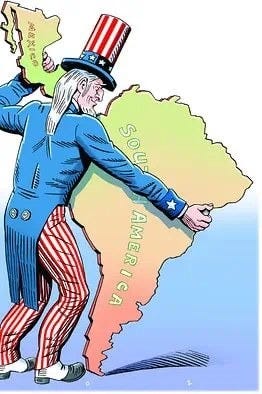
  • Trump, impatient to claim a Nobel Peace prize, bullies everyone into accepting a madcap peace plan that gives little or no consideration to the Palestinians’ future.

    Who gave him authority to decide such matters, and where are the United Nations in all this? And what about international law and the raft of UN resolutions on these matters that are waiting to be implemented? This looks like an attempt to bury them.

    The other day we saw Trump and Netanyahu holding hands and smirking as they launched their 20-point so-called peace plan which the war criminal and pro-Israel freak Tony Blair also had a hand in. Trump said Netanyahu had agreed it and Arab countries were onboard, but many will doubt that.

    Trump then issued a blood-curdling threat to Hamas that if they didn’t accept his plan within 3 days he would give Israel the green light to carry on with the genocide while he himself, presumably, would continue supplying the ammunition. “All HELL, like no one has ever seen before”, would be let loose, he snarled.

    His grand plan is so vague that it can be interpreted in different ways, provides no clear pathway to Palestinian freedom and self-determination, completely bypasses the United Nations, and puts two fingers up to international law. No sane person would agree to it. When Netanyahu got home he pretty well disowned it, repeating that Israel would never allow a Palestinian state to emerge. “It’s not written in the agreement. We said we would strongly oppose a Palestinian state,” he announced. Of course, this has been the Zionist position since Day 1 in 1948. Domination of Palestine from the river to the sea is the very raison-d’etre of the Israel Project and they won’t be deflected. They’ve pursued their criminal ambition for 7 decades, with the US and UK providing diplomatic cover and much more, and they now smell victory.

    Hamas have sensibly signalled acceptance in principle of some aspects, subject to more work on the detail. But they are at odds with Trump’s plan in several respects.

    In particular, they object to foreign involvement in Gaza’s interim governance. The plan does not identify any Palestinian individual or group by name as being involved in the transition. Instead it says the panel would be supervised by a new international transitional body headed by Trump himself and which would include other members, including former UK prime minister Blair. Hamas said it would agree to hand over Gaza’s administration “to a Palestinian body of independents (technocrats) based on Palestinian national consensus and supported by Arab and Islamic backing”‘

    As for Hamas playing no part in Gaza’s future, the Trump plan says they must “agree to not have any role in the governance of Gaza, directly, indirectly, or in any form,” and that there will be a “process of demilitarisation of Gaza”. Hamas’s response is that they are part of a “comprehensive Palestinian national framework” and “tied to a collective national position in accordance with relevant international laws and resolutions”. The future of Gaza and the rights of Palestinian people are to be discussed within that national framework, in which Hamas will be included and “will contribute with full responsibility”.

    So there’s a considerable gulf. Hamas’s statement did not specifically accept Trump’s 20-point plan although Trump, for his own reasons, pretends it did.

    What does the UN say?

    Meanwhile the United Nations has savaged the half-baked and, let’s face it, dishonest plan.

    A team of 28 independent human rights experts, appointed by the United Nations Human Rights Council, warn that any peace plan must absolutely safeguard the human rights of Palestinians, and not create further conditions of oppression. “We welcome parts of the peace plan announced by the United States to end the war in Gaza, including a permanent ceasefire, rapid release of unlawfully detained persons, an influx of humanitarian aid under United Nations supervision, no forced displacement from Gaza, the withdrawal of Israeli forces and the non-annexation of territory. These are broadly requirements of international law that should not depend on a formal peace plan.”

    But they warn that other key elements of the plan are inconsistent with fundamental rules of international law and the 2024 Advisory Opinion of the International Court of Justice which demands that Israel ends its unlawful presence in the Occupied Palestinian Territory. “Imposing an immediate peace at any price, regardless of or brazenly against law and justice, is a recipe for further injustice, future violence and instability.”

    The experts’ objections include the following:

    • The plan does not guarantee the Palestinian right of self-determination as international law requires, and it is subject to vague pre-conditions concerning Gaza’s redevelopment, Palestinian Authority reform, and a “dialogue” between Israel and Palestine. Palestine’s future would thus be at the mercy of decisions by outsiders, not in the hands of Palestinians as international law commands.
    • The plan also preserves the failed status quo of requiring more negotiations with Israel, when the Israeli Prime Minister has already declared that Israel would “forcibly resist” statehood. This is blatantly against the International Court of Justice (ICJ) finding that fulfilling the right of self-determination cannot be conditional on negotiations.
    • The “temporary transitional government” is not representative of Palestinians and even excludes the Palestinian Authority, which further violates self-determination and lacks legitimacy.
    • There are no concrete benchmarks or timeframes for a transition to representative governance, which belongs to the Palestinians only, without foreign interference.
    • Oversight by a “Board of Peace” chaired by the US President is not under United Nations authority or transparent multilateral control, while the US is a deeply partisan supporter of Israel and not an “honest broker”. This proposal is reminiscent of colonial practices and must be rejected.
    • An “International Stabilisation Force”, outside the control of the Palestinian people and the United Nations as a guarantor, would replace Israeli occupation with a US-led occupation, contrary to Palestinian self-determination.
    • Partial Israeli occupation could continue indefinitely through a “security perimeter” inside Gaza’s borders, which is absolutely unacceptable.
    • The demilitarisation of Gaza has no end date and, if permanent, could leave it vulnerable to Israeli aggression.
    • Nothing is said regarding the demilitarisation of Israel, which has committed international crimes against the Palestinians and threatened peace and security in the region through aggression against other countries.
    • De-radicalisation is imposed on Gaza only, while anti-Palestinian and anti-Arab sentiments, radicalisation and public incitement to genocide have been hallmarks of dominant rhetoric in Israel over the past two years.
    • The plan largely treats Gaza in isolation from the West Bank including East Jerusalem, when these areas must be regarded as a unified Palestinian territory and State.
    • An “economic development plan” and “special economic zone” could result in illegal foreign exploitation of resources without Palestinian consent.
    • There is no duty on Israel and those who have sustained its illegal attacks in Gaza to compensate Palestinians for illegal war damage.
    • The plan provides for the release of all Israeli hostages but only some of the many arbitrarily detained Palestinians.
    • Amnesties offered to Hamas seem to be unconditional, even if they committed international crimes, denying justice for victims of international crimes. And the plan does not address accountability at all for Israeli international crimes and human rights violations against the Palestinian people. There is no commitment to transitional justice, historical truth-telling or genuine reconciliation. There is also no guaranteed access for independent journalists.
    • Accountability and justice are integral to sustainable peace.
    • The plan does not address other fundamental issues such as ending illegal Israeli settlements in the West Bank including East Jerusalem, borders, compensation, and refugees.
    • The plan does not provide a leading role for the United Nations, General Assembly or Security Council, or specifically for the UN Relief and Works Agency for Palestine Refugees in the Near East (UNRWA), which is vital to assisting and protecting Palestinians.
    • Any peace plan must respect the ground rules of international law. The future of Palestine must be in the hands of the Palestinian people – not imposed by outsiders under extreme conditions of duress in yet another scheme to control their destiny.
    • The International Court of Justice has been crystal clear: Conditions cannot be placed on the Palestinian right of self-determination. The Israeli occupation must end immediately, totally and unconditionally, with due reparation made to the Palestinians.
    • Finally, the United Nations – not Israel or its closest ally – has been identified by the ICJ as the legitimate authority to oversee the end of the occupation and the transition towards a political solution in which the Palestinians’ right of self-determination is fully realised.

    Which leaves us in no doubt. Trump is ignorant of international law (or he regards it as a huge inconvenience to his private agenda) and his plan has little to do with lasting peace. He must be persuaded to stand aside and leave all this to the UN. Imperfect though it is, the UN the best we’ve got.

    The post State of Play in US-Israel’s Land-Grab Bid first appeared on Dissident Voice.

    This post was originally published on Dissident Voice.

  • The Federal Reserve’s independence is currently being challenged by political forces seeking to reshape its mandate. The Fed has not always been independent of Congress and the Treasury. Its independence was formalized only in 1951, with a Treasury-Federal Reserve Accord that was not a law but a policy agreement redefining the relationship of the parties. In the 1930s and 1940s, before the Fed officially became “independent,” it worked with the federal government to fund the most productive period in our country’s history. We can and should do that again.

    In a Sept. 1 Substack post titled “Fed Faces Biggest Direct Challenge by a President Since JFK – and This Is a Good Thing,” UK Prof. Richard Werner shows that there is no evidence that more independent central banks deliver lower inflation. In fact, per his findings, central bank independence has no measurable impact on real economic performance, and greater central bank independence has resulted in lower economic growth.

    This two-part series will probe the forces in play now to overhaul the Fed, and the feasibility of redirecting it to use its tools, including “quantitative easing,” not just to save the banks but to save the economy. Part I looks at a particularly flawed Fed policy — Interest on Reserves (IOR)  — which burdens the budget, stifles liquidity, and subsidizes banks. Then it suggests ways that eliminating IOR and reining in the Fed’s independence could solve the Treasury’s interest burden altogether.

    A Unique Opportunity for a Fed Overhaul

    In a paper in the Spring 2025 edition of The International Economy titled “The Fed’s New ‘Gain-of-Function’ Monetary Policy,” Treasury Secretary Scott Bessent argued that “overuse of nonstandard policies, mission creep, and institutional bloat are threatening the central bank’s monetary independence.” He called for “an honest, independent, and nonpartisan review of the entire institution and all of its activities, including monetary policy, regulatory policy, communications, staffing, and research.”

    In a July 17 CNBC interview, former Fed governor Kevin Warsh went further, calling for sweeping changes in how the central bank conducts business and suggesting a policy alliance with the Treasury Department. Warsh is considered one of three or four finalists to take over as chairman after Jerome Powell at the Fed.

    On August 25, Pres. Trump then sparked a political firestorm when he declared he was firing Federal Reserve Governor Lisa Cook “for cause,” citing mortgage fraud allegations from Federal Housing Finance Agency Director Bill Pulte. An NBC News report observed:

    Cook’s legal battles are playing out against a broader struggle over the long-held political independence of the Federal Reserve. Trump and several of his officials, including Pulte, have attacked Powell in a months-long campaign to pressure the central bank into significantly cutting its benchmark interest rate, arguing it would stimulate the economy.

    On Oct.1, the United States Supreme Court temporarily blocked the attempt to remove Governor Cook by delaying a decision on a ruling from a lower court that allowed her to stay in her position until the high court hears oral arguments in the case in January.

    On Aug. 8, Fed Governor Adriana Kugler resigned, and in September, Trump pick Stephen Miran was confirmed as her replacement. The Daily Rip observed that Cook’s removal, alongside Kugler’s sudden resignation, could give Trump a 4-to-3 board majority to push for lower interest rates, in order to ease the $37 trillion national debt’s servicing costs.

    But if easing the national debt servicing costs is the goal, lowering interest rates won’t do much to further it. The Fed has control only of the fed funds rate, which is short-term. Marketable securities make up the vast majority of the debt held by the public, and most of those securities are notes and bonds with fixed interest rates and maturities ranging from two to 30 years. These existing obligations continue to accrue interest at their fixed higher rates until they mature.

    A More Effective Target: Interest on Reserves

    While political reshuffling grabs headlines, the real target of the Administration’s moves may be that little-known Fed policy called Interest on Reserves. So argues an August 28 Heresy Financial podcast, which observes that IOR costs taxpayers $186 billion annually by paying banks a hefty interest to hold their reserves at the Fed. By eliminating IOR, the Administration could not only save this $186 billion but would release the $3.3 trillion now sitting idle in reserve accounts to other investments, most likely Treasuries, where banks could get a comparable safe return. The result would be not only to restore Fed profits to the Treasury but to lower federal borrowing costs.

    The Fed says it needs IOR as a tool to control short-term interest rates, which it needs to be able to do to control inflation. By paying substantial interest on reserves, the Fed ensures that banks don’t flood markets with cash by over-lending, triggering price inflation. But the Fed managed rates through open market operations before 2008 without IOR, showing it is not essential; and it is a very costly tool.

    The Crushing Financial Burden of IOR 

    The Federal Reserve has paid interest on bank reserve balances since 2008. As of May 2025, the Fed was paying 4.4% on $3.3 trillion in reserves, totaling $186 billion annually. These payments are deducted from the Fed’s earnings, which by law are returned to the U.S. Treasury after deducting the Fed’s costs, reducing the federal deficit.

    In 2021, Fed remittances to the Treasury totaled $79 billion. In 2023, high IOR costs led to Fed losses of $114.3 billion. This not only halted remittances to the Treasury entirely, it created a net deficit to the Fed that will have to be repaid from future taxes to cover its costs. A St. Louis Fed report said it could take years before the Fed is able to once again return profits to the government.

    As of the beginning of September, the national debt is at $37.4 trillion and interest payments for FY2025 are at $933 billion — the third largest category of federal expenditure after Social Security and Medicare. Lost remittances force the Treasury to borrow more at higher rates, pushing 10-year Treasury yields up to 4.2% as of September 26. A proposed bill to eliminate IOR estimates savings of $1.1 trillion over 10 years by restoring Fed profitability and remittances.

    IOR has other downsides besides loss of remittances to the Treasury. It incentivizes banks to park funds at the Fed, earning over 4% risk-free, rather than using their reserves to back riskier commercial and consumer loans. Since bank lending is the source of the vast majority of the circulating money supply today, IOR reduces the money supply, constrains liquidity, and throttles lending to businesses and consumers.

    Before 2008, banks lent freely, and funds held in reserve accounts were minimal. Reserves surged to $2.7 trillion by 2014 and remain high, reflecting substantially reduced lending. Commercial and industrial loans grew only 2.1% annually from 2020 to 2024 compared to 5.6% pre-2008, starving small businesses of capital.

    A Subsidy for Big Banks at the Expense of Taxpayers

    Critics of IOR argue that it is a subsidy for large banks, rewarding them for holding idle funds rather than fostering economic growth. Meanwhile, taxpayers face rising borrowing costs. Credit card rates averaged over 25% and 30-year fixed rate mortgages hit 6.3% in September.

    IOR, which is now over 4%, sets a floor on the fed funds rate — the rate at which banks lend to each other — since they won’t lend for less than they can make at the Fed. It thus keeps borrowing costs high, contradicting the Fed’s goals of maximum employment and stable prices. Ending IOR would force banks to either lend or invest in Treasuries, aligning their incentives with economic growth.

    Part 5 of a Cato Institute series called “Reforming the Federal Reserve” concludes:

    At its core, the IOR policy is a government subsidy to large financial institutions. Banks now have their own risk-free savings accounts, giving them returns that are hundreds of basis points higher than what regular consumers receive on their own deposits at the very same institutions. If that isn’t bad enough, the billions that banks receive in interest payments have reduced their incentive to lend in the private market, reducing the cash available to regular Americans to borrow while flooding the banking system with trillions in reserves.

    … The Fed has disbursed billions in risk-free government payments to large banks.… This policy is economically costly, threatens the Fed’s mandate to stabilize prices, and is unfair to everyday Americans.

    Quantitative Easing: Another Fed Tool for Bank Rescue that Could Be Diverted to Public Investment

    Eliminating IOR would produce substantial savings, but like lowering the fed funds rate, it would not fix the federal debt problem since it would not address the $10 trillion in annual debt rollovers or long-term debt. Making short-term debt cheaper could also encourage more government borrowing without curbing spending, worsening the debt cycle.

    A more effective way to fix the debt permanently would be to pay it, or at least some portion of it, with government-issued money. Quantitative easing (QE), in which the Fed creates new reserves to purchase assets, is another Fed tool that today has served the banks alone. But the precedent for Fed “money-printing” has been set, and if it can be done to save the banks, it can be done to save the public. Critics say this would inflate consumer prices, but Part II of this article will counter that objection with some very successful non-inflationary precedents.

    During “QE1” (2008-2010), the Fed purchased $1.25 trillion in mortgage-backed securities (MBS) — many of them distressed or illiquid — directly from banks and government-sponsored entities. This removed toxic assets from bank balance sheets and transferred them to the public. As Joseph Stiglitz observed, “We socialized losses, even as we privatized gains.” The Fed absorbed toxic assets and inflated asset prices to recapitalize Wall Street, while leaving homeowners and small businesses behind.

    In a September congressional hearing, Stephen Miran pointed to a rarely discussed third mandate of the Fed. Besides price stability and maximum employment, it is required to moderate long-term interest rates. Miran argued that this mandate offers a legal and strategic opening for QE to serve public investment rather than private speculation.

    But Even QE Can Provide No Federal Debt Relief Under IOR

    Quantitative easing has periodically been proposed as a way to tackle the federal debt crisis. With $9.2 trillion in Treasury debt maturing annually, in four years the Fed could theoretically shift the whole $37 trillion debt onto its own books through QE and return the interest it earns on the bonds to the Treasury. The debt would still be there, but it would be an interest-free debt to a partner government agency, the Fed. Under current laws and policies, however, there are two obstacles to this solution:

    1. The Primary Dealer Restriction: The Fed is not allowed to buy securities directly from the Treasury. It must buy from “primary dealers” on the open market like everyone else; and these dealers (mostly very large banks) park the funds they receive for the trade in their reserve accounts, on which the Fed pays IOR.

    2. Net Loss from IOR: As of May 2025, the Fed was paying 4.4% on reserves but earning only around 3.3% on Treasury securities. So rather than returning the interest from the bonds to the Treasury, this QE maneuver would actually cause the government to lose $101 billion annually on the $9.2 trillion in bonds ($9.2 trillion × 1.1% (4.4% – 3.3%). The banks, not the Treasury, would reap the benefits.

    A Call for Reform

    Changing these rules requires legal changes or a cooperative Fed board, which faces resistance from the banking lobby profiting from IOR’s $186 billion windfall. The Fed has issued trillions of dollars in reserves to save the banks, its real constituents. Would it do that to save the government? Only if its interests were aligned, as they were in the 1930s and 1940s.

    Either the independence of the Fed needs to be curbed or the Treasury needs to issue money directly, as Abraham Lincoln did. As will be shown in Part II of this article, this solution has substantial successful precedent both in the U.S. and abroad; it need not create inflation, and it is the monetary “secret sauce” of our largest competitor, China. By directing central bank liquidity toward infrastructure and industrial policy, the People’s Bank of China stabilizes prices, supports employment, and reduces long-term borrowing costs. The question is not whether QE can serve the public, but whether the Fed will choose to wield its mandate for that purpose.

    Central banks must be accountable not just to their banking constituents but to Congress and the people they represent. If we’re legalizing QE for Wall Street, then it’s time to fund QE for Main Street.

    The post How a Fed Overhaul Could Eliminate the Federal Debt Crisis first appeared on Dissident Voice.

    This post was originally published on Dissident Voice.
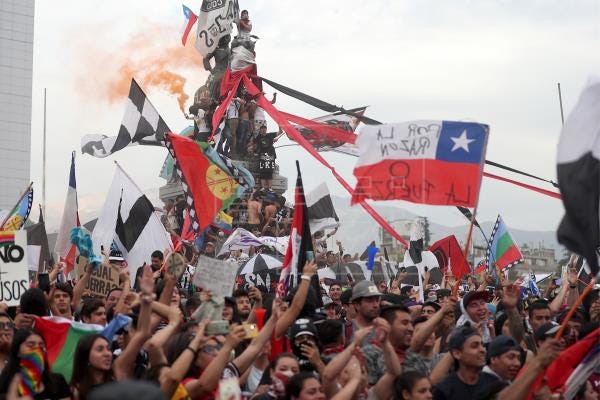
  • The Federal Reserve’s independence is currently being challenged by political forces seeking to reshape its mandate. The Fed has not always been independent of Congress and the Treasury. Its independence was formalized only in 1951, with a Treasury-Federal Reserve Accord that was not a law but a policy agreement redefining the relationship of the parties. In the 1930s and 1940s, before the Fed officially became “independent,” it worked with the federal government to fund the most productive period in our country’s history. We can and should do that again.

    In a Sept. 1 Substack post titled “Fed Faces Biggest Direct Challenge by a President Since JFK – and This Is a Good Thing,” UK Prof. Richard Werner shows that there is no evidence that more independent central banks deliver lower inflation. In fact, per his findings, central bank independence has no measurable impact on real economic performance, and greater central bank independence has resulted in lower economic growth.

    This two-part series will probe the forces in play now to overhaul the Fed, and the feasibility of redirecting it to use its tools, including “quantitative easing,” not just to save the banks but to save the economy. Part I looks at a particularly flawed Fed policy — Interest on Reserves (IOR)  — which burdens the budget, stifles liquidity, and subsidizes banks. Then it suggests ways that eliminating IOR and reining in the Fed’s independence could solve the Treasury’s interest burden altogether.

    A Unique Opportunity for a Fed Overhaul

    In a paper in the Spring 2025 edition of The International Economy titled “The Fed’s New ‘Gain-of-Function’ Monetary Policy,” Treasury Secretary Scott Bessent argued that “overuse of nonstandard policies, mission creep, and institutional bloat are threatening the central bank’s monetary independence.” He called for “an honest, independent, and nonpartisan review of the entire institution and all of its activities, including monetary policy, regulatory policy, communications, staffing, and research.”

    In a July 17 CNBC interview, former Fed governor Kevin Warsh went further, calling for sweeping changes in how the central bank conducts business and suggesting a policy alliance with the Treasury Department. Warsh is considered one of three or four finalists to take over as chairman after Jerome Powell at the Fed.

    On August 25, Pres. Trump then sparked a political firestorm when he declared he was firing Federal Reserve Governor Lisa Cook “for cause,” citing mortgage fraud allegations from Federal Housing Finance Agency Director Bill Pulte. An NBC News report observed:

    Cook’s legal battles are playing out against a broader struggle over the long-held political independence of the Federal Reserve. Trump and several of his officials, including Pulte, have attacked Powell in a months-long campaign to pressure the central bank into significantly cutting its benchmark interest rate, arguing it would stimulate the economy.

    On Oct.1, the United States Supreme Court temporarily blocked the attempt to remove Governor Cook by delaying a decision on a ruling from a lower court that allowed her to stay in her position until the high court hears oral arguments in the case in January.

    On Aug. 8, Fed Governor Adriana Kugler resigned, and in September, Trump pick Stephen Miran was confirmed as her replacement. The Daily Rip observed that Cook’s removal, alongside Kugler’s sudden resignation, could give Trump a 4-to-3 board majority to push for lower interest rates, in order to ease the $37 trillion national debt’s servicing costs.

    But if easing the national debt servicing costs is the goal, lowering interest rates won’t do much to further it. The Fed has control only of the fed funds rate, which is short-term. Marketable securities make up the vast majority of the debt held by the public, and most of those securities are notes and bonds with fixed interest rates and maturities ranging from two to 30 years. These existing obligations continue to accrue interest at their fixed higher rates until they mature.

    A More Effective Target: Interest on Reserves

    While political reshuffling grabs headlines, the real target of the Administration’s moves may be that little-known Fed policy called Interest on Reserves. So argues an August 28 Heresy Financial podcast, which observes that IOR costs taxpayers $186 billion annually by paying banks a hefty interest to hold their reserves at the Fed. By eliminating IOR, the Administration could not only save this $186 billion but would release the $3.3 trillion now sitting idle in reserve accounts to other investments, most likely Treasuries, where banks could get a comparable safe return. The result would be not only to restore Fed profits to the Treasury but to lower federal borrowing costs.

    The Fed says it needs IOR as a tool to control short-term interest rates, which it needs to be able to do to control inflation. By paying substantial interest on reserves, the Fed ensures that banks don’t flood markets with cash by over-lending, triggering price inflation. But the Fed managed rates through open market operations before 2008 without IOR, showing it is not essential; and it is a very costly tool.

    The Crushing Financial Burden of IOR 

    The Federal Reserve has paid interest on bank reserve balances since 2008. As of May 2025, the Fed was paying 4.4% on $3.3 trillion in reserves, totaling $186 billion annually. These payments are deducted from the Fed’s earnings, which by law are returned to the U.S. Treasury after deducting the Fed’s costs, reducing the federal deficit.

    In 2021, Fed remittances to the Treasury totaled $79 billion. In 2023, high IOR costs led to Fed losses of $114.3 billion. This not only halted remittances to the Treasury entirely, it created a net deficit to the Fed that will have to be repaid from future taxes to cover its costs. A St. Louis Fed report said it could take years before the Fed is able to once again return profits to the government.

    As of the beginning of September, the national debt is at $37.4 trillion and interest payments for FY2025 are at $933 billion — the third largest category of federal expenditure after Social Security and Medicare. Lost remittances force the Treasury to borrow more at higher rates, pushing 10-year Treasury yields up to 4.2% as of September 26. A proposed bill to eliminate IOR estimates savings of $1.1 trillion over 10 years by restoring Fed profitability and remittances.

    IOR has other downsides besides loss of remittances to the Treasury. It incentivizes banks to park funds at the Fed, earning over 4% risk-free, rather than using their reserves to back riskier commercial and consumer loans. Since bank lending is the source of the vast majority of the circulating money supply today, IOR reduces the money supply, constrains liquidity, and throttles lending to businesses and consumers.

    Before 2008, banks lent freely, and funds held in reserve accounts were minimal. Reserves surged to $2.7 trillion by 2014 and remain high, reflecting substantially reduced lending. Commercial and industrial loans grew only 2.1% annually from 2020 to 2024 compared to 5.6% pre-2008, starving small businesses of capital.

    A Subsidy for Big Banks at the Expense of Taxpayers

    Critics of IOR argue that it is a subsidy for large banks, rewarding them for holding idle funds rather than fostering economic growth. Meanwhile, taxpayers face rising borrowing costs. Credit card rates averaged over 25% and 30-year fixed rate mortgages hit 6.3% in September.

    IOR, which is now over 4%, sets a floor on the fed funds rate — the rate at which banks lend to each other — since they won’t lend for less than they can make at the Fed. It thus keeps borrowing costs high, contradicting the Fed’s goals of maximum employment and stable prices. Ending IOR would force banks to either lend or invest in Treasuries, aligning their incentives with economic growth.

    Part 5 of a Cato Institute series called “Reforming the Federal Reserve” concludes:

    At its core, the IOR policy is a government subsidy to large financial institutions. Banks now have their own risk-free savings accounts, giving them returns that are hundreds of basis points higher than what regular consumers receive on their own deposits at the very same institutions. If that isn’t bad enough, the billions that banks receive in interest payments have reduced their incentive to lend in the private market, reducing the cash available to regular Americans to borrow while flooding the banking system with trillions in reserves.

    … The Fed has disbursed billions in risk-free government payments to large banks.… This policy is economically costly, threatens the Fed’s mandate to stabilize prices, and is unfair to everyday Americans.

    Quantitative Easing: Another Fed Tool for Bank Rescue that Could Be Diverted to Public Investment

    Eliminating IOR would produce substantial savings, but like lowering the fed funds rate, it would not fix the federal debt problem since it would not address the $10 trillion in annual debt rollovers or long-term debt. Making short-term debt cheaper could also encourage more government borrowing without curbing spending, worsening the debt cycle.

    A more effective way to fix the debt permanently would be to pay it, or at least some portion of it, with government-issued money. Quantitative easing (QE), in which the Fed creates new reserves to purchase assets, is another Fed tool that today has served the banks alone. But the precedent for Fed “money-printing” has been set, and if it can be done to save the banks, it can be done to save the public. Critics say this would inflate consumer prices, but Part II of this article will counter that objection with some very successful non-inflationary precedents.

    During “QE1” (2008-2010), the Fed purchased $1.25 trillion in mortgage-backed securities (MBS) — many of them distressed or illiquid — directly from banks and government-sponsored entities. This removed toxic assets from bank balance sheets and transferred them to the public. As Joseph Stiglitz observed, “We socialized losses, even as we privatized gains.” The Fed absorbed toxic assets and inflated asset prices to recapitalize Wall Street, while leaving homeowners and small businesses behind.

    In a September congressional hearing, Stephen Miran pointed to a rarely discussed third mandate of the Fed. Besides price stability and maximum employment, it is required to moderate long-term interest rates. Miran argued that this mandate offers a legal and strategic opening for QE to serve public investment rather than private speculation.

    But Even QE Can Provide No Federal Debt Relief Under IOR

    Quantitative easing has periodically been proposed as a way to tackle the federal debt crisis. With $9.2 trillion in Treasury debt maturing annually, in four years the Fed could theoretically shift the whole $37 trillion debt onto its own books through QE and return the interest it earns on the bonds to the Treasury. The debt would still be there, but it would be an interest-free debt to a partner government agency, the Fed. Under current laws and policies, however, there are two obstacles to this solution:

    1. The Primary Dealer Restriction: The Fed is not allowed to buy securities directly from the Treasury. It must buy from “primary dealers” on the open market like everyone else; and these dealers (mostly very large banks) park the funds they receive for the trade in their reserve accounts, on which the Fed pays IOR.

    2. Net Loss from IOR: As of May 2025, the Fed was paying 4.4% on reserves but earning only around 3.3% on Treasury securities. So rather than returning the interest from the bonds to the Treasury, this QE maneuver would actually cause the government to lose $101 billion annually on the $9.2 trillion in bonds ($9.2 trillion × 1.1% (4.4% – 3.3%). The banks, not the Treasury, would reap the benefits.

    A Call for Reform

    Changing these rules requires legal changes or a cooperative Fed board, which faces resistance from the banking lobby profiting from IOR’s $186 billion windfall. The Fed has issued trillions of dollars in reserves to save the banks, its real constituents. Would it do that to save the government? Only if its interests were aligned, as they were in the 1930s and 1940s.

    Either the independence of the Fed needs to be curbed or the Treasury needs to issue money directly, as Abraham Lincoln did. As will be shown in Part II of this article, this solution has substantial successful precedent both in the U.S. and abroad; it need not create inflation, and it is the monetary “secret sauce” of our largest competitor, China. By directing central bank liquidity toward infrastructure and industrial policy, the People’s Bank of China stabilizes prices, supports employment, and reduces long-term borrowing costs. The question is not whether QE can serve the public, but whether the Fed will choose to wield its mandate for that purpose.

    Central banks must be accountable not just to their banking constituents but to Congress and the people they represent. If we’re legalizing QE for Wall Street, then it’s time to fund QE for Main Street.

    The post How a Fed Overhaul Could Eliminate the Federal Debt Crisis first appeared on Dissident Voice.

    This post was originally published on Dissident Voice.

  • IMAGE/Khaama Press
    VIDEO/Mirror Now/Youtube

    The Principal of Global School had asked his favorite Monitor to keep an eye on other students in the Middle East class.

    The Monitor’s family had given hefty donation to the Principal for running the school. In return, the Principal would overlook small or big mistakes, blunders, wrongs, of his favorite Monitor, and would do him great favors. For a very long time, the Monitor’s been mad and has been punishing some particular students. Since last two years, the Monitor went totally rogue; he beat the hell out of five students. One of those students, the first student, witnessed half his house burned down. The Principal, a peace loving person, avoids hassles and so didn’t say anything to the Monitor — and earned suggestions of his name for the Noble Peace Prize.

    Then one day the Monitor beat up the sixth student. It was a humongous dilemma for the Principal: the sixth student had given big donation too, and had gifted a fast vehicle to the Principal. It is a universal fact that the Principal rarely says no to the Monitor. The Principal has a doctorate in The Art of the Deal; he found a way out. Although he permitted to strike the sixth one. After fifteen or so minutes he called the student to inform him. The sixth student was crying: the Monitor had already finished his job.

    The Principal said: I called you the minute I knew. The Principal sensed the sixth one’s anger and decided to do something.

    When, the Monitor went to the Principal’s office to report how the Middle East class was doing, the Principal handed him a piece of paper with a written apology which the Monitor was ordered to read out to the sixth student, on the phone. The Principal didn’t want to piss off one of his big donors.

    The Monitor didn’t like it but then he thought: I control the whole Middle East class, I have so much power, unimaginable. After Principal, I am the only one with so much power — that power is due to money and fighting toys from the Principal’s family. I better say sorry, as it is small
    inconvenience to continue the abundance being received.

    The Monitor half-heartedly said sorry, but the humiliation he felt and the reluctance to apologize was clearly visible on his face. The sixth student just wanted to hear an apology to save his face. The Principal’s donations from that student are now secure.

    The Principal wrote a personal letter assuring the sixth student that from now on any attack on him would be considered a “threat” to the Principal himself.

    But it was the Monitor who got the last laugh. The Principal promised the first student that his half burnt house will be somewhat fixed and he’ll be permitted to reside there. But it is the Monitor at whose whim the repair will begin — it may be forever delayed or postponed.

    The post Surreal Reality: Global School Principal and His Favorite Monitor first appeared on Dissident Voice.
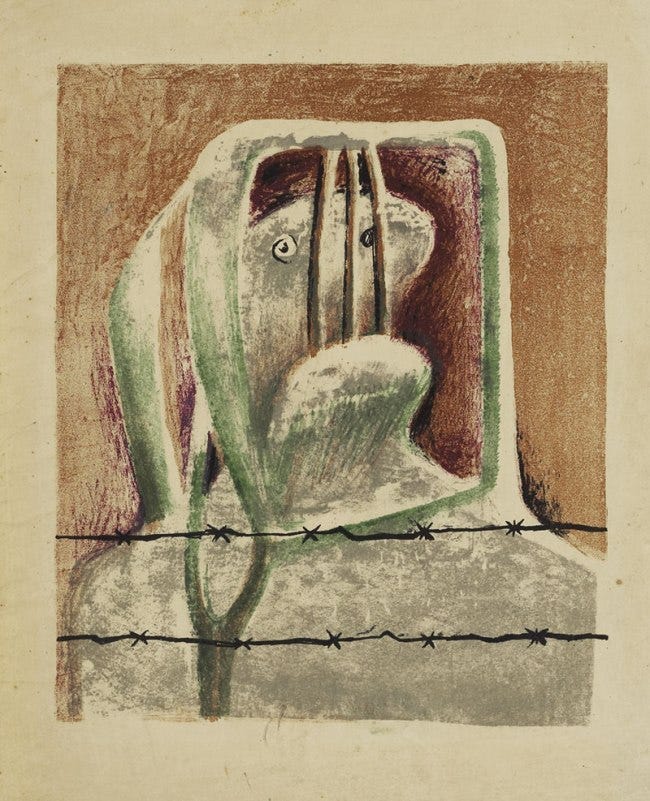
    This post was originally published on Dissident Voice.
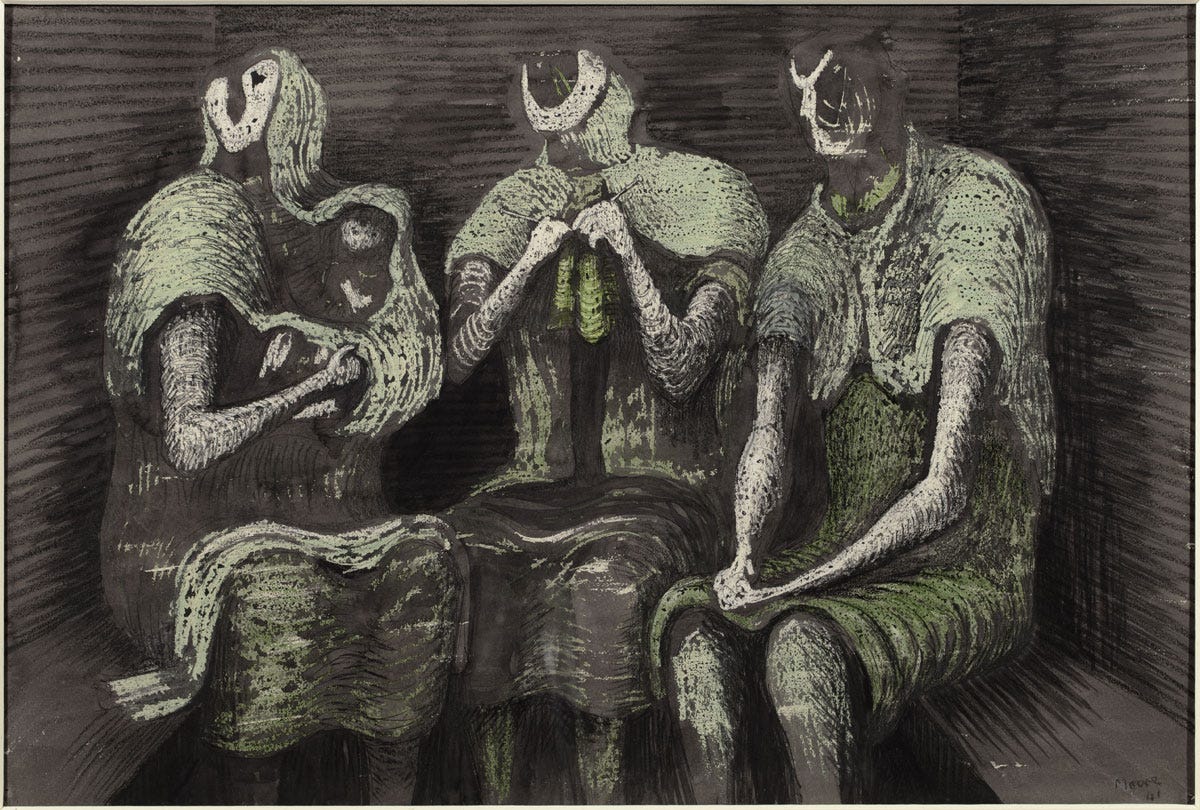
  • On Tuesday, Sep 30, 2025, the UN Security Council voted to adopt a resolution drafted by the U.S. and Panama that would create a so-called “Gang Suppression Force” (GSF) to invade Haiti. The resolution was adopted with 12 votes in favor and 3 abstentions (China, Russia, and Pakistan). The Black Alliance for Peace unequivocally condemns the adoption of this resolution. We see the GSF as a further step in the destruction of Haitian popular sovereignty, pushing the country into militarized, neocolonial servitude.

    The resolution for the “Gang Suppression Force” (GSF) authorizes the deployment of up to 5,550 personnel, foreign police and soldiers, with powers to “neutralize, isolate,” and detain and imprison Haitian civilians – independent of the Haitian police and government. As JP, a BAP Haiti/Americas Team member, proclaimed during our Emergency Rally outside the UN on Sep 30, 2025: “In essence, this force will be granted a blank check by the so-called ‘international community,’ enabling it to execute the continued colonial capture of Haiti under the hollow guise of international legitimacy.” The GSF gives full oversight to a “Standing Group” of foreigners (which is similar to the Core Group), which will work with the established UN occupation office, BINUH, leaving Haitians as little more than symbolic partners. The GSF will also have a foreign “Force Commander.” All of this effectively creates another colonial governance model for Haiti.

    The GFS is supposed to replace the Multinational Security Support (MSS) mission, which was approved by the UNSC in October 2023, with police and military from Kenya and other Caribbean nations deployed in June 2024. It must be remembered, however, that the MSS was authorized through US pressure on regional actors, under the illegitimate US-installed Prime Minister, Ariel Henry, and deployed under the auspices of the nine-member “Transitional Presidential Council” of Haiti, also installed by the US and its minions in the Caribbean Community (CARICOM).

    We stress, in other words, that Haiti has no legitimate government. And as we continue to recount, Haiti has been under foreign occupation for more than twenty years, resulting in the complete collapse of its entire government structure. Both the MSS and the GSF are not only a continuation of that occupation, but are, by all standards, illegal. Indeed, we believe that the GSF is an attempt to further curtail the popular mass protests – 2017, 2018, 2021, and 2022  –for Haitian self-determination.

    Moreover, it is absurd to call for foreign military invasion over gangs, especially with support from governments with their own violent internal crises – states such as Panama, Ecuador, Jamaica, and Trinidad and Tobago.

    While some are arguing that this new foreign military invasion in Haiti is a relief for a country besieged by gangs, we should also not forget that the crisis in Haiti is a crisis of imperialism – the rise in armed groups must be understood as a symptom of that crisis. Furthermore, the crisis continues with full complicity and participation of the so-called “international community” and compradors in the region. In 2022, for example, Haitian organizations blamed the United Nations and Core Group occupation for enabling the “gangsterization” of the country.

    BAP also condemns the role played by regional actors – including CARICOM and other OAS-aligned states – for continuing to participate in the U.S. imperial onslaught on Haiti. At the same time, we want to express our disappointment that the People’s Republic of China and the Russian Federation failed to use their veto power in support of Haiti despite their strong criticisms and acknowledgment of US treachery in the region. Russia’s Foreign Minister Lavrov himself noted that Haiti is effectively a testing ground for an ever-expanding model of U.S. military power, one with no clear mandate, no meaningful Haitian oversight, and no accountability. Yet, these members of the UNSC allowed the U.S.-led imperialist mission to advance, exposing the hollowness of the “international community’s” claim to stand with the Haitian people.

    Haiti is part of the global African nation and, as such, the war on Haiti is a core aspect of the War on African/Black peoples, not just in the Americas but throughout the world. As we begin the fifth annual Month of Action against AFRICOM (U.S. Africa Command), BAP understands that the confluence of militarized imperialist forces and corporate vultures that seek to crush and pick apart Haiti is also present domestically and globally, particularly on the African continent. Whether in the Congo, Sudan, the Horn of Africa, the Sahel, or Haiti, the only “peace” that U.S.-led imperialism seeks is one of “full-spectrum dominance” and white supremacist, colonial control, which is the antithesis of African/Black self-determination. This same colonial logic is playing out in cities across the U.S., as Black/African and Brown people and neighborhoods are occupied and terrorized by federal and local militarized “police” forces. As the war against African/Black people intensifies globally, the occupation of Haiti, ongoing since 2004, is now reaching its logical, violent, destabilizing conclusion.

    We must oppose this “Gang Suppression Force” and any further U.S.-led militarization and domination of Haiti, for the dignity and self-determination of the people of Haiti, for the struggle toward liberation of all African peoples, and for the security and well-being of Our Americas.

    We call for:

    • An immediate end to the foreign military occupation of Haiti – the dissolution of the Core Group and its BINUH office as well as the recall and annulment of the resolution for the Gang Repression Force;

    • The U.S. to abide by the UN arms embargo on Haiti and stop the export of military grade weapons to Haiti;

    • The governments in the Caribbean and Latin America should stop participating in the US imperial onslaught on Haiti and respect Haiti’s sovereignty and the right of its people to determine their own political future;

    • Anti-imperialist regional solidarity across the Caribbean and Latin America to resist the normalization of foreign military interventions;

    • The right of Haitian migrants to free movement and asylum, without xenophobia, criminalization, or bias.

    Hands Off Haiti!

    Make Our Americas a Zone of Peace!

    No Compromise No Retreat!

    The post The Black Alliance for Peace Condemns Establishment of Colonial Military Governance Over Haiti by UN Security Council first appeared on Dissident Voice.

    This post was originally published on Dissident Voice.
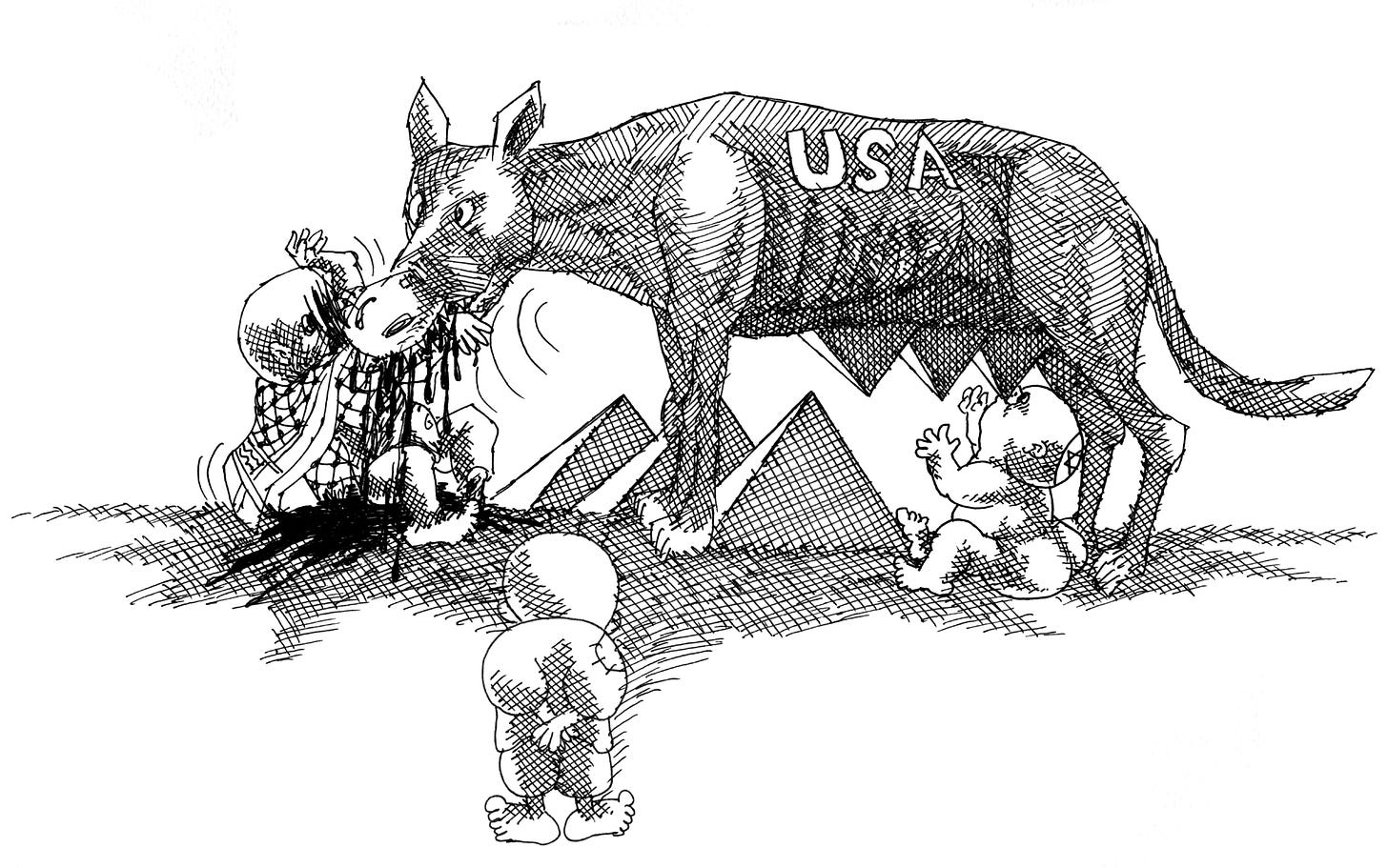
  • Matt Haig’s The Humans (2013) uses sci fi, ‘speculative fiction’, for what it does best: reveal to us how lethal human beings are and how we need to control technology before it turns us into monsters and reduces planet Earth to … Gaza. This time it’s a simple tale of the seductiveness of ‘going native’ faced with totalitarian alienation, and genocide by the latter against those oh-so seductive natives.

    ‘Going native’ was a big problem for settler-colonial imperialism over the past 4 centuries. Too many settlers, especially in New England, refused the near-starvation conditions they faced as indentured labour or even as so-called landowners, and joined their local native tribe. Or women and child were captured and, voluntarily or grudgingly, joined the captors, and were happy to live the less stressful life of hunting and gathering. They were hunted down and forcibly returned to ‘civilization’, as this was really the worst crime – rejecting the settler-colonial enterprise.

    The natives’ lives were indeed better, but they didn’t believe in money or private property, which were essential to the slave society the Americans were introducing, so they had to be eliminated. Imagine if ‘settlers’ had defected en masse and managed to maintain the real paradise of the time (or any time): the free indigenous life, proven for more than 10,000 years, without oppressive laws (natives: I won’t obey any law that I can’t disobey), private property, slavery …

    The most famous case of abduction is Olive Oatman and her sister Mary Anne who were captured in a raid in 1851, and ended up with a sympathetic Mohave chief Espaniol, who adopted them into the tribe. They lived happily, had Mohave names and even facial tattoos. Mary Anne died but Olive went on to marry a native and have children. When whites interacted with the Mohave, she did not make any effort to be repatriated, figuring her white family was dead, considering hersellf a Mohave. When the authorities in Fort Yuma heard of her existence, they demanded her return, threatening to wipe out the Mohave if they didn’t hand her over.

    She always spoke highly of her Mohave family, though she was pressured into falsely saying she was a slave and denying her native family. There are many more cases of white men who defected to live with natives. They too were hunted down by settlers and either forced to reject native life or killed as enemies. Those days are gone, but in Palestine-Israel, it is still illegal for a Palestinian to marry an Israeli Jew, Jews are raised on racism and hatred against Palestinians, and the ongoing genocide is accepted, even celebrated.

    Dickinson would have loved Oatman

    Aussies, Emily Dickinson, nutty profs

    In The Humans, Haig uses his plot as a platform to make a devastating critique of our techno-dystopia, and the general goofiness if not perverstity of the human race. Materializing on Earth, Mr Alien (a clone of nutty prof Andrew) is baffled by the earthlings’ manners and social customs (they very rarely discuss the things they really want to be talking about), their neurotic body shame and clothing etiquette. Oh, and let’s not forget The Things They Do To Make Themselves Happy That Actually Make Them Miserable. This is an infinite list. It includes – shopping, watching TV, taking the better job, getting the bigger house, writing a semi-ahtobiographical novel, educating their young, making their skin look mildly less old, and harbouring a vague desire to believe there might be a meaning to it all.

    He pities them, being not only mortal but have to take precious and limited time and read. No wonder they were a species of primitives. By the time they had read enough books to reach a state of knowledge where they can do anything with it, they are dead. He wonders if their purpose was simply to pursue the enlightenment of orgasm. A few seconds of relief from the surrounding dark.

    Haig and his alterego Andrew take refuge in Emily Dickinson – I dwell in possibility – whose pearls are dropped throughout The Humans, poetry being one of the few unadulterated good things about humans.

    Vonnadorian Andrew was sent on a nasty mission to assassinate some nasty earthlings. Much like Australia was populated by British dregs, criminals, so rebellious Andrew was sent to far-flung Earth, as punishment for his blasphemous talk at the museum of Quadratic Equations. To the colonies, though with a different mission – not to colonize but to stop the horrible humans from achieving a singularity in their technology, allowing them to move around the universe and bring their violent, racist ways with them. They have developed technology at a rate too fast for human psychology too keep up with, and yet they still pursue advancement for advancement’s sake, and for the pursuit of the money and fame they all crave so much.

    Haig has his finger on humanity’s pulse in his string of sci fi adventures. How to stop time (2017) and The Midnight Library (2020) are intriguing takes on time travel, whereas The Humans brings past and future into a troubled present. The Vs are an advanced race who have perfected their ‘civilization’, having long ago solved the (very real) Riemann hypothesis, unsolved since proposed in 1859.1

    Alien Andrew is a clone of the eponymous mad maths prof who managed to prove the infamous Riemann hypothesis, supposedly the scientific link which would catapult Homo sapiens into the techno-future. His mission is to kill the real Andrew, impersonate him long enough to remove all traces of the Riemann solution, the key to earthlings’ singularity. Of course, alien Andrew starts to appreciate the messy, smelly, disgusting ways of the earthlings, their anger, hate, fighting, murdering fellow earthlings. Vs never kill each other, but have no remorse about killing earthlings, whom they despise as primitives.

    Fast forward to the genocide of Palestinians by settler-colonial Israel today, and the AI nightmare technology that is abetting it. Even the best-case utopian endgame is erasure of all ethnicity in a sterile eternal life of no pain, but no humanity. Sterile reason (destroy Untermenschen) governs without any messy emotions.

    Basically, the Vs are Nietzsche’s superman who is ‘beyond good and evil’, or Israelis, soulless in their cold-blooded genocide, or today’s AI, mistaking computer-think for what’s innately human – love and emotions, our baked-in altruism.

    A delightful thread weaving through the novel is Haig’s love of Emily Dickenson, who for some reason the real Andrew discovers and which is the anti-Riemann solution, i.e., ‘all you need is love.’ Alien Andrew discovers classic rock music, especially the Beatles and Beach Boys. The Vs don’t need love anymore. ‘All you need is maths’ is their credo. Along with ‘don’t kill any Vs, but sub-Vs, humans, are fair game.’

    Israel as counterfactual mistake

    Which brings us back to Israel. Israel is chock-full of Nobel maths and physics nerds, ‘all you need is maths’. It should be a paradise, up there with Vonnadoria. The sacred law of both is don’t kill your own people. Oops, forgot the IDF’s nifty Hannibal hypothesis.2 So already something is seriously amiss.

    What the Vs – and Israelis – did was to take the totalitarian utopias of the 20th c, fascism and communism to their ‘logical’ conclusion. They were in many ways similar – a social project with universal aspirations, though with the huge difference that fascism was based on war and race and Űber/Untermenschen, and communism was against war and racism. The Vs clearly see humans as disposable, subhuman, Untermenschen, but to be killed only if they become a threat to other planets, so ‘nice’ fascists. And if humans miraculously stop slaughtering each other and destroying their planet, then they would be invited to join the Vs and other mature races. Ditto Israel, which promises benign totalitarianism for Palestinians too, if they renounce any aspirations for their own state and submit as Untermenschen to the Jewish master race.

    Much as I loved the ideas of the Soviet Union, with its benign aspirations as a model for post-capitalism, it always struck me as, well, a bit boring. No real suffering for the vast majority, no unemployment, no war, but no soul and a techno-laggard; i.e., it seemed unable to catapult itself into a singularity, a real jump forward. I never had any truck with Nazism, no lust for inflicting pain, for mass murder, but I think it’s a shame our earthly communist ‘paradise’ ended so badly.

    Enter Israel. It started as a sort-of ally of the Soviet Union, glad to accept Soviet recognition, collective agriculture, arms. Stalin supported it, thinking it would be a willing socialist ally, along with Mao’s China. For a few years (months?), the world looked to be communism’s oyster. Lol.

    Israel’s founders were not the rational communists of Stalin’s imagination, but the irrational Zionist racists of Hitler’s imagination. Hitler flipped the Zionist project of Jewish supremacism on its head for his own racist Aryan project: to kill and ethnically cleanse Germany, the world, of all Untermenschen nonGermans (Jews, Slavs, blacks …). We now know that from the 1920s, Zionists were courting Nazis such as Eichmann, working in league with them to push Germany’s Jews to emigrate to Palestine. Yes, the Balfour letter set the stage, but Israel was originally a fascist project in league with Hitler, as much as British one.

    Fascism was attractive to Jewish Utopians, bent on creating a Jewish state, as a pragmatic, militaristic, racial theory.3 All the Zionists did was carry on with their fascist project under the guise of democracy, abandoning collective agriculture and embracing US anti-communism. Their secret love of Hitler’s fascism was swept under the carpet, a blip on the road to Greater Israel. Hitler’s own fascism and gas chambers proved very useful in retrospect, giving the Jews a get-out-of-jail-free card forever. Until 10/7/23.

    10/7: Beyond the Pale

    Since October 7, 2023, the world has been force fed genocide on flat-screen TVs. Too much Semitism! And the wrong kind, favouring Jewish Semites over Muslim and Christian Semites. And most of the ‘Jews’ aren’t Semites at all. They are Europeans, Americans, French, etc. Very few actual Jewish Semites — the Arab Haredi — and they are despised almost as much as the Palestinians are. You want to puke from the lies spewing from the Israeli maw.

    Finally their sins are catching up with them. IOF occupation soldiers, honouring a fallen comrade in Gaza, had to discretely turn their backs to the camera, as they now fear arrest under the ICJ and ICC for their crimes if they travel abroad. No more selfies by these cowardly soldiers parading in bras and undies of Palestinians they’ve raped and murdered.

    What can we call these ‘new Israelis’? The idea in 1948 was to create a Homo israeli, a new macho, militant Jewish identity, not the Untermenschen of Nazism. But this new Israeli is immoral, happily violating accepted Old Testament morality (thou shalt not kill/ steal/ rape); in fact, abandoning all morality, making them amoral. What is the meaning of Untermenschen but ‘beneath humanity’, Hitler’s description of Jews? Israel has completed Hitler’s project, making Jews ‘outside the Pale’,4 today’s Untermenschen, beneath human, inhuman.

    Unfortunately, these days, these Untermenschen are for all intents and purposes, controlling the world. Proof positive is the fact that they can boldly carry out their genocidal deeds in full view of all earthlings, who cower in fear of them. Unless US Jews and goys wake up very soon and put a stop to this, we can only pray that some Vonnadorians somewhere out there come and save us from our evil Other. Hitler #2? No. Enough violence. BDS (Boycott, Divest, Sanction) will do the trick, i.e., grassroots mobilization of our altruism instinct.

    How tragic. With the Jewish renaissance of the 19th century bringing Jews into the western mainstream, they quickly became central to Europe’s great cultural flowering, with Marx and Freud at the heart, and dozens of Jewish Nobel Prize winners in all fields, from literature to physics. But even as this was happening, Zionism was percolating, festering, erupting in 1948, its apotheosis in 2023, Nazism (now embedded in US/NATO) passing the torch to the once-persecuted Jews, who didn’t skip a beat, immediately killing and dispossessing 100,000s of Palestinians, much like the Nazis dealt with the Jews of Germany and the shtelts of Poland just a few years before. The West accepted this state of affairs for 78 years out of guilt or ignorance, but finally is waking up to the reality.

    But this is exactly what you did to your natives right up to today, the Israelis retort. You have your Untermenschen, and we have ours.

    Not so simple, we reply. We realize now this was a great crime. Hitler tried to do it to you and we helped liberate you. What you are doing now is no longer acceptable. We don’t believe in Untermenschen anymore, and neither should you. And if you insist, then we are obliged to stop you and protect your so-called Untermenschen, the Palestinians from extermination.

    What is troublesome, and which undermines the ‘going-native’ Andrew’s epiphany (and heppi end), is that Israelis almost fully approve of the genocide, have no remorse, no conscience. They are following Hitler’s losing strategy of violence, not Stalin’s crude, but benign communist strategy, which, as it turned out, was also losing, though because it was too ‘nice’, not too inhuman, like Hitler’s.

    We managed to get mixed up in the 20th century, calling communism evil and fascism good. We pretend we don’t like fascism but we accept Israel’s (and Ukraine’s) and are now adapting it under Trump. Now we are painted into a corner, and it will take getting our feet stained and rejecting Israel’s version of the shiny Vonnadorian fascist utopia is soulless and sterile.

    Any alien arriving on Earth couldn’t help but be appalled at our inhumanity, the bacchanalia of Evil we celebrate every day. The US has been at war 235 years out of 250. Israel has been at war since before it was ‘created’, and currently is fighting on (last count) 7 fronts (get ready, Egypt!), with US and NATO funnelling arms into the conflagration.

    Alien Andrew rejects his self-satisfied, boring eternity in utopia for the dystopian world of feelings. He went native, as Israeli Jews are going to have to do if they plan to stay in the Holy Land. Aliens can assimilate. Zionism has turned Israelis into bona fide Untermenschen, the lowest of the low, unashamed, inhuman genociders.

    Indigenous peoples around the world have survived their holocausts, their genocides, and we humbly turn to them for advice about the meaning of it all, about how we should live, though as humans, we will always fall short. I suspect Haig doesn’t really believe in an atheistic techno-eternity. That the real meaning of life (thank you Woody Allen) is … love and death.

    ENDNOTES:

    The post From Nazi Germany to US-Israel – Who Are the Real Untermenschen? first appeared on Dissident Voice.
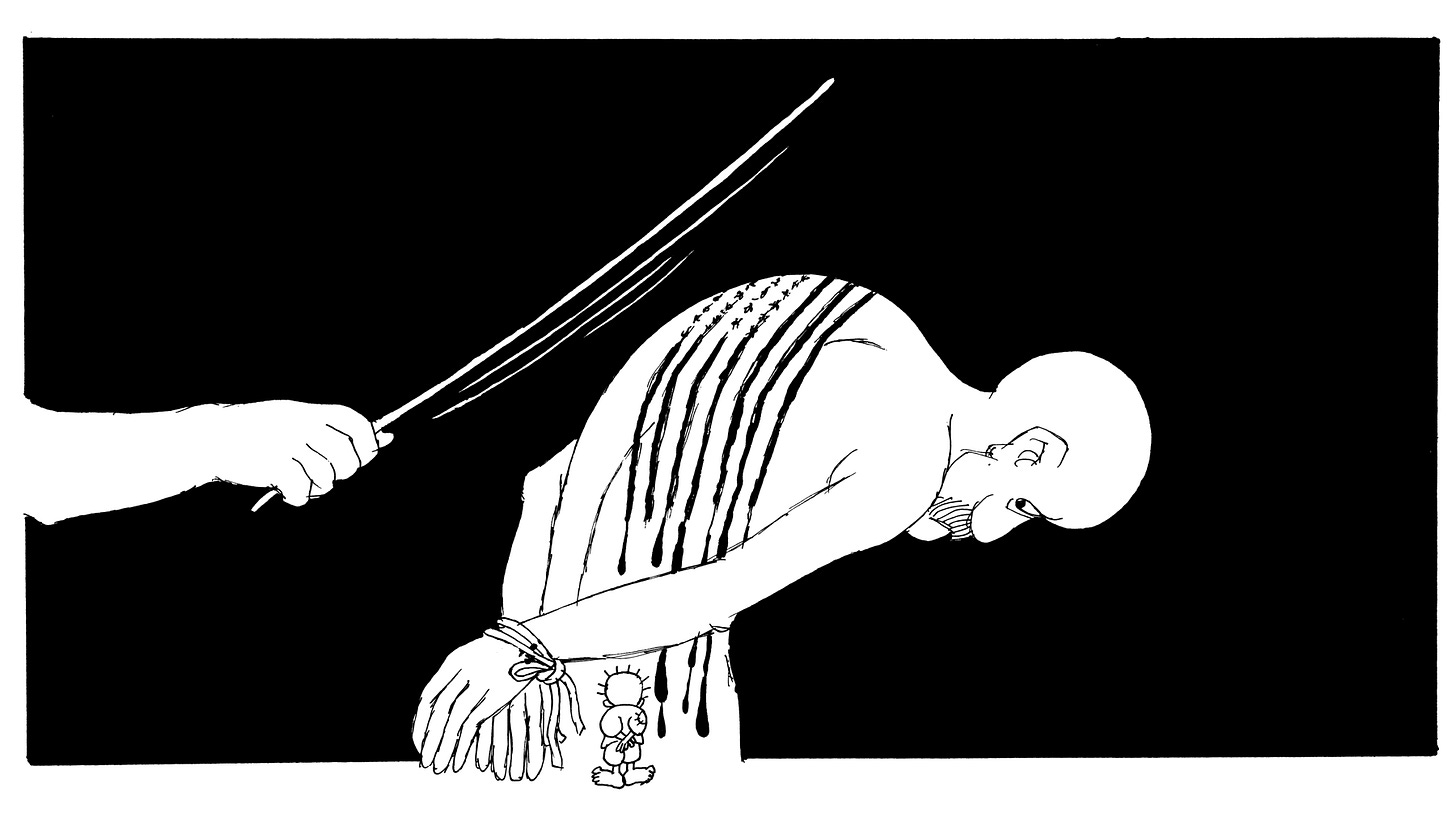
    1    The Riemann hypothesis explains why there are 25 primes below 100, only 21 between 1– and 200, 16 between 10000 and 1100 and then few higher, but still an infinite ‘few’. There has been a $1m Millennium Prize for proving this equation in reality, still unclaimed.
    2    Introduced in 1986, the Hannibal Protocol states ‘kidnapping must be stopped by all means, even at the price of striking and harming our own forces’, i.e., it’s okay to murder Israeli soldiers to make their release from captivity unnecessary.
    3    In 1933, even Freud, though no Zionist, and not without some subtle irony, sent his admirer Mussolini a volume of his public exchange of letters with Albert Einstein titled Why War? with the inscription: “Benito Mussolini with the respectful greetings of an old man who recognizes in the ruler the cultural hero.”
    4    The Pale of Settlement was a western region of the Russian Empire with varying borders that existed from 1791 to 1917 (de facto until 1915) in which permanent residency by Jews was allowed and beyond which Jewish residency was forbidden.

    This post was originally published on Dissident Voice.
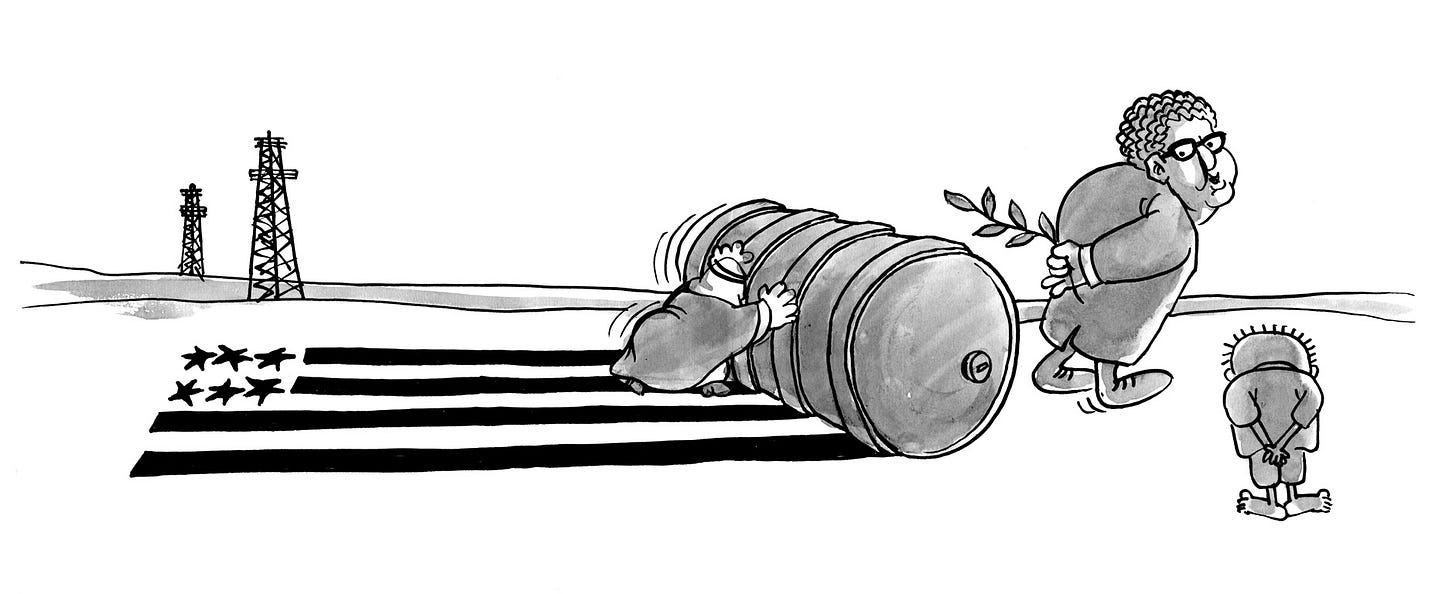
  • The Canadian Department of Global Affairs has updated its travel advice for people planning to travel to the United States, specifically warning people who have the gender marker “X” on their passports that they may face obstacles or restrictions while traveling abroad. The X marker is specifically granted to transgender or nonbinary individuals who do not want to place a “male” or “female”…

    Source

    This post was originally published on Latest – Truthout.

  • Factual information about Israel and Palestine may soon be outlawed in the California K-12 school system. Assembly Bill 715 is currently on Governor Newsom’s desk. The legislation was recently rushed through the California legislature, amended just days before passage, and voted on at 1 a.m. with almost no time for public comment.

    The hurry is intentional because opposition grows whenever people learn about it. AB715 is opposed by educators across the spectrum, including the California Teachers Association, California Faculty Association, Association of School Board Administrators, California School Boards Association, and Council of UC Faculty Associations. Civil rights organizations, such as ACLU Action, also oppose the legislation.

    What it purports to do

    Assembly Bill 715 aims to “prevent antisemitism.” It asserts, “Jewish and Israeli pupils are facing a widespread surge in antisemitic discrimination, harassment, and bullying. In many cases, such discrimination, harassment, and bullying has been so severe and pervasive that it has placed Jewish pupils at risk, or completely impeded their ability to learn or engage in school programs or activities.”

    The Anti-Defamation League (ADL) is the main source for the claim that there is a “widespread surge” in antisemitism. Their accuracy is widely disputed. As the Jewish Currents publication reports, “A line-by-line reassessment of the organization’s data illuminates the flaws in its methodology.”

    There is already protection in the California Education Code for genuine cases of discrimination or bullying. Section 220 of the code specifies that “No person shall be subjected to discrimination on the basis of disability, gender, gender identity, gender expression, nationality, race or ethnicity, religion, sexual orientation, or any other characteristic that is contained in the definition of hate crimes.” Through their ethnicity and religion, Jewish students are clearly a protected group. So are Israeli students. They can file claims of discrimination under existing legislation.

    What it will actually do

    AB715 aims to expand the definition of “discrimination” and outlaw any textbook, instructional material, or course content that “would subject a pupil to unlawful discrimination.”

    But what is “unlawful discrimination”? AB715 specifies that the U.S. National Strategy to Counter Antisemitism is the basis for identifying antisemitism. That report asserts, “Jewish students and educators are targeted for derision and exclusion on college campuses, often because of their real or perceived views about the State of Israel. When Jews are targeted because of their beliefs or their identity, when Israel is singled out because of anti-Jewish hatred, that is antisemitism.” The document claims, “an unshakeable commitment to the State of Israel’s right to exist, its legitimacy, and its security. In addition, we recognize and celebrate the deep historical, religious, cultural, and other ties many American Jews and other Americans have to Israel.”

    The U.S. National Strategy to Counter Antisemitism embraces the controversial “working definition” of antisemitism advanced by the International Holocaust Remembrance Alliance (IHRA). This definition has been widely criticized for its conflation of antisemitism with anti-zionism and criticism of the State of Israel. Over 100 human rights and civil society organizations reject the IHRA definition. Yet this is the definition which AB715 is based on.

    If passed, AB715 will result in strict regulation of education and educational material that might subject Jewish students to “unlawful discrimination”. Facts and informed opinions about the reality in Israel and Palestine may be considered “antisemitic” or likely to cause discomfort. For example, students will not learn:

    *The International Criminal Court has issued an arrest warrant for Israeli PM Netanyahu charging him with crimes against humanity.

    * The International Association of Genocide Scholars determined that Israel is committing genocide in Gaza.

    * Human Rights Watch, Amnesty International and Israel’s B’Tselem have ALL independently investigated and determined that Israel is an apartheid state.

    * The greatest scientist of the 20th century, Albert Einstein, was against the creation a Jewish state and sought a binational Arab Jewish state in Palestine.

    * In 1948, Einstein, Hanna Arendt, and other Jewish leaders denounced Menachim Begin as a Nazi and fascist.

    * The Israeli newspaper Haaretz documents a Jewish scholar who was zionist but now supports Hamas and considers their armed resistance legitimate and legal.

    All of the above are facts and assessments by credible organizations and individuals. AB715 is so vague yet sweeping that such education about Israel and Palestine may be considered “unlawful discrimination” against a pro-Israel student and therefore prohibited.

    The Costs of AB715

    If passed, AB715 will cost Californians dearly. It mandates the creation of a new Office of Civil Rights with an Antisemitism Prevention Coordinator and staff producing regular reports, investigations, etc. Incredibly, AB715 allows any member of the public to file a complaint, even anonymously. These complaints must be investigated and responded to within time requirements. School boards and superintendents, already busy, will have to spend precious time and resources investigating each and every complaint in a timely manner. The predictable result will be fear or prohibition on saying anything about Israel or Palestine. The Antisemitism Prevention Coordinator is also mandated to provide antisemitism education to teachers, administrators, and school boards.

    Under California’s “Golden State Plan to Counter Antisemitism,” millions of dollars are appropriated for education about the genocide which ended 80 years ago. Meanwhile, there is no funding and it appears the California legislature seeks to prevent education about the genocide happening today in Gaza.

    Making it even worse, AB715 invites lawsuits which will further burden the education system. The legislation says, “Civil law remedies, including but not limited to injunctions, restraining orders, or other remedies, may also be available to complainants.” Under AB715, as a gift for zionist activists, any member of the public can be a complainant.

    AB715 should NOT be signed into law

    The organizations representing California teachers, adminstrators, school superintendents and school boards are ALL against this legislation. AB715 will be costly, wasteful, and damaging to K-12 education in California. Where there are genuine cases of discrimination or bullying, existing legislation is adequate. All students are protected against discrimination or bullying under section 220 of the California Education Code. Where Jewish or Israeli students have been victimized, they have the same recourse as all students. They do not need preferential treatment.

    Teaching facts and expert opinions about Israel and Palestine is not antisemitic. It is history and current events.

    Feeling uncomfortable when learning some facts or opinions is not being a victim; it is being educated. People can disagree and have different perceptions; they should not be prevented from hearing facts and different perspectives.

    The intent of AB715 is clear: to restrict factual information about an important region of the world and to punish educators who present the Palestinian and anti-zionist Jewish perspective. Governor Newsom should not sign the legislation. To encourage him to make the right decision, contact him via this link.

    This legislation does not prevent antisemitism; it actually promotes it by demonstrating that major Jewish organizations and the Jewish Legislative Caucus have the power to push this legislation which will deny the history and current reality of the Palestinian people. Meanwhile, Jewish Voice for Peace and organizations across the education profession are working hard to stop this assault on the California education system.

    The post Will California Zionise K-12 Education? first appeared on Dissident Voice.
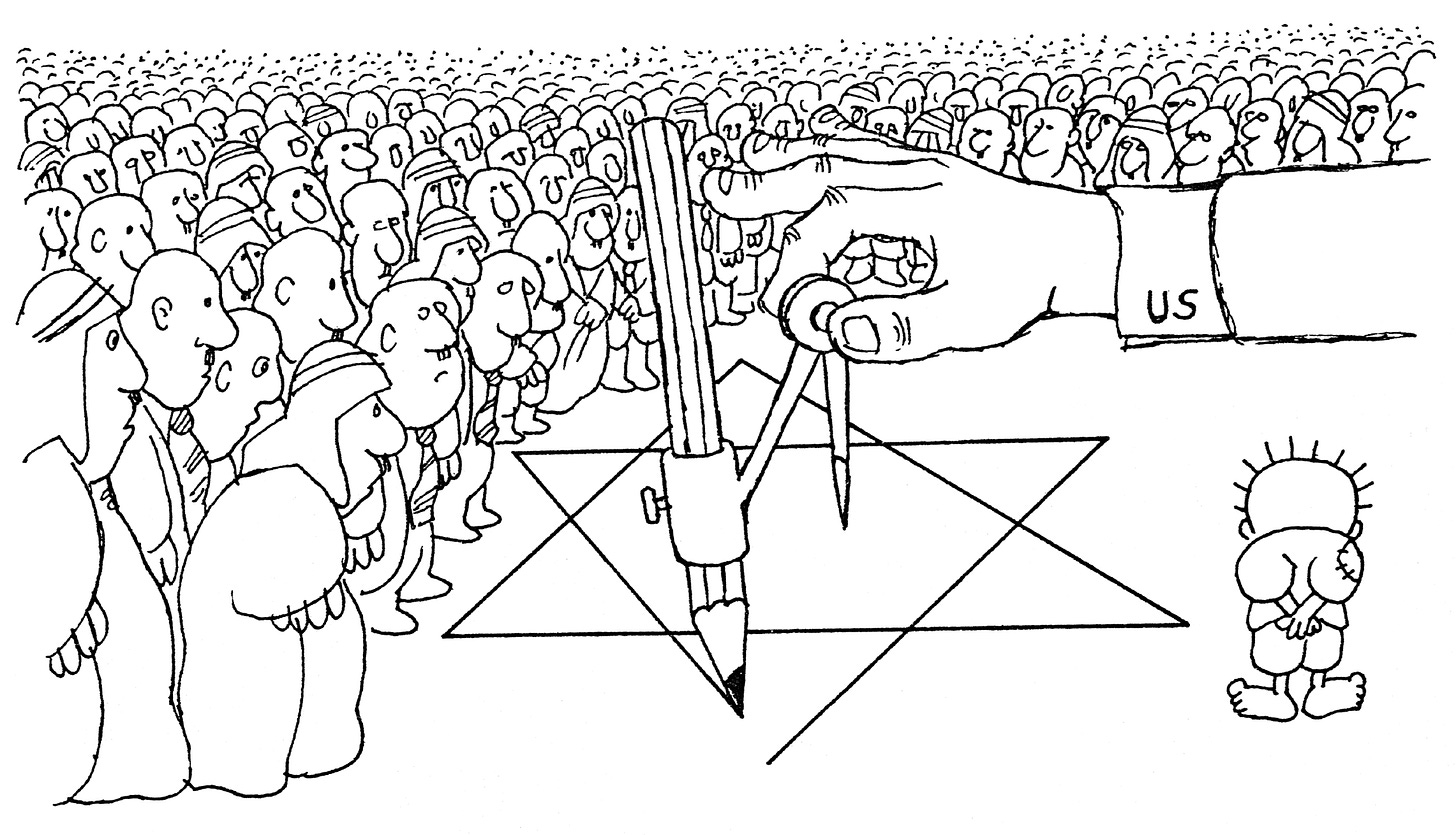
    This post was originally published on Dissident Voice.
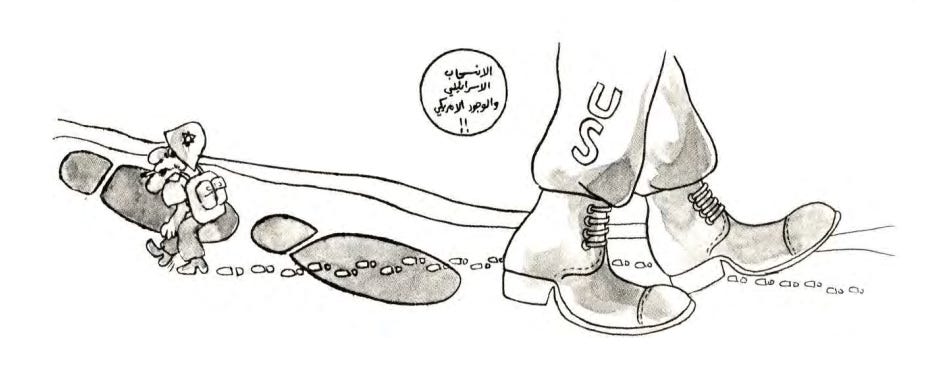
  • This is from Wikipedia:

    12 Angry Men is a 1957 American legal drama film directed by Sidney Lumet in his feature directorial debut, adapted by Reginald Rose from his 1954 teleplay.[6][7] A critique of the American jury system during the McCarthy era,[8][9] the film tells the story of a jury of twelve men as they deliberate the conviction or acquittal of a teenager charged with murder on the basis of reasonable doubt; disagreement and conflict among the jurors forces them to question their morals and values. It stars an ensemble cast, featuring Henry Fonda (who also produced the film with Rose), Lee J. CobbEd BegleyE. G. Marshall, and Jack Warden.

    This writer played the Ed Begley part in the play for an Off Broadway Production in 1993. I loved the character I portrayed, the bigoted owner of a filling station. Throughout the story this man, gruff and impatient and inconsiderate, finally got to the eleven other jurors, most of them who had originally agreed with his opinion of guilt for the defendant. Finally, his terrible, nasty and discriminating feelings toward the young defendant and the class he came from caused the others to stand up and turn their backs on him during his diatribe. He then had what psychologists today would label as a mental breakdown, as he sat for the remainder of the play with head down, trembling.

    When will the majority of Trump’s party and his MAGA followers finally have enough of this man and his craziness? Factor in the high tariffs that us working stiffs are paying at the checkout counter, and the tremendous cuts in our safety net, including Medicaid for millions of his own MAGA crowd, and the tax cuts for basically his super rich donors and corporations. Now we have a new one: Going against a law that has been on the books since 1878, the Posse Comitatus Act, which prohibits the military from being used for domestic law enforcement, unless directed through the Constitution via the Congress. He calls anyone who protests his directives a terrorist, and then he highlights them as left-wing. The sad irony is that Trump pardoned the terrorists from Jan 6, 2021. You remember that crowd? The fools who listened to him, Steve Bannon, Rudy Giuliani, Mel Brooks and others to go and break into a Capitol building filled with legislators in session. Imagine if a crowd of Black Lives Matter demonstrators took to that building, attempting to break in and disrupt the Congress. How many dead black bodies would be left on those grounds after being machine-gunned?

    One hopes that reason will finally hit those who have spent these 10 years supporting this guy. He should have been indicted after the January 6th Commission gave its report. At worst, he would now be in exile in his Mar-a-Lago estate, looking at videos of himself with Jeffrey and Ghislaine and who knows how many other super rich patrons of the three of them.

    The post 300+ Million Angry Americans first appeared on Dissident Voice.
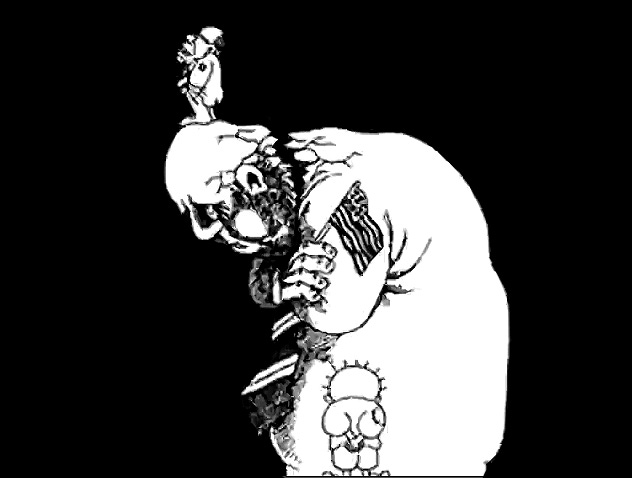
    This post was originally published on Dissident Voice.
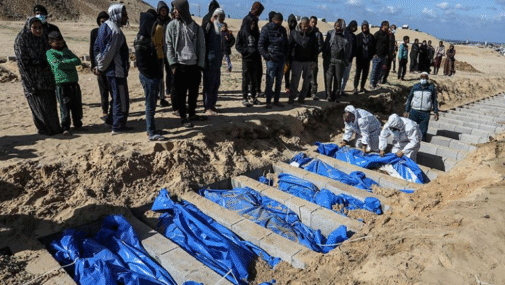
  • He had moments of discomfort and embarrassment – pressed into calling the Qatari Prime Minister by his host to apologise for striking Doha and made to pay lip service to the prospect of a Palestinian state – but Israel’s Benjamin Netanyahu had many reasons to be pleased. On September 29, President Donald Trump advanced a peace proposal that essentially preserves Israeli pre-eminence regarding the fate of Palestinians, though it entails a cessation of hostilities, an affirmation that Gazans would not be expelled (those leaving would have the right to return), and an injunction against Israeli annexation of the Strip. But Hamas, militarily and politically, would have to surrender all claims, with the Palestinian Authority shepherded and supervised by foreign powers.

    Trump’s peace proposal comprises twenty points. They include a “deradicalized terror-free zone”, Gaza’s redevelopment for the benefit of its people aided by “a panel of experts who have helped birth some of the thriving miracle cities in the Middle East”, and an immediate end to the war on its acceptance by the parties. Israel would withdraw to an agreed upon line in anticipation of a hostage release, during which all military operations would cease pending complete withdrawal. All hostages, dead and alive, would be returned within 72 hours, to be followed by the release of 250 Palestinian life sentence prisoners and Gazans detained since October 7, 2023.

    Hamas and militant factions will forfeit any role in governing Gaza, with any offensive infrastructure and equipment destroyed, but any of its members wishing to commit to “peaceful co-existence” and decommissioning of weapons will be granted amnesty, with those wishing to leave given safe passage to receiving countries. Compliance by the militant group will be overseen by “regional partners”. Full aid would resume, with the UN and Red Crescent restored to their role as chief distributors.

    On the issue of governance, a temporary technocratic “apolitical Palestinian committee” of qualified Palestinians and “international experts” would form a temporary transitional body, subject to a “Board of Peace” personally chaired by Trump. Most unfortunately, it is likely to include such figures as Sir Tony Blair, the Middle East’s typhoid Mary when it comes to peace. The transitional authority would hold the reins till reforms by the Palestinian Authority had been completed. With immediacy, however, the US would work with Arab and international partners to deploy an “International Stabilisation Force” to Gaza. The ISF will be responsible for training Palestinian police forces and provide support in terms of vetting recruits, with assistance from Jordan and Egypt.

    The proposal clearly envisages a significant role for the ISF, though says about who will comprise it. Israel will not, under the plan, occupy or annex Gaza, surrendering what territory it has taken to the ISF. Even if Hamas were to delay or reject the proposal, the Israeli Defense Forces would still hand over occupied territory of “terror-free areas” to the stabilisation force but retain a security perimeter to stem “any resurgent terror threat.”

    The plan also envisages the establishment of an interfaith dialogue to promote the values of peace between the parties, and a “credible pathway to Palestinian self-determination and statehood” if the programs for Gaza’s redevelopment and PA reform take place as planned. A vague US promise to “establish a dialogue” between Israel and the Palestinians regarding peaceful and prosperous co-existence rounds off the points.

    There was palpable grumbling from the Israeli camp. Netanyahu undoubtedly harbours ambitions of finishing “the job”, and there is little to say the war will not resume once the Israeli hostages are returned. Having previously rejected any governing role of the Palestinian Authority in Gaza, he now reluctantly accepts the idea subject to a “radical and genuine overhaul” of the body.

    Finance Minister Bezalel Smotrich, one of the right-wing heavies in the Israeli cabinet, is threatening to withdraw his Religious Zionist Party from the coalition. Agreeing with the plan had been “an act of wilful blindness that ignores every lesson of October 7.” It would only “end in tears.” Fellow zealot, National Security Minister Itamar Ben-Gvir, is also likely to be seething.

    Opposition leader Yair Lapid is also suspicious of Netanyahu, who tends to say “yes” when visiting Washington, “standing in front of the cameras at the White house, feeling like a breakthrough statesman.” On returning to Israel, however, he always seemed to add a qualifying “but”, his political base always reminding him “who the boss is.”

    In keeping with history, the Trump plan, even if it were to be implemented to the letter, enshrines the essential subordination of Palestinian goals to the dictates of other powers. Palestinian military presence is not only to be curtailed but essentially eliminated altogether. Hamas, never consulted regarding the peace terms, is to accept its own effacing. The PA is to accept its own subservience and infantilisation. The Gazans are also to accept an economic and development program dictated and directed from without. Statehood is to be kept in cold storage till appropriate, controlled conditions for its release are approved – and certainly not by the Palestinians themselves. They, it would seem, remain the considered errant children of international relations, mistrusted and requiring permanent, stern invigilation.

    The post Palestinian Subordination: Donald Trump’s Gaza Peace Plan first appeared on Dissident Voice.
    This post was originally published on Dissident Voice.