Category: United States

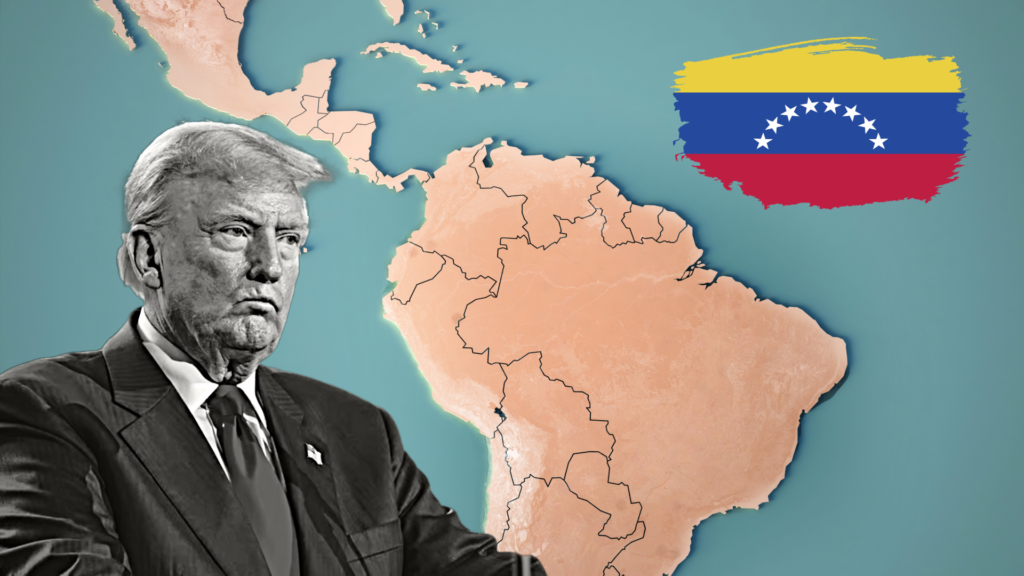
  • With the Trump imperium passing the half-year mark, the posture of the US empire is ever clearer. Whether animated by “America First” or globalism, the objective remains “full spectrum dominance.” And now with the neocon capture of the Democrats, there are no guardrails from the so-called opposition party.

    Call it the “new cold war,” the “beginning of World War III,” or – in Trump’s words – “endless war,” this is the era that the world has entered. The US/Zionist war against Iran has paused, but no one has any illusions that it is over. And it won’t likely be resolved until one side decisively and totally prevails. Ditto for the proxy war with Russia in Ukraine. Likely the same with Palestine, where the barbarity of war worsened to genocide. Meanwhile, since Obama’s “pivot to Asia,” the empire is building up for war with China.

    In Latin America and the Caribbean, the empire’s war on the world assumes a hybrid form. The carnage is less apparent because the weapons take the form of “soft power” – sanctions, tariffs, and deportations. These can have the same lethal consequences as bombs, only less overt.

    Making the world unsafe for socialism

    Some Western leftists vilify the defensive measures that Cuba, Venezuela, and Nicaragua must take to protect themselves from the empire’s regime-change schemes. In contrast, Washington clearly understands that these countries pose “threats of a good example” to the empire. Each subsequent US president, from Obama on, has certified them as “extraordinary threats to US national security.” Accordingly, they are targeted with the harshest coercive measures.

    In this war of attrition, historian Isaac Saney uses the example of Cuba to show how any misstep by the revolutionary government or societal deficiency is exaggerated and weaponized. The empire’s siege, he explains, is not merely an attempt to destabilize the economy but is a deliberate strategy of suffocation. The empire aims to instigate internal discontent, distort people’s perception of the government, and ultimately erode social gains.

    While Cuba is affected the worst by the hybrid war, both Venezuela and Nicaragua have also been damaged. All three countries have seen the “humanitarian parole” for their migrants in the US come to an end. Temporary Protected Status (TPS) was also withdrawn for Venezuelans and Nicaraguans. The strain of returning migrants, along with cuts in the remittances they had sent (amounting to a quarter of Nicaragua’s GDP), further impacts their respective economies.

    Higher-than-average tariffs are threatened on Venezuelan and Nicaraguan exports to the US, together with severe restrictions on Caracas’s oil exports. Meanwhile, the screws have been tightened on the six-decade US blockade of Cuba with disastrous humanitarian consequences.

    However, all three countries are fighting back. They are forming new trade alliances with China and elsewhere. Providing relief to Cuba, Mexico has supplied oil, and China is installing solar panel farms to address the now-daily power outages. High levels of food security in Venezuela and Nicaragua have strengthened their ability to resist US sanctions, while Caracas successfully defeated one of Washington’s harshest migration measures by securing the release of 252 of its citizens who had been incarcerated in El Salvador’s torturous CECOT prison.

    Venezuela’s US-backed far-right opposition is in disarray. The first Trump administration had recognized the “interim presidency” of Juan Guaidó, followed by the Biden administration declaring Edmundo González the winner of Venezuela’s last presidential election. But the current Trump administration has yet to back González, de facto recognizing Venezuelan President Nicolás Maduro.

    Nicaragua’s right-wing opposition is also reeling from a side-effect of Trump’s harsh treatment of migrants – many are returning voluntarily to a country claimed by the opposition to be “unsafe,” while US Homeland Security has even extolled their home country’s recent achievements. And some of Trump’s prominent Cuban-American supporters are now questioning his “maximum pressure” campaign for going too far.

    Troubled waters for the Pink Tide

    The current progressive wave, the so-called Pink Tide, was initiated by Mexican President Andrés Manuel López Obrador’s landslide victory in 2018. His MORENA Party successor, Claudia Sheinbaum, won by an even greater margin in 2024. Mexico’s first woman president has proven to be perhaps the world’s most dignified and capable sparring partner with the buffoon in the White House, who has threatened tariffs, deportations, military interdictions, and more on his southern neighbor.

    Left-leaning presidents Gabriel Boric in Chile and Gustavo Petro in Colombia are limited to a single term. Both have faced opposition-aligned legislatures and deep-rooted reactionary power blocs. Chilean Communist Party candidate Jeanette Jara is favored to advance to the second-round presidential election in November 2025, but will face a challenging final round if the right unifies, as is likely, around an extremist candidate.

    As the first non-rightist in Colombia’s history, Petro has had a tumultuous presidential tenure. He credibly accuses his former foreign minister of colluding with the US to overthrow him. However, the presidency could well revert to the right in the May 2026 elections.

    Boric, Petro, Uruguay’s Yamandú Orsi, and Brazil’s Luiz Inácio Lula da Silva met in July as the region’s center-left presidents, with an agenda of dealing with Trump, promoting multilateralism, and (we can assume) keeping their distance from the region’s more left-wing governments.

    With shaky popularity ratings, Lula will likely run for reelection in October 2026. As head of the region’s largest economy, Lula plays a world leadership role, chairing three global summits in a year. Yet, with less than a majority legislative backing, Lula has triangulated between Washington and the Global South, often capitulating to US interests (as in his veto of BRICS membership for Nicaragua and Venezuela). Regardless, Trump is threatening Brazil with a crippling 50% export tariff and is blatantly interfering in the trial of former right-wing President Jair Bolsonaro, accused of insurrection. So far, Trump’s actions have backfired, arousing anger among Brazilians. Lula commented that Trump was “not elected to be emperor of the world.”

    In 2021, Honduran President Xiomara Castro took over a narcostate subservient to Washington and has tried to push the envelope to the left. Being constitutionally restricted to one term, Castro hands the Libre party candidacy in November’s election to former defense minister Rixi Moncada, who faces a tough contest with persistent US interference.

    Bolivia’s ruling Movement Toward Socialism (MAS) Party is embroiled in a self-destructive internal conflict between former President Evo Morales and his former protégé and current President, Luis Arce. The energized Bolivian right wing is spoiling for the August 17th presidential election.

    Israeli infiltration accompanies US military penetration

    Analyst Joe Emersberger notes: “Today, all geopolitics relates back to Gaza where the imperial order has been unmasked like never before.” Defying Washington, the Hague Group met in Colombia for an emergency summit on Gaza to “take collective action grounded in international law.” On July 16, regional states – Bolivia, Cuba, Colombia, Nicaragua, and Saint Vincent and the Grenadines – endorsed the pledge to take measures in support of Palestine, with others likely to follow. Brazil will join South Africa’s ICJ complaint against Israel.

    At the other end of the political spectrum are self-described “world’s coolest dictator” Nayib Bukele of El Salvador and confederates Javier Milei of Argentina and Daniel Noboa of Ecuador. As well as cozying up to Trump, they devotedly support Israel, which has been instrumental in enabling the most brutal reactionaries in the region. Noboa duly tells Israel’s Netanyahu that they “share the same enemies.”

    In February, the US Southern Command warned: “Time is not on our side.” The perceived danger is “methodical incursion” into our “neighborhood” by both Russia and China. Indeed, China has become the region’s second-largest trading partner after the US, and even right-wing governments are reluctant to jeopardize their relations with Beijing. The empire’s solution is to “redouble our efforts to nest military engagement,” using humanitarian assistance as “an essential soft power tool.”

    Picking up where Biden left off, Trump has furthered US military penetration, notably in Ecuador, Guyana, Brazil, Panama, and Argentina. The pandemic of narcotics trafficking, itself a product of US-induced demand, has been a Trojan Horse for militarist US intervention in Haiti, Ecuador, Peru, and threatened in Mexico.

    In Panama, President José Mulino’s obeisance to Trump’s ambitions to control the Panama Canal and reduce China’s influence provoked massive protests. Trump’s collaboration in the genocide of Palestinians motivated Petro to declare that Colombia must leave the NATO alliance and keep its distance from “militaries that drop bombs on children.” Colombia had been collaborating with NATO since 2013 and became the only Latin American global partner in 2017.

    Despite Trump’s bluster – what the Financial Times calls “imperial incontinence” – his administration has produced mixed results. While rightist political movements have basked in Trump’s fitful praise, his escalating coercion provokes resentment against Yankee influence. Resistance is growing, with new alliances bypassing Washington. As the empire’s grip tightens, so too does the resolve of those determined to break free from it.

    The post Trump’s Latin American Policies Go South first appeared on Dissident Voice.

    This post was originally published on Dissident Voice.

  • Now by coming in and being part of the cover-up, the Trump administration has become part of it.”—Alex Jones, InfoWars

    Once again, the American police state is choosing to protect predators, not victims.

    Jeffrey Epstein—the hedge fund billionaire/convicted serial pedophile and sex trafficker—may be dead, but the machinery that empowered and protected him is still very much alive.

    You see, the Epstein case was never just about Epstein—it was about the entire edifice of power that shields the ruling class, silences victims, and erases accountability.

    Thus, the latest about-face declarations from the Trump administration—that Epstein had no client list, that he did, in fact, kill himself, and that there’s nothing more to discuss or investigate so we should just move on—have only reinforced what many have suspected all along: the system is rigged in order to protect the power elite because the power elite are the system.

    In this age of partisan politics and a deeply polarized populace, corruption—especially when it involves sexual debauchery, depravity, and predatory behavior—has become the great equalizer.

    With the reemergence of Jeffrey Epstein’s ghost in the public discourse, we are once again reminded of just how deep the rot goes.

    Politics, religion, entertainment, business, law enforcement, the military—it doesn’t matter the arena or affiliation: all are riddled with the kind of seedy, depraved behavior that gets a free pass when it involves the powerful.

    For years, the Epstein case has stood as a grotesque emblem of the depravity within America’s power elite: billionaires, politicians, and celebrities who allegedly trafficked in sex with young girls while insulated from accountability.

    It is believed that Epstein, who died in jail after being arrested on charges of molesting, raping, and sex trafficking dozens of young girls, operated a sex trafficking ring not only for his own personal pleasure but also for that of his friends and business associates.

    According to The Washington Post, “several of the young women…say they were offered to the rich and famous as sex partners at Epstein’s parties.”

    Despite the government’s insistence that there’s nothing more to see, here’s what the public record already reveals:

    • Epstein ferried his friends about on his private plane, nicknamed the “Lolita Express” after the Nabokov novel, due to the presence of what appeared to be underage girls on board.
    • Both Bill Clinton and Donald Trump were counted among Epstein’s friends.
    • Both Clinton and Trump were at one time passengers on the Lolita Express.
    • Both Clinton and Trump are renowned womanizers who have been accused of sexual impropriety by a significant number of women over the years. In fact, The Rutherford Institute represented Paula Jones in her landmark sexual harassment lawsuit against then-President Clinton—a case that helped expose how far the political establishment will go to shield its own.

    So you have to wonder… when President Trump, who has used his administration’s war on human trafficking to justify expanding the government’s police state powers, quietly dismantles the very government agencies tasked with investigating and exposing sex trafficking… what exactly is going on?

    The message from the top is clear: there will be no accountability.

    This isn’t justice. It’s a double standard—one set of rules for the untouchables, and another for everyone else.

    If it looks like a cover-up, smells like a cover-up, and appears to benefit all the usual suspects, is it so far-fetched to suspect that the government is once again closing ranks to protect the members of its power elite?

    We’ve seen it before: from the CIA’s MK-Ultra experiments and the FBI’s COINTELPRO operations to CIA black sites and NSA mass surveillance.

    Each time, secrecy protected the powerful and betrayed the people.

    And it will keep happening—again and again—unless we confront the truth hiding in plain sight: that abuse of power is not an aberration of the system—it is the system.

    Nowhere is that more apparent than in the shadow economy of sex trafficking, where power, profit, and predation converge.

    This is America’s seedy underbelly.

    Child sex trafficking—the buying and selling of women, young girls, and boys for sex, some as young as 9 years old—has become big business in America. It is the fastest growing business in organized crime and the second most-lucrative commodity traded illegally after drugs and guns.

    This is the darkness at the heart of the American police state: a system built to shield the powerful from justice.

    While Epstein’s alleged crimes are heinous enough on their own, he is part of a larger narrative of how a culture of entitlement becomes a cesspool and a breeding ground for despots and predators.

    Give any one person—or government agency—too much power and allow them to believe that they are entitled, untouchable, and will not be held accountable for their actions, and those powers will be abused.

    We see this dynamic play out every day in communities across the United States.

    A cop shoots an unarmed citizen for no credible reason and gets away with it. A president employs executive orders to sidestep the Constitution and gets away with it. A government agency spies on its citizens’ communications and gets away with it. An entertainment mogul sexually harasses aspiring actresses and gets away with it. The U.S. military bombs a civilian hospital and gets away with it.

    It’s no coincidence that the same administration dismantling offices tasked with fighting human trafficking is also defunding the few agencies left to hold law enforcement accountable.

    This is how the system works, protecting the untouchables—not because they’re innocent, but because the system has made them immune.

    Abuse of power—and the ambition-fueled hypocrisy and deliberate disregard for misconduct that make those abuses possible—works the same whether you’re talking about sex crimes, government corruption, or the rule of law.

    Unless something changes in the way we deal with these ongoing, egregious abuses of power, the predators of the police state will continue to wreak havoc on our freedoms, our communities, and our lives.

    For too long now, Americans have tolerated an oligarchy in which a powerful, elite group of wealthy donors is calling the shots.

    We need to restore the rule of law for all people, no exceptions.

    The rule of law means no one gets a free pass—no matter their wealth, status, or political connections.

    As I make clear in my bookBattlefield America: The War on the American People, and in its fictional counterpart, The Erik Blair Diaries, the empowerment of petty tyrants and political gods must come to an end.

    The post The Untouchables: The Sexual Predators Within America’s Power Elite first appeared on Dissident Voice.

    This post was originally published on Dissident Voice.
  • Denver-based activists are seeking to shut off Flock ALPR (Automated License Plate Recognition) cameras in their city after reports indicate that the footage collected is being used for ICE arrests and to infringe on abortion rights.

    Flock ALPR cameras take photos of the license plates of passing cars, and are used by law enforcement throughout the country to track down vehicles.

    According to data reviewed by 404 Media, although Flock does not have a direct contract with ICE, the agency obtains data from Flock cameras through requests made to local law enforcement.

    The post Colorado Activists Fight To Disable Cameras Aiding Arrests appeared first on PopularResistance.Org.

    This post was originally published on PopularResistance.Org.

  • The US government intends to publish a plan on Wednesday that calls for the export of American AI technology abroad and a crackdown on state laws deemed too restrictive to let it flourish. According to a summary of the draft plan seen by Reuters, the White House will bar federal AI funding from going to…

    The post White House to unveil plan to push US AI abroad appeared first on InnovationAus.com.

    This post was originally published on InnovationAus.com.

  • Impotence takes various forms. Before the daily massacres, incidents of starvation and dispossession of Palestinians taking place in the Gaza Strip with primeval cruelty, international impotence in the face of actions by the Israeli state has become a mockery of itself. The calls to end the war in Gaza grow in number, even among Israel’s allies, but little in substance is being done about it. What matters are statements that speak to a wounded conscience that do little to alter anything on the ground.

    One such statement, released on July 21, proved to be yet another one of those flossy effusions made by, as Macbeth might have said, idiots, full of sound and fury, signifying nothing. The idiots numbered many: 28 international partners, including the foreign ministers of 27 states and, obviously not wanting to miss out, the EU Commissioner for Equality, Preparedness and Crisis Management. All, bar Australia, were from Europe. “We, the signatories listed below, come together with a simple, urgent message: the war in Gaza must end now.”

    The statement goes on to mention the drearily obvious. “The Israeli government’s aid delivery model is dangerous, fuels instability and deprives Gazans of human dignity.” The “drip feeding of aid and inhumane killing of civilians, including children, seeking to meet their most basic needs of food and water” deserved condemnation. The deaths of over 800 Palestinians (the numbers are most certainly higher) while seeking aid was “horrifying”. Even here, the language lacked rage. Israel’s “denial of essential humanitarian assistance to the civilian population is unacceptable.” The government “must comply with its obligations under international humanitarian law.”

    To that end, Israel was called upon to restore the flow of aid and enable the work of the United Nations and humanitarian NGOs to resume in the Strip. This is obviously something that the Netanyahu government is conscious of avoiding, given the systematic program of controlled starvation and deprivation being inflicted.

    To add balance, the statement also notes the plight of the Israeli hostages still held by Hamas, their continued detention also something to be condemned. They were to be immediately and unconditionally released with a negotiated ceasefire being the best way of doing so.

    The signatories do go so far as to acknowledge the dangers and intentions of Israel’s administrative measures that seek “territorial or demographic change in the Occupied Palestinian Territories. The E1 settlement plan announced by Israel’s Civil Administration, if implemented, would divide a Palestinian state in two, marking a flagrant breach of international law and critically undermine the two-state solution.” The West Bank is also recognised in similar light, with the signatories urging a cessation to the violence taking place against Palestinians and a halt to the building of settlements across the territory “including East Jerusalem”.

    These statements are always interesting for what they omit. No toothy measures to address the maltreatment of Palestinian civilians are stipulated, other than an encouragement of “a common effort to bring this terrible conflict to an end”. A benign, most unthreatening promise is made: the prospect of taking “further action to support an immediate ceasefire and a political pathway to security and peace for Israelis, Palestinians and the entire region.” This may be code for recognition of a Palestinian state, fanciful given the systematic pulverisation of the people who would inhabit it. The signatory list also omits Germany and, most importantly of all, the United States, Israel’s arch guardian and evangelical sponsor.

    The US ambassador to Israel, Mike Huckabee, gave us a flavour of feelings in Washington about the signatories in a post on X. “How embarrassing for a nation to side [with] a terror group like Hamas & blame a nation whose civilians were massacred for fighting to get hostages released.” In another post that made a vague shot at justifying the unjustifiable, the ambassador absolved Israel in its conduct; only the militant group Hamas deserved exclusive blame. The nations in question had “put pressure on @Israel instead of savages of Hamas! Gaza suffers for 1 reason: Hamas rejects EVERY proposal. Blaming Israel is irrational.”

    The Israeli foreign minister Gideon Sa’ar, ever lurking in the twilight of alternative reality, reasoned the statement away, much as relatives would the views of a demented, unloved aunt. “If Hamas embraces you – you are in the wrong place.” Praise from the group was itself “proof of the mistake they [the signatory countries] made – part of them out of good intentions and part of them out of an obsession against Israel.”

    While the various foreign ministers were flashing their plumage of principles and international humanitarian law, the Israeli Defense Forces had busily commenced an operation on a part of Gaza they have yet to level: Deir al-Balah. Given its importance as a humanitarian hub that still houses UN staff and guesthouses, more slaughter is imminent.

    Till Israel assumes the status of a pariah state it seemingly craves to become, its rogue army confined and depleted, its economy humbled and isolated, the industrial appetite for slaughter and dispossession will only continue. The Palestinians will be left to be relics of moral anguish, banished to the footnotes of bloodied history along with many more statements of concern and sheer impotence.

    The post Impotent Effusions: The Joint Statement on Gaza first appeared on Dissident Voice.

    This post was originally published on Dissident Voice.

  • When the U.S. Constitution became operational on March 4, 1789, it didn’t include a people’s recall referendum/initiative for president and other federal officials. And still hasn’t. Only 19 states so far have voted them into their constitutions—beginning with Nebraska in 1897 and up to Mississippi, the last so far, in 1992.

    We can only speculate why the Constitution’s Framers omitted a national recall in their lengthy deliberations in drafting the rules governing this young nation. They seem to have counted on a provision that a House impeachment and a Senate trial could oust a president. Somehow, they could not conceive of an autocratic or impaired president failing to uphold the Constitution, ruling a cowardly Congress, ignoring the courts, and crowning himself as the nation’s first lifetime dictator.

    For starters, they obviously did not want a parliament or royalty to rule, nor voting by women, the property-less, and Native Americans. After all, how could the uneducated read or understand such ballot issues as budgets, taxes, war, corruption, property lines, gerrymandering, and the like? Besides, political leaders and officeholders recognized that voters might oust Senate and House members, Supreme Court judges.

    Also, logistics of conducting a nationwide referendum or initiative was a factor, much less paying millions for it. Interestingly, it certainly hasn’t been a problem in electing a president in our 250-year history.

    It also took a century before people recognized that state legislators failed to pass laws desperately needed. As an election expert on Ballotpedia’s website explained the origin of such oversight:

    By the late 19th century, many citizens wanted to increase their check on representative government. Members of the populist and progressive movements were dissatisfied with the government; they felt that wealthy special interest groups controlled the government and that citizens had no power to break this control. A comprehensive platform of political reforms was proposed that included women’s suffrage, secret ballots, direct election of [legislative] senators, recall elections and primary elections.

    The theory of the referendum process was that the individual was capable of enhancing the representative government. The populists—who believed citizens should rule the elected and not allow the elected to rule the people—and the progressives took advantage of methods that were already in place for amending state constitutions, and they began pushing state legislators to add an amendment that would allow for an initiative and popular referendum process.

    Thus, the recall referendum/initiative system was born in those 19 states—but not for a president and other federal officials.

    Soon, recalls took out mayors, judges, and two governors (North Dakota in 1921, California in 2003) and nearly California’s Gov. Gavin Newsom in 2021. He won by 69.1 percent of the vote, having raised $70 million for media promotion. And he also campaigned around the state to “meet-and-greet” voters. The estimated cost to California taxpayers: $215 million. Last year, Newsom faced yet another recall by opponents who then failed to get the required 1,311,963 petition signatures in time to make the state ballot.

    A presidential recall referendum would require a Constitutional Amendment by passage from Congress and state legislators—and approval by 38 states with a seven-year deadline to gather signatures. So prospects for expelling Trump do seem bleak. But all the 27 Amendments once had the same challenges and met them despite geographic distances and lacking today’s electronic communication systems.

    But the majority of states passed the Equal Rights Amendment (ERA) within the first year. Trump has three and a half years left to continue wreaking havoc on the American public and exchanging democracy for a dictatorship. If his first six months is any indication of peoples’ reaction to his rule, it brought at least five million angry protesters to the streets in a “No Kings” demonstrations against him a day before his 79th birthday. So consider what his continuing violations of the Constitution and democracy will do to destroy both during this term.

    However, a new factor about election numbers can now foretell favorable outcomes if a recall movement gets started:

    If the political marker of 3.5 percent of a nation’s voters opposes a dictator, the regime will fold, according to extensive long-term quantitative research noted recently by Harvard University professor Erica Chenoweth . America’s electorate was 154,000,000 in 2024, so 3.5 percent means it would take only 5.4 million voters to win a Constitutional Amendment referendum for recalling Trump.

    Another factor is that far more millions would be voting in a Trump recall election than in 2024. For example, those five million No Kings protesters have family and friends who vote. So do those who couldn’t or wouldn’t participate. Then, add Trump’s social and healthcare victims affected by his “Big, Beautiful” budget-cutting bill he just signed into law. Like the 71, 258, 215 currently enrolled in Medicaid who will lose its benefits. Not to mention recipients’ families and friends. The 41 million on Trump’s chopping block for SNAP (Supplemental Nutrition Assistance Program) certainly would vote for a recall Amendment. So would the 73.9 million receiving Social Security benefits he is threatening. Include, too, the tens of thousands of federal employees (plus family/friends) who have just been fired/laid off by Trump’s hatchet man Elon Musk.

    Multiply the total by 3.5 percent.

    Republicans in Congress who voted for that bill because of Trumpian and donor threats can count that percentage. If they can’t or won’t, furious and outspoken constituents in town halls or at campaign rallies will awaken them in the months before the 2026 mid-term elections. So will public confrontations of state legislators.

    In such a hostile constituent climate, it would seem to be fairly easy for them to ignore heavy pressure by Trump and donors to pass a recall Amendment. He will, of course, veto it, but Congress can override the veto with a two-thirds affirmative vote in both houses (House: 290; Senate: 67). Apply that 3.5 percent to those totals.

    Another supportive factor for a recall Amendment is the historical precedent of success by people finally ridding their countries from years of repressive and rapacious rulers. The French did it with revolution and guillotine, beginning in 1789. Our revolution began brewing in 1775 and took eight years of war to free us from Britain’s mad King George III. Both bloody uprisings were inspired and patterned by the achievement of democracy and people’s rights, first won 800 years ago in England. That’s when its barons forced King John to apply the royal seal approving Magna Carta (the Great Charter) June 15, 1215 on Runnymede meadows.

    That monumentally important document ended immunity for imperious, narcissistic kings under the centuries-old “Divine Right” policy, starting with the feckless King John’s tyrannical reign (1166-1216). Most of its 63 clauses set out the rights of subjects and kings, established British law, and influenced the authors of both the U.S. Constitution and France’s 1789 Declaration of the Rights of Man and of the Citizen.

    John was a pampered, favored youngest son of Henry II and one of four brothers. He inherited a fortune, vast taxable properties in England and whole sections of France. With a lascivious nature, he married twice and had numerous mistresses despite often being away with the army to fight the French from stealing his holdings. His early struggle to seize the throne revealed deviousness, murderous ambition, insecurity, paranoia, physical cowardice—and greed. As a king, he jailed opponents, bullied absolute loyalty from his officials and the army, stole lands from the nobility. Worst of all, he never ceased extorting excessive taxes from the elite, commoners, and the English church.

    Sound like a president we know?

    The bad years began for King John in 1209. He was briefly excommunicated for opposing Pope Innocent III’s choice of England’s Archbishop of Canterbury. He suspected the candidate’s involvement with the growing unrest of barons and the people. After an attempted assassination in 1212 in the 14th year of his reign of terror, John went after the barons he suspected of the deed. But they had banded together, began drafting Magna Carta (chiefly protecting themselves from future kings), and raised an army against him for a civil war.

    Only fear of certain defeat by the barons and a near-empty treasury could have brought a humbled King John to use negotiation to escape Magna Carta’s clauses. He had no intention of obeying them—especially the security clause (61) permitting 25 barons to seize his property and “distrain” him if he disobeyed the charter. He even got the Pope to annul the document a month later. The war ended with John’s death from dysentery the following year. By 1225, Magna Carta was in force.

    This extraordinary historical event could now be repeated almost exactly 810 years later, lacking only the same solution: a final uprising of the high and low classes to strip Trump of his office and fortunes by a recall Amendment. It’s not so wild a dream at all.

    We don’t have the vast organizational obstacles of the 13th century that took 17 years to put Magna Carta in place. But we do have the same furious energy and zeal of King John’s outraged public to oust a dictator and save the Constitution and democracy.

    Consider that some 500 national organizations exist—MoveOn, Indivisable, and SEIU to Win Without War, Greenpeace, Patriotic Millionaires, and ACLU—to set up a nationwide alliance for such a cause.

    The speed, efficiency, and effectiveness of the recent No Kings protest against Trump’s dictatorial regime shows what’s possible when a coalition is galvanized for a great historical cause. Its organizers in the 50-50-1 group (“50 states, 50 protests, one movement”), American Opposition, and Indivisible linked 193 powerful progressive “partners” driven by a singleness of purpose: to depose Trump and his regime.

    So why not a repeat of this astonishing logistical success for a national recall referendum? Millions of volunteers would be more than willing to knock on doors, do teach-ins and phone-banking, lead rallies and marches, design signs and flyers, write articles, stuff envelopes, send emails and other electronic “reach-outs,”—and contribute funds large and small for expenses.

    Trump’s high crimes and misdemeanors against the American people will only get worse if we do nothing in the next few weeks. Let’s get to it!

    The post Is It Time to Start a Trump Recall Movement? first appeared on Dissident Voice.

    This post was originally published on Dissident Voice.

  • In March this year, the Trump administration effectively shuttered the Voice of America, a broadcasting vehicle for the selective promotion of US policy and culture for over eight decades. Nearly all of its 1,300 staff of producers, journalists and assistants, including those working at the US Agency for Global Media, were placed on administrative leave. Kari Lake, President Donald Trump’s appointment to lead the Voice, was unflattering about that “giant rot and burden to the American taxpayer.” Last month, Lake confirmed that layoff notices had been sent to 639 employees.

    The motivations for attacking VOA were hardly budgetary. The White House cited a number of sources to back the claim that the organisation had become an outlet of “radical propaganda.” VOA veteran Dan Robinson features, calling it “a hubris-filled rogue operation often reflecting leftist bias aligned with partisan national media.” The Daily Caller moaningly remarks that VOA reporters had “repeatedly posted anti-Trump comments on their professional Twitter accounts, despite a social media policy requiring employee impartiality on social media platforms.” The Voice, not aligned with MAGA, had to be silenced.

    The measure by Trump drew its inevitable disapproval. VOA director, Michael Abramowitz, stuck to the customary line that his organisation “promotes freedom and democracy around the world by telling America’s story and by providing objective and balanced news and information, especially for those living under tyranny.” Reporters Without Borders condemned the order “as a departure from the US’s historic role as a defender of free information and calls on the US government to restore VOA and urges Congress and the international community to take action against his unprecedented move.”

    As with much criticism of Trump’s seemingly impulsive actions, these sentimental views proved misguided and disingenuous. Trump is on uncontentious ground to see the Voice as one dedicated to propaganda. However, he misunderstands most nuttily that the propaganda in question overwhelmingly favours US policies and programs. His quibble is that they are not favourable enough.

    Prohibited from broadcasting in the United States, VOA’s propaganda role was always a full-fledged one, promoting the US as a spanking, virtuous brand of democratic good living in the face of garden variety tyrants, usually of the political left. Blemishes were left unmentioned, the role of the US imperium in intervening in the affairs of other countries considered cautiously. Loath to adequately fund domestic public service providers like National Public Radio (NPR), the US Congress was content to fork out for what was effectively an information arm of government sloganeering for Freedom’s Land.

    The VOA Charter, drafted in 1960 and signed into law as Public Law 94-350 by President Gerald Ford on July 12, 1976, expressed the view that “The long-range interests of the United States are served by communicating directly with the peoples of the world by radio. To be effective, the Voice of America must win the attention and respect of listeners.” It stipulated various aspirational and at times unattainable aims: be reliable on the news, have authoritative standing, pursue accuracy, objectivity and be comprehensive. America was to be represented in whole and not as any single segment of society, with the VOA representing “a balanced and comprehensive projection of significant American thought and institutions.” US policies would be presented “clearly and effectively” as would “responsible discussions and opinion on these policies.”

    The aims of the charter were always subordinate to the original purpose of the radio outlet. The Voice was born in the propaganda maelstrom of World War II, keen to win over audiences in Nazi Germany and its occupied territories. Authorised to continue operating by the Smith-Mundt Act of 1946, it continued its work during the Cold War, its primary task that of fending off any appeal communism might have. Till October 1948, program content was governed under contract with the NBC and CBS radio networks. This troubled some members of Congress, notably regarding broadcasts to Latin America. The US State Department then assumed control, authority of which passed on to the newly created United States Information Agency (USIA).

    In such arrangements, the objective of fair dissemination of information was always subject to the dictates of US foreign policy. What mattered most, according to R. Peter Straus, who assumed the directorship of VOA in 1977, was to gather “a highly professional group of people and trying to excite them about making the freest democracy in the world understandable to the rest of the world – not necessarily loved by, nor even necessarily liked by but understood by the rest of the world.” The State Department left an enduring legacy in that regard, with the amalgamation of its Bureau of Educational and Cultural Affairs with the USIA in 1978 during the Carter administration. Furthermore, prominent positions at the Voice tended to be filled by career members of the diplomatic corps.

    Given that role, it was rather rich to have the likes of Republican Congresswoman Young Kim of California question Trump’s executive order, worried that closing the Voice would effectively silence a body dedicated to the selfless distribution of accurate information. Accuracy in that sense, alloyed by US interests, would always walk to the dictates of power. Kim errs in assuming that reporting via such outlets, emanating from a “free” society, must therefore be more truthful than authoritarian rivals. “For a long time now, our reporting has not been blocked by adversaries like China, Russia, Iran and North Korea,” she claimed in March. “Now, we are ourselves shutting off the ability to get the information into those oppressed regimes to the people that are dying for the real truth and information.” As such truth and information is curated by an adjunct of the State Department, such people would be advised to be a tad sceptical.

    The falling out of favour with Trump, not just of the Voice, but such anti-communist creations of the Cold War like Radio Free Europe, Radio Liberty and Radio Free Asia, is a loss for the propagandists. Arguments that stress the value of their continued existence as organs of veracity in news and accuracy, correctives to the disinformation and misinformation of adversaries, are deludedly slanted. All forms of disinformation and misinformation should be battled and neither the Voice’s critics, nor its fans, seem to understand what they are. VOA and its sister stations could never be relied upon to subject US foreign and domestic policy to rigorous critique. Empires are not in the business of truth but power and effect. Radio stations created in their name must always be viewed with that in mind.

    The post Propaganda Siren: Silencing the Voice of America first appeared on Dissident Voice.

    This post was originally published on Dissident Voice.

  • David Barnea, the director of Israel’s Mossad spy agency, held meetings in Washington this week seeking help from US officials to convince countries to take hundreds of thousands of Palestinians who Israel plans to ethnically cleanse from Gaza, Axios reported on 19 July.

    According to two sources, the Israeli spy chief told White House envoy Steve Witkoff that Israel has been in talks with Ethiopia, Indonesia, and Libya to accept Palestinians as refugees.

    While Prime Minister Benjamin Netanyahu claims his government’s goal of expelling much or all of Gaza’s population will be “voluntary” for Palestinians, US and Israeli legal experts say it would constitute ethnic cleansing and a clear war crime.

    The post Mossad Chief Pushes For US Assistance In Ethnically Cleansing Gaza appeared first on PopularResistance.Org.

    This post was originally published on PopularResistance.Org.

  • NewFarmWorkers.jpg

    In the 1970s, during the height of the farmworker movement, United Farm Workers leader César Chávez often rallied supporters with the phrase “Sí se puede” (“Yes we can”)—a slogan coined by UFW co-founder Dolores Huerta in 1972 during Chávez’s 25-day fast in Phoenix, Arizona. Today, as undocumented farmworkers face aggressive immigration enforcement in California’s fields, a darker refrain might be more fitting: “Cuidado con ICE”—watch out for ICE.

    Farmworkers say they feel like they are being “hunted like animals,” as they desperately try to avoid getting swept up by Donald Trump’s “crackdown on immigration,” the Guardian’s Michael Sainato recently reported.

    During interviews with farm workers and farmworker organizers, Sainato pointed out that “Raids by Immigration and Customs Enforcement (ICE) have caused workers to lose hours and income, and forced them into hiding at home.”

    Trump has been all over the map in defining his policy toward undocumented farm workers. In April, according to Fruit Growers News, “Trump suggested that farmers could help retain key workers by submitting letters of recommendation to delay deportations and support legal re-entry.

    “‘A farmer will come in with a letter concerning certain people saying, they’re great, they’re working hard, we’re going to slow it down a little bit for them and then we’re going to ultimately bring them back. They’ll go out, they’re going to come back as legal workers,’ Trump said during the Cabinet meeting.”

    In late-June, CNBC reported that Trump told Fox News that “We’re working on [a plan] right now. We’re going to work it so that some kind of a temporary pass where people pay taxes, where the farmer can have a little control, as opposed to you walk in and take everybody away.”

    Trump added: “What we’re going to do is we’re going to do something for farmers, where we can let the farmer sort of be in charge. The farmer knows. He’s not going to hire a murderer. When you go into a farm and he’s had somebody working with him for nine years doing this kind of work, which is hard work to do, and a lot of people aren’t going to do it, and you end up destroying a farmer because you took all the people away. It’s a problem.”

    That plan, which would put farmers in charge of immigration enforcement, “alarmed workers’ rights advocates, who suggested they were being asked to surrender ‘their freedom to their employer’ just to stay in the country,” the Guardian noted.

    “You can’t go out peacefully to do things, or go to work with any peace of mind anymore. We’re stressed out and our kids are stressed out. No one is the same since these raids started,” one farm worker told the Guardian. “We are stressed and worrying if it continues like this, what are we going to do because the rent here is very expensive and it has affected us a lot. How are we going to make ends meet if this continues?”

    Of the more than 2.6 million farm workers in the US, most are Hispanic, non-citizen immigrants. According to the Department of Agriculture, around 40% of crop workers — roughly 500,000 individuals – are undocumented.

    In a recent Iowa rally, Trump “claimed the administration is looking into legislation to defer immigration enforcement on farms to farmers. ‘Farmers, look, they know better. They work with them for years.’”

    “They have really demonized us with the word ‘criminals’,” Lázaro Álvarez, a member of the Workers’ Center of Central New York and Alianza Agrícola, said. “Despite the fact we are undocumented, we pay taxes. We are invisible to the government until we pay taxes, and we don’t receive any benefits.”

    Teresa Romero, president of United Farm Workers, said: “Everything that he’s doing to detain these workers is unconstitutional. They don’t have a document signed by a judge. They don’t have a court order. They want to just eliminate protections of farm workers who are currently here and have been working in the field for 20 to 30 years.

    “These workers who have not committed any crime are being taken by people who are masked, are not wearing a uniform and don’t have a marked vehicle, so they are essentially being kidnapped.”

    One undocumented farm worker told Sainato:  “We worked through Covid. We worked through the wildfires in Los Angeles. We get up at 4am every day. No one else is willing to work the eight-, 10-hour days the way we do. We’re not criminals. We’re hardworking people trying to give our kids a better life. And we contribute a lot to this country.”

    The post “Hunted Like Animals” Say Farmworkers Targeted by Trump’s Gestapo-Like ICE Raids first appeared on Dissident Voice.


    This content originally appeared on Dissident Voice and was authored by Bill Berkowitz.

    This post was originally published on Radio Free.

  • Saint Sun — a myth

    One day, a young prince died in the city of Unch in the Indian subcontinent. The boy had had great respect and love for a Shia Ismaili Pir Shams. (Pir means saint and Shams means Sun – Saint Sun.) The king was devastated; he ordered his magistrates and jurists to get a descendant of the Prophet Muhammad because only he could revive the prince. Failure to do so would result in severe punishment for them and their families. They went to Pir Shams and begged him to come because otherwise they would be victims of the king’s wrath.

    Pir Shams came to the palace and, without invoking Allah, held the prince by arm who then came back to life. The prince recognized Pir Shams and they both left the palace. The nonbelievers were stunned. They shamed Pir Shams and charged him with acting like God. Pir Shams and the boy left the town. When it dawned upon Pir Shams, while he was meditating, that he had played the role of God, he removed his skin from head to toe as penalty. He, with the boy, returned to the city and gave his skin to the people.

    Pir Shams and the boy were hungry but no one wanted to give or sell them food. Eventually, Pir Shams was able to get raw mutton, but was unable to get fire to cook it, so he prompted the Sun to descend and thus was able to cook the mutton.

    The people were terrified by the heat and started burning, and they thought the Day of Judgement had arrived.

    Once the mutton was cooked, the Sun went back to its celestial abode.

    (This Ismaili saint Pir Shams — died 1356 CE — should not be confused with Mawlana Rumi’s spiritual mentor Shams Tabrizi — 1185–1248 CE).

    The People’s Sun — today’s reality

    • 350,000 people are homeless in NYC as of April 2025.
    • 53% of New Yorkers’ debt has gone up due to high food costs. The number is 62% for New Yorkers, with children, who are under more debt.
    • $4200 is the rent New Yorkers pay for 1 bedroom apartment — the highest in the country.
    • 123 billionaires with total net worth of $759 billion belong to NYC, the most of any city in the world.

    Prior to losing the Democratic primary for NYC mayor in June 2025, Andrew Cuomo had been governor of New York state from 2011 to 2021. He was accused of cheating and screwing immigrant workers who cleaned the subways during the COVID 19 pandemic.

    The people of New York City, when Cuomo was governor, suffered many cuts in Medicaid, public schools weren’t provided enough money because of austerity measures, and it was the same with the New York City’s subway system.

    Corruption, inequality, injustice, police brutality, unemployment, underpaid, overworked, frustrated New Yorkers screamed enough is enough. They brought Zohran (means Sun) on the NYC mayoral platform making so many people happy. Zohran Kwame Mamdani, a member of the Democratic Socialists of America and the Democratic Party was also supported by the Working Families Party. He won the primary.

    Zohran Mubarak

    Zohran Mubarak to the US ruling class.

    The word “mubarak” is of Arabic origin but is also used in many non-Arab countries and means “auspicious, blessed, lucky propitious, happy.” It is used in greetings such as Eid Mubarak,” “Diwali Mubarak,” Christmas Mubarak,” Wedding Mubarak,” “Ramzan Mubarak,” etc.

    Gheraoe-d (Encircled or Besieged)

    We were gheraoed by every Age,
    No one ever came to our rescue!
    Then, one day, we gheraoed them,
    And every tyrant shouted his rage.
    No reason to worry:
    We shall rise soon despite the pain.
    And every city which is now dark
    Will see the light once again.

    Revolutionary Pakistani poet Habib Jalib- Tariq Ali’s translation.

    Jalib wrote the poem in solidarity with Indian workers.

    The rise of a people’s Sun burned the tyrants badly. The tyrants — the elites, racists, and moneyed class of the Democratic Party and the Republican Party; the Israeli Lobby; Israeli assets; Israeli agents; the billionaires; the media moguls; corporate bosses; Modi’s Hindutva supporters; and so many others shouted their rage.

    Mamdani’s parents Mira Nair, a filmmaker, and Mehmood Mamdani, an academic, are Indians. So why are Modi’s supporters opposing Mamdani? Well, answering a question, Mamdani uttered the truth: like Israeli Prime Minister Benjamin Netanyahu, Indian Prime Minister Narendra Modi is a “war criminal” too.

    Mamdani besieged

    A 100% Communist Lunatic” is what President Donald Trump called Mamdani.

    Trump is 50% wrong, Mamdani is not a communist otherwise he would have said: “Let’s nationalize all industries; tech companies; universities; pharmaceutical companies; all financial institutes, including banks; Trump Towers, and so on and make common people’s life easy and give each family a house, free education, free healthcare, 10 hour work week, etc.”

    Trump is 50% correct on the lunatic thing. Mamdani is a lunatic because:

    • Only a lunatic would think about providing free bus service for the common people.
    • Only a lunatic would criticize the 24/7/365 Israeli genocide of Palestinians, and risk losing easy-election-campaign money and support from the Israel Lobby to win the New York Mayor’s election with free trips to Israel.
    • Only a lunatic like Mamdani would refuse to be an Israeli asset. He could have become one of the Israeli assets like Hillary Clinton, Donald Trump, Joe Biden, Nancy Pelosi, Andrew Cuomo, Kamala Harris, Hakeem Jeffries, and uncountable others in the Congress, US government, state governments, news media, universities, corporations, armed forces, and so many other organizations. Don’t be surprised, Israel is over the entire US body — like an end-of-life stage of cancer. Only people like Mamdani can save this sick state of affairs and people like Kshama Sawant and her Workers Strike Back can make it alive again.

    In the first week of November 2026, Trump will most probably see 100% lunatic in the US House with the name of Kshama Sawant. The US desperately needs her, and many more like her.

    “Zohran the Destroyer” is the title given by Fox TV’ reporter. Zohran is the destroyer, indeed. New York City is stinking with the Farts Of Xenophobes which he is going to eliminate and make it a nice smelling city.

    Civilised people in America don’t eat like this,” says US House representative Brandon Gill (Republican from Texas). He was criticizing Mamdani for eating with hands rather than fork, knife, and spoon. A photo of Gill’s father-in-law Dinesh D’Souza, of Indian origin had been posted eating with his hands.

    The “civilized people” use hands to accumulate all the money for themselves, to send arms and ammunition to Israel and other countries to kill people, to sign bills cutting Medicaid, etc., and so on.

    Many more such criticisms have been hurled, suffice it to say much hatred has been spewed against Mamdani.

    Interrogation by US-based Israeli agents

    “Do you recognize Israel as a state? Does it have a right to exist?” and six other questions asked by Politico’s Jason Beeferman and Jeff Coltin were all related to Israel and antisemitism.

    “Does the State of Israel have the right to exist?” was the question Steven Colbert asked on his show.

    “The first foreign visit by a mayor of New York is always considered significant. Where would you go first?” was one of the questions asked by one of the moderators David Ushery during the June 4, 2025, NBC Democratic mayoral primary debate.

    Mamdani’s reply: “I would stay in New York City. My plans are to address New Yorkers across the five Burroughs and focus on that.”

    “Mr. Mamdani, can I just jump in? Would you visit Israel as mayor?” was the question by the Israeli agent Melissa Russo, pretending to be another moderator, who just couldn’t accept Mamdani’s concern for New Yorkers.

    Mamdani’s reply: “I’ve said in a UJA [United Jewish Appeal? – Federation of Jewish Philanthropies of New York, Inc.] questionnaire that I believe that you need not travel to Israel to stand up for Jewish New Yorkers. And that is what I will be doing as the mayor. I’ll be standing up for Jewish New Yorkers and I’ll be meeting them wherever they are across the five Burroughs, whether that’s in their synagogues and temples or at their homes or at the subway platform because ultimately we need to focus on delivering on their concerns.”

    Agent Russo was mad: “Answer just yes or no. Do you believe in a Jewish state of Israel?”

    Mamdani: “I believe Israel has the right to exist …”

    Agent Russo jumped in: “As a Jewish state?”

    Mamdani:: “As a state with equal rights.”

    Now Mamdani was attacked by Cuomo, an Israeli asset running for NYC mayor. Watch the entire video of this exchange after 1:56 here.

    Israel has occupied Palestine and has been existing, expanding, and executing Palestinians regularly. So the question wasn’t: As a mayor, will you stop the genocide and end Palestinians’ misery?

    The battle begins

    All the forces arrayed against Mamdani are going to use full power with all means, right or wrong, available at their disposal to defeat Mamdani in the election. They’ll go to any extreme because, this time it’s a people’s candidate and not a billionaires’ candidate — which is never acceptable in the US.

    Mamdani should counter his opponents as he did during the June 12 second and final debate. When Cuomo, whose PACs received $25 million from billionaires, went after Mamdani’s inexperience, Mamdani shot back:

    “To Mr. Cuomo, I have never had to resign in disgrace, I’ve never cut medicaid, I’ve never stolen 100s of millions of dollars from the MTA, I’ve never hounded the 13 women who have credibly accused me of sexual harassment, I’ve never sued for their gynecological records, and I have not done those things because I am not you Mr. Cuomo. And further more the name is Mamdani, m-a-m-d-a-n-i, learn to get it right.”

    Mamdani has a once in the US lifetime chance to change things, if not in the country, then at least in the most populated city.

    The country’s major newspaper, the New York Times, during the 2024 presidential election, refused to publish hacked information on Donald Trump and his VP candidate JD Vance, but in case of Mamdani, it didn’t hold off on publishing hacked information, supplied by one “who opposes affirmative action and writes often about I.Q. and race.” The info was about Mamdani’s 2009 college admission form. The paper had stopped endorsing any candidates except presidential but it criticized Mamdani in an editorial which “effectively served as an anti-endorsement,” Gabe Whisnant noted in Newsweek.

    Mamdani should always remember his middle name Kwame, named after independent Ghana’s first Prime Minister and then President Dr. Kwame Nkrumah, “Pan-Africanist visionary” who was voted as “Africa’s Man of the Millennium.” By the grace of Uncle Sam, in the form of President Lyndon B. Johnson, Nkrumah was overthrown, like many others before and after him, while he was on a state visit to China and Vietnam in February 1966.

    Nkrumah wrote in his book Dark Days in Ghana what methods the US uses in ousting foreign leaders:

    “It has been one of the tasks of the CIA and other similar organizations to discover … potential quislings and traitors in our midst, and to encourage them, by bribery and the promise of political power, to destroy the constitutional government of their countries.”

    Former Reps. Cori Bush of Missouri and Jamaal Bowman of New York lost in 2024 when the AIPAC (American Israel Political Action Committee) poured in $20 million to help their opponents. Bush and Bowman had called for ceasefire in Gaza.

    This happens regularly to many candidates. Cynthia McKinney and Earl Hilliard were the victims too. More than two decades back, Alexander Cockburn pointed out,

    “Don’t you think that if Arab-American groups or African-American groups targeted an incumbent white liberal, maybe Jewish, congressperson, and shipped in money by the truckload to oust the incumbent, the rafters would shake with bellows of outrage.”

    Mamdani should also stay away from the “Black Misleadership Class,” as Black Agenda Report constantly reminds us.

    Professor Hamid Dabashi has a warning too:

    “All the powers of predatory capitalism, militarised fascism and genocidal Zionism have entered into a holy alliance to exorcise this spectre.”

    Don’t be Obama or Sanders

    As President, Barack Obama had a great opportunity to change the course of ruthless capitalism that it has been on for many decades. He and his advisors instead strengthened those very forces who were responsible for the 2007-2008 financial crisis by bailing them out.

    But the Obama team did not rescue the victims of those monster-sized companies: more than 16% of the homeowners lost their houses via foreclosure or some other method, that is, approximately ten million families were forced to vacate their houses.

    Almost all the criminal bankers went scot-free.

    Multimillionaire Obama is a system’s man who is making millions and is ever ready to protect it when he senses even slight danger as he did it in 2020 when it seemed Bernie Sanders might overtake Joe Biden.

    Bernie Sanders, an independent (but works with the Democratic Party), had twice, in 2016 and 2020, a chance to form a third party when he lost the presidential candidacy to Hillary Clinton and Joe Biden, respectively. His supporters were crazy for him and he could have changed the course of history. But no, he betrayed his cause and his supporters, and supported Hillary and Biden, instead.

    So Zohran, don’t be like Obama or Sanders. If the anti-people-forces succeed in derailing your pursuit, join hands with Kshama Sawant and Jill Stein to form a third party. If Elon Musk with his hundreds of billions could make a third party, America Party, you could do too with your millions of voters, as the following video of yours acknowledges the voting power of people. Even if you’re elected, the Israel Lobby, the New York Governor Kathy Hochul, and all others will try to make your victory as miserable as they can as Cuomo had done with former mayor Bill de Blasio during his 2014 – 2021 rule.

    Let the battle begin. May the good for the people triumph this time.

    The post Zohran Mubarak: The Battle Begins first appeared on Dissident Voice.

    This post was originally published on Dissident Voice.

  • The second term of US President Donald Trump has been full of commentary about other nations – both official and unofficial – that often signals the administration’s intentions, even without formal policy declarations. In turn, when Trump has thrown darts at certain governments, his statements immediately become headlines that spark debates – and at times uncertainties – in the countries he addresses.

    Latin America has been one of Trump’s favorite targets. One need only recall that during his first election campaign, he said that Mexico, Guatemala, El Salvador, and Honduras were breeding grounds for criminals.

    The post Trump’s Tense Relationship With Latin America appeared first on PopularResistance.Org.

    This post was originally published on PopularResistance.Org.

  • It’s time to choose your “–ocracy,” the one you think best fits a US society and system in free fall.  There are some choices to suggest.  We live not only in a plutocracy, it is also at the same time both a kakistocracy and a thanatocracy.  What it isn’t any longer is a democracy, and it hasn’t been one for some time now.  Our efforts should thus be directed at making it the kind of democracy it’s supposed to be.

    Let’s explain these terms so that you can make an informed choice.  In doing so, let’s start with plutocracy because it’s the one getting the most attention lately.

    The post What Kind Of ‘-ocracy’ Are We? The Choice Is Yours appeared first on PopularResistance.Org.

    This post was originally published on PopularResistance.Org.

  • The New York Times has published an op-ed by a genocide scholar who says that he resisted acknowledging the truth of what Israel is doing in Gaza for as long as he could, but can no longer deny the obvious.

    It’s an admission that may as well have come from The New York Times itself.

    In an article titled “I’m a Genocide Scholar. I Know It When I See It.”, a Brown University professor of Holocaust and genocide studies named Omer Bartov argues that “Israel is literally trying to wipe out Palestinian existence in Gaza,” and denounces his fellow Holocaust scholars for failing to acknowledge reality.

    “My inescapable conclusion has become that Israel is committing genocide against the Palestinian people,” Bartov writes. “Having grown up in a Zionist home, lived the first half of my life in Israel, served in the I.D.F. as a soldier and officer, and spent most of my career researching and writing on war crimes and the Holocaust, this was a painful conclusion to reach, and one that I resisted as long as I could. But I have been teaching classes on genocide for a quarter of a century. I can recognize one when I see one.”

    https://x.com/rcbregman/status/1945171514682114535

    And resist he did. In November 2023, Bartov wrote another op-ed for The New York Times saying, “As a historian of genocide, I believe that there is no proof that genocide is currently taking place in Gaza, although it is very likely that war crimes, and even crimes against humanity, are happening.”

    Apparently, he is seeing the proof now and has stopped resisting what has been clear from the very beginning. And it would seem the editors of the Gray Lady have ceased resisting as well.

    The New York Times, which has an extensively documented pro-Israel bias, has frenetically avoided the use of the g-word on its pages from the very beginning of the Gaza onslaught. Even in its opinion and analysis pieces the NYT Overton window has cut off at framing the issue as a complex matter of rigorous debate, with headlines like “Accused of Genocide, Israelis See Reversal of Reality. Palestinians See Justice.” and “The Bitter Fight Over the Meaning of ‘Genocide’” representing the closest thing to the pro-Palestinian side of the debate you’d see. During the same time, we’ve seen headlines like “From the Embers of an Old Genocide, a New One May Be Emerging” used in reference to Sudan.

    In an internal memo obtained by The Intercept last year, New York Times reporters were explicitly told to avoid the use of the word “genocide”, as well as terms like “ethnic cleansing” and “occupied territory”.

    “‘Genocide’ has a specific definition in international law,” the memo reads. “In our own voice, we should generally use it only in the context of those legal parameters. We should also set a high bar for allowing others to use it as an accusation, whether in quotations or not, unless they are making a substantive argument based on the legal definition.”

    https://x.com/AssalRad/status/1877181727447142846

    Earlier this year, the American Friends Service Committee cancelled its paid advertisement in The New York Times calling for an end to the genocide in Gaza, saying the outlet had wanted them to change the word “genocide” to “war” in order for their ad to be published.

    So there has been a significant change.

    To be clear, this analysis by Omer Bartov is not significant in and of itself. He is only joining the chorus of what has already been said by human rights organizations like Amnesty InternationalHuman Rights WatchUnited Nations human rights experts, and the overwhelming majority of leading authorities on the subject of genocide.

    What is significant is that even experts who’ve been resisting acknowledging the reality of the genocide in Gaza because of their bias toward Israel have stopped doing so, and that even the imperial media outlets most fiendishly devoted to running propaganda cover for that genocide have run out of room to hide.

    The Israel apologists have lost the argument. They might not know it yet, but they have. Public sentiment has turned irreversibly against them as people’s eyes are opened to the truth of what’s happening in Gaza, and more and more propagandists are choosing to rescue what’s left of their tattered credibility instead of going down with the sinking ship.

    Truth is slowly beginning to get a word in edgewise.

    Keep pushing. Keep fighting. Keep resisting.

    It’s working.

    The post The New York Times Finally Stops Avoiding The G-Word first appeared on Dissident Voice.

    This post was originally published on Dissident Voice.

  • During President Donald Trump’s second term, education has remained a central battleground in American politics. Republicans claim that classrooms have become hotbeds of “woke” indoctrination, accusing educators of promoting progressive agendas and tolerating antisemitism. In contrast, Democrats argue that conservatives are systematically defunding and dismantling public and higher education precisely because it teaches values like diversity, equity, and inclusion. While these partisan skirmishes dominate headlines, they obscure a much deeper and more enduring issue that encompasses all of these issues and more: the influence of corporate and military power on public education.

    For decades, scholars have warned that corporations have steadily infiltrated the classroom—not to promote critical thinking or democratic values, but to cultivate ideologies that reinforce capitalism, nationalism, and militarism. Critical media literacy educators, in particular, have drawn attention to the convergence of tech firms and military entities in education, offering so-called “free” digital tools that often serve as Trojan horses for data collection and ideological control.

    One striking example is the rise of programs like NewsGuard, which uses public fears over fake news to justify increased surveillance of students’ online activity. Relatedly, in 2018, the Atlantic Council partnered with Meta to perform “fact-checking” on platforms such as Facebook. In 2022, the US Marine Corps discussed developing media literacy training. It remains to be seen what training, if any, they will develop. However, what is known is that a large global player has entered the media literacy arena: the North Atlantic Treaty Organization (NATO). While NATO presents its initiatives as supportive of media literacy and democratic education, these efforts appear to be oriented more toward reinforcing alignment with its strategic and political priorities than to fostering critical civic engagement.

    NATO was created in 1949, during the Cold War, as a military alliance to contain communism. Although the war officially ended in 1991, NATO has expanded both its mission and membership. Today, it encompasses more than thirty member nations and continues to frame itself as a global force for peace, democracy, and security. But this self-image masks real conflicts of interest.

    NATO is deeply intertwined with powerful nation-states and corporate actors. It routinely partners with defense contractors, tech firms, think tanks, and Western governments—all of which have a vested interest in maintaining specific political and economic systems. These relationships raise concerns when NATO extends its reach into education. Can a military alliance—closely linked to the defense industry and state propaganda—credibly serve as a neutral force in media education?

    In 2022, NATO associates collaborated with the US-based Center for Media Literacy (CML) to launch a media literacy initiative framed as a strategic defense against misinformation. The initiative included a report titled Building Resiliency: Media Literacy as a Strategic Defense Strategy for the Transatlantic, authored by CML’s Tessa Jolls. It was accompanied by a series of webinars featuring military personnel, policy experts, and academics.

    On the surface, the initiative appeared to promote digital literacy and civic engagement. But a closer look reveals a clear ideological agenda. Funded and organized by NATO, the initiative positioned media literacy not as a means of empowering students to think critically about how power shapes media, but as a defense strategy to protect NATO member states from so-called “hostile actors.” The curriculum emphasized surveillance, resilience, and behavior modification over reflection, analysis, and democratic dialogue.

    Throughout their webinars, NATO representatives described the media environment as a battlefield, frequently using other war metaphors such as “hostile information activities” and “cognitive warfare.” Panelists argued that citizens in NATO countries were targets of foreign disinformation campaigns—and that media literacy could serve as a tool to inoculate them against ideological threats.

    A critical review of NATO’s media literacy initiative reveals several troubling themes. First, it frames media literacy as a protectionist project rather than an educational one. Students are portrayed less as thinkers to be empowered and more as civilians to be monitored, molded, and managed. In this model, education becomes a form of top-down, preemptive defense, relying on expert guidance and military oversight rather than democratic participation.

    Second, the initiative advances a distinctly neoliberal worldview. It emphasizes individual responsibility over structural analysis. In other words, misinformation is treated as a user error, rather than the result of flawed systems, corporate algorithms, or media consolidation. This framing conveniently absolves powerful actors, including NATO and Big Tech, of their role in producing or amplifying disinformation.

    Third, the initiative promotes a contradictory definition of empowerment. While the report and webinars often use the language of “citizen empowerment,” they ultimately advocate for surveillance, censorship, and ideological conformity. Panelists call for NATO to “dominate” the information space, and some even propose systems to monitor students’ attitudes and online behaviors. Rather than encouraging students to question power—including NATO itself—this approach rewards obedience and penalizes dissent.

    Finally, the initiative erases the influence of corporate power. Although it criticizes authoritarian regimes and “hostile actors,” it fails to examine the role that Western corporations, particularly tech companies, play in shaping media environments. This oversight is especially problematic given that many of these corporations are NATO’s partners. By ignoring the political economy of media, the initiative offers an incomplete and ideologically skewed version of media literacy.

    NATO’s foray into media literacy education represents a new frontier in militarized pedagogy. While claiming to promote democracy and resilience, its initiative advances a narrow, protectionist, and neoliberal approach that prioritizes NATO’s geopolitical goals over student empowerment.

    This should raise red flags for educators, policymakers, and advocates. Media literacy is not a neutral practice. The organizations that design and fund media literacy programs inevitably shape the goals and methods of those programs. When a military alliance like NATO promotes media education, it brings with it a strategic interest in ideological control.

    Educators must ask: What kind of media literacy are we teaching—and whose interests does it serve? If the goal is to produce informed, critically thinking citizens capable of questioning power in all its forms, then NATO’s approach falls short. Instead of inviting students to explore complex media systems, it simplifies them into a binary struggle between “us” and “them,” encouraging loyalty over literacy.

    True media literacy must begin with transparency about who and what is behind the curriculum. It must empower students to question all forms of influence—governmental, corporate, and military alike. And it must resist the creeping presence of militarism in our classrooms. As educators, we must defend the right to question, not just the messages we see, but the institutions that shape them.

    This essay was originally published here:

    The Militarization and Weaponization of Media Literacy


    The post The Militarization and Weaponization of Media Literacy: NATO Invades the Classroom first appeared on Dissident Voice.

    This post was originally published on Dissident Voice.

  • Bodily autonomy—the right to privacy and integrity over our own bodies—is rapidly vanishing.

    We are entering a new age of algorithmic, authoritarian control, where our thoughts, moods, and biology are monitored and judged by the state.

    This is the dark promise behind the newest campaign by Robert F. Kennedy Jr., President Trump’s Secretary of Health and Human Services, to push for a future in which all Americans wear biometric health-tracking devices.

    Under the guise of public health and personal empowerment, this initiative is nothing less than the normalization of 24/7 bodily surveillance, ushering in a world where every step, heartbeat, and biological fluctuation is monitored not only by private companies but also by the government.

    In this emerging surveillance-industrial complex, health data becomes currency. Tech firms profit from hardware and app subscriptions, insurers profit from risk scoring, and government agencies profit from increased compliance and behavioral insight.

    This convergence of health, technology, and surveillance is not a new strategy—it’s just the next step in a long, familiar pattern of control.

    Surveillance has always arrived dressed as progress.

    Every new wave of surveillance technology—GPS trackers, red light cameras, facial recognition, Ring doorbells, Alexa smart speakers—has been sold to us as a tool of convenience, safety, or connection. But in time, each became a mechanism for tracking, monitoring, or controlling the public.

    What began as voluntary has become inescapable and mandatory.

    The moment we accepted the premise that privacy must be traded for convenience, we laid the groundwork for a society in which nowhere is beyond the government’s reach—not our homes, not our cars, not even our bodies.

    RFK Jr.’s wearable plan is just the latest iteration of this bait-and-switch: marketed as freedom, built as a cage.

    According to Kennedy’s plan, which has been promoted as part of a national campaign to “Make America Healthy Again,” wearable devices would track glucose levels, heart rate, activity, sleep, and more for every American.

    Participation may not be officially mandatory at the outset, but the implications are clear: get on board, or risk becoming a second-class citizen in a society driven by data compliance.

    What began as optional self-monitoring tools marketed by Big Tech is poised to become the newest tool in the surveillance arsenal of the police state.

    Devices like Fitbits, Apple Watches, glucose trackers, and smart rings collect astonishing amounts of intimate data—from stress and depression to heart irregularities and early signs of illness. When this data is shared across government databases, insurers, and health platforms, it becomes a potent tool not only for health analysis—but for control.

    Once symbols of personal wellness, these wearables are becoming digital cattle tags—badges of compliance tracked in real time and regulated by algorithm.

    And it won’t stop there.

    The body is fast becoming a battleground in the government’s expanding war on the inner realms.

    The infrastructure is already in place to profile and detain individuals based on perceived psychological “risks.” Now imagine a future in which your wearable data triggers a mental health flag. Elevated stress levels. Erratic sleep. A skipped appointment. A sudden drop in heart rate variability.

    In the eyes of the surveillance state, these could be red flags—justification for intervention, inquiry, or worse.

    RFK Jr.’s embrace of wearable tech is not a neutral innovation. It is an invitation to expand the government’s war on thought crimes, health noncompliance, and individual deviation.

    It shifts the presumption of innocence to a presumption of diagnosis. You are not well until the algorithm says you are.

    The government has already weaponized surveillance tools to silence dissent, flag political critics, and track behavior in real time. Now, with wearables, they gain a new weapon: access to the human body as a site of suspicion, deviance, and control.

    While government agencies pave the way for biometric control, it will be corporations—such as insurance companies, tech giants, and employers—who act as enforcers for the surveillance state.

    Wearables don’t just collect data. They sort it, interpret it, and feed it into systems that make high-stakes decisions about your life: whether you get insurance coverage, whether your rates go up, whether you qualify for employment or financial aid.

    As reported by ABC News, a JAMA article warns that insurers could easily use wearables to deny coverage or increase premiums based on personal health metrics, such as calorie intake, weight fluctuations, and blood pressure.

    It’s not a stretch to imagine this bleeding into workplace assessments, credit scores, or even social media rankings.

    Employers already offer discounts for “voluntary” wellness tracking and penalize nonparticipants. Insurers give incentives for healthy behavior—until they decide unhealthy behavior warrants punishment. Apps track not just steps, but mood, substance use, fertility, and sexual activity—feeding the ever-hungry data economy.

    We now face the quiet erosion of autonomy through the normalization of constant monitoring.

    We must ask: when surveillance becomes a condition of participation in modern life—such as employment, education, and healthcare—are we still free? Or have we become, as in every great dystopian warning, conditioned not to resist, but to comply?

    That’s the hidden cost of these technological conveniences: today’s wellness tracker is tomorrow’s corporate leash.

    Once health tracking becomes a de facto requirement for employment, insurance, or social participation, it will be impossible to “opt out” without penalty. Those who resist may be painted as irresponsible, unhealthy, or even dangerous.

    This is not merely an expansion of healthcare. It is the transformation of health into a mechanism of control—a Trojan horse for the surveillance state to claim ownership over the last private frontier: the human body.

    Once biometric data becomes currency in a health-driven surveillance economy, it’s only a matter of time before that data is used to determine whose lives are worth investing in—and whose are not.

    This isn’t a left or right issue.

    The conquest of physical space—our homes, cars, public squares—is nearly complete.

    What remains is the conquest of inner space: our biology, our genetics, our psychology, our emotions. As predictive algorithms grow more sophisticated, the government and its corporate partners will use them to assess risk, flag threats, and enforce compliance in real time.

    The goal is no longer simply to monitor behavior but to reshape it—to preempt dissent, deviance, or disease before it arises.

    As I make clear in my book Battlefield America: The War on the American People and in its fictional counterpart The Erik Blair Diaries, now is the time to draw the line—before the body becomes just another piece of state property.

    The post The Wearables Trap: How the Government Plans to Monitor, Score, and Control You first appeared on Dissident Voice.

    This post was originally published on Dissident Voice.

  • Hungarian Foreign Minister Péter Szijjártó said on 14 July that Hungary will not participate in financing US weapons for Ukraine, even if Washington formally proposes the initiative to the EU.

    “I would like to emphasize that Hungarian money, Hungarian weapons, and Hungarian soldiers will not be sent to Ukraine. 

    Nothing will be sent there,” Szijjártó stated during a press conference in Budapest following a meeting with Moroccan Minister of Industry and Trade Ryad Mezzour.

    Despite this, he expressed support for US President Donald Trump’s so-called peace efforts, stating: “No one has done as much for peace in Ukraine as Trump.” 

    The post Hungary Refuses To Finance US Weapons For Ukraine appeared first on PopularResistance.Org.

    This post was originally published on PopularResistance.Org.

  • Dmitri Trenin on the intermediate results of the “special diplomatic operation”

    The war will not end in 2025. It will not end after the end of hostilities in Ukraine.

    We need to realize that the current conflict is not about Ukraine as such.

    This is a proxy (so far) war of the West against Russia. And this confrontation itself is part of an ongoing world war, in which the West is fighting to maintain world hegemony. This will be a long war, and the United States, with or without Trump, will remain our adversary. At stake for us in this struggle is not the status of Ukraine, but the existence of Russia. 

    The post The Europeans And The United States Against Russia appeared first on PopularResistance.Org.

    This post was originally published on PopularResistance.Org.

  • President Donald Trump thought he had gotten the deal terms and the cover story right, and also the prize for himself (the Nobel Peace Prize ).

    The deal was that under cover of an authorized leak to the press from Under Secretary of Defense for Policy Eldridge Colby, that the US was running out of ammunition for Israel’s war with Iran, for the Ukraine war with Russia, and for US military stocks at their DEFCON  levels,  Trump would pause ammunition deliveries to the regime in Kiev, and then persuade President Vladimir Putin to agree to an immediate ceasefire in exchange.

    That’s the ceasefire which, since February, Trump has been asking Putin to announce at a summit meeting between the two of them. That’s also the fourth ceasefire in the row which Trump has been counting as his personal achievements – between Pakistan and India on May 10; between Iran and Israel on June 23; and between the Democratic Republic of Congo and Rwanda on June 27.

    Only the scheme has failed.

    A Moscow source in a position to know explains: “The Russian calculus recognizes the tipping point [for US arms supplies to the Ukraine]. Until then the General Staff will grind away methodically, slowly. Then when the Western supplies run low, we will hit fast and hard. If you total the June attacks, the picture emerges clearly that Putin has chosen the Oreshnik option – without firing it yet  — over compromising on Trump’s terms. The outskirts of Kiev are burning like never before.”

    There are American exceptionalists who insist they thought of this before —  in 1943, in fact, when Walter Lippmann spelled out what has come to be called (by Ivy League professors) the “Lippmann Gap”.  This is no more nor less than the ancient maxim — don’t bite off more than you can chew. But in Lippmann’s verbulation:  “Foreign policy consists in bringing into balance, with a comfortable surplus of power in reserve, the nation’s commitments and the nation’s power. I mean by a foreign commitment an obligation, outside the continental limits of the United States, which may in the last analysis have to be met by waging war. I mean by power the force which is necessary to prevent such a war or to win it if it cannot be prevented. In the term necessary power I include the military force which can be mobilized effectively within the domestic territory of the United States and also the reinforcements which can be obtained from dependable allies.”

    From the Russian point of view, the first two of Trump’s ceasefires have been clumsily concealed rescues for Pakistan and Israel; the Congo-Rwanda terms remain undecided; and the “necessary power” to reverse the defeat of the US, its “dependable allies”, and its proxies in the Ukraine has already been defeated. It won’t be Putin, however, to announce publicly that Trump has no “comfortable power in reserve”.

    That, however, was Putin’s private message to Trump in their telephone call on July 3. “Russia would strive to achieve its goals,” was the way Putin allowed his spokesman to disclose:  “namely the elimination of the well-known root causes that led to the current state of affairs, the bitter confrontation that we are seeing now. Russia will not back down from these goals.”

    This is the reason Trump later acknowledged: “[I] didn’t make any progress with him today at all.”   It’s also the reason Trump beat a retreat  from failure. “I’m very disappointed. Well, it’s not, I just think, I don’t think he’s [Putin] looking to stop. And that’s too bad. This, this fight, this isn’t me. This is Biden’s war.”

    Here are the pieces of the intelligence assessment assembled in Moscow which led to the escalation of drone and missile attacks on Kiev since last Thursday night.

    The first announcement came from the Pentagon on July 1. “The Pentagon has halted shipments of some air defense missiles and other precision munitions to Ukraine due to worries that U.S. weapons stockpiles have fallen too low.”   The sources were authorized to identify Elbridge Colby, the Under Secretary of Defense for Policy, “after a review of Pentagon munitions stockpiles”. “The Pentagon had been dividing munitions into categories of criticality since February, over concerns that the DOD was using too many air defense munitions in Yemen…Plans were in place to redirect key munitions, including artillery shells, tank shells, and air defense systems, back to the U.S. homeland or to Israel.”

    Source: https://www.politico.com/
    Note the timing, according to Politico’s “three people familiar with the issue…The initial decision to withhold some aid promised during the Biden administration came in early June, according to the people, but is only taking effect now as Ukraine is beating back some of the largest Russian barrages of missiles and drones at civilian targets in Kyiv and elsewhere. The people were granted anonymity to discuss current operations. The Pentagon did not respond to a request for comment.”

    Colby has been the brains behind the strategy of sequencing Trump’s wars according to the bite-off-and-chew rule.  But he has not been acting alone. He reports to Deputy Defense Secretary Stephen Feinberg,  a Jewish financier of Trump’s campaigns whose wealth has been accumulated in part from the US defence industry and from his one-time stake in Israel’s largest bank, Bank Leumi.

    The Colby-Feinberg idea was not to admit there was a “Lippmann gap”, but instead to persuade Trump the Israel war should take priority over the Ukraine war;   and that if that choice was made public, the Jewish lobby would prevail over the Ukraine lobby in supporting the president. Trump was also persuaded to acknowledge publicly there is a domestic shortfall of weapons, and in private get Putin to accept the ceasefire Trump had been promoting since their first telephone call on February 12.

    Trump dutifully announced at the NATO summit on June 25: “we’re going to see if we can make some [arms] available, they’re very hard to get. They [Ukraine] do want to have the anti-missile missiles, as they call them the Patriots,  and we’re going to see if we can make some available. You know, they’re very hard to get. We need them, too. We were supplying them to Israel and they’re very effective. 100 percent effective.  Hard to believe how effective. And they do want that more than any other thing, as you probably know.”

    Trump then tried with Putin on the telephone on July 3. He “once again raised the issue of ending the hostilities as soon as possible,” Putin’s spokesman Yury Ushakov confirmed  Trump’s ceasefire pitch in the Kremlin read-out.

    But Putin said no ceasefire now. “In turn, Vladimir Putin noted that we still continued the search for a political, negotiated solution to the conflict…the elimination of the well-known root causes that led to the current state of affairs…Russia will not back down from these goals.”

    “I’m not happy about that,” Trump said five hours later. “No, I didn’t make any progress with him today at all.”

    Another hour went by and Trump repeated:  “Yeah, very disappointed with the conversation I had today with President Putin, ’cause I don’t think he’s there. I don’t think he’s there.”

    In Moscow an official source noted: “He is not telling why Zelensky is not there, not signing on the terms.”

    Trump followed on the morning of July 4 in a telephone call with Vladimir Zelensky to discuss new Patriot missile and other arms deliveries to the Ukraine.

    Source: https://rollcall.com/factbase/trump/transcript/donald-trump-press-gaggle-after-air-force-one-arrival-july-4-2025/ 

    After the call with Zelensky, Trump was uncharacteristically silent. Zelensky did all the talking instead. “We spoke about opportunities in air defence and agreed that we will work together to strengthen protection of our skies. We have also agreed to a meeting between our teams. We had a detailed conversation about defence industry capabilities and joint production. We are ready for direct projects with the United States and believe this is critically important for security, especially when it comes to drones and related technologies.”

    Source: https://www.kyivpost.com/post/55728 

    “We also touched on mutual procurement and investment,” Zelensky added — “we exchanged views on the diplomatic situation and joint work with the U.S. and other partners.”

    This was a reference to proposals from German Chancellor Friedrich Merz to run down his remaining stocks of Patriot missiles and their radar and launch batteries; send them to Kiev; and buy more from the US.  The list of US arms shipments which have been halted reportedly include 155mm artillery rounds, Patriot air defence systems, Guided Multiple Launch Rocket System, Stinger, AIM-7 and Hellfire missiles.

    As the Kremlin interpreted the call, there was no sign from Trump that he was asking or telling  Zelensky to accept any of the Russian terms which have been tabled in Istanbul.

    At the State Department, spokesman Tammy Bruce stumbled awkwardly over what to admit was the Feinberg-Colby plan which Trump had accepted, and what alternatives remained for the Ukraine. The decision-making had come from the Pentagon, not from State, Bruce claimed. She then read out from a prepared script quoting a White House press release and a statement from Colby.    “We don’t make decisions about the shipping of weapons,” Bruce said. “The DoD statement made clear that they have robust options as we continue to work to assist Ukraine when it comes to the options they might have from the DoD, and I don’t doubt that. So we should, I think, be cautious about judging the nature of what has just occurred, considering our commitment that remains for the country of Ukraine.”

    Left: State Department statement by Tammy Bruce. Right, Defense Department spokesman Sean Parnell reads out prepared script. For more on the gap between DoD and State, read this.  

    “A capability review is being conducted,” Pentagon spokesman Sean Parnell read out, “to ensure US military aid aligns with our defense priorities, and we will not be providing any updates to specific quantities or types of munitions being provided to Ukraine, or the timelines associated with these transfers,” he said. “We see this as a common sense pragmatic step …to evaluate what munitions are sent and where. But we want to be very clear about this last point. Let it be known that our military has everything that it needs to conduct any mission anywhere, anytime, all around the world.”

    In fact, as Colby said, the “capability review” had already concluded and Feinberg had agreed with the White House in early June —  before Israel launched its war on Iran on June 13.   As the US and Israel fired far more ordnance at Iran than Colby and Feinberg had anticipated, they became nervous at the backlash this caused at State and National Security Council. “The Department of Defense continues,” Colby told the New York Post,  “to provide the President with robust options to continue military aid to Ukraine, consistent with his goal of bringing this tragic war to an end. At the same time, the Department is rigorously examining and adapting its approach to achieving this objective while also preserving US forces’ readiness for Administration defense priorities. Department of Defense leadership works as a cohesive and smoothly-running team under the leadership of Secretary of Defense Hegseth. This is yet another attempt to portray division that does not exist…America’s potential adversaries know all of this and are acting accordingly.”

    Putin has acknowledged publicly there has been no movement from Washington or Kiev towards the Russian end-of-war terms. “These [Russian, US-Ukrainian] are two absolutely opposing memorandums,” he told the press, “but that is precisely why talks are set up and held – to find ways to bring positions closer. The fact that they were diametrically opposed does not seem surprising to me, either. I would not like to go into details, as I believe it would be counterproductive – even harmful – to get ahead of the talks.”

    From Ushakov’s read-out of the July 3 call, it is clear Trump and Putin were unable to agree on a date for a new round of Istanbul negotiations. “The two presidents will naturally continue communicating and will have another conversation soon,” Ushakov reported.   This is Russian for don’t call me, I’ll call you.

    The General Staff then launched its largest air attack on Kiev since the war began, continuing the operation from the night of July 4 through the night of July 5. The majority of the weapons used were Russian and Iranian drones. According to Boris Rozhin, the leading military blogger in Moscow,  “it is not entirely clear how the supply of missiles for the Patriot air defence system — if the United States will allow them — will save Ukraine from the growing flow of  Gerans [and Gerberas ]. Shooting down the Geran heroes with Patriot missiles is absolutely pointless from an economic point of view.” July 4 Min 22:54.

    Oleg Tsarev, a leading Ukrainian opposition politician based in Crimea, commented “several thoughts about the termination of the United States’ supply of some weapons to Kiev. This is certainly great news, but we should not forget that, firstly, we are not talking about stopping the supply of all weapons, but only about some of the names, and secondly, the rear of the Ukrainian Armed Forces is the entire European Union, all Western countries, on which we do not strike.  And thirdly, Ukraine is largely holding the front with drones and electronic warfare, and with the supply of these components they have no problems and none is foreseen.”

    Source: https://www.reuters.com/business/aerospace-defense/russian-drone-attack-triggers-fire-roof-apartment-block-officials-say-2025-07-03/ 

    Map of Russian air attacks on the evening of July 4 -- source: https://t.me/boris_rozhin/171383
    For the July 5 map, click: https://t.me/boris_rozhin/171467 

    The Moscow consensus now is to escalate westwards from the front on the ground, and by air attack on Kiev, and wait for Trump. “Either Trump agrees on fresh direct shipments, or he will pretend that indirect shipments are a compromise, or he will abandon Zelensky to his fate. So we talk peace and keep moving on all fronts, keep hitting everything military. It is fast reaching the point where even if there was no Israel sector, Iran sector, Yemen sector, the US cannot save Ukraine. The US and Europe certainly can’t defeat Russia. That’s the calculus.”

    The post Tipping Point first appeared on Dissident Voice.

    This post was originally published on Dissident Voice.

  • America is rapidly becoming a nation of prisons.

    Having figured out how to parlay presidential authority in foreign affairs in order to sidestep the Constitution, President Trump is using his immigration enforcement powers to lock up—and lock down—the nation.

    Under the guise of national security and public safety, the Trump administration is engineering the largest federal expansion of incarceration and detention powers in U.S. history.

    At the center of this campaign is Alligator Alcatraz, a federal detention facility built in the Florida Everglades and hailed by the White House as a model for the future of federal incarceration. But this is more than a new prison—it is the architectural symbol of a carceral state being quietly constructed in plain sight.

    With over $170 billion allocated through Trump’s megabill, we are witnessing the creation of a vast, permanent enforcement infrastructure aimed at turning the American police state into a prison state.

    The scope of this expansion is staggering.

    The bill allocates $45 billion just to expand immigrant detention—making ICE the best-funded federal law enforcement agency in American history.

    Yet be warned: what begins with ICE rarely ends with ICE.

    Trump’s initial promise to crack down on “violent illegal criminals” has evolved into a sweeping mandate: a mass, quota-driven roundup campaign that detains anyone the administration deems a threat, regardless of legal status and at significant expense to the American taxpayer.

    Tellingly, the vast majority of those being detained have no criminal record. And like so many of the Trump administration’s grandiose plans, the math doesn’t add up.

    Just as Trump’s tariffs have failed to revive American manufacturing and instead raised consumer prices, this detention-state spending spree will cost taxpayers far more than it saves. It’s estimated that undocumented workers contribute an estimated $96 billion in federal, state and local taxes each year, and billions more in Social Security and Medicare taxes that they can never claim.

    Making matters worse, many of these detained immigrants are then exploited as a pool of cheap labor inside the very facilities where they’re held.

    The implications for Trump’s detention empire are chilling.

    At a time when the administration is promising mass deportations to appease anti-immigrant hardliners, it is simultaneously constructing a parallel economy in which detained migrants can be pressed into near-free labor to satisfy the needs of industries that depend on migrant work.

    What Trump is building isn’t just a prison state—it’s a forced labor regime, where confinement and exploitation go hand in hand. And it’s a high price to pay for a policy that creates more problems than it solves.

    As the enforcement dragnet expands, so does the definition of who qualifies as an enemy of the state—including legal U.S. residents arrested for their political views.

    The Trump administration is now pushing to review and revoke the citizenship of Americans it deems national security risks—targeting them for arrest, detention, and deportation.

    Unfortunately, the government’s definition of “national security threat” is so broad, vague, and unconstitutional that it could encompass anyone engaged in peaceful, nonviolent, constitutionally protected activities—including criticism of government policy or the policies of allied governments like Israel.

    In Trump’s prison state, no one is beyond the government’s reach.

    Critics of the post-9/11 security state—left, right, and libertarian alike—have long warned that the powers granted to fight terrorism and control immigration would eventually be turned inward, used against dissidents, protestors, and ordinary citizens.

    That moment has arrived.

    Yet Trump’s most vocal supporters remain dangerously convinced they have nothing to fear from this expanding enforcement machine. But history—and the Constitution—say otherwise.

    Our founders understood that unchecked government power, particularly in the name of public safety, poses the most significant threat to liberty. That’s why they enshrined rights like due process, trial by jury, and protection from unreasonable searches.

    Those safeguards are now being hollowed out.

    Trump’s detention expansion—like the mass surveillance programs before it—is not about making America safe. It’s about following the blueprints for authoritarian control in order to lock down the country.

    The government’s targets may be the vulnerable today—but the infrastructure is built for everyone: Trump’s administration is laying the legal groundwork for indefinite detention of citizens and noncitizens alike.

    This is not just about building prisons. It’s about dismantling the constitutional protections that make us free.

    A nation cannot remain free while operating as a security state. And a government that treats liberty as a threat will soon treat the people as enemies.

    This is not a partisan warning. It is a constitutional one.

    We are dangerously close to losing the constitutional guardrails that keep power in check.

    The very people who once warned against Big Government—the ones who decried the surveillance state, the IRS, and federal overreach—are now cheering for the most dangerous part of it: the unchecked power to surveil, detain, and disappear citizens without full due process.

    Limited government, not mass incarceration, is the backbone of liberty.

    The Founders warned that the greatest threat to liberty was not a foreign enemy, but domestic power left unchecked. That’s exactly what we’re up against now. A nation cannot claim to defend freedom while building a surveillance-fueled, prison-industrial empire.

    Trump’s prison state is not a defense of America. It’s the destruction of everything America was meant to defend.

    We can pursue justice without abandoning the Constitution. We can secure our borders and our communities without turning every American into a suspect and building a federal gulag.

    But we must act now.

    History has shown us where this road leads. As I make clear in my book Battlefield America: The War on the American People and in its fictional counterpart The Erik Blair Diaries, once the machinery of tyranny is built, it rarely stays idle.

    If we continue down this path, cheering on bigger prisons, broader police powers, and unchecked executive authority—if we fail to reject the dangerous notion that more prisons, more power, and fewer rights will somehow make us safer—if we fail to restore the foundational limits that protect us from government overreach before those limits are gone for good—we may wake up to find that the prisons and concentration camps the police state is building won’t just hold others.

    One day, they may hold us all.

    The post The Rise of the Prison State: Trump’s Push for Megaprisons Could Lock Us All Up first appeared on Dissident Voice.

    This post was originally published on Dissident Voice.

  • Israel’s genocidal bombing campaign in Gaza has been fueled by a surge in deliveries of military-grade jet fuel from U.S. providers. In this visual, we expose the companies and governments complicit in this supply chain, while highlighting grassroots efforts to track and disrupt this deadly cargo through direct action, boycott campaigns, and community resistance.

    The post Fueling Genocide: Inside the Global Supply Chain that Delivers Jet Fuel to Israel’s Military first appeared on Dissident Voice.

    This post was originally published on Dissident Voice.

  • Congressional passage of Donald Trump’s “Big, Beautiful Bill” provides the latest evidence that human greed, despite its primitive nature, remains alive and well.

    Perhaps most noticeably, the legislation provides for over $3 trillion in tax cuts that disproportionately help the wealthy and their corporations. This largesse is facilitated by slashing over $1.4 trillion in healthcare and food assistance for low-income Americans and increasing the national debt by $3.3 trillion. Estimates reveal that at least 16 million Americans will lose health care coverage and 7 million people (including 2 million children) will lose food aid or have their food aid cut significantly. Meanwhile, according to the Yale Budget Lab, the nation’s top 0.1 percent―people with an annual income over $3.3 million―will receive tax cuts of $103,500 on average. Condemning the legislation, the president of the U.S. Conference of Catholic Bishops declared simply that it “takes from the poor to give to the wealthy.”

    Other measures in the legislation supporting the wealthy and their businesses at public expense include financial subsidies for coal, oil, and gas companies, the opening of opportunities for oil and gas corporations to drill on public lands (including the Arctic National Wildlife Refuge and the National Petroleum Reserve), and the reduction of royalty fees for such fossil fuel drilling.

    Of course, this kind of class legislation and the greed that inspires it are nothing new. Throughout history, some people have amassed great fortunes, often with the assistance of governments and other powerful entities. Kings, princes, and their courtiers provided themselves with castles, vast landed estates, and other perquisites of wealth, while millions of their subjects lived in miserable huts and dug a few potatoes out of their fields in a desperate effort to survive. In later years, this situation was replicated to some extent as business titans garnered great wealth by exploiting workers in factories, mines, and fields.

    Although this pattern of economic inequality was viewed as immoral by every great religious and ethical system, it did have a brutal logic to it. After all, in these situations of overall scarcity, some people would be poor and some would surely die. By contrast, growing rich helped guarantee survival for oneself and one’s family.

    But with the advent of the industrial revolution, these tragic circumstances began to dissipate, for human beings increasingly possessed the knowledge, skills, and resources that had the potential to produce decent lives for everyone. Indeed, as science, technology, and factory output advanced and produced unprecedented abundance, there was no longer any morally justifiable basis for the existence of hunger, homelessness, and mass sickness.

    In these altered conditions, avarice has become increasingly irrational―the driving force behind irrational men like Donald Trump and his billionaire friends, who, even as millions of people live and die in poverty and misery, seek to wallow in great wealth.

    Gandhi put it concisely when he declared, decades ago: “The world has enough for everyone’s need, but not enough for everyone’s greed.”

    Fortunately, over the course of human history, humane thinkers, social movements, and political parties have worked to rein in untrammeled greed in the interest of a better life for all humanity. In recent centuries, they have recognized the fact that sharing the wealth is not only a moral stance, but a feasible one.

    Let’s hope, then, that despite this brazen and regressive move by the Trump administration to bolster economic privilege at the expense of human needs, the forces favoring human equality and compassion will ultimately prevail.

    The post Greed: The Survival of a Primitive Emotion first appeared on Dissident Voice.

    This post was originally published on Dissident Voice.

  • The United States has become dangerous for members of the global community, and specifically for non-white/non-European people. The world is witnessing massive violations of human rights and the Constitution of the United States as masked agents using unmarked vehicles raid work places, homes, and places of public assembly to incarcerate and disappear Black, Brown, and Indigenous people and, in too many cases, denying them legal representation and basic information as to their whereabouts and wellbeing to their families and attorneys.

    Under the current U.S administration anyone suspected of residing in and/or visiting the United States with or without “proper” documentation, including U.S. citizens, are being harassed, questioned about their political beliefs and even detained without due process.

    The post FIFA And IOC Must Ban The US And Israel From International Sporting Events appeared first on PopularResistance.Org.

    This post was originally published on PopularResistance.Org.

  • Faramarz Farbod speaks with Yves Engler, a Canadian activist and author of 13 books, including most recently Canada’s Long Fight Against Democracy and Stand on Guard for Whom? (A People’s History of Canadian Military). The conversation explores Canada’s role in the world, its relationship with US capitalism and imperialism, Canada’s policies toward Iran and Cuba, misperceptions of Canada in the US, and the concept of Canadianism.

    The post Faramarz Farbod in Conversation with Yves Engler on Canada, the US, and Imperialism first appeared on Dissident Voice.

    This post was originally published on Dissident Voice.

  • When a long train of abuses and usurpations… evinces a design to reduce them under absolute Despotism, it is their right, it is their duty, to throw off such Government.

    —Declaration of Independence (1776)

    We are now struggling to emerge from the wreckage of a constitutional republic, transformed into a kleptocracy (government by thieves), collapsing into kakistocracy (government by the worst), and enforced by a police state algogracy (rule by algorithm).

    This week alone, the Trump administration is reportedly erecting protest barricades around the White House, Congress is advancing legislation that favors the wealthy, and President Trump is grandstanding at the opening of a detention center dubbed “Alligator Alcatraz.”

    Against such a backdrop of government-sponsored cruelty, corruption and shameless profiteering at taxpayer expense, what, to the average American, is freedom in an age when the government plays god—determining who is worthy of rights, who qualifies as a citizen, and who can be discarded without consequence?

    What are inalienable rights worth if they can be redefined, delayed, or revoked by executive order?

    Frederick Douglass posed a similar challenge more than 170 years ago when he asked, “What, to the American slave, is your Fourth of July?

    His question was a searing indictment not just of slavery but of a government that proclaimed liberty while denying it to millions—a hypocrisy that persists in a system still governed by institutions more committed to power than principle.

    Every branch of government—executive, legislative, and judicial—has, in one way or another, abandoned its duty to uphold the Constitution. And both parties have prioritized profit and political theater over justice and the rights of the governed.

    The founders of this nation believed our rights come from God, not government. That we are born free, not made free by bureaucrats or judges. That among these rights—life, liberty, and the pursuit of happiness—none can be taken away without destroying the very idea of government by consent.

    And yet that is precisely what’s happening.

    We now live under a government that has become judge, jury, and executioner—writing its own laws, policing its own limits, and punishing those who object.

    This is not what it means to be free.

    When presidents rule by fiat, when agencies strip citizenship from naturalized Americans, when police act as both enforcers and executioners, and when courts rubber-stamp the erosion of basic protections, the distinction between a citizen and a subject begins to collapse.

    What do inalienable rights mean in a country where:

    • Your citizenship can be revoked based solely on the government’s say-so?
    • Your freedom can be extinguished by surveillance, asset seizure, or indefinite detention?
    • Your property can be taken, your speech censored, and your life extinguished without due process?
    • Your life can be ended without a trial, a warning, or a second thought, because the government views you as expendable?

    The answer is stark: they mean nothing—unless we defend them.

    When the government—whether president, Congress, court, or local bureaucrat—claims the right to determine who does and doesn’t deserve rights, then no one is safe. Individuals become faceless numbers. Human beings become statistics. Lives become expendable. Dignity becomes disposable.

    It is a slippery slope—justified in the name of national security, public safety, and the so-called greater good—that leads inevitably to totalitarianism.

    Unfortunately, we have been dancing with this devil for far too long, and now, the mask has come off.

    This is what authoritarianism looks like in America today.

    Imagine living in a country where government agents crash through doors to arrest citizens merely for criticizing government officials. Where police stop and search you on a whim. Where carrying anything that resembles a firearm might get you arrested—or killed. Where surveillance is constant, dissent is criminalized, and loyalty is enforced through fear.

    If you’re thinking this sounds like America today, you wouldn’t be far wrong.

    But this scenario isn’t new. It’s the same kind of tyranny that drove American colonists to sever ties with Great Britain nearly 250 years ago.

    Back then, American colonists lived under the shadow of an imperial power and an early police state that censored their speech, surveilled their movements, taxed their livelihoods, searched their homes without cause, quartered troops in their towns, and punished them for daring to demand liberty.

    It was only when the colonists finally got fed up with being silenced, censored, searched, frisked, threatened, and arrested that they finally revolted against the tyrant’s fetters.

    The Declaration of Independence—drafted by Thomas Jefferson and signed on July 4, 1776, by 56 men who risked everything—was their response. It was more than a list of grievances. It was a document seething with outrage over a government which had betrayed its citizens, a call to arms against a system that had ceased to represent the people and instead sought to dominate them.

    Labeled traitors, these men were charged with treason, a crime punishable by death, because they believed in a radical idea: that all people are created to be free. For some, their acts of rebellion would cost them their homes and their fortunes. For others, it would be the ultimate price—their lives.

    Yet even knowing the heavy price they might have to pay, these men dared to speak up. They understood that silence in the face of tyranny is complicity. So they stood together, pledging “our Lives, our Fortunes, and our sacred Honor” to the cause of freedom.

    Even after they had won their independence from Great Britain, these new Americans worked to ensure that the rights they had risked their lives to secure would remain secure for future generations.

    The result: our Bill of Rights, the first ten amendments to the Constitution.

    The Constitution and Bill of Rights were meant to enshrine the liberties they fought for: due process, privacy, free speech, the right to bear arms, and limits on government power.

    Now, nearly two and a half centuries later, those freedoms hang by a thread.

    Imagine the shock and outrage these 56 men would feel were they to discover that almost 250 years later, the government they had risked their lives to create has been transformed into a militaristic police state in which exercising one’s freedoms—at a minimum, merely questioning a government agent—is often viewed as a flagrant act of defiance.

    In fact, had Jefferson and his compatriots written the Declaration of Independence today, they would almost certainly be labeled extremists, placed on government watchlists, targeted by surveillance, and prosecuted as domestic threats.

    Read the Declaration of Independence again, and you’ll see the grievances they laid at the feet of King George—unjust laws, militarized policing, surveillance, censorship, and the denial of due process—are the very abuses “we the people” suffer under today.

    Had Jefferson written the Declaration about the American police state in 2025, it might have read like a criminal indictment of the crimes perpetrated by a government that:

    Polices by fear and violence:

    Surveils and represses dissent:

    Strips away rights:

    Concentrates unchecked power in the executive:

    • bypassing Congress with executive orders, sidelining the courts, and ruling by decree;
    • weaponizing federal agencies to suppress opposition and silence critics;
    • treating constitutional limits as optional and the presidency as a personal fiefdom.

    These are not isolated abuses.

    They are the logical outcomes of a government that has turned against its people.

    They reveal a government that has claimed the god-like power to decide who gets rights—and who doesn’t. Who counts as a citizen—and who doesn’t. Who gets to live—and who becomes expendable.

    All along the spectrum of life—from the unborn child to the elderly—the government continues to treat individuals endowed by their Creator with certain unalienable rights as if they are criminals, subhumans, or enemies of the state.

    That is not freedom. It is tyranny.

    And it must be called by its true name.

    The truth is hard, but it must be said: the American police state has grown drunk on power, money, and its own authority.

    The irony is almost too painful to articulate.

    On the anniversary of the signing of the Declaration of Independence—a document that rebuked government corruption, tyranny, and injustice—we find ourselves surrounded by its modern-day equivalents.

    This week’s spectacle—protest barricades, legislation to benefit the rich, and Trump’s appearance at Alligator Alcatraz, a.k.a. “Gator Gitmo”—shows how completely we have inverted the spirit of 1776.

    That a president would celebrate the Fourth of July while inaugurating a modern-day internment camp—far from the reach of the courts or the Constitution—speaks volumes about the state of our nation and the extent to which those in power now glorify the very forms of tyranny the Founders once rose up against.

    This is not law and order.

    This is political theater, carceral cruelty, and authoritarianism in plain sight.

    It is what happens when a nation that once prided itself on liberty now builds monuments to its own fear and domination.

    The spectacle doesn’t end with detention camps and barricades. It extends into commerce, corruption, and self-enrichment at the highest levels of power.

    President Trump is now marketing his own line of fragrances—a branding exercise so absurd it would be laughable if it weren’t a flagrant violation of the Constitution’s Emoluments Clause. His investments are booming. And all across his administration, top officials are shamelessly using public office to line their pockets, even as they push legislation to strip working-class Americans of the most basic benefits and protections, while claiming to be rooting out corruption and inefficiency.

    This is not governance. This is kleptocracy—and it is happening in plain sight.

    In the nearly 250 years since early Americans declared their independence from Great Britain, “we the people” have worked ourselves back under the tyrant’s thumb—only this time, the tyrant is one of our own making.

    The abuses they once suffered under an imperial power haven’t disappeared. They’ve evolved.

    We are being robbed blind by political grifters and corporate profiteers. We are being silenced by bureaucrats and blacklists. We are being watched by data miners and digital spies. We are being caged by militarized enforcers with no regard for the Constitution. And we are being ruled by presidents who govern not by law, but by executive decree.

    Given the fact that we are a relatively young nation, it hasn’t taken very long for an authoritarian regime to creep into power.

    Unfortunately, the bipartisan coup that laid siege to our nation did not happen overnight.

    The architecture of oppression—surveillance, militarism, censorship, propaganda—was built slowly, brick by brick, law by law, war by war.

    It snuck in under our radar, hiding behind the guise of national security, the war on drugs, the war on terror, the war on immigration, political correctness, hate crimes and a host of other official-sounding programs aimed at expanding the government’s power at the expense of individual freedoms.

    The building blocks for the bleak future we’re just now getting a foretaste of—police shootings of unarmed citizens, profit-driven prisons, weapons of compliance, a wall-to-wall surveillance state, pre-crime programs, a suspect society, school-to-prison pipelines, militarized police, overcriminalization, SWAT team raids, endless wars, etc.—were put in place by government officials we trusted to look out for our best interests.

    The result is an empire in decline and a citizenry under siege.

    But if history teaches us anything, it’s that the power of the people—when awakened—is stronger than any empire.

    For decades, the Constitution has been our shield against tyranny.

    But today, it’s under siege. And now we must be the shield.

    Surveillance is expanding. Peaceful dissent is being punished. Judges are being targeted. The presidency is issuing decrees and bypassing the rule of law.

    Every institution meant to check power is being tested—and in some cases, broken.

    This is the moment to stand in front of the Constitution and defend it.

    As I make clear in my book Battlefield America: The War on the American People and in its fictional counterpart The Erik Blair Diaries, the fight for freedom is never over. But neither is it lost—so long as we refuse to surrender, refuse to remain silent, and refuse to accept tyranny as the price of safety.

    It is time to remember who we are. To reclaim the Constitution. To resist the march toward authoritarianism. And to reassert—boldly and without apology—that our rights are not up for negotiation.

    The post Inalienable Rights in an Age of Tyranny first appeared on Dissident Voice.

    This post was originally published on Dissident Voice.

  • The Republican-led US Senate voted overwhelmingly on Tuesday to remove a 10-year federal moratorium on state regulation of artificial intelligence from President Donald Trump’s sweeping tax-cut and spending bill. Lawmakers voted 99-1 to strike the ban from the bill by adopting an amendment offered by Republican Senator Marsha Blackburn. The action came during a marathon…

    The post US Senate strikes AI regulation ban from Trump mega-bill appeared first on InnovationAus.com.

    This post was originally published on InnovationAus.com.

  • Growing up in Venezuela and now living in the United States, I’ve always felt caught between two independence days: July 4th and July 5th. Two celebrations. Two flags. Two very different ideas of what it means to be free.

    In the U.S., the Fourth of July comes with fireworks, parades, and an almost unquestioned belief in the righteousness of the revolution it commemorates. However, in Venezuela, July 5th evokes different thoughts. It is not just a break from colonial rule but the beginning of a long, unfinished struggle to define freedom on our own terms. It’s not something we inherited. It’s something we’re still fighting for.

    And now, from where I stand, I can’t help but see the contradictions. One country celebrates independence while denying it to others. The other fights for sovereignty while being punished for it.

    The story of Venezuela’s independence is part of a much longer, bloodier history. The entire region of Latin America and the Caribbean erupted into revolutionary movements more than two centuries ago, not out of ambition, but as a response to some of the worst atrocities in human history. Colonization, slavery, forced conversions to Catholicism, cultural erasure, and resource extraction didn’t just leave economic scars; they tore at the heart of our collective humanity. As Eduardo Galeano wrote, “Our wealth has always generated our poverty by nourishing the prosperity of others.” Independence wasn’t a beginning; it was a resistance and a demand to reclaim everything that had been stolen, silenced, and buried.

    In Venezuela, the independence process was shaped by the ideas of the Enlightenment and the revolutions in France, the U.S., and Haiti. But Simón Bolívar, our “Liberator,” wanted something more than a flag or a change in rulers. He envisioned a republic built on justice, not just sovereignty. A society where slavery would be abolished, land would be redistributed, and governance would belong to the people. Speaking before the Congress of Angostura in 1819, Bolívar declared: “The most perfect system of government is that which produces the greatest possible amount of happiness, social security, and political stability.” This wasn’t about replacing a crown with a new president. It was about reimagining society itself, building a nation rooted in dignity, equality, and the well-being of all.

    It was a vision far ahead of its time. And it came at a devastating cost. Venezuela lost half of its population during the wars of independence. But as Bolívar said, the other half would have given its life, too, to make freedom real.

    Venezuela became free from Spain, but not from exploitation.

    After the discovery of oil beginning in the 1920s, the country became a new kind of colony, one shaped by foreign corporations and U.S. geopolitical interests. While oil profits filled the pockets of multinational companies and domestic elites, the majority of Venezuelans lived in poverty, with no access to healthcare, education, or housing.

    That began to change in 1998, when Hugo Chávez, invoking the legacy of Bolívar, won the presidency and launched what became known as the Bolivarian Revolution. He called on the people to reclaim democracy, not just through elections, but through participatory structures, economic justice, and sovereignty. For many who had long been shut out of the system, it was the first time they saw themselves reflected in their own government.

    It was transformative. And it was deeply threatening to the powers that had always treated Venezuela as a resource, not a republic.

    The Bolivarian Revolution was perceived as a threat to U.S. imperial interests from the outset. From the moment Hugo Chávez took office in 1999 and began redirecting Venezuela’s oil wealth toward social programs, land reform, and regional integration, the backlash began. He refused to follow the neoliberal script written in Washington, and for that, he was targeted.

    In 2002, the U.S. backed a coup attempt against Chávez, which briefly removed him from power before a massive popular uprising brought him back. But the attacks didn’t stop. Economic sabotage, disinformation campaigns, and diplomatic isolation escalated over the years.

    After he died in 2013, the campaign intensified. Under Nicolás Maduro, Venezuela was hit with the full spectrum of economic warfare: hundreds of unilateral coercive measures, the freezing of billions in international assets, restrictions on food and medicine imports, and open support for regime change—a war without bombs.

    This is daily life for Venezuelans. And yet, we’re told these policies are meant to help us. You don’t help people by starving them. You don’t “defend democracy” by trying to force another country to its knees.

    Here in the U.S., it’s easy to treat independence as something that was achieved once and for all in 1776. But if that were true, why is our country still trying to control the fate of others? Why do we claim to stand for freedom while undermining it abroad through sanctions, coups, and endless wars? And even more urgently: why are so many people in the U.S. still struggling just to survive?

    Empire comes at a cost, not only to the people we target, but to the people right here at home. While the U.S. government spends trillions on foreign wars and military bases, our communities are told there’s “not enough” for universal healthcare, housing, or public education. The same officials who lecture the world about freedom are the ones lining up to vote for the “Big Beautiful Bill,” a package that bankrolls war and delivers massive tax breaks to billionaires while dismantling the programs that keep people housed, fed, and alive.

    We’re told to celebrate freedom while immigrants are deported, unhoused people are criminalized, and Palestinian solidarity is silenced. We’re told we live in the greatest country on Earth, even as life expectancy drops and student debt skyrockets.

    So when I hear U.S. leaders talk about spreading democracy, I can’t help but ask: Whose democracy? Whose freedom?

    You can’t claim to support democracy and starve a population at the same time. You can’t celebrate independence while trying to overthrow other governments. And you can’t speak of justice if your policies enforce inequality on a global scale.

    As a Venezuelan-American, I’m proud of the history that Venezuela has fought for. And I want to be proud of the United States, the country I also call home. But that will only be possible when the U.S. chooses respect over domination, when it ends the sanctions, when it stops weaponizing aid, democracy, and freedom to serve its own economic interests.

    Venezuela’s July 5th is not about fireworks. It’s about survival, resistance, and the ongoing struggle to build a future rooted in dignity.

    So while the U.S. celebrates its independence this week, I hope more people take a moment to ask: What are we really celebrating? And at what cost?

    True independence isn’t about flags or anthems. It’s about the right to choose your own path without being punished for it. If we’re serious about “liberty and justice for all,” then we have to mean it. Not just here, but everywhere.

    Real freedom doesn’t come wrapped in patriotic speeches or military parades; it comes through struggle, sacrifice, and the refusal to bow to empire, no matter what form it takes. Whether in Venezuela or the United States, the fight for dignity continues. Eduardo Blanco captured this truth in Venezuela Heroica, when he wrote: “To restrain the passions of people when they’ve been pushed beyond reason is harder than stopping the sea itself.”

    And that’s exactly what we’re witnessing in every mobilization, every boycott, every refusal to accept injustice as normal.

    Borders, bullets, or decrees can’t contain the tides of liberation. Not in Venezuela. Not in Gaza. Not in the United States. Not anywhere.

    The post What July 5th Taught Me that July 4th Never Did first appeared on Dissident Voice.

    This post was originally published on Dissident Voice.

  • The budget-and-tax bill that President Trump has placed before America’s U.S. Senators and Representatives to pass by a majority in each of the two houses of Congress is a total repudiation of the first Republican U.S. President (and the only progressive Republican U.S. President), Abraham Lincoln, as will here be documented.

    The Republican Party was basically started by Lincoln, who (if he had lived) would have repudiated and condemned virtually all of his Republican successors. The assassination that killed him transformed his Party into its exact opposite, in the most important ways.

    Here is Lincoln speaking, so that the transformation wrought by that bullet is made clear by Lincoln himself, in his own time:

    It is not needed nor fitting here that a general argument should be made in favor of popular institutions, but there is one point, with its connections, not so hackneyed as most others, to which I ask a brief attention. It is the effort to place capital on an equal footing with, if not above, labor in the structure of government. It is assumed that labor is available only in connection with capital; that nobody labors unless somebody else, owning capital, somehow by the use of it induces him to labor. This assumed, it is next considered whether it is best that capital shall hire laborers, and thus induce them to work by their own consent, or buy them and drive them to it without their consent. Having proceeded so far, it is naturally concluded that all laborers are either hired laborers or what we call slaves. And further, it is assumed that whoever is once a hired laborer is fixed in that condition for life.

    Now there is no such relation between capital and labor as assumed, nor is there any such thing as a free man being fixed for life in the condition of a hired laborer. Both these assumptions are false, and all inferences from them are groundless.

    Labor is prior to and independent of capital. Capital is only the fruit of labor, and could never have existed if labor had not first existed. Labor is the superior of capital, and deserves much the higher consideration. Capital has its rights, which are as worthy of protection as any other rights. Nor is it denied that there is, and probably always will be, a relation between labor and capital producing mutual benefits. The error is in assuming that the whole labor of community exists within that relation. A few men own capital, and that few avoid labor themselves, and with their capital hire or buy another few to labor for them. A large majority belong to neither class — neither work for others nor have others working for them.

    Lincoln was profoundly opposed to coerced labor, and he recognized that it can take many forms — not ONLY the form called ”slavery.” He also recognized that the few individuals who, as a group, own the most wealth and consequently hire a substantial percentage of the U.S. population, will possess, by their ability to hire and fire, enormous power, which might enable them to coerce their employees to accept unjustifiably low wages for their work. On this basis, he spoke publicly on the record as siding with the oppressed against their oppressors — even outside the context of merely slavery.

    The poor are the lowest class of workers, and Lincoln there was making explicitly clear that — directly opposed to today’s Republican Party, which makes policy on the basis of the principle that a person is worth only whatever his/her net worth is, and so a billionaire is worth as much as a thousand millionaires — a person’s worth has no necessary relationship to his/her wealth — none.

    Polling proves that vast majorities of the U.S. public detest Trump’s budget-and-tax priorities. Furthermore, an extraordinarily extensive Yale poll of nearly 5,000 Americans, published on June 27th, found that when respondents are informed of what is in Trump’s budget-and-tax bill, only 11% approve, 78% disapprove of it. Would it become law in a democracy? Of course not!

    Today’s Republican Party — this Party that Lincoln would consider an abomination — is the exact opposite of anything that would become law in any democracy. If Trump’s bill, or anything like it, becomes law in America, this will be announcing to the entire world that America is a dictatorship by its super-rich. Such a Government used to be called an “aristocracy.” At every election-time, America’s public are being asked to side with one group of billionaires (the Republicann ones) against another group of billionaires (the Democratic ones), instead of to side with themselves and the rest of the public, against all billionaires — the remarkably few individuals who actually control the U.S. Government. This applies both in national U.S. politics and in state U.S. politics, so that the billionaires have veto-power to prevent ANY candidate they don’t control, from even getting their Party’s nomination (much less winning the final campaign). It is the aristocratic type of dictatorship — and Lincoln condemned it.

    The post America’s Republicans’ Hatred of the Poor first appeared on Dissident Voice.

    This post was originally published on Dissident Voice.
  • The aftermath of Operation Midnight Hammer, a strike by the US Air Force on three nuclear facilities in Iran authorized by President Donald Trump on June 22, was raucous and triumphant. But that depended on what company you were keeping. The mission involved the bombing of the Fordow Fuel Enrichment Plant, the uranium-enrichment facility at Natanz, and the uranium-conversion facility in Isfahan.  The Israeli Air Force had already attacked the last two facilities, sparing Fordow for the singular weaponry available for the USAF.

    The Fordow site was of particular interest, located some eighty to a hundred metres underground and cocooned by protective concrete. For its purported destruction, B-2 Spirit stealth bombers were used to drop GBU-57 Massive Ordnance Penetrator “bunker buster” bombs. All in all, approximately 75 precision-guided weapons were used in the operation, along with 125 aircraft and a guided missile submarine.

    Trump was never going to be anything other than optimistic about the result. “Monumental Damage was done to all Nuclear sites in Iran, as shown by satellite images,” he blustered. “Obliteration is an accurate term!”

    At the Pentagon press conference following the attack, Defense Secretary Pete Hegseth bubbled with enthusiasm. “The order we received from our commander in chief was focused, it was powerful, and it was clear. We devastated the Iranian nuclear program.” The US Chairman of the Joint Chiefs of Staff, Air Force Gen. Dan Caine, was confident that the facilities had been subjected to severe punishment. “Initial battle damage assessments indicate that all three sites sustained extremely severe damage and destruction.” Adding to Caine’s remarks, Hegseth stated that, “The battle damage assessment is ongoing, but our initial assessment, as the Chairman said, is that all of our precision munitions struck where we wanted them to strike and had the desired effect.”

    Resort to satellite imagery was always going to take place, and Maxar Technologies willingly supplied the material. “A layer of grey-blue ash caused by the airstrikes [on Fordow] is seen across a large swathe of the area,” the company noted in a statement. “Additionally, several of the tunnel entrances that lead into the underground facility are blocked with dirt following the airstrikes.”

    The director of the Central Intelligence Agency, John Ratcliffe, also added his voice to the merry chorus that the damage had been significant. “CIA can confirm that a body of credible intelligence indicates Iran’s Nuclear Program has been severely damaged by the recent, targeted airstrikes.” The assessment included “new intelligence from a historically reliable and accurate source/method that several key Iranian nuclear facilities were destroyed and would have to be rebuilt over the course of years.”

    Israeli sources were also quick to stroke Trump’s already outsized ego. The Israel Atomic Energy Commission opined that the strikes, combined with Israel’s own efforts, had “set back Iran’s ability to develop nuclear weapons by many years.” IDF Chief of Staff Lt. Gen. Eyal Zamir’s view was that the damage to the nuclear program was sufficient to have “set it back by years, I repeat, years.”

    The chief of the increasingly discredited International Atomic Energy Agency, Rafael Grossi, flirted with some initial speculation, but was mindful of necessary caveats. In a statement to an emergency meeting of the IAEA’s 35-nation Board of Governors, he warned that, “At this time, no one, including the IAEA, is in a position to have fully assessed the underground damage at Fordow.” Cue the speculation: “Given the explosive payload utilised and extreme(ly) vibration-sensitive nature of centrifuges, very significant damage is expected to have occurred.”

    This was a parade begging to be rained on. CNN and The New York Times supplied it. Referring to preliminary classified findings in a Defense Intelligence Agency assessment running for five pages, the paper reported that the bombing of the three sites had “set back the country’s nuclear program by only a few months”. The strikes had sealed off the entrances to two of the facilities, but they were not successful in precipitating a collapse of the underground buildings. Sceptical expertise murmured through the report: to destroy the facility at Fordow would require “waves of airstrikes, with days or even weeks of pounding the same spots.”

    Then came the issue of the nuclear material in question, which Iran still retained control over. The fate of over 400 kg of uranium, which had been enriched to 60% purity, is unclear, as is the number of surviving or hidden centrifuges. Iran had already informed the IAEA on June 13 that “special measures” would be taken to protect nuclear materials and equipment under IAEA safeguards, a feature provided under the Non-Proliferation Treaty. Any transfer of nuclear material from a safeguarded facility to another location, however, would have to be declared to the agency, something bound to be increasingly unlikely given the proposed suspension of cooperation with the IAEA by Iran’s parliament.

    After mulling over the attacks for a week, Grossi revisited the matter. The attacks on the facilities had caused severe, though “not total” damage. “Frankly speaking, one cannot claim that everything has disappeared and there is nothing there.” Tehran could, “in a matter of months,” have “a few cascades of centrifuges spinning and producing enriched uranium.” Iran still had the “industrial and technological” means to recommence the process.

    Efforts to question the thoroughness of Operation Midnight Hammer did not sit well with the Trump administration. White House spokeswoman Karoline Leavitt worked herself into a state on any cautionary reporting, treating it as a libellous blemish. “The leaking of this alleged report is a clear attempt to demean President Trump and discredit the brave fighter pilots who conducted a perfectly executed mission to obliterate Iran’s nuclear program,” she fumed in a statement. “Everyone knows what happens when you drop 14 30,000-pound bombs perfectly on their targets.”

    Hegseth similarly raged against the importance placed on the DIA report. In a press conference on June 26, he bemoaned the tendency of the press corps to “cheer against Trump so hard, it’s like in your DNA and in your blood”. The scribblers had to “cheer against the efficacy of these strikes” with “half-truths, spun information, leaked information”. Trump, for his part, returned to familiar ground, attacking any questioning narrative as “Fake News”. CNN, he seethed, had some of the dumbest anchors in the business. With malicious glee, he claimed knowledge of rumours that reporters from both CNN and The New York Times were going to be sacked for making up those “FAKE stories on the Iran Nuclear sites because they got it so wrong.”

    A postmodern nonsense has descended on the damage assessments regarding Iran’s nuclear program, leaving the way clear for overremunerated soothsayers. But there was nothing postmodern in the incalculable damage done to the law of nations, a body of acknowledged rules rendered brittle and breakable before the rapacious legislators of the jungle.

    The post Operation Midnight Hammer: Were Iran’s Nuclear Facilities Damaged? first appeared on Dissident Voice.

    This post was originally published on Dissident Voice.
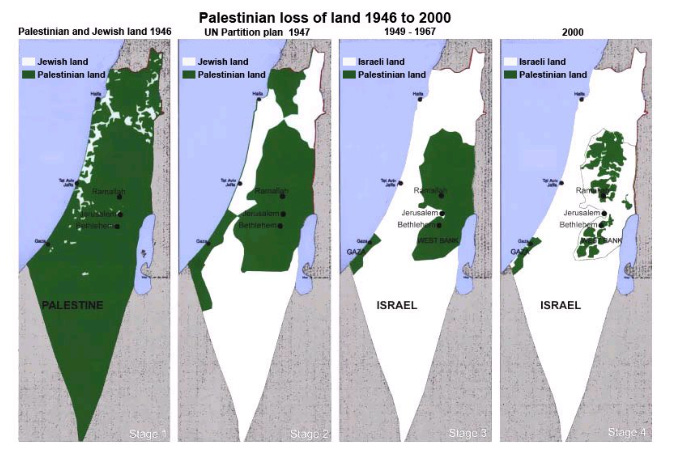
  • The fighting between Israel and Iran, sparked by an illegal and entirely unprovoked attack by Israel, has abated for the moment. After the United States did what Israeli Prime Minister hoped it would do and bombed Iran’s underground nuclear facilities, including the one at Fordow with bunker buster weapons, U.S. President Donald Trump told Israel to stop its attacks and reinforced that order when Israel sent dozens of bombers toward Iran shortly after the ceasefire was enacted, claiming a response to two Iranian missiles.

    The entire battle, fought on the basis of a fictional threat of Iran being close to acquiring a nuclear weapon, demonstrated how Israeli Prime Minister Benjamin Netanyahu can manipulate intelligence, politics, and ignorance in the U.S. to provoke American action.

    The post What Comes Next Following The US-Israeli War On Iran? appeared first on PopularResistance.Org.

    This post was originally published on PopularResistance.Org.